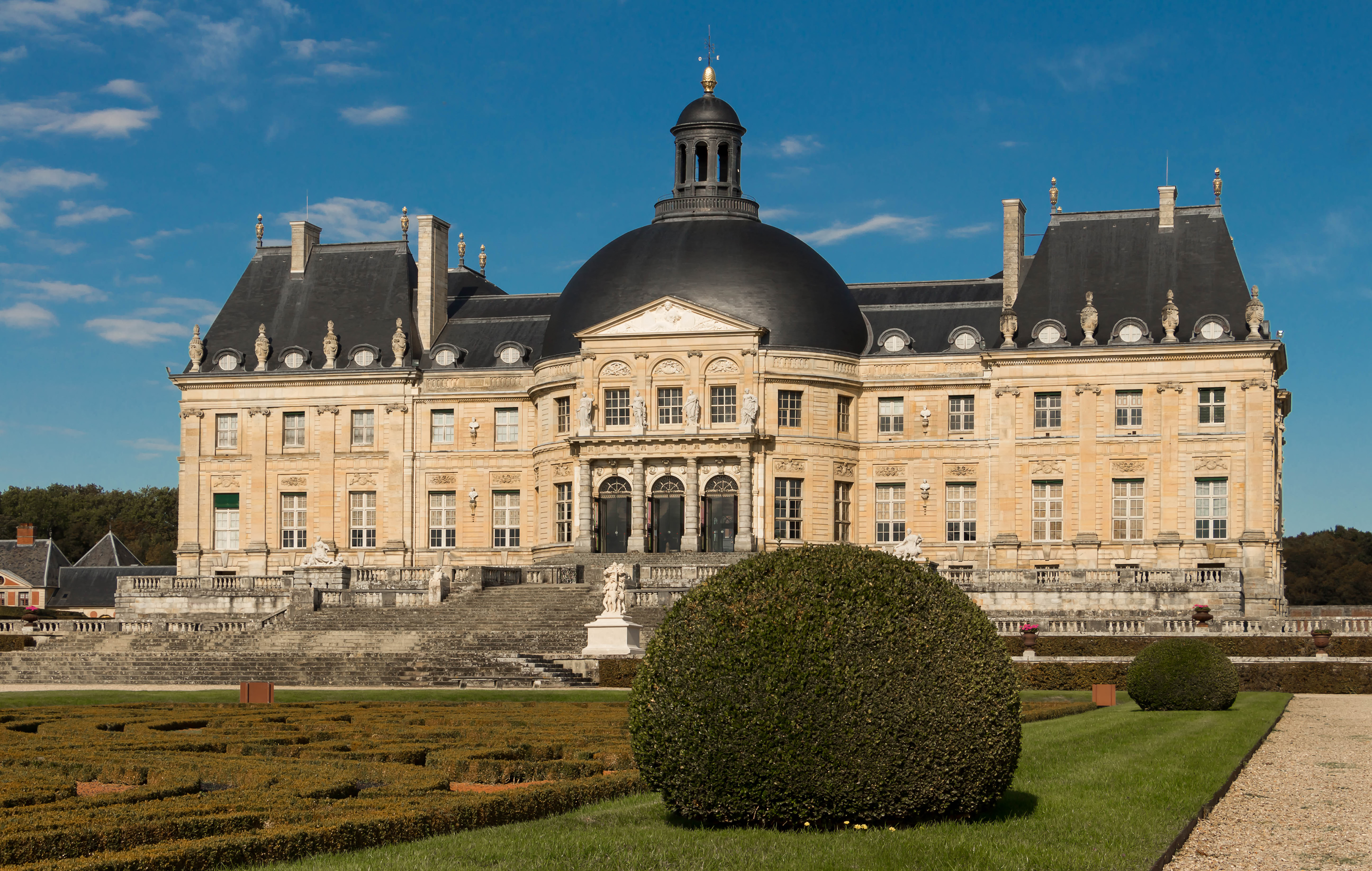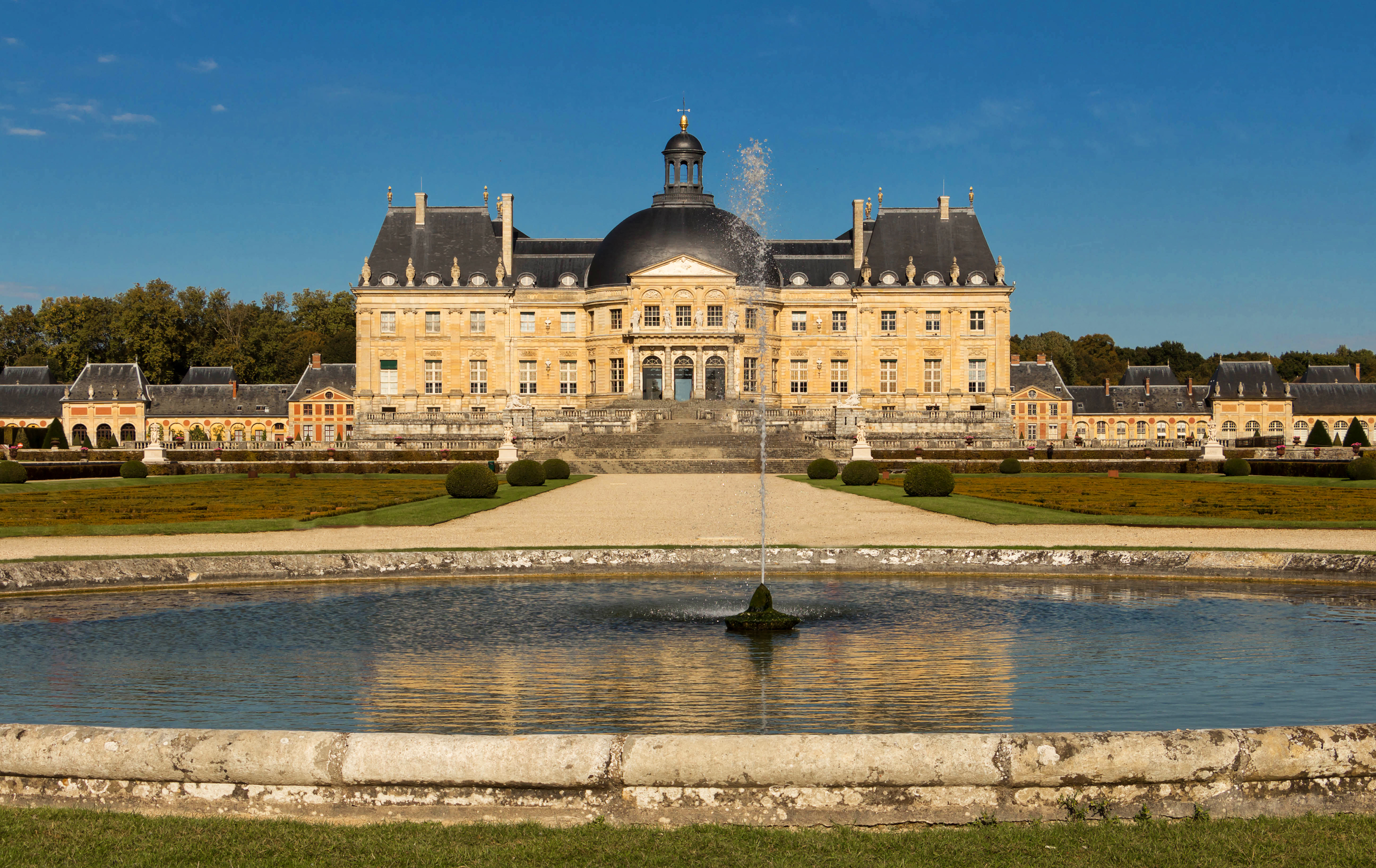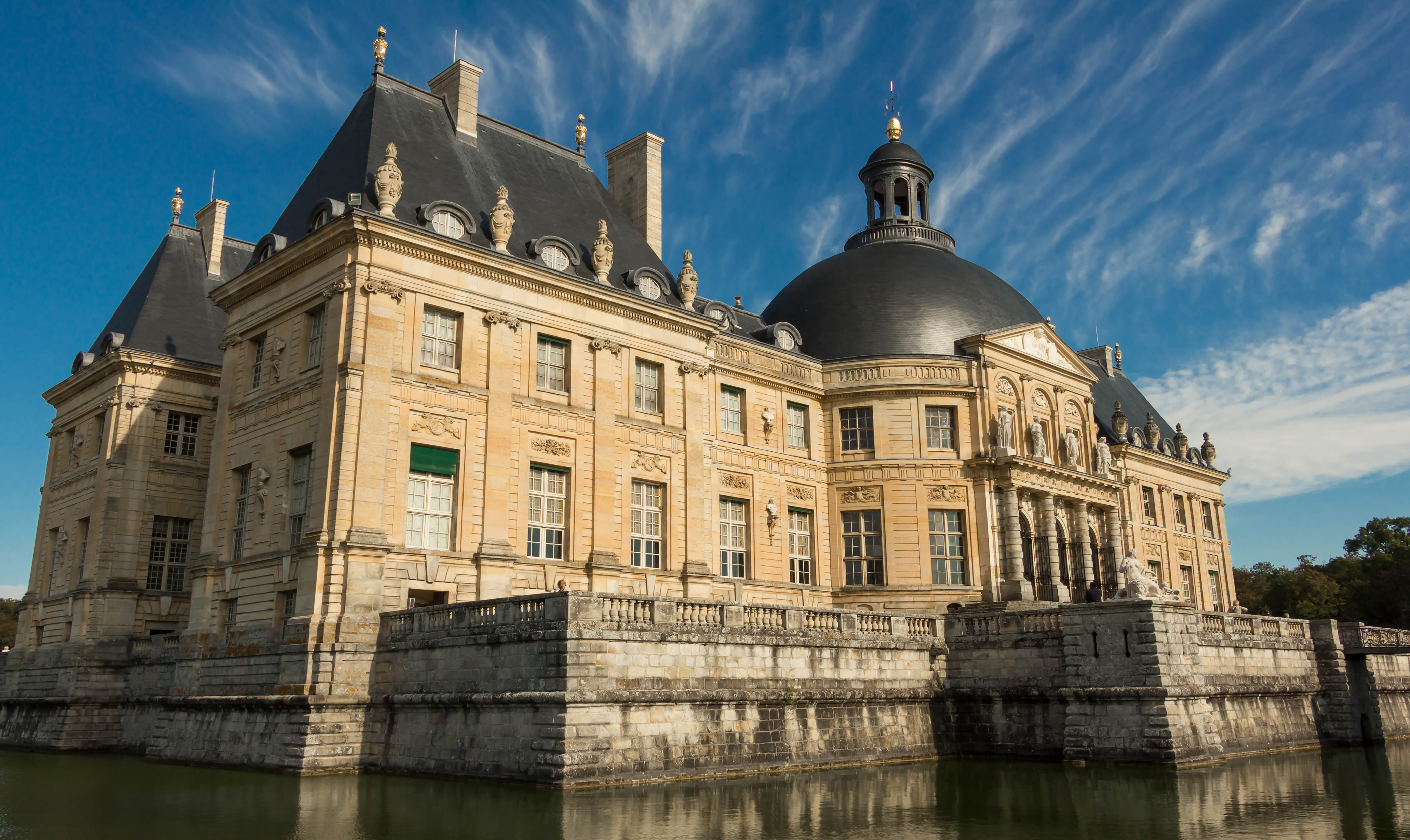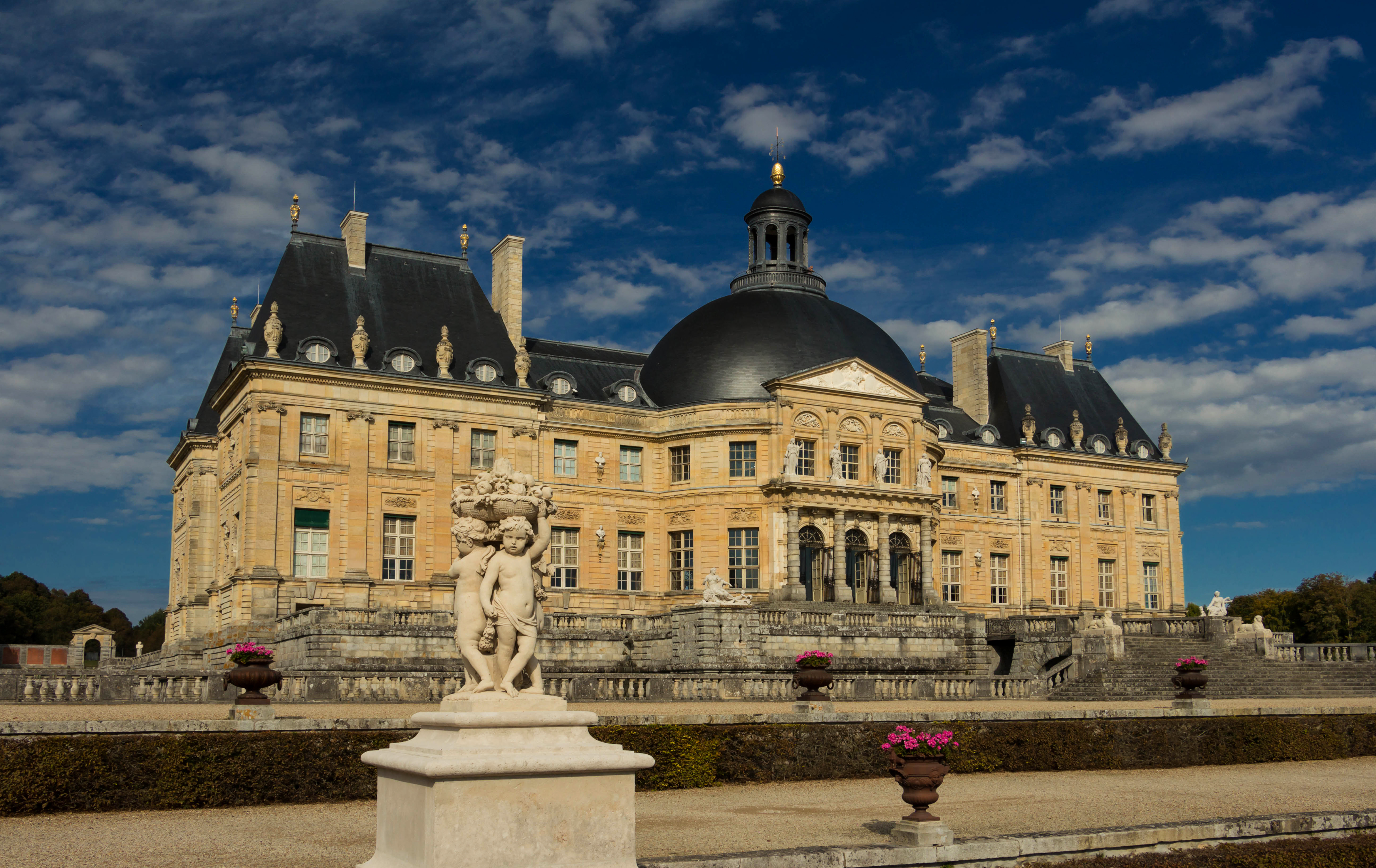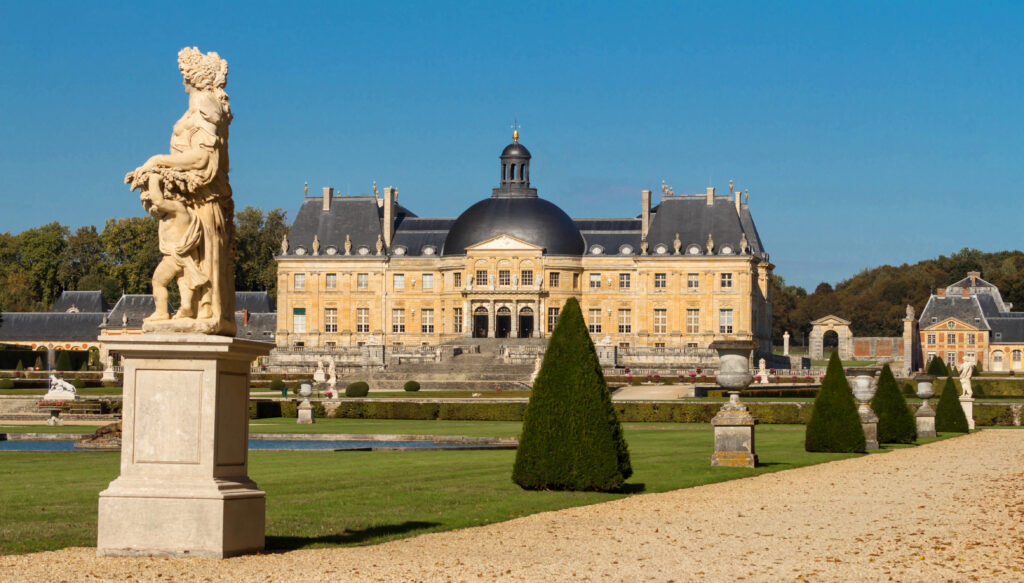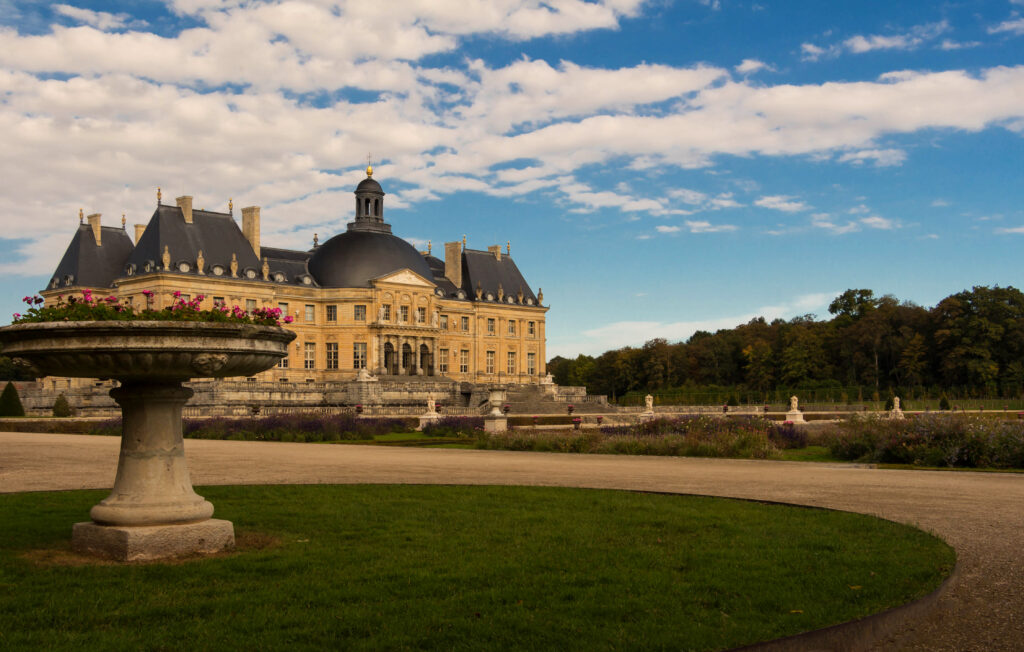

The history of Vaux-le-Vicomte, an architectural marvel in the heart of the Île-de-France region, is not only a story of splendour, but also of envy, betrayal and artistic revolution. Commissioned between 1656 and 1661 by Nicolas Fouquet, the French Minister of Finance, this château was designed by architect Louis Le Vau and landscape architect André Le Nôtre, while the interior was decorated by painter Charles Le Brun. This ensemble marked the beginning of French Baroque classicism and set standards that resonated throughout the European architectural scene.
The construction of the estate involved extensive remodelling, with entire villages being relocated to make way for the extensive gardens and parks. On 17 August 1661, a lavish banquet was held at Vaux-le-Vicomte for King Louis XIV and 6,000 high-ranking guests. The lavish event, staged by the famous François Vatel, featured opulent interiors and solid gold tableware, and sparked the king’s anger at Fouquet’s blatant display of wealth. Louis XIV’s dissatisfaction was further exacerbated by Fouquet’s unauthorised construction of a fortress, which led to his arrest on 5 September 1661 for embezzlement – a decision that had been maturing long before the extravagant inauguration ceremony.
Legend has transformed this historical episode into a tale of royal jealousy; However, historical evidence suggests that the king’s motives ran deeper than mere envy. Nevertheless, this story lent Vaux-le-Vicomte a lasting mystique and immortalised its splendour as the château that supposedly aroused the envy of the Sun King – a slogan that remains part of its fascination to this day.
Louis XIV did not let the splendour of Vaux-le-Vicomte be forgotten. In the same year that Fouquet fell from grace, he commissioned the creative minds behind Vaux – Le Vau, Le Brun and Le Nôtre – to transform his hunting lodge in Versailles into an incomparable palace. The preliminary work on Fouquet’s estate began in February 1641, when he first acquired land in Maincy. After overcoming various challenges, including the natural watercourses and hilly terrain, construction began in 1656.
After Fouquet’s death, his family sold Vaux-le-Vicomte in 1701 to General Claude-Louis-Hector de Villars, who renamed it Vaux-Villars. The château’s prestige remained unbroken when Louis XIV elevated it to a duchy in honour of Villars’ military achievements during the War of the Spanish Succession.
In 1875, industrialist Alfred Sommier acquired the dilapidated estate at a candle auction and began restoration work, which lasted until 1893. Further renovation work followed, commissioned in 1911 by his descendant Edme Sommier. Between 1939 and 1942, the estate fell under German occupation, which was a turbulent chapter in its history.
Since 1968, the estate has been privately owned and is open to visitors under the management of the Counts of Vogüé. With over 350,000 visitors per year, Vaux-le-Vicomte is a testament to the timeless fascination of Baroque art. A support association founded in 1983 ensures the preservation of the estate and protects its meticulous symmetry and axial alignment, which surpasses all earlier French châteaux and gardens in both their splendour and their design coherence.
Vaux-le-Vicomte consists of three interconnected areas: the forecourt and façade, the interior architecture and furnishings, and the extensive gardens. The symmetrical outbuildings – stables, servants’ quarters and chapel – flank the forecourt and embody a functional elegance that differs from the main residence. Surrounded by moats that serve no defensive purpose, the corps de logis of the château exudes noble grandeur, complemented by tower-like pavilions and classical pilasters.
Inside, the palace dispensed with a grand staircase, instead maximising the connection to the garden through salons and living rooms on the ground floor. The floor plan exudes symmetry, from the entrance hall to the two-storey Grand Salon, which is decorated with rows of pilasters and figures representing the months and seasons. The eastern suite, originally planned as the royal suite, now houses a modern museum exhibition, as it has lost its original furnishings over time.
The estate features France’s first designated dining room and André Le Nôtre’s baroque garden masterpiece – a precursor to the gardens of Versailles. The geometric precision continues beyond the castle bridge, leading visitors along spacious avenues to water basins and arcades. Invisible from the terrace, the stepped basins magically appear during a walk through the park, providing enchanting visual surprises that further enhance the influence of symmetry.
Sculptures personifying rivers frame a reflective fish pond that mirrors the silhouette of the palace. From the top of a hill crowned by the statue of Hercules Farnese, one can survey the entire expanse of the estate. Occasionally, the garden’s original water features are brought to life by rainwater basins fed by gravity.
Despite challenges such as boxwood blight in 2014, which was remedied by metal replacement, Vaux-le-Vicomte remains a beacon of cultural tourism. Special events include ‘Visites aux chandelles’, when the château is lit by 2,000 candles, offering a mesmerising night-time spectacle. Visitors can explore rooms furnished with period furniture, climb up to the dome lantern and visit the carriage museum.
Film producers often utilise the cinematic appeal of Vaux-le-Vicomte in works such as James Bond – Moonraker, Marie Antoinette and The Man in the Iron Mask. As visitor numbers generate significant revenue, enabling both the gardens and buildings to be maintained by 81 dedicated staff, the estate flourishes as a cultural gem.
In 1996, Vaux-le-Vicomte was nominated for UNESCO World Heritage status, an honour befitting its historical significance and artistic innovation. Its legacy is one of transcendent beauty and fascination, reflecting Fouquet’s ambitions and the artistic peak of the era.