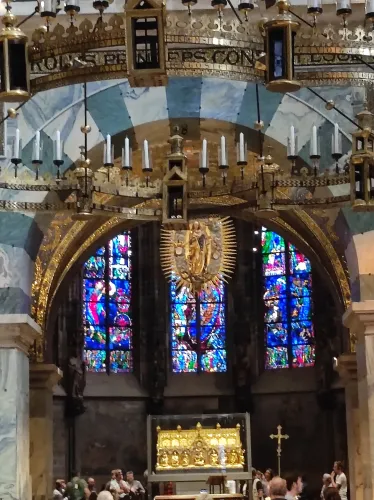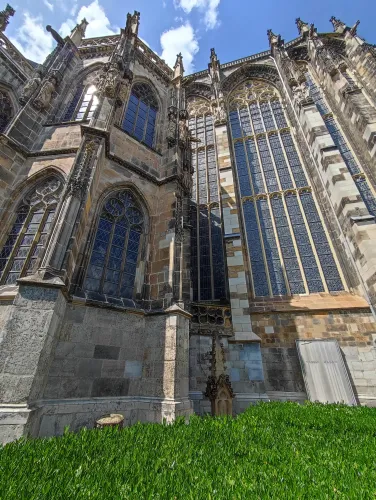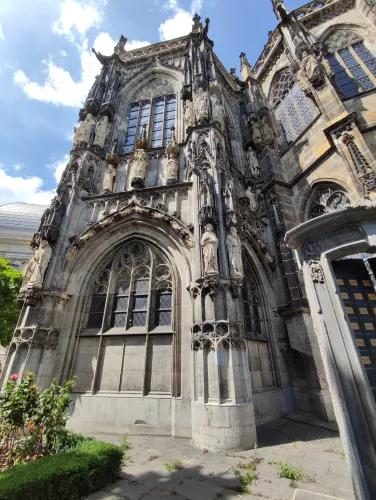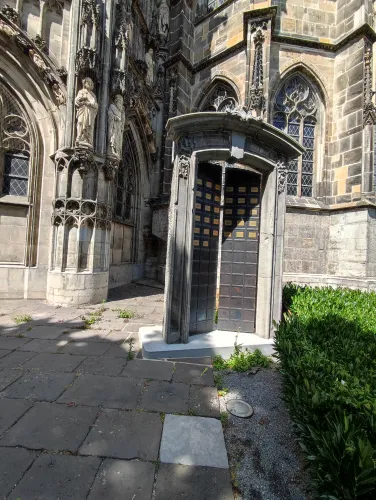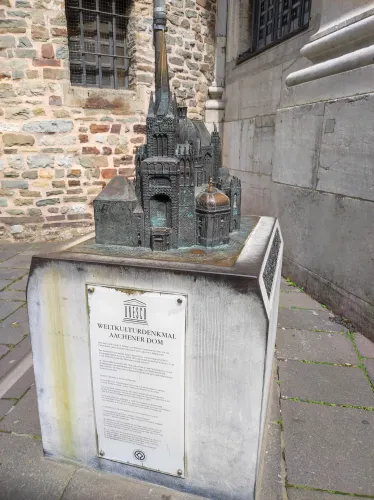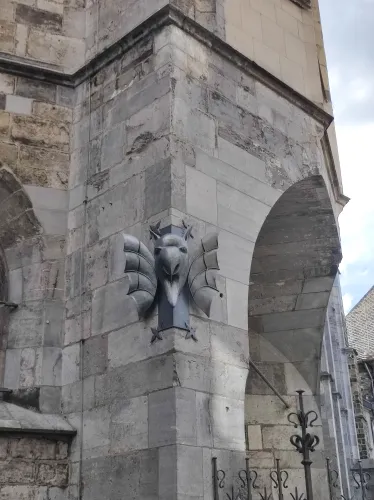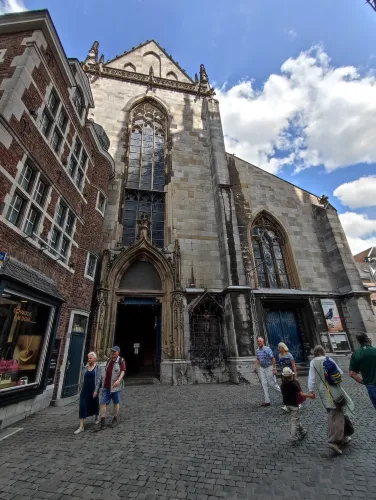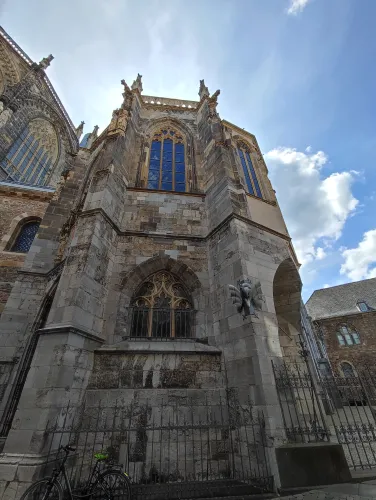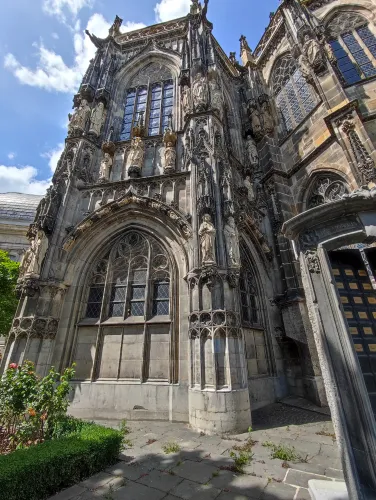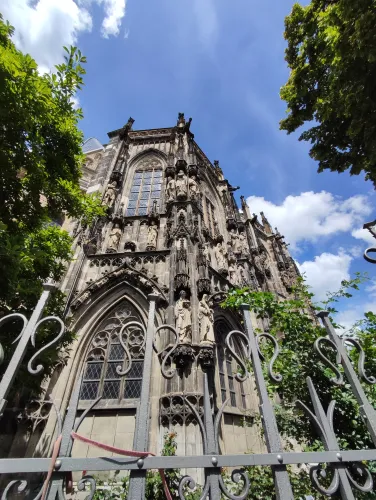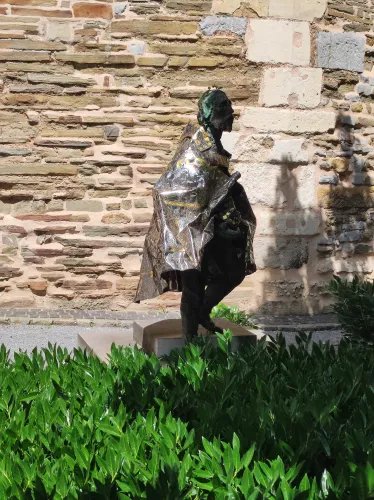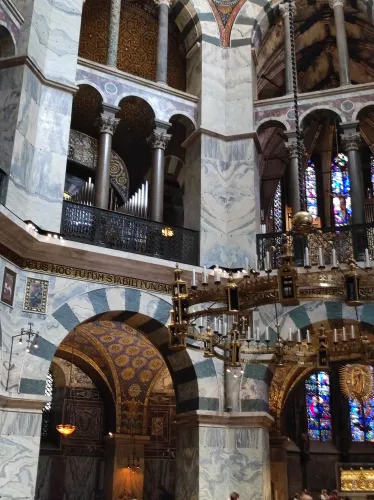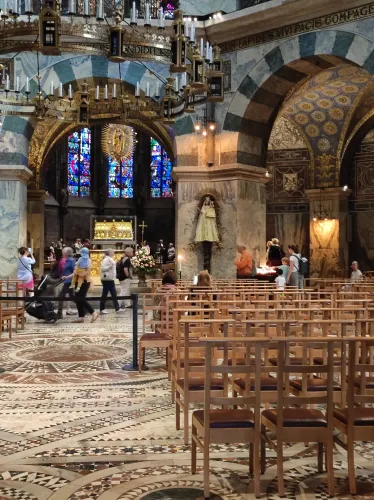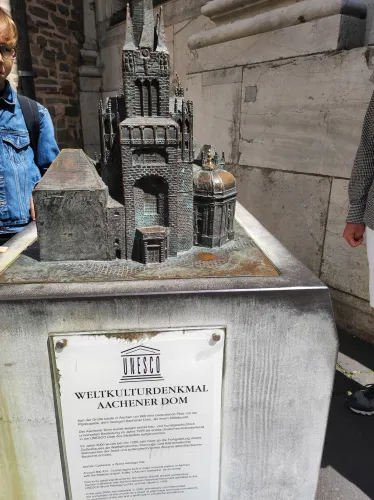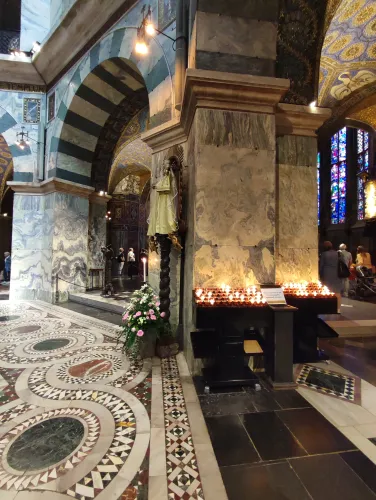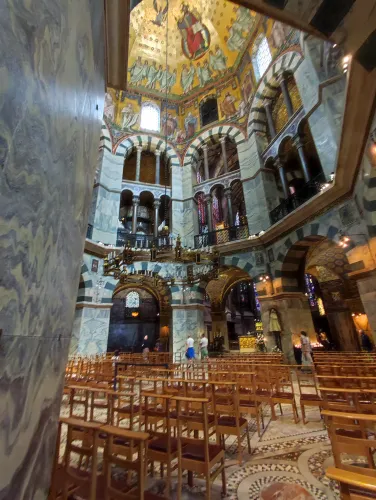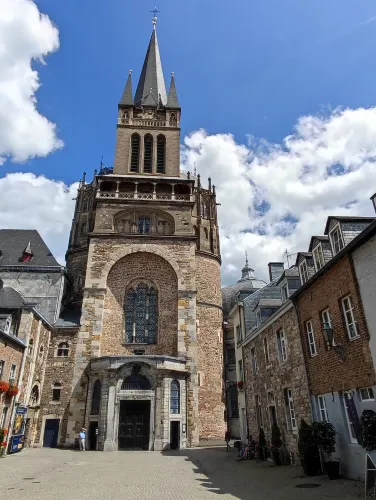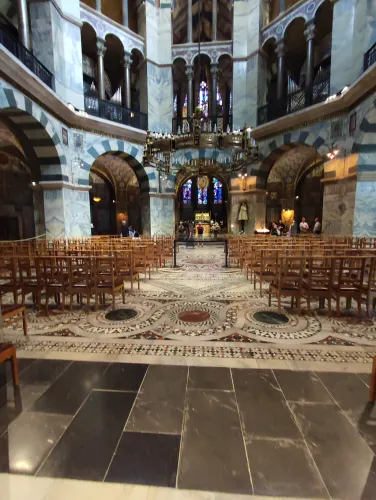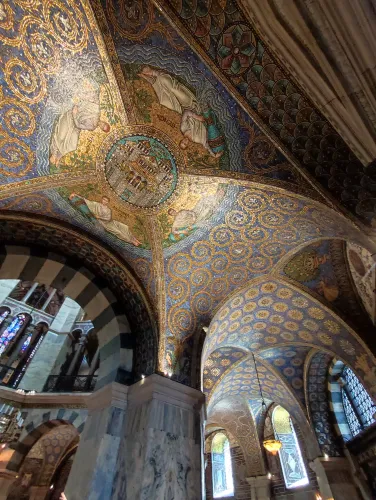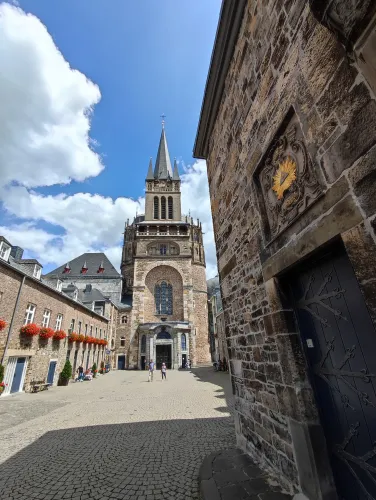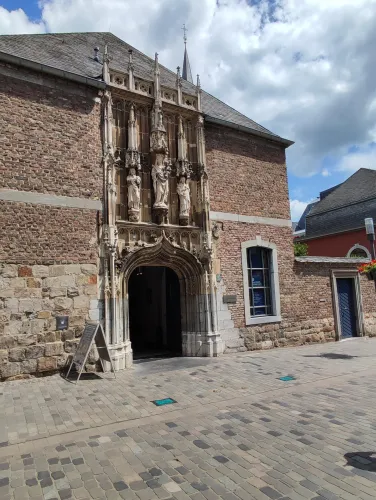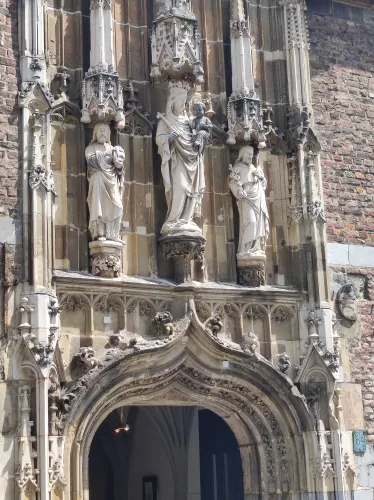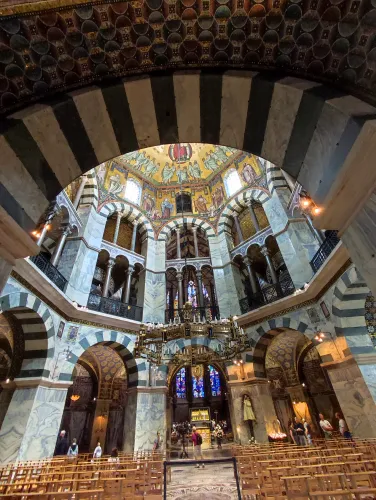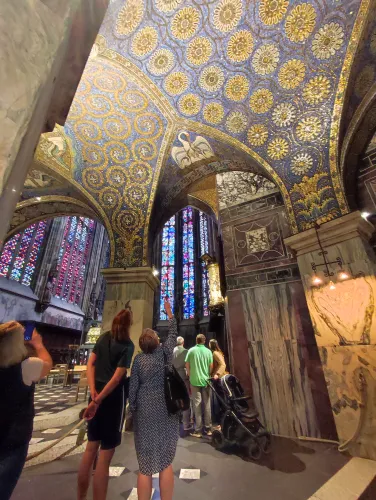

The landmark of the North Rhine-Westphalian city of Aachen, located in the border triangle of the Netherlands, Belgium, and Germany, is its magnificent cathedral in the heart of the old town. Emperor Charlemagne had it built around 800 as an important palace with a palace chapel, today’s Aachen Cathedral, at its center, based on Byzantine models, where he also found his final resting place. The palatine church of Charlemagne, the Carolingian octagon, was the highest domed building north of the Alps when it was built, at 32 meters, and almost all German kings, 30 in total, were crowned there between 936 and 1531. The Carolingian throne in the gallery still commemorates this today. Not only were 32 million mosaic stones used in its construction, but the windows in the choir hall cover an area of no less than 1,000 square meters. The cathedral is not only the bishop’s church of the Diocese of Aachen, but has also been an important place of pilgrimage since the 13th century. This is because the relics of Mary’s dress, Jesus’ swaddling clothes and loincloth, and John the Baptist’s execution cloth are kept in the Shrine of Mary in Aachen Cathedral. These are displayed every seven years in Aachen Cathedral and on the Katschhof during the Aachen Pilgrimage. The cathedral treasury next to the cathedral houses the cathedral’s church treasure, which is one of the most important ecclesiastical cultural treasures in the world. Due to its architectural and art-historical significance, Aachen Cathedral was the first German cultural monument to be included in the UNESCO World Heritage List in 1978. An ancient legend surrounds this imperial cathedral in Aachen, which is over 1200 years old. Emperor Charlemagne wanted to build the most beautiful and largest church north of the Alps at his headquarters in Aachen. No expense or effort was spared in the construction of the church. When Charlemagne had to go to war against the Saxons, the city council was entrusted with supervising the construction of the church. But the city ran out of money, so in their desperation they begged the devil himself for help. He promised to help if, in return, he received the first soul to enter the cathedral. The city council made a deal with the devil, and the cathedral was soon completed. Charlemagne was overjoyed. But the city council was worried, because Pope Leo III, as the highest-ranking clergyman, would be the first to enter the cathedral to consecrate it. How could they prevent this? Then a monk had a clever idea of how they could outwit the devil. Since the devil had not explicitly specified that the soul had to belong to a human being, the soul of an animal could also be sacrificed. Therefore, a wolf was the first to enter the cathedral, where the devil was already lurking behind the entrance, waiting for the soul he had been promised. When he pounced on the wolf, believing it to be Pope Leo III, he realized he had been tricked. Beside himself with rage, he wanted to bring down the cathedral. He struck the portal with all his might, causing it to crack and leaving the devil’s thumbprint imprinted on it. This can still be felt on the door knob of the cathedral today. The bronze figures of the wolf and its soul in the vestibule commemorate this legend, which I was also able to admire during my visit to the Imperial Cathedral.