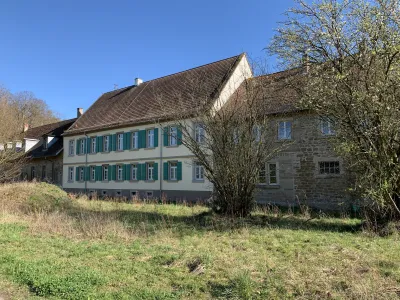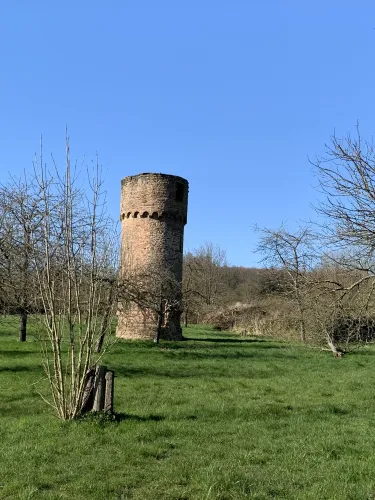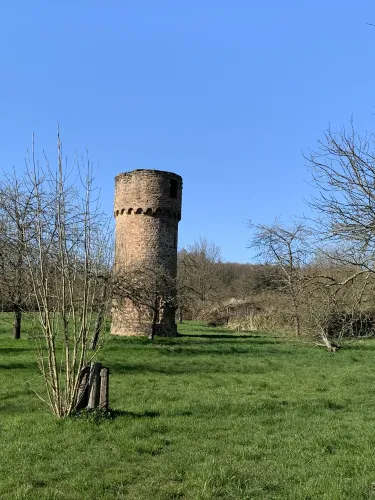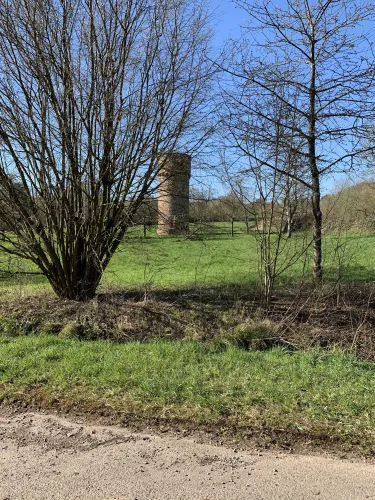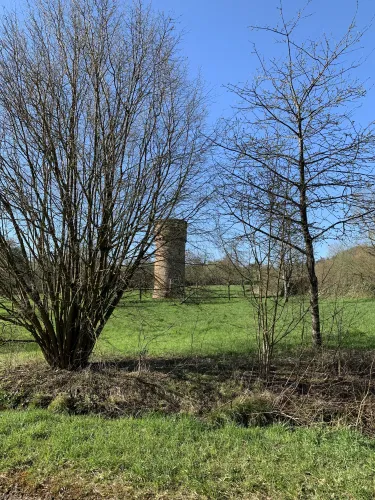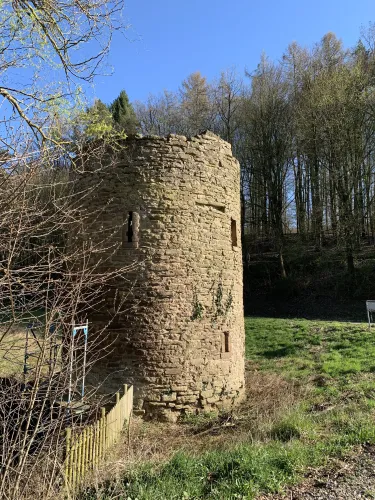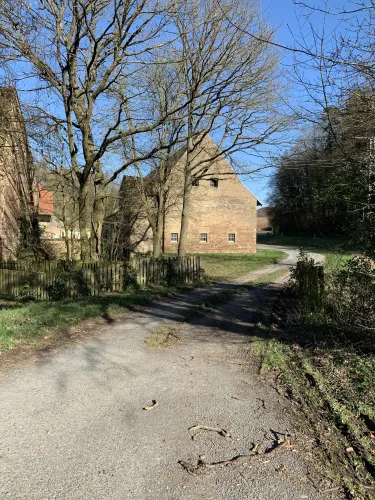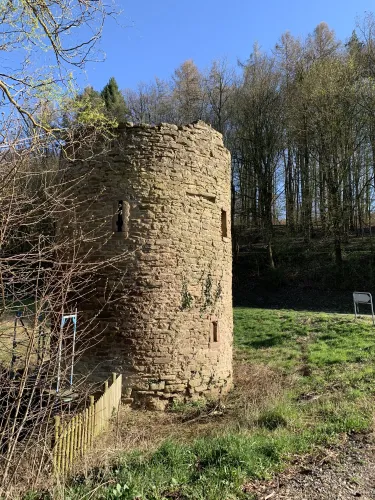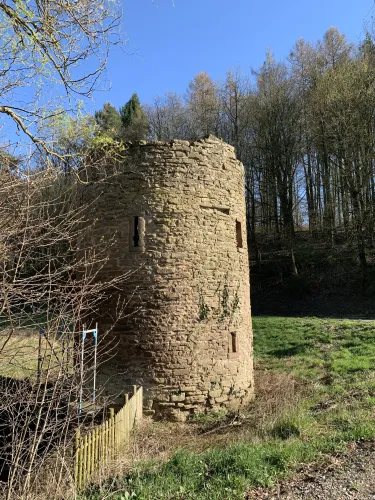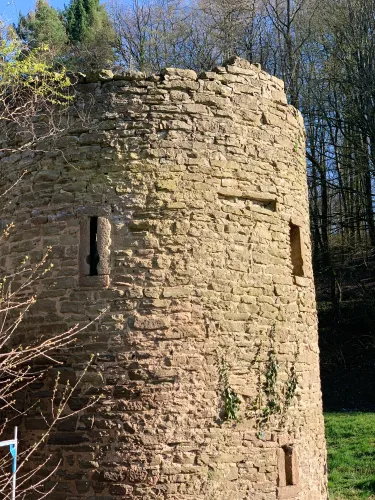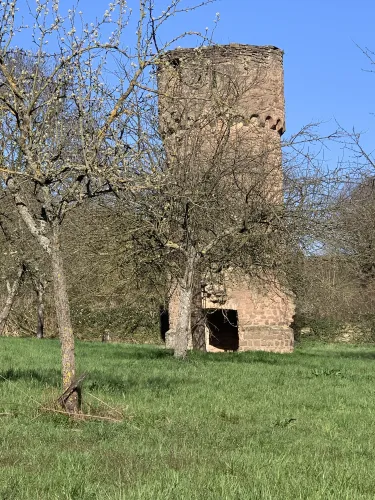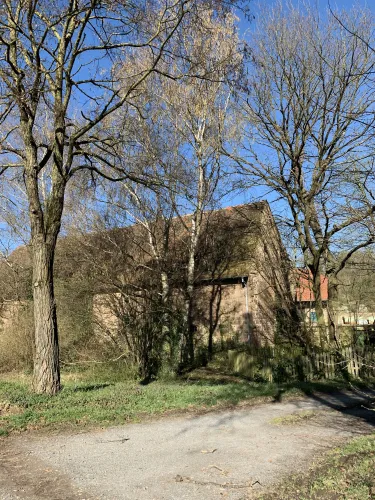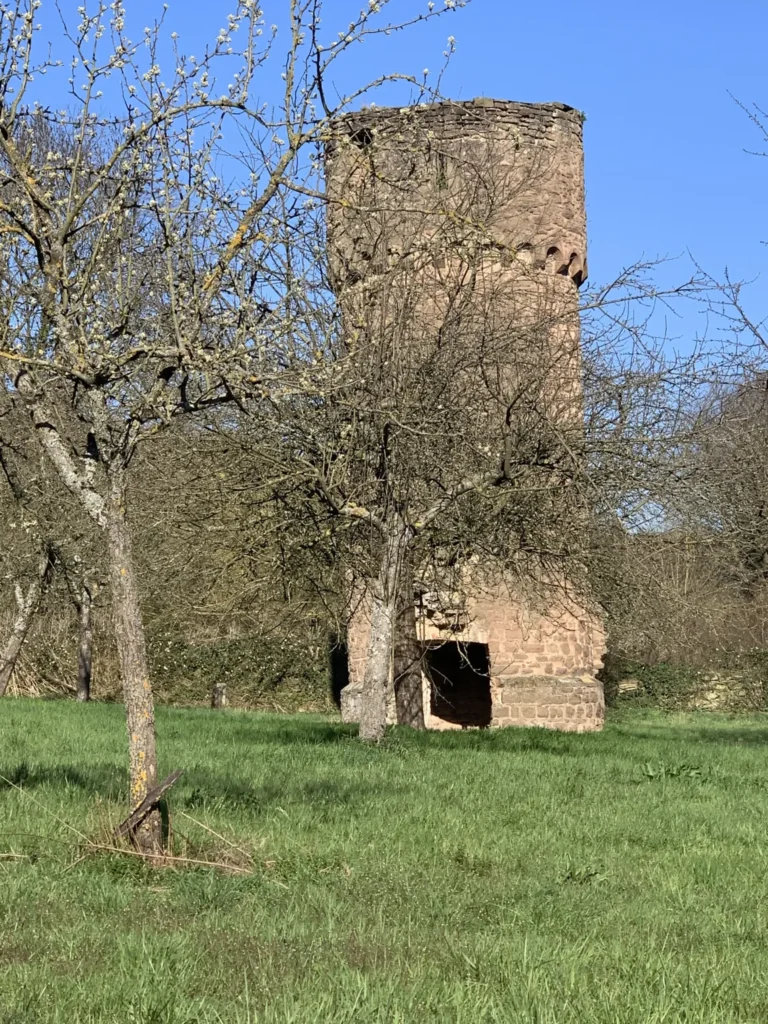

The Middle Ages are often associated with a dark era and a harsh time in which people had to contend with many problems. During this period, monasteries were considered centers of political and religious life. There was once such a monastery in Odenheim. Today, only two defensive towers remain, standing in the middle of a green meadow in the Katzbach Valley near Odenheim, a village in the district of Karlsruhe. I set out to search for traces of this long-forgotten time and the history of the monastery. The Benedictine monastery was founded in 1108, and in 1338 Prince-Bishop Gerhard von Ehrenberg purchased the bailiwick rights of the monastery and the village of Odenheim for the Bishopric of Speyer. In 1494, with the approval of Pope Alexander VI, the monastery was converted into a free imperial knight’s monastery and, following disagreements, was relocated to Bruchsal in 1507. This marked the end of over 400 years of monastic history at this location. In 1525, the complex was destroyed in the Peasants’ War and only rebuilt in 1670. The property fell to the state of Baden in 1803 and the demolition of the church and the prelates’ chapel was ordered. A farmstead, the so-called Stifter Hof, was built on the site of the former monastery, which is now used by the Augustenberg Agricultural Technology Center. The only remaining evidence of the former monastery are the two towers, which were part of a fortified enclosure wall designed to protect the monastery against warring feuds. I made my way to the northeast tower, which is almost completely preserved except for the roof. It served as a prison in the Middle Ages. Only fragments of the southwestern tower are still visible. It served as a water tower and was probably located in a moat and could only be reached via a bridge. Both towers have slit embrasures on the sides facing the attack. Inside, the defensive towers were secured by access hatches, locking holes, and defensive plates. A path also led me to the estate, where I discovered an old building on the right. This is the storage building from the monastery era, which was located next to the former main gate on the south side of the complex. The coat of arms of Abbot Dietrich von Angelloch, who had the building constructed, is still visible today on the courtyard side. The storage building, measuring approximately 33 by 12.50 meters, rests on several transverse vaults and features ashlar masonry, which consists of roughly hewn natural stones on the front. The masonry is up to 86 centimeters thick. The monastery towers and the storage building are true witnesses to history, with a long and eventful past. I enjoyed my brief excursion into the Middle Ages, an era that is still considered a dark time due to wars, diseases, and oppression. But it also stands for the founding of universities, the flourishing of cities and thus the rise of trade and crafts, as well as the slow replacement of the supremacy of the church.