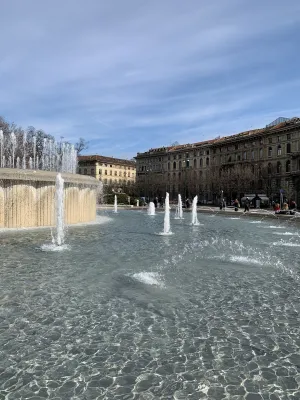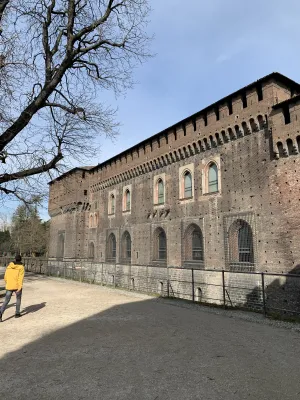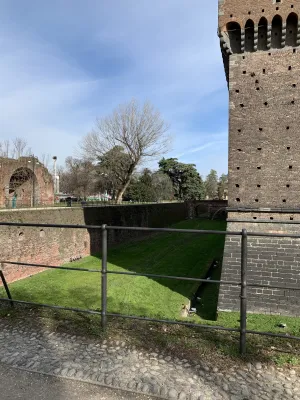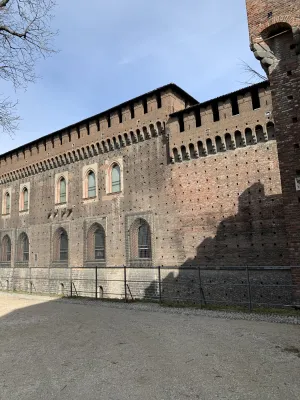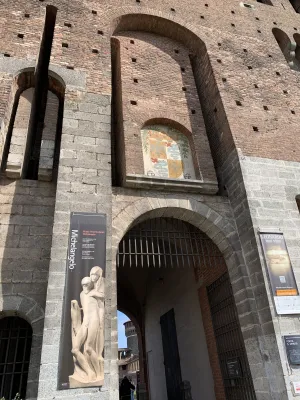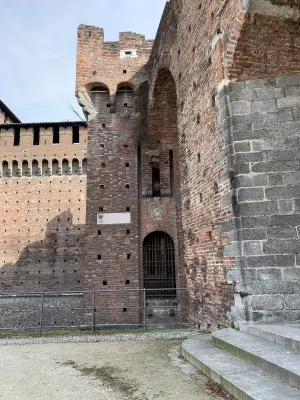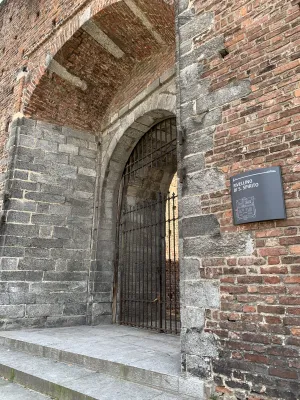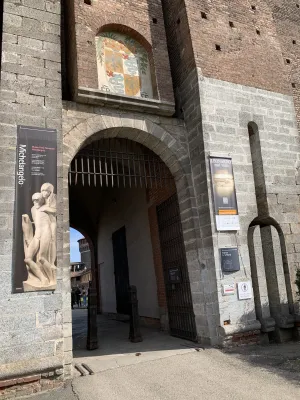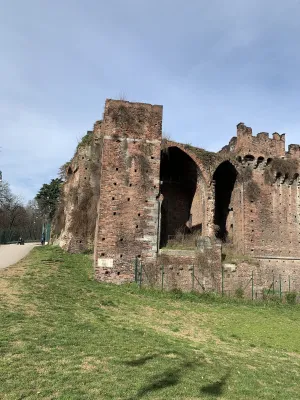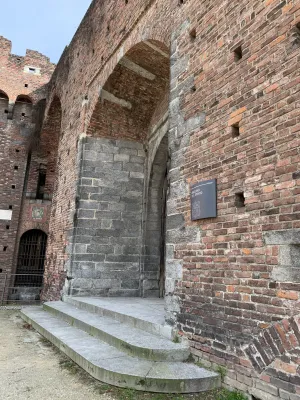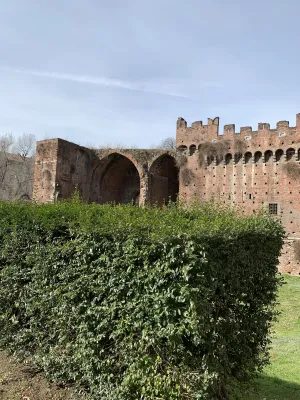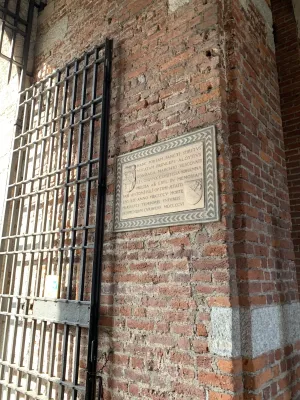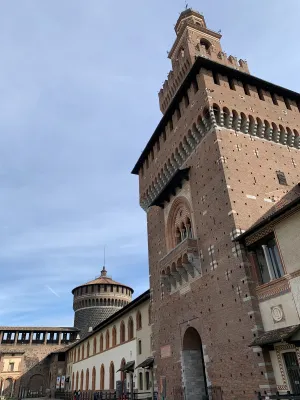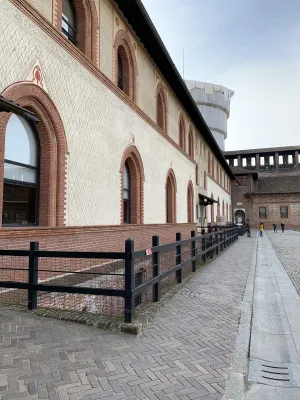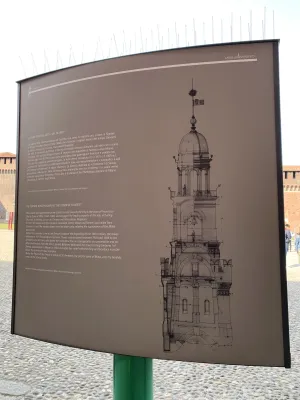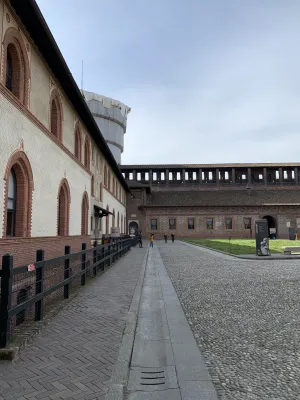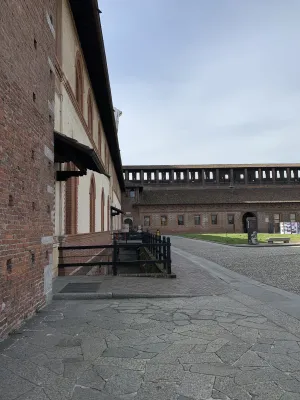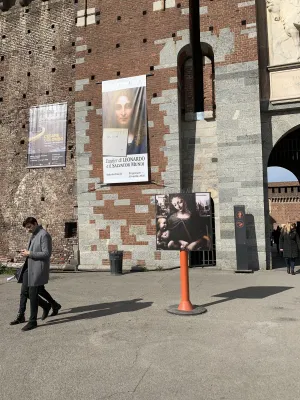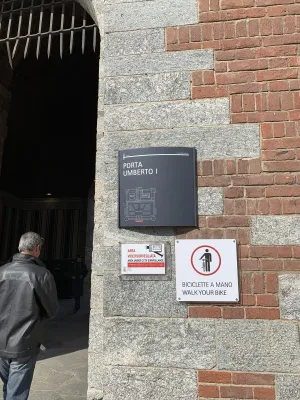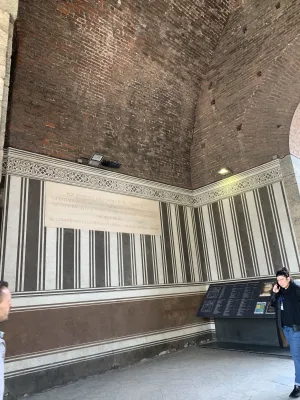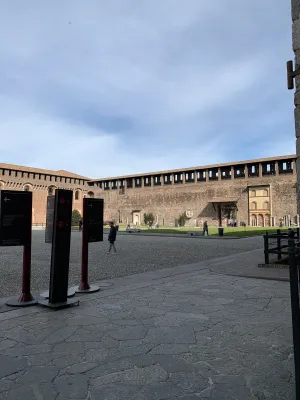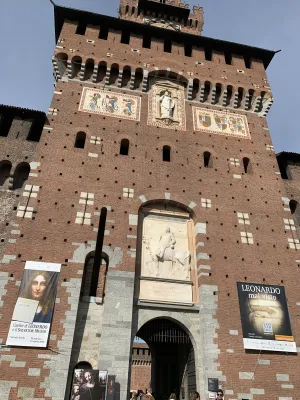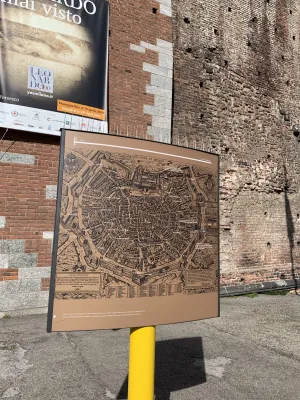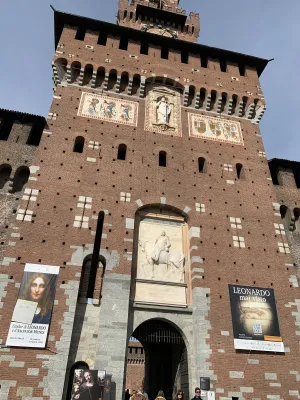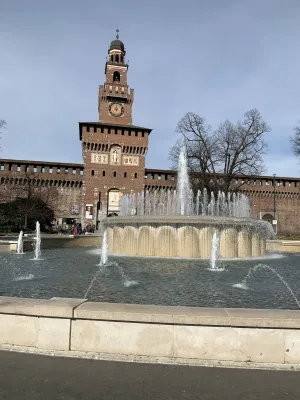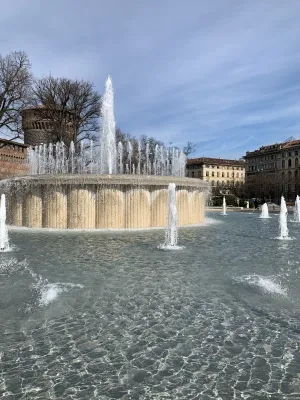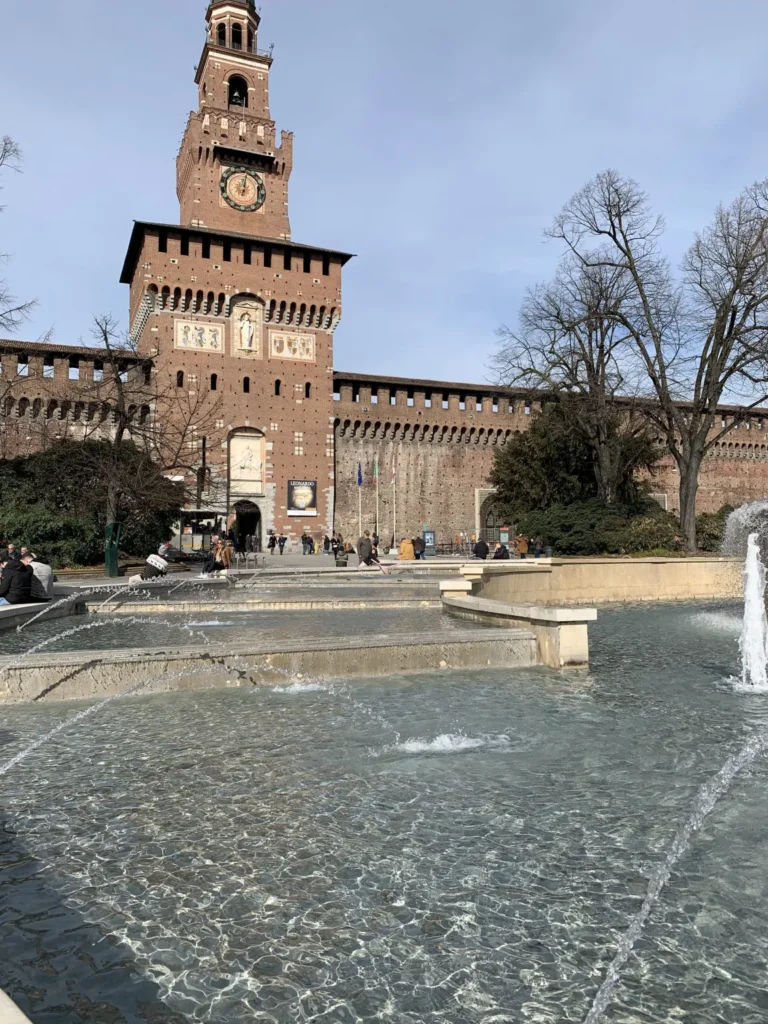

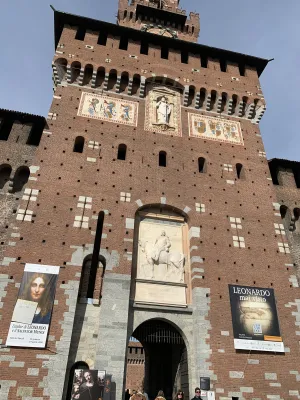
One of Milan’s sights, alongside the cathedral and La Scala, is the Castello Sforza castle. This imposing city castle was built in the 14th century by the Visconti family as a defensive structure. After the Visconti family died out, it was destroyed. The current appearance of the castle facade facing the city is the work of Francesco Sforza, Duke of Milan, who hired famous artists and architects, including Giovanni da Milano, Jacopo da Cortona, and Marcoleone Nagarolo, and was married to the illegitimate daughter of Filippo Maria Visconti. I was eager to visit this Milan landmark and, after a short walk, arrived at Piazza Costello with its beautiful fountain in the center in front of the main entrance to Sforza Castle. I was immediately impressed by the imposing battlements crowning the fortress with its massive entrance portal and the mighty tower, the Torre Filarete, named after the Florentine architect and sculptor Antonio Averlino, known as Filarete. The tower, which was used as a guest toilet by French troops at the beginning of the 16th century, collapsed after an explosion. It was reconstructed between 1901 and 1905 by the architect Luca Beltrami. The reconstruction was based on iconographic documentation and other architecture from the Sforza period. Beltrami dedicated the tower to King Umberto I of Savoy, who was assassinated in Monza in 1900. Above the arch at the main entrance is a marble bas-relief depicting the king on horseback. Above the figure of the king is a statue of St. Ambrose, the patron saint of Milan, and the coat of arms of the Sforza family. The Costello Sforza is a fascinating example of Renaissance architecture and today houses wonderful art museums such as the Museo d’Arte Antica and the Archaeological Museum, Museo della Preistoria. The sculpture collection from late antiquity, the Middle Ages, and the Renaissance represents the most important collection of Lombard works. In addition to the 14th-century tomb of Bernabo Visconti, there are friezes of figures from the medieval Porta Romana depicting events after the conquest of the city by Frederick Barbarossa in 1162. In addition, the Sala des Asse, the ruler’s private rooms, feature beautiful frescoes based on designs by Leonardo da Vinci, and the rooms also house the famous Pietá Rondanini, the last unfinished work by the artist Michelangelo. The museums house numerous paintings by famous painters, as well as an antique weapon collection and historical musical instruments. The Prehistoric and Egyptian Museums are located in the basement of the Rocchetta and the Sala Viscontea. The Costello Sforza is truly a treasure trove of cultural assets and its history is simply fascinating. After its reconstruction by its namesake Franceso Sforza, in 1466 the inner part of the castle was converted into a residence with a ducal court surrounded by the fortified complex of the Rocchetta, a fortress within a fortress. It contains another tower, called Bona. During the reign of Ludovico Sforza, many of the most influential artists of the time, such as Donato Bramante and Leonardo da Vinci, were brought to the Milanese court. Among them, the side wing, Ponti cella, and the frescoes in the Sala delle Asse, the duke’s bedroom, were decorated by Leonardo da Vinci. After the French crushed the Sforza dynasty in 1499, the condition of the castle deteriorated steadily. In 1526, under Spanish rule, Castello Sforza was converted into a star-shaped defensive ring. It retained this defensive function under Austrian rule by the Habsburgs until 1706. After that, Napoleon used the castle as troop quarters and stables after his entry into Milan in 1796, and the courtyard as a parade ground. Between March 18 and 22, 1848, Castello Sforza was stormed by the people during the Cinque Giornate uprisings. In 1861, after the unification of Italy, Beltrami began the restoration and reconstruction of Castello Sforza, which is now one of Milan’s landmarks and symbols. I marveled at the Rocchetta Tower Bona di Savoia with its statue of John of Nepomuk in the courtyard, the magnificent ceiling fresco by Leonardo da Vinci, and was simply thrilled by the rich art treasures of the castle and its museums. After an extensive tour, I took a break in the castle park, Parco Sempione, located directly behind the castle. Castello Sforza is a real attraction, rich in history, culture, and art, and represents an incredible cultural heritage for us.