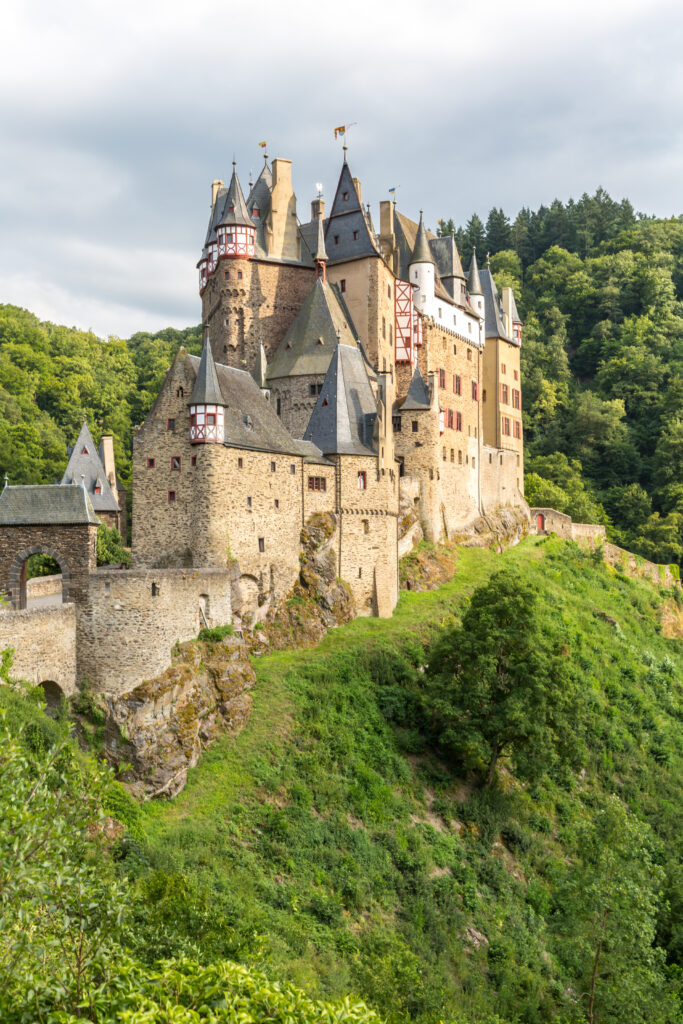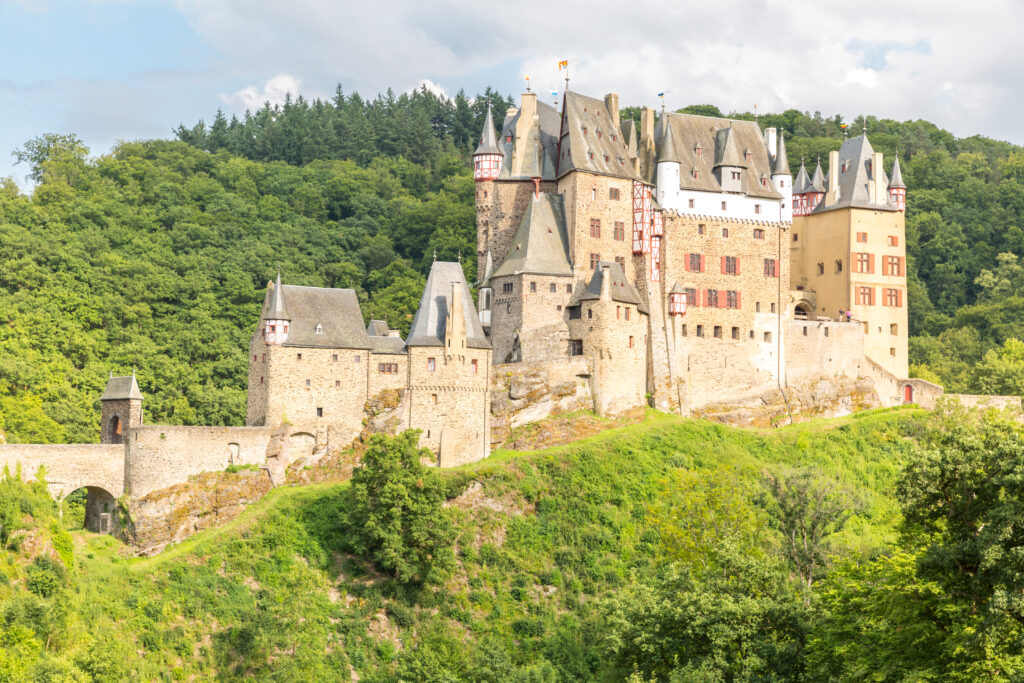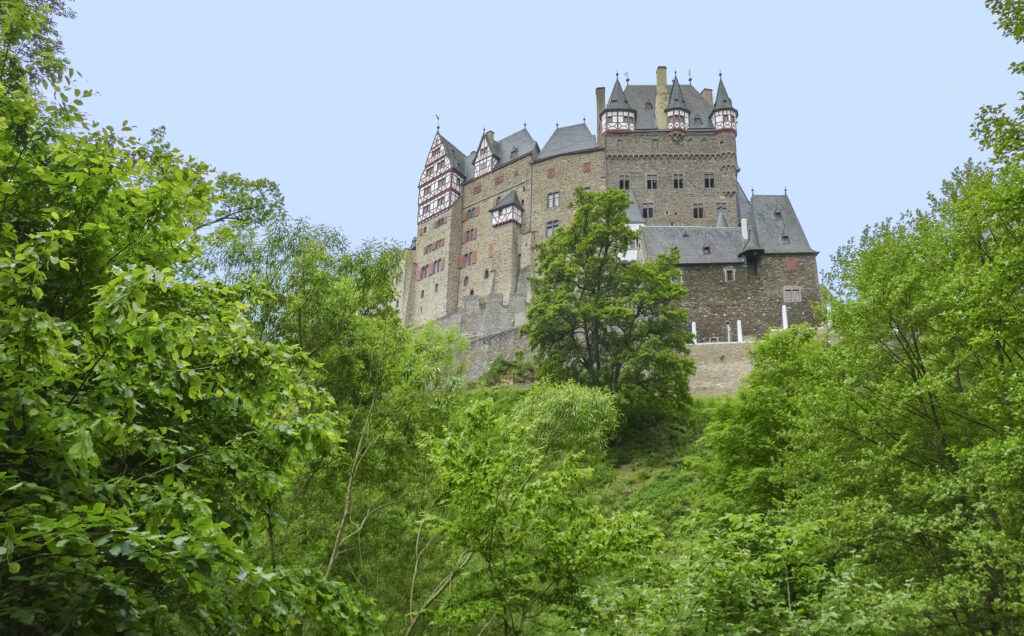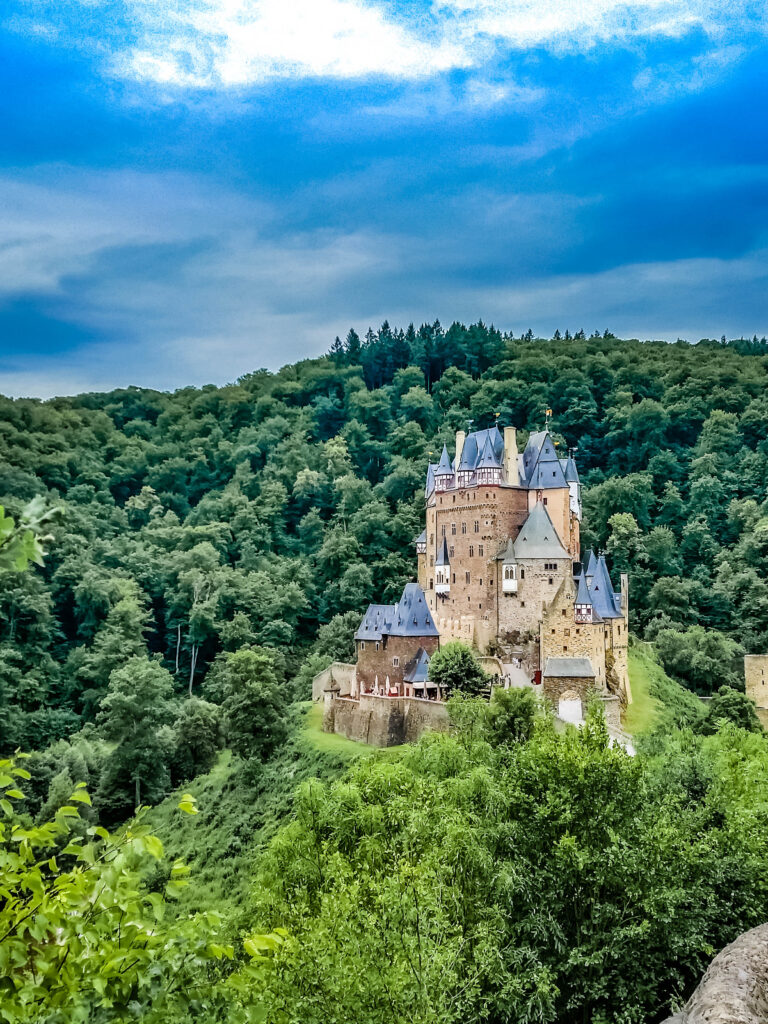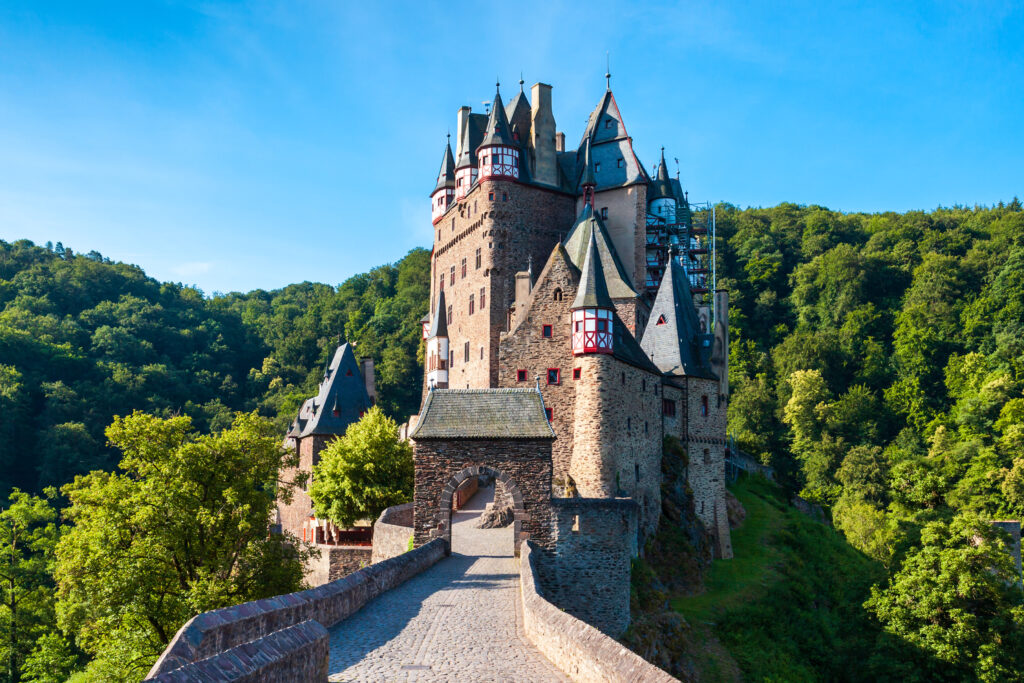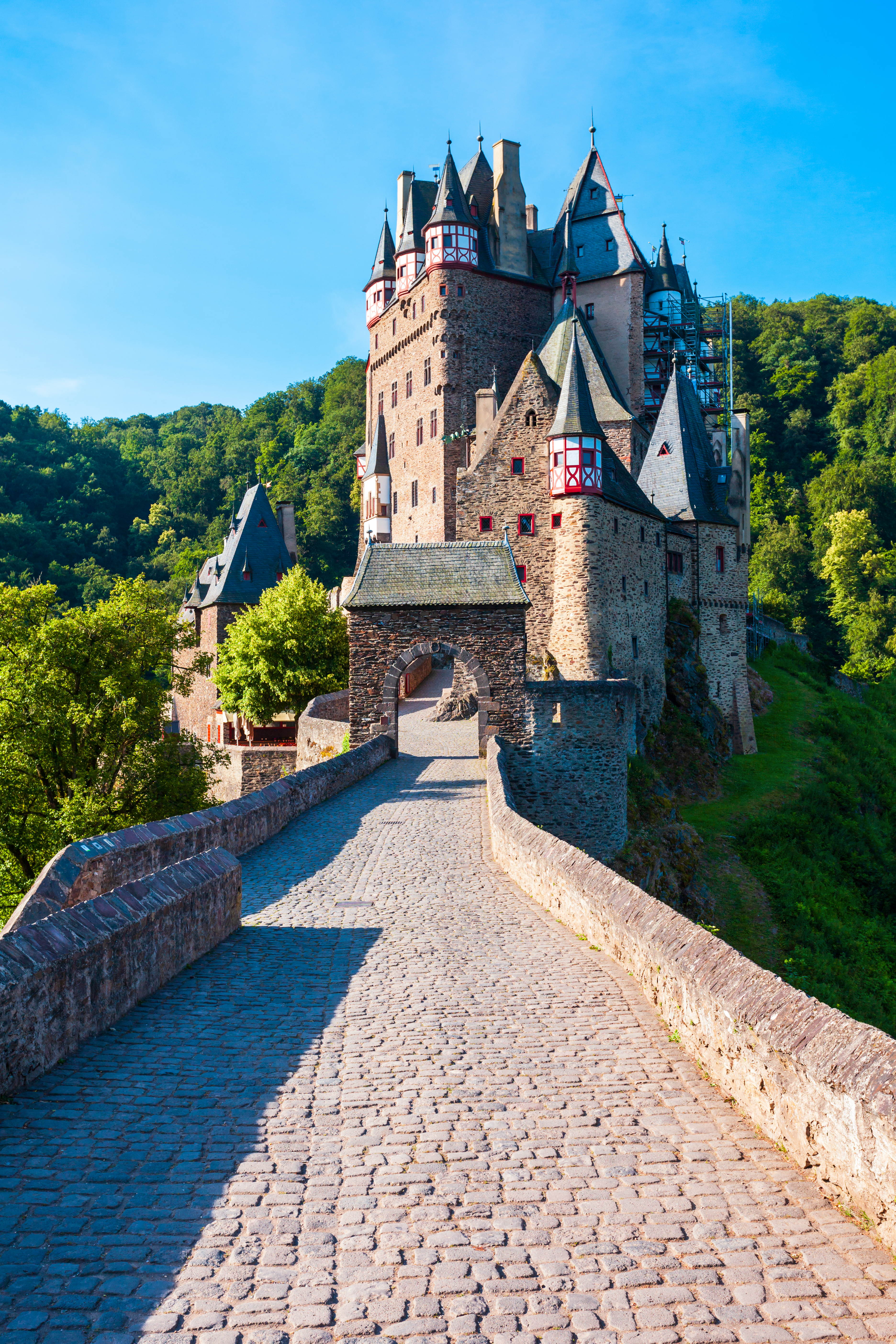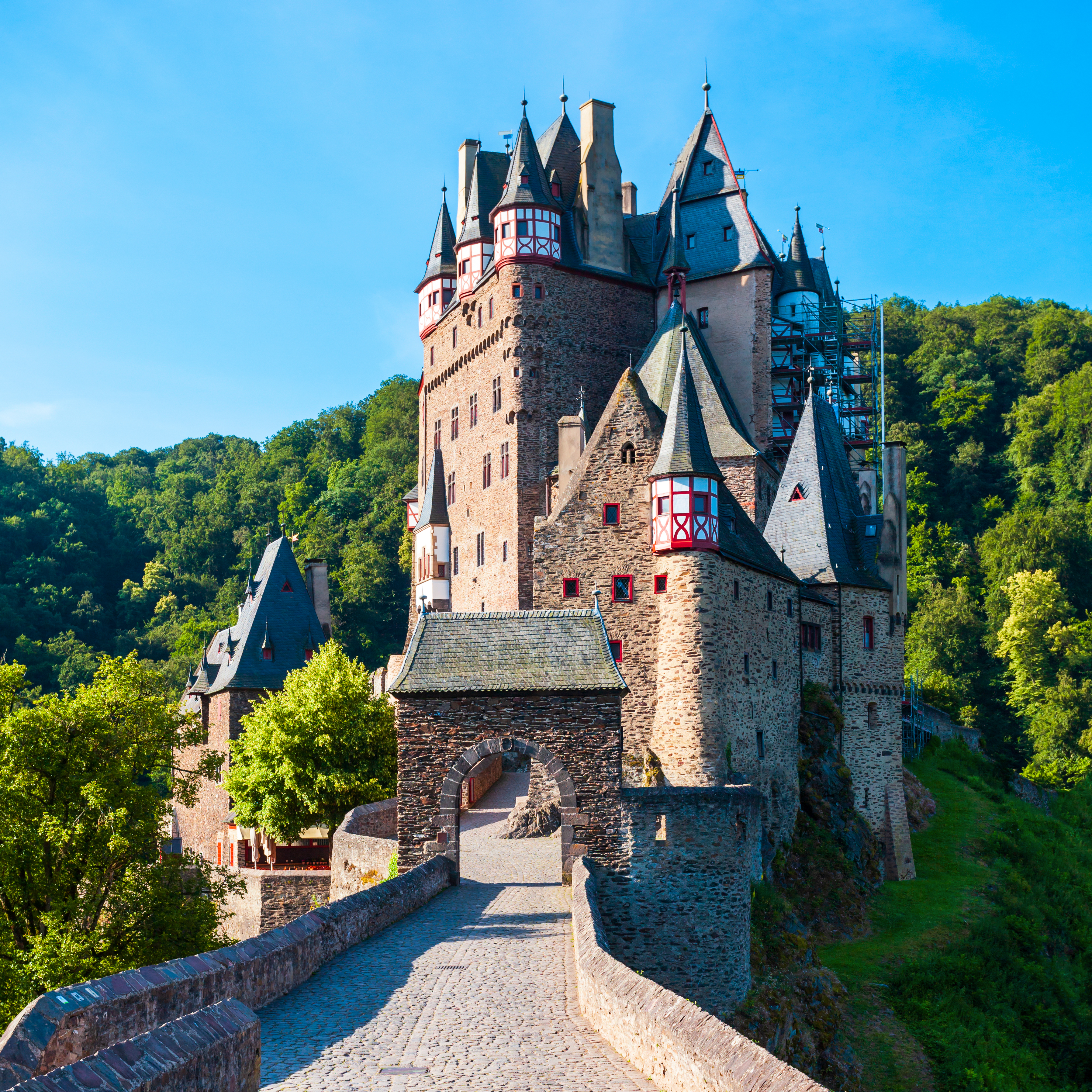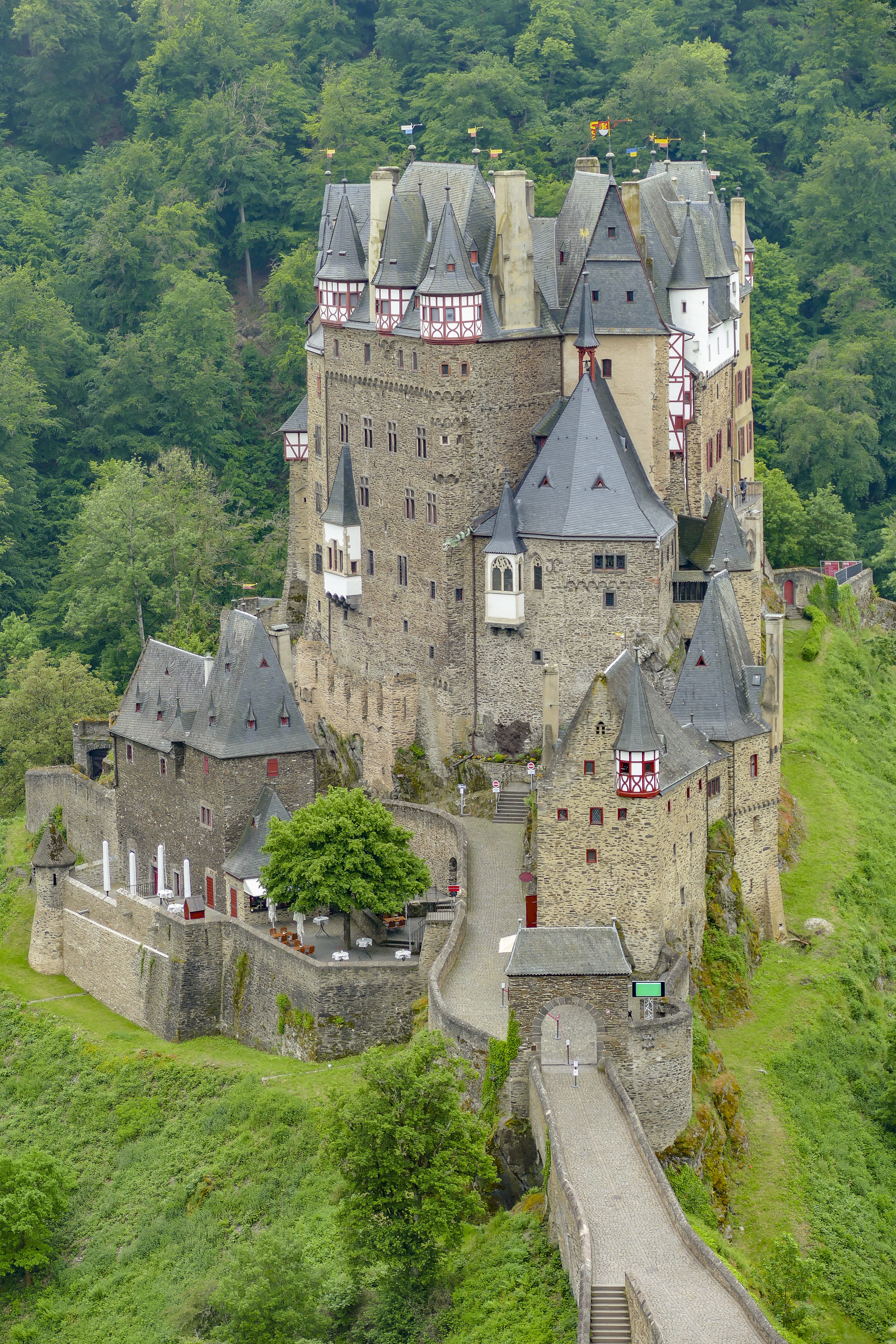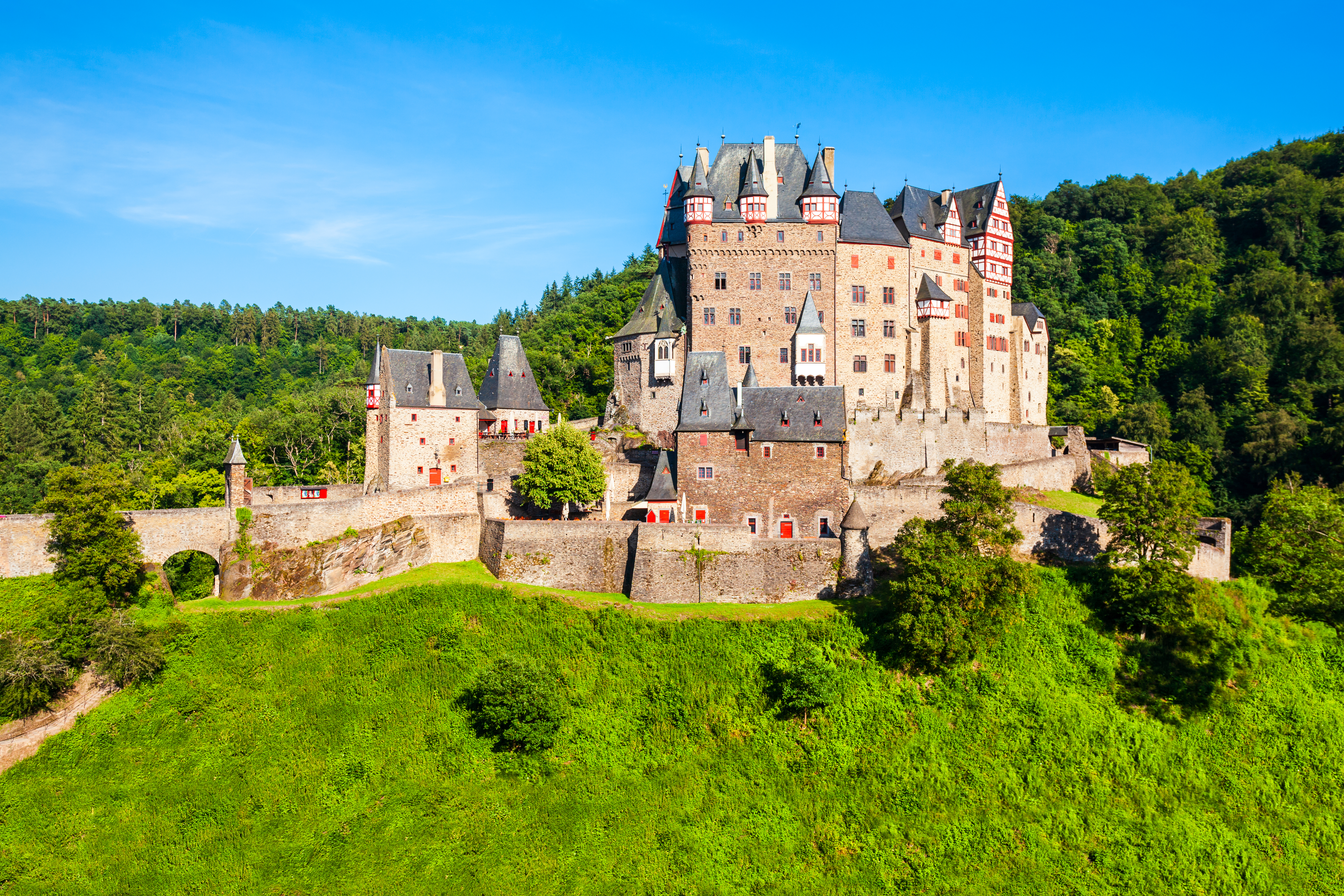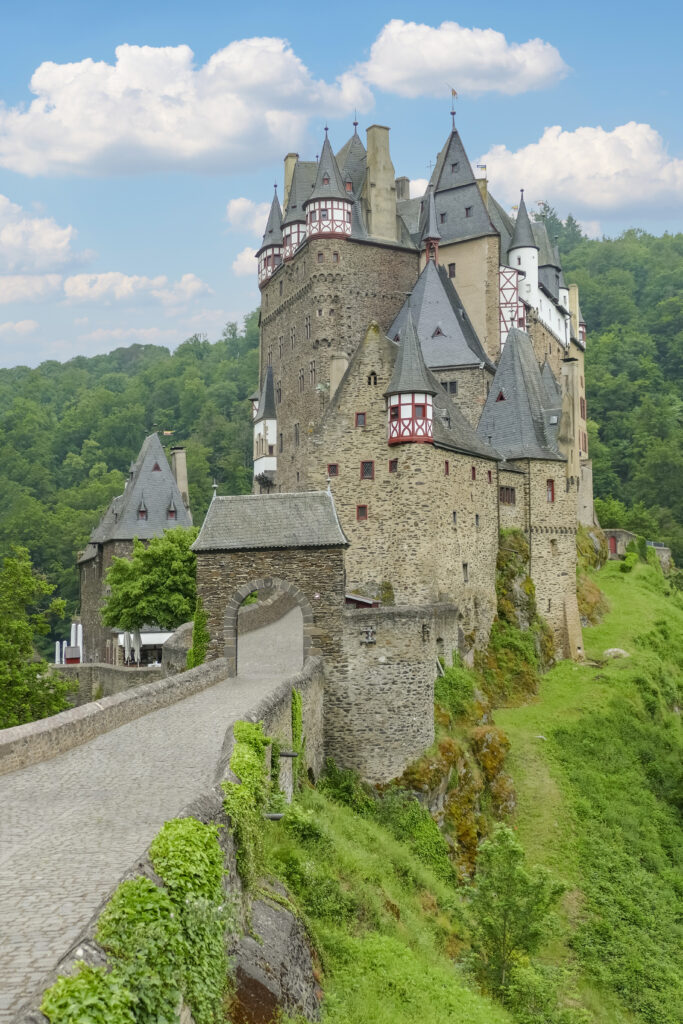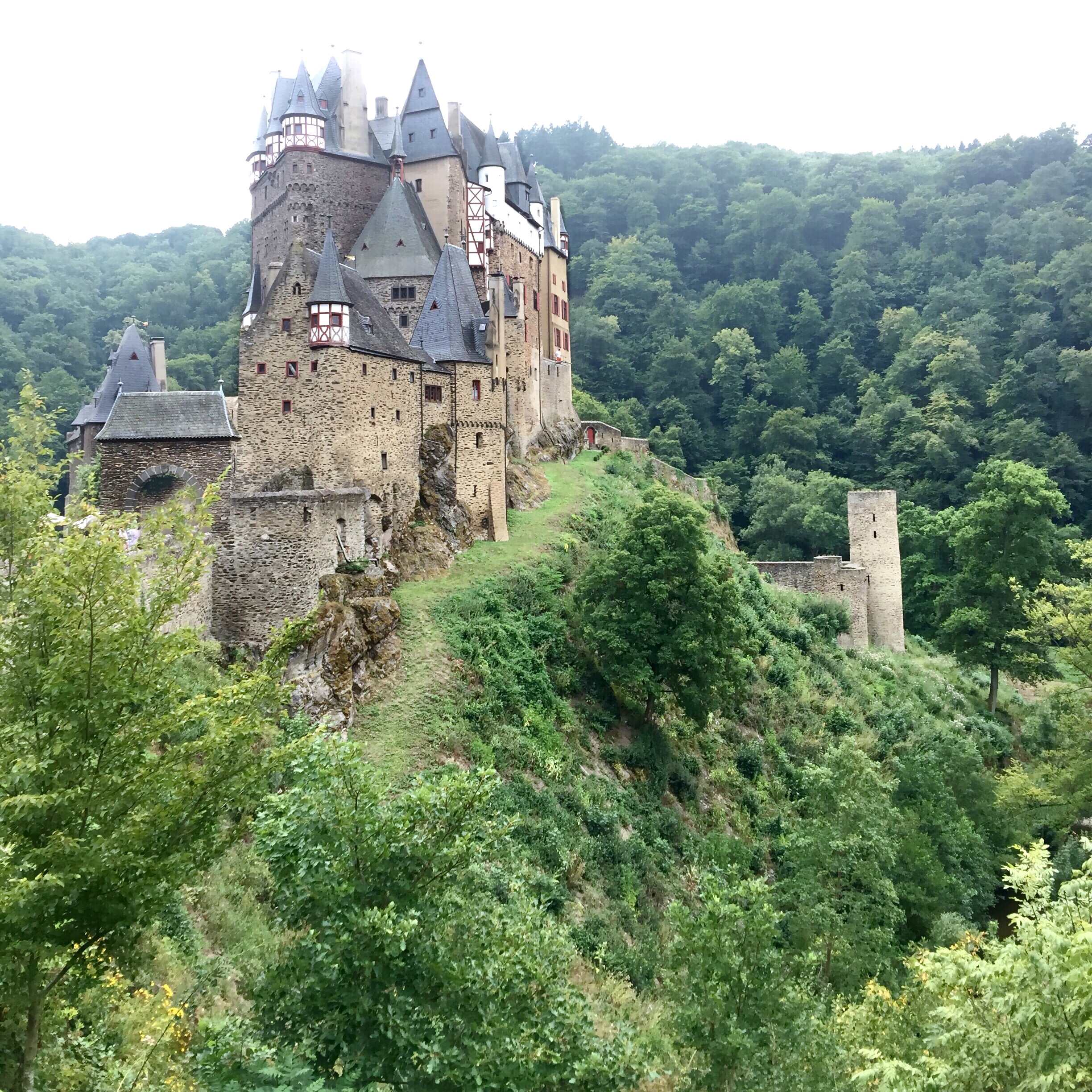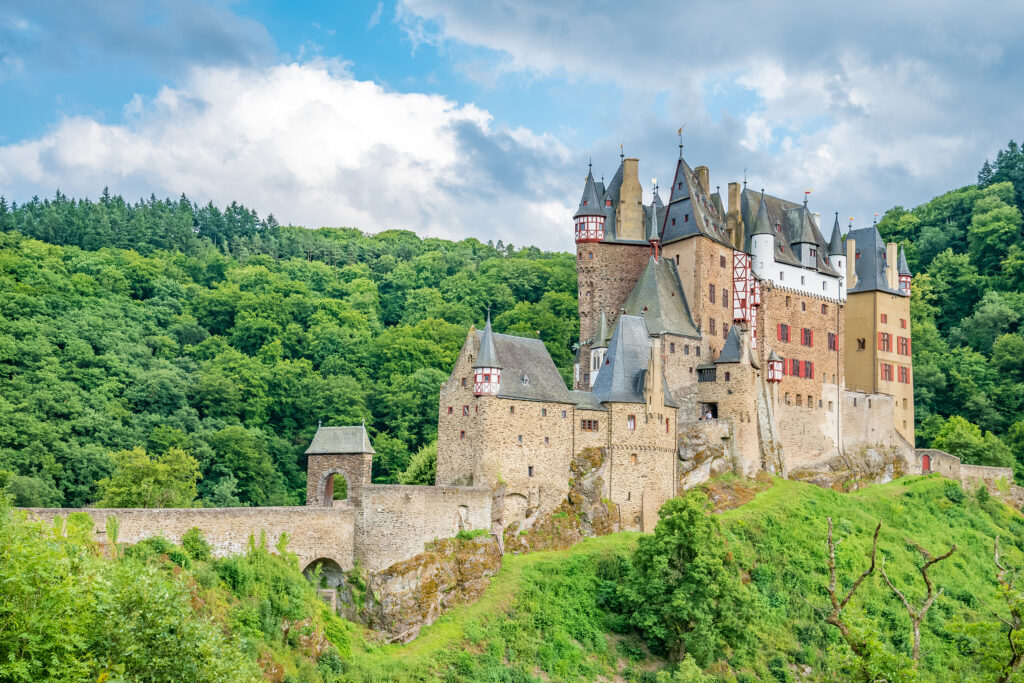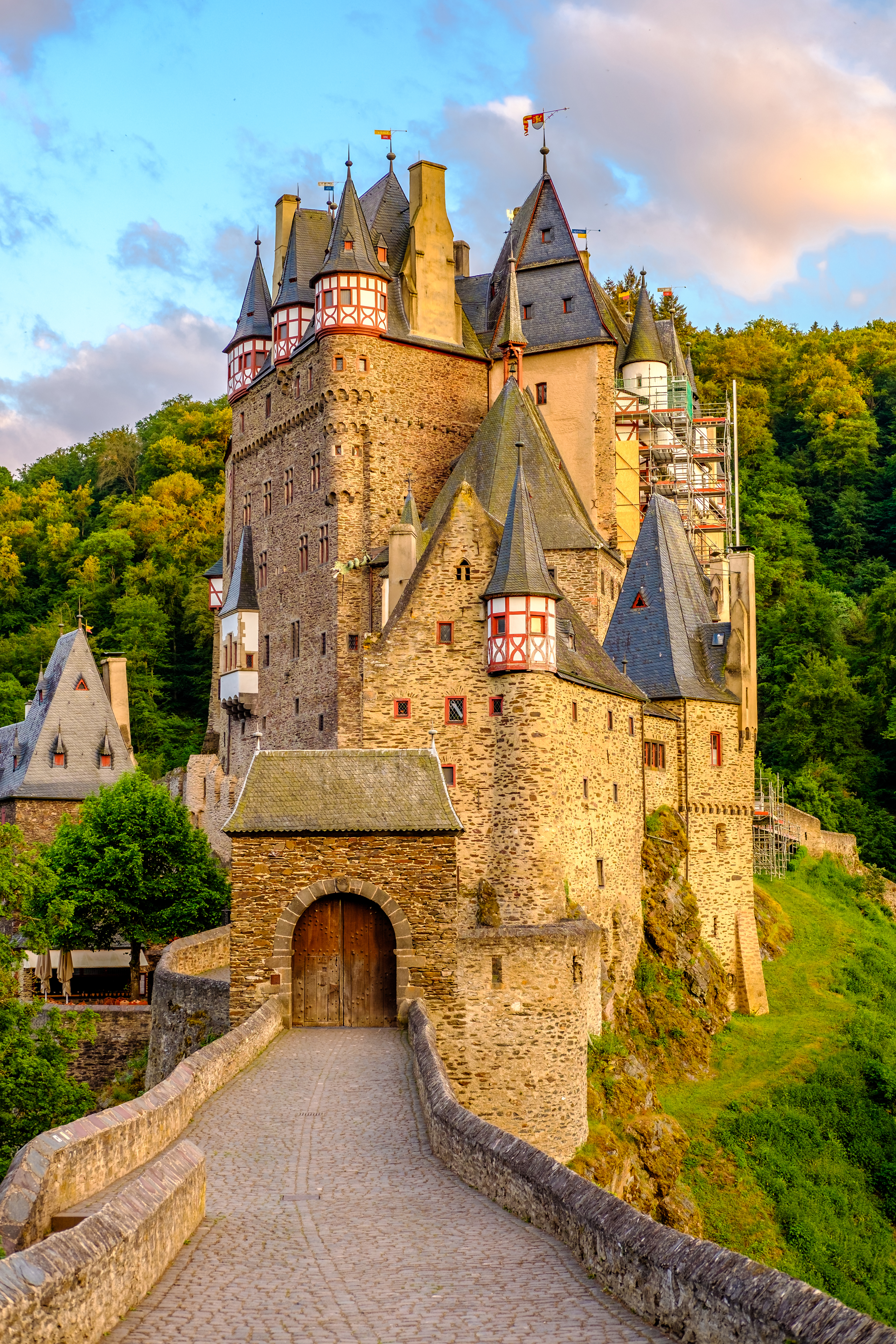

Nestled in the green hills of the Eifel and towering high above the tranquil Elzbach stream, Eltz Castle stands as a testament to medieval ingenuity and resilience. This architectural masterpiece, whose origins date back to the early 12th century, remains one of Germany’s most famous castles and is prized not only for its beauty but also for its uninterrupted history and rich heritage.
A fortress born of necessity. The origins of Eltz Castle are marked by the strategic foresight of medieval builders. It was probably founded around 1157 on an important trade route between the Moselle and the fertile Maifeld. Surrounded by the protective embrace of the Elzbach stream on three sides, the castle was built on a natural rock summit that blended perfectly into the landscape it dominated. The earliest mention of the name Eltz can be found in a deed of donation from Emperor Frederick Barbarossa, which sealed its place in history.
Separate but united lines. At the end of the 13th century, a significant split occurred within the Eltz family. The brothers Elias, Wilhelm, and Theoderich divided the property into different branches of the family: Eltz-Kempenich, Eltz-Rübenach, and Eltz-Rodendorf. As a result of this division, Eltz Castle developed into a “Ganerbenburg,” a joint hereditary castle operated by several owners. Each branch built its own residence within the fortress, creating a unique ensemble of buildings that still characterizes the castle’s silhouette today.
The siege that wasn’t. The lasting legacy of Eltz Castle is marked by its invincibility; it was never taken by force. However, it faced its greatest challenge during the Eltz feud (1331–1336). The conflict arose when the lords of the castle allied themselves with other free knights against the powerful Archbishop Baldwin of Trier. To subdue these rebels, Baldwin built the siege castle of Trutzeltz on a nearby hill and bombarded Eltz Castle with artillery. Despite immense pressure, the defenders held out for two long years before agreeing to terms. They gave up their noble independence but retained control of their beloved residence.
Architectural development over the centuries. In the centuries that followed, Eltz Castle grew not only in size but also in style. Between 1490 and 1540, the Rodendorf family added new houses that echoed the aesthetics of earlier eras and underscored the eclectic charm of the fortress. The communal knights’ hall and chapel remained the heart of the castle, places for communal gatherings and shared spiritual life.
Master builders and noble influences. Prominent figures such as Jakob III von Eltz had a lasting impact on the family’s glorious history. Jakob was born in 1510 and rose to become Archbishop and Elector of Trier. Under his patronage, the family gained prestigious titles, including the hereditary office of Marshal of Trier, further consolidating their influence. The architectural ambitions of the Eltz family reached new heights in the 17th century under Hans Jakob zu Eltz. Together with his wife Anna Elisabeth von Metzenhausen, he completed the imposing Kempenich houses, which incorporated harmonious half-timbered elements that enliven the inner courtyard.
Surviving wars and shaping history. The resilience of Eltz Castle was put to the test once again during the turbulent years of the War of the Palatinate Succession. While many fortresses in the region were destroyed, Eltz Castle remained intact thanks to the diplomatic relations of Hans Anton zu Eltz-Üttingen, a high-ranking officer in the French army. His efforts preserved the castle and allowed it to continue as a living museum of medieval life.
Restoration and renaissance. The romanticism of the 19th century rekindled public interest in Germany’s historical architecture. During this period, Count Karl zu Eltz undertook extensive restoration work to ensure that Eltz Castle would be preserved for future generations. By the end of the 19th century, what began as a residence had been transformed into a cultural treasure that attracted visitors from all over the world, including renowned artists such as William Turner.
Modern legacy. Today, Eltz Castle remains a beacon of history, carefully preserved by the descendants of the Eltz family. It is an example of continuity, having been passed down through 34 generations. The current administrator, Karl Graf von und zu Eltz-Kempenich, maintains the castle with a view to preservation and public participation. Visitors to Eltz Castle can explore its historic halls from April to November and embark on a journey through time, with guided tours revealing the secrets of its many rooms. The Rübenacher House houses a collection of armor, elegant furniture, and religious artifacts, while the treasury displays over 500 exquisite treasures from several centuries.
Legends and myths. Beyond its tangible history, Eltz Castle is a cradle of legends. Whispers of ghostly apparitions and tales of hidden treasures echo within its ancient walls. The castle’s ethereal presence continues to inspire storytellers, weaving its legacy into the broader narrative of German folklore.
A monument to time. Eltz Castle is a monumental testament to architectural mastery and family perseverance. It is not just a structure of stone and mortar, but a living chronicle of medieval Europe—a vivid reminder of a past where power, strategy, and art converged to create timeless beauty.
From its role in pivotal historical events to its inspiring influence on modern culture, Eltz Castle defines the ethos of endurance and elegance. As visitors stroll through its historic corridors, they touch the continuum of time and experience firsthand the splendor of a bygone era preserved in the heart of Germany’s enchanting landscape.