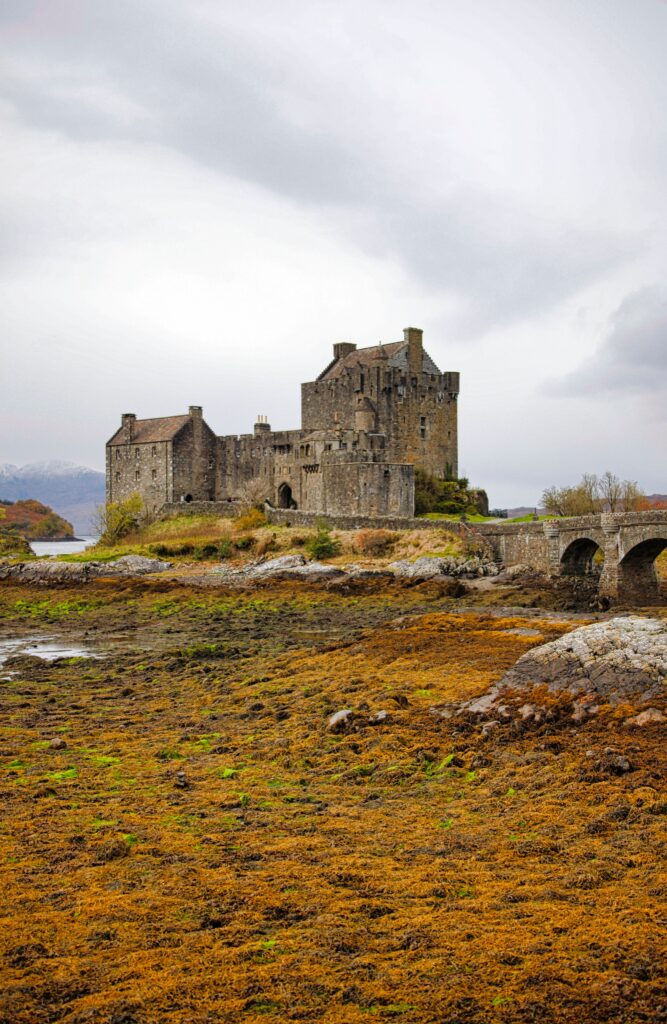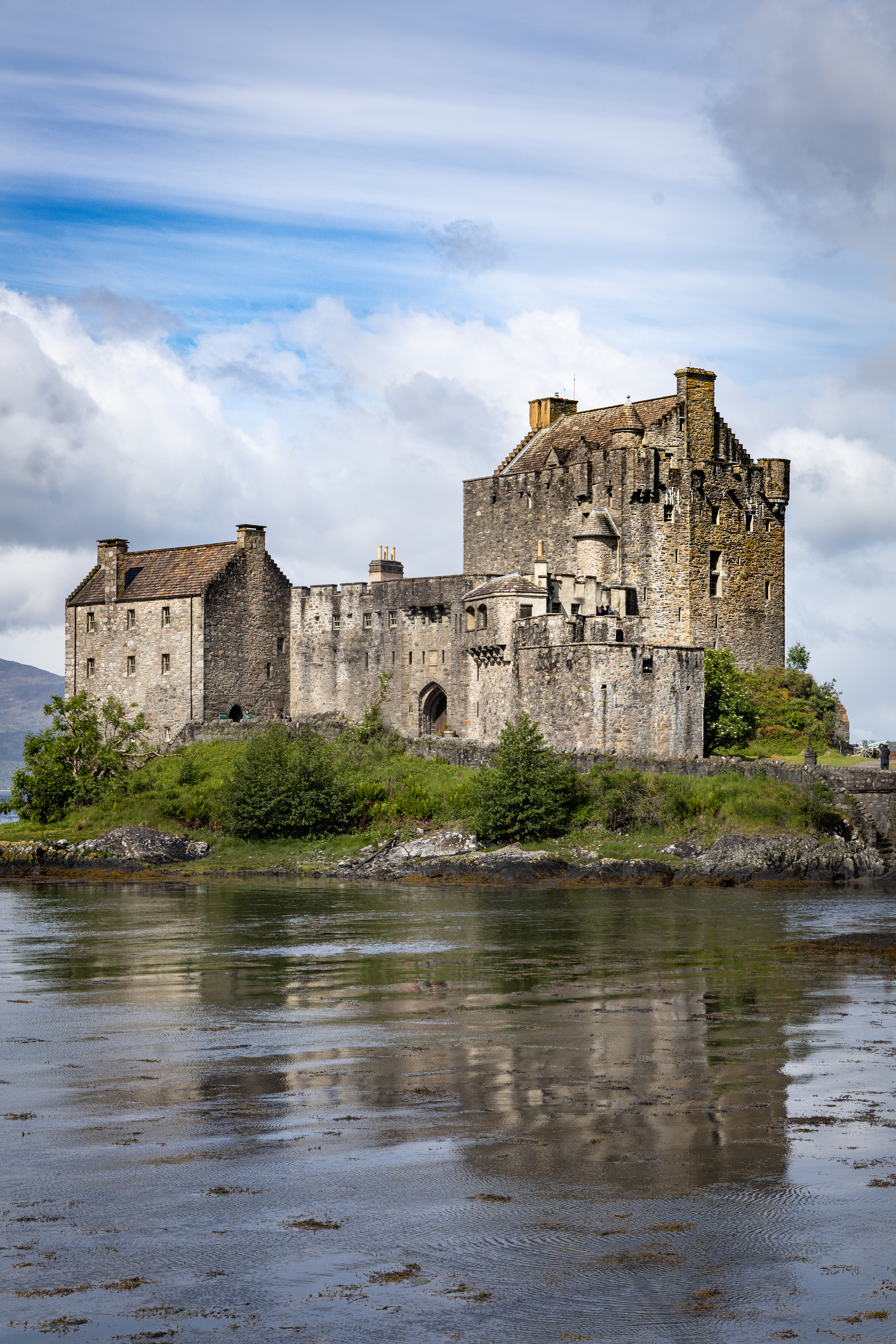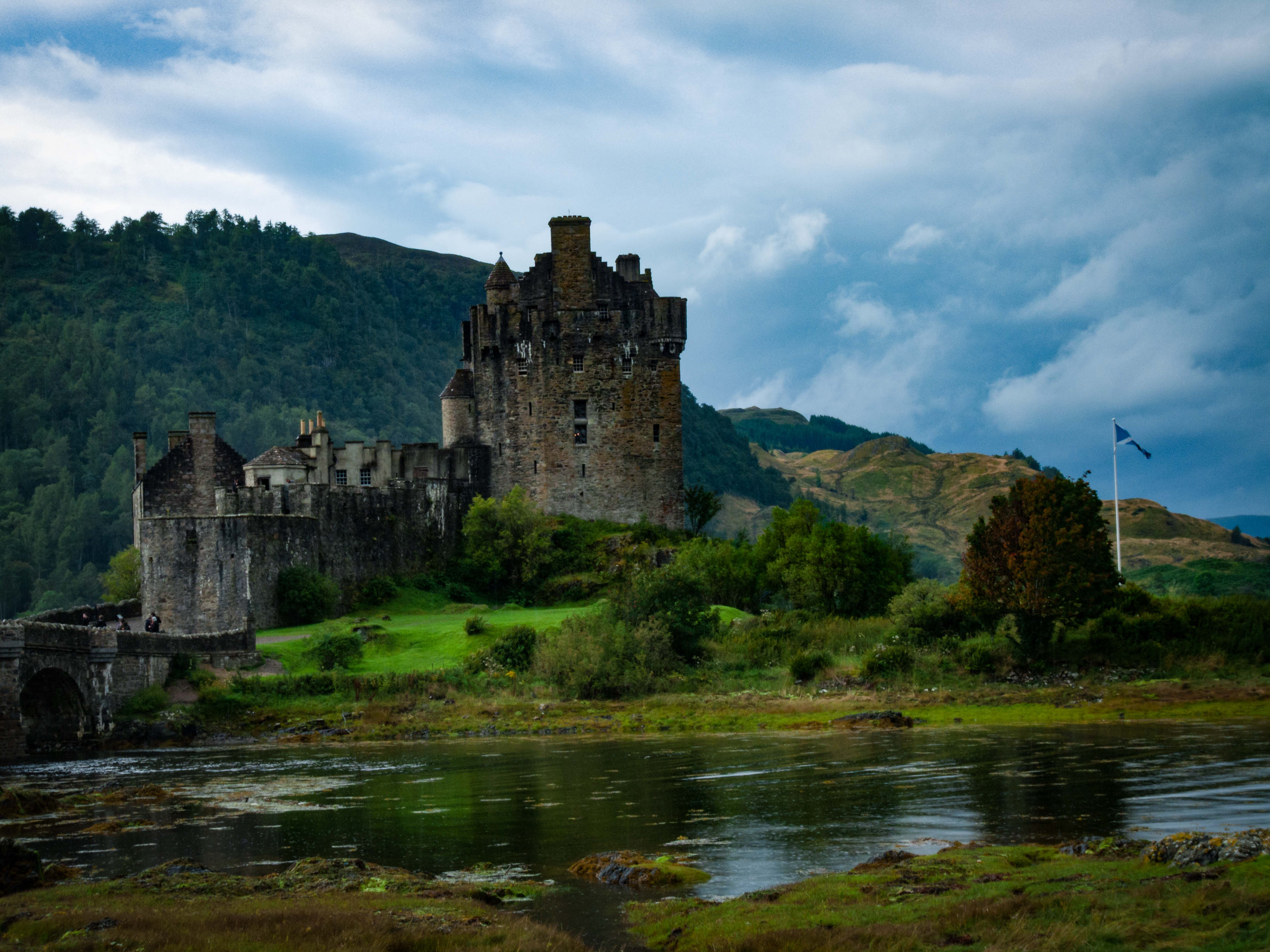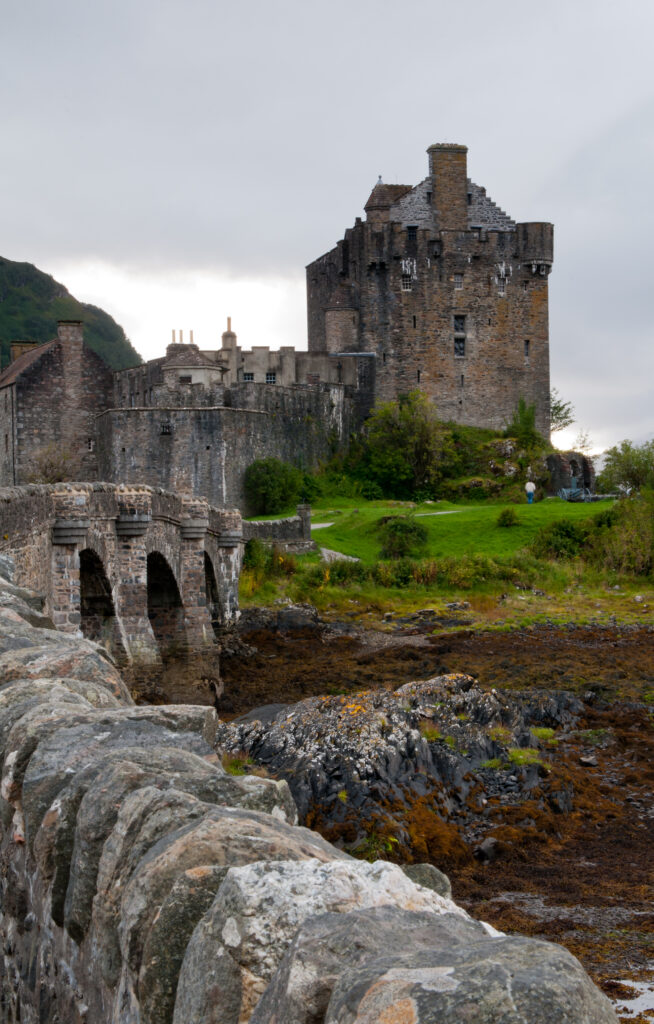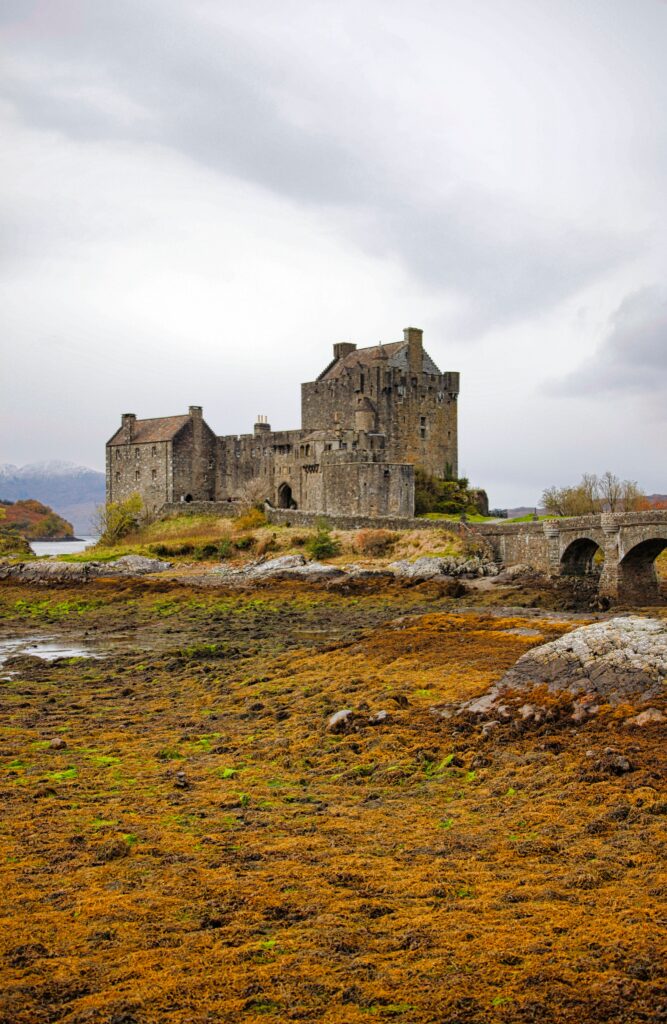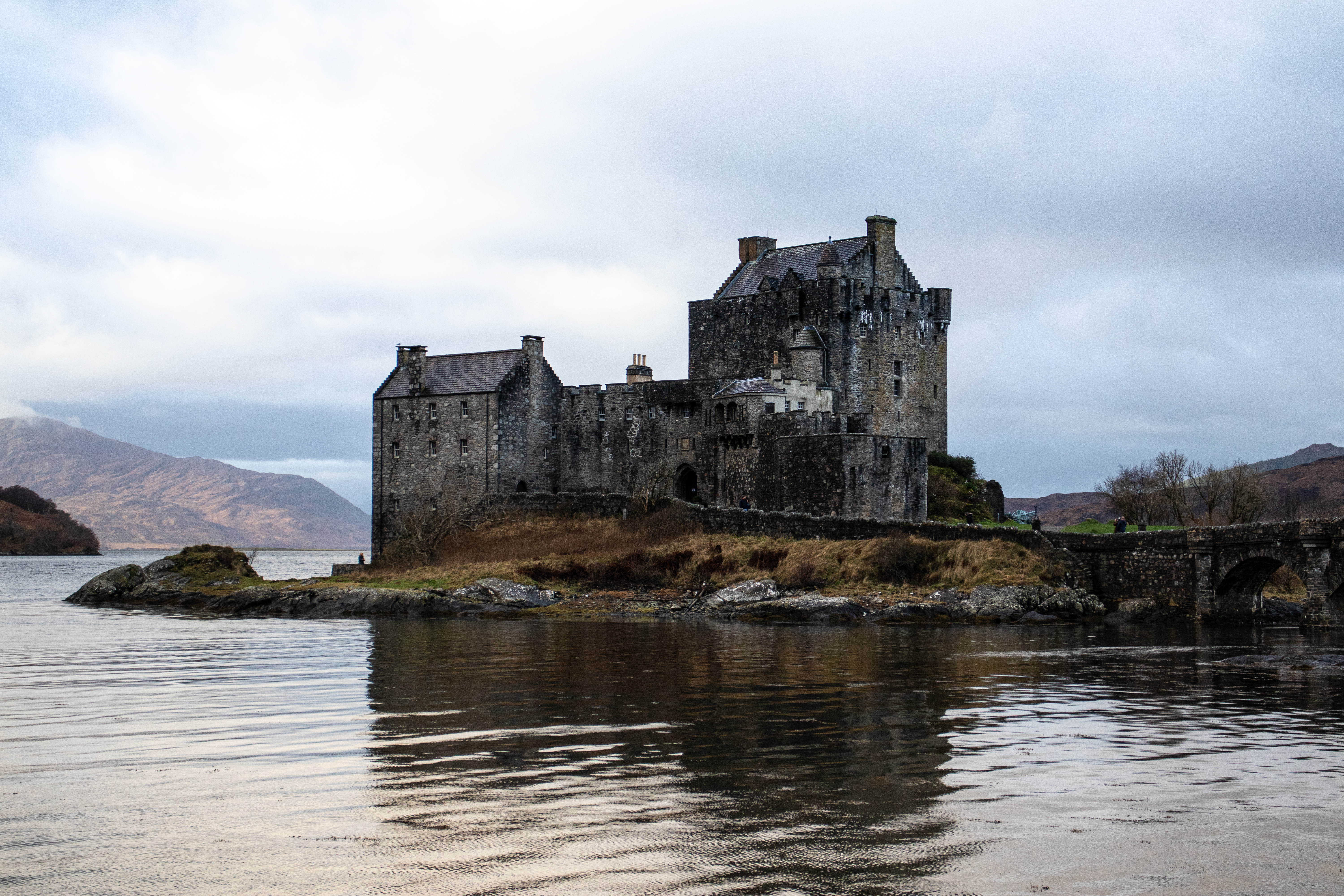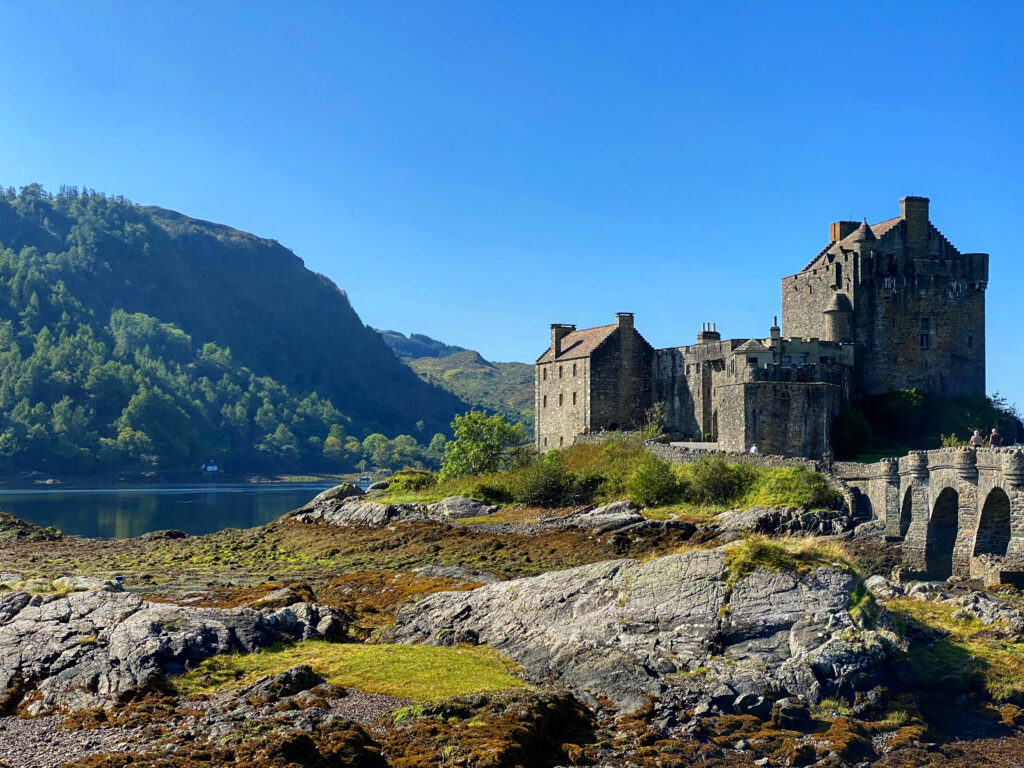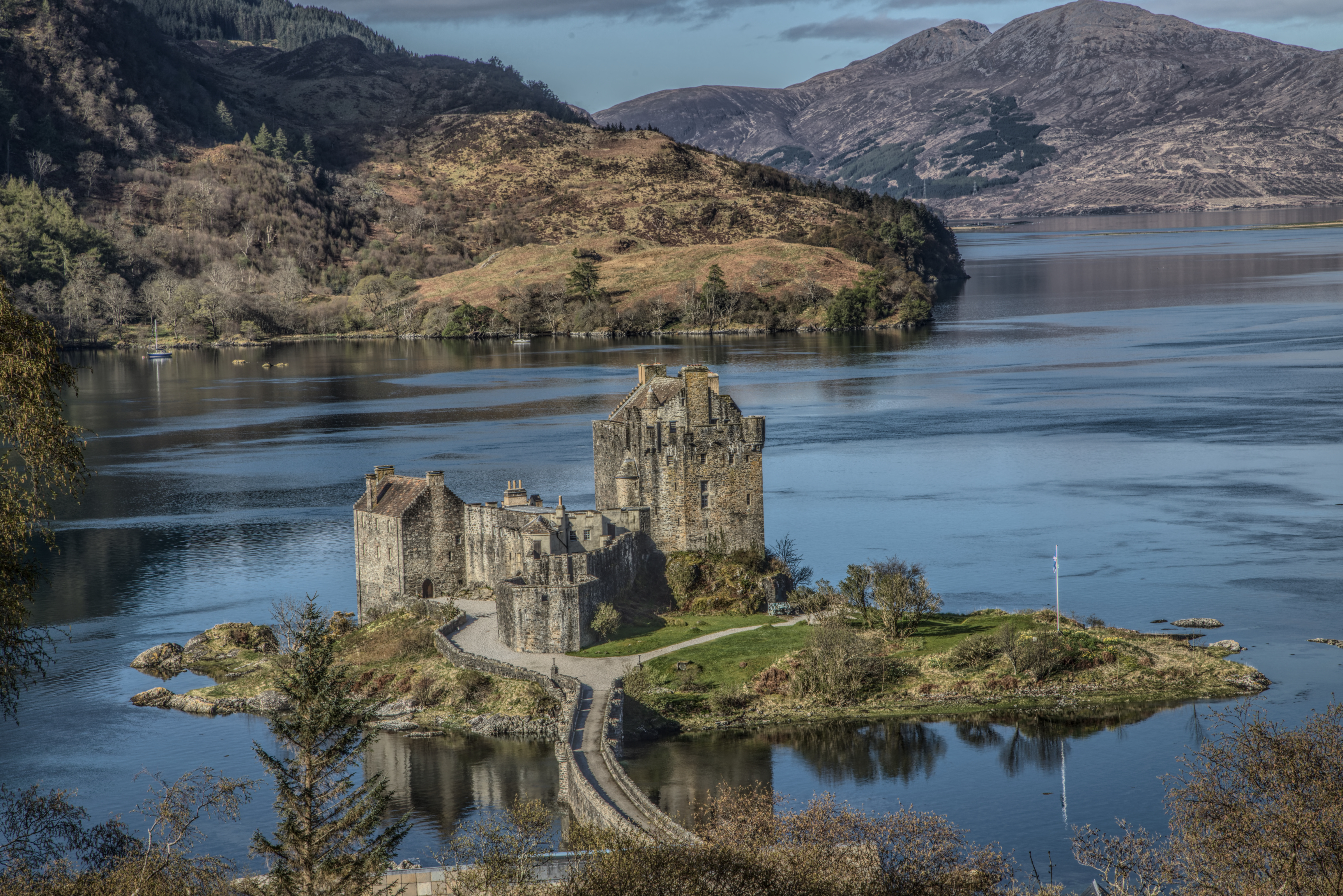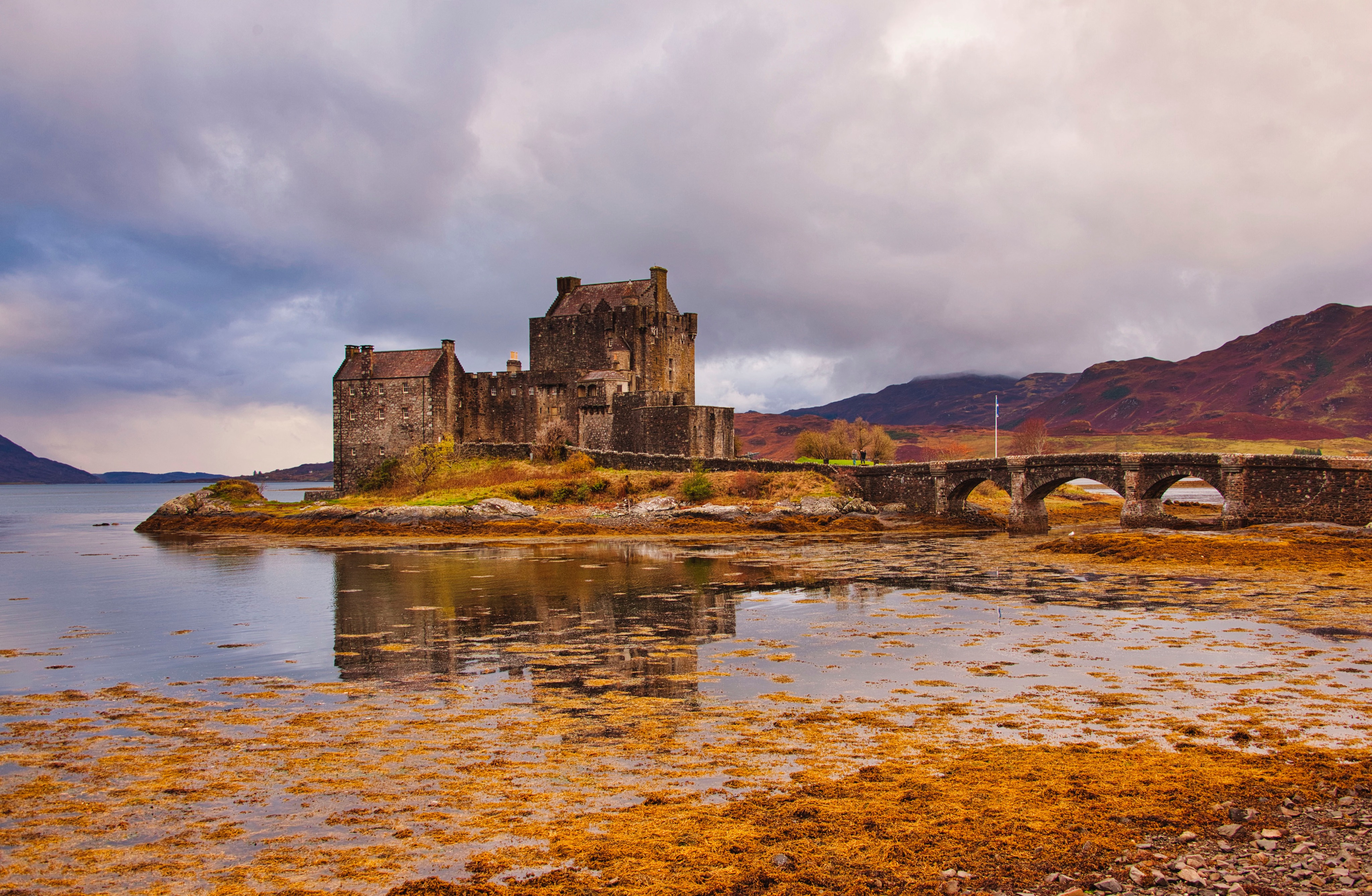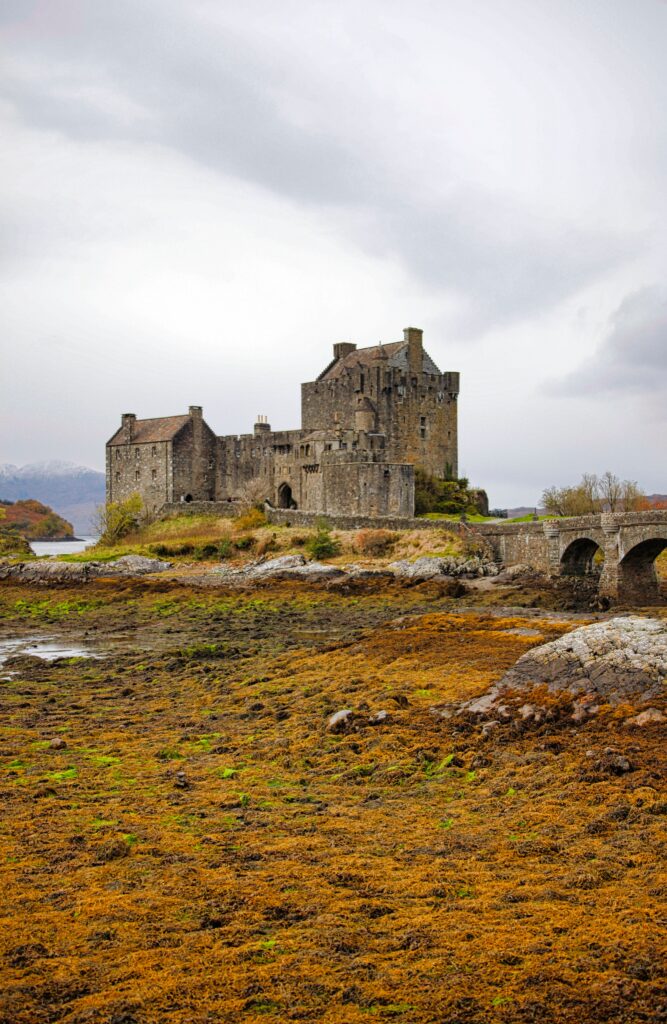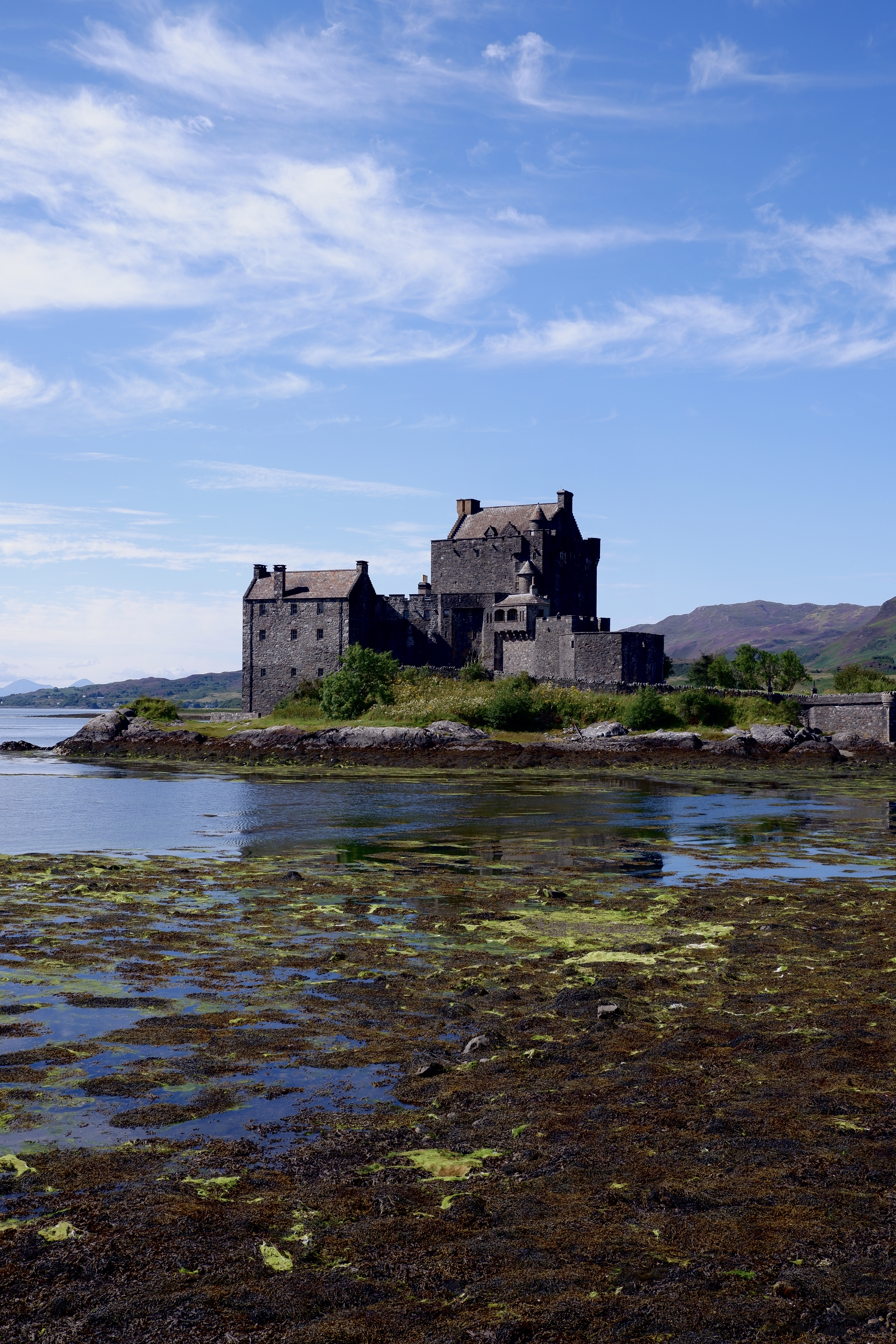

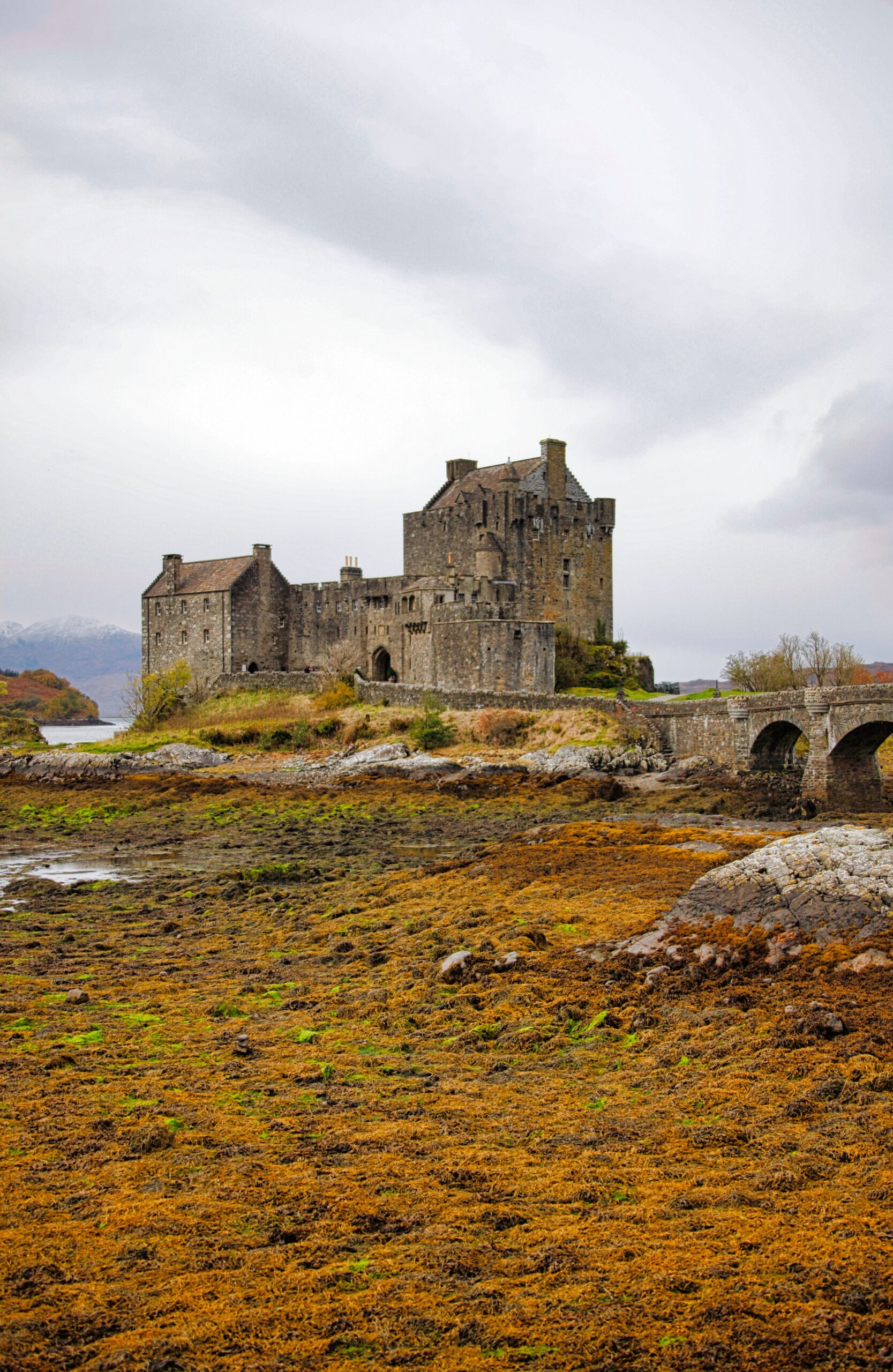
Nestled where three lochs meet in the western Scottish Highlands, Eilean Donan Castle stands as a timeless sentinel to Scotland’s storied past. Its name, translating to “Donan’s Island,” harks back to Saint Donnán of Eigg, a 6th-century Celtic martyr whose spirit is said to linger on. This ancient stronghold near the village of Dornie transforms into a tidal island during high tide, accessible only by a stone footbridge that enhances its enigmatic allure.
The strategic significance of Eilean Donan is traced back to around 1220 under the reign of Alexander II, erected as a bulwark against Norse invaders. The original fortifications, including the now-vanished curtain wall and keep, bear silent witness to this turbulent era. Early records ambiguously credit the castle’s construction to various noble claims, but from 1266, it firmly became the realm of the Clan Mackenzie of Kintail.
In the winter of 1307/08, Eilean Donan provided sanctuary to Robert the Bruce, then a fugitive in the First War of Scottish Independence. Although the support from the Mackenzies was minimal, the castle’s role in his resistance cemented its legacy in the annals of Scottish history.
The Macrae clan, arriving in the early 14th century, became pivotal figures in the castle’s tale. King James I’s attempt to subdue the rebellious Highlands in 1427 saw him imprison many clan chiefs, including a young Alexander Mackenzie. Despite being exiled to schooling in Perth, Alexander’s loyalty to the Crown was later rewarded, solidifying Clan Mackenzie’s ties to the monarchy and establishing their authority over Eilean Donan.
In 1497, the lawlessness of Hector Roy Mackenzie led to the clan’s proscription. The Earl of Huntly, tasked by James IV with capturing the fortress, succeeded, briefly placing the castle under Royal control. By 1509, Eilean Donan returned to Mackenzie rule, with John of Killin formalizing his lordship over Kintail and installing Christopher Macrae as the keeper by 1511.
The 16th century marked a period of intense clan warfare. In 1539, Eilean Donan withstood an assault by Donald Gorm Macdonald of Sleat. Despite being defended by only three individuals, the fort held its ground, repelling the attackers after Macdonald’s fatal injury. Another significant conflict involved the MacDonalds of Glengarry, culminating in a ferocious feud with the Mackenzies that lasted two decades until Angus MacDonald’s death in 1602 brought a semblance of peace.
Farquhar Macrae, born at Eilean Donan in 1580, became a key figure in its history. His tenure as steward saw the castle flourish under the visiting Colin Mackenzie of Kintail, later Earl of Seaforth. Farquhar’s noteworthy contributions included hosting gatherings and education for the Earl’s son Kenneth, ensuring the castle remained a political and social hub.
The English Civil War added another layer to Eilean Donan’s saga. The castle supported the royalist cause, leading to its brief occupation by Parliamentary forces following Charles I’s execution. Resistance from the local populace eventually forced these occupiers to withdraw, demonstrating the Highlanders’ enduring defiance.
A turbulent period ensued with strict royalist allegiances. Simon Mackenzie of Lochslin’s recruitment drive in 1650 ended in a disagreement with Farquhar Macrae, prompting Farquhar to vacate the castle—the last resident before its eventual restoration centuries later. The Cromwellian forces under General Monck passed through Kintail in 1654, marking another chapter of military significance.
The Jacobite risings brought further upheaval. In April 1719, George Keith, 9th Earl Marischal, and 300 Spanish soldiers occupied Eilean Donan, anticipating a larger uprising. However, the crucial support never materialized. Instead, three Royal Navy frigates bombarded the castle, leading to its eventual capture and destruction after a fierce artillery exchange and the discovery of substantial gunpowder stores which were used for the castle’s demolition.
The castle lay in ruins for nearly two centuries until Lieutenant Colonel John MacRae-Gilstrap purchased it in 1912. Inspired by a local mason’s vivid dream of its former glory, restoration efforts began earnestly. These efforts, spanning from 1920 to 1932, reincarnated Eilean Donan, incorporating modern touches like a stone bridge and a war memorial dedicated to Clan Macrae’s World War I casualties. This Herculean task cost an estimated £250,000, a testament to the resilience of heritage.
After MacRae-Gilstrap’s death in 1937, the castle remained uninhabited, opening as a museum in 1955. Today, Eilean Donan is stewarded by the Conchra Charitable Trust, attracting throngs of visitors drawn by its picturesque setting along the A87 route to Kyle of Lochalsh and the Isle of Skye. Ranked as one of Scotland’s most photographed sites, it lures over 310,000 tourists annually.
The architecture of Eilean Donan bears layers of historical evolution. The original 13th-century curtain wall, encompassing around 3,000 m², now interlaces with later edifices. The North Tower’s remnants and other defensive structures speak of past sieges and warriors who walked its grounds.
Archaeological excavations between 2008 and 2009 unearthed evidence of metallurgical activity within the northern part of the castle, reaffirming long-held suspicions about the site’s industrial past. Changes in the defensive layout, particularly the smaller quadrangular fortifications of the late 14th or early 15th centuries, remain enigmatic but indicate adaptations to shifting military strategies.
The 16th-century augmentations introduced residential quarters and new defensive bastions, aligning with the era’s burgeoning artillery use. The castle’s hexagonal hornwork and well added layers of defense, although entrances shifted for practicality over time.
Drawings by Lewis Petit from 1714 revealed the extensive damage Eilean Donan endured, setting the stage for its thorough reconstruction in the early 20th century. Current stone structures meticulously recreate the original layouts while adjusting for modern interpretations and conveniences.
Entering Eilean Donan today, visitors traverse through a grandly adorned portal under the protective Gaelic inscription heralding Clan Macrae’s enduring guardianship. The courtyard levels have been modified for seamless access to the tower house, blending historical reverence with accessibility. The interior features, such as the vaulted barrack hall and the heraldic dining rooms, encapsulate the castle’s storied grandeur.
Eilean Donan’s cinematic appeal further cements its mythic status. From “Highlander” to “James Bond: The World Is Not Enough,” its appearance in film and television magnifies its allure, bridging the gap between reality and legend.
Thus, Eilean Donan Castle stands not merely as a relic of bygone eras but as an icon of resilience, mystique, and perpetual rebirth, echoing the valor and tenacity of those who shaped its formidable legacy.