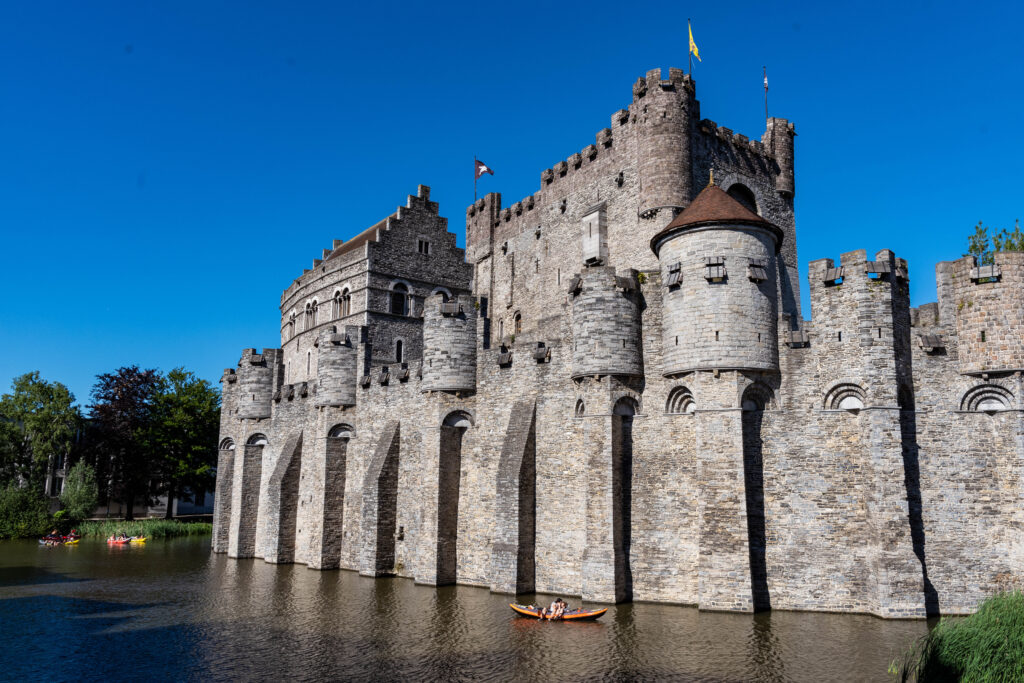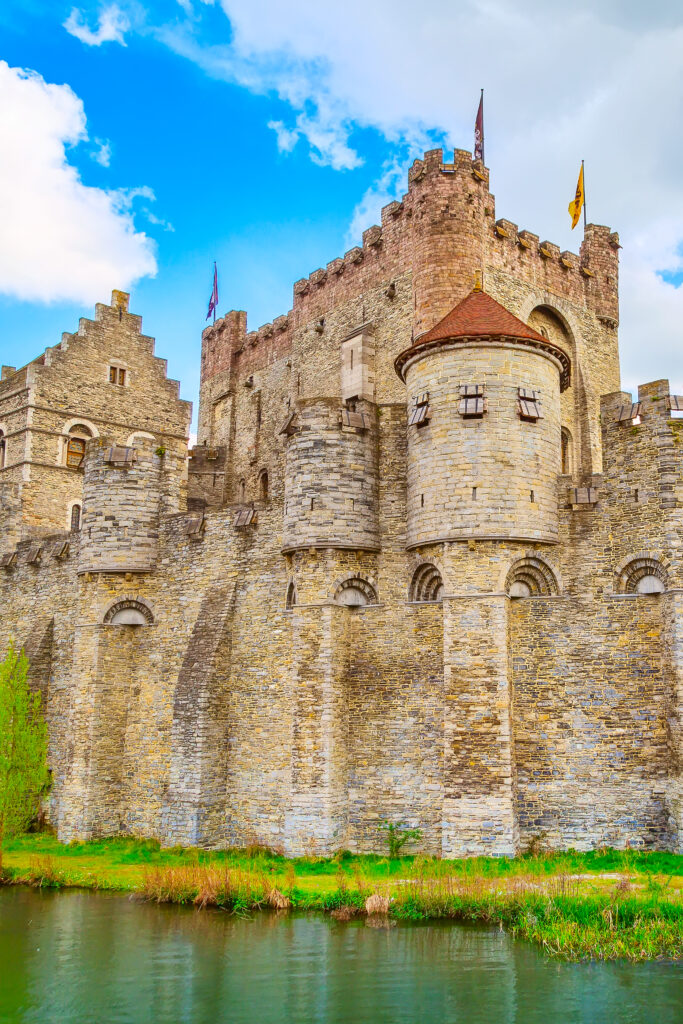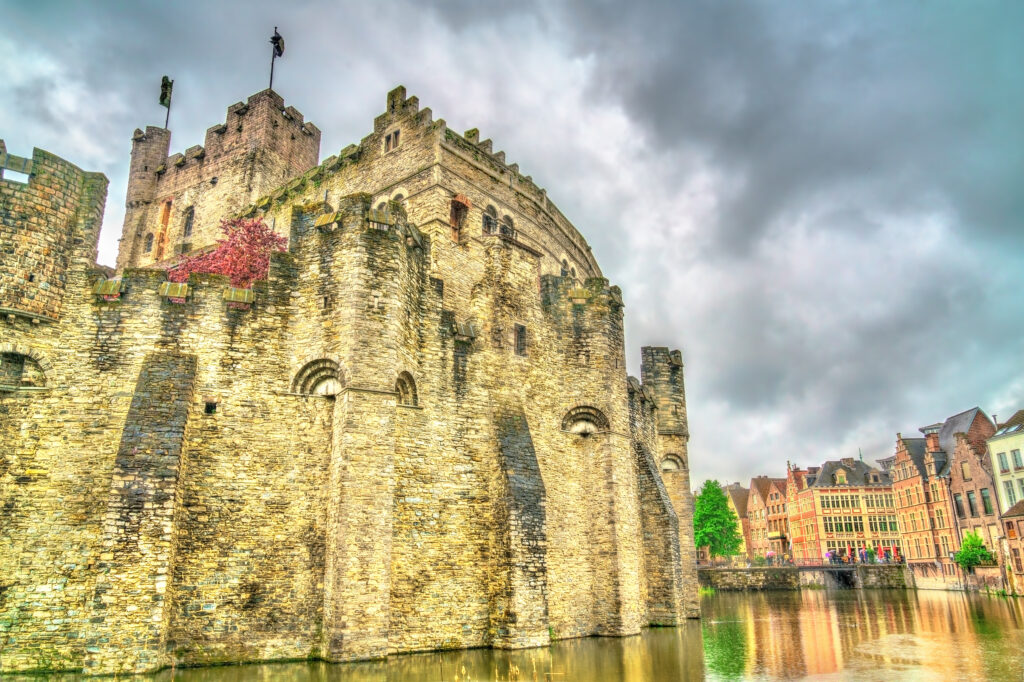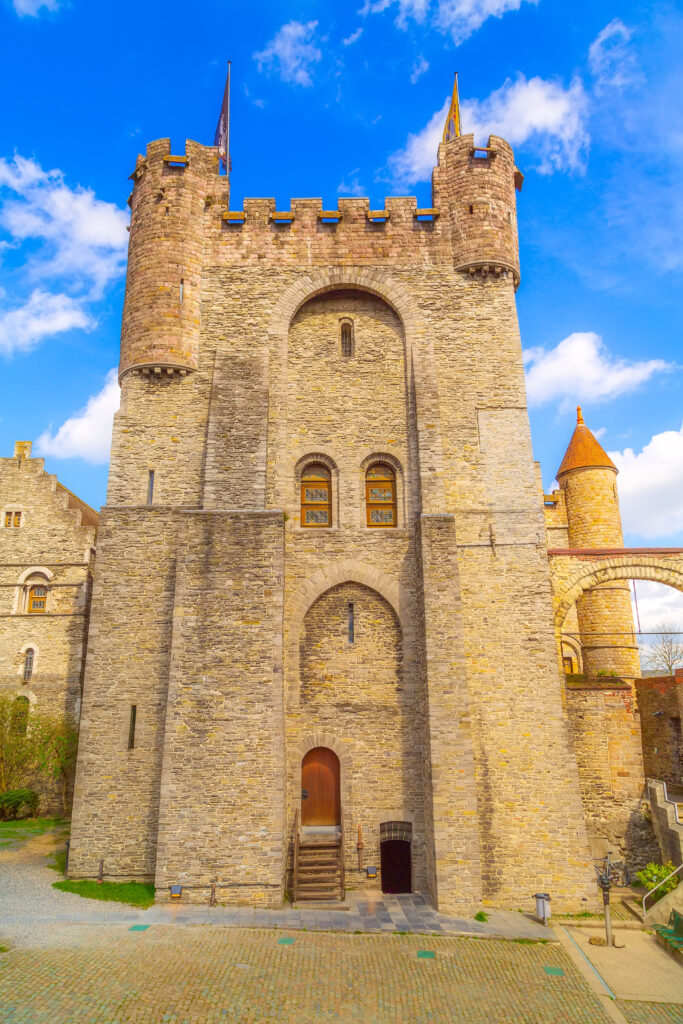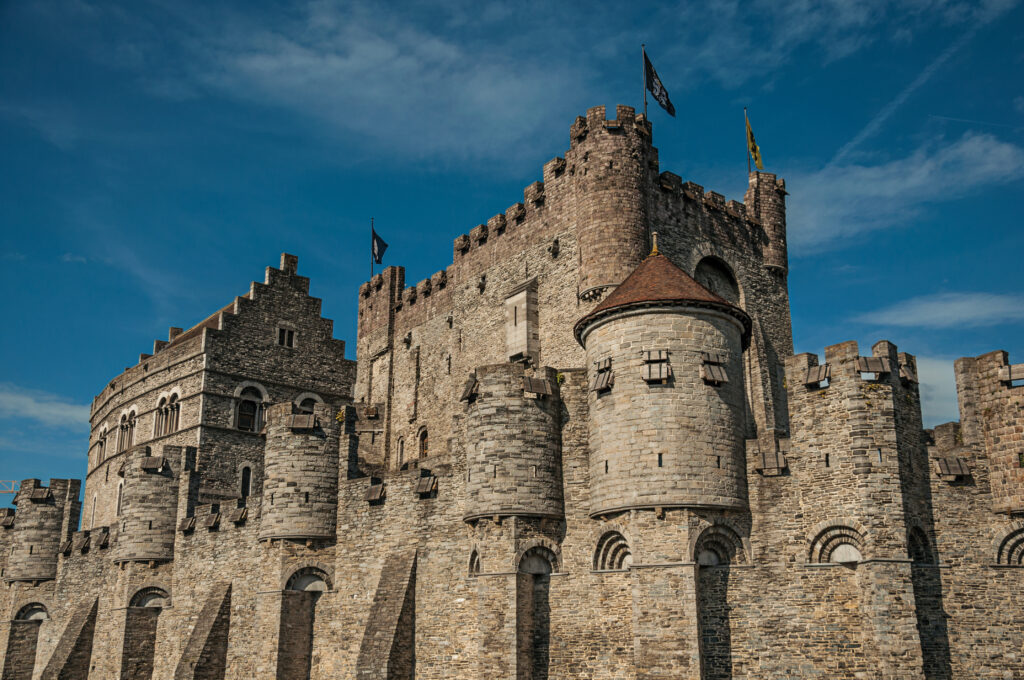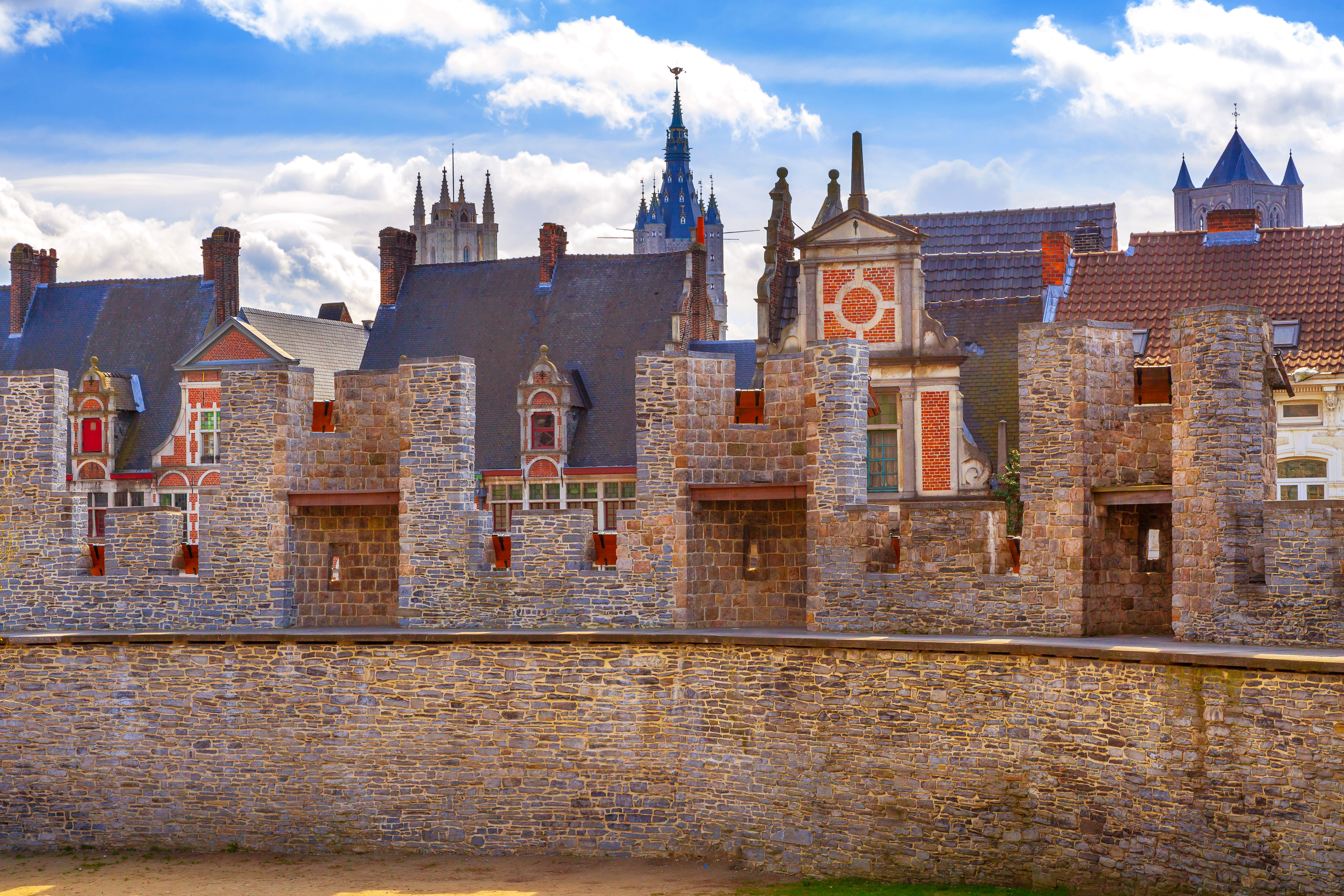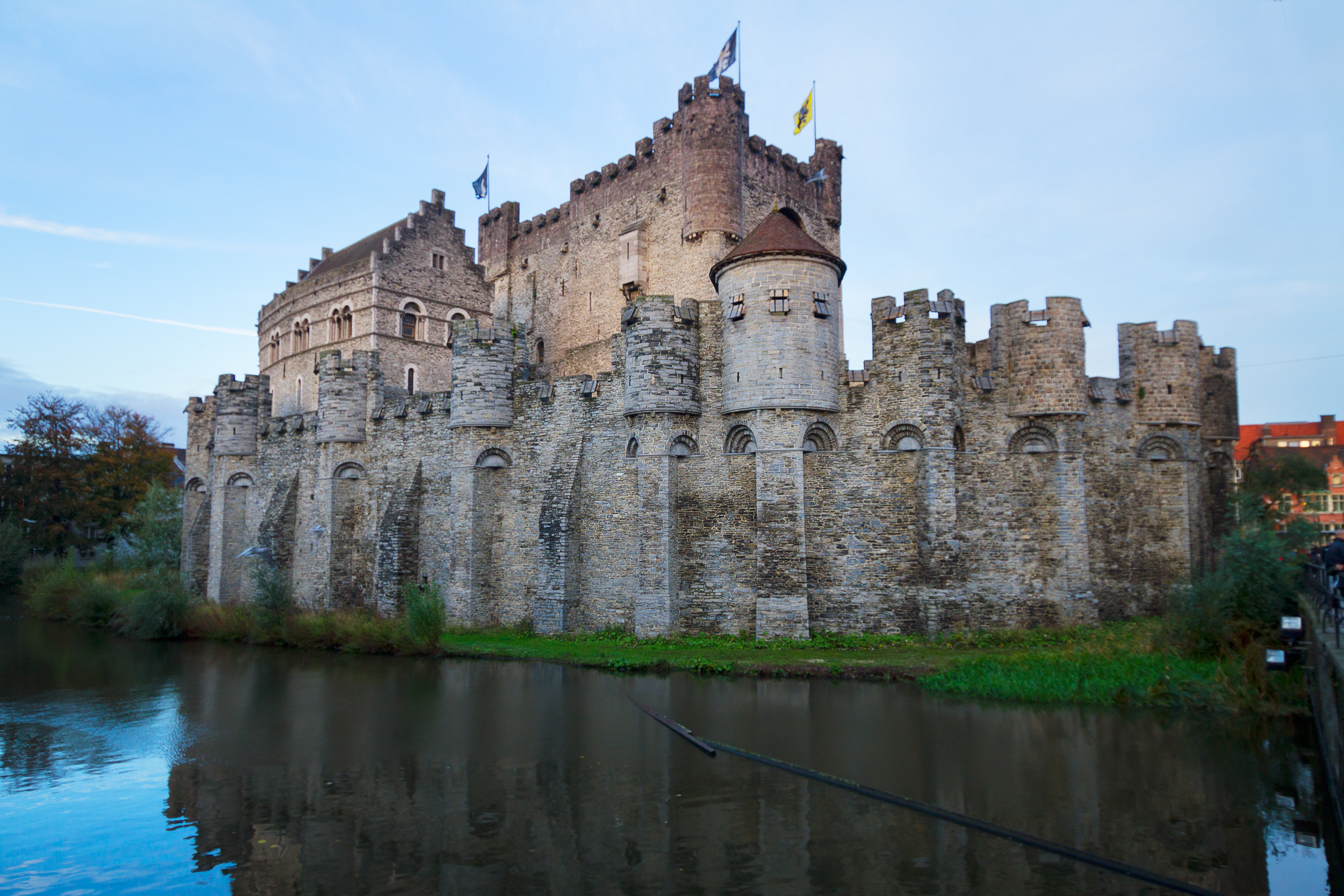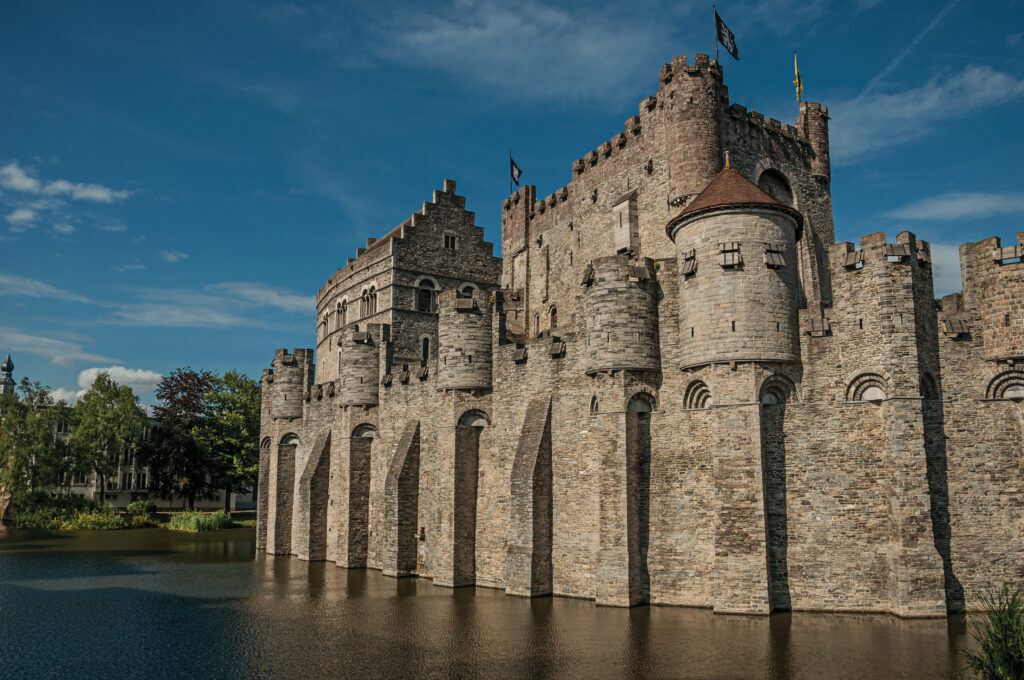

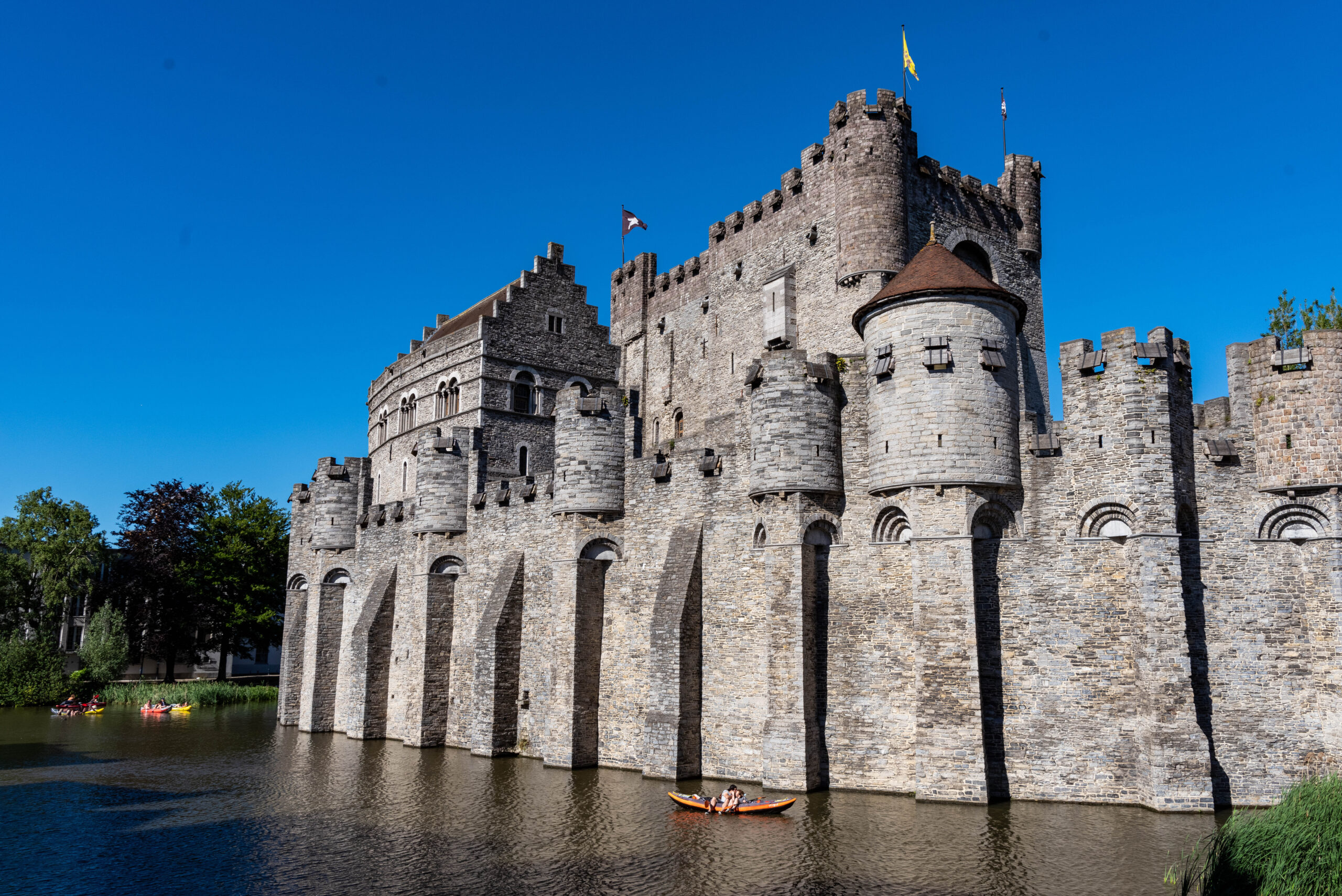
The storied walls of Gravensteen Castle in Ghent whisper tales of power, intrigue, and transformation. A testament to the architectural grandeur of medieval Europe, it stands as one of the continent’s largest remaining water castles. Its origins date back to the 9th century, strategically erected at the confluence of the Lieve and Leie rivers on a commanding sand dune. This mighty fortress not only dominates the landscape of Ghent but also symbolizes the rich tapestry of European history woven through myth and legend.
Ancient Foundations and Legendary Beginnings – Long before the first stones of Gravensteen were laid, evidence suggests that a Roman settlement once existed on this very site, though it was abandoned early in antiquity. The first known fortification is attributed to the time of Charles the Bald, possibly established by Baldwin I, nicknamed “Iron Arm,” around 870 AD. Baldwin, founding figure of the House of Flanders, is said to have constructed a simple wooden motte-and-bailey here, influenced by Norse invaders who had built similar structures. Legends speak of Viking marauders who struck fear into local hearts and left behind tales of their fierce prowess and mysterious rites. These stories, passed down through generations, paint a picture of a tumultuous frontier where the line between history and mythology blurs.
The Rise of Stone: A Fortress Reborn – By the 10th century, the wooden fortifications gave way to a more permanent stone building. This marked the beginning of Gravensteen’s evolution into a formidable fortress. A surrounding stone curtain wall completed the defense system, safeguarding against the threat of invasion. The year 1128 saw the castle’s first significant siege by followers of Thierry of Alsace. This conflict resulted in extensive damage to the structure, which was later rebuilt from its ruins by Count Philip of Alsace between 1180 and 1200. Philip expanded the fortress, constructing a comprehensive ring-ditch and raising the central keep—an imposing donjon towering 30 meters high. It was during this era that windows for the castellan and the cross-shaped opening above the main gate were added, features that would become iconic symbols of the castle’s facade. Gravensteen continued to evolve throughout the medieval period, reflecting its status as both a strategic stronghold and a seat of judicial authority. The overlapping periods of construction and restoration across the centuries reveal a continuous effort to refine and reinforce.
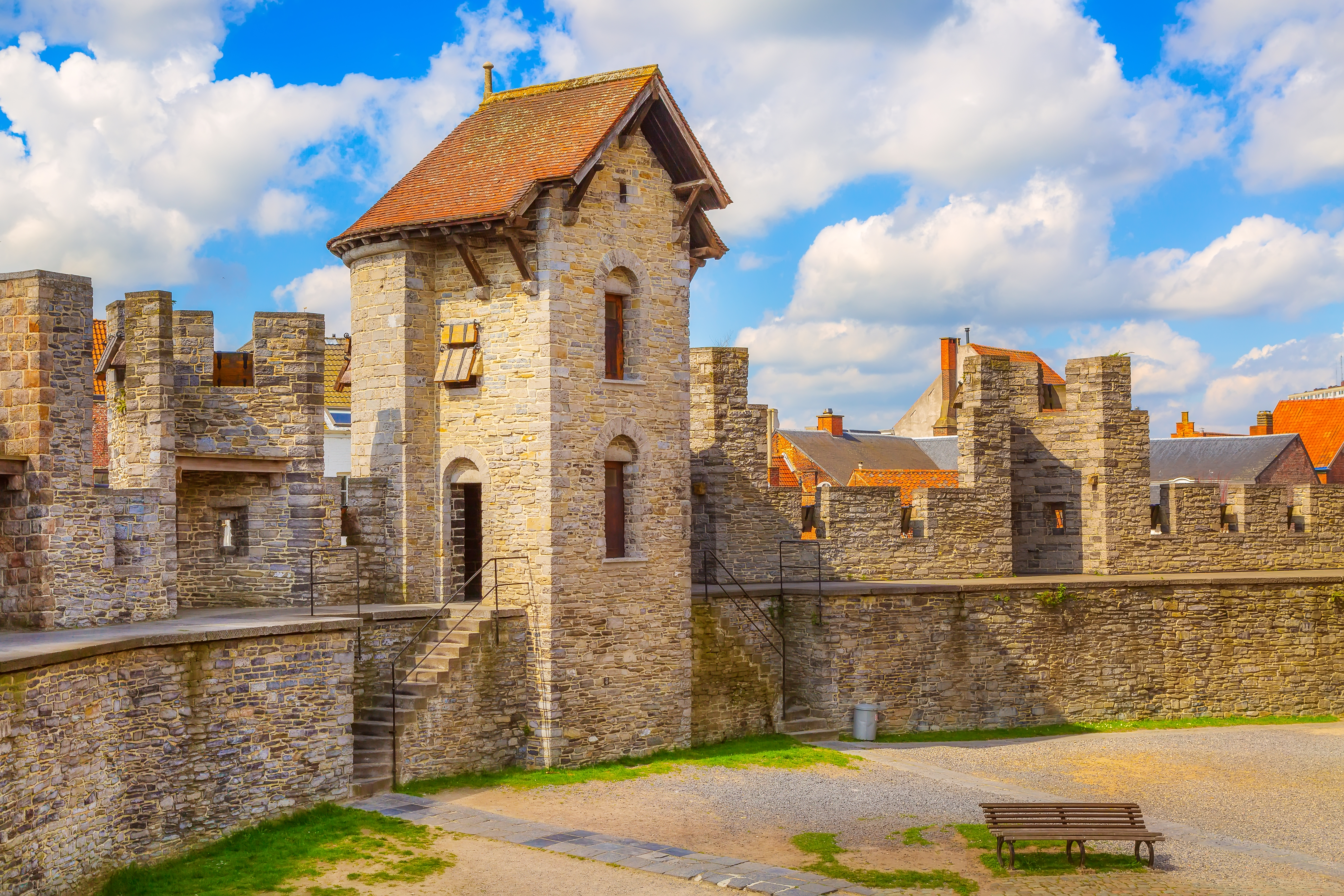
Court of Power and Palatial Residence – In the 13th and 14th centuries, Gravensteen stood as both a fortress and a symbol of comital power. It boasted a newly fortified oval courtyard encircled by a massive wall interspersed with 24 jutting, two-storied turreted towers. Within these walls lay the administrative heart of Flemish rule—a complex that included the count’s residence and essential economic spaces. Gent, a burgeoning city by the 12th century, enveloped the castle, knitting together urban life and military might. However, by the 14th century, the counts of Flanders relocated to the nearby Prinsenhof, illustrating the shifting dynamics of power and prestige. Nonetheless, Gravensteen remained a focal point for grand banquets and ceremonial occasions. The siege of 1301, when the citizens of Ghent set the castle aflame, marks another dramatic chapter in its history. This conflict underscored the tension between the ruling elite and the city’s bourgeoisie, a theme recurrent in the annals of Gravensteen.
Fortified by Time: Legends and Restoration – In succeeding centuries, Gravensteen was repurposed to serve as a courthouse from 1407 to 1708, complete with dungeons and a feared torture chamber. Notable among its detainees was Gerhard Mercator, the cartographer imprisoned under charges of Lutheran heresy in 1544, a poignant reminder of the religious tumult that swept through Europe. Ownership transitioned multiple times, and by 1780, the castle began to reflect the industrial revolution’s influence, transformed into a textile factory. Its auxiliary buildings housed workers, while the grand gatehouse served as the director’s residence. After the fervor of the French Revolution, it became a sprawling cotton mill enterprise. The closing years of the 19th century saw plans for demolition staved off by civic intervention. The city of Ghent acquired Gravensteen in 1887, embarking on a project of minimal conservation. It wasn’t until the city’s 800-year celebration from 1889 to 1908 that a significant restoration breathed new life into its ancient stones.
Echoes of the Past: A Modern Revival – Today, Gravensteen serves as much more than a monument to its own illustrious past. An audio-guided tour takes visitors on an immersive journey through its hallowed halls. The warrior spirit can be felt in its star-shaped design, reminiscent of Syrian Crusader forts, with the central keep rising majestically between river arms like a colossal sentinel. Inside, rooms once filled with echoes of deliberation and judgment stand ready to tell their stories. The grand audience hall showcases its powerful vaulting, and the great hall on the first floor commemorates the Order of the Golden Fleece established by Philip the Good of Burgundy in 1430. The exhibits, now more family-friendly, maintain a connection to the castle’s storied past, having eschewed much of the grim artifacts of torture for an invitingly austere interior. Yet, the presence of medieval weaponry collections ensures that visitors leave with a sense of the raw historical force that Gravensteen once embodied.
The legend of Gravensteen endures, entwined with myth and history, each stone a silent witness to the passage of countless lives and epochs. Whether a symbol of conquest, a court of law, or a cloth mill, the castle remains a keystone of Ghent’s rich historical framework—a timeless chronicle of human endeavor and resilience.