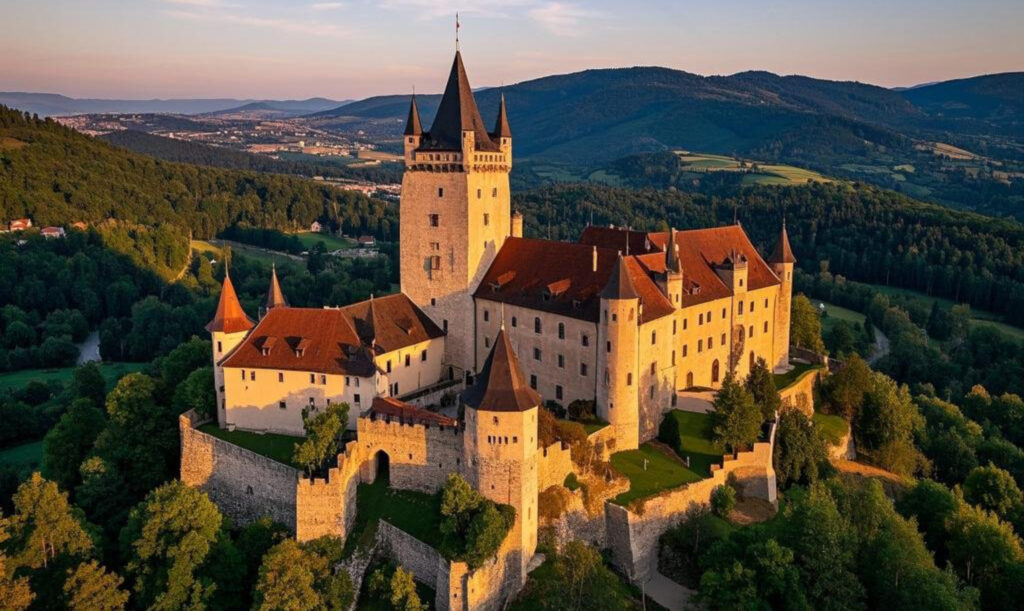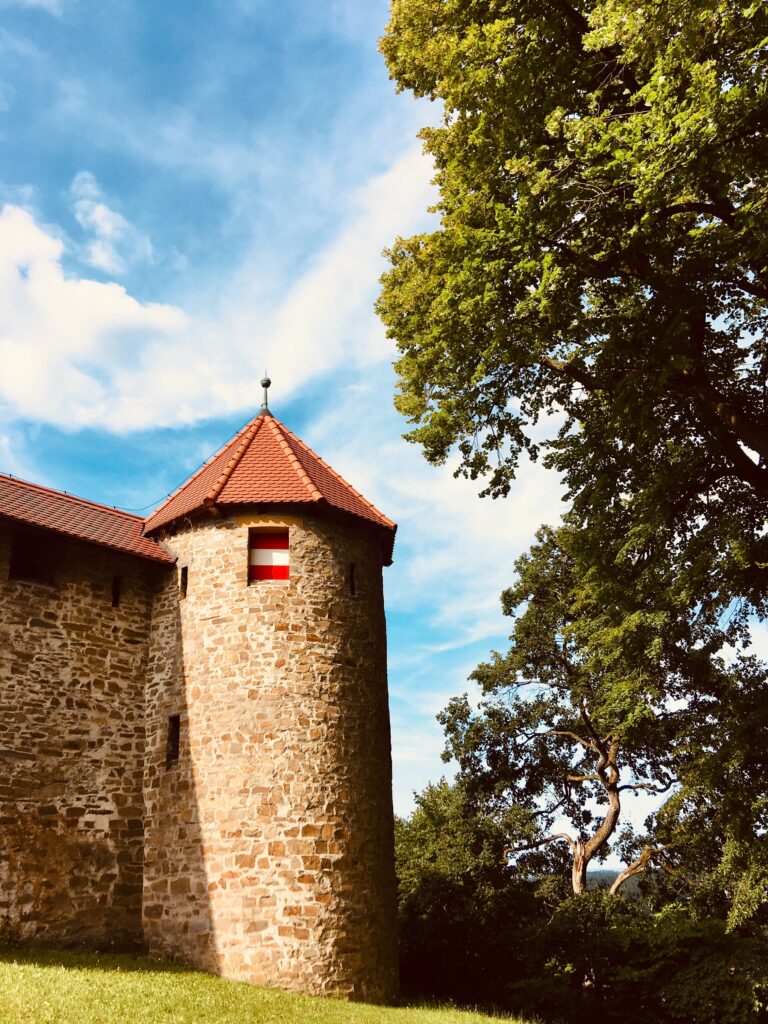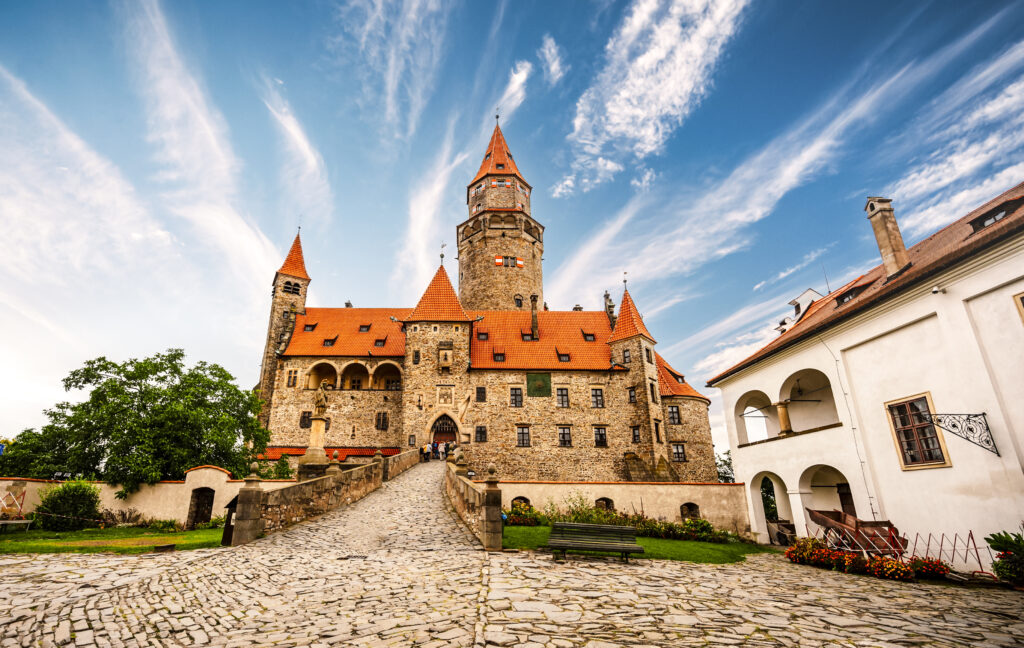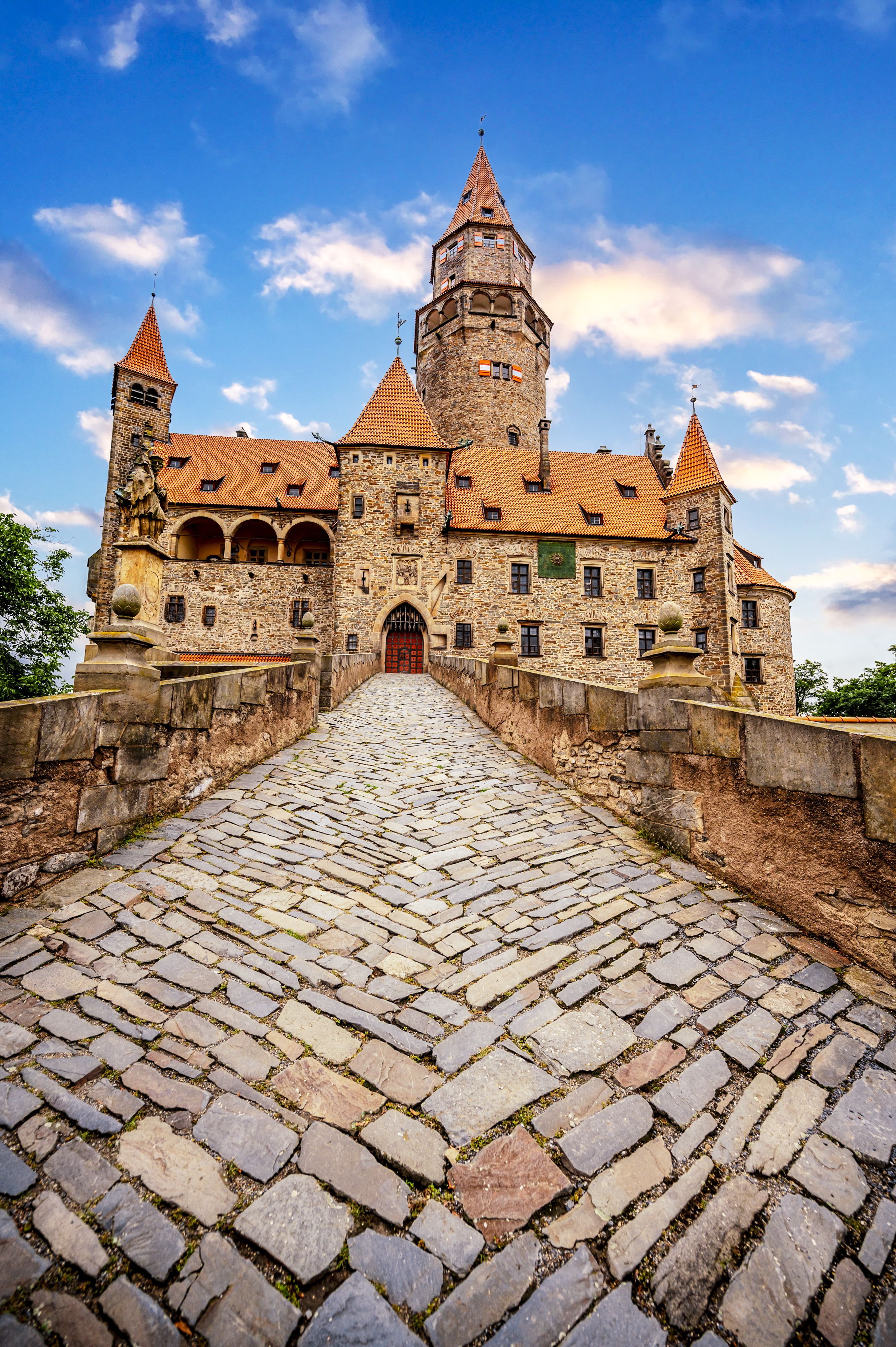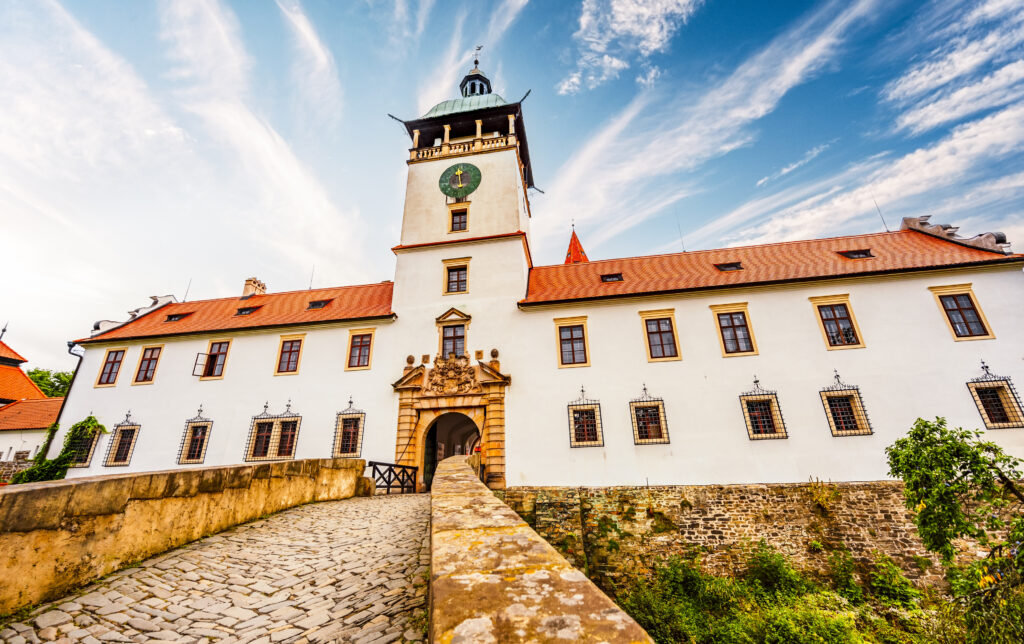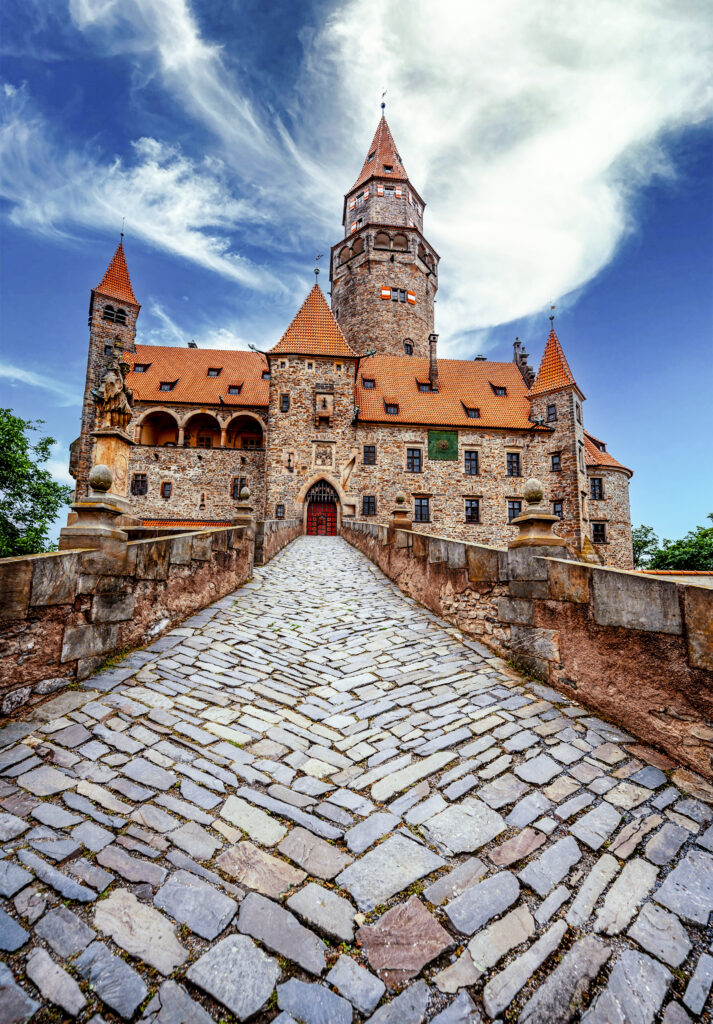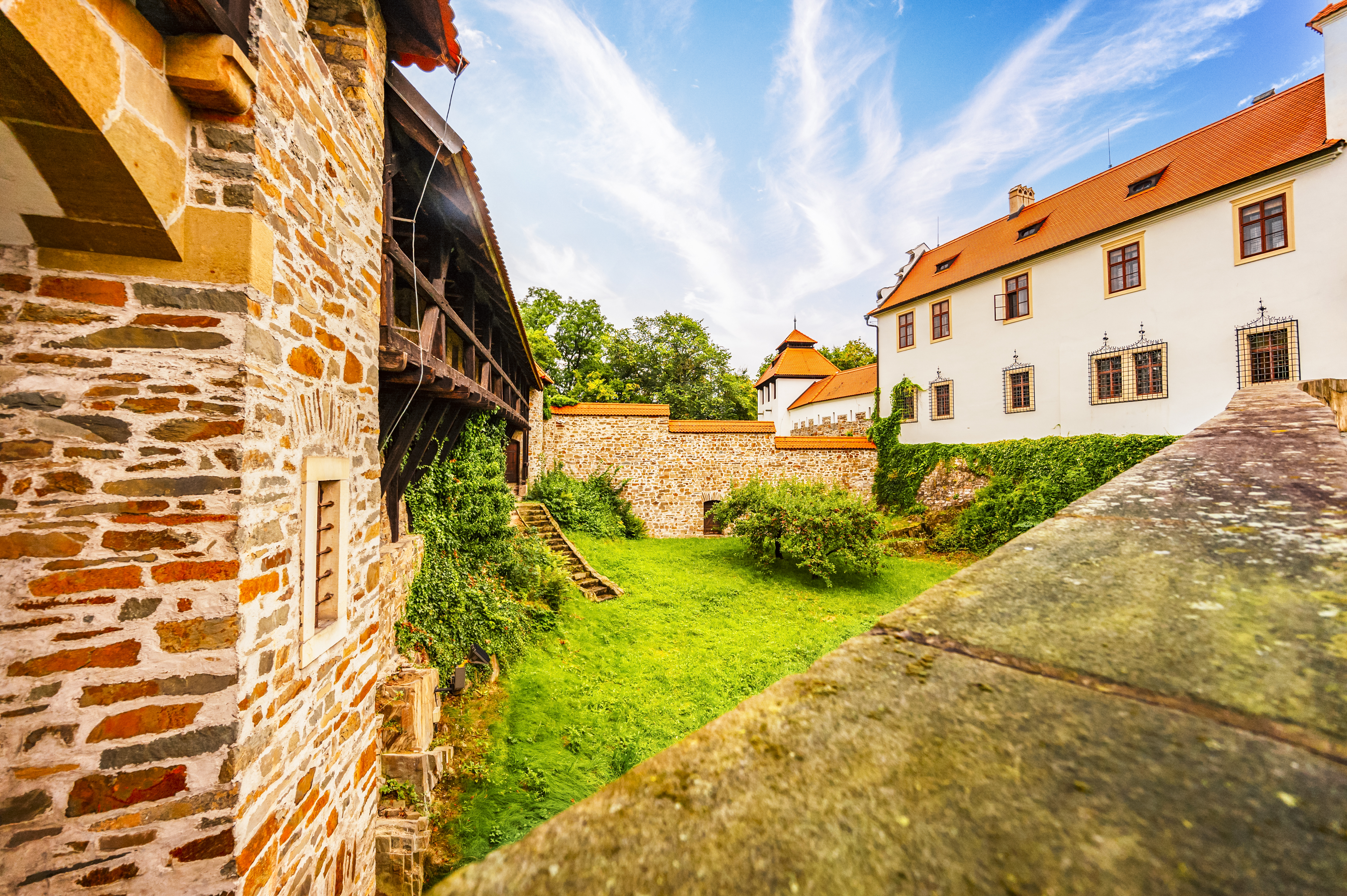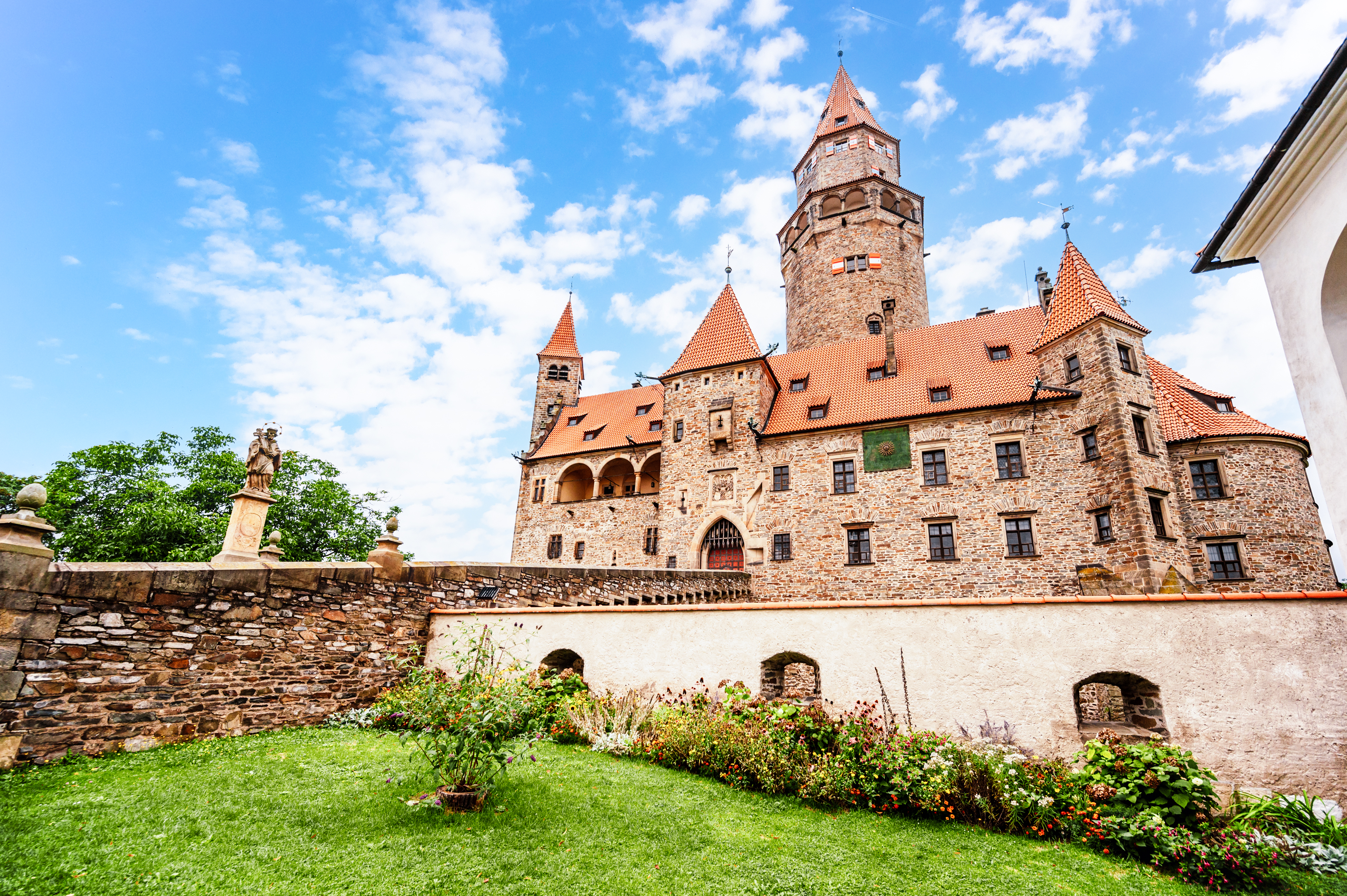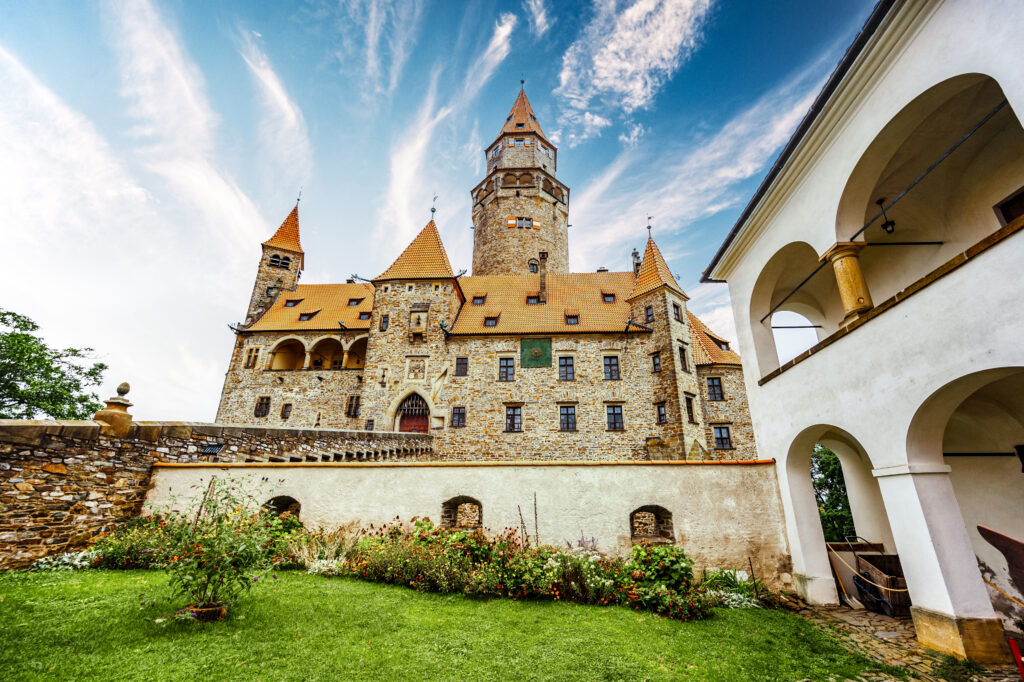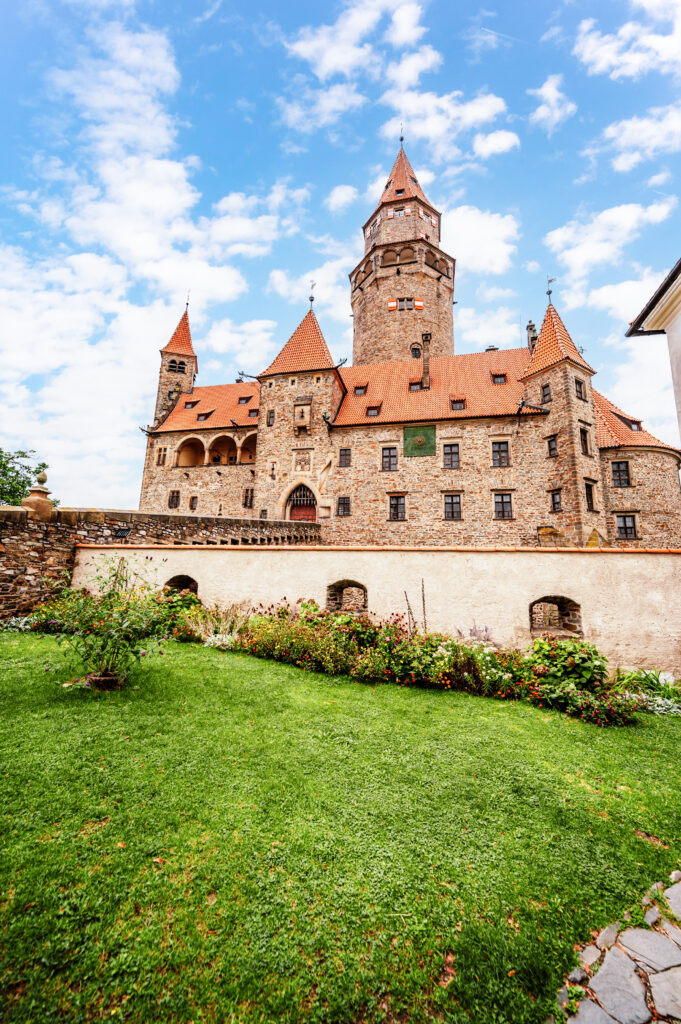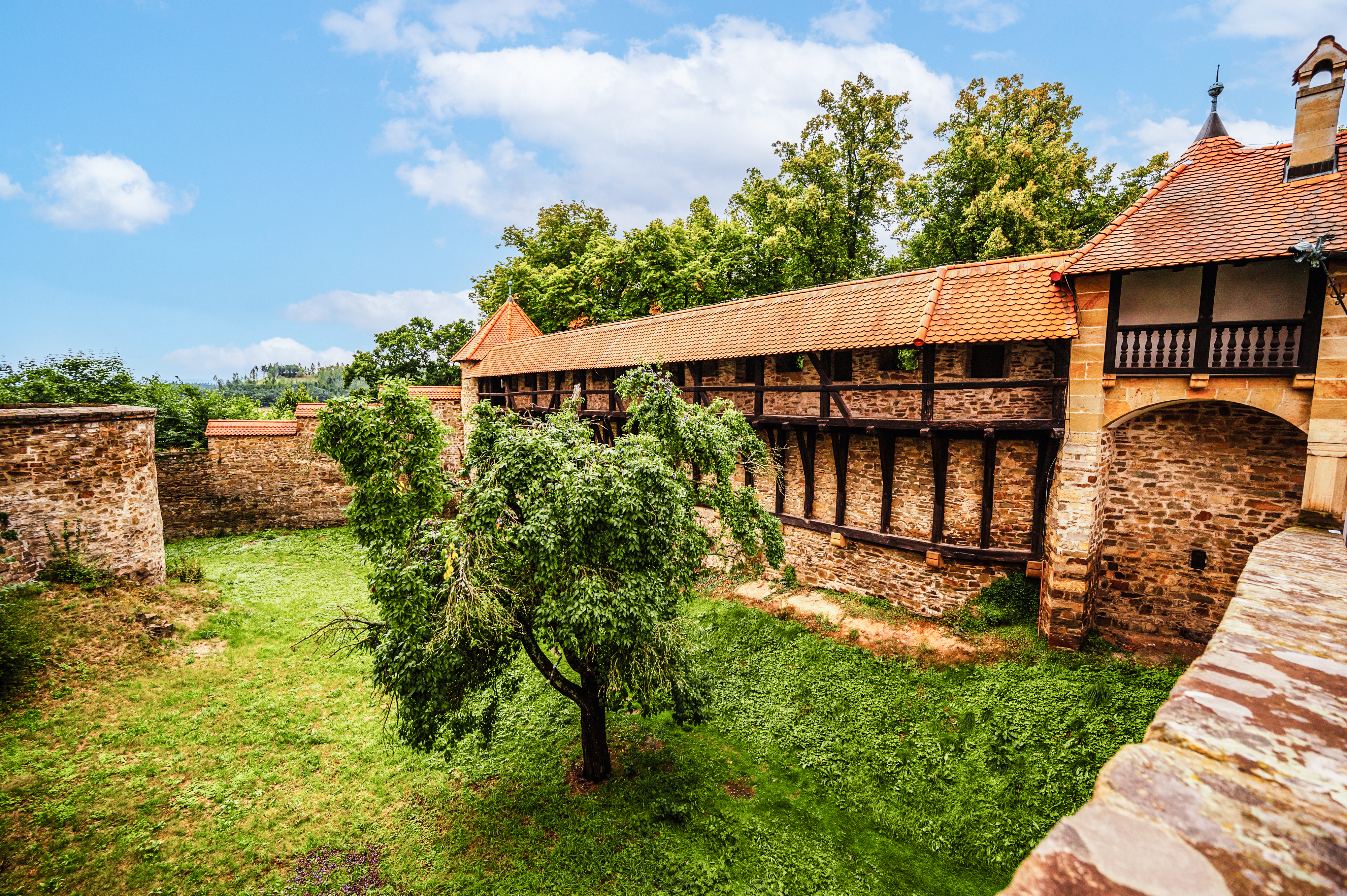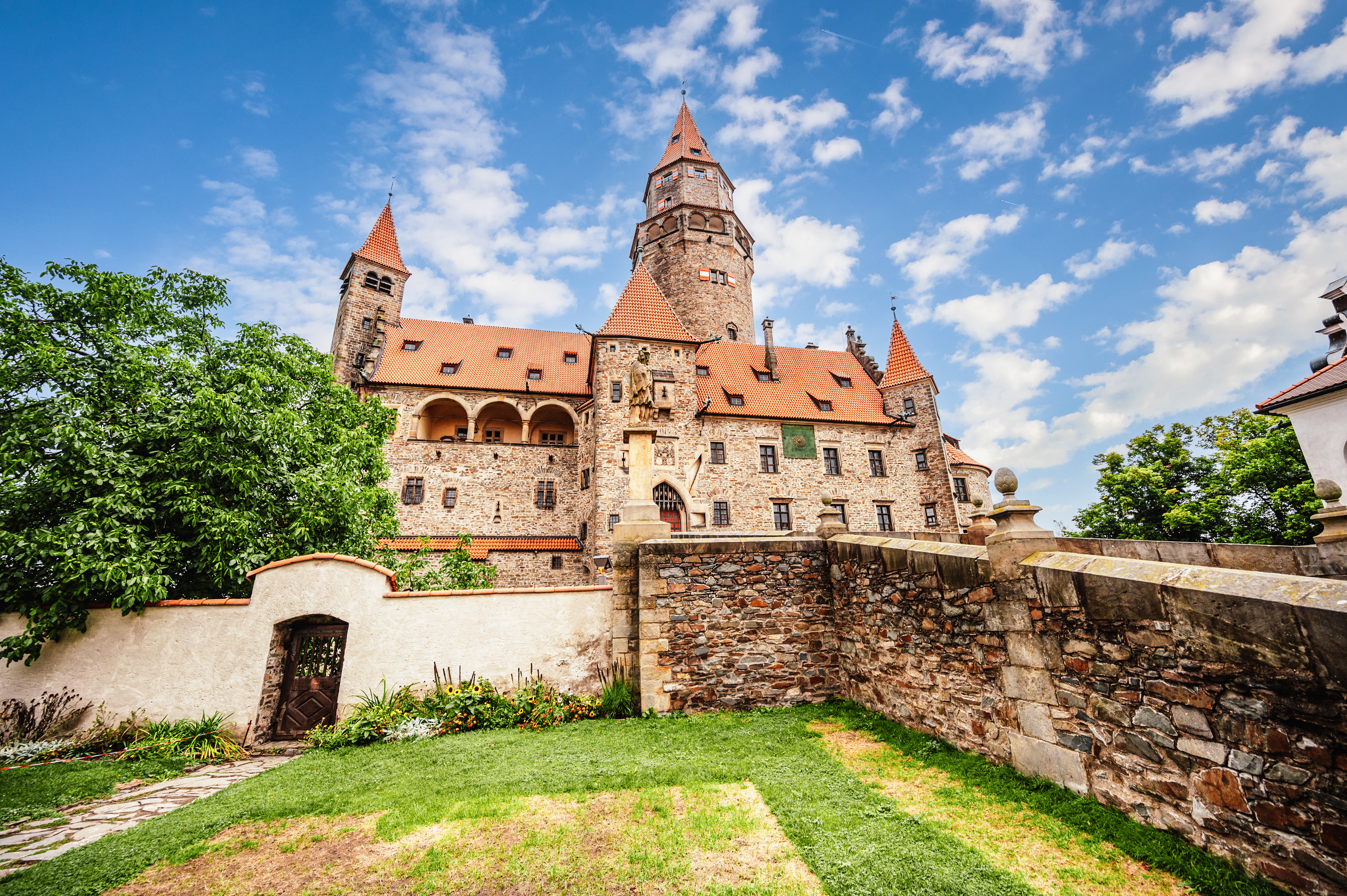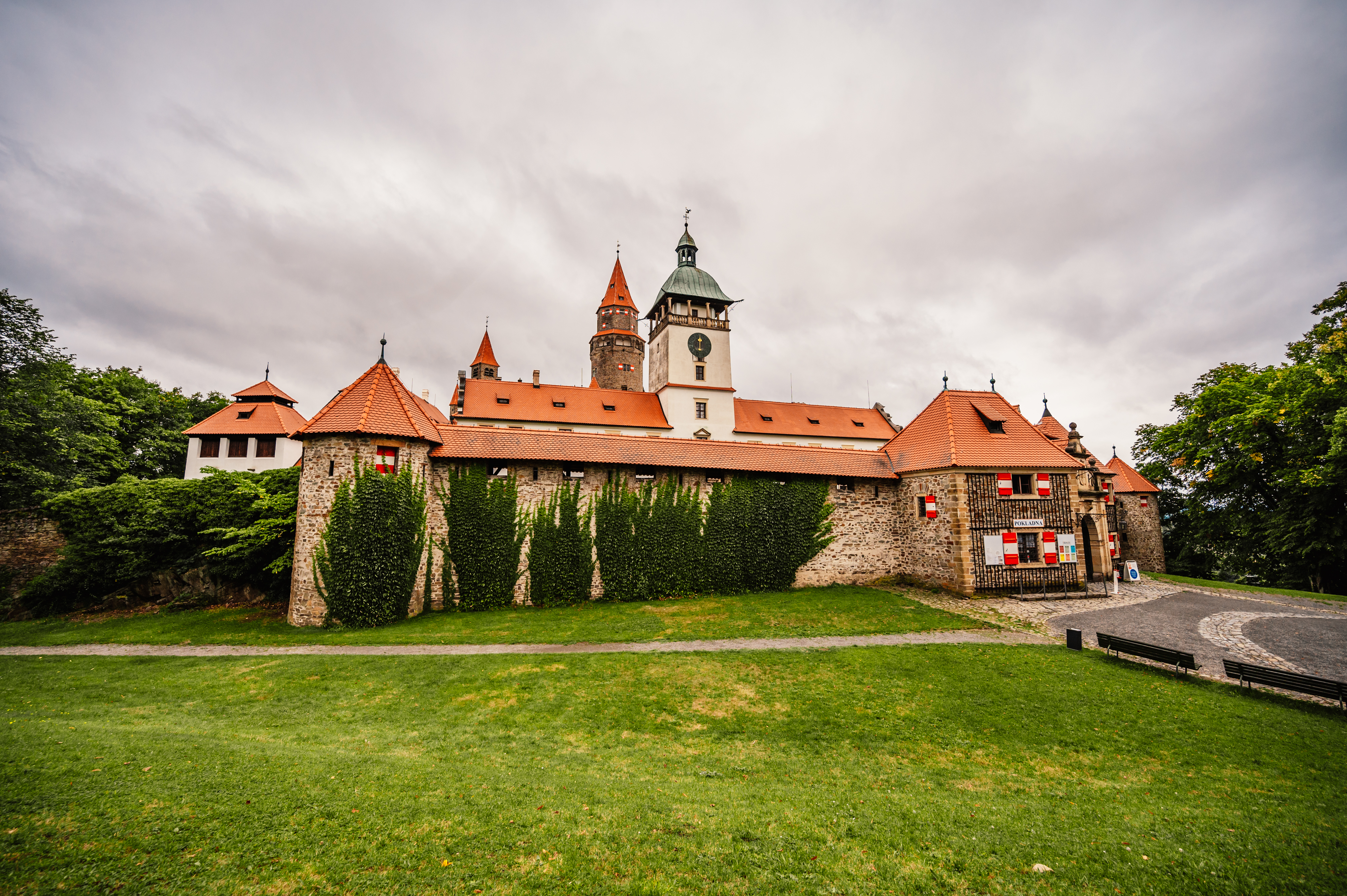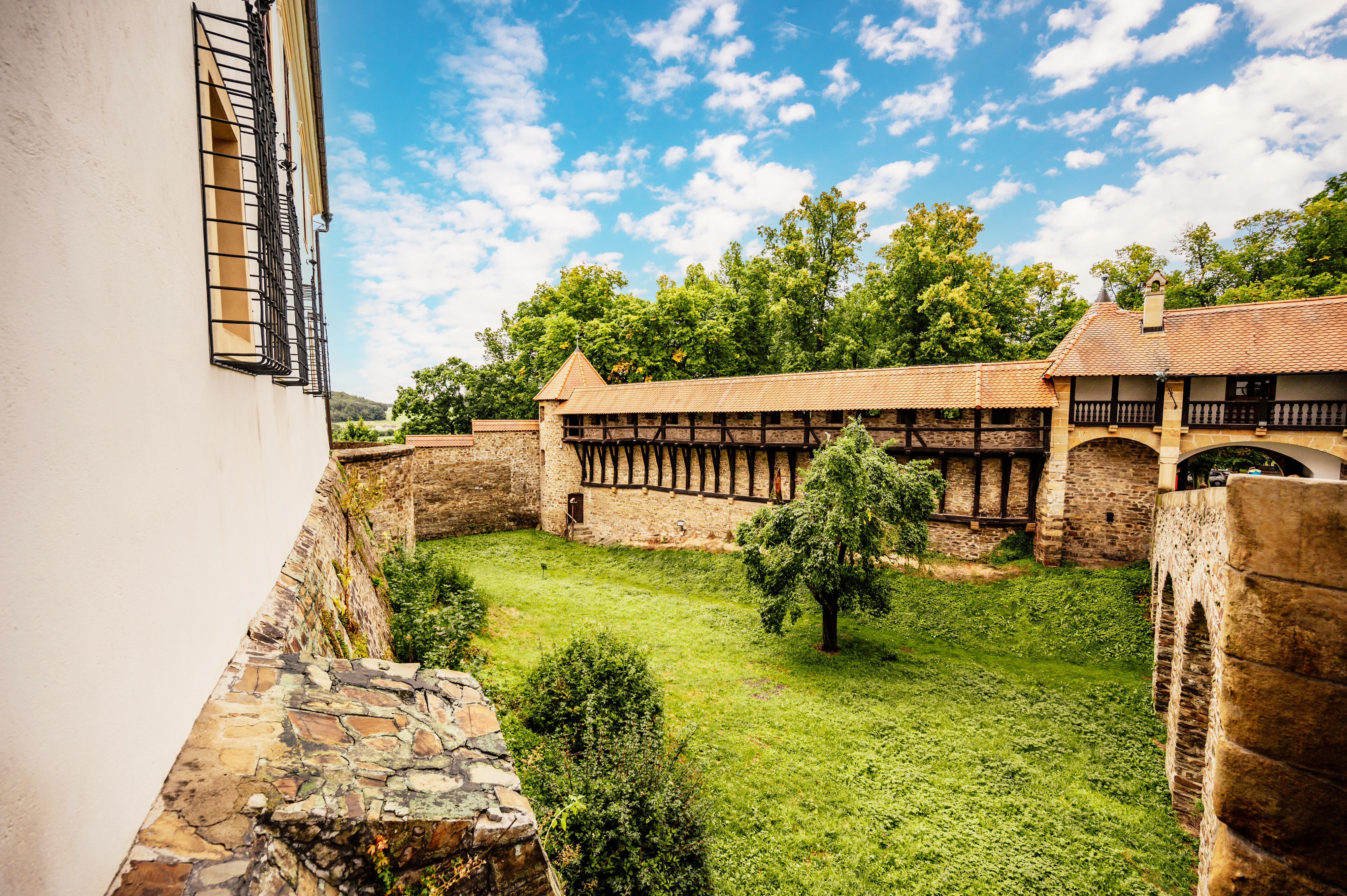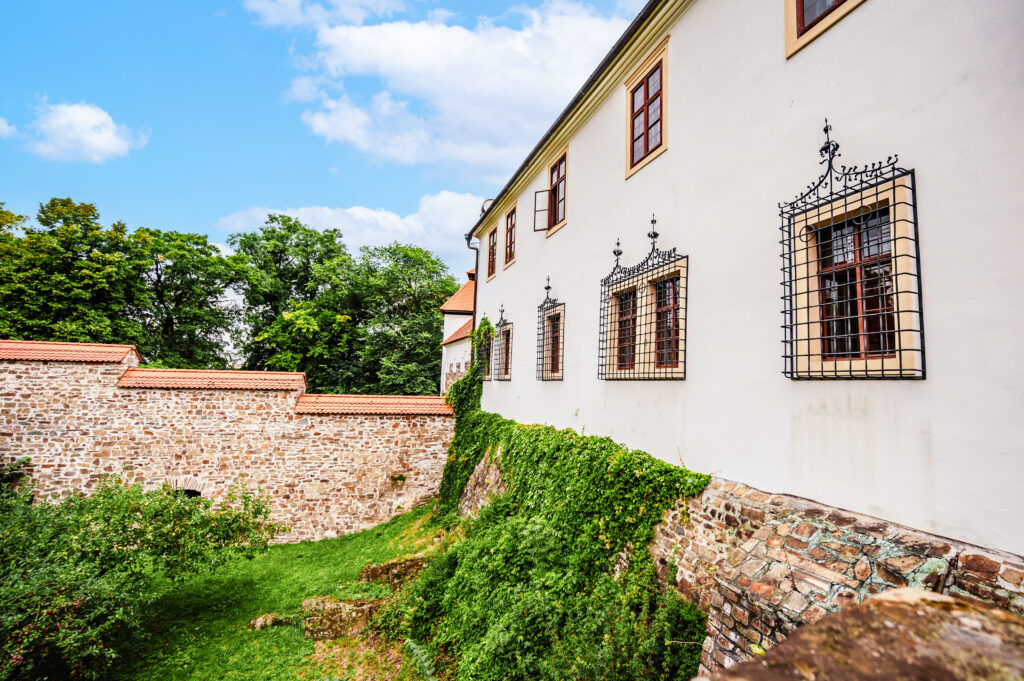

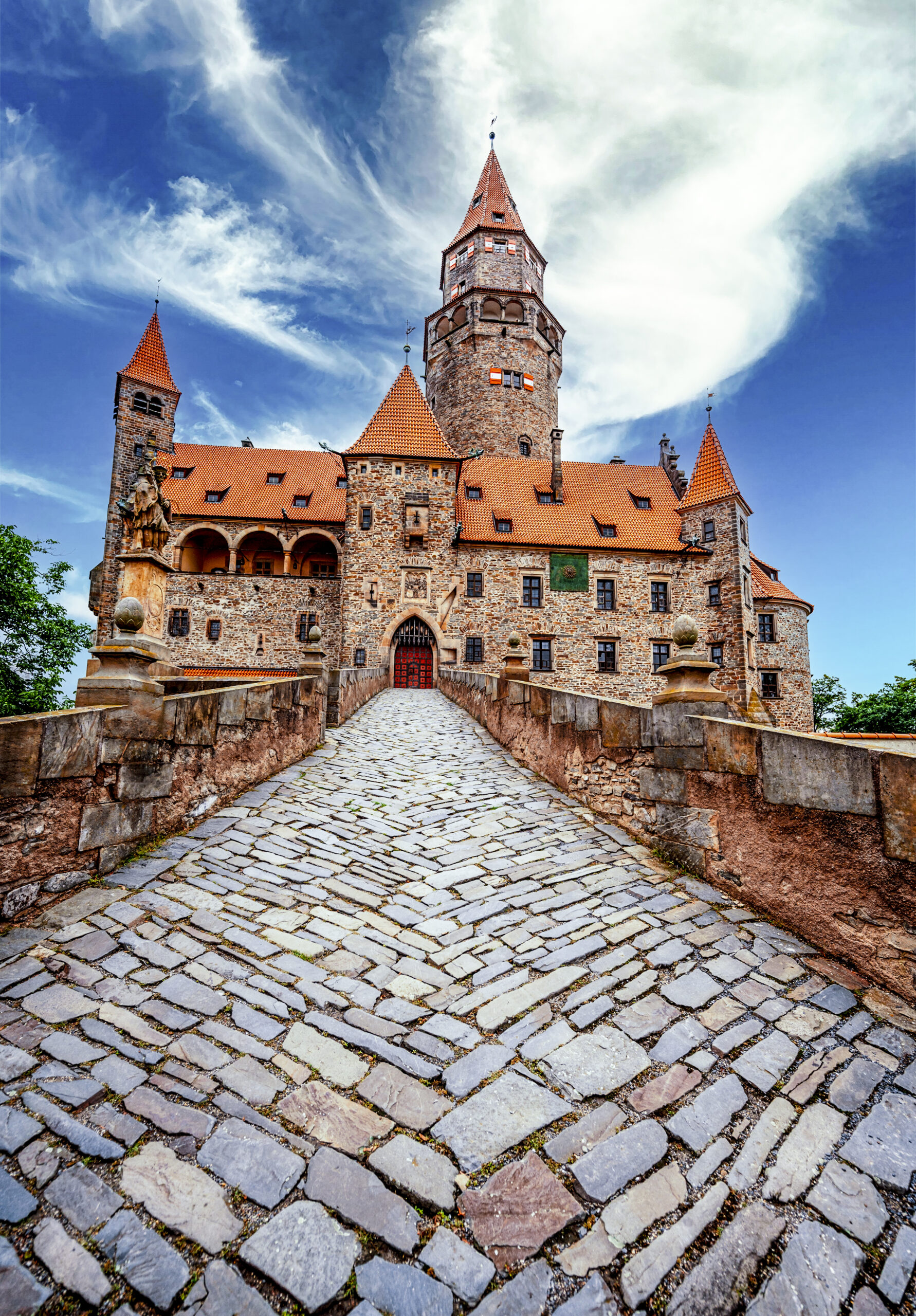
Nestled within the northern foothills of the Drahaner Highlands, overlooking the serene valley of Třebůvka in the Moravian village of Bouzov, the Castle Bouzov stands as an enduring testament to centuries of history, myth, and legend. With its neo-romantic architectural splendor and an engrossing past filled with royal plots, dramatic transformations, and ghostly whispers, it captivates the hearts and minds of over 101,000 visitors annually.
Origins and Early History – The first documented mention of Bouzov Castle dates back to 1317, pinpointing a certain Buzo von Buzov as its owner. Over the ensuing centuries, the castle exchanged hands among notable noble families, including the influential Margrave Jobst of Moravia and the Lords of Kunštát and Podiebrad. It is inferred from historical records that George of Poděbrady, who later ascended to the throne as the King of Bohemia, may have been born within these very walls. The castle saw significant renovations in the Renaissance style during the 16th century. However, it endured considerable damage during the Thirty Years’ War, the scars of which remained unrepaired for many years. In 1649, the castle ownership changed under Eugen Podstatzky of Prusinowitz’s direction, marking the beginning of a new chapter in its rich history.
The German Order and Neo-Romantic Revival – A pivotal moment in Bouzov Castle’s timeline occurred in 1696 when the Teutonic Order acquired the estate. For nearly two centuries, the order managed the properties from Bruntál Castle until Archduke Eugen of Austria initiated a grand restoration project between 1896 and 1901. Under the Munich architect Georg von Hauberrisser’s vision, the castle underwent a dramatic transformation into the neo-romantic fortress admired today. Archduke Eugen envisioned the castle as a stately summer residence, and thus, its interiors were lavishly adorned with period-appropriate furniture and artifacts reminiscent of the order’s storied past. The grandiose designs are particularly prominent in the Knight’s Hall and the Grand Master’s bedchambers, featuring an array of historical pieces that blend seamlessly with the castle’s evocative architecture.
Wartime Shadows and Post-War Ownership – The tranquility of Bouzov Castle was violently interrupted in 1939 when the Nazis seized control of the property, adding it to the Society for the Promotion and Preservation of German Cultural Monuments based in Berlin. A dark chapter was written on May 5, 1945, when SS troops stationed at the castle launched an attack on the nearby village of Javoříčko, tragically executing 38 men and incinerating the village. Following World War II, Bouzov Castle once again fell under confiscation, this time by the state, and was entrusted to the National Heritage Institute of the Czech Republic. This transition marked the beginning of a new era, focusing on the preservation and public exhibition of its storied legacy.
Filmography and Cultural Significance – Bouzov Castle’s picturesque and captivating ambiance has made it a sought-after location for numerous fairy tale films. Its enchanting halls and towers set the stage for timeless classics such as “The Princess and the Flying Cobbler,” “Fairy Tale Bride,” and “The Witch Princess.” The castle also featured prominently in the film “Napola – Elite for the Führer.”
Mythical Tales and Ghostly Lore – Beyond its concrete history, Bouzov Castle is steeped in various myths and legends. Local tales speak of haunted corridors where the spirits of past inhabitants still linger, weaving through the neo-romantic halls. One popular legend tells of the White Lady, a spectral figure rumored to roam the castle grounds at night, forever searching for her lost love. Visitors often recount eerie experiences and inexplicable sightings, adding a layer of supernatural allure to this architectural masterpiece. Another captivating myth involves a hidden treasure said to be buried somewhere within the castle’s expansive grounds. Adventurers and historians alike have been drawn to Bouzov, hoping to uncover the fabled riches and solve the mystery that has intrigued generations.
The Present-Day Allure – Today, Bouzov Castle stands not only as a monument of historical significance but also as a vibrant cultural venue offering a rich tapestry of events and exhibitions. Its annual visitor count, exceeding 101,000, is a testament to its enduring appeal. The castle hosts medieval festivals, reenactments, and guided tours that transport attendees through the annals of time, revealing the intricate layers of its past. Architectural enthusiasts marvel at the castle’s neo-romantic design, while history buffs delve into its storied past filled with political intrigue and royal connections. The castle’s lush surroundings provide a picturesque backdrop for weddings and photoshoots, making it a cherished destination for both locals and international tourists.
Bouzov Castle is more than just a historical monument; it is a repository of stories, legends, and cultural heritage spanning centuries. From its early days under the watchful eyes of Moravian nobility to its neo-romantic revival and its role in both world wars, the castle encapsulates the essence of a bygone era while continuing to inspire and enchant in the present day.
As visitors traverse its grand halls and echoing corridors, they become part of a living narrative—a blend of fact and folklore—that defines the mystical allure of Bouzov Castle. Whether you seek to unravel its historical mysteries or merely bask in its fairy tale charm, a visit to Bouzov Castle promises an experience as timeless and enchanting as the legends that surround it.