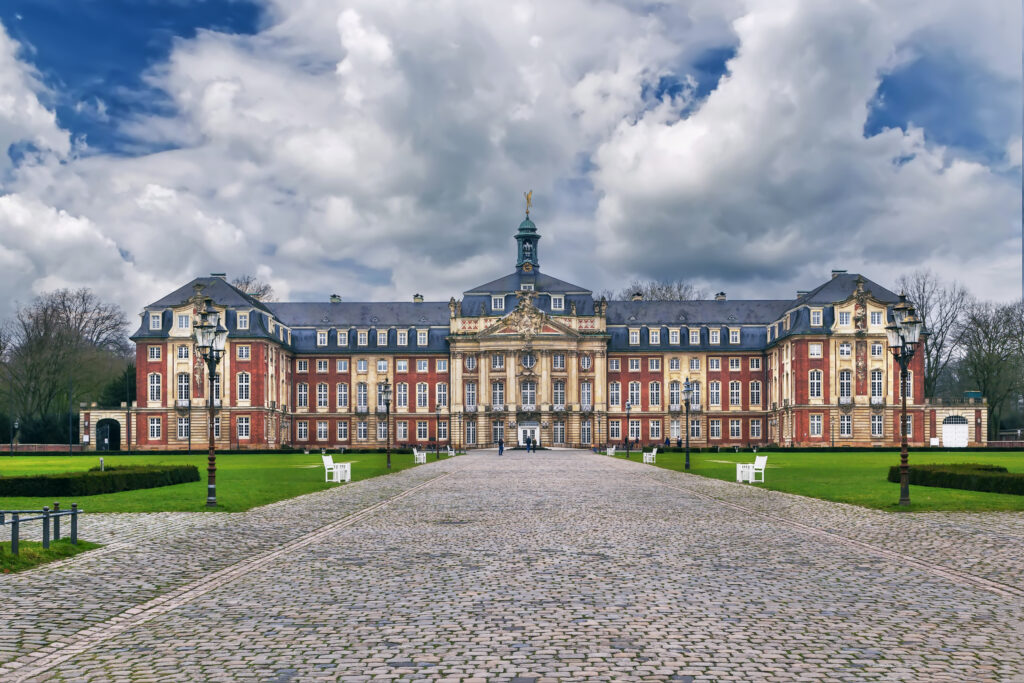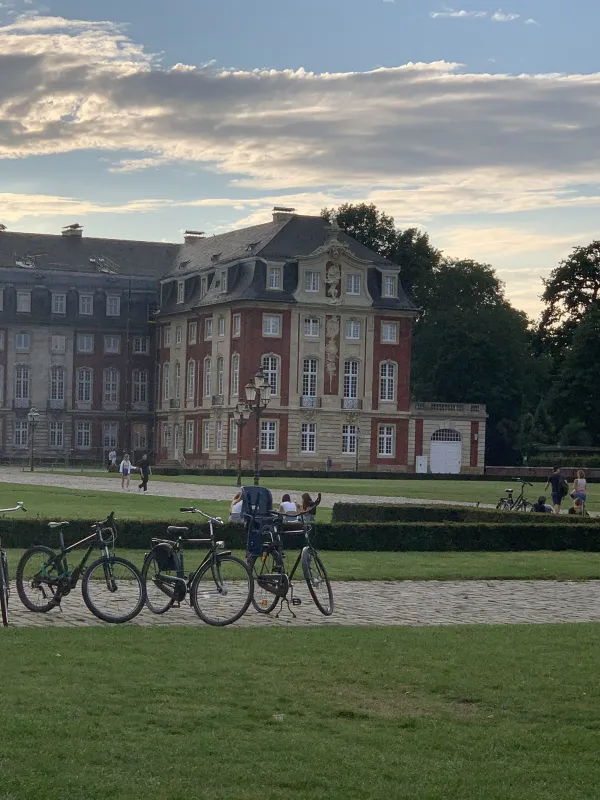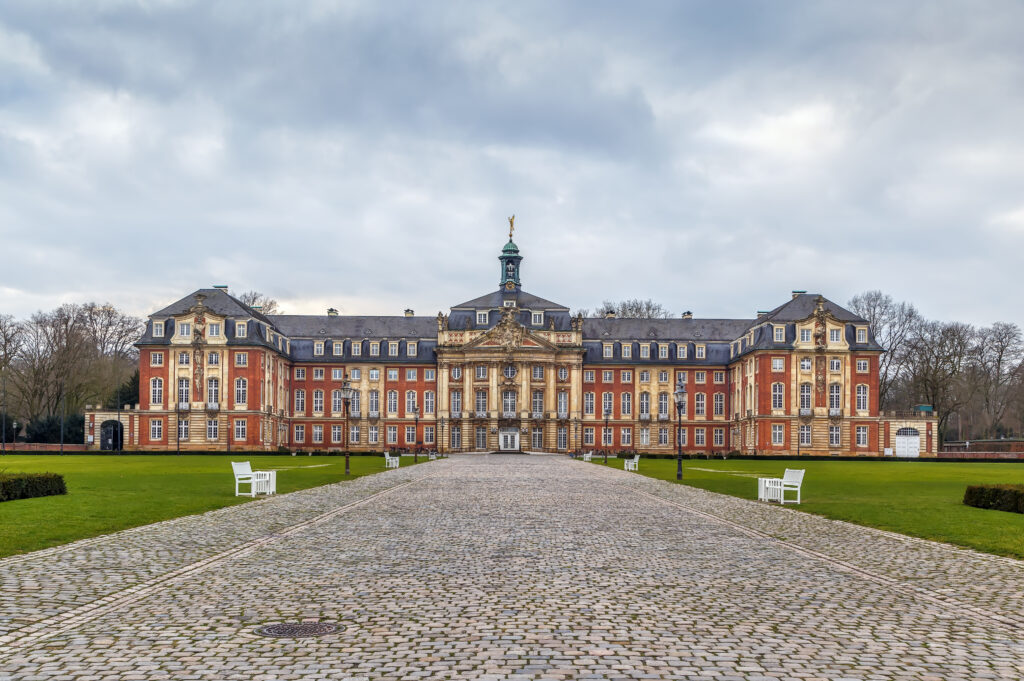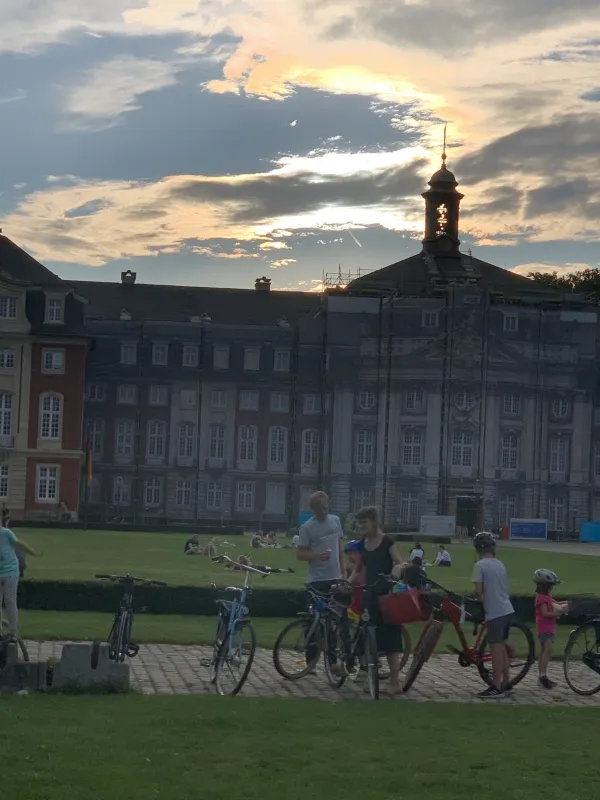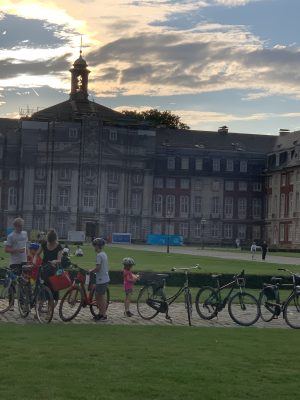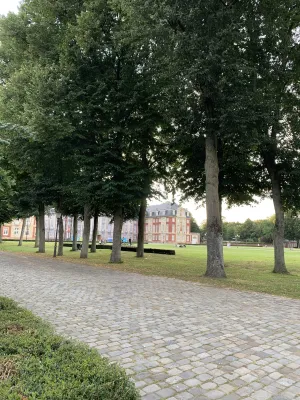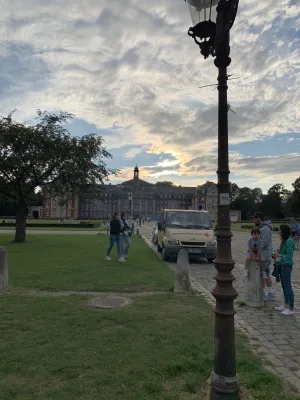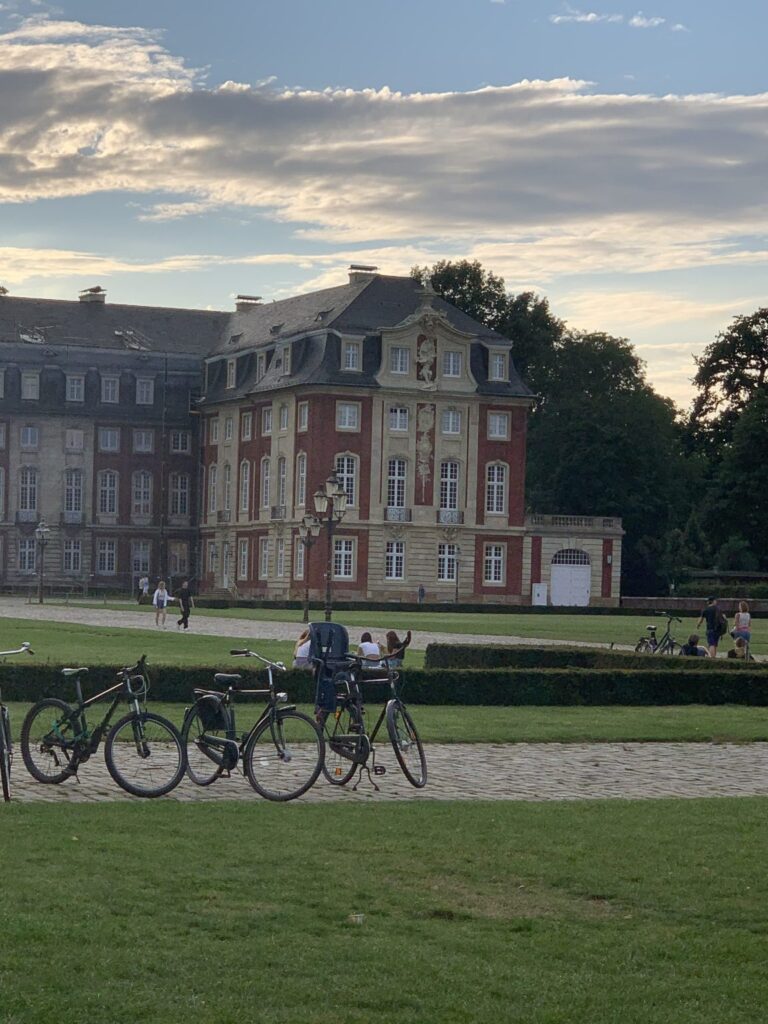

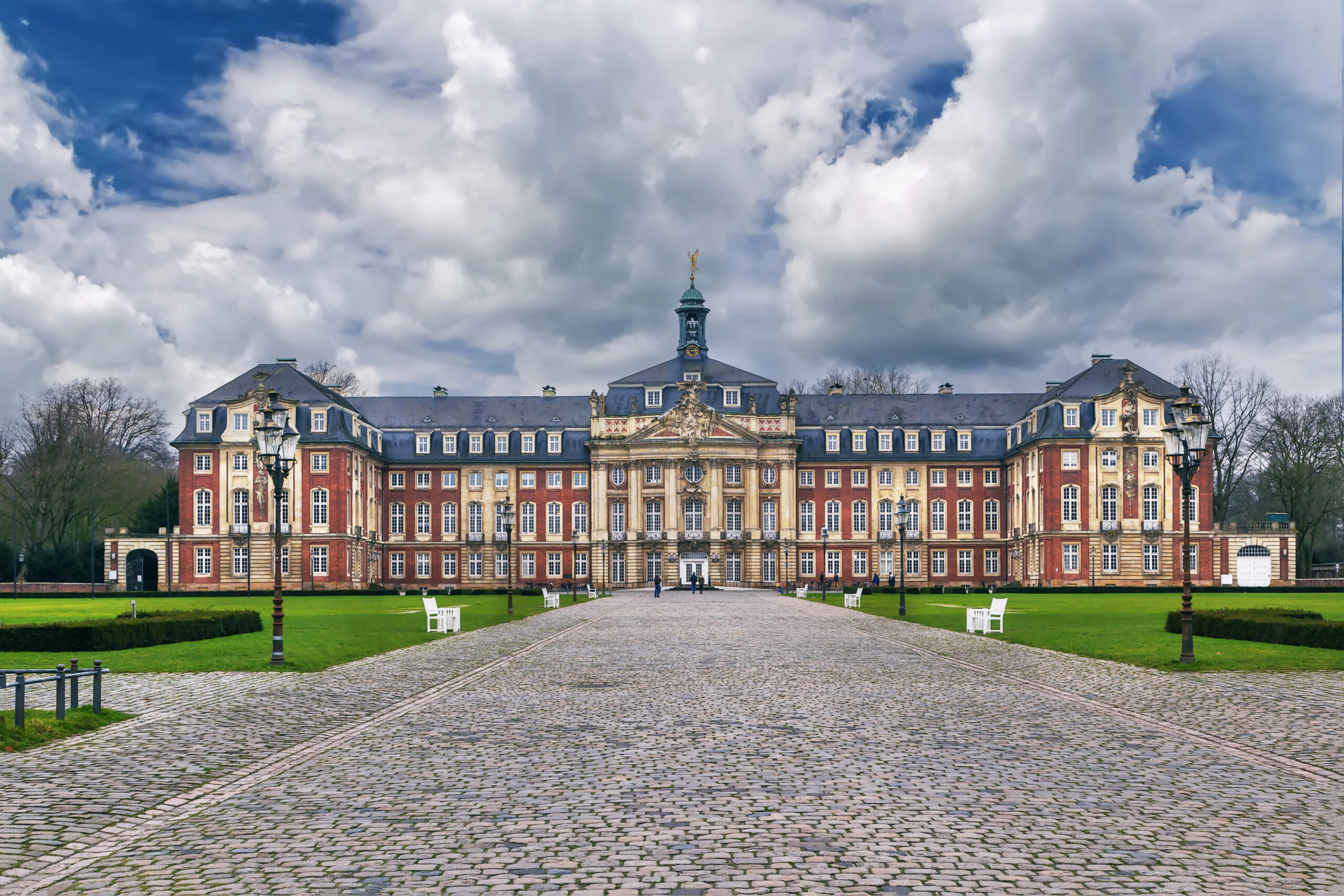
Since 1954, the landmark and seat of the University of Münster has been the Prince-Bishop’s Castle in Münster, which was built in the Baroque style from Baumberger sandstone as a three-winged complex according to the plans of Johann Conrad Schlaun on behalf of Prince-Bishop Maximilian Friedrich von Königsegg-Rothenfels. As Johann Conrad Schlaun died only a few years after the foundation stone was laid in 1767, Wilhelm Ferdinand Lipper completed the castle in 1787, whose interiors were once designed in the early classicist style. The prince-bishopric in Münster has a long tradition. It all began with the fall of Henry the Lion in 1180 and the break-up of the Duchy of Saxony, which led to the bishops of Münster becoming prince-bishops. They were thus sovereign rulers who were answerable only to the emperor and exercised both spiritual and secular power. The prince-bishopric did not come to an end until 1806 with the demise of the Holy Roman Empire of the German Nation. After the Prussians occupied the Münsterland region in 1802, the prince-bishops’ castle was occupied by the civil governor, Baron vom und zum Stein, and the military commander-in-chief, General Blücher. During World War II, it was bombed on Palm Sunday 1945 and burned down to its outer walls. Reconstruction took place from 1947 to 1953. Although the original exterior appearance was retained, the interior was altered for Wilhelms University. A total of 50,000 roof tiles, 800 tons of cement, 150 tons of lime, 1,000 square meters of glass, and 1.9 million bricks were used for the reconstruction. The cost was 2.5 million Reichsmarks. Particularly impressive is the central pavilion with its mansard roof, crowned by a bell tower with a gilded statue of Nike, the goddess of victory, as a weather vane on its lantern. The front facing the city, with its rich sculptural decoration featuring signs of the zodiac and images of the months, which correspond to a sequence of planets on the rear created by Joseph Ignatius Feill, is also fascinating. Also worth seeing are the cavalier houses that border the castle square to the promenade and the coach house built by Lipper in 1774. The former prince-bishop’s residence, with its mix of building materials—light Baumberger sandstone for the base and pilasters and red brick for the façade, known as the Westphalian symphony—built on the site of a former early Baroque citadel, is one of Münster’s sights that gave me interesting insights into the history of the city.