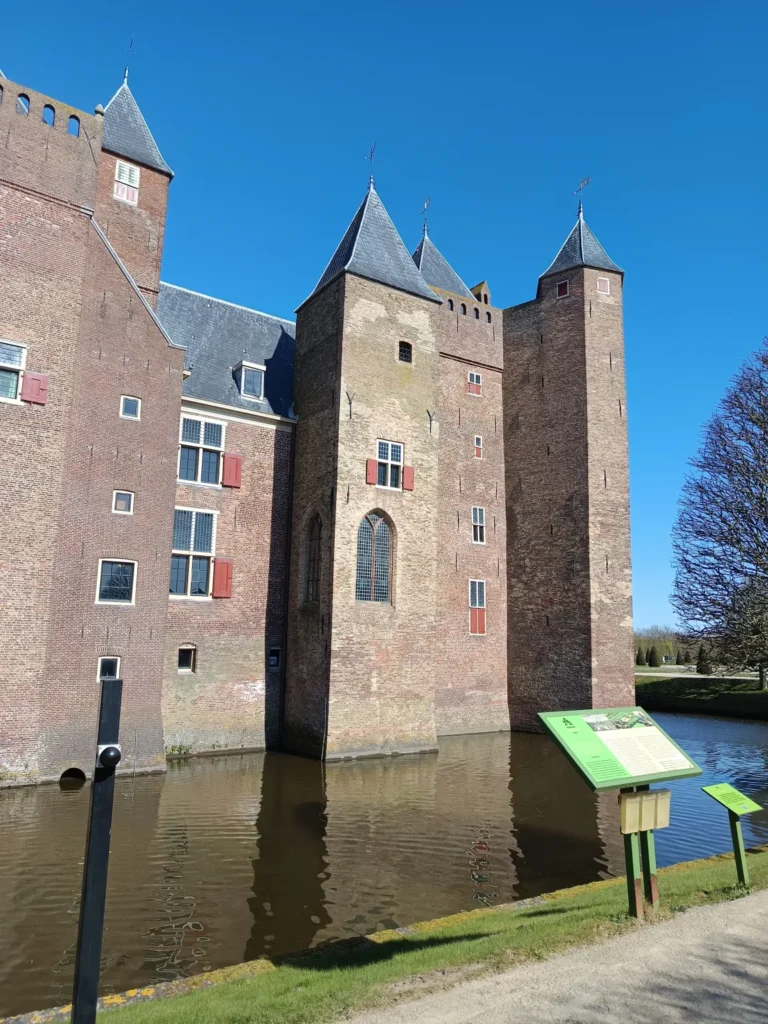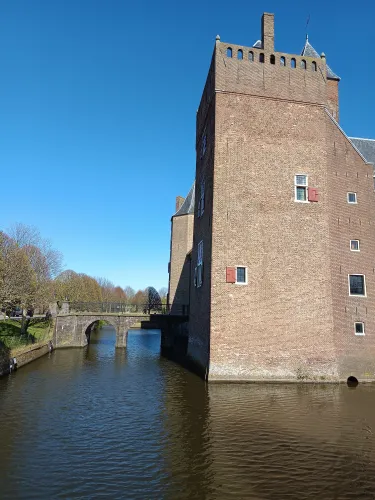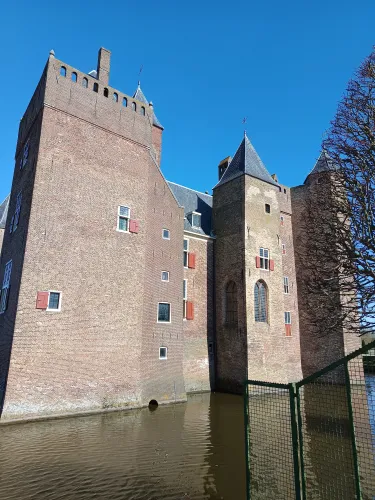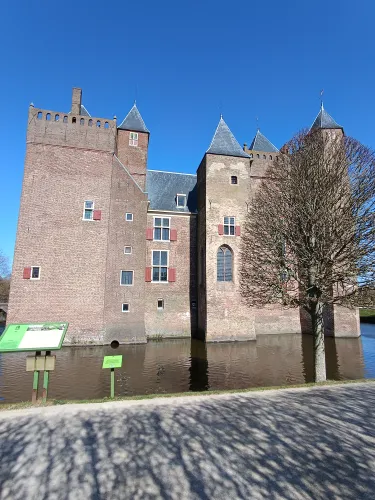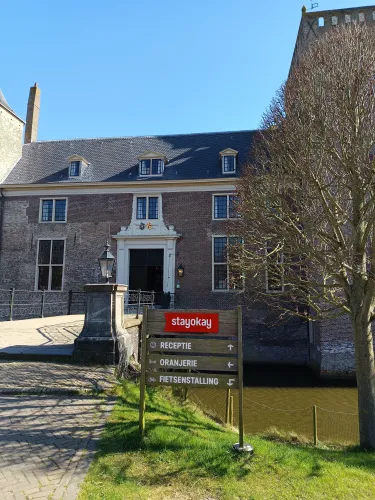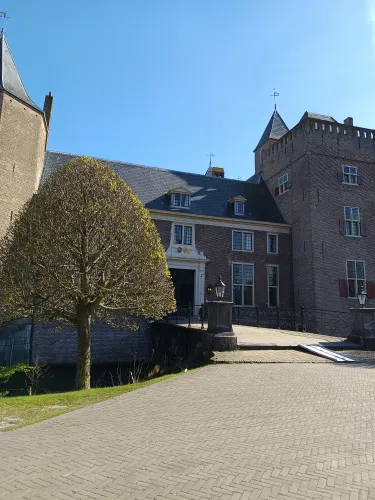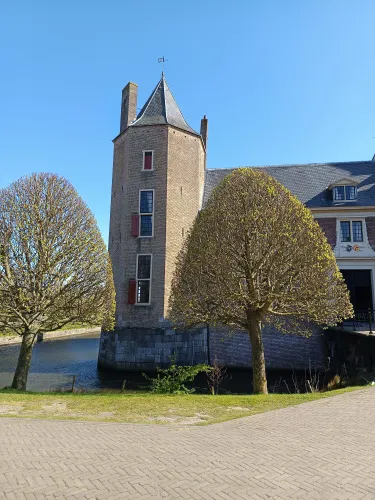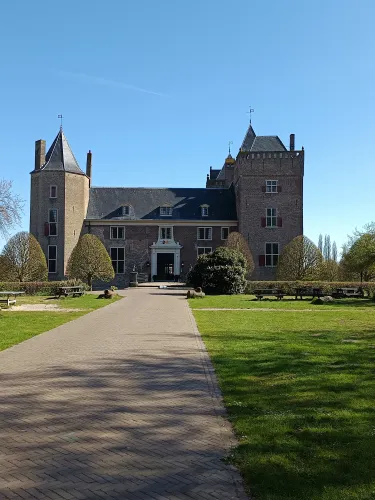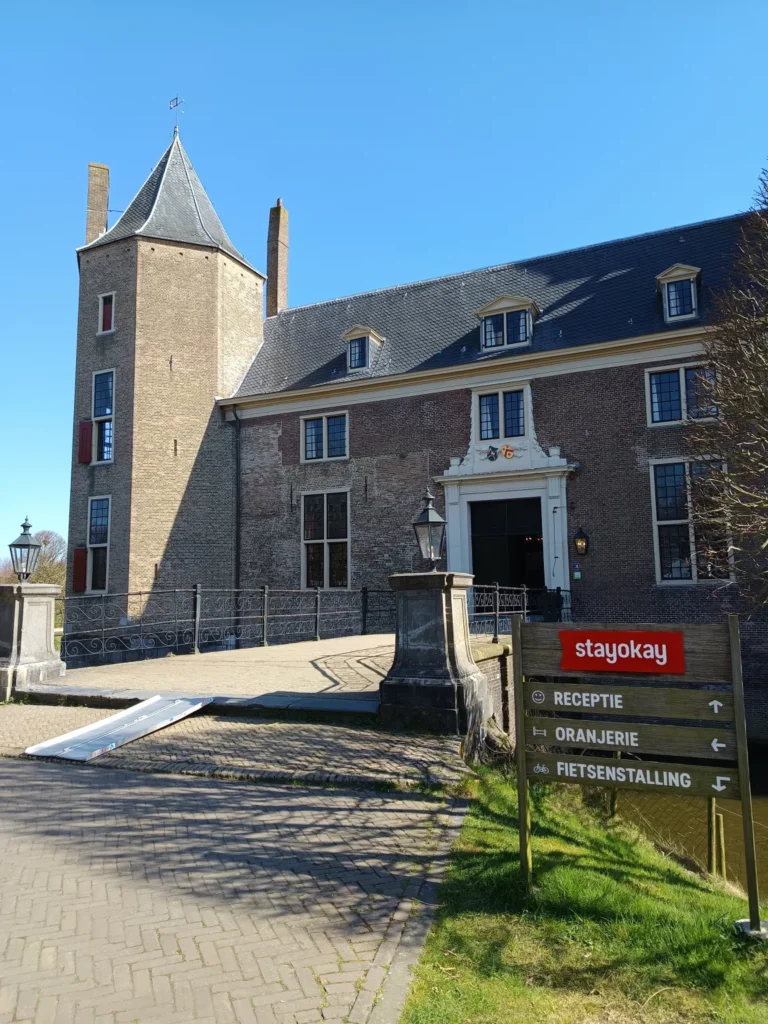

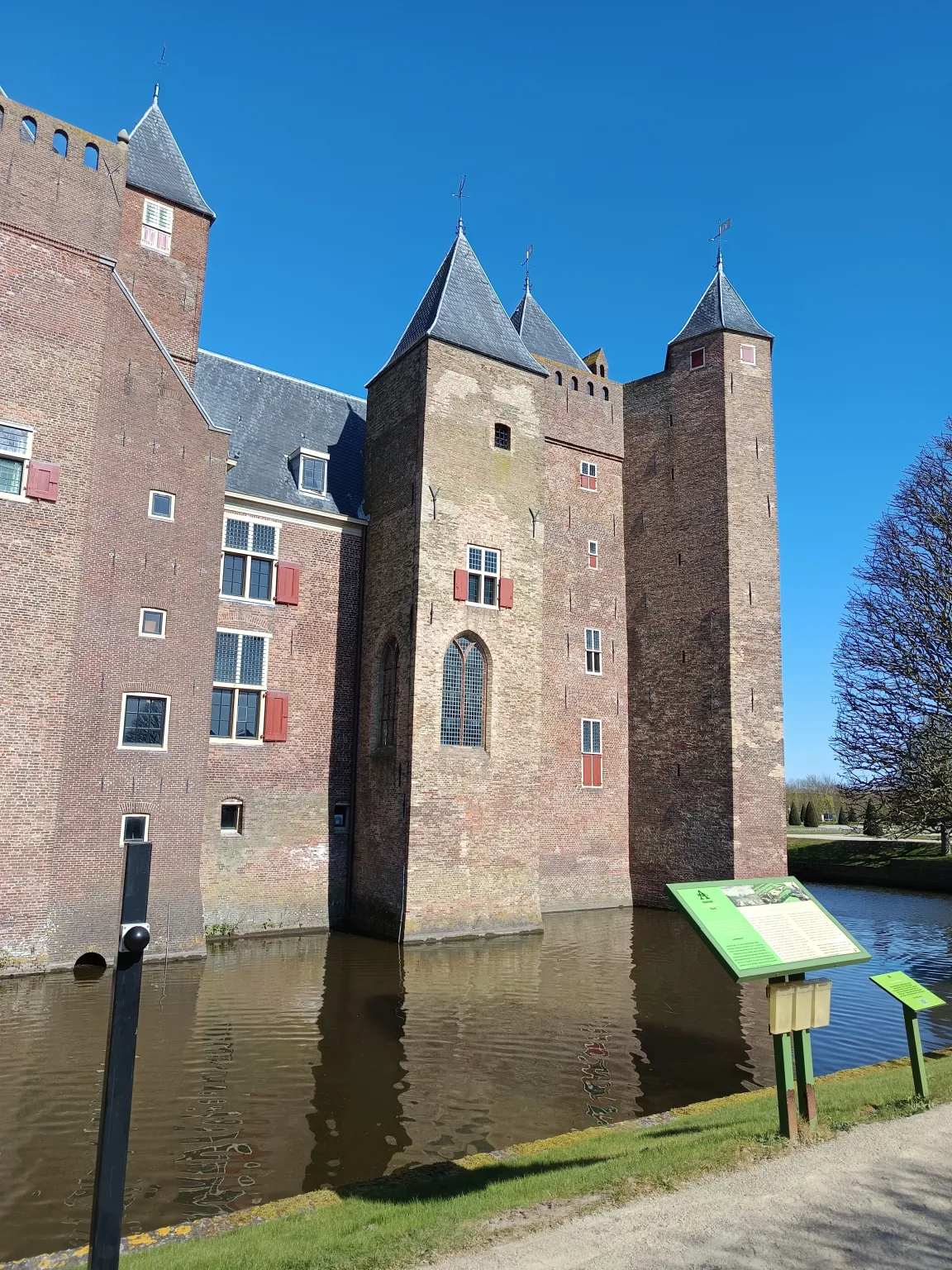
Assumburg Castle, located in the picturesque east of Heemskerk, is more than just an impressive building; it is a testament to the rich history and cultural significance of the region. Originally built in the 13th century, the castle has undergone many changes over the centuries. It was rebuilt in 1546, and its current appearance is strongly influenced by this period. The castle is named after the hamlet of Assum, located between Heemskerk and Uitgeest. Interestingly, it was often assumed that materials from Oud Haerlem Castle were used in its construction, but this assumption has proven to be incorrect. At first glance, Assumburg Castle may appear to be an imposing medieval fortress, but this appearance is deceptive. The castle walls are less robust than one might expect. In fact, it is a so-called “Kulissenburg” – a replica of a real castle, built primarily for aesthetic reasons. These thin walls would not have been able to withstand a siege, which greatly limits the castle’s military functionality. Over the centuries, the castle served as a residence for various noble families. The van Velsen family in particular resided here in the 13th and 14th centuries. Their name is closely linked to the early history of Assumburg. Jan van Rietwijk, a descendant of the van Velsen family, is the first documented owner to have pledged parts of the castle in 1322. The following years were marked by frequent changes of ownership, including the van Assendelft family, who took over the castle in the following period. The last male descendants of this family, Gerrit (VIII) van Assendelft, lived in Assumburg until the early 17th century. After his death, the castle passed to his sister Anna, who was married to Gerrit van Renesse van der Aa. This transfer marked the end of an era for the van Assendelfts, so to speak. Around 1694, Jean Deutz acquired the castle and adapted it to the tastes of his time. Under his guidance, a French garden with ponds and public grounds was created, giving Assumburg Castle a new splendor. The last Deutz, Jacob Maarten Deutz van Assendelft, lived in the castle until his death in 1858. After the death of his wife, Josina Johanna Willink, the estate began to slowly fall into disrepair. Within a few weeks, the interior was auctioned off and the building changed hands again. After the castle was sold in 1868, it was used for various purposes. For example, it served as a hospital during a cholera epidemic. Later, it was converted into a school. In 1906, the castle finally lost part of its original character when the paneling of the great hall was moved to Marquette Castle. Other elements, such as the valuable marble chimneys, also found no place in Assumburg. It was not until 1911 that the tide turned for the almost dilapidated castle when it was sold to the state. The decision was made to thoroughly renovate the historic building. During this time, the castle took on the function of a youth hostel, which enabled the old building to be used for social purposes. On July 15, 1933, the first youth group transport took place, and numerous volunteers helped with the restoration. However, the castle also experienced turbulent times. During World War II, it was occupied by German troops, and after liberation, it served as an internment camp for political prisoners for a time. In the years that followed, Assumburg Castle became part of the Stayokay youth hostel chain and continues to offer accommodation to this day. The castle’s surroundings have also changed. The once magnificent park disappeared over the centuries, but since 2003, the Assumburg Nature and Recreation Park has been in existence. The 18th-century castle garden was restored to its original state in 2009 and has been open to the public since 2011. This garden now includes an orchard, a rose garden, a vegetable and herb garden, and a formal area with a courtyard pond—a place of tranquility and enjoyment for visitors. Although the castle itself is not open to the public on a regular basis, there are opportunities on certain days, such as Open Monument Day, to take a look inside and learn more about its history. On January 15, 2016, the castle finally became the property of the National Monument Organization and was granted the status of a protected cultural monument. Assumburg Castle is not only an impressive building, but also an important part of the region’s history. From its beginnings in the 13th century, through the various noble families who lived there, to its current use as a youth hostel and resort, the castle reflects the cultural and historical changes that the Netherlands has undergone over the centuries. It remains a fascinating place where past and present meet, offering visitors the opportunity to immerse themselves in a rich history.