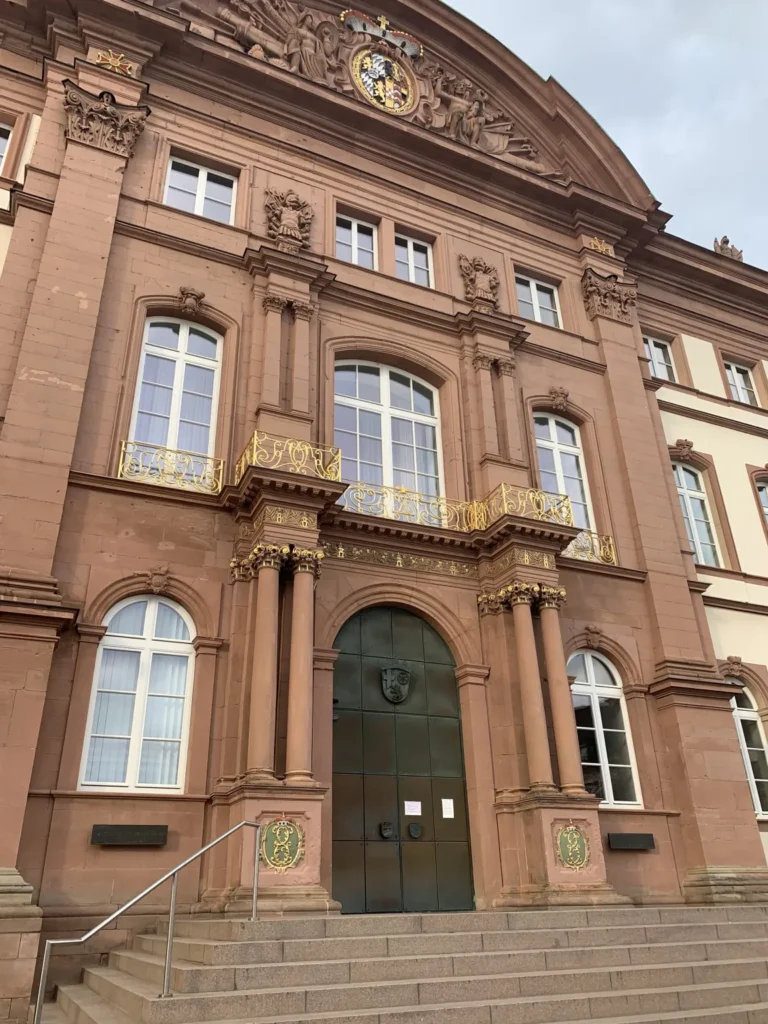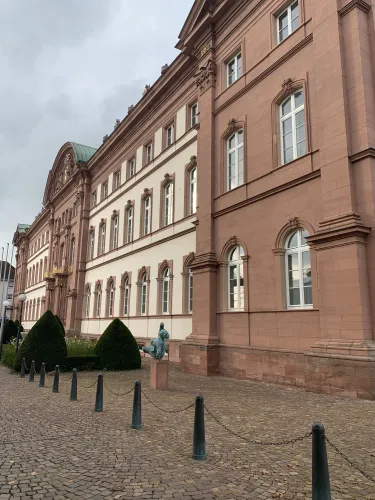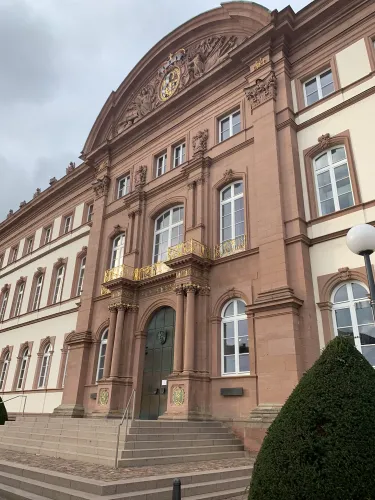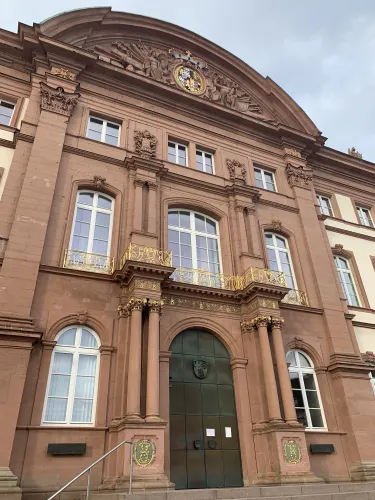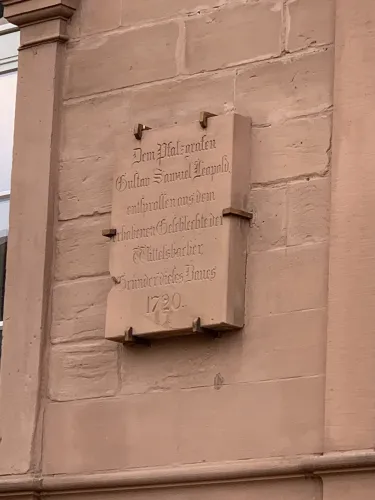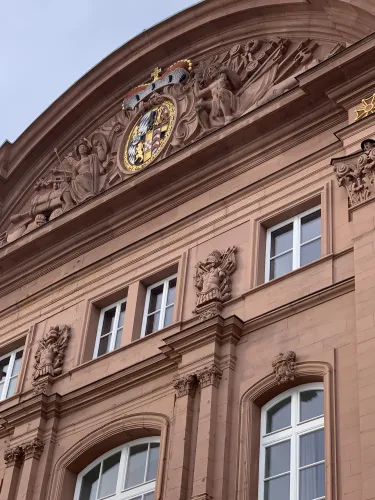

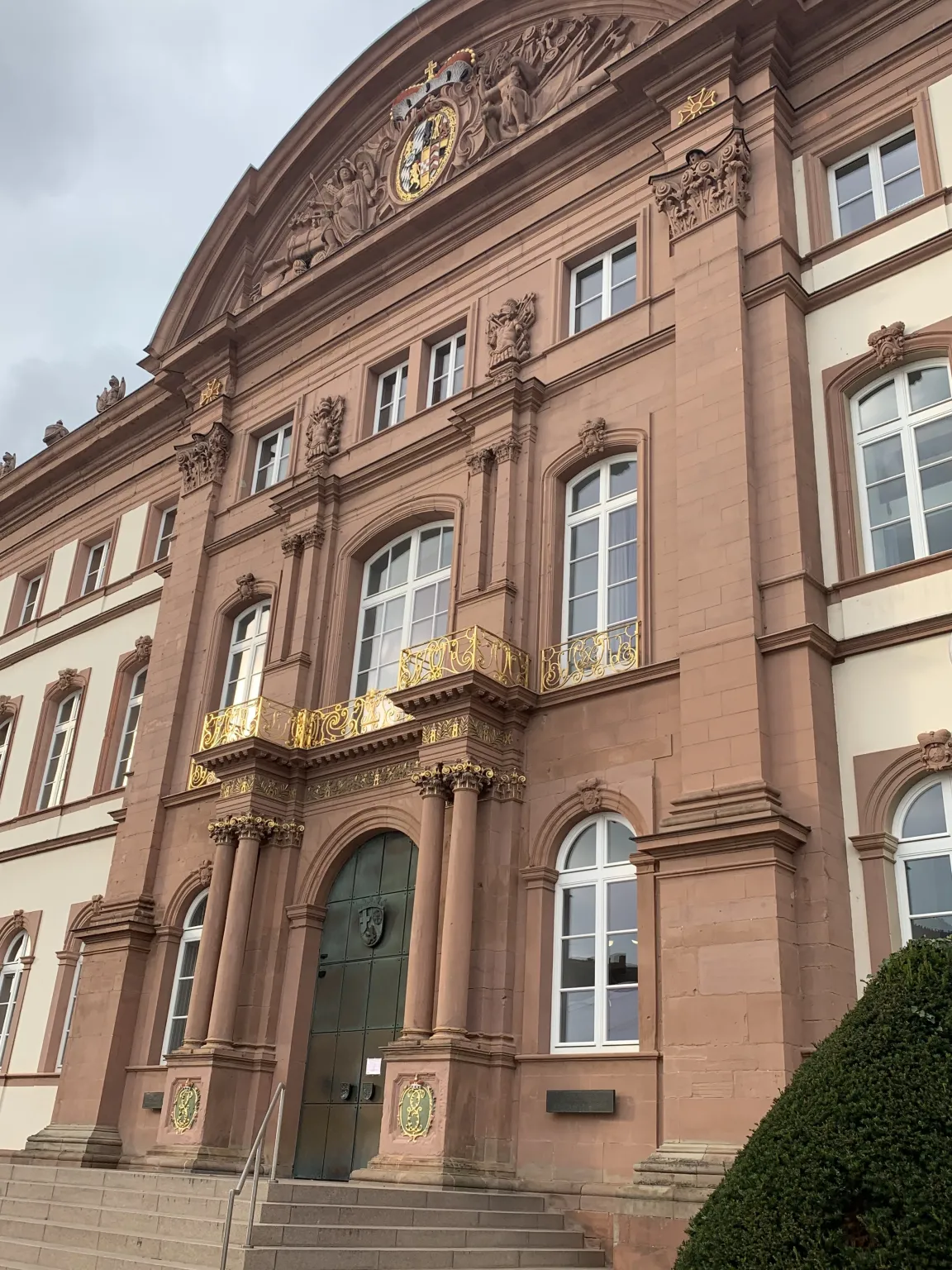
The landmark of the city of Zweibrücken, which still reminds us of its time as a royal seat, is the ducal palace. It was built between 1720 and 1725 on the north side of Schlossplatz (Palace Square) on behalf of Duke Gustav Samuel Leopold according to the plans of Swedish architect Jonas Erikson Sundahl. However, just six years after its completion, the two-and-a-half-story palace was destroyed by French revolutionary troops on August 3, 1793. After the end of French rule in 1815, it was rebuilt, but not as a seat of power, but as a church. This was ordered by Maximilian I, King of Bavaria, on the initiative of the Bishop of Mainz, as there was no Catholic church in Zweibrücken at that time and the city was now governed from Munich. For this reason, St. Maximilian’s Church was built with royal chambers, which, however, were hardly ever used. Therefore, in 1838, the Court of Appeal and the Attorney General moved in. A complete conversion into a palace of justice with a remand prison took place in 1867. The building was destroyed again on March 14, 1945, during the air raids of World War II, in which 80 percent of the buildings in Zweibrücken were destroyed. After the original plans for the ducal palace by Jonas Erikson Sundahl were discovered by chance in Nancy, the palace was rebuilt between 1962 and 1964 using yellow sandstone from Lorraine and red sandstone from the Northern Palatinate. Since 1965, the 83-meter-long, 23-meter-wide, and 25-meter-high palace has been the seat of the Palatinate Higher Regional Court and the Attorney General’s Office. The Zweibrücken Ducal Palace is not only one of the largest and most magnificent secular Baroque buildings in Rhineland-Palatinate, but also one of the most beautiful cultural monuments in Germany, which I have also visited.