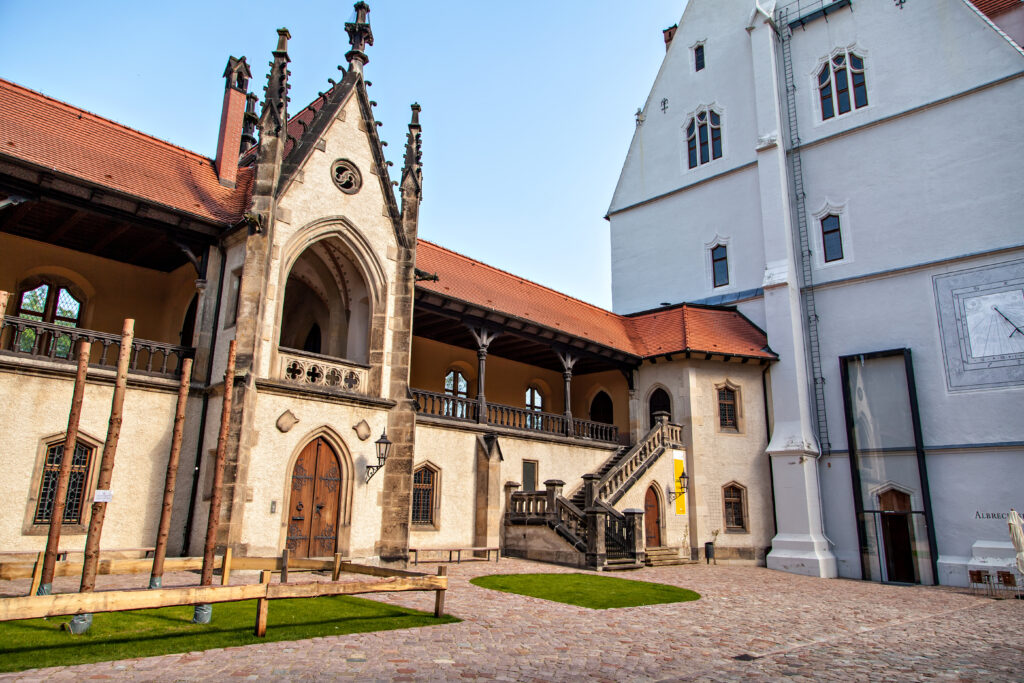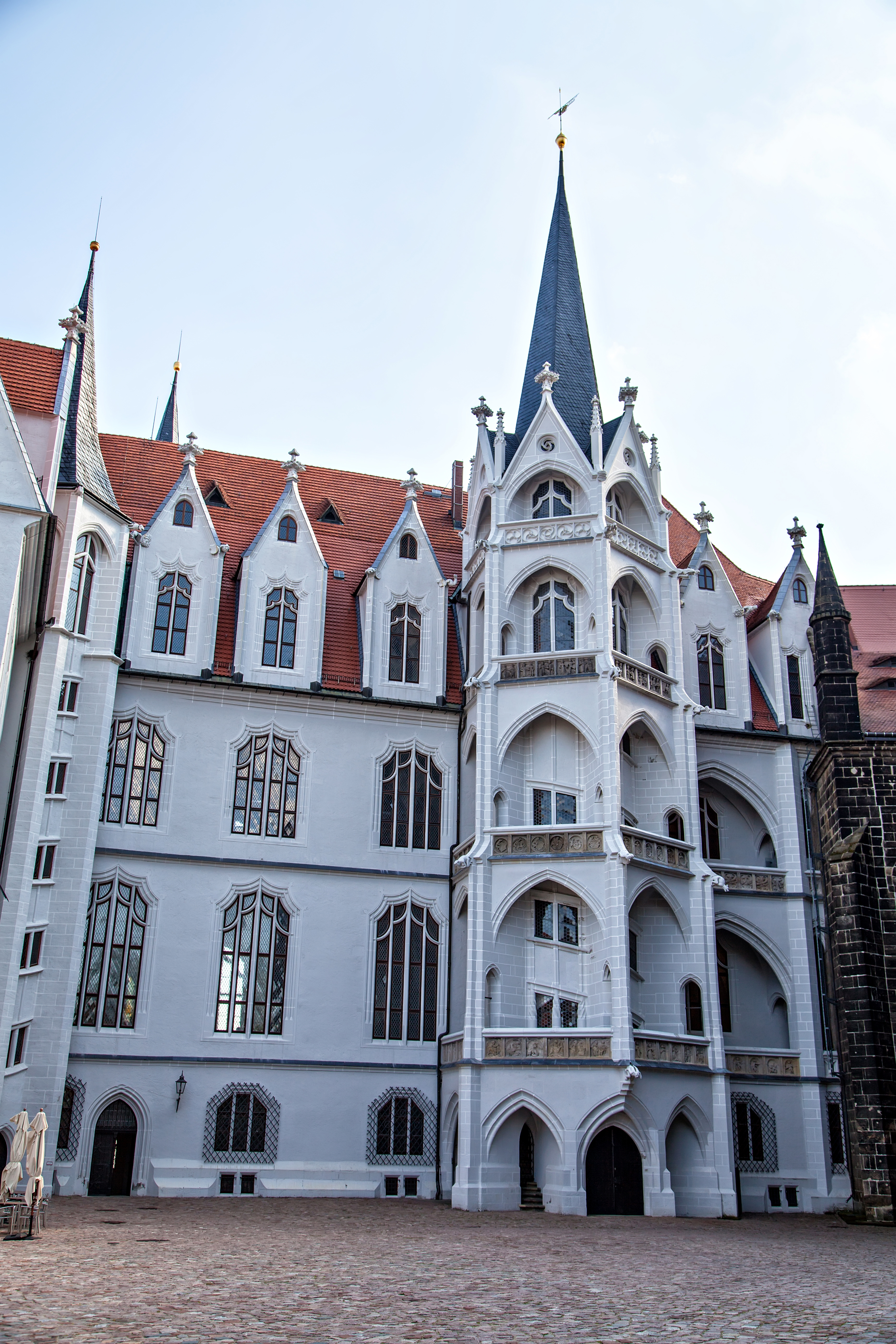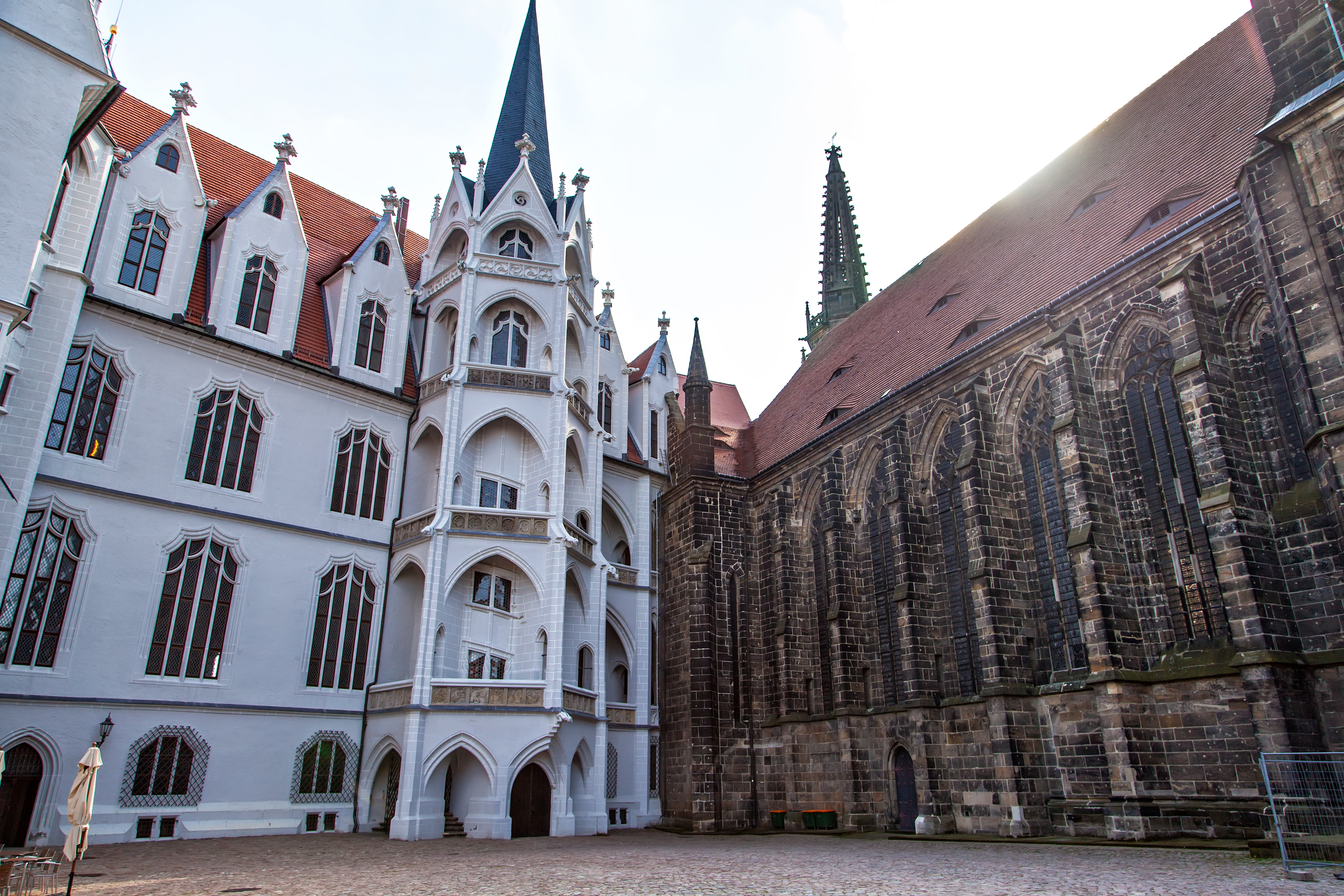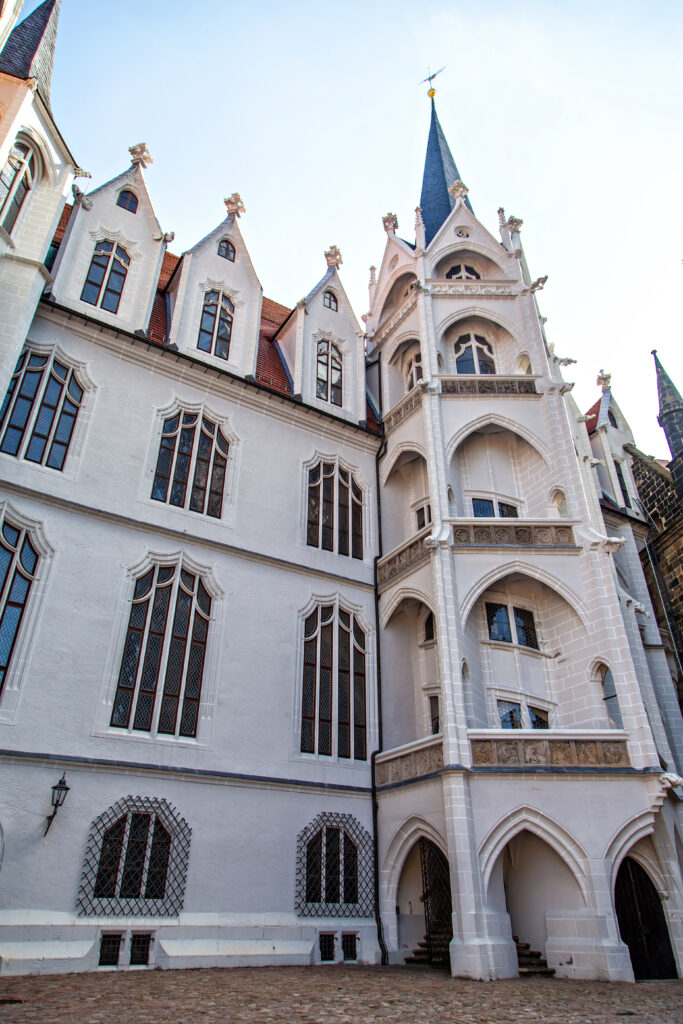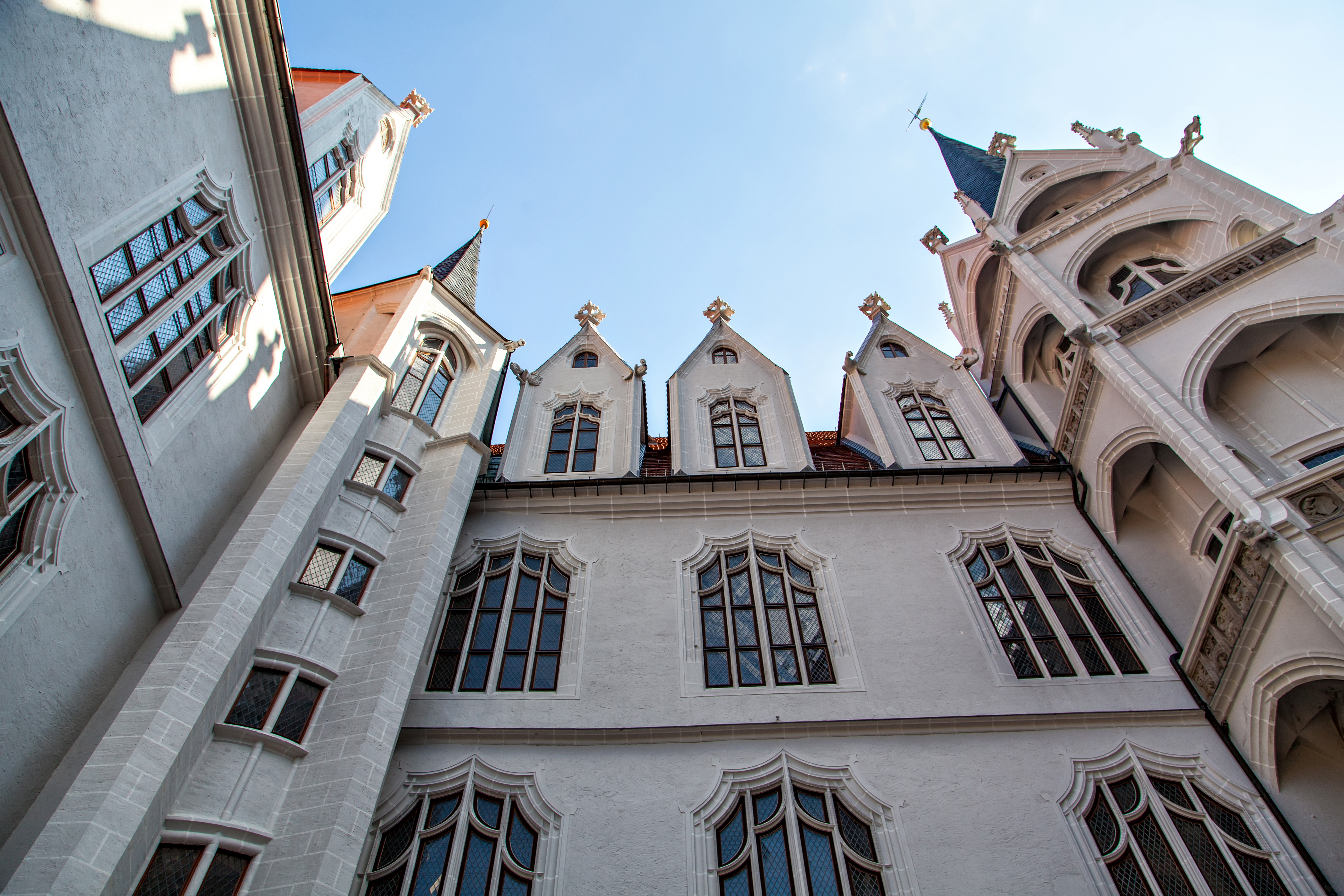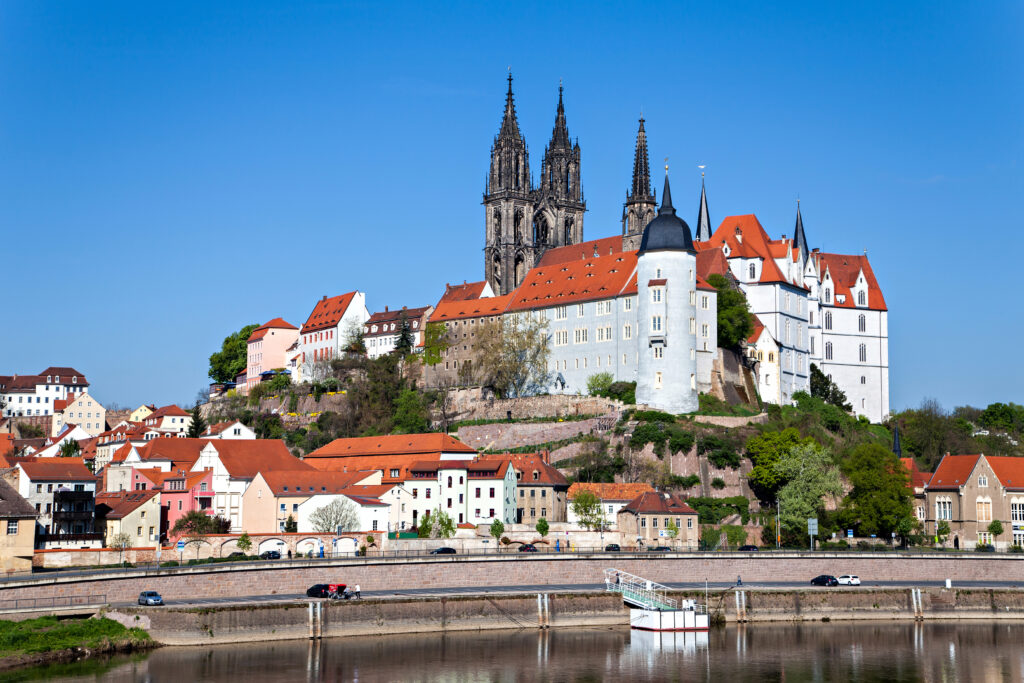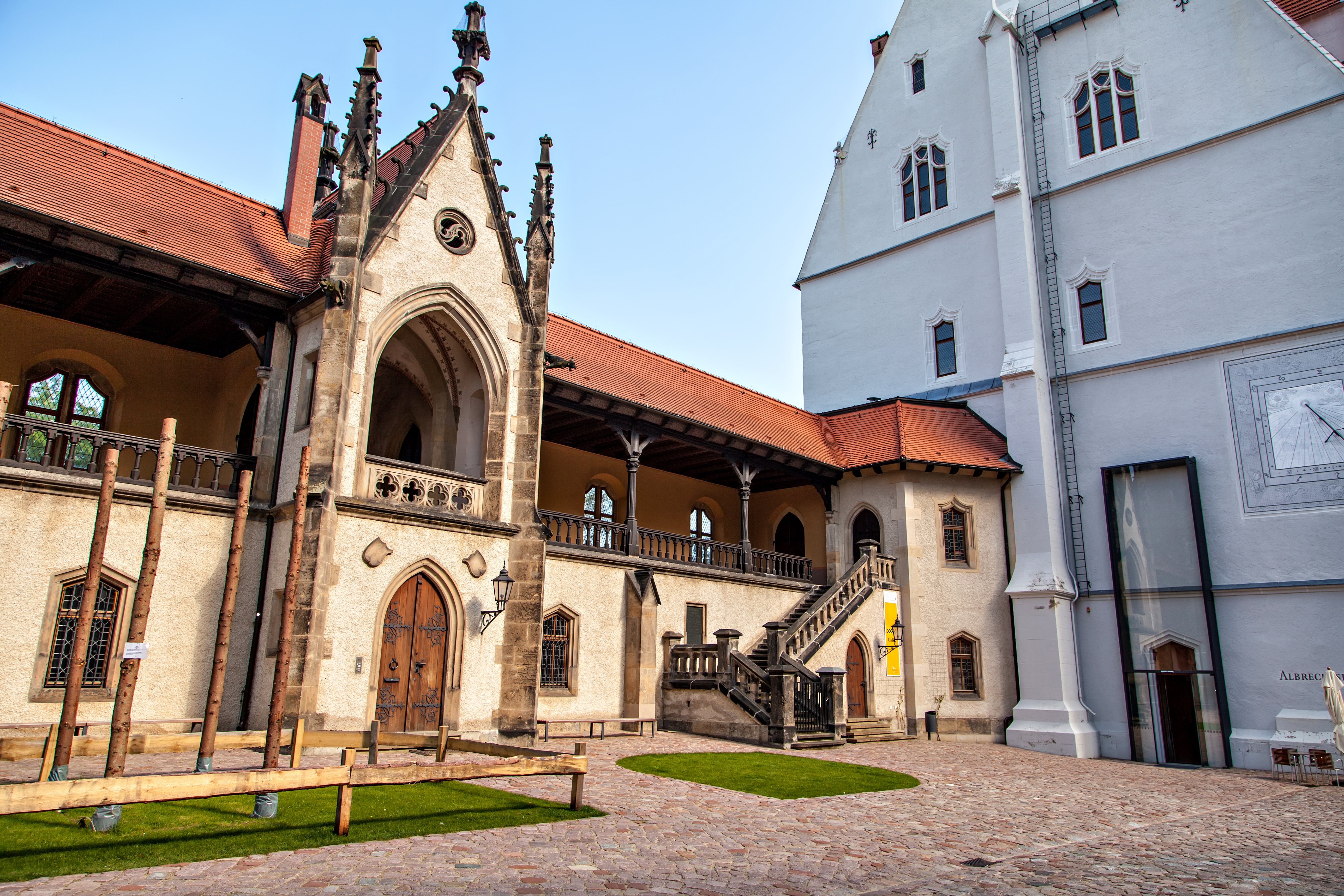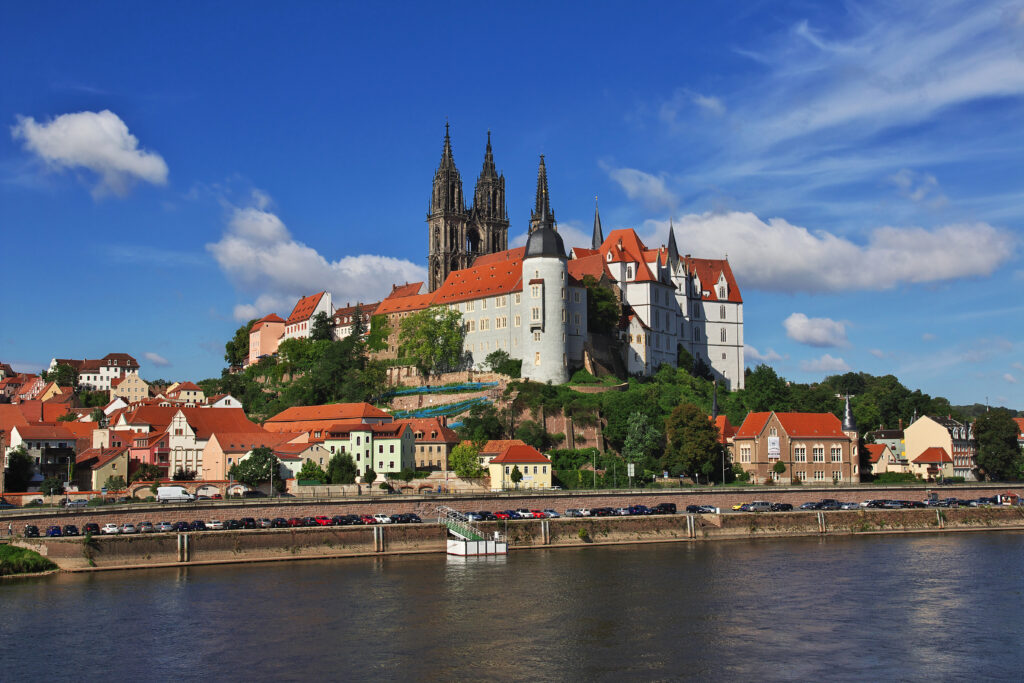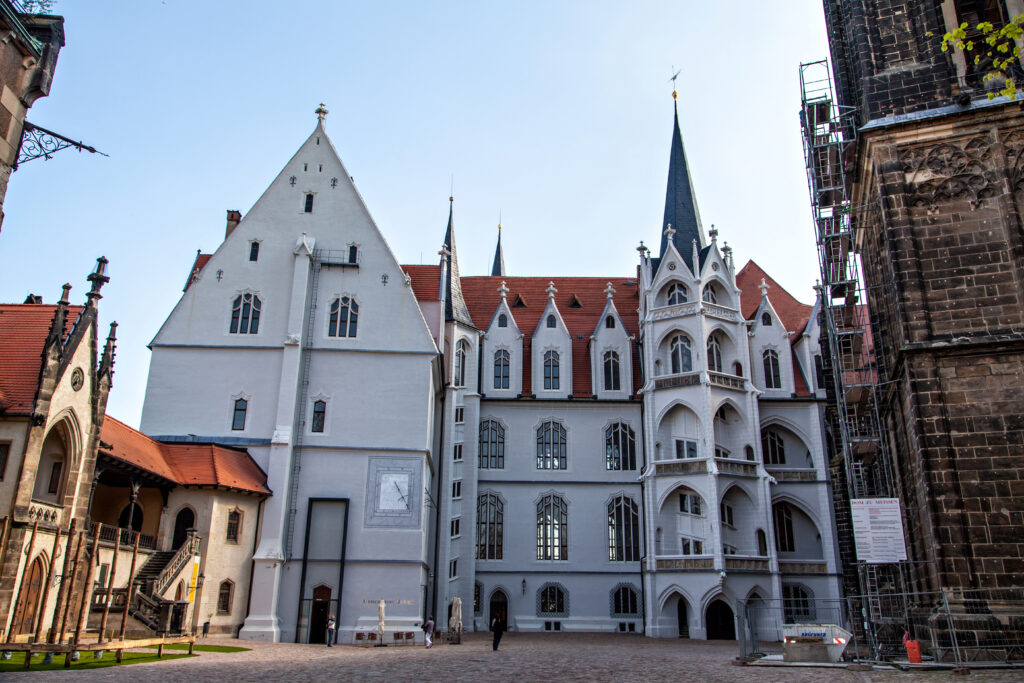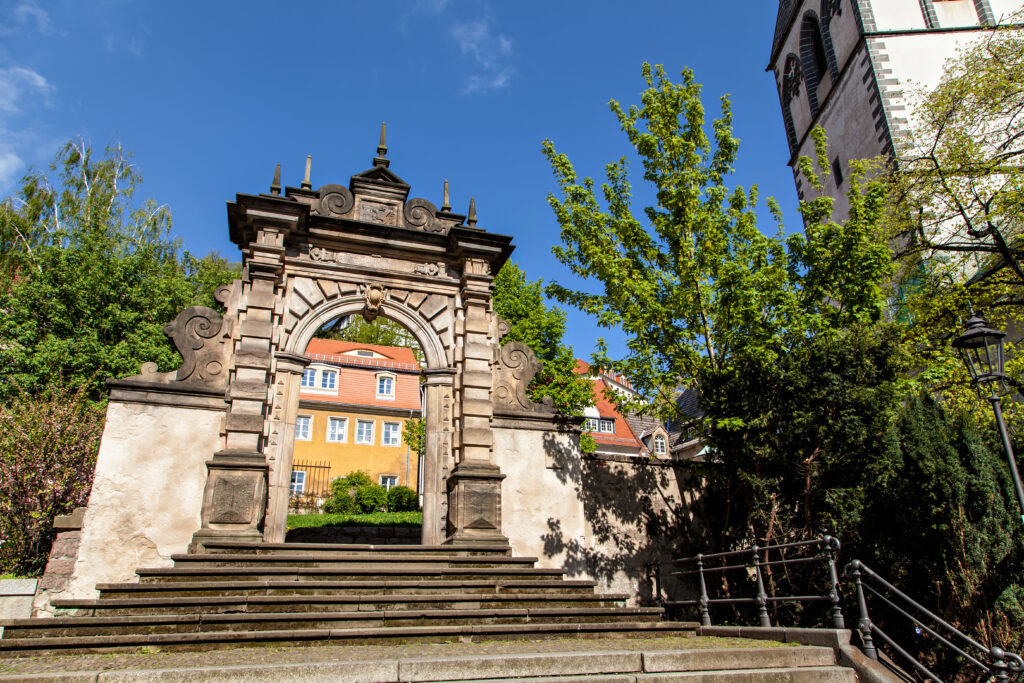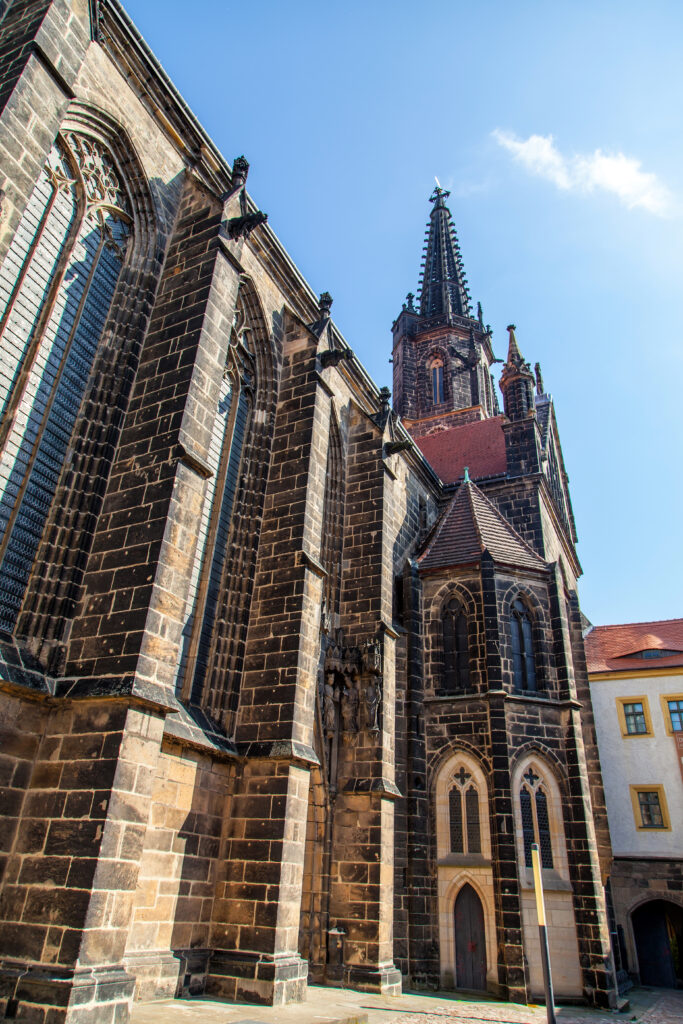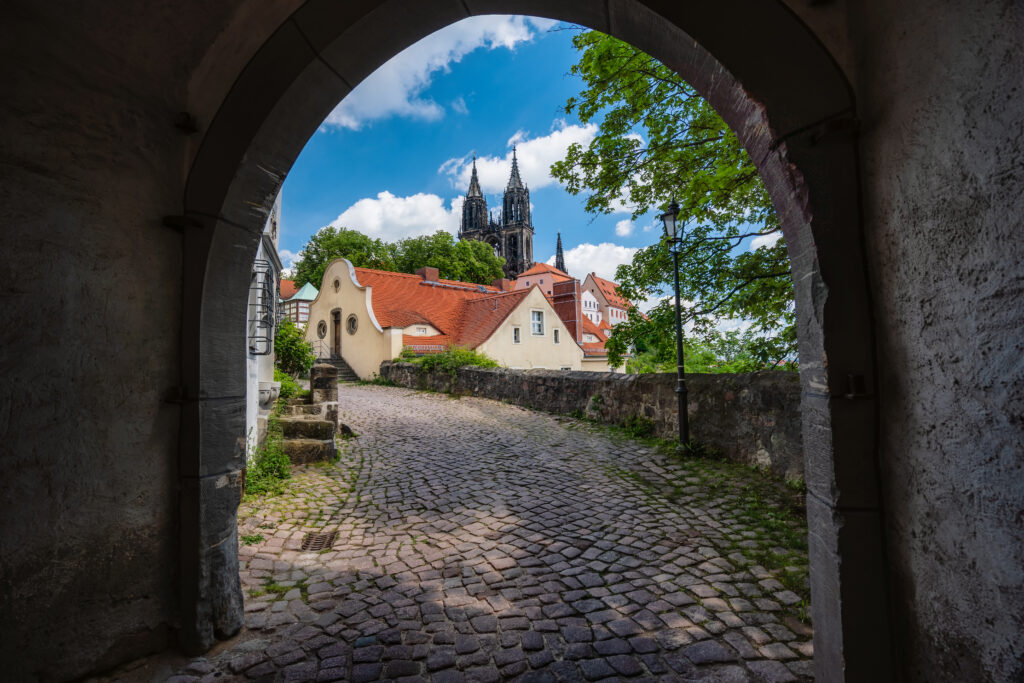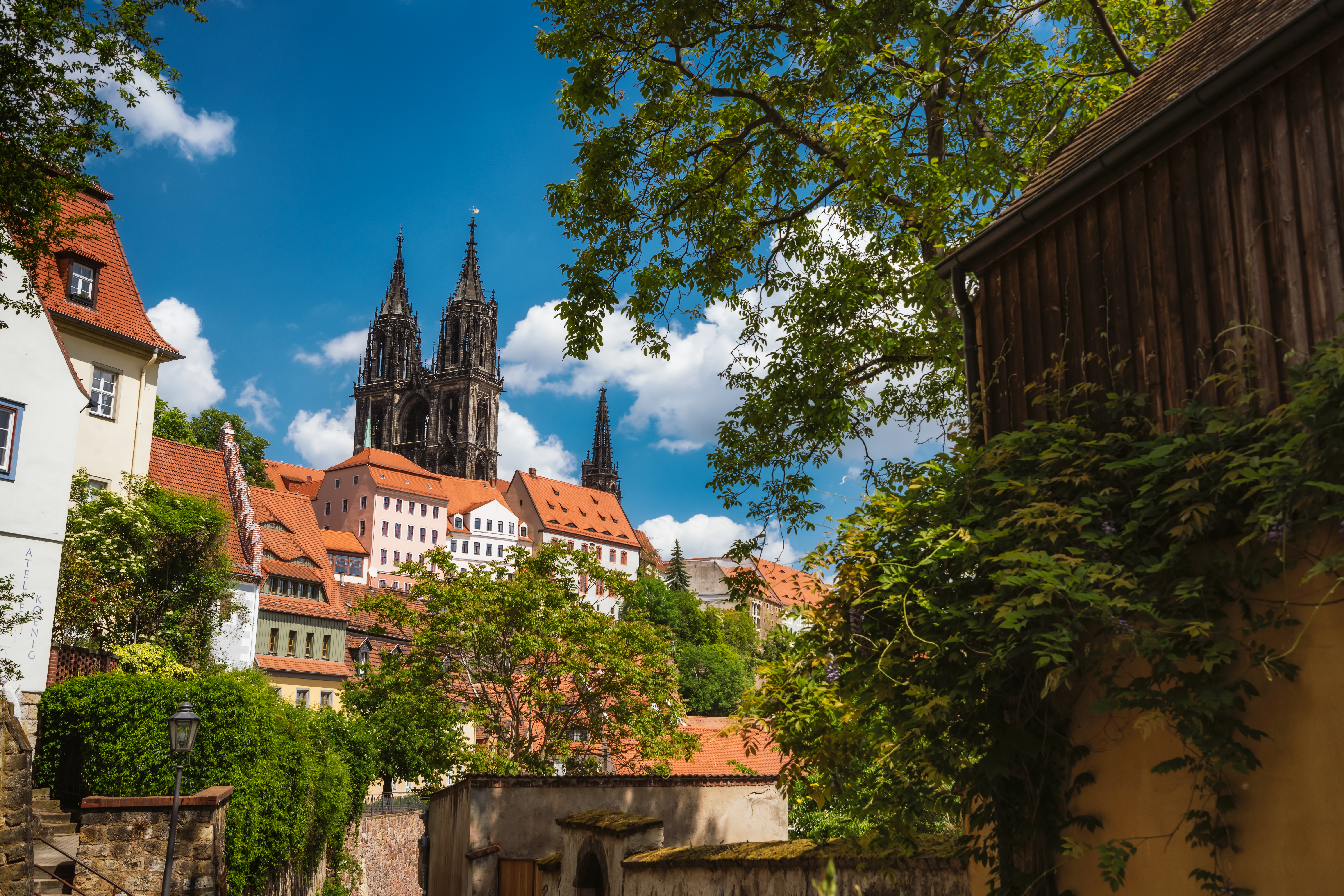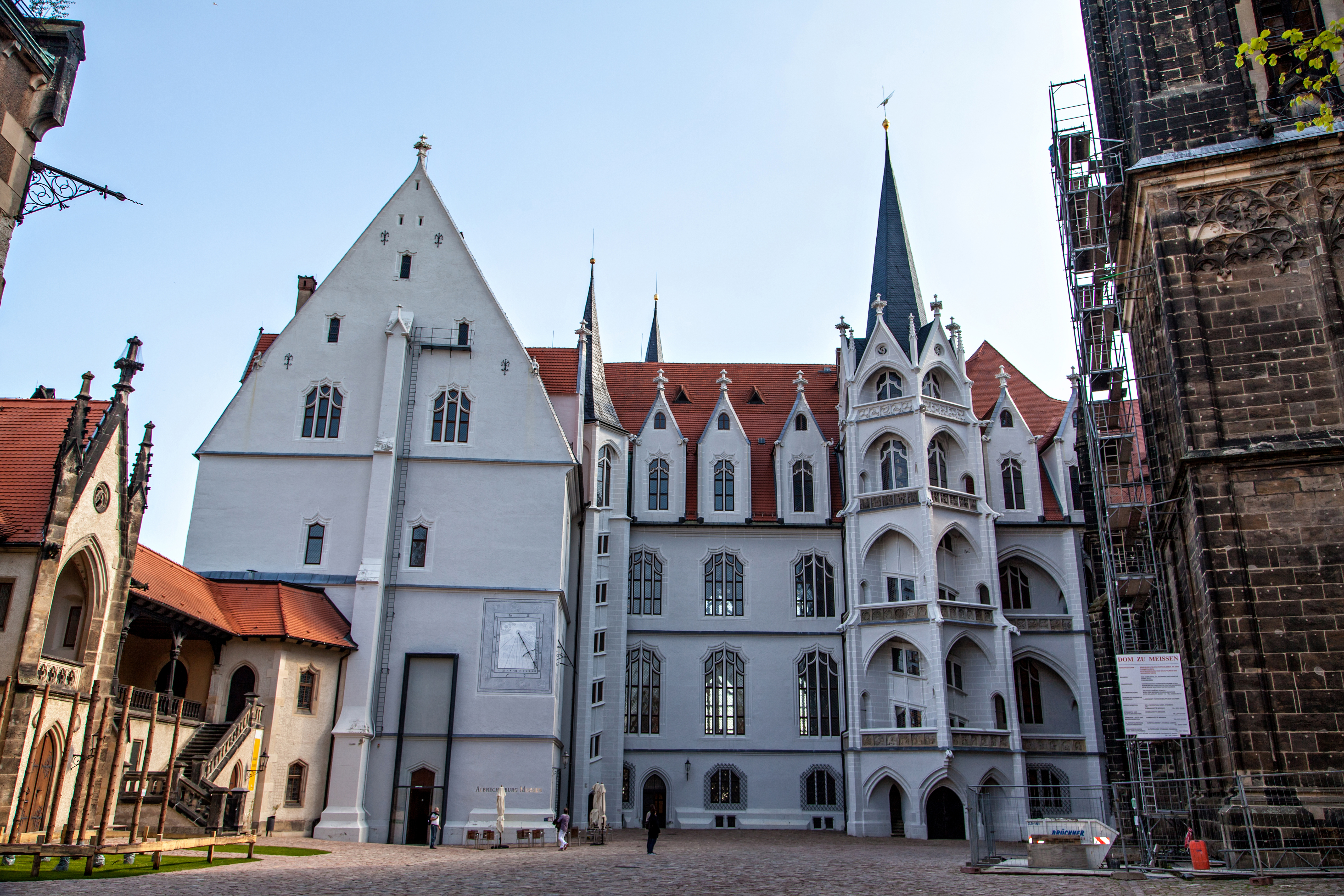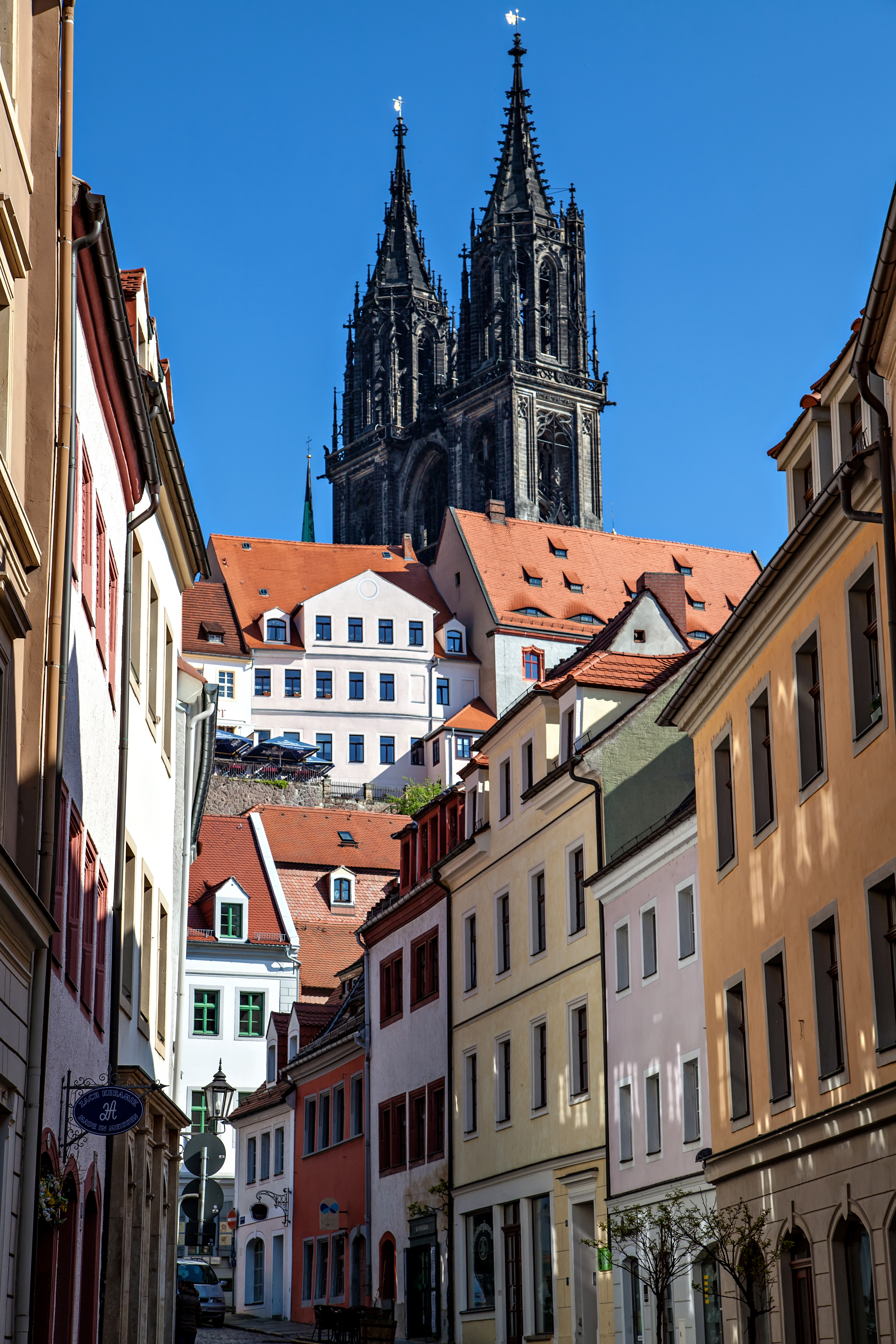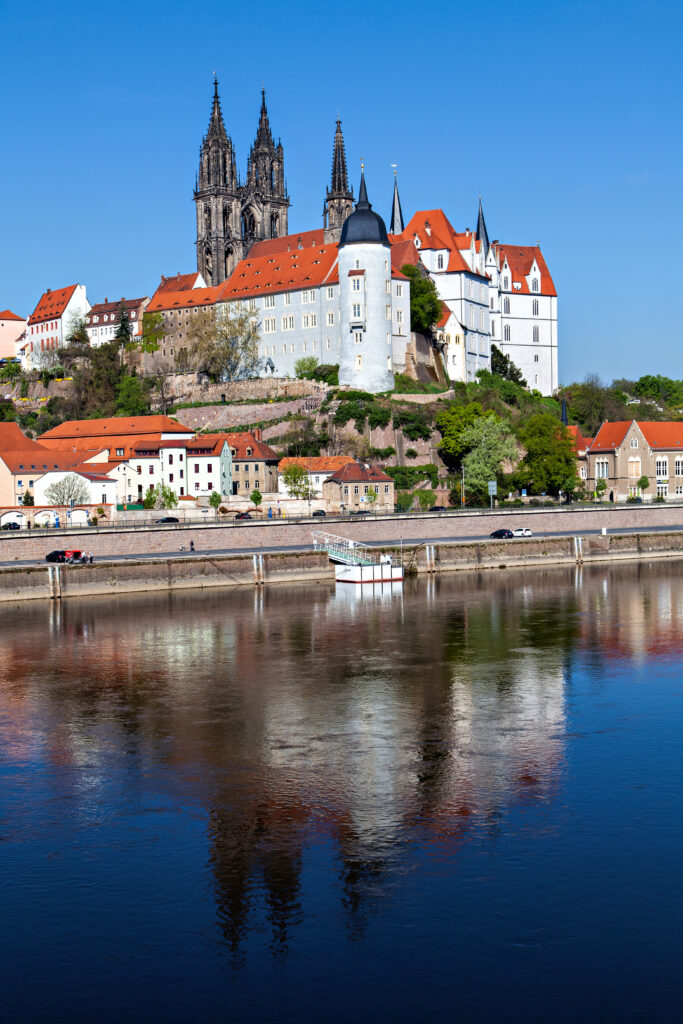

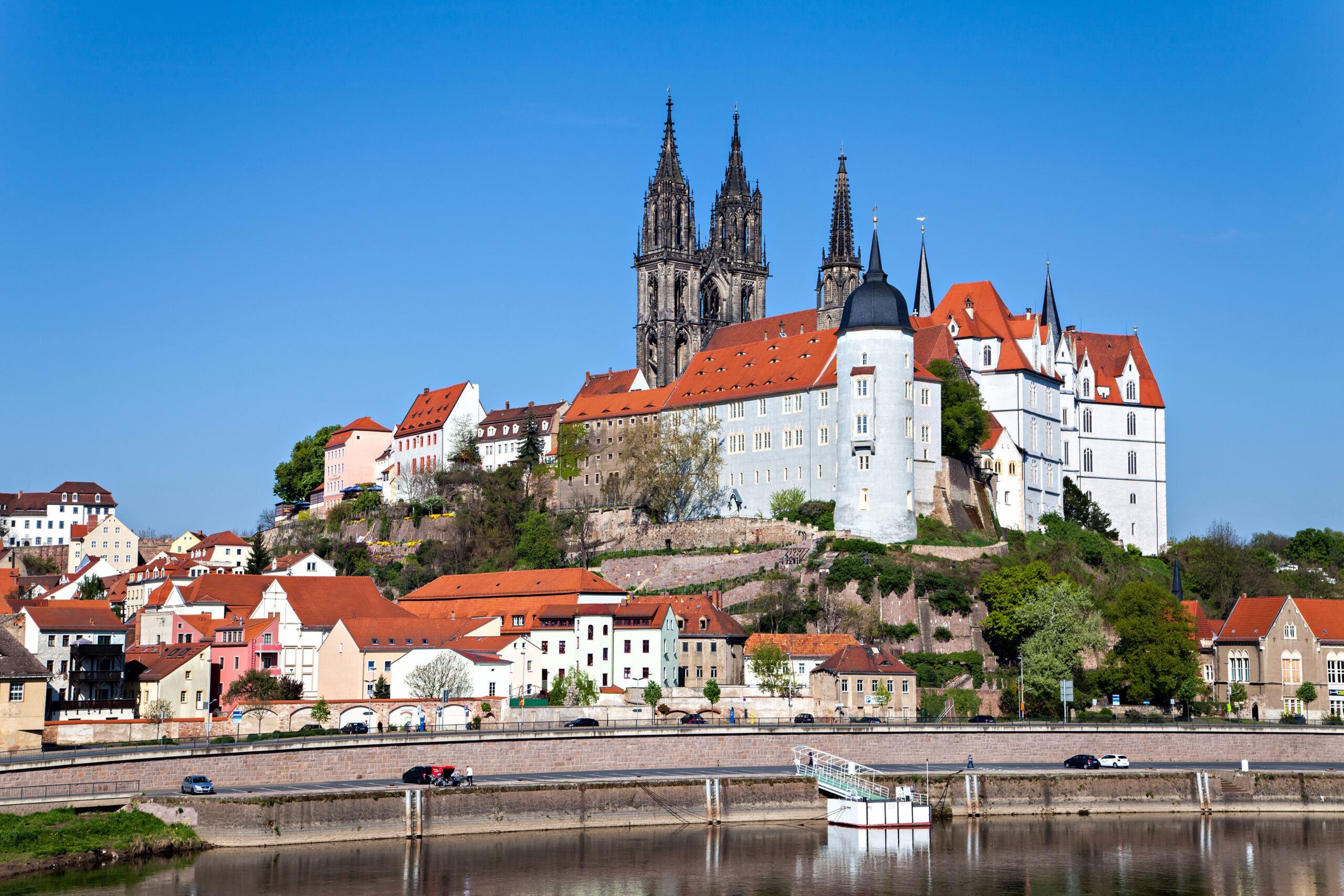
Albrechtsburg Castle sits majestically atop the castle hill in the charming city of Meissen, bearing witness to Gothic opulence and historical fascination. Known as Germany’s first true castle, its imposing silhouette rises into the sky like a guardian from a forgotten dream, inviting visitors to discover centuries of myths, legends, and architectural wonders.
The history of Albrechtsburg Castle begins in 1471, when the Wettin princes, electors, and dukes of Saxony decided to build a residential castle on the site of an older medieval fortress. This decision marked the beginning of a new architectural era in which splendor and practicality merged. Designed by the innovative architect Arnold von Westfalen, the castle was never used as a royal residence, but rather served as a symbol of power and prestige, providing a setting for the duchies of Saxony and beyond.
In 1710, a twist of fate gave Albrechtsburg Castle a new role in European history when Augustus the Strong founded Europe’s first porcelain manufactory within its walls. With the delicate art of porcelain manufacturing—a closely guarded secret—preserved within its Gothic walls, the castle was transformed from a symbol of feudal power to a beacon of artistic innovation. Over time, its walls witnessed the transformation of this “white gold” into a treasure coveted by royal houses across the continent.
At the beginning of the 19th century, Albrechtsburg Castle underwent another metamorphosis. After 1864, it was renovated, with its rooms colorfully decorated with historical murals depicting the rich history of Saxon heritage. Today, the castle stands as a cultural monument under the protection of the Hague Convention, inviting visitors to immerse themselves in its historic past.
However, the history of Meissen and its famous castle goes back even further – to the beginnings of human settlement. Archaeological finds indicate settlement from the late Bronze Age to the Germanic period, although concrete evidence of fortifications is still lacking. The strategic importance of the site became clear when King Henry I destroyed the Sorbian fortress of Gana in 929 and decided to build a new castle at the confluence of the Elbe, Triebisch, and Meisa rivers. This place, called Misni, developed into an important fortress, which was later referred to as the “Saxon Acropolis” due to its magnificent view over the Elbe Valley.
Throughout the Middle Ages, Meissen was a hub of territorial power struggles. After its foundation, the castle was the scene of a series of noble families and military conflicts, particularly with the Polish Piasts and the Bohemian Přemyslids, who rivaled for supremacy over this emerging region. The Margraviate of Meissen, as it was later called, was a hub of regional politics and warfare, arousing the ambitions of emperors and electors alike.
In the 10th century, the chronicler Thietmar of Merseburg described a landscape full of wooden structures and earthen ramparts, suggesting a once-thriving fortified community. In the years that followed, however, Meissen was transformed into a burgward—the center of a royal administrative district—and eventually the seat of a bishopric, further cementing its role as a hub of ecclesiastical and secular power.
In the 12th century, the Wettin dynasty, which had secured its place as Margraves of Meissen, experienced changing fortunes. The political chessboard was full of alliances and betrayals, often involving prominent figures such as Ekkehard I and Boleslaw Chrobry, whose intrigues intertwined the fates of Germany, Poland, and Bohemia. Through strategic maneuvering, the Wettins managed to consolidate their influence in the region and assert themselves in the capricious currents of medieval politics.
In the 15th century, the role of the castle changed once again. The decline of the burgraves created space for new architectural ventures, which led to the construction of today’s Gothic masterpiece. Here, the architectural language began to develop and laid the foundation for the Renaissance style that would soon shape later Saxon buildings.
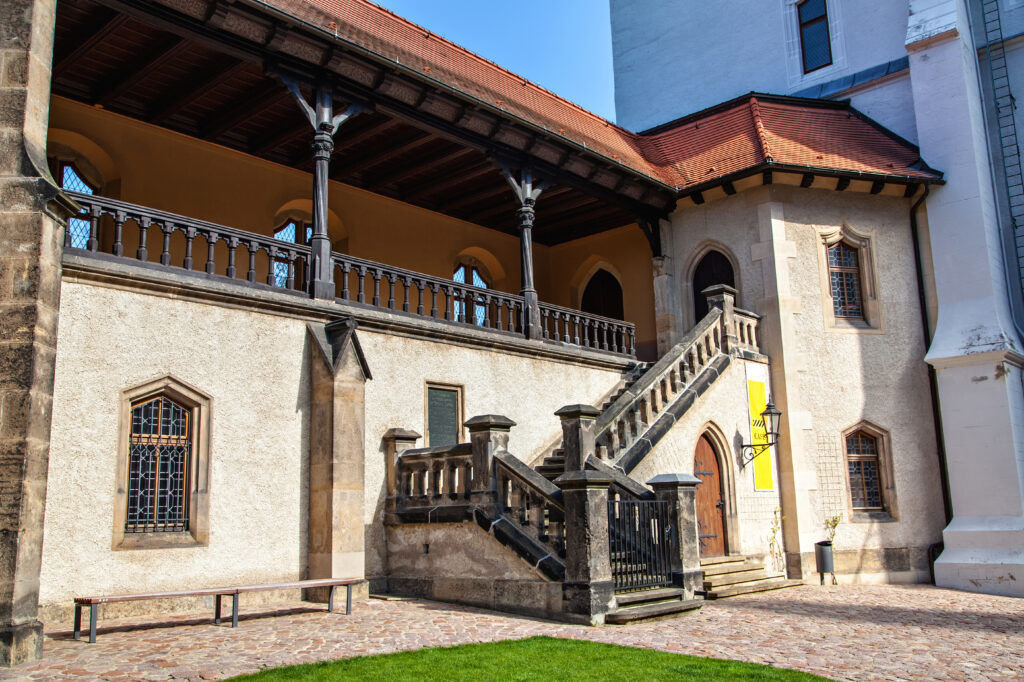
Today, visitors stroll through the historic halls and magnificent staircases of Albrechtsburg Castle, where traces of history can be felt at every turn. The elaborately painted interiors bring to life the far-reaching narratives of Saxony’s historic past, while the castle itself remains an example of the evolution of a medieval fortress into an elegant courtly residence.
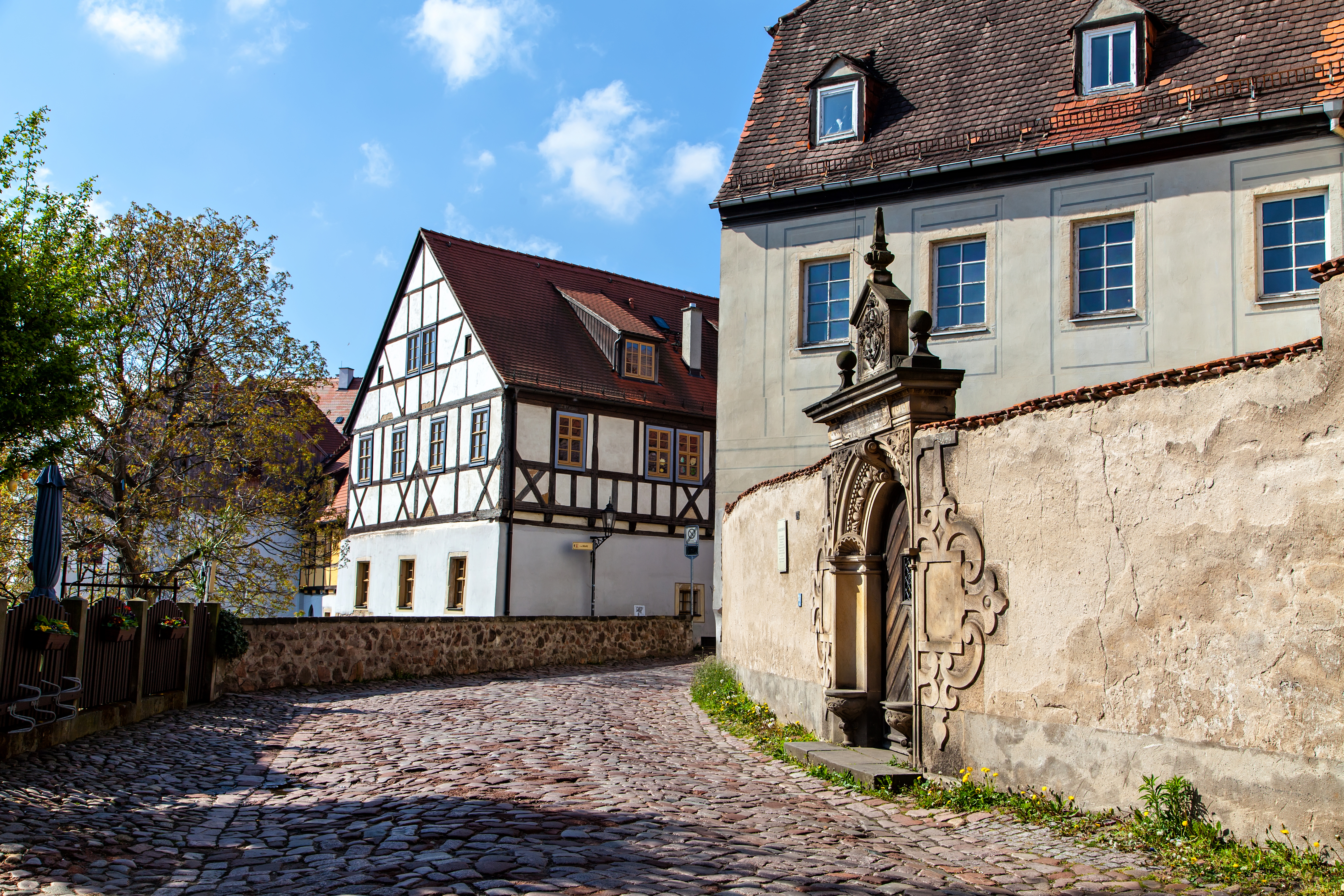
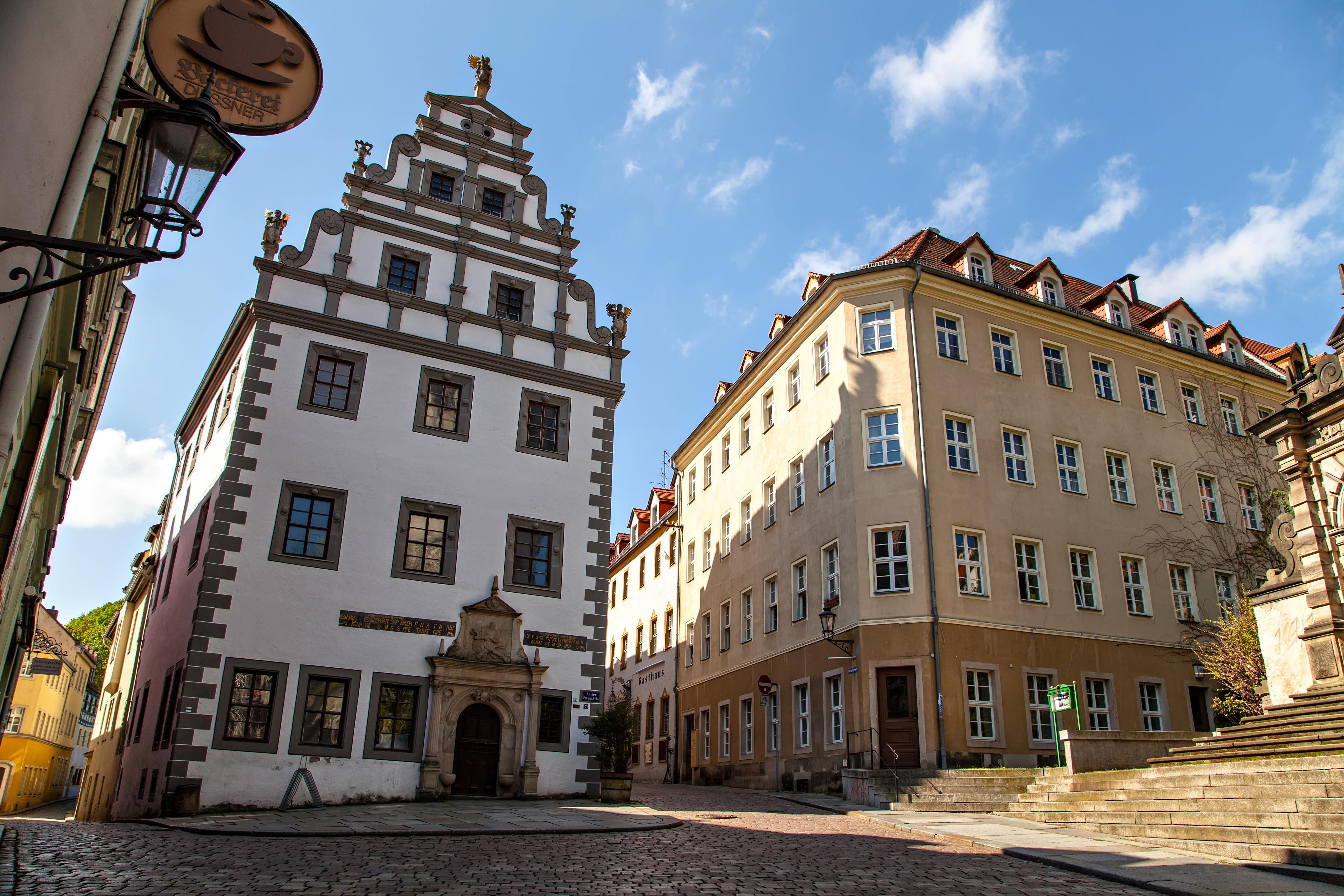
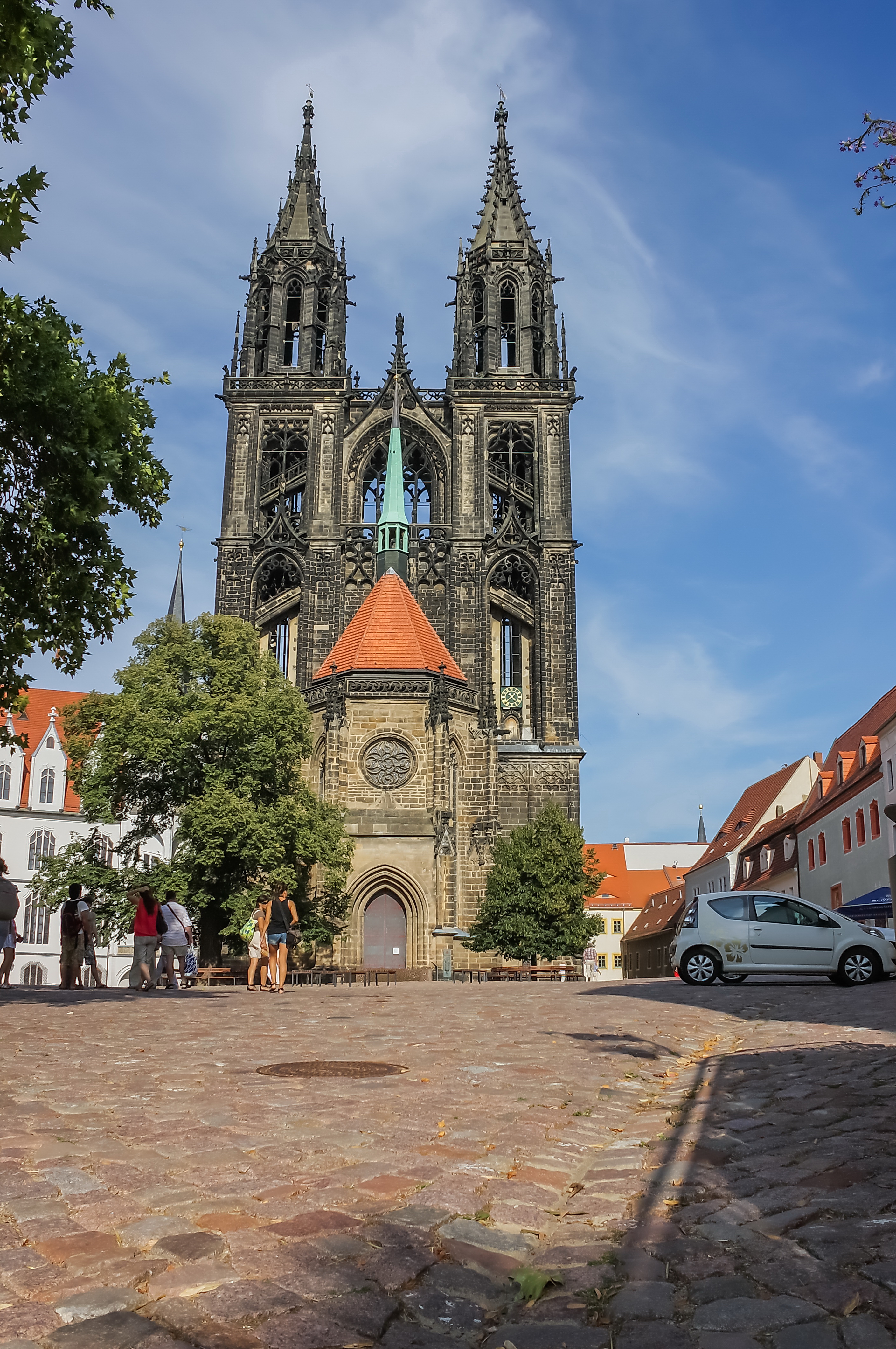
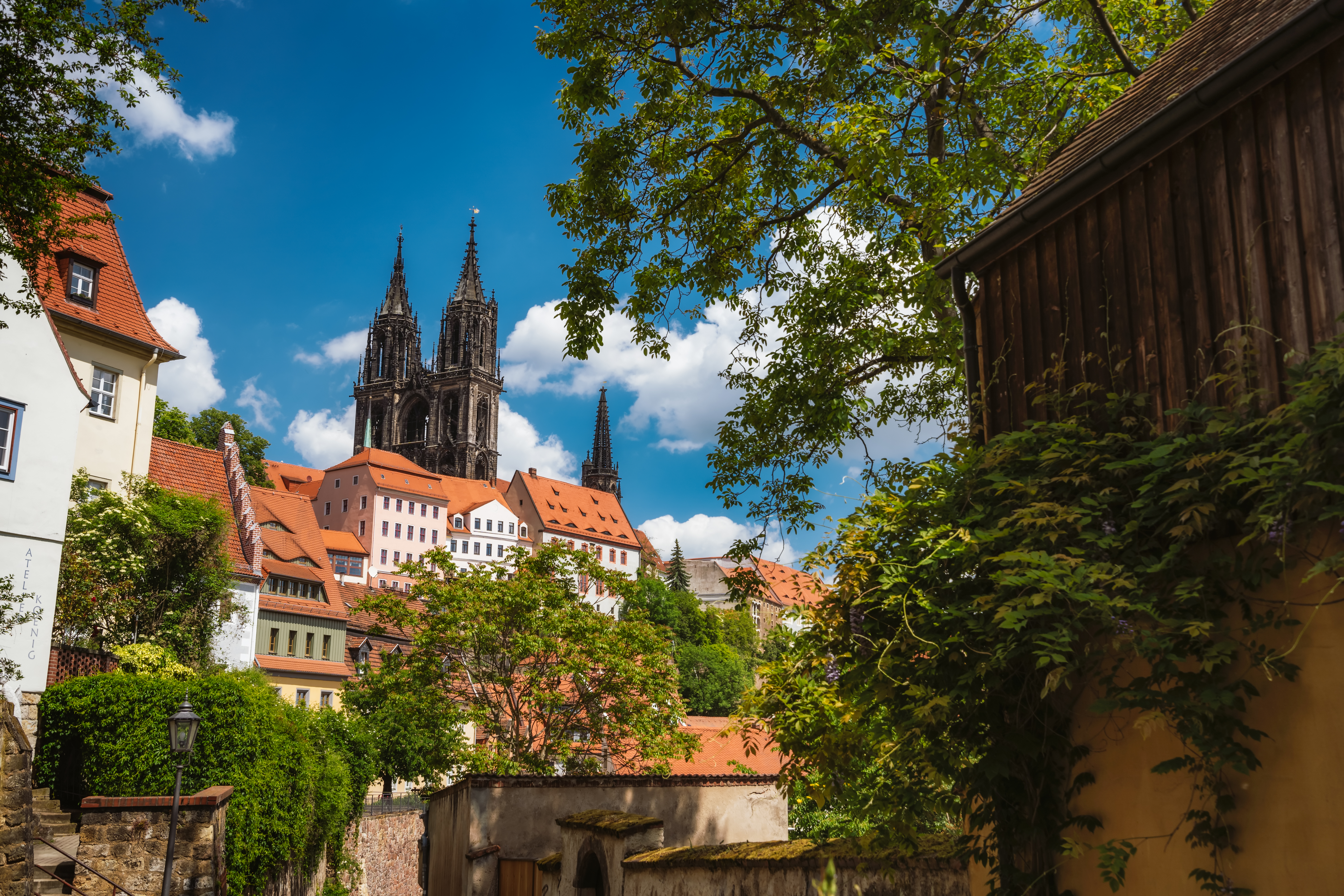
Beyond the castle, the town of Meissen exudes an ethereal charm. Cobblestone streets wind past half-timbered houses and ancient chapels, filled with the whispers of time. From the banks of the Elbe River, an enchanting panorama unfolds: the filigree facades of Albrechtsburg Castle and Meissen Cathedral dominate the skyline, silhouetted against the ever-changing colors of the Saxon sky.
In fact, Albrechtsburg Castle and Meissen together form a tableau vivant – a living picture – of history, steeped in art, myth, and legend. They invite explorers to participate in a narrative woven through the centuries and offer a glimpse into a past where the stones themselves seem to breathe with the stories they so jealously guard. When day turns to night and long shadows fall across the castle, it is impossible to resist the pull of this timeless place, where history dances gracefully with the present and waltzes through the corridors of time.