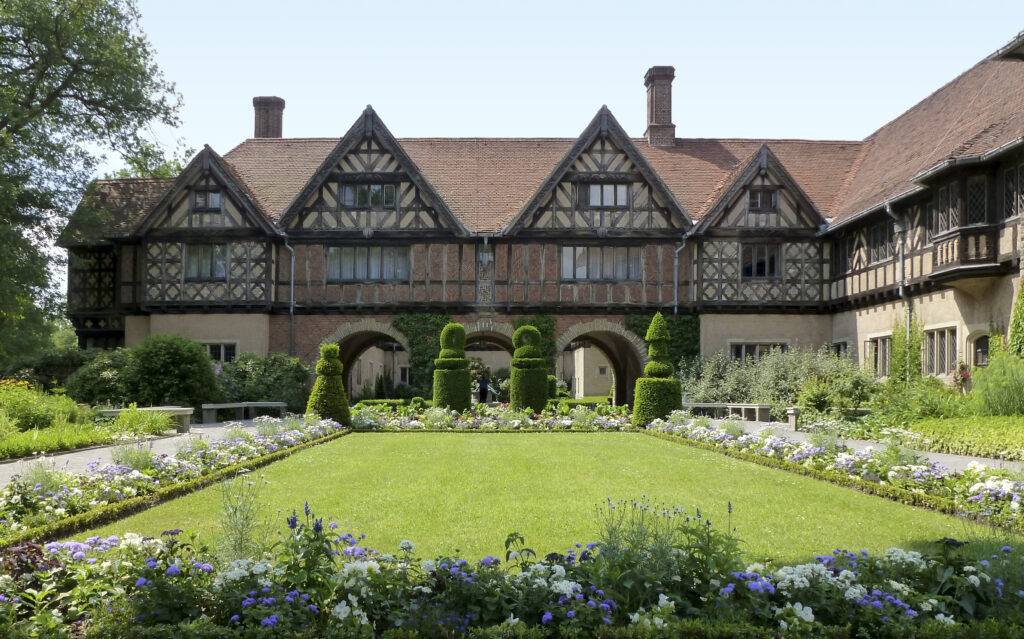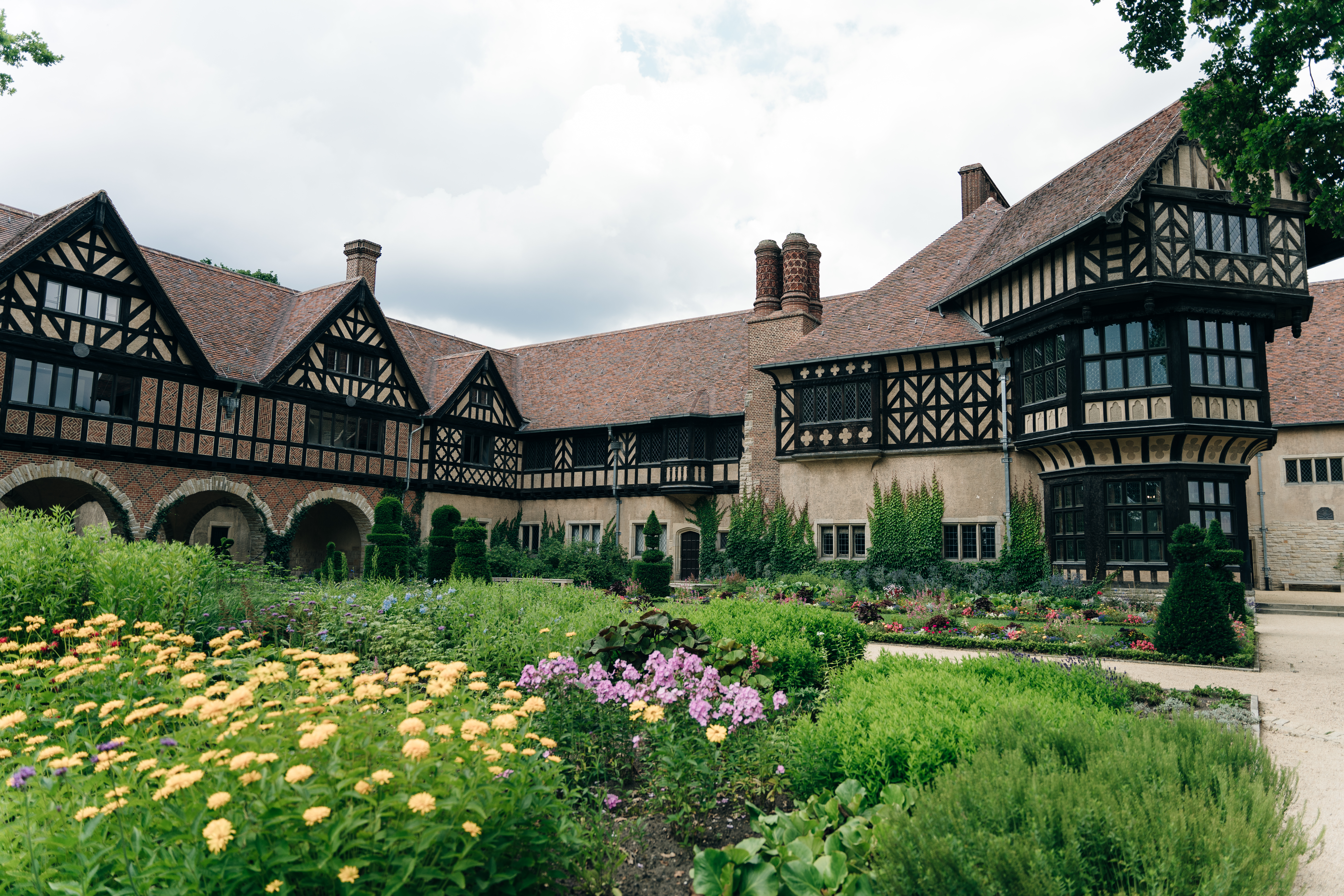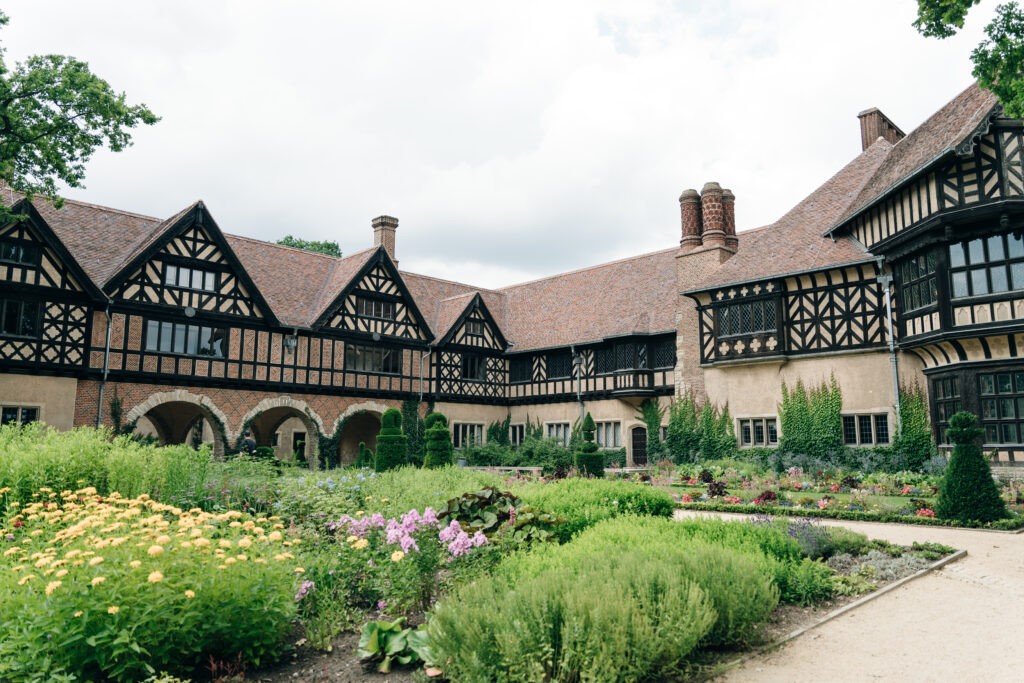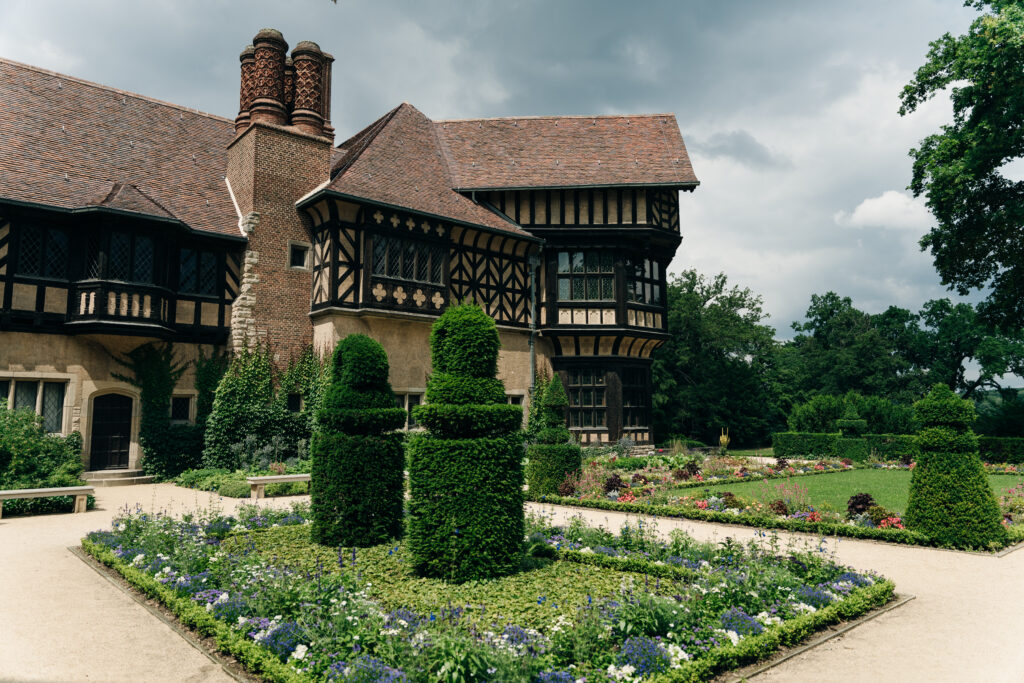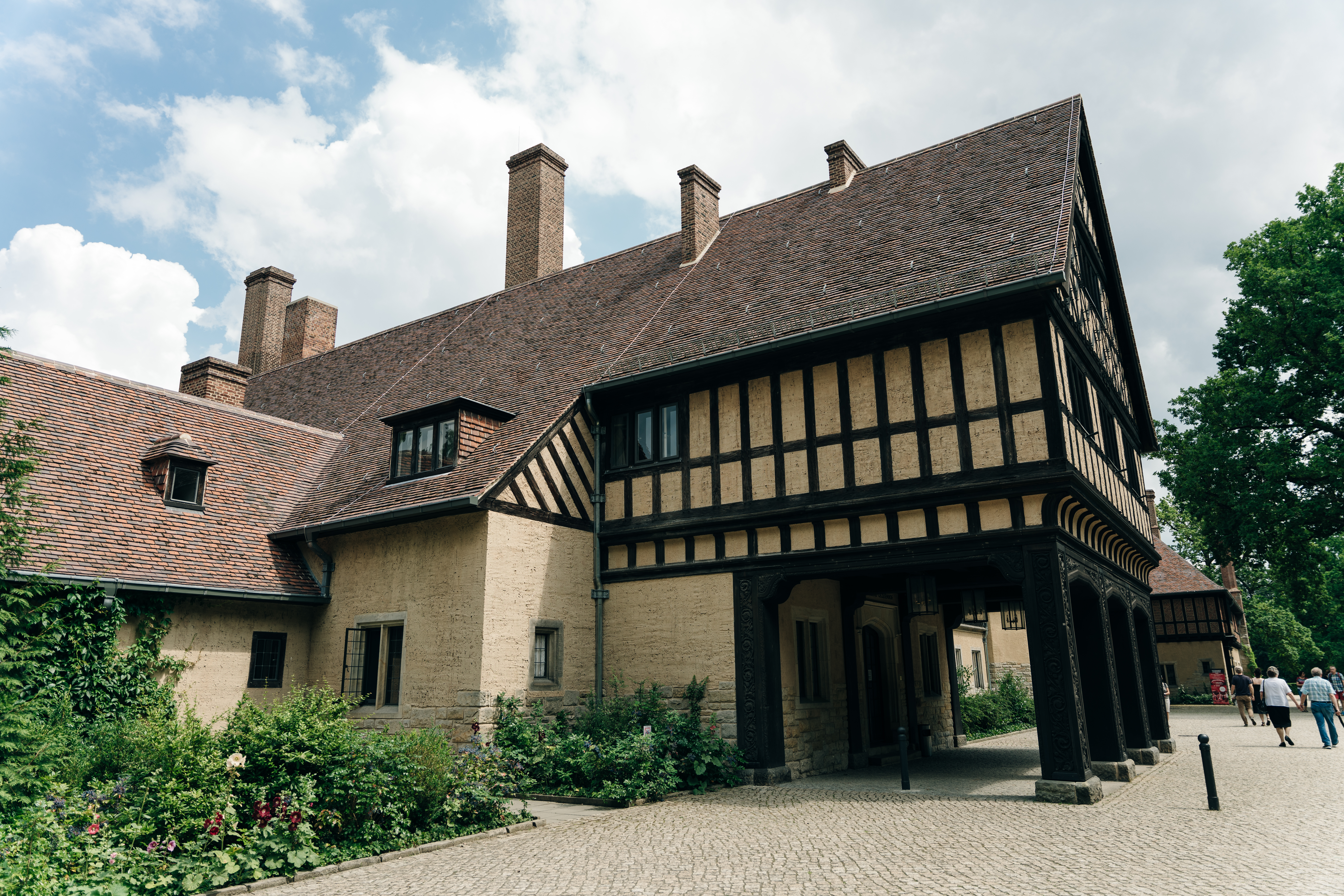


Nestled in the northern part of Potsdam’s New Garden, near the tranquil shores of Jungfernsee Lake, lies Cecilienhof Palace—the last palace built by the Hohenzollern dynasty. This architectural marvel was designed between 1913 and 1917 by Paul Schultze-Naumburg in the enchanting English Tudor style. The palace, which was conceived as a residence for Crown Prince Wilhelm and his wife Cecilie von Mecklenburg-Schwerin, witnessed significant historical events that surround it with an aura of mysticism and grandeur.
In May 1913, Crown Prince Wilhelm laid the foundation stone, setting in motion a series of events that would transform the castle from an opulent family residence into a venue for world-shaking decisions. Construction was delayed several times due to the outbreak of World War I, and it was not until August 1917 that Crown Princess Cecilie was finally able to move into her chambers, where she gave birth to her sixth child, also named Cecilie, in September of that year.
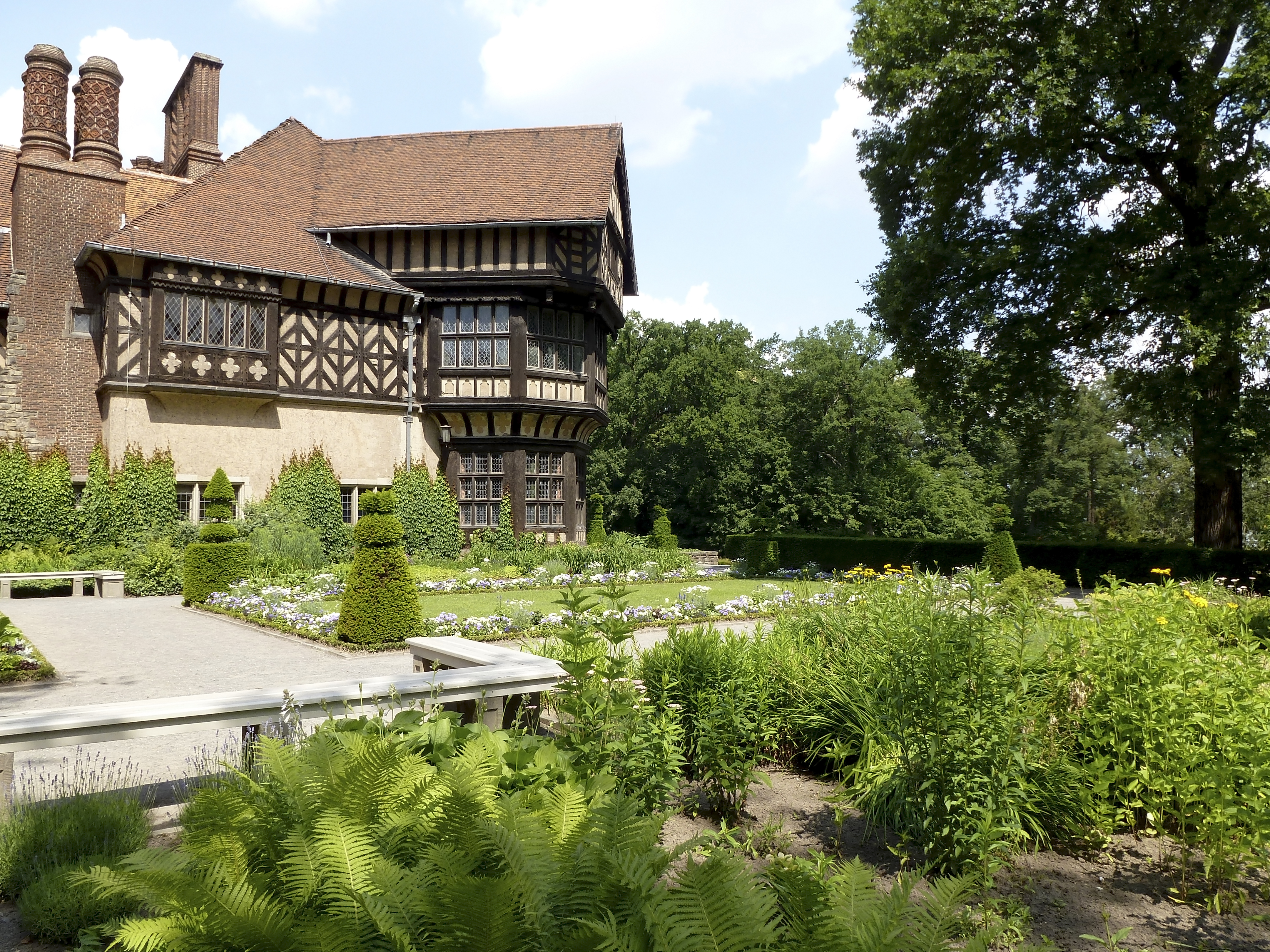
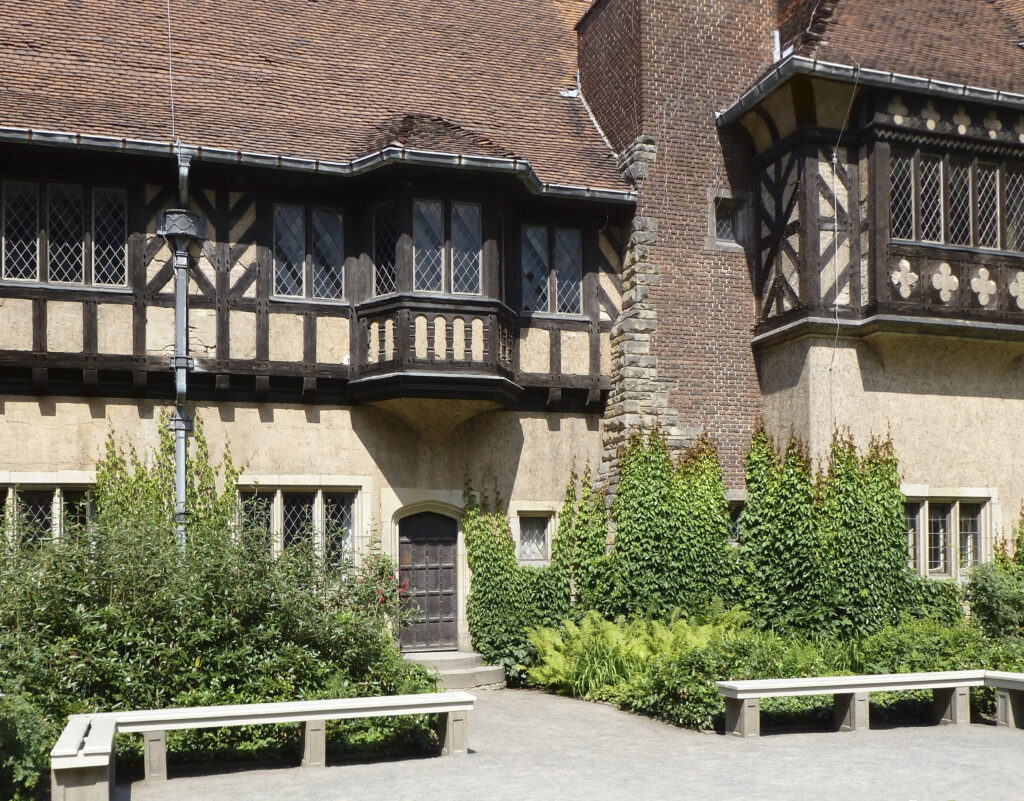
The vision for Cecilienhof Palace was heavily inspired by the cottage style of the Gelbensande hunting lodge, a hunting lodge owned by Cecilie’s parents. The exterior of the palace is characterized by dark oak half-timbered walls and red bricks, with no two chimneys alike – each one a unique testament to the architectural splendor of the Tudor era. The building is carefully arranged around five courtyards, including the large courtyard of honor in the center, complemented by smaller garden and farm courtyards.
The interior of the palace is equally breathtaking, embodying the refined taste and sophisticated lifestyle of the early 20th-century aristocracy. The main wing housed publicly accessible reception rooms on the ground floor, including the wood-paneled smoking room, the library, the music room, and several private chambers designed by Paul Ludwig Troost, who was known for his work on luxurious ocean liners. A particularly fascinating room, designed at Cecilie’s request in the style of a ship’s cabin, stands out for its originality.
Despite the splendor, construction work was interrupted during World War I, causing significant delays. It was not until October 1917 that Cecilienhof Palace was finally completed. After the abdication of Emperor Wilhelm II in 1918, the estate returned to private ownership of the family in 1926, but was confiscated without compensation by the Soviet forces in 1945. This expropriation led to protracted legal disputes over ownership rights and restitution, which continued until March 2023, when the Hohenzollern family relinquished all claims.
Among the many chapters of its eventful past, Cecilienhof Palace is perhaps best known as the venue for the Potsdam Conference. At this historic meeting, held from July 17 to August 2, 1945, statesmen such as Harry S. Truman, Winston Churchill (later replaced by Clement Attlee), and Joseph Stalin gathered to shape the postwar world. In preparation for the conference, the palace underwent extensive renovations. The once elegant interiors were stripped of their original furnishings, most of which were tragically lost in a fire at the Alte Meierei on July 25, 1945.
The layout of the palace was adapted to suit the tastes and requirements of the delegates. Stalin’s quarters were furnished with heavy leather and sturdy tables to match his austere personality. In contrast, Truman’s room exuded classic elegance with furniture from the Marble Palace, while Churchill’s chamber was furnished with neo-Gothic showpieces from Babelsberg Palace.
At the center of these intense discussions was the Great Hall—a majestic, two-story room 26 meters long and 12 meters high. Its original function as a convivial living area gave way to its conversion into a conference room. Dominating the hall was a specially made round table from the Moscow furniture company Lux, at which the fate of nations was discussed. It was here that Truman gave the momentous order to drop the atomic bomb on Hiroshima, underscoring the gravity of the negotiations.
After the conference, Cecilienhof Palace opened its doors to the public and initially served as an educational center for the Democratic Women’s Union. By 1960, part of the west wing had been converted into a hotel, which remained in operation until its closure for renovation at the end of 2013. Today, visitors can view both the historic rooms and the Potsdam Agreement Memorial.
In 1990, Cecilienhof Palace, together with other nearby palaces and gardens—Potsdam-Sanssouci, Glienicke, and Peacock Island—was declared a UNESCO World Heritage Site. Today, it is under the jurisdiction of the Prussian Palaces and Gardens Foundation Berlin-Brandenburg. Occasionally, state receptions are held here, such as on the occasion of Queen Elizabeth II’s visit in November 2004 and the meeting of the G8 foreign ministers on May 30, 2007.
From its royal founding to its role in shaping modern history, Cecilienhof Palace stands as a testament to a lasting legacy and timeless elegance. Its walls tell stories of grandeur, upheaval, and determination – making it not only a monument to the past, but a beacon of historical significance for future generations to admire and reflect upon.