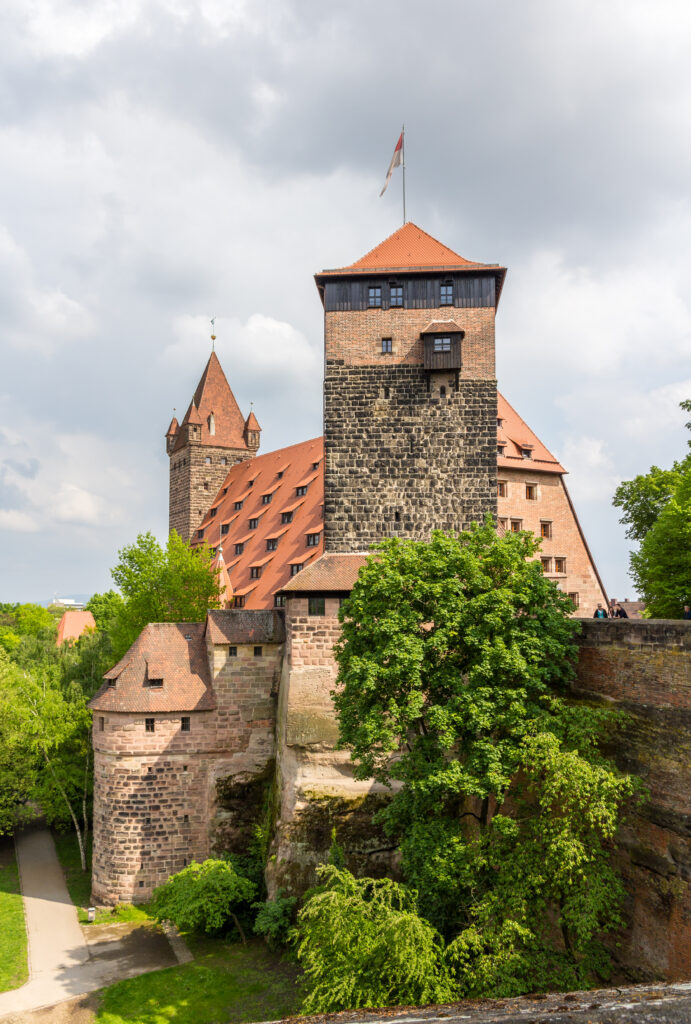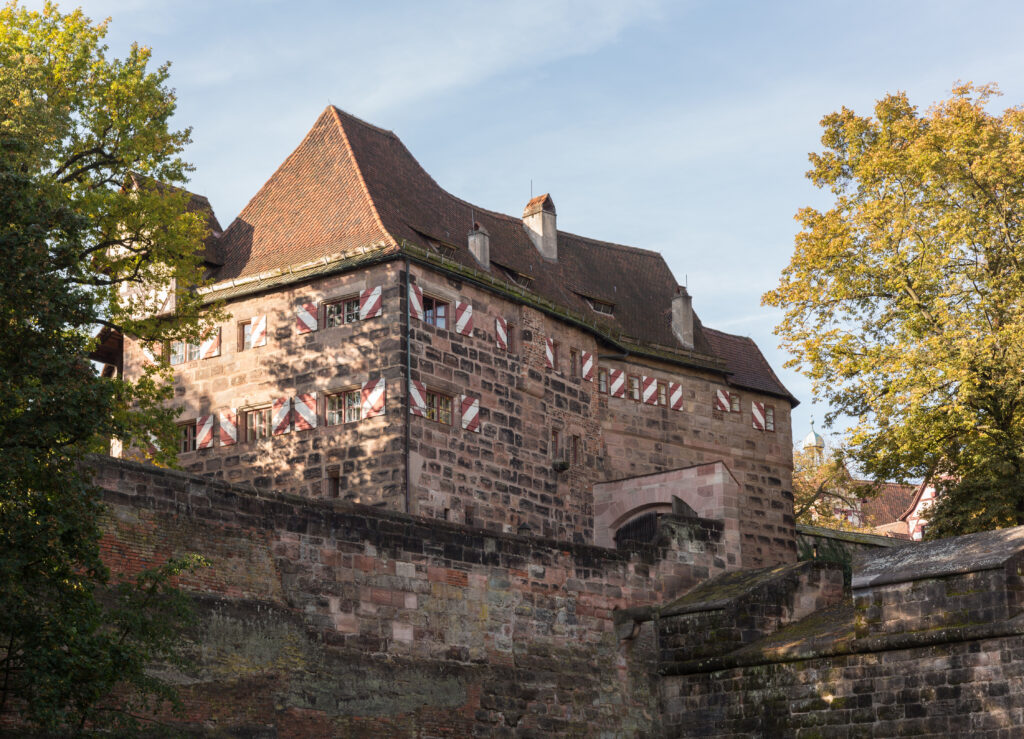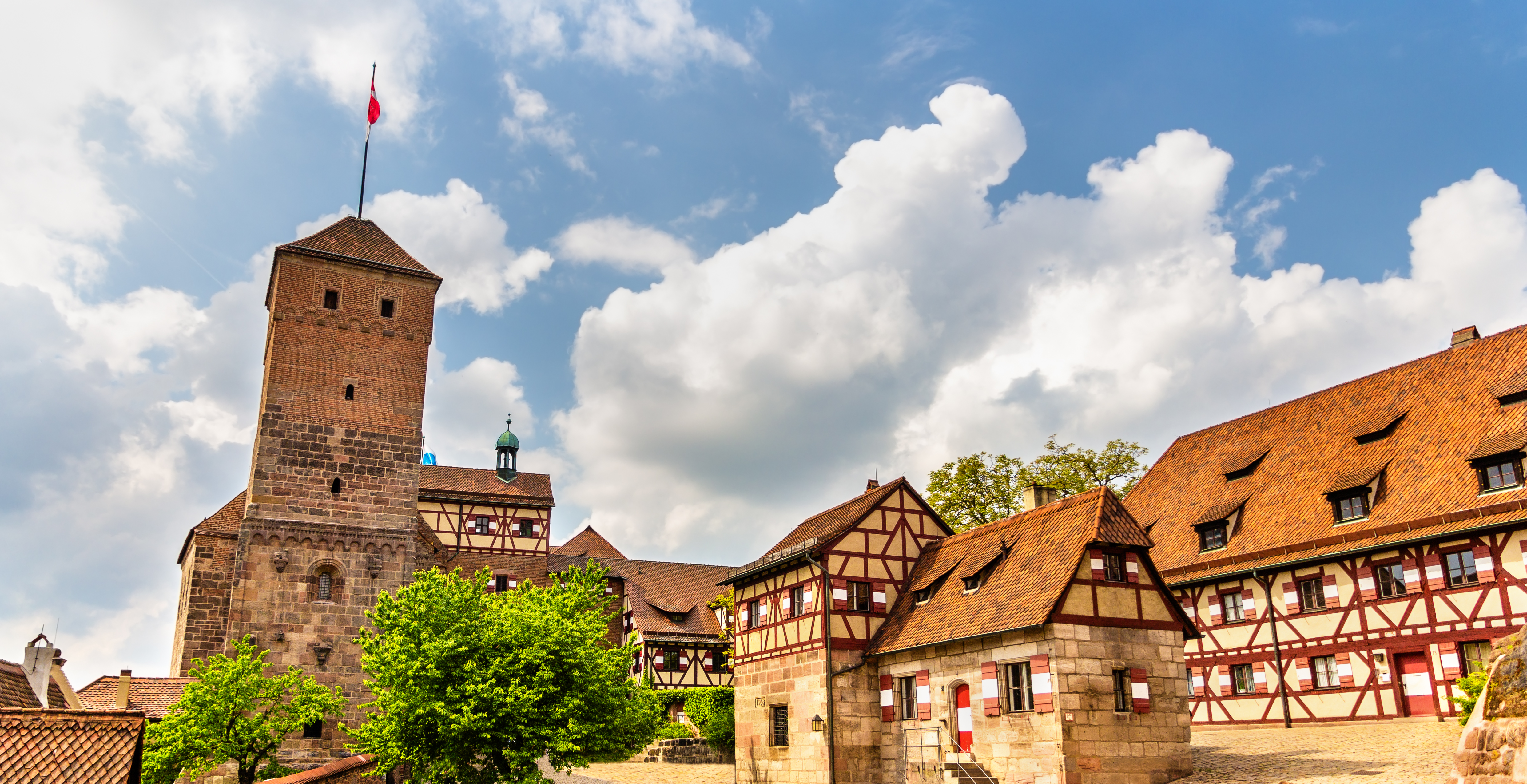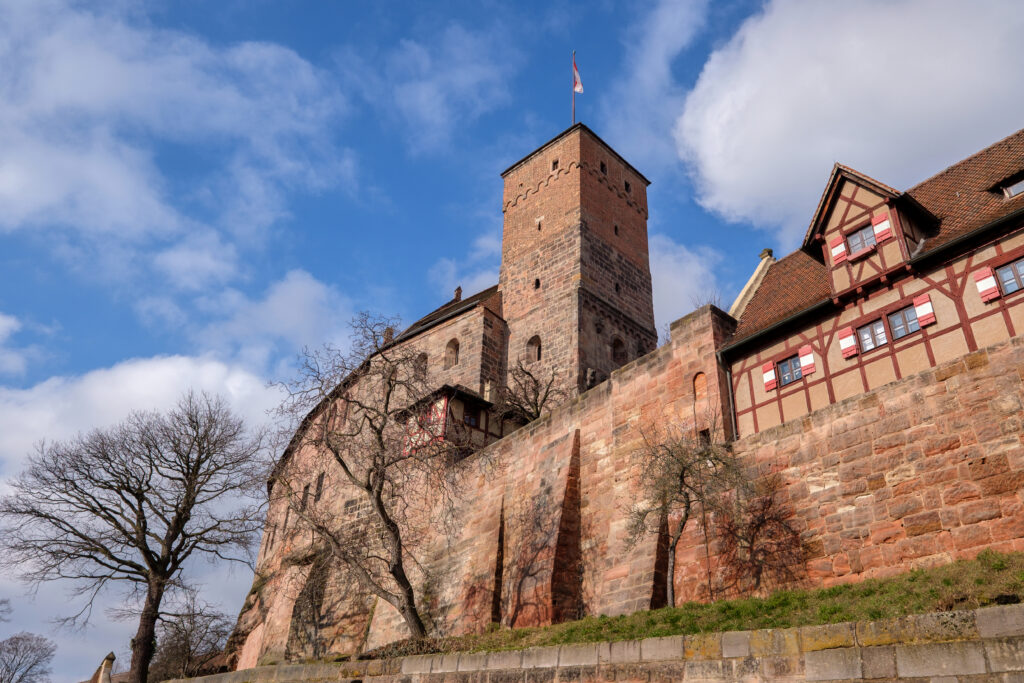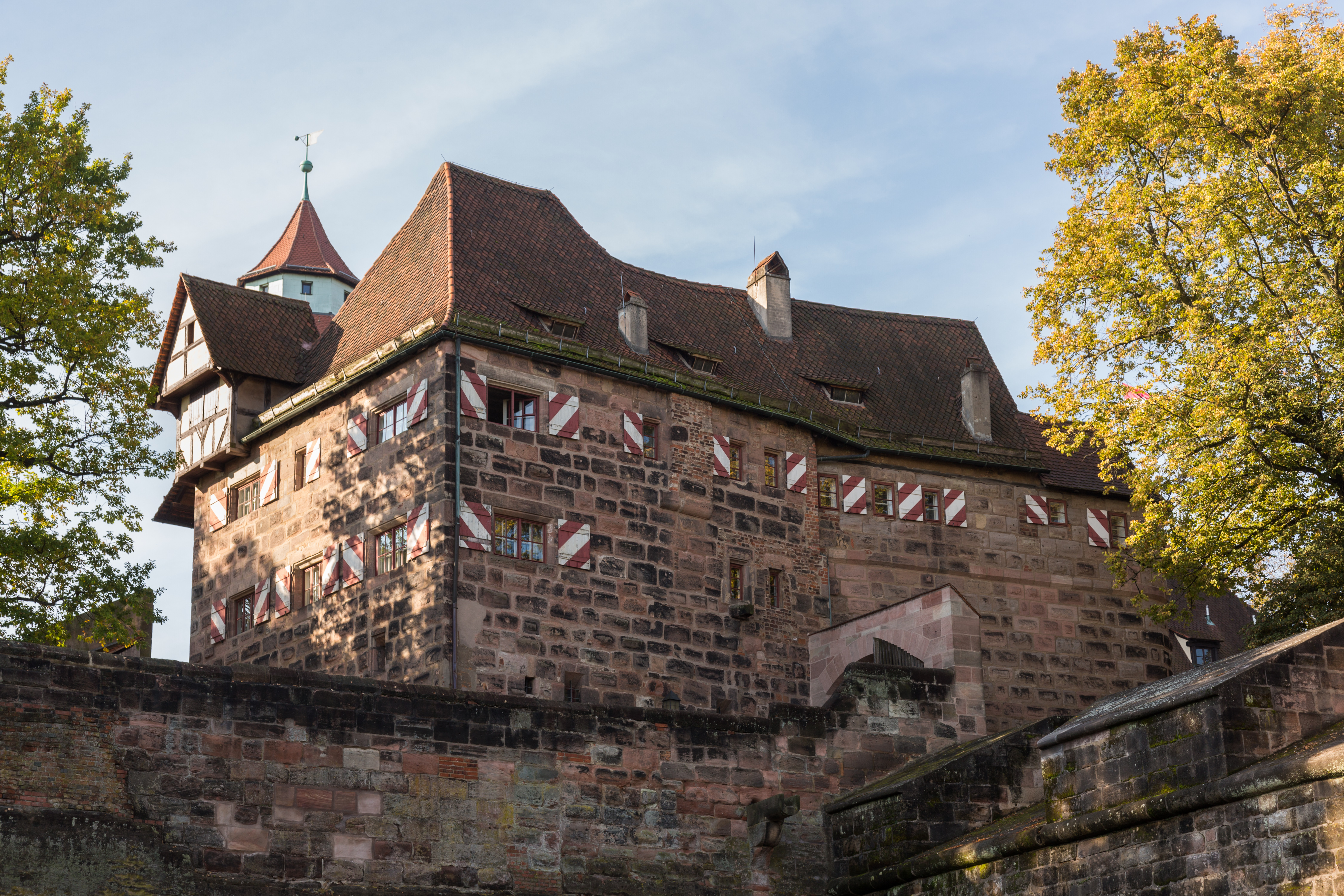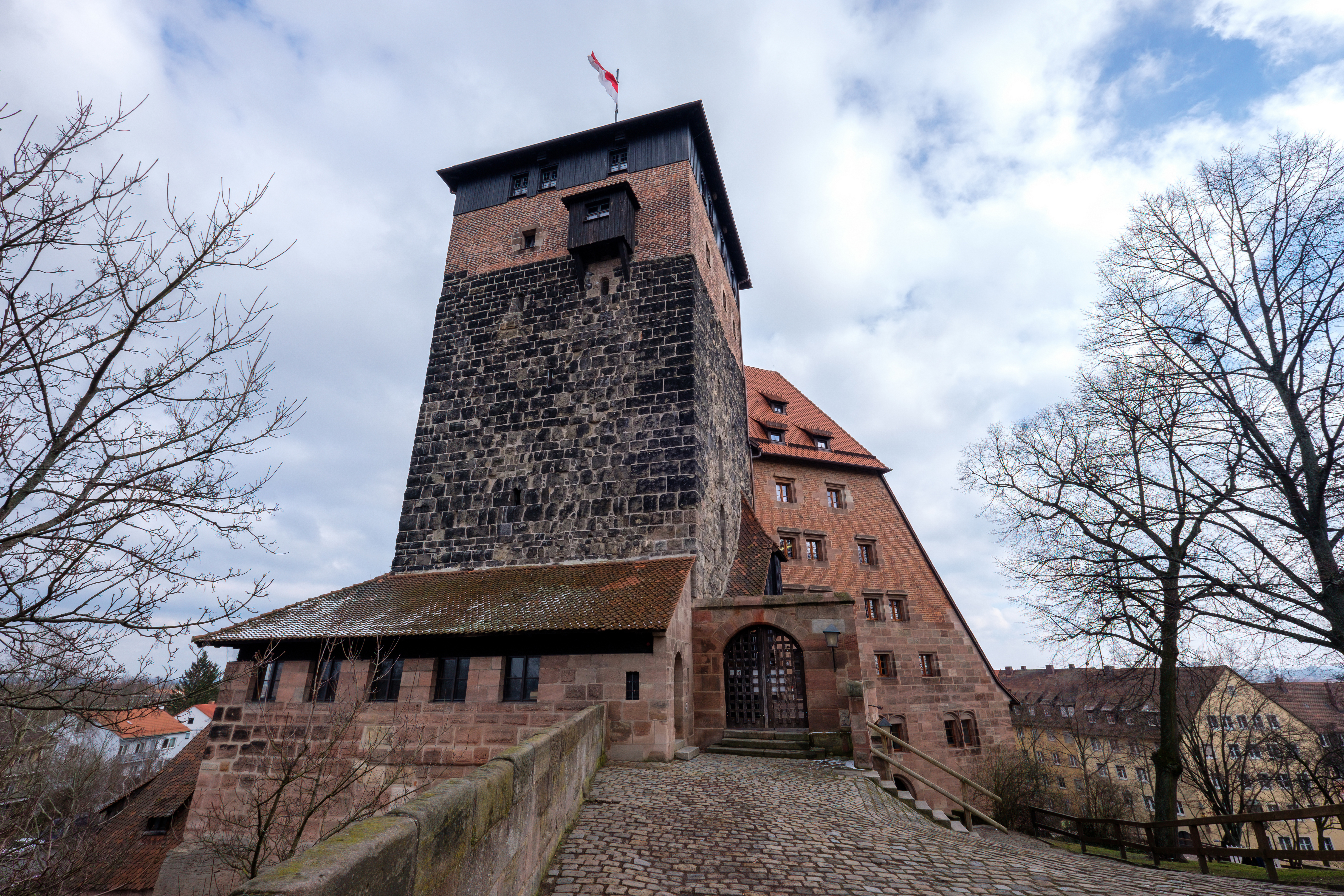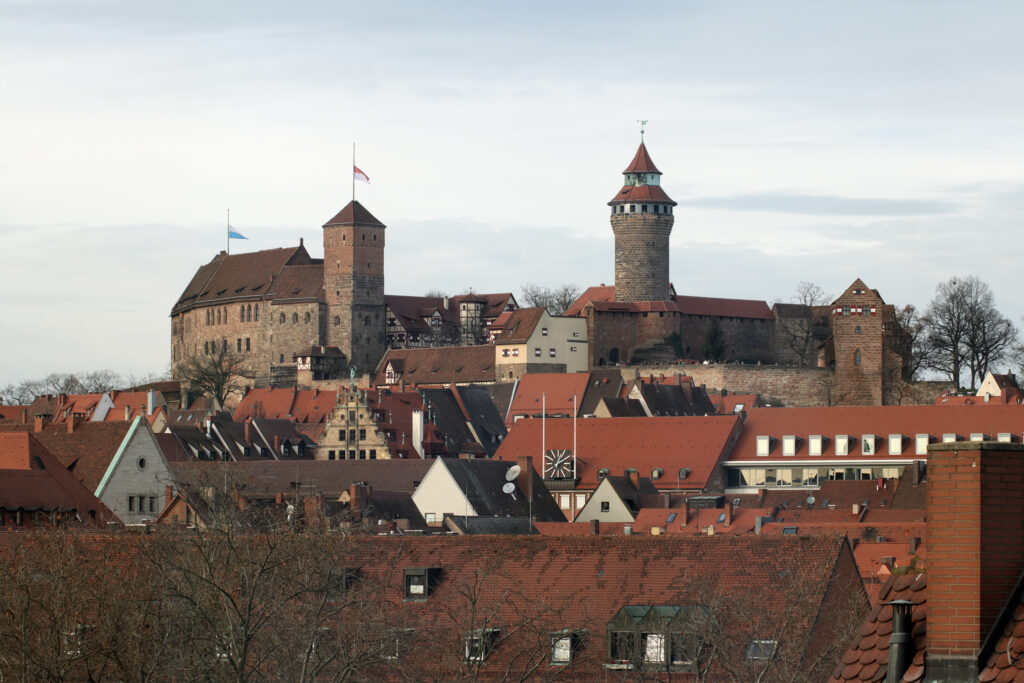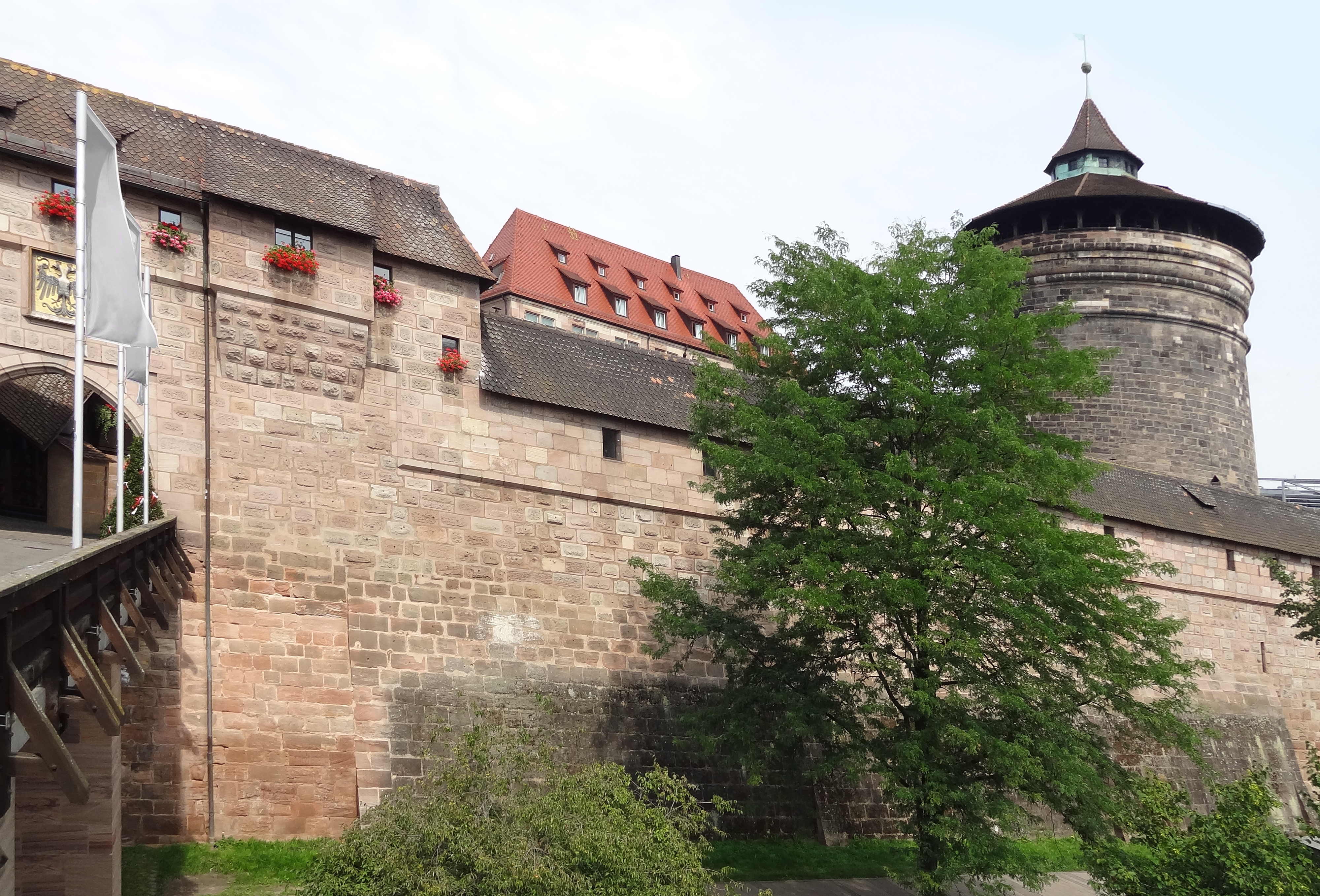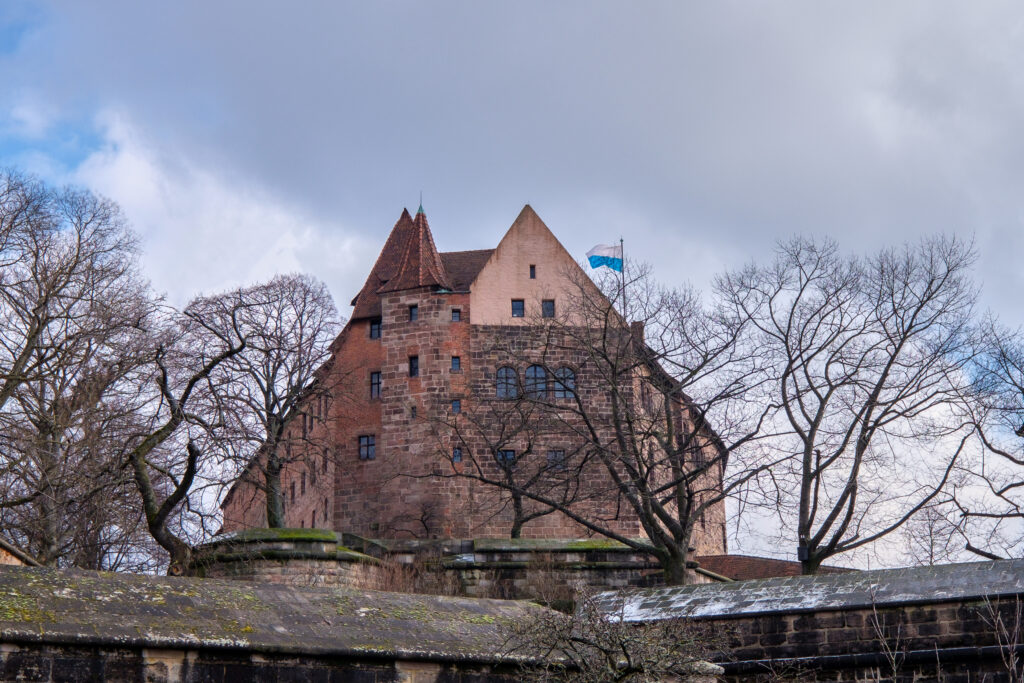

Nuremberg Castle, a landmark of the city, is a bastion of imperial power and aristocratic prestige and consists of the Imperial Castle and the Burgrave’s Castle. This historic fortress is not only a marvel of medieval architecture, but also a treasure trove of fascinating myths and historical narratives.
A reborn fortress. The castle sits atop a sandstone rock north of the Pegnitz River, overlooking the Sebaldus Old Town with a strategic view of Nuremberg’s Old Town. The natural defenses of the site made it an ideal location, with steep slopes to the south, west, and north. The earliest traces of the castle date back to around 1000 AD. Despite severe damage during World War II, attempts were made during its reconstruction to preserve its historical significance as one of Europe’s most important fortresses – both as a military stronghold and as the seat of imperial power.
The castles within a castle. The castle is a tapestry of different historical threads: the remains of the Burgrave’s Castle are concentrated around the Pentagonal Tower, which was largely rebuilt in 1192 before being destroyed in 1420. The Imperial Castle, which extends to the west, includes the Sinwell Tower, the Deep Well, the Double Chapel, and the Palas—the oldest parts date from around 1200 and were continuously expanded over the centuries. Other state and imperial buildings are located in the northern and eastern parts, including the former imperial stables by Hans Beheim the Elder and the Luginsland Tower.
Myths and secrets. Among the legends that unfold in the shadow of the towers is the story of Eppelein von Gailingen, a notorious robber who, before his execution, allegedly had his horse jump over the moat, thus making a daring escape and leaving hoofprints in the stone that bear witness to his legend – proof of the castle’s rich mythology.
Architectural development. The architectural history of the castle can be divided into three notable phases: the Salian royal castle from the early 11th century, built in the Romanesque style; the Staufian imperial extension around 1200, also in the Romanesque style; and the Gothic alterations in the 15th century. Its continuous development reflects the changing balance of power – from the Salian kings to the Staufer emperors, who strengthened the eastern defenses of the empire with this important fortress.
The struggle for supremacy. The history of Nuremberg Castle is marked by the power struggles of medieval Germany. The Salian king Henry V conquered the fortress in 1105 after a lengthy siege from his father, Emperor Henry IV. King Lothar of Supplinburg later besieged the castle for ten weeks in vain before finally taking control. The rise of the Staufers marked an era of splendor; they transformed the castle into a royal imperial palace, where rulers such as Frederick I Barbarossa and Frederick II were frequent guests.
City versus nobility: the Hohenzollern conflict. Tensions were simmering between the up-and-coming city and the lords of Hohenzollern, who had entrenched themselves in the heart of Nuremberg. As the city gained prosperity and autonomy from the late 12th century onwards, its citizens sought to curb the influence of the lords of the castle. The construction of the Luginsland Tower by the city council in 1377 highlighted these tensions – it enabled the citizens of Nuremberg to closely observe the activities within the Burgraves’ Castle. By 1427, the city had completely expelled the Burgraves after acquiring their lands.
Decline and reinvention. As the political landscape of the empire changed, so did the function of Nuremberg Castle. In the 16th century, the once-powerful fortress increasingly served ceremonial purposes. The Thirty Years’ War further diminished its military importance, but spared both the city and the castle from conquest. With the advent of Romanticism in the 19th century, interest in the castle’s medieval past was revived, leading to restoration efforts to reflect the spirit of bygone eras. However, World War II brought renewed destruction, followed by a determined reconstruction in the historic style.
Modern heritage and tourism. Today, the castle is administered by the Bavarian State Administration for Castles, Gardens, and Lakes and serves primarily as a cultural and tourist landmark. From its battlements and towers, it offers a panoramic view of Nuremberg that attracts hundreds of thousands of visitors each year. Since 2013, the castle has been revitalized through extensive renovations and equipped with new exhibitions that highlight its imperial past and Nuremberg’s role in the Middle Ages.
From fortress to landmark. Even though the legends of yesteryear have faded, Nuremberg Castle remains a living symbol of history. Its stones whisper stories of ambition, rivalry, and resilience, captivating those who walk its ancient paths. As a living monument, it is more than just an architectural structure; it embodies countless stories of human endeavour and the enduring fascination of medieval splendour.