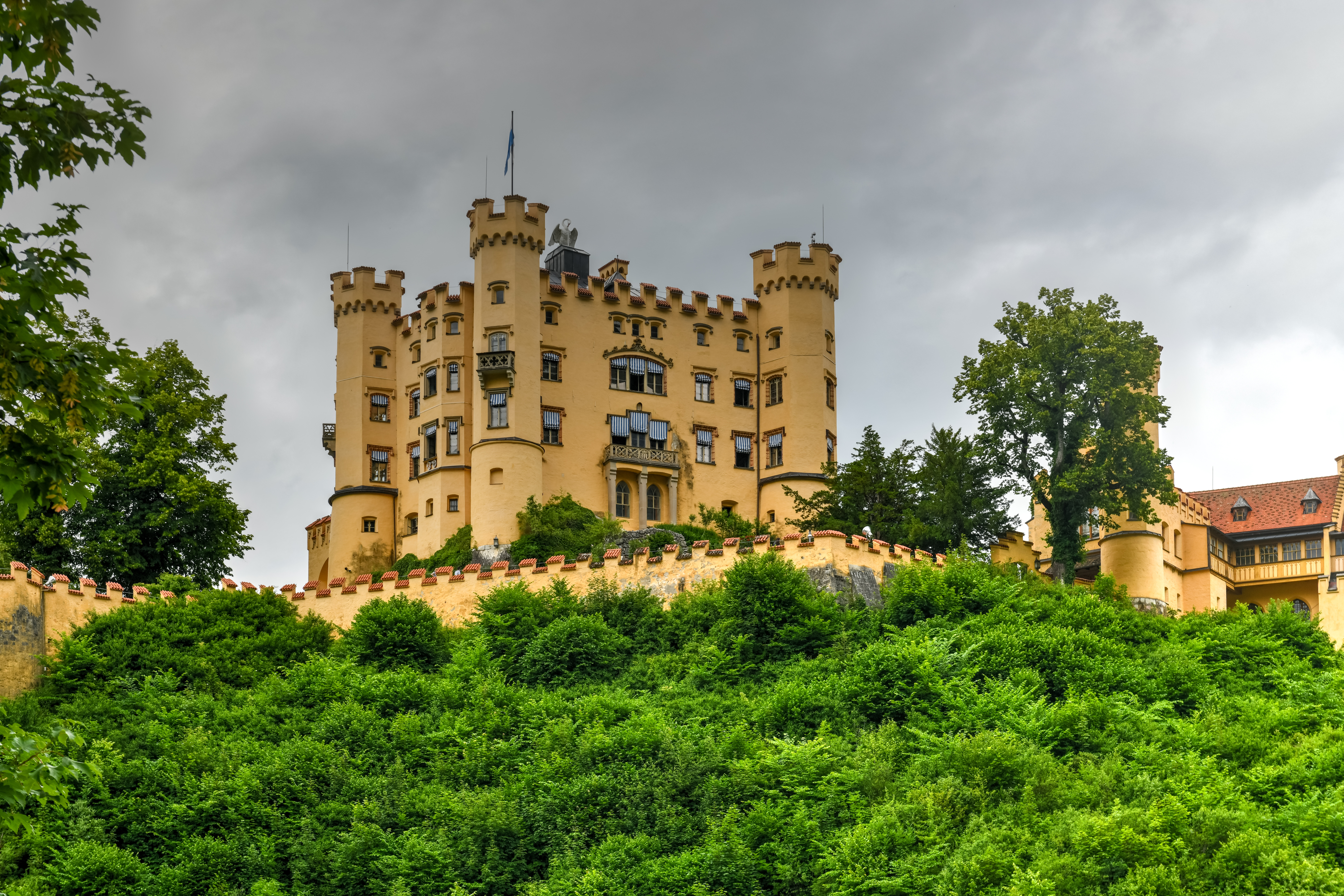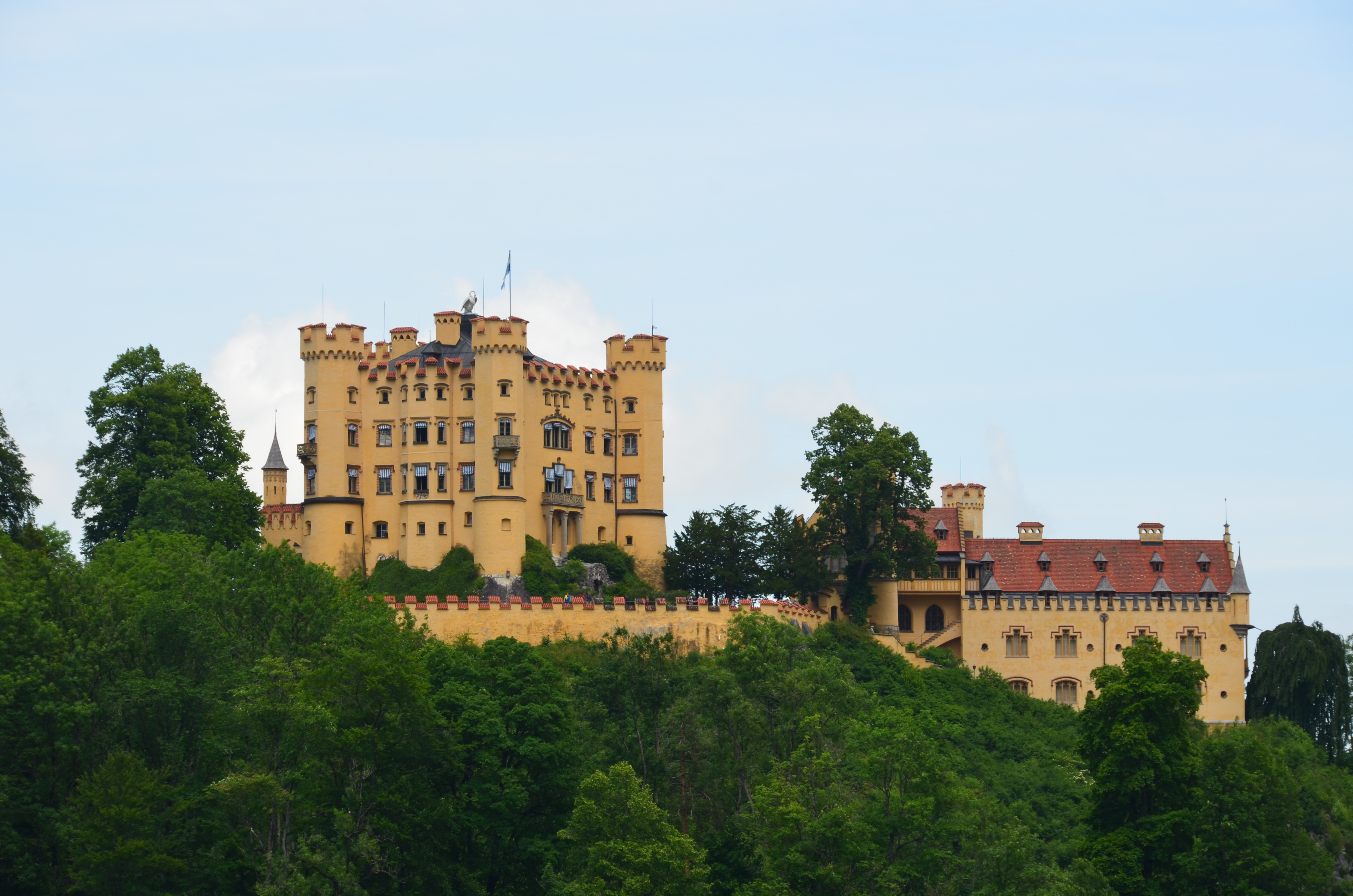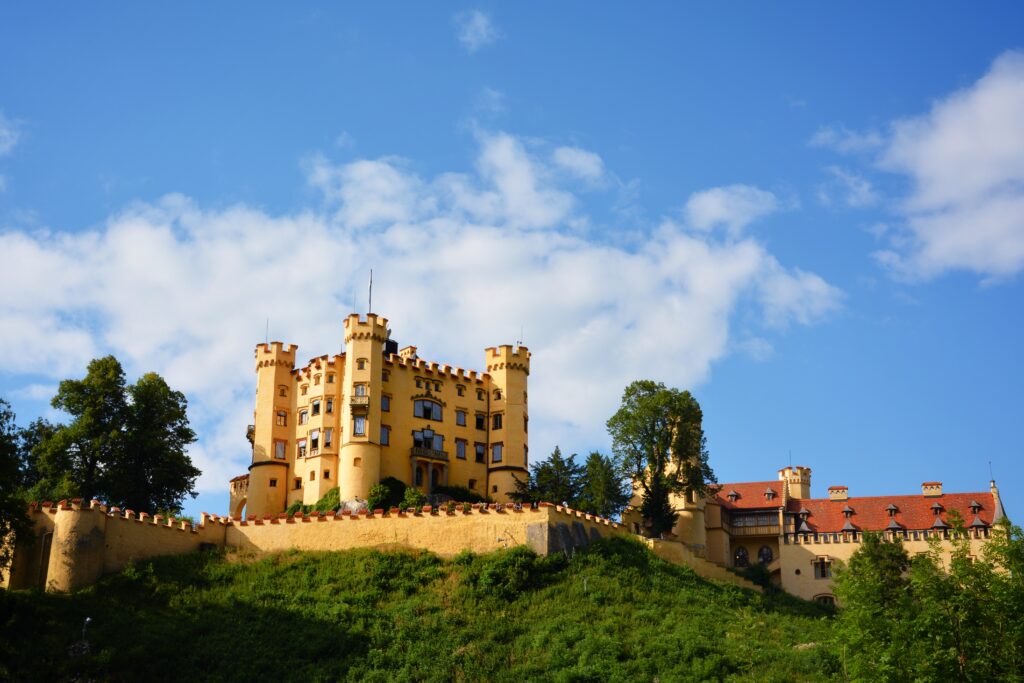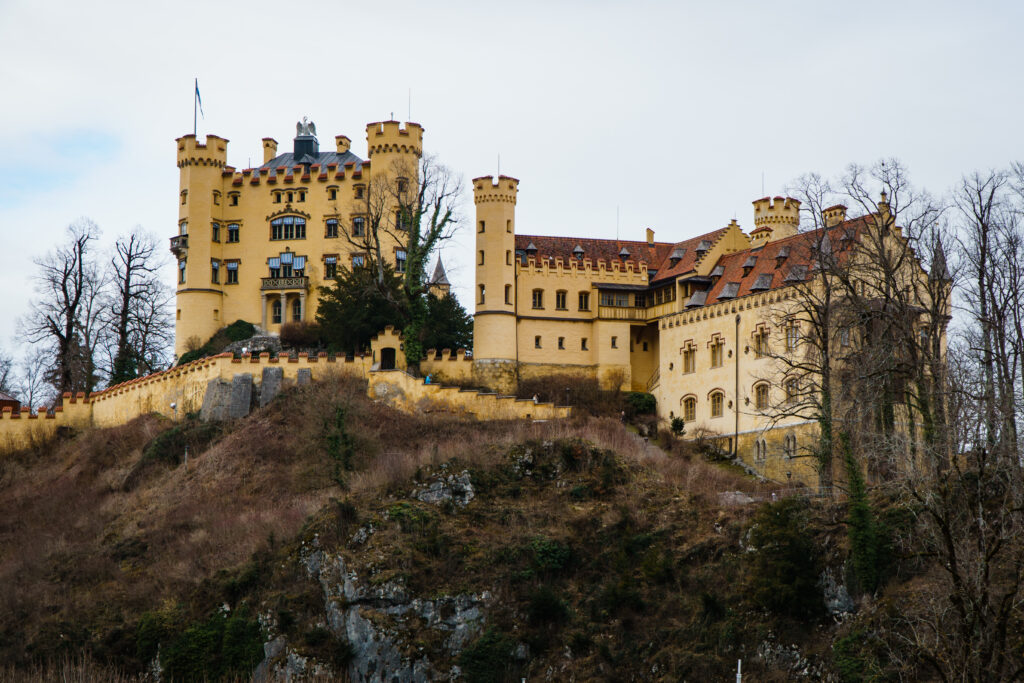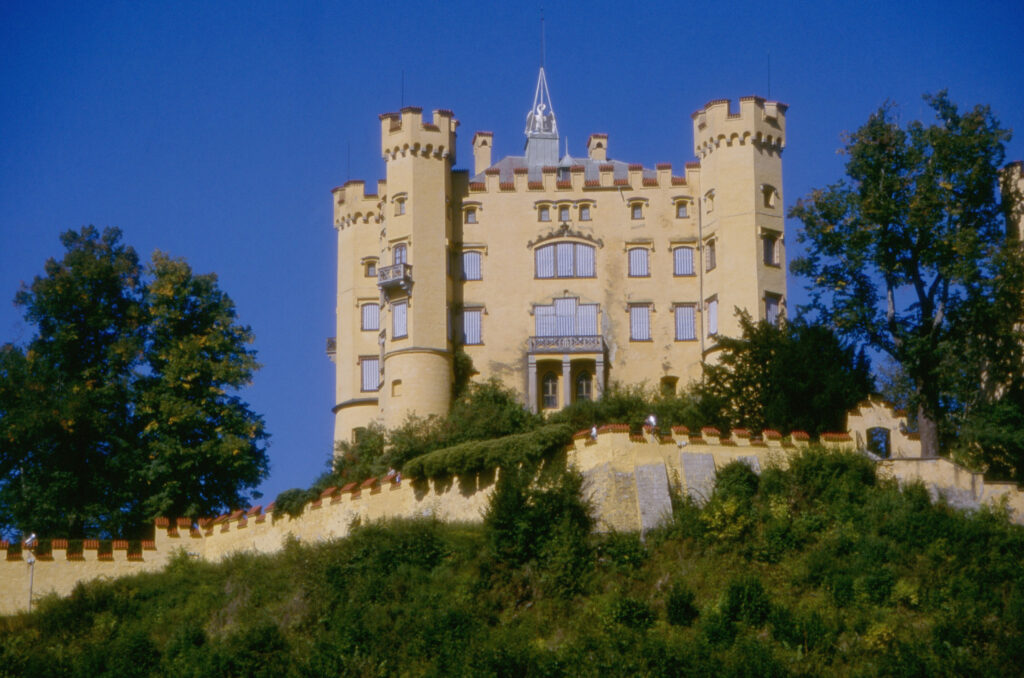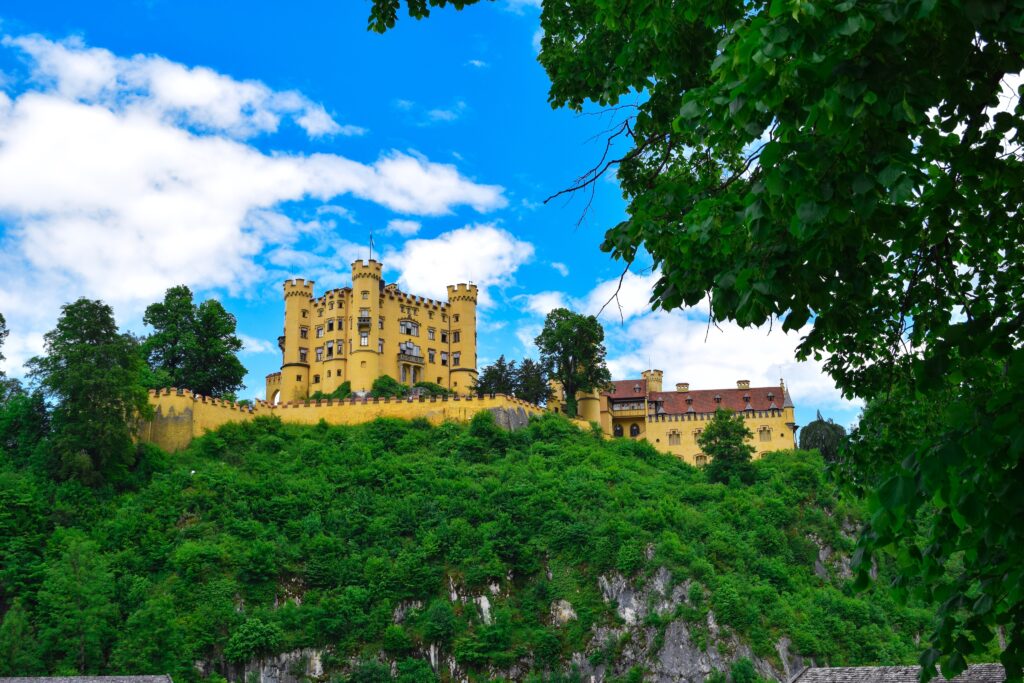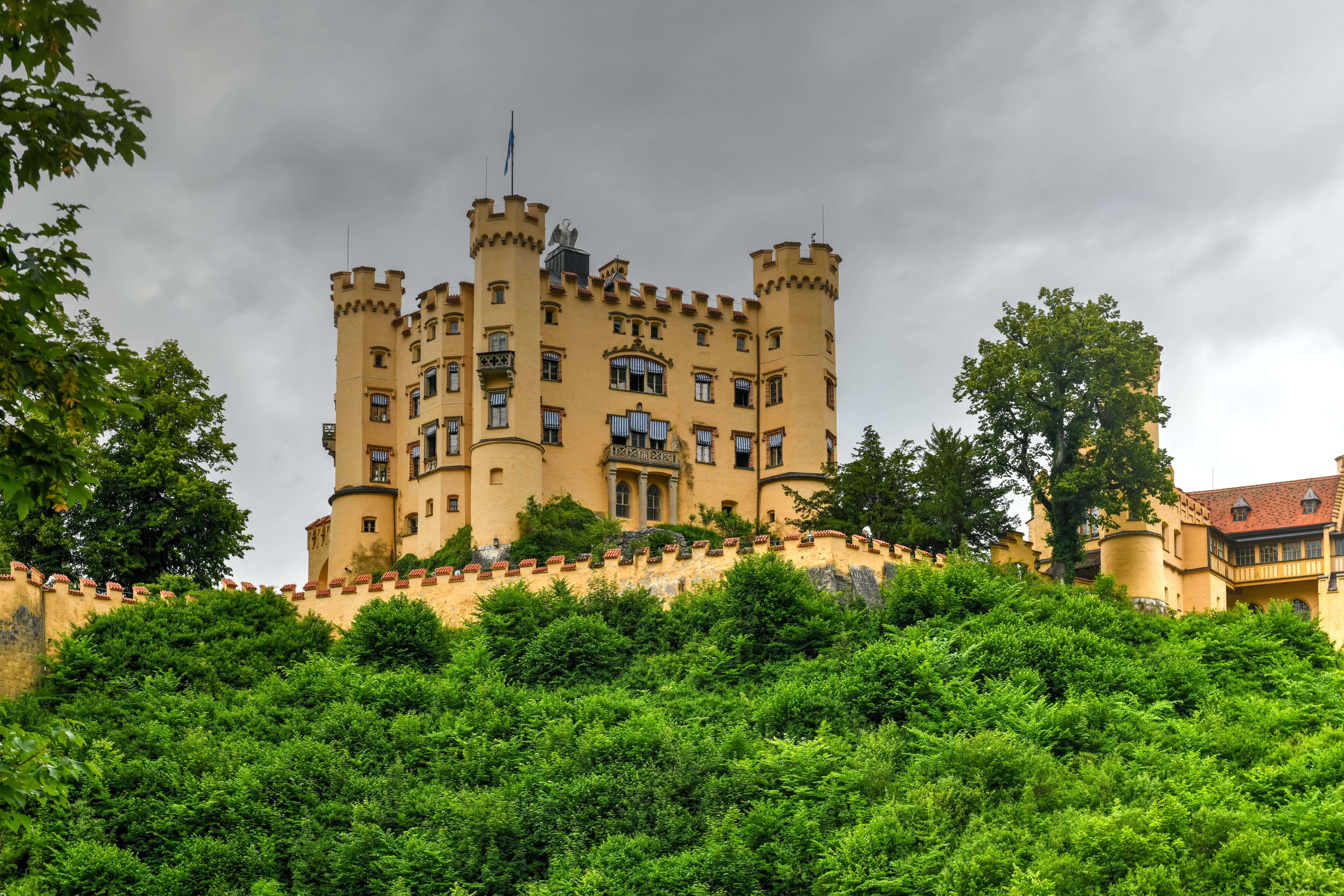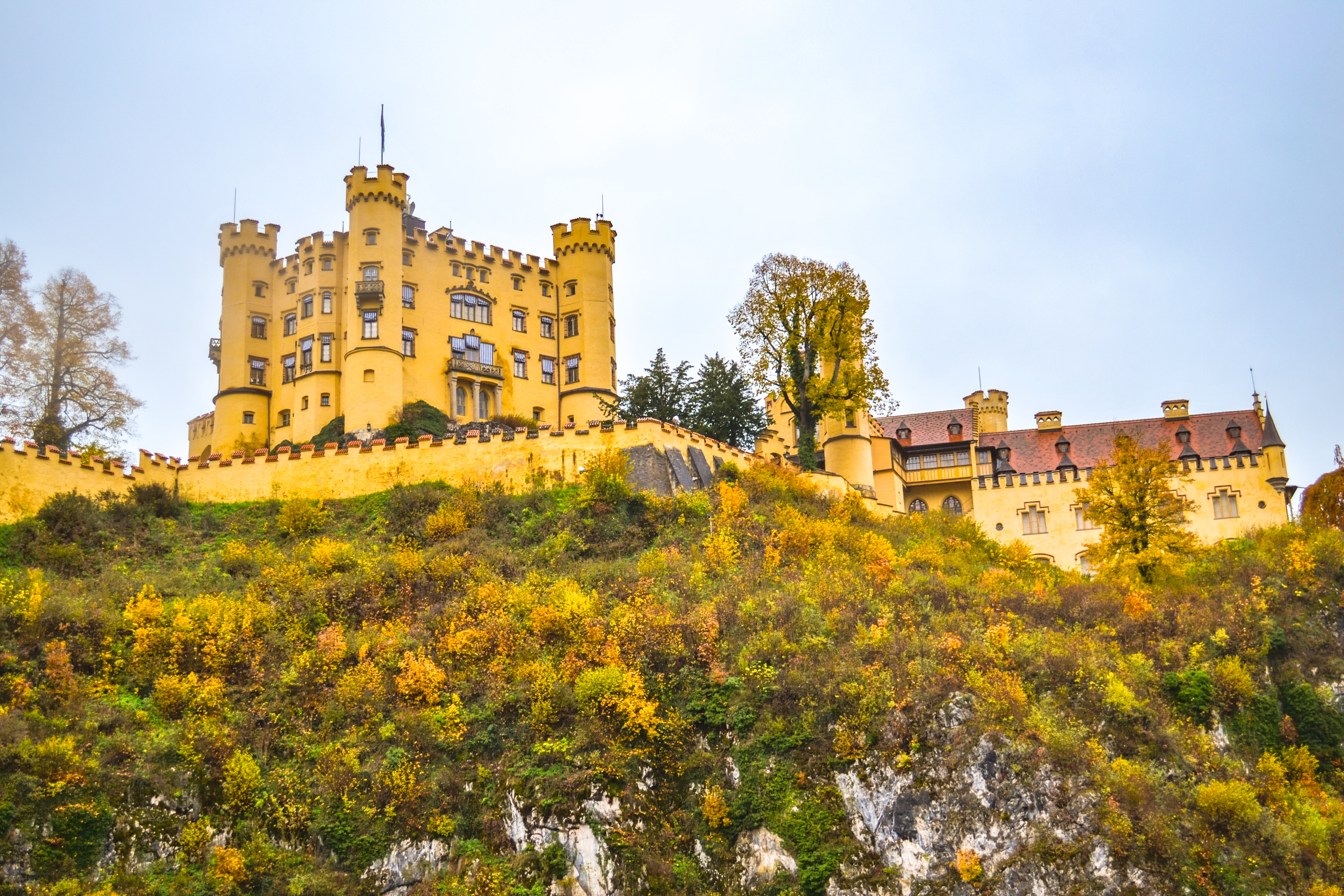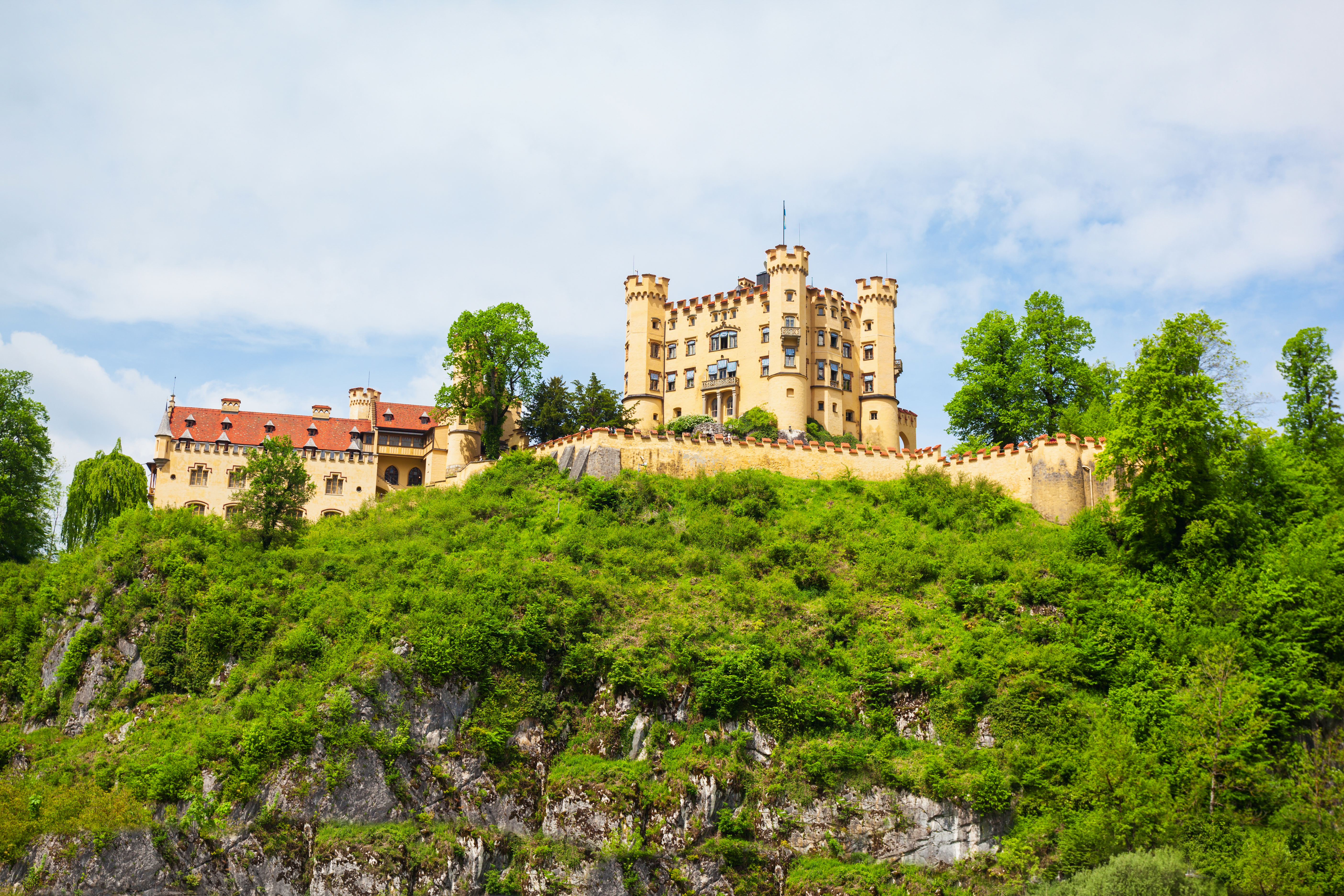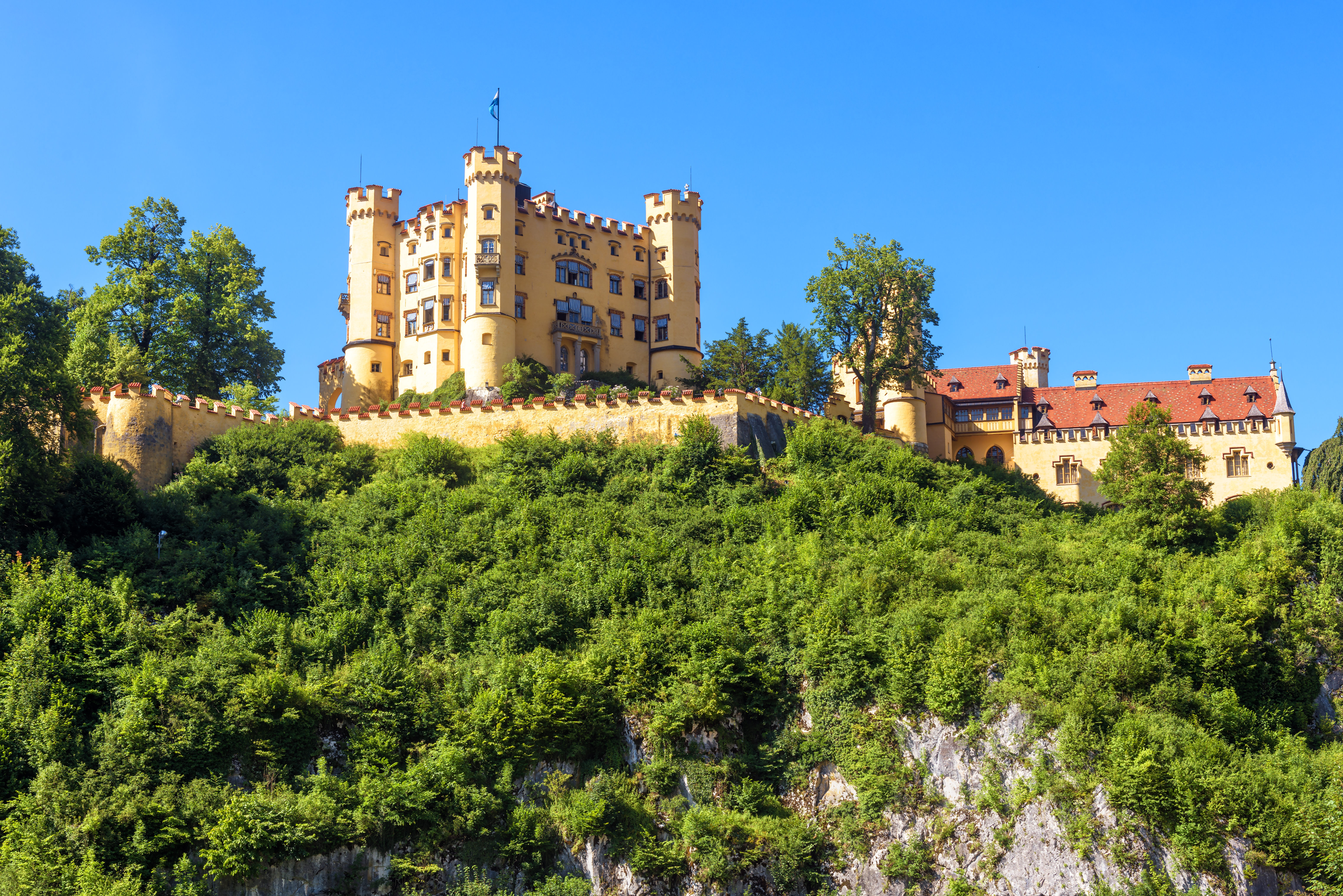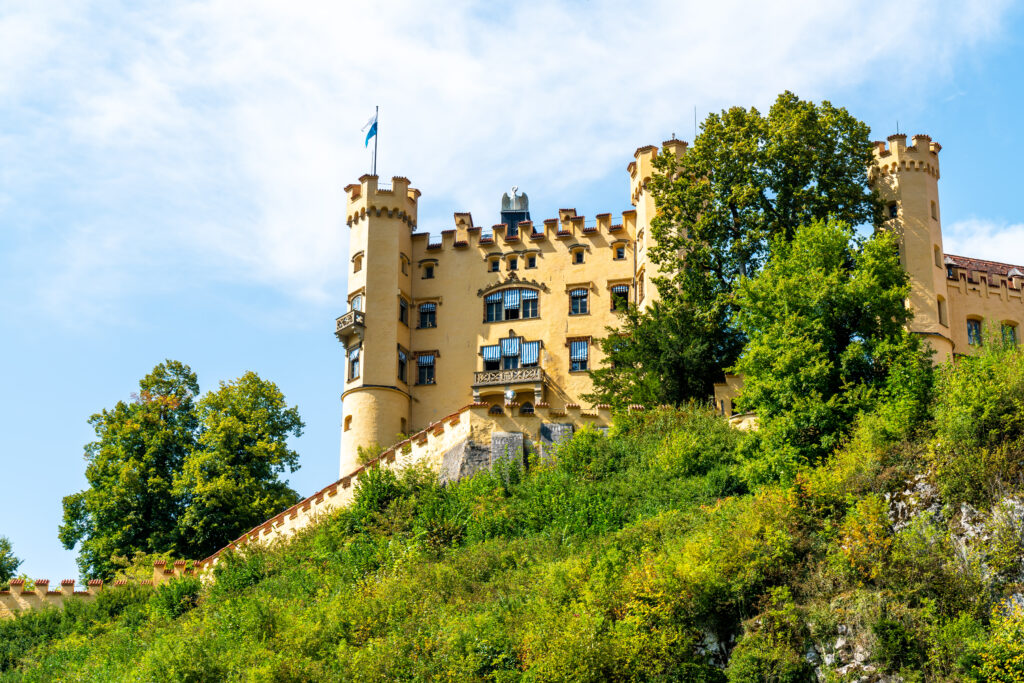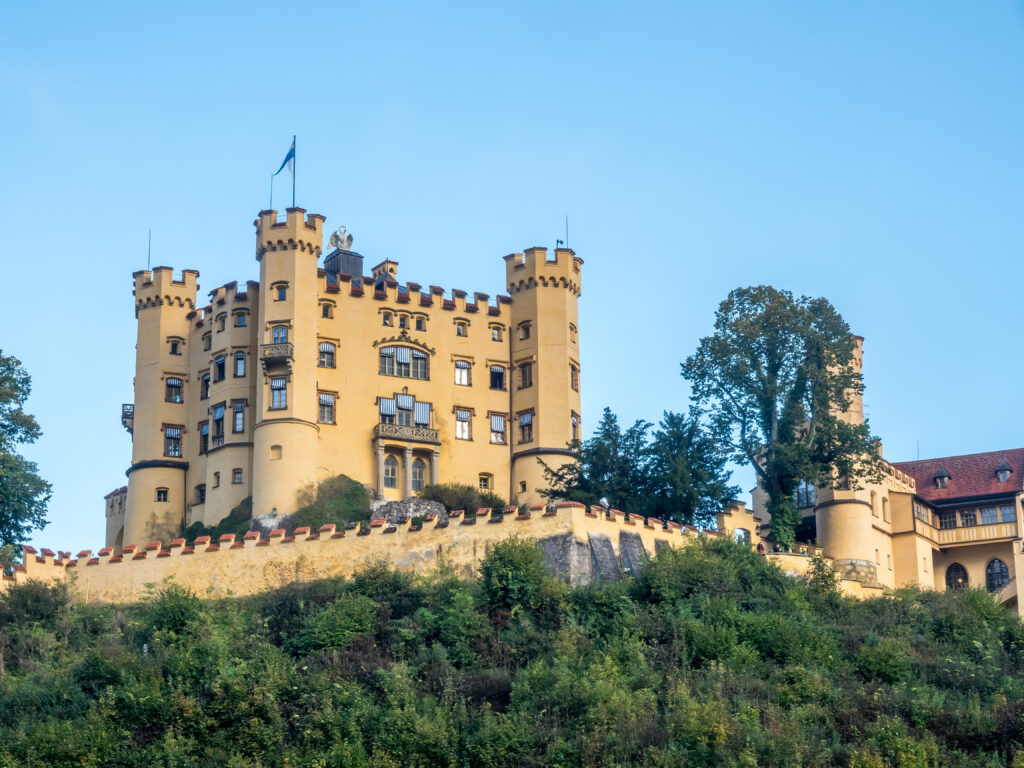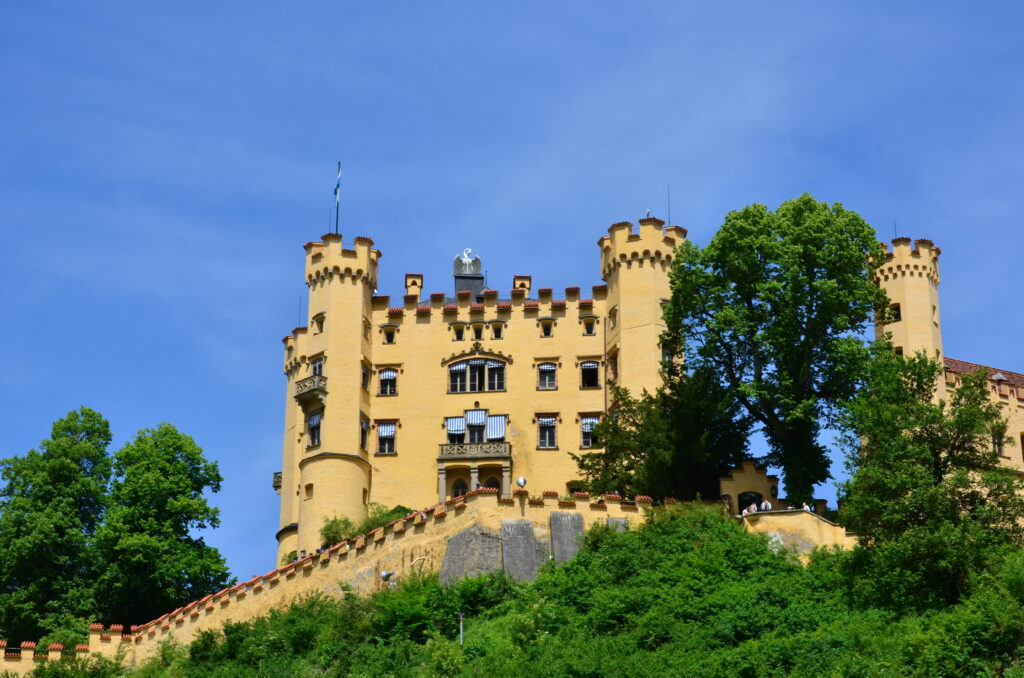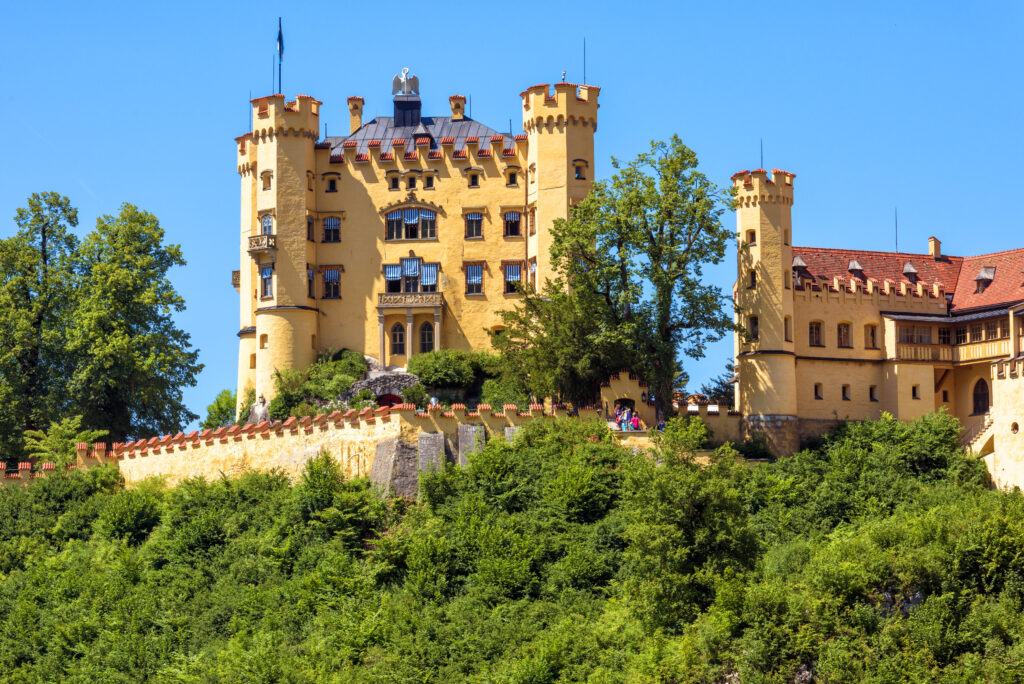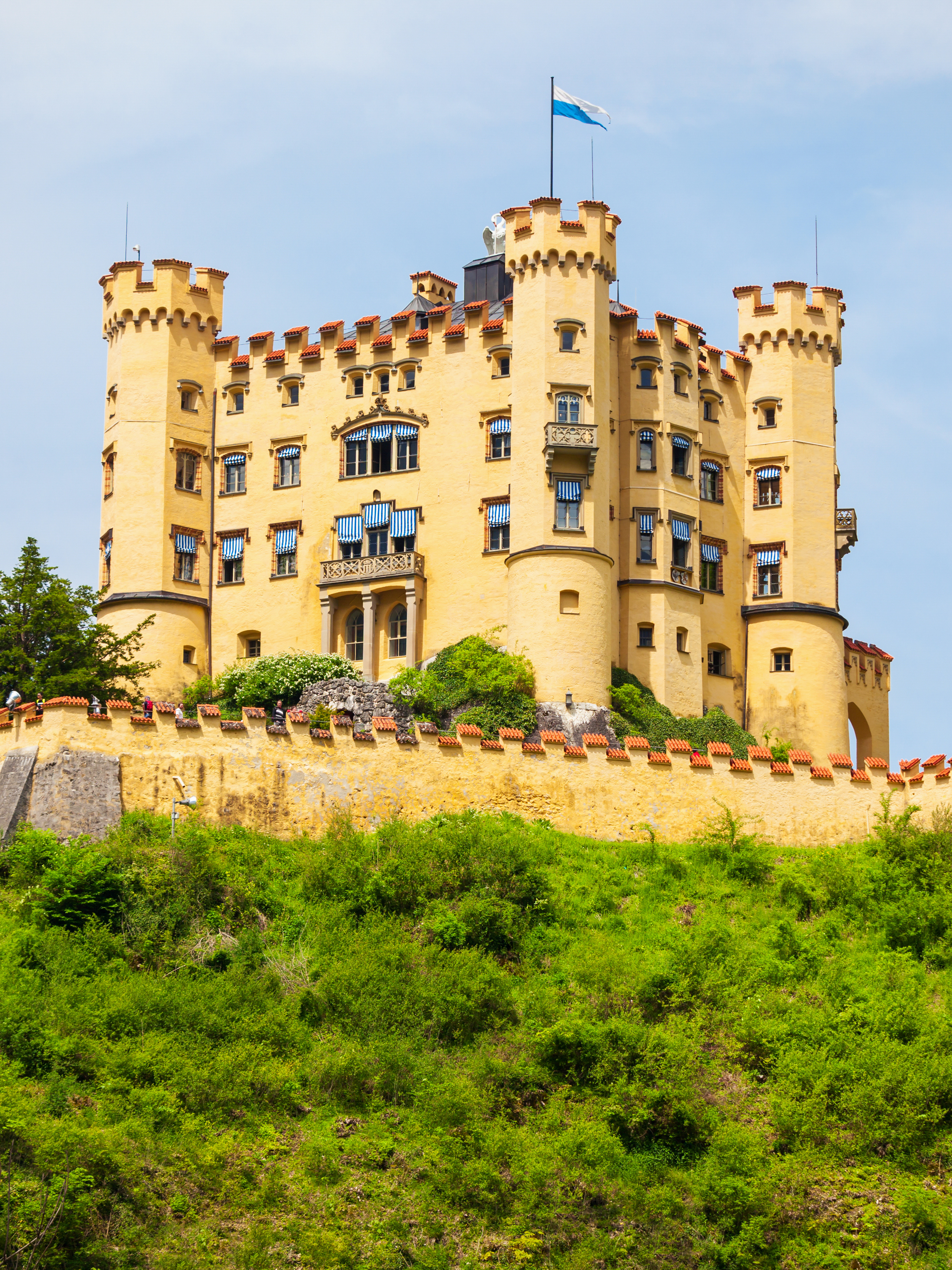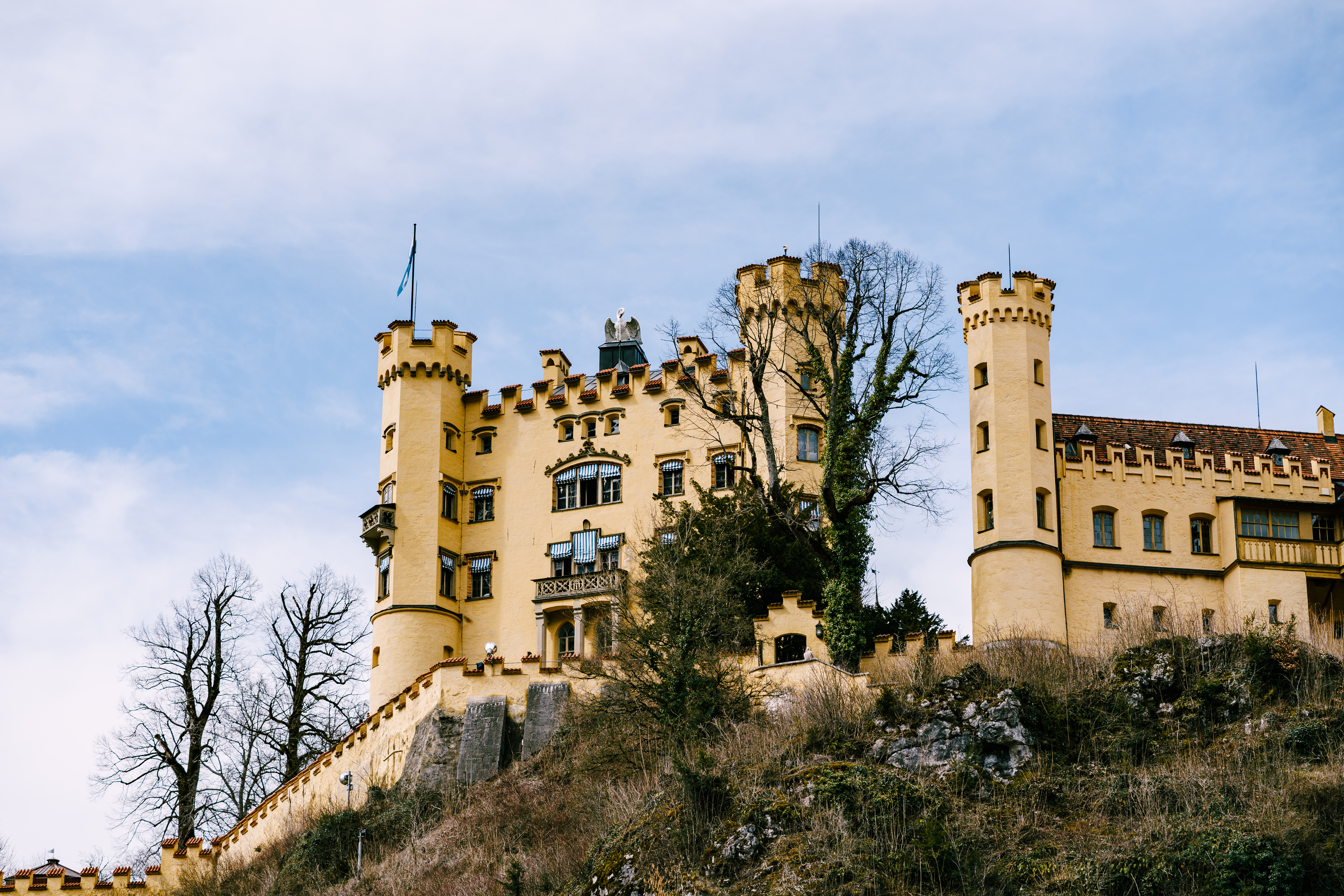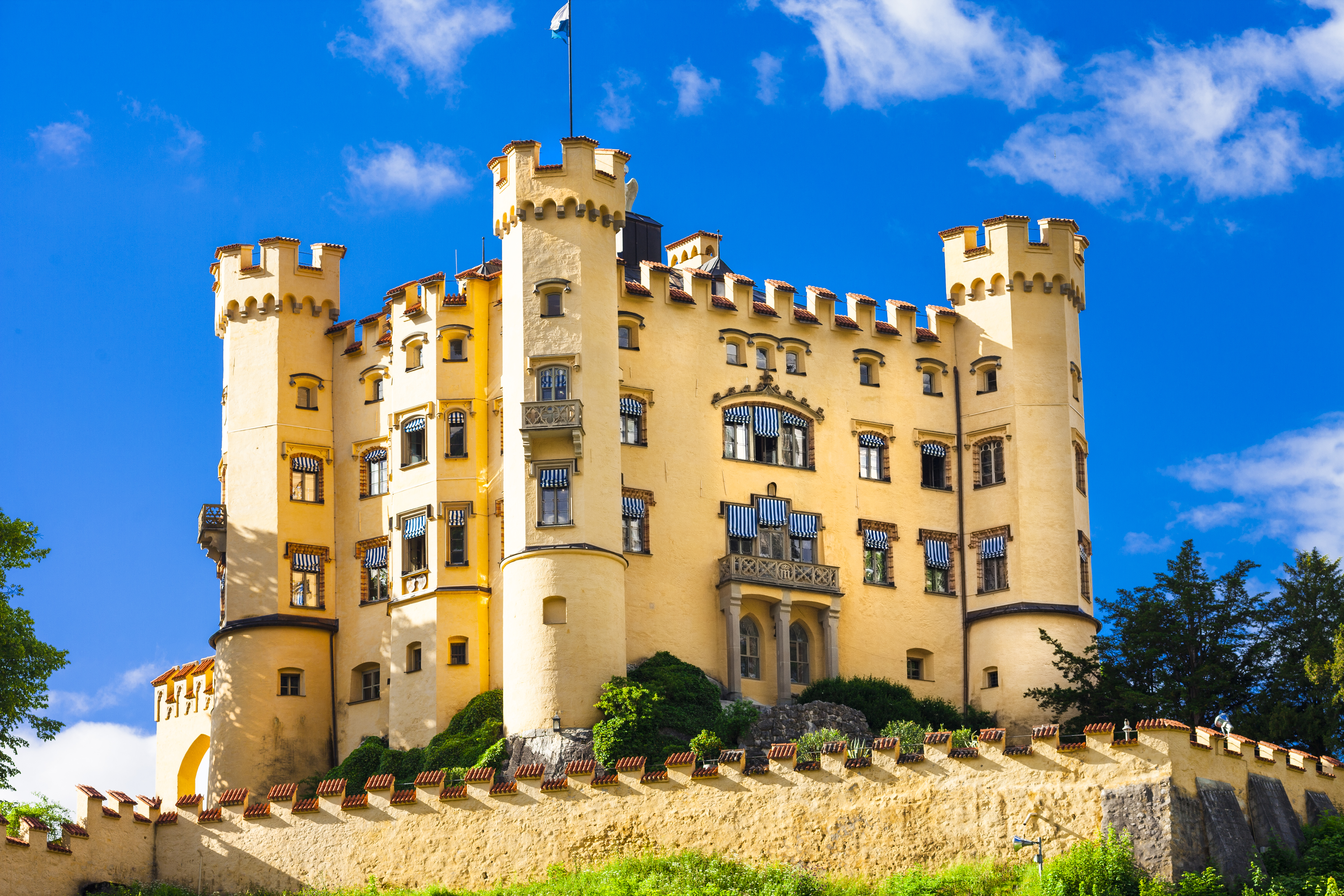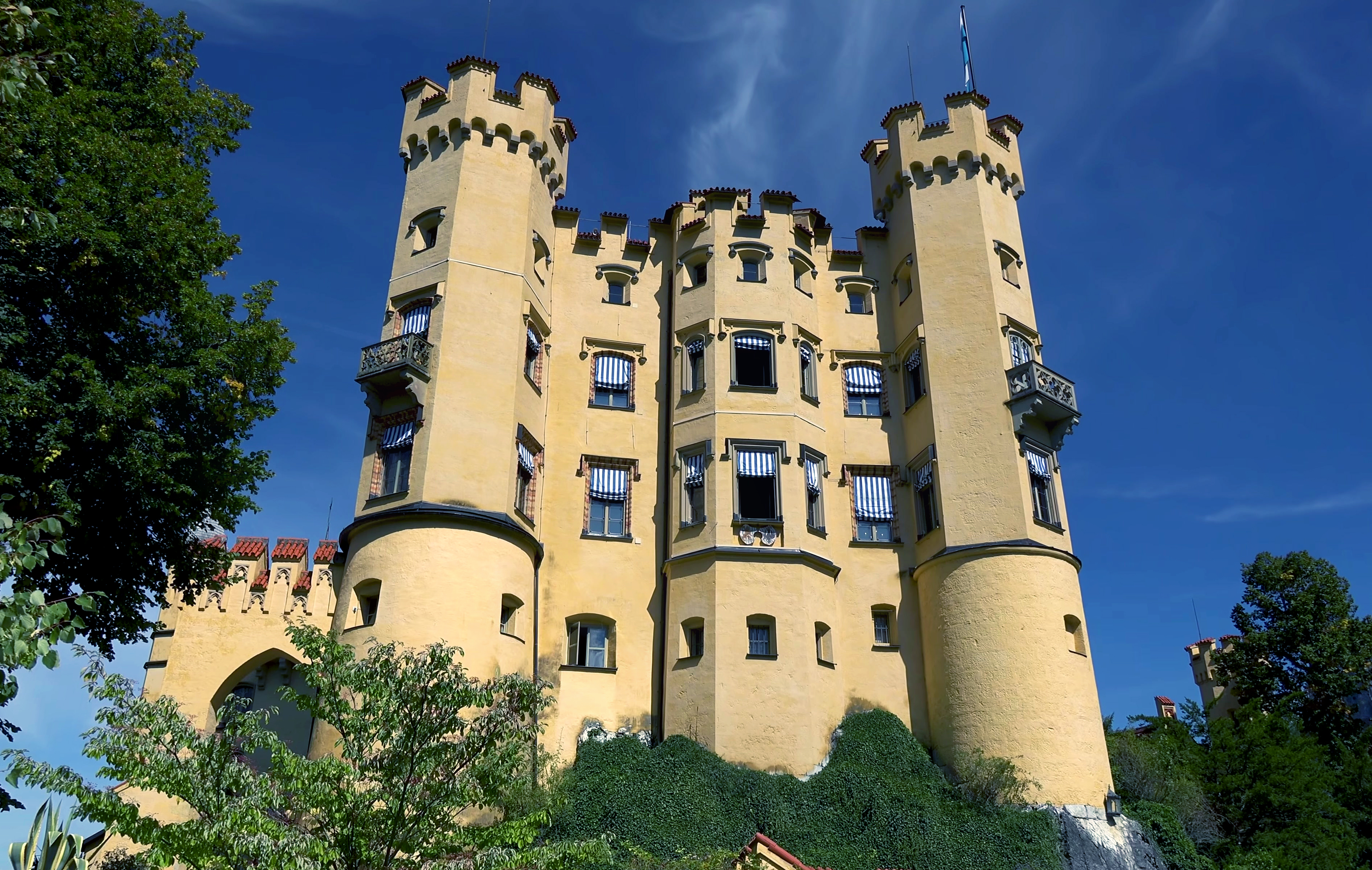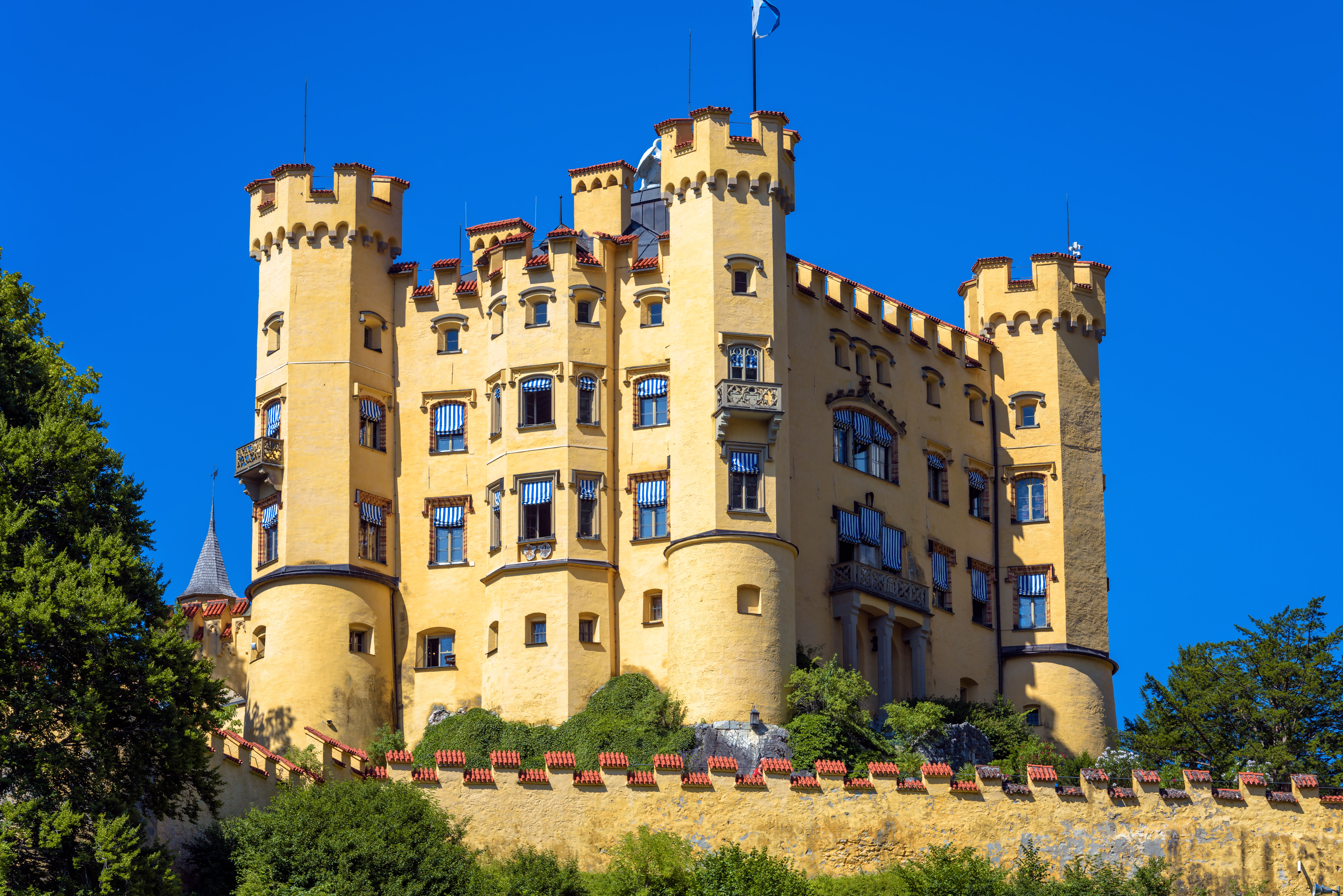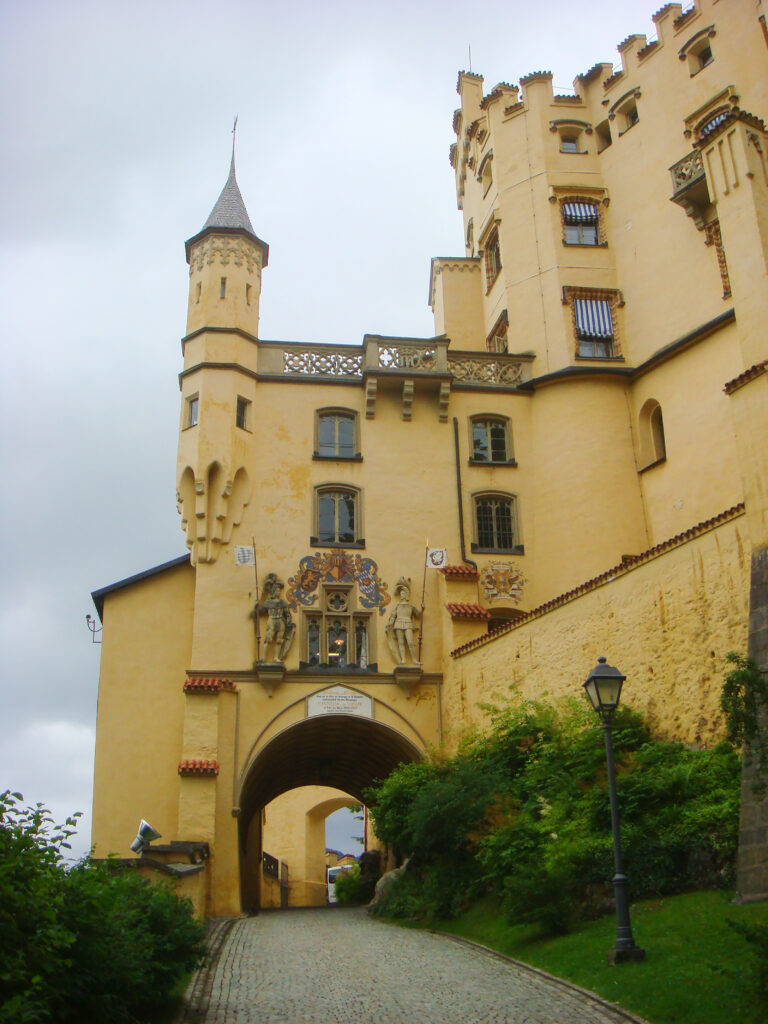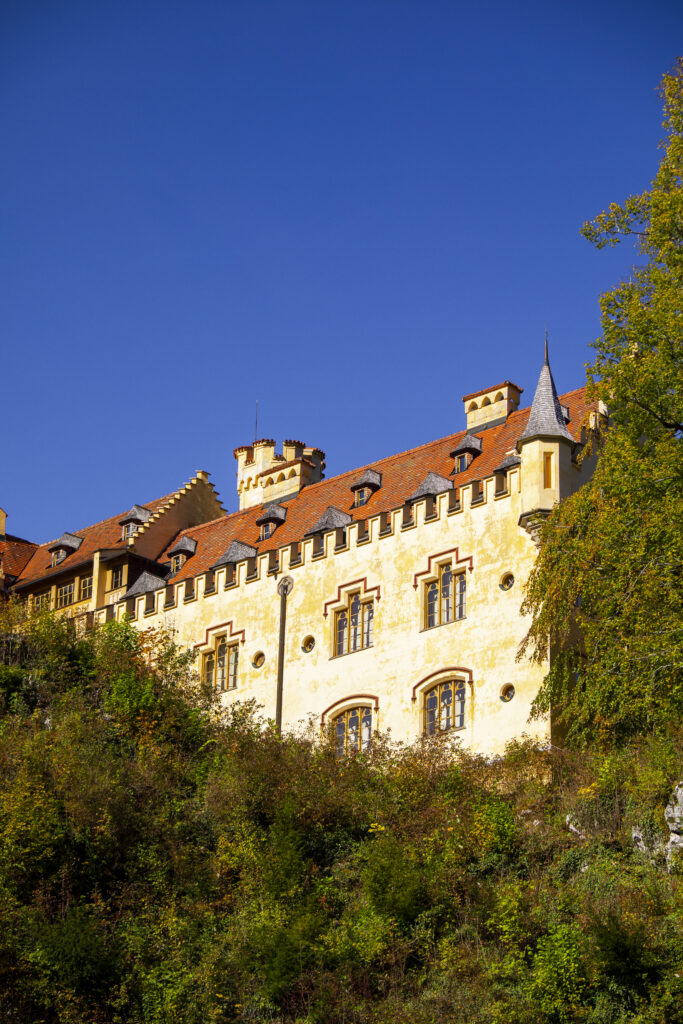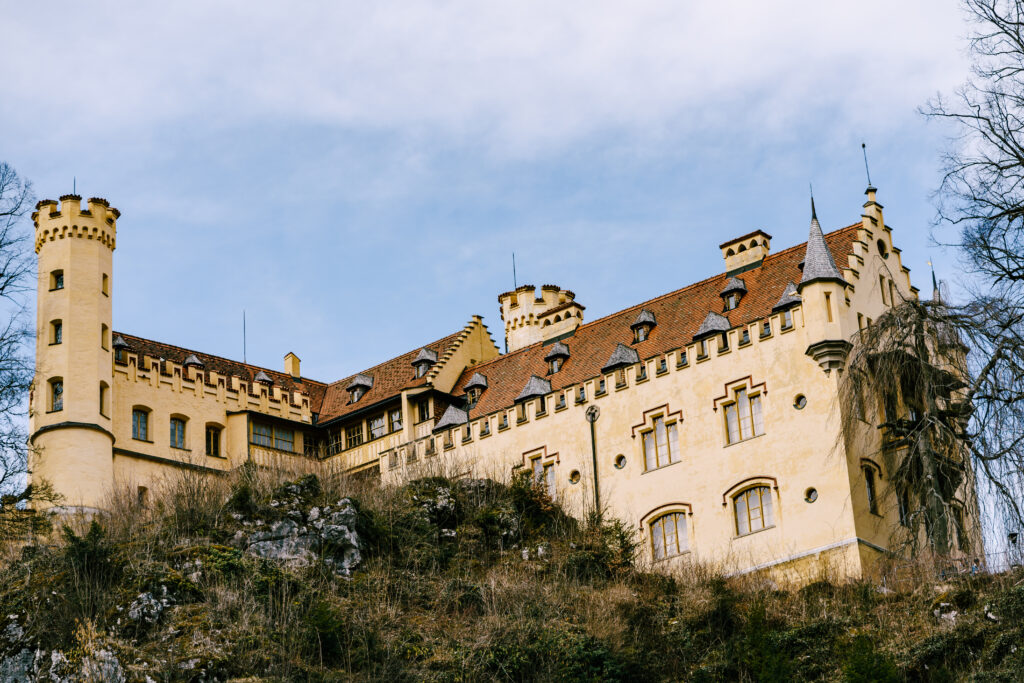

In the heart of Bavaria, nestled between the serene Alpsee and Schwansee lakes, lies a monument that has witnessed the ebb and flow of history—Schloss Hohenschwangau. This neo-Gothic castle is not just an architectural marvel but also a treasure trove of legends, tales, and historical transformations. Originally known as “Schwanstein,” the site was first documented in 1397, but its history extends far deeper into the annals of medieval Europe.
Medieval Foundations The story of Hohenschwangau begins in the Middle Ages with the mention of “Castrum Swangowe” in 1090, serving as the seat for the Knights of Schwangau. These knights were vassals to the Welfs, a powerful noble family whose influence spread across regions of the Holy Roman Empire. After the last of the Welf lords, Welf VI, passed away in 1191, the castle and its lands transitioned through turbulent times, eventually becoming a direct imperial fiefdom until the extinction of the Schwangau line in 1536. One of the most celebrated figures from this period was Hiltbolt von Schwangau, a prominent Minnesänger born around 1190. Revered for his romantic ballads, Hiltbolt’s works resonated with the courts of his time, finding places in notable manuscripts like the Heidelberg Codex. His legacy reflects the vibrant cultural atmosphere that once surrounded this medieval stronghold.
Renaissance Revival and Decline – The tumultuous years following the fall of the Schwangau dynasty saw the castle change hands multiple times. In 1537, Johann Paumgartner, a financier to Emperor Charles V, acquired and renovated the deteriorating Burg Schwanstein. This transformation, guided by Italian craftsman Lucio di Spazzi, laid the architectural foundation for the castle’s future evolution. Despite these efforts, financial woes plagued Paumgartner’s descendants, leading to the eventual sale of the property to Bavarian nobility. By the late 16th century, the castle had become a shadow of its former self, used primarily for events like bear hunts and left vulnerable during conflicts such as the Thirty Years’ War. Its strategic importance dwindled, and by the early 19th century, it risked being dismantled for materials. Yet, it was saved from ruin by Ludwig von Oettingen-Wallerstein, who recognized its scenic and historical significance.
A Royal Transformation – The turning point for Hohenschwangau came in 1832 when Crown Prince Maximilian of Bavaria purchased the decaying remnants and embarked on an ambitious reconstruction project. Under Maximilian’s vision, the castle underwent a complete metamorphosis spearheaded by Domenico Quaglio, an artist renowned for his contributions to stage design and architecture. The renovation embraced the romantic ideals of neo-Gothic style, favoring an aesthetic that mirrored the revivalist trends seen in other European palaces. Maximilian’s project coincided with a broader Romantic movement sweeping across Europe, influenced by medieval revivalism and fascination with chivalry. The interior of Schloss Hohenschwangau blossomed into a celebration of myths and history, adorned with murals depicting tales from epic literature such as the Nibelungenlied and legends of the Swan Knight, Lohengrin. This thematic overhaul included artwork by artists like Moritz von Schwind, whose frescoes immortalized the region’s storied past.
Ludwig II and the Continuation of Dreams – Maximilian’s son, Ludwig II, would inherit this enchanting abode, finding inspiration within its walls for his own architectural fantasies. Ludwig’s fascination with fairytales and mythology led him to construct nearby Schloss Neuschwanstein, a castle whose fantastical design owes much to the enchanting ambiance of his childhood home. Ludwig II, known as the “Fairytale King,” added his personal touches to Hohenschwangau without altering its essential charm. His penchant for theatricality manifested in installations like a faux waterfall and an artificial night sky in his bedroom, features designed to captivate and transport their beholder to mythical realms. Despite his untimely death under mysterious circumstances in 1886, Ludwig’s legacy has endured. Both castles remain iconic symbols of Bavaria, attracting millions of visitors captivated by their beauty and the evocative tales whispered through their corridors.
A Living Museum – Today, Schloss Hohenschwangau stands preserved as both a museum and a piece of living history. Owned by the Wittelsbacher Ausgleichsfonds, it offers a glimpse into the lives of Bavarian royalty and their artistic pursuits. The surrounding Schwanseepark, designed by Peter Joseph Lenné, complements the castle’s grandeur with its lush, carefully curated landscapes. Inside, the castle retains its 19th-century charm, housing original furnishings from the Biedermeier period. Each room serves as a canvas narrating the sagas of Germanic folklore, royal intrigues, and the transformations that have defined this architectural gem over the centuries. Celebrations and family gatherings still echo through the halls, maintaining the connection between the present-day Wittelsbach family and their storied ancestors.
As the sun sets over the Bavarian Alps, Schloss Hohenschwangau remains a testament to the enduring allure of history, art, and legend. It stands not only as a monument to the past but as an invitation to explore the romantic imagination that continues to shape our understanding of heritage and identity.