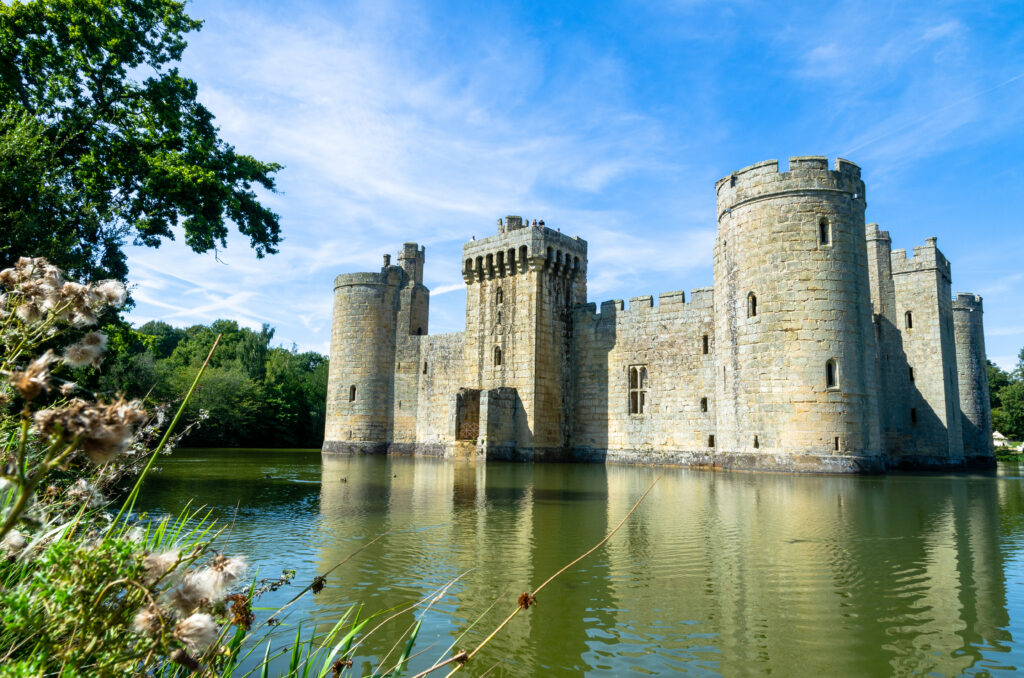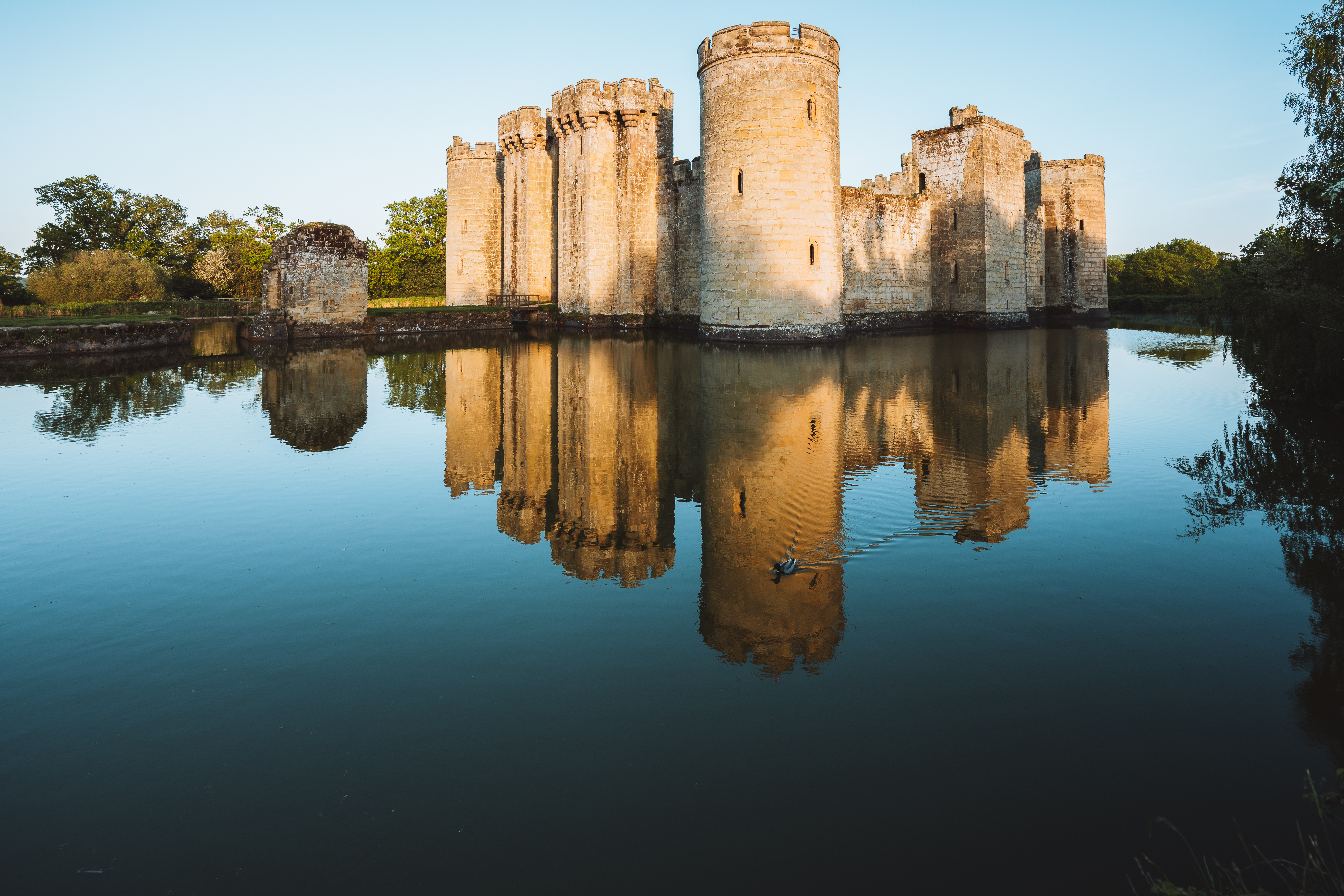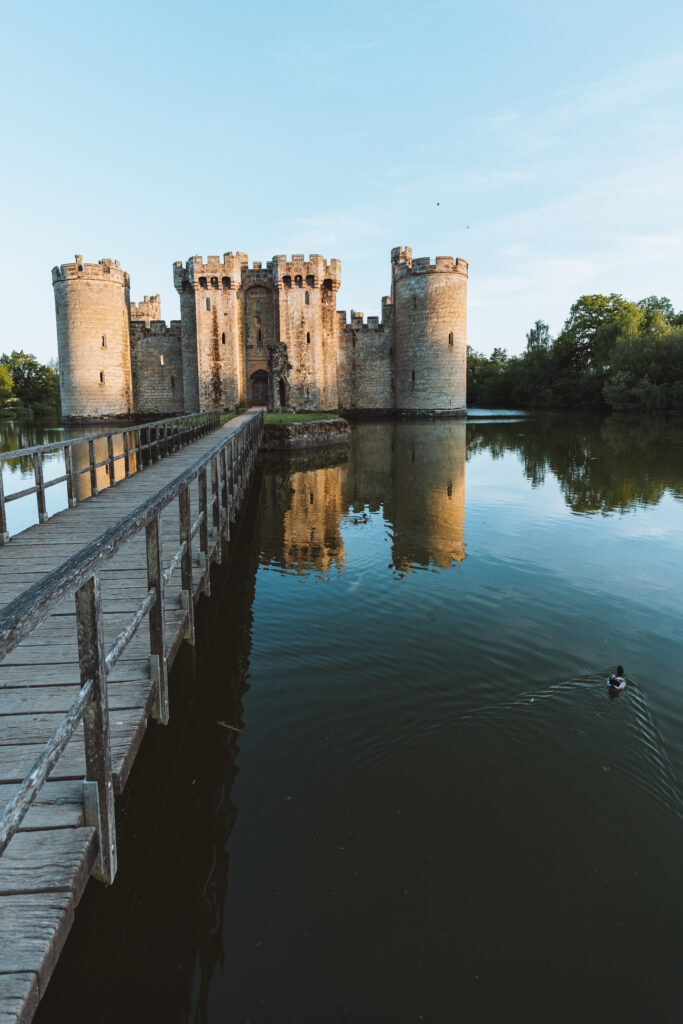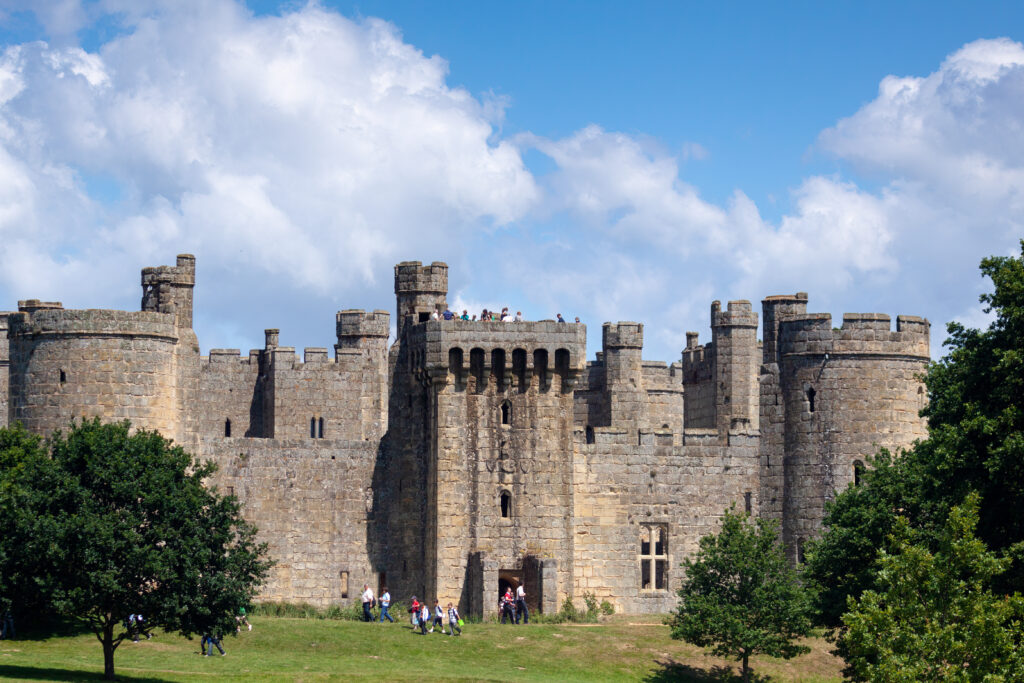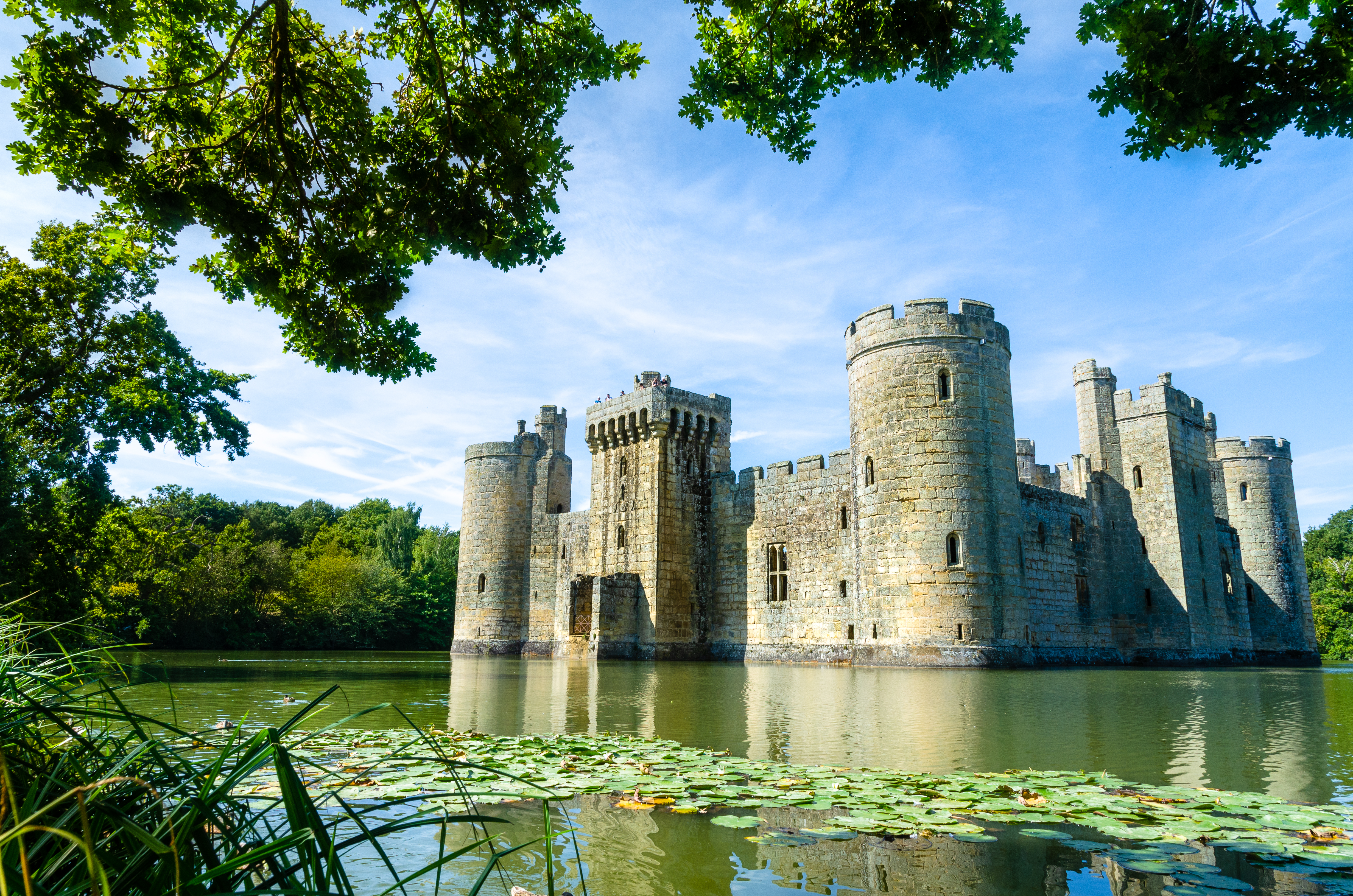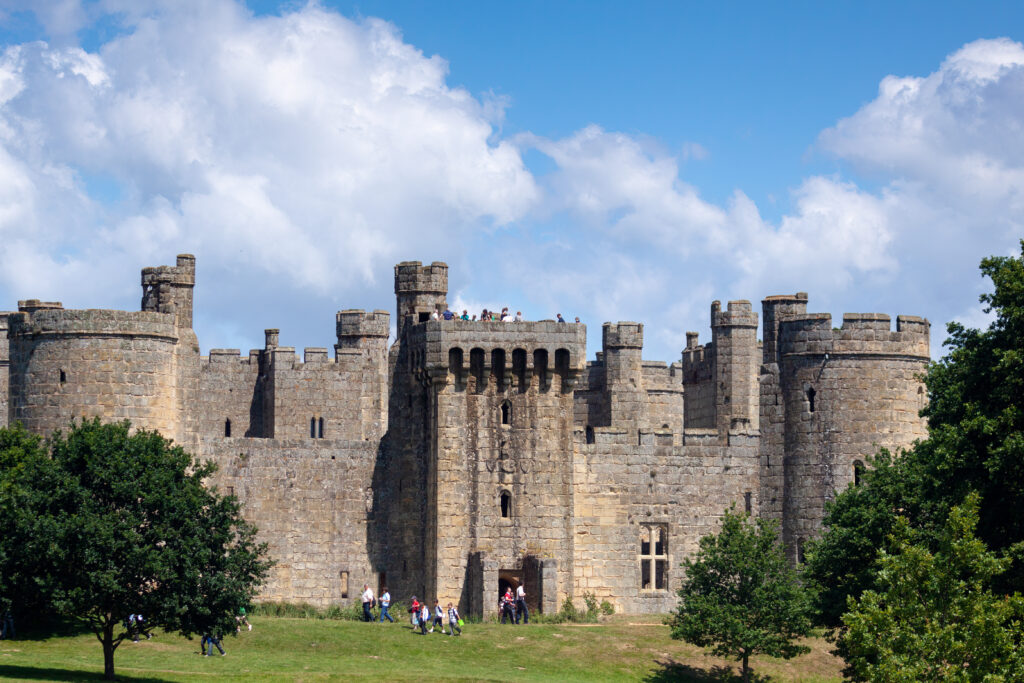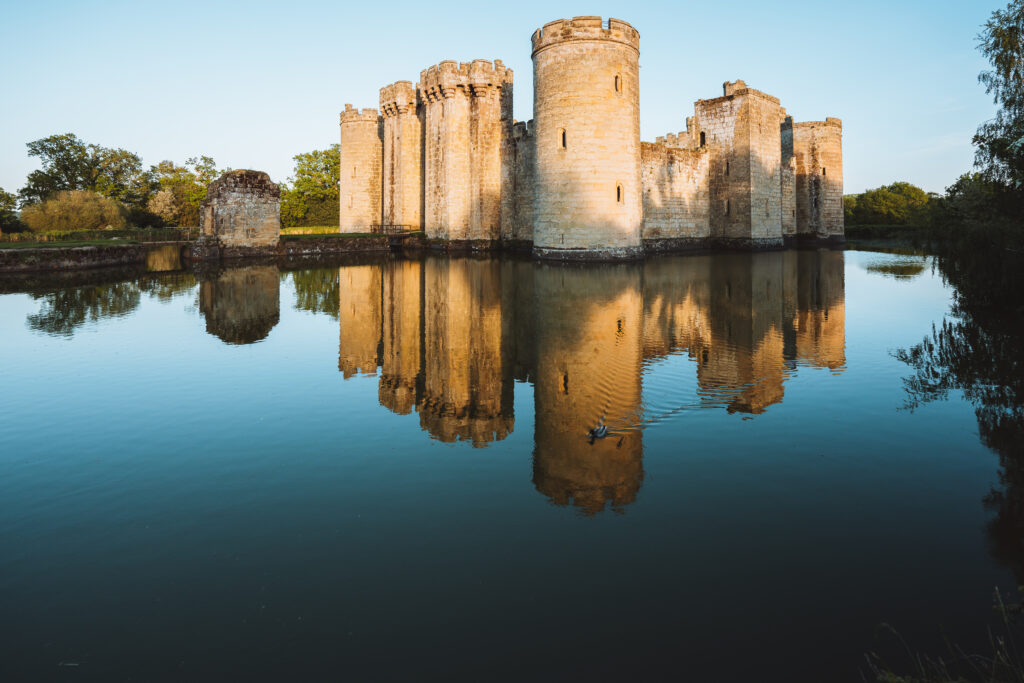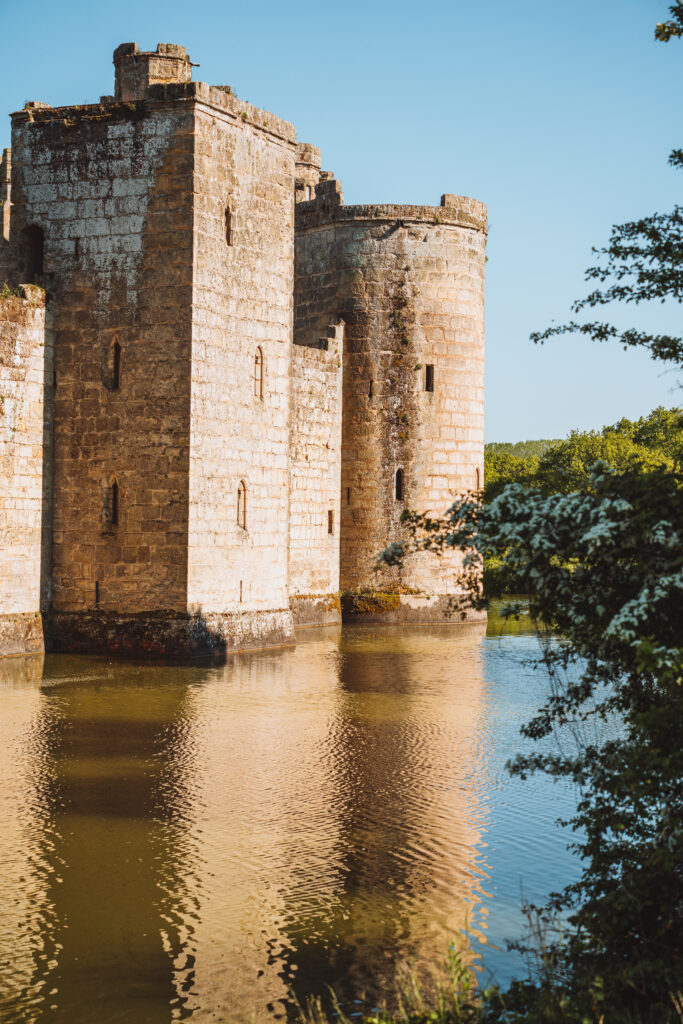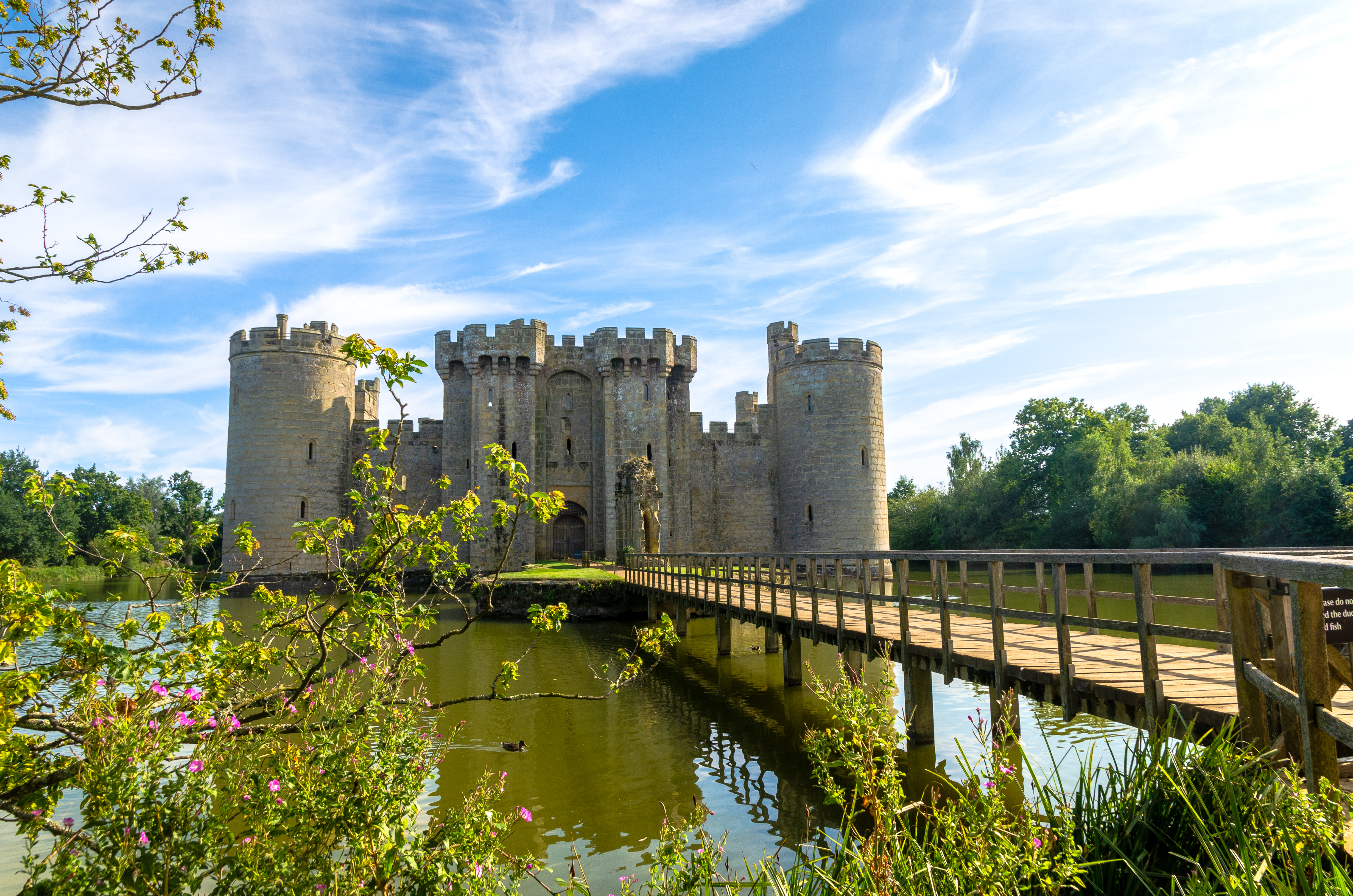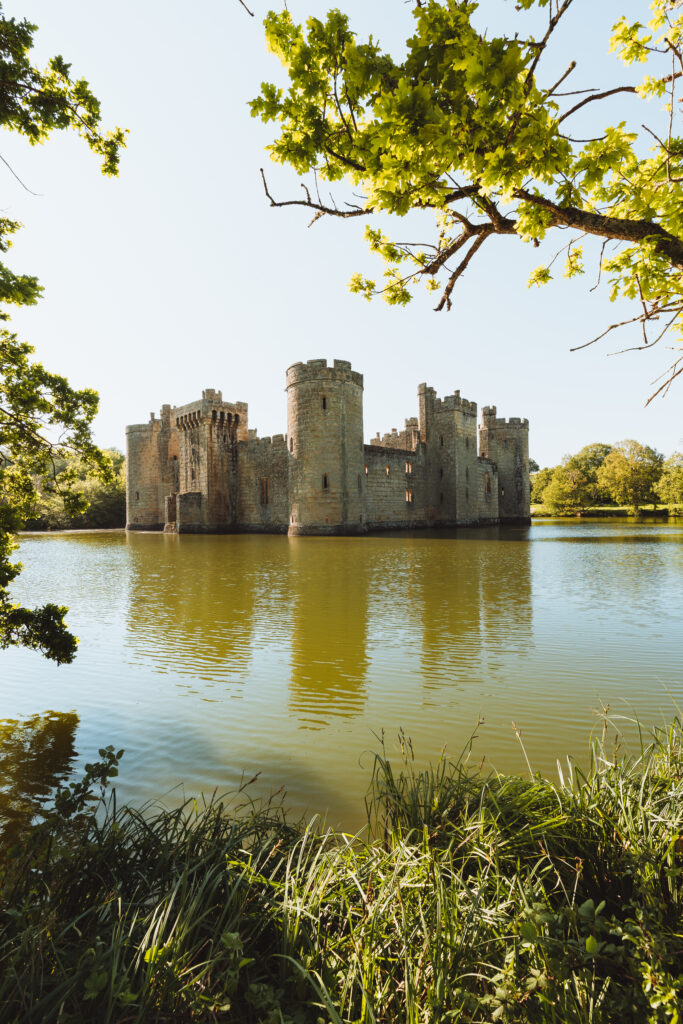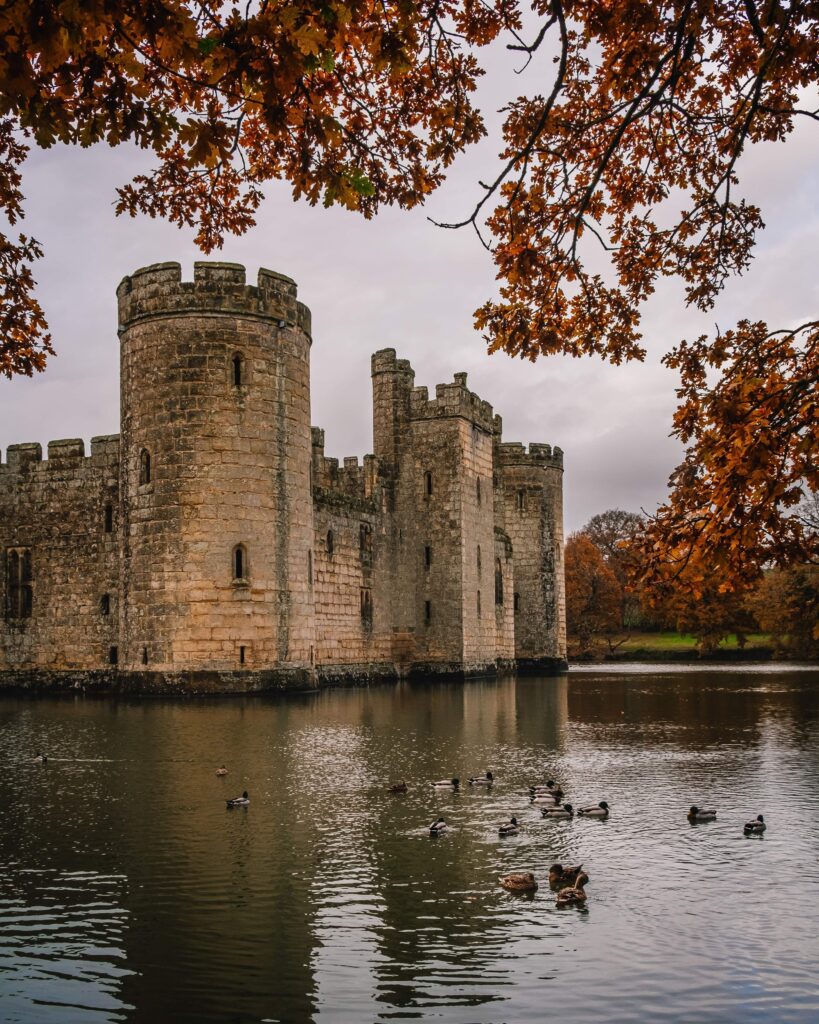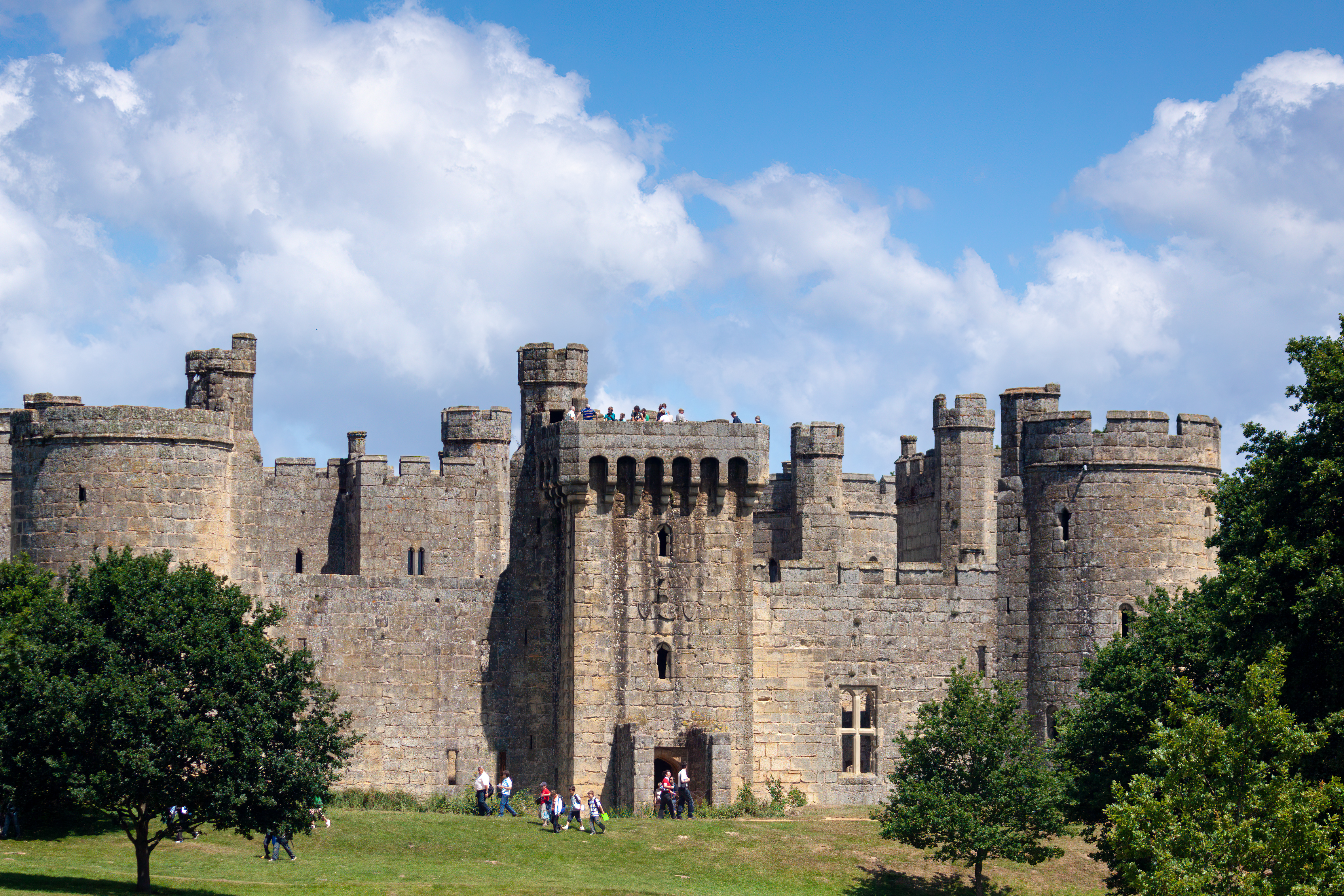

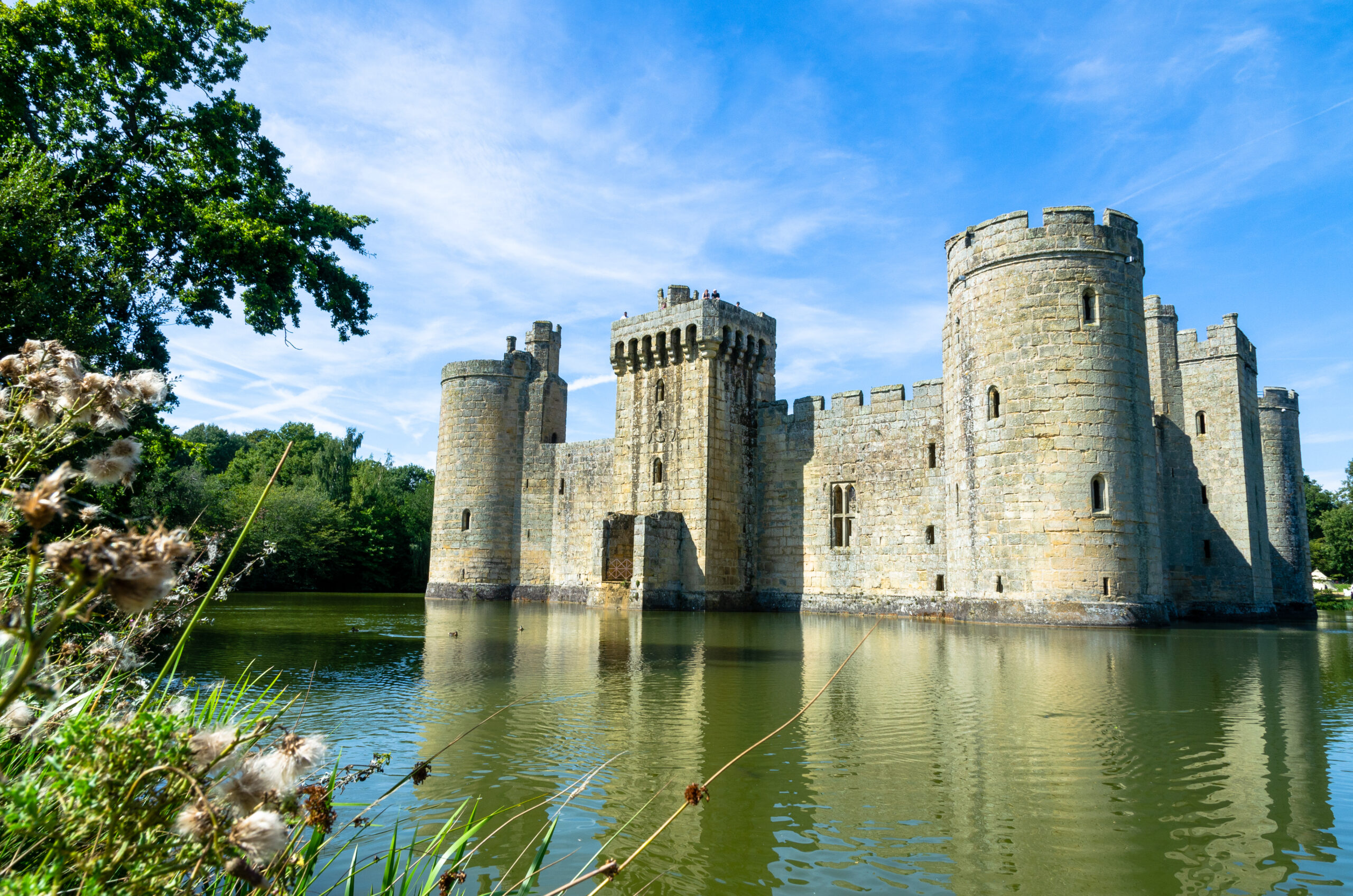
Nestled in the green countryside of East Sussex, England, Bodiam Castle stands as an impressive relic of a bygone era.
Its picturesque ruins, surrounded by a tranquil moat, weave together history, myth, and legend into a tapestry that captivates all who visit. This tale of chivalry, ambition, and the supernatural begins with Sir Edward Dalyngrigge, the man behind this medieval marvel.
The founding of Bodiam Castle – Sir Edward Dalyngrigge came from an old Sussex family and rose to prominence through his marriage to Elizabeth Wardeux in 1378, which gave him ownership of the estate that would one day become Bodiam Castle. His military successes in France under King Edward III strengthened his reputation. Upon his return to England, Dalyngrigge was granted several royal offices, further cementing his influence in Sussex. In 1385, King Richard II granted him permission to convert his manor house in Bodyham into a fortified castle – a testament to both his loyalty and the turbulent times. The official decree read: “Know that we, by special grace, in our name and in the name of our heirs… have granted permission to our beloved and loyal knight Edward Dalyngrigge to fortify his manor house Bodyham near the sea in the county of Sussex with a wall of stone and lime, to add battlements and convert it into a castle to defend the adjacent land and resist our enemies.” Contrary to the royal expectation of a defensive fortress, Dalyngrigge’s vision for Bodiam went beyond purely military utility. Built around 1386 near the River Rother, the castle was intended as much for display as for defense, with opulent interiors, ornate towers, and an impressive moat.
A castle surrounded by legends – Although Bodiam Castle’s main purpose was not warfare, it became the setting for numerous legends and ghost stories. Among them is the story of the Lady in White, which has remained particularly memorable to the locals. Folklore has it that this ghostly figure is the spirit of a young woman who lived there during the castle’s heyday. Her tragic story is said to be one of unrequited love and ultimately a broken heart. According to legend, she wanders the castle grounds on moonlit nights, searching forever for her lost lover. The myth of Bodiam’s hidden treasure also adds to the castle’s mystique. It is believed that Sir Thomas Lewknor, a loyal supporter of the Lancasters, hid a vast fortune within the castle walls during the Wars of the Roses before it fell to the troops of Richard III in 1483. Despite numerous attempts, the treasure was never found, fueling speculation and fantasy over the centuries.
The castle through the ages – Over the years, Bodiam Castle changed hands several times, with each transition marking a new chapter in its historic past. After the Dalyngrigge line died out in the late 15th century, the castle passed to the Lewknor family through marriage. It survived political upheavals, including the bloodless conquest by the Yorkist forces in 1483, when it was surrendered without a fight. In the centuries that followed, the castle underwent periods of neglect and restoration that mirrored the fortunes of its owners. In the 16th century, the structure passed into the hands of John Levett and later the Tufton family, before coming under the stewardship of Nathaniel Powell during the turbulent period of the English Civil War. Powell’s loyalty to Parliament eventually forced him to sell the castle to meet high financial demands. Apart from its romantic ruins, historical accounts suggest that Bodiam Castle served more as a symbol of prestige than as a fortress. Archaeological investigations suggest that its defenses were largely ceremonial in nature. The moat was visually impressive but could easily be drained, and the battlements offered insufficient protection in actual combat situations.
Restoration and preservation – At the beginning of the 20th century, the castle experienced a revival when it caught the attention of George Curzon, 1st Marquess Curzon of Kedleston. A passionate advocate of historic preservation, Curzon purchased Bodiam in 1916 and began an ambitious restoration project. His work ensured that the castle retained its dignity amid the ongoing modernization of the surrounding landscape. In 1925, Curzon bequeathed Bodiam Castle to the National Trust, securing its place as a cherished national monument. Today, it stands not only as a reminder of medieval England, but also as a beacon for storytellers and historians—its walls echoing with tales of knights, noble families, and ghostly wanderers.
The enduring fascination of Bodiam Castle – Walking along the path to Bodiam Castle, it becomes clear that its appeal goes beyond pure architectural beauty. Legends of buried treasure and restless spirits add to its mysterious charm, allowing visitors to experience a piece of history that seamlessly blends fact and fiction.
From the romantic ruins of its great hall to the whispering winds that ripple its waters, Bodiam Castle remains a testament to the timeless interplay of history and imagination. It invites visitors to explore not only its stones and beams, but also the countless stories that intertwine within it—the dreams and ambitions of those who once called this fortress home.
Whether viewed as a strategic structure of medieval defenses or as a stage for unfolding human dramas, Bodiam Castle continues to fascinate and inspire, defying the tides of change with its untold stories and unsolved mysteries.