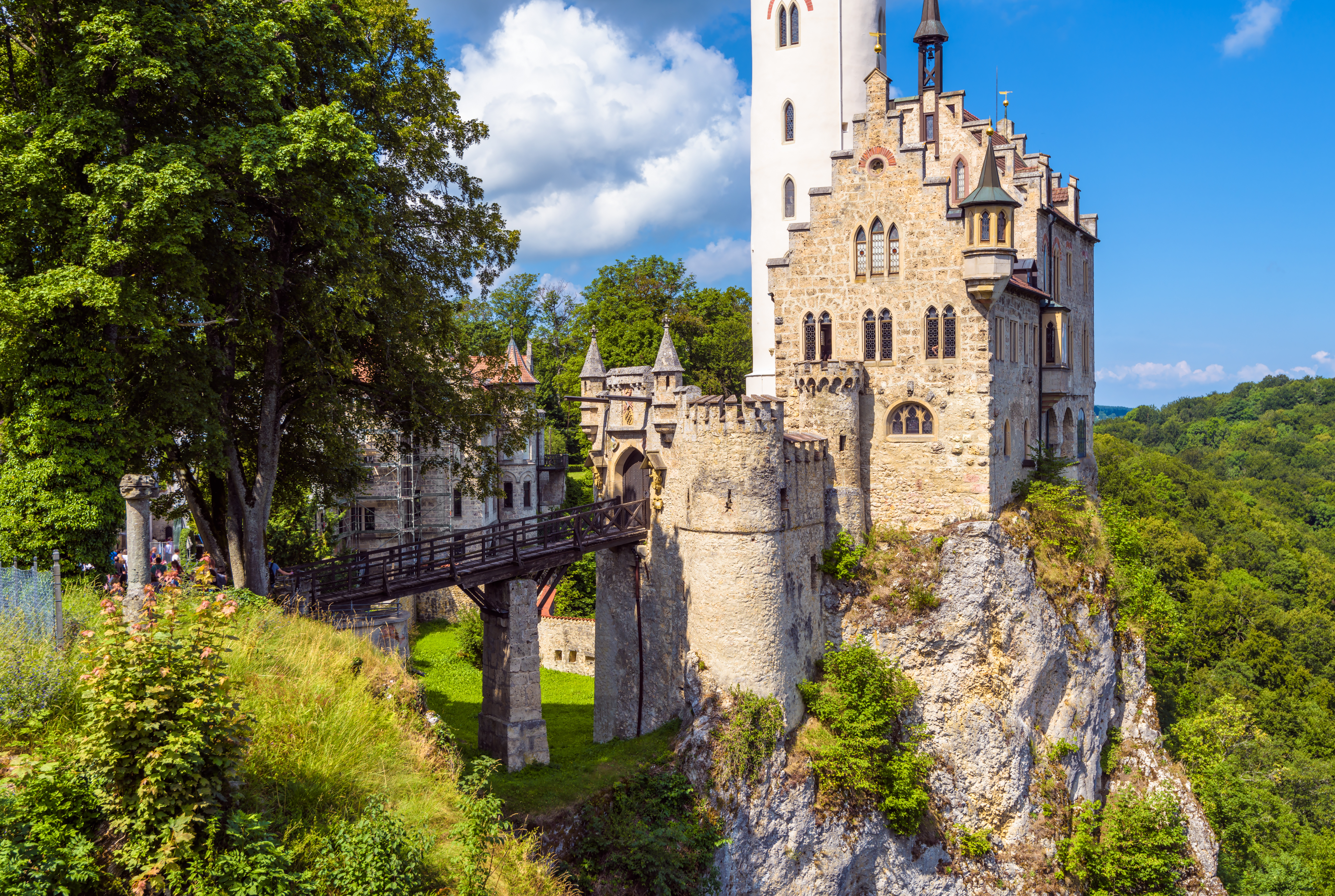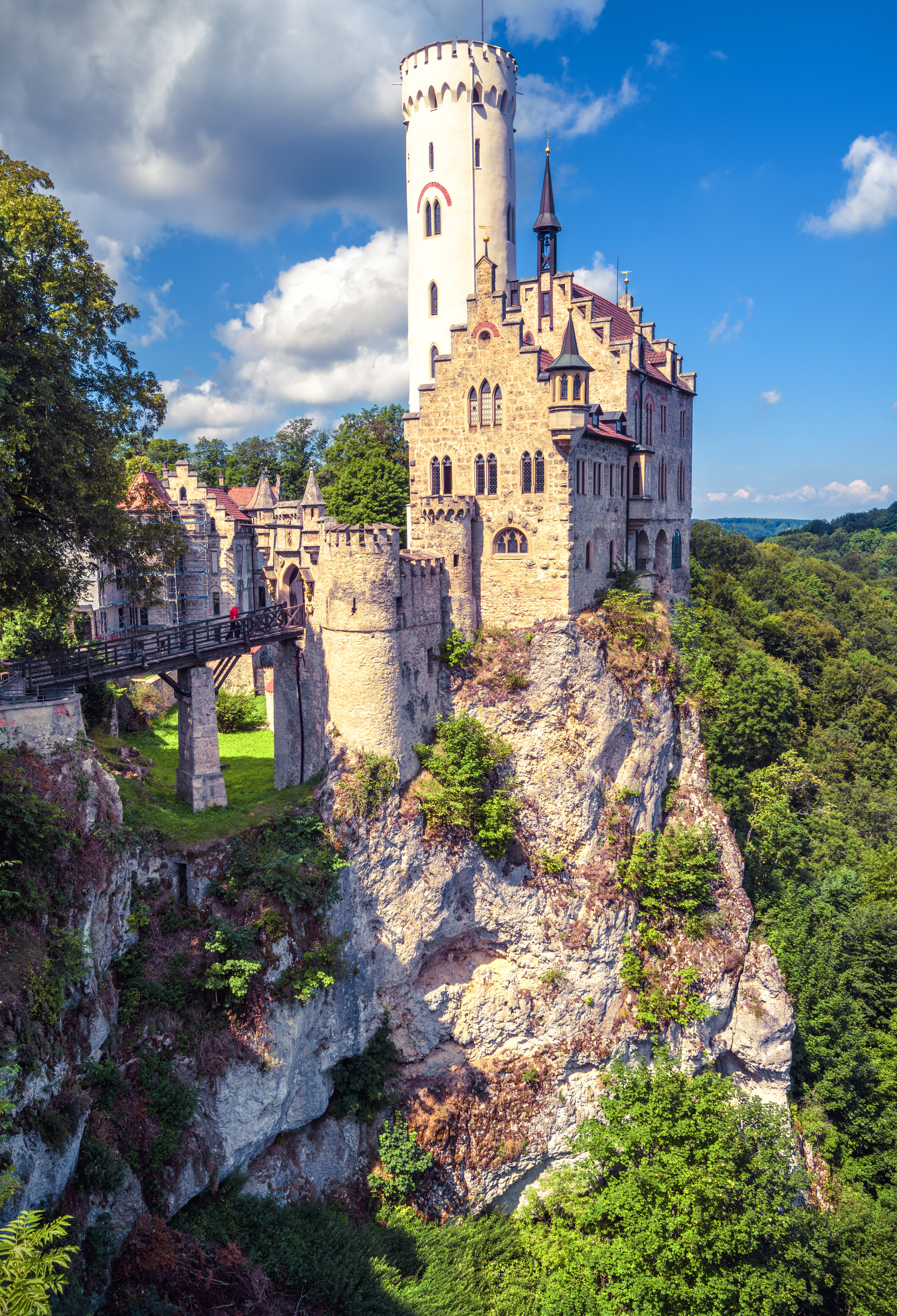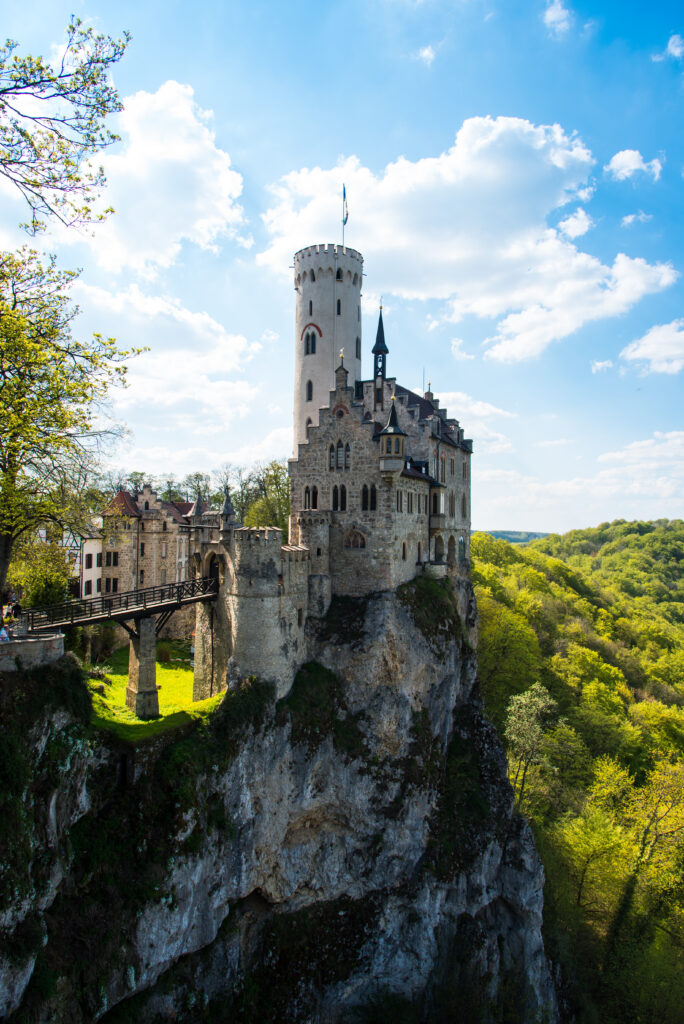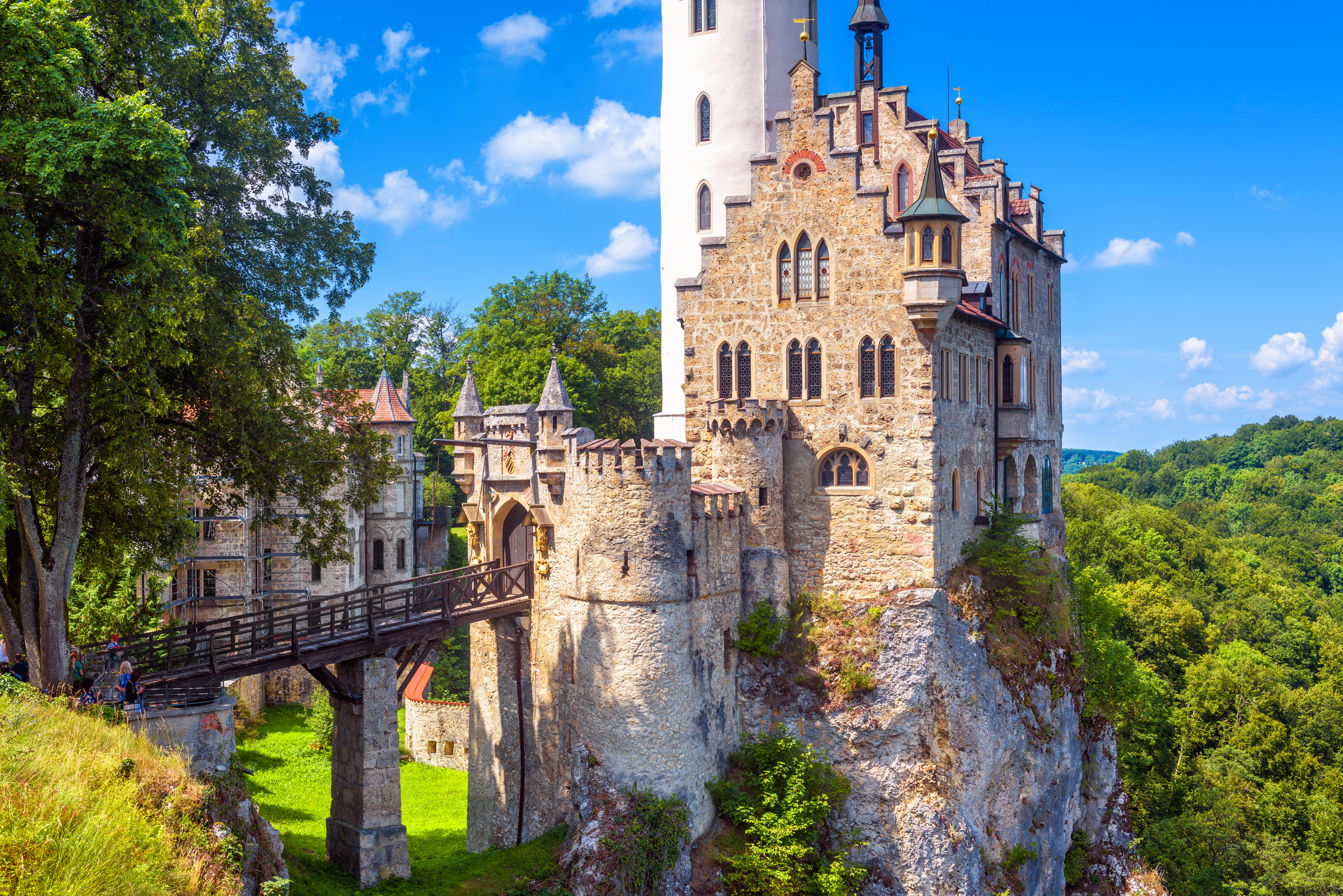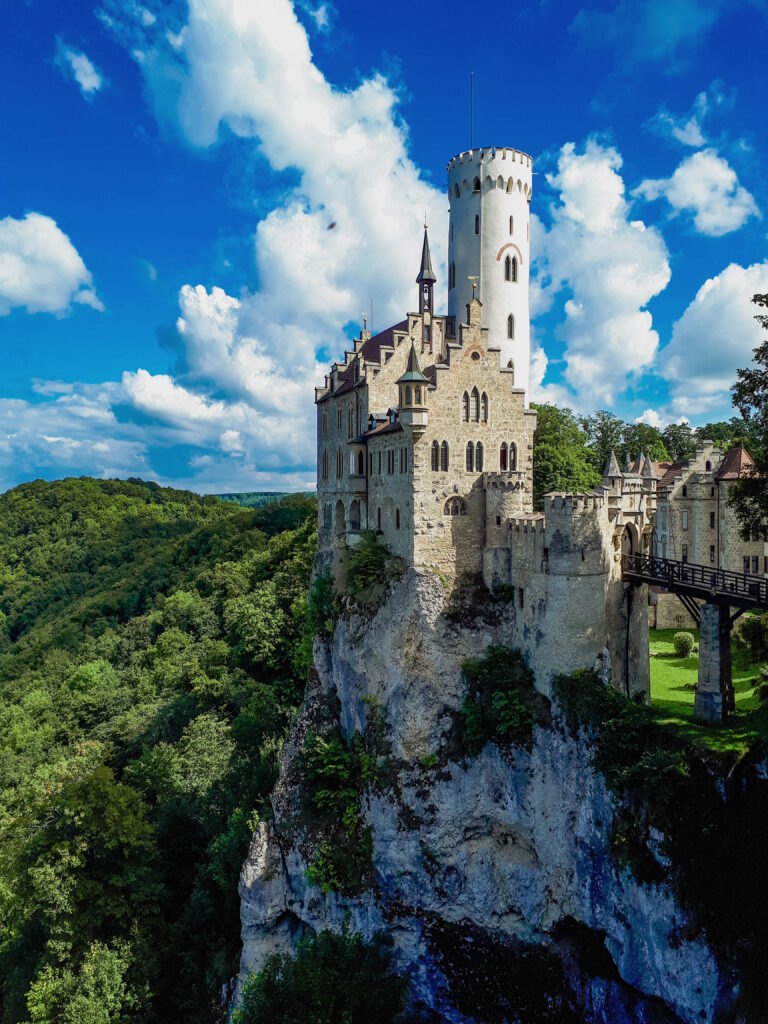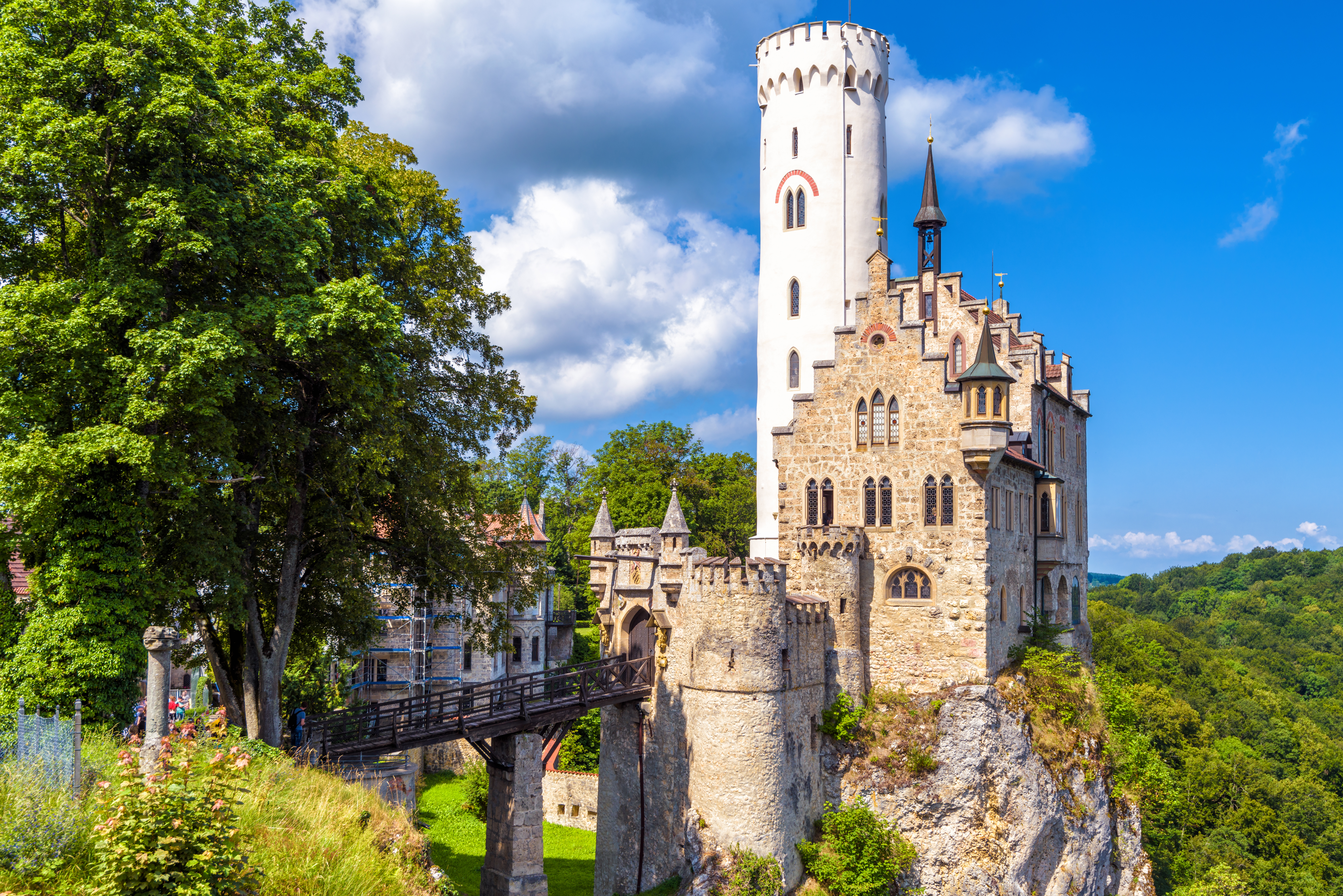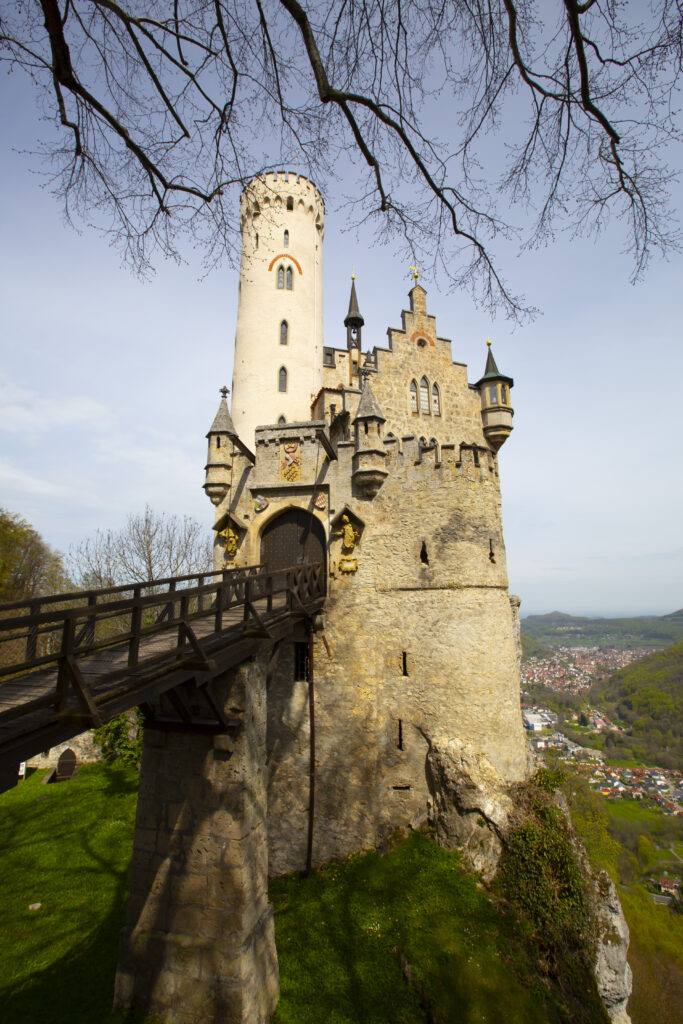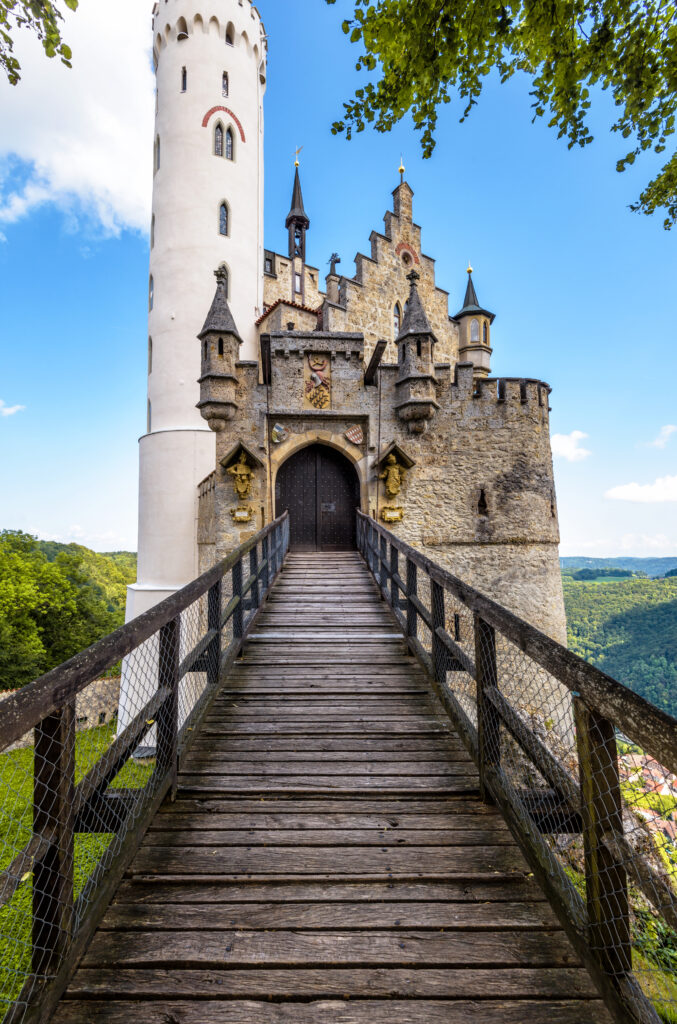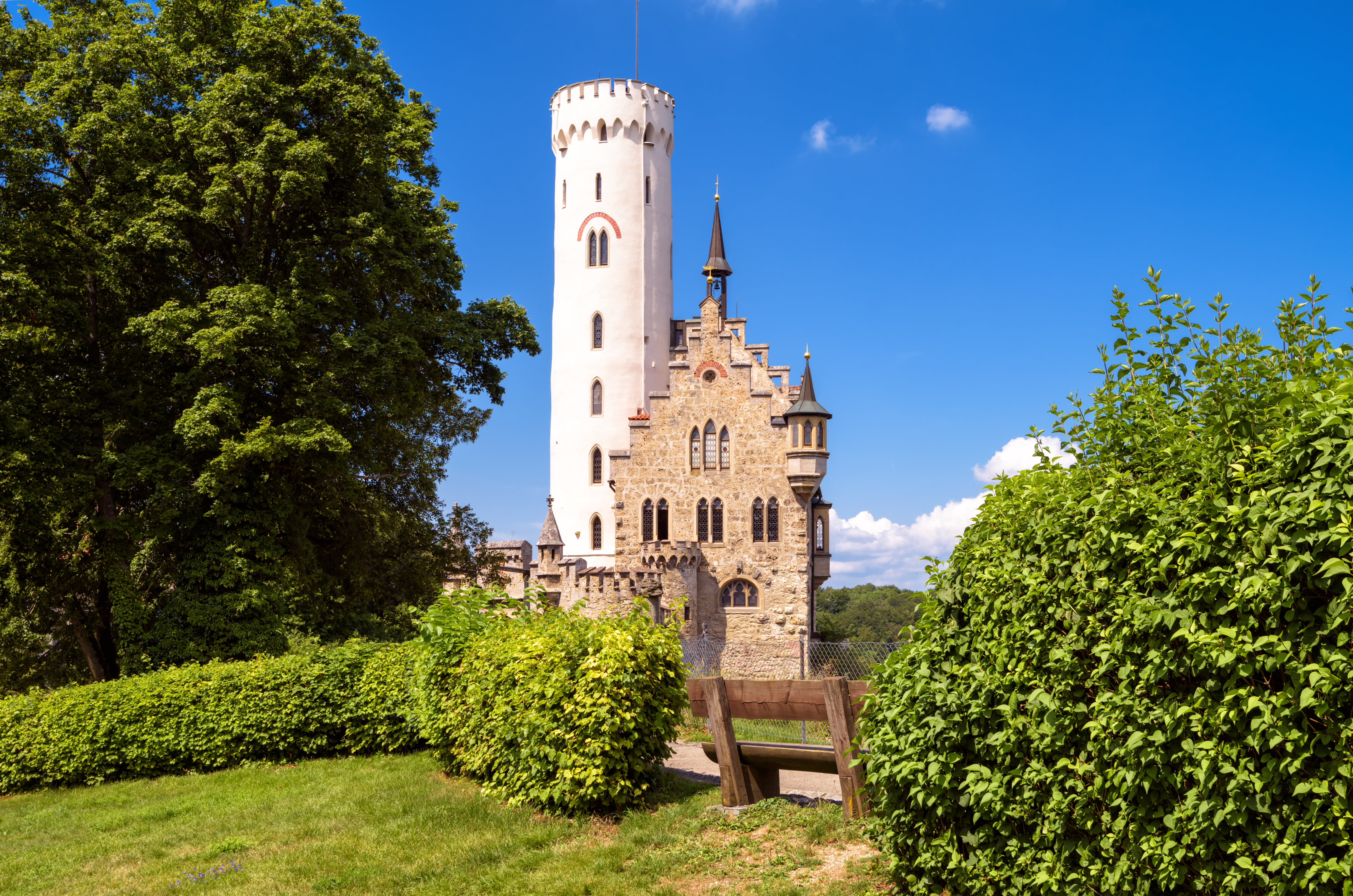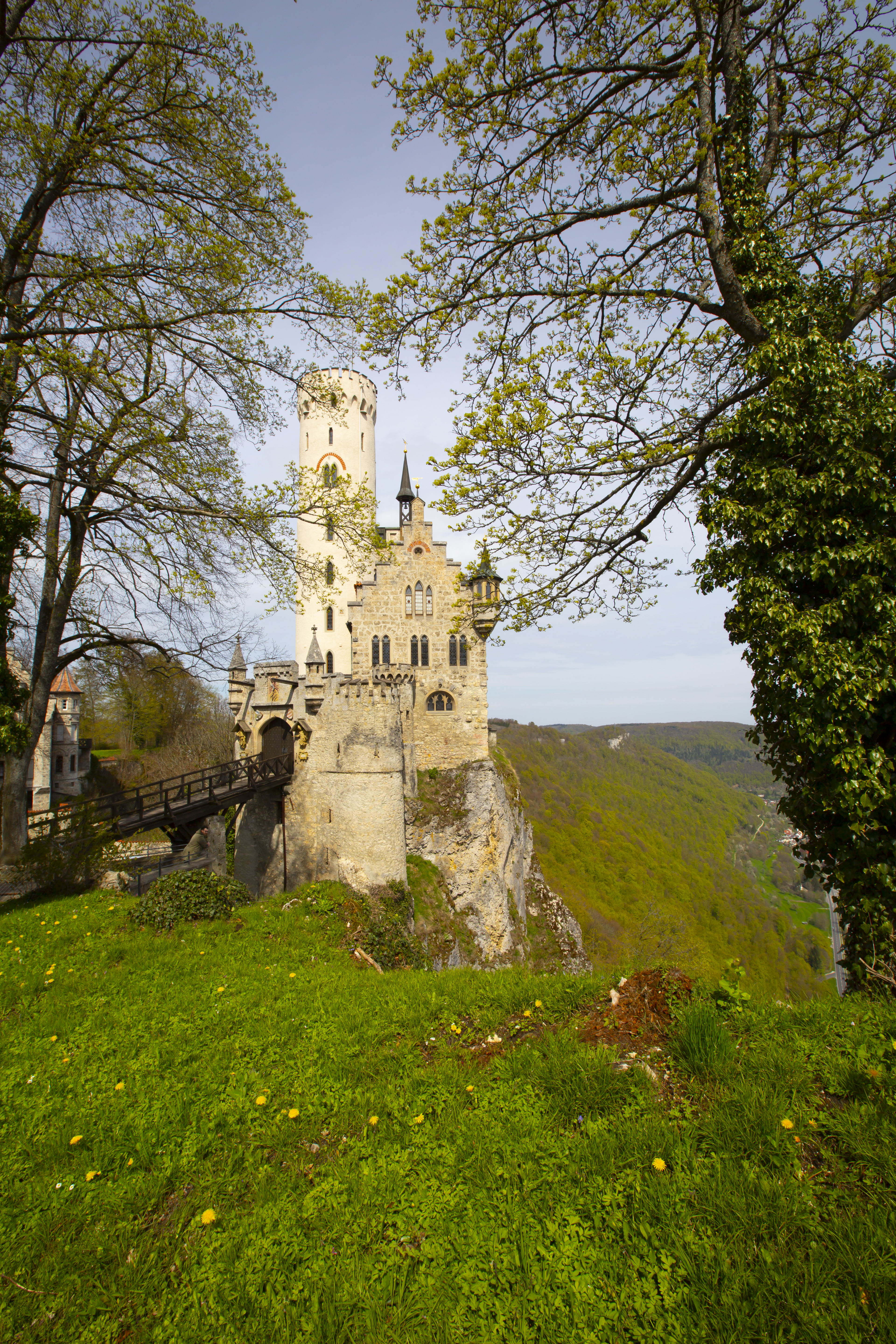

High above the town of Honau in the Swabian Alb in Baden-Württemberg, Lichtenstein Castle stands as a testament to Romanticism and medieval fortification architecture. This 19th-century masterpiece, often referred to as “Württemberg’s fairytale castle,” captures the hearts and imaginations of all who see it. With its breathtaking location at an altitude of 817 meters and views of the Echaz Valley, the castle offers magnificent vistas that complement its rich historical and architectural significance.
Origins steeped in legend and conflict. The history of Lichtenstein Castle begins long before the construction of the present building. Around 1390, a fortified complex was built on the same site where the castle stands today. This new fortress was built after its predecessor, Alt-Lichtenstein, was destroyed in 1381 during the Swabian City War. The old castle lay in ruins about 500 meters southeast of its successor, bearing witness to the turbulent history of the region. The newly built Lichtenstein Castle soon gained a reputation as one of the most impressive fortresses of the late Middle Ages. It featured early casemates on its south side, complete with embrasures for firearms, demonstrating an advanced understanding of military architecture. Over the centuries, however, Lichtenstein Castle lost its strategic importance. By 1567, it had lost its status as a ducal seat and was used as a forest ranger station. During the Thirty Years’ War, the Tyrolean line of the House of Habsburg took control of the estate under the Achalm Pledge Agreement. Over time, neglect led to the gradual decay of the castle. The last descendant of the Lichtenstein family was killed in battle against the Ottomans in 1687, leaving no known heirs. Thus, the noble family disappeared from history, leaving behind only its coat of arms—a silver eagle’s wing on a blue background—which can still be seen today in the knights’ hall of the new castle.
The romantic revival of Lichtenstein. At the beginning of the 19th century, interest in medieval chivalry and architecture experienced a renaissance, largely inspired by Romanticism. Wilhelm Hauff’s novel “Lichtenstein,” published in 1826, played a decisive role in rekindling the public’s fascination with the old fortress. The book brought a part of Württemberg’s history to life, telling the story of the outlawed Duke Ulrich, who is said to have sought refuge in Lichtenstein and the nearby Nebelhöhle cave in 1519 after being expelled from the Swabian League. Among those fascinated by Hauff’s literary work was Wilhelm Count of Württemberg, later Duke of Urach. An avid admirer of medieval history and a passionate collector of weapons, armor, and paintings, he had a vision of restoring a castle ruin in the Swabian Alb to house his extensive collection. After negotiations with the head forester of Urach, Philipp Freiherr von Hügel, and his successor Friedrich von Mandelsloh, Wilhelm acquired the site where the old castle once stood in 1837. He then had the existing forester’s lodge demolished to make room for his ambitious project.
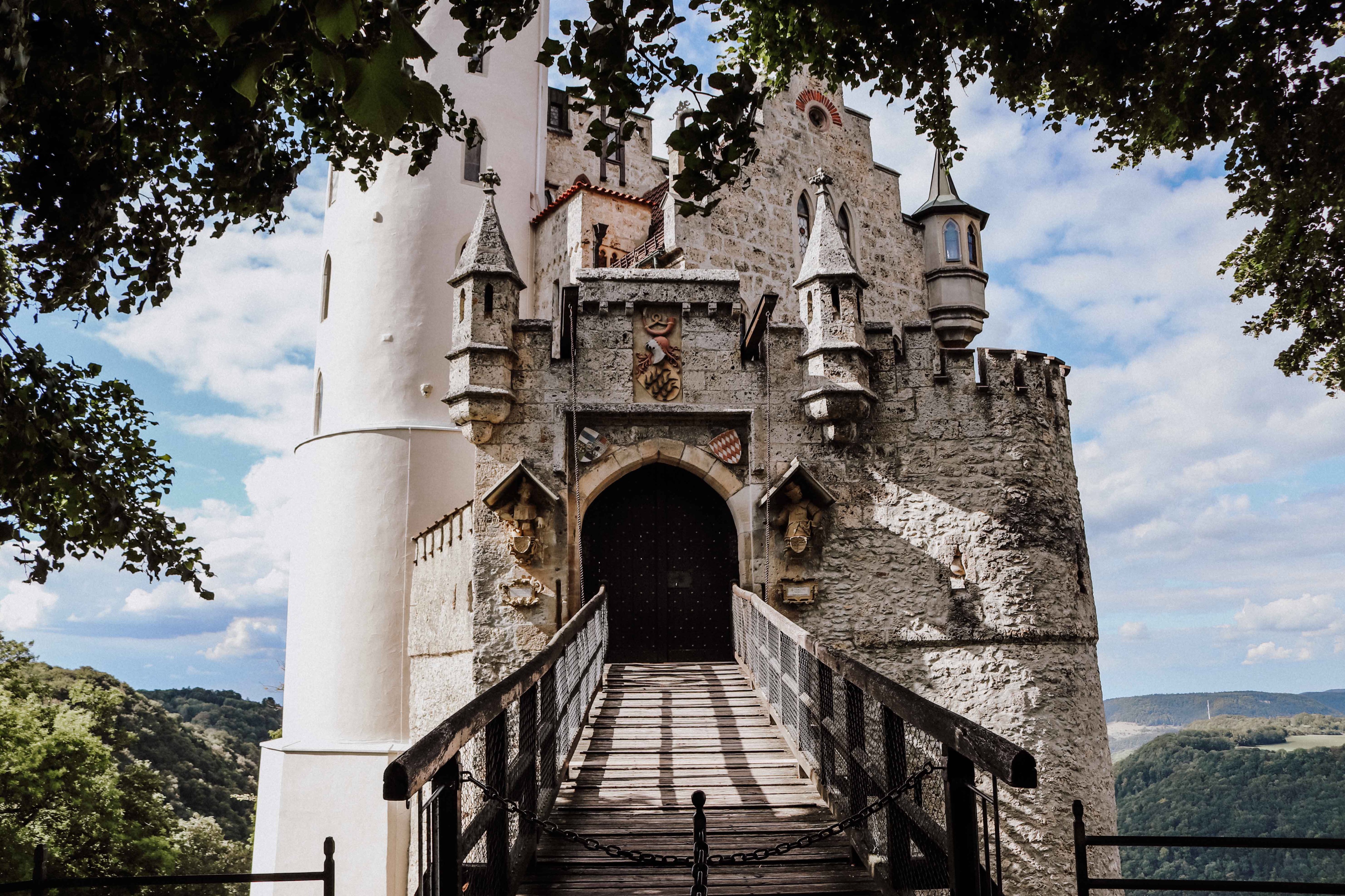
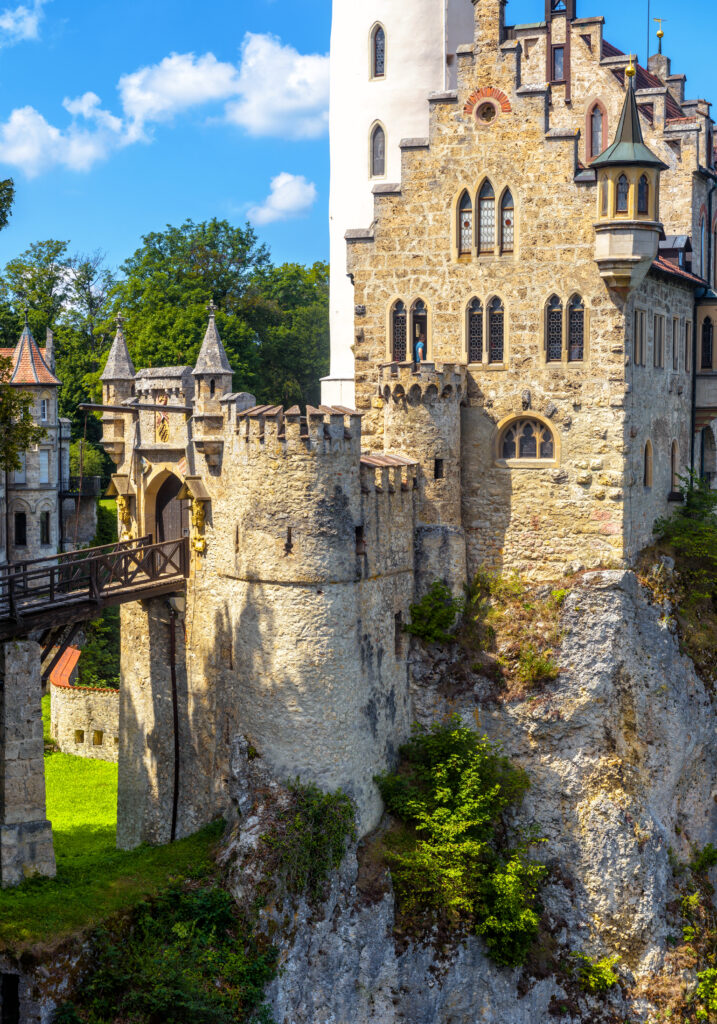
The construction of a neo-Gothic masterpiece. Between 1840 and 1842, under the direction of architect Carl Alexander Heideloff and later Johann Georg Rupp, Lichtenstein Castle, an impressive example of neo-Gothic splendor, was built from the ruins. Renowned sculptor Ernst Machold, Reutlingen glass painter Friedrich Pfort, and other students of Heideloff contributed to the elaborate design and ornate decorations of the castle. The result was a picturesque castle on a steep cliff, its core structure surrounded by a spacious outer courtyard with corner bastions and artillery towers. Two older farm buildings were integrated into the design, seamlessly blending the past and the present. Lichtenstein Castle is one of the earliest examples of historicist architecture in southwestern Germany. Its carefully designed facades and interiors embody the idealized notion of a medieval knight’s castle that prevailed in the 19th century. Wilhelm’s commitment to creating a patriotic monument to the House of Württemberg is evident in every detail, from the richly decorated walls to the exquisite paintings by Georg Eberlein.
Reinforced fortifications and modern improvements. After the revolution of 1848/49, Wilhelm, who had been elevated to Duke of Urach in 1867 and was an experienced artillery officer, undertook further improvements to the castle’s defenses. He designed and supervised the construction of fortifications around the outer courtyard, reflecting contemporary German fortress architecture. At the heart of these improvements was a caponier with an outer work reminiscent of the larger fortifications in Ulm. A surrounding moat provided additional security, with cannons strategically placed within the bastions and walls. Wilhelm’s vision was to protect his beloved castle and its treasures from potential threats while demonstrating the evolution of fortification techniques from the Renaissance to his own time. Further extensions were made at the turn of the 20th century with the addition of the Gerobau in 1899-1900 and the Fürstenbau in 1907-1908. These structures followed the historical aesthetic and emphasized the architectural harmony of the castle.
Cultural significance and lasting legacy. The cultural significance of Lichtenstein Castle goes far beyond its architectural beauty. It houses several remarkable works of art, including paintings by an unknown Gothic artist known as the “Master of Lichtenstein Castle.” The castle has also found its way into popular culture. In 2009, it served as the enchanting backdrop for the fairy tale film “Sleeping Beauty,” embodying the enchanted castle surrounded by thorn bushes from the Brothers Grimm fairy tale.
Similar to Bavaria’s Neuschwanstein Castle, Prussia’s Stolzenfels Castle, Marienburg Castle, Wartburg Castle, and Hohkönigsburg Castle in Alsace, Lichtenstein Castle occupies a unique place as a landmark of its region. Each of these castles embodies a romanticized notion of the Middle Ages, but Lichtenstein is distinguished by its direct literary inspiration from Hauff’s novel. Only Wartburg Castle, with its legendary minstrel contest, offers a comparable blend of historical and fictional narrative.
In summary, Lichtenstein Castle is not just a relic of the past, but a living monument to the imagination and spirit of Romanticism. Its impressive silhouette, rich history, and cultural significance continue to enchant visitors from all over the world, making it a true fairytale castle in every sense of the word.