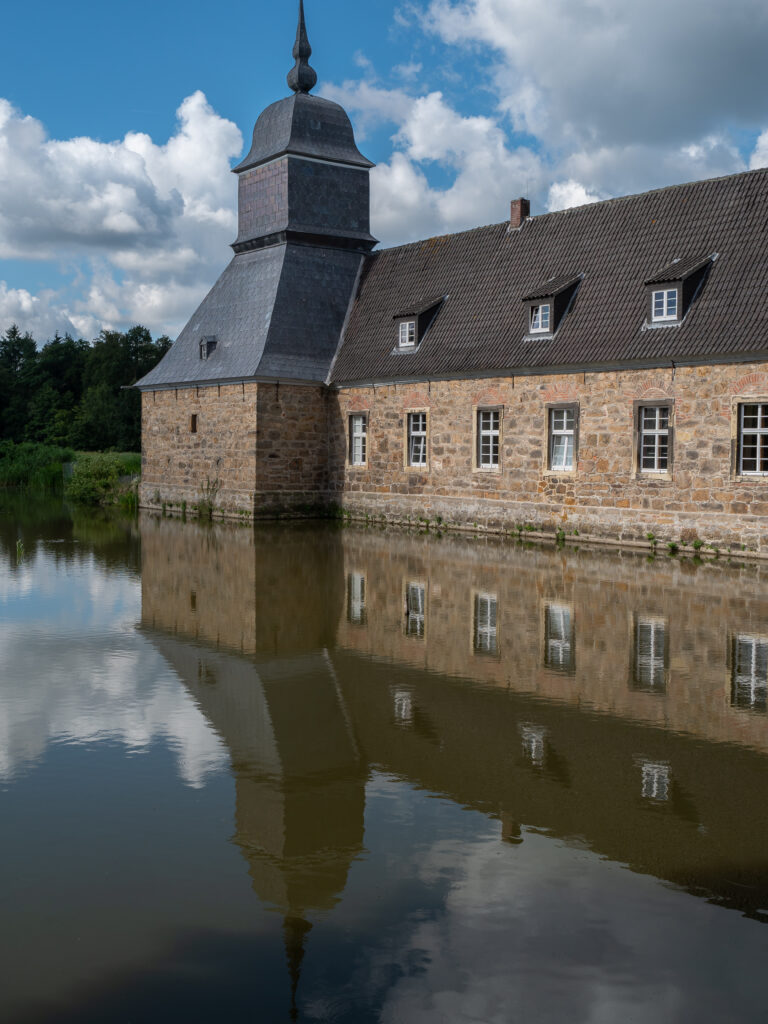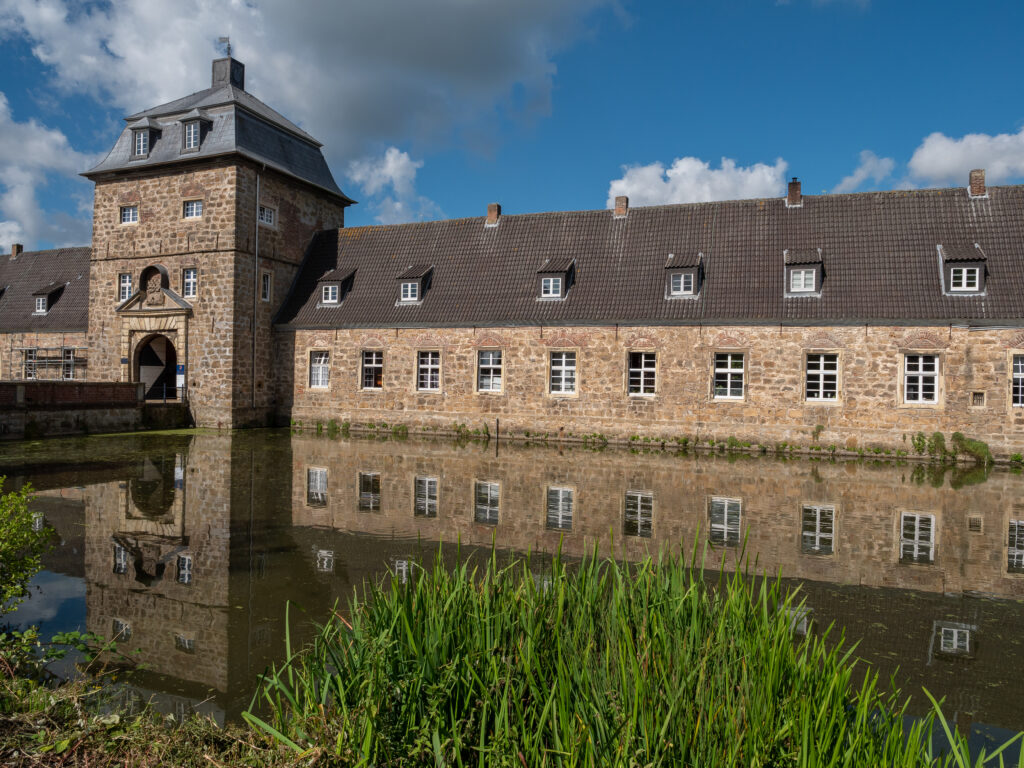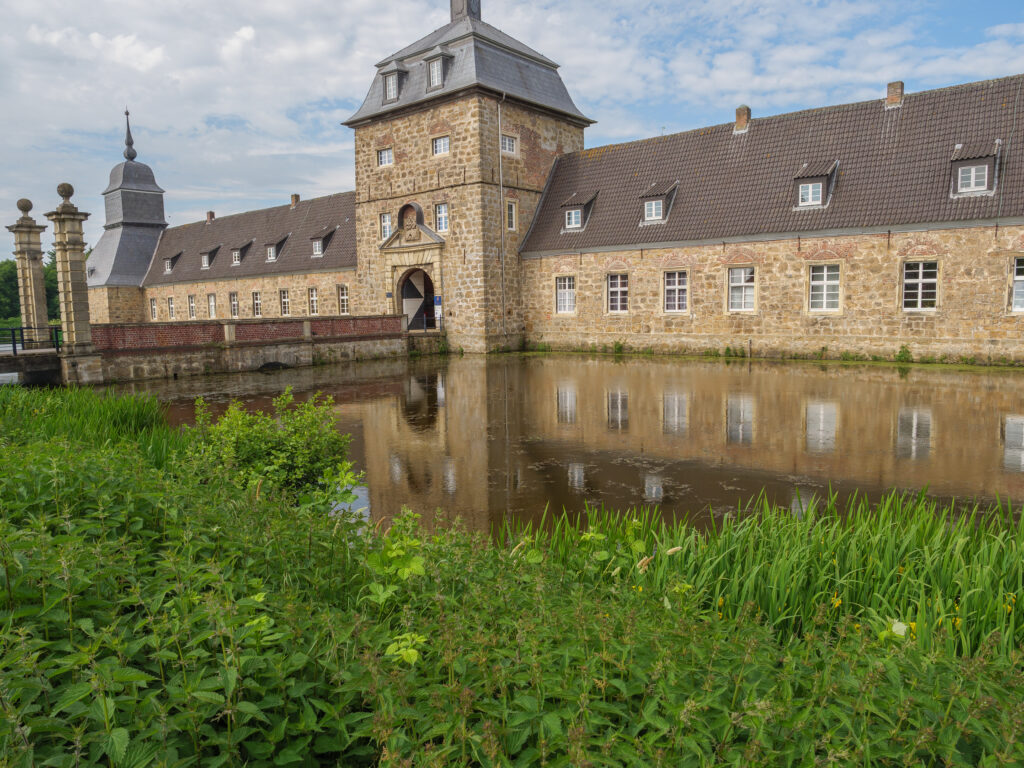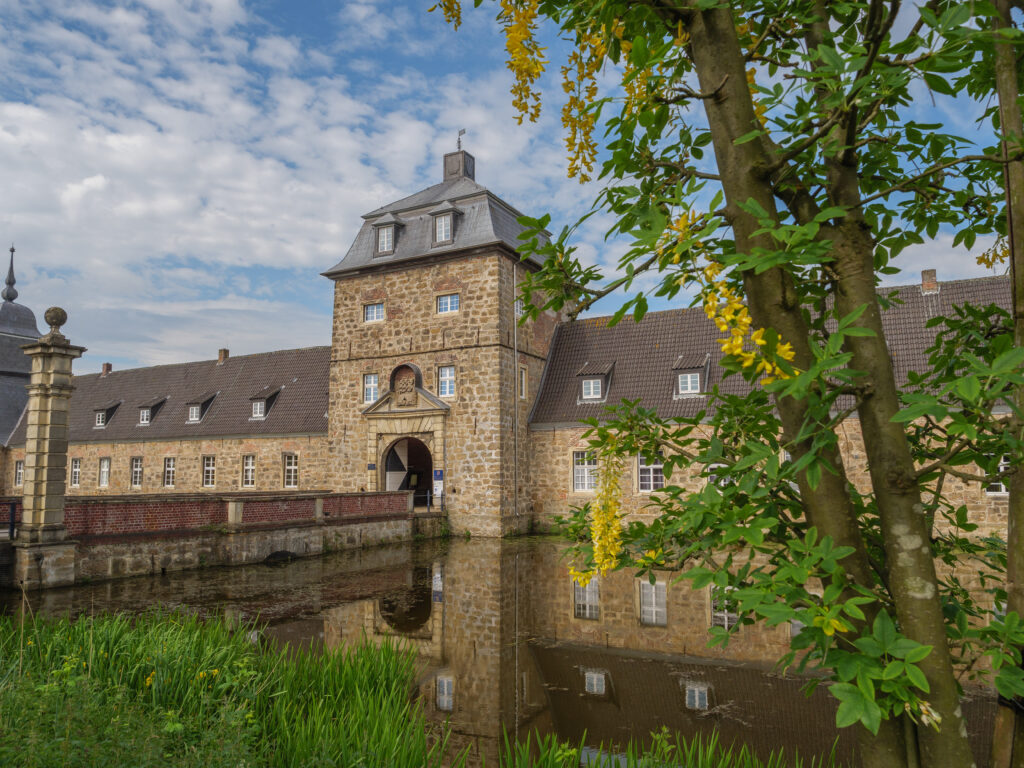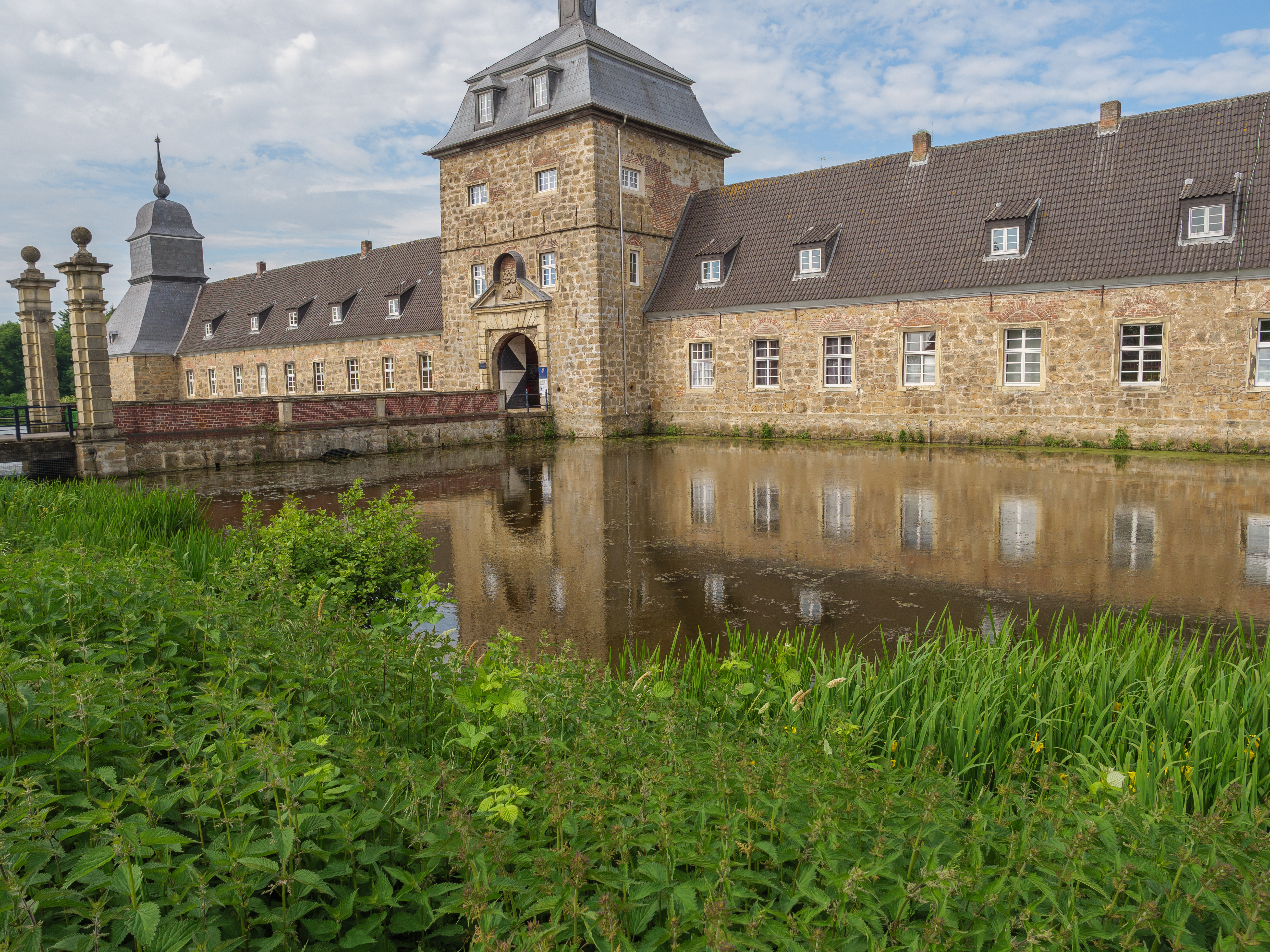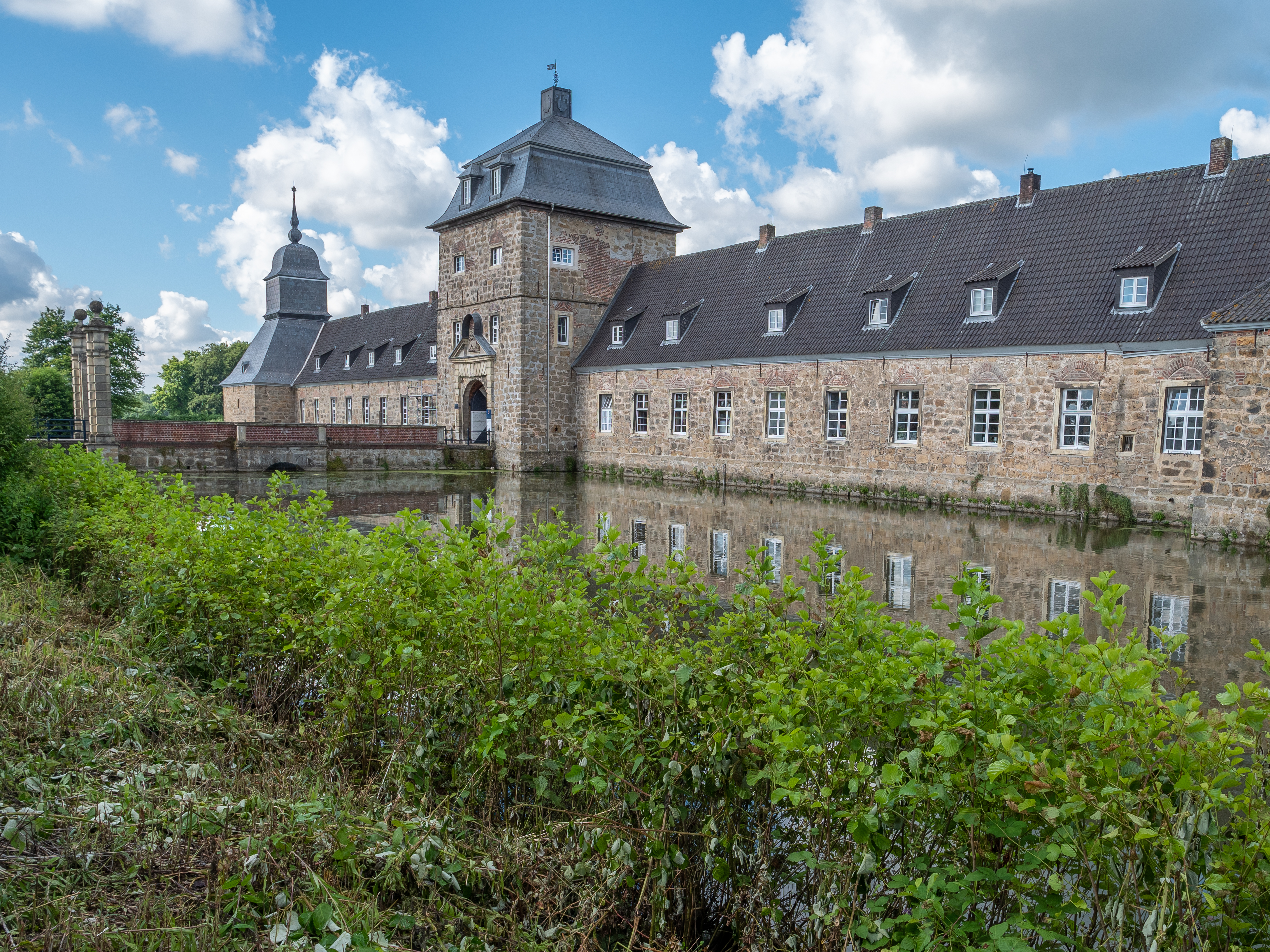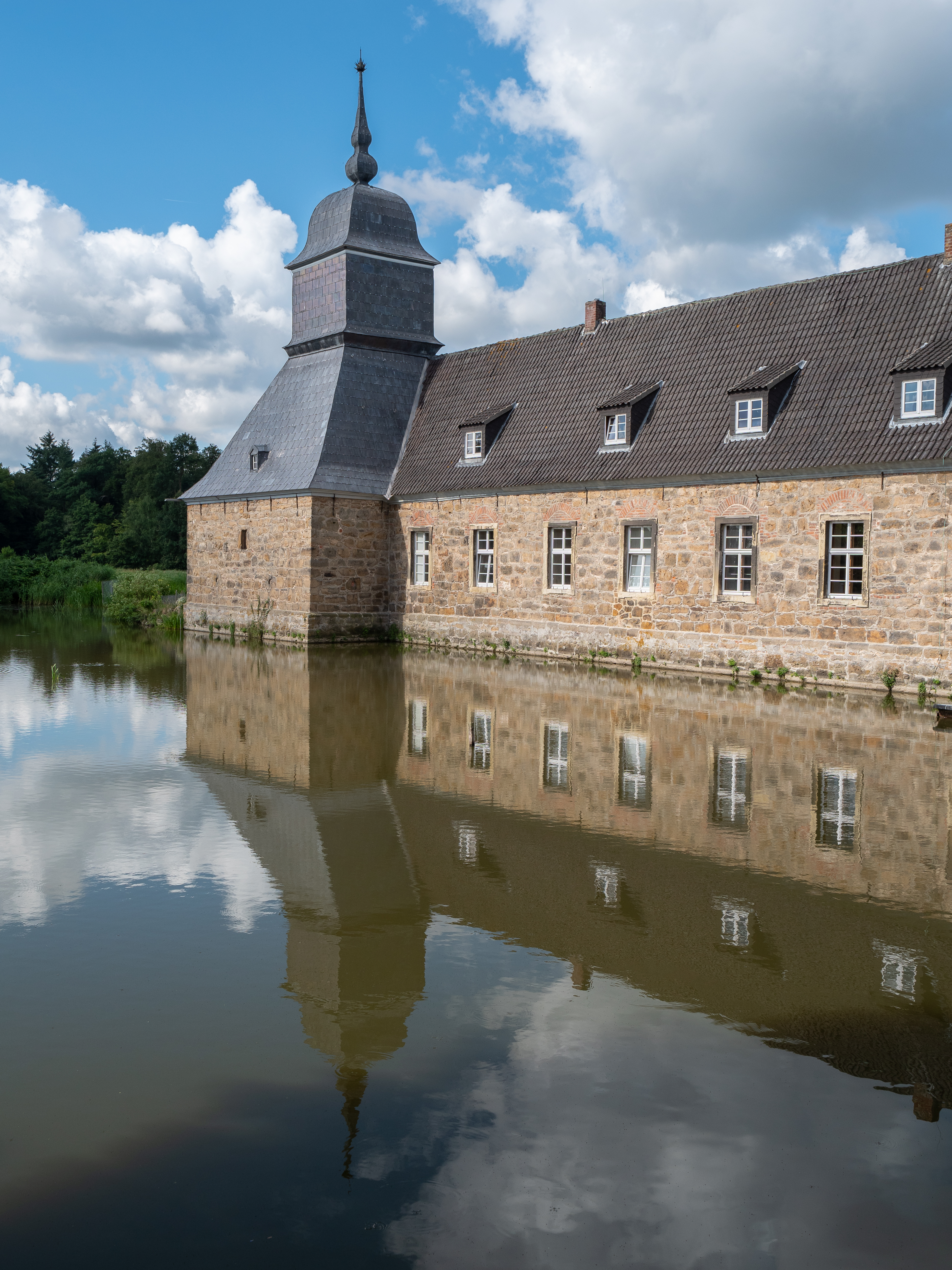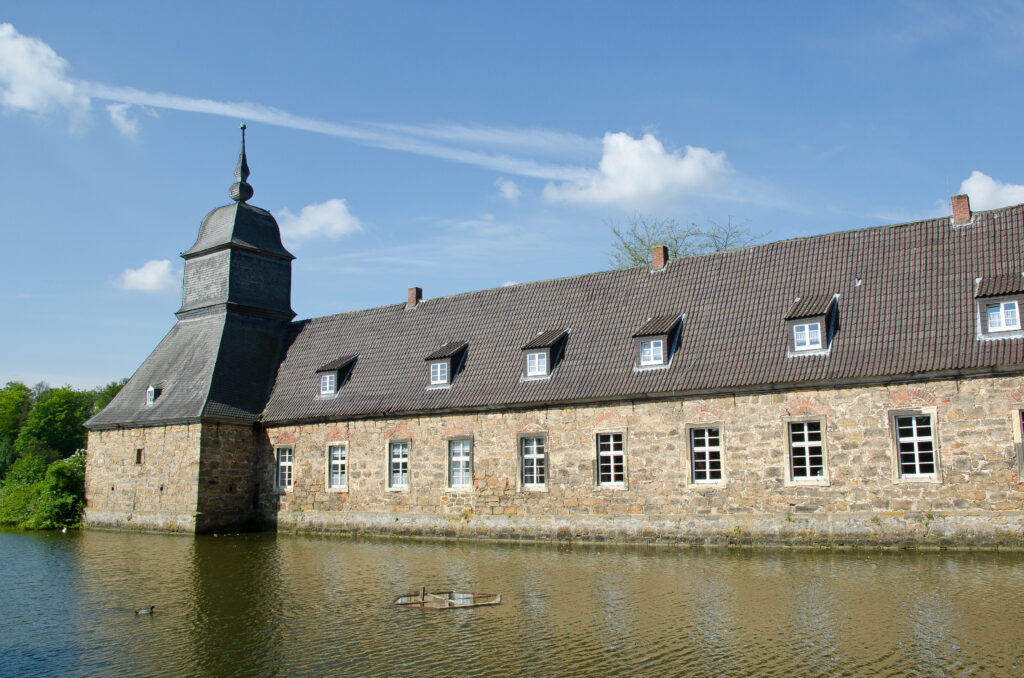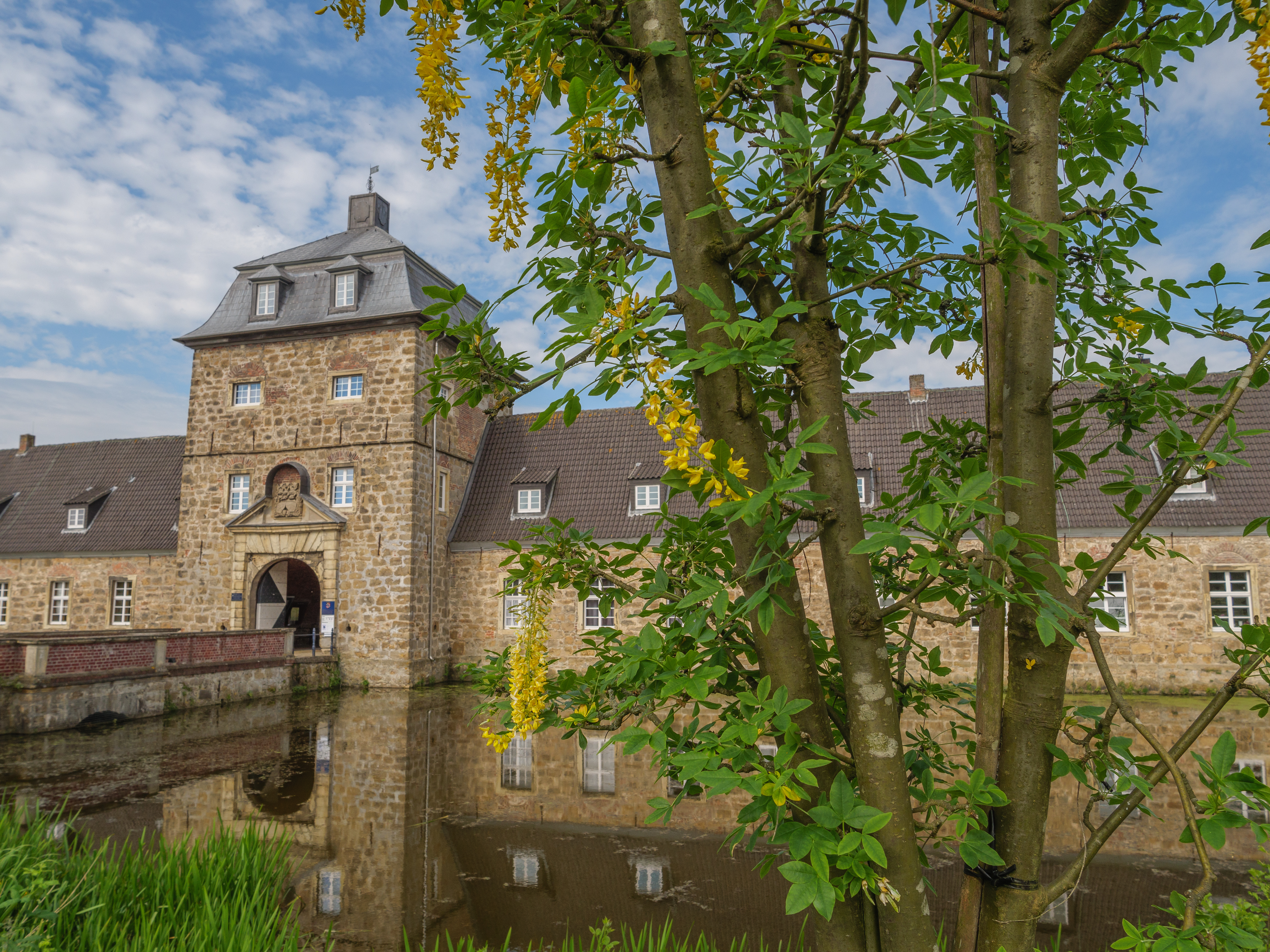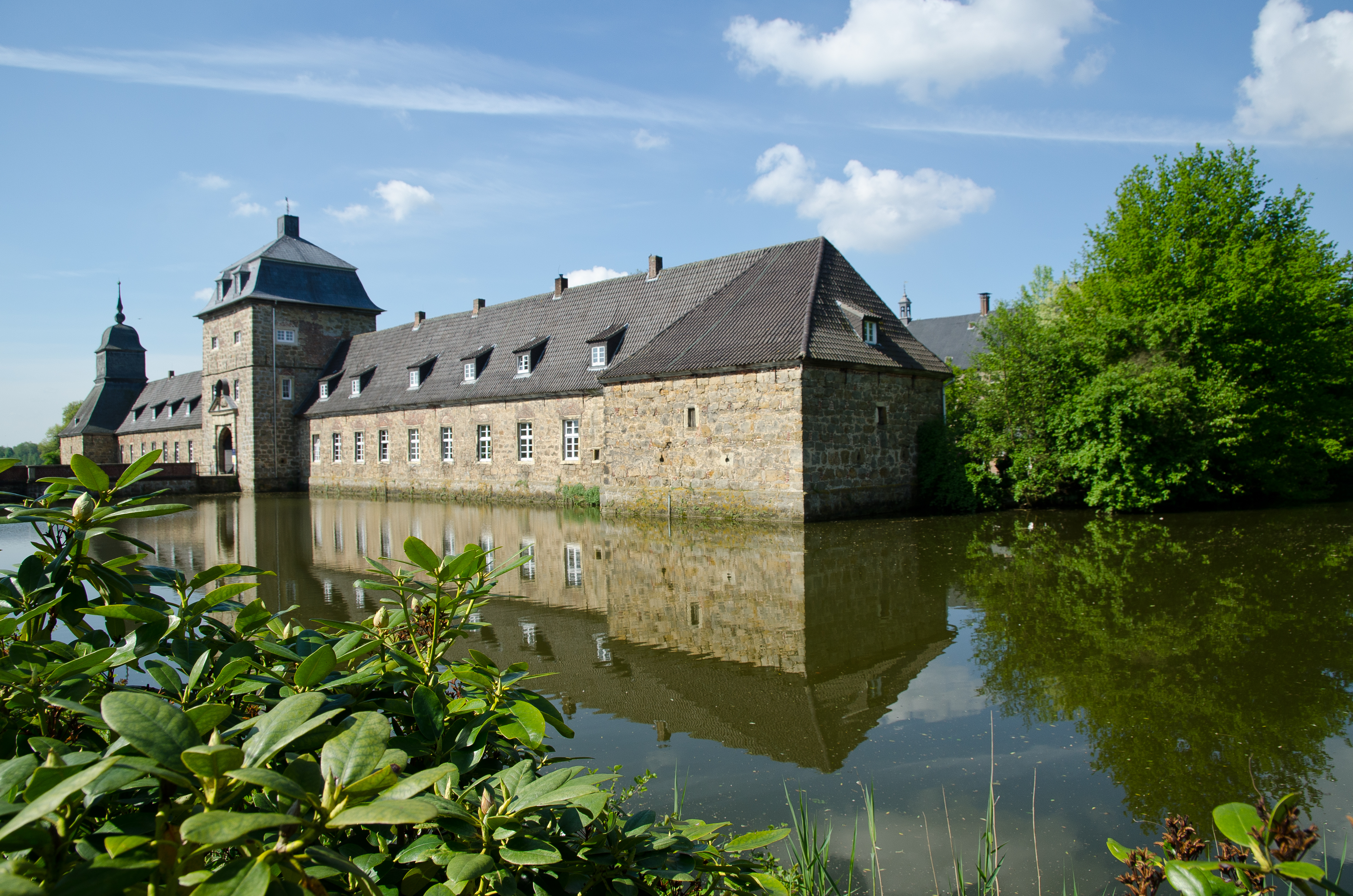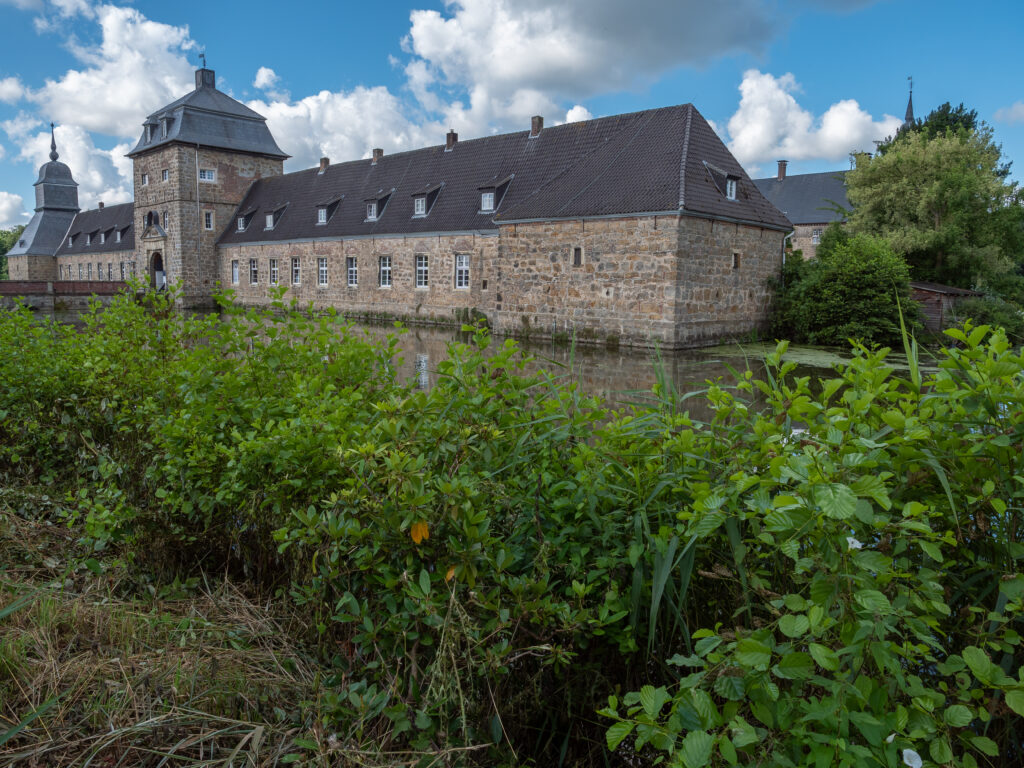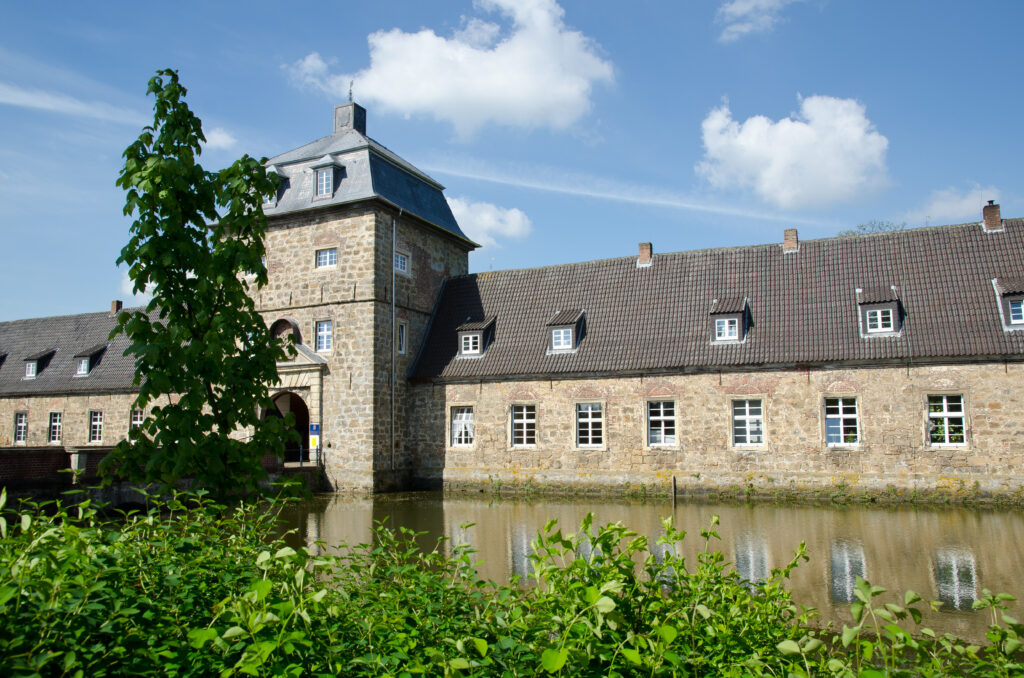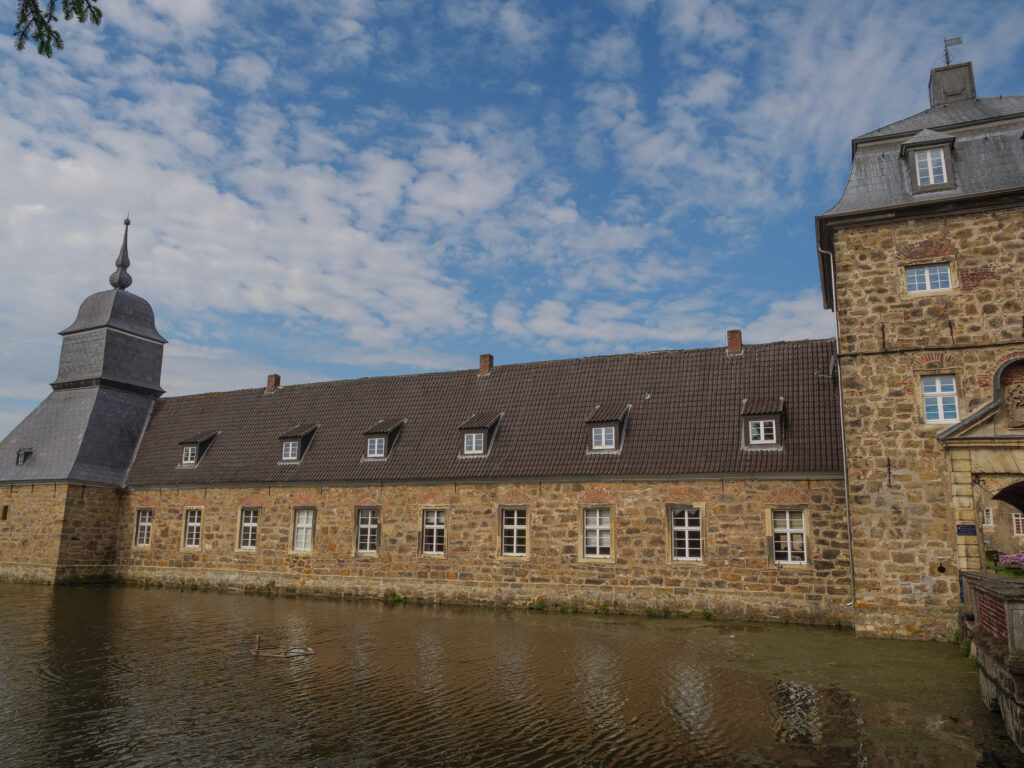

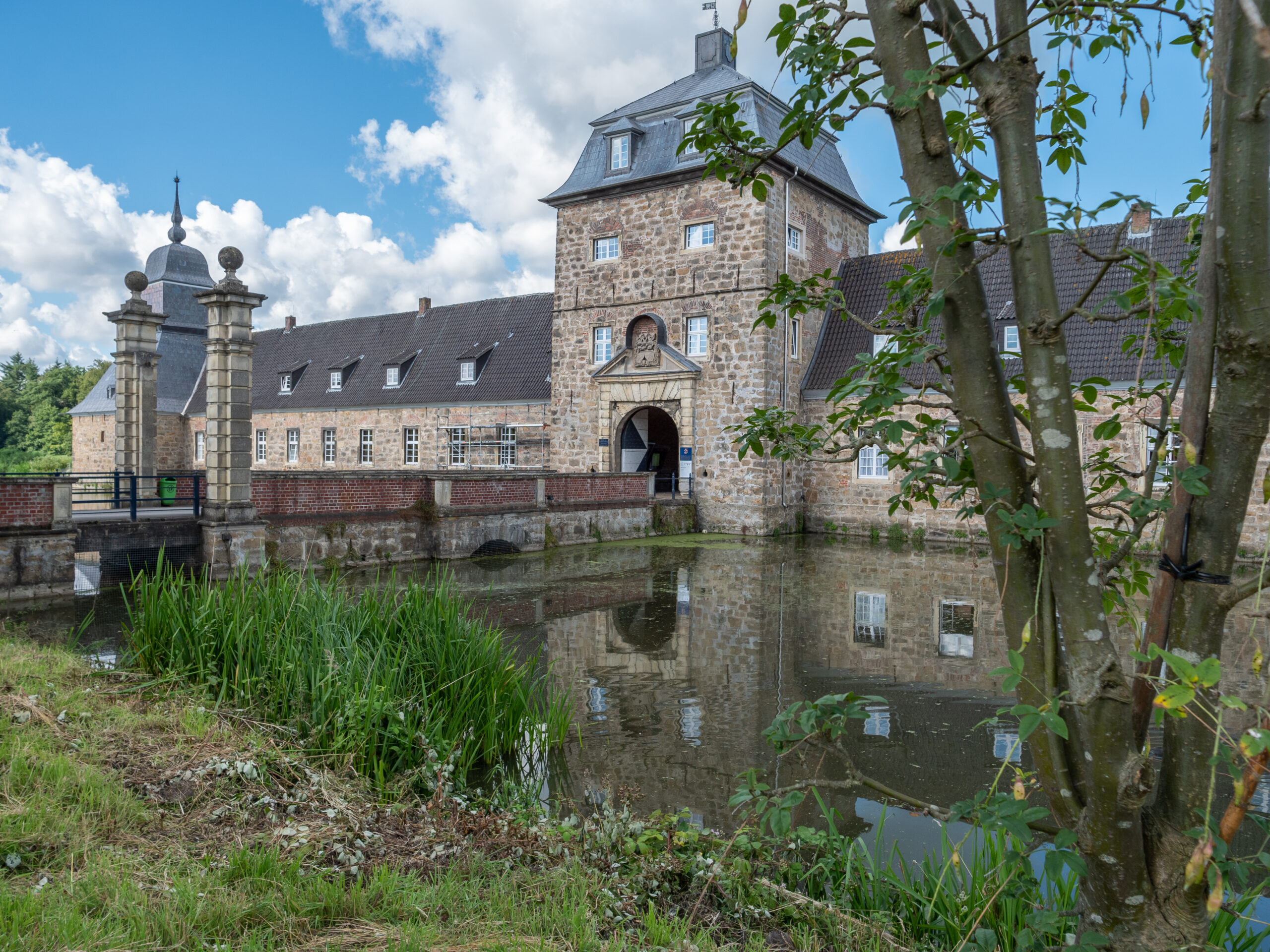
Nestled at the intersection between the northern Ruhr area and the southern Münsterland region, Lembeck Castle is an impressive example of Baroque architecture. This moated castle in Dorsten is surrounded by the lush forests of “Der Hagen” and “Kippheide,” which are part of the Hohe Mark Nature Park and lend it an atmosphere of quiet grandeur. Its name, derived from the Low German words “beke” for “stream” or “river” and “lem” for ‘muddy’ or “soggy,” alludes to its historical foundation on a swampy moorland area. Historically, the estate dates back to the Middle Ages, when it was built by the Lords of Lembeck and served as a fortress against invading troops. Originally a simple motte-and-bailey castle with an earthen tower, over the centuries the site developed into a fortified manor house closely intertwined with the turbulent history of Westphalia. Today, the castle not only tells a story of architectural development, but also serves as a cultural landmark and tourist magnet, attracting thousands to its magnificent events and lush gardens.
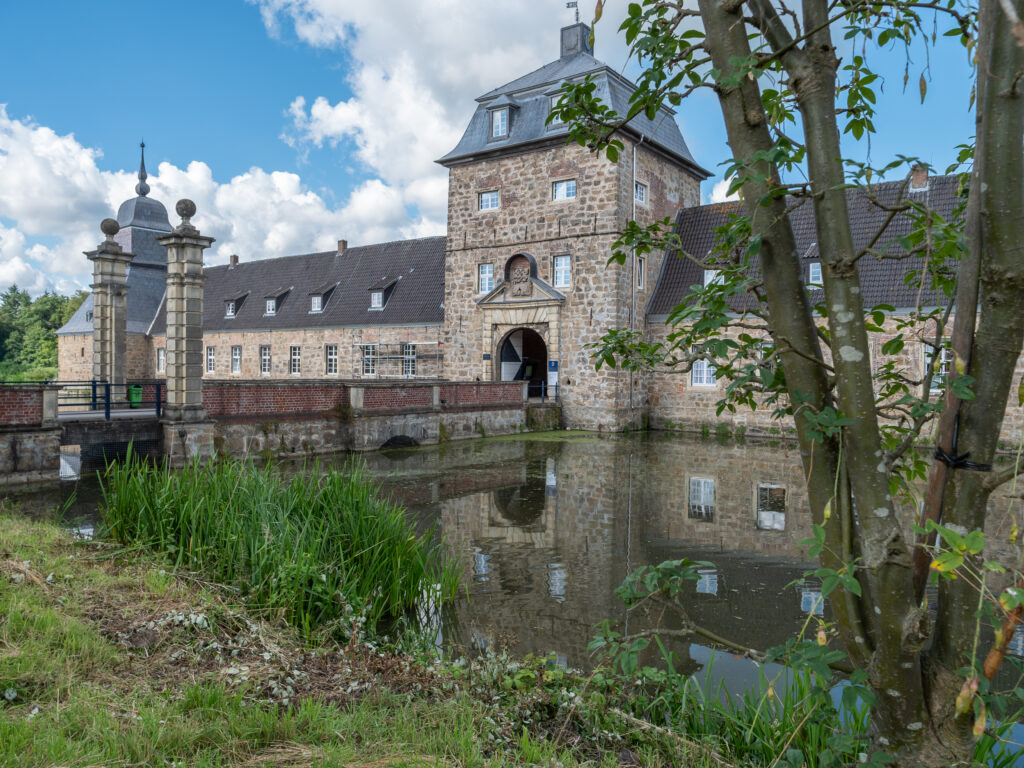
A baroque marvel. Lembeck Castle owes much of its current form to Dietrich Conrad Adolf von Westerholt-Lembeck, who extensively redesigned the estate in the late 17th century. His vision transformed the site into one of the most impressive moated castles in the Münsterland region. The renovation work lasted from 1670 to 1692 and resulted in a magnificent, symmetrical complex stretching along a 500-meter east-west axis. Access to the castle is via a 200-meter-long avenue that leads visitors to the simple but imposing two-winged forecourt. The castle’s façade reflects the splendor typical of the Baroque style, with its elegant stone gatehouse displaying the coat of arms of Burchard von Westerholt-Lembeck and his wife Clara von der Recke – a testament to the family alliances that underscored power and influence during this period. Completed in 1692, the gatehouse is both literally and symbolically the gateway to the rich history hidden within the castle walls.
Historic interiors. Inside, the layout of the rooms deviates from traditional Baroque hierarchies, favoring instead a French-inspired enfilade system that takes into account the limitations of older structures. Uniquely, the interiors dispense with a large central room, offering instead a flowing sequence of wood-paneled chambers, each of which tells a piece of history through its furnishings and décor. Highlights include the Fidelitas Cabinet, named after a ceiling painting that allegorically depicts loyalty, and the Small Salon, decorated with 18th-century Chinese wallpaper. Every room, from the Grand Ballroom adorned with portraits to the intimate tower rooms, is a tapestry woven with memories of ancestors, where old tapestries coexist with elaborate stucco work.
Consistency through changing times. Throughout its eventful history, Lembeck Castle has survived conflicts and renovations. It withstood the ravages of the Thirty Years’ War and was subsequently rebuilt and embellished. In the 18th century, Johann Conrad Schlaun, an important Baroque architect, made a significant contribution, whose signature style is reflected in the elaborate designs of the Great Ballroom, known as Schlaun’s Hall. The castle’s resilience was tested again during World War II, when it was damaged by bombing and occupation. Post-war restoration work, led by the Merveldt family, the current owners, has revitalized the castle. They transformed it into a museum and event venue, making it more accessible to the public while preserving its cultural heritage.
Gardens of tranquility. Behind the castle, the surrounding parklands offer a peaceful retreat. Originally laid out in the style of a French formal garden, the landscape was redesigned in the 19th century into an English landscape garden, reflecting changing tastes in garden design. Heinrich Nottelmann Park is home to 150 species of rhododendrons and offers a seasonal spectacle that is particularly admired during the rhododendron bloom from mid-May to mid-June. This lush environment not only delights nature lovers, but also serves as a backdrop for cultural events. Annual events such as the Landpartie and the art market attract up to 20,000 visitors and transform the grounds into a vibrant place full of activities.
A living legacy. Today, Lembeck Castle is a living legacy. Part of it serves as a museum, displaying valuable artifacts ranging from Chinese porcelain to Flemish tapestries. Its halls echo with the music of concerts, and weddings are held in its immaculate chapel, ensuring that the castle remains a place of community life. The estate continues to embody the spirit of innovation and adaptation, honoring traditions while embracing contemporary uses.
In summary, Lembeck Castle is not only an architectural marvel, but a narrative carved in stone and mortar, a testament to resilience and renewal. Amidst the tranquil waters and historic halls, visitors can glimpse the symbiotic dance between history and modernity, making each visit an enchanting journey through time.