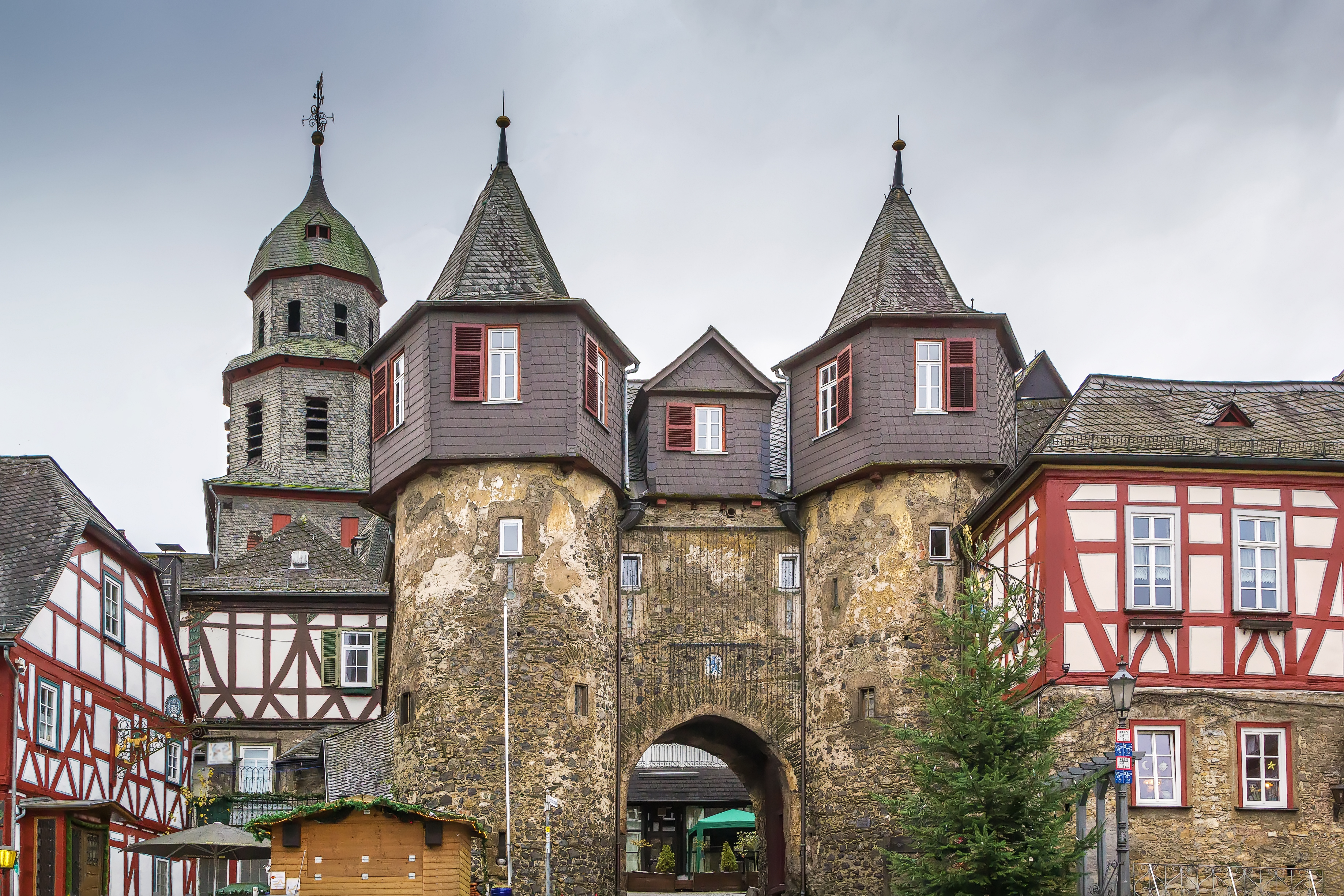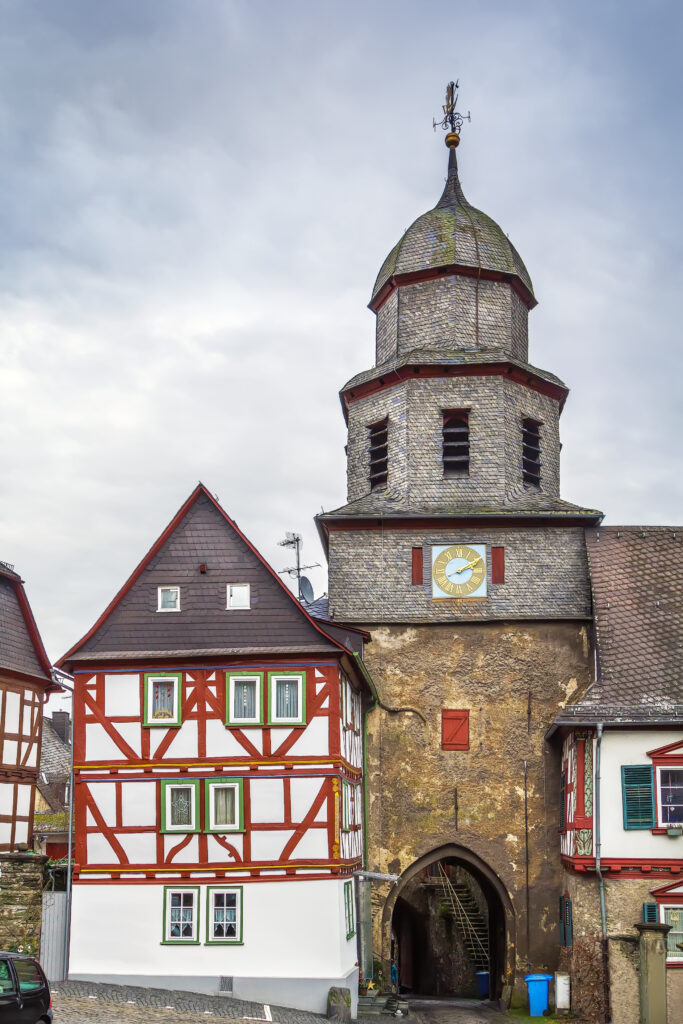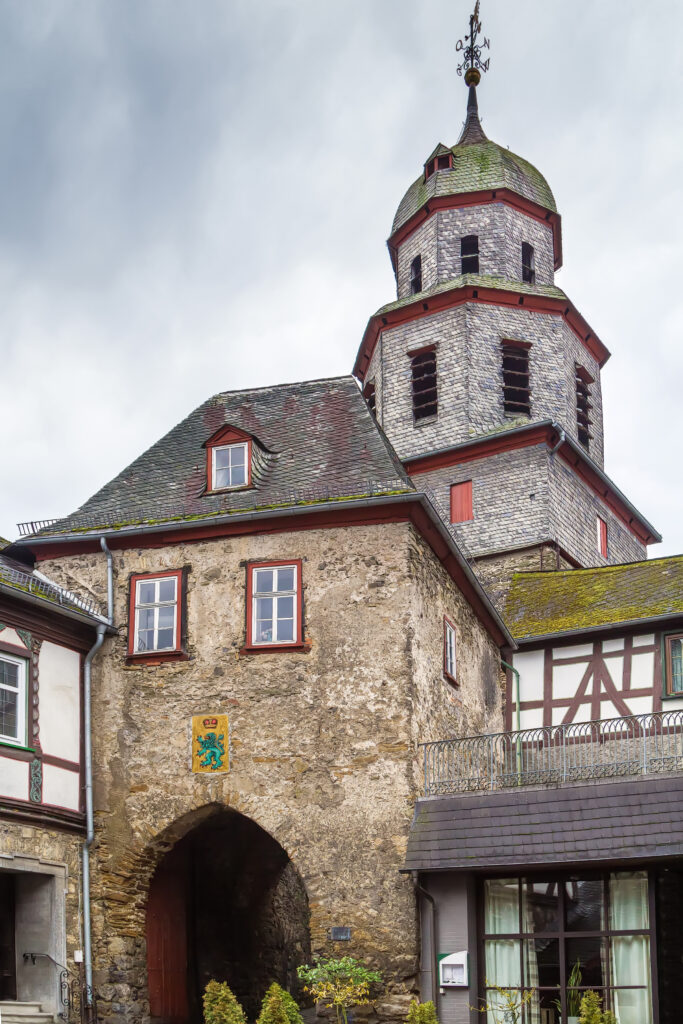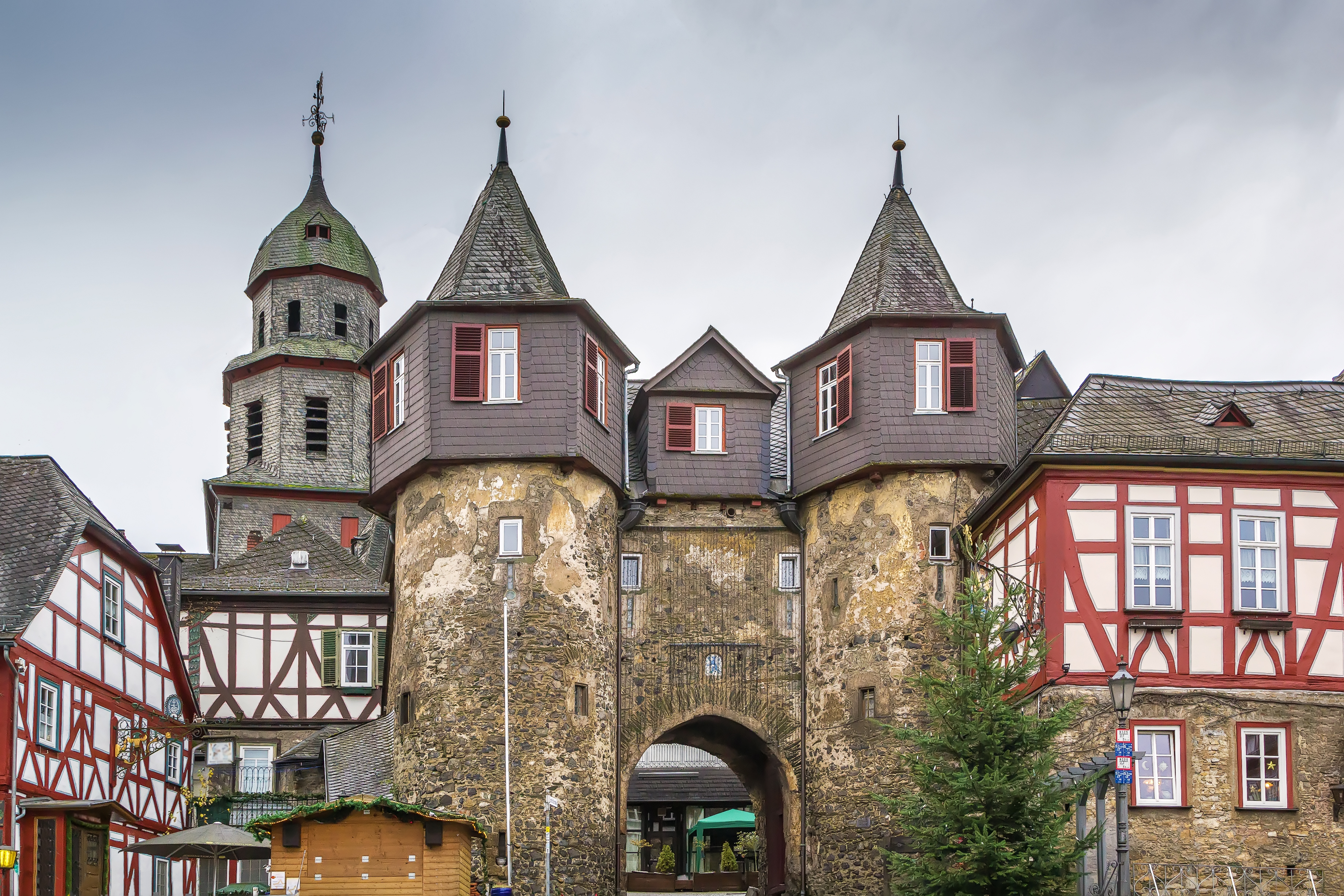

Nestled atop a basalt mound in the picturesque Lahn-Dill-Kreis of Middle Hesse, Braunfels Castle stands as a testament to centuries of history and tradition. Its origins can be traced back to the 13th century, when it first emerged as the seat of the Counts of Solms. Today, this majestic structure remains in the esteemed possession of the Oppersdorff family, descendants of the Solms line, retaining not only its architectural grandeur but also a rich tapestry of myths and legends that have flourished over the ages.
From a distance, the silhouette of Braunfels Castle dominates the landscape, extending its gaze over the lush expanse of the Lahntal valley. In many ways, it serves as a cultural counterpart to Schloss Schaumburg, located further down the river. The late 19th-century renovations brought forth an artistic flourish, infused with neo-Gothic elements that reflect a creative revivalist spirit, showcasing the castle’s historical significance beyond regional confines. As documented in historical texts, Braunfels was first mentioned under the name Castellum Bruninvels in 1246, originally constructed as a defensive stronghold against the Counts of Nassau.
Initially built for military purposes, the castle transitioned into a residence for the Counts of Solms around 1280. Following territorial disputes and the destruction of their ancestral home in Solms by the Rhenish City League, Braunfels Castle became the new family seat in 1384. Surviving the tumult of the times, this branch of the Counts of Solms-Braunfels emerged as the sole lineage to inherit the family’s vast estates, ultimately culminating in the consolidation of power in 1418.
Throughout the years from the 15th to the 17th centuries, Braunfels underwent significant expansions and fortifications. Count Otto II played a pivotal role in transforming the medieval fortress into a robust bastion around 1500, with the construction of the late Gothic castle church being a notable feature of this development. Graphic illustrations, such as those created by August Rumpf for Matthäus Merian’s Topographia Hassiae in 1655, reveal the castle’s impressive stature before its baroque transformation commenced around 1680.
The Thirty Years’ War marked a particularly tumultuous period for Braunfels Castle, as it became a focal point of conflict. Allegiances were tested and loyalties questioned, especially given Count Johann Albrecht I’s support for Frederick V, which led to his excommunication and the subsequent occupation of the castle by Spanish forces in 1621. The turbulence continued as various factions vied for control, with the castle changing hands multiple times throughout this chaotic era. Notably, in 1632, Swedish troops captured Braunfels, only to be driven out two years later. The cycles of siege and recapture underscored the castle’s strategic importance, yet it endured these challenges and remained a stronghold.
After the war, Count Heinrich Trajektin undertook a sweeping baroque makeover of the residence, although much of this effort was thwarted by a devastating citywide fire in 1679. Despite the setback, Count Wilhelm Moritz spearheaded a rapid reconstruction at the dawn of the 18th century. His ambitious plans, in collaboration with architect Johann Philipp Meyer from Wetzlar, aimed to create a grand Baroque castle; however, the scale of this vision was never fully realized.
The political tides shifted dramatically in 1803 with the Reichsdeputationshauptschluss, which saw the dissolution of the principality under Count Ferdinand of Solms-Braunfels, transferring the territory to the Duchy of Nassau. Nonetheless, the castle remained within the princely family’s hands and served as the governmental hub from 1828 until 1848, preserving its status and significance.
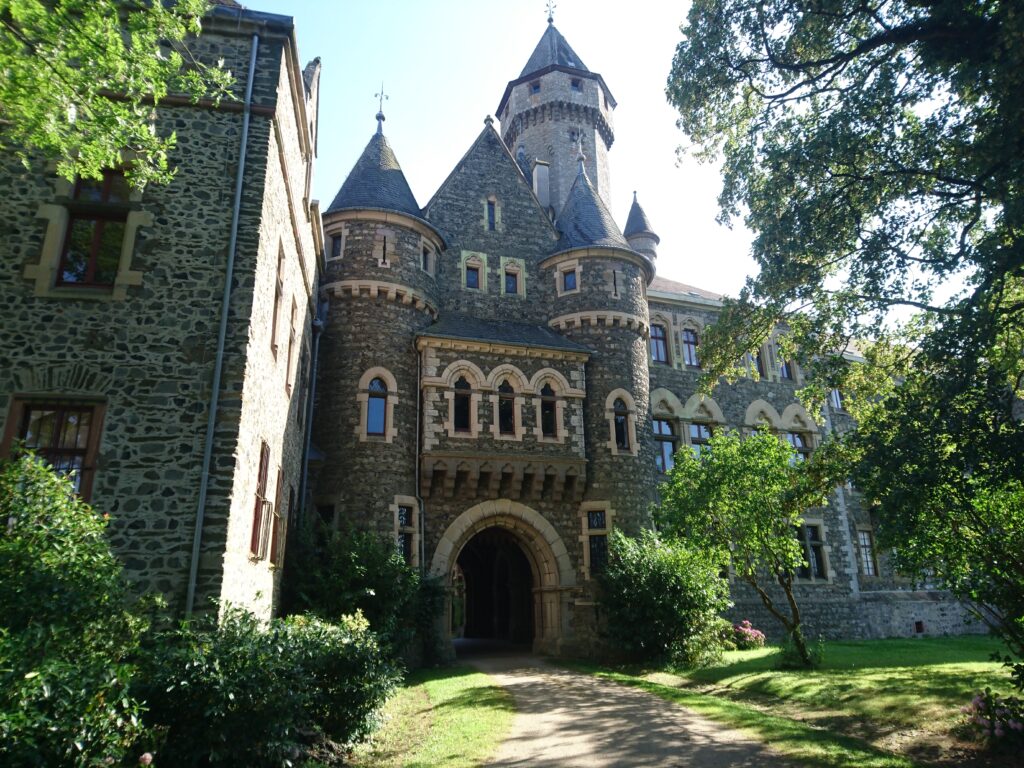
In the 1840s, Prince Ferdinand initiated extensive neo-Gothic renovations, inspired by the romantic notions of resurrecting the Middle Ages. This idealized vision resulted in a fanciful castle that, while lavish, bore little resemblance to historical accuracy. His endeavors paralleled similar projects such as the expansion of Burg Rheinstein, which encapsulated the enthusiasm of the Rhine Romantic movement. At the same time, Prince Ferdinand oversaw the creation of the Dianaburg near Greifenstein, designed as a hunting lodge.
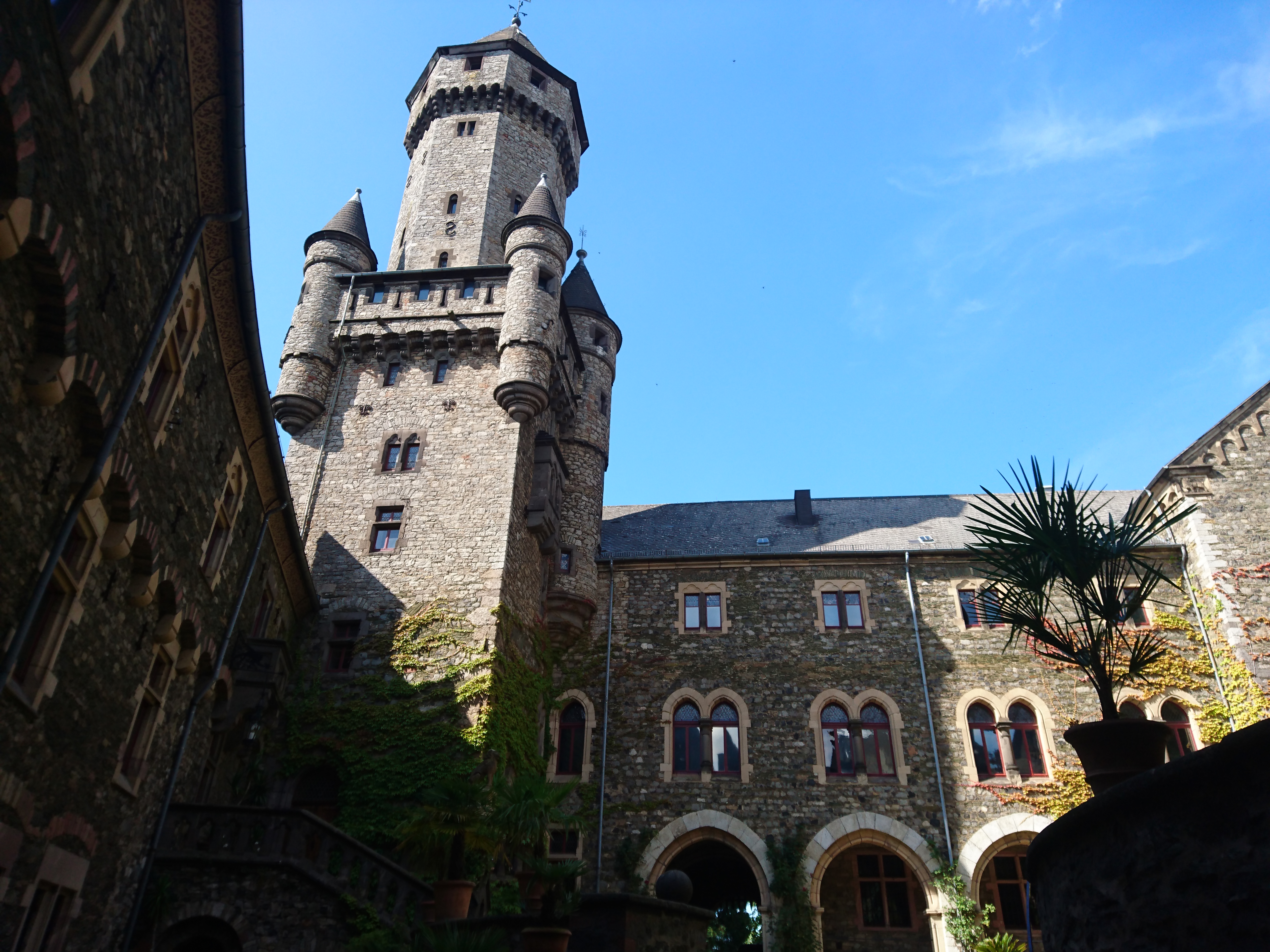
The late 19th century ushered in another wave of modifications under Prince Georg, who oversaw the addition of a second keep, along with enhancements to the castle’s towers and gables, consistent with the prevailing historicist style. Architects like Edwin Oppler, Hugo von Ritgen, and Rudolf Wiegmann contributed to the visual vocabulary of this period, drawing inspiration from the works of Eugène Viollet-le-Duc and the Boeswillwald brothers.
In a poignant turn of fate, the legacy of Braunfels shifted significantly following the death of Prince Georg Friedrich, the last male heir of the Solms-Braunfels line, in 1970. His daughter, Marie Gabrielle Gräfin von Oppersdorff Solms-Braunfels, inherited the estate, and her husband, Hans Georg Graf von Oppersdorff-Solms-Braunfels, dedicated over five decades to the restoration and stewardship of the castle, ensuring that its historical splendor would endure for future generations.
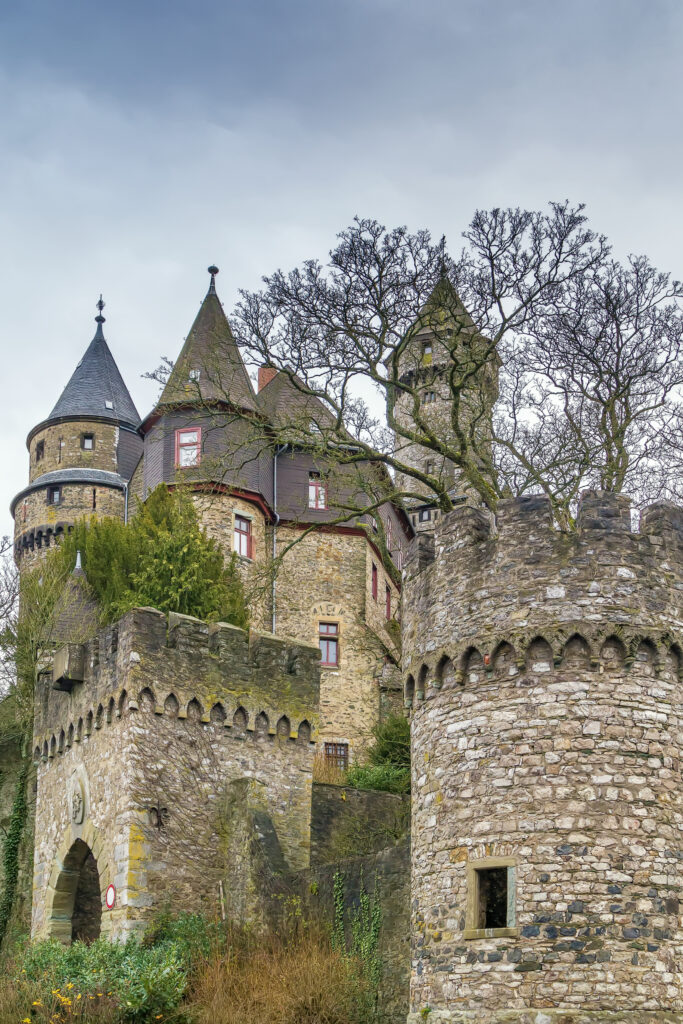
The castle today embodies the summation of its complex architectural narrative, integrating elements from various historical phases. Visitors can marvel at the core structures from the 13th century, including the formidable watchtowers and the remnants of Romanesque masonry. The expansive grounds, adorned with bailey walls and a series of defensive gates, transport guests back in time, echoing the castle’s storied past.
Inside, Braunfels houses a family museum, replete with a diverse collection of artifacts ranging from weaponry and fine art to historical coins and garments. A particular highlight is the prehistoric exhibit, tracing its origins to collaborative efforts involving Prince Wilhelm and the archivist Jakob-Carl Schaum, who exchanged correspondence with the illustrious Johann Wolfgang Goethe. A mysterious find—the fertility god sculpture dating back to the 3rd millennium BC—adds an air of intrigue, prompting questions about trade routes and cultural exchanges.
Among the treasures, one can find exquisite Meissen porcelain, a collection of Bohemian glass, sculptures, and table silverware—all bearing witness to the opulence associated with the residents of Braunfels over the centuries.
Braunfels Castle is more than just an architectural marvel; it is a living chronicle interwoven with tales of valor, tragedy, and renaissance. Each stone tells a story, each room echoes with the whispers of the past, inviting visitors to experience the enchantment of history that transcends time. As you wander through its halls, you can’t help but feel connected to the myriad lives that have graced this majestic fortress, all woven together in the vibrant tapestry that is the legacy of Braunfels.