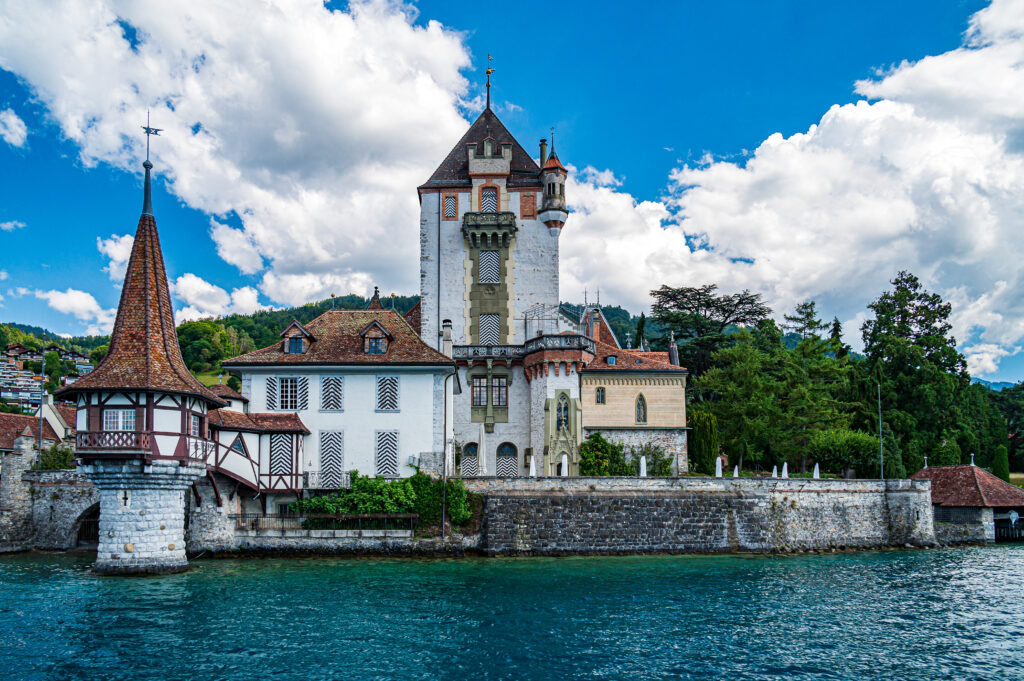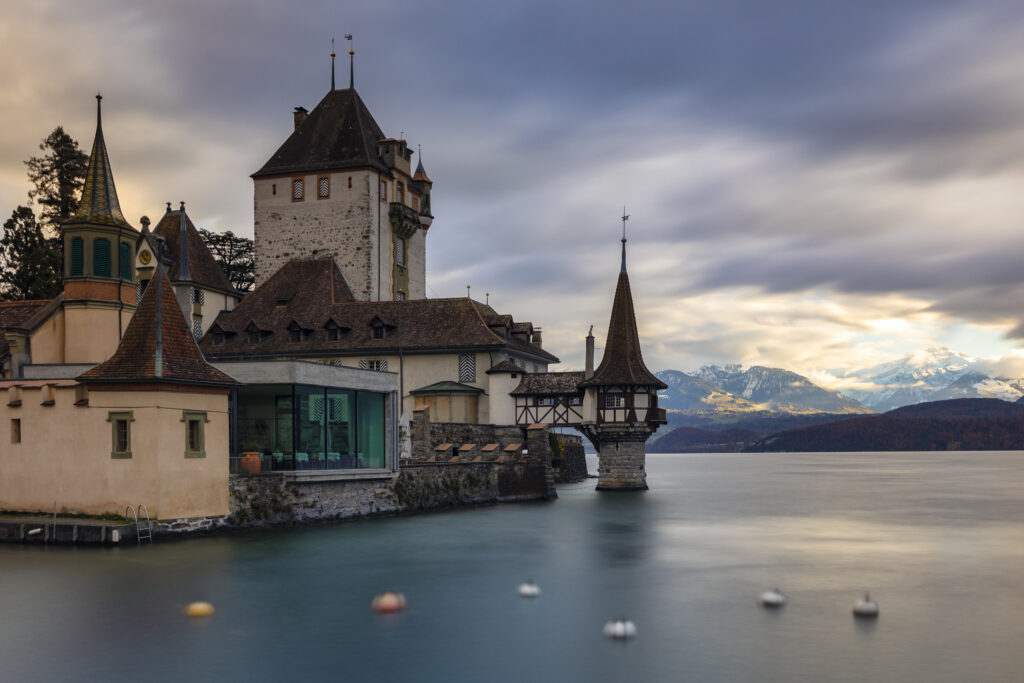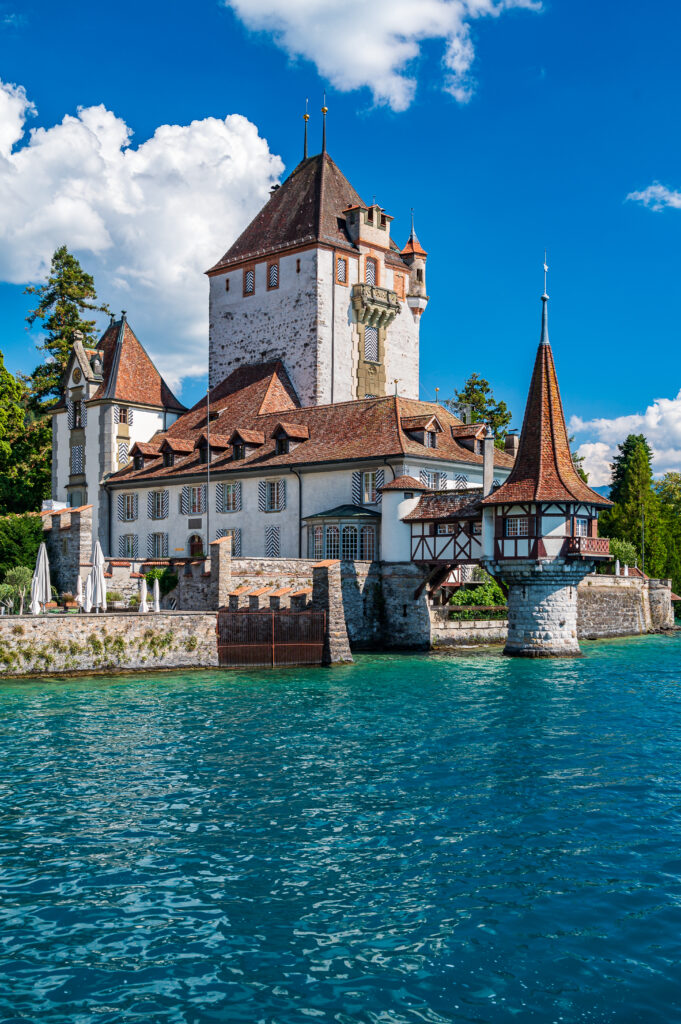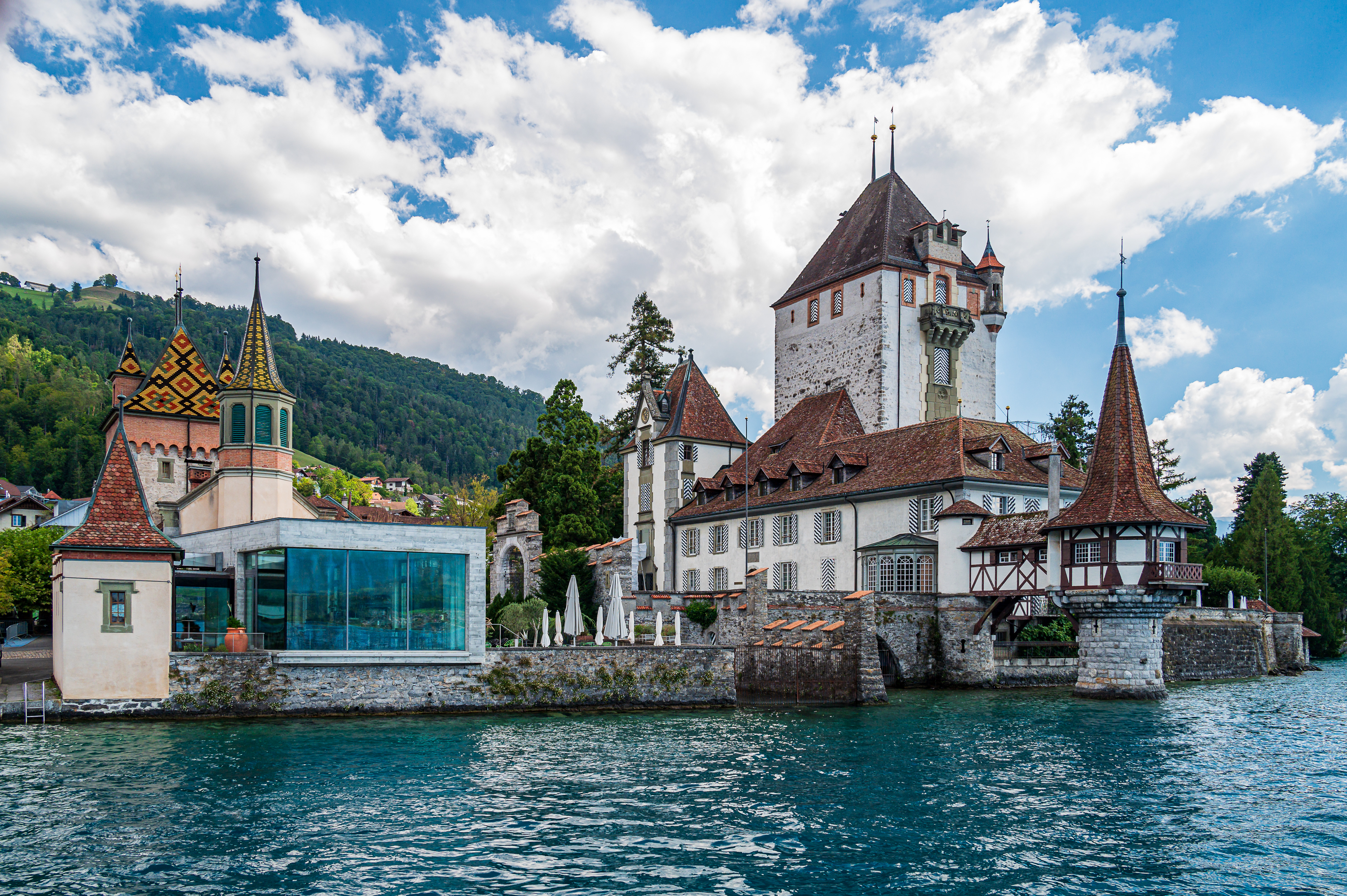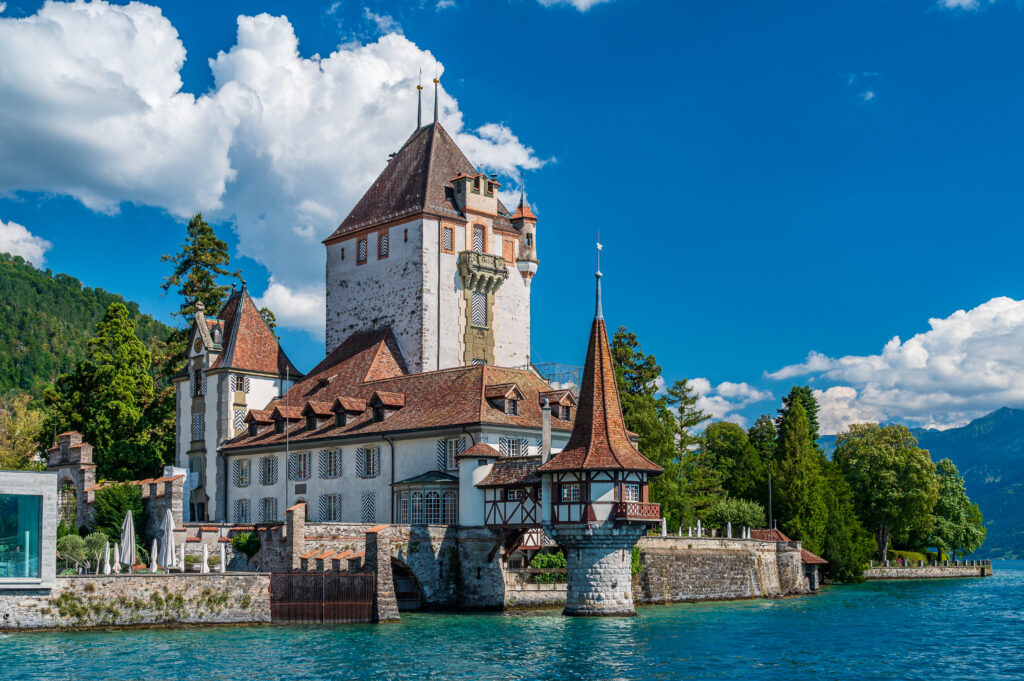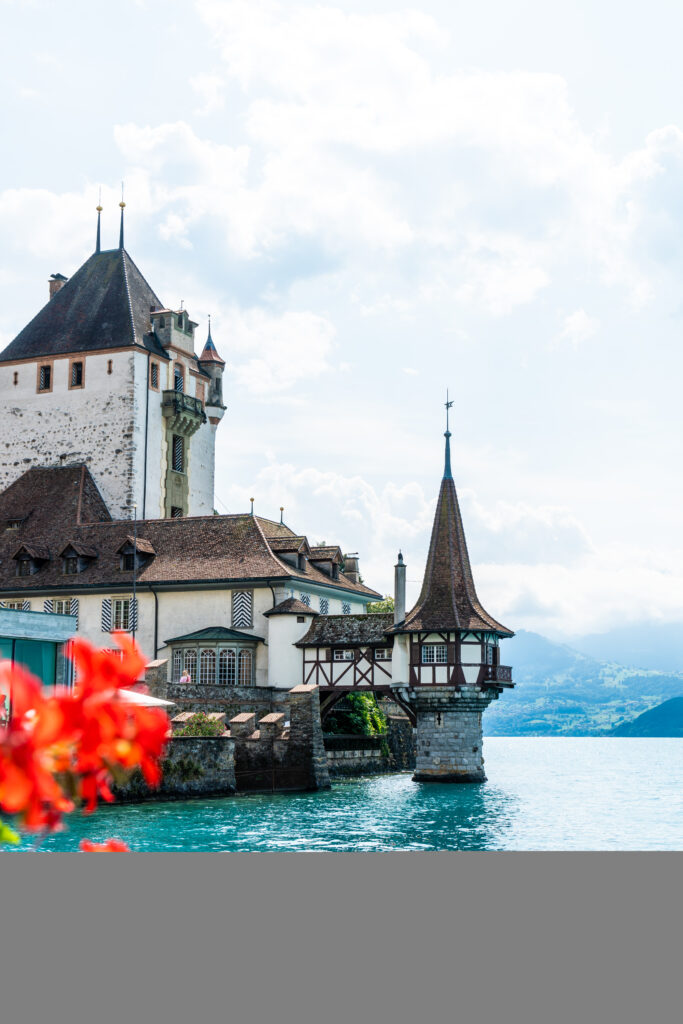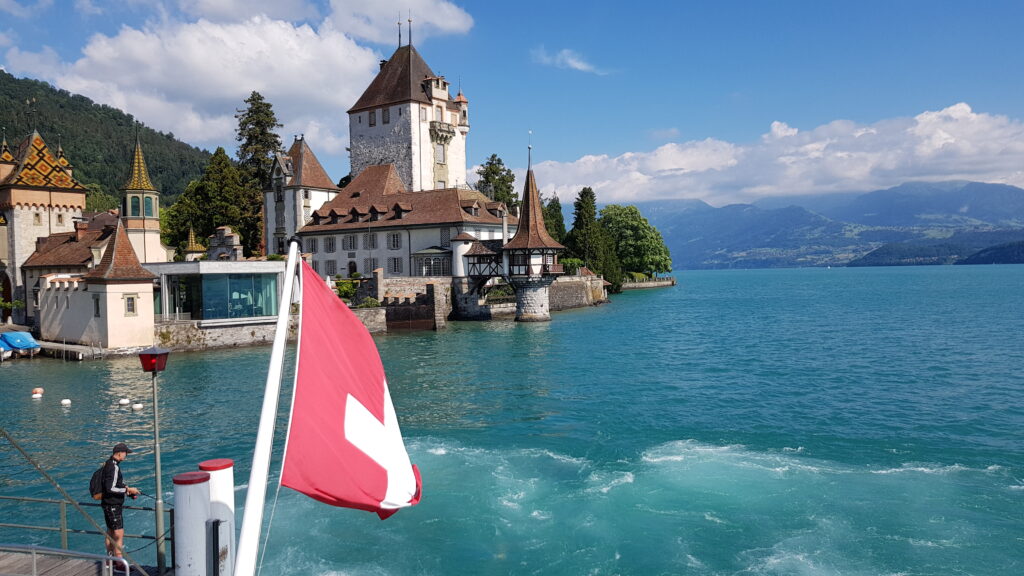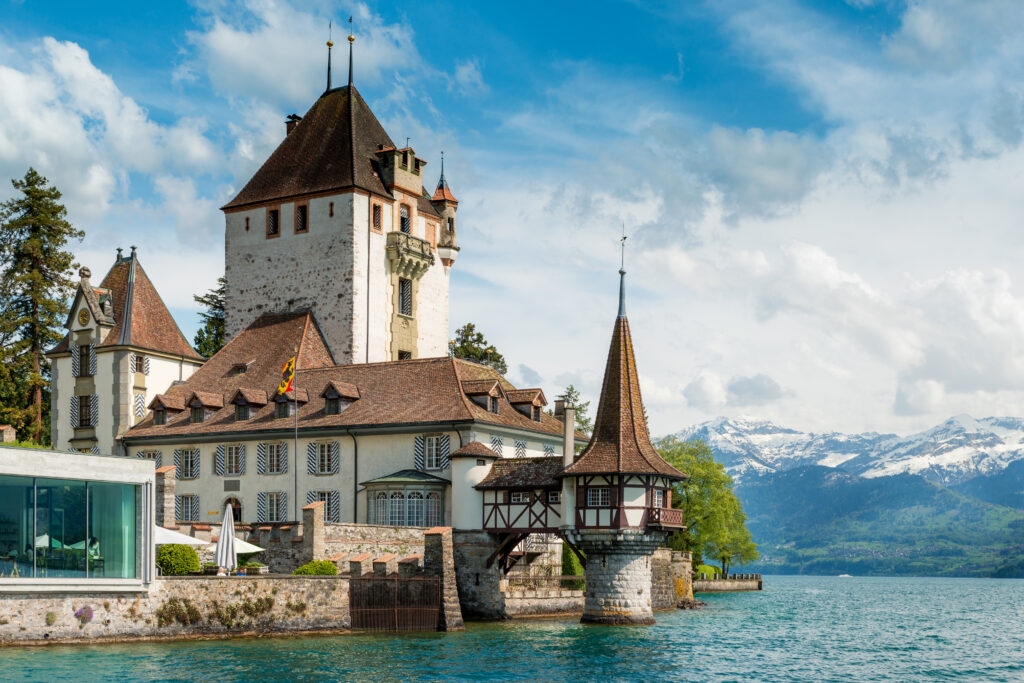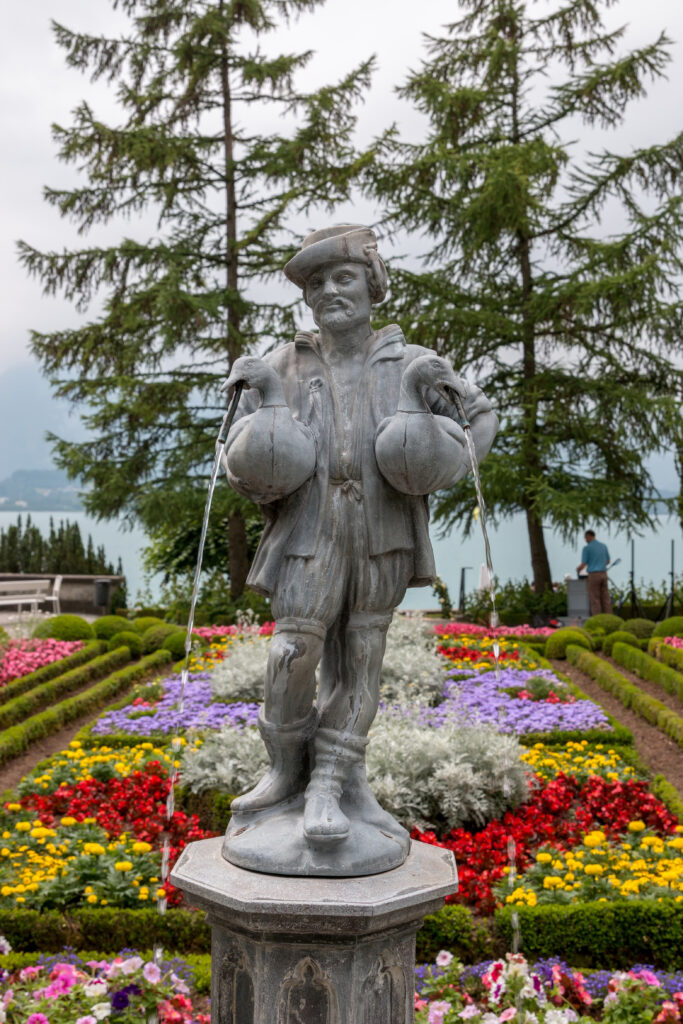

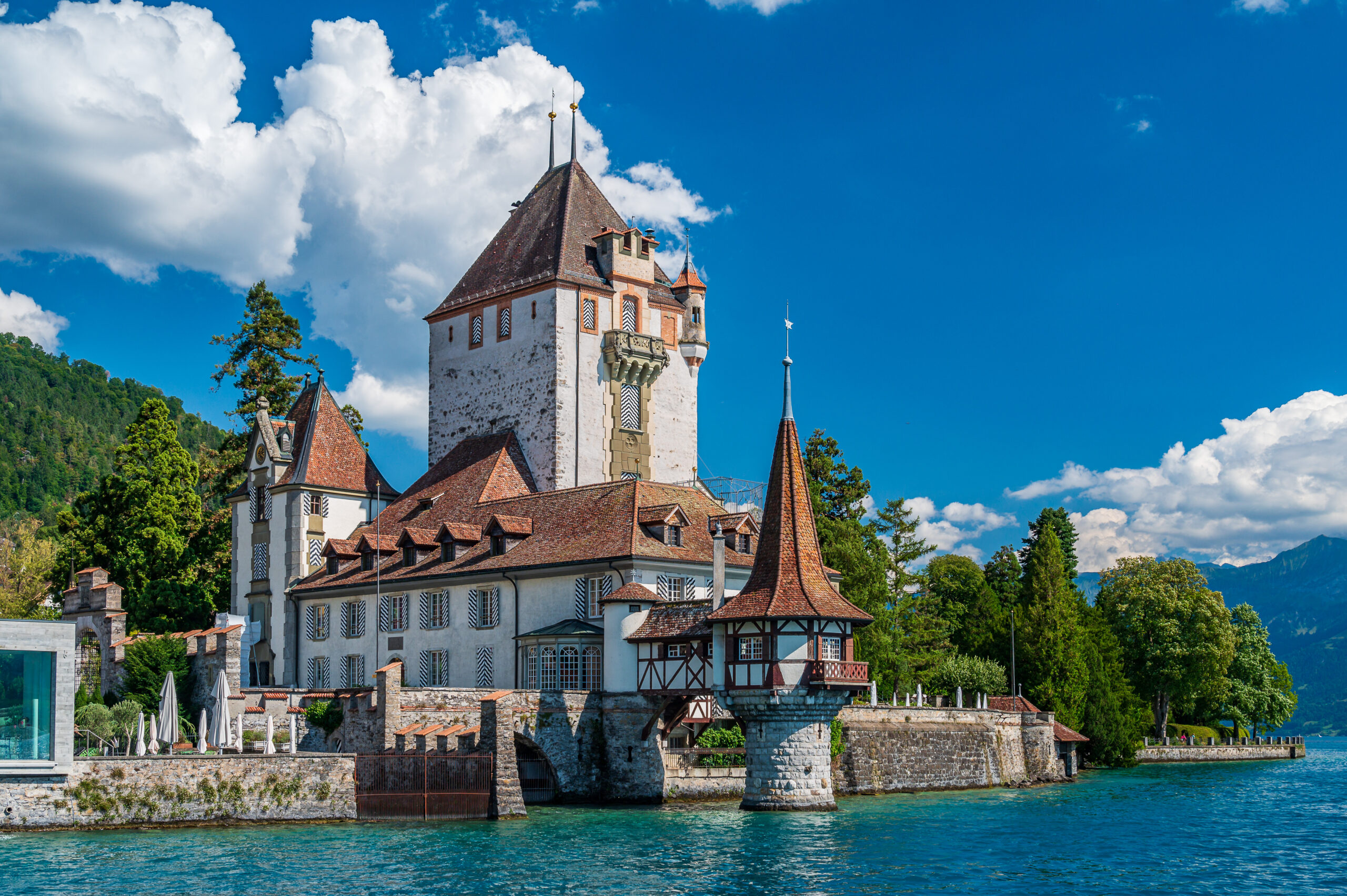
Nestled in the picturesque municipality of Oberhofen on Lake Thun in the canton of Bern in Switzerland lies the magnificent Oberhofen Castle. This historic medieval building has been a silent witness to history for centuries, weaving together myths, legends, and historical events that continue to captivate visitors to this day. From its earliest known lord to its current use as a museum, the past of Oberhofen Castle is shrouded in intrigue, making it a rewarding subject for exploration.
The origins: lords and feudal ties – The earliest known owner of the Oberhofen estate was Baron Werner von Oberhofen. His daughter Ita married Baron Walther II von Eschenbach, thereby uniting two noble houses. However, tragedy struck when the Eschenbachs were forced to cede Oberhofen and Unspunnen to Albrecht I of Habsburg. Albrecht gave Oberhofen to his son Leopold I of Habsburg, who pledged it to Count Otto of Strassberg in 1318. Otto, in turn, transferred it to Baron Johann of Weissenburg.
Ownership of the castle continued to change hands when Knight Johannes von Hallwyl received it as a pledge in 1342. This marked the beginning of a series of transactions that fragmented the estate, but each owner left an indelible mark on the history of the castle.
The aftermath of the battle and the transition to Bern – The Battle of Sempach in 1386 marked a significant turning point. After the battle, Count Friedrich von Zollern ceded the fiefdom of Oberhofen to the city of Bern. Bern divided the fiefdom among powerful local figures, transferring three quarters to the wealthy mayor Ludwig von Seftigen and one quarter to his brother-in-law Niklaus I von Scharnachthal. With the extinction of the Seftigen family, the entire domain eventually passed to the Scharnachthal family, including Konrad von Scharnachthal. Niklaus III von Scharnachthal, the last of his line, bequeathed the fiefdom to his nephews Hans, Diebold, Samuel, and Albrecht von Erlach. Their successors were Franz Ludwig von Erlach, the chief magistrate of Bern.
After Franz Ludwig’s death in 1652, Oberhofen Castle reverted to the Republic of Bern despite legal disputes with his widow.
The castle subsequently served as the administrative center of a bailiwick until the French invasion at the end of the 18th century brought about further changes in ownership and purpose.
A refuge for tourism and aristocracy – At the beginning of the 19th century, tourism developed into a flourishing industry. In 1801, Johann Peter Knechtenhofer, a tourism promoter from Thun, purchased the castle. This purchase heralded a new era for Oberhofen and brought it into line with the burgeoning Swiss tourism sector. Until 1829, the property was owned by Johann Jakob Knechtenhofer and his cousin Johann Friedrich Knechtenhofer.
The castle’s prestige remained unbroken even after its sale to Friedrich von Lerber, the governor of Interlaken, in 1830. Von Lerber’s widow sold it in 1844 to the Neuchâtel-Prussian counts Friedrich and Albert von Pourtalès. Albert married Anna von Bethmann-Hollweg, a connection that further enhanced the castle’s prestige.
Anna von Pourtalès bequeathed the castle to her daughter Helene, who was married to Count Ferdinand von Harrach.
The Harrach-Pourtalès family retained the castle until 1925, when Hans Albrecht von Harrach was forced to sell it to American lawyer William Maul Measey due to financial difficulties. Measey established the Oberhofen Castle Foundation in 1940 to ensure the preservation of this historic monument. In 1952, the foundation was entrusted to the Bern Historical Museum, which inaugurated the castle as a branch in 1954. Today, the foundation operates independently and offers visitors a carefully preserved insight into the castle’s rich past.
Architectural splendor and extensions – The architectural development of Oberhofen Castle is as fascinating as its history. The imposing 12th-century keep is complemented by a late medieval palace. The castle chapel, consecrated in 1473, adds a spiritual dimension to the complex. Significant alterations in the 17th century included the removal of the tower on the lakeshore and the access bridge.
In the 18th century, living quarters were expanded to meet the changing needs of the aristocratic residents. Between 1849 and 1852, the castle underwent a dramatic transformation under the direction of Neuchâtel architect James Colin.
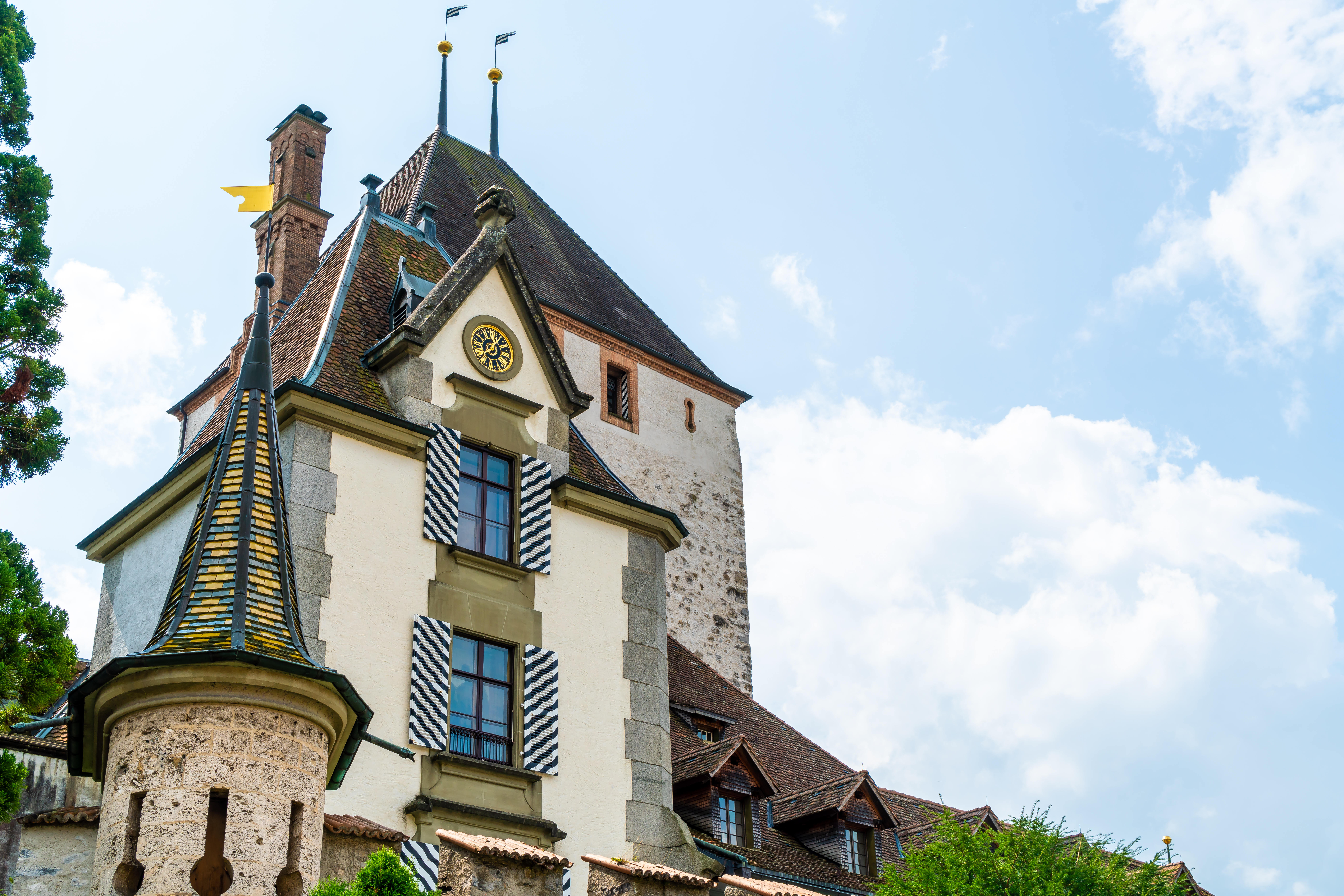
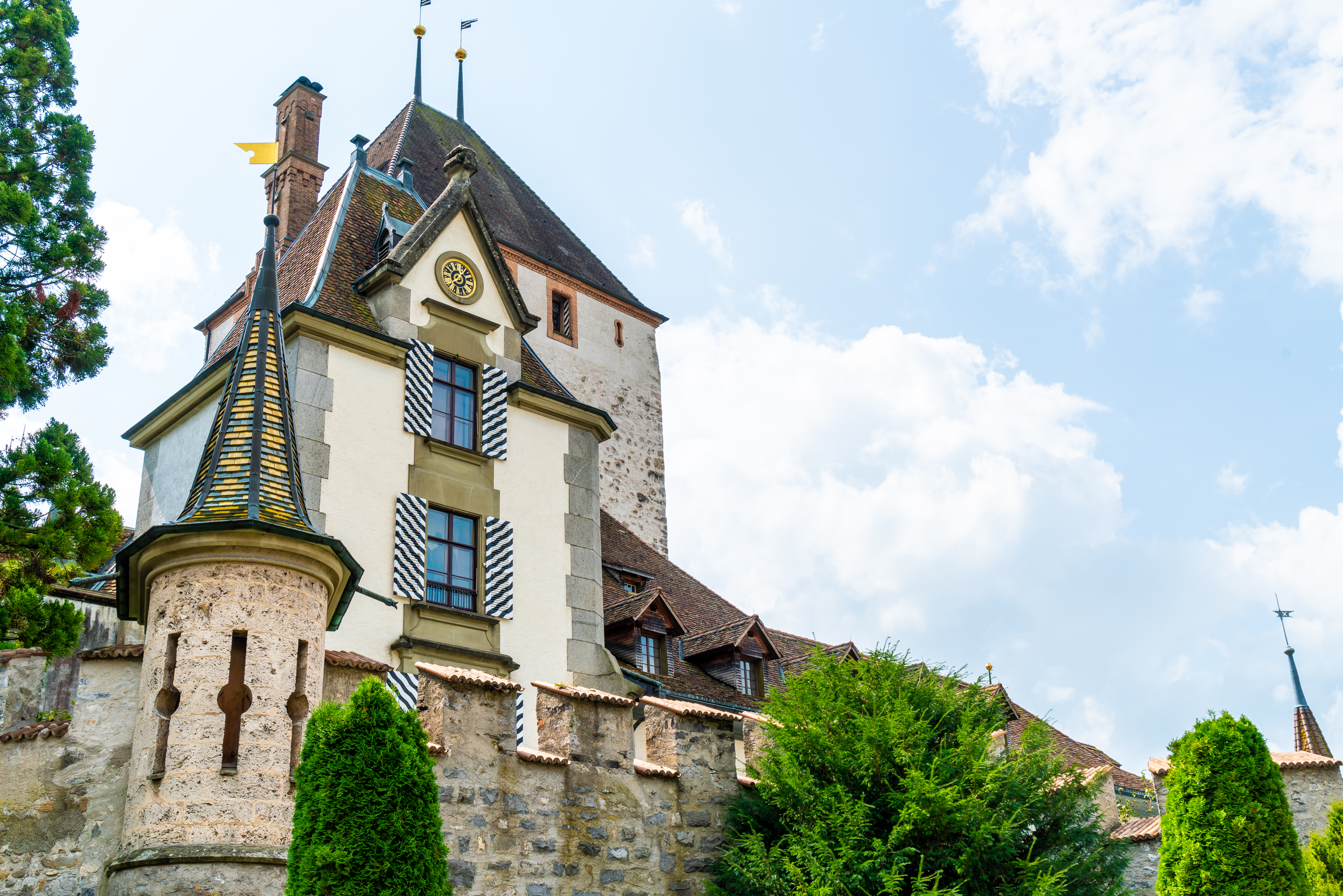
Colin’s plans included neo-Gothic elements, new facade designs, stair towers leading to the chapel, corner towers, clock towers, roof structures, battlements, and extensive outbuildings.
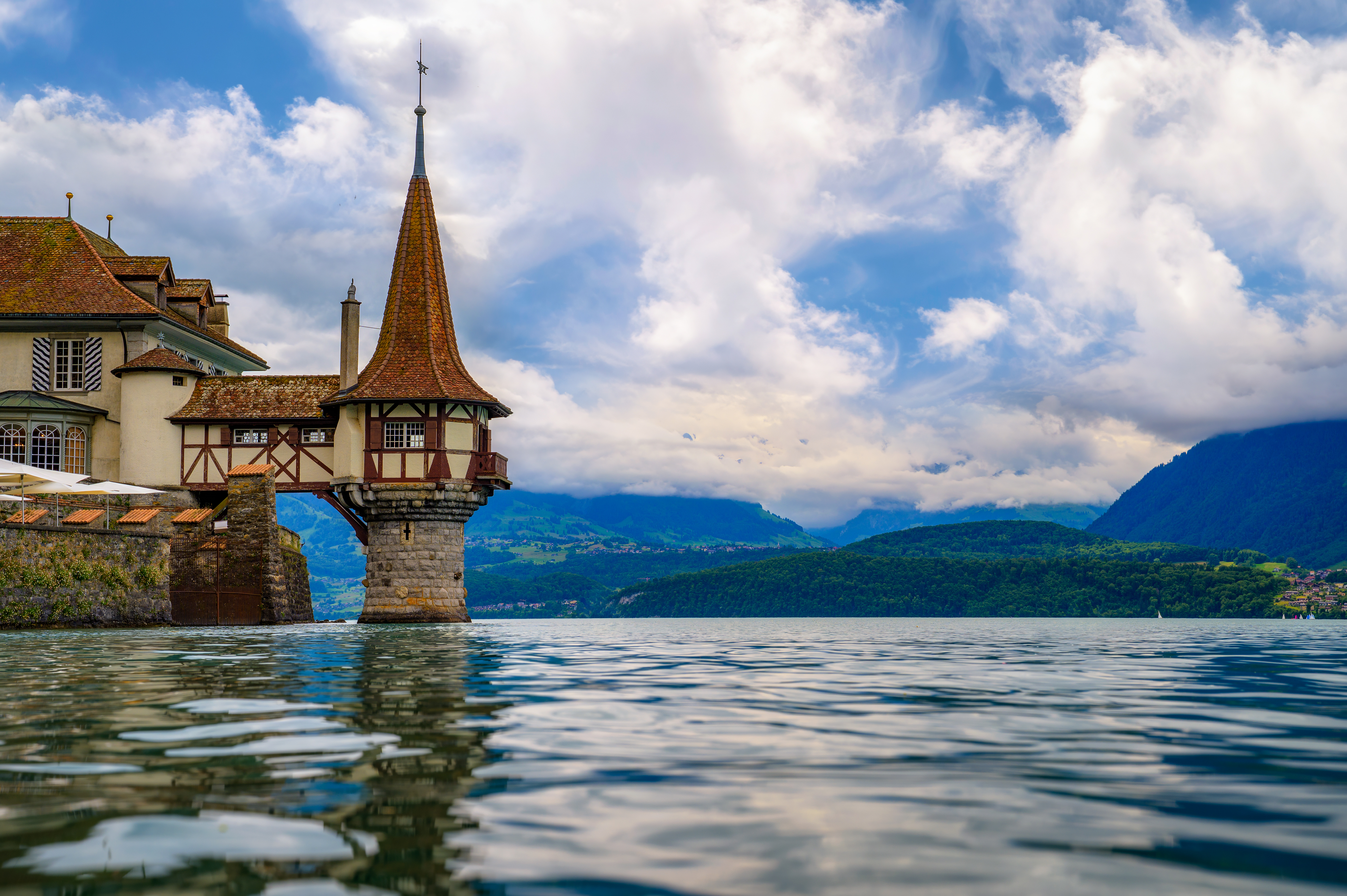
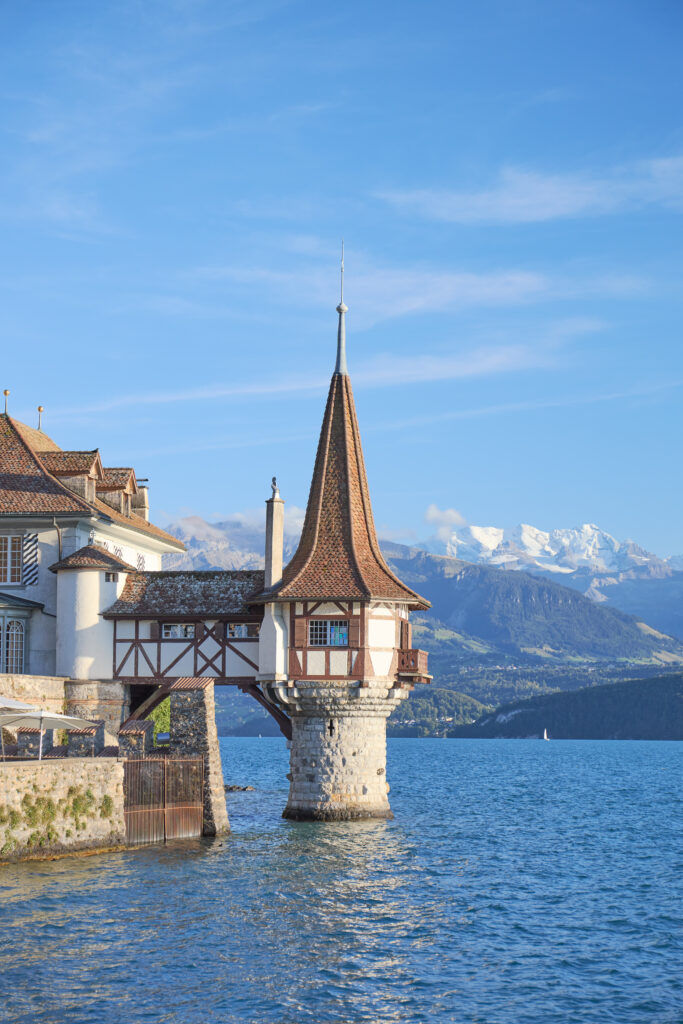
The reconstruction of the tower on the lakeshore embodied these 19th-century improvements and reinforced the romantic charm of the castle.
Echoes of servitude and aristocracy – The two exhibitions at Oberhofen Castle take visitors on a journey through time. The permanent exhibition “At Your Service” on the second floor focuses on the lives of the Harrach-Pourtalès family’s servants. This immersive experience offers a rare glimpse behind closed doors, revealing the daily interactions and duties that maintained the castle’s splendor.
The “Rooms and Dreams” exhibition on the first floor, on the other hand, takes visitors through 800 years of history from the perspective of the former residents.
This journey through time illustrates the dynamic interplay between architectural spaces and the social structures that supported them.
Legends and secrets: a timeless fascination – The historic past of Oberhofen Castle is fertile ground for legends and myths. One of these stories tells of a hidden treasure that is said to be buried on the castle grounds, allegedly left behind by fleeing nobles in turbulent times. Although there is no concrete evidence of this treasure, the story persists and fires the imagination of treasure hunters and history buffs alike.
Another legend tells of eerie sightings of a ghostly figure believed to be the restless spirit of a knight who died in one of the many battles that marked the early history of the castle. Some claim to have seen this apparition at night in the halls, dressed in armor and surrounded by a supernatural glow.
Whether based on fact or folklore, these stories add to the mystique of the castle and ensure that Oberhofen Castle remains a place of fascination and wonder.
Oberhofen Castle is a testament to Switzerland’s enduring heritage, rich in historical significance and shrouded in mystery. From its medieval origins and feudal ties to its role in the tourism boom and aristocratic splendor, the castle embodies a wide spectrum of social developments. Its walls whisper stories of power struggles, artistic transformations, and the ever-present human longing for legacy and immortality. Today’s visitors to Oberhofen Castle not only enter a carefully preserved piece of history, but also sense the legends that continue to shape its enigmatic present.