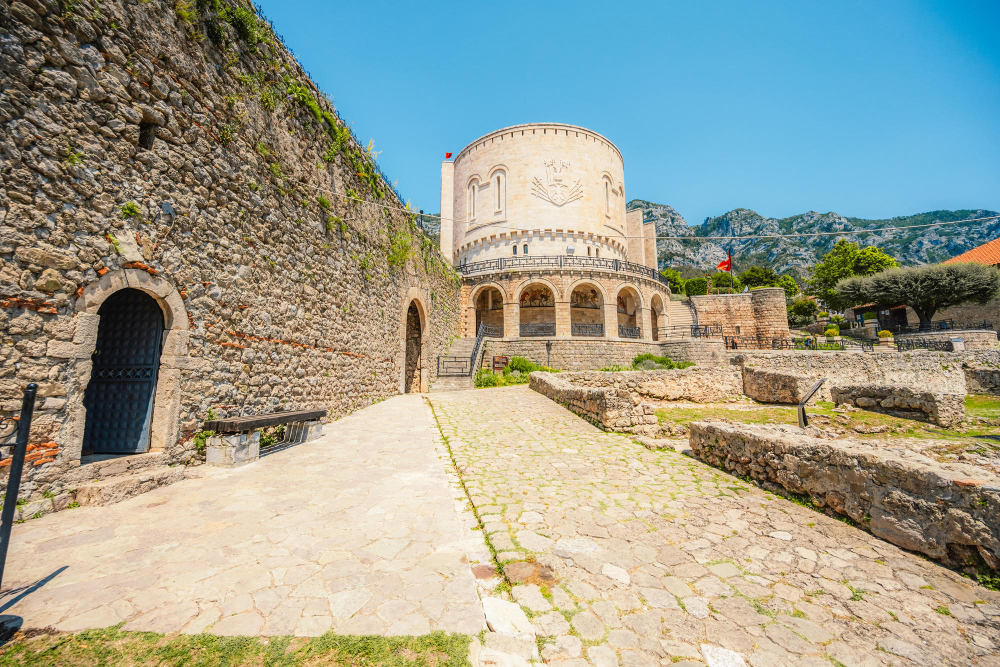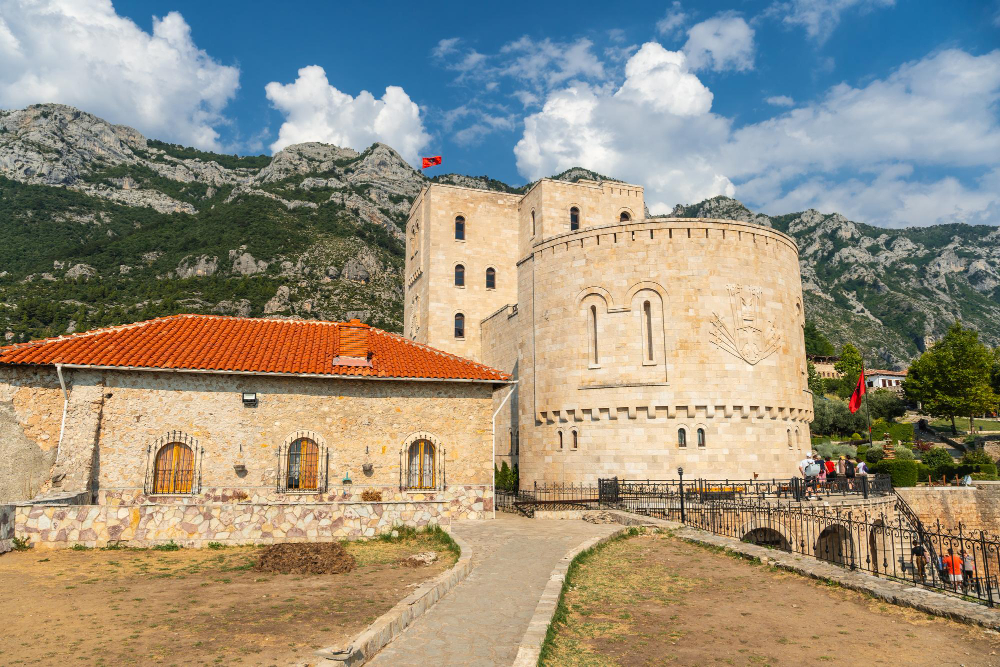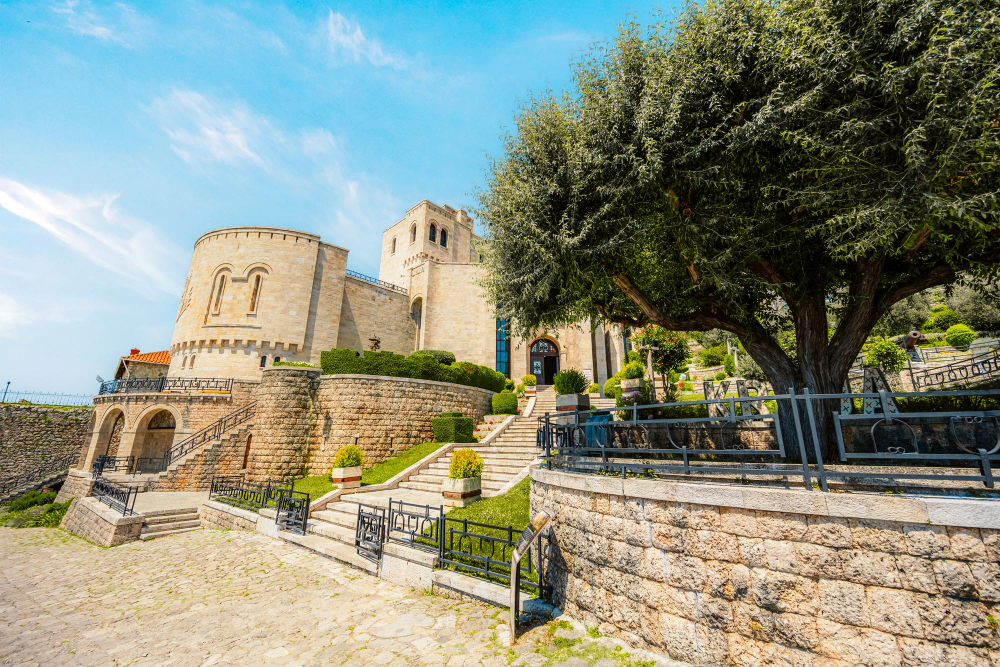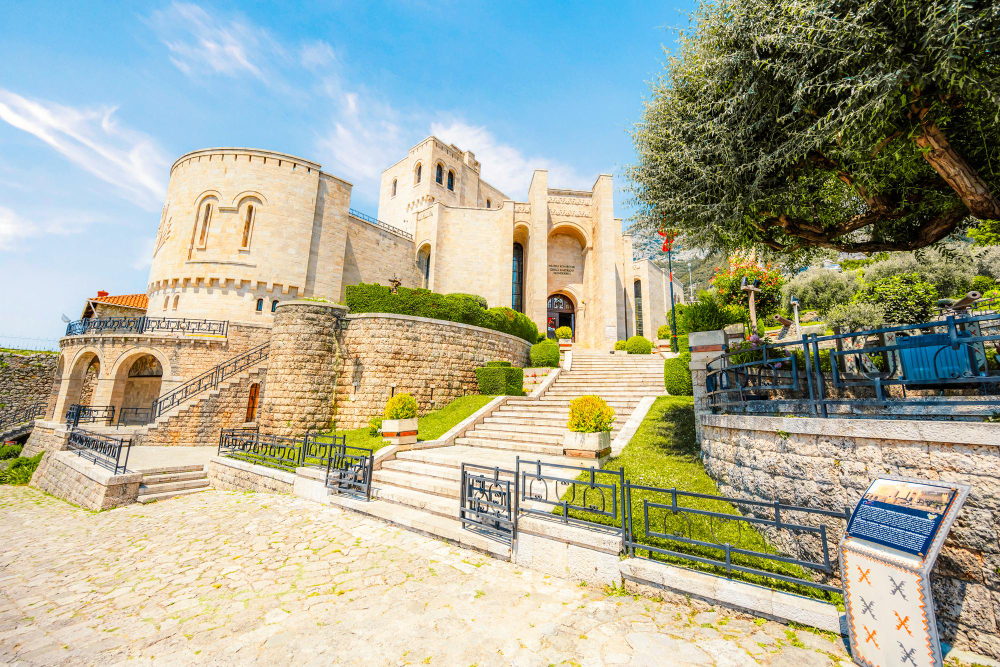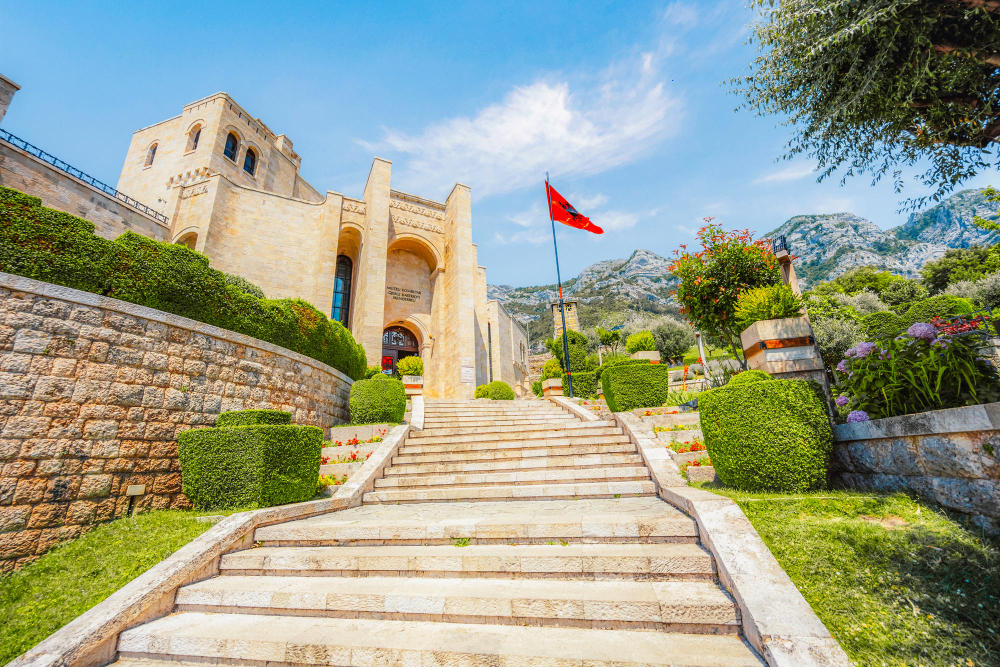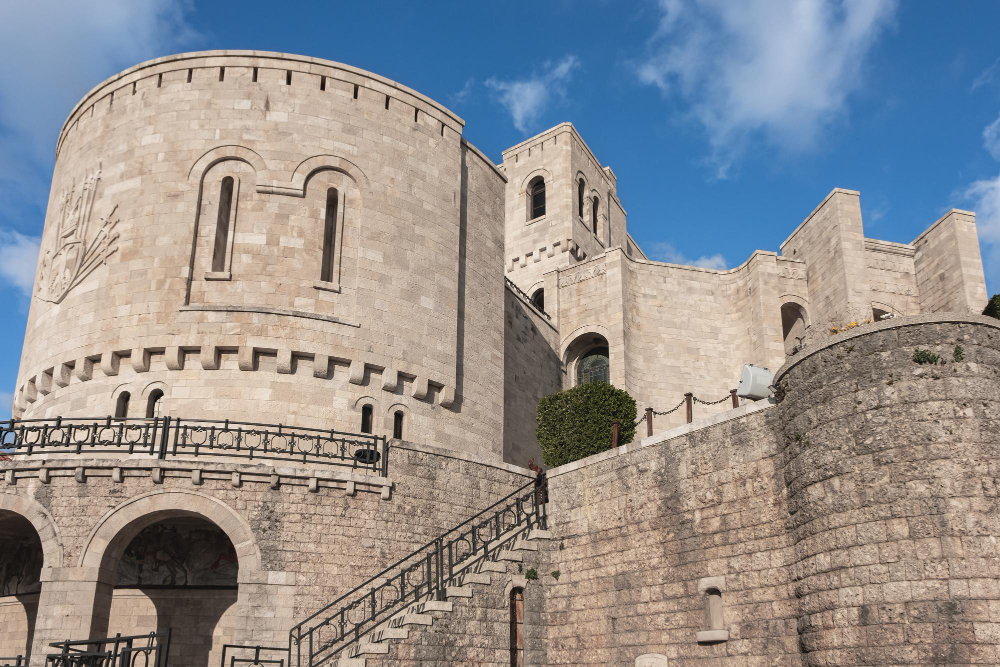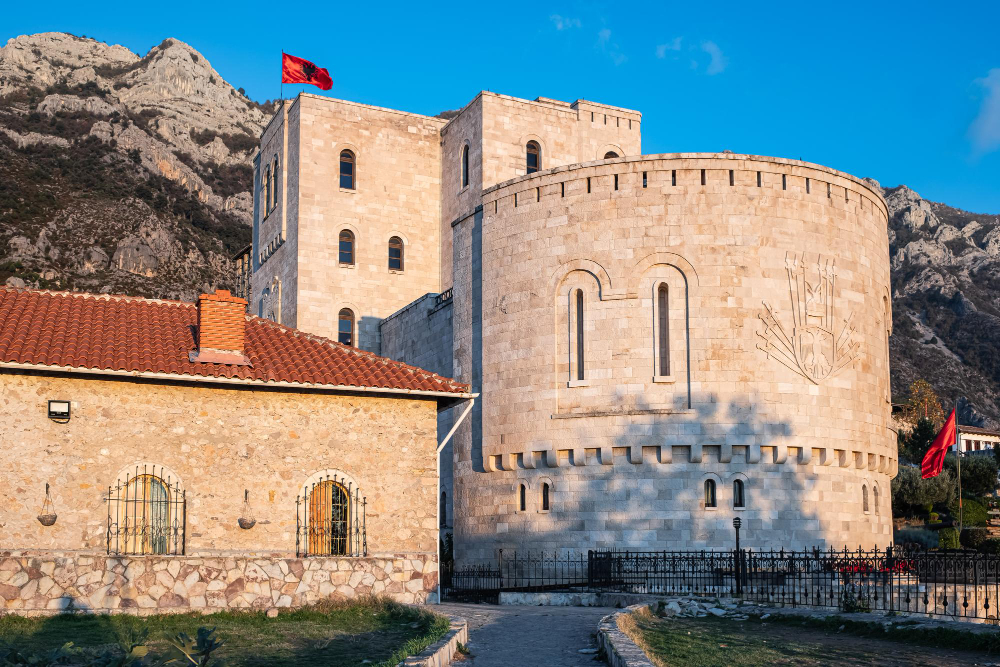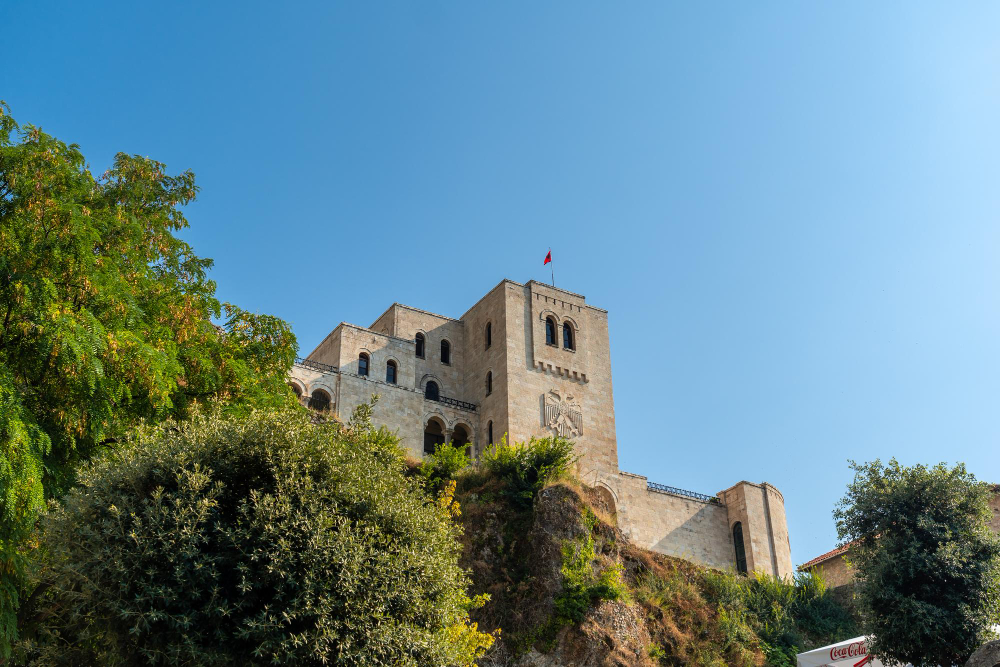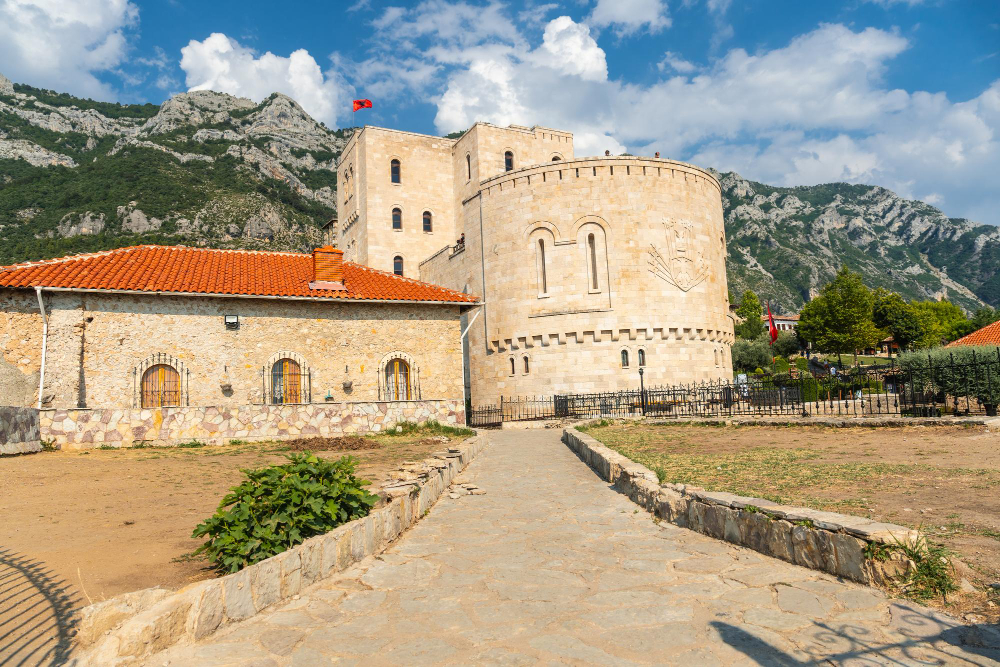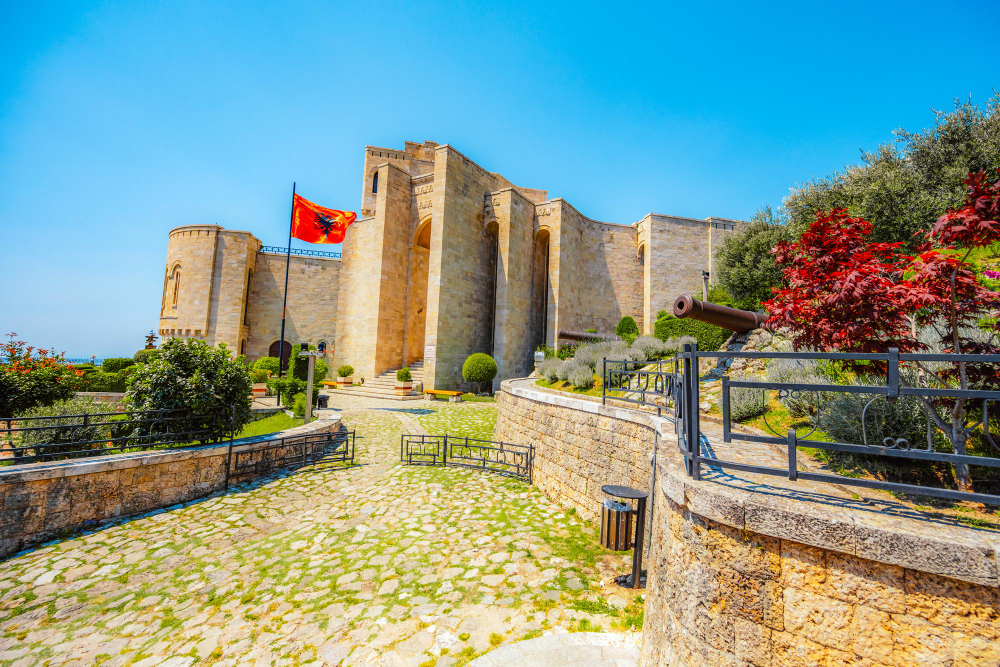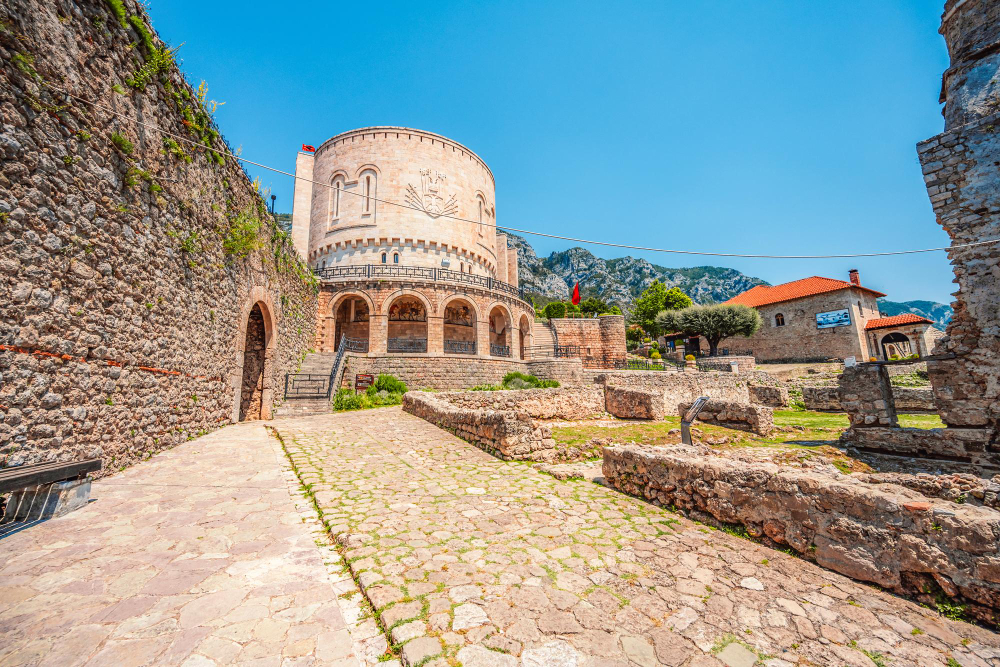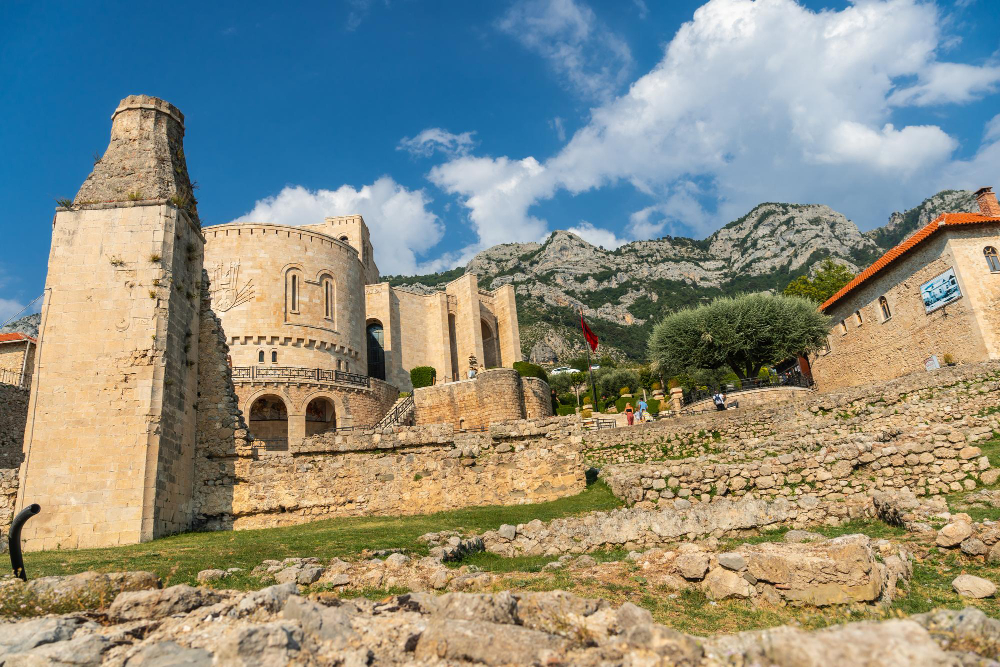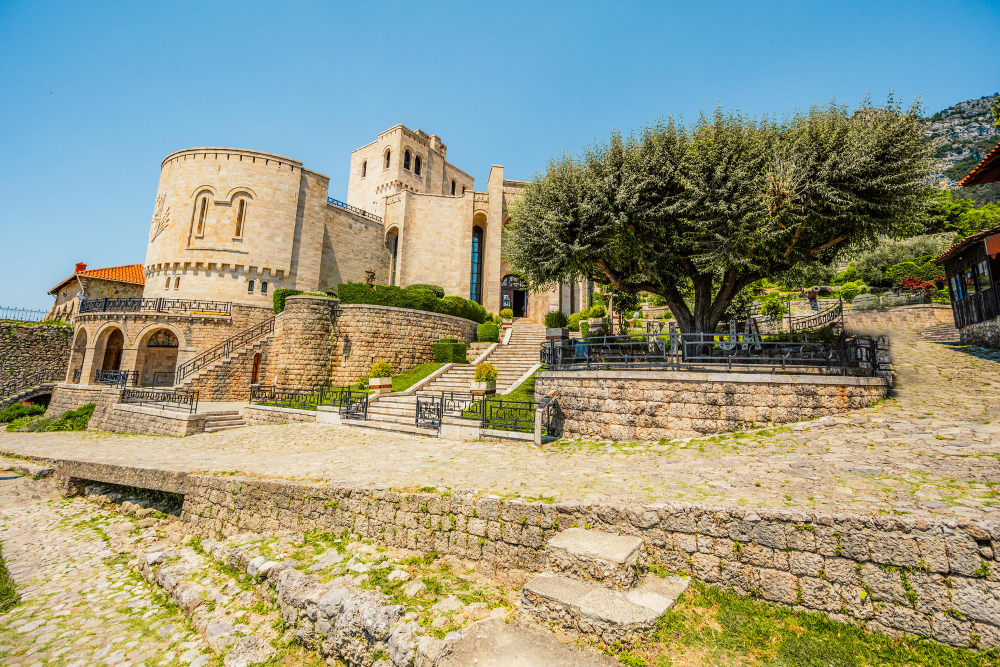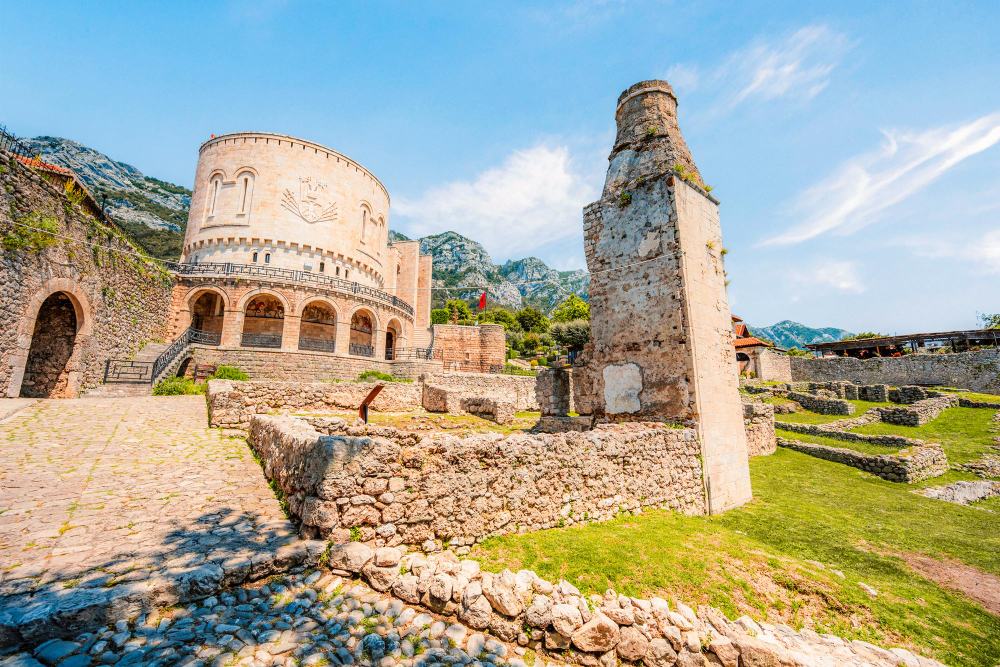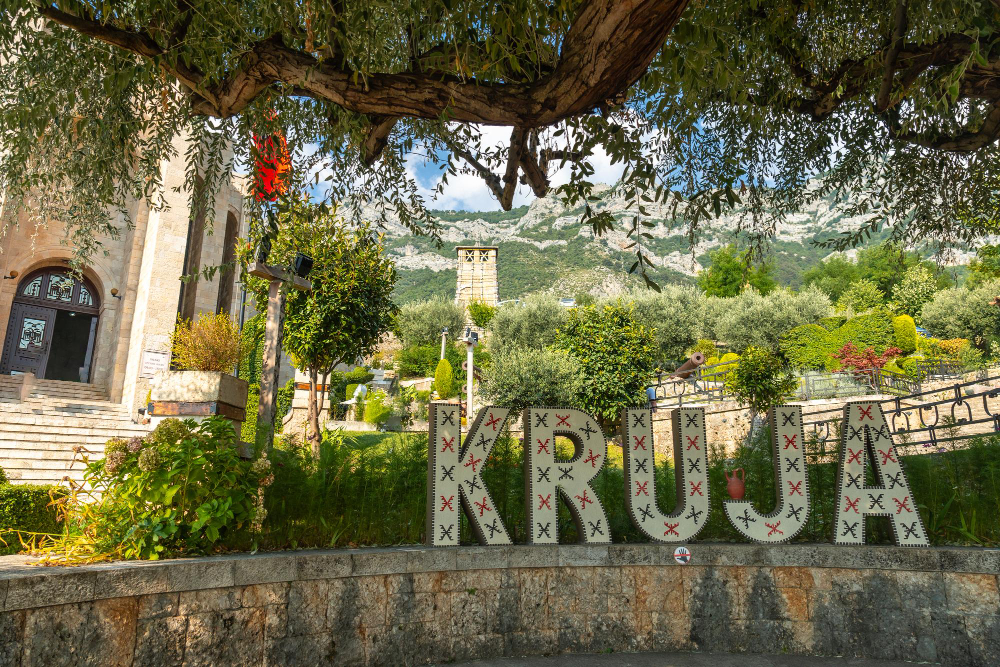

Set amidst the picturesque landscape of central Albania, nestled between green hills and rugged rock formations, stands Kruja Fortress (Albanian: Kalaja e Krujës). This impressive mountain fortress, which not only stands out architecturally but is also of great historical significance, was once the centre of a determined resistance against the Ottoman Empire. The stories, myths and traditions surrounding this fortress make it a symbol of Albanian heritage and the country’s cultural identity.
The strategic location: An impregnable fortress – The fortress is situated on a prominent rocky plateau, whose steep slopes provide natural protection on all sides. Its geographical location made it a virtually impregnable fortress in the Middle Ages. Measuring 270 metres in length and 150 metres in width, it covered an area of approximately 2.25 hectares – large enough to accommodate a small population, yet easy to defend thanks to its compact structure. The impressive 800-metre-long perimeter wall further reinforced the protection of the inhabitants. The fortress had two entrances; one of them led through a small forecourt to the west of the complex, which was accessible via a narrow passageway. Particularly noteworthy is the spring at the foot of the fortress. This water source, considered the lifeblood of the town, is not only vital for supplying the inhabitants but has also given the place its name. The name ‘Kruja’ is derived from the Albanian word ‘krua’, meaning ‘spring’.
The origins of the fortress: A journey back to the Middle Ages – The earliest traces of human settlement within the fortress date back to the 4th or 5th century. As early as the 12th century, work began on fortifying the complex with sturdy walls, which further enhanced its strategic importance. Over the centuries, the site changed hands several times: from local noble families such as the Thopias, through Serbian rulers, to the Ottoman Empire. However, the year 1443 marked a turning point that inscribed the fortress forever in Albanian history. The Albanian national hero Gjergj Kastrioti, better known as Skanderbeg, captured the fortress without a fight and declared it the headquarters of his resistance against the Ottomans. Under his leadership, Kruja became the centre of the League of Lezha, an alliance of Albanian princes who jointly took on the most powerful military force of their time.
The Sieges: Skanderbeg’s Unwavering Courage – The fortress of Kruja withstood three massive Ottoman attacks in the years 1450, 1466 and 1467. Skanderbeg and his troops demonstrated extraordinary courage and military skill in the process. The siege of 1450 is particularly famous, in which some 100,000 Ottoman soldiers faced an Albanian army vastly outnumbered. Despite the sheer superiority of the enemy, Skanderbeg managed to defend the fortress and put the Ottomans to flight. For the Albanians, the fortress became a symbol of their resistance and freedom. However, following Skanderbeg’s death in 1468, the tide turned. During the fourth attack in 1478, the fortress finally fell into Ottoman hands, marking the end of Albania’s independence for several centuries.
Ottoman influences and destruction – Following the Ottoman conquest, the fortress complex was partially rebuilt and expanded. Numerous buildings in the Ottoman style were erected, including mosques, residential houses and public facilities. The remains of these structures significantly shape the fortress’s appearance today. An earthquake in 1617 caused massive damage to the south-eastern part of the fortress, causing sections of the rock face and the walls above it to collapse. Even more severe was the destruction of the fortress during the uprisings against the Tanzimat reforms in 1831, following which it was razed to the ground by the Ottomans.
The Legends: Skanderbeg and his immortal spirit -In addition to its historical significance, numerous legends surround the fortress of Kruja. Skanderbeg, in particular, is a central figure in these tales. It is said that before every battle he prayed in a small chapel within the fortress and asked for divine assistance. Some legends even claim that Skanderbeg’s spirit still watches over the fortress and drives away any intruder who seeks to disturb the peace of the place. Another well-known story concerns the fortress’s wells, which never ran dry, even in times of siege. This miracle was interpreted by the villagers of that time as a divine sign – proof that the fortress was protected by higher powers.
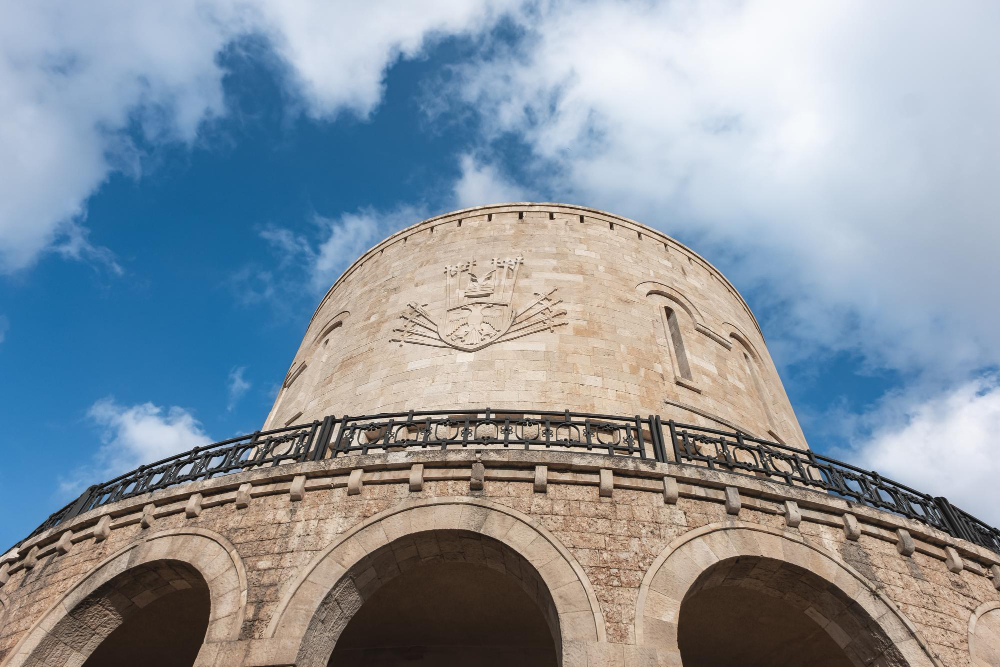
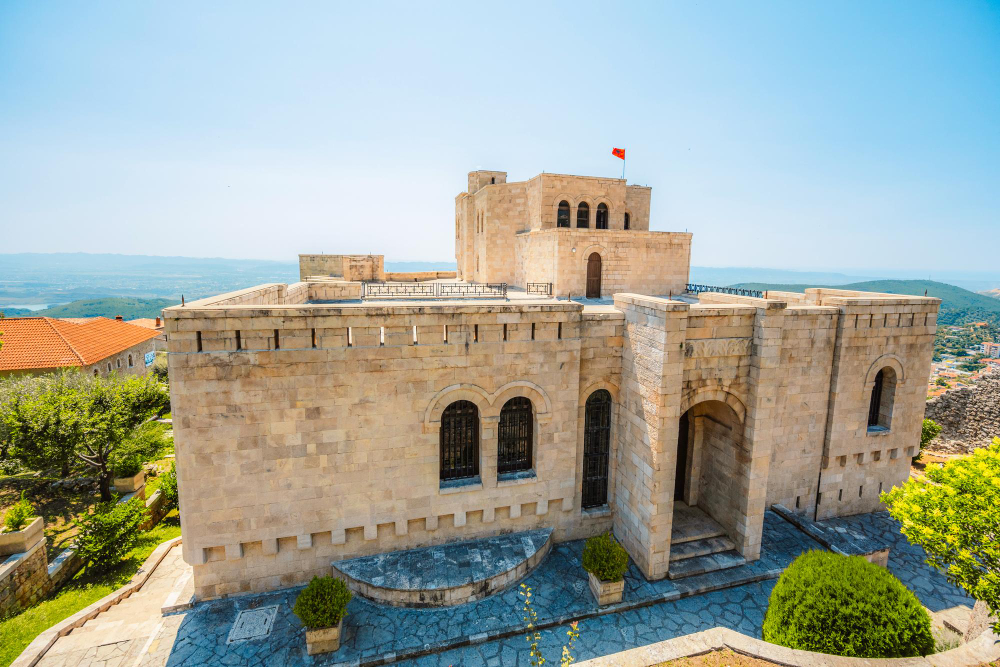
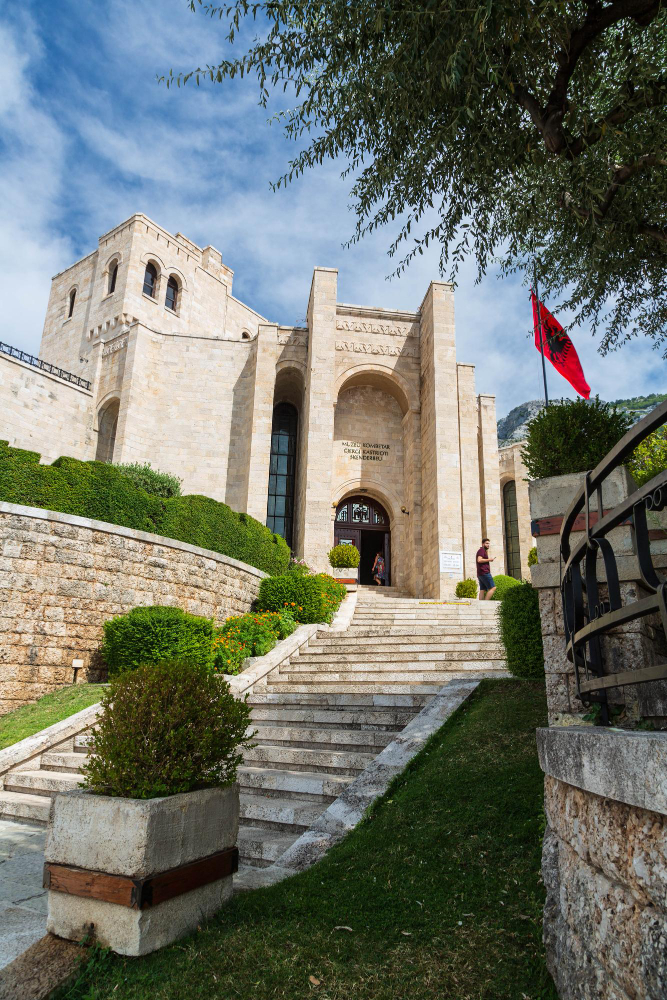
Today: Cultural heritage and tourist attraction – Today, Kruja Fortress is an important monument and a tourist attraction that draws thousands of visitors every year. Within the walls lie numerous historic buildings, such as the Skanderbeg Museum, the Ethnographic Museum and the remains of churches, mosques and residential buildings. Particularly impressive is the clock tower, which evolved from a 17th-century defensive tower and is regarded as a symbol of the fortress’s resilience. The Dollmatekke, a former centre of the Bektashi dervishes, and the hamam to the west of the complex are further highlights offering visitors an insight into Ottoman life. The ruins of the Sultan Mehmed Fatih Mosque bear witness to the religious diversity and political upheavals that have shaped the fortress.
A monument to freedom and pride – The Fortress of Kruja is far more than just a historical building. It stands as a symbol of the unshakeable determination of a people who fought against oppression and foreign rule. The stories and legends surrounding the fortress are part of Albania’s soul and reflect its turbulent past. For travellers, historians and culture enthusiasts, the fortress offers a fascinating journey back in time to an era full of dramatic events and impressive personalities. Above all, however, it remains a place that impressively reflects the Albanian identity and the pride of this small but resilient country.