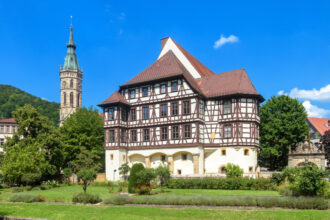

Perched atop a conglomerate rock, flanked by the rivers Ybbs and Schwarzbach, stands Rothschild Castle – a building steeped in history, myths and architectural masterpieces. What today serves as a cultural centre and a tourist highlight of the town of Waidhofen an der Ybbs in Lower Austria’s Mostviertel region was once a medieval refuge and the scene of historical dramas. This landmark harbours tales of power struggles, tragedies and extraordinary building projects, so that a vivid echo of past centuries reverberates through its walls.
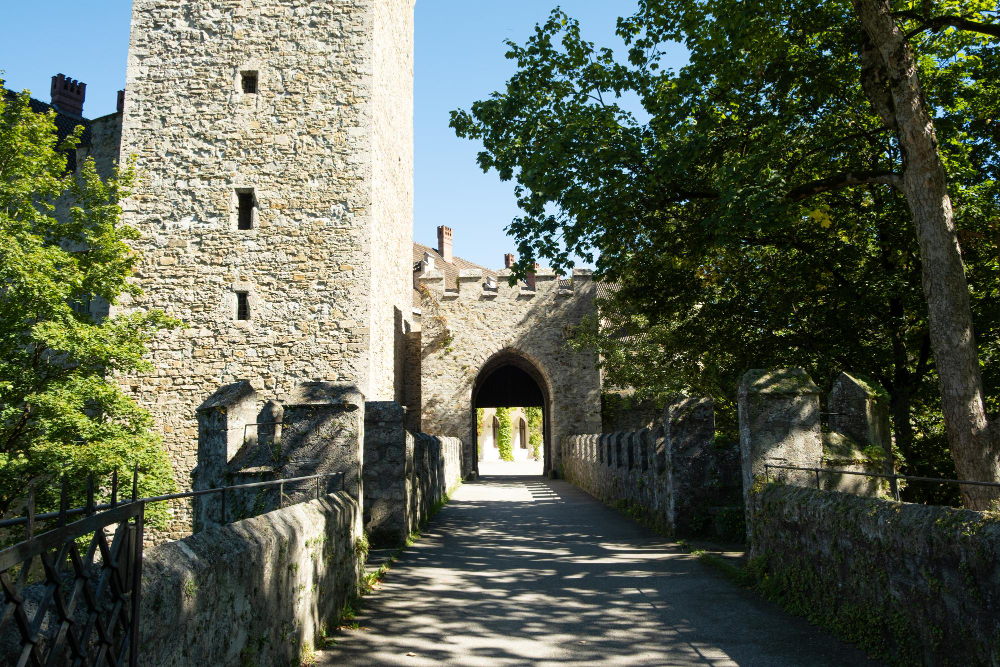
The origins of a legend: from hunting lodge to mighty castle – The castle’s roots stretch far back into the 13th century, when it was presumably founded by the Counts of Peilstein as a hunting lodge – at that time still known as ‘Waidhof’. The name itself remains the subject of local lore to this day. Whether the hunting lodge was indeed the site’s original function or a symbol of the region’s strategic importance remains unclear. The fact is, however, that the complex was soon expanded into a fortified castle – a place where the power and influence of the Counts of Peilstein were visibly concentrated. The ongoing conflict with the Bishops of Freising, the landlords of the time, lent the castle additional significance. Between 1190 and 1218, a bitter legal dispute raged between the Peilsteins and Freising over ownership and administrative rights. When the male line of the Peilsteins died out, Waidhofen finally fell under the control of the bishops. The castle subsequently became the seat of the Freising administrators and played a central role in the administration and defence of the region. Yet there is also a persistent legend that an underground tunnel connects Waidhofen Castle with the now-vanished Konradsheim Fortress – a distance of about four kilometres. Despite a lack of evidence, this story has persisted for centuries and fires the imagination of many visitors.
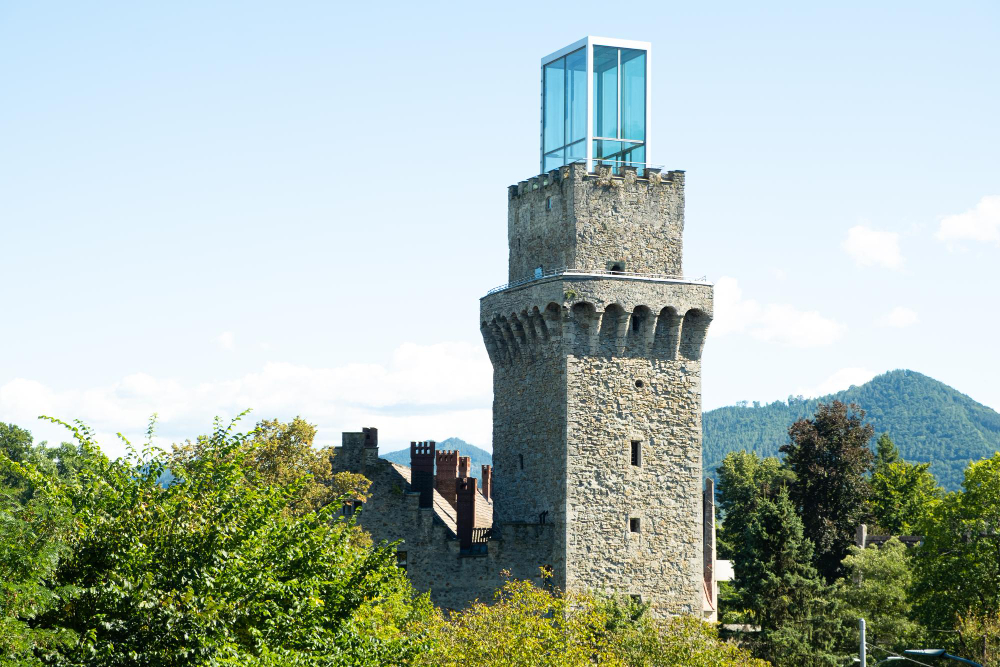
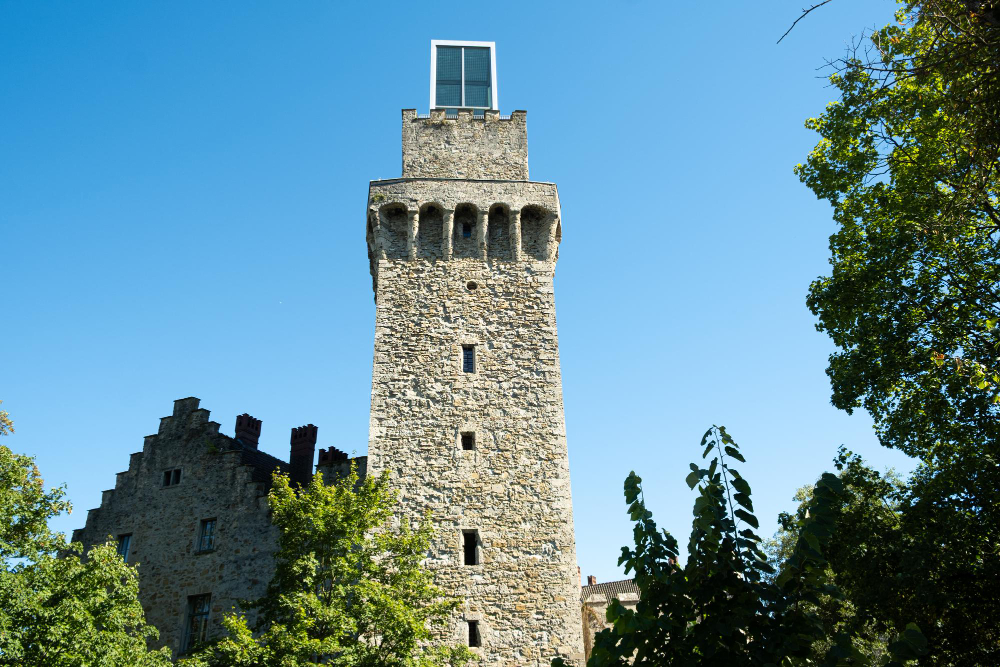
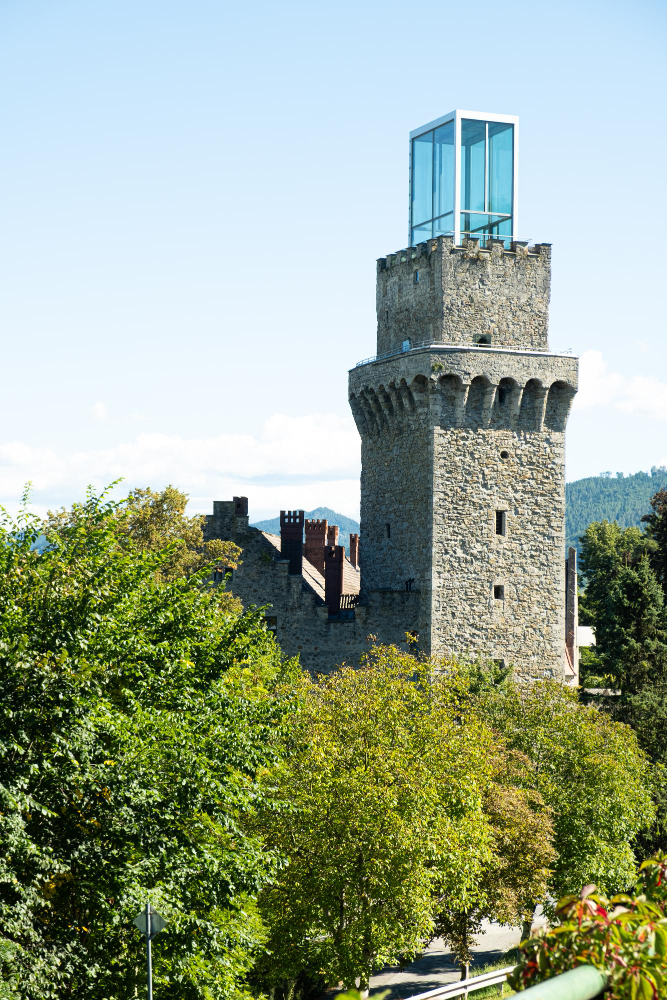
Architecture and Catastrophes: The Castle’s Transformation – The current appearance of Rothschild Castle is the result of numerous alterations and renovations carried out over the centuries, often triggered by events such as fires or political upheavals. Of particular significance was the major expansion in the late 14th century under Bishop Berthold von Wehingen. The mighty keep, whose nine storeys still dominate the townscape today, was built during this period, as were the Gothic banquet hall and the elaborately decorated chapel. Tragic events such as the town fire of 1515 and another fire in 1571 led to extensive renovation work. However, these changes also led to the loss of important architectural features, including the chapel’s bay-window-like apse, which collapsed into the riverbed of the Ybbs in the early 19th century. The ravages of time took their toll on the complex until it was finally neglected in the 19th century and stood on the brink of ruin.
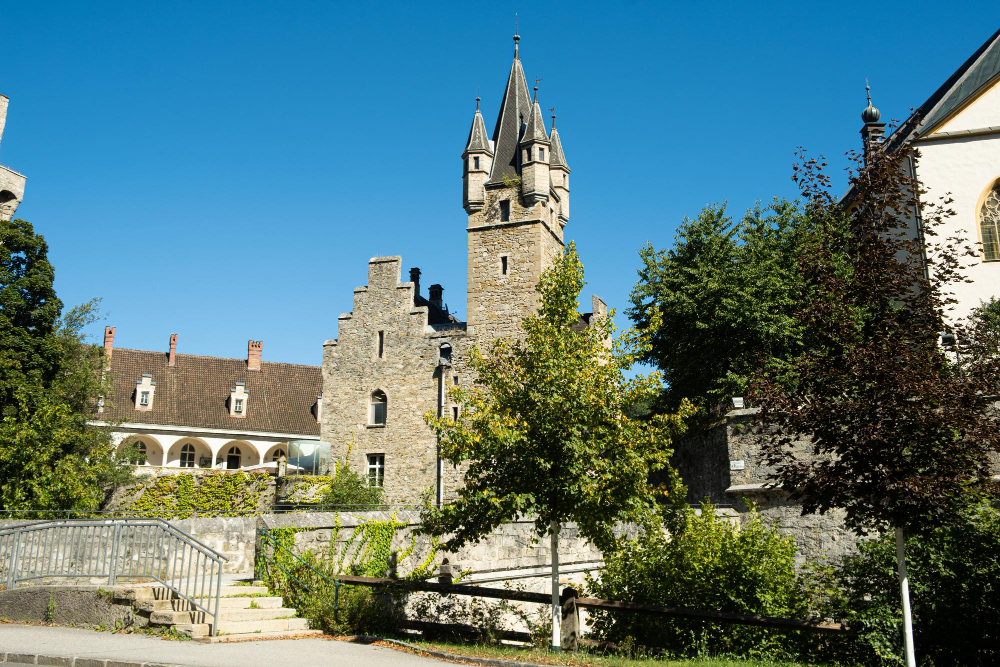
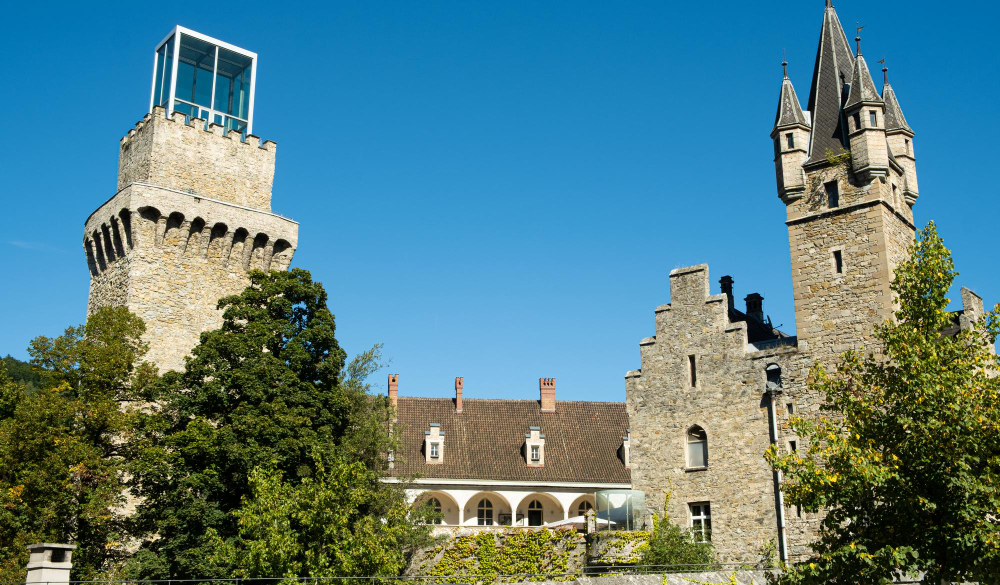
Splendour and grandeur: The Rothschild era – A new golden age began when Albert Salomon Anselm von Rothschild, one of the wealthiest men in Europe, acquired the castle in 1875 and completely redesigned it. Under the renowned Viennese cathedral architect Friedrich von Schmidt, the complex was given a Neo-Gothic appearance that has been preserved to this day. The impressive arcades in the inner courtyard and the Stöckel building with its striking tower are the highlights of this renovation. The Rothschild family’s purchase brought not only architectural progress but also some curious anecdotes. It is said that Baroness Bettina von Rothschild, whilst touring the castle, came across the skeletal remains of deceased prisoners stored in a dungeon. The discovery shocked her so much that the purchase was almost called off. Eventually, a solution was found and the dungeon was filled in – a measure that was only partially reversed in the 1990s. Inside the castle, a sense of opulent elegance prevailed. Period furniture, elaborate stucco decorations and a marble fireplace in the style of the late French Renaissance still bear witness today to the splendour of the Rothschild era. The so-called ‘Crystal Hall’, created during later renovations, continues this tradition and lends a modern splendour to the historic walls.
Dark chapters: The ordeal of Wolf Ebenperger – Not all the stories surrounding Waidhofen Castle radiate splendour and glory. A particularly grim chapter tells the story of the town clerk Wolf Ebenperger, a Protestant who was held captive under inhuman conditions in the dungeon of the keep during the Counter-Reformation. He was forbidden to speak or make contact with other people. Chains, cold and vermin made his imprisonment a torment from which he did not survive. His death stood as a grim symbol of the religious zeal of that era.
Modern Interpretation: Architecture Meets Culture – Rothschild Castle underwent its most recent major refurbishment between 2006 and 2007 under the direction of the renowned architect Hans Hollein. His bold decision to complement the historic building fabric with modern glass and steel structures divided local opinion. In particular, the glass structure on the keep and the balcony jutting out over the River Ybbs sparked heated debates. Yet this modern interpretation gave the castle a new dynamism and made it the centrepiece of the 2007 Lower Austrian Provincial Exhibition. Today, the castle houses not only the ‘5e Museum’, which explores the history of Waidhofen through the themes of fire, earth, water, wood and metal, but also a variety of cultural facilities such as a library, a town archive, a wedding hall and event spaces for medieval events. The Crystal Hall also serves as a venue and stands as a symbol of the successful connection between the past and the future.
A journey through time in the heart of Lower Austria – Rothschild Castle is far more than an architectural monument – it is a place where history comes alive. The combination of medieval structures, Neo-Gothic style and modern architecture makes it unique. Its walls tell of power struggles, tragedies and grand visions that have shaped Waidhofen. Visitors who follow the traces of this multifaceted history are immersed in a world where myth and reality blend harmoniously.