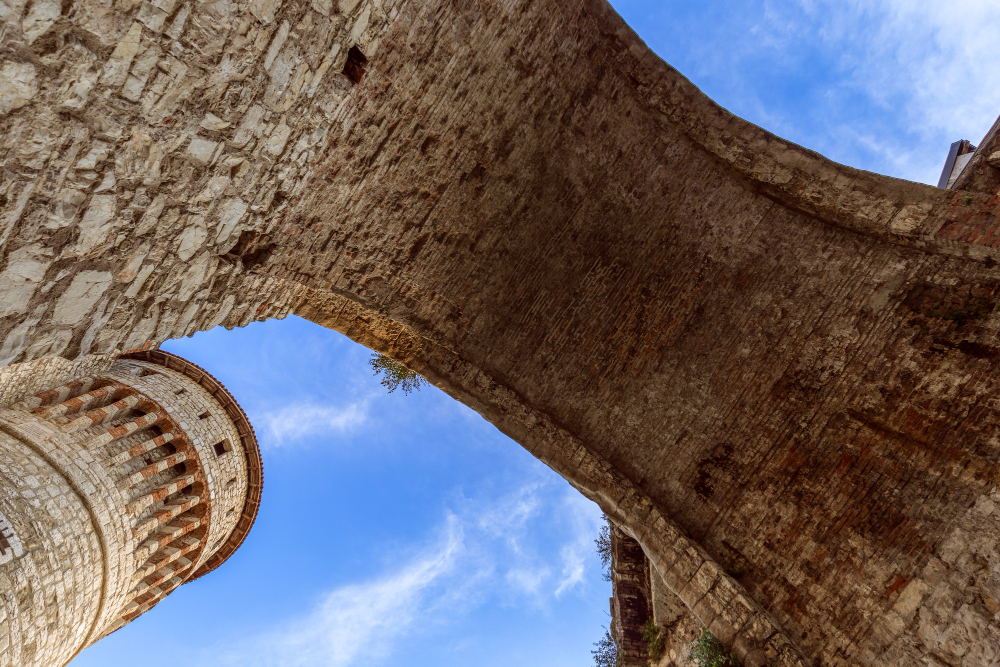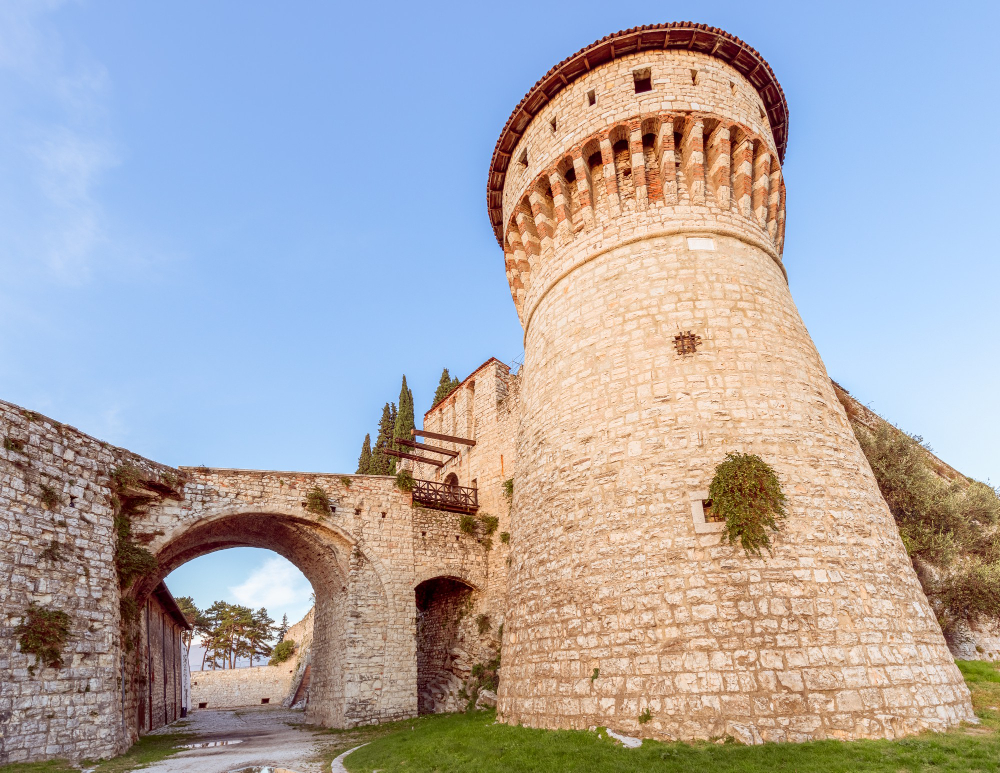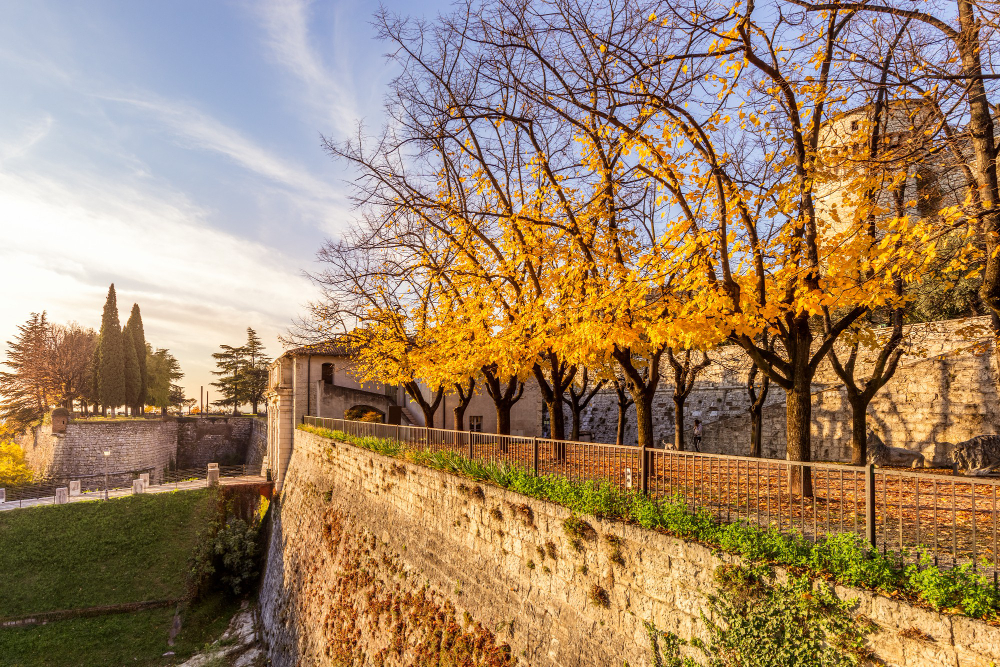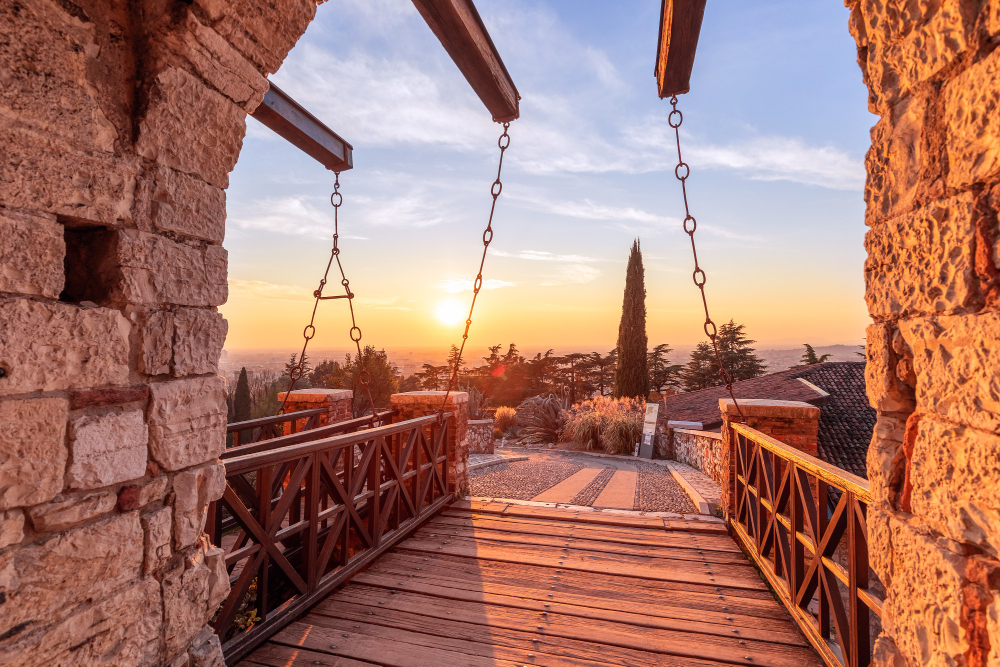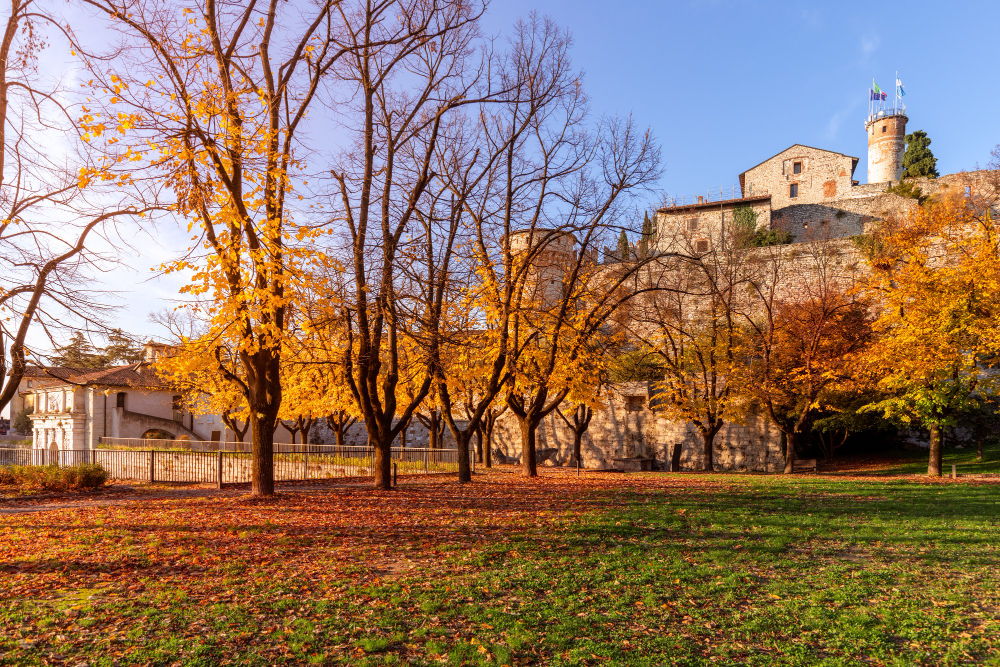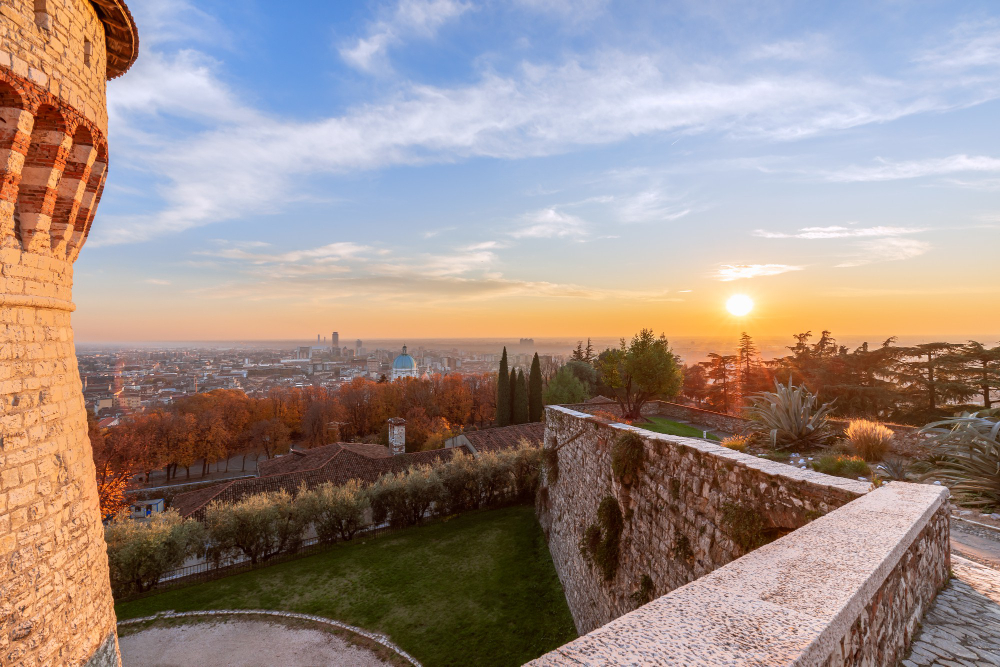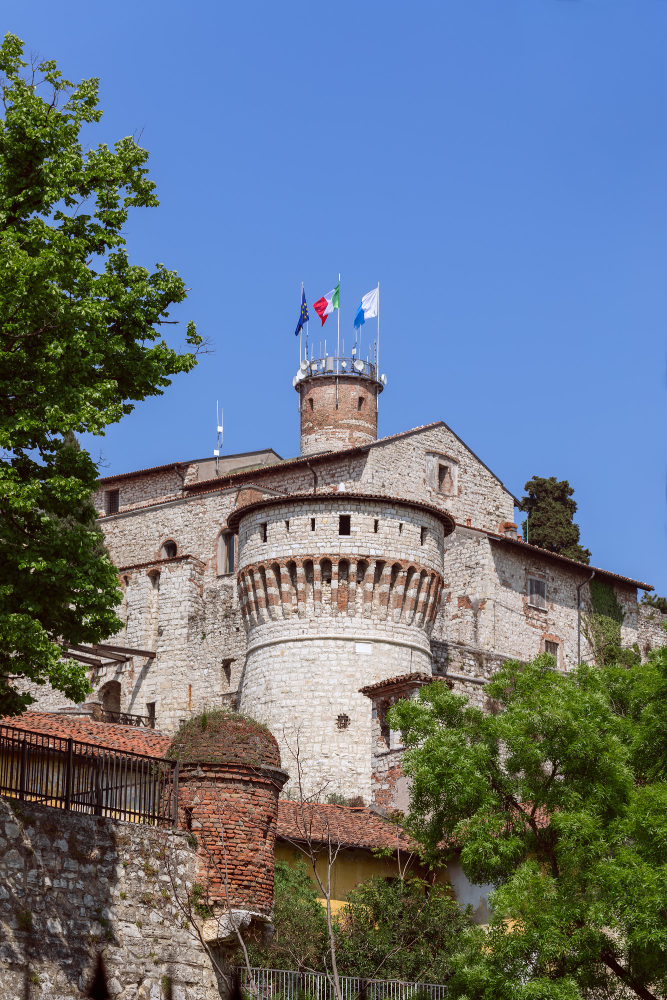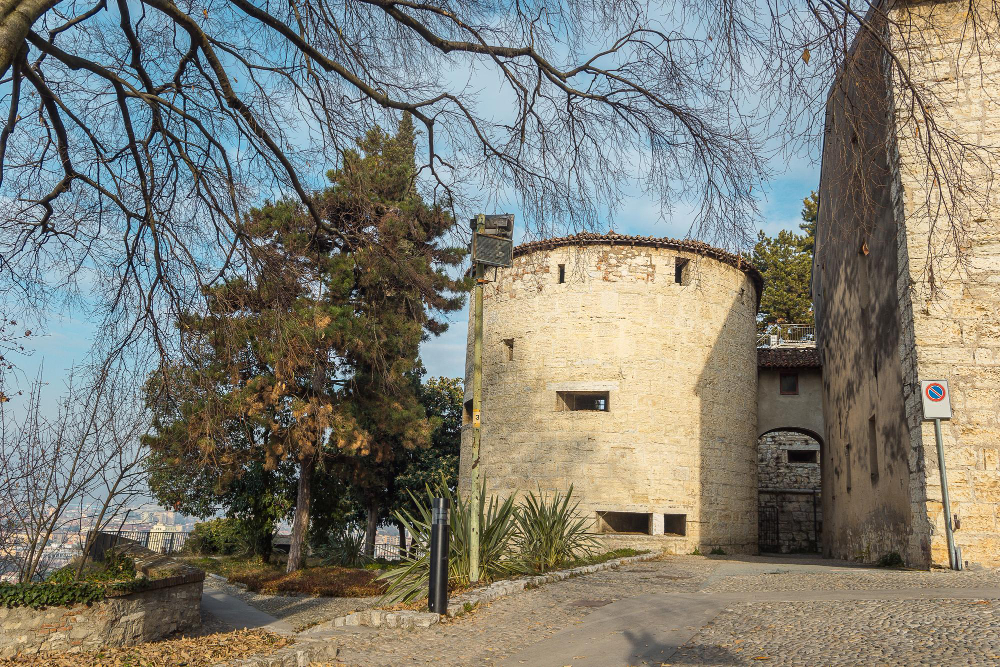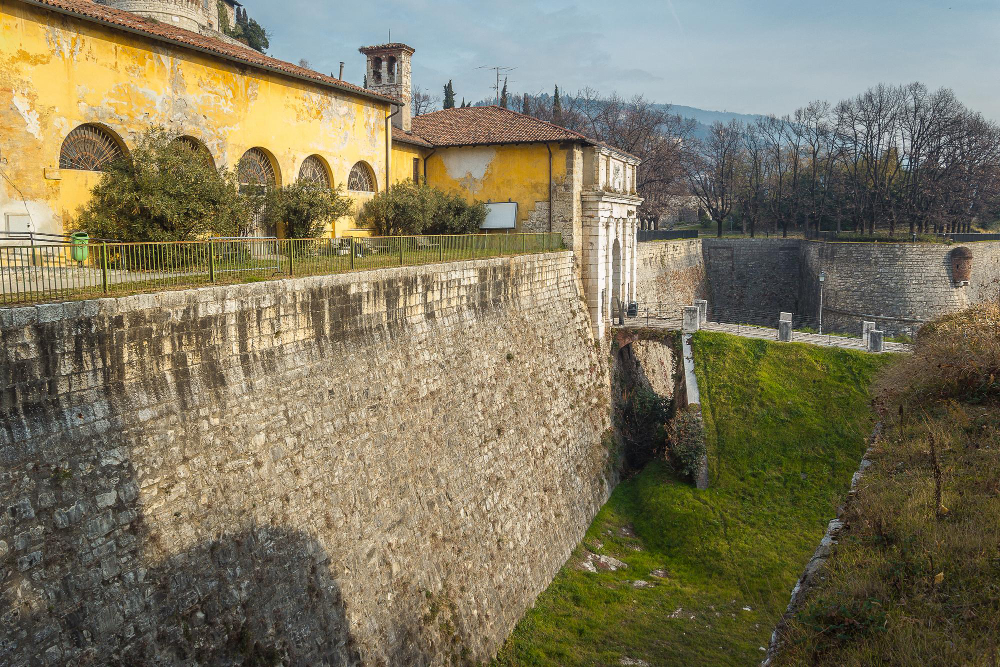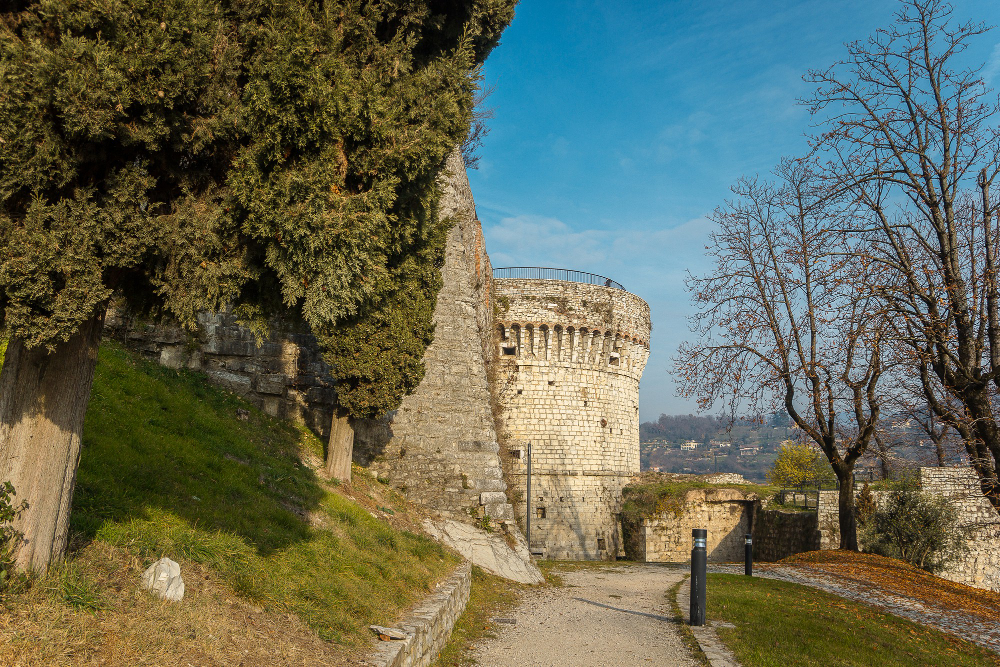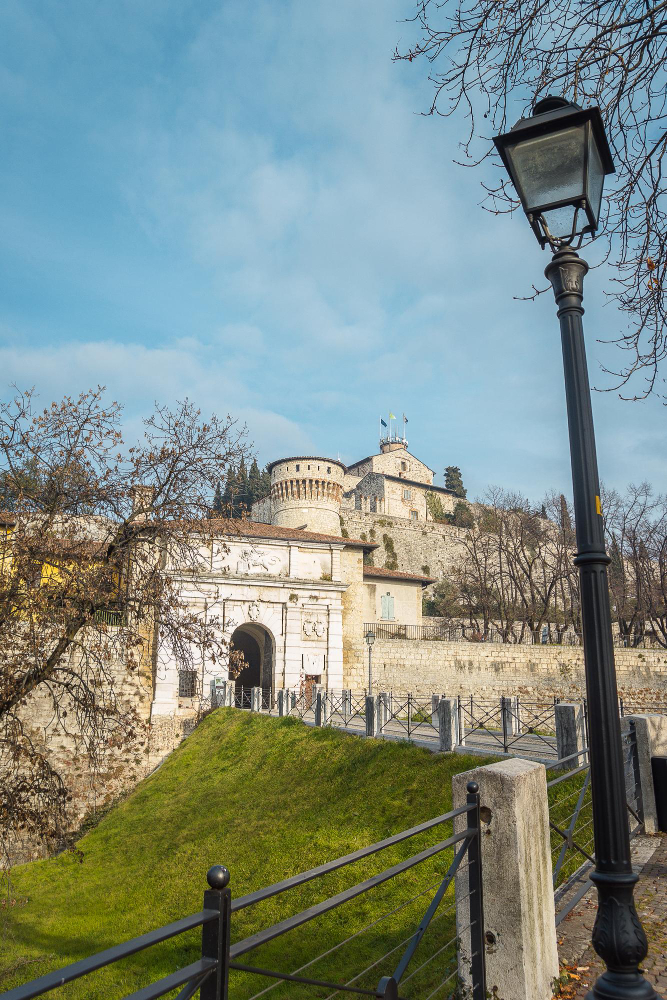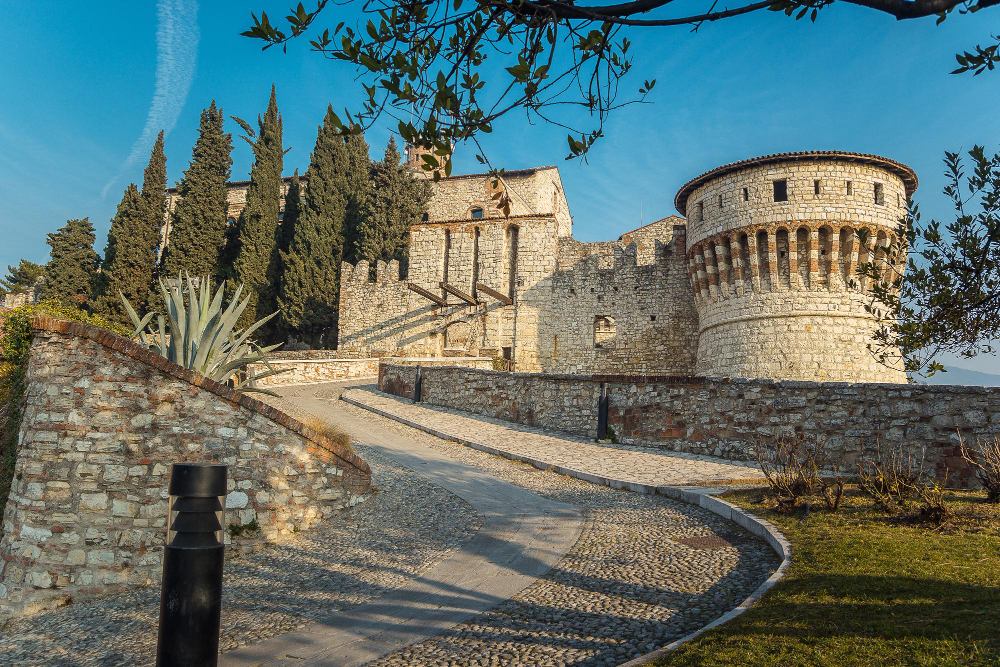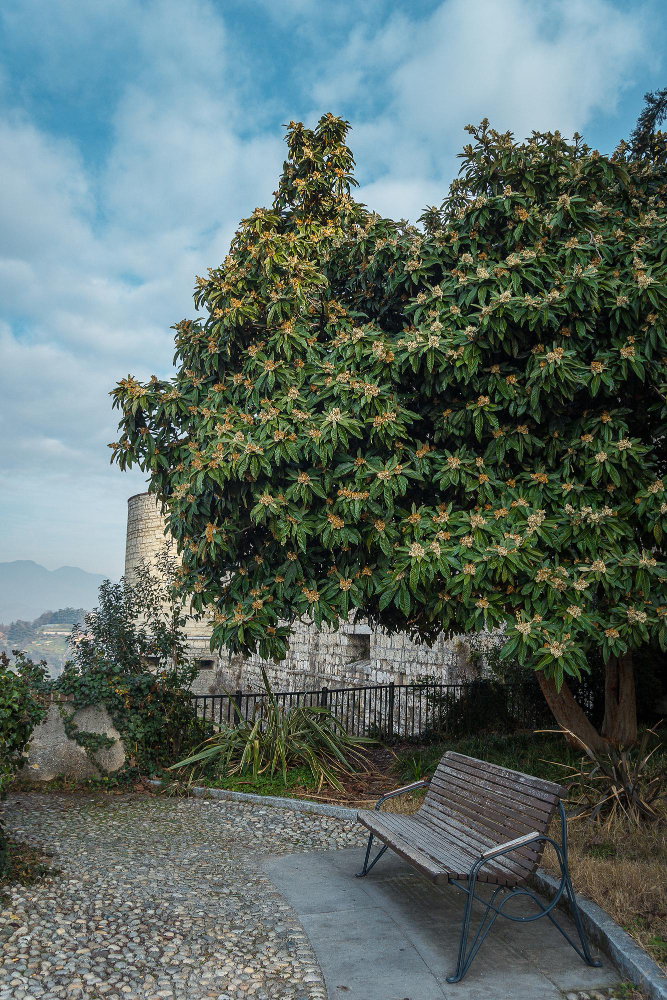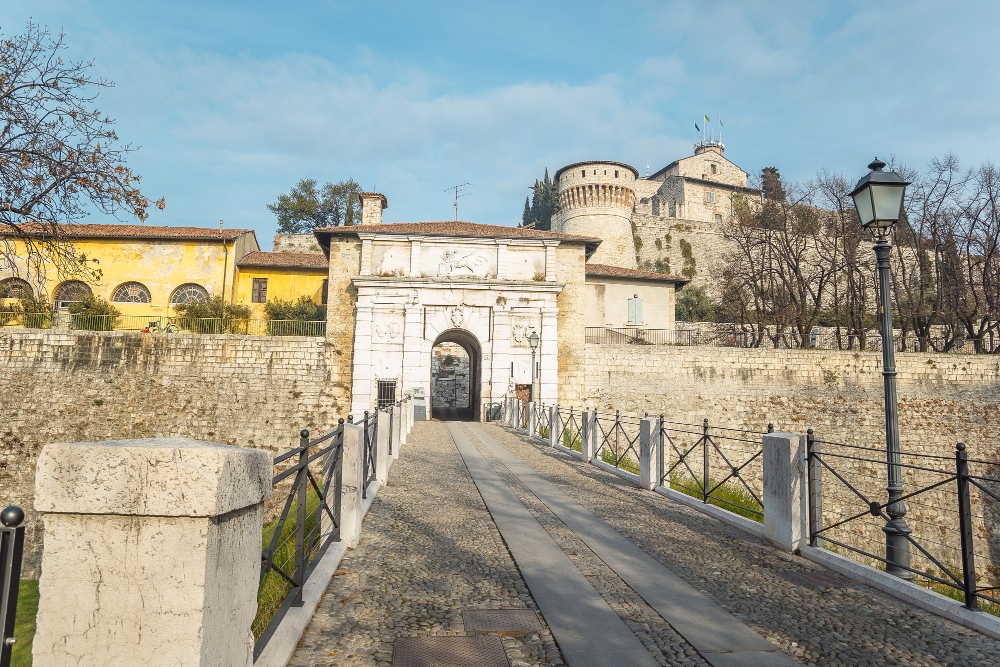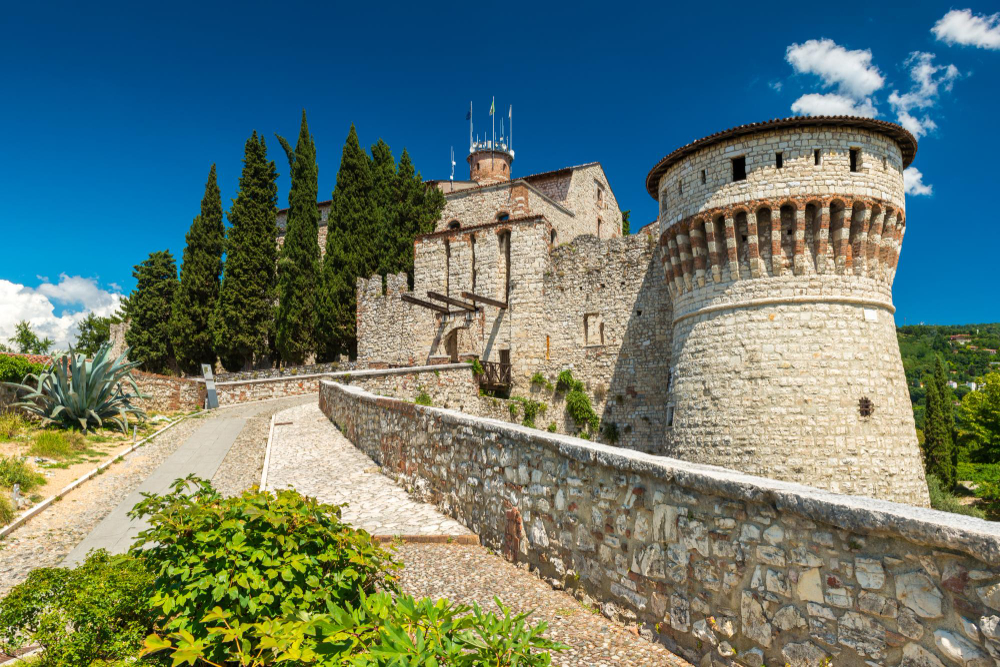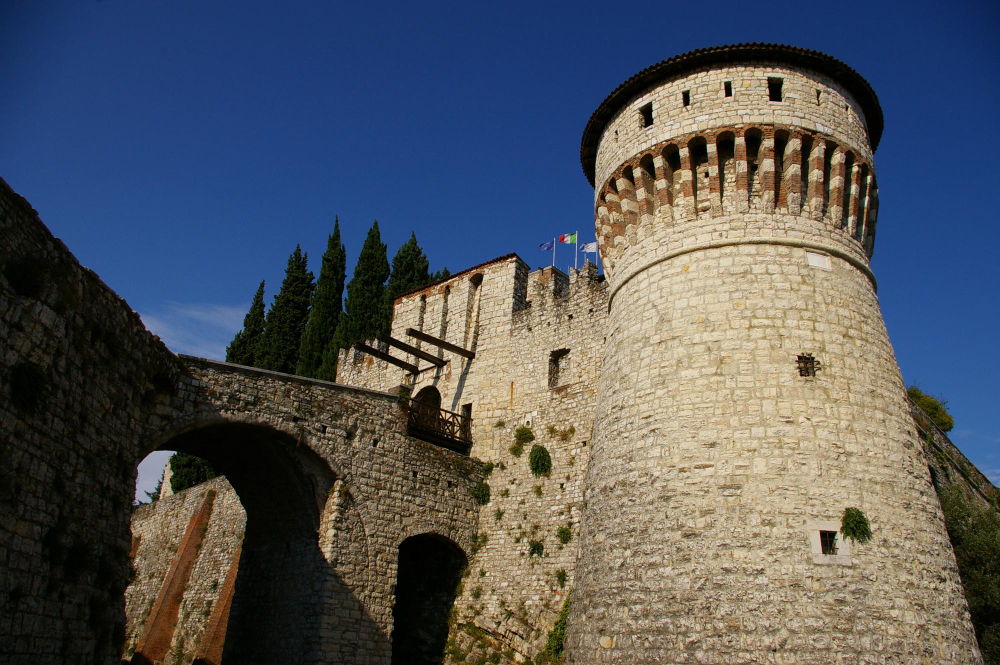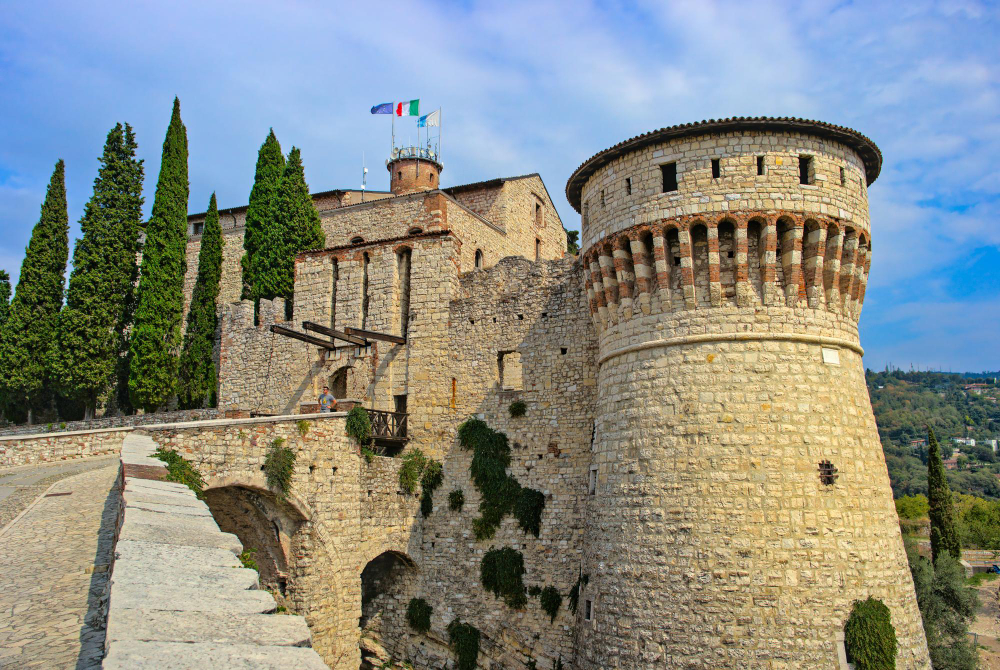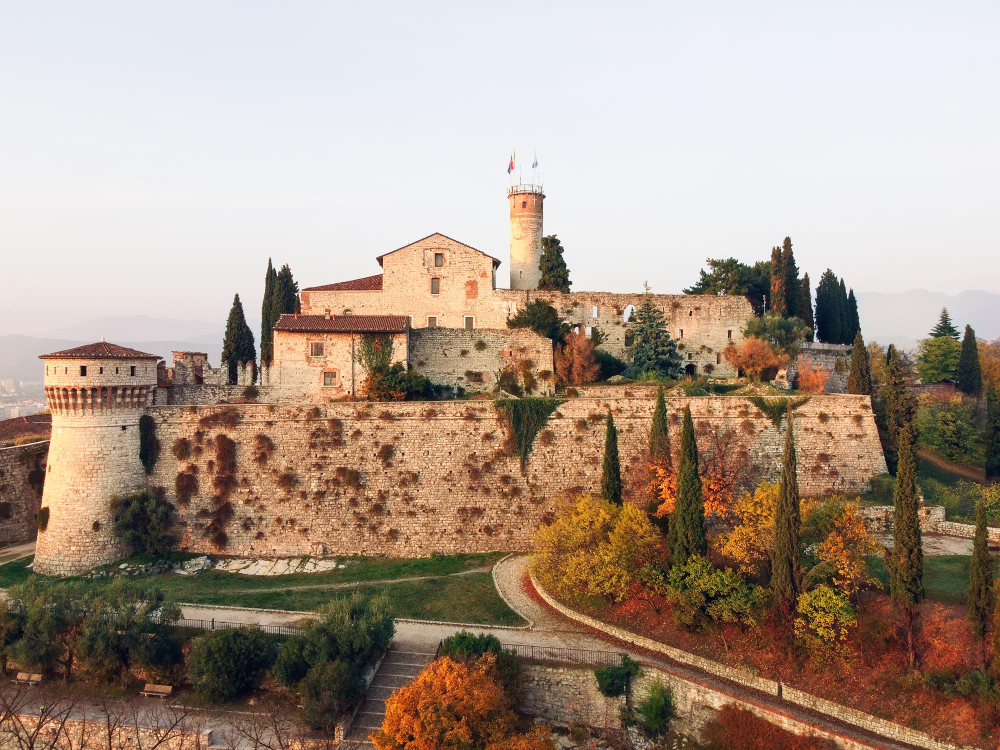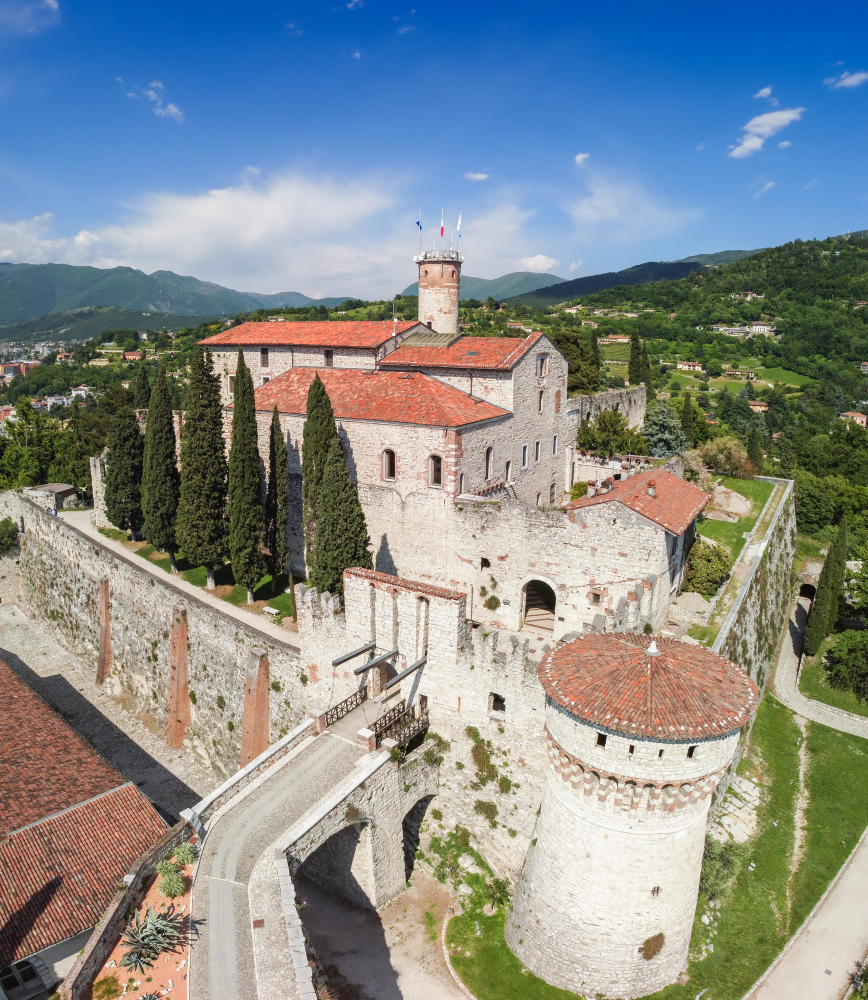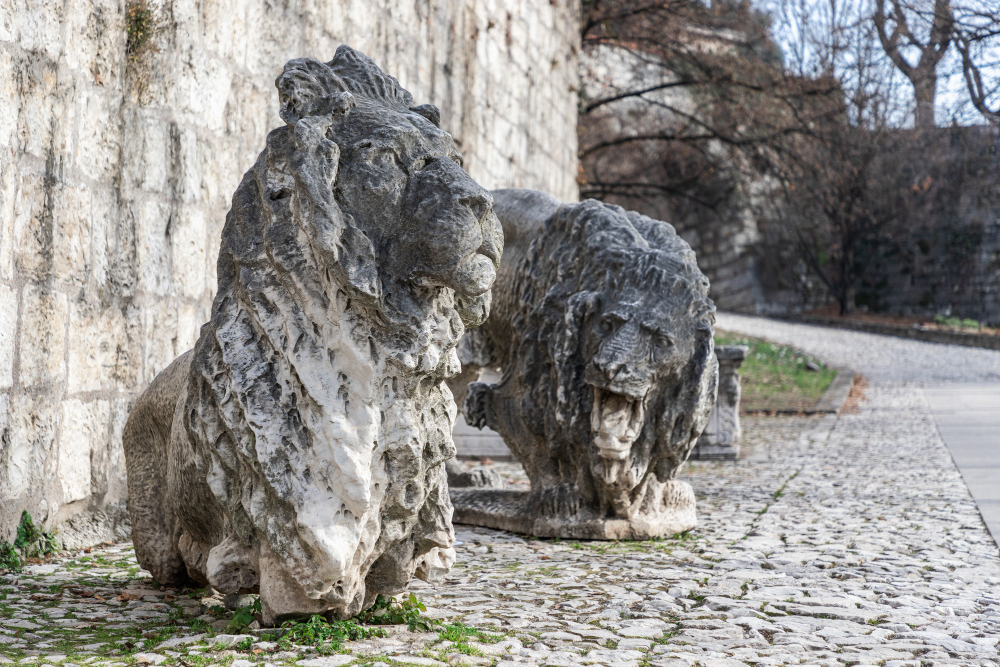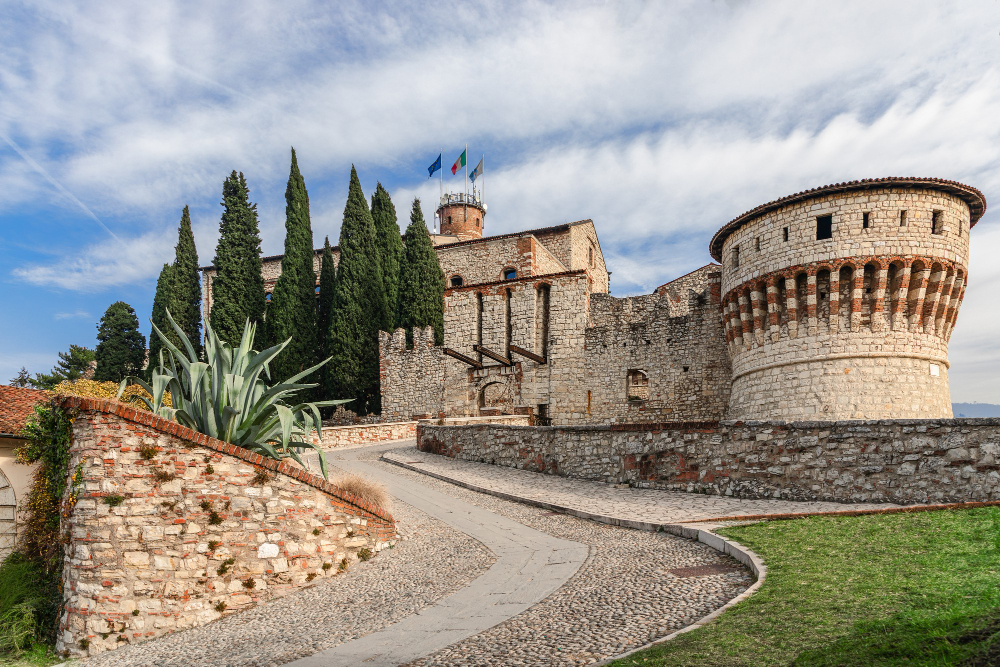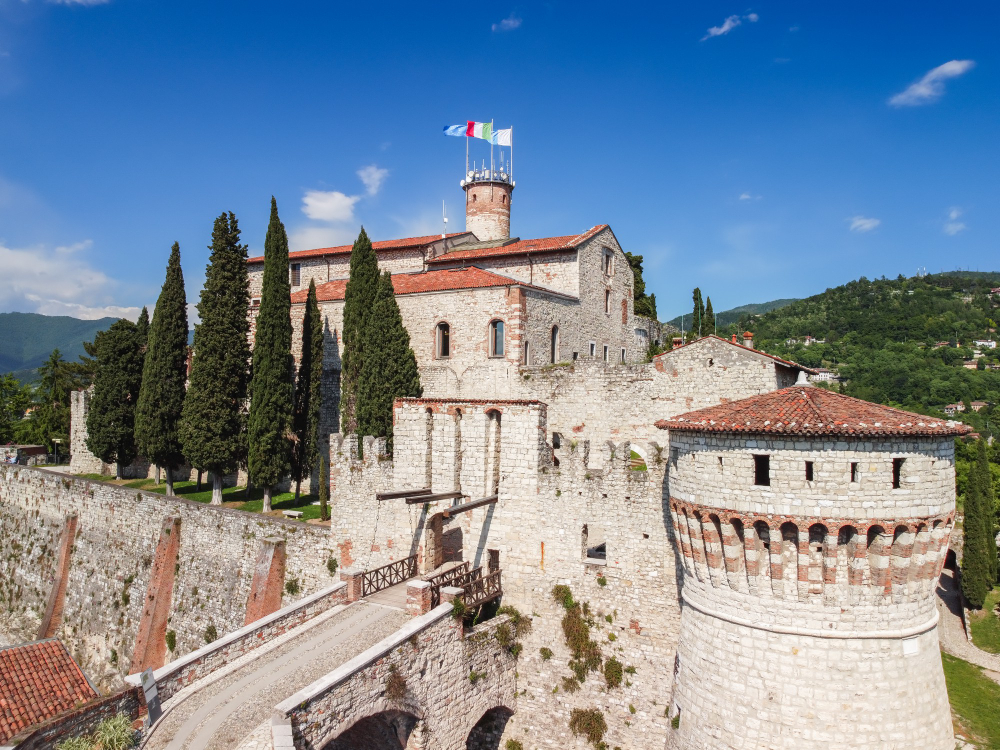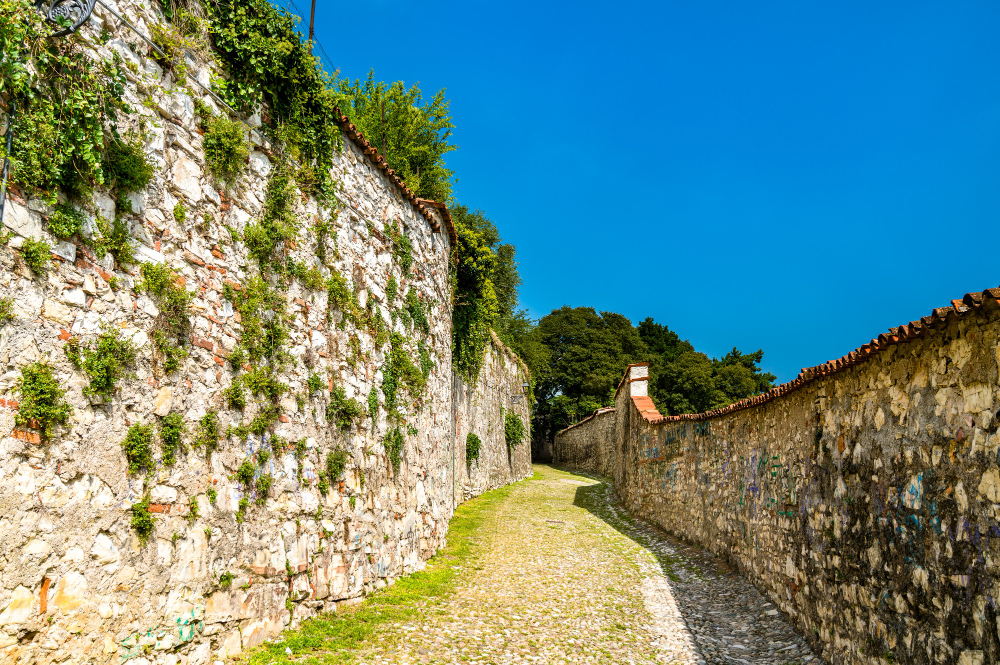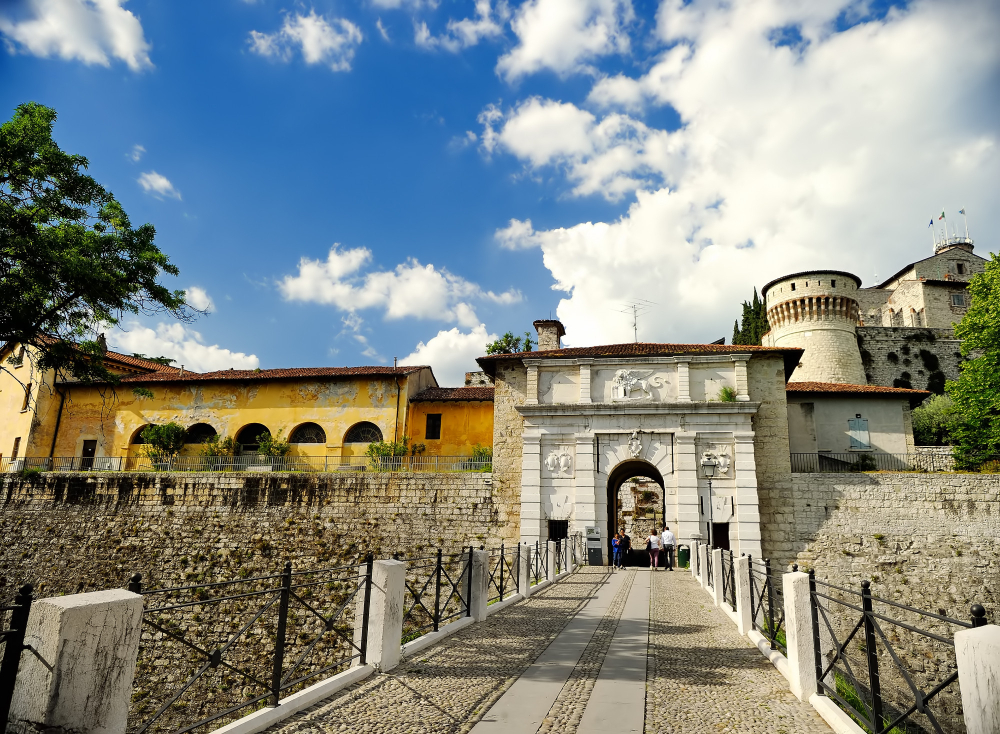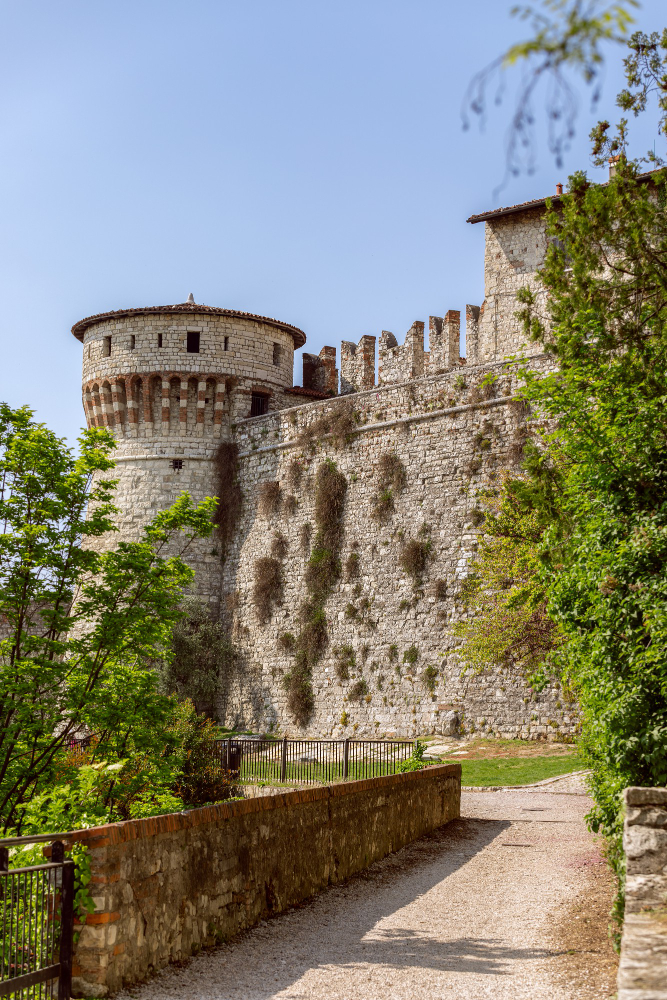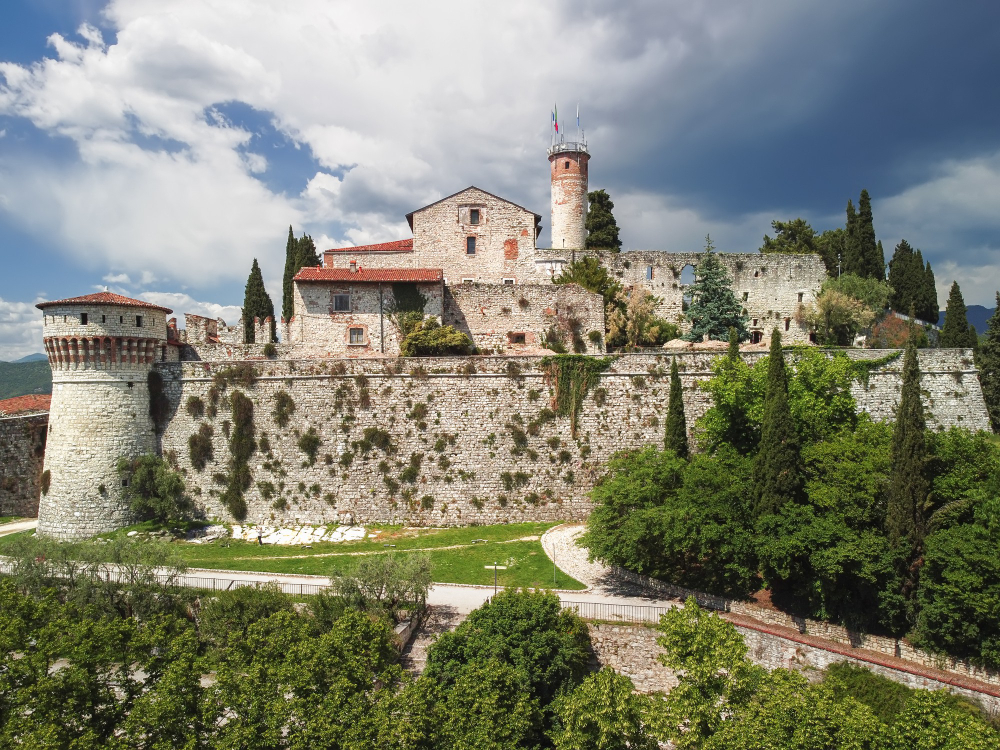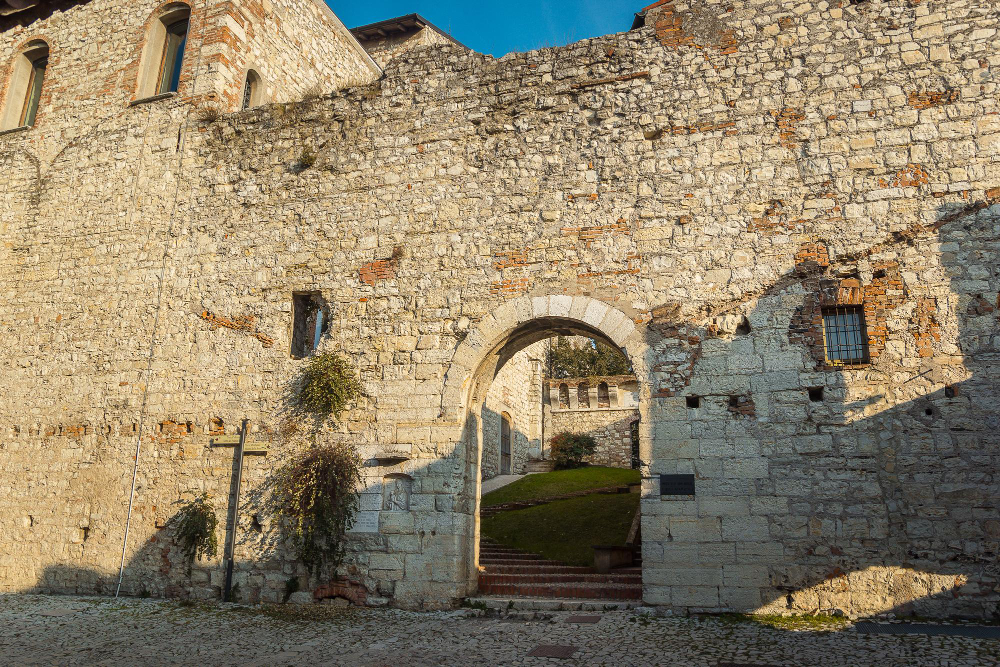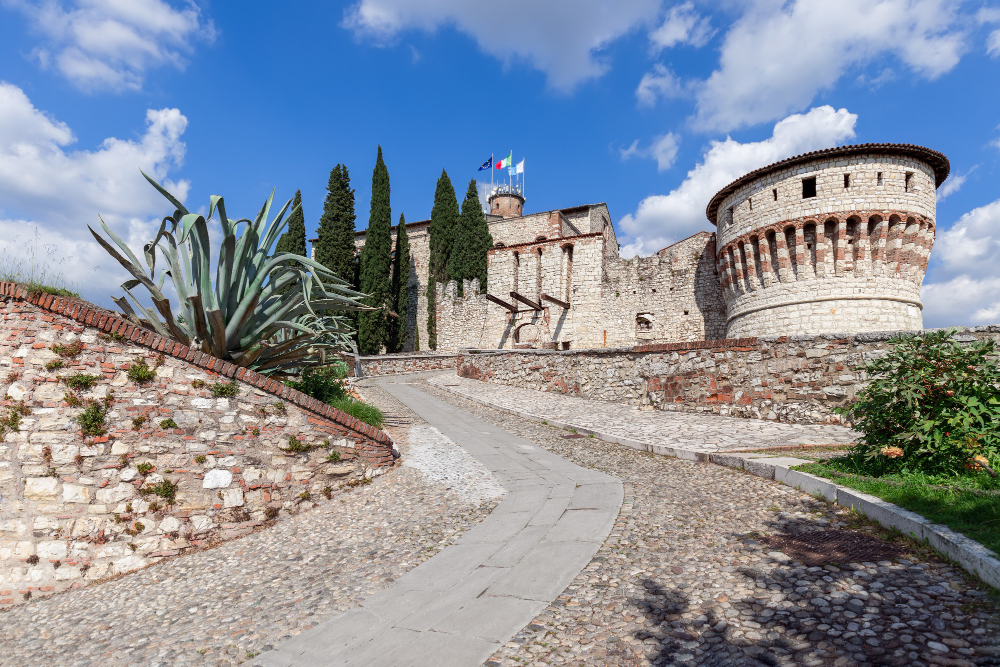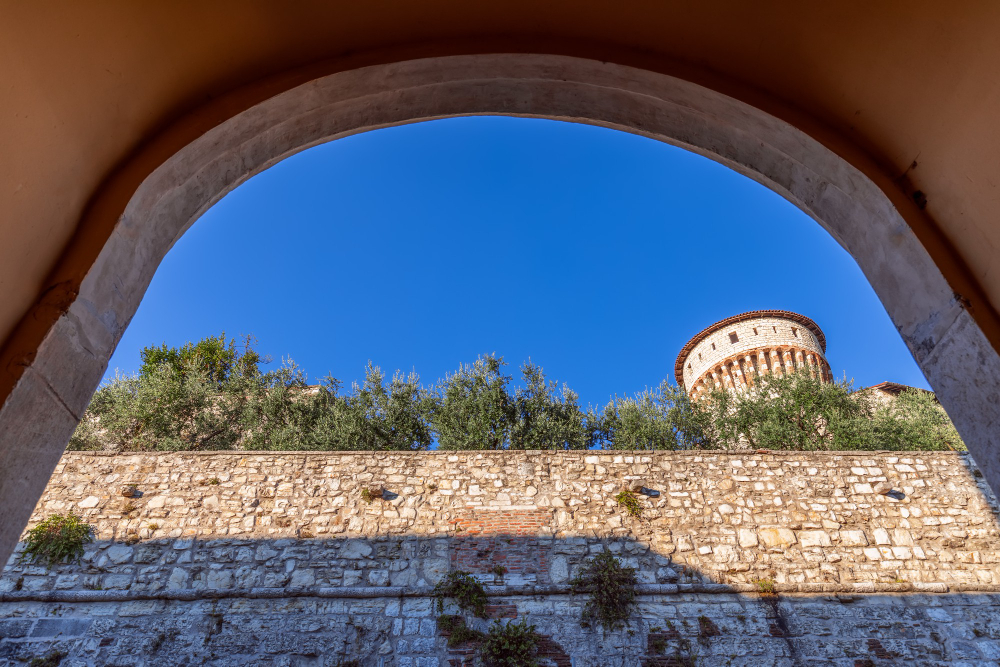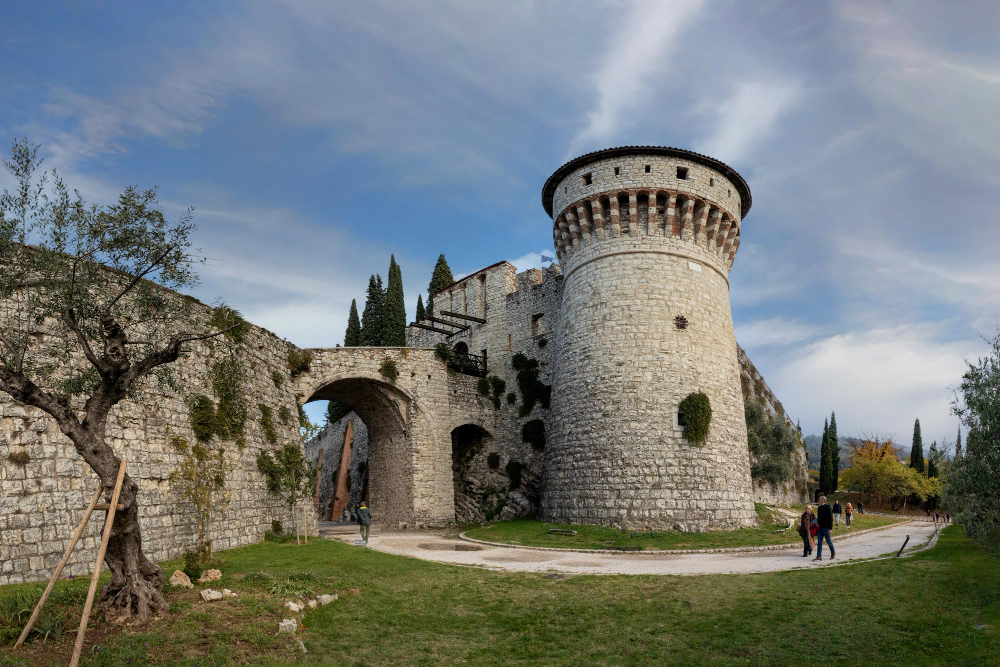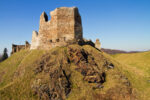

High above the bustling city of Brescia stands the majestic Castello di Brescia, also known as the “Falcon of Italy.” This impressive fortress on Colle Cidneo is not only a significant landmark but also a symbol of the region’s turbulent history. The Castello, one of Italy’s largest fortresses, tells stories of power, faith, resistance, and change—it bears the marks of many eras. Let’s dive into the exciting history of this special place.
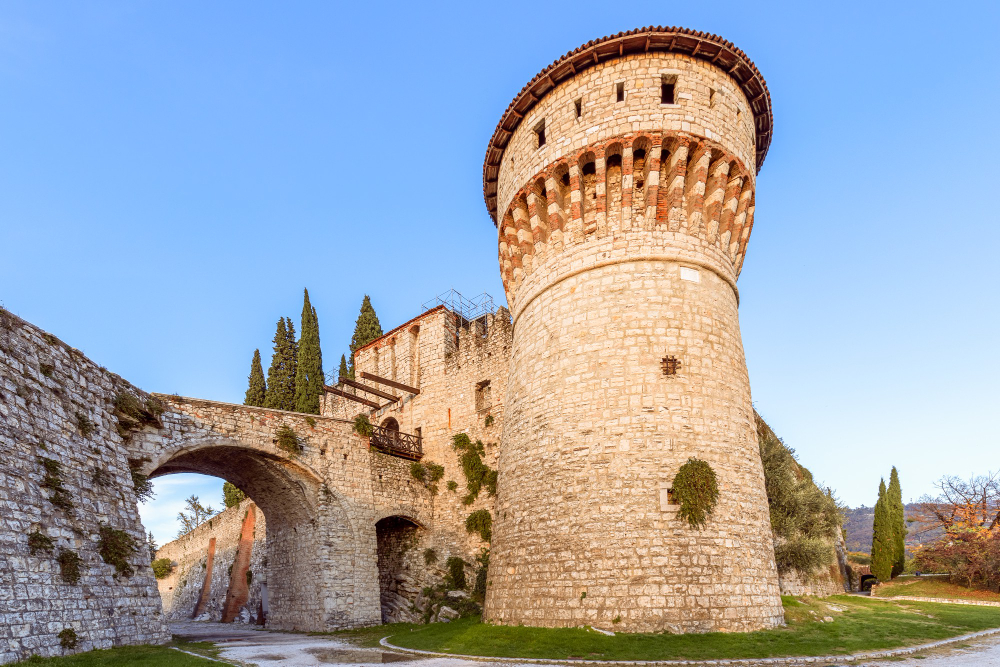
From Celtic Temples to Roman Splendor – The origins of the Castello di Brescia date back to the Bronze Age, around the 9th century BCE, when the first settlements emerged on Colle Cidneo. The first significant structure on this hill, however, was a small temple dedicated to the Celtic god Bergimus. With the arrival of the Romans at the end of the 1st century BCE, a new era began for the region. They incorporated the hill into the city and erected a monumental temple, whose foundations and walls are still visible today beneath the fortress. During the rise of Christianity in the early Middle Ages, Colle Cidneo became a sacred site. An early Christian martyrium was built here, later followed by a magnificent basilica. Unfortunately, the basilica was severely damaged in the 18th century by an explosion in a nearby powder magazine and was eventually demolished. Only a single fragment from this period has survived: the Torre Mirabella, which is now considered one of the most impressive remnants of ancient architecture. It is believed to have been built on the foundations of a Roman tower.
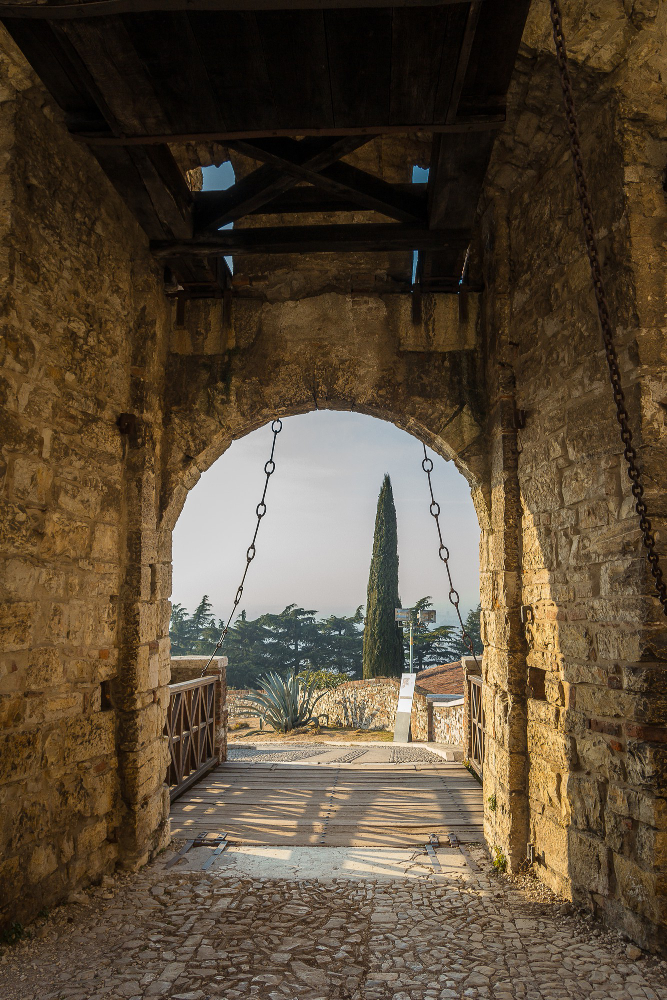
The Middle Ages: Power Struggles and New Walls – The High Middle Ages brought a relatively peaceful period for Colle Cidneo, but after the turn of the millennium, the area regained its importance. Between 1237 and 1254, the city walls were expanded, giving Brescia a new shape and a fortified character. At that time, the hill was a center of religious life and the site of markets and festivals. A decisive innovation took place in 1337 under the rule of the Visconti. The Castello di Brescia was expanded into a strategic fortress that fulfilled both military and administrative functions. The so-called Mastio, which served as the central defensive tower and residence of the garrison commander, was built during this period and adorned with colorful wall decorations. Although much of it has been lost, the Mastio remains one of the most fascinating parts of the fortress. The defensive works were supplemented by towers, covered walkways, and possibly drawbridges. An important development was the construction of the “Strada del Soccorso,” an escape route to the north. Ironically, this route later often played a role in attacks by enemy troops.
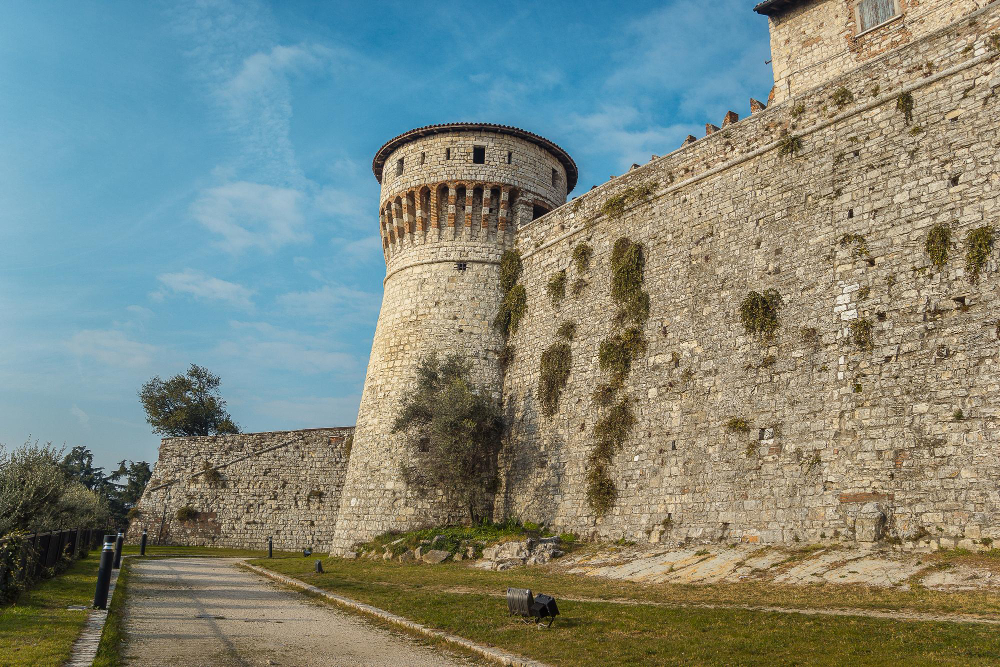
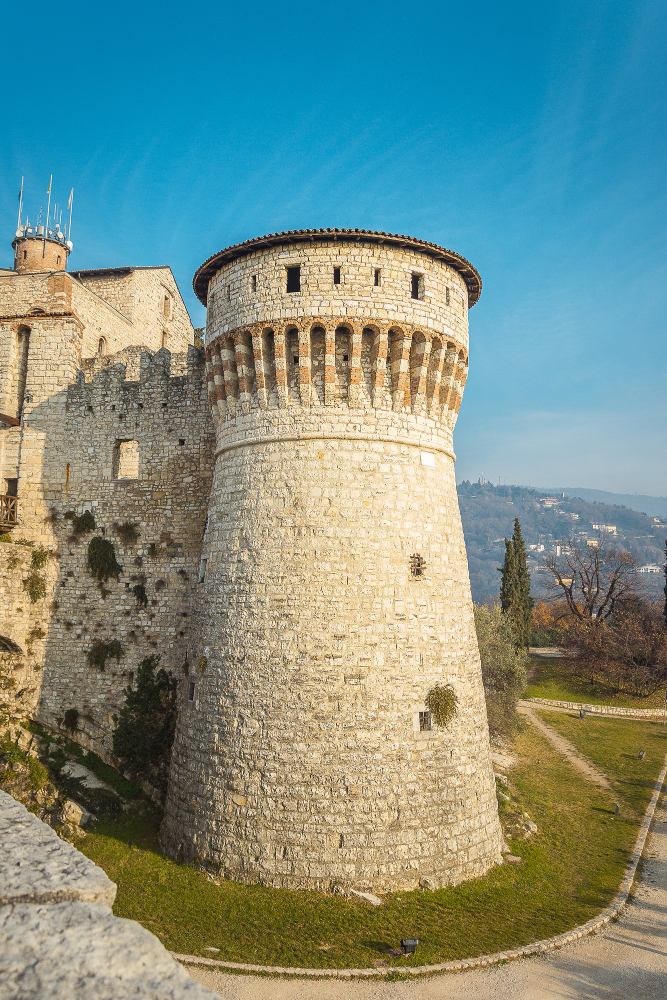
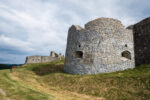
The Venetian Era and the Challenges of War – In 1426, Brescia came under the control of the Republic of Venice. The powerful Venetians immediately set about repairing and expanding the city’s fortifications, which had been damaged during the conflicts with the Milanese. As part of this work, the fortress walls were reinforced with earthworks and moats. The square towers of the Castello were given a round shape to better withstand attacks. Nevertheless, only one of these towers has survived to this day. The 16th century was a dark time for Brescia. After the Venetians’ defeat by the French in 1509, the city fell under foreign rule. While the French planned tactical improvements to the Castello, many projects were never completed. The unrest of that period even led to the destruction of a monastery to make way for new walls. The year 1512 was tragic, as Brescia became the scene of a brutal massacre. Enemy soldiers used the Strada del Soccorso to gain access to the fortress and plunder the city.
From Fortress to Decline – After the Venetians regained control of Brescia, the political situation stabilized. The fortress was further expanded, including the extension of the bastions and the construction of supply depots. However, the Castello’s strategic importance gradually waned as the lines of conflict shifted further east. From then on, the fortress was no longer actively used in wars, marking the beginning of its slow decline. In the 19th century, under French and later Austrian rule, the Castello served primarily as a prison and barracks. During the famous “Ten Days of Brescia” in 1849, the fortress was once again the scene of violent clashes between the population and the Austrian occupiers, before the latter regained control.
Modern Use: From Battlefield to Cultural Heritage – Following Italian unification, the Castello underwent a transformation from a military complex into a cultural center. The city of Brescia acquired the site and initiated extensive restoration work. In 1904, the “Esposizione Industriale Bresciana” took place here, an industrial exhibition attended even by King Vittorio Emanuele III. With temporary pavilions and a rail connection to the city, this event breathed new life into the Castello. Today, the fortress is a place of history and culture. It houses the Museum of the Risorgimento, the Luigi Marzoli Arms Museum, the Specola Cidnea Observatory, and impressive model railroads. Guided tours reveal hidden passageways and mysterious tunnels that once held strategic importance but had long been forgotten.
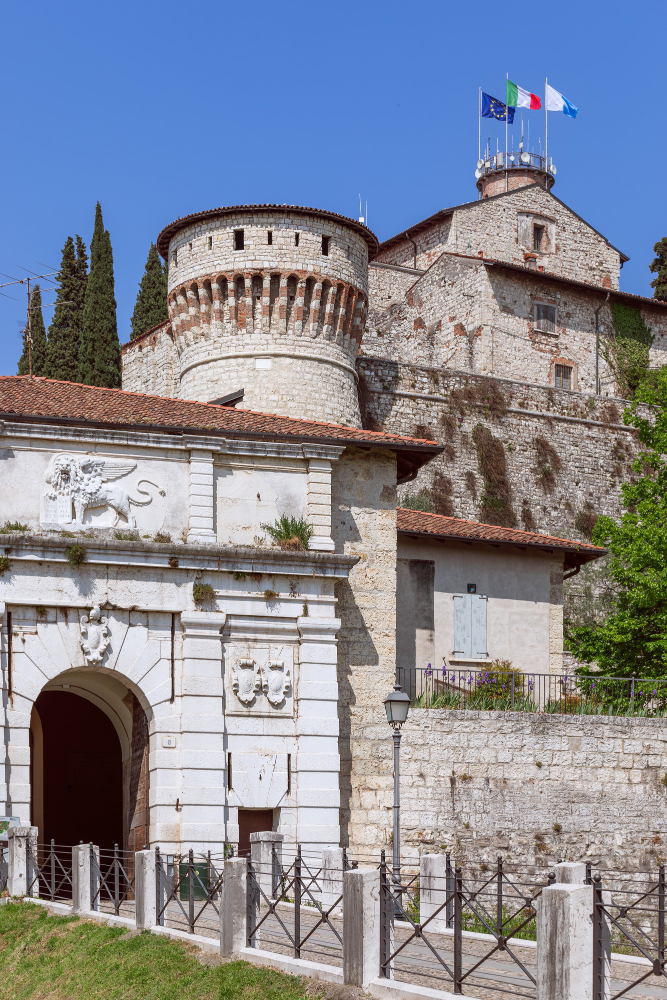
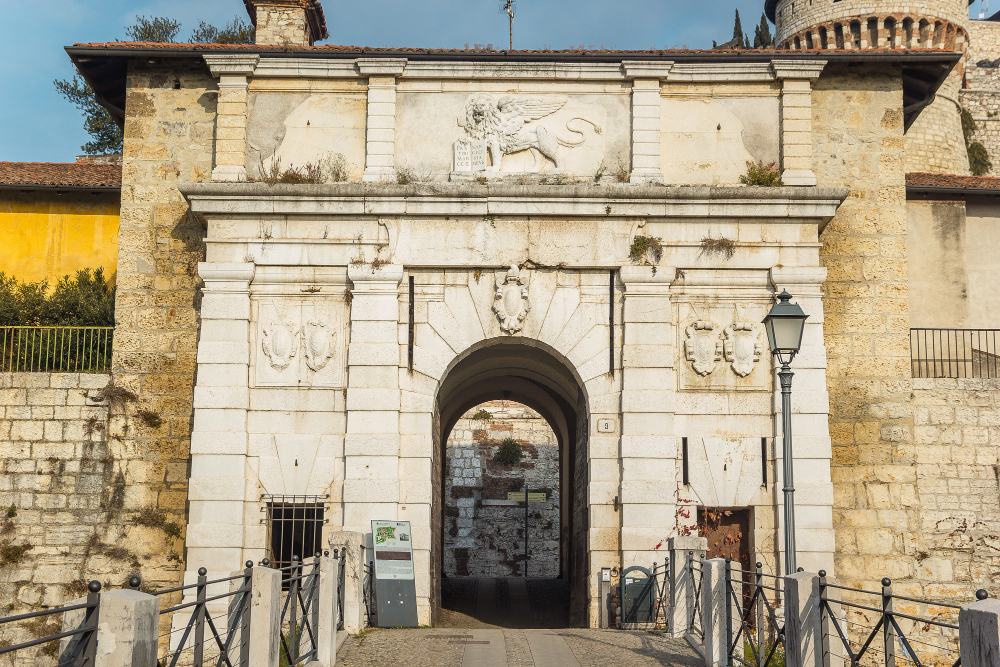
A Symbol of Cultural Heritage – On November 25, 2023, the Castello di Brescia was awarded the “Blue Shield,” an international symbol for the protection of cultural property introduced under the 1954 Hague Convention. This officially recognizes and protects the historical and cultural significance of this site. For visitors, the Castello is not only an important landmark but also a place full of secrets. Its imposing walls, centuries-old history, and picturesque gardens make it a popular destination for tourists and locals alike. It is a living testament to the past and a proud landmark of Brescia. Anyone who steps through the monumental gate embarks on a journey through time and experiences the fascinating history of the Falcon of Italy up close.