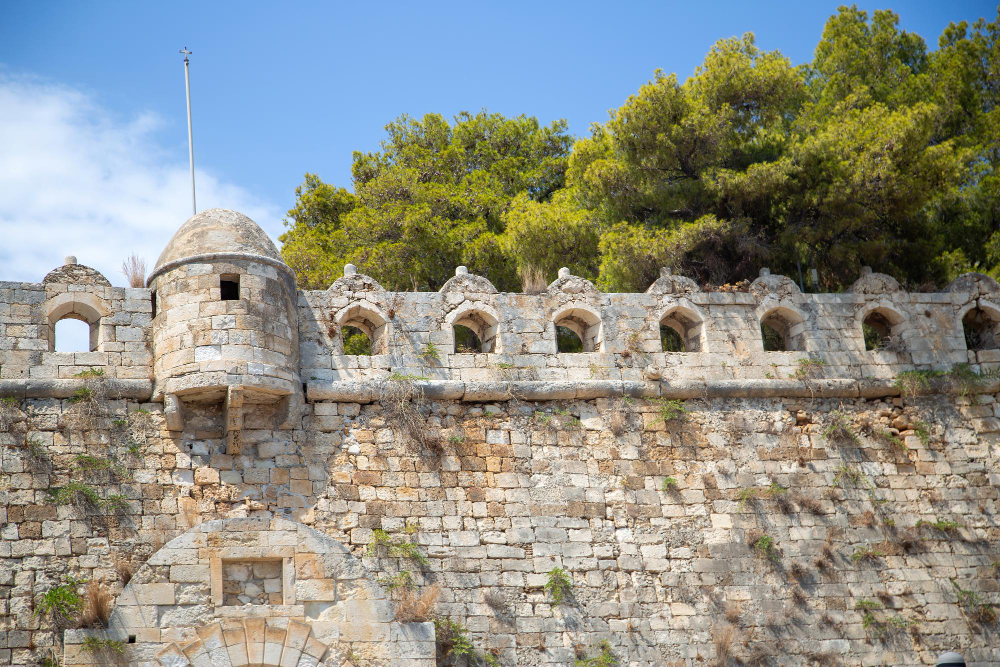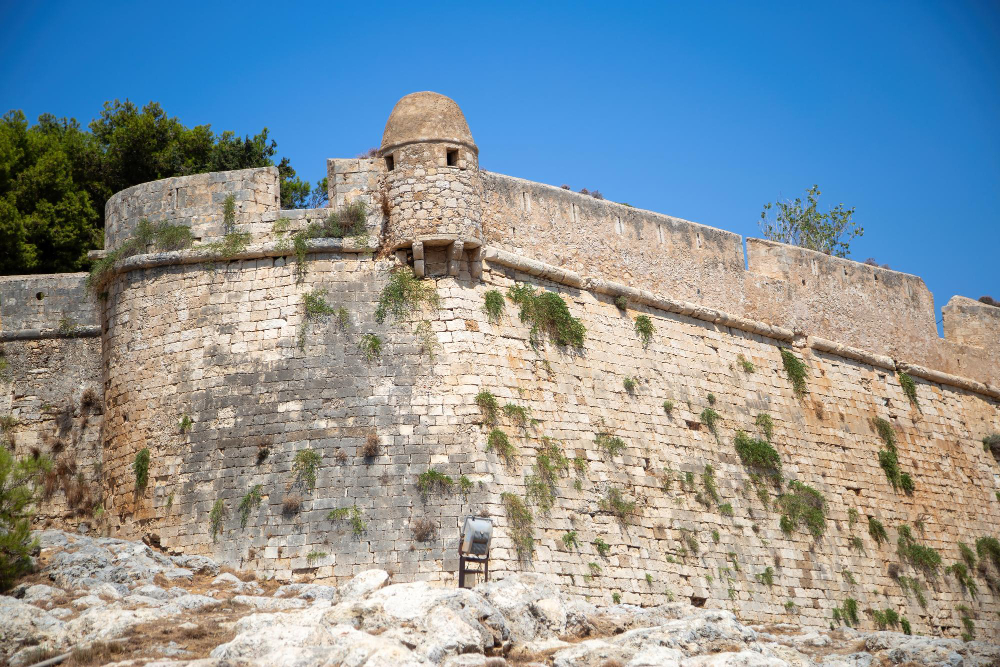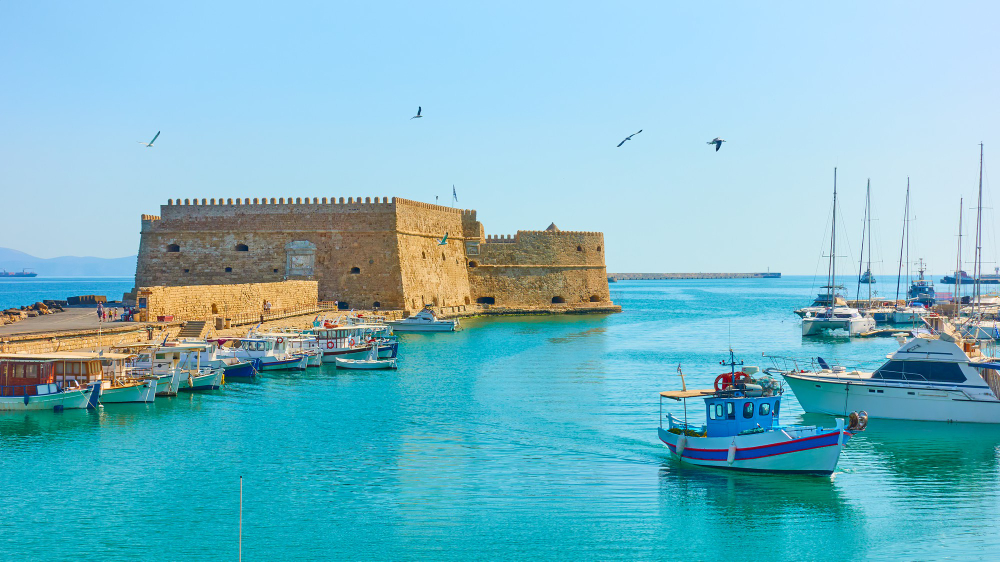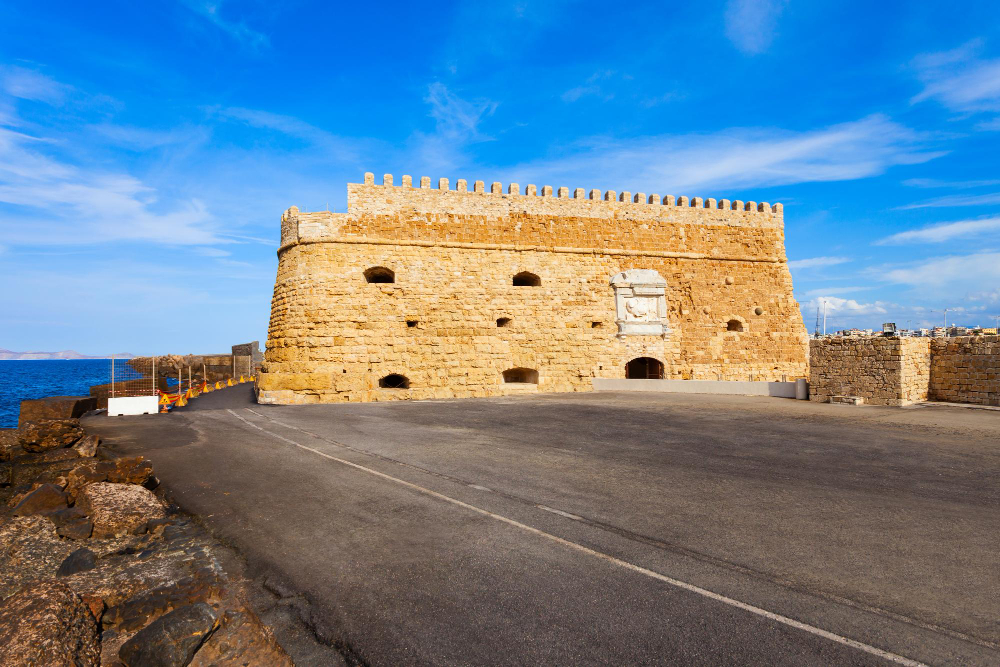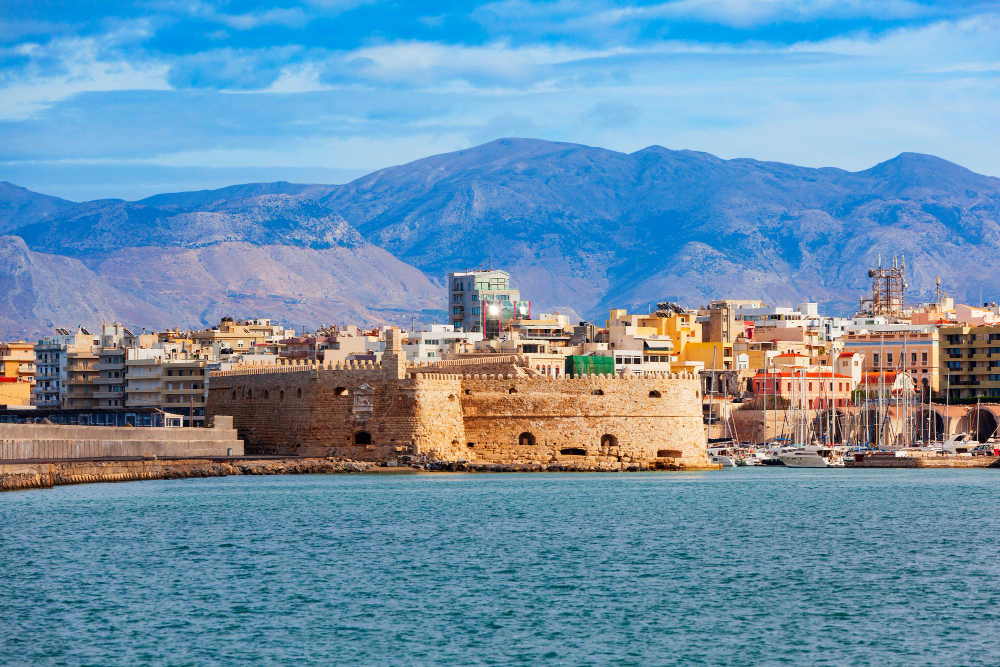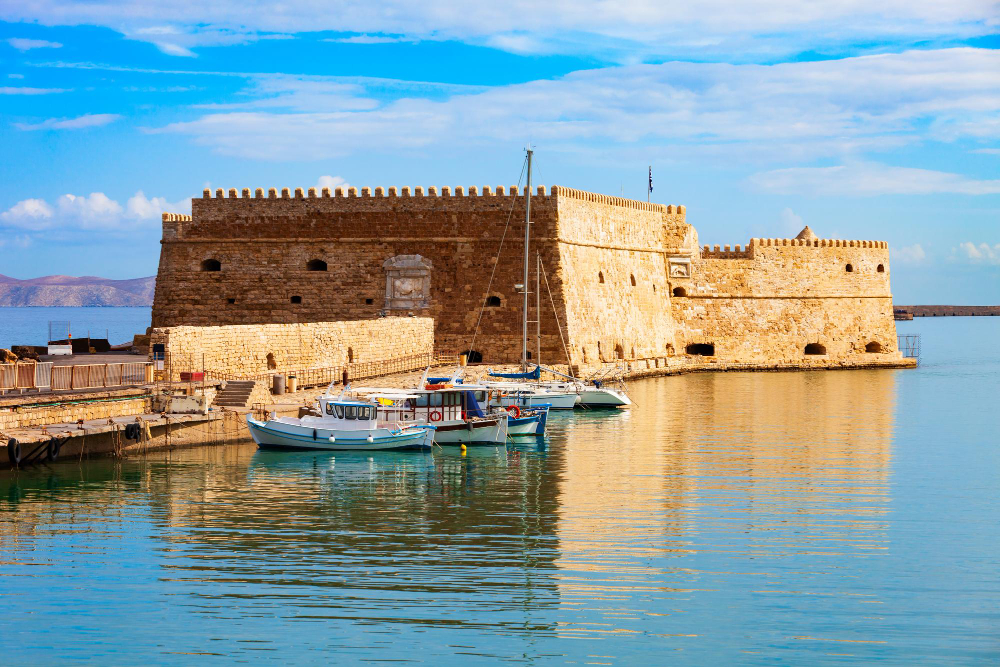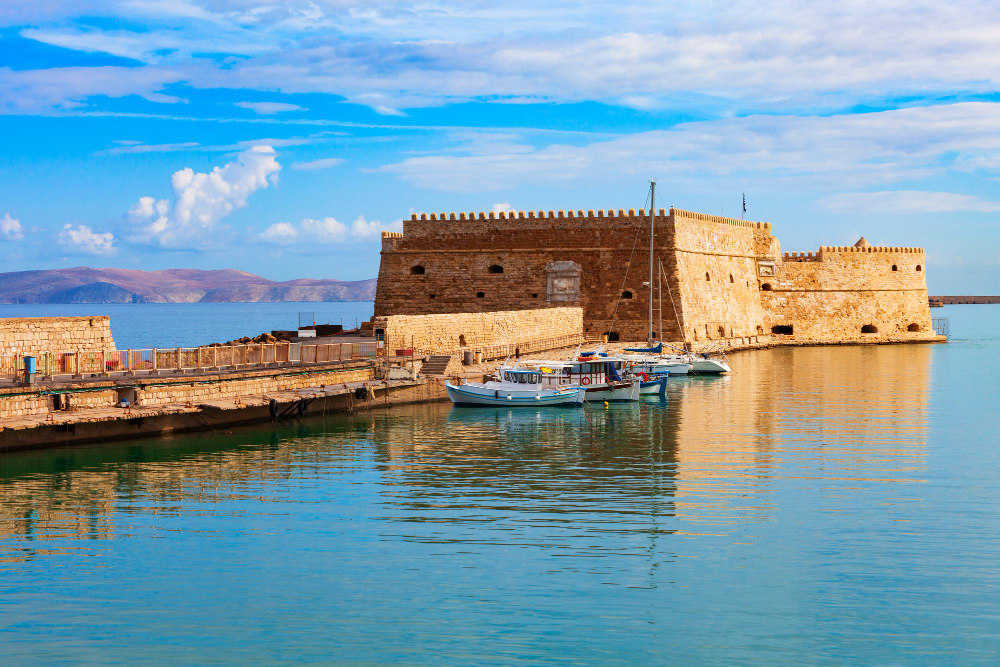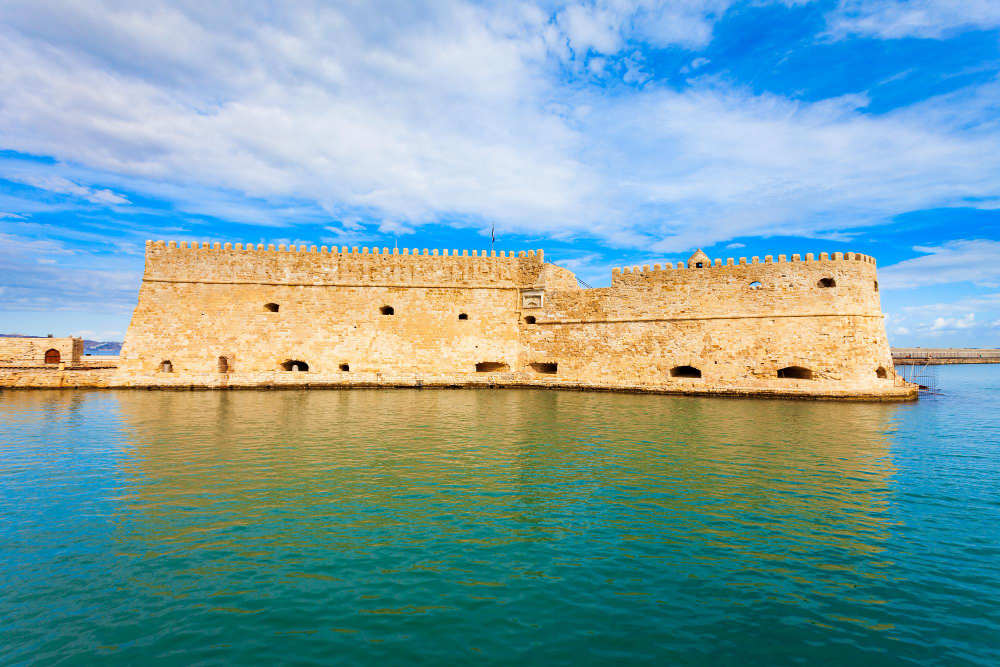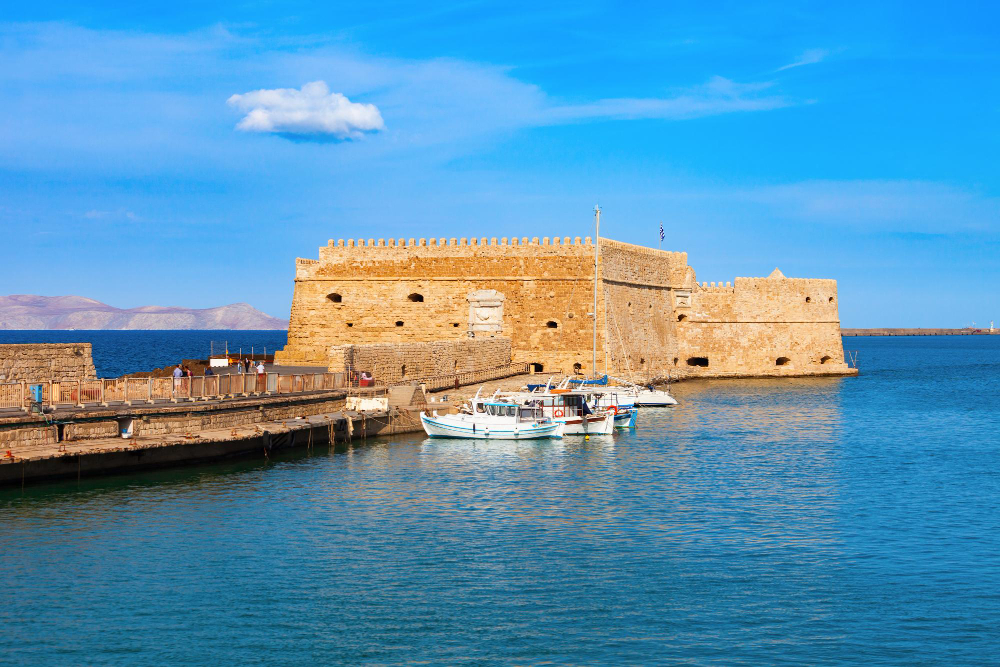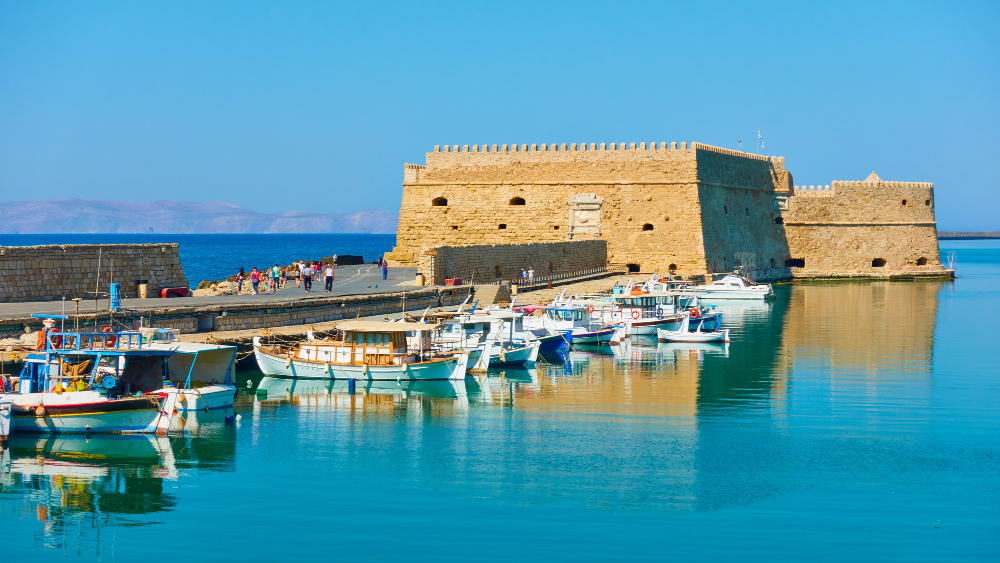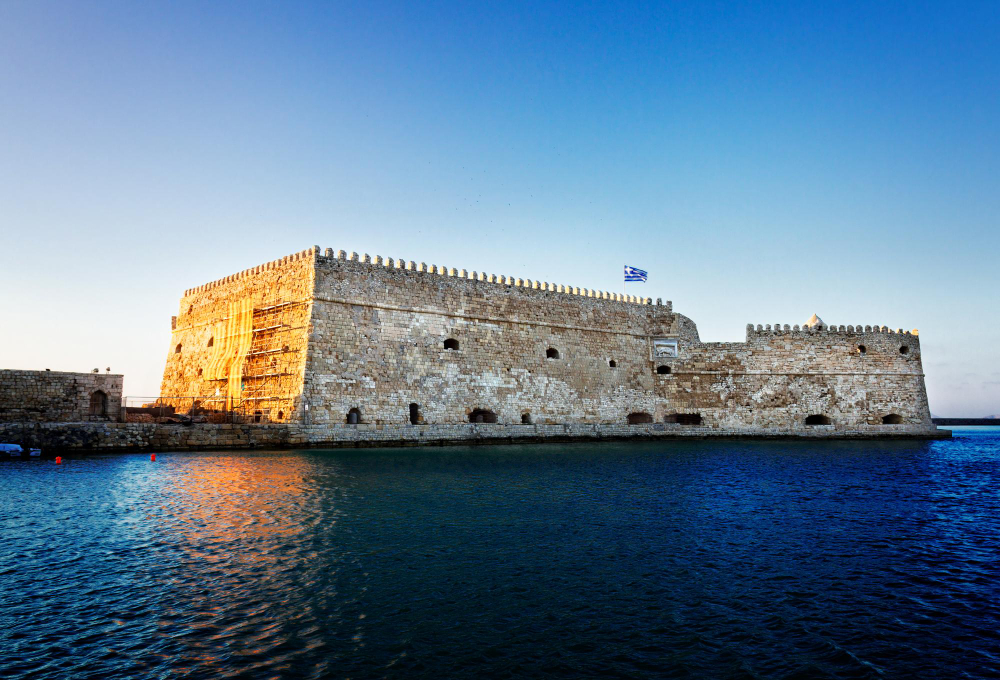

At the entrance to the old harbor of Heraklion, the bustling capital of Crete, stands the impressive Koules Fortress, also known as “Castello a Mare” (Italian for “Fortress by the Sea”). Its mighty stone walls tell a story spanning several centuries, from Arab fortifications to Venetian architecture to Ottoman rule. But Koules is not just a building—it is a silent witness to times past, shrouded in myths, legends, and the turbulent history of the island of Crete.
A Journey into the Past: From the Arabs to the Venetians – The origins of the fortress likely date back to the 9th or 10th century, when Crete was conquered by Arab invaders. It is believed that they erected the first fortified tower at this strategically important location to secure access to the sea. Later, during the Second Byzantine Period, a tower known as the “Castellum Comunis” stood there. Historians report that this tower was destroyed by a powerful earthquake in 1303 but was rebuilt shortly thereafter. The actual transformation of the site began in 1462, when the Venetian Senate decided to improve the defensive structures of the city of Candia (an old name for Heraklion, now Iraklion). The old Byzantine structure was finally demolished in 1523 to make way for the construction of the “Castello a Mare.” The Venetians employed an innovative method: old ships were filled with stones and sunk to create a solid foundation for the new fortress. After nearly two decades of intensive construction work, the fortress was completed in 1540 and was ready to assume its role as the city’s shield.
A Bulwark Under Fire: The Fall of Koules – Throughout its history, Koules Fortress played a key role in the region’s conflicts on multiple occasions, particularly during the Ottoman siege of Candia, which lasted a full 21 years. Despite its robust construction and impressive firepower—the fortress was once equipped with 18 cannons on the ground floor and 25 more on the upper level—the Venetian defenders stood no chance against the overwhelming artillery of the Ottoman army. In 1669, the Venetians surrendered and handed over not only the fortress but the entire city to the Ottomans. Interestingly, the Ottomans did not make any major structural changes to Koules. They merely added a few extra battlements and embrasures. However, they built a smaller fortress, known as “Little Koules,” which stood on the landward side of the harbor. This additional fortification was demolished in 1936, however, when Heraklion was modernized.
The Lighthouse and the Egyptian Period – Another notable chapter in the history of Koules is the period of Egyptian rule over Crete between 1830 and 1840. During this time, a lighthouse was built at the northeastern end of the fortress. The lighthouse served as a landmark for ships for decades before being destroyed during World War II and later rebuilt. Today, it is no longer in operation but remains a fascinating part of the fortress complex.
Architecture and Secrets: The Interior of Koules – Koules Fortress impresses not only with its exterior appearance but also with its sophisticated architecture. It consists of two main sections: a rectangular, taller part and a semicircular, slightly lower area. Particularly impressive are the fortress’s massive walls, which reach a thickness of up to 8.7 meters in some places. The fortress has three entrances and a total of 26 rooms, which were originally used for various purposes. These once housed soldiers’ quarters, storage rooms, a church, a water reservoir, as well as a bakery and a mill room. One of the most fascinating aspects of Koules is its ability to constantly reinvent itself. Today, the fortress serves not only as a popular tourist attraction but also as a cultural site. Art exhibitions, concerts, and theater performances breathe new life into the ancient walls, making the fortress a living symbol of the connection between the past and the present.
Legends and Myths: Stories Surrounding the Walls – In addition to its historical significance, numerous legends surround Koules Fortress. One of the most famous stories tells of hidden tunnels that supposedly run beneath the fortress and lead to the nearby island of Dia. Although these claims have never been proven, they continue to fascinate visitors to this day and spark the imagination of history and adventure lovers alike. Another legend tells of captured Venetian soldiers who are said to have breathed their last in the fortress’s dark cellars. It is said that their souls still roam the walls of Koules and that their presence can be felt, especially on lonely nights. These stories help to reinforce the fortress’s mystical aura, making it a popular destination for anyone seeking a bit of adventure.
Modern Koules: A Window into the Past – Today, Koules Fortress is one of Heraklion’s most famous landmarks and a must-see for any traveler visiting the island. Thanks to extensive restoration work, the fortress is in remarkably good condition and offers visitors the opportunity to delve deep into history. The view from the upper level of the fortress is spectacular: the sparkling blue waters of the Mediterranean stretch to the horizon, while the ancient walls remind visitors of the protection they once provided. Beyond its historical and architectural significance, Koules also plays an important role in the city’s cultural life. Regular events bring the fortress’s atmosphere to life and demonstrate how a historical monument can remain relevant in the modern world.
A place where history and myth converge – Koules Fortress is far more than just stones, mortar, and battlements. It reflects the turbulent history of Crete and tells stories of brave warriors, bitter battles, and peaceful times of reconstruction. At the same time, it invites visitors to be inspired by the legends and myths that permeate its walls. As a landmark of Heraklion, Koules remains a symbol of the resilience and creativity of the people who have shaped the island of Crete over the centuries. Anyone who has the opportunity to visit this fascinating fortress should take the time to stroll through its corridors, let the stories of the past sink in, and enjoy the view of the endless sea—a true highlight of any trip to Crete.