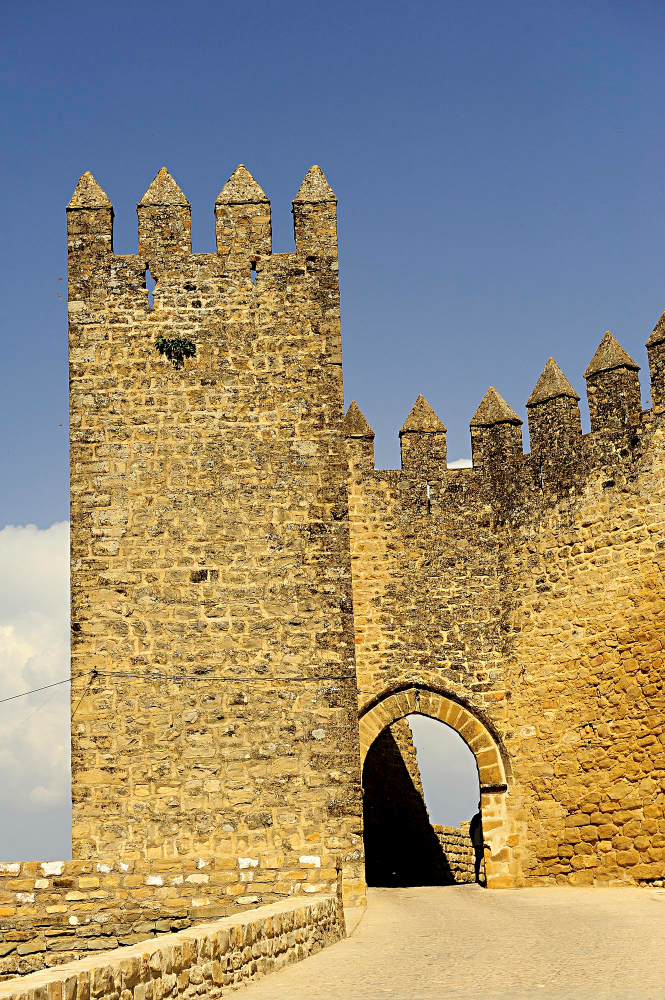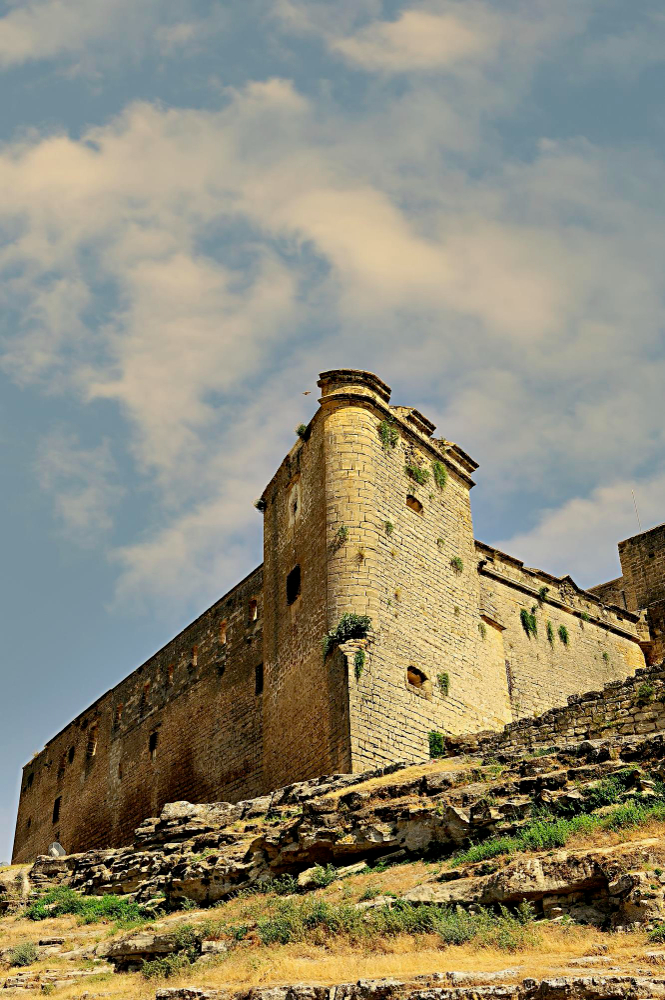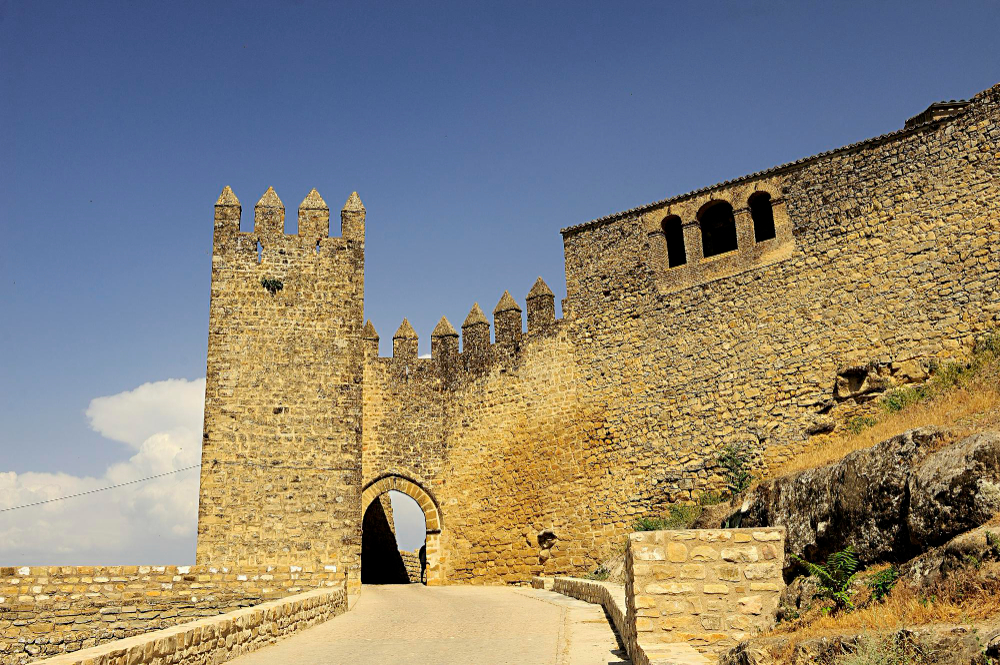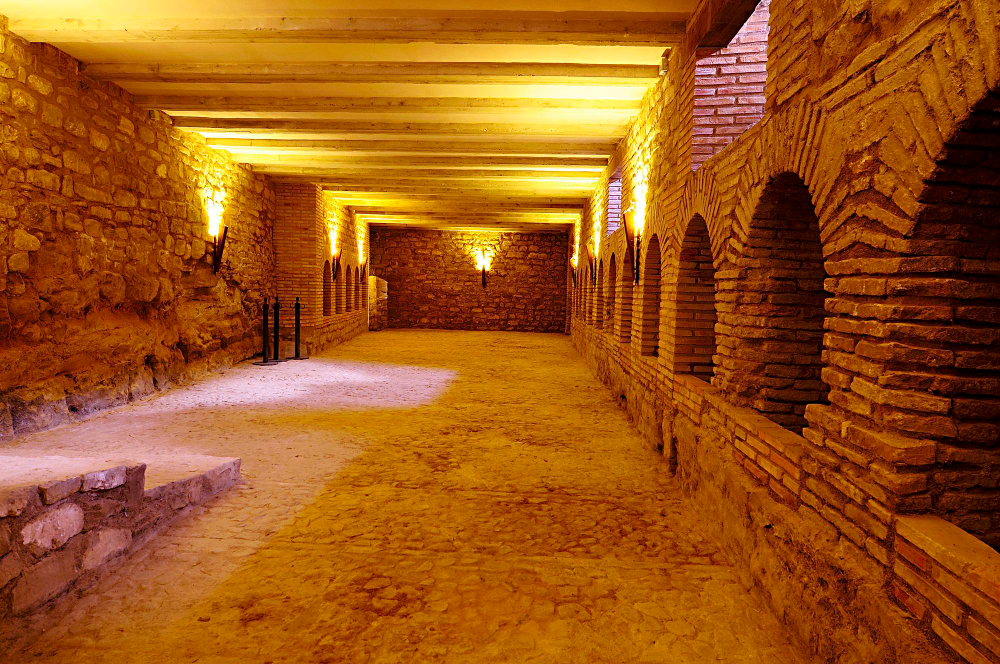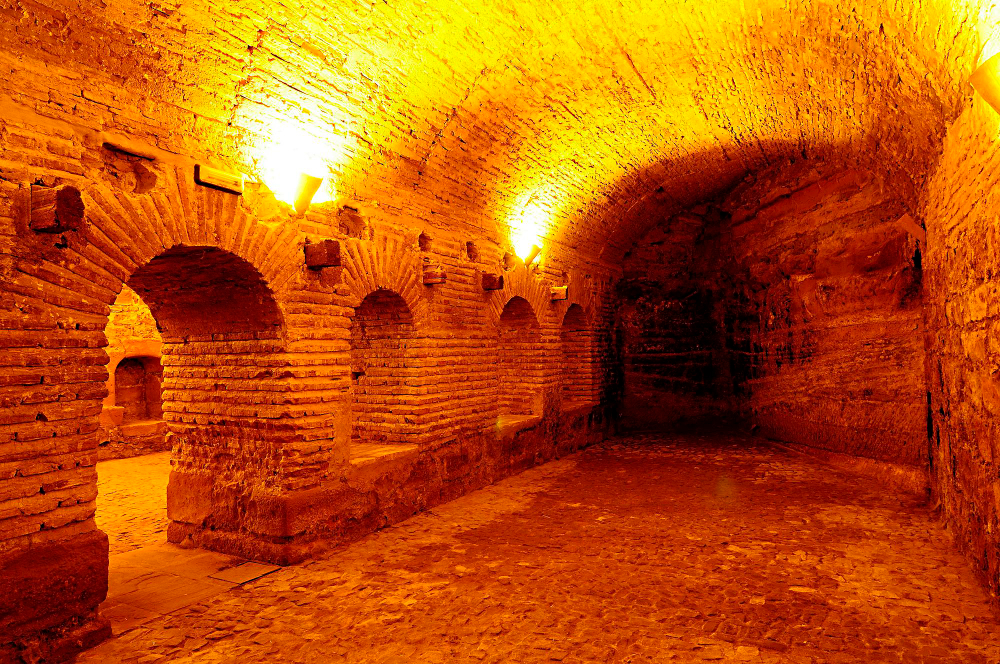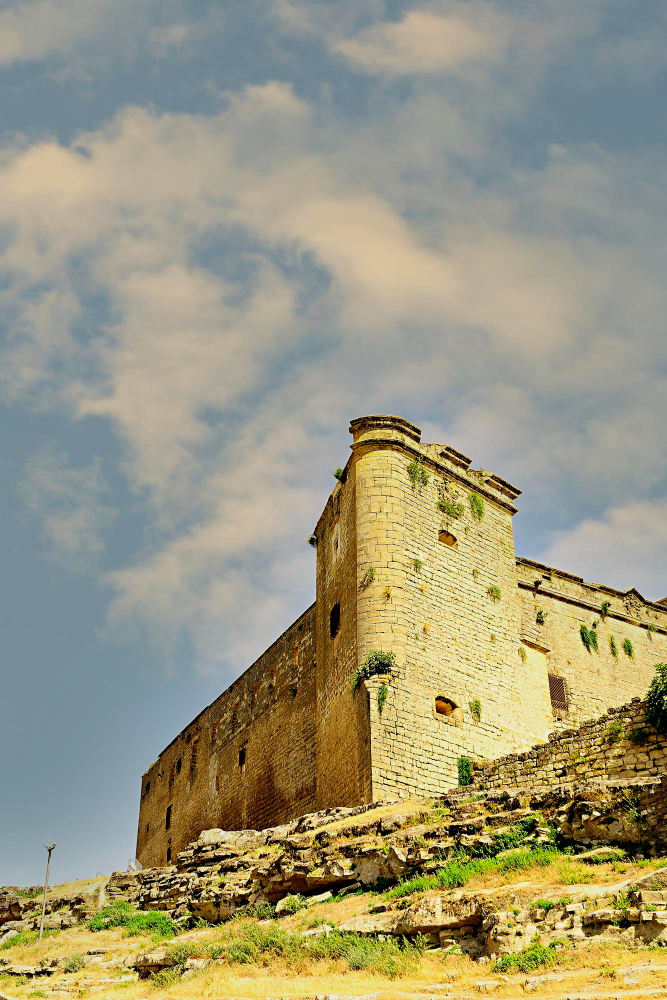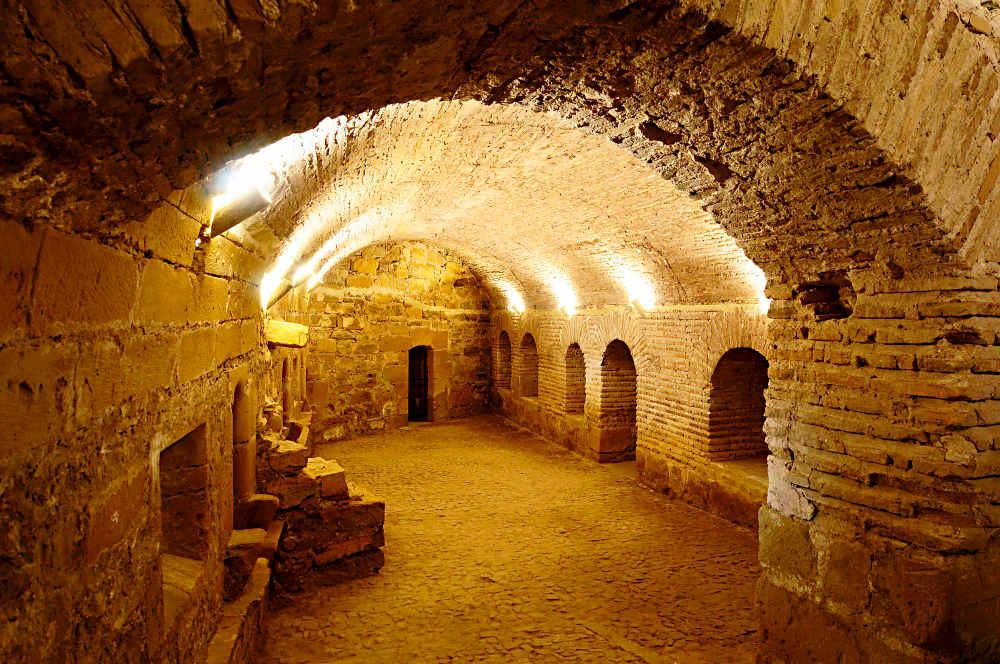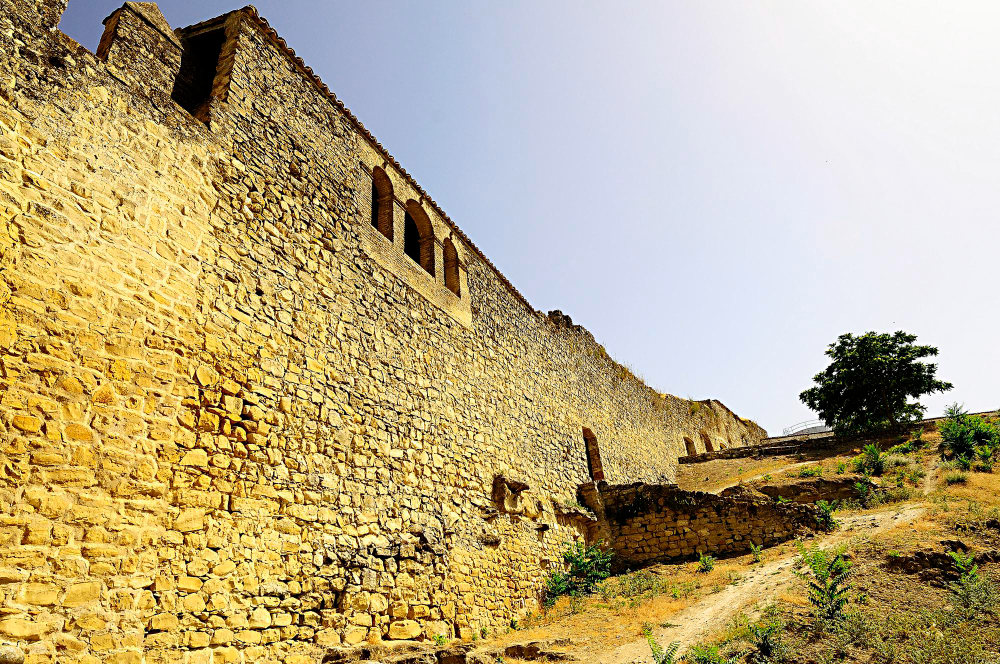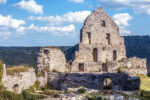

In the rolling hills of La Loma, a region in the heart of the province of Jaén, the Castillo de Sabiote stands majestically atop a small hill. This sprawling structure is not only an architectural masterpiece but also a living testament to centuries of history and legends. Long before its construction in the 13th century, this site was a favored location for fortresses throughout the region due to its strategic position—from early civilizations through to Arab rule.
The Origins: From a Muslim Alcázar to a Christian Fortress – The origins of the Castillo de Sabiote can be traced back to the Muslim era. Under Arab rule, the area served as an important defensive fortress. Perched on a hill, the fortress offered an unparalleled view of the fertile Guadalimar Valley as well as the neighboring Sierra Morena and Sierra Mágina mountain ranges. Following the Christian reconquest in the 13th century, the original structure was almost entirely rebuilt. The Castilian nobleman Juan de Zúñiga had the fortress reinforced at strategically important points, thereby laying the foundation for its later development.
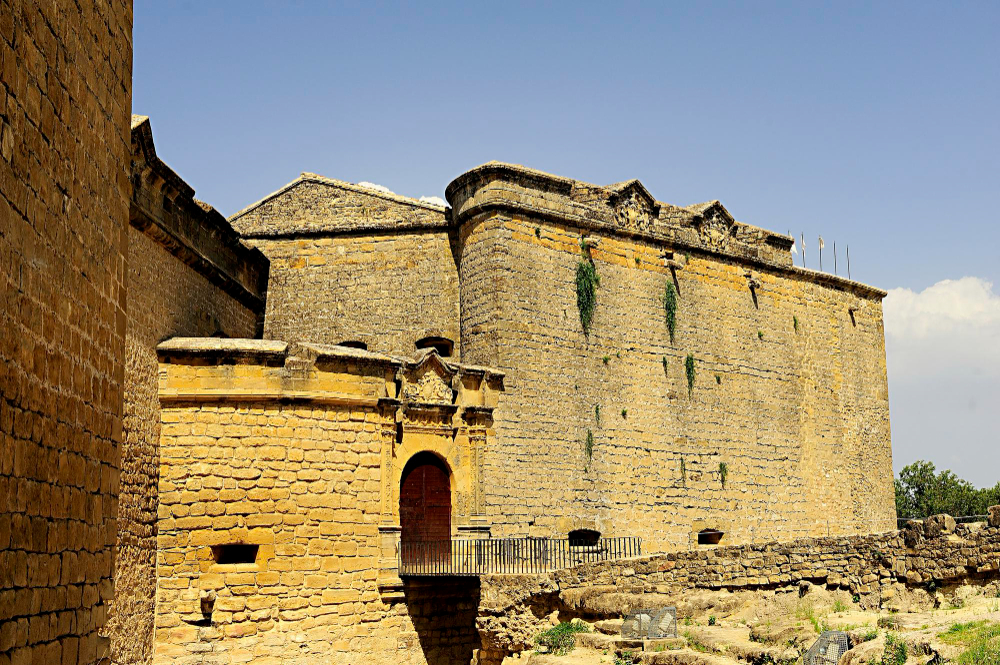
Renaissance Meets Military Architecture: A Renovation Under Francisco de los Cobos – A turning point in the castle’s history came in the 16th century under the direction of Francisco de los Cobos, one of the most powerful men of his time. De los Cobos was not only the personal secretary to Emperor Charles V but also a close confidant of his son Philip II. During one of his trips to Italy, he met the renowned architect Andrés de Vandelvira, who later helped him transform the medieval structure into an impressive Renaissance residence. The Castillo de Sabiote underwent extensive renovation between 1538 and 1549, drawing heavily on contemporary Italian military architecture. Vandelvira incorporated a variety of state-of-the-art defensive elements: angular bastion towers, embrasures, and loopholes were integrated alongside decorative details that underscored the palace’s character. This blend of architectural pragmatism and artistic refinement reflects the power and cultural influence of the de los Cobos family.
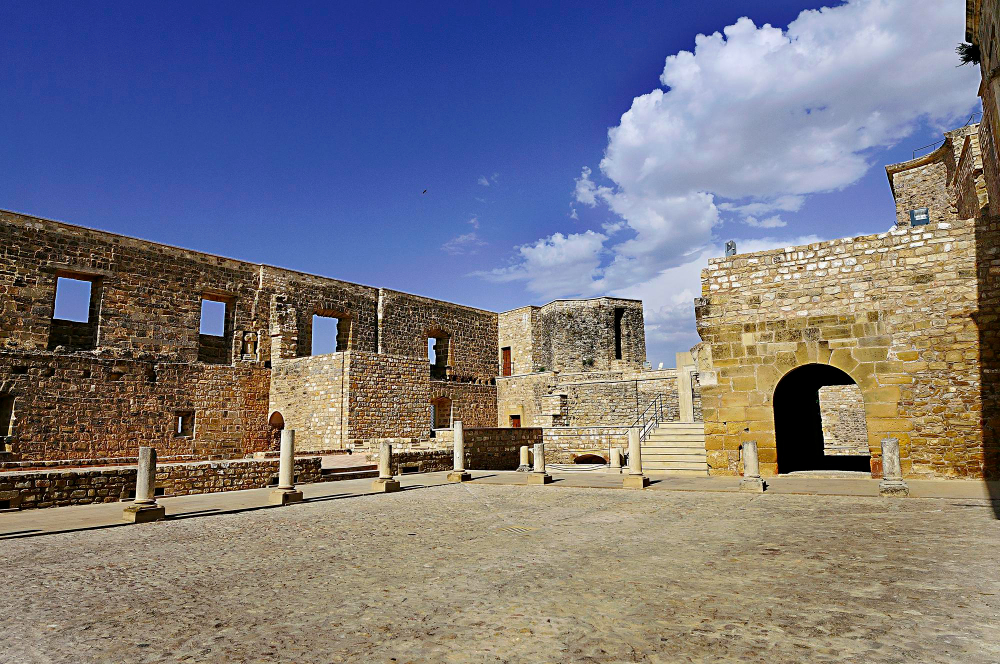
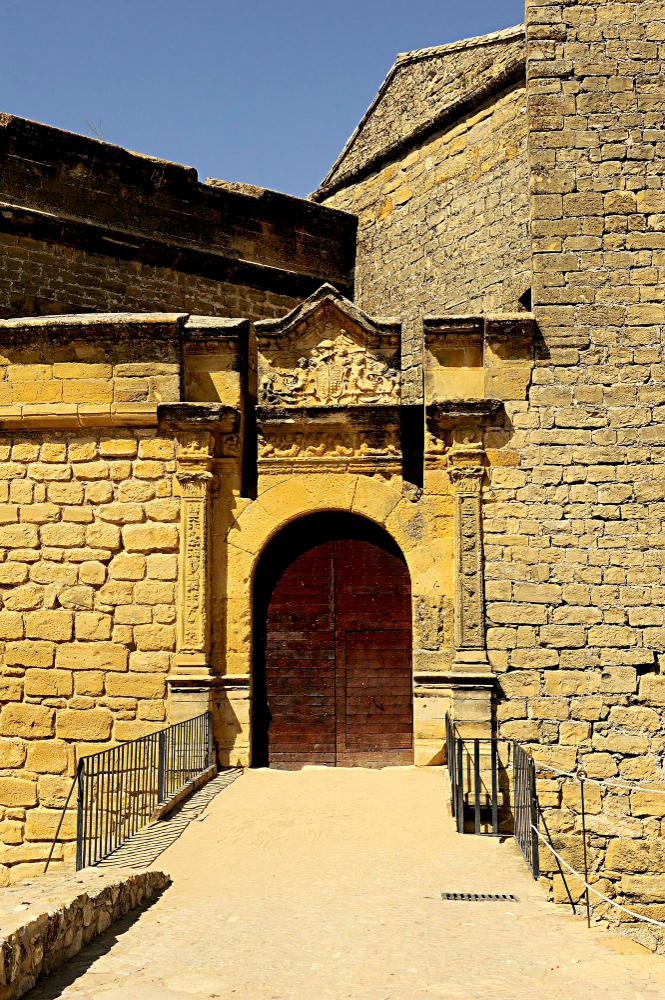
Architecture and Details: A Masterpiece of Its Time – What makes the Castillo de Sabiote particularly remarkable is the harmonious combination of military functionality and aesthetic refinement. The façade, characterized by elaborate stonework, tells the story of its builders. Above the main entrance, the magnificent coat of arms of Francisco de los Cobos and his wife María stands out, flanked by finely crafted Plateresque ornaments and classical reliefs. The castle’s courtyards form the heart of its palatial design. Here, strict geometric lines meet typical Renaissance elements such as stylized grasses and grotesque figures, which continue to amaze visitors to this day. The massive pentagonal towers, a hallmark of Italian-inspired architecture, served not only as defensive structures but also as an expression of architectural progress.
A Loss and a New Beginning: Napoleon’s Legacy and Today’s Restoration – Like many other historic sites in Spain, the Castillo de Sabiote suffered severe damage during the Napoleonic occupation. French troops looted the castle and blew up parts of the structure, largely destroying the interior. Since then, only fragments of the once magnificent interior remain. Despite the immense losses, the building was later designated a historic monument and has been officially recognized as a “Monumento Histórico Artístico” since 1931. The castle’s surrounding wall has also been considered a historic ensemble since 1972. More recently, the municipal government of Sabiote has made intensive efforts to preserve the castle and restore its cultural significance. In doing so, not only was the structural integrity stabilized, but initial steps toward reconstruction were also taken. However, a comprehensive plan to restore the original design is still pending.
Artworks and Legends: The Legacy of San Juanito – One of the most fascinating historical anecdotes surrounding the Castillo de Sabiote concerns the famous sculpture “San Juanito,” a work by the Italian master artist Michelangelo. For decades, the statue was housed inside the castle before being moved to the Sacra Capilla del Salvador in Úbeda, a nearby town. This connection between local history and one of the greatest icons of European art underscores the cultural richness that the Castillo symbolizes.
A Treasure of the Province of Jaén – Today, the Castillo de Sabiote is not only a significant architectural relic but also a magnet for tourists and historians. Its location offers a unique panoramic view of the surrounding valley, while the structure itself captivates as a masterpiece of military engineering and Renaissance aesthetics. Together with the nearby Castillo de Canena, it forms part of the region’s historical foundation and serves as a reminder of the nobility’s dominance in the 16th century. Furthermore, the castle contributes to the identity of the province of Jaén and underscores Andalusia’s role as a melting pot of cultures and influences. Whether you’re a history buff, an architecture enthusiast, or a casual visitor—there’s something here to move and inspire everyone.
A place full of secrets and history – The Castillo de Sabiote tells a multifaceted story that spans from ancient civilizations to the modern era. Its walls bear witness to wars, political intrigues, and cultural achievements. Despite the destruction wrought by the French occupation, the castle remains a proud symbol of power and beauty. Thanks to the restoration efforts of the city administration and the growing interest in cultural heritage, this historic structure has a real chance to regain its former glory.
The Castillo de Sabiote is more than just a fortress—it represents humanity’s ability to shape and defend its surroundings and to tell stories through architecture. May it continue to serve as an inspiration and give future generations the opportunity to immerse themselves in the past and understand its lessons.