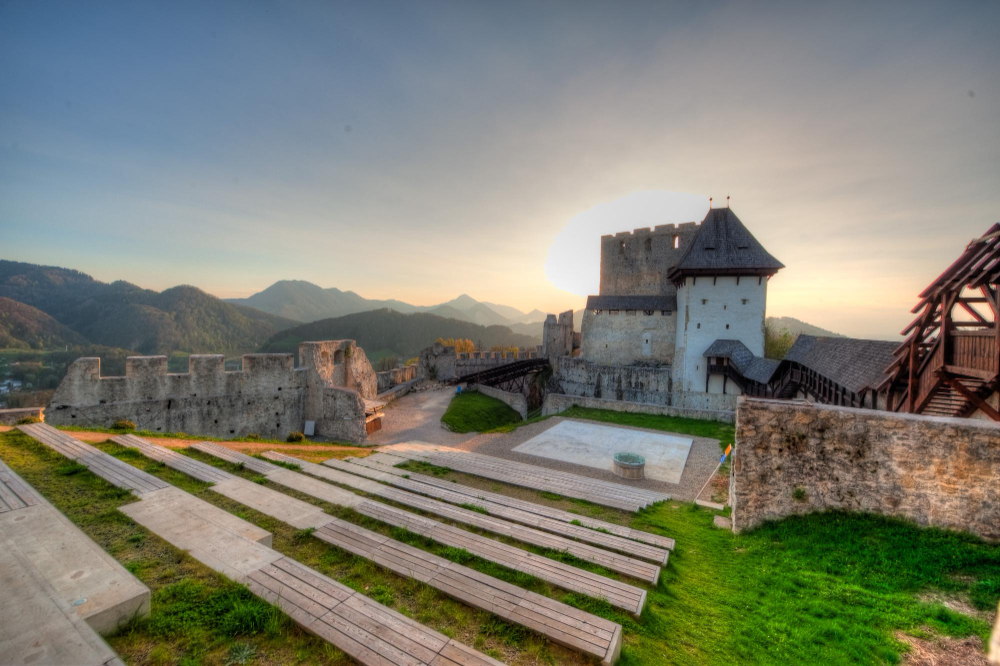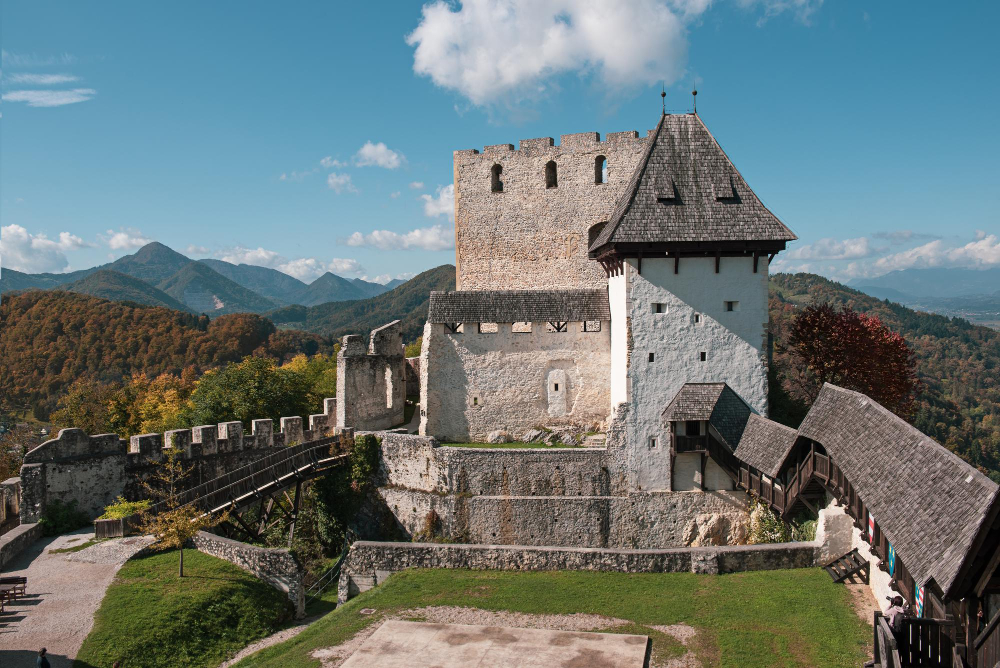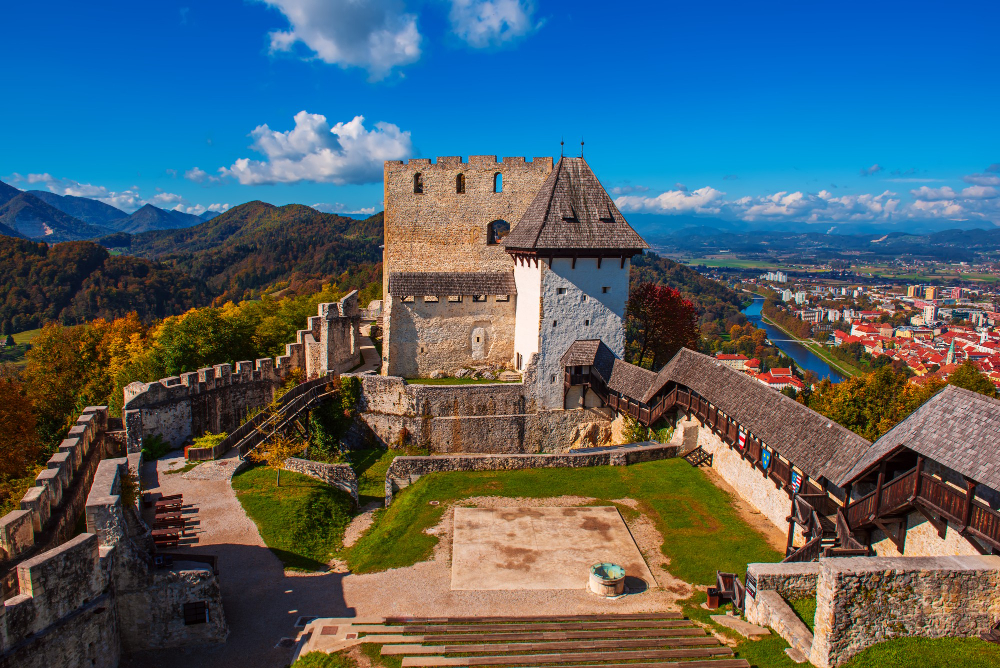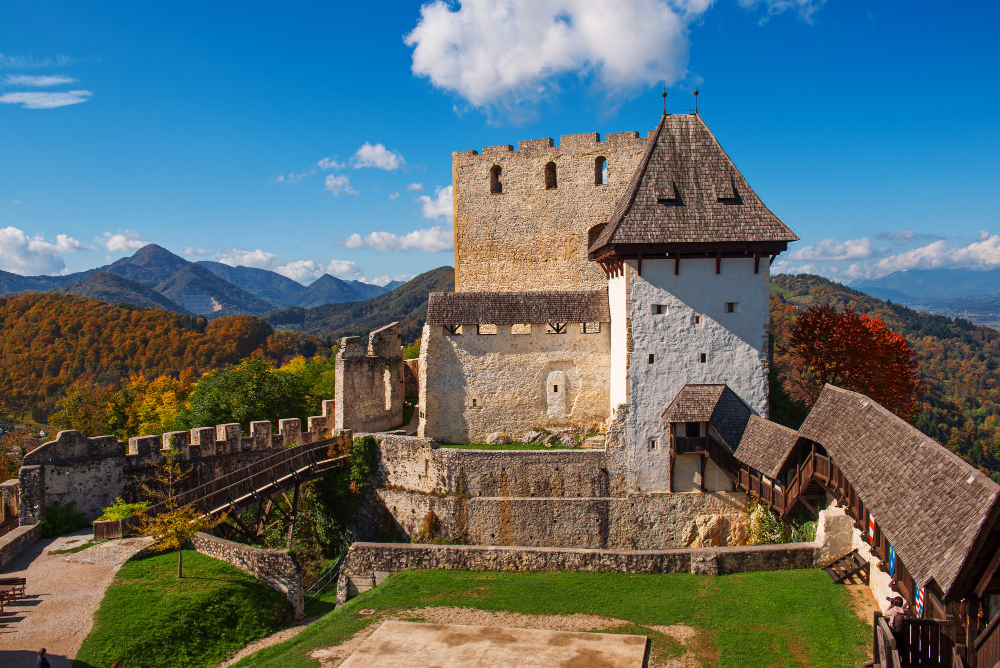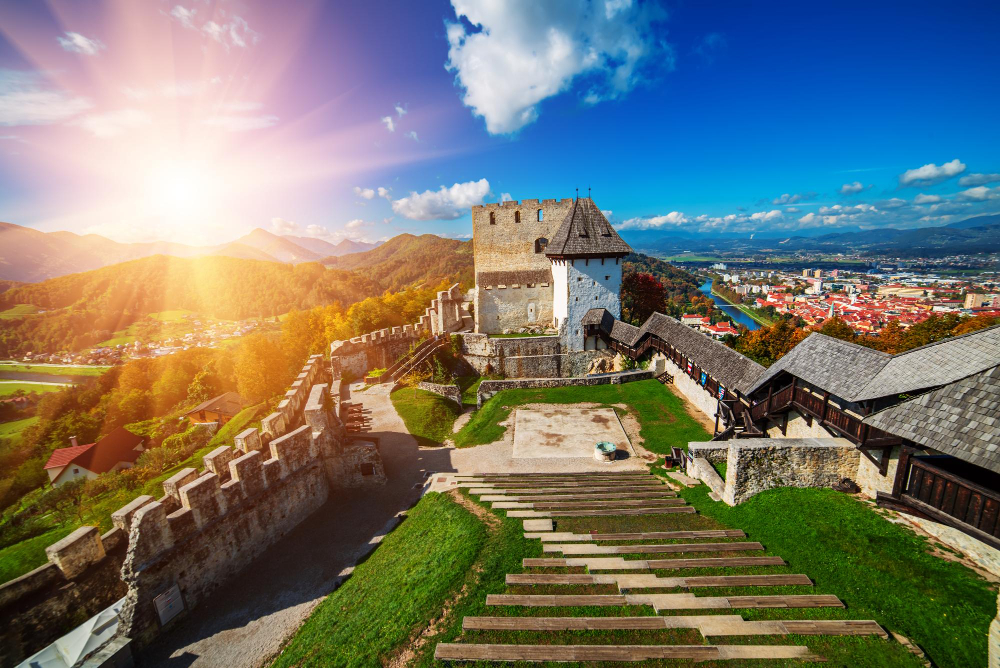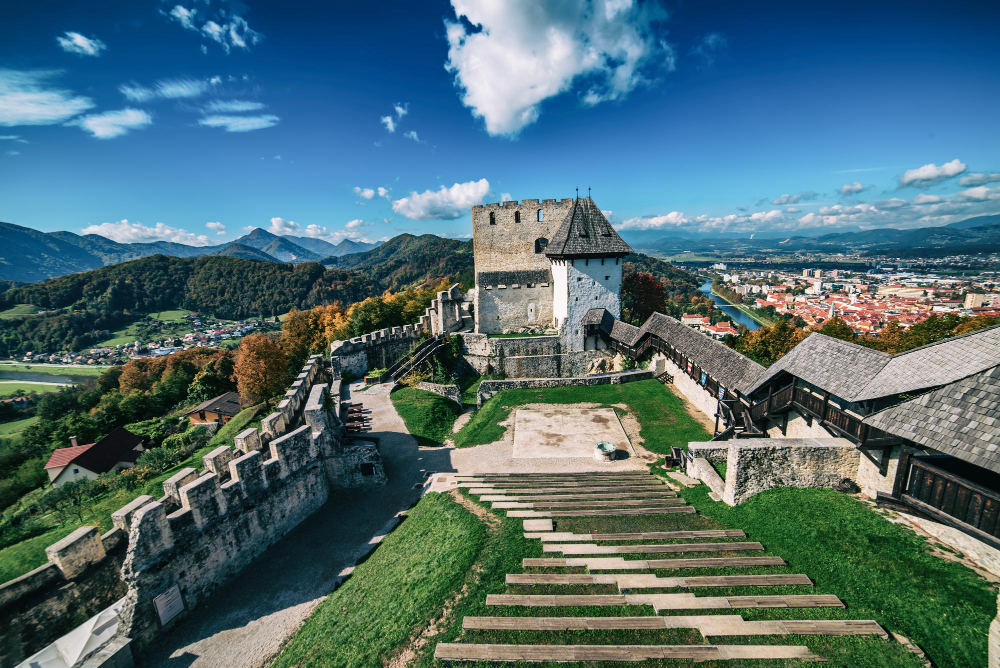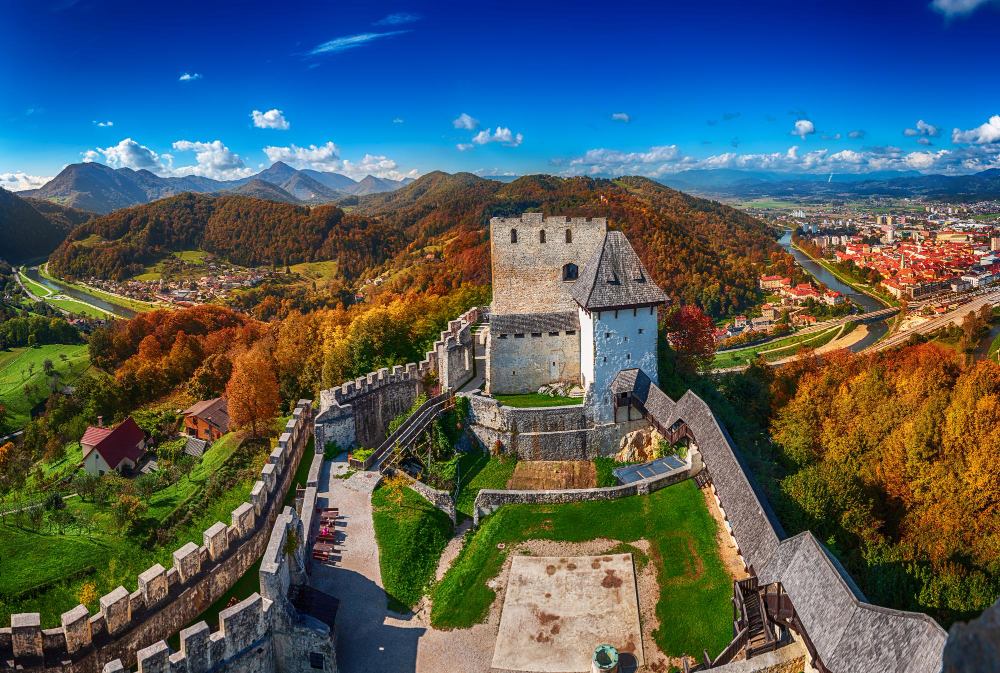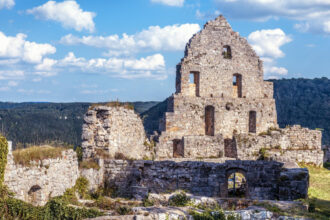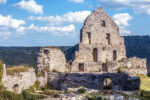

The venerable walls of Celje Castle—also known as “Celjski Grad” or “Upper Castle of Celje”—rise majestically above the city of Celje in Slovenia. Perched on three hills where the Savinja River winds its way into the Laško Valley, the ruins tell a story of power, glory, and decay. Once the largest fortress in Slovenia, the castle is now a site of cultural heritage and mysterious myths that extend far beyond its stone walls.
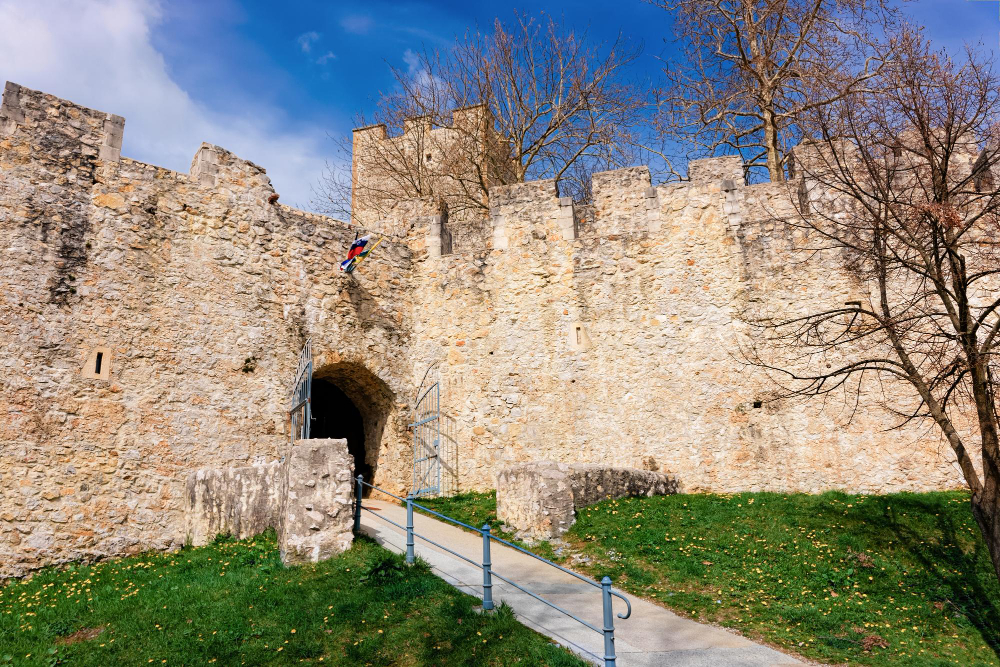
The Beginnings: The Rise of a Castle – The origins of Celje Castle date back to the early 13th century. The first written mentions of the castle date from 1125 to 1137 and describe a Romanesque palace built by the Counts of Heunburg. These powerful nobles from Carinthia chose a strategically ideal location: the western part of today’s castle offered natural protection thanks to steep rock faces, while thick walls and massive water reservoirs provided additional security. The castle’s architecture was typical of the Middle Ages. With high walls reinforced by battlements and parapet-like structures, the fortress was designed to keep attackers at bay. Nevertheless, the castle was the scene of fierce conflicts between the Lords of Sanneck and Auffenstein, during which the original structure was severely damaged. These early battles laid the foundation not only for the castle’s present-day appearance but also for the long and turbulent history that was to follow.
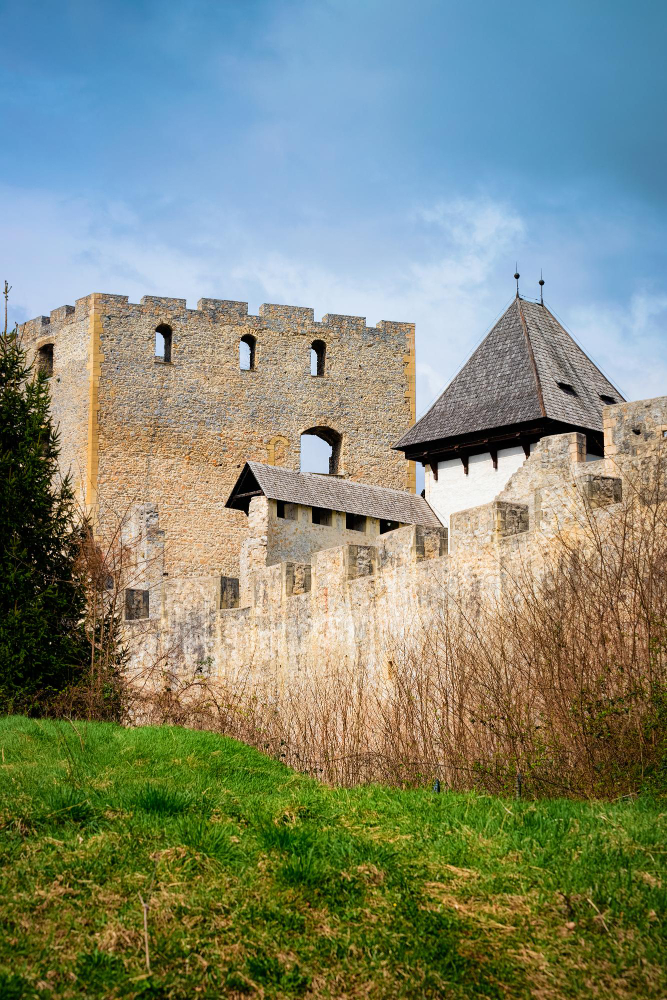
The Rise of the House of Celje – In 1333, Celje Castle passed into the possession of the Lords of Sanneck, who later became known as the Counts of Celje. From that point on, the fortress transformed from a military outpost into a magnificent residence. Especially from the mid-14th century onward, the counts invested considerable resources in expanding and embellishing the complex. Around 1400, the impressive Friderikov stolp (Frederick’s Tower) was erected, a four-story tower that served as a symbol of the counts’ power. Additionally, a residential area for women was built, which formed part of the castle’s western sections. During this period, the castle was not only a fortress but also a center of courtly life. It featured secret passages, luxurious rooms, and even a chapel dedicated to Saint Andrew. Yet despite these magnificent additions, the castle’s significance as a residence began to wane over time.
Intrigues and Tragedies: The Dark Legends of Celje – Hardly any other castle in Slovenia is as closely associated with dark tales and tragedies as Celje. One of the most famous legends is the tragic love story between Frederick II of Celje and the simple peasant girl Veronika Deseniška. Although Frederick’s father disapproved of this union and, according to rumors, did everything in his power to separate the couple, Frederick remained faithful to his love. Yet the story came to a cruel end when Veronika was accused of poisoning Frederick’s first wife—an accusation that was likely politically motivated. Veronika was eventually brutally murdered, an act that to this day serves as a stark reminder of the intrigues of power. This story is brought to life every year during cultural events at the castle and is an integral part of local folklore.
The Decline of a Giant – The castle’s importance as a fortress waned over the centuries, particularly after the extinction of the Counts of Celje in 1456. By the 17th century, Friderikov Stolp was already showing the first signs of decay: the roof had disappeared, and the once-magnificent residential buildings lay in ruins. A key factor in this was the reuse of the castle stones, for example in the construction of the Novo Celje manor house in the 18th century. In 1803, the castle was purchased by a farmer and used as a quarry. This further accelerated its decay, so that the castle’s once-mighty walls eventually became a ruin.
Rescue and Rebirth – It was not until the late 19th century that interest in preserving this historic site was revived. The Governor of Styria, Count Wickenburg, acquired the ruins in 1846 and donated them to the Styrian Provincial Assembly. This marked the beginning of the restoration work, which continues to this day. In particular, the efforts of the Celje Museum Society in the 1880s brought new hope for the castle. Although work was temporarily interrupted during World War II, archaeologists and restorers resumed their work after the war.
Modern Celje Castle: A Place of Culture and Legends – Today, the castle is not only a popular tourist destination but also a hub for cultural events. Every year, the “Pod zvezdami Celjanov” (“Under the Stars of the House of Celje”) festival takes place, celebrating medieval lifestyle, music, theater, and historical reenactments. Likewise, “Veronikini večeri,” an event dedicated to the tragic story of Veronika, attracts numerous visitors. Here, poets are honored with awards such as the “Veronikina nagrada” and the “Zlatnik poezije,” making the castle a center of literature as well. With around 60,000 visitors annually and a unique blend of history, culture, and myths, Celje Castle remains a living testament to times past. Even though its walls are no longer impregnable, they continue to tell stories—of power struggles, love, and loss, but also of rebirth and hope.
A place that stands the test of time – Celje Castle is far more than a ruin; it is a place where history and legend are woven into an impressive whole. From its glorious past as the seat of great princes to its current role as the cultural heart of the region—the magic of this place is hard to miss. Anyone who has the opportunity to visit this imposing complex will be impressed not only by the historical details but also by the atmosphere that still whispers the old stories—a true gem of Slovenia that deserves to be preserved and cherished.