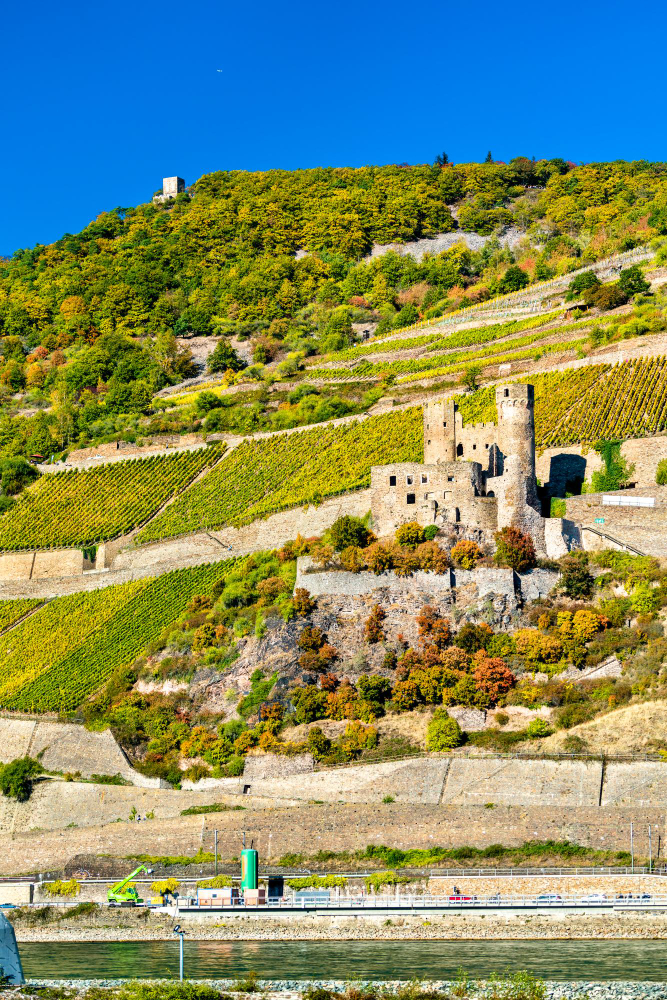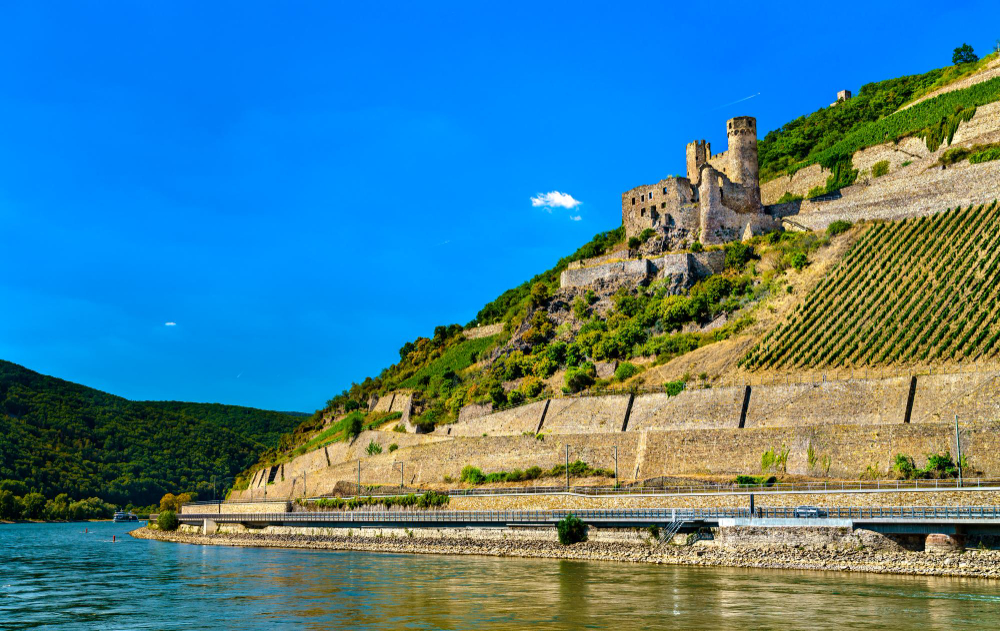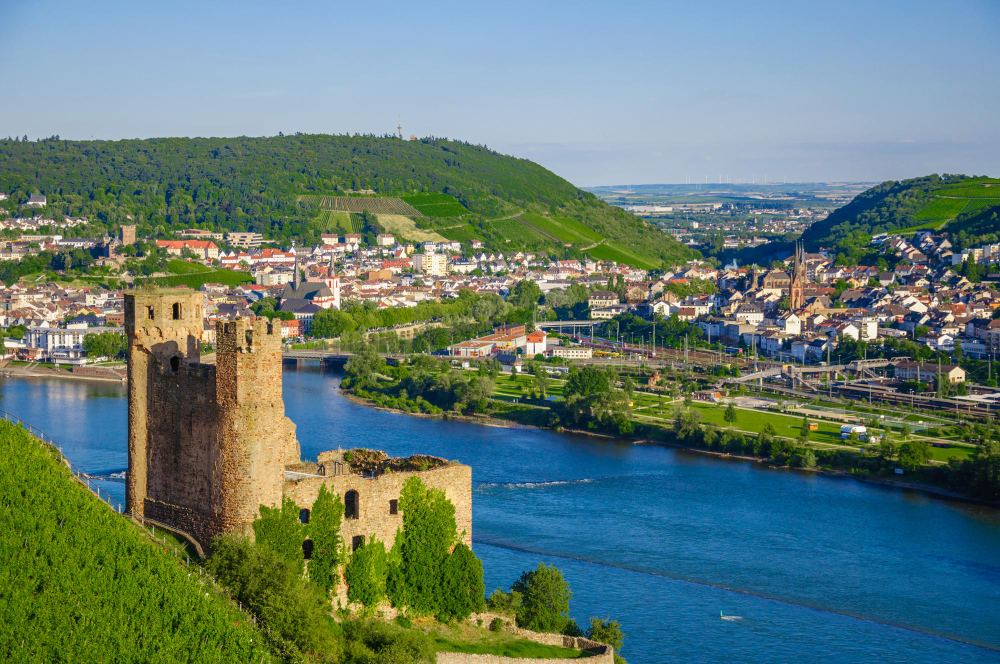

High above the Rhine, on the picturesque, steep slopes of the Rüdesheim Hill, stand the ruins of Ehrenfels Castle—a testament to medieval history, surrounded by the world-famous vineyards of the Rheingau. From here, visitors are treated not only to a spectacular view of the Rhine Valley but also to a fascinating chapter of German castle romance, full of intrigue, wars, and mystical legends. The complex, which is now protected as part of the UNESCO World Heritage Site “Upper Middle Rhine Valley,” inspires admiration in visitors and historians alike and invites them to rediscover its multifaceted past.
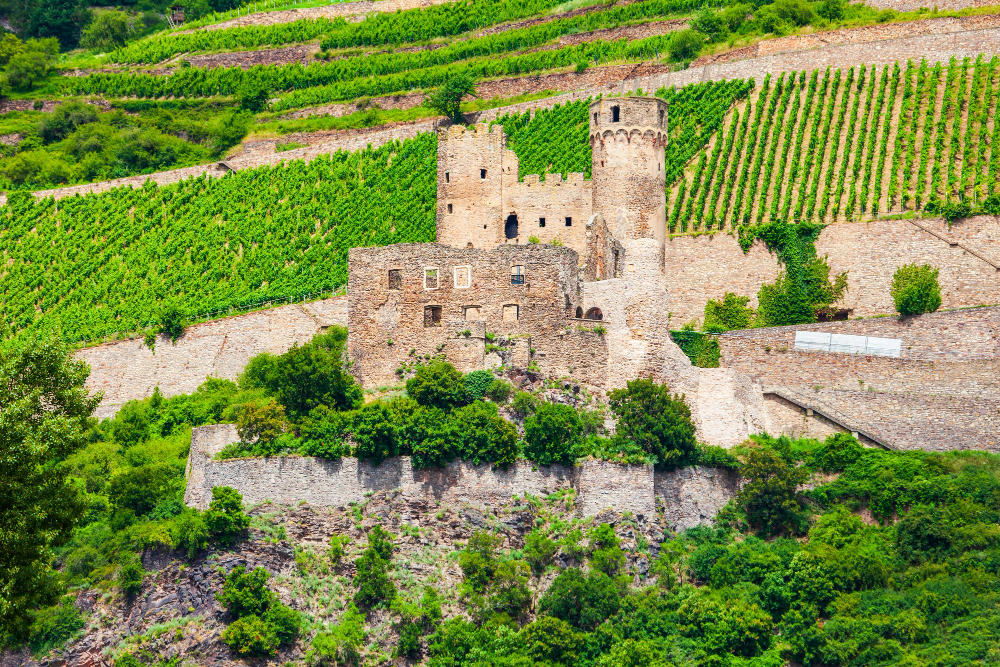
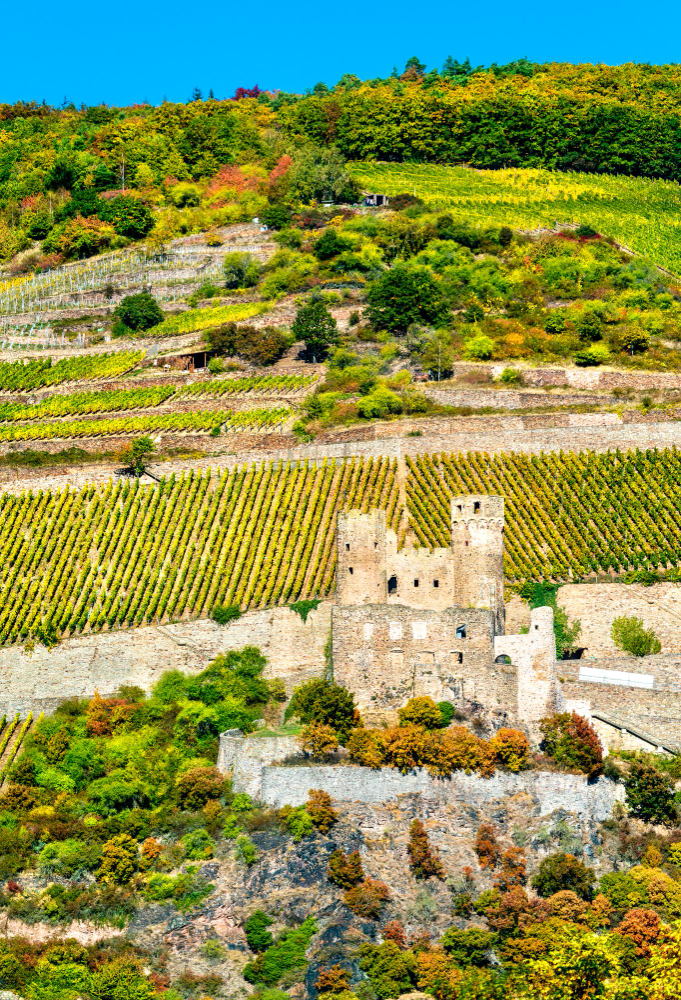
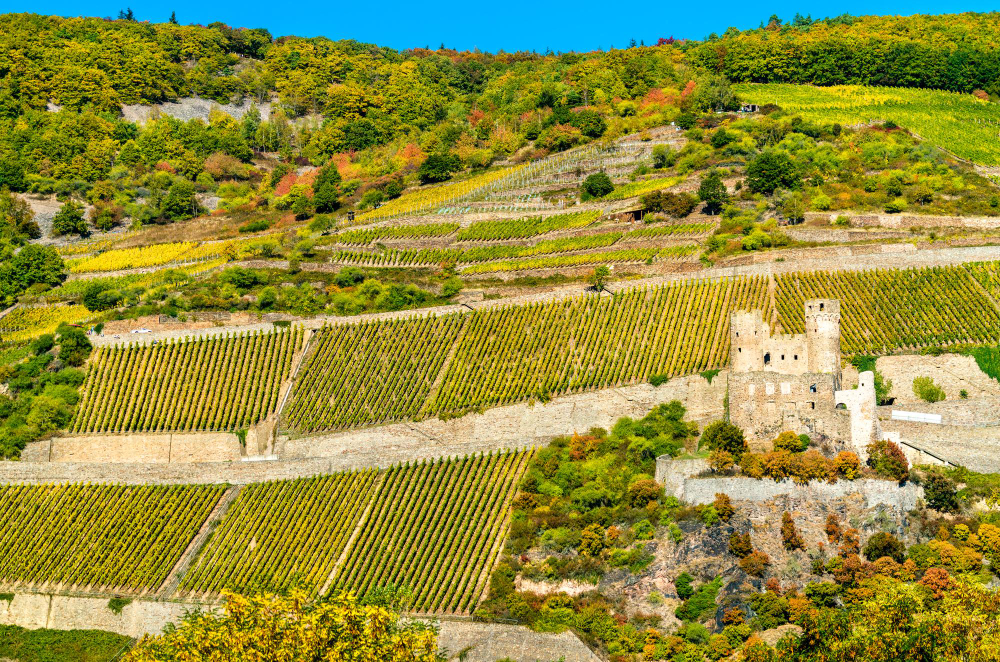
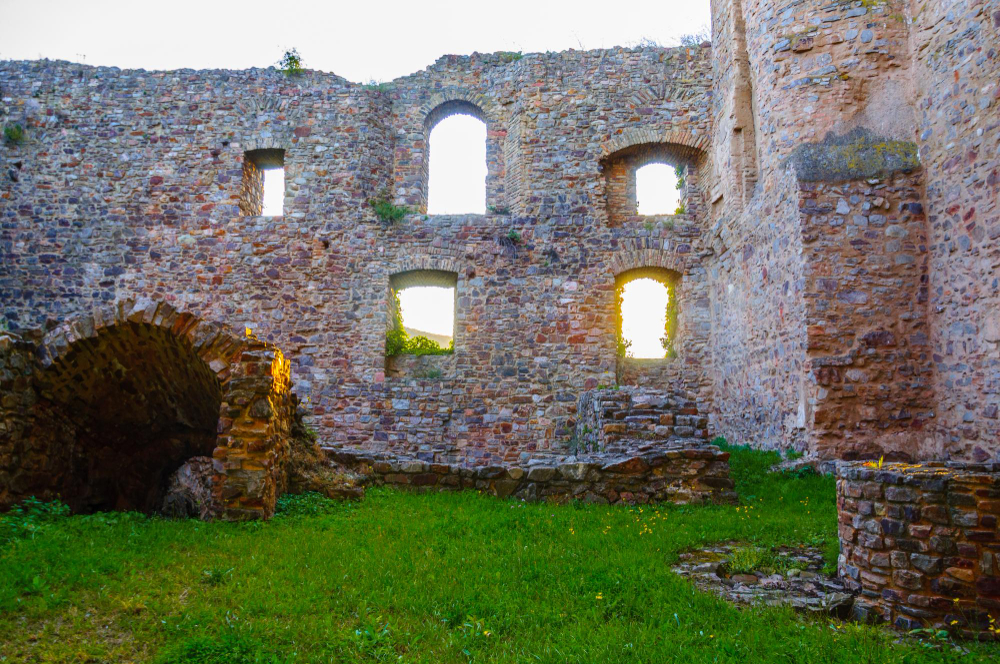
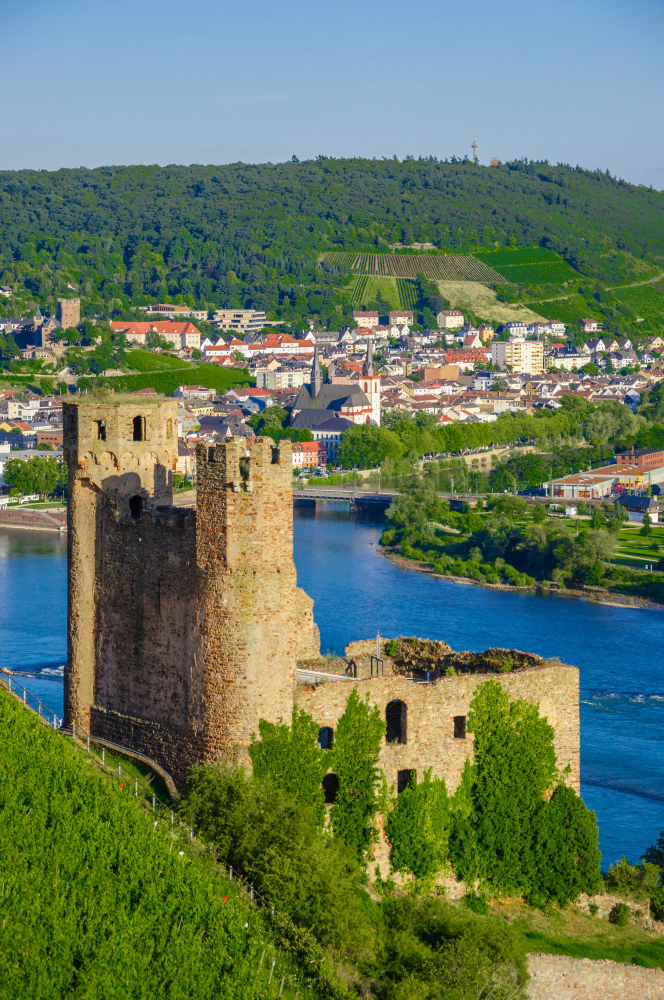
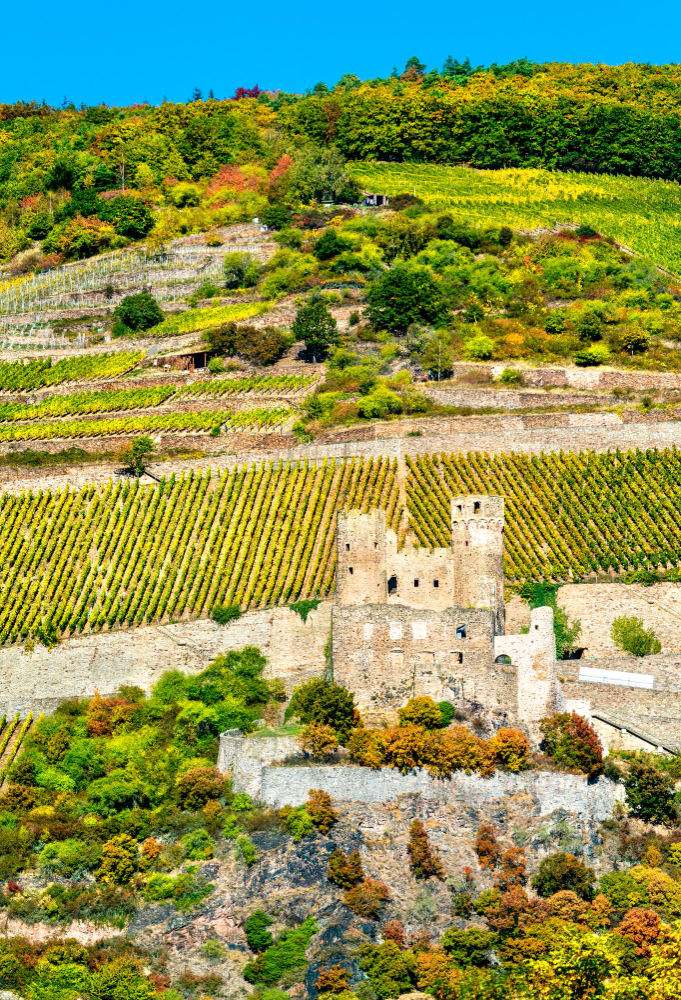
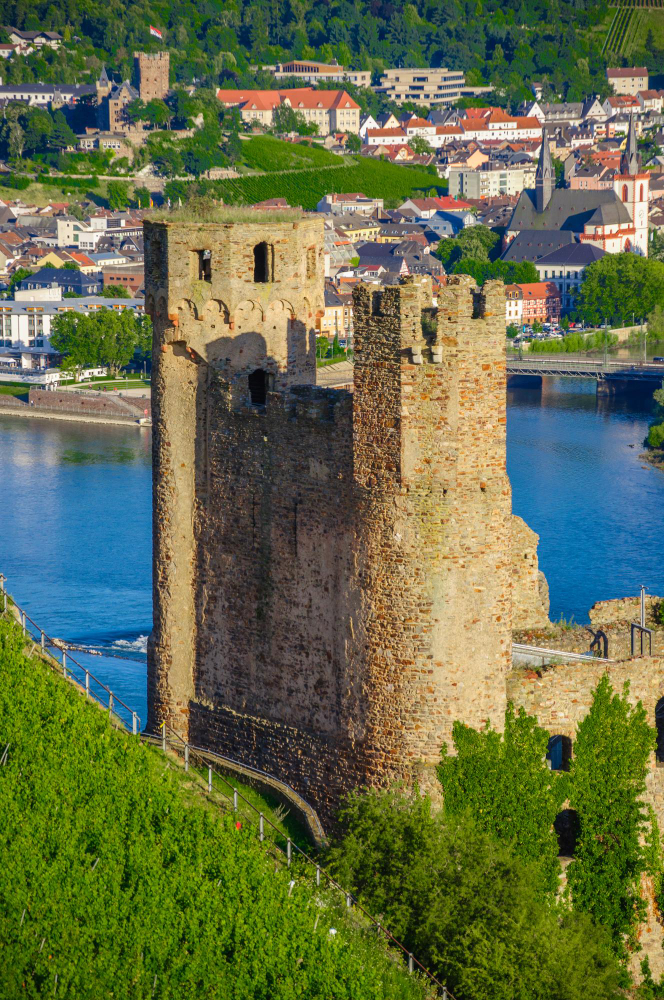
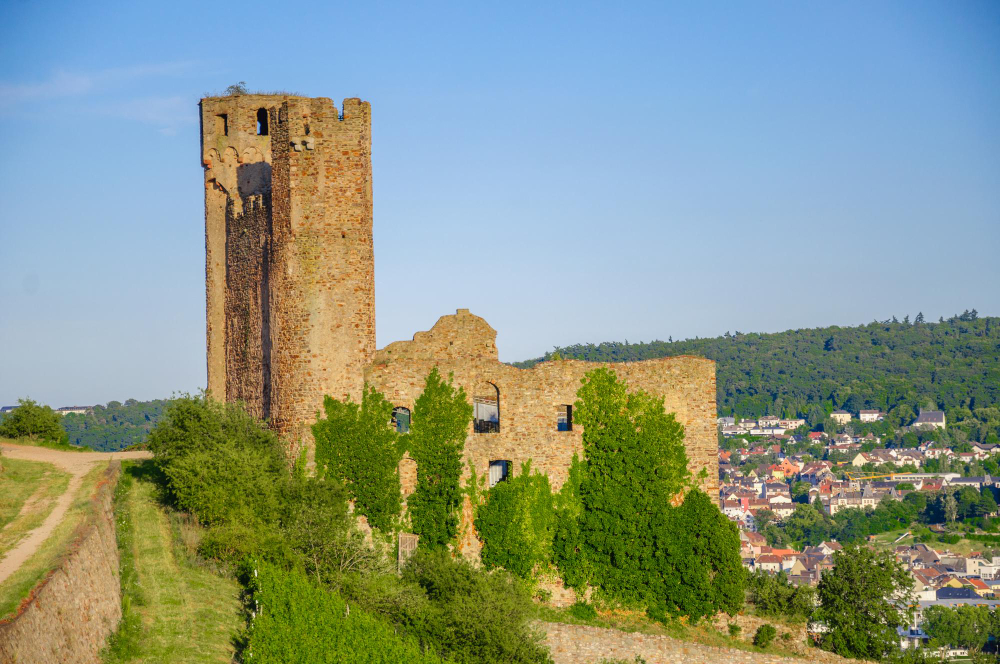
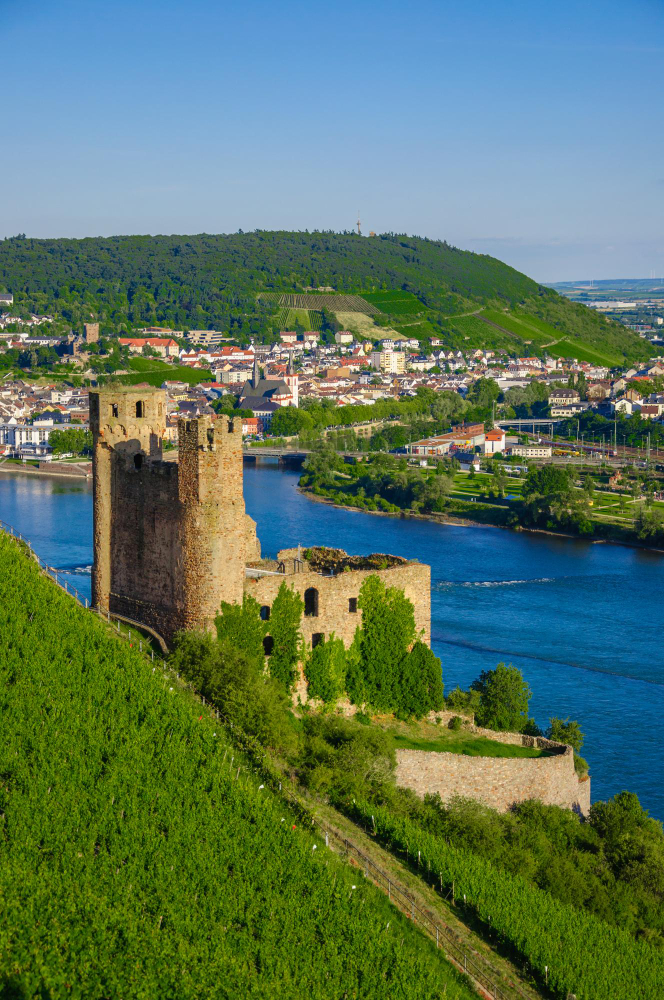
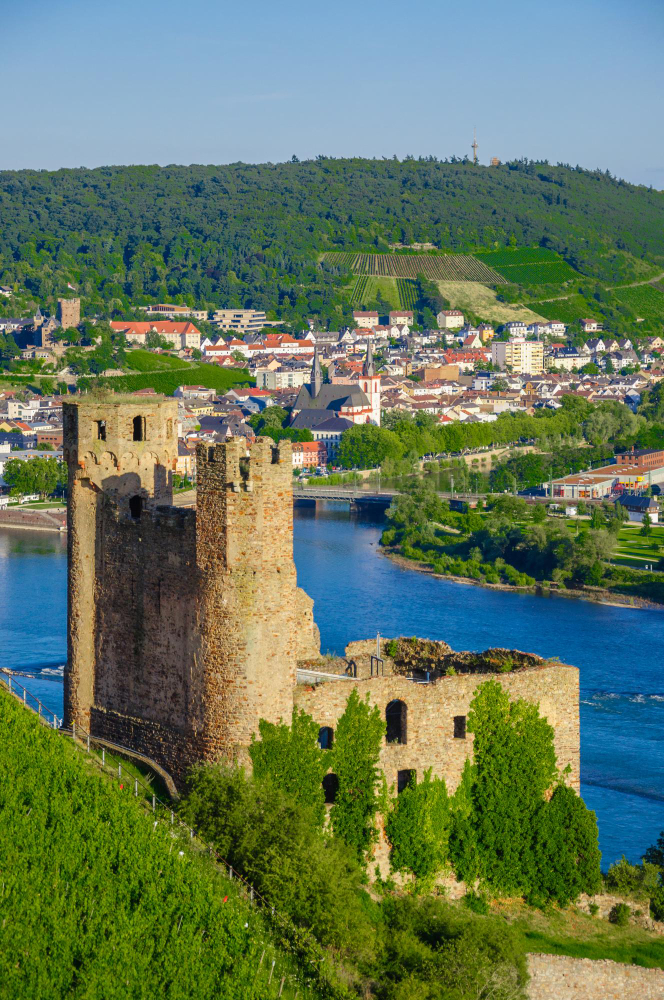
The Architectural Splendor of a Customs Castle on the Rhine – Originally, Ehrenfels was an imposing hilltop fortress covering an area of nearly 600 square meters. Today, the massive defensive wall—with its impressive thickness of 4.6 meters and a height of about 20 meters—as well as two round corner towers, each about 33 meters high, bear witness to the complex’s once-outstanding strategic importance. The three-story palace, which once formed the center of the castle, and the remains of an entrance gate complete the picture of this mighty fortress. These elements are located on the northeastern bank of the Rhine opposite the town of Bingen, nestled in a historic landscape that encompasses some of Germany’s most beautiful vineyards. Ehrenfels was originally designed as a customs castle—an important function for the security and control of trade on the Rhine. Access was from the east side through the forecourt via an entrance gate, of which only the foundations remain today. Inside, the surrounding walls enclose a courtyard with a cistern, while a moat was constructed below the palace as a defensive ring. The combination of defensive capabilities and economic significance is clearly reflected in the architecture.
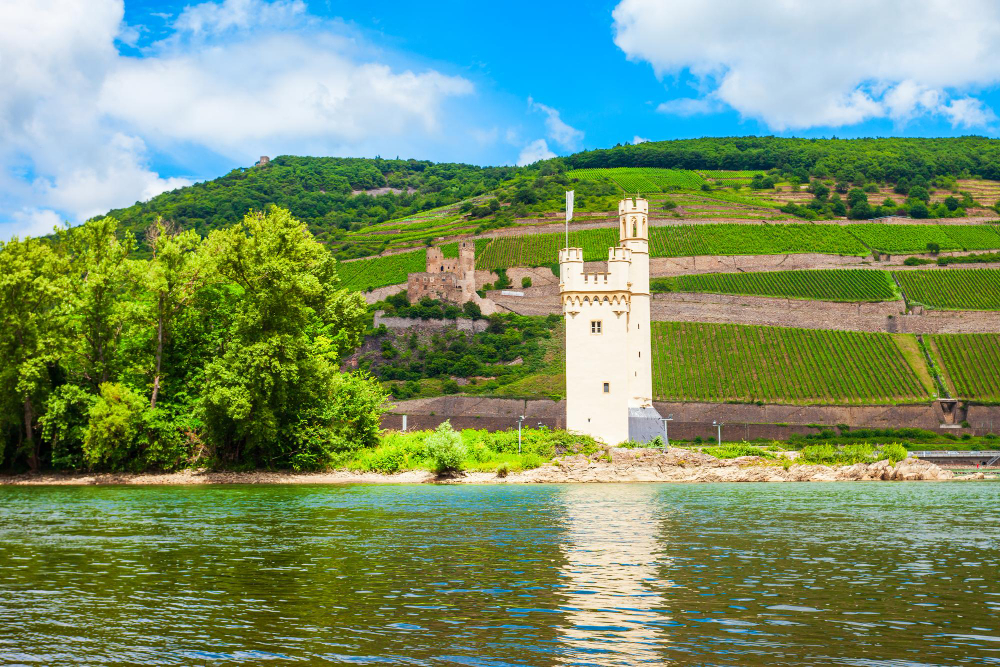
In the Struggle for Power – Decisive Historical Moments of the Castle – The founding of Ehrenfels Castle took place during a turbulent period at the beginning of the 13th century, marked by power struggles and rivalries. In the wake of the succession conflict between Philip of Swabia and Otto IV of Brunswick, attacks were launched against the Archdiocese of Magdeburg. In response to this threat, Archbishop Siegfried II of Eppstein had the castle built, presumably around the year 1211. Philip of Bolanden, who was entrusted with the construction, initially financed it privately, but soon the Archdiocese of Mainz laid claim to the castle—a legal dispute that was decided in court in 1222 in favor of Mainz. In the 13th century, Ehrenfels evolved from a purely military fortress into a customs station. Here, goods being transported down the Rhine were inspected and cleared through customs—in direct connection with the Ratten Tower in Bingen on the opposite bank of the Rhine. This function made the castle an important hub for trade and commerce in the Middle Ages. The castle also played an important military role: In 1301, during the so-called Rhenish Customs War, it became a fortress of Magdeburg Archbishop Gerhard II von Eppstein against King Albrecht. After several changes of ownership, confiscations, and political intrigues, Ehrenfels underwent various phases of expansion, including work by Kuno II von Falkenstein, a craftsman of the cathedral chapter, in the mid-14th century, who significantly reinforced the complex.
Between War and Decay – The Dark Times of the Castle – The 17th century, however, brought turbulent times: During the Thirty Years’ War, the castle was besieged several times and occupied by various warring factions. There are two surviving accounts of the castle’s final destruction. According to one legend, Archbishop Anselm Kasimir von Umstadt had the castle set on fire in 1636 to prevent it from serving as a refuge for enemy troops. However, this version is not substantiated with certainty. Far more likely is the destruction in 1689 during the War of the Palatinate Succession. At that time, the French army under the command of Marshal Nicolas Chalon du Blé bombarded the castle intensively, damaging it so severely that a complete restoration was no longer possible. The outer grounds later fell victim to the expansion of additional vineyards. After the war, the ruins, along with the adjacent forest, passed into the possession of various noble families, including the Counts of Stadion and Johann Franz Sebastian von Ostein. At the end of the 19th century, Ehrenfels came under Prussian ownership and today belongs to the state of Hesse. However, the interior of the ruins is closed to the public during the breeding season due to environmental protection measures for peregrine falcons, so visitors can only admire the castle from the outside.
Legends and Myths Surrounding Ehrenfels – As with many historic castles, numerous legends and stories circulate around Ehrenfels, lending the ruins an additional mystical touch. For example, a hidden treasure is said to be buried deep in the castle courtyard—a legacy of bygone times that no one has yet found. Other stories tell of ghostly apparitions and mysterious figures roaming the walls at night. One particularly striking legend tells of a lady of the castle who once lived in Ehrenfels and supposedly knew the secret to the perfect wine—an explanation for the exceptional quality of the surrounding vineyards. It is said that she spoke with the spirit of the Rhine at night and thus acquired ancient knowledge that is still passed down in the wine cellars to this day.
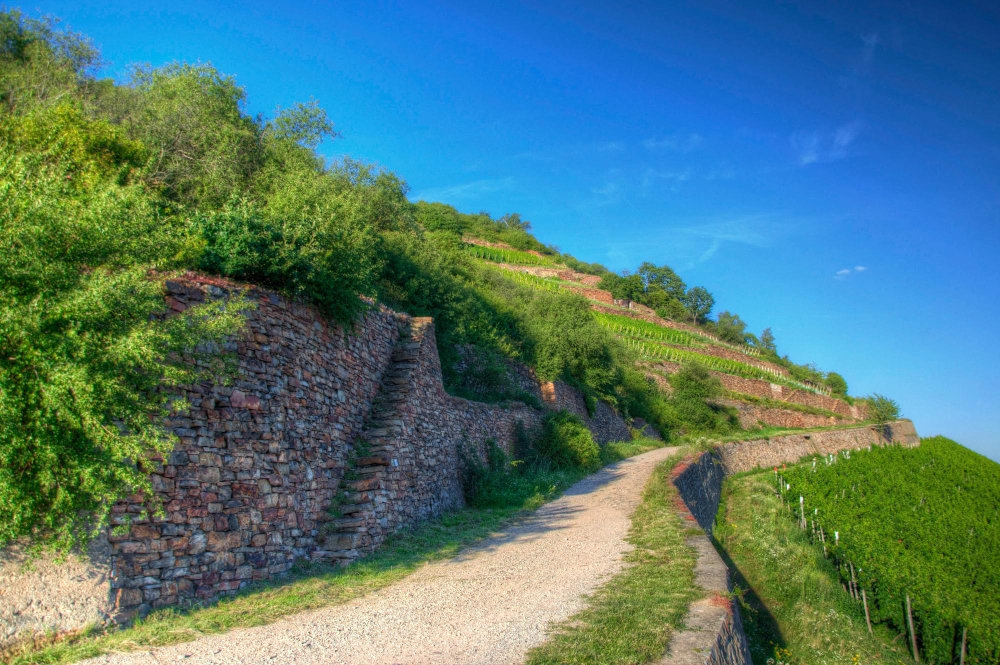
Ehrenfels Castle Today – A Place of Remembrance and Nature – Today, the ruins of Ehrenfels Castle are above all a symbol of the turbulent history of the Middle Rhine and a popular destination for hikers and wine lovers. The keep rises proudly into the sky as a landmark, while the vineyards on the slopes surrender to the rhythm of the seasons. The combination of magnificent nature, historic architecture, and mysterious tales makes the region a unique experience. The Upper Middle Rhine Valley’s designation as a UNESCO World Heritage Site in 2002 has helped to further protect and promote the castle’s architecture and cultural heritage. At the same time, consideration is given to the rare peregrine falcons that nest in the high towers, which prevents visitors from accessing the entire castle grounds. Not only historians and archaeologists, but also artists and writers draw inspiration from the castle. The motifs and legends of Ehrenfels have been repeatedly featured in paintings, poems, and novels, thus keeping the fascination of this venerable place alive.
Ehrenfels – A Place Where History and Legends Come Alive – Ehrenfels Castle is far more than just a medieval ruin on the Rhine. It is a symbol of the turbulent history of the Rheingau—marked by power struggles, war, trade, and cultural richness. Its massive architecture and spectacular location make it a unique cultural monument, while the diverse legends lend it a mysterious aura. Here, visitors have the opportunity to immerse themselves in a bygone era that, despite centuries of weathering and destruction, has lost none of its fascination. Whether on a stroll through the vineyards or on a mental journey through history—Ehrenfels Castle continues to tell its stories, always accompanied by the majestic Rhine, which has been a silent witness to this fascinating world for centuries.