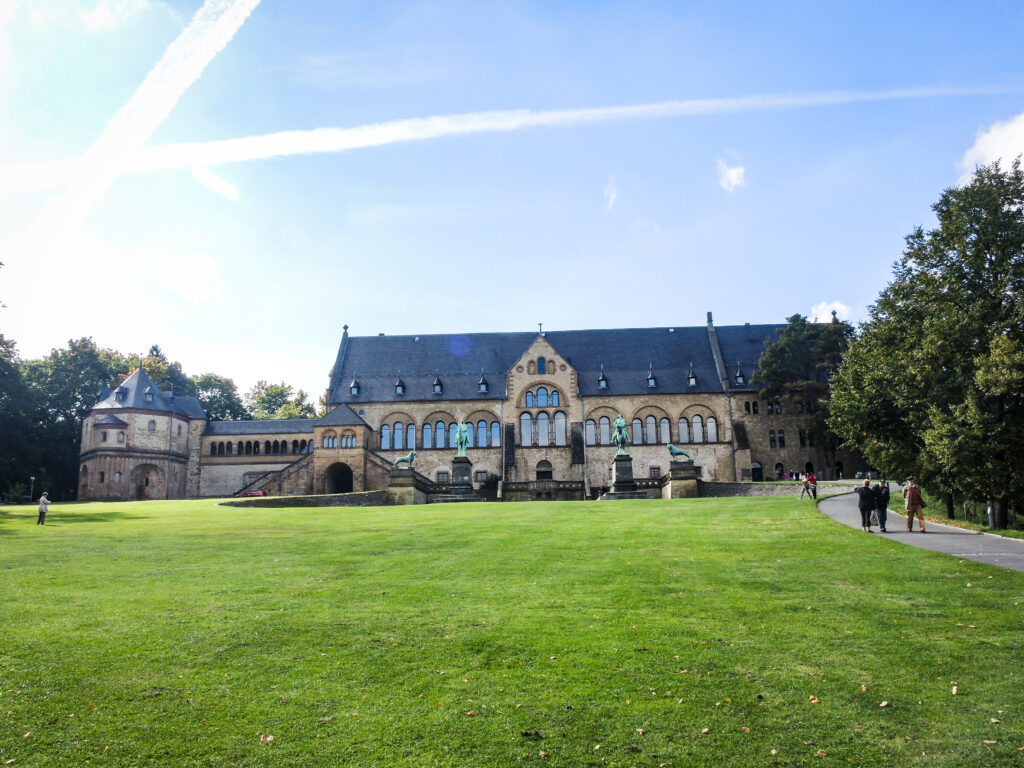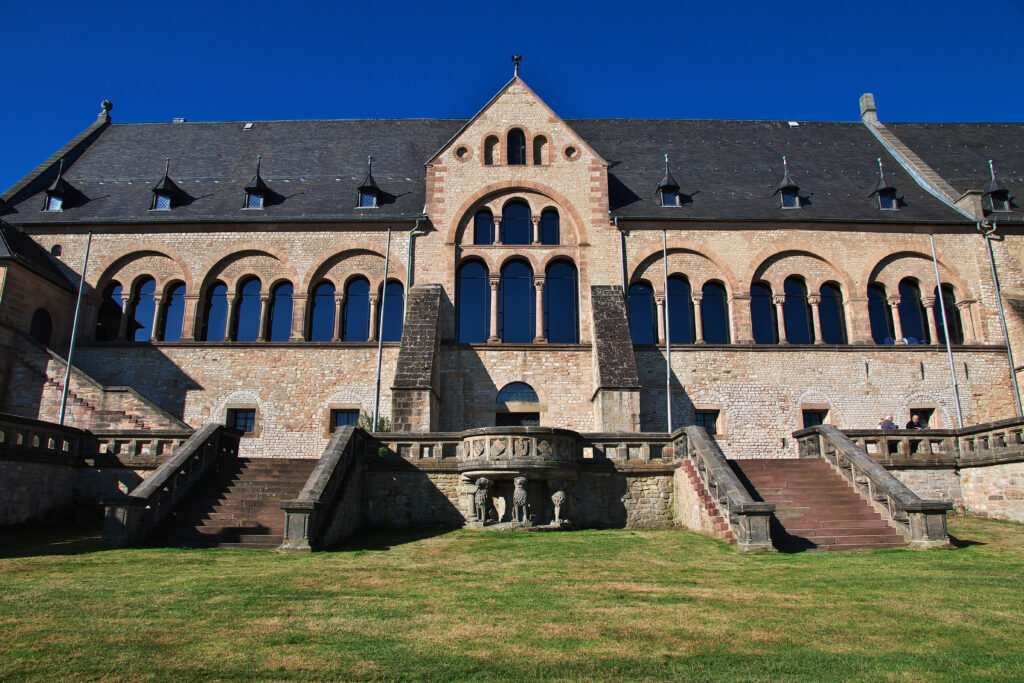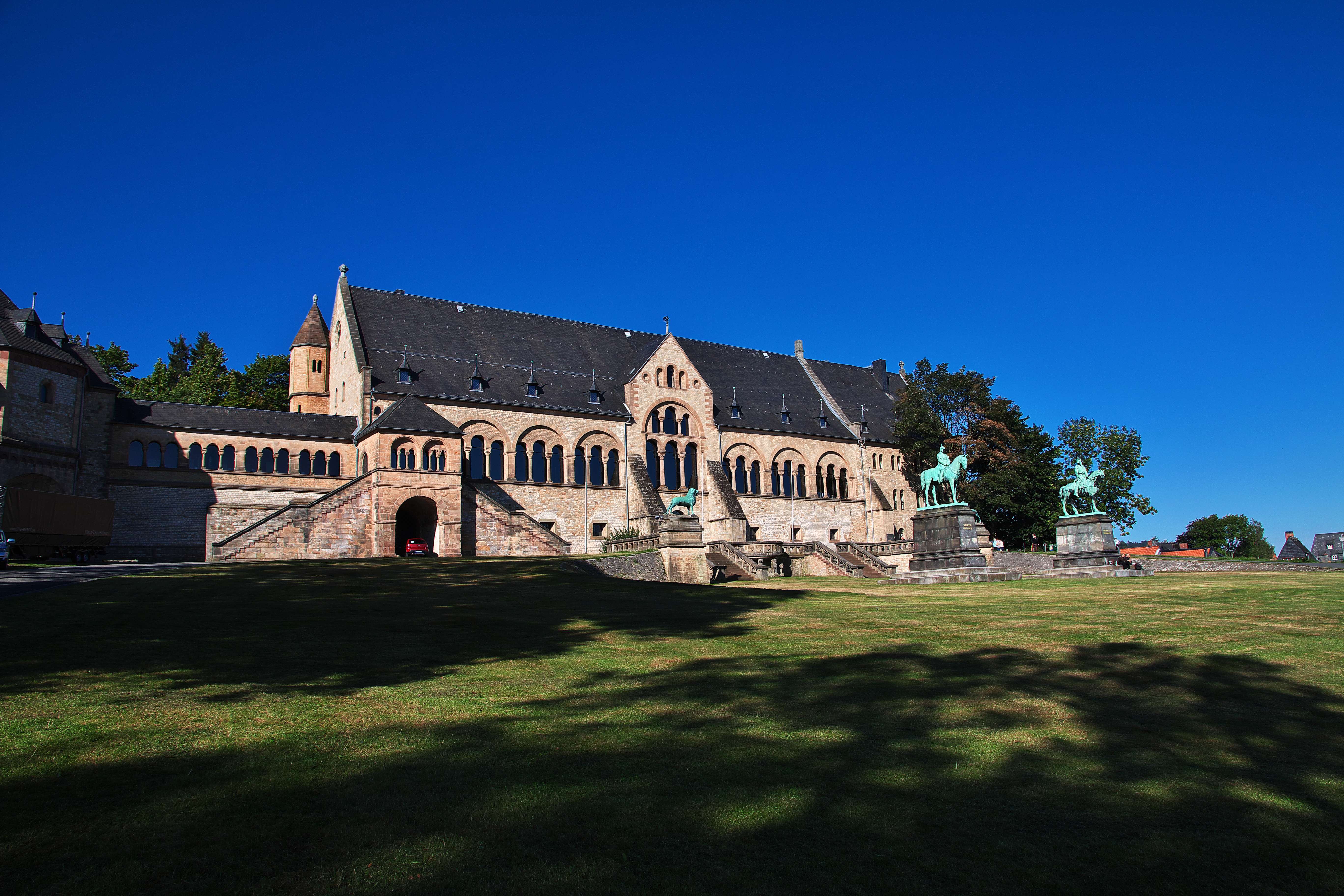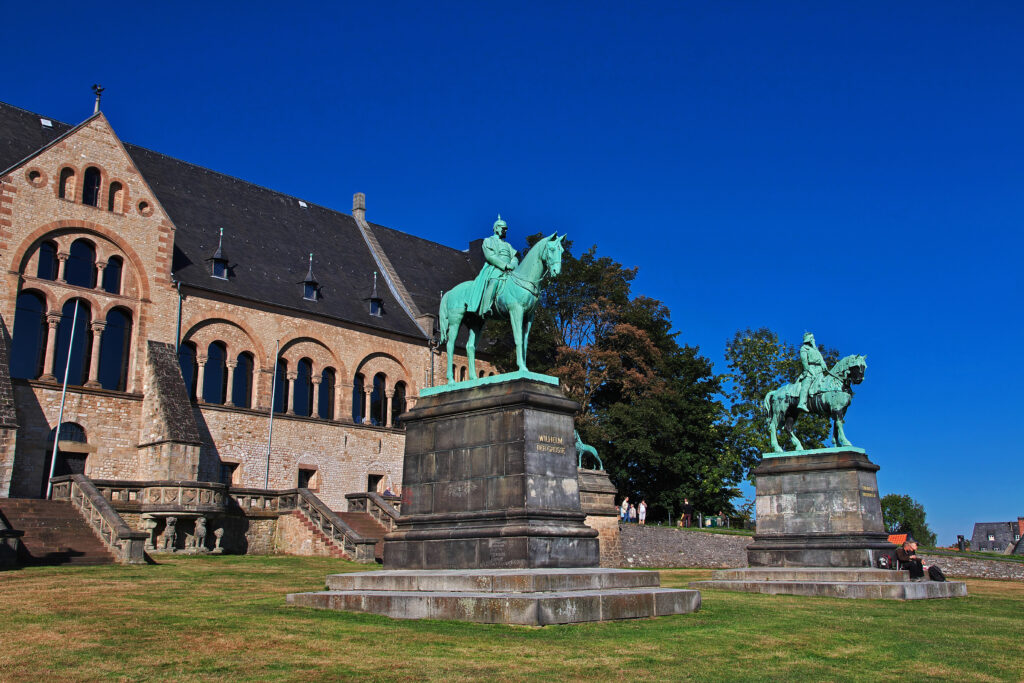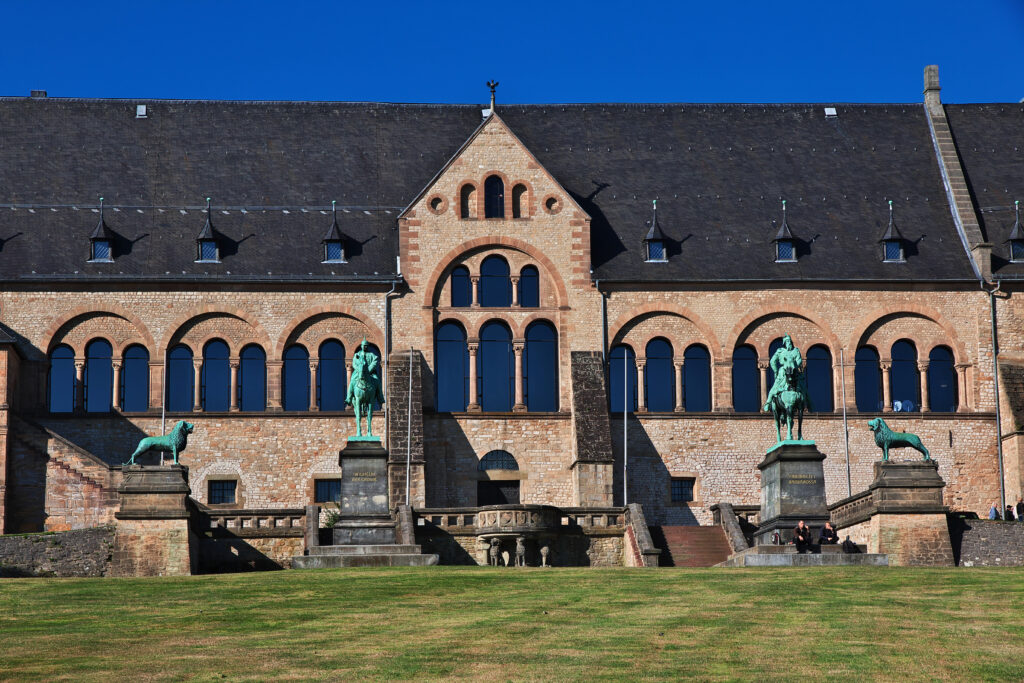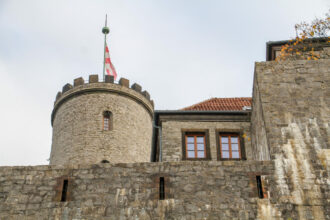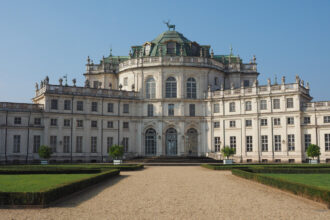

Nestled at the foot of the Rammelsberg, amid the historic cityscape of Goslar, lies an architectural marvel—the Kaiserpfalz Goslar. Spanning an impressive area of approximately 340 by 180 meters, this monumental site encompasses the Kaiserhaus, the former collegiate church “St. Simon and Judas,” the Pfalzkapelle St. Ulrich, and the now-absent Liebfrauenkirche. As a beacon of medieval history, the Kaiserpfalz Goslar has captivated historians and visitors alike, serving not just as a relic of past imperial grandeur, but as a testament to resilience against the ravages of time.
The Kaiserhaus stands out prominently with its status as the largest and best-preserved secular building from the 11th century in Germany. This formidable construction served as a favored abode for the Salian emperors, earning its repute as the “most famous residence of the empire,” as chronicled by Lampert von Hersfeld. Its significance has been further elevated since 1992, when the Pfalz district was immortalized as part of the UNESCO World Heritage, alongside Goslar’s old town and the Rammelsberg mine—a triumvirate hailed on the World Heritage Route across the Harz region.
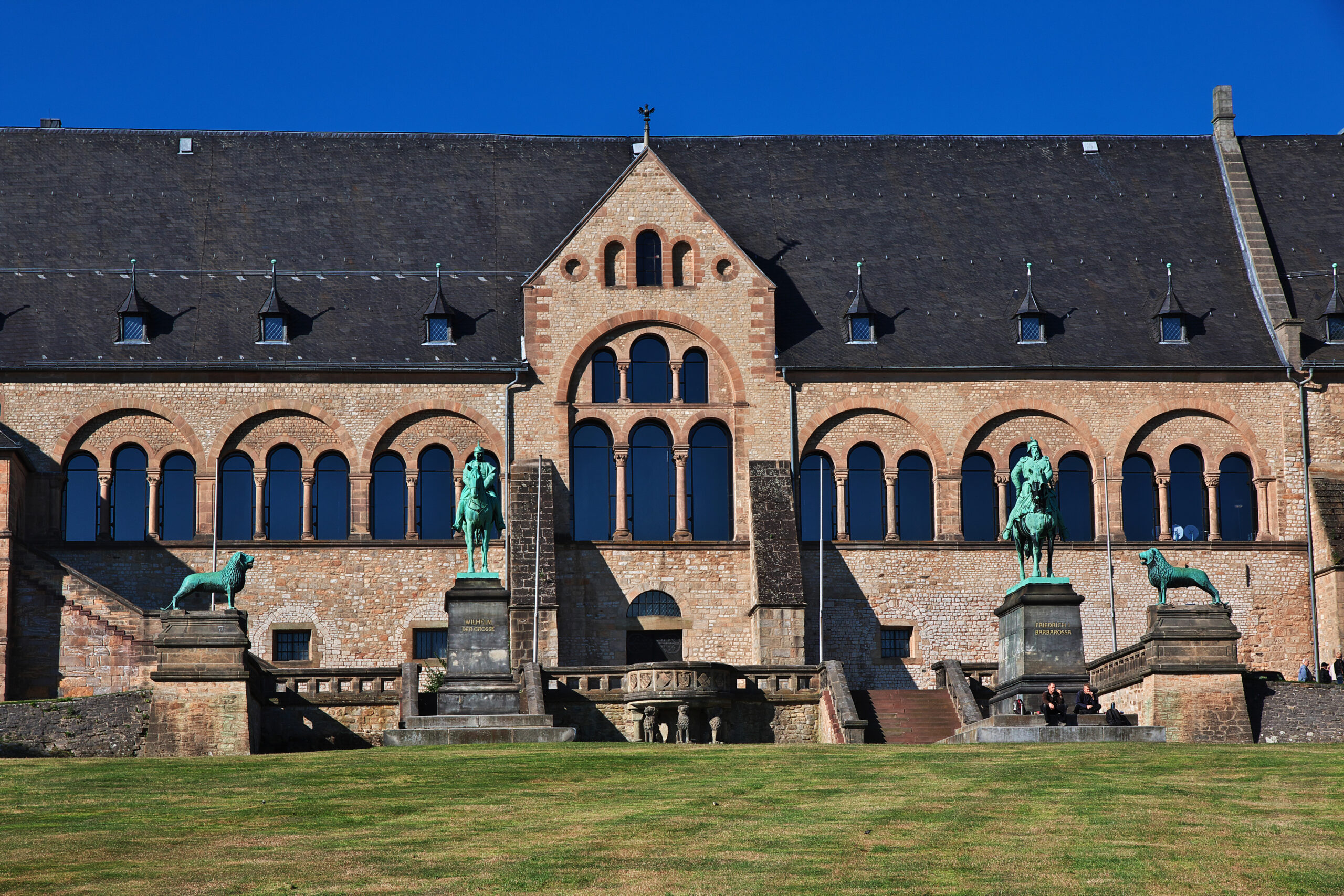
The heart of the Kaiserpfalz is dominated by the north-south aligned Kaiserhaus, a monumental focal point of the estate. To the north, where the Liebfrauenkirche once stood, only its foundations remain, hidden beneath pathways leading to the Kaiserhaus. The enigmatic Ulrichskapelle connects via a 19th-century arcade to the southern end of the Kaiserhaus, while remnants of the St. Simon and Judas collegiate church linger to the east—its ground plan etched into the cobblestones of a modern parking lot. Surrounding these central structures were once bustling quarters—living spaces for members of clergy, residences for imperial officers, stables, and storerooms—all protected by a defensive wall.
The origins of this imperial precinct trace back to an illustrious royal hunting lodge, as noted by Adam of Bremen during the Ottonian era. Early transformation began under Henry II around 1005, likely spurred by lucrative ore discoveries at nearby Rammelsberg, overshadowing the rank of the akin palace Werla. Expansion flourished under Conrad II in the 1030s, laying the foundation for the Liebfrauenkirche and further enhancements. His son, Henry III, propelled the site to new heights, commissioning Benno II, a prominent builder later appointed Bishop of Osnabrück, to guide construction. The most renowned structures—the new Kaiserhaus and the St. Simon and Judas collegiate church—were brought to fruition under Benno’s keen oversight by the mid-1050s.
The architectural evolution did not cease there; sparse remnants of Gothic ornamentation indicate subsequent renovations throughout the late 12th century. The original Liebfrauenkirche, reminiscent of the 11th-century designs, vanished into history yet left behind a blueprint secured through archaeological excavations. A successor, the Ulrichskapelle, emerged southwards, dating back to the early 12th century and later augmented in a phased approach—its upper tier possibly added in the latter half of the 12th century.
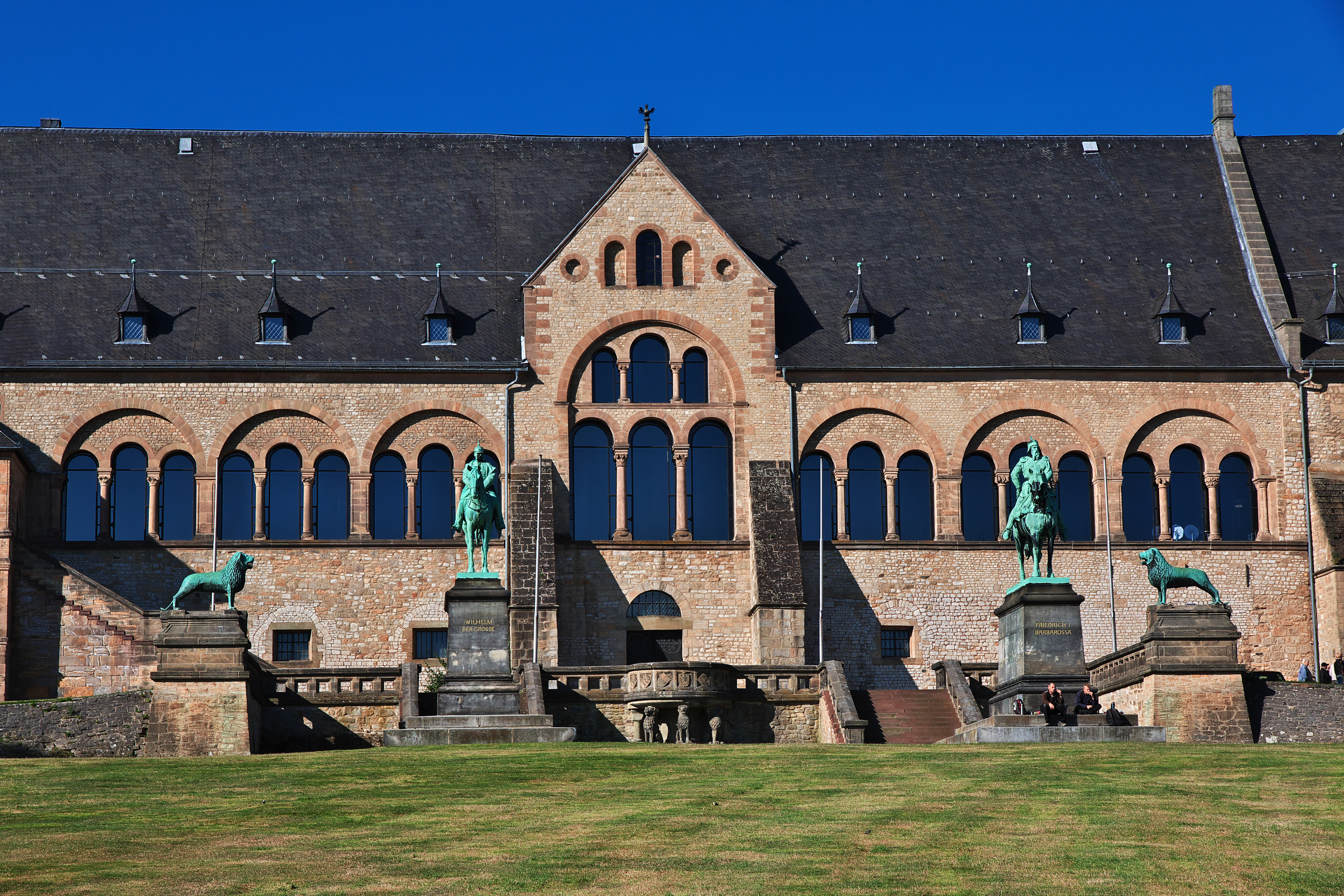
The Kaiserhaus, spanning 54 meters in length and 18 meters wide, boasts a colossal two-story hall, housing dual expansive rooms stacked vertically. These chambers featured beam ceilings bolstered by a central colonnade—a grand upper chamber referred to as the “summer hall,” and the lower dubbed the “winter hall.” Ingeniously crafted, these halls served diverse purposes: the upper embraced open-air concepts, welcoming natural light through broad archways, essential for traditional court gatherings under the sky, known as “thingrecht.”
Conversely, the winter hall harnessed innovative heating solutions. Eschewing Roman hypocaust techniques, warmth was generated via exterior furnaces, channeling hot air through ducts to permeate the hall, providing comfort during inclement weather—a similar method noted in fortifications like Tilleda and Werla.
Adjacent to the hall, a two-story residential block catered to the imperial family, seamlessly integrating access to both upper chambers and potentially linked to the neighboring Liebfrauenkirche through a gallery. Architectural advancements persisted under Henry V in the early 12th century, adding mirror-image accommodations to the southern extremity. Despite calamities like the collapse of the hall in 1132, reconstruction swiftly ensued, with alterations enhancing both aesthetic and functional aspects.
A pivotal moment arose in 1253 with King William of Holland’s visit—marking the last royal presence in Goslar’s palace. Thereafter, decline ensued—a destructive fire in 1289 razed key structures, leaving foundations bare. Ownership transitioned to Goslar the following year, repurposing the hall for judicial and storage functions. By the mid-16th century, remnants doubled as granaries—the Ulrichskapelle, ironically preserved through its conversion into a prison beginning in 1575.
However, the insidious grip of time continued. The Liebfrauenkirche succumbed to gravity, its stones repurposed for construction elsewhere. By the dawn of the 19th century, only ruins lingered—the once-majestic dome reduced to fragmented memories sold for scrap.
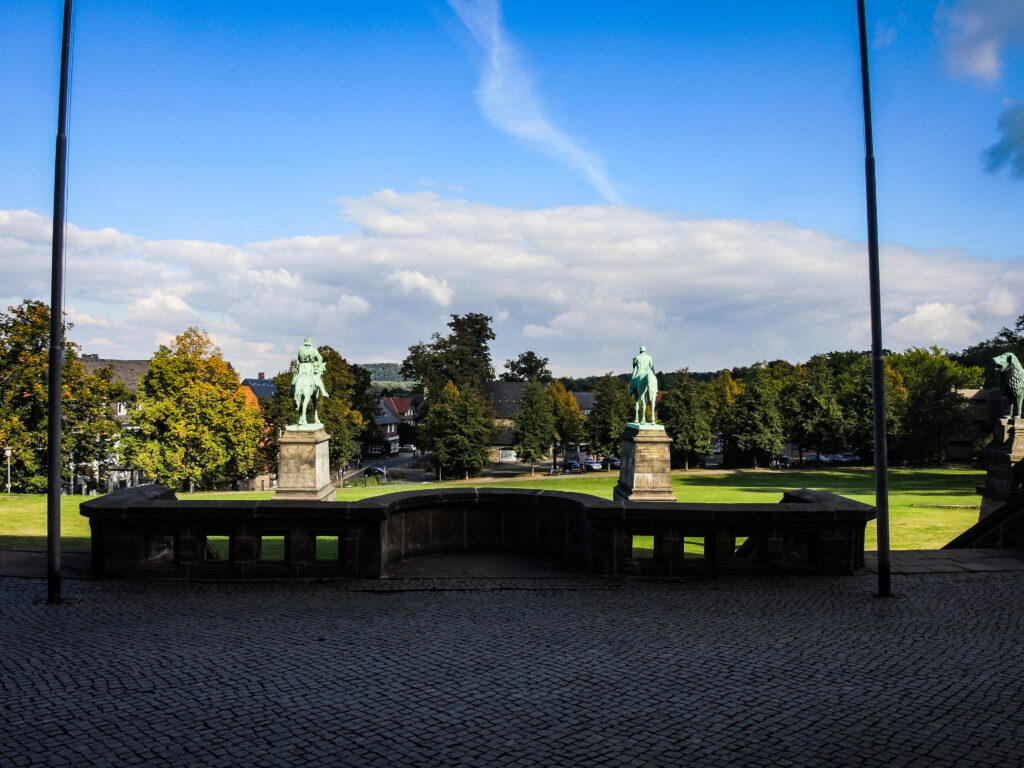
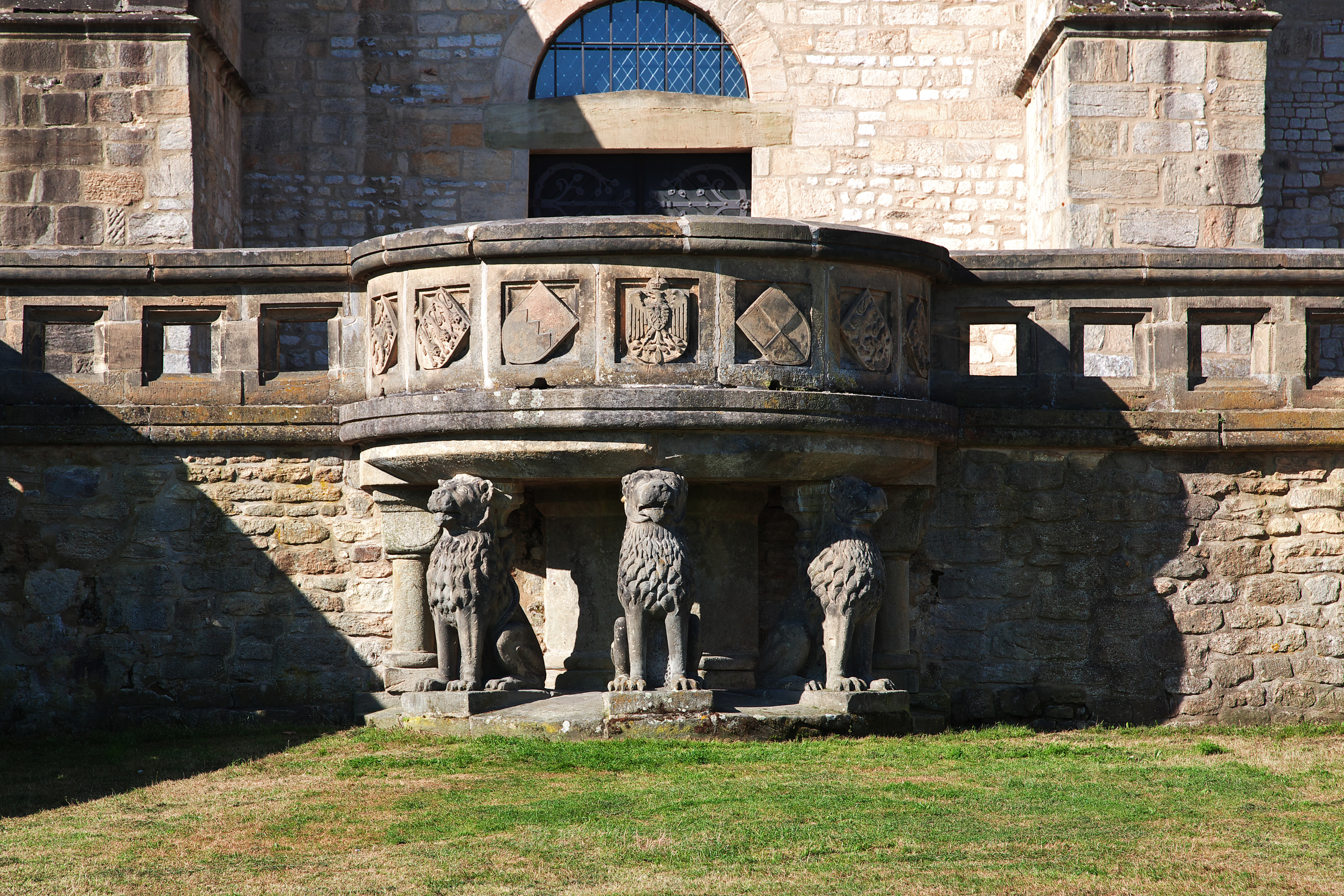
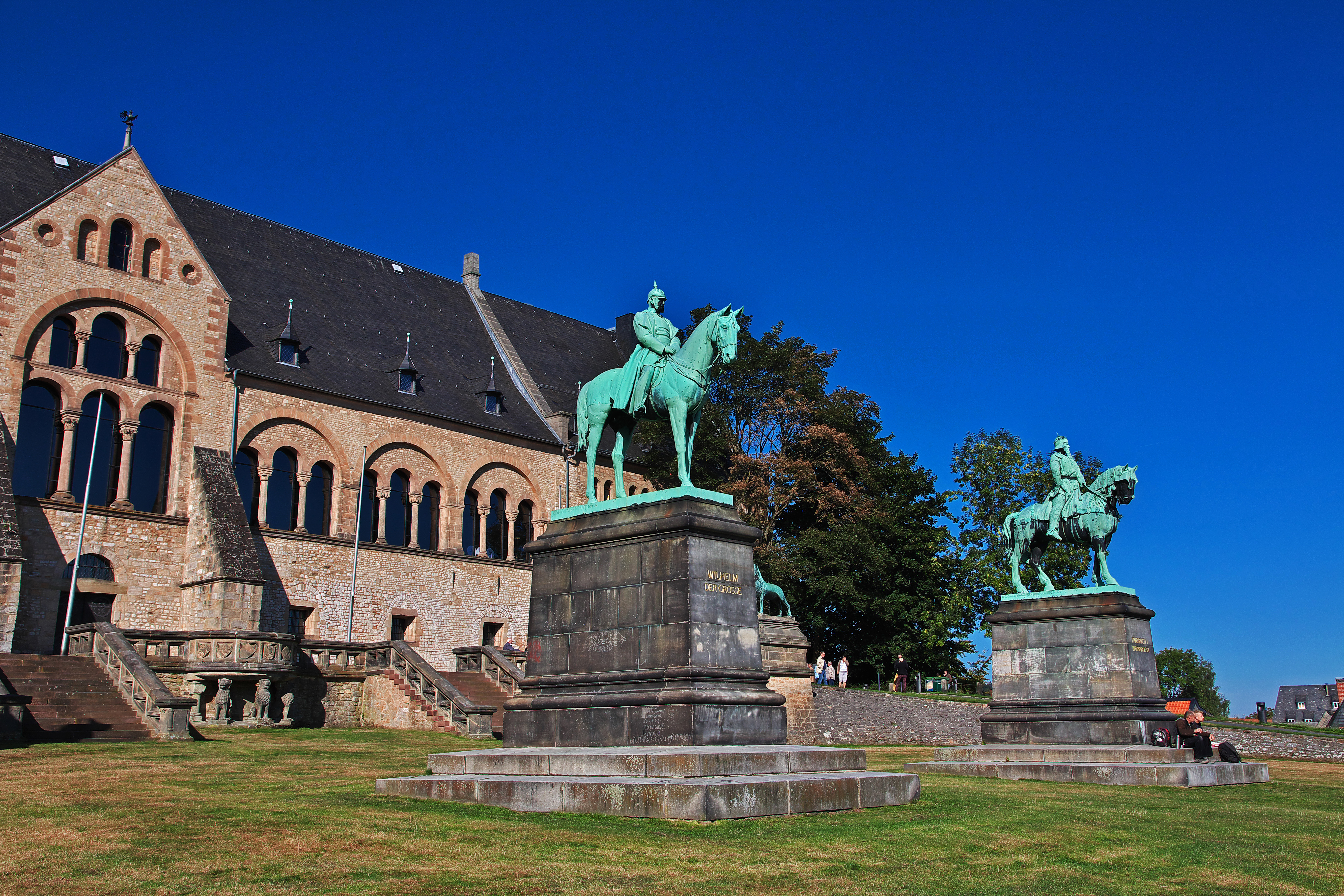
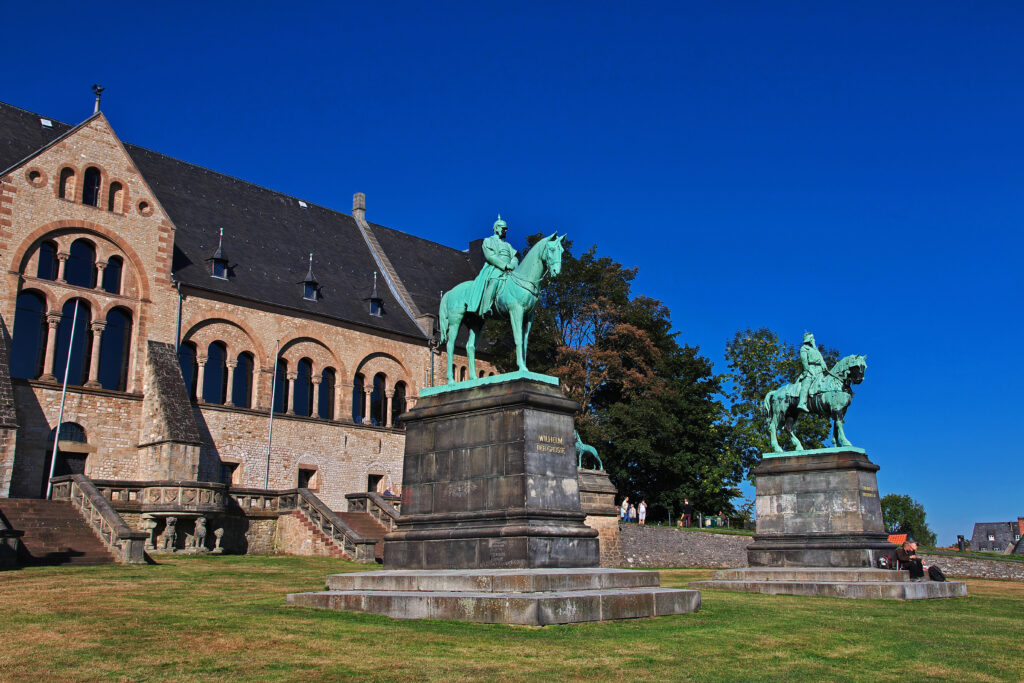
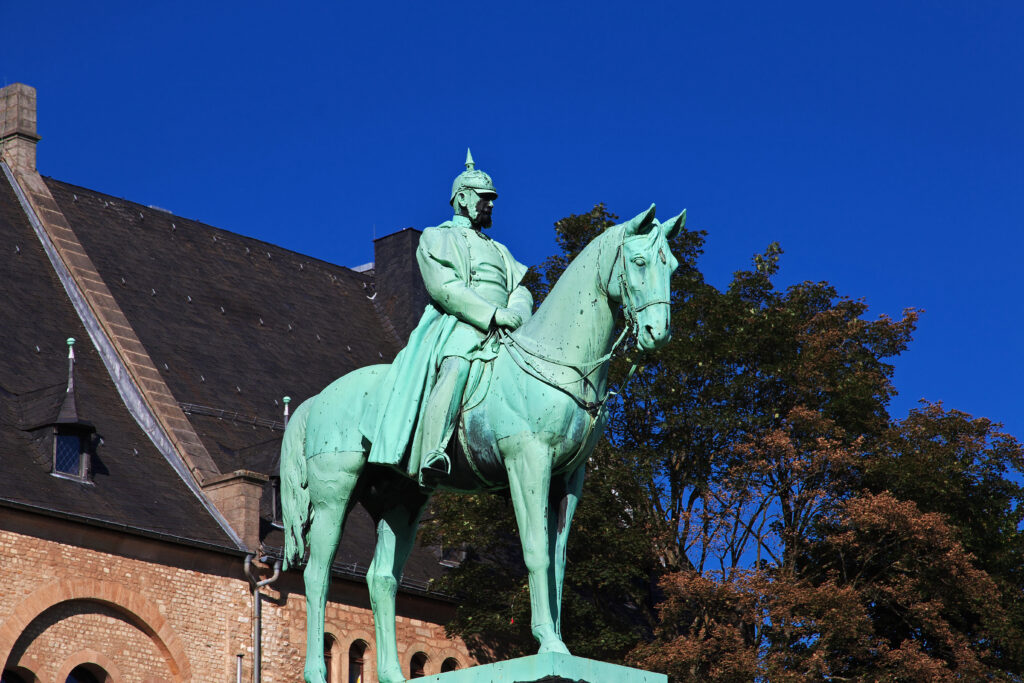
In an unexpected twist, restorative efforts garnered momentum in 1865, averting demolition through government intervention. Plans materialized under Adalbert Hotzen and later revised by Fritz Hennecke and Ernst Schulze, culminating in full reconstruction by 1879. This revival bore traces of nationalistic fervor, transforming the architectural silhouette—from grand staircases and regal lion replicas to statues of Emperor Barbarossa and Wilhelm I—embodying patriotic spirit.
Modern archaeological endeavors from 1913 onward unveiled forgotten foundations and medieval secrets obscured underfoot. Goslar’s Kaiserpfalz thus endures, a revered destination within the Harz, hosting guided explorations and public events. The Goslar Museum preserves artifacts from bygone eras, enriching the cultural tapestry with treasures like the Krodo Altar.
Since 1992, the Kaiserpfalz, alongside Goslar Altstadt and Rammelsberg, anchors UNESCO’s cultural legacy. Whether hosting Kaiserring ceremonies, summer concerts, or festivals, this venerable venue thrives as a pillar of historical and cultural reverence—an enduring beacon amidst the dynamism of time.