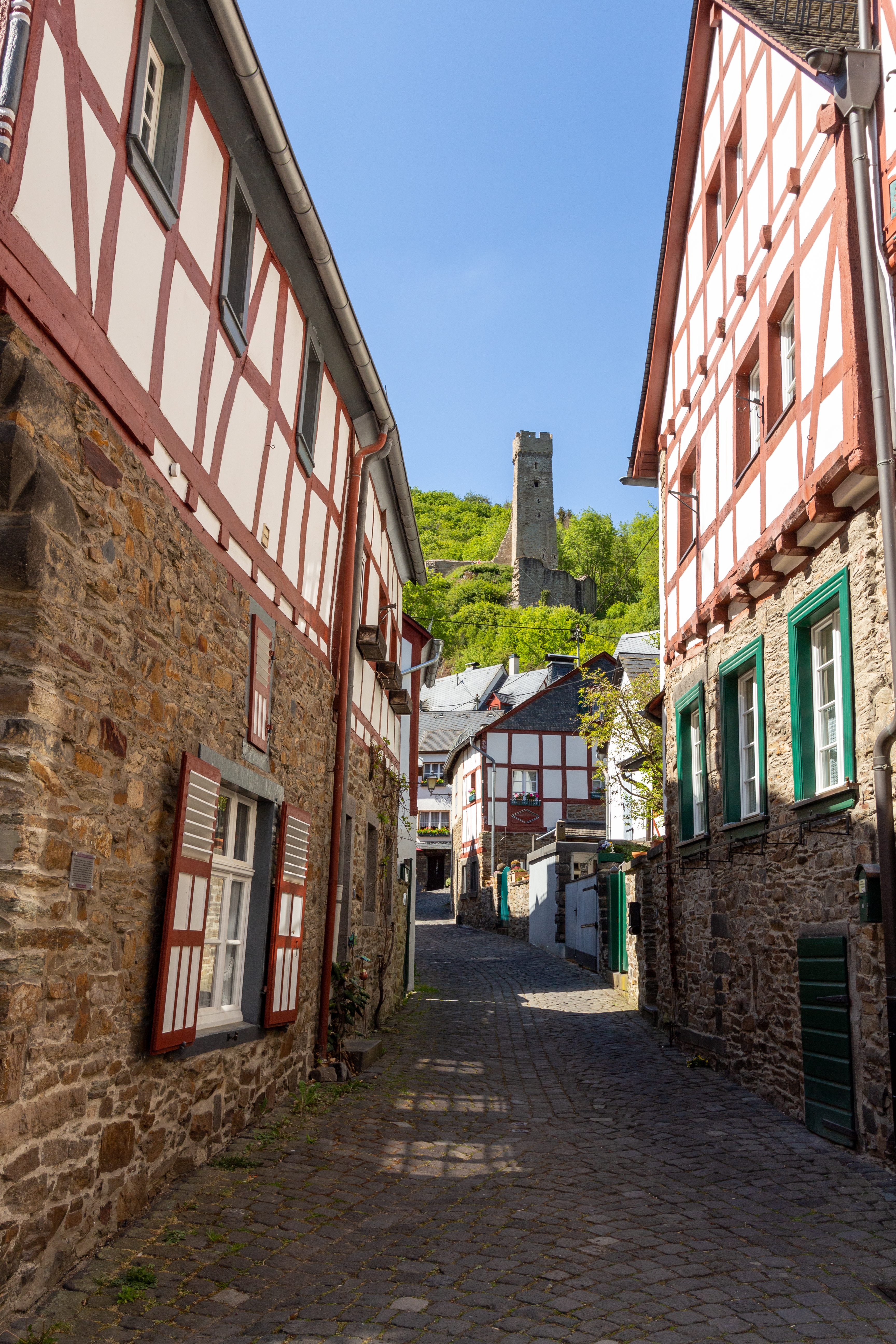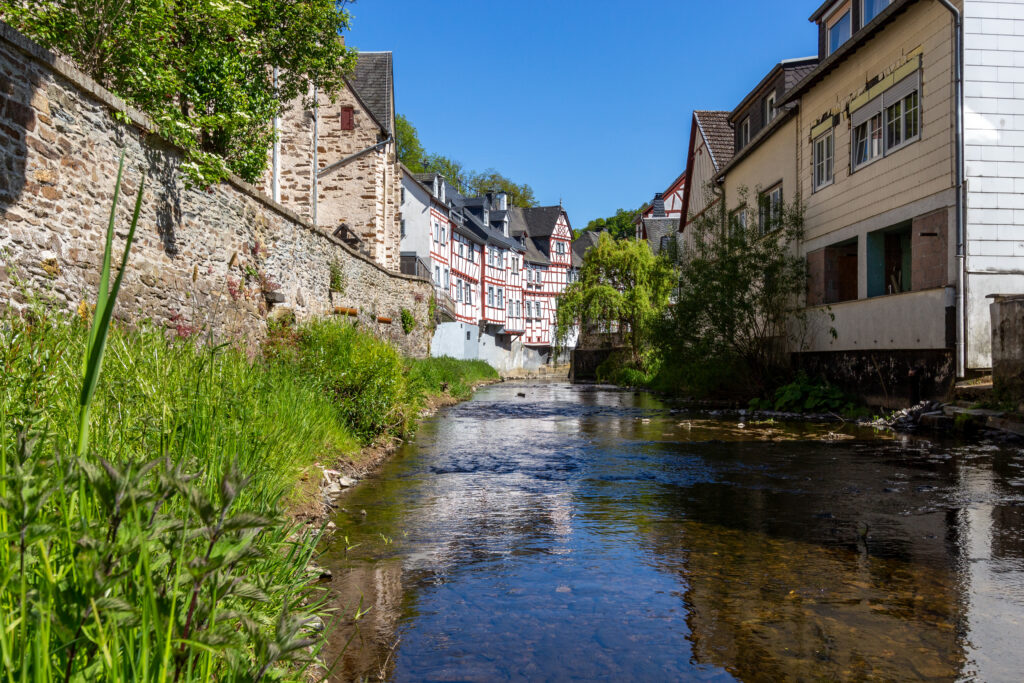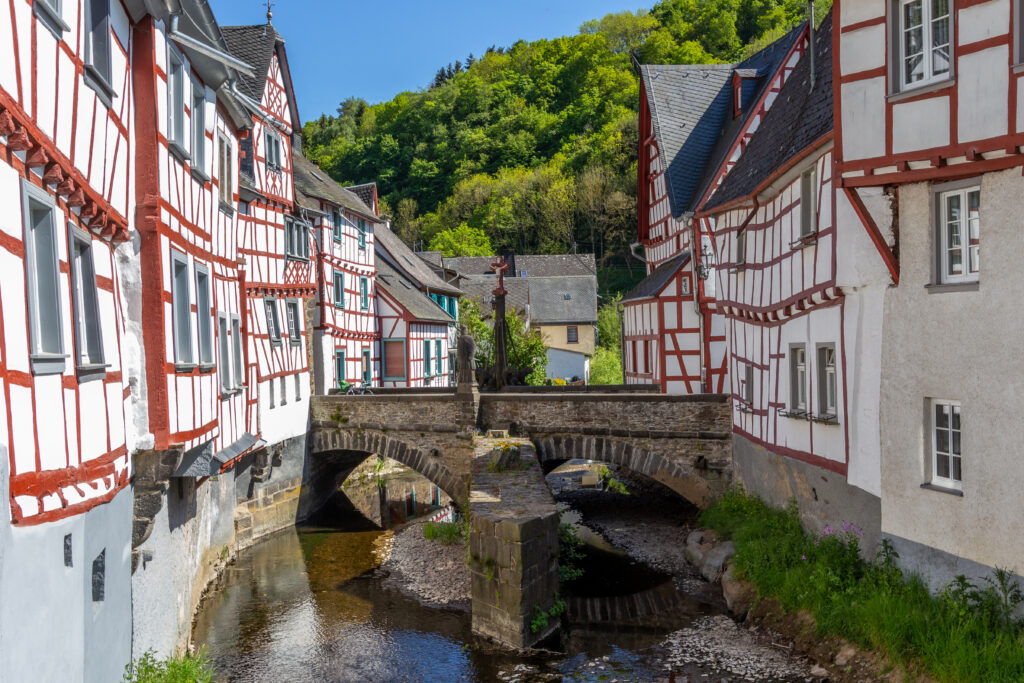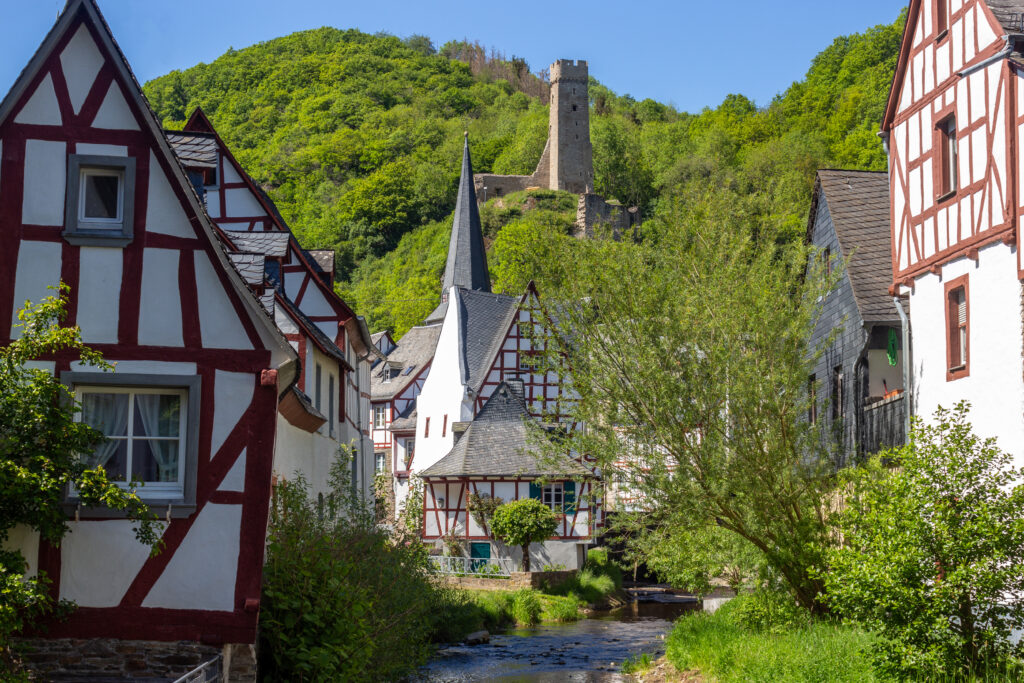

Perched majestically atop a spur of the Eifel Mountains, Löwenburg and Philippsburg stand as silent sentinels to centuries of tumultuous history, familial discord, and enduring legend. These fortresses, though now in ruins, still captivate the imagination with tales of noble feuds, ecclesiastical power struggles, and military might. Their origins trace back to the 13th century, entwining the destinies of their builders, the Counts of Virneburg, and leaving an indelible mark on the region’s heritage.
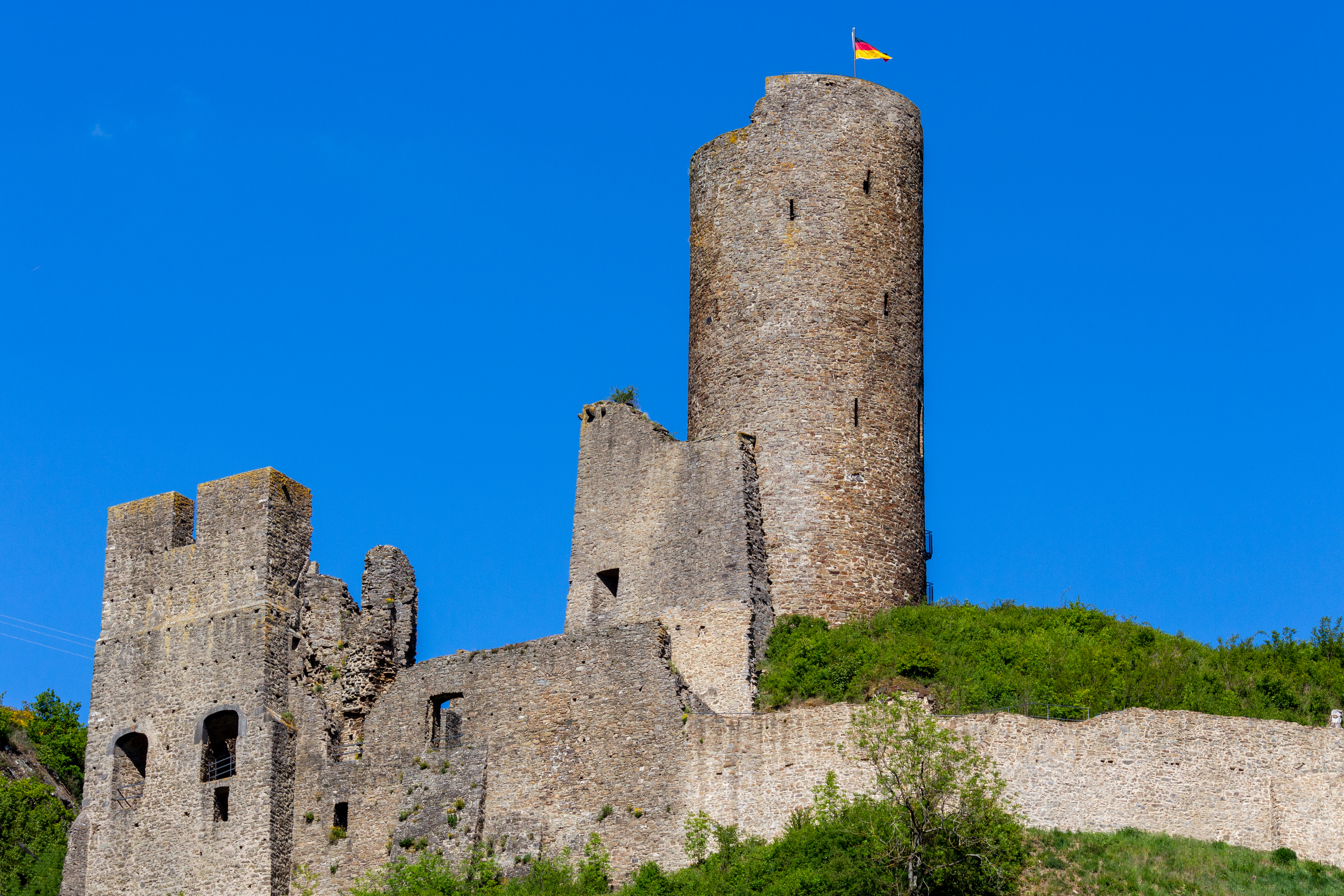
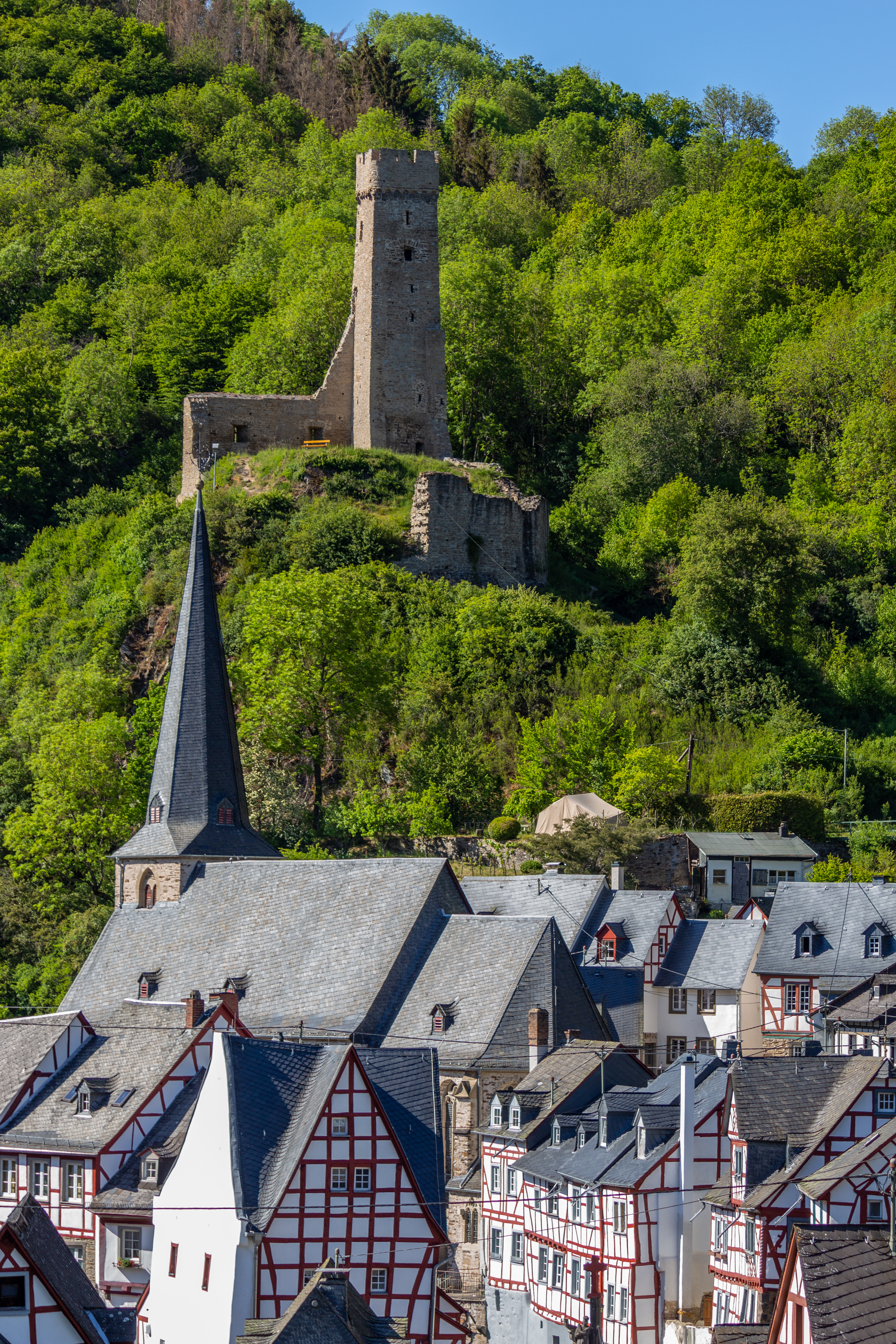
The Birth of Löwenburg – Löwenburg, or Lion’s Castle, was first mentioned in historical records in 1229. Its conception is attributed to Count Hermann III of Virneburg, who, in a bold and controversial move, constructed the fortress on the land of his brother, Philipp, following a partition agreement. This audacious act kindled a bitter sibling rivalry, eventually settled by ceding the disputed territory to Hermann. Thus, Löwenburg emerged not only as a formidable stronghold but also as a symbol of asserting dominance and resolution through compromise. The castle’s architecture reflects its strategic importance. A robust keep, standing 25 meters high with walls three meters thick, forms the heart of the structure. This imposing tower, with its high entrance oriented towards the valley, was later fortified with a pointed shield wall in the 15th century to counter the era’s emerging firearms. Today, visitors can climb this watchtower, offering panoramic views that once served as a lookout for approaching adversaries.
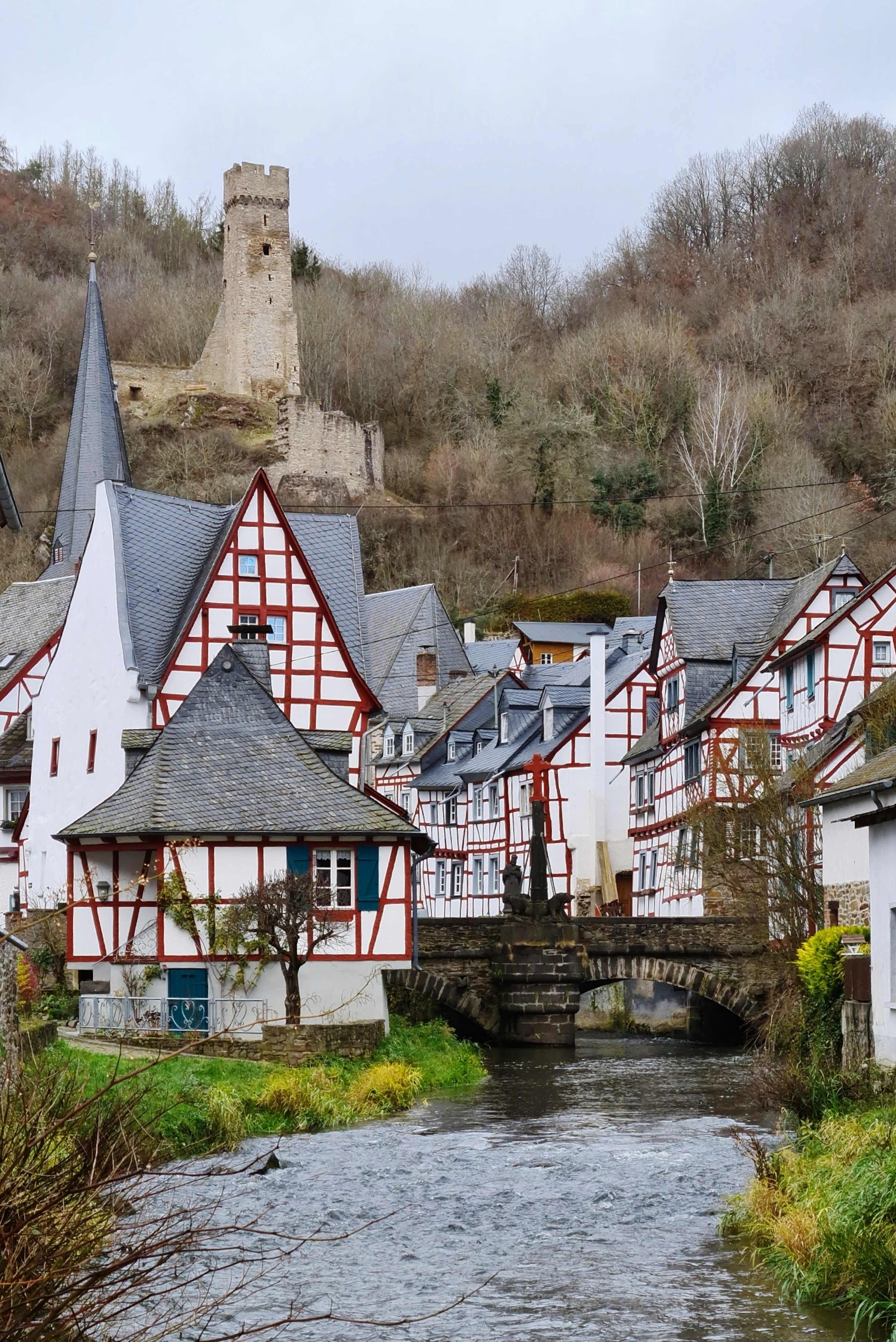
The Enigma of Philippsburg – Philippsburg, or Rech as it is colloquially known due to its smaller size compared to Löwenburg, adds another layer to this historic tapestry. Also built in the 13th century, its origins are shrouded in mystery and local lore. One theory posits that Philippsburg was conceived as a mere outwork of Löwenburg, serving to bolster its defenses. Conversely, popular legend holds that it was Philipp’s retort to his brother’s encroachment, a separate bastion erected in defiance and rivalry. Despite its more modest scale, the strategic placement of Philippsburg allowed it to play a significant role in the region’s defense network. The remnants of this castle continue to whisper stories of medieval strife and resilience.
Ecclesiastical Ties and Power Plays – Nestled within the Electorate of Trier’s territory, the Counts of Virneburg maintained close relations with the Archbishopric of Cologne. This alliance aimed primarily at securing ecclesiastical benefices for their numerous offspring, weaving the secular and sacred realms together in a complex web of influence. Heinrich II of Virneburg, born between 1244 and 1246, epitomizes this confluence of power and piety. Initially serving as a canon provost in Cologne, he ascended to the role of Archbishop of Cologne in 1306, guiding the archdiocese through the turbulent years following the Battle of Worringen in 1288. His tenure, spanning 26 years, was marked by efforts to reaffirm the archbishopric’s authority and stability amidst regional power shifts.
Feuds and Fortunes – Despite their allegiance to Cologne, the Virneburgs found themselves embroiled in territorial disputes with the Archbishopric of Trier. Heinrich II’s persistent raids on the nearby city of Mayen ignited a prolonged feud, culminating in a delicate reconciliation orchestrated by the Archbishop of Cologne. The resolution mandated that Heinrich II offer Monreal Castle, located near Löwenburg, to Trier as a fief upon his father’s death, thereby securing a tenuous peace. Throughout the 14th century, the Virneburg family continued to wield substantial influence, contributing six members to the Trier Cathedral Chapter. Under the stewardship of Robert IV of Virneburg, who governed Monreal from 1384 to 1445, the castle complex was expanded and frequently served as a widow’s residence for the noble lineage.
Decline and Destruction – The zenith of Virneburg influence began to wane with the extinction of their male line in 1545, marked by the death of the last Count, Cuno. Subsequently, Heinrich of Leiningen assumed control as the feudal lord, yet the Trier Archbishop chose not to renew the fief, installing his own steward instead. The ravages of the Thirty Years’ War brought further devastation to Monreal. In 1632, Swedish troops inflicted severe damage in their unsuccessful siege, and the final blow came in 1689 during the War of the Palatine Succession when French forces laid waste to the stronghold. By 1815, the ruins passed into Prussian hands through secularization, eventually coming under the care of the Directorate of Castles, Palaces, and Antiquities of the General Directorate for Cultural Heritage Rhineland-Palatinate. Restoration efforts initiated in 1970 have since stabilized the remains, allowing public access and preserving this historical gem for future generations.
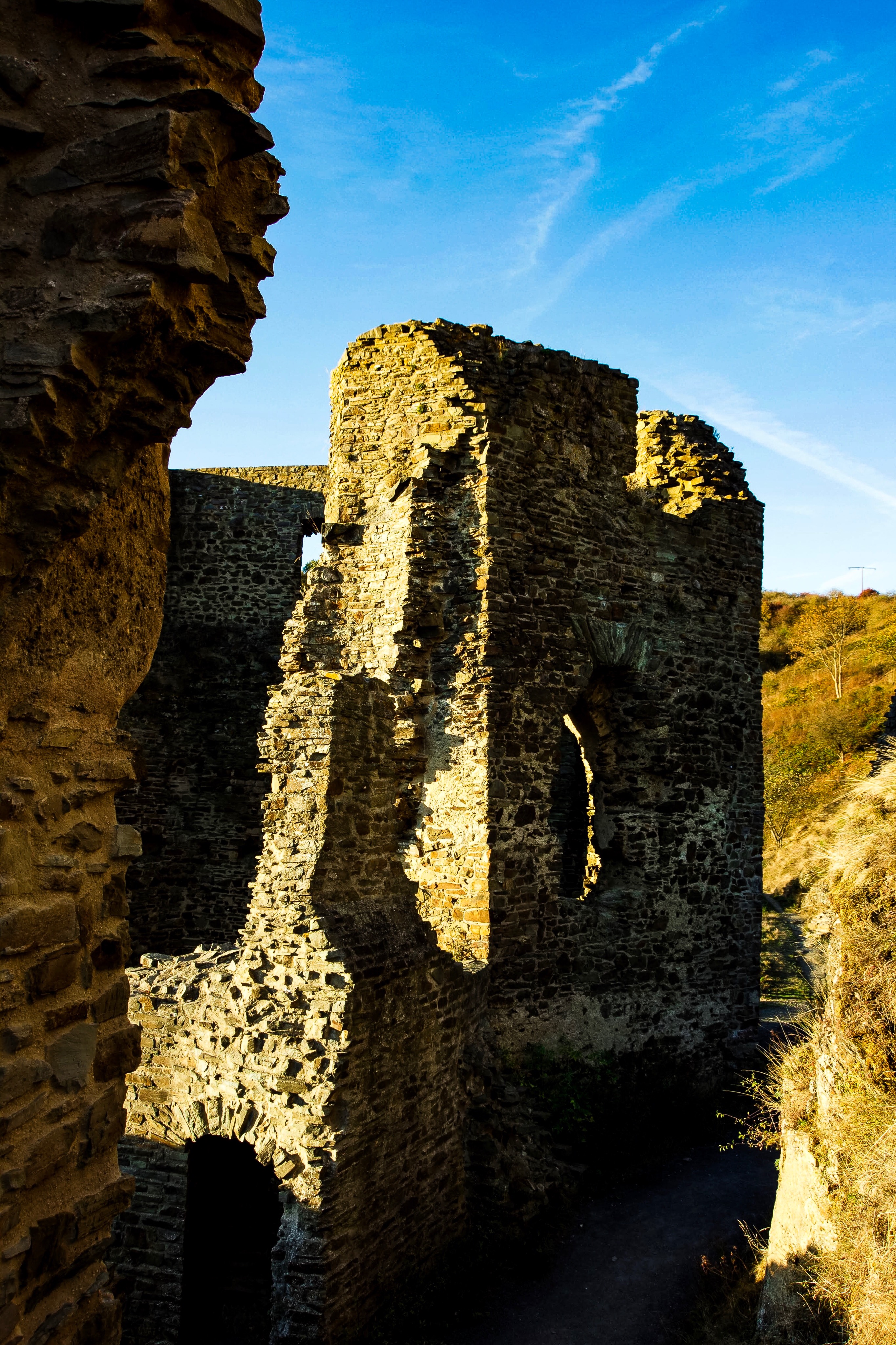
The Ruins Today – Even in their ruined state, the remnants of Löwenburg and Philippsburg convey a vivid sense of their former grandeur. The massive keep of Löwenburg still stands as a testament to medieval engineering, its formidable structure hinting at the castle’s once impregnable nature. Dual ditches—one curving protectively against the higher slope to the northwest, the other separating the main castle from the eastern forecourt—illustrate sophisticated defensive strategies. The early Gothic chapel, though reduced to mere walls reinforced by later interventions, speaks to the spiritual dimension interwoven with the castle’s martial character. Meanwhile, the surviving elements of Philippsburg offer a tantalizing glimpse into its enigmatic past, inviting speculation and study.
In conclusion, Löwenburg and Philippsburg are more than just ancient ruins; they are storytellers of the medieval era’s complexities. Their stones echo with the ambitions, conflicts, and alliances that shaped the course of history in this region. As visitors walk among these remnants, they step back into a world where the boundaries between myth and reality blur, and where each stone has a tale to tell.