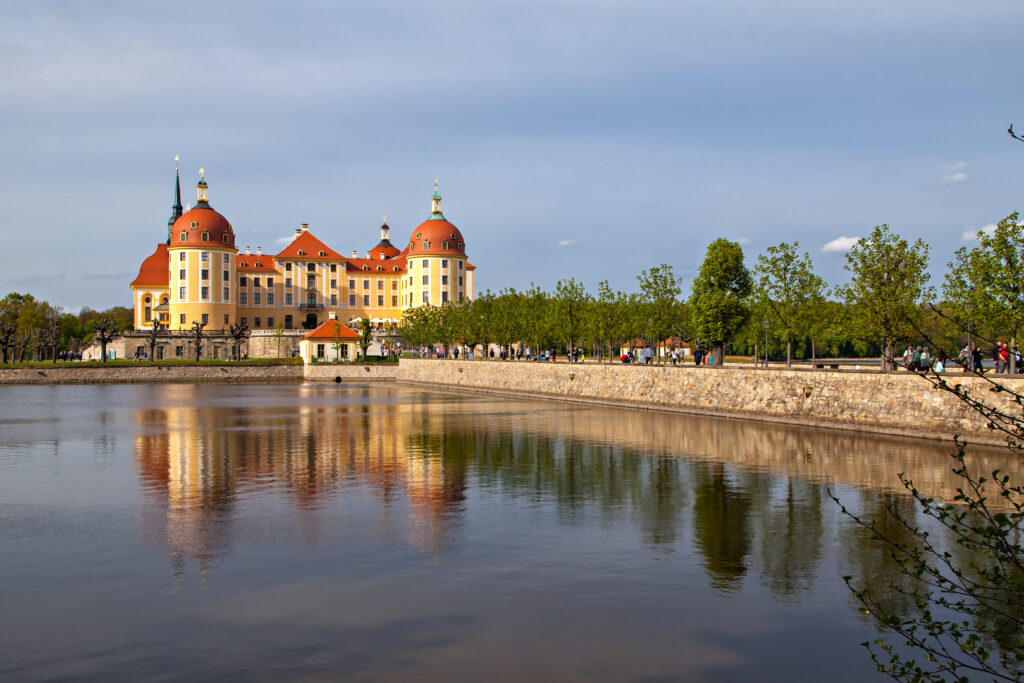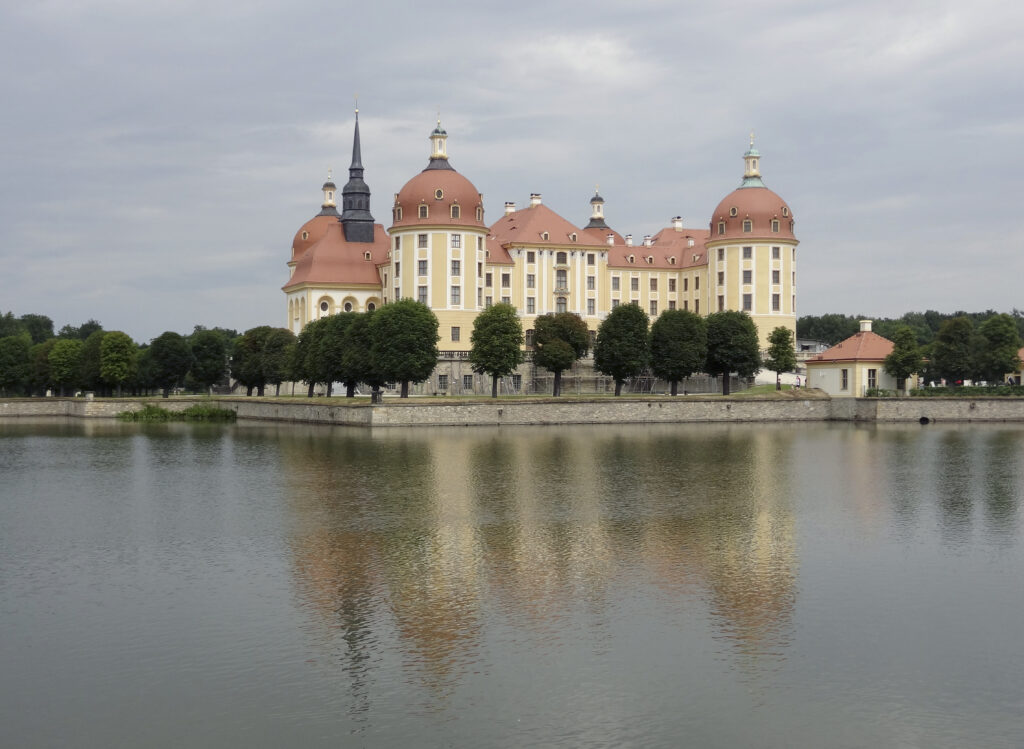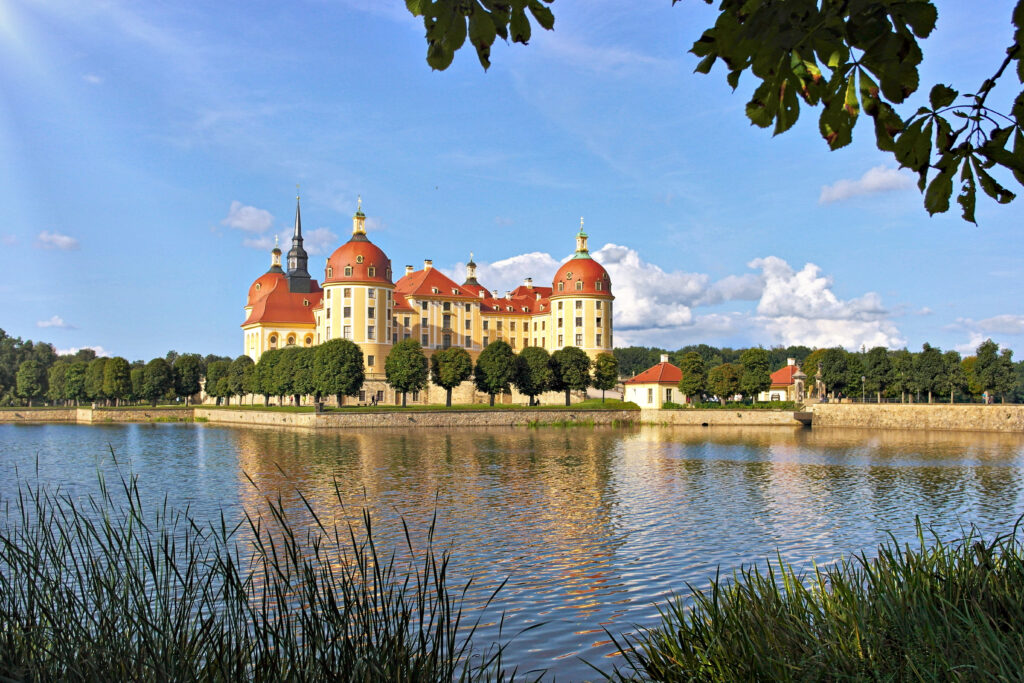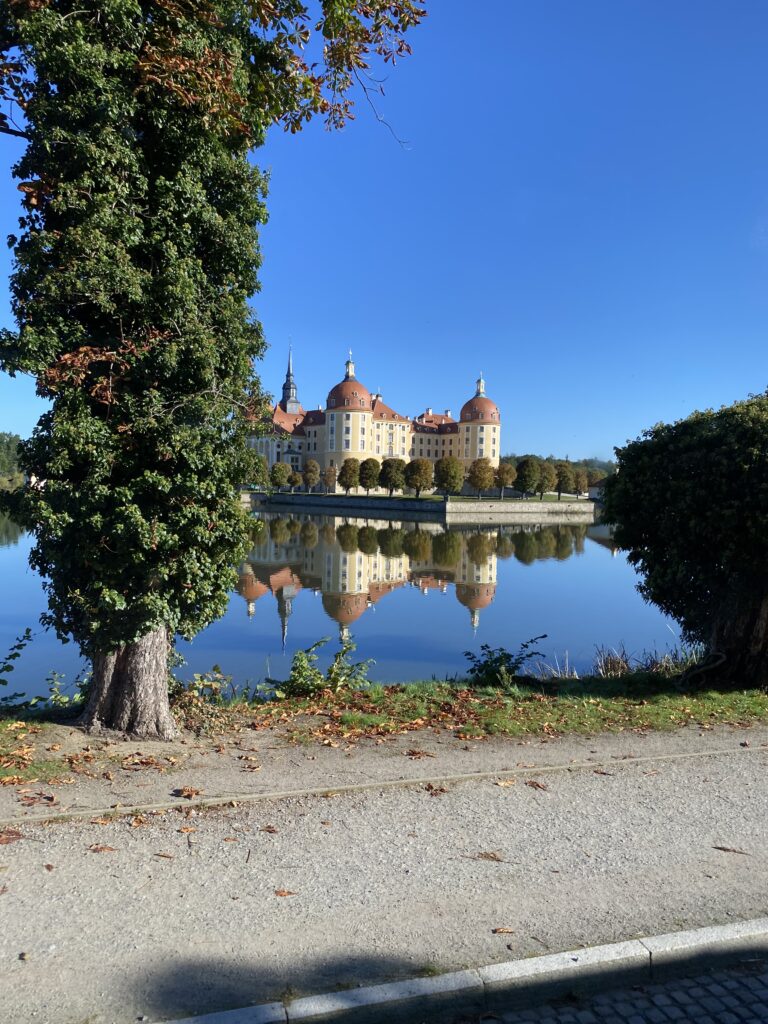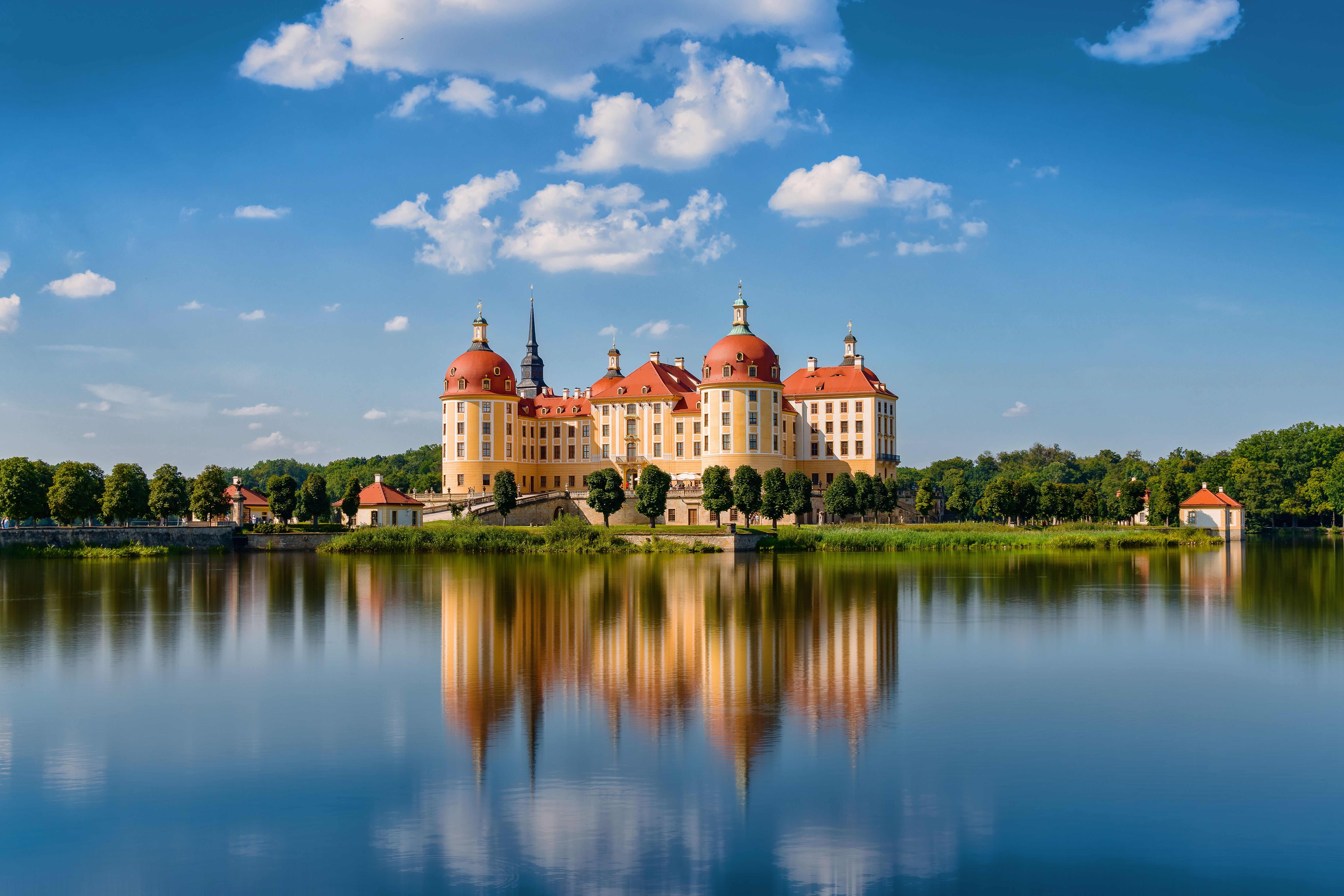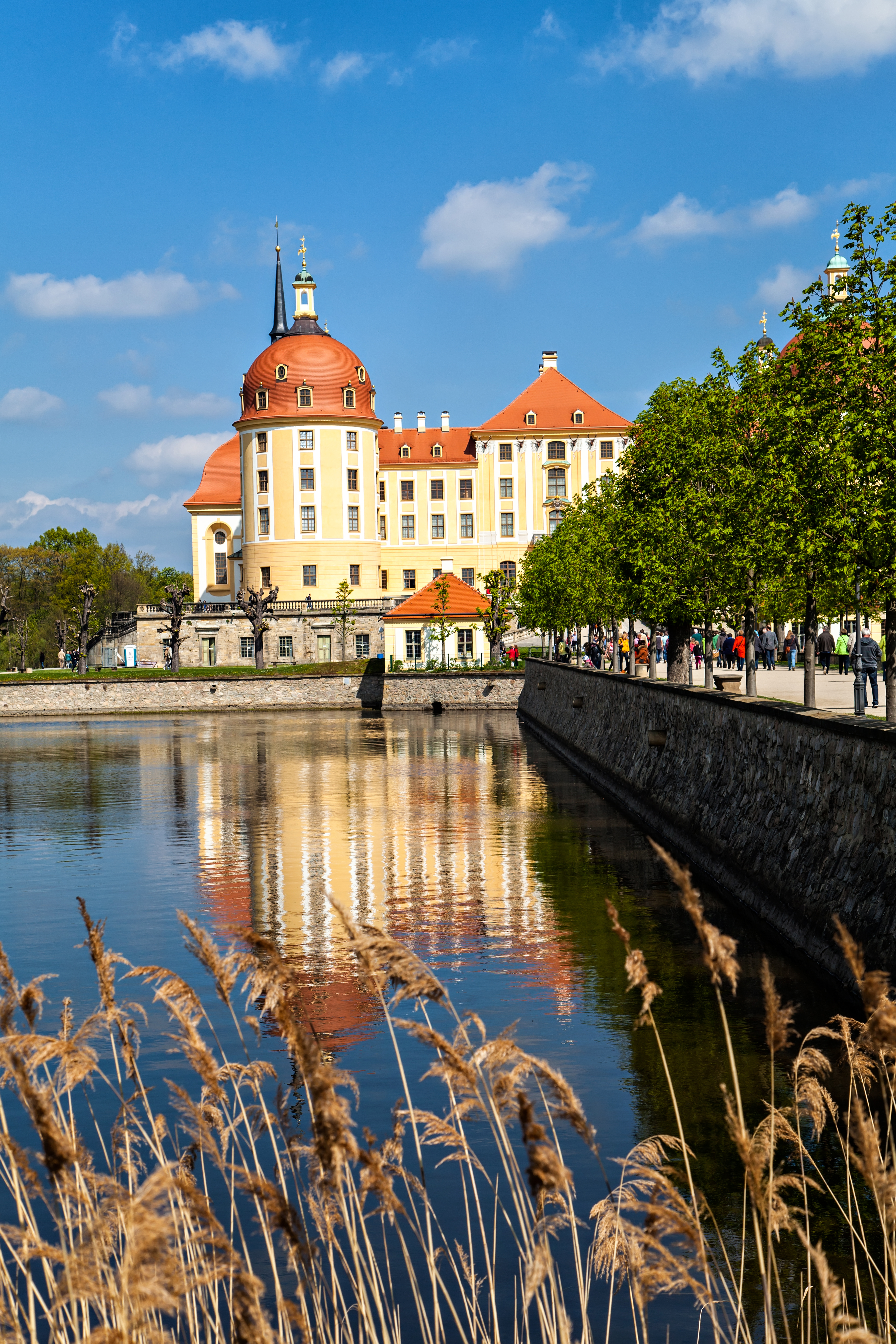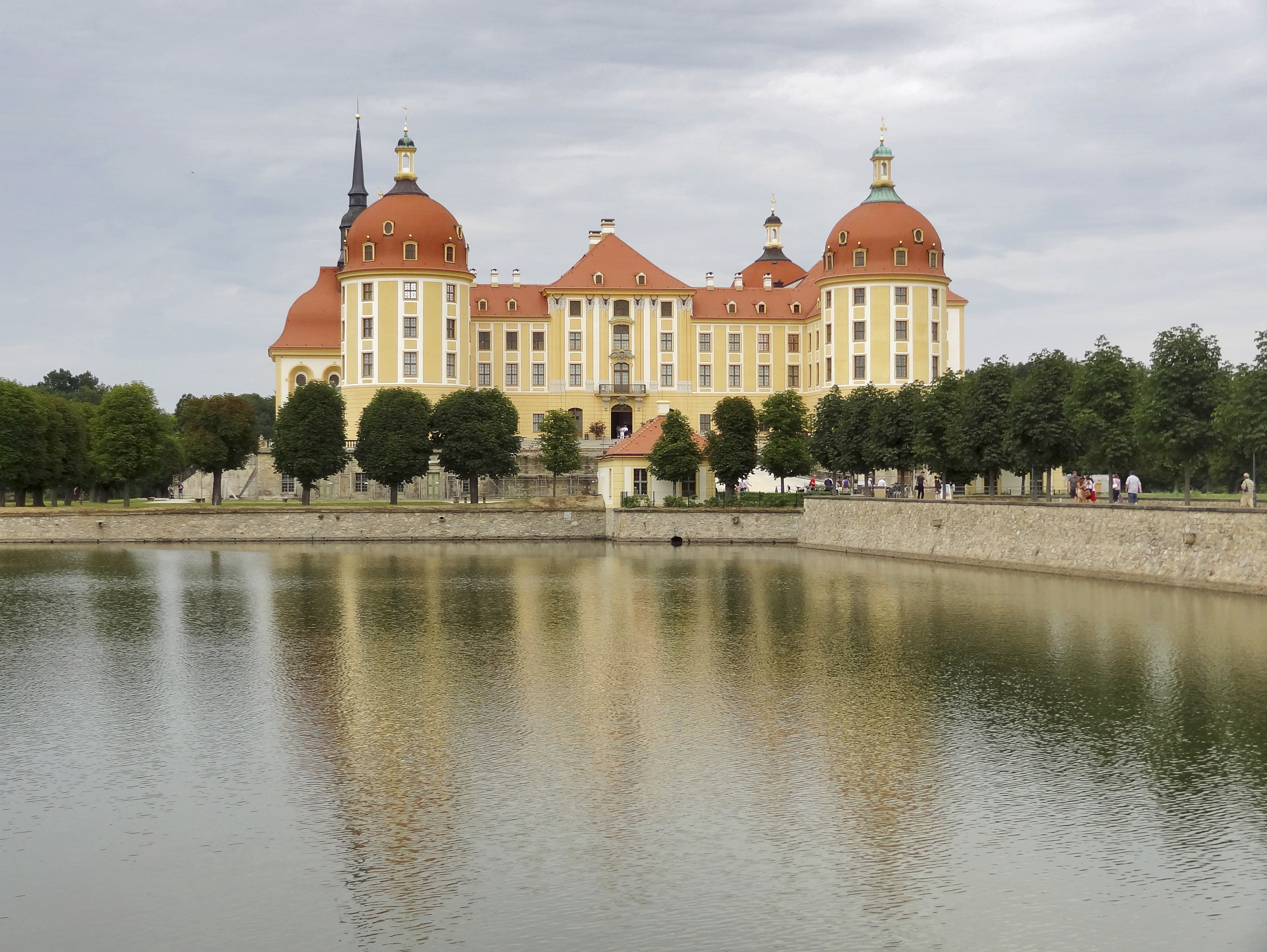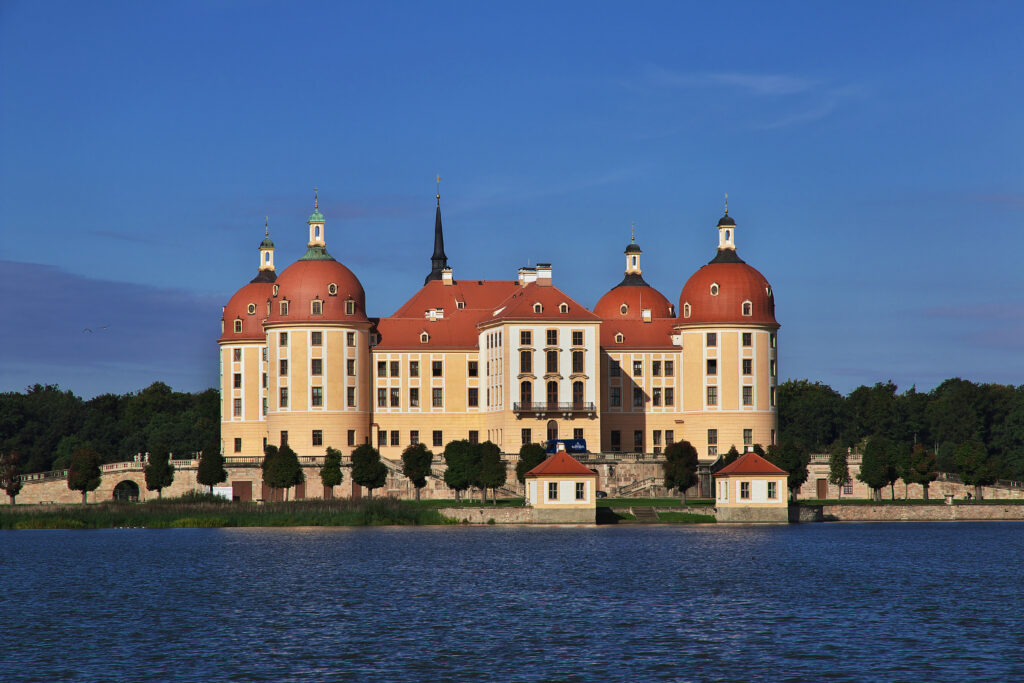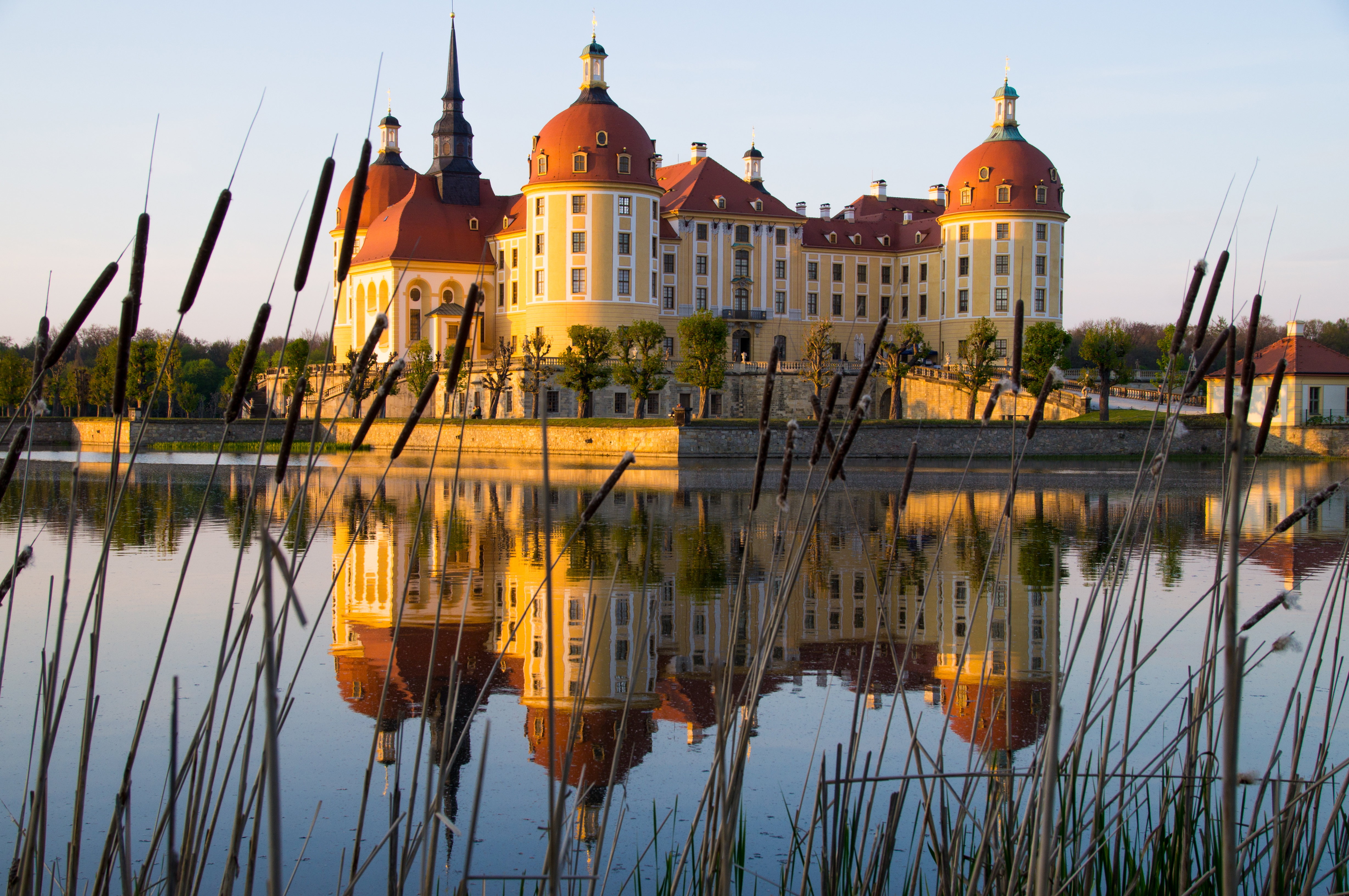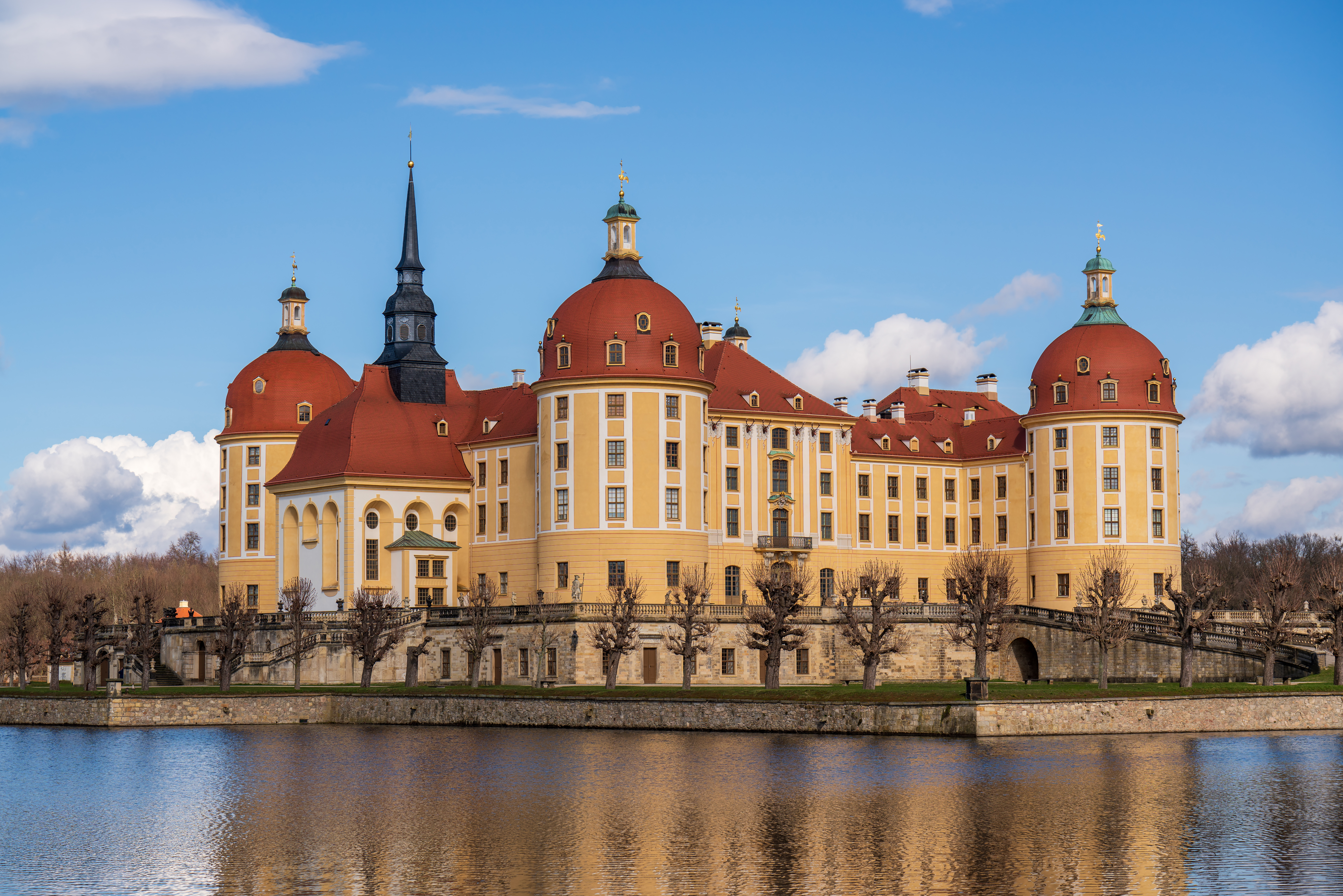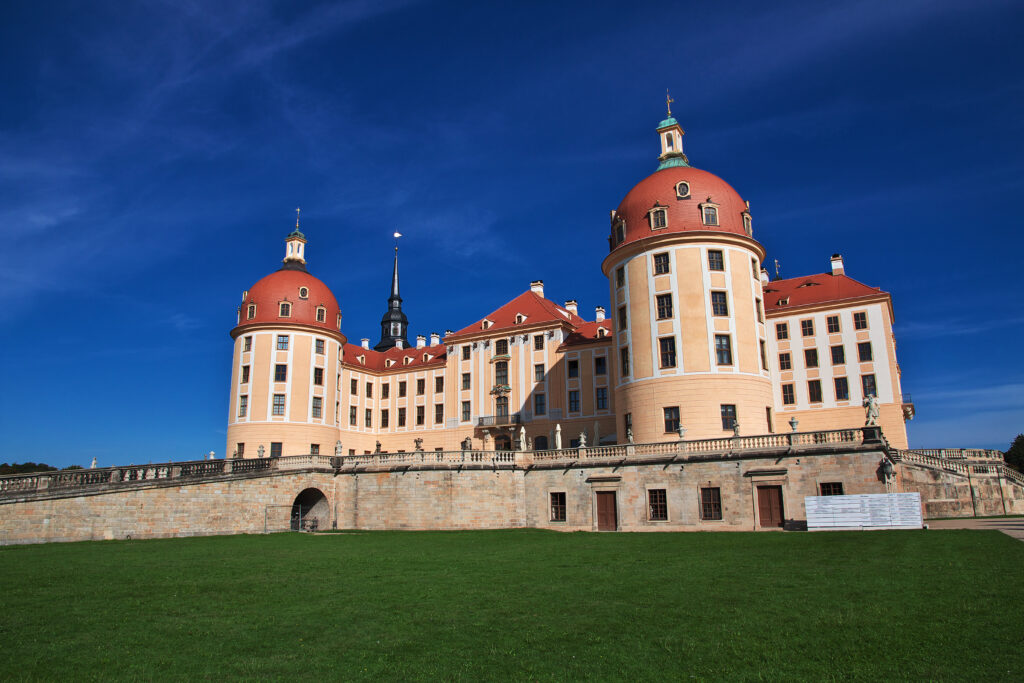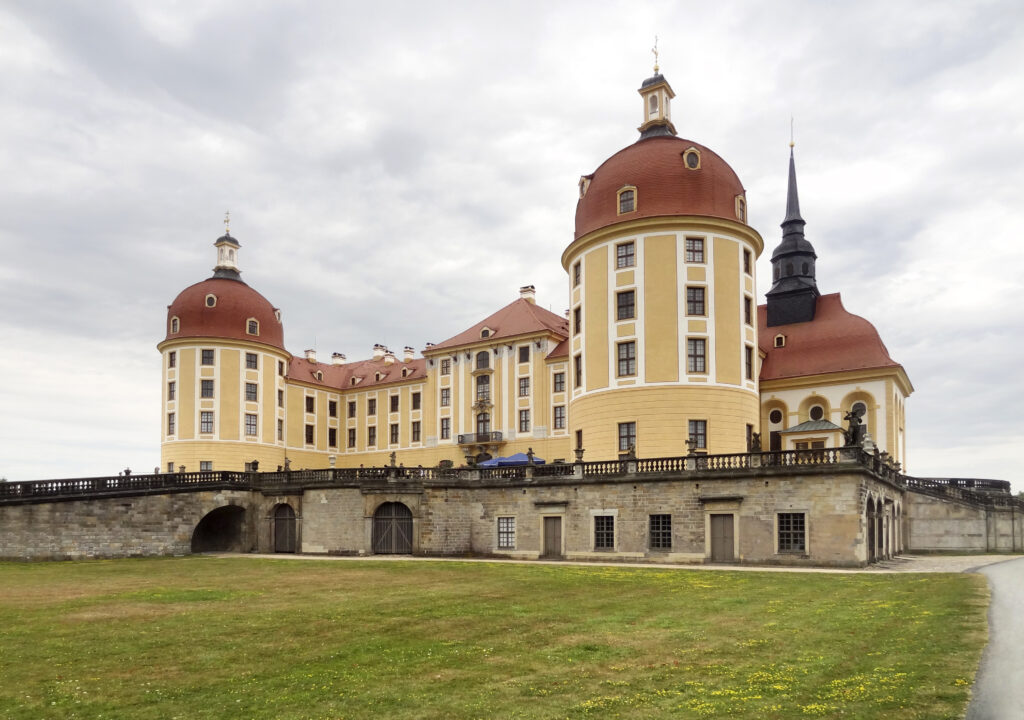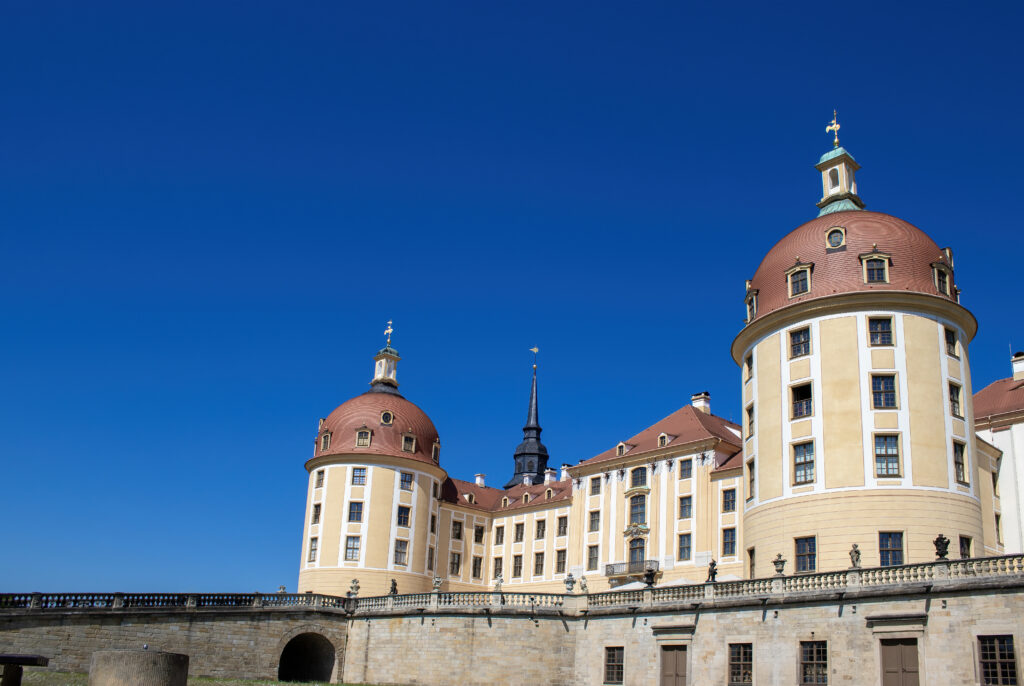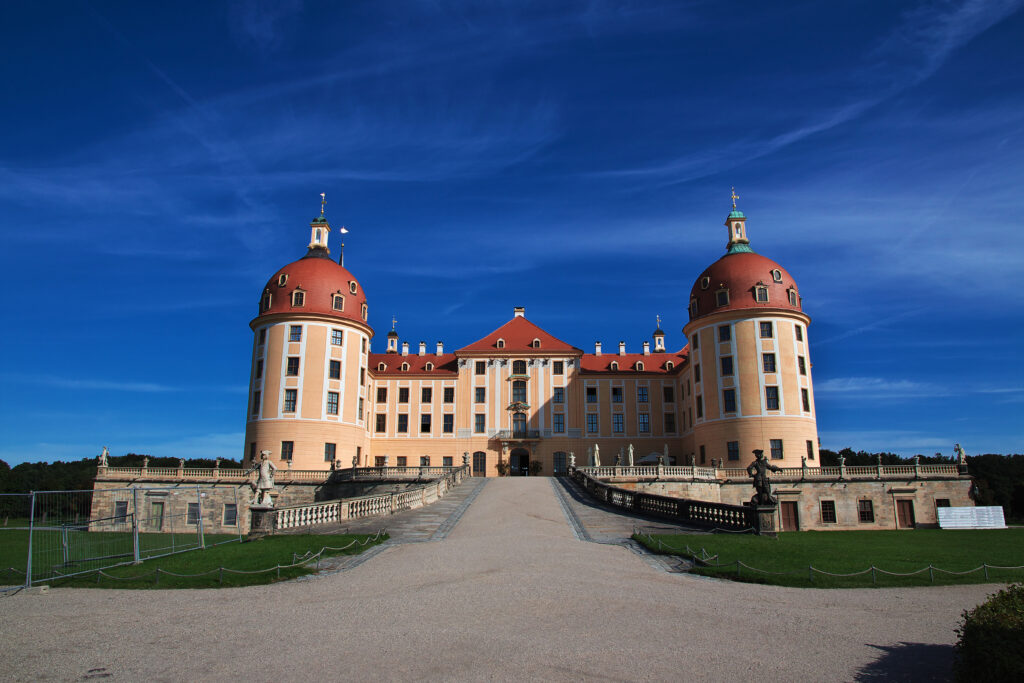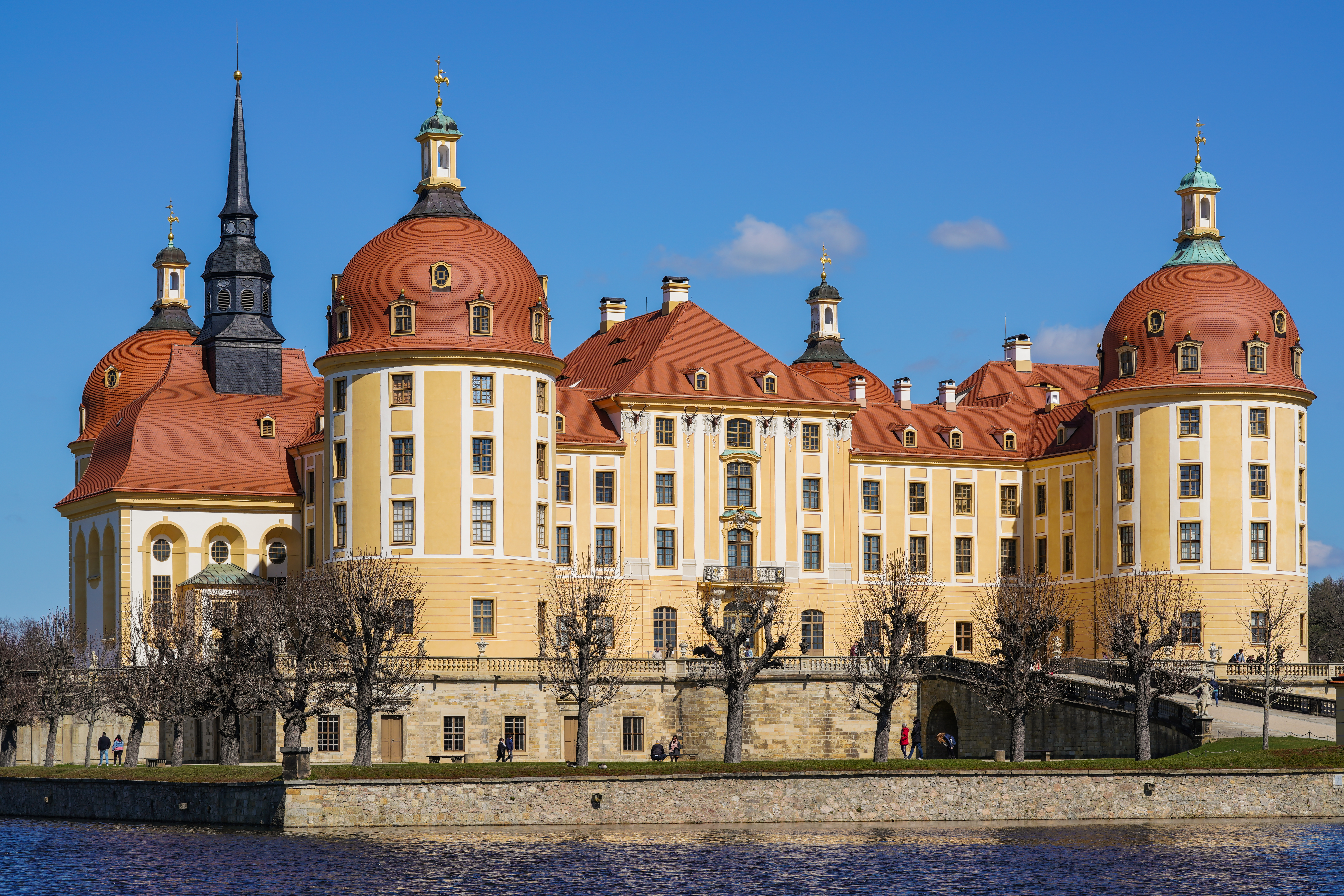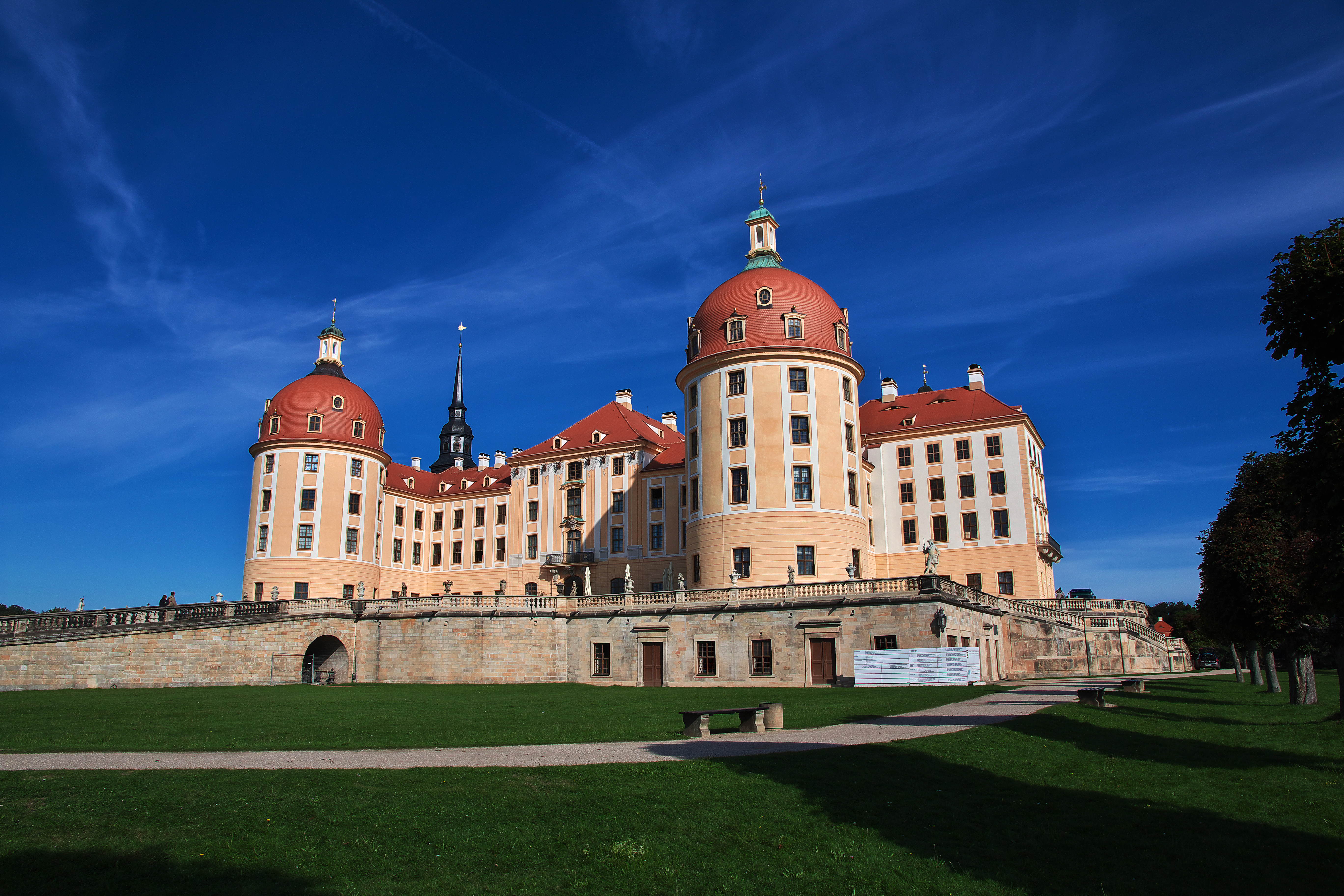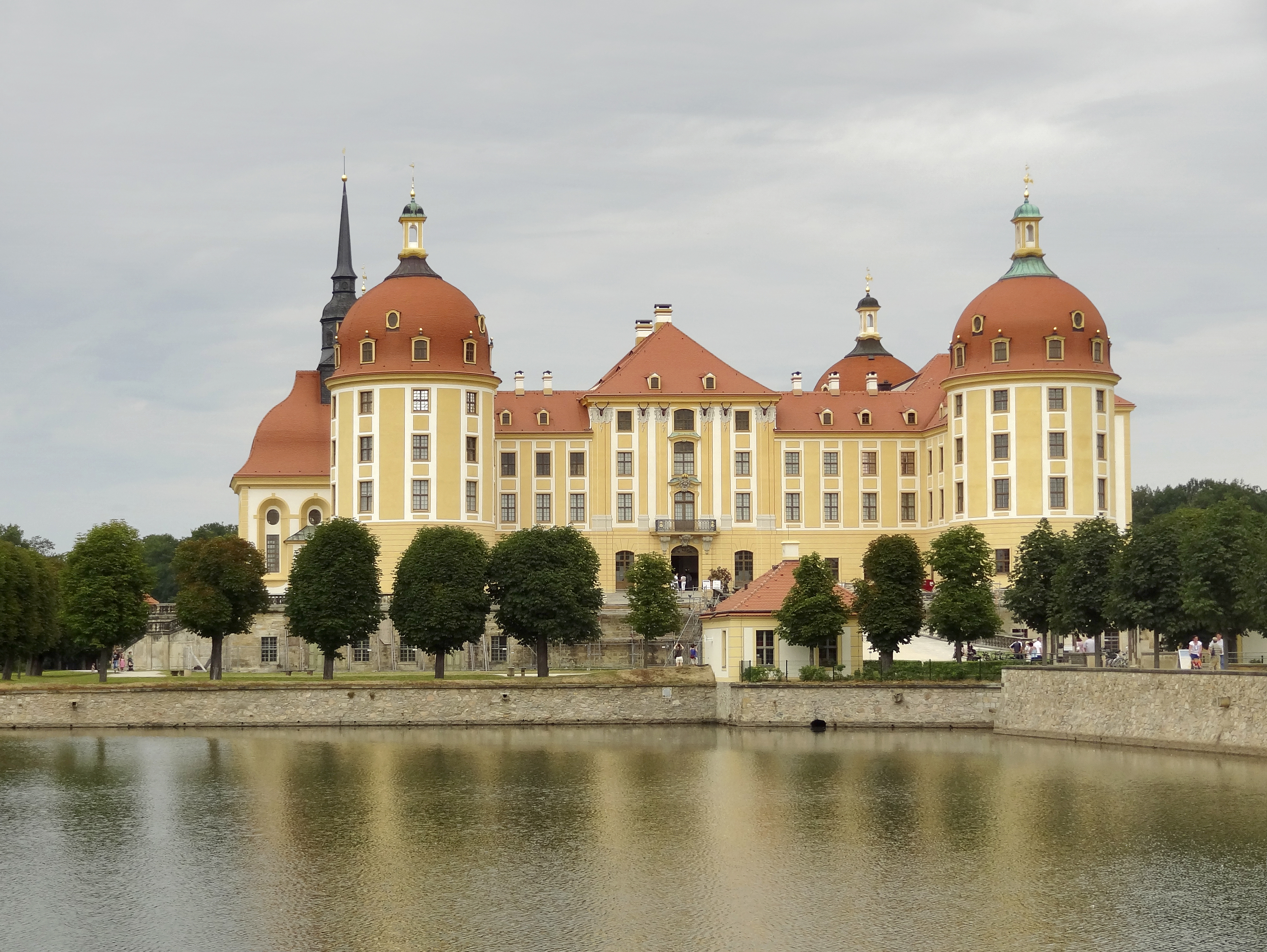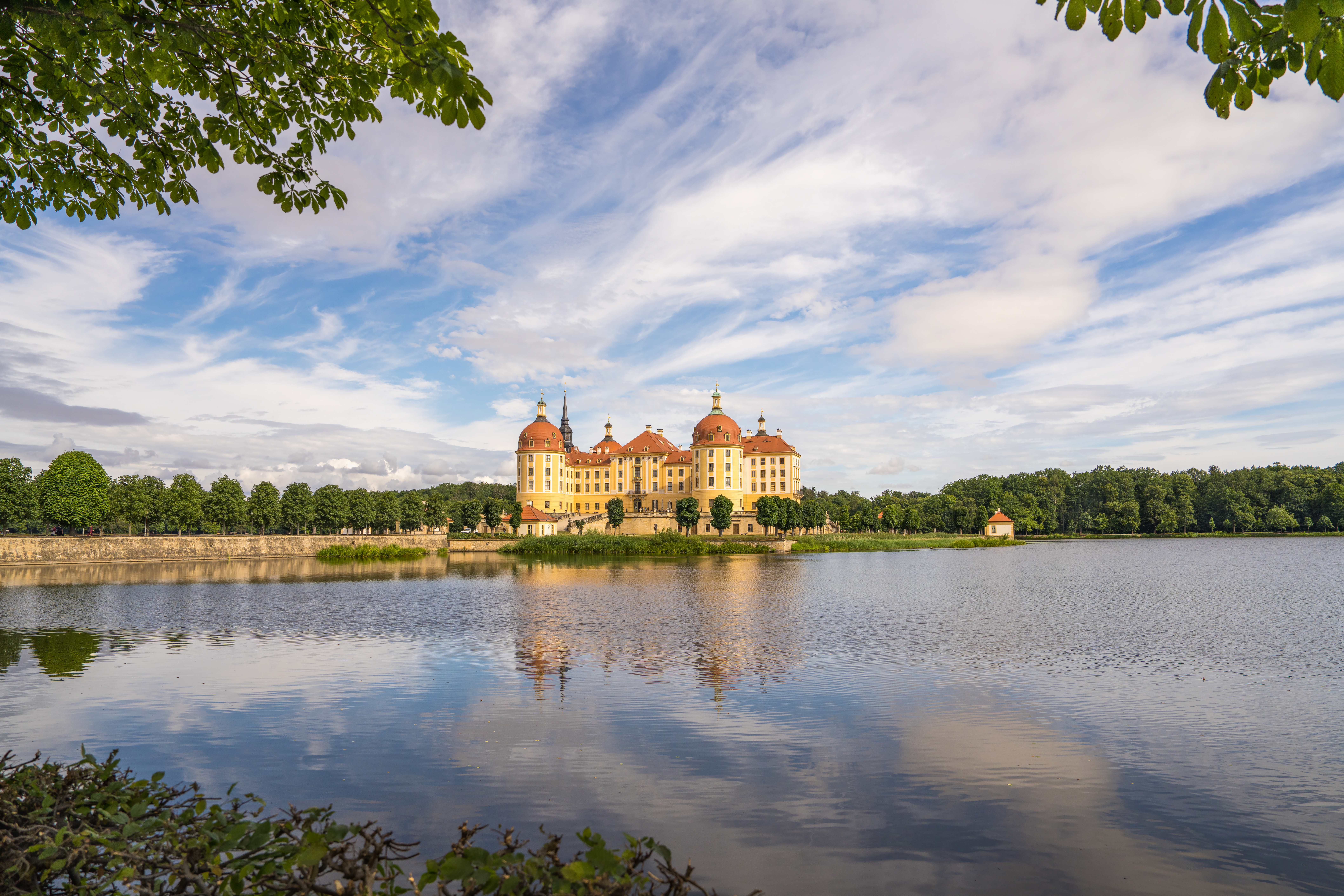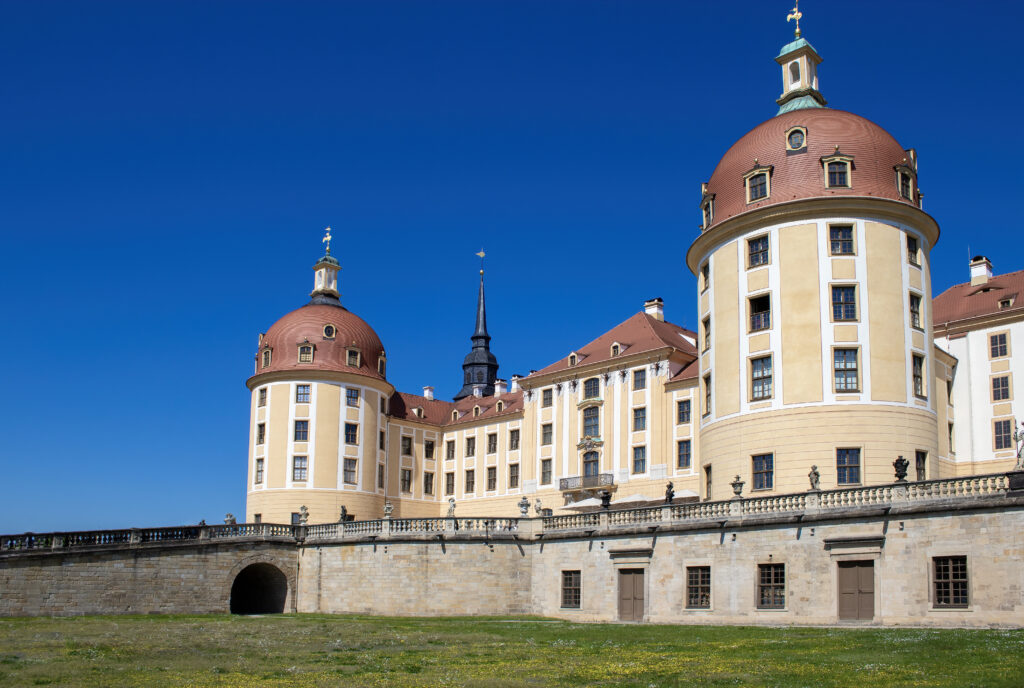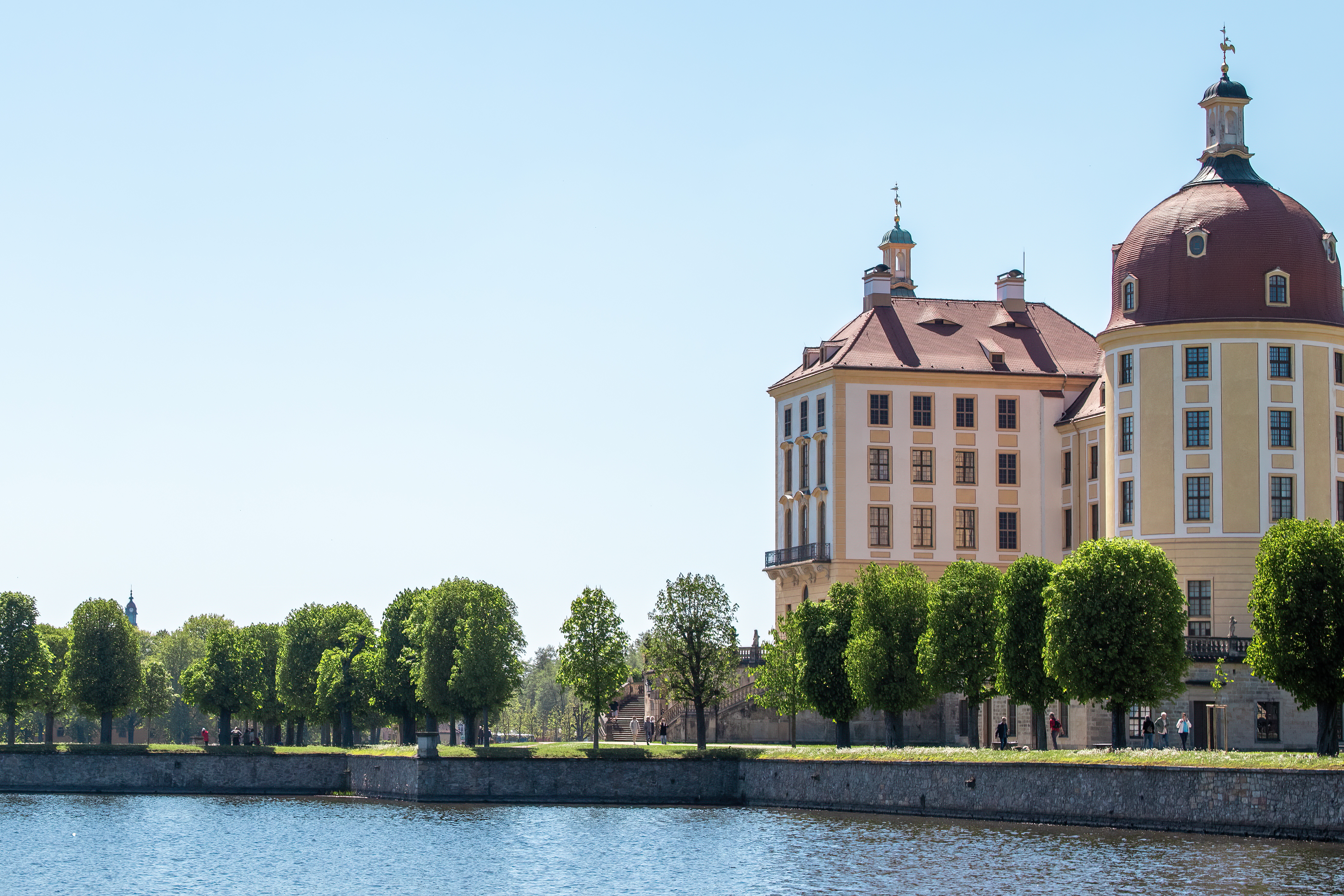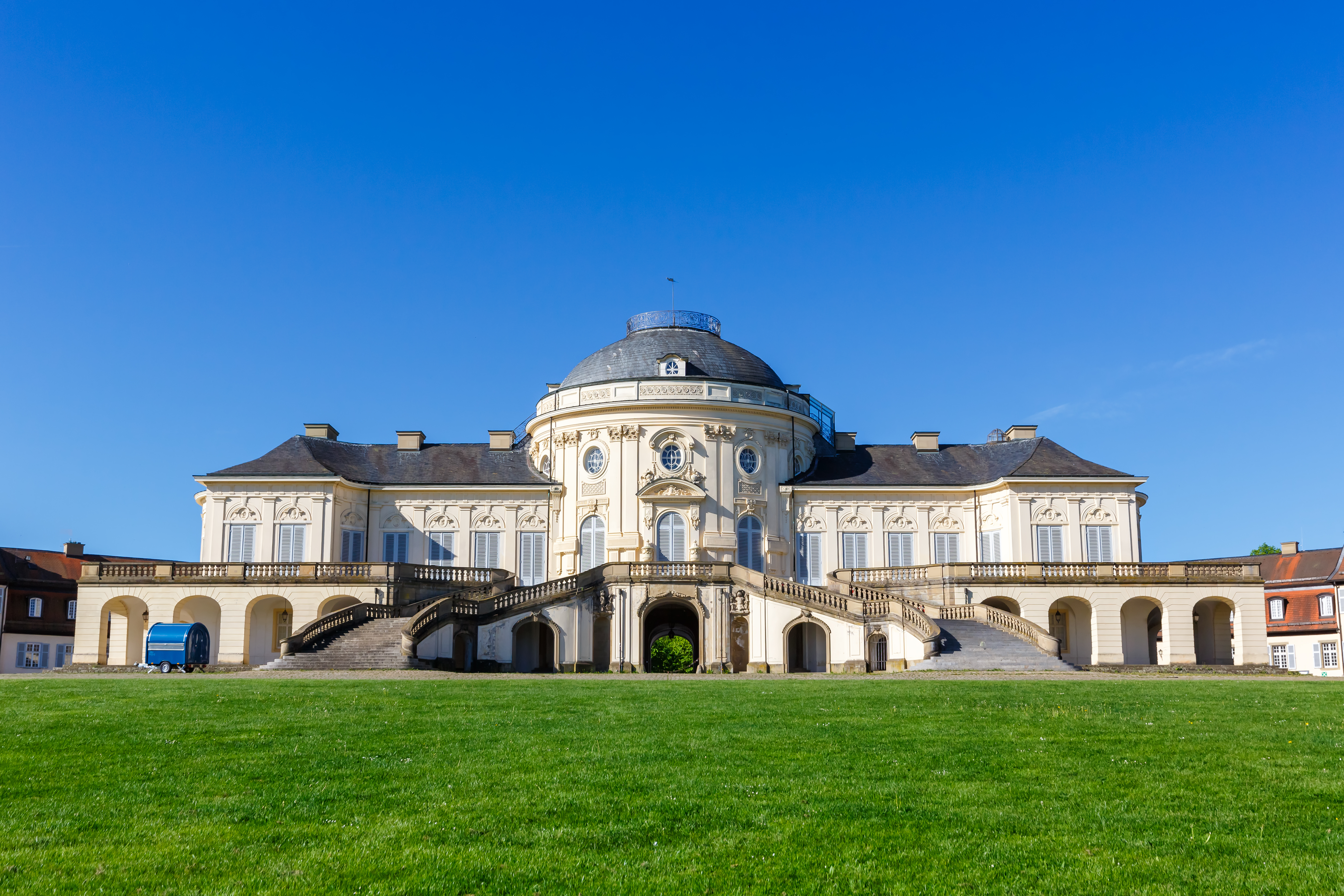

Nestled in the picturesque countryside near Dresden, Moritzburg Castle stands as a testament to Saxony’s rich history, a tapestry of noble tales, architectural marvels, and whispers from the past. Originally designed as a hunting lodge by Duke Moritz in 1542, this four-winged Baroque masterpiece evolved over the centuries into a symbol of opulence under Augustus the Strong. Today, it attracts visitors not only with its splendor, but also with stories that have stood the test of time.
The creation of Moritzburg. The origins of Moritzburg Castle date back to a Renaissance hunting lodge named “Dianenburg” after the goddess Diana, which was built between 1542 and 1546 by Hans Dehn-Rothfelser under the direction of Duke Moritz. This impressive structure with four sturdy round towers connected by a defensive wall laid the foundation for a residence of political and cultural significance. Until 1550, it was the administrative seat of the Moritzburg district and underwent several renovations until the end of the 17th century.
The creation of the chapel. Between 1661 and 1672, the castle chapel was built under the direction of Elector Johann Georg II and architect Wolf Caspar von Klengel. The foundation stone for the elaborately designed building was laid on November 1, 1661, the birthday of Johann Georg’s wife Magdalene Sibylle. This Protestant chapel was later to undergo a significant change after Elector Augustus the Strong converted to Catholicism in 1697 and needed a Catholic place of worship. At Christmas 1699, the chapel was consecrated as a Catholic church, heralding a new chapter in its ecclesiastical history.
A Baroque transformation. Under the reign of Augustus the Strong, Moritzburg underwent extensive Baroque renovations from 1722 to 1730 under the direction of Matthäus Daniel Pöppelmann. This transformation included the demolition of the courtyard walls, a significant elevation and extension of the central building, and the integration of wing buildings with corner towers. Surrounded by terraces, ramps, and bridges, the palace stood majestically amid newly created ponds and animal enclosures, embodying the splendor of the Dresden Baroque style. The palace gardens also continued to evolve, influenced by the geometric precision of French landscape design. Although they remained unfinished due to Augustus’ death, these gardens formed a picturesque extension of the palace’s splendor and blended seamlessly with the surrounding wilderness.
The resilient legacy. In the 20th century, Prince Ernst Heinrich of Saxony made Moritzburg his permanent residence from 1933 to 1945. Despite the devastation of World War II, during which priceless manuscript collections were destroyed in the infamous bombing of Dresden, the spirit of Moritzburg remained intact. Remarkably, in 1996, amateur archaeologists discovered chests containing gem-encrusted goldwork from the Wettin treasure in the castle grounds. Although these treasures had been ravaged by time, they were carefully restored, reviving the lost splendor of the Wettin dynasty.
A cinematic magic. The fairytale charm of Moritzburg has made it a popular location for film productions. Its enchanting halls and courtyards have brought timeless stories to life, most notably the 1972 classic “Three Nuts for Cinderella.” Every winter, the castle hosts an exhibition dedicated to this popular film, attracting fans who want to relive the magic. The castle remains a vibrant backdrop, serving as a setting for various genres, from romantic comedies to historical epics.
Cultural and artistic center. Beyond its cinematic appeal, Moritzburg Castle is a beacon of culture and art. It hosts the Moritzburg Festival, founded in 1993, which brings together chamber music lovers every year under the artistic direction of cellist Jan Vogler. The castle grounds are not only intended for musicians, but have also been brought to life twice a year since 2002 by the Sculpture Symposium with the sound of chisels. The works created there adorn the picturesque landscape of the castle and form a winding sculpture trail through the adjacent woods.
Secrets of the collections. Inside the castle, visitors are greeted by Baroque elegance, from magnificent gala carriages to elaborately decorated rooms. Among the castle’s treasures is the famous feather room, an exquisite bed made from the feathers of peacocks, pheasants, and other birds, which was painstakingly restored over a period of 19 years. Together with the Meissen porcelain exhibits featuring hunting motifs, this underscores the castle’s deep connection to its hunting tradition.
Hunting Gallery. Particularly noteworthy is the castle’s extensive collection of deer antlers, considered one of the most impressive in the world. The dining room displays a number of red deer trophies, some of which are over 400 years old, including the heaviest known red deer antlers, weighing almost 20 kg. Other rooms display unique and antique trophies, including moose and reindeer antlers and even a 10,000-year-old giant deer antler given as a gift to Tsar Peter the Great.
Echoes of myths and legends. Perhaps the most fascinating element of Moritzburg Castle is its ability to spark the imagination with legends and myths. The Hall of Monstrosities, decorated with distorted antlers, invites stories of failed hunts and mythical creatures. Visitors can almost hear the ancient echoes of horns echoing through the forest, guiding hunting parties in times long past.
The tapestries of time. In October 2022, an important cultural asset returned to Moritzburg—a tapestry depicting Emperor Charles V, created by Seger Bombeck in 1545. After a journey across several continents, this tapestry is now back in Moritzburg, symbolizing the resilience of history and the enduring legacy of the castle.
Architectural marvels. The integration of the castle into the landscape is a marvel, with its artificial island in the castle pond, extensive canals, and elegant deer house in the glade system used for par force hunting. These features create a seamless connection between nature and architecture and enhance the mystical atmosphere that pervades Moritzburg.
Moritzburg Castle is not just a building, but a living testimony to a bygone era, full of stories of grandeur, mystery, and resilience. Even today, it continues to captivate the hearts of those who cross its threshold, inviting them to discover the legends engraved in its stones.