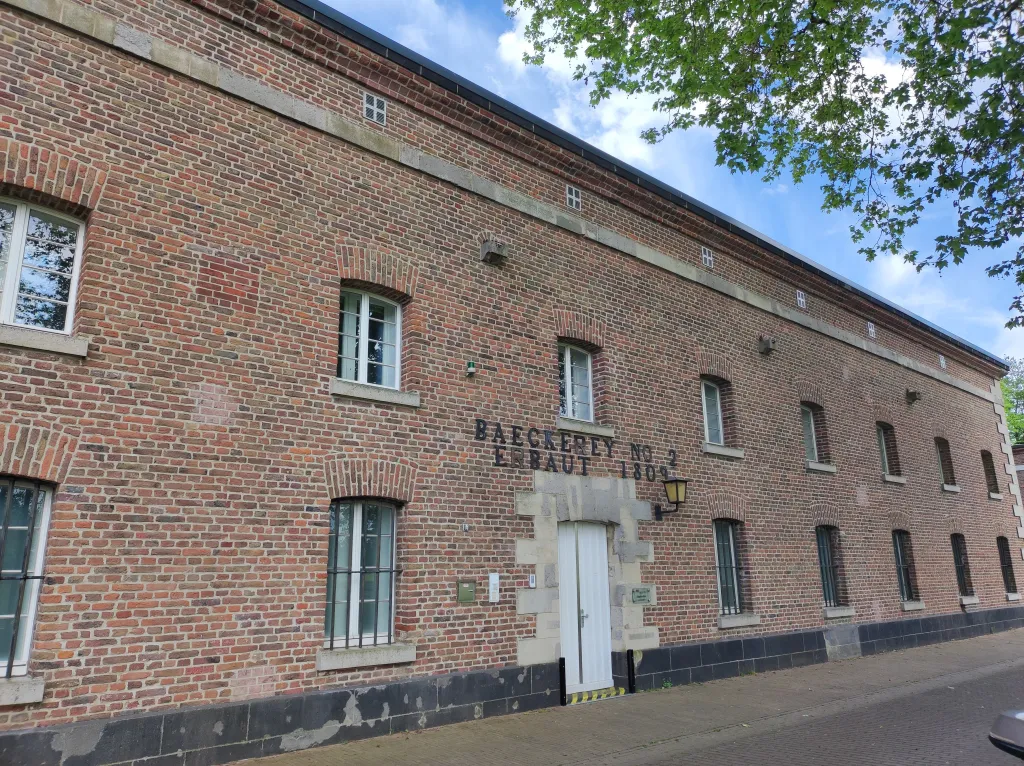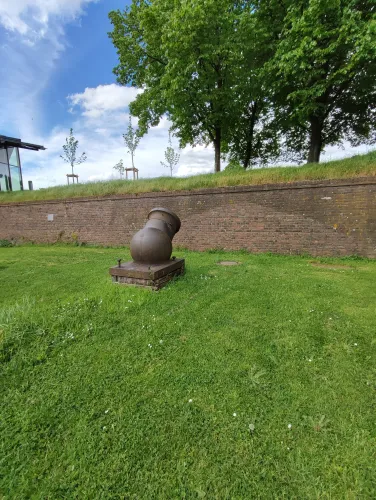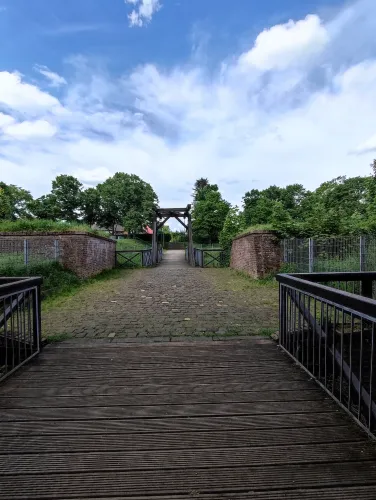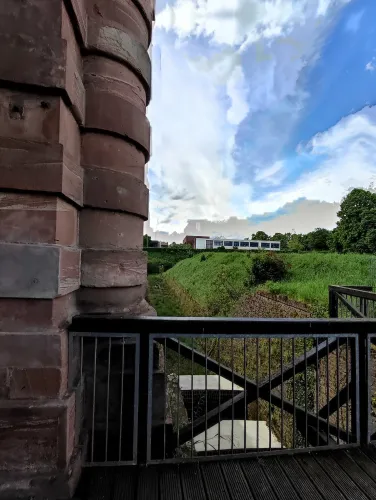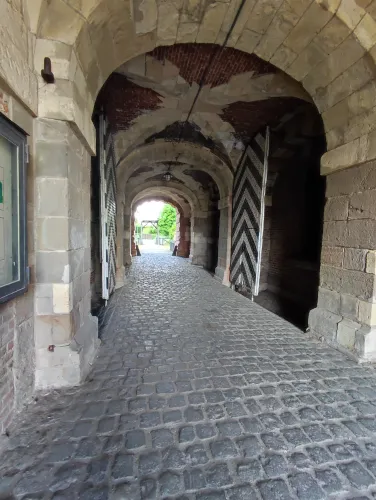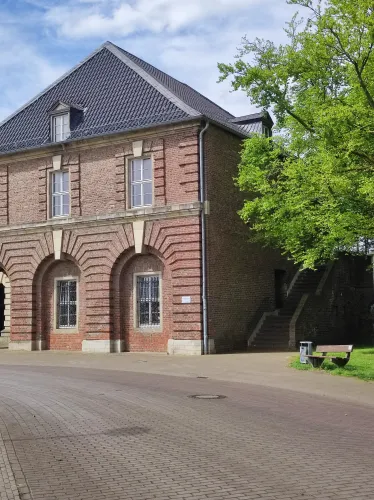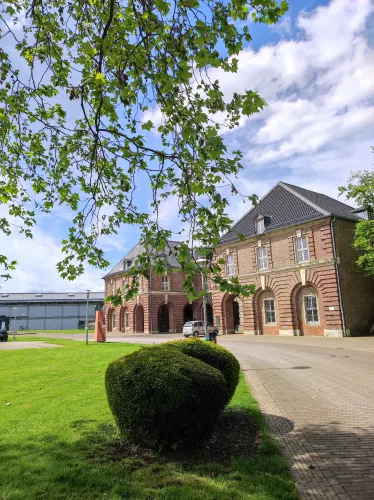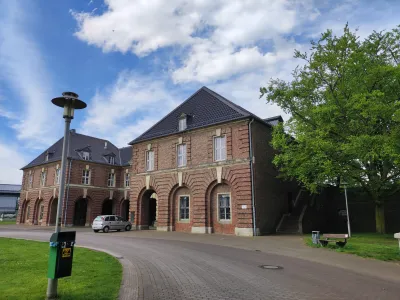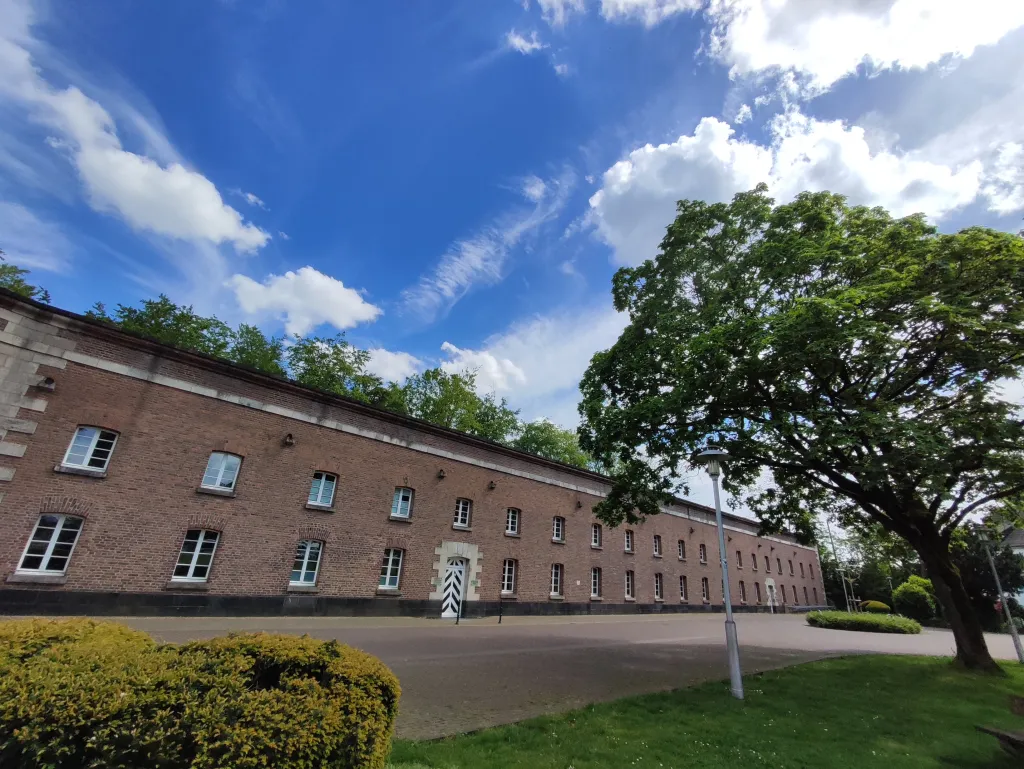

One of the largest fortresses in the Rhineland was the Wesel Citadel, which is the largest preserved fortification on the Lower Rhine. It was built between 1688 and 1722 by Elector Wilhelm I of Brandenburg in the south of the city in the shape of a five-pointed star, which blended into the existing city fortifications. The citadel had five bastions and ravelins. The citadel was designed by Johan de Corbin. The representative main gate of the citadel was built in 1718 by Jean de Bodt, with a prison cell in its southern part. This is where the 11 officers from Schill’s Corps were imprisoned. The officer Ferdinand Schill was a fearless fighter who served in the Prussian army. Due to his extraordinary service, he was promoted to major and received the highest military decoration. He wanted to instigate a popular uprising to persuade the hesitant Prussian king and his lord Austria to go to war against France. But no one except his corps followed him. Schill was eventually killed in street fighting in Stralsund. The French soldiers robbed him of his uniform and cut off his head. They placed it in alcohol to bring it to King Jérôme Bonaparte, Napoleon’s brother. In the meantime, 11 of his officers were transferred to Wesel and put in the prison cell in the main gate. They were court-martialed and shot on the Lieppewiesen on September 16, 1809. Allegedly, shortly before their death, they shouted praises to the king and Prussia. In 1805, Wesel belonged to France under the Treaty of Schönbrunn, which stationed its troops there. During the French occupation from 1805 to 1814, various structural changes were made to the fortifications. The former Barracks VIII was converted into a 240-meter-long, two-story brick building, which is now separated by Schillstraße. In 1814, the French occupiers surrendered after a lengthy siege by Prussian troops. The decision to dismantle the city fortifications was made in 1886. As a result, the citadel, which once covered an area 1.4 square kilometers larger than the city center, lost its outer fortifications in 1889 and its inner fortifications in 1922 after the conclusion of the Treaty of Versailles in 1919. The Rhineland was demilitarized on the orders of the Allied forces from 1919 onwards. The fortifications of the citadel were demolished, so that only a few parts of the building remain today. Today, a wooden bridge in the north of the fortress leads to the main gate, through which one can enter the interior of the fortification. This is where the command post, the magazine buildings, and the troop quarters were located. The citadel, the heart of the fortress, is now used as a cultural center. In addition to the LVR-Niederrheinmuseum Wesel, it houses parts of the Städtisches Museum Wesel, the Musik- und Kunstschule Wesel, and the Stadtarchiv Wesel. The citadel also serves as the central venue for Wesel’s Kulturnacht (Culture Night).