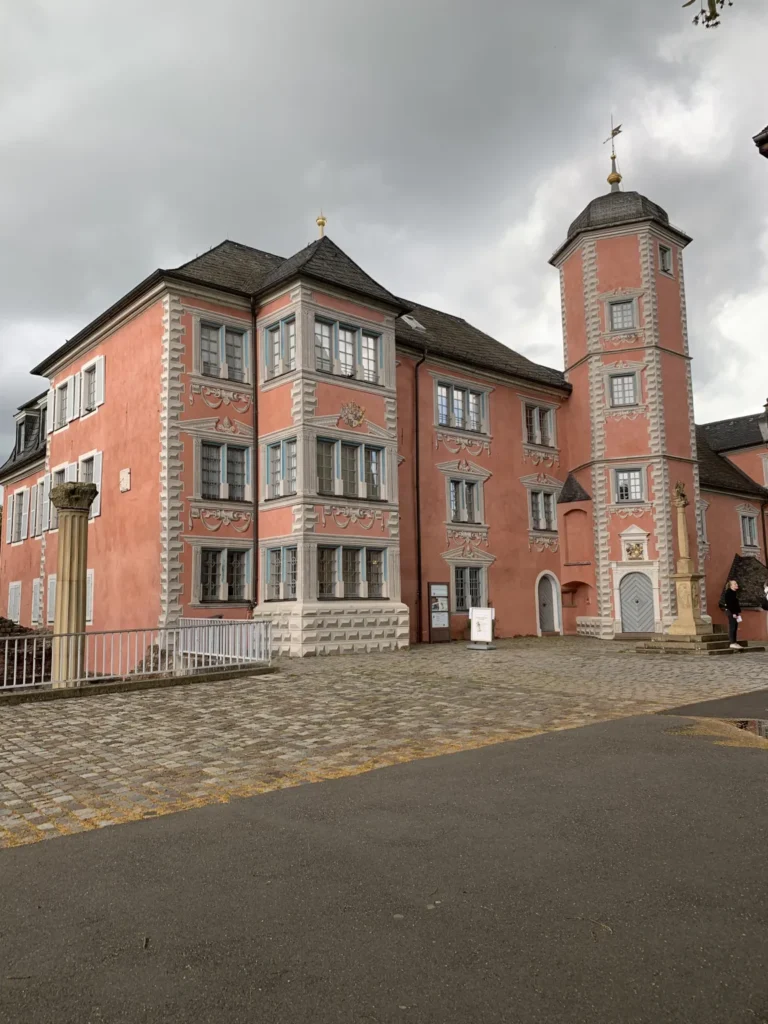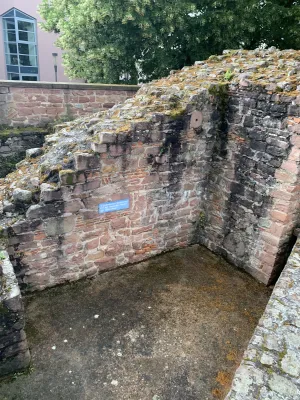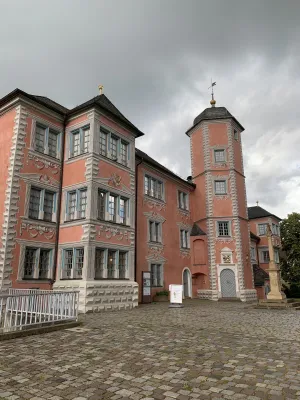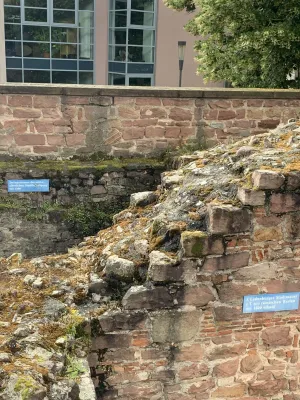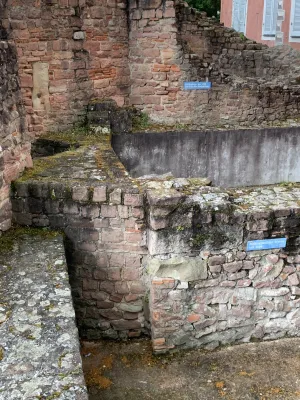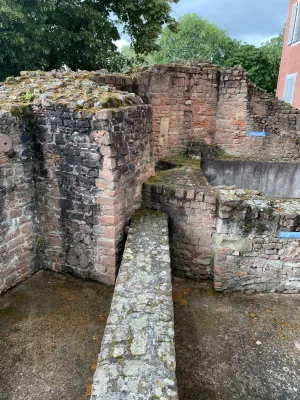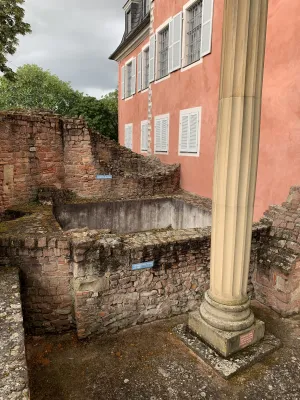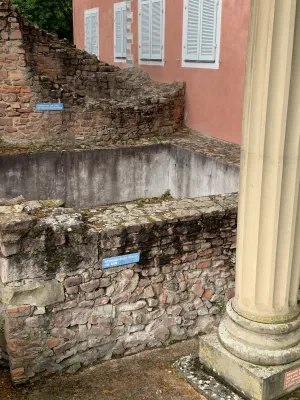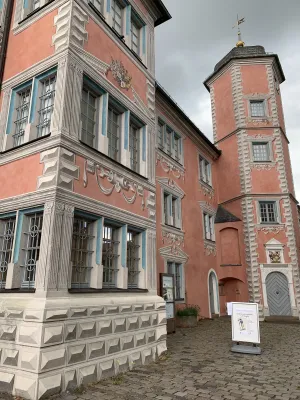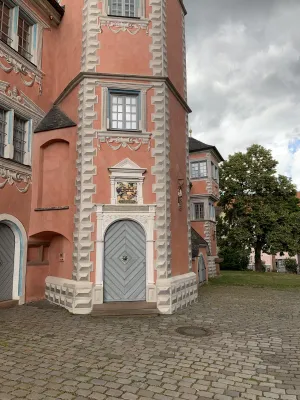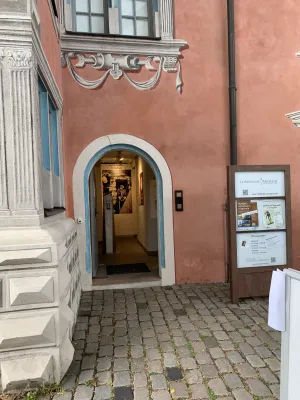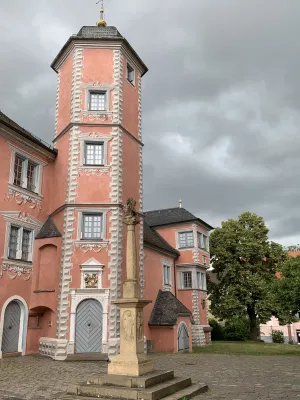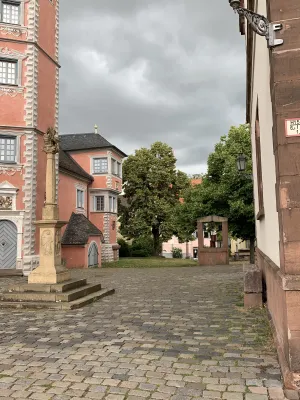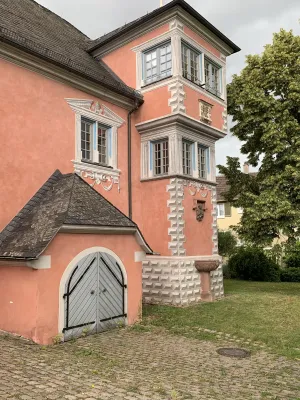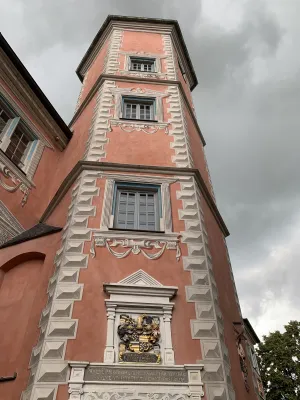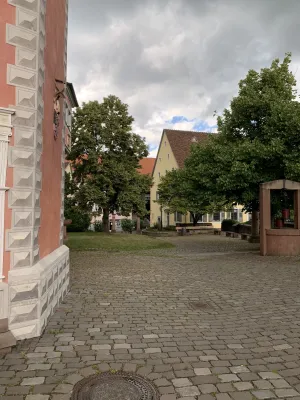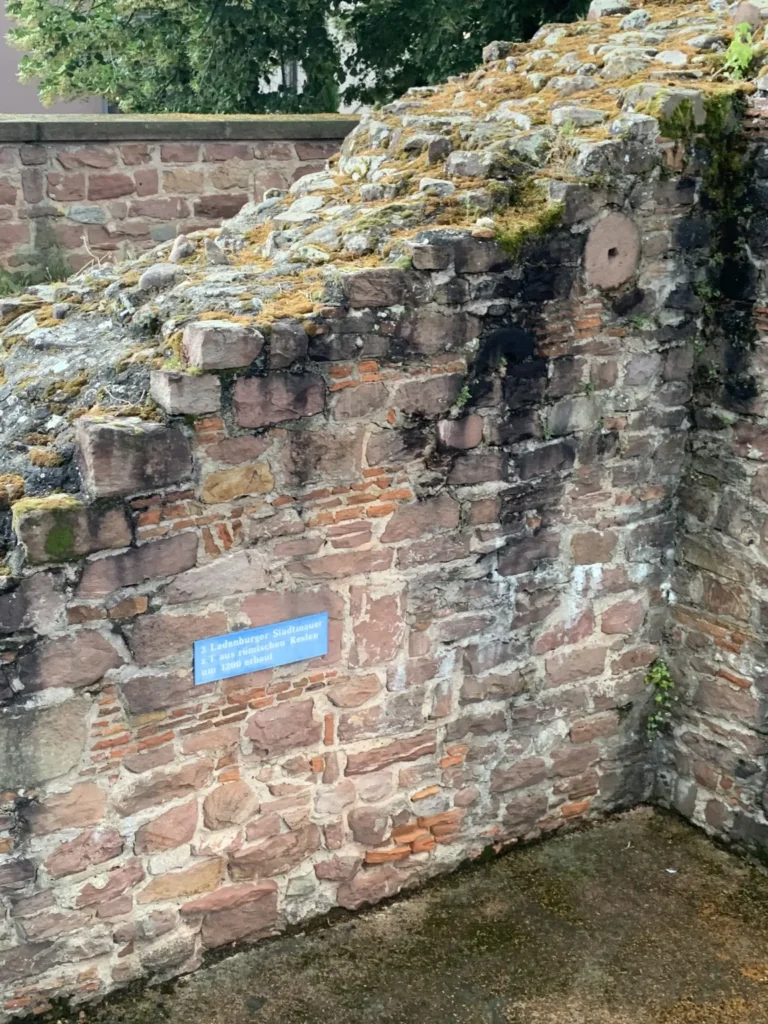

One of the most beautiful sights in Ladenburg, which boasts 1900 years of urban culture, is the area of the bishop’s palace with Lobdenburg Castle, a Merovingian royal palace that also gave the town of Ladenburg its name and is considered the capital of Lobdengau. In 628, the Merovingian Frankish king Dagobert I gave the site to the diocese of Worms. From then on, the bishops of Worms were the rulers of Ladenburg until 1705. In the 15th and 16th centuries, they built a Renaissance-style castle on the ruins of Lobdenburg Castle. In 1885, the town acquired the castle and had it rebuilt and restored several times. In the 1970s, the Mannerist paintings were uncovered and restored to their current magnificent appearance. Today, the former bishop’s court houses the Lobdengau Museum, which presents the archaeology, town history, and folk culture of the Lobdengau region. Next to the Lobdengau Museum are exposed Roman foundation walls, the foundations of the Roman Porta Praetoria, and an apse of the Merovingian royal court. The Bishop’s Court in Worms with its Lobdengau Museum provides exciting insights into the history of the city from prehistoric times to the present day. In 2010, the city of Ladenburg and the Heimatbund (local heritage association) were rightly awarded the Baden-Württemberg Archaeology Prize for their achievements in discovering and protecting historical heritage.