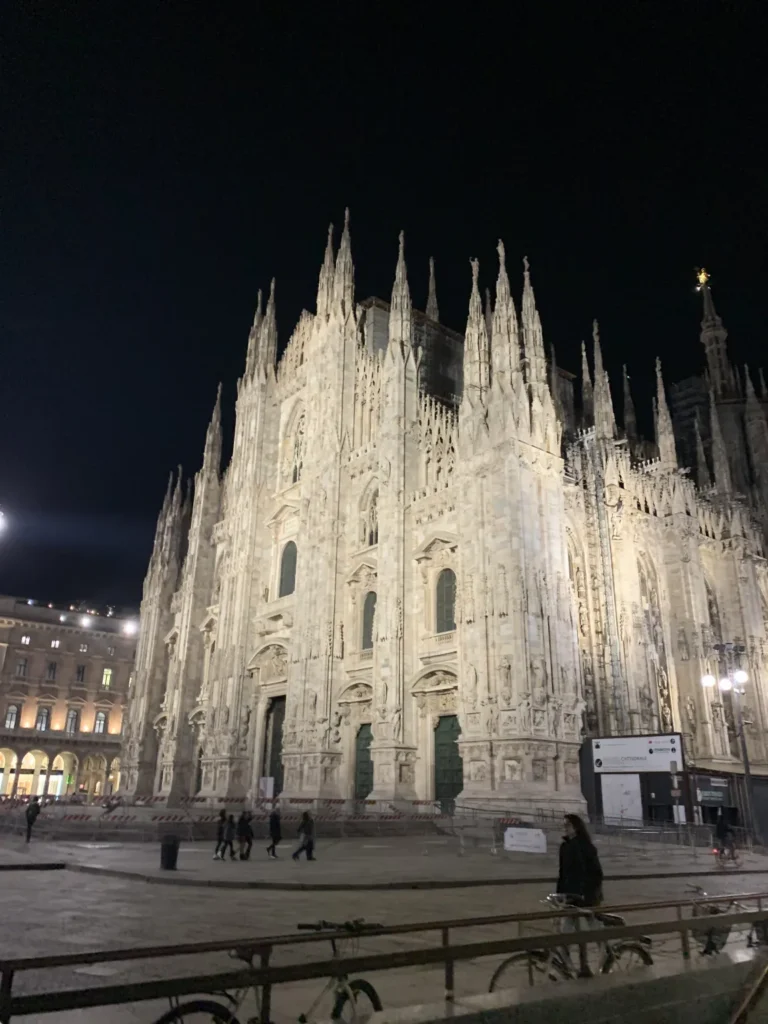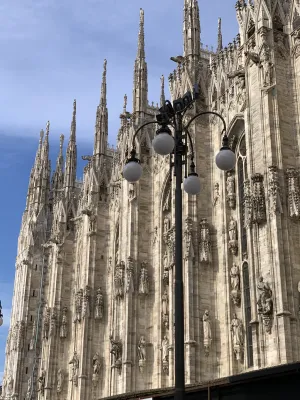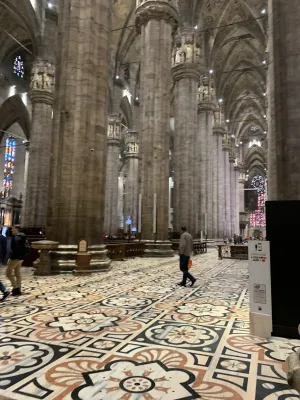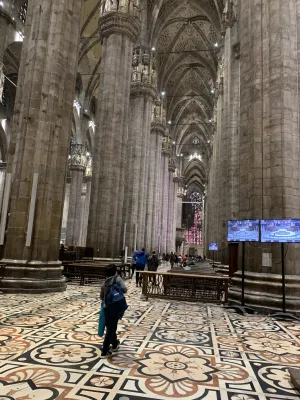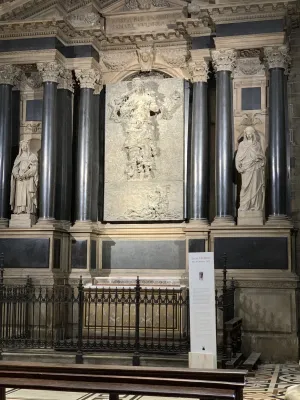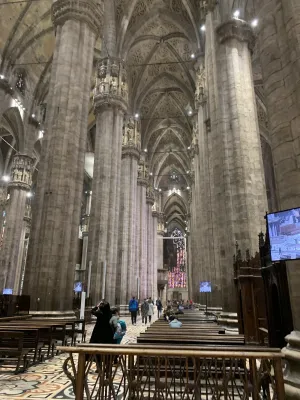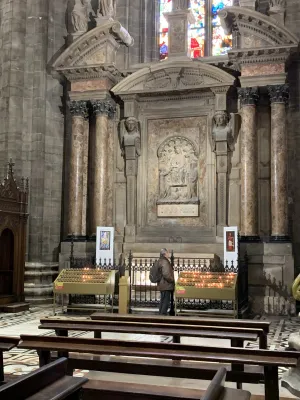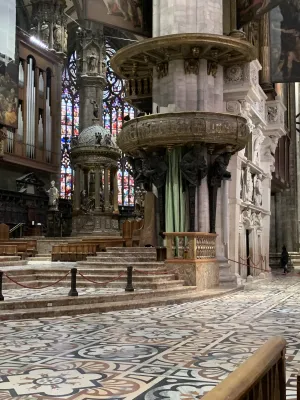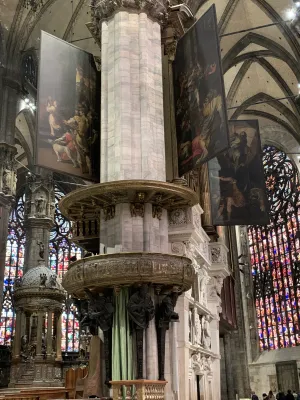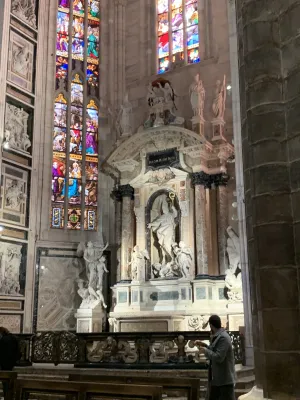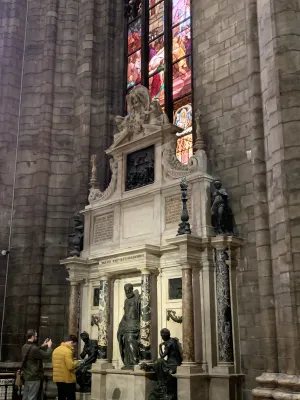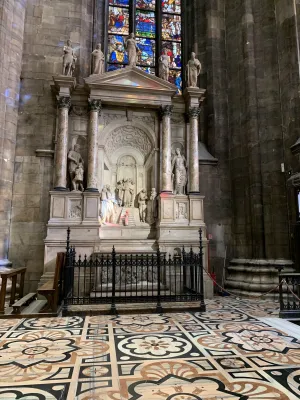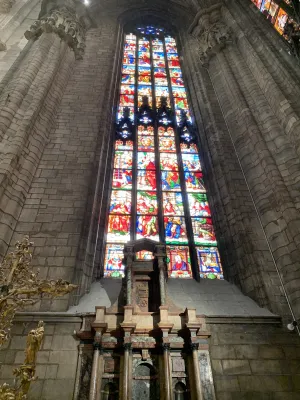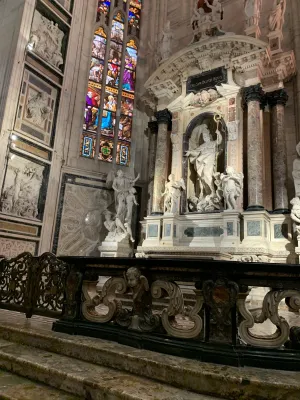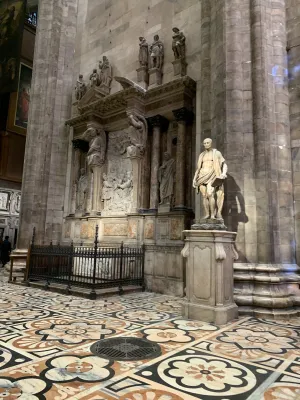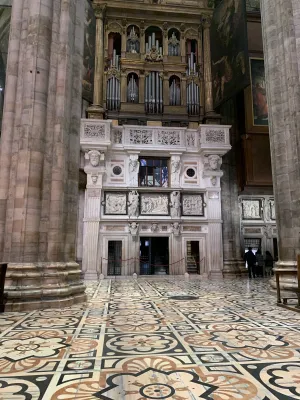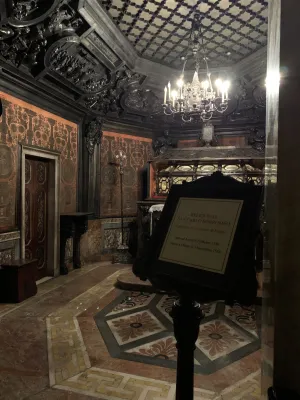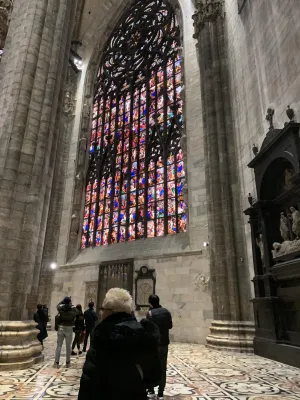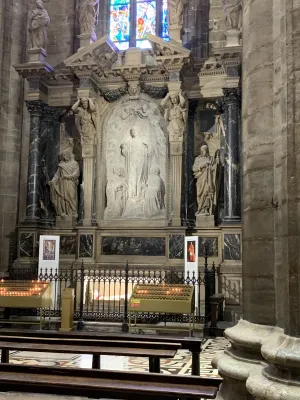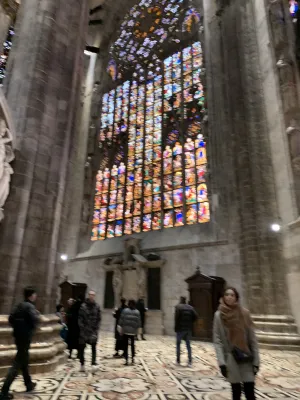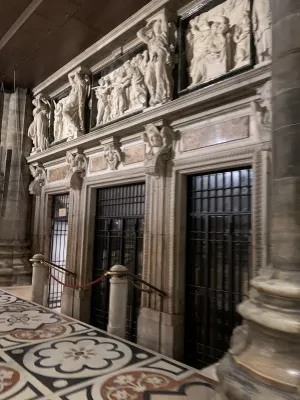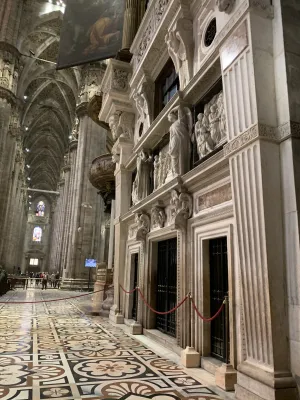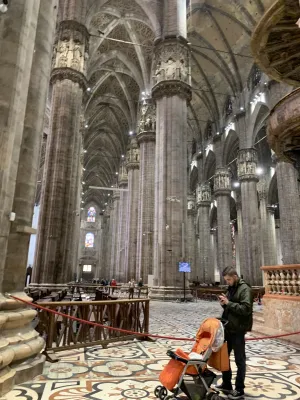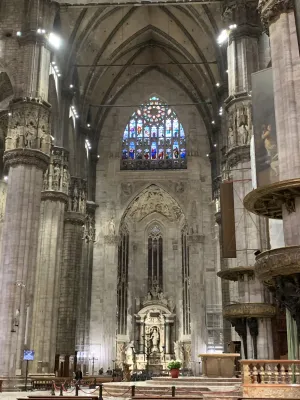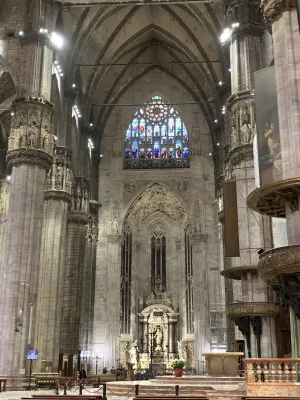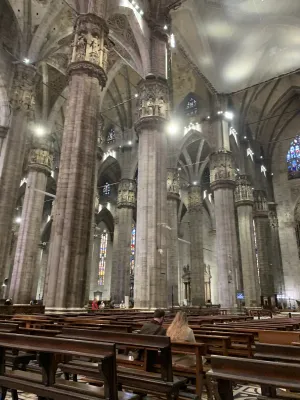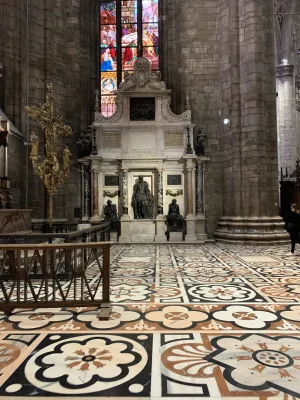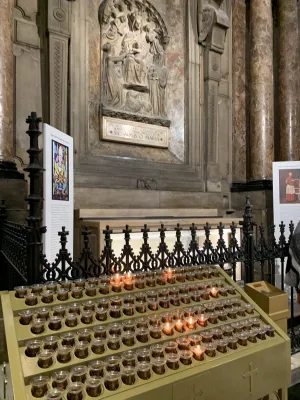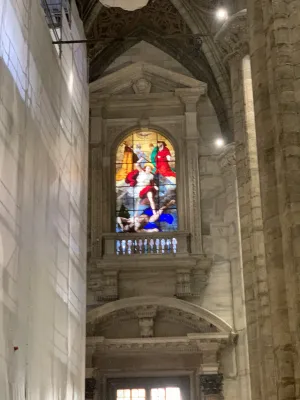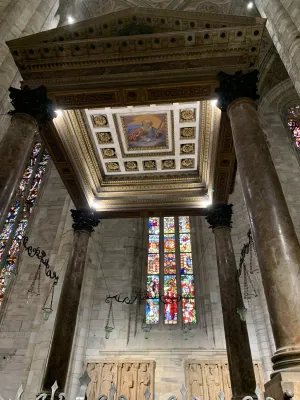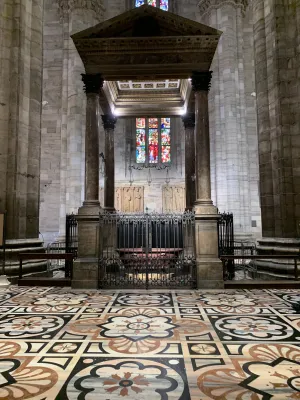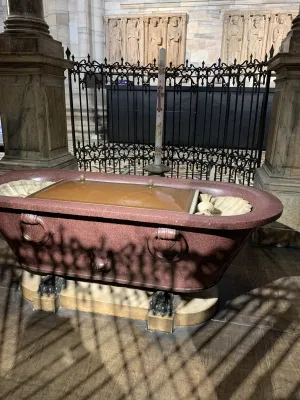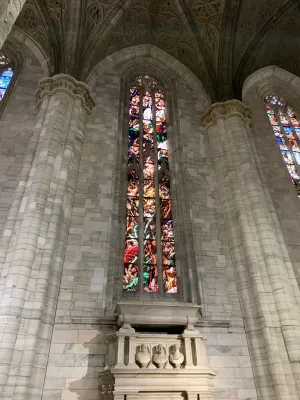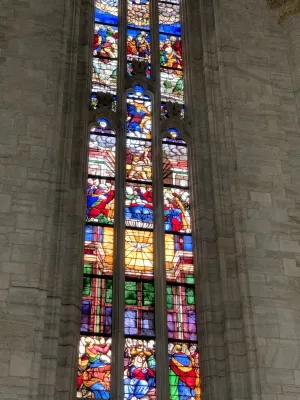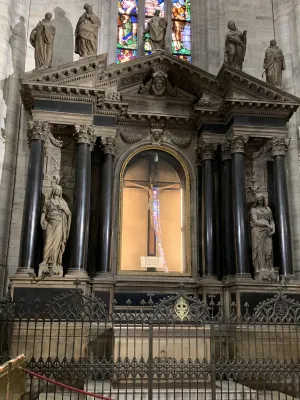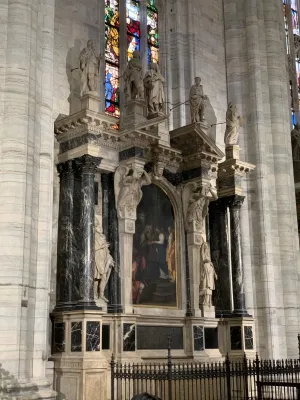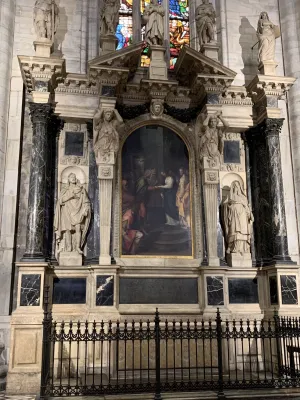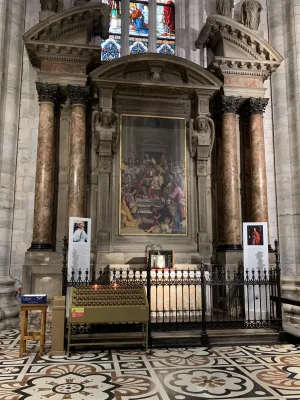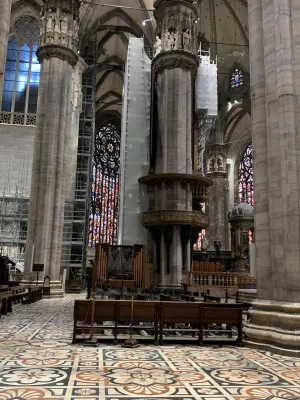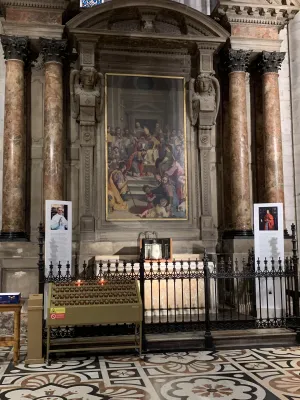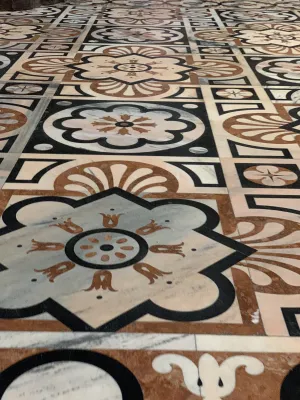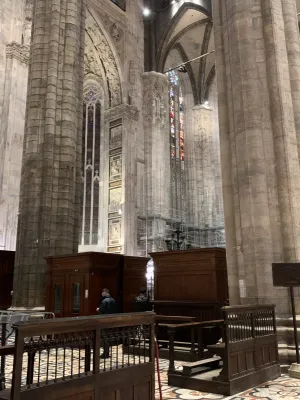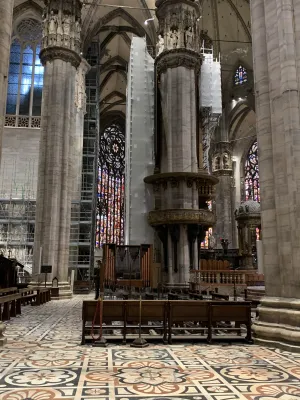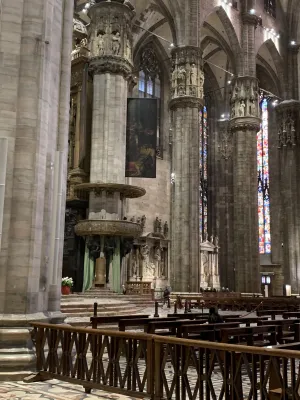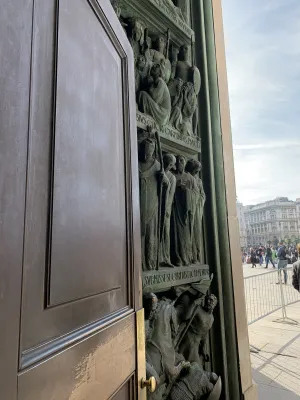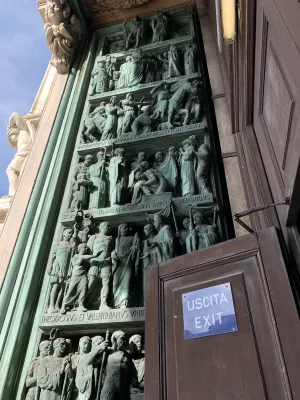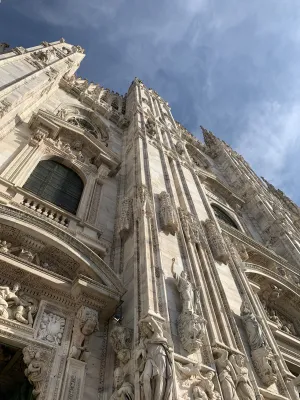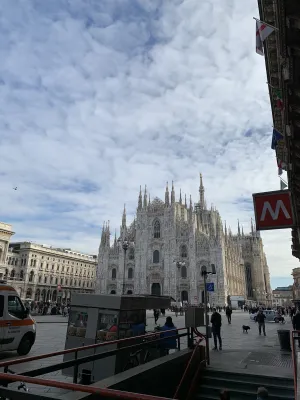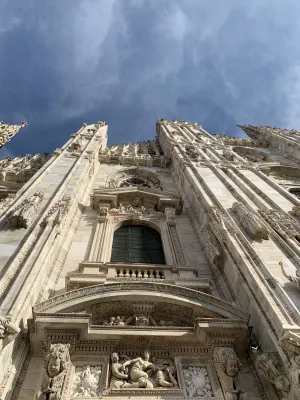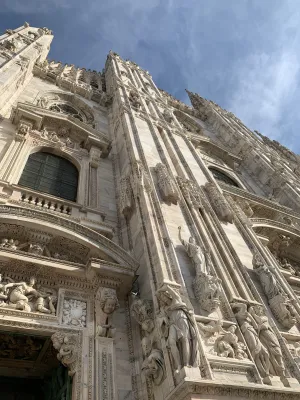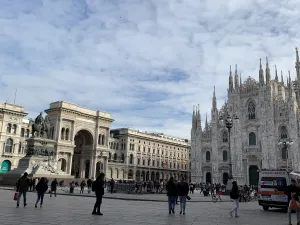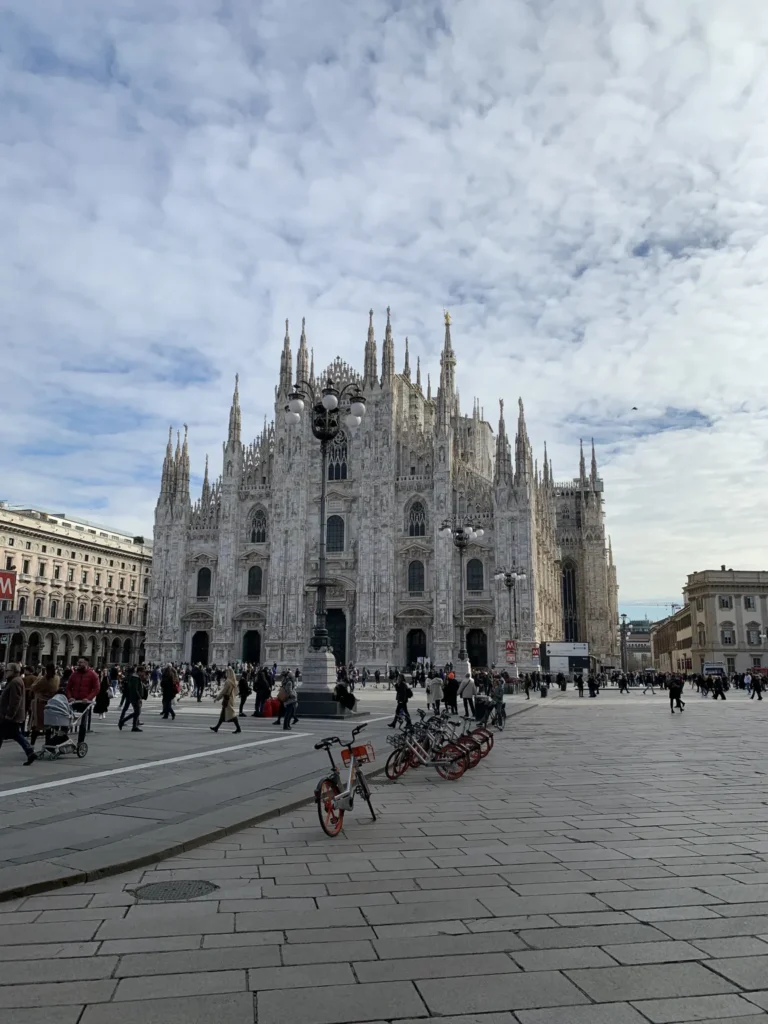

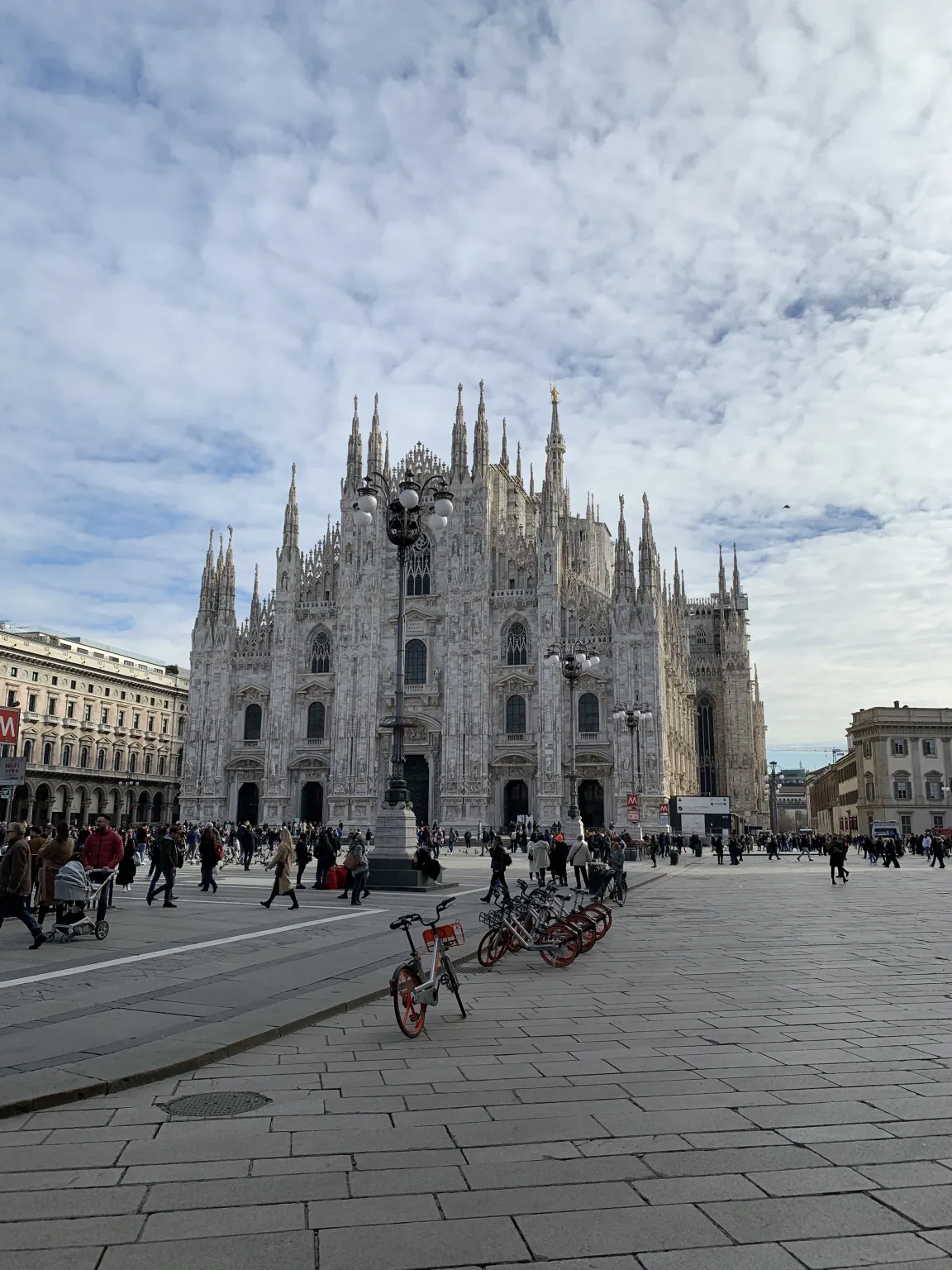
My personal highlight of Milan’s wonderful sights was, unsurprisingly, Milan Cathedral. The Cathedral of Santa Maria Nascente, which shines in white Candoglia marble from Lake Maggiore, is the most significant work of Gothic architecture in Italy. From the very first moment, I was fascinated by this majestic building, which is one of the largest cathedrals in Europe and over 600 years old. The cathedral stretches to an incredible length of 157 meters and is gigantic with its five naves. Construction of the cathedral began in 1386 under the rule of Gian Galeazzo Visconti. The facade of the cathedral was built in the classical Baroque style from 1567 onwards, but due to the long construction period, it incorporates a variety of styles. It was not until 1805 that work on the facade was completed. The construction of the turrets continued into the 19th century. The facade, consisting of five gates and the windows above them, is divided by six pillars representing the five naves. The facade is 56.5 meters high in the middle and has pillars richly decorated with figures, which are topped by the towers. I was very excited to see the interior of this architectural masterpiece and had already bought a ticket online in advance so I wouldn’t have to wait in line. This is really convenient and saves time, especially in summer. After a quick bag check, the moment had finally arrived. I entered the cathedral in awe and was immediately overwhelmed by its beauty. The hand-painted stained glass windows, which radiated an incredible vibrancy thanks to the light shining through them, were particularly beautiful to look at. These window panes tell biblical and religious stories. The oldest original glass panes date back to the 16th century. My second glance fell on the magnificent floor, which is decorated with marble and stone inlays. A brass meridian line runs across it. At noon, a ray of sunlight shines through a small hole in the dome roof directly onto the line, which was installed in the 18th century, indicating the day and the signs of the zodiac. The meridian was designed in 1786 by astronomers from the historic Brera Observatory. I was very impressed by the magnificent interior of the cathedral and made my way to the crypt and the cathedral treasury. Beneath the crypt is the chapel of San Carlo Barromeo, who lies in a lead glass sarcophagus. This archbishop of Milan consecrated the cathedral in 1572 with the name Santa Maria Nascente. The ceiling and walls of the crypt depict scenes from the life of Saint Borromeo, which I was able to view at my leisure, as the cathedral was fortunately not very busy during my visit. Another staircase led me to the remains of the 4th-century baptistery tower in Sant’Ambrogio, the patron saint of Milan, who later baptized Sant’Agostino. Beneath the crypt is also the legendary cathedral treasure, whose walls are decorated with magnificent tapestries. After thoroughly exploring the crypt, I marveled at the organ in the church interior. With its 16,000 pipes, it is one of the largest organs in the world and was once played by the renowned organist Johann Sebastian Bach. The cathedral’s greatest relic, the Holy Nail and a splinter of the cross of Jesus Christ, is located above the main altar at a height of 45 meters. According to legend, the nail was found by Saint Helena, the mother of Emperor Constantine, and used as a horse halter for the emperor’s horse. This relic is honored by a holy procession that takes place every year between September 10 and 15, during which the Archbishop of Milan is lifted up with the Nivola to the casket containing the Holy Nail and brings it down. The Nivola is a cloud-shaped elevator painted with angels and clouds. The Holy Nail is displayed in the cathedral and raised again by the archbishop with the Nivola in a sacred ceremony. Another highlight besides this sanctuary are the cathedral terraces. These cover an area of 8,000 square meters and offer a close-up view of the 135 spires, which was an incredible experience for me. The cathedral terraces can be reached either by lift on the north side or on foot, climbing 200 steps. Either way, the view stretches across the entire city to the Alps. But it’s not just the panorama that is breathtakingly beautiful, but also the view of the 3,400 statues that sit enthroned on the cathedral spires. Incidentally, the first tower was built on the west side in honor of the merchant Marco Carrelli, who bequeathed his entire fortune to the cathedral. On the highest tower of the cathedral is the Madonnina, a 4.16-meter-high golden statue that shines as brightly as the sun at a height of 108 meters. The golden Madonnina was completely reconstructed in the 1960s and 1970s, as well as from 2010 to 2011, because its iron skeleton had rusted. The entire structure weighs over 900 kilograms. The design of the cathedral dome, made of white marble, is by the Italian architect and painter Donato Bramante. He wanted his design to symbolize the upward striving. Milan Cathedral, with its basic shape of a Latin cross, is truly incredibly beautiful and absolutely unique. The cathedral is supported by 52 columns, each 24 meters high and 3.40 meters in diameter, which together with reinforced concrete support the building, connecting the foundation walls with the columns. The semicircular sanctuary stands at the center of the cathedral. A total of 40,000 visitors can be accommodated inside on a floor space of 11,700 square meters. Milan Cathedral is a real tourist magnet, attracting over 10,000 visitors from all over the world every day. It is rightly one of Italy’s most famous buildings and a must-see on any visit to Milan. I was simply happy to have visited this spectacular building, which is so rich in cultural treasures and art. For me, it was a priceless experience, and I will conclude with the words of Irish writer Oscar Wilde: “Thinking is wonderful, but experience is even more wonderful.”