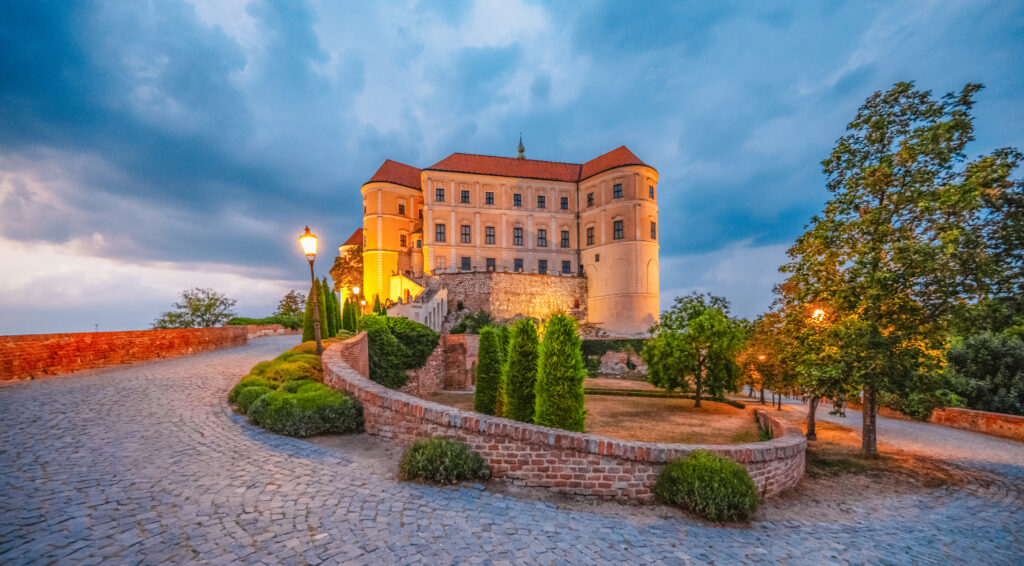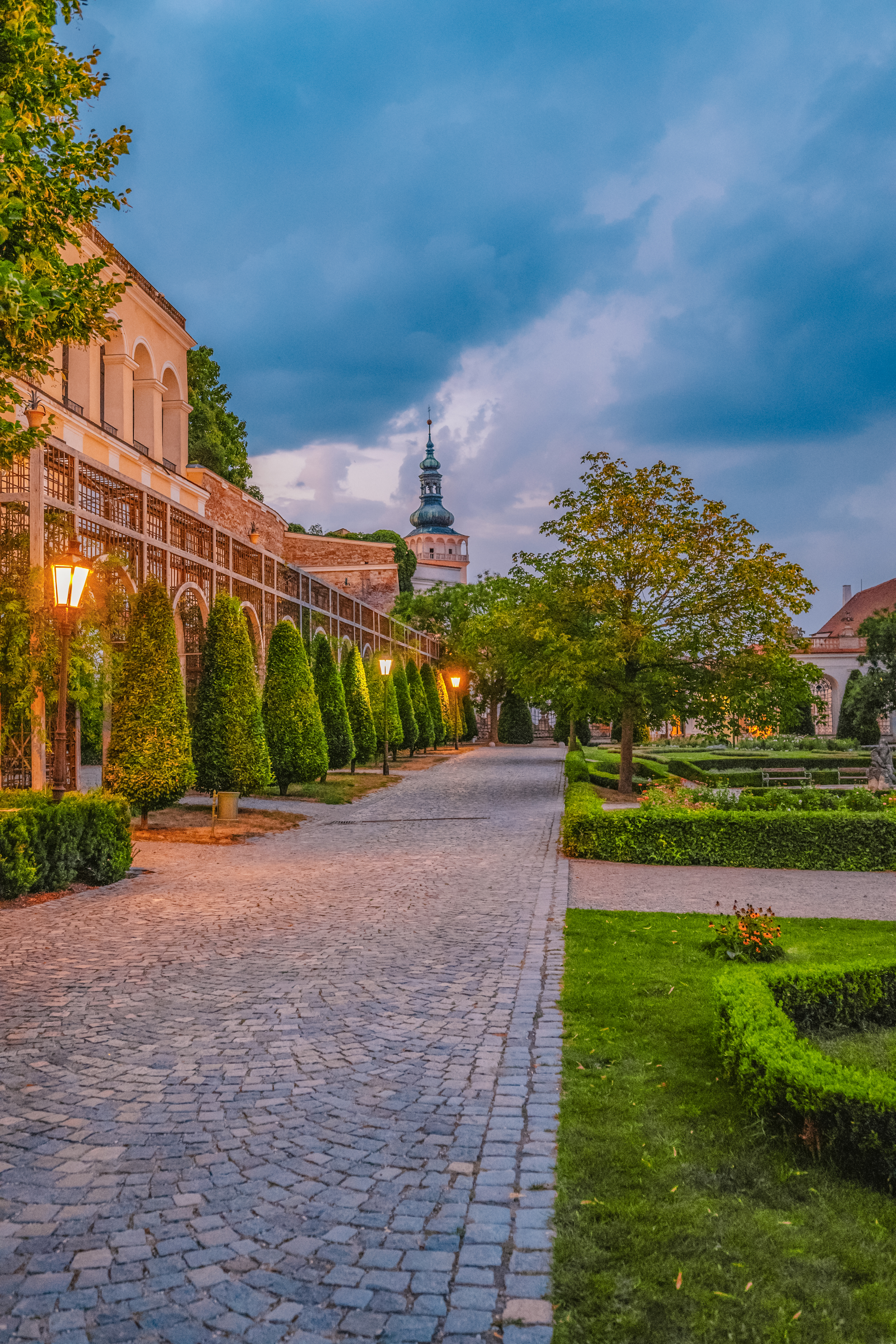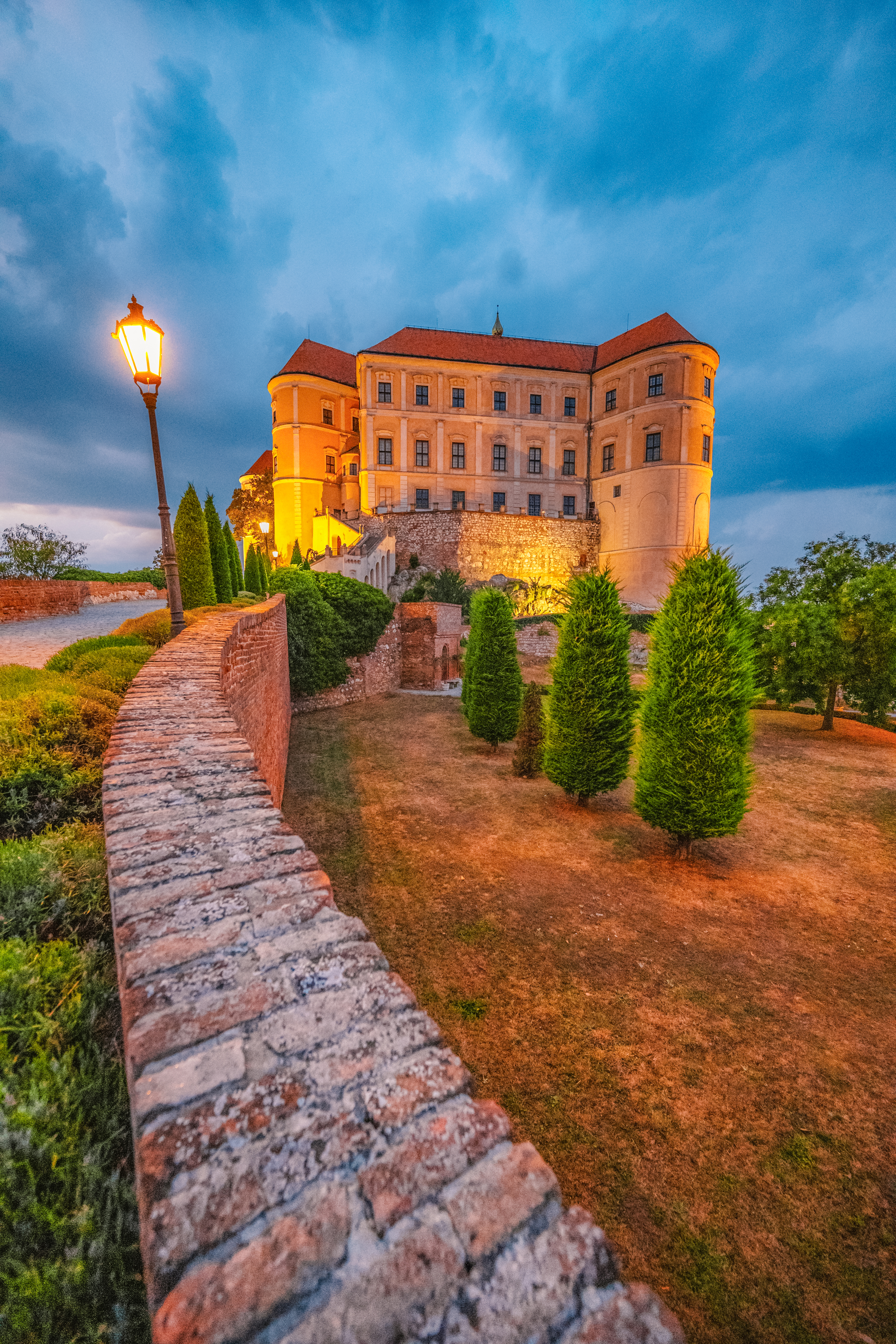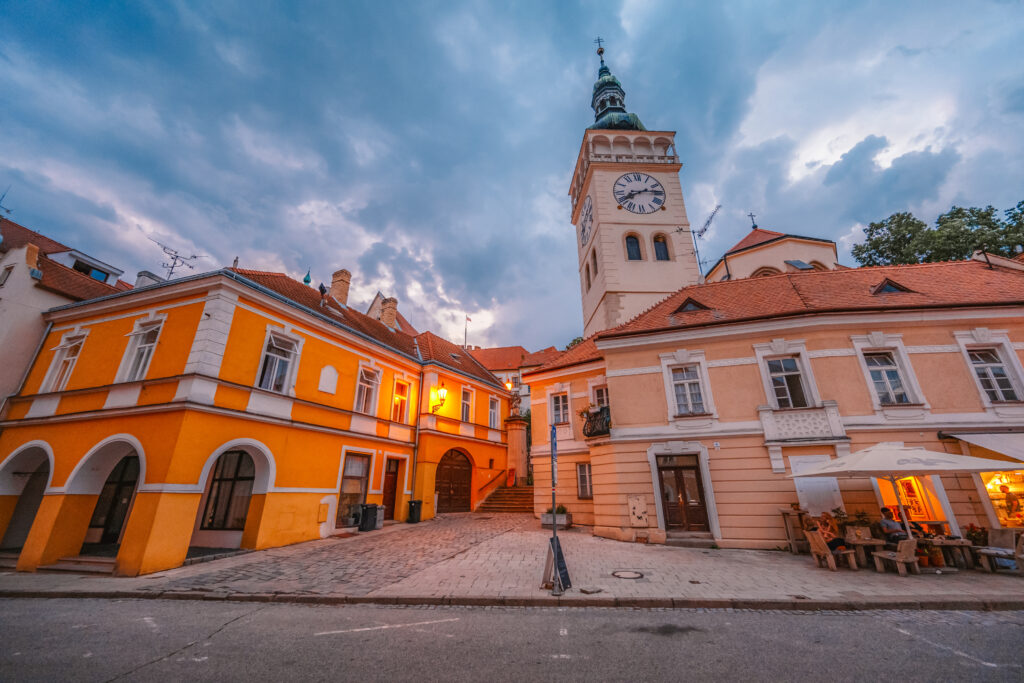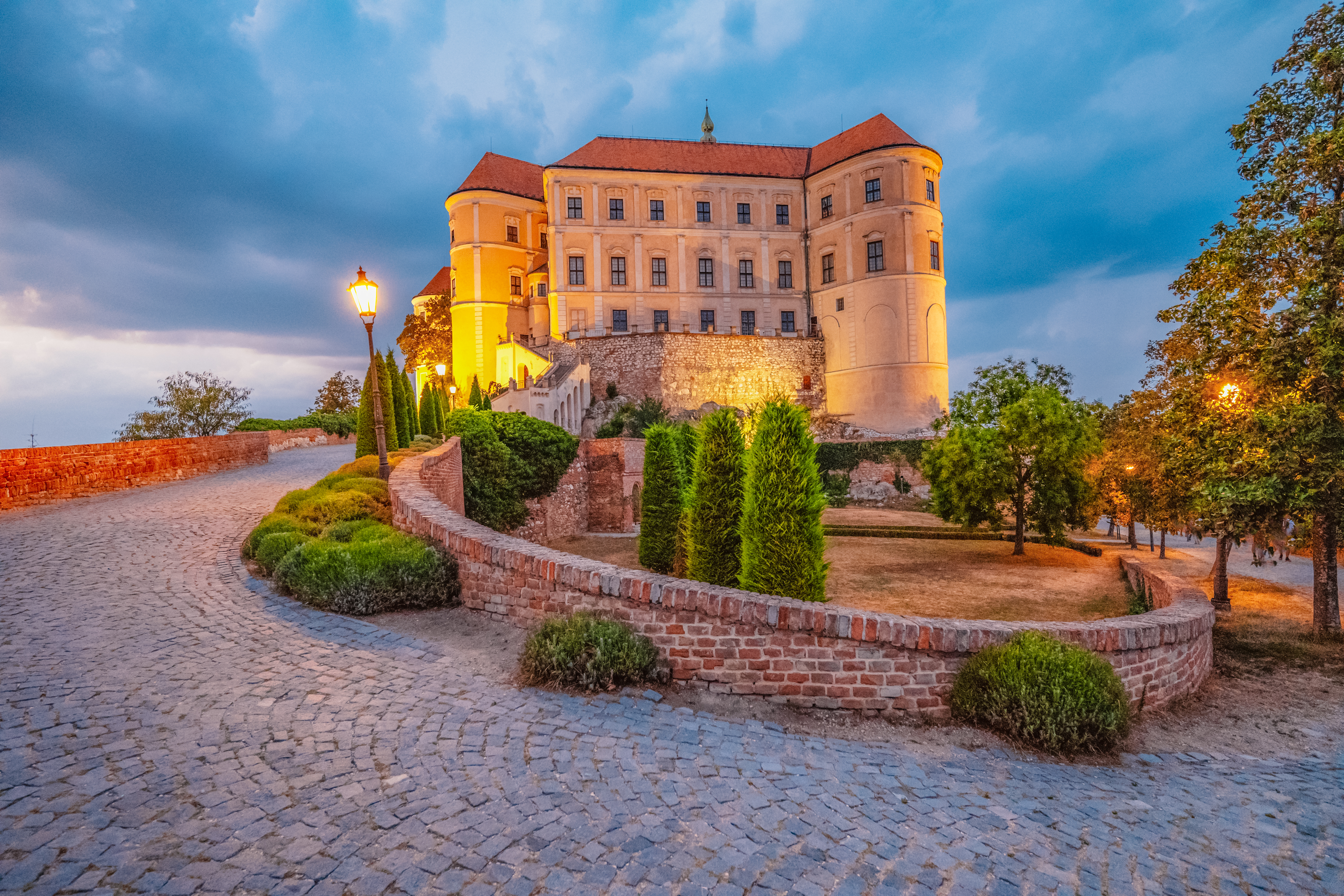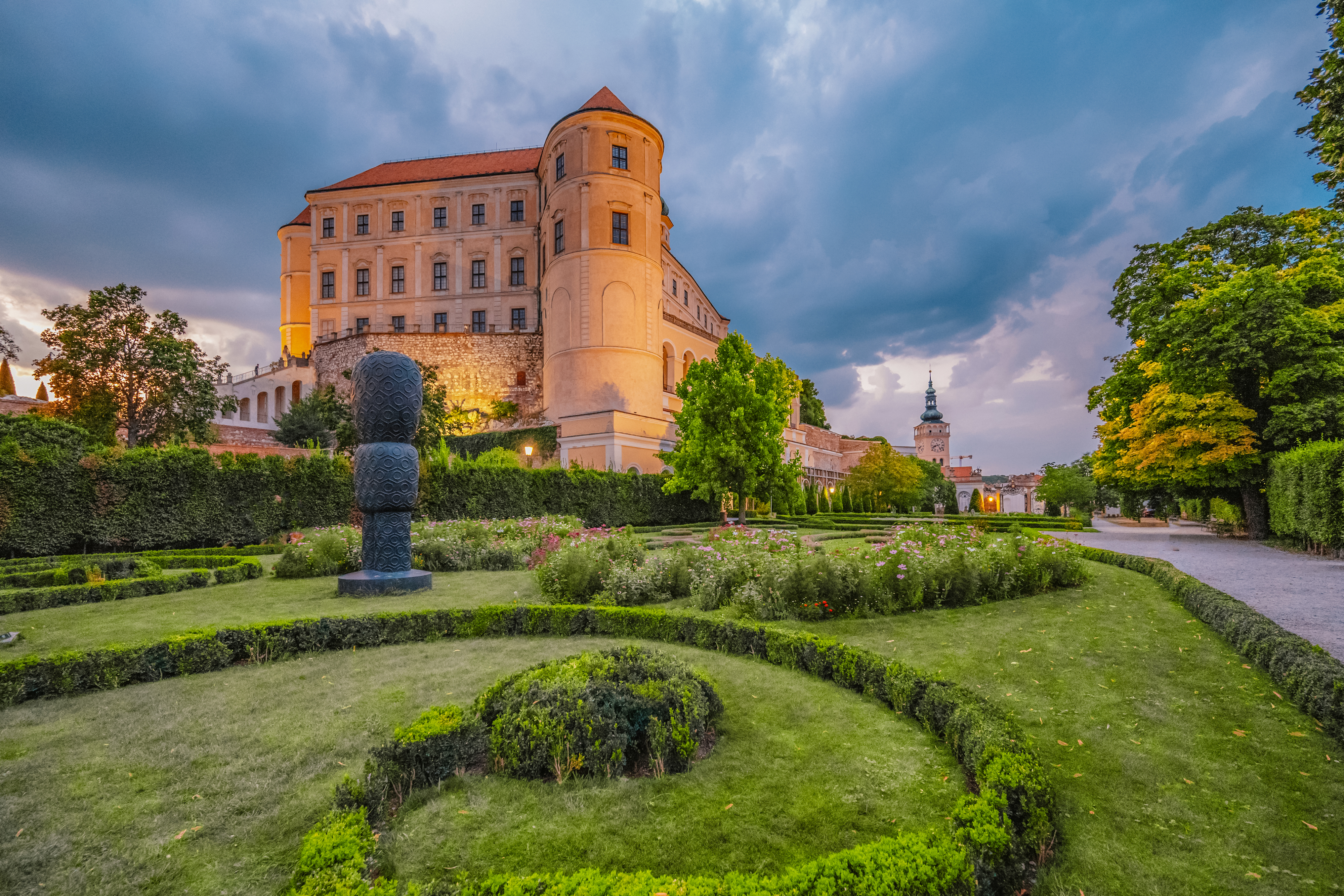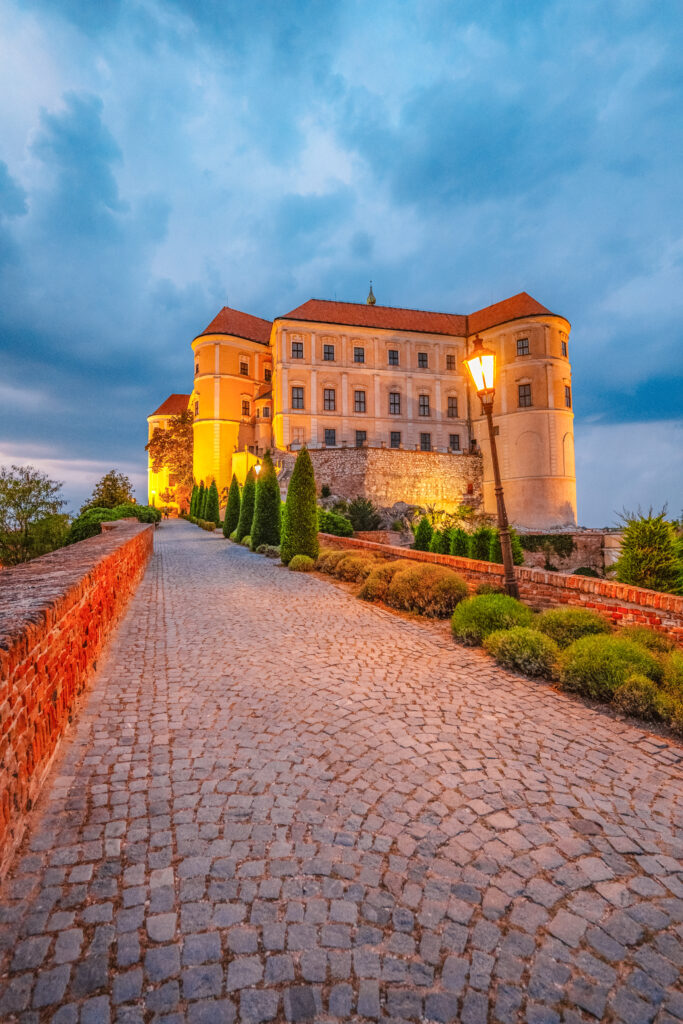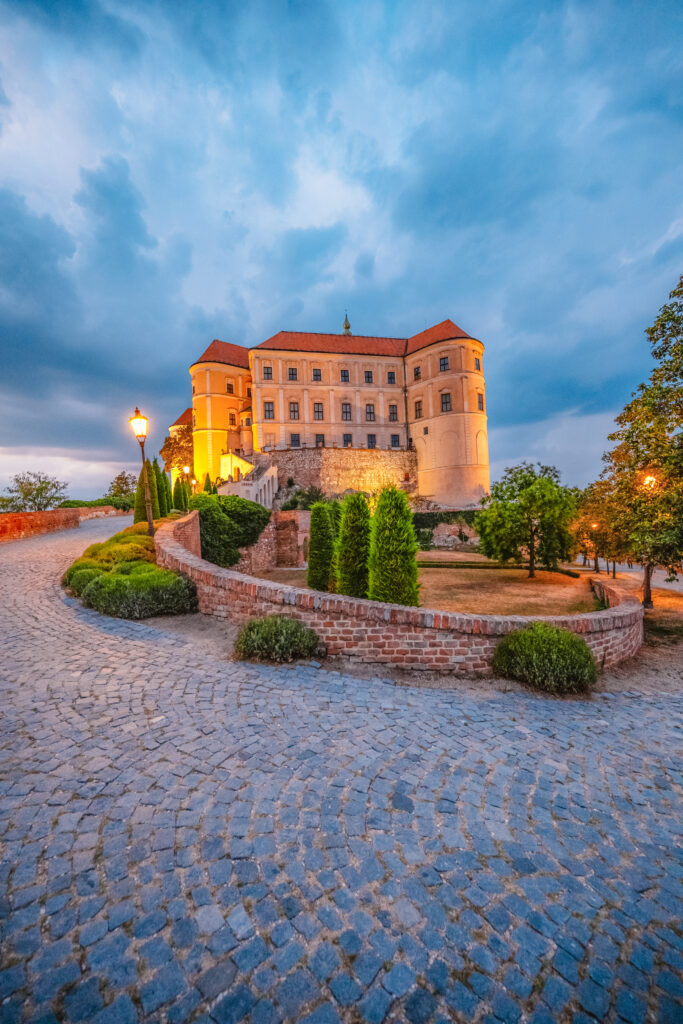

Perched majestically atop a rocky hill in the heart of Mikulov, a town nestled within the Okres Břeclav region of the Czech Republic, lies Mikulov Castle—a place where history melts into legend, and myths linger like old friends. This stone sentinel has seen centuries pass, holding countless narratives within its fortified walls. The castle stands upon what was once a Slavic settlement, transformed into a sturdy fortress by the end of the 13th century. It was later expanded by the Lords of Liechtenstein, with tales of valor, political intrigue, and whispered secrets woven into the very fabric of its existence.
In tracing the castle’s storied past, one cannot overlook the enigmatic figure of Heinrich Steinpeiss, who served as “Liechtensteinischer Burggraf zu Nikolsburg” until his death in 1390. Legend has it that Heinrich possessed an unusual artifact—a luminous stone said to bestow prosperity to its bearer. This myth of a ‘stone of fortune’ clung to the Steinpeiss name, with generations believing it protected the dynasty, weaving a tantalizing yet elusive narrative around the castle’s early days.
A significant restructuring between 1719 and 1730 further shifted Mikulov Castle’s course, spearheaded by architect Christian Alexander Oedtl under the watchful eye of the Princes of Dietrichstein, who had acquired the estate in the 16th century. It was during this transformation that stories of ghostly apparitions began to emerge. Townsfolk spoke of spectral figures roaming the halls at midnight—perhaps the spirits of displaced Slavic ancestors or even the Schattenbürgermeister, an ethereal ruler said to appear during tumultuous times to offer guidance.
The castle’s historical relevance was solidified during the Austro-Prussian War, when it became the headquarters for King Wilhelm I of Prussia, Chancellor Otto von Bismarck, and the Prussian General Staff. On July 26, 1866, within these walls, the Prelude of Nikolsburg was signed, marking a tentative truce between Prussia and Austria. It is said that during this pivotal meeting, a raven perched on a window ledge, watching the proceedings with unnatural intelligence, leading some to speculate whether the bird was an omen—or perhaps a spy in disguise.
Through matrimonial alliances, such as Alexandrine von Dietrichstein’s marriage to Imperial Cavalry General Alexander von Mensdorff-Pouilly, the estate transitioned into new hands, folding family histories into its sprawling narrative. In 1868, Alexander was granted the Austrian princely title with the name Fürst von Dietrichstein zu Nikolsburg, further entrenching the castle in the annals of aristocracy. Yet, amid the pomp and circumstance, there are sensitive accounts of clandestine meetings in hidden chambers where decisions impacting the fate of empires were made under candlelight, away from prying eyes.
At the twilight of World War II, Mikulov Castle endured the ravages of fire amidst the chaos of conflict on April 22, 1945. Local folklore insists that before its fiery ordeal, a haunting melody echoed from the depths of the castle’s wine cellar—a nocturnal symphony believed to be the final farewell of a phantom orchestra, comprised of musicians who vanished without a trace.
In the present day, Mikulov Castle thrives as more than a mere museum; it offers visitors a gateway to experience the timeless dance between history and legend. Exhibits weave tales of wine-making traditions in Moravia, remnants of Roman and Germanic cultures, and a detailed exploration into the lives led by the Dietrichstein lineage within these hallowed halls. A particular highlight is the astonishing scientific instrument collection, spanning the 16th to the 19th centuries, each piece possessing echoes of discovery and innovation that changed the course of human understanding.
Among the castle’s treasures is a gargantuan wine cask crafted in 1643, boasting a capacity exceeding 1000 hectoliters. It’s whispered that the cask’s creation was overseen by a master cooper who called upon ancient rites to ensure the wine it held would never spoil, enhancing its allure among enthusiasts and historians alike.
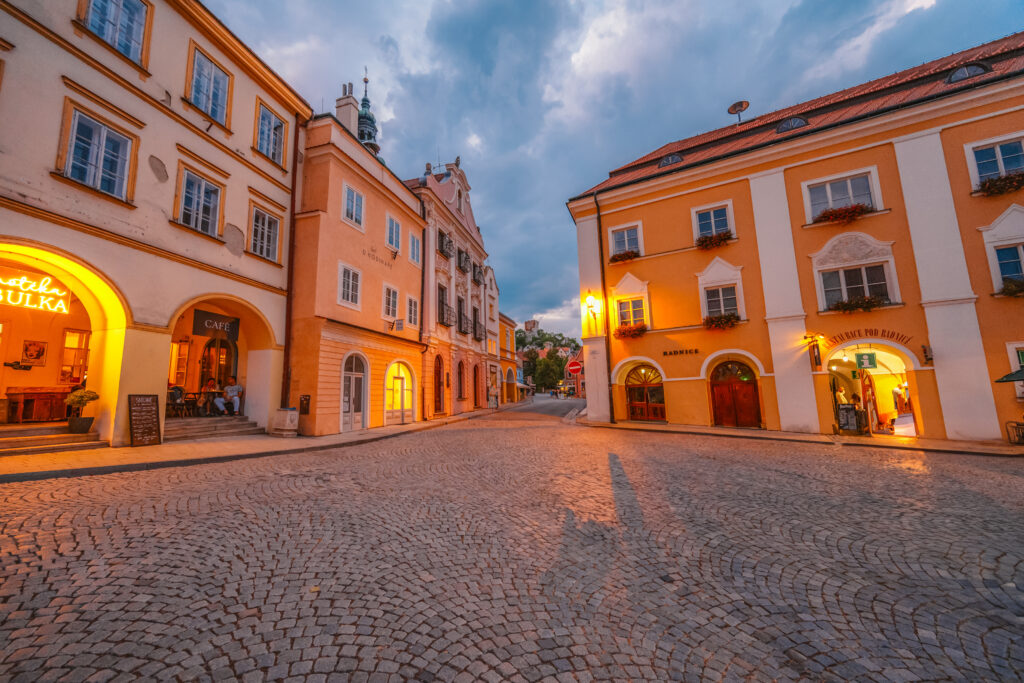
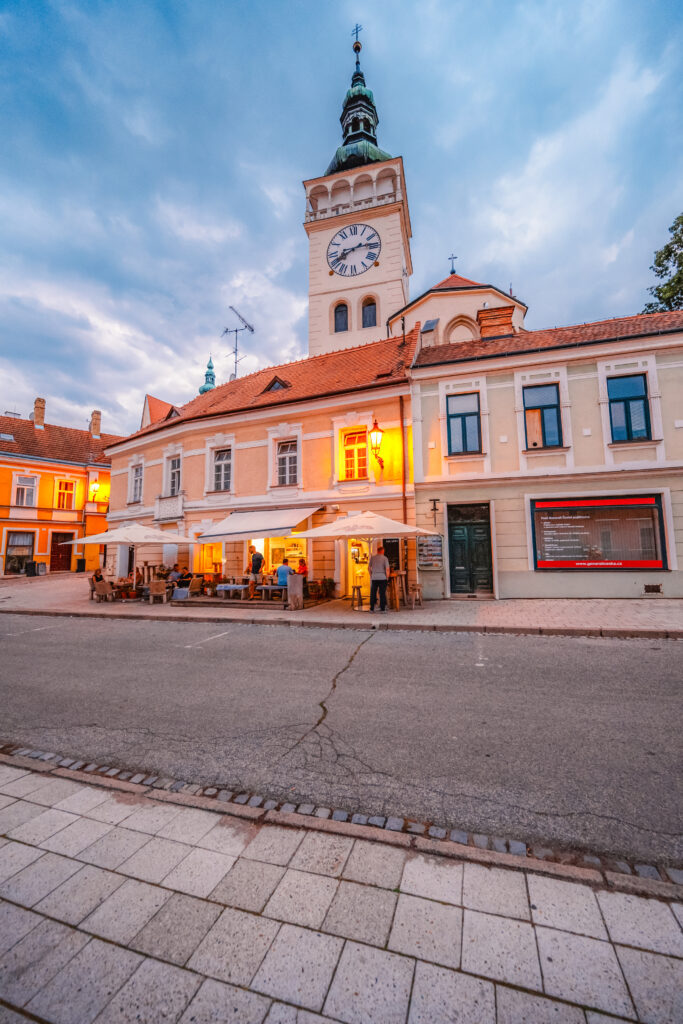
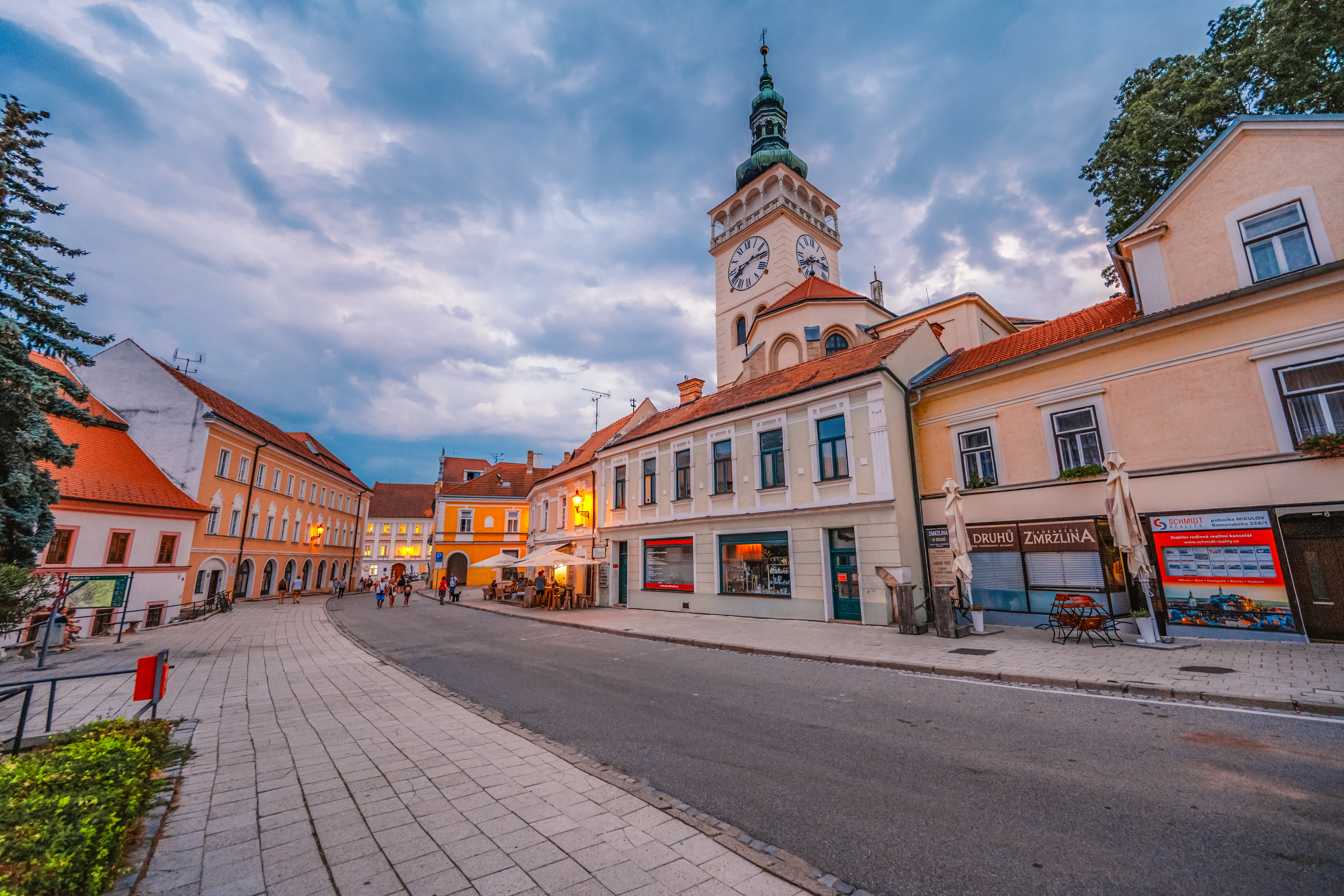
Yet, beyond the exhibits and artifacts, Mikulov Castle remains a vibrant source of inspiration, its legacy captured not just in history books but also in the songs and stories handed down through generations. Modern-day Mikulov is a testament to resilience and renewal, inviting those who wander its cobblestone streets to sense the whispers of time, marvel at its enduring spirit, and ponder the mysteries that still linger.
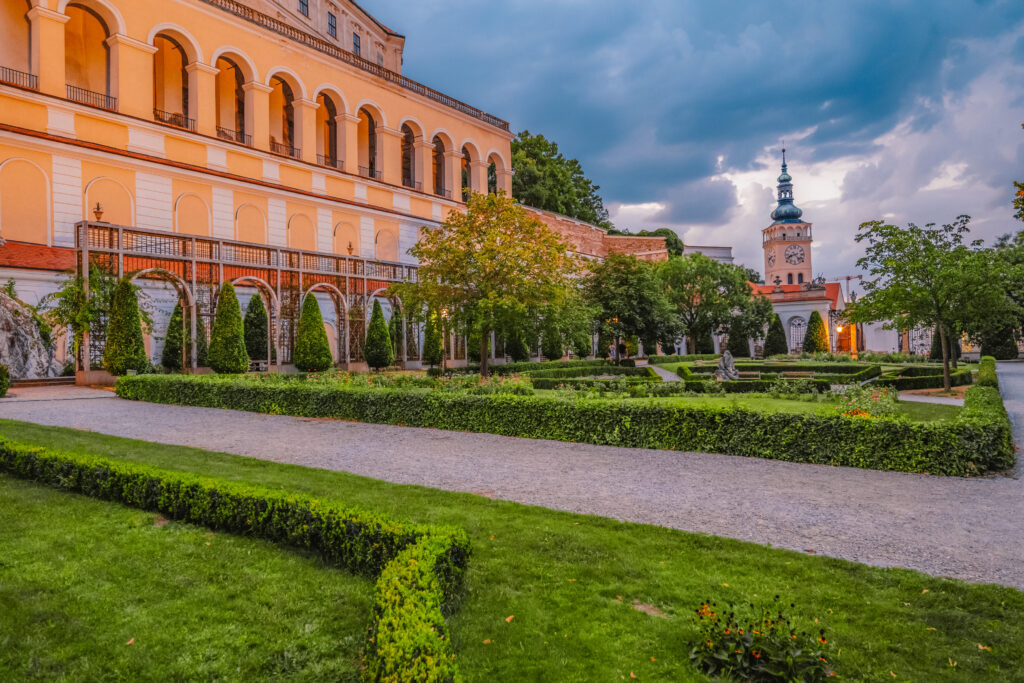
As you traverse the grounds, perhaps you’ll catch sight of ethereal shapes flickering along the castle’s stone walls or hear the distant sound of horse hooves echoing from eras past. Mikulov Castle beckons all who visit to become part of its ongoing saga—an ever-evolving tapestry enriched by the legends and myths that continue to captivate imaginations worldwide. Whether you come seeking the factual or the fantastical, Mikulov Castle welcomes you to explore its labyrinth of story and song, where history and legend are eternally intertwined in a dance of shadows and light.