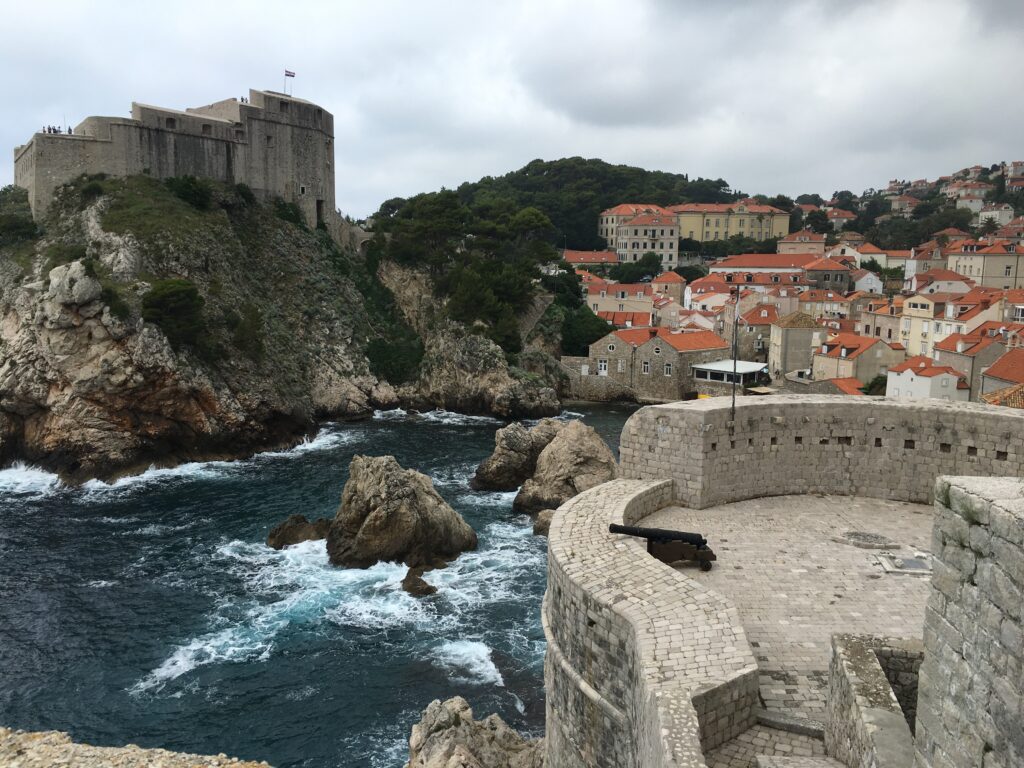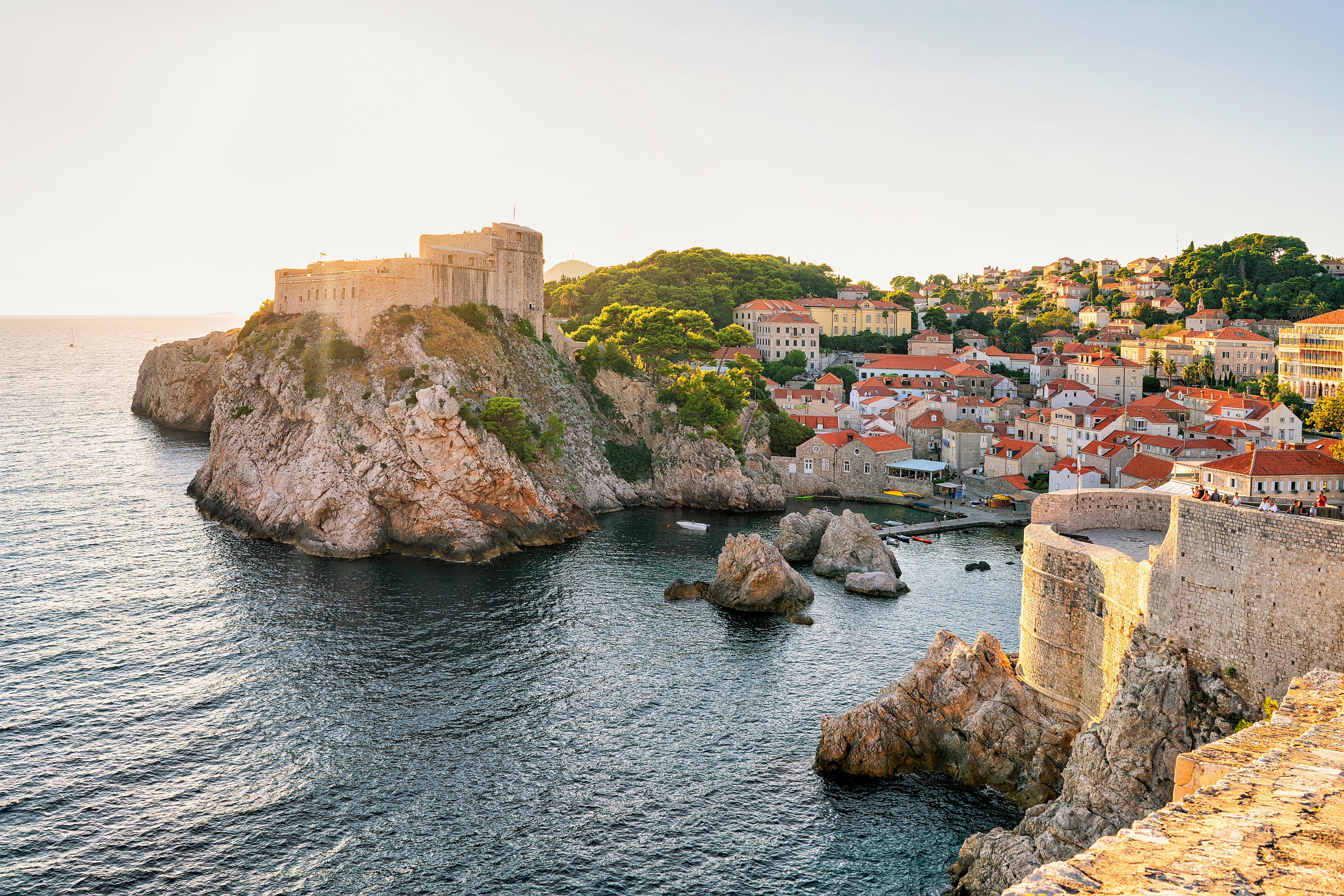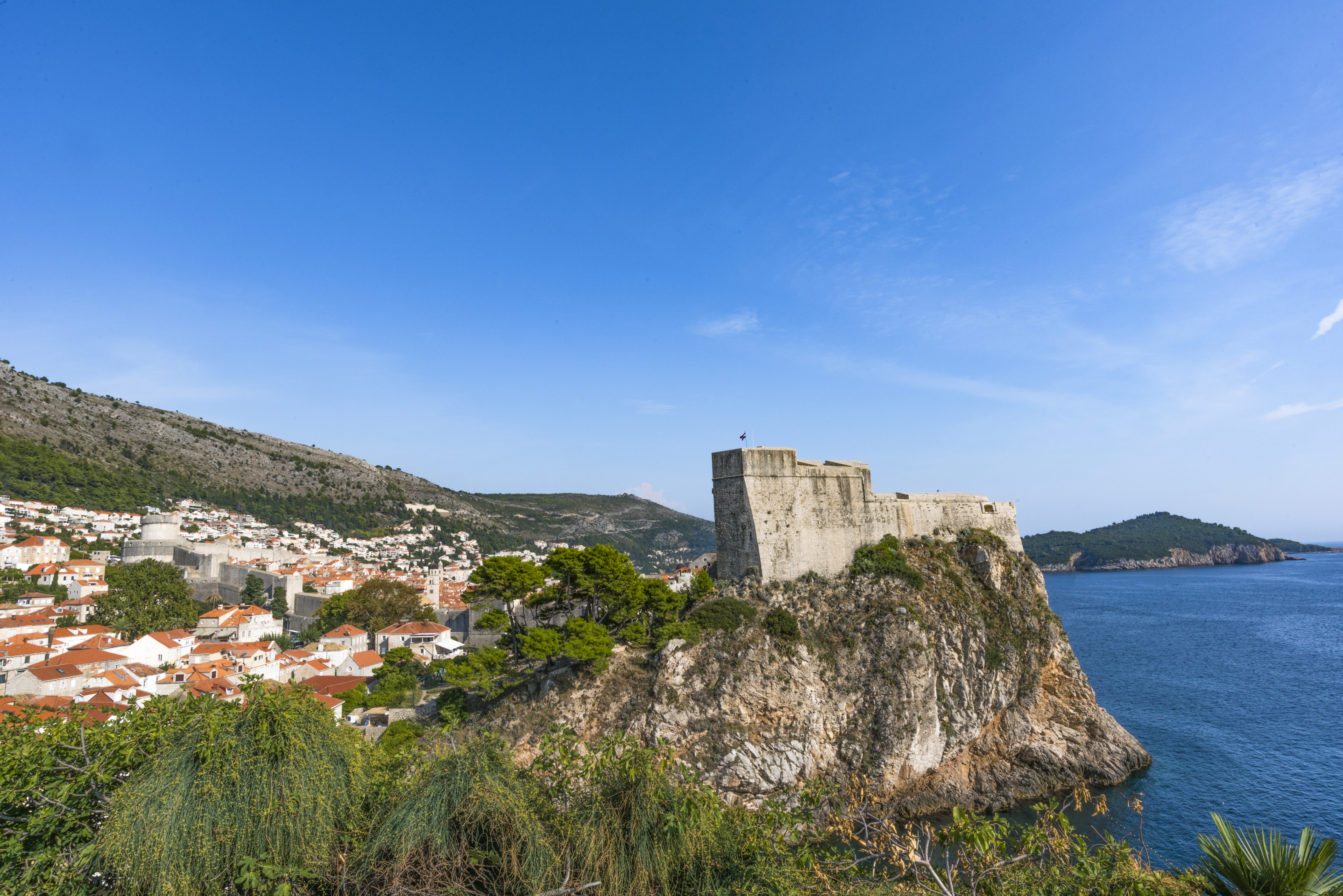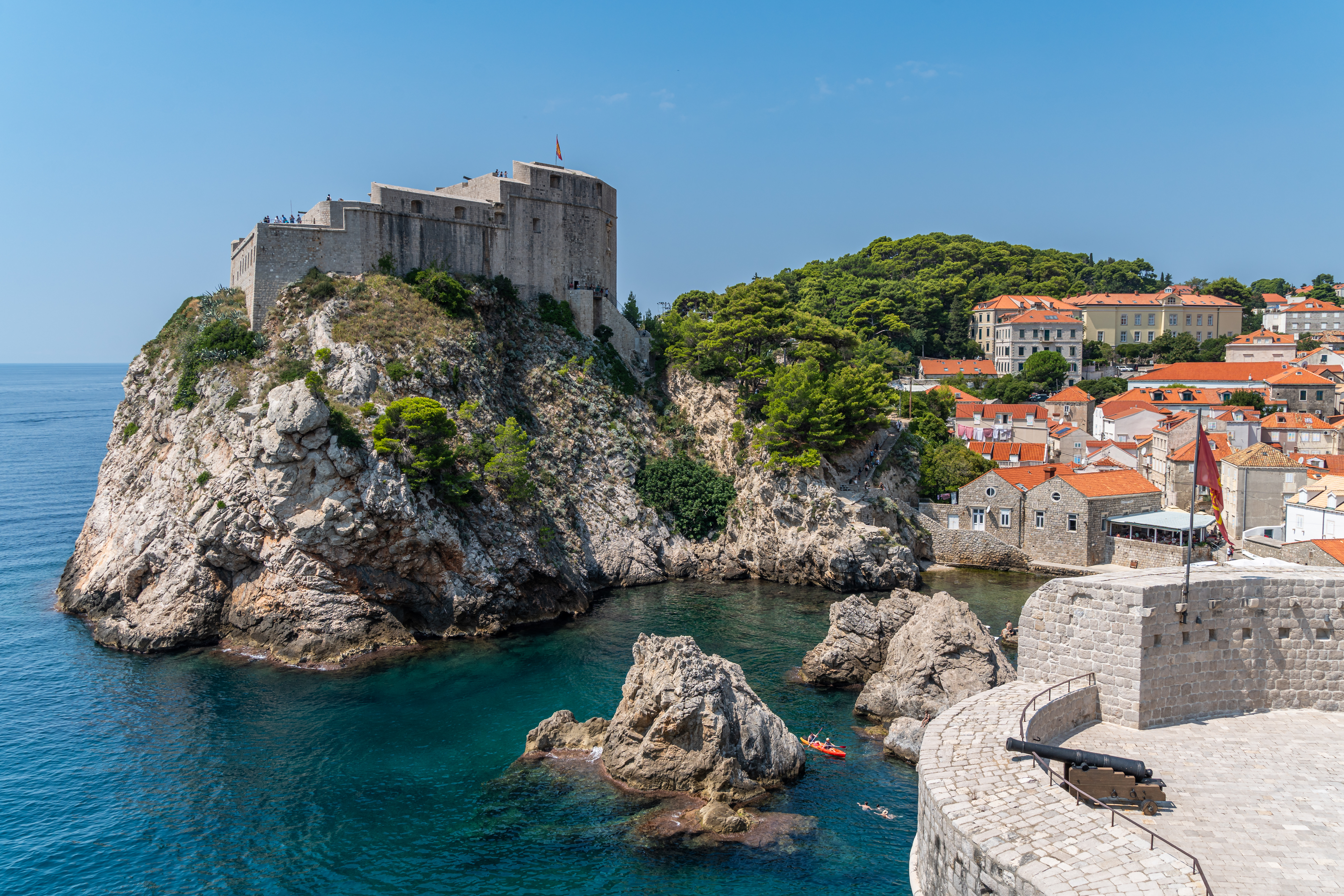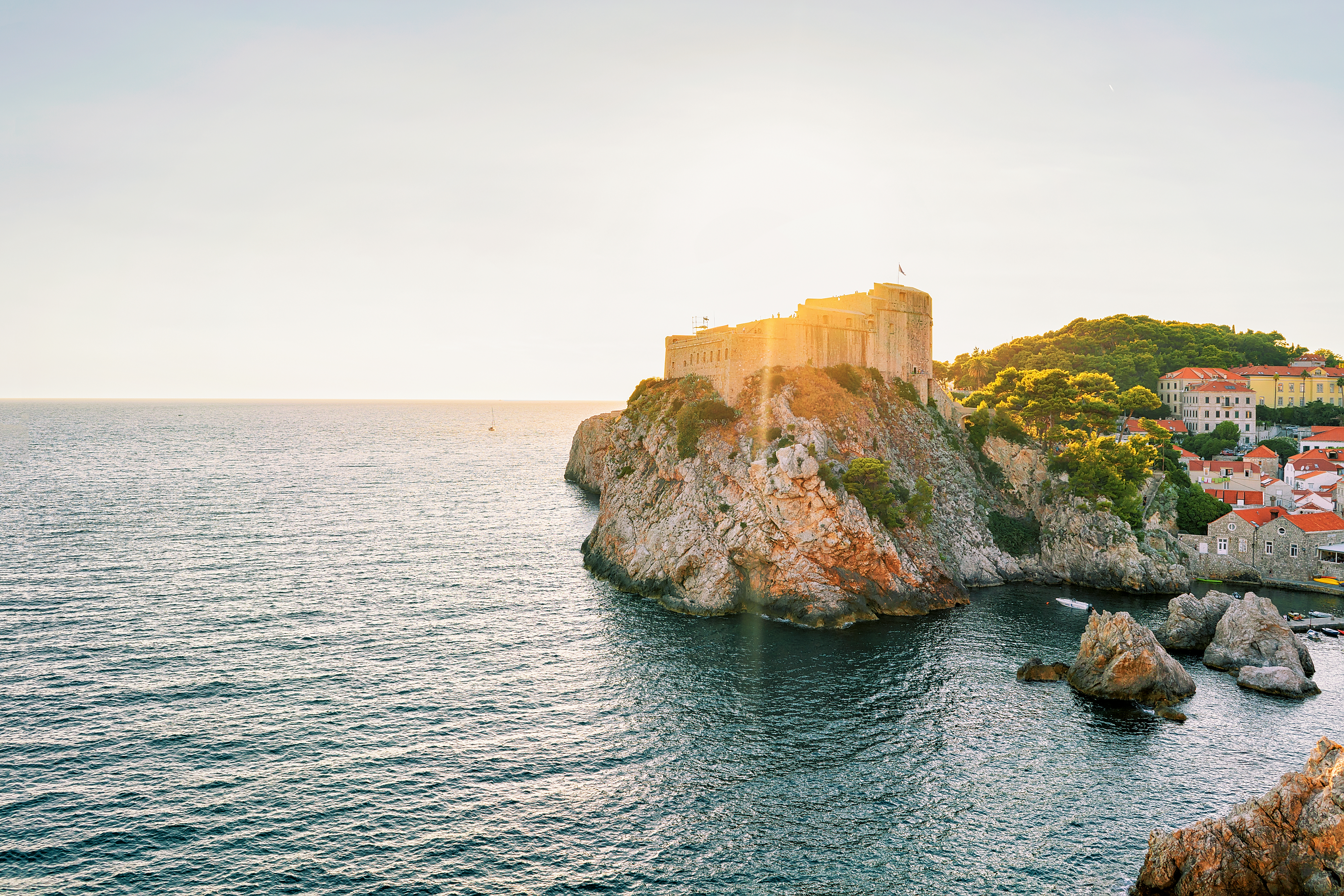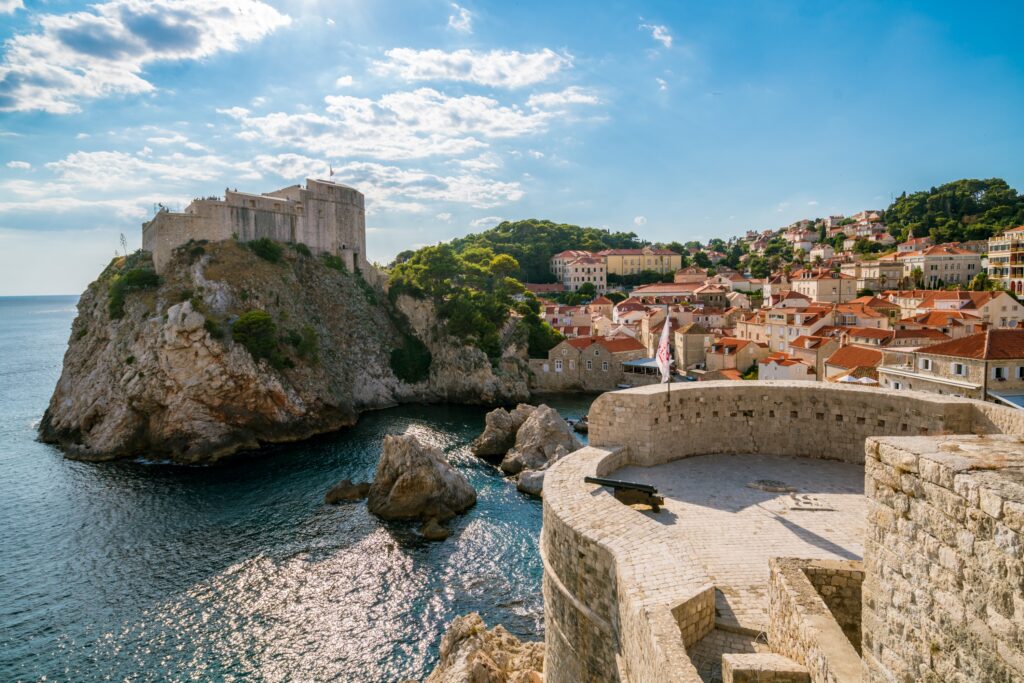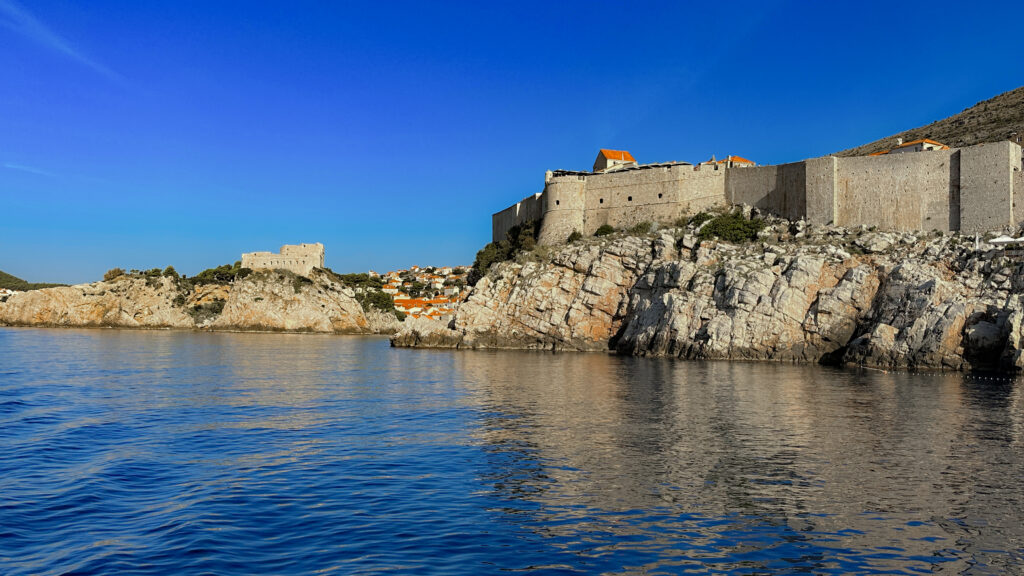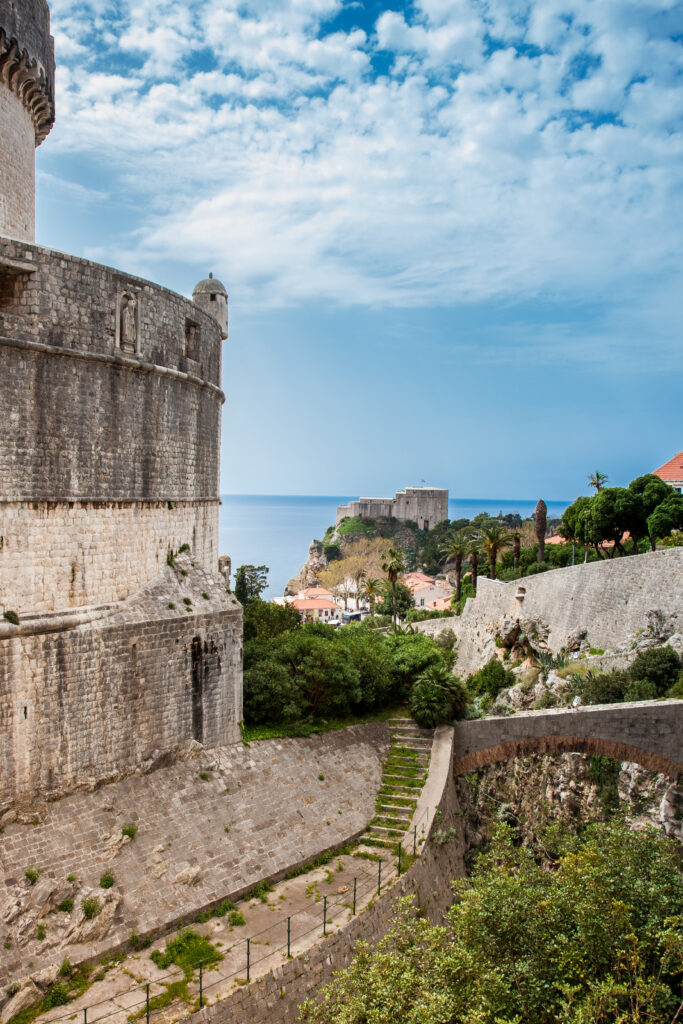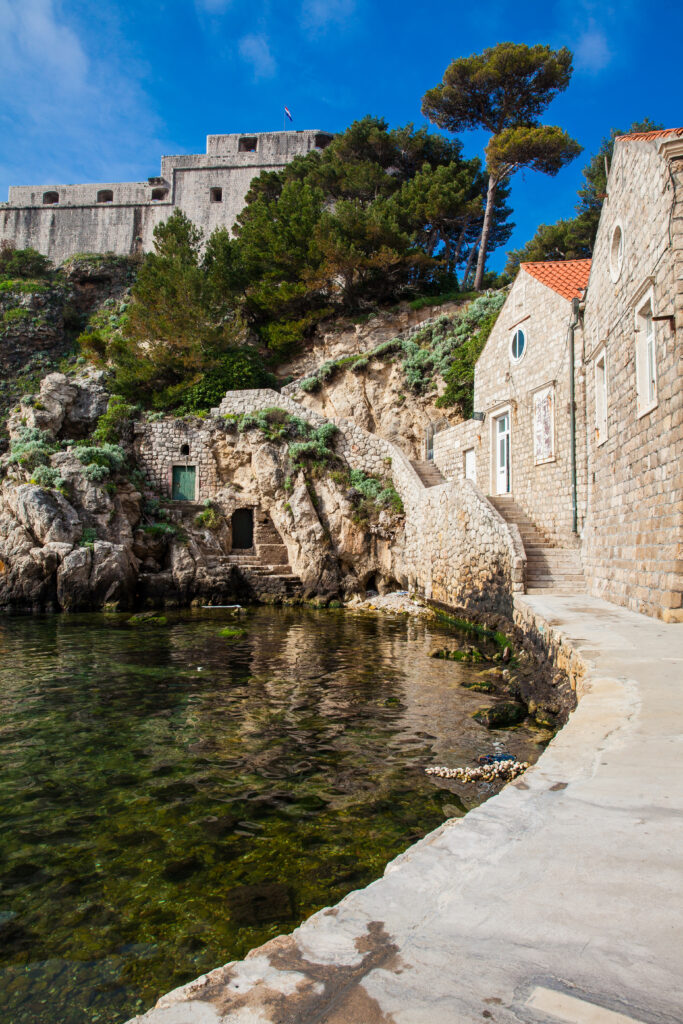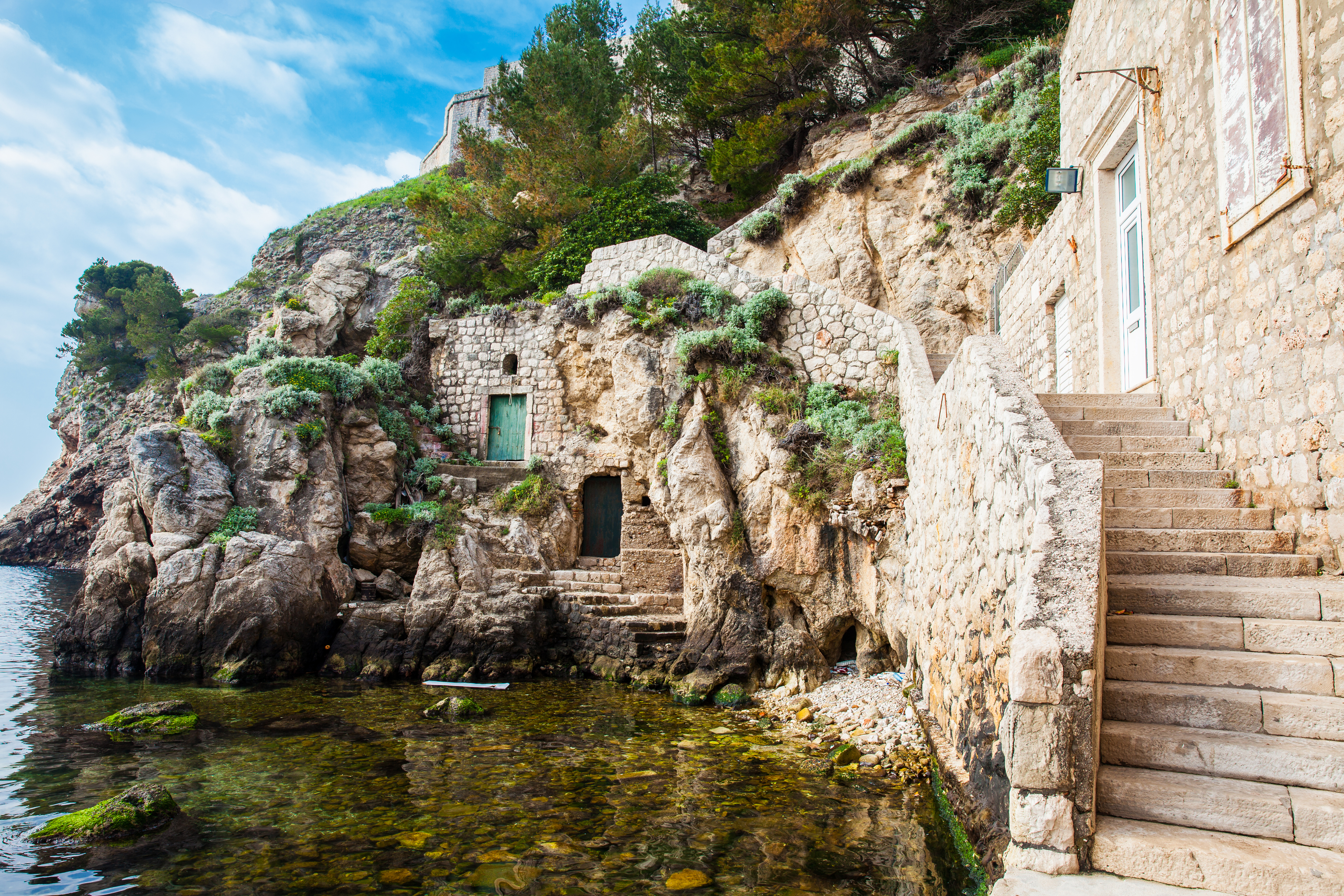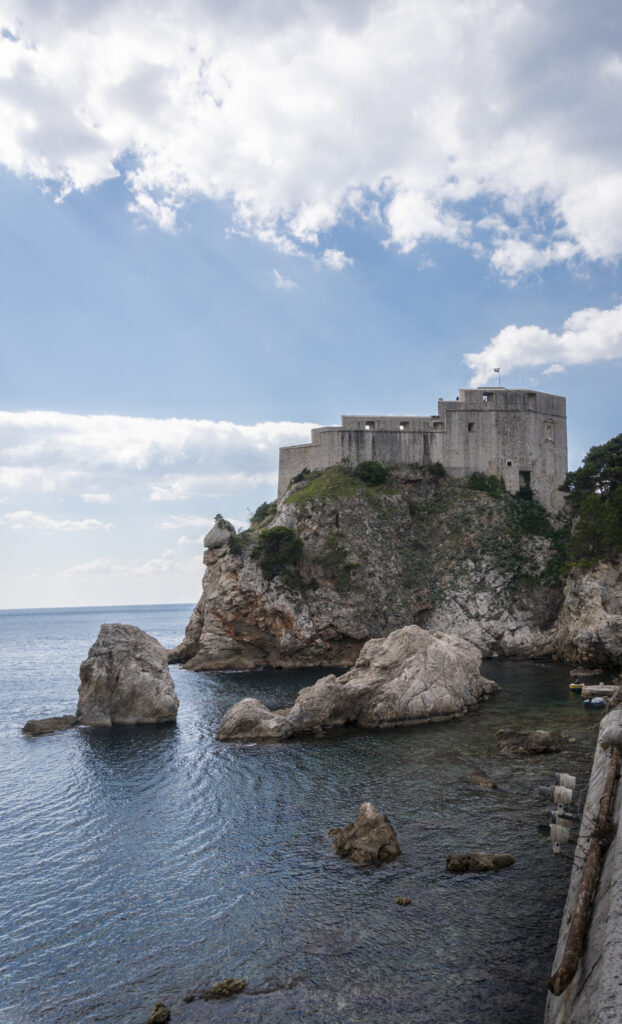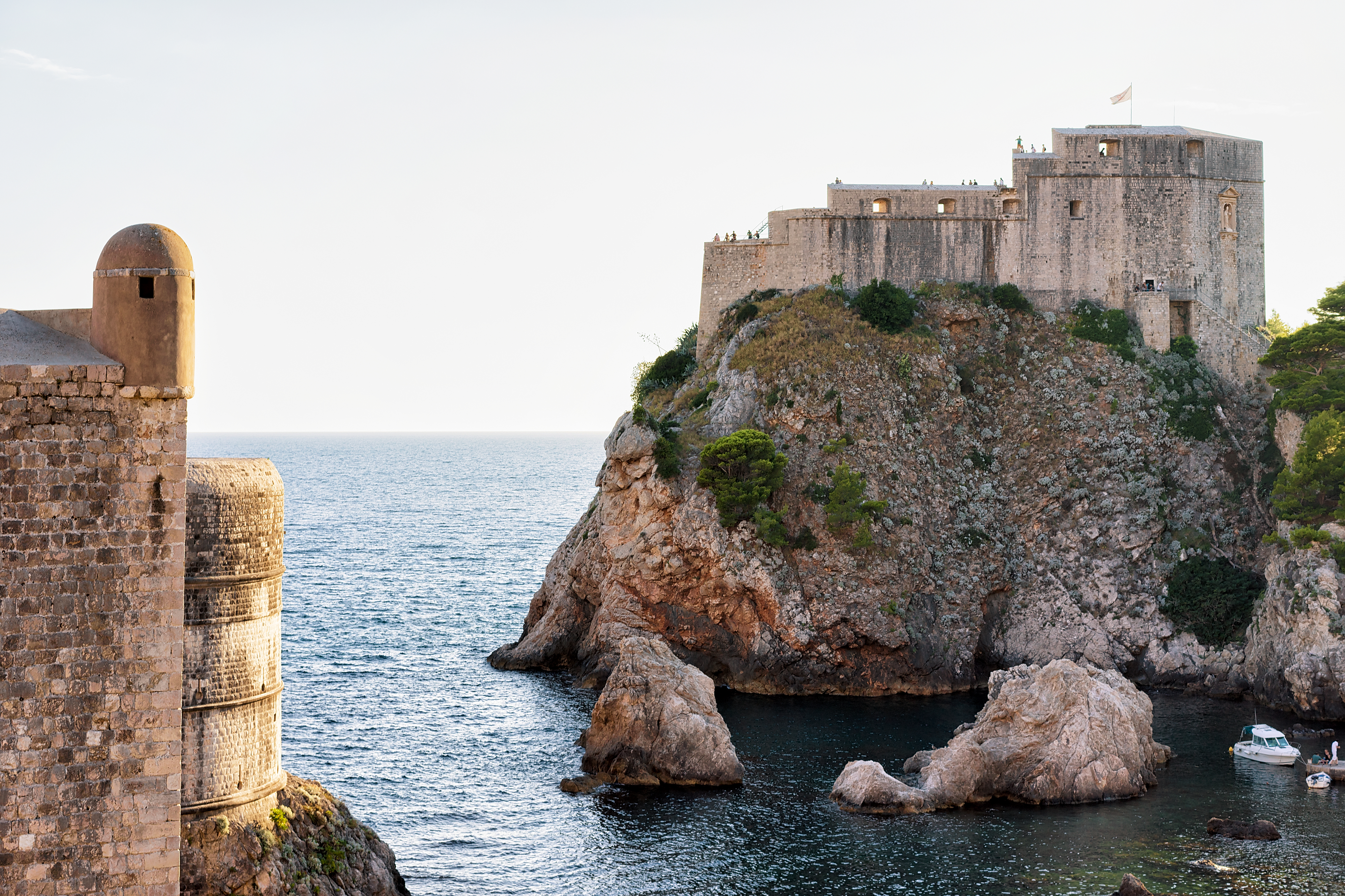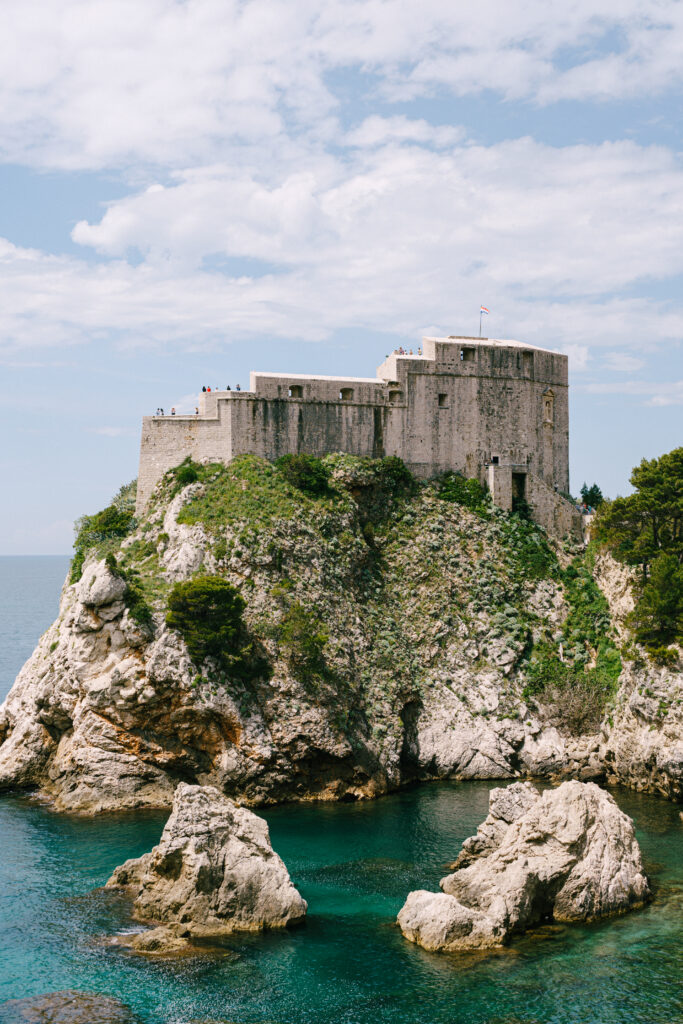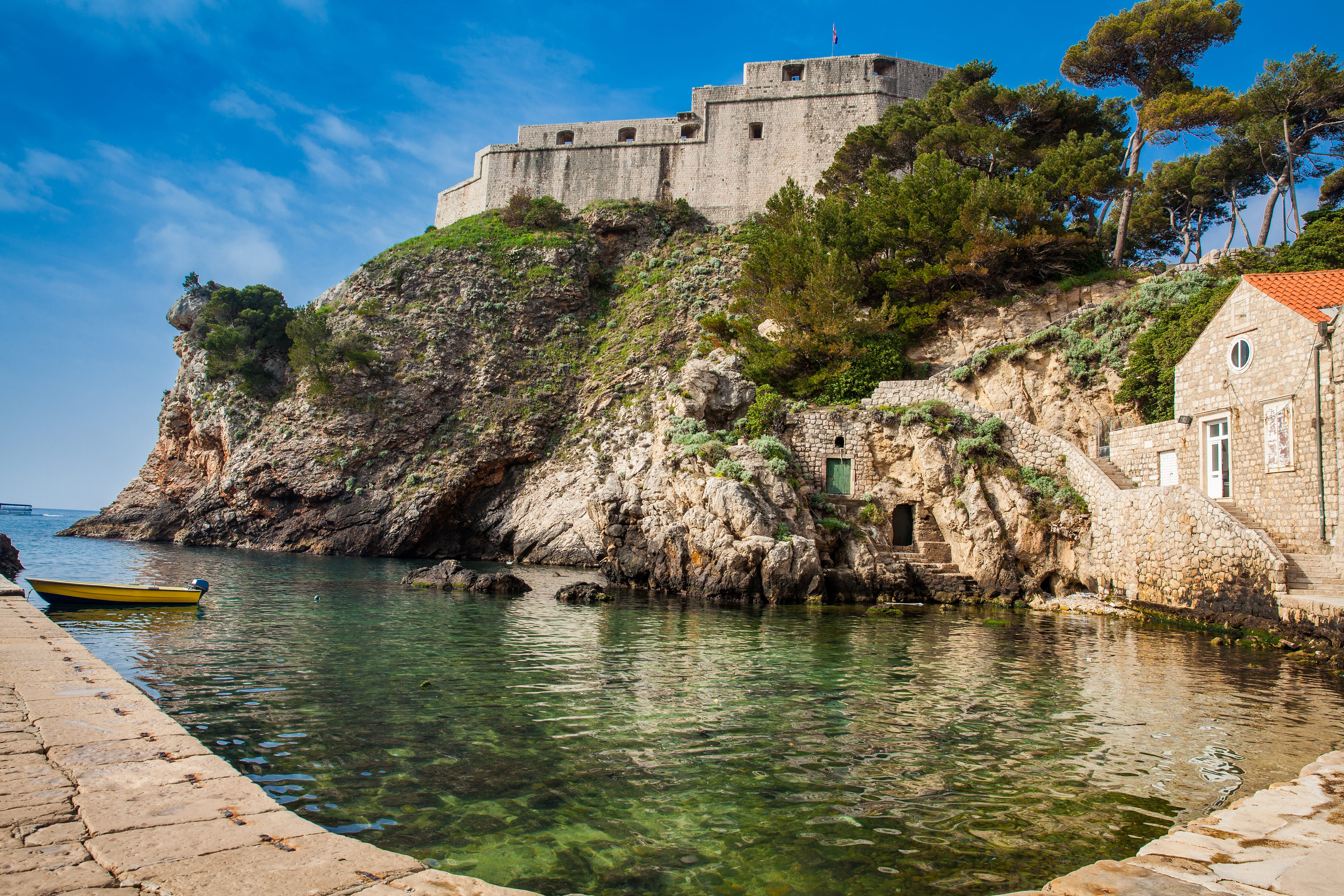

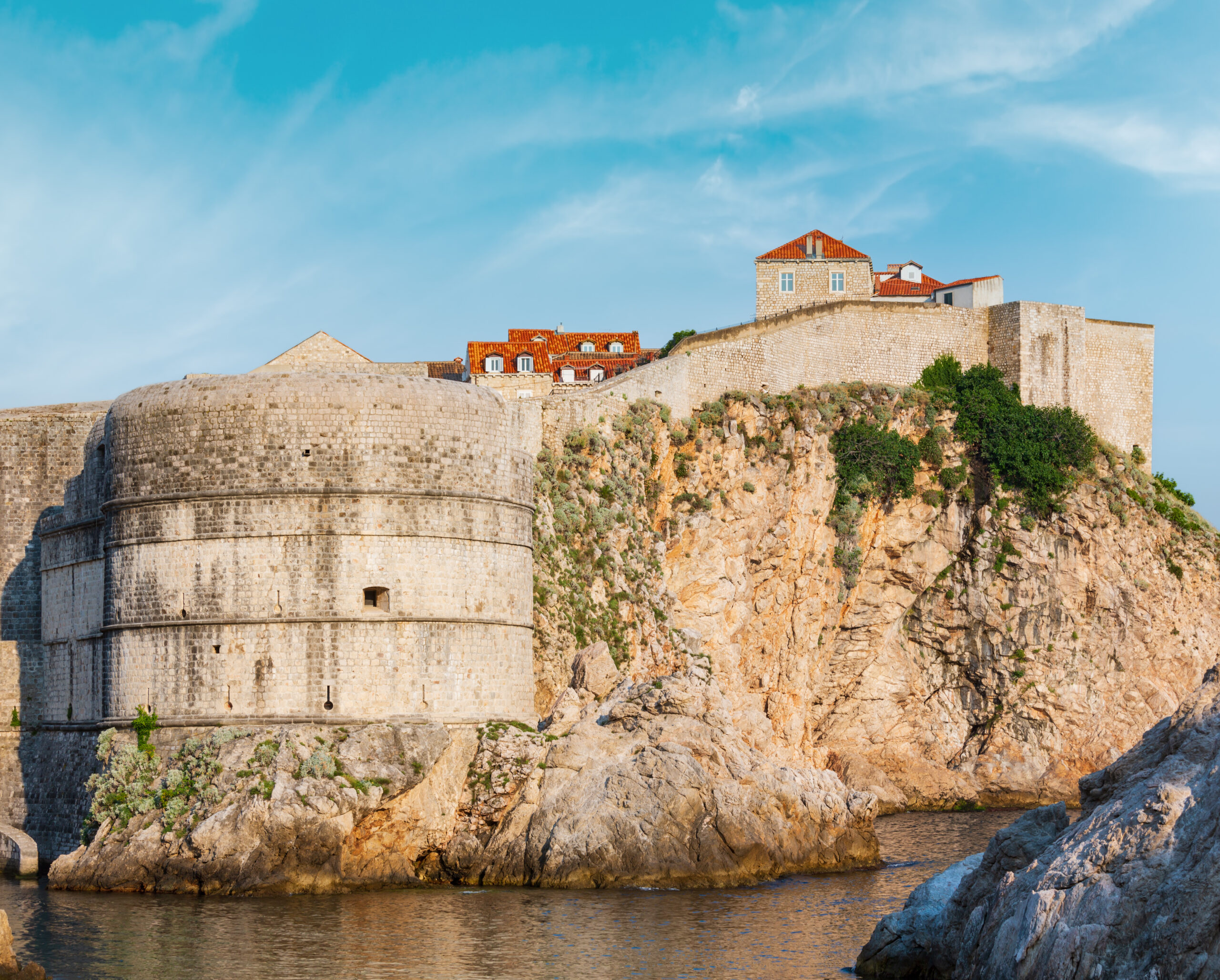
Majestically perched on a 37-metre-high cliff, Lovrijenac Fortress stands as a guardian of the past, rich in history and legends of Dubrovnik. Often referred to as the ‘Gibraltar of Dubrovnik’, this imposing fortress has watched over the city for centuries, overlooking the azure waters of the Adriatic Sea. Its architectural masterpiece and historic past make it not only a symbol of military power, but also an emblem of freedom and resilience.
The strategic marvel of Lovrijenac – The Lovrijenac Fortress, with its unique triangular layout spanning three levels, was once armed with ten powerful cannons. The most famous of these was the ‘Lizard’, proof of the fortress’s strategic importance in defending against invasions by sea and land. The walls facing the sea are up to twelve metres thick, while those facing the city are only 60 centimetres thick. This construction was intended to make it easier for the defenders to destroy the structure from within should it fall into enemy hands – a clever demonstration of the foresight of its builders. Above the gate of the fortress is a Latin inscription: ‘Non Bene Pro Toto Libertas Venditur Auro’ or ‘Freedom cannot be sold for all the gold in the world’. This phrase sums up the spirit of Dubrovnik and underlines the value placed on freedom over material wealth – a principle that runs through the entire history of the city.
Origins rooted in legend – The origins of Lovrijenac Fortress are interwoven with stories of rivalries and swift action. While historical records mark its first formal mention in 1301 with the appointment of a commander, some legends suggest that its construction began as early as the 11th century. According to local tradition, the Republic of Ragusa (now Dubrovnik) built the fortress in just three months to pre-empt Venice’s plans to build its own fortress on the same site. This story testifies to the strategic brilliance and determination of the citizens of Dubrovnik to protect their city from a possible invasion by Venice.
Architectural development over the centuries – The fortress was significantly improved between the 14th and 16th centuries by various architects, including I. K. Zanchi from Pesaro, who played a central role in many of the renovations. The devastating earthquake of 1667 necessitated further repairs, demonstrating the fortress’s resilience and adaptability in the face of natural disasters. Inside, the fortress houses a square courtyard surrounded by large vaults, leading to three terraces equipped with parapets. These structural elements were designed not only for defence but also to adapt to the rocky topography, demonstrating an unyielding harmony between human ingenuity and natural landscapes. The terraces provided strategic vantage points for monitoring approaching threats from both land and sea.
The symbol of resistance and rule – The thin inner walls of the fortress also had a deeper social and political significance. They were intended to prevent potential uprisings by the fortress commander – a position of such importance that it was held only by city nobles, who were elected for a short term of one month. This precaution underscores the delicate balance between trust and caution in the city and reveals the complex dynamics of medieval rule in Dubrovnik. The motto engraved above the entrance to Lovrijenac eventually became the city motto of Dubrovnik. While some attribute its authorship to a Croatian poet or the builder of the fortress, others trace it back to Aesop’s fables, suggesting a cultural resonance that transcends regional boundaries.
From defence to performance: a cultural heritage – In modern times, the architectural splendour and atmospheric appeal of Lovrijenac Fortress have made it a stage for artistic expression. Since the 1950s, the fortress has hosted the Dubrovnik Summer Festival (Dubrovačke ljetne igre), a celebration of the performing arts that attracts thousands of visitors annually. The rugged backdrop of the ancient stone walls lends a unique atmosphere to the performances, seamlessly blending history with modern cultural vibrancy. In addition, the fortress has also gained fame in popular culture, most notably as a filming location for the acclaimed television series Game of Thrones. Here, it was depicted as the Red Keep in King’s Landing, bringing the fantasy world of Westeros to life with its authentic medieval character.
Echoes of the past and promises for the future – Today, Lovrijenac Fortress stands not only as a relic of Dubrovnik’s past, but also as a symbol of enduring freedom and cultural heritage. It tells stories of times gone by, when the clang of armour and the thunder of cannon fire were part of everyday life. But even as it adapts to new roles in cultural festivities and global media, the fortress continues to radiate the spirit of freedom, inspiring future generations to cherish the intangible riches of liberty and identity.
Through its stone walls and ancient inscriptions, Lovrijenac whispers stories of resilience, courage and the unwavering pursuit of autonomy. In a world where the definitions of power and freedom are constantly evolving, Lovrijenac Fortress remains a steadfast monument, reminding us of the unwavering strength of those who dare to dream and defend what they hold dear. When visitors step through its gates, they enter sacred ground that bears witness to the historical saga of Dubrovnik – a saga that continues to unfold and remains as exciting and vibrant as ever.