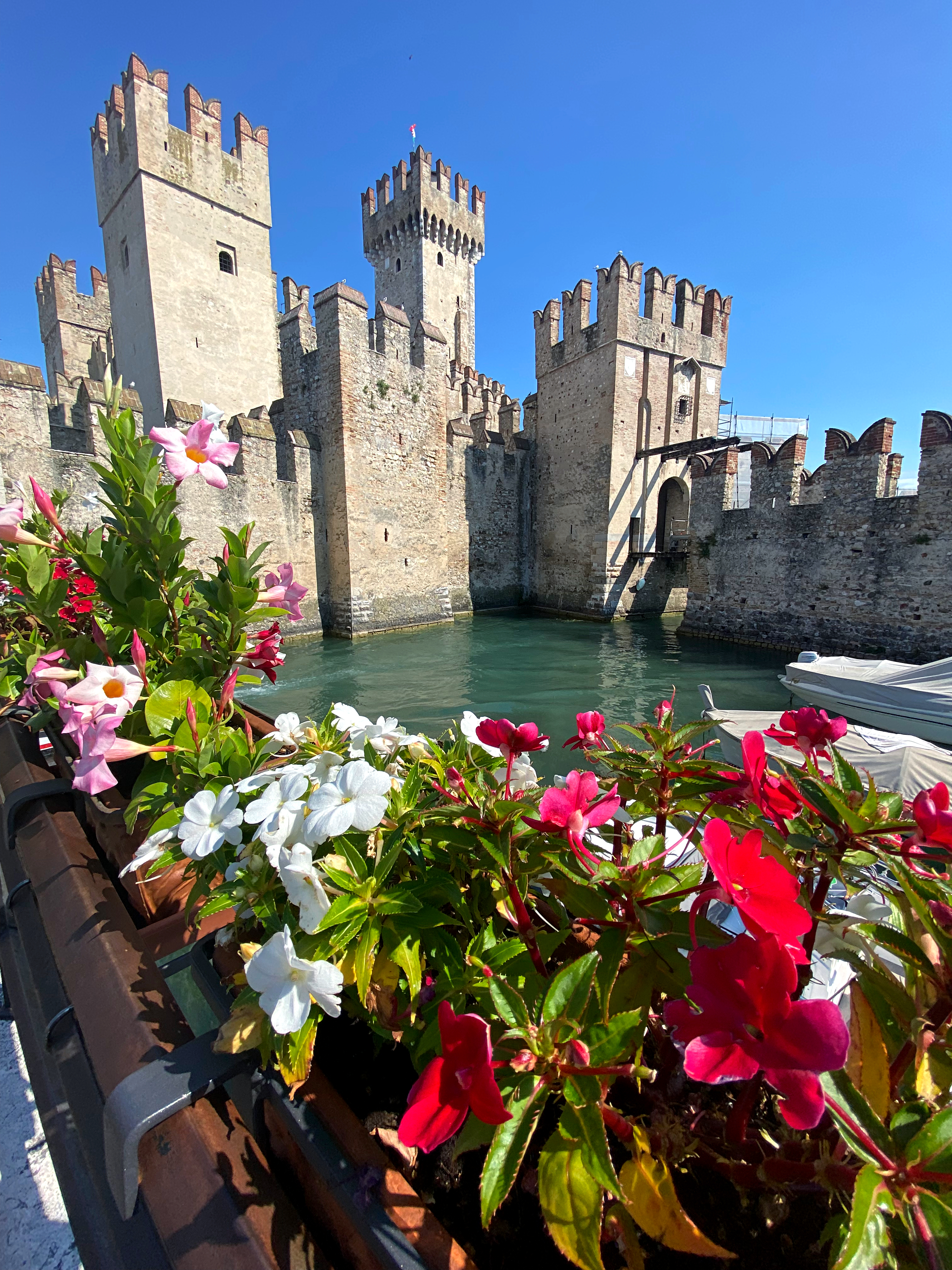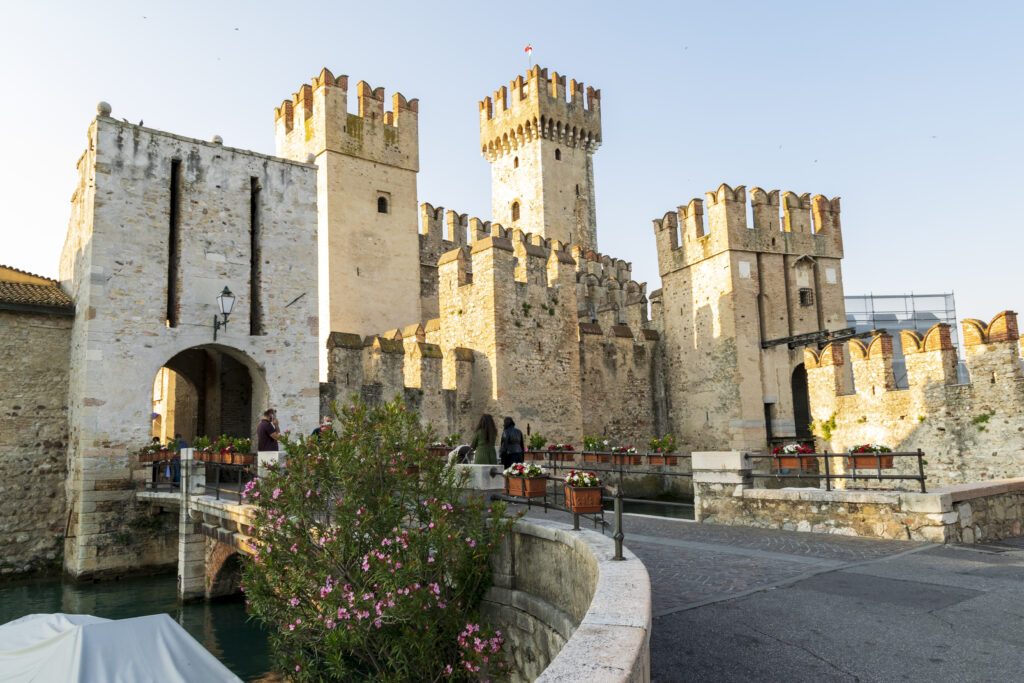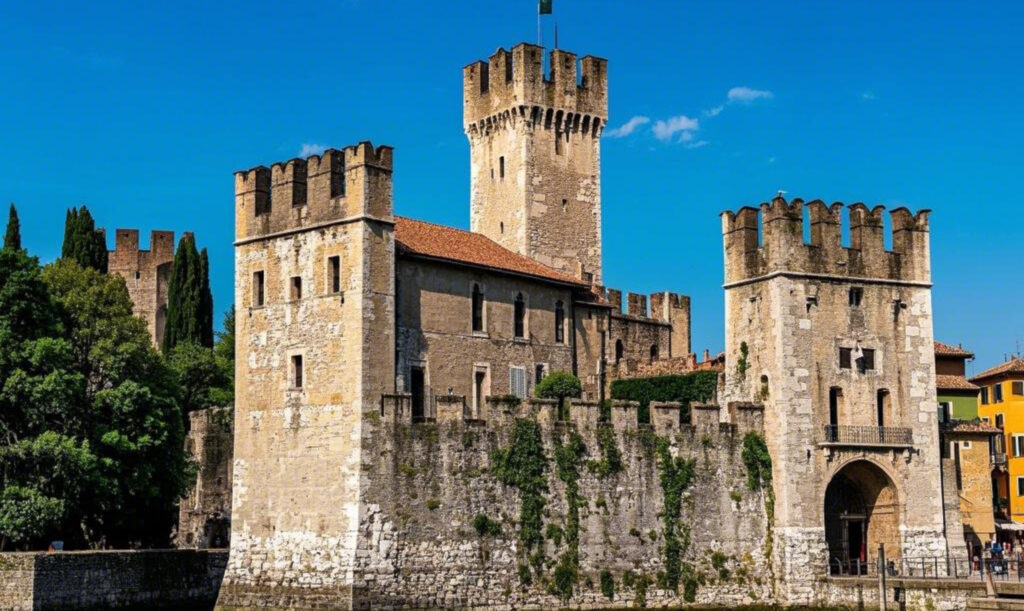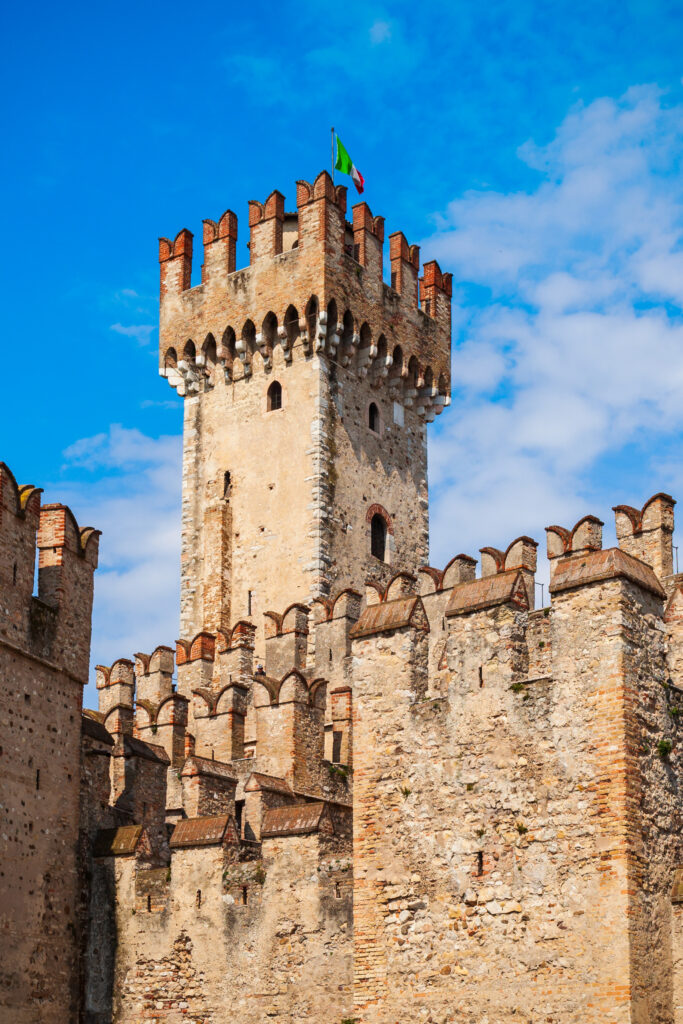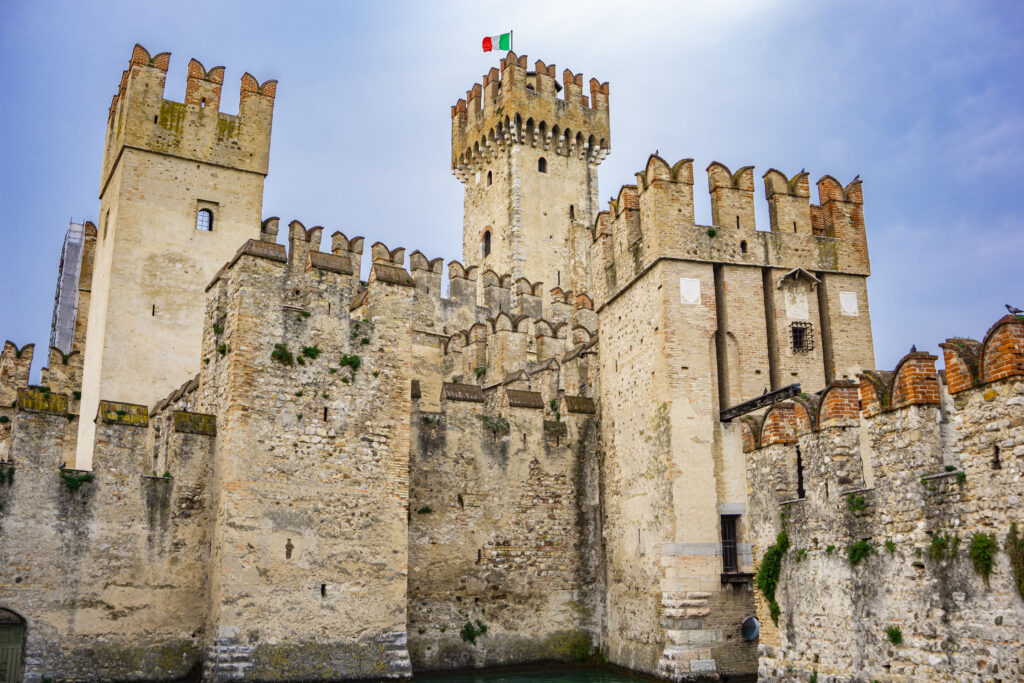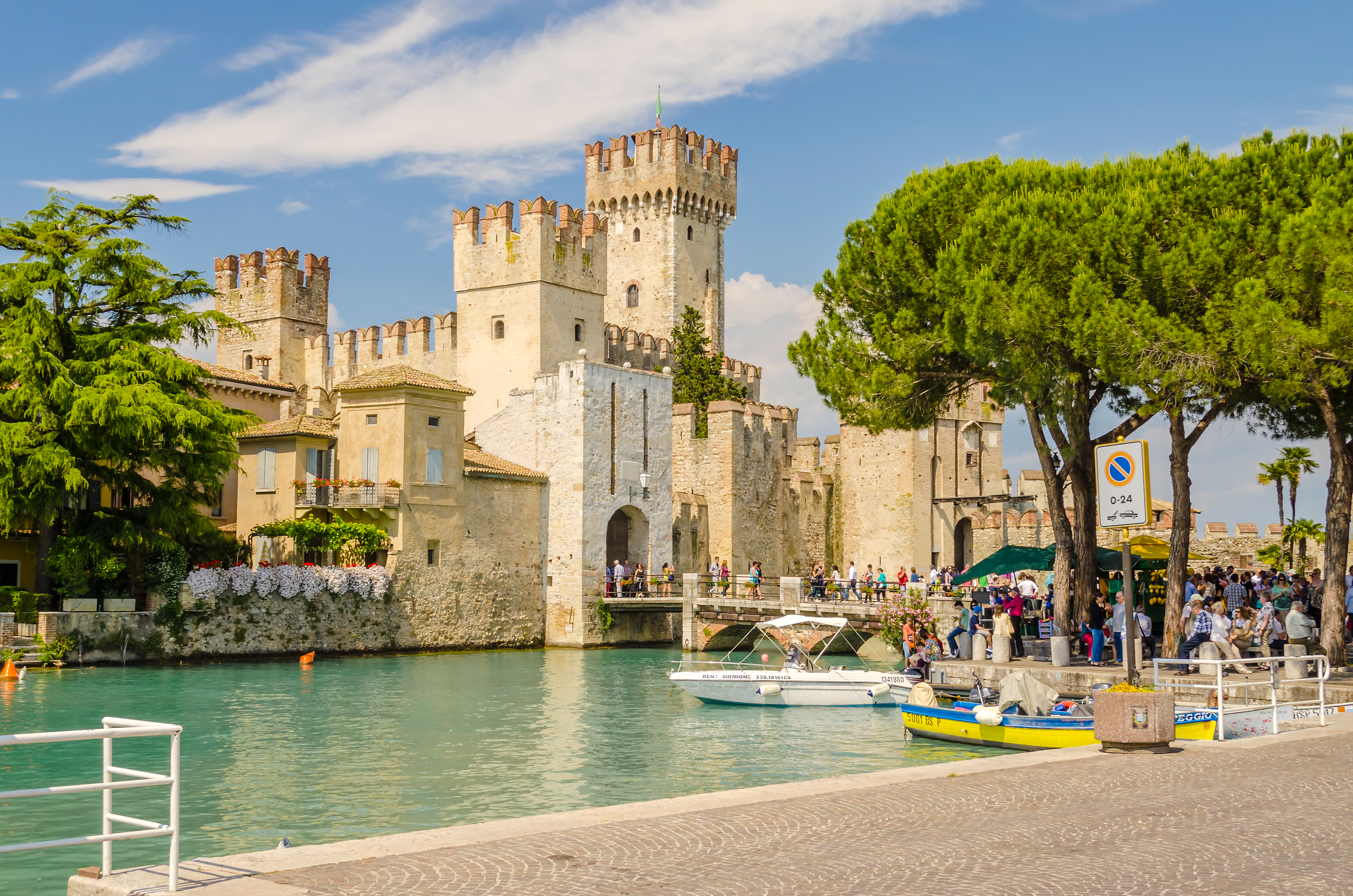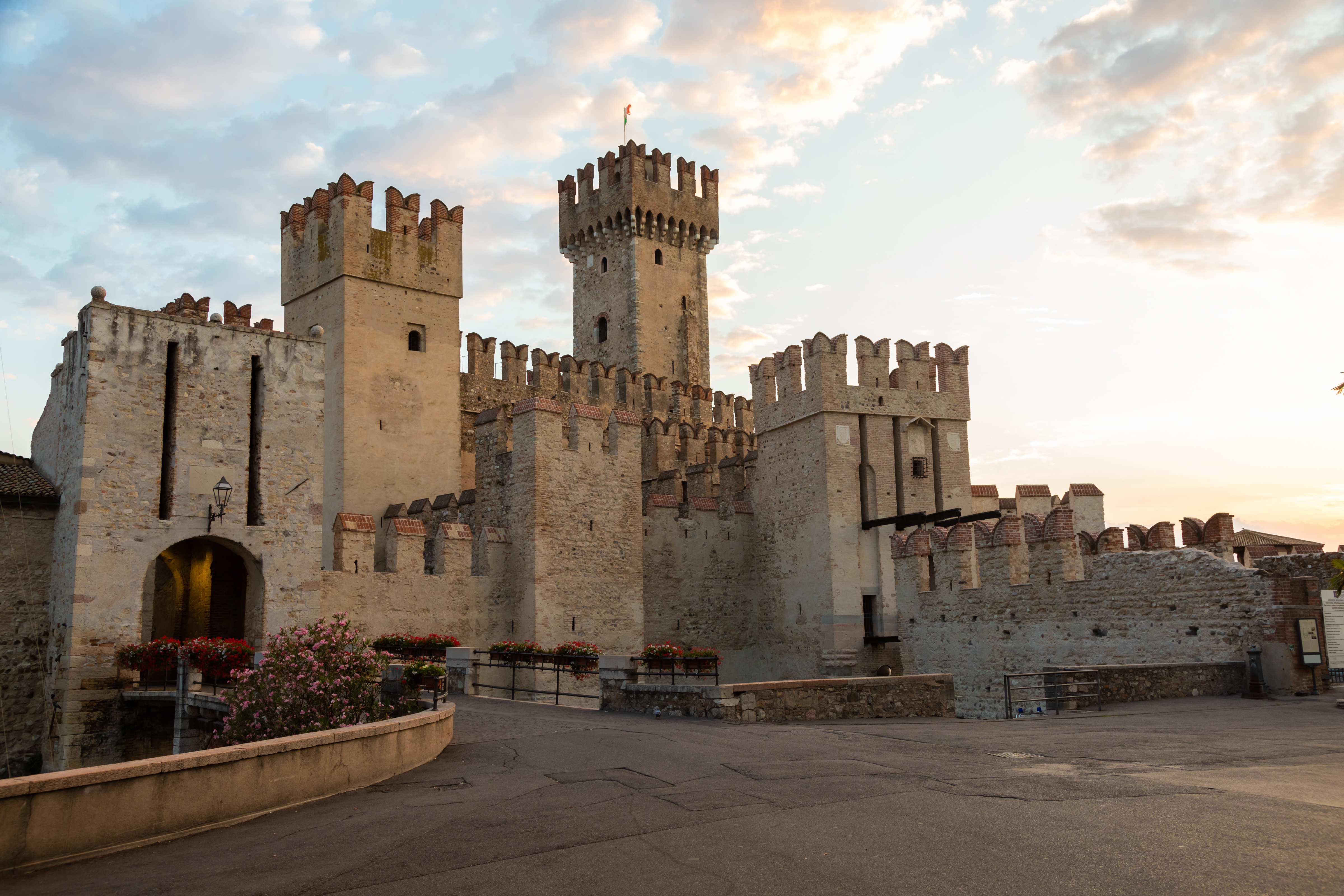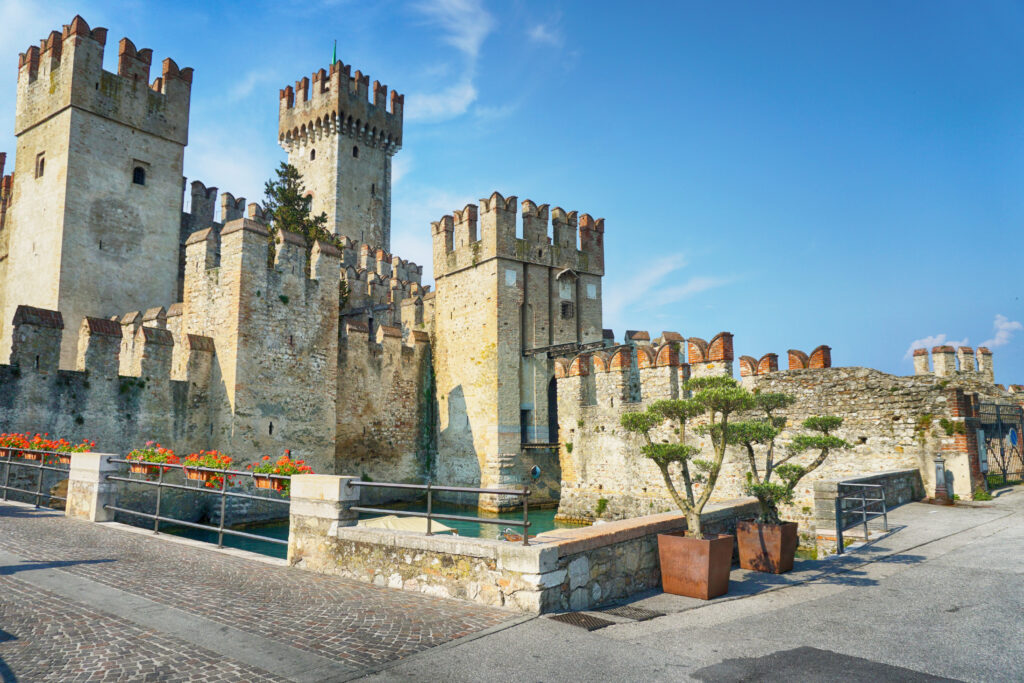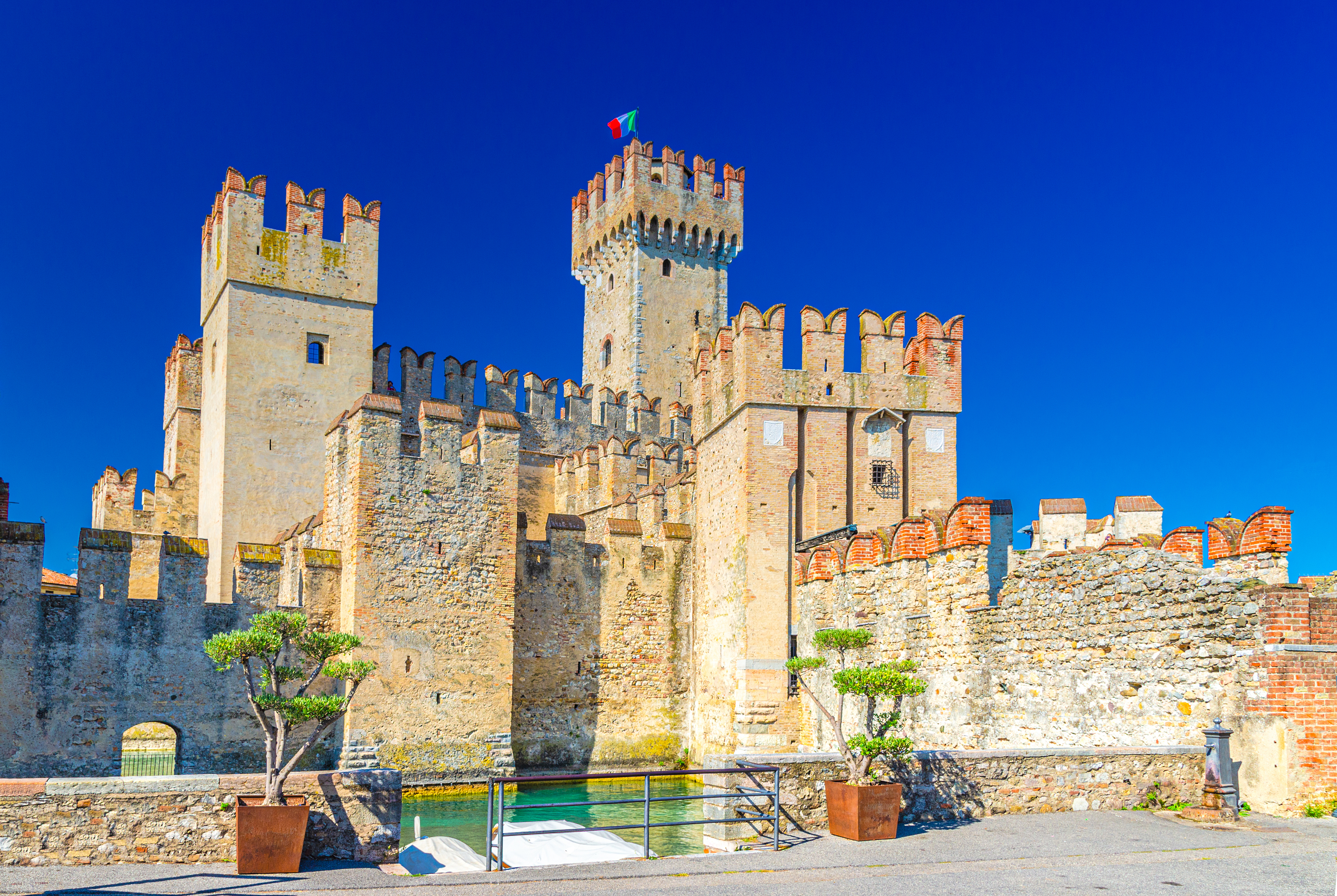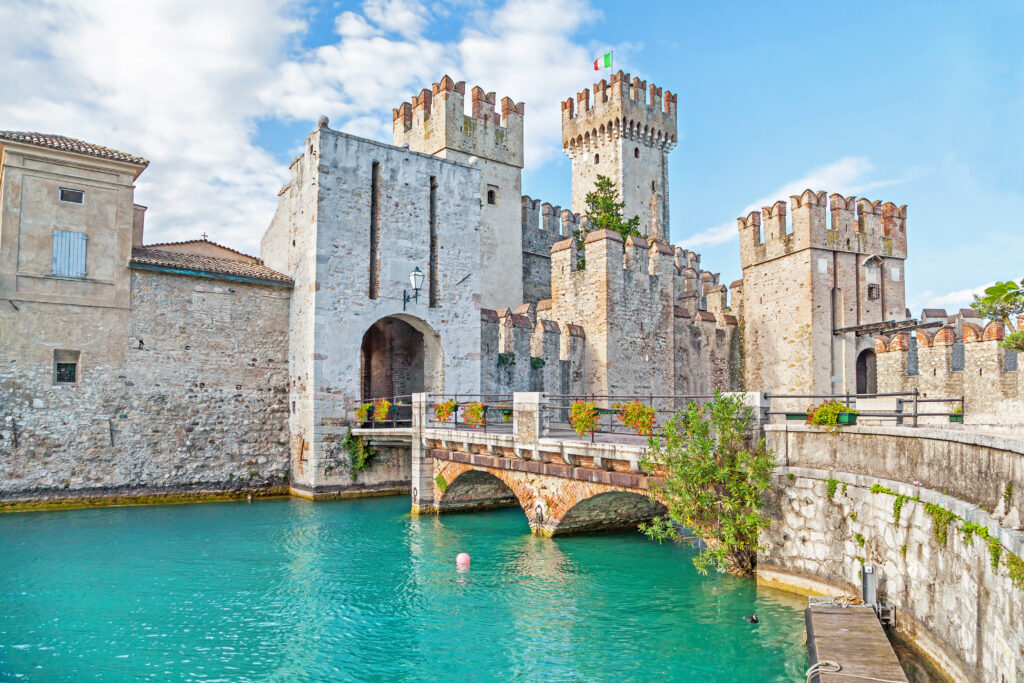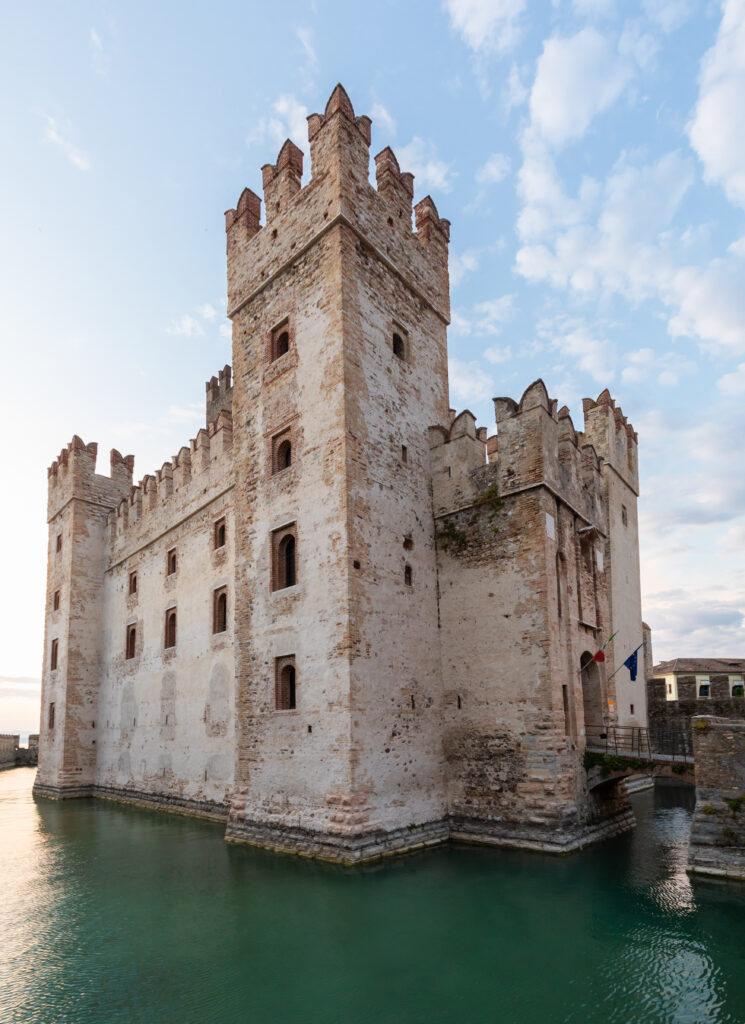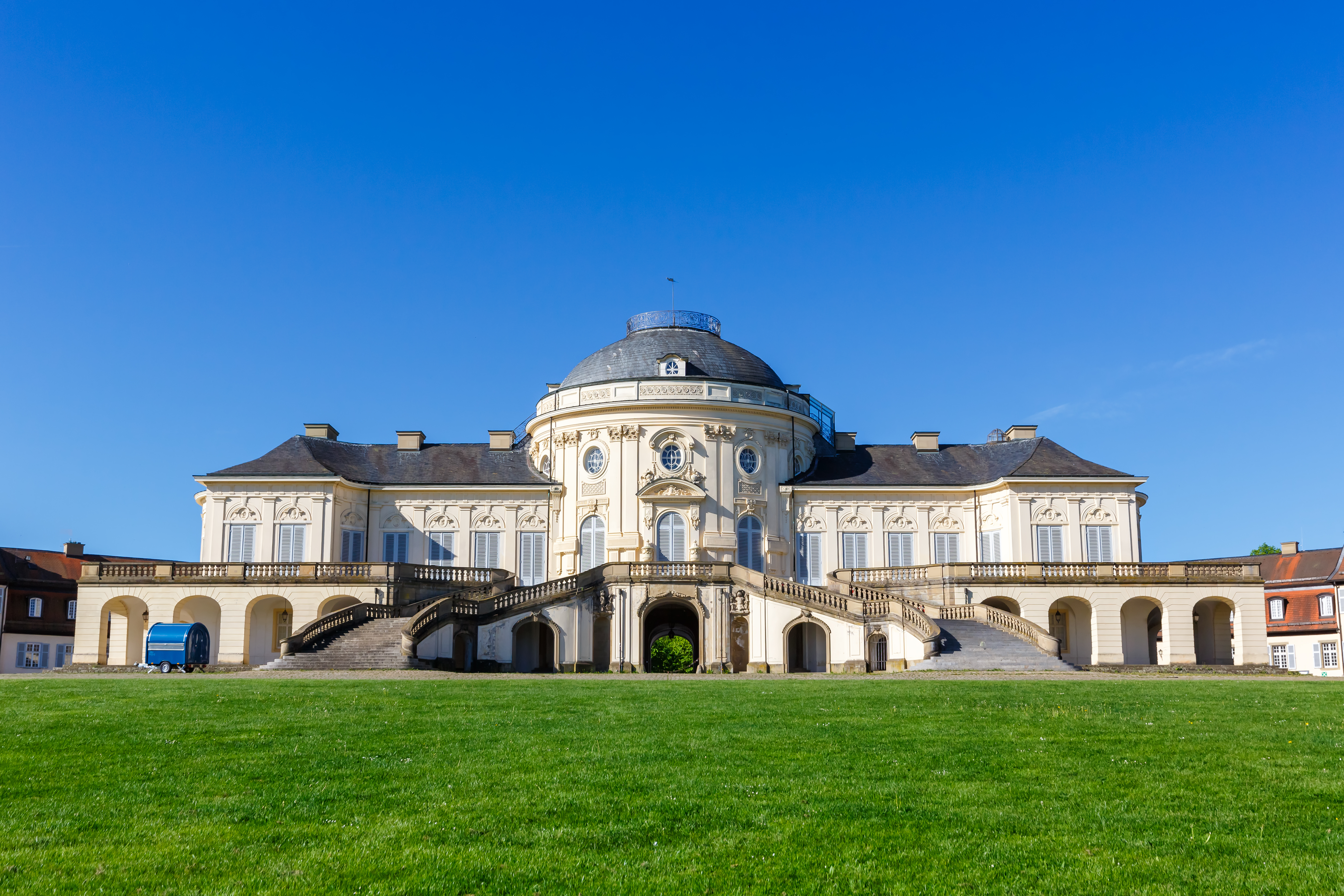

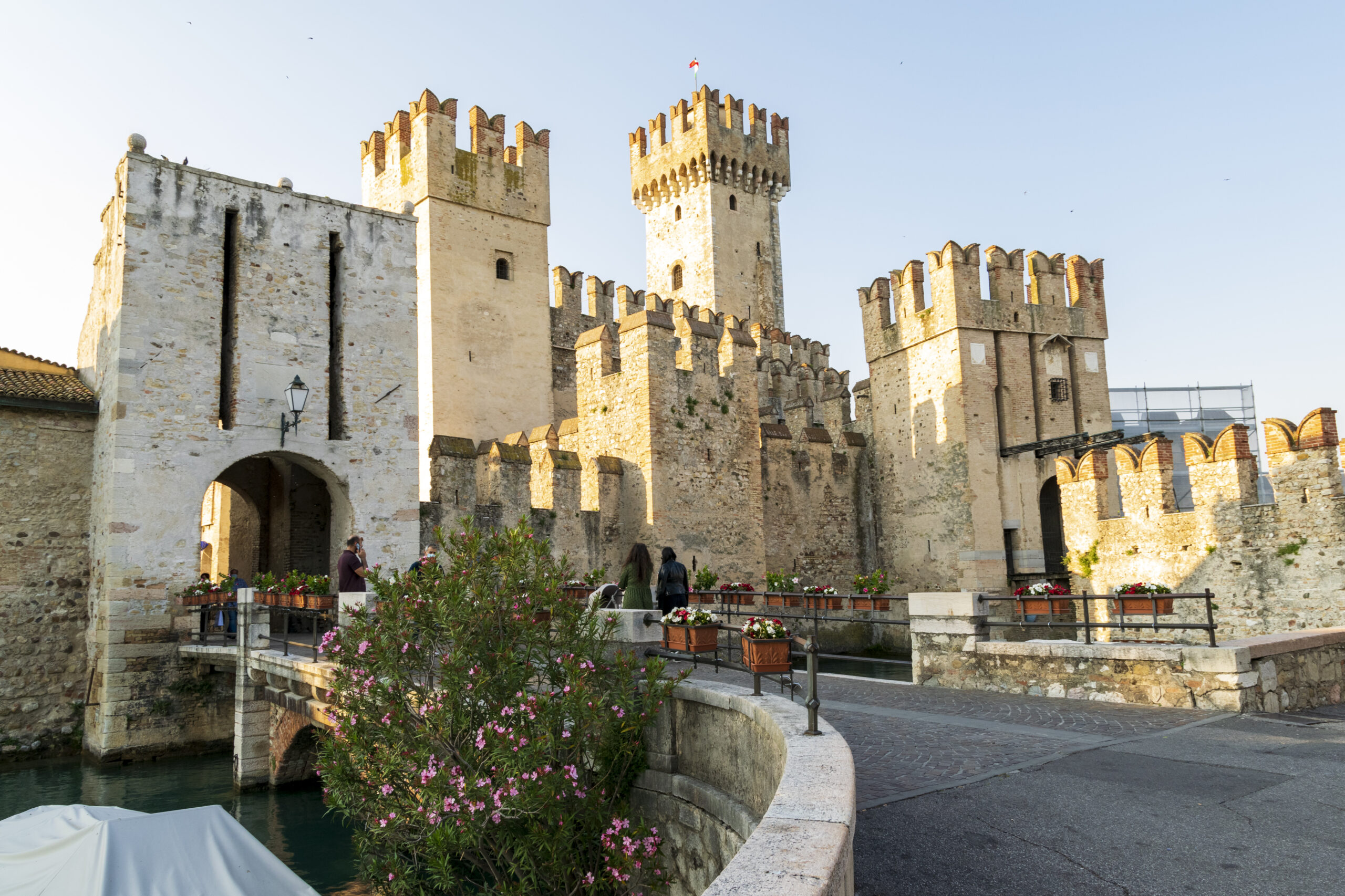
Located on the southern shore of Lake Garda in the Italian province of Brescia, Scaliger Castle in Sirmione is a testament to the military genius and architectural brilliance of the Middle Ages. Officially known as Castello Scaligero, this water fortress is an exceptionally well-preserved relic from the 14th century that exudes historical charm and strategic importance. However, its history goes beyond mere architectural marvels and delves deep into the world of legends, myths, and epic battles that have shaped its existence.
The castle’s strategic location on the narrow peninsula of Sirmione made it an ideal defensive structure. This strip of land, stretching about four kilometers into Lake Garda, offered natural protection against invasions. Built on the edge of the historic town center of Sirmione, the castle served both as a shield for the ruling aristocracy and as a bulwark against possible uprisings by the local population—a dual role that was necessary due to uncertain loyalties during a period of power shifts between different signorie.
The castle was first mentioned in documents from 1409 under Doge Michele Steno and referred to as “Roche Sirmione.” Interestingly, the Italian term “rocca” usually refers to a fortress perched on a rocky outcrop – an inaccurate description for this castle surrounded by a lake. Nevertheless, it was often referred to as “Rocca scaligera” in the 14th and 15th centuries.
The origins of the Scaliger castle are shrouded in mystery, as there are no clear historical records that precisely date its construction. Medieval references to the fortified settlement of Castrum Sermioni date back to the 8th century, but do not conclusively prove the existence of the castle at that time. Scholars still disagree on whether the castle was built on the ruins of a Roman port in Sirmione.
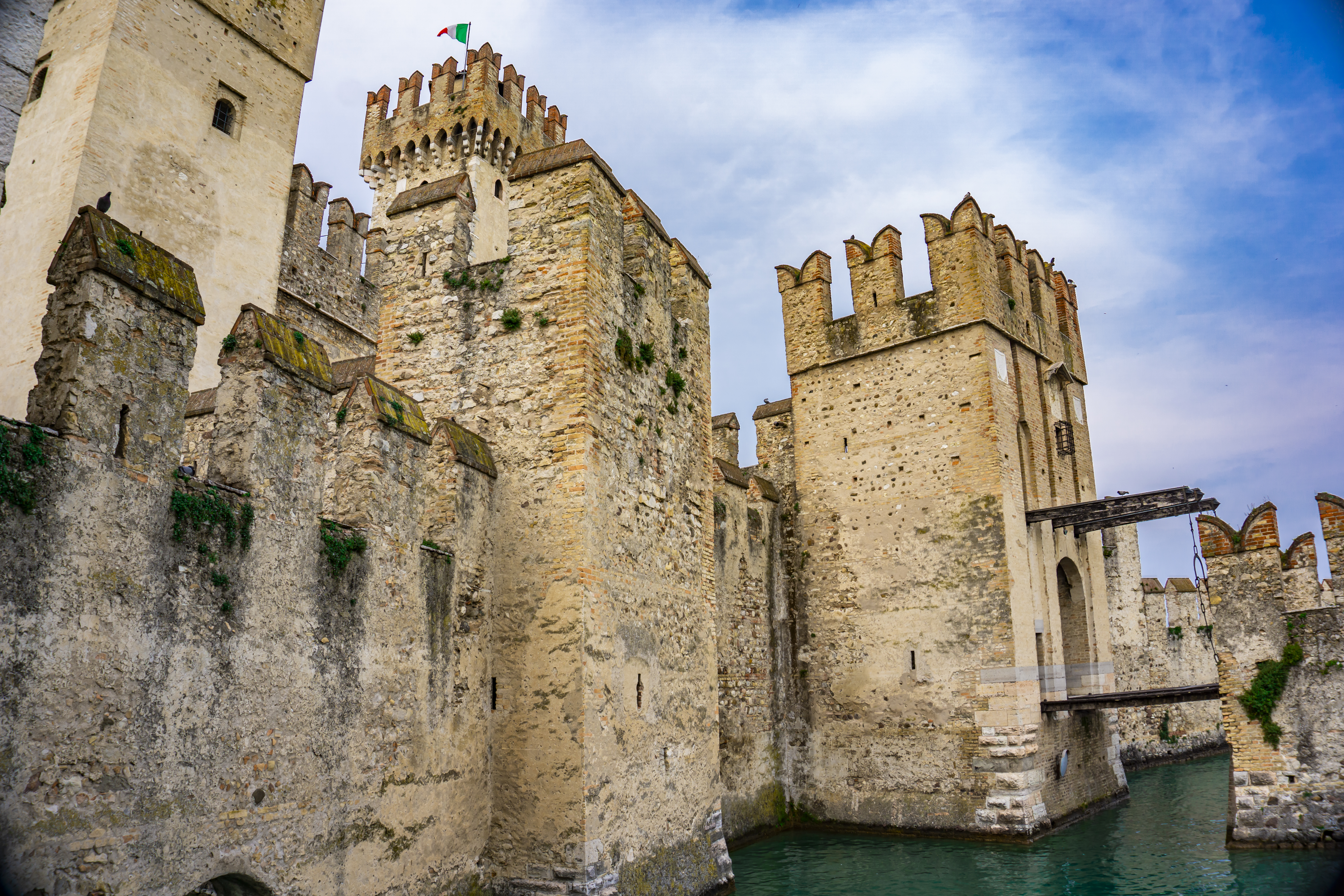
Most historians agree that construction of the castle began under Mastino I della Scala, inspired by the crusades against the Cathars led by his brother Alberto I della Scala in 1276. Therefore, some suggest that the foundation stone was laid around 1277. The most widely accepted theory is that the castle was built between the late 13th and early 14th centuries, possibly in several phases, and reached its peak with the completion of the port in the late 14th century, possibly during Venetian rule. This timeline is supported by architectural details such as drawbridges, which only became common in Italy in the 14th century.
Notable architectural elements provide further clues to the castle’s timeline. The harbor may be linked to the period between 1351 and 1375, when the Scaliger family gained vicariate rights over Lake Garda. This is evidenced by the almost identical harbor basin of the Scaliger castle in Lazise, which was built in 1375, suggesting that the harbor in Sirmione may have been built under Cansignorio della Scala or his successor Antonio della Scala.
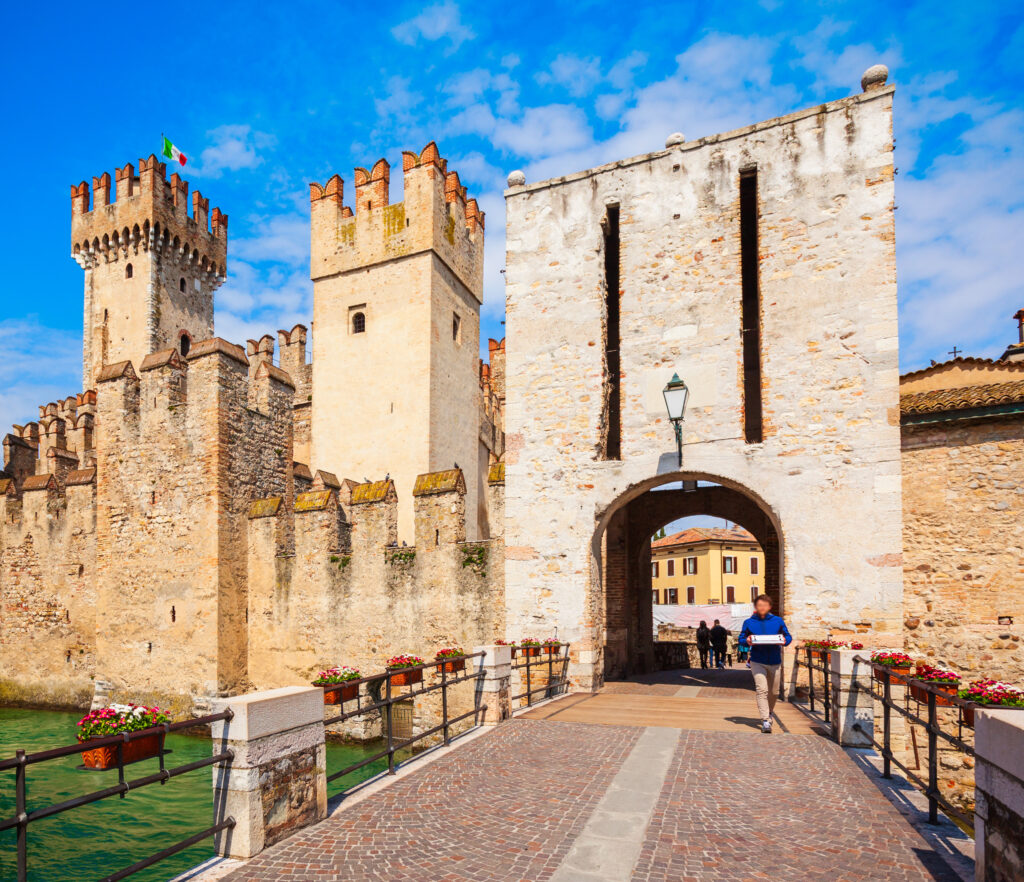
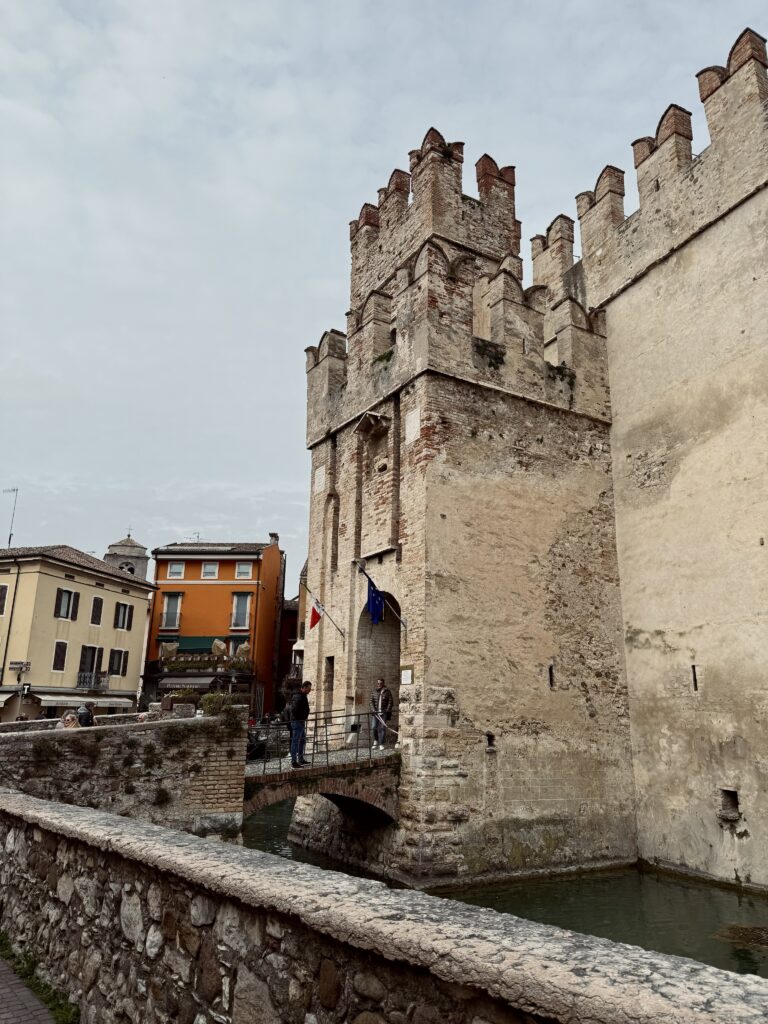
The stone coats of arms on the castle gates and on several towers indicate significant historical transitions, including the sign of Antonio della Scala on the west gate, although it is a replica from 1890.
After its construction, the Scaliger Castle changed hands several times amid turbulent political upheavals. Gian Galeazzo Visconti conquered Verona and Antonio della Scala’s castle in 1387 and integrated it into the Visconti domain. The castle briefly returned to Scaligero control in 1404, but was annexed by the Republic of Venice in 1405. Under Venetian rule, the castle gradually lost its military importance, especially after Venice fortified Peschiera del Garda. The castle served mainly as a storage facility and retained its architectural integrity due to minimal changes until the Gonzaga family claimed it for themselves after Venice’s defeat in 1509.
Then the famous Isabella d’Este entered the scene, visiting the castle in 1514 and deciding to stay elsewhere due to its sparse furnishings. The functional redesign of the castle continued under Venetian rule until the 18th century, when it fell into disuse and decay due to changing forms of government. Remarkably, this period of inactivity protected the castle from significant changes and preserved its medieval essence for centuries, even when Sirmione became part of the province of Brescia after 1801.
After World War I, extensive restoration work began to reverse earlier changes and restore the castle to its former state. This included dredging the silted harbor and renovating defensive structures such as embrasures and battlements.
During World War II, German troops seized the castle, which was later used for various municipal purposes, including as an archive and library. Further restoration work in 1975 reconstructed important elements such as the southern drawbridge, and since 2015, the castle has been continuously maintained by the regional authorities.
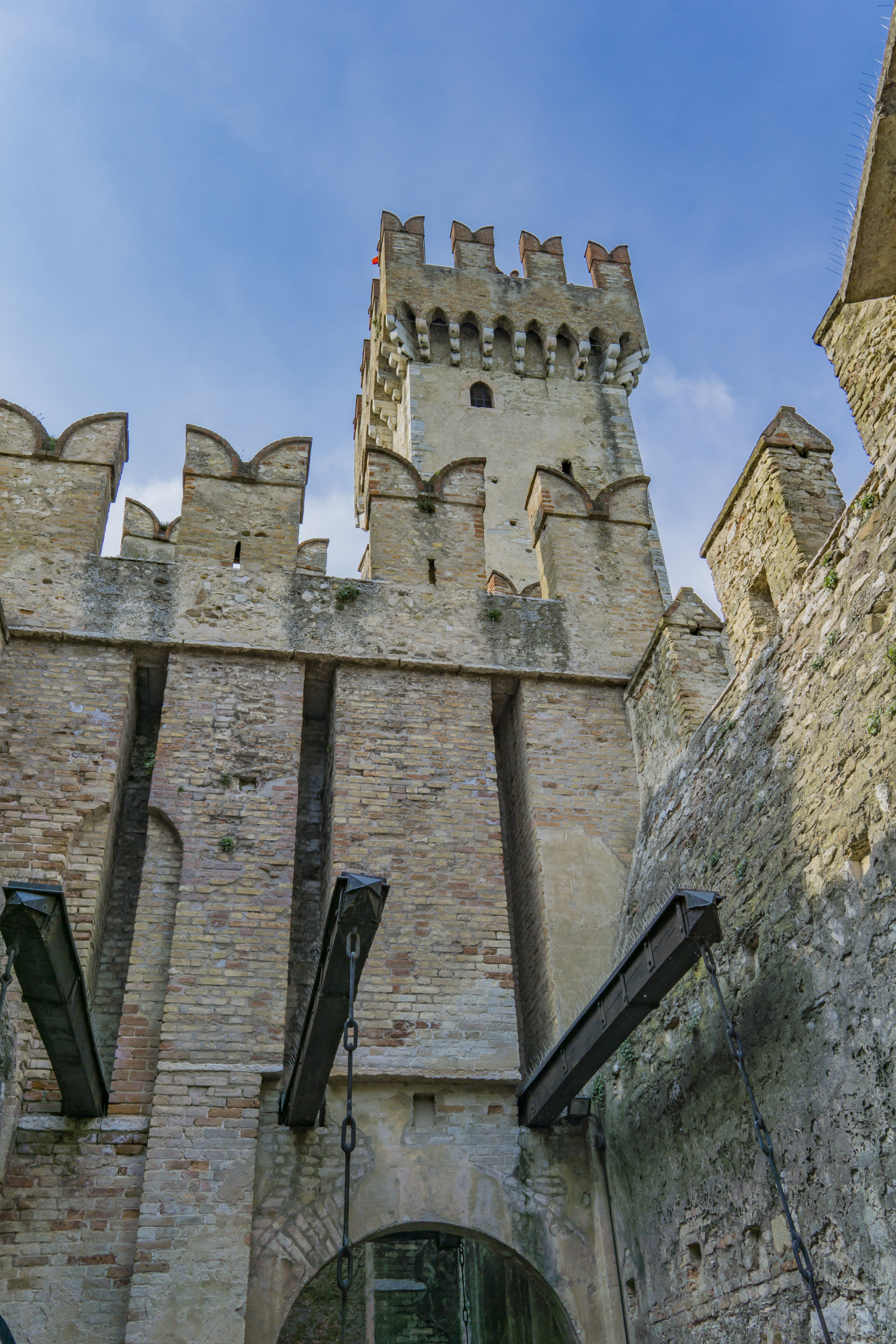
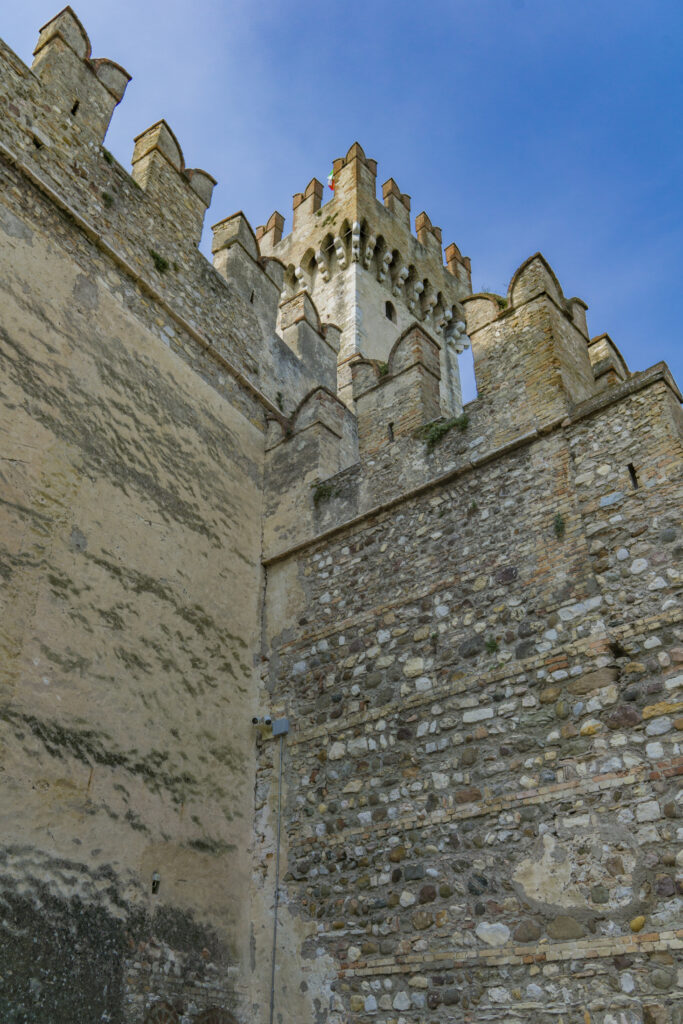
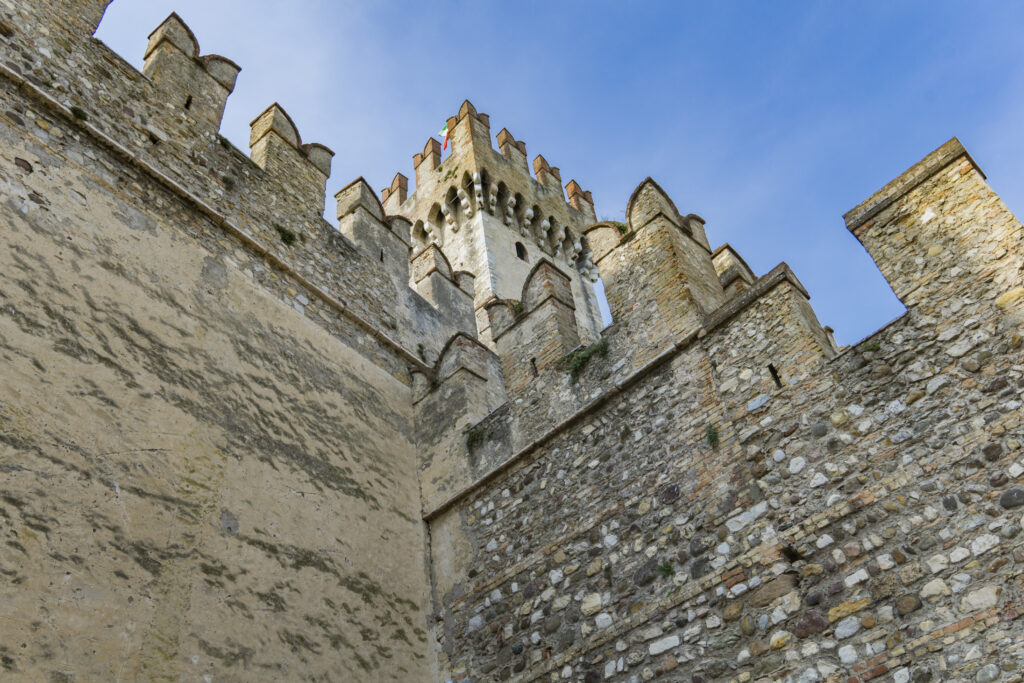
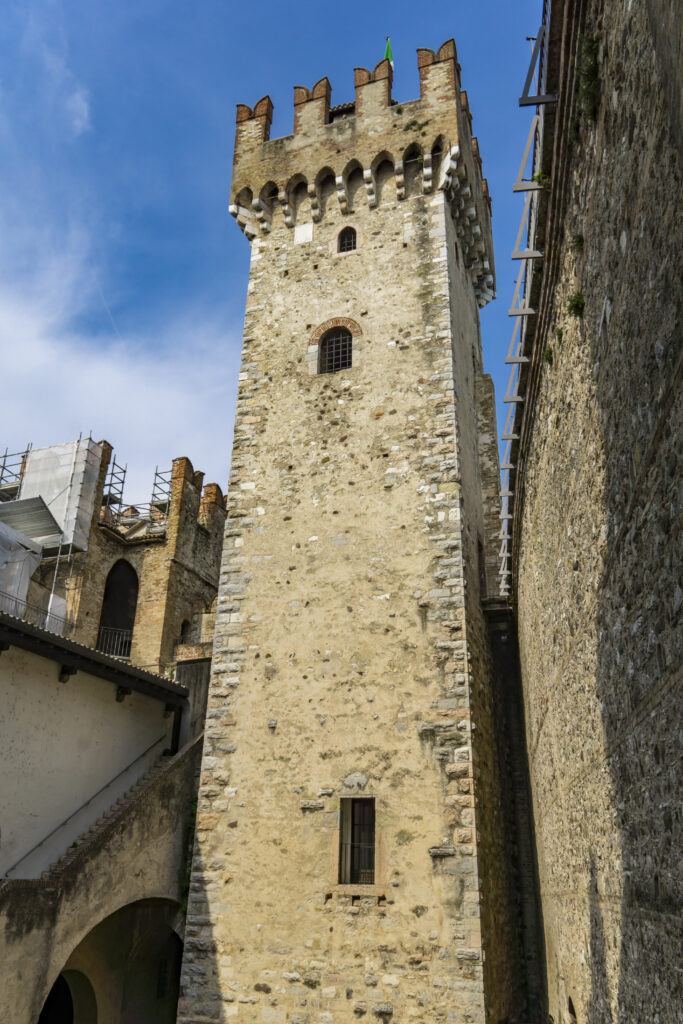
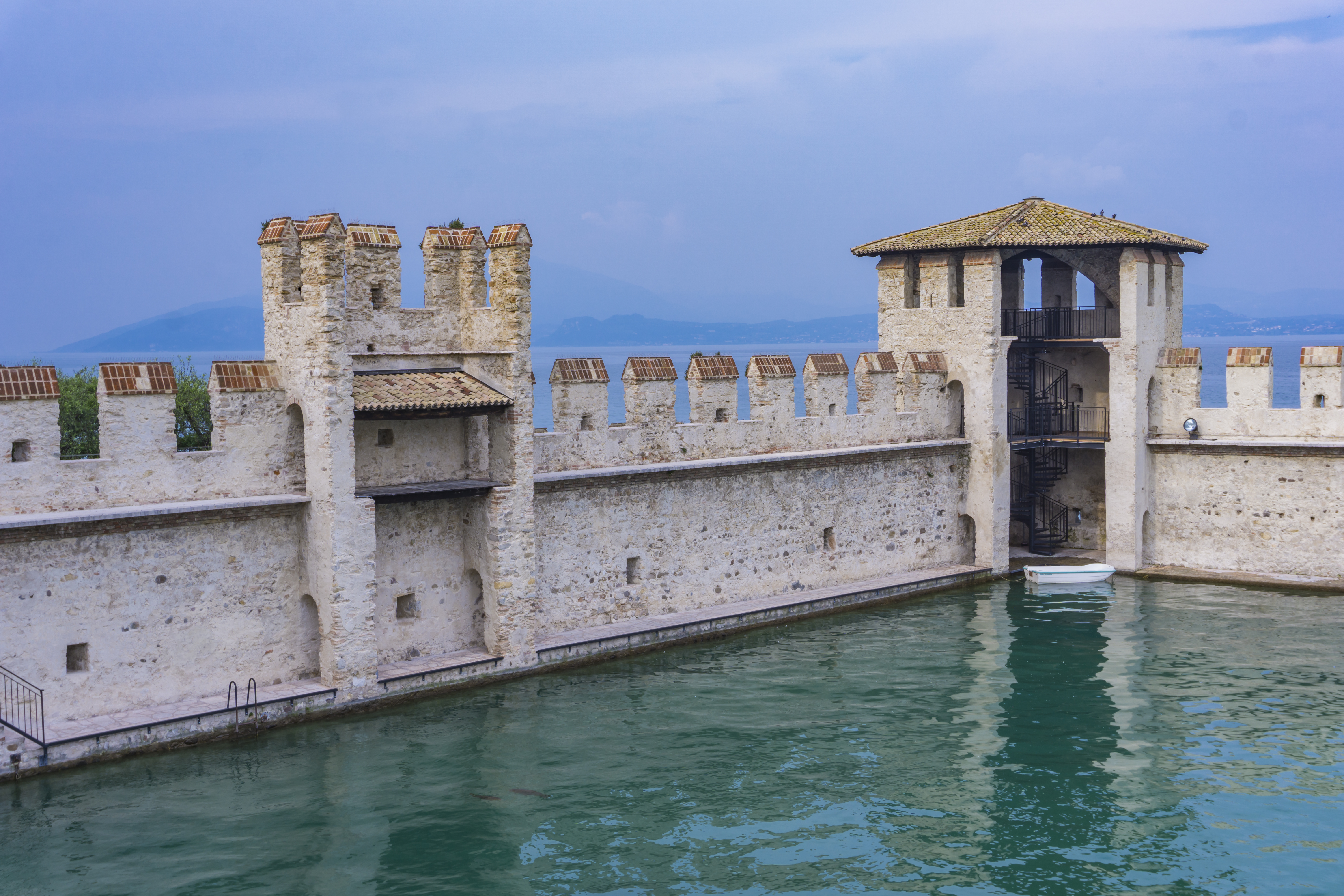
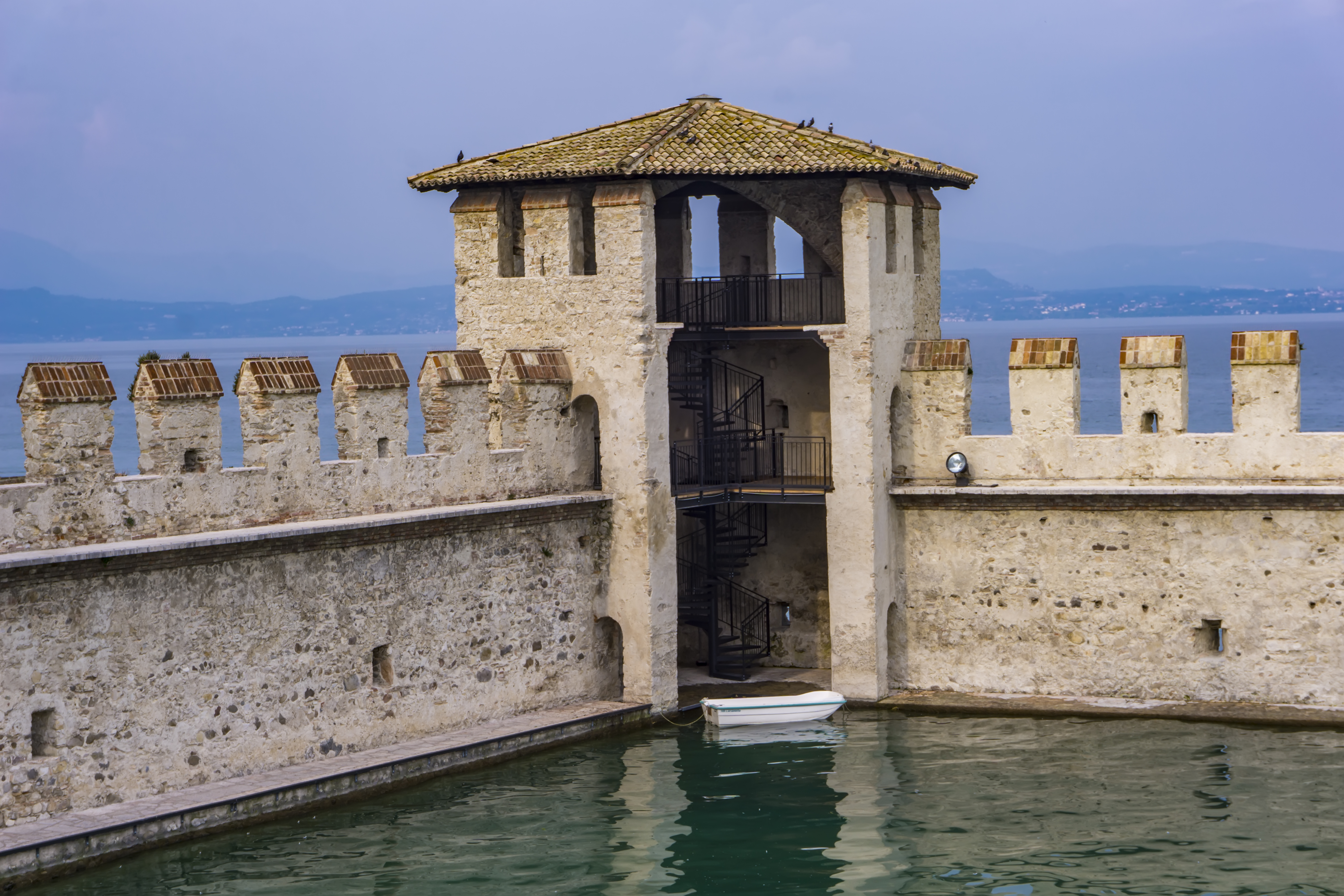
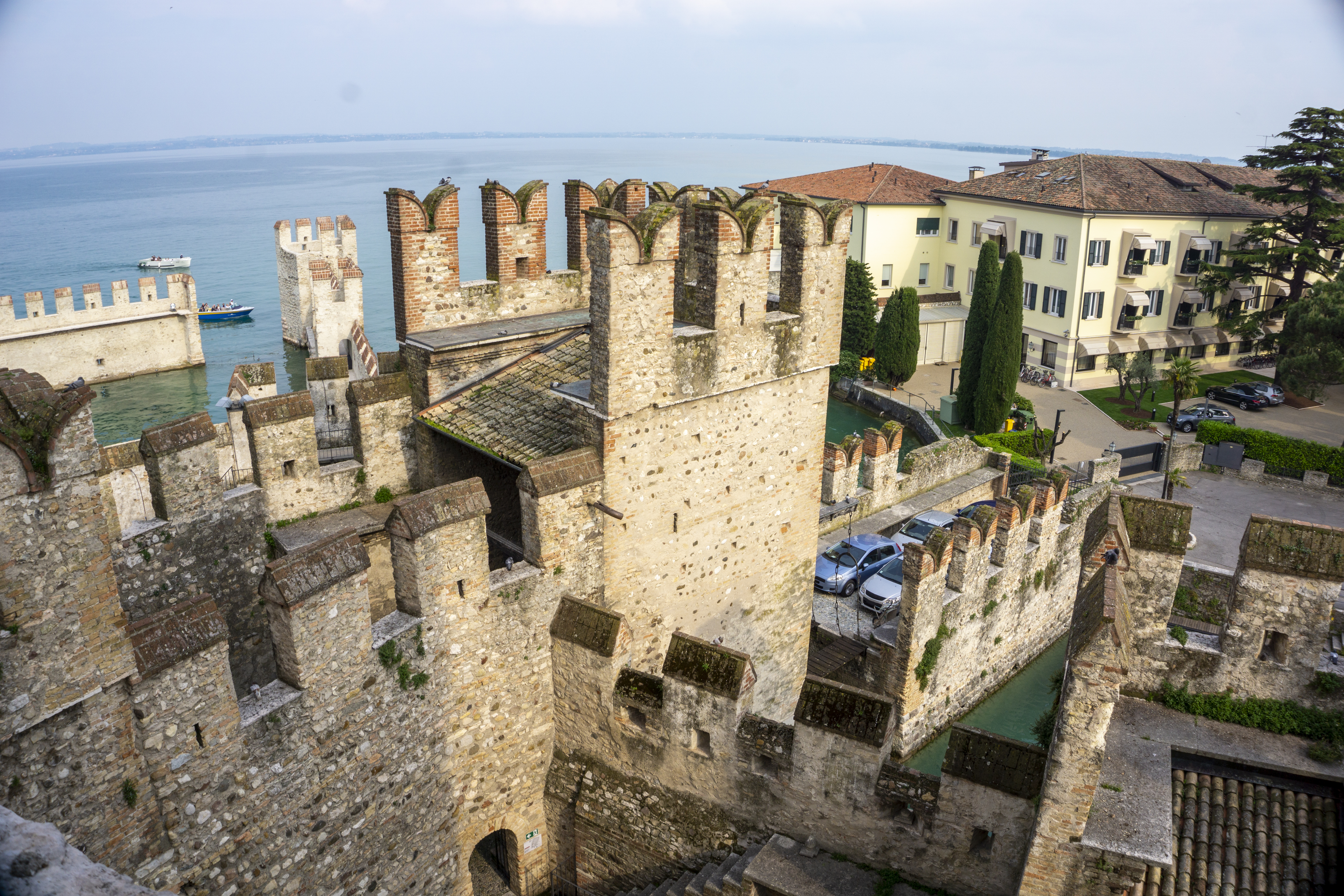
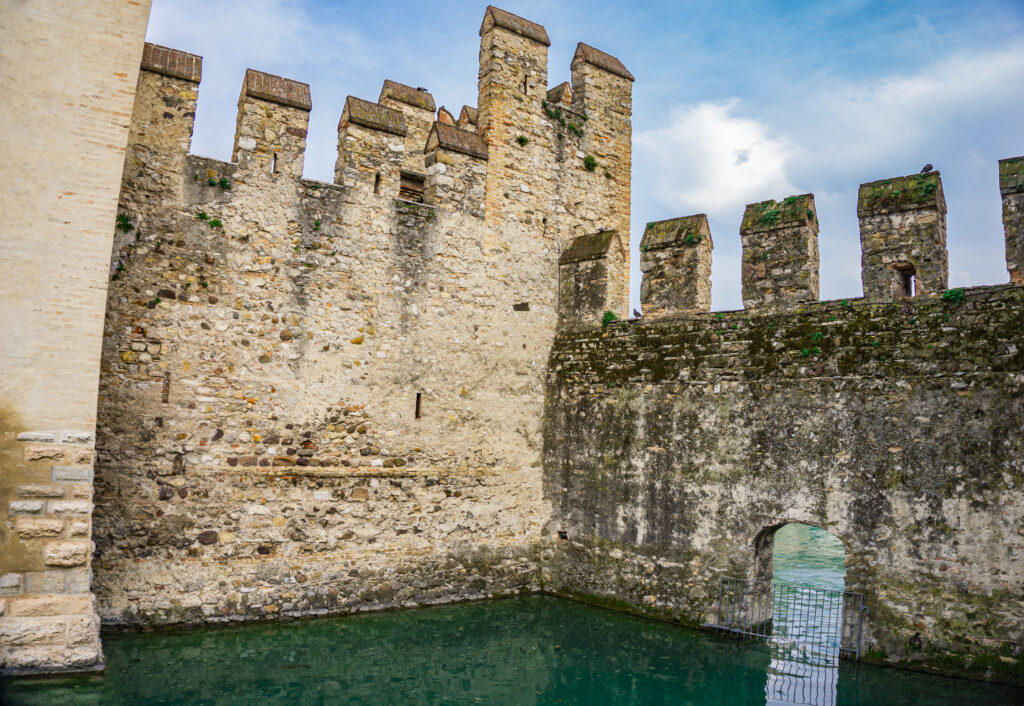
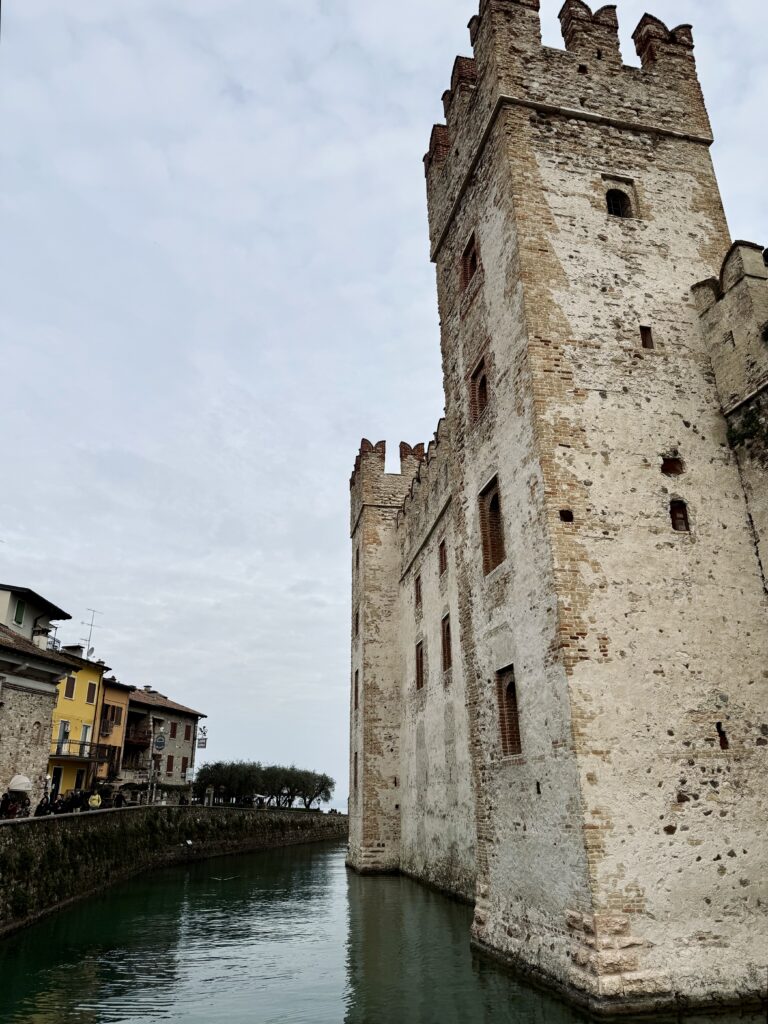
The Scaliger Castle fortress consists mainly of the main castle with its keep and unique harbor. Surrounded by a moat connected to Lake Garda, three sides of the castle offer impressive protection. The western and northern parts have moats up to 15 meters wide and filled with water, while the southern side extends over 25 meters. Inside, a smaller substructure called the “zwinger” separates the main part from the harbor and is reinforced by high walls and Guelf battlements.
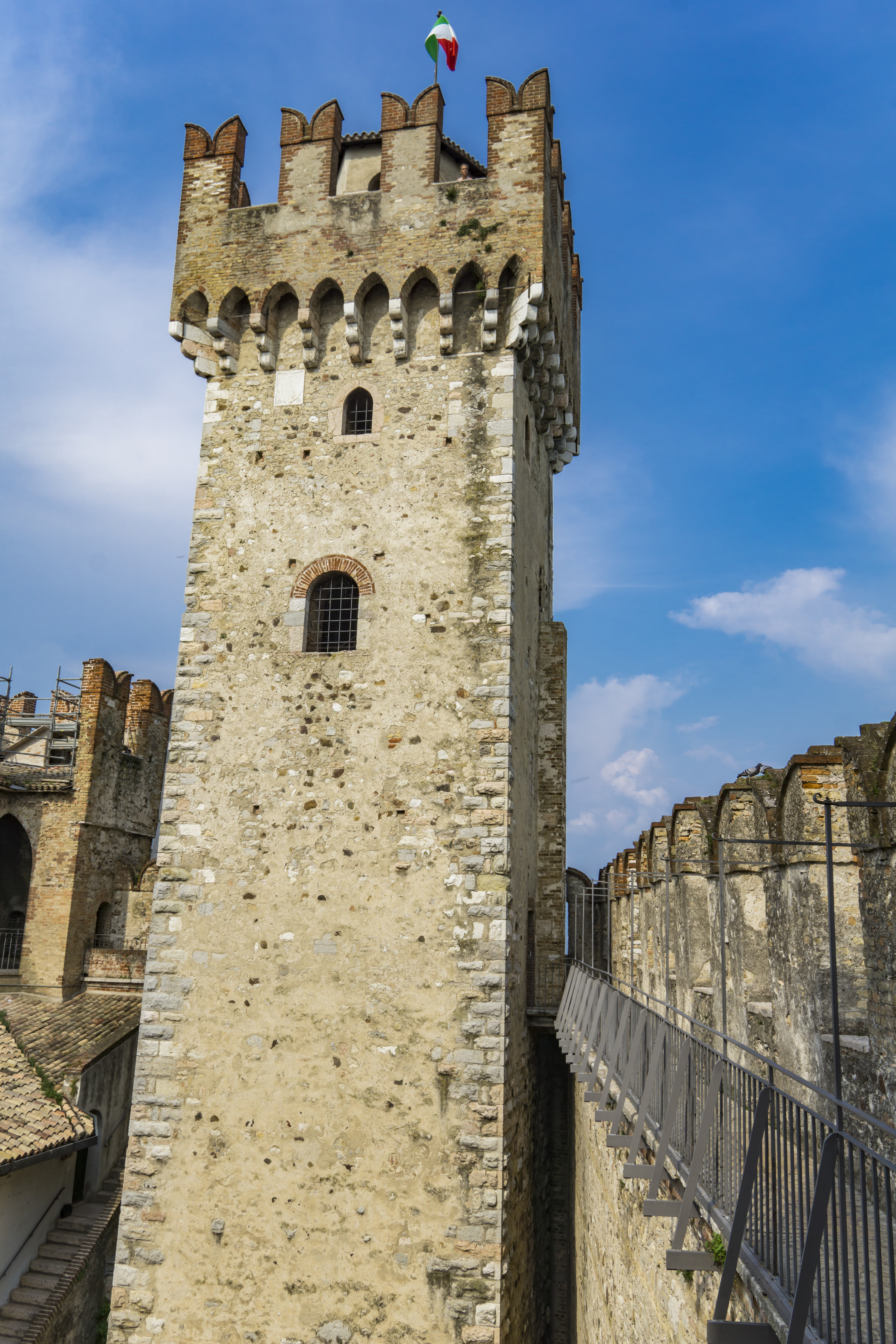
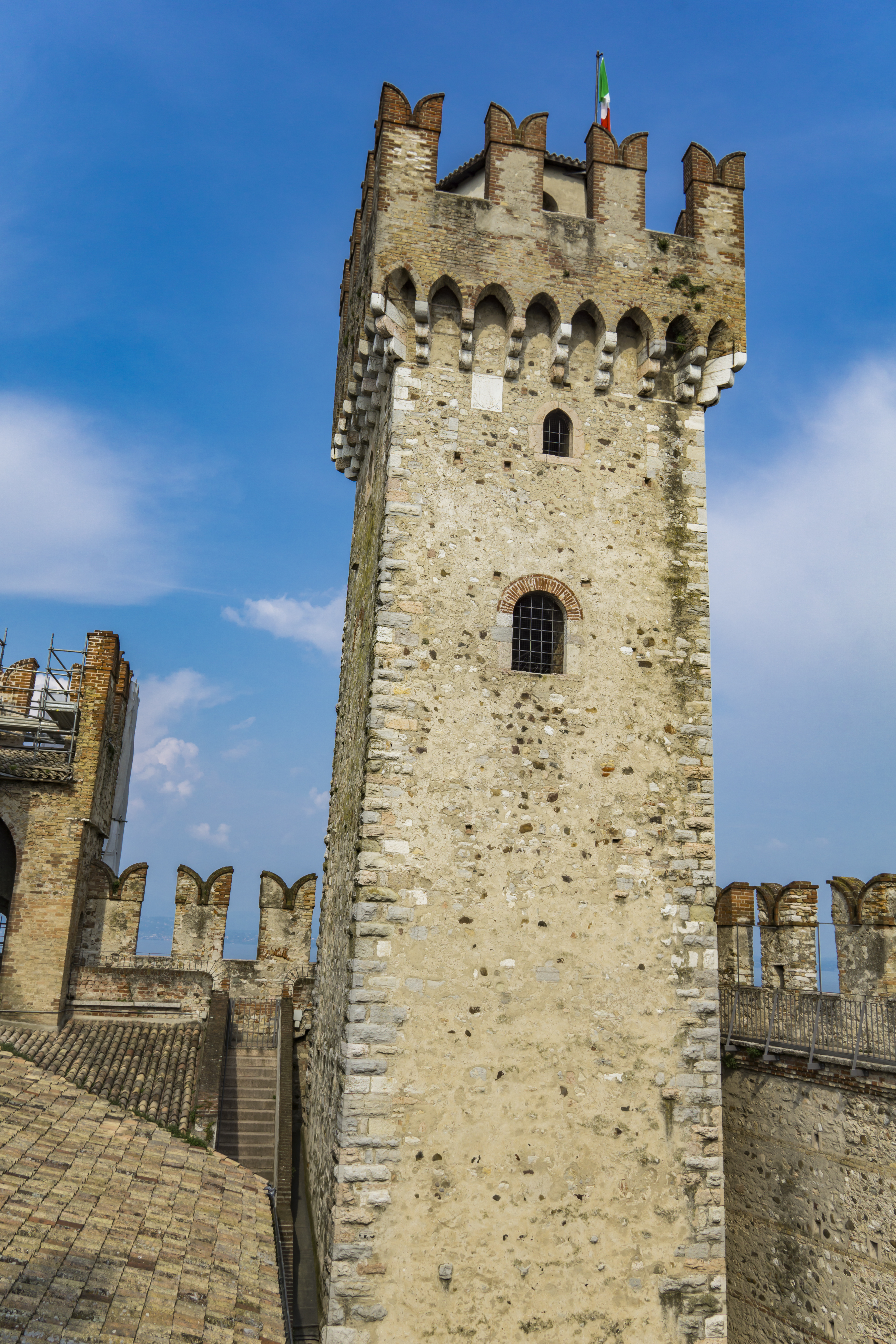
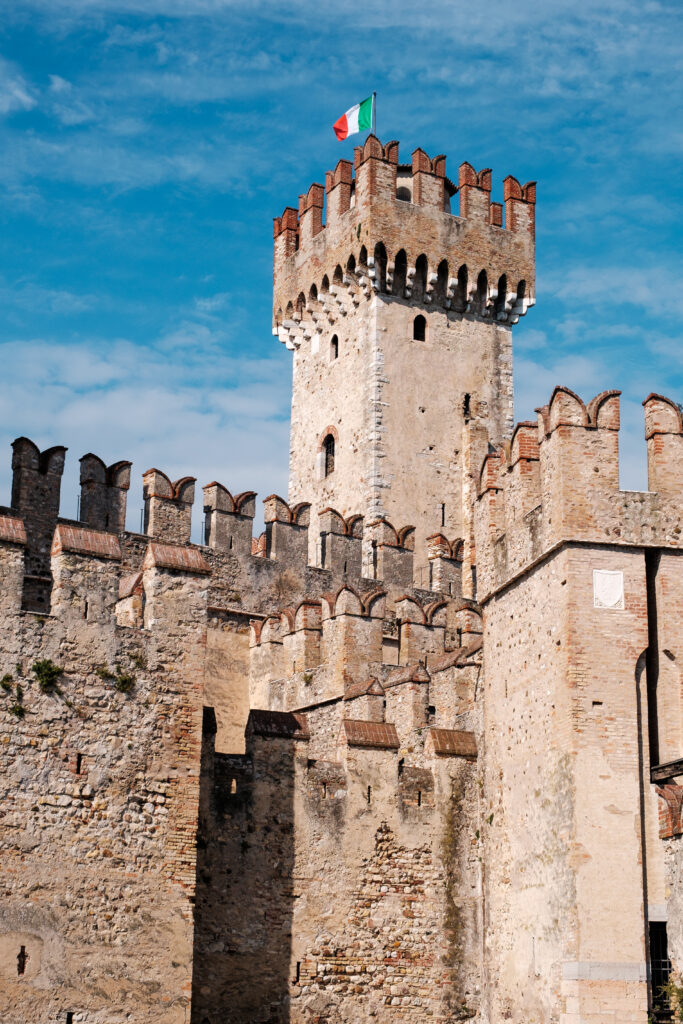
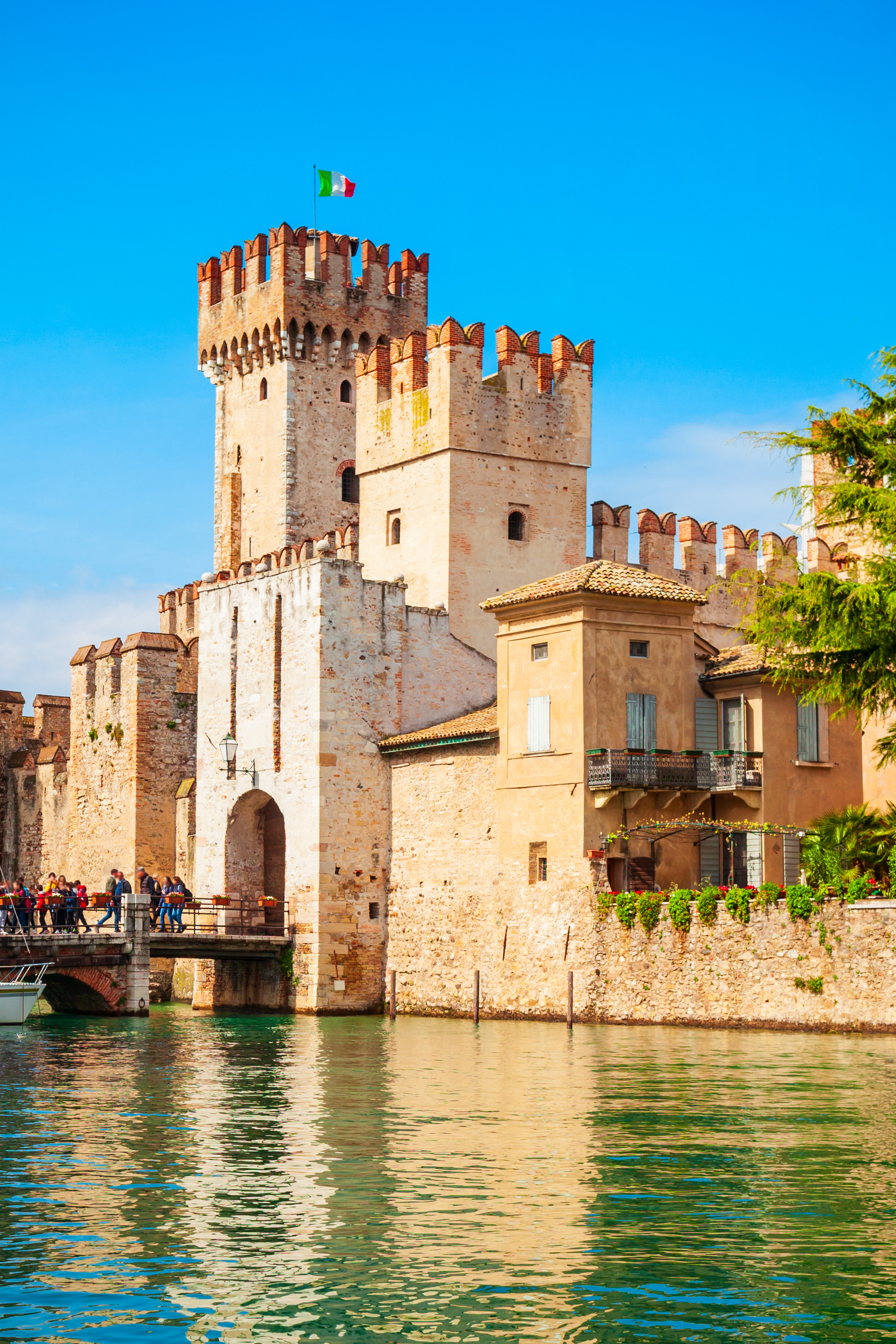
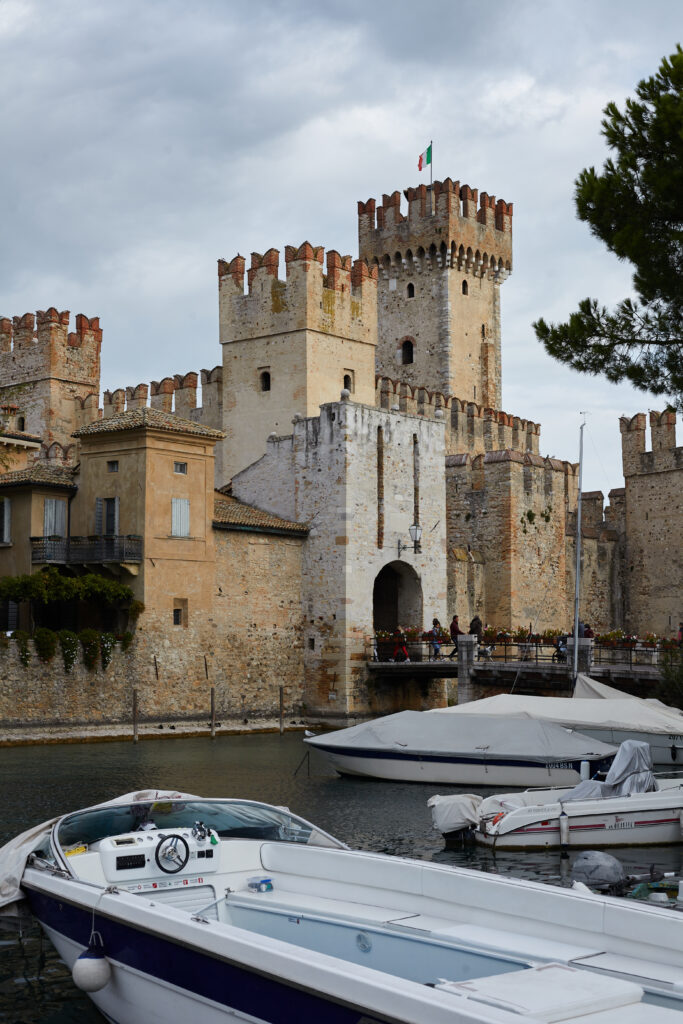
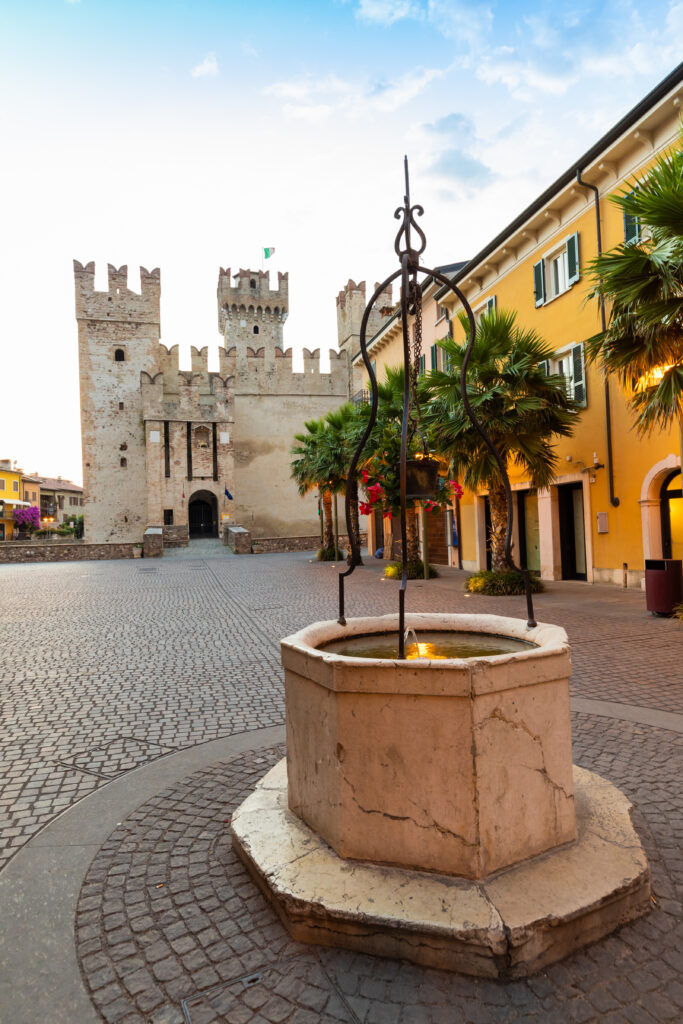
Three corner towers—one of which houses the central keep—flank the main fortress. Each tower, built with swallow-tailed Ghibelline battlements, underscores the Scaliger dynasty’s dual-pronged philosophy of protection. The differentiated architecture, such as the lower Guelph battlements along the perimeter of the outer bailey, reflects pragmatic design decisions rather than political loyalties. The small courtyard and adjacent fountain emphasize functional aspects as well as medieval aesthetics.
The harbor itself, trapezoidal in shape and measuring 2,050 square meters, is Italy’s only surviving example of a medieval military harbor in its original form. Whether it was hollowed out and then flooded or built in situ remains uncertain due to unclear archaeological evidence. The harbor still has sturdy defensive walls and integrated walkways, underscoring its strategic importance for seafaring.
Today, visitors can explore the incomparable splendor of Scaliger Castle and reflect on the turmoil and triumphs that have shaped this timeless fortress. From its enigmatic origins to epic conflicts and eventual preservation, its history unfolds like a living chronicle—an impressive journey through the labyrinth of history that echoes in the tranquil beauty surrounding Lake Garda.