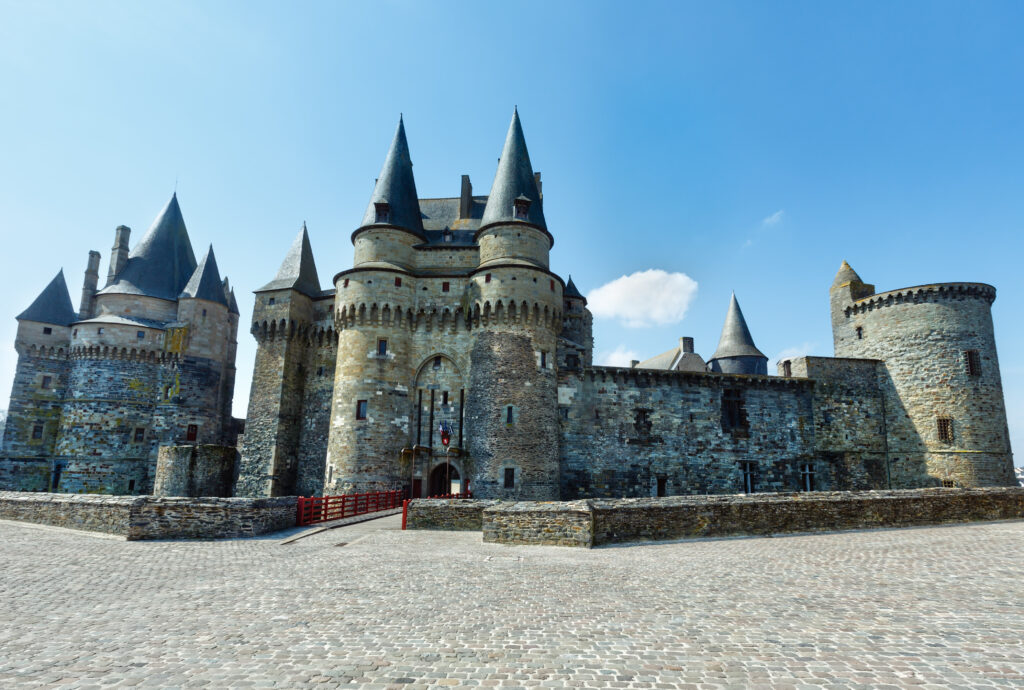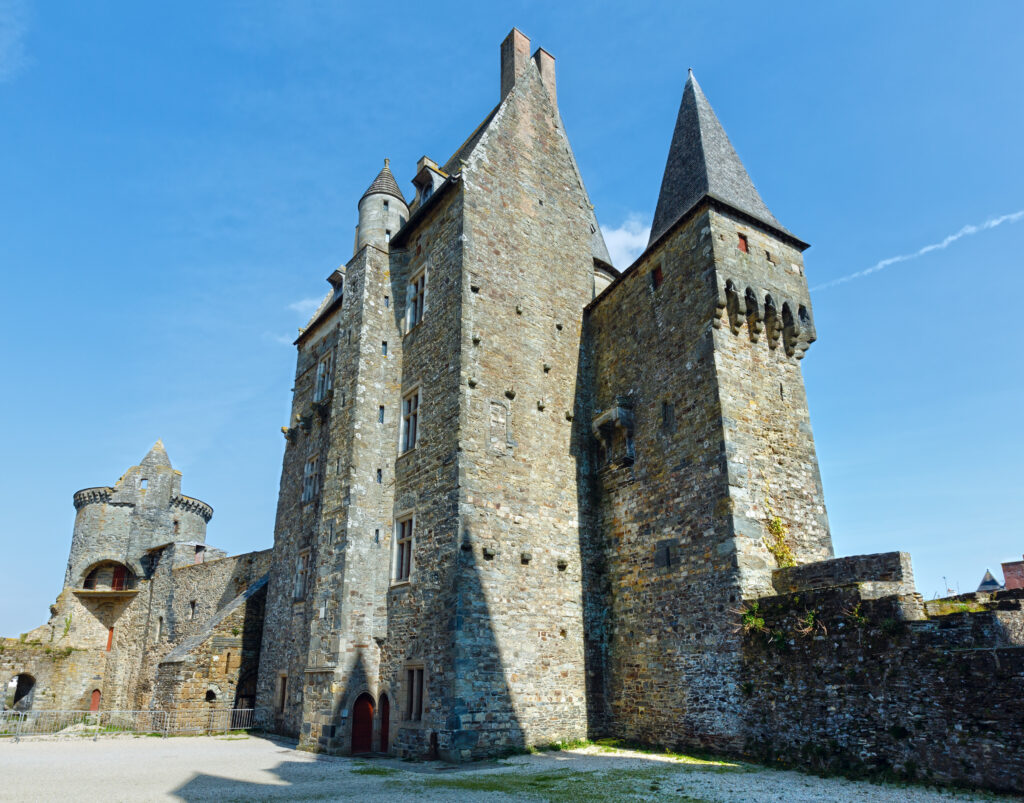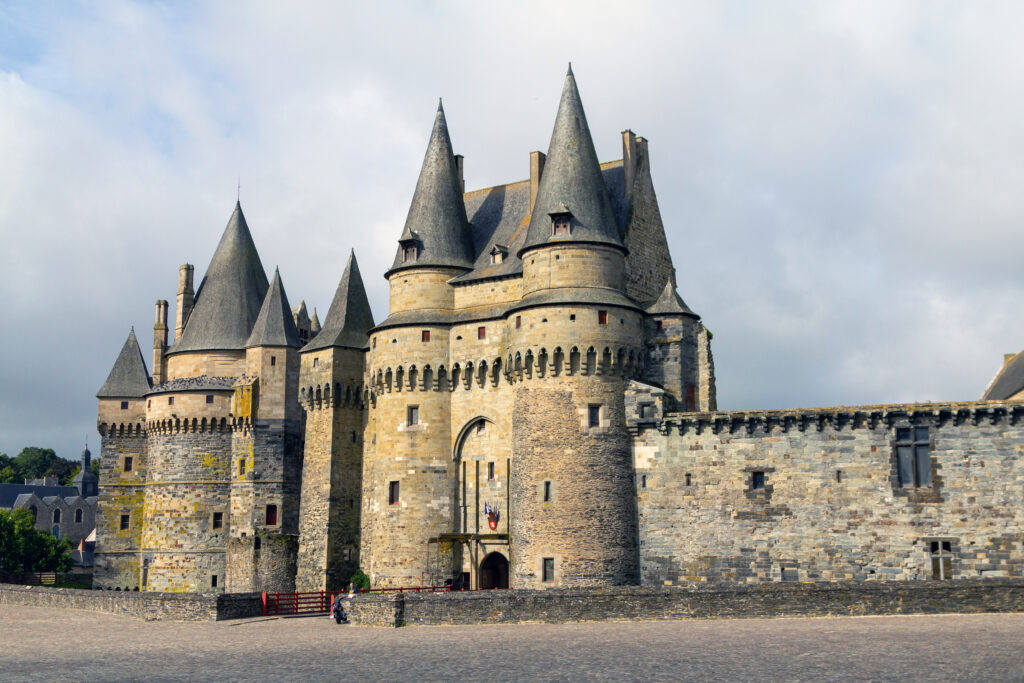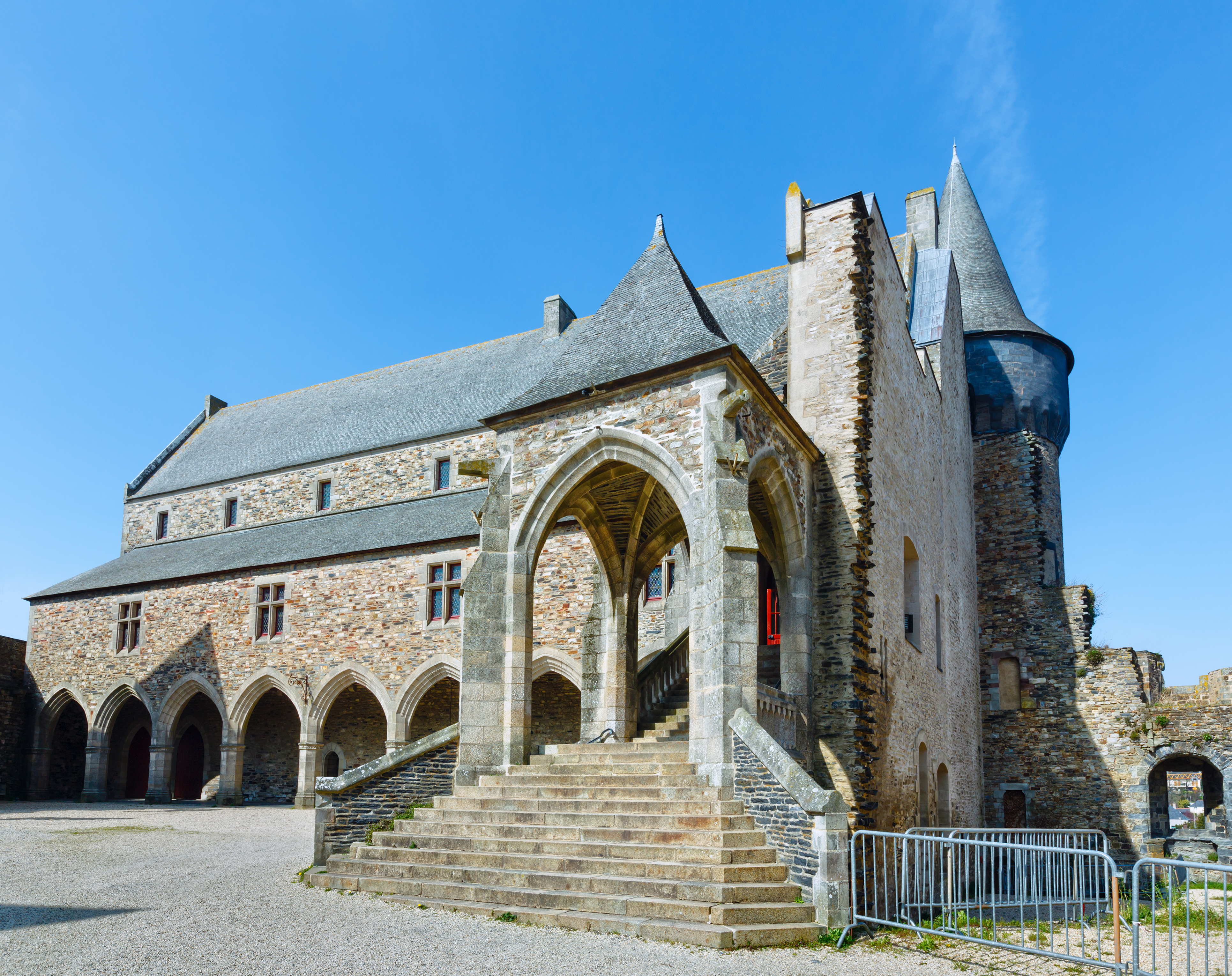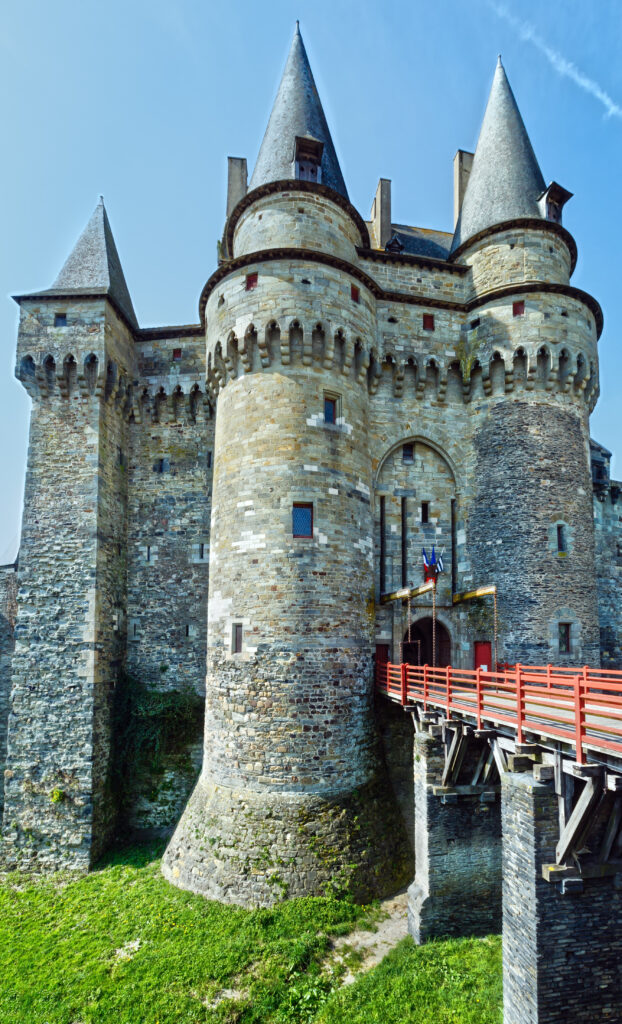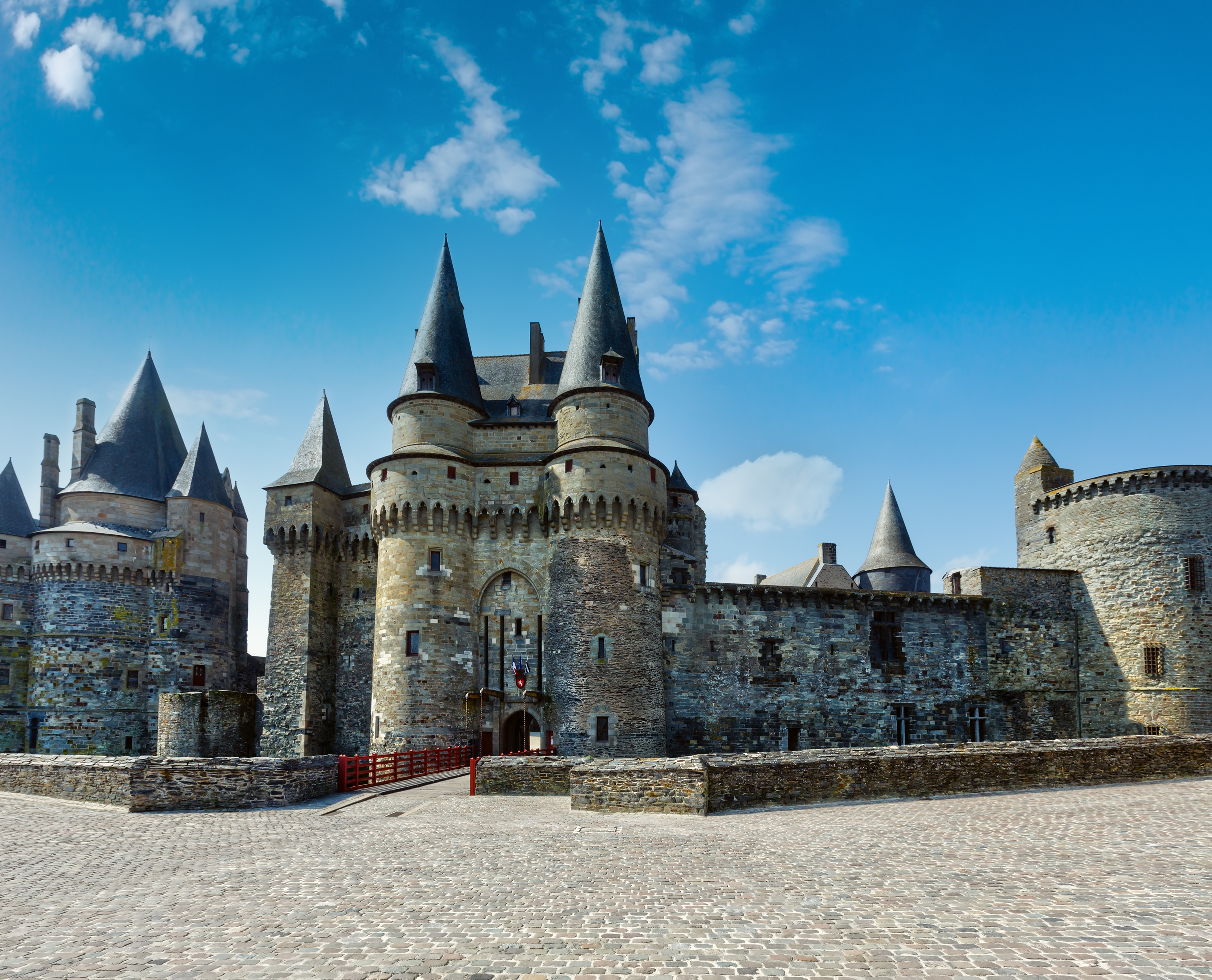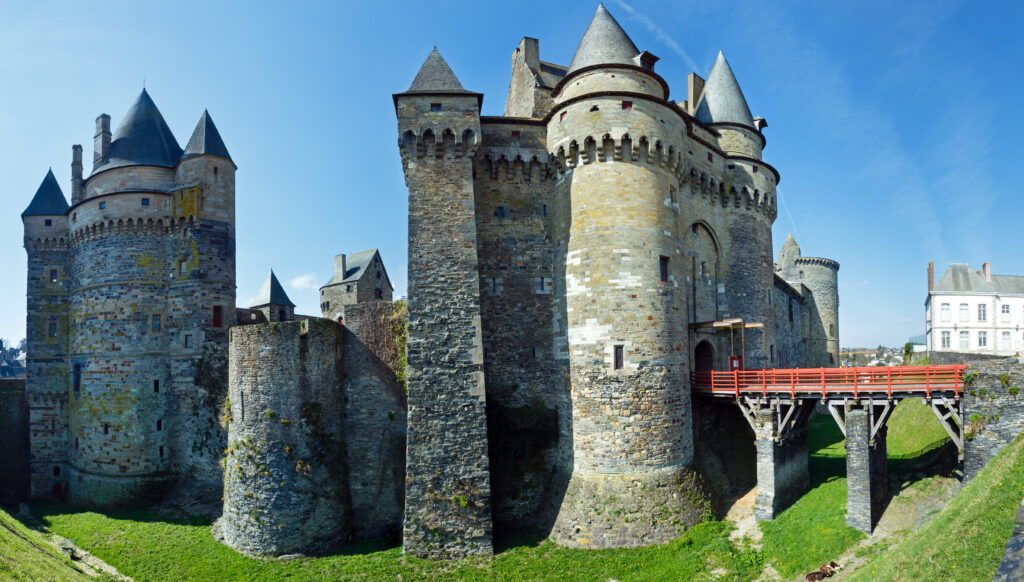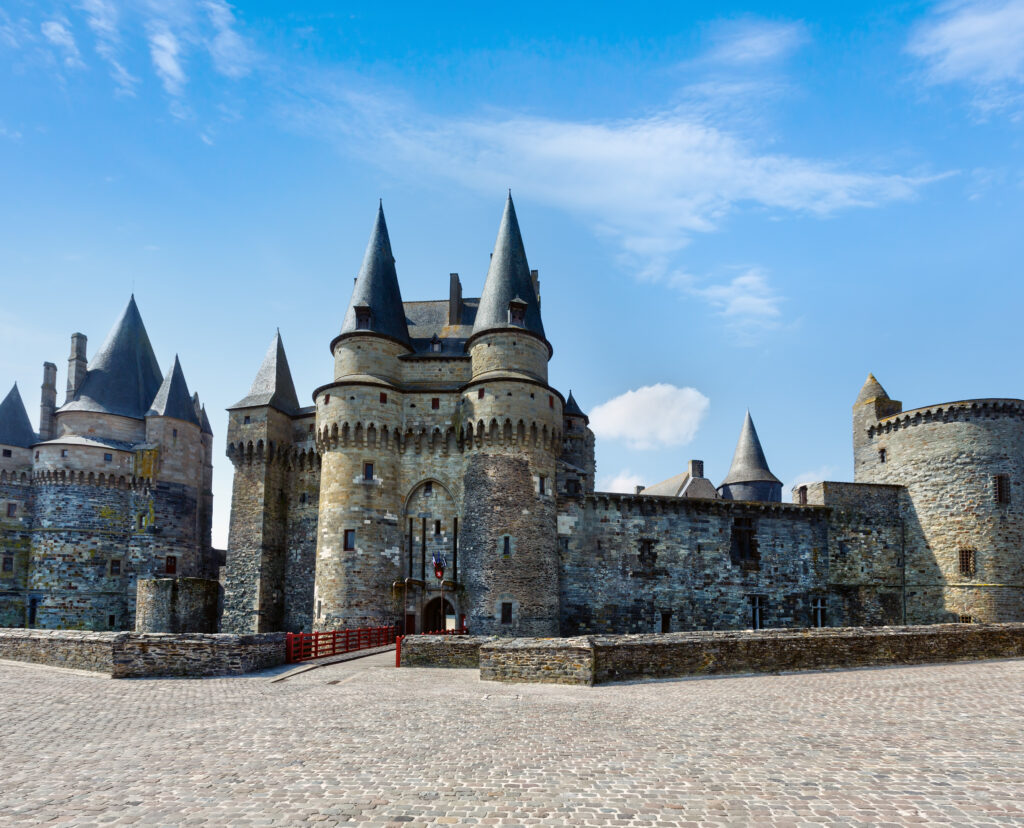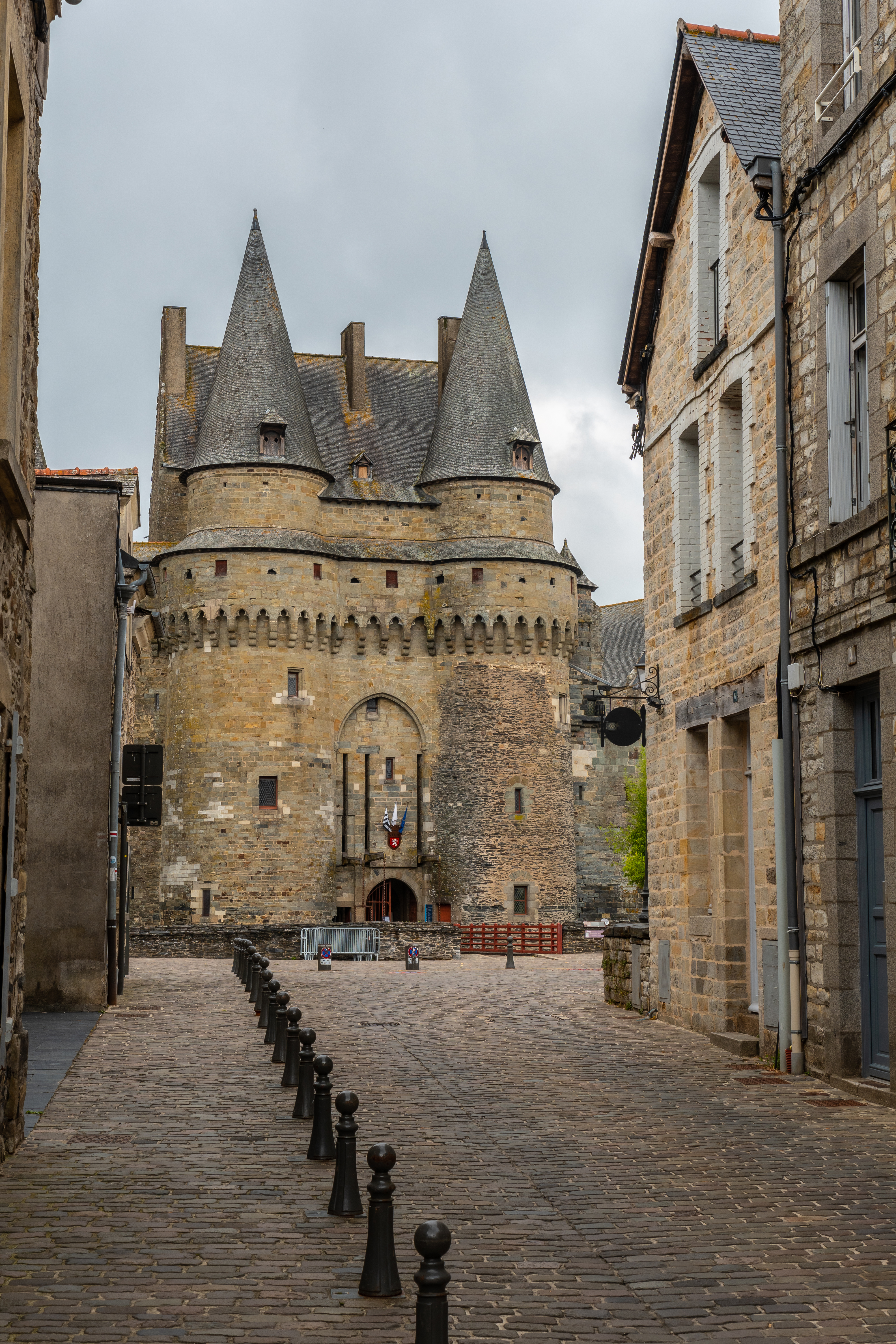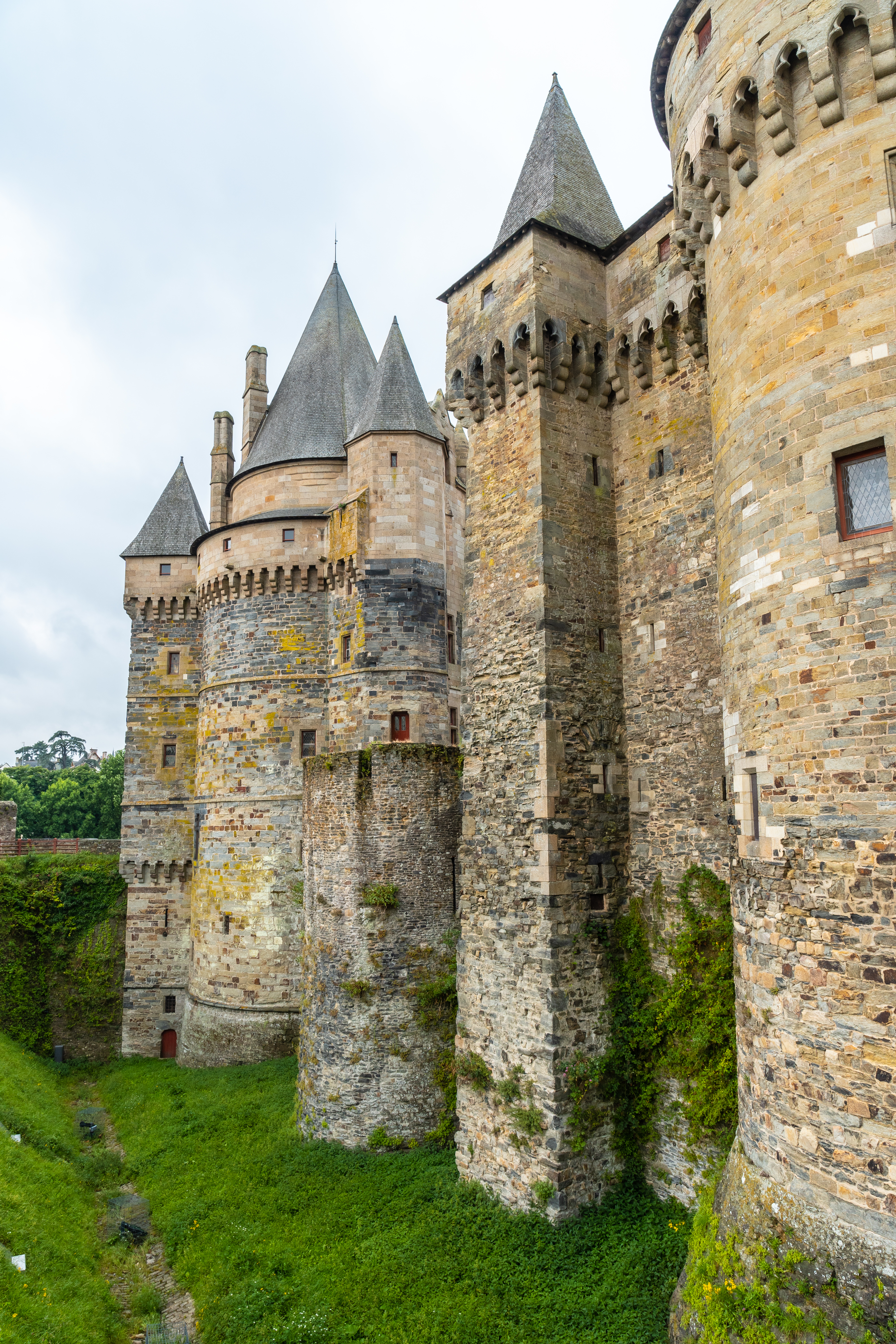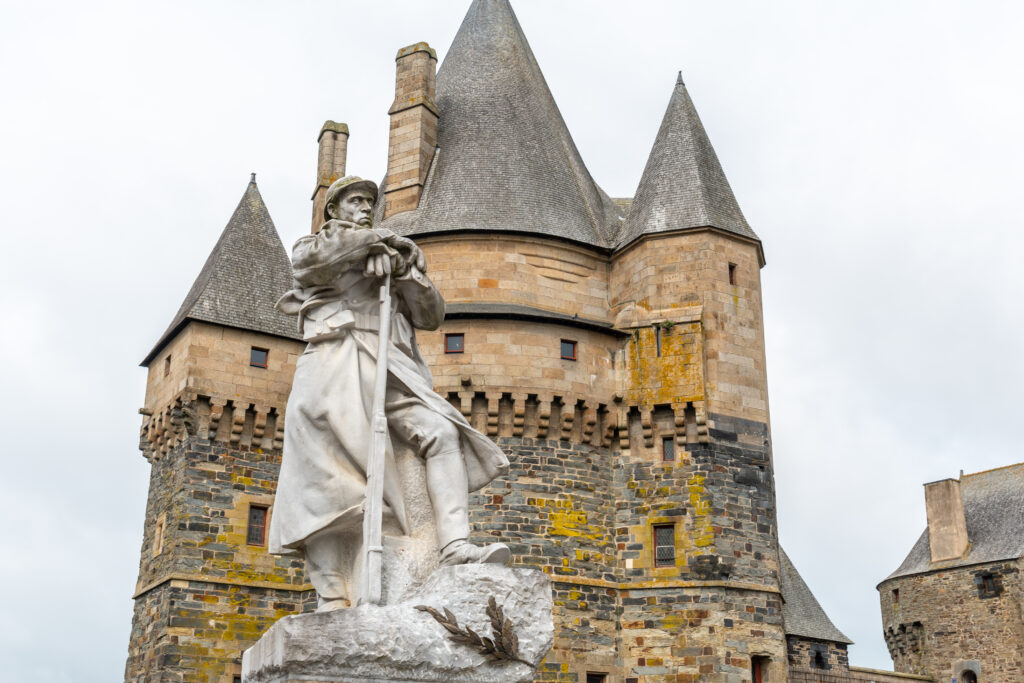

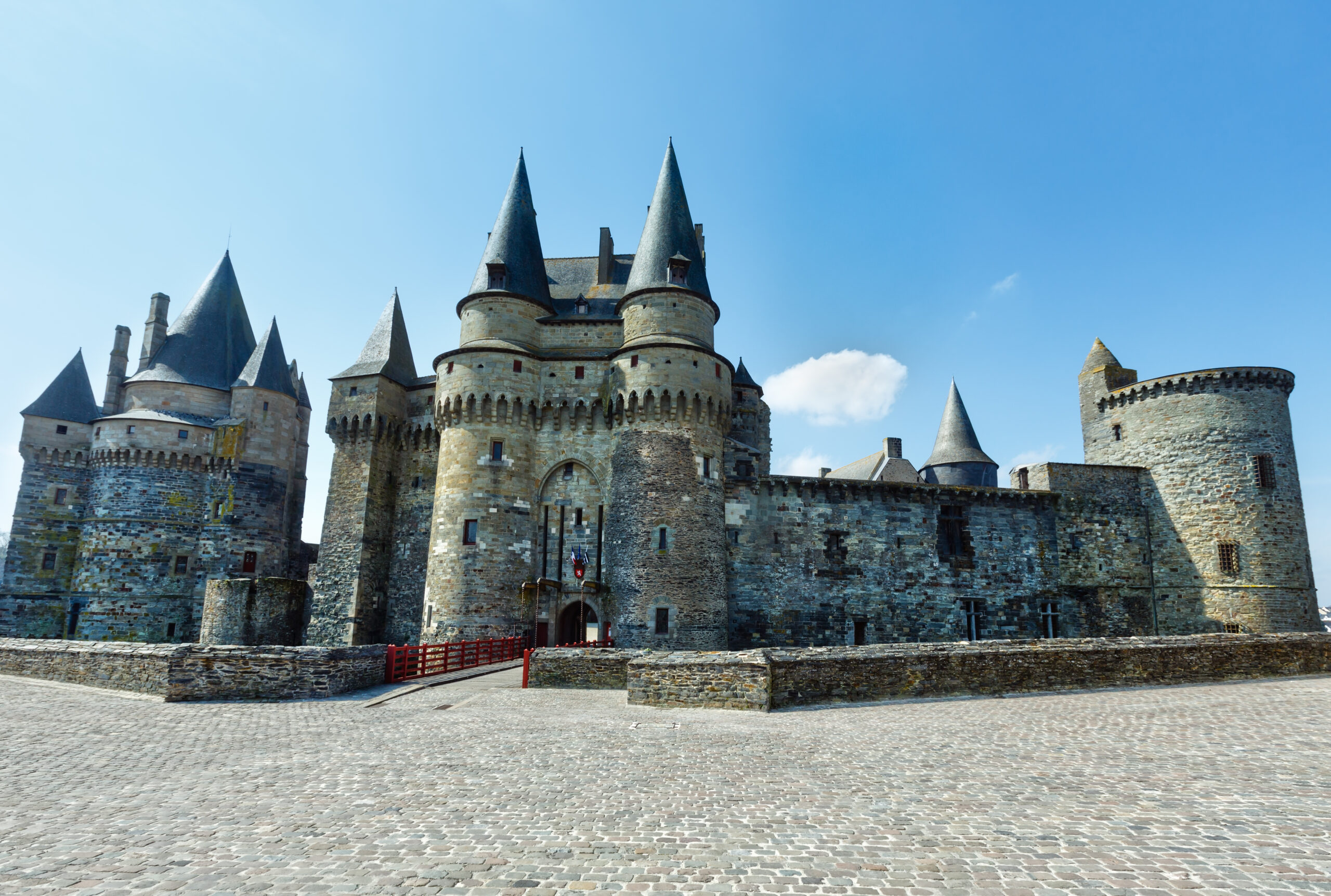
Nestled in the heart of the picturesque town of Vitré in the French department of Ille-et-Vilaine, the ancient fortress of Vitré stands as an impressive testament to medieval power and architectural splendor. This enduring fortress, rich in history, myths, and legends, has witnessed centuries of turmoil, change, and triumph. Let us embark on a journey through the labyrinthine corridors of time and uncover the secrets of this mysterious castle, whose stones tell tales of bravery, faith, and betrayal.
The creation of a bastion – The origins of the Vitré fortress date back to the turn of the millennium around the year 1000, when the first wooden fortress was built on a hill on Sainte-Croix Hill. This primitive structure, vulnerable to fire and enemy attacks, was later destroyed and given to the Benedictine monks of Marmoutier Abbey. According to legend, these pious monks sang prayers for the souls of fallen warriors in the silence of the night, their chants echoing in the eerie stillness of the burnt remains.
The stone guardian rises – Towards the end of the 11th century, Robert I of Vitré, a brave baron, undertook the ambitious project of building a stone castle on a rugged rocky outcrop. Thanks to its strategic location, the fortress dominated the Vilaine Valley and offered an impregnable vantage point. A Romanesque gate from this period still stands today, a guardian of times past, protecting against the ravages of time. The enduring stone structure witnessed countless skirmishes and served as a bulwark against invasions.
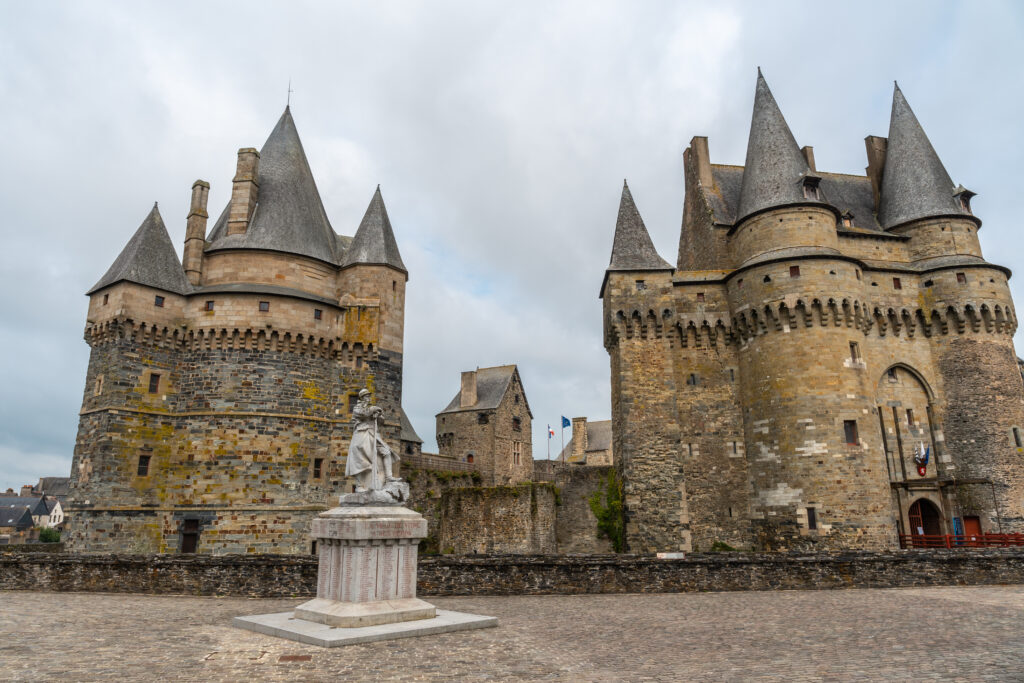
The triangular transformation – At the beginning of the 13th century, Baron André III undertook a radical architectural transformation, reshaping the fortress into its iconic triangular form. This innovative design followed the natural contours of the rocky terrain and was surrounded by dry moats that provided additional protection. Under his leadership, the fortress flourished, becoming not only a military bastion but also a symbol of feudal power and prestige.
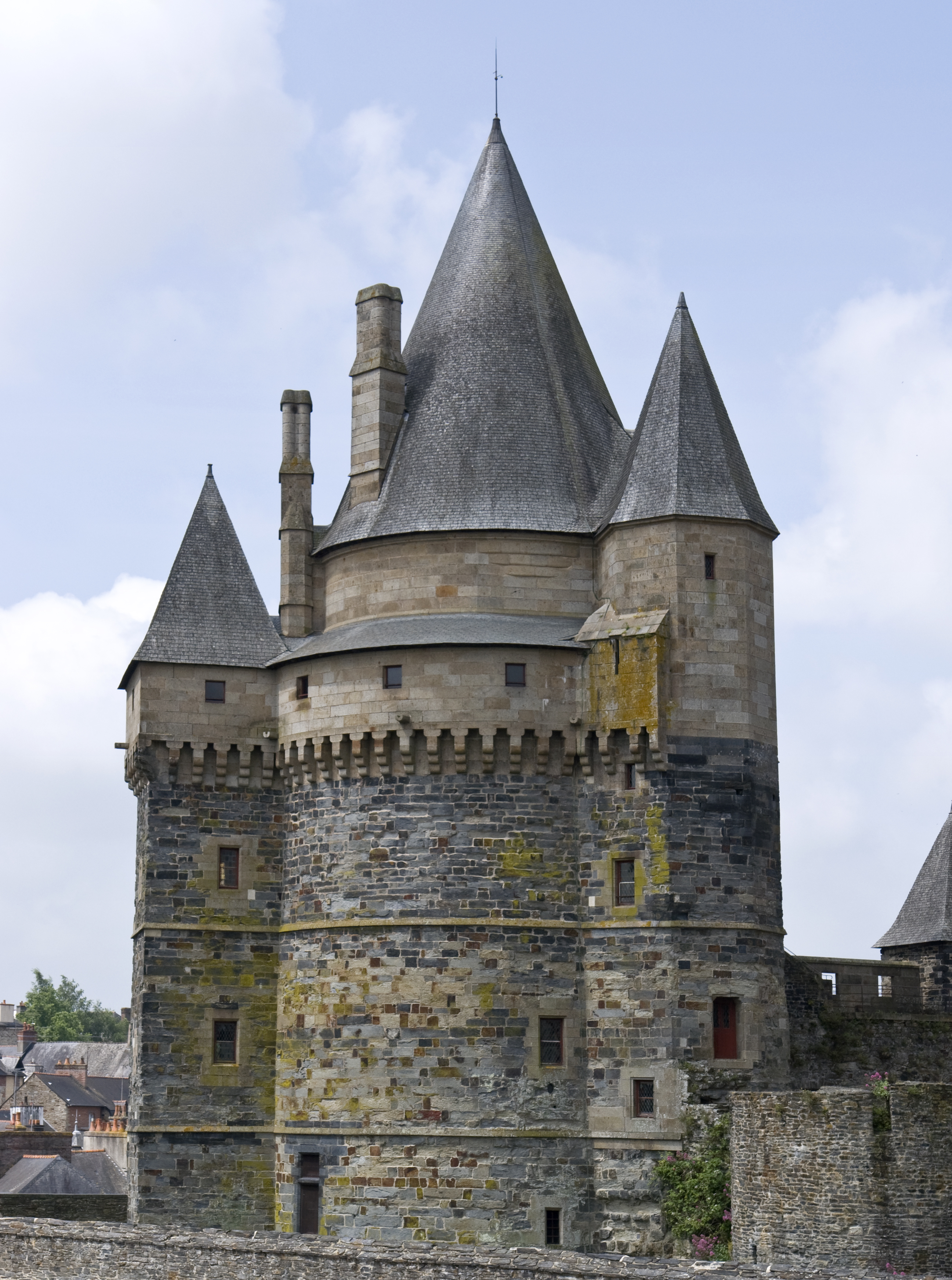
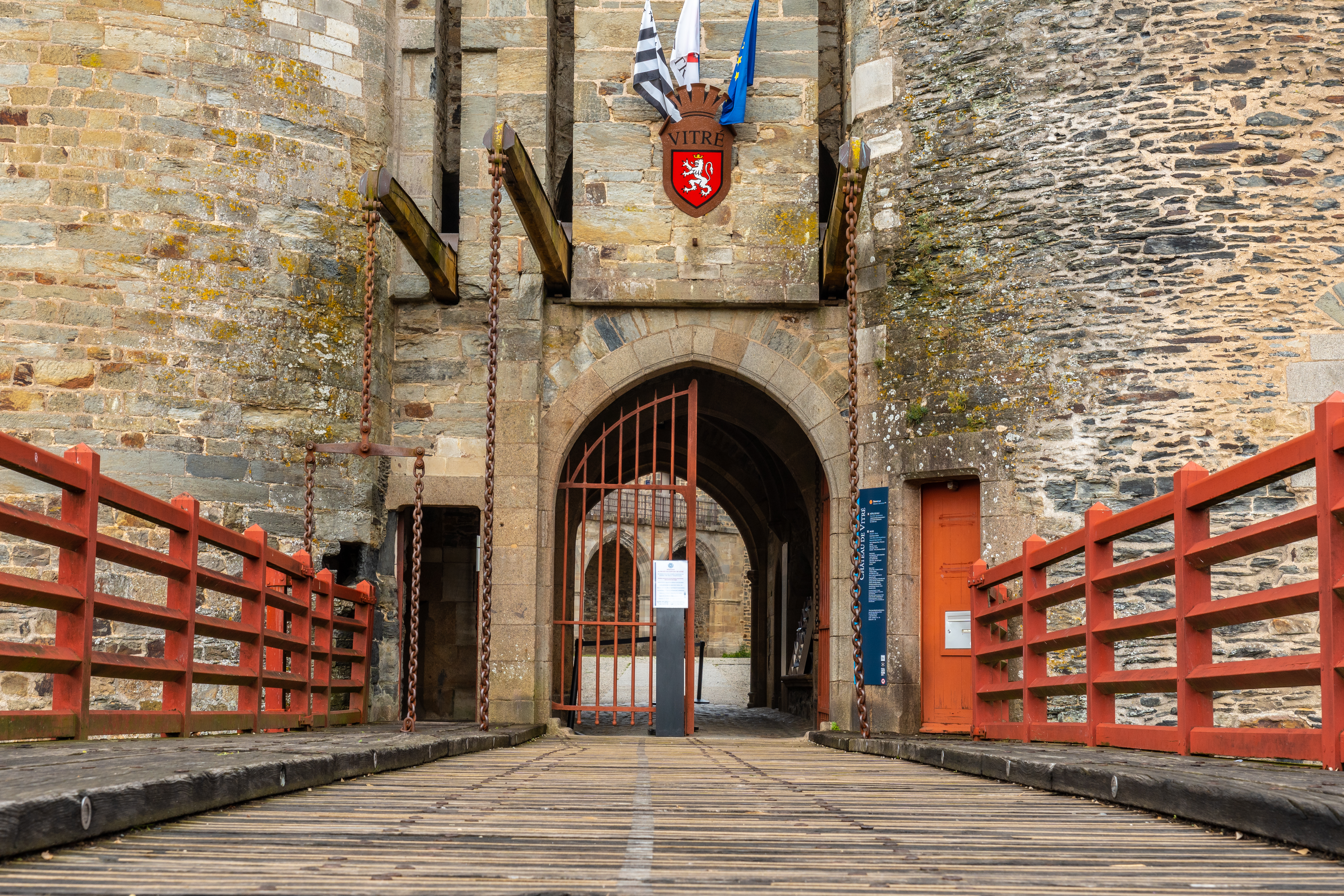
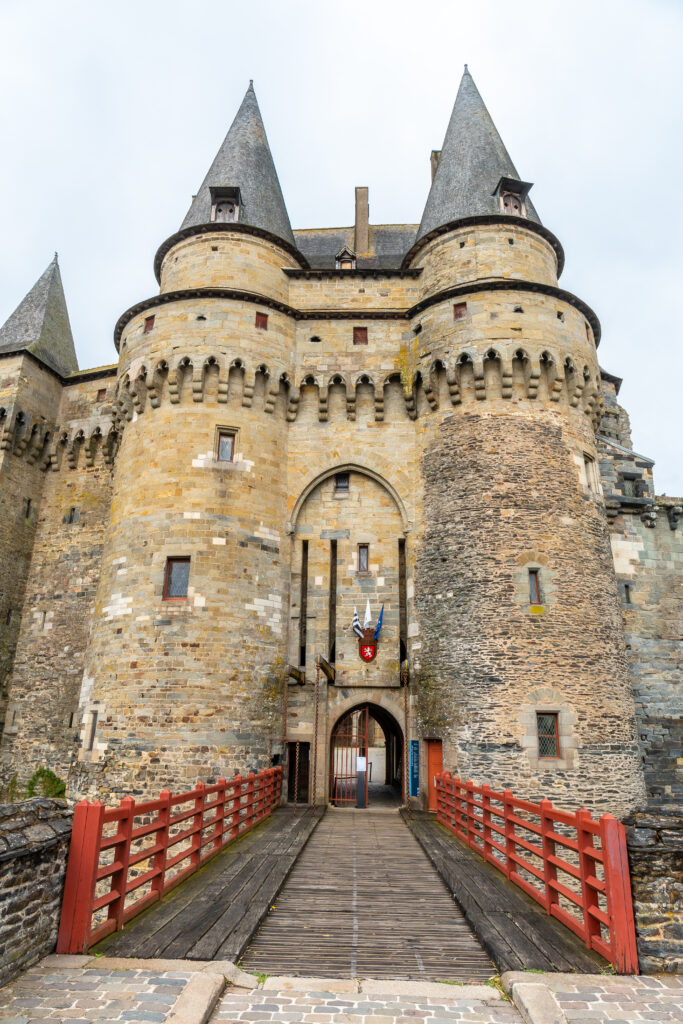
The Legacy of Laval – After the death of André III, the fortress passed into the possession of the Counts of Laval. Guy XII de Laval recognized the immense potential of the fortress and began extensive expansion projects in the 15th century. He fortified the castle with the latest defensive mechanisms, including a double drawbridge gatehouse, the imposing Saint-Laurent tower with embrasures, and the Madeleine tower. The fortress developed into an impressive citadel, its ramparts studded with the promise of unshakeable resilience.
Despite its imposing defenses, history took a dramatic turn in 1487 when Guy XV de Laval surrendered without a fight to French troops. This bloodless capitulation marked the end of the castle’s military supremacy and heralded a new era of change.
Renaissance revival: comfort instead of combat – From the late 15th century onwards, the focus shifted from military fortifications to improving the comfort and aesthetics of the castle. Galleries and a richly decorated chapel were added, reflecting the elegant Renaissance style of the 1530s. When the plague ravaged Rennes, the Breton parliament sought refuge within the fortress walls three times—in 1564, 1582, and 1583—turning the castle into a government refuge.
During this period, between 1547 and 1605, under the ownership of the Rieux and Cologny families, the fortress also became a refuge for Protestants. It flourished briefly as a Huguenot stronghold and repelled a five-month siege by the Duke of Mercœur in 1589.
Trémoille ownership and decline – In 1605, the castle found new owners in the Trémoille family from Poitou. However, in the 17th century, the fortress’s glory began to fade as it fell into disuse and decay. The partial collapse of the Saint-Laurent tower and a devastating fire towards the end of the 18th century further exacerbated the castle’s decline. Ghost stories of spooky knights and lost maidens began to entwine themselves around the decaying ruins, filling the air with an aura of mystery.
From devastation to restoration – In a dramatic turn of events, the town of Vitré acquired the beleaguered fortress in 1820 for a sum of 8,500 francs. Under the direction of architect Darcy, a comprehensive restoration began in 1875, preserving the historical integrity of the castle and breathing new life into its ancient walls.
In 1876, the fortress opened its doors to the public and housed a museum inspired by Arthur de La Borderie. Ironically, in the midst of this renaissance, the La Madeleine collegiate church was demolished – only to be replaced by a boys’ school, thus intertwining the fortress’s heritage even more closely with education.
The modern metamorphosis – Today, the medieval walls of the castle enclose Vitré Town Hall, housed in a carefully reconstructed building dating from 1912 that reflects medieval architecture. The Place du Château, once the castle’s bustling forecourt with stables and outbuildings, now serves as a peaceful public space that invites visitors to reflect on its historic past.
Legends and traditions: The phantom footsteps – Among the countless legends associated with the fortress is the story of the phantom footsteps. It is rumored that on moonlit nights, the ghostly figure of a knight roams the dark halls in search of his lost love—a maiden who disappeared into the labyrinthine depths of the castle and was never seen again. The eerie echo of his footsteps merges with the sound of the night wind, conjuring up an ethereal symphony that still echoes through the corridors today.
The mysterious castle of Vitré – The fortress of Vitré, which defies the passage of time, is more than just an architectural marvel; it is a treasure trove of history, myths, and legends. From its rudimentary wooden beginnings to its transformation into stone, from its triangular redesign to its role as a bastion and refuge, the castle embodies the essence of human ingenuity, resilience, and spirit. Its stones, imbued with the whispers of ancient tales, attract historians, tourists, and dreamers alike to unravel the mysteries hidden within its imposing walls.
As we reflect on the storied past of Vitré Castle, we are reminded that history is not merely a chronicle of events, but a rich tapestry of human aspirations, mythical traditions, and timeless legends. Thus, the mysterious fortress of Vitré continues to inspire awe and curiosity, standing as a monumental testament to the enduring legacy of medieval France.