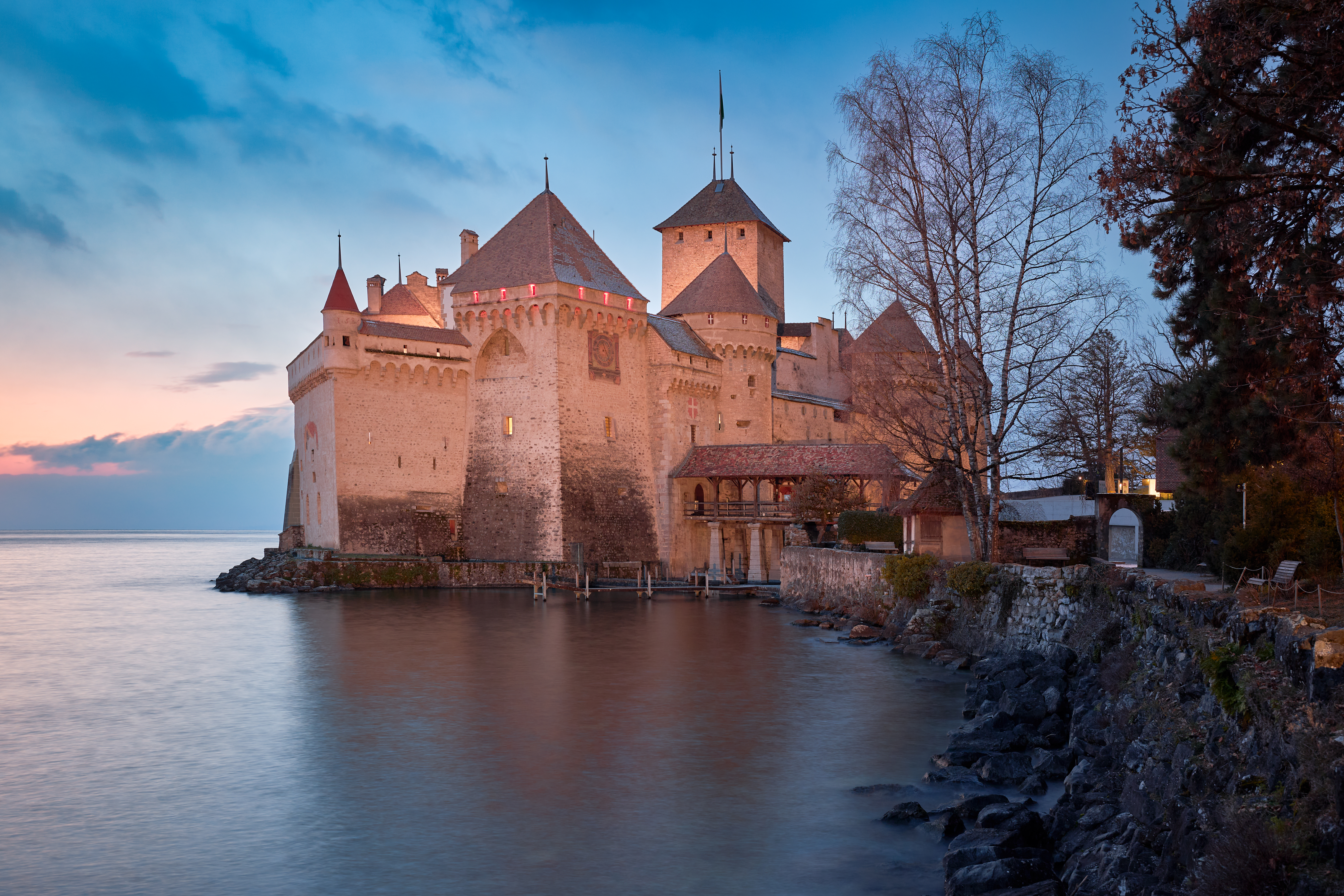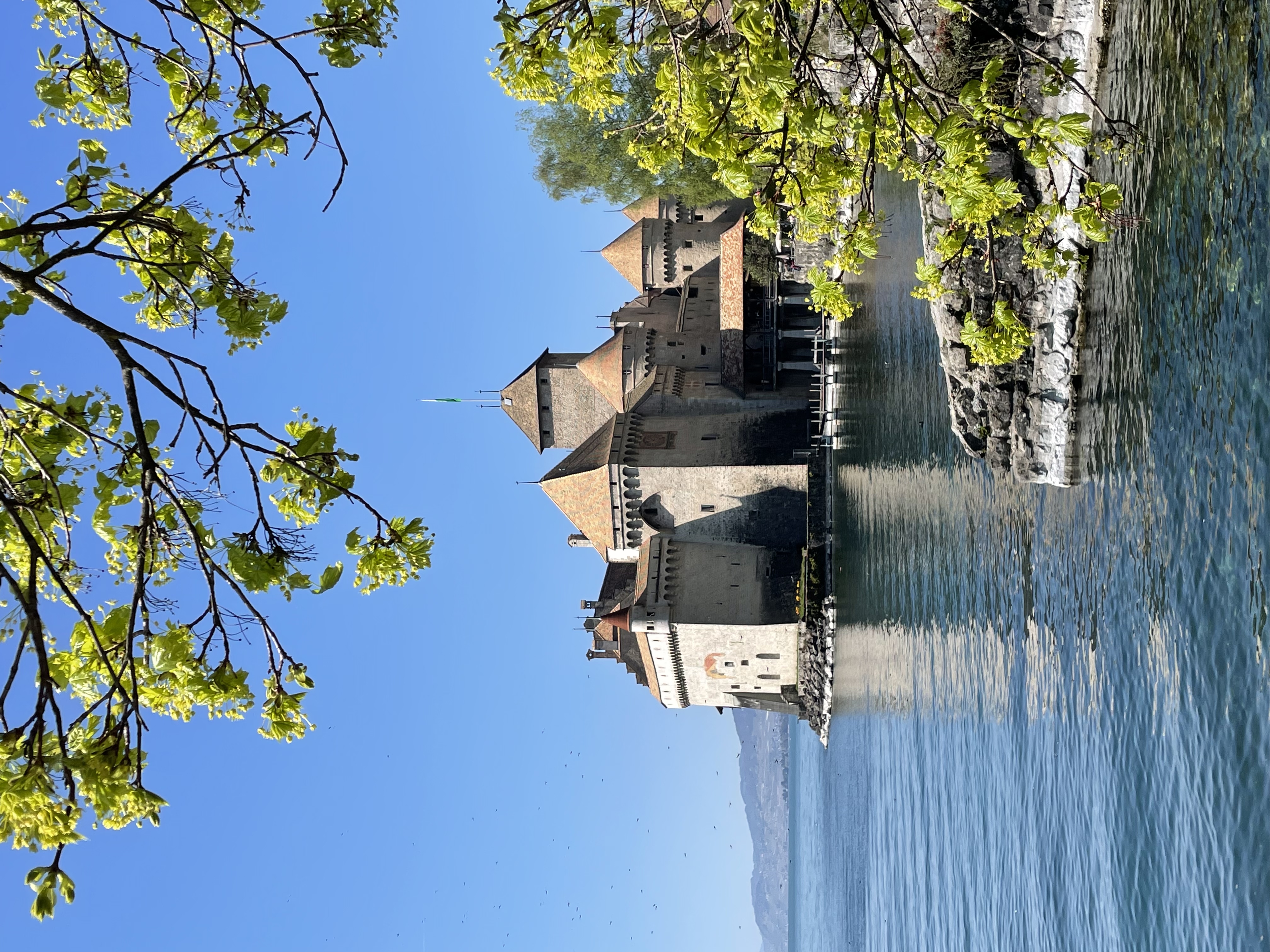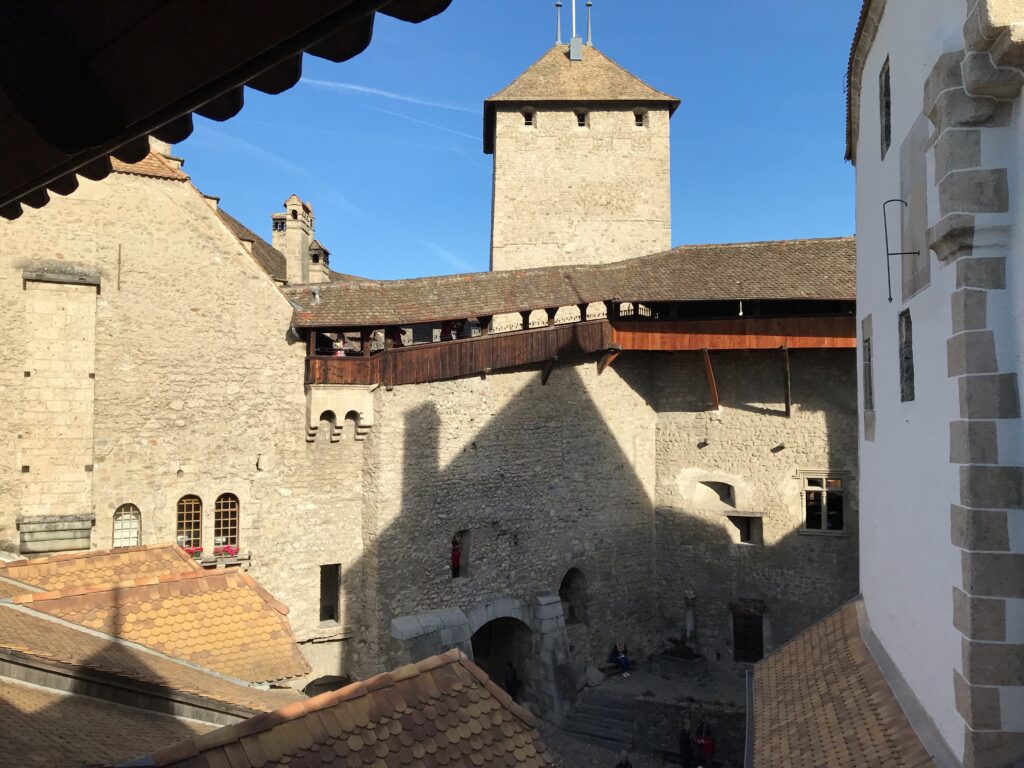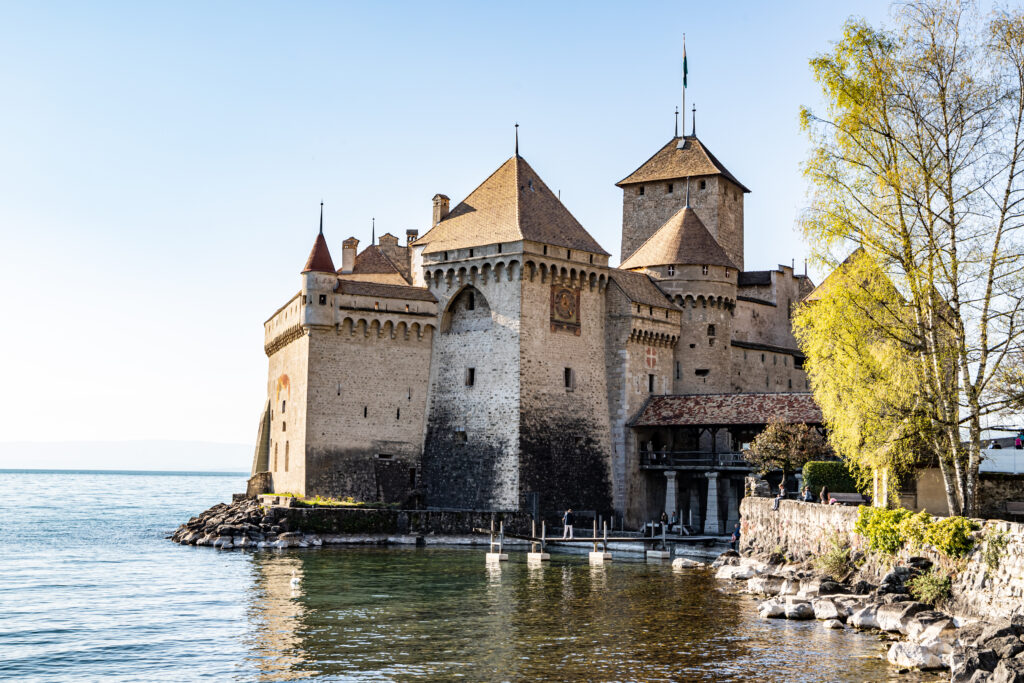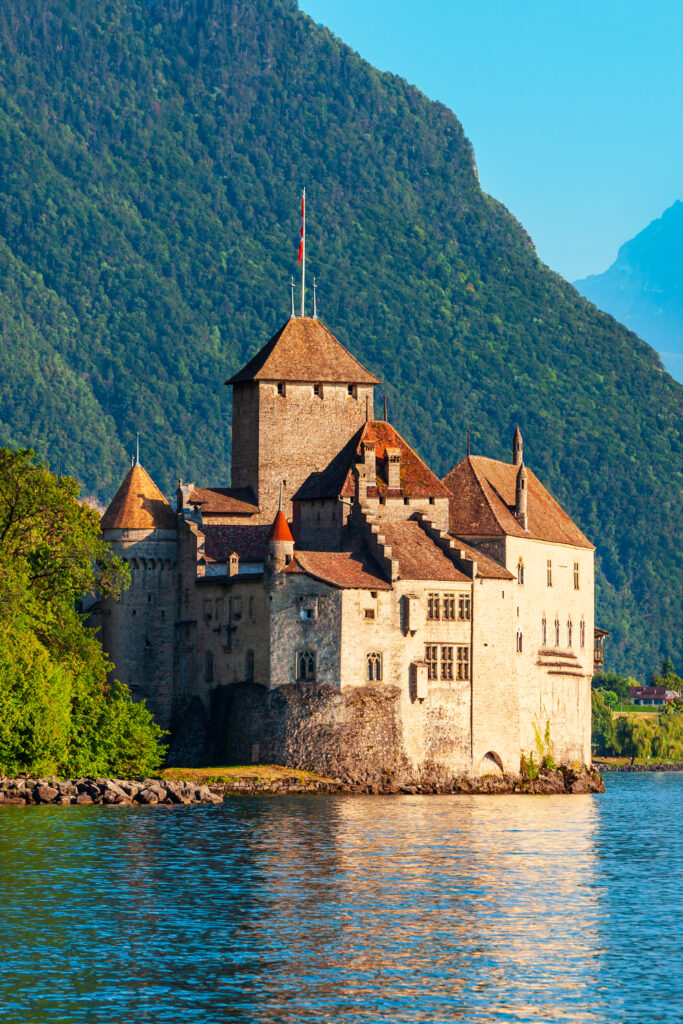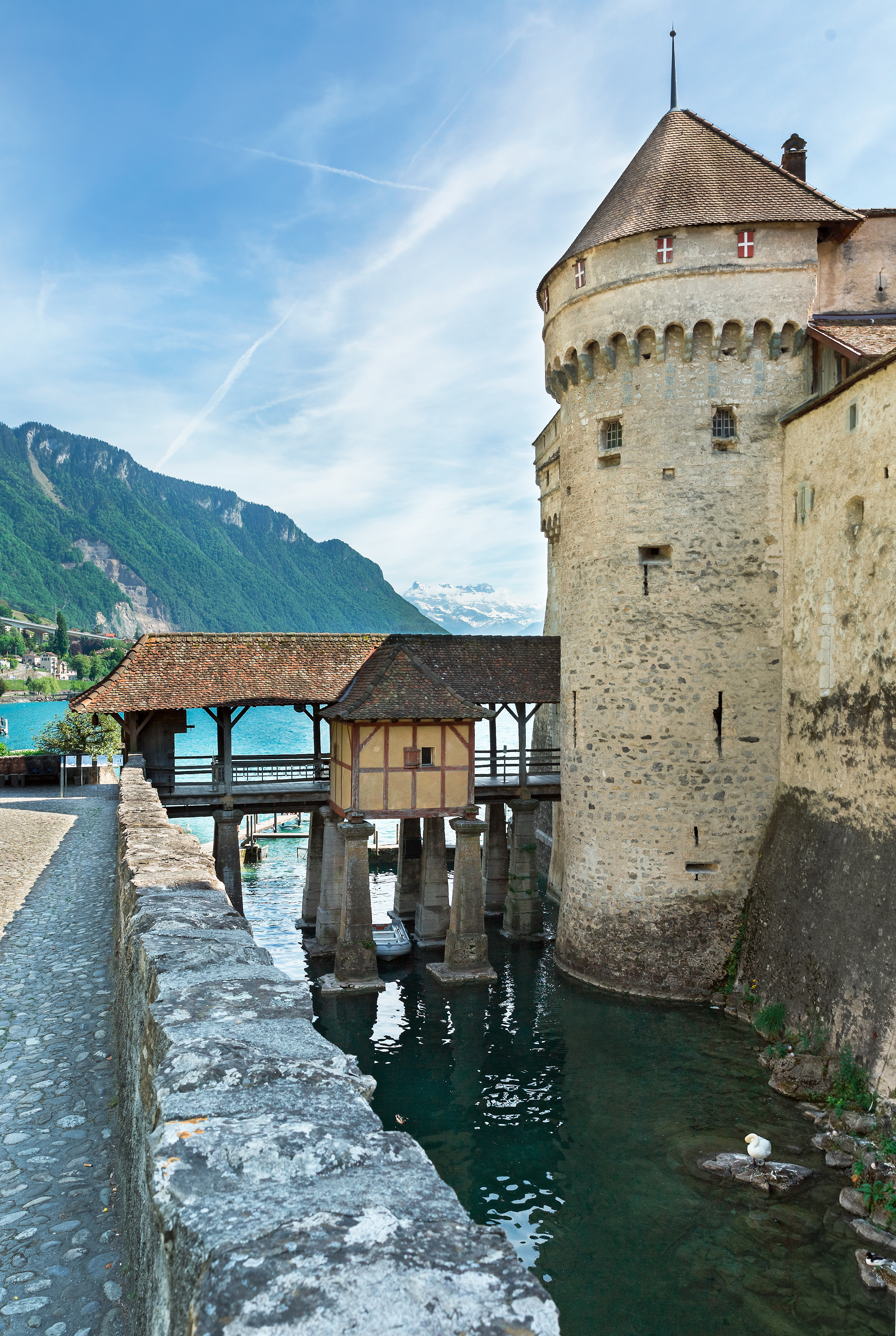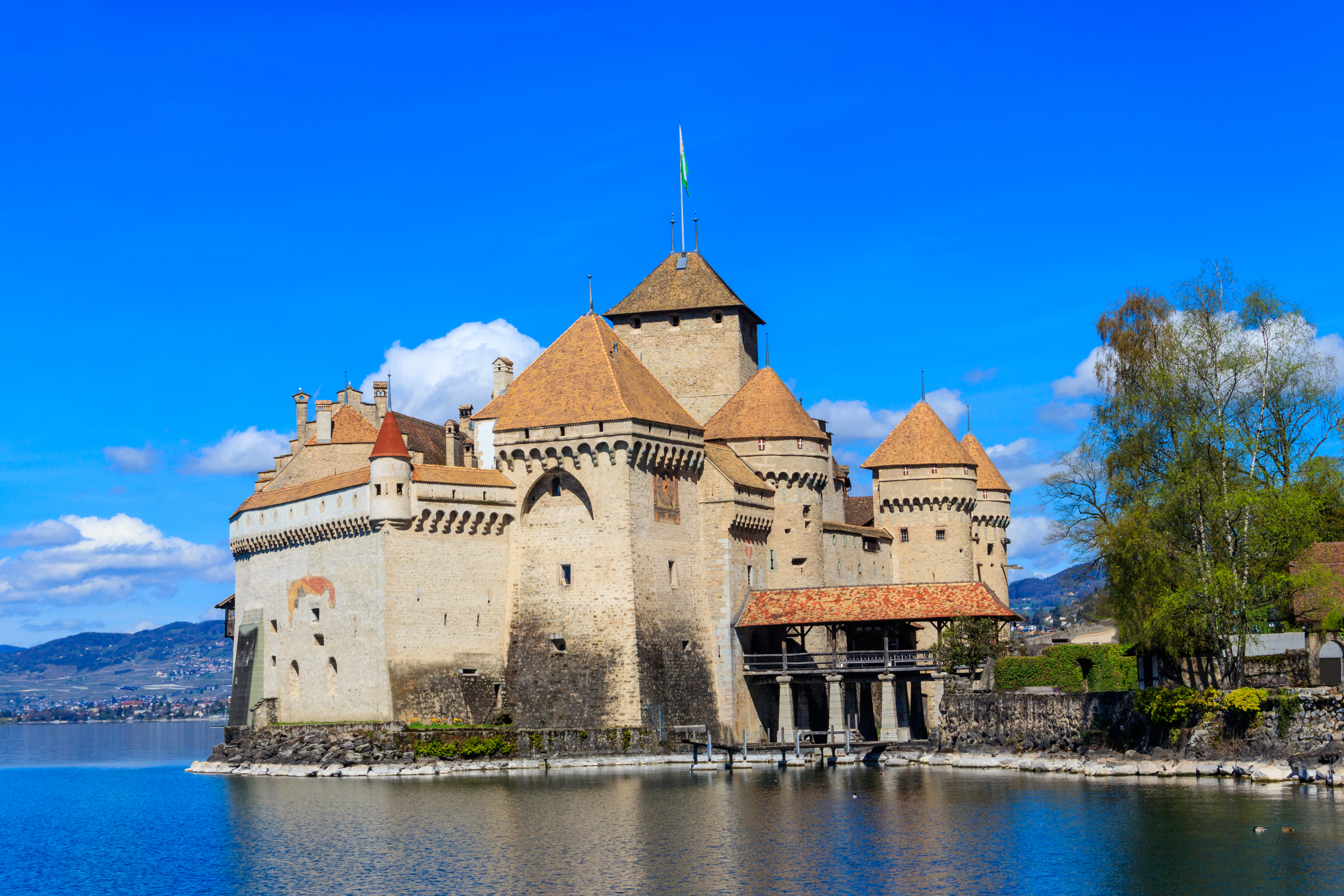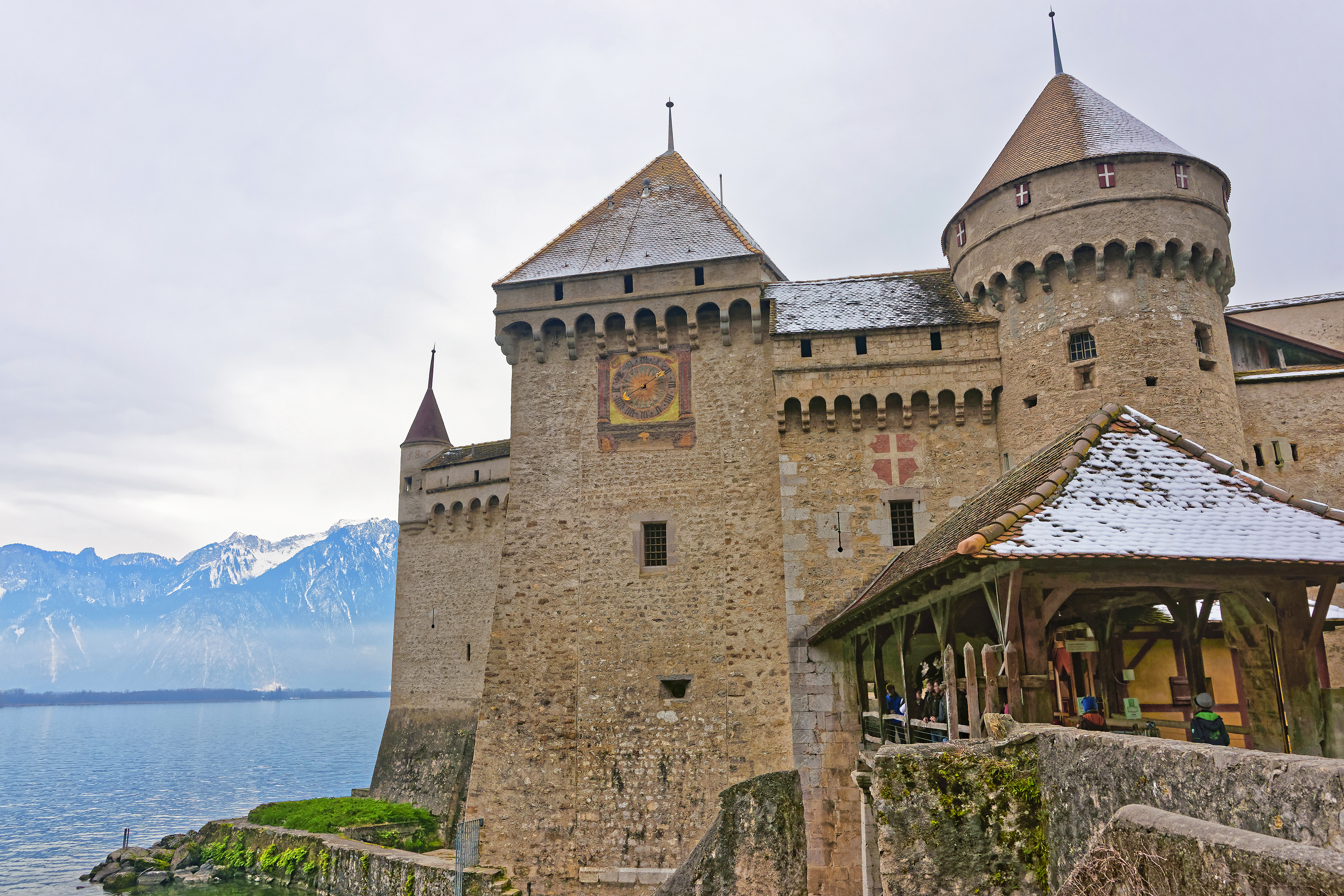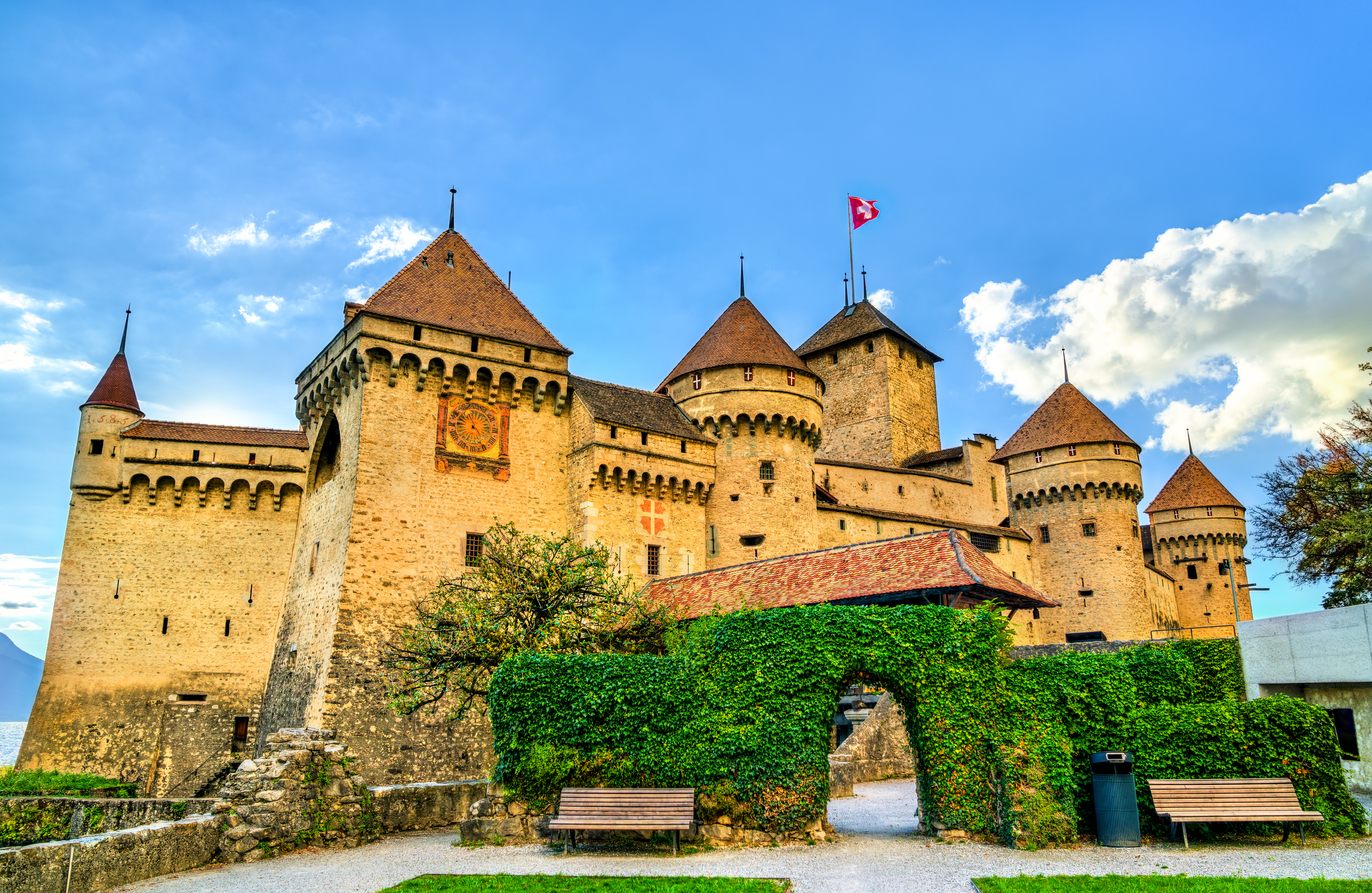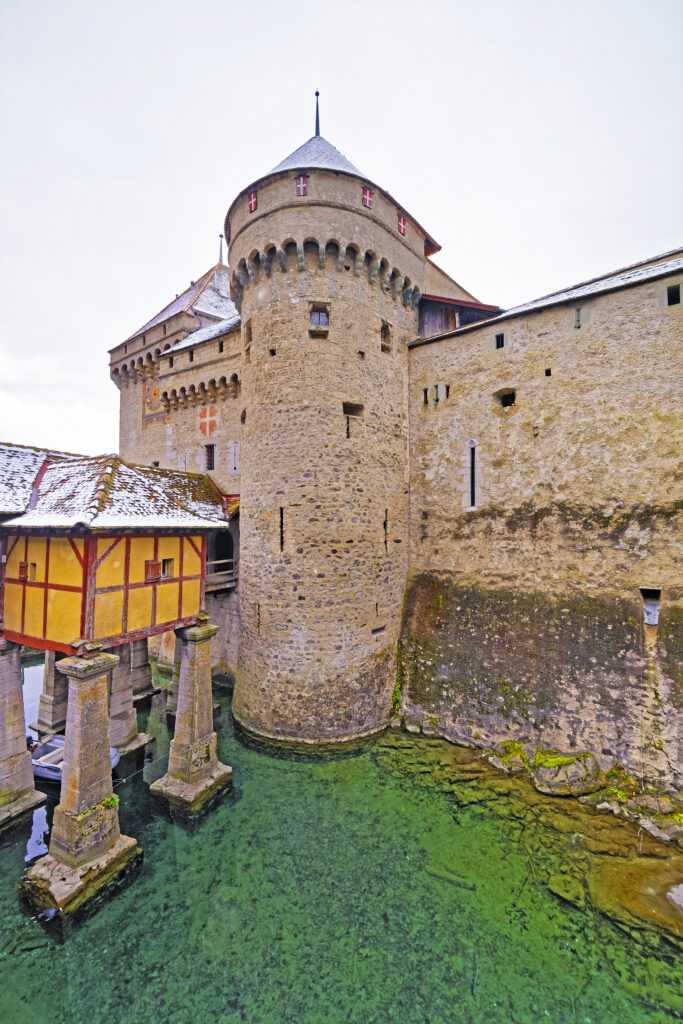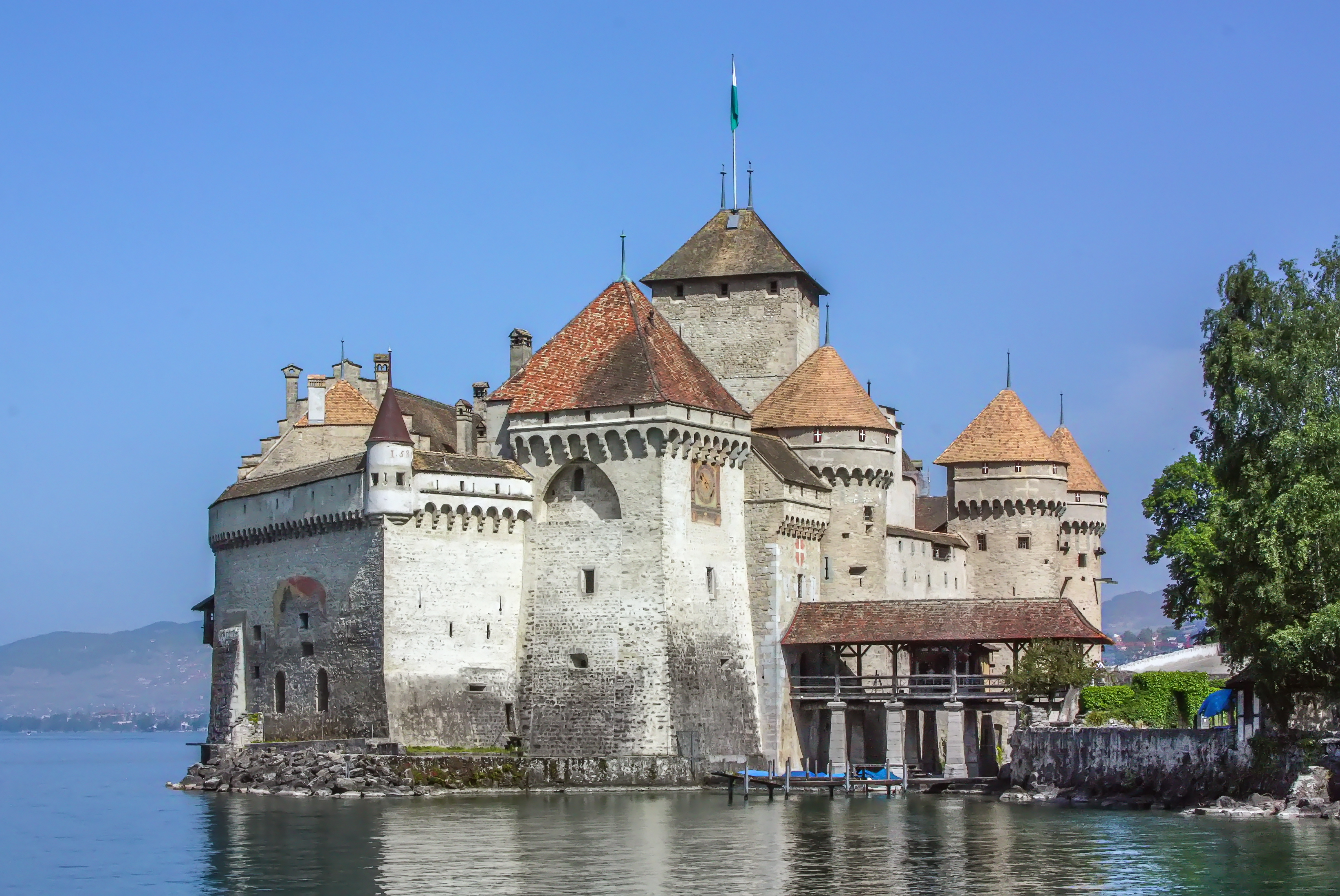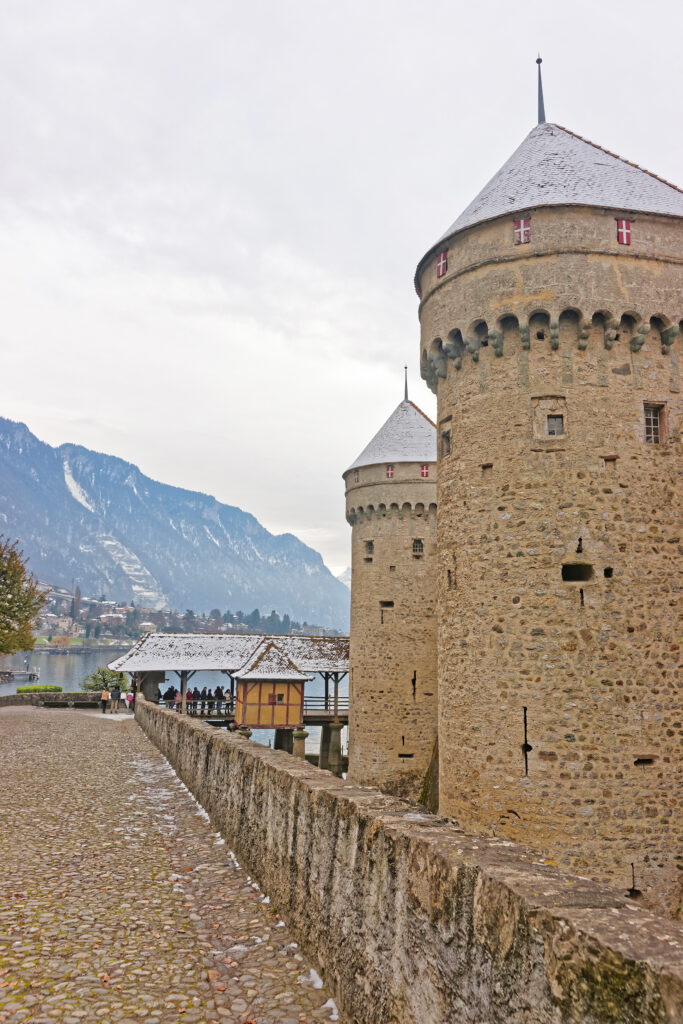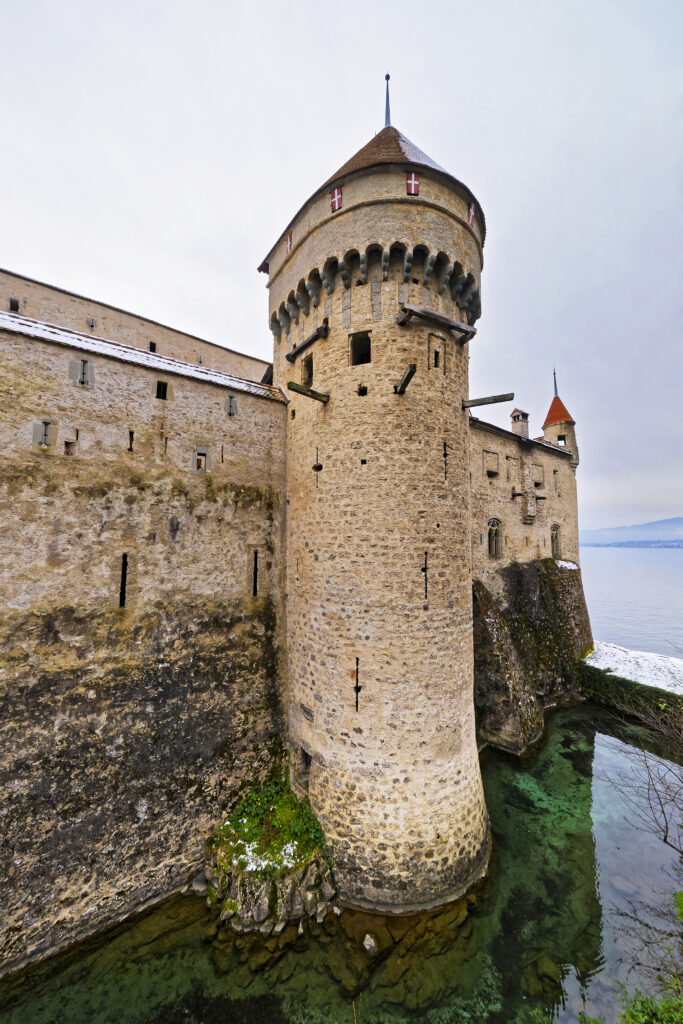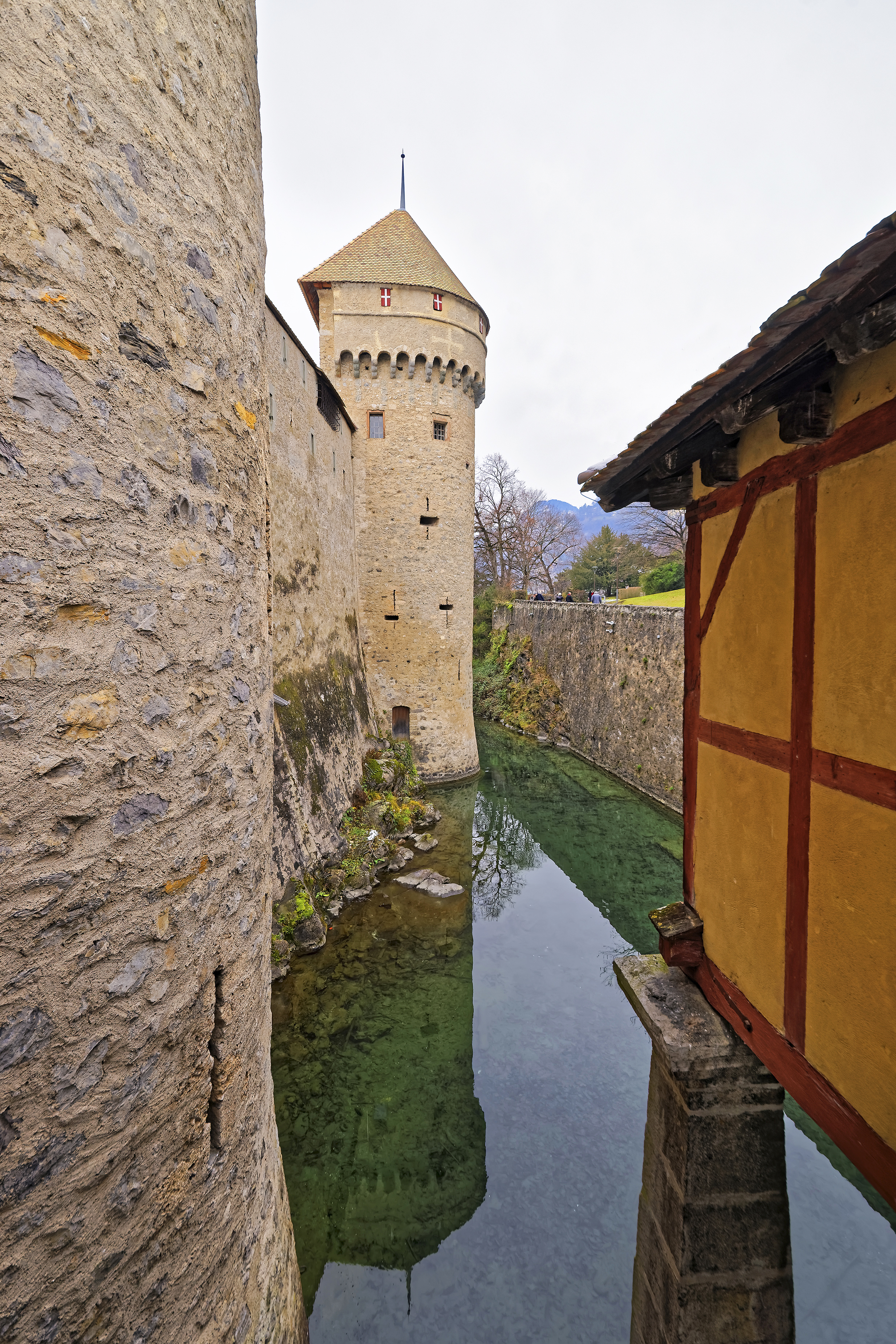

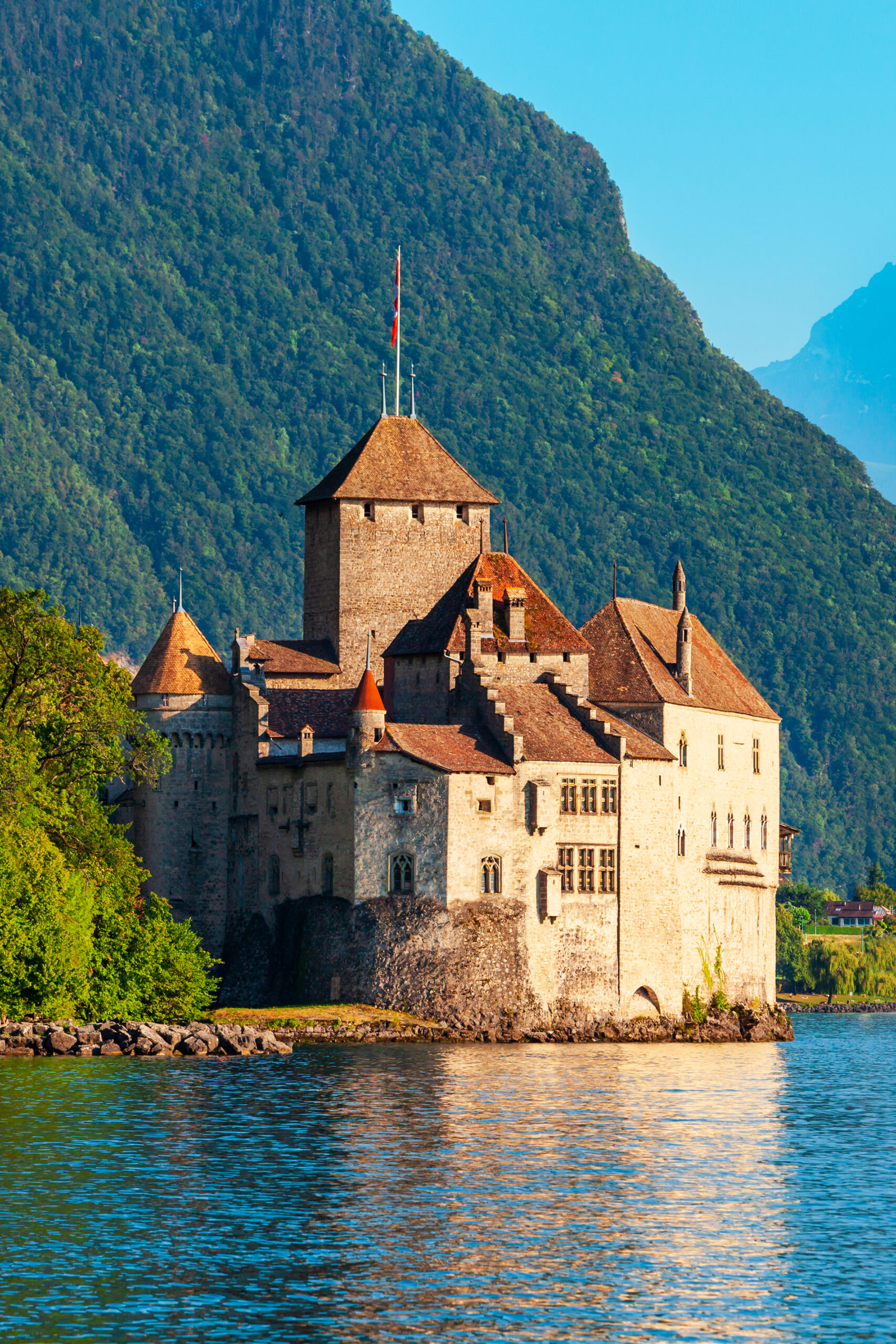
An architectural icon adorning the shores of Lake Geneva, Chillon Castle bears witness to centuries of history interwoven with legend, poetry, and artistic inspiration.
This medieval fortress on an island, considered Switzerland’s most visited historical monument, offers much more than breathtaking views and great historical interest: it is a symbol of cultural significance deeply rooted in the heart of Europe.
A fortress carved out of stone and time – Perched on a rocky outcrop between Montreux and Villeneuve, Chillon Castle occupies a strategic position that has made it a focal point of military and economic control since the Middle Ages. Its name, which comes from the Waldensian dialect and means “flat stone, slab, platform,” aptly describes its impressive foundations. First mentioned in 1150 under the name Castrum Quilonis, it is the perfect example of a “castle built on a rock platform.”
Thanks to its privileged location, the castle was able to control the passage between the Vaud Riviera in the north and the Rhone Valley leading to Italy.
This important route attracted several powers over the centuries, making Chillon a coveted fortress. Chillon was occupied successively by the House of Savoy, the Bernese troops, and finally the canton of Vaud, and witnessed countless historical changes.
Architectural development over the centuries – The development of the castle spanned several decisive periods. During the Savoy period, the first square keep was built in the 11th century, serving as a defensive point for the route from Burgundy to the Great St. Bernard Pass. In the mid-12th century, Chillon became the summer residence of the Counts of Savoy, who significantly enlarged it by installing distinctive windows designed by Master James de Saint George, a renowned architect also known for his work on Harlech Castle in Wales.
During the Bernese period, which began in 1536, Chillon became the residence of the Bernese bailiff. It also served as a prison, housing famous figures such as François de Bonivard, a Genevan monk and historian, whose terrible six-year imprisonment inspired Lord Byron to write his famous poem “The Prisoner of Chillon.”
Byron’s visit to the castle in 1816 and his subsequent literary homage cemented Chillon’s place in the realm of legend and romanticism.
The Vaud period began when the French-speaking canton of Vaud expelled the Bernese authorities in 1798 and converted the castle into a munitions depot under French occupation. At the end of the 19th century, efforts began to restore Chillon and return it to its former glory.
Restorations with historical roots – The restoration of Chillon began at the end of the 19th century under the direction of pioneering specialists Johann Rudolf Rahn and Albert Naef. They approached the task with meticulous attention to historical accuracy, using groundbreaking methods that combined archaeology and architecture.
These efforts resulted in an exemplary restoration that combined aesthetic fidelity with the preservation of historical elements.
The founding of the Association for the Restoration of Chillon in 1887 gave further impetus to these efforts. This organization set itself the goal of reviving the artistic character of the castle and establishing a historical museum within its walls.
The association’s systematic approach, in collaboration with a technical commission of renowned art historians and architects, led to the comprehensive restoration of the castle, a showcase project that was praised by contemporaries such as the German Emperor Wilhelm II.
A muse for artists and writers – Chillon Castle has always been a muse for artists and writers of all generations. Romantic writers such as Jean-Jacques Rousseau, Victor Hugo, and Mary Shelley found inspiration within its walls. Alexandre Dumas and Gustave Flaubert contributed to its historical heritage through their literary works, while Lord Byron’s impressive writings engraved Chillon forever in the annals of poetry. Inspired by Byron’s poem, Eugène Delacroix created the moving painting “The Prisoner of Chillon,” which was exhibited at the Salon in 1835. Swiss artist Gustave Courbet, who was living in exile, painted the castle several times and immortalized it on canvases that can now be seen in museums such as the Musée Courbet in Ornans, France.
In Henry James’ 1878 novel “Daisy Miller,” Chillon Castle serves as a symbolic backdrop, its historical aura blending into the narrative about social conventions and personal freedom.
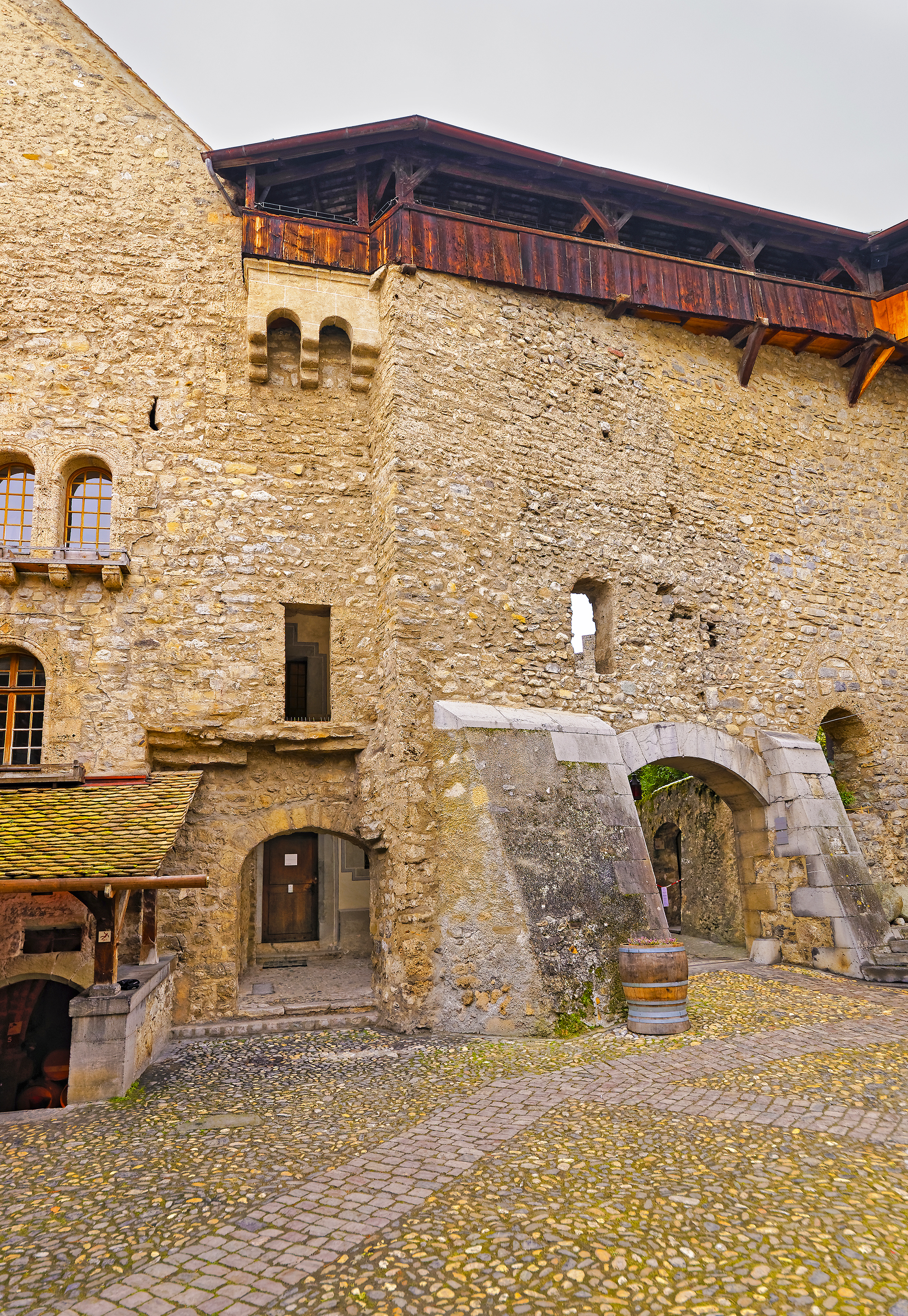
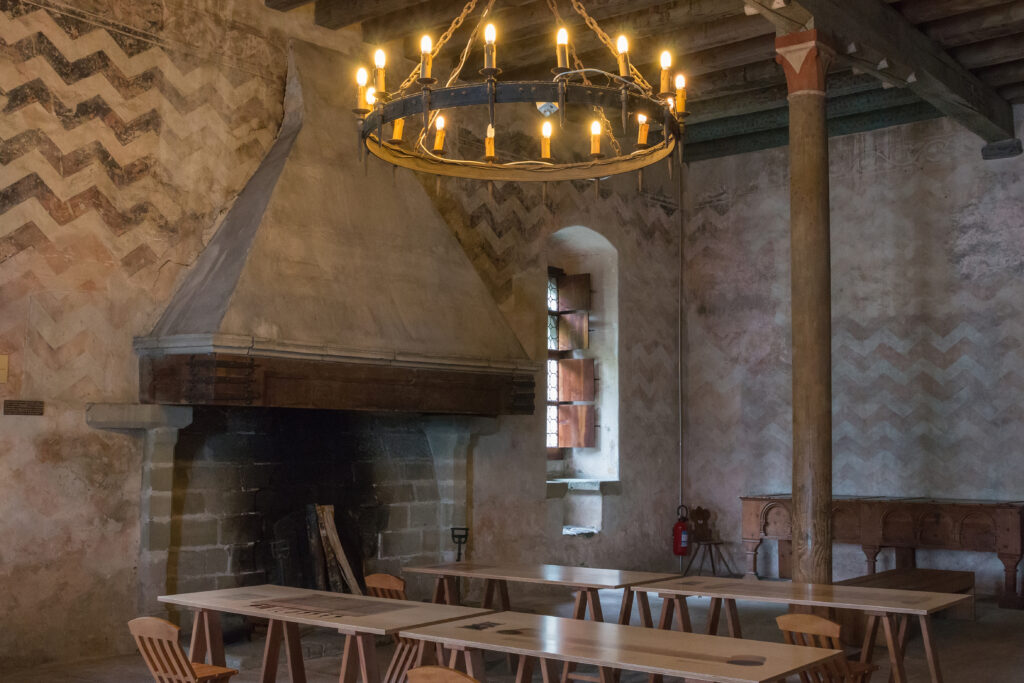
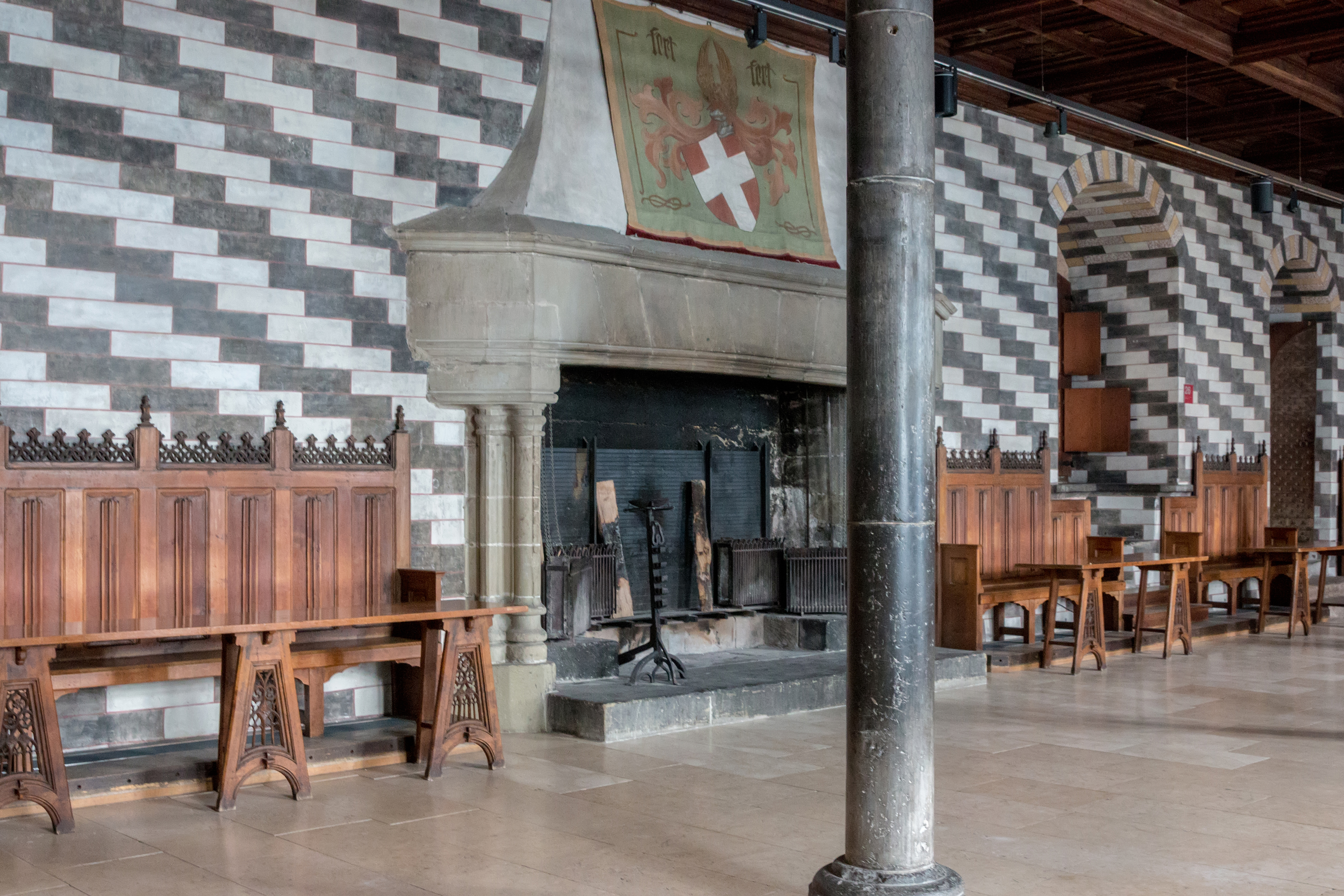
A lasting cultural icon – Even today, Chillon Castle continues to fascinate visitors with its rich history and culture. With more than 300,000 visitors a year, it remains open to the public, offering the opportunity to visit its magnificent halls, courtyards, and richly decorated rooms. In particular, the large bedroom and the Camera domini, the Duke of Savoy’s room decorated with 14th-century murals, offer a glimpse into the past. The castle’s influence extends beyond literature and art to other cultural areas. For example, Chillon appeared on the cover of Bill Evans’ 1968 live album “Bill Evans at the Montreux Jazz Festival” and served as inspiration for the castle in the 1989 Disney animated film “The Little Mermaid.” Chillon is also fertile ground for theater, as demonstrated by the productions of the Compagnie du Graal, which used the castle’s dramatic atmosphere to retell stories such as Shakespeare’s “King Lear” and the mythological saga of Hyperion.
Technological marvels and artistic tributes – Among Chillon’s attractions are technological curiosities such as Edouard-Gabriel Wuthrich’s mechanical automaton from 1890, which depicts the conquest of the castle and the liberation of François Bonivard. Rediscovered after decades, this intricate model has been preserved as a testament to Chillon’s enduring historical fascination. The image of the castle has influenced numerous works, from E. Lapierre’s oil painting from 1896 to Patrick Caulfield’s 1975 work “After Lunch,” which features a photo wallpaper of Chillon. Each artistic interpretation contributes to the multifaceted representation of the castle and solidifies its place in the cultural zeitgeist.
Chillon Castle is not just a relic of medieval architecture, but a living, breathing monument that continues to inspire and fascinate. Its historic walls echo with stories of chivalry, resistance, and artistic brilliance, making it a beloved landmark that embodies the spirit of Swiss heritage. Whether through poetry, painting, or performance, Chillon Castle remains a beacon of timeless charm, inviting all visitors to travel back in time and experience its legendary splendor.