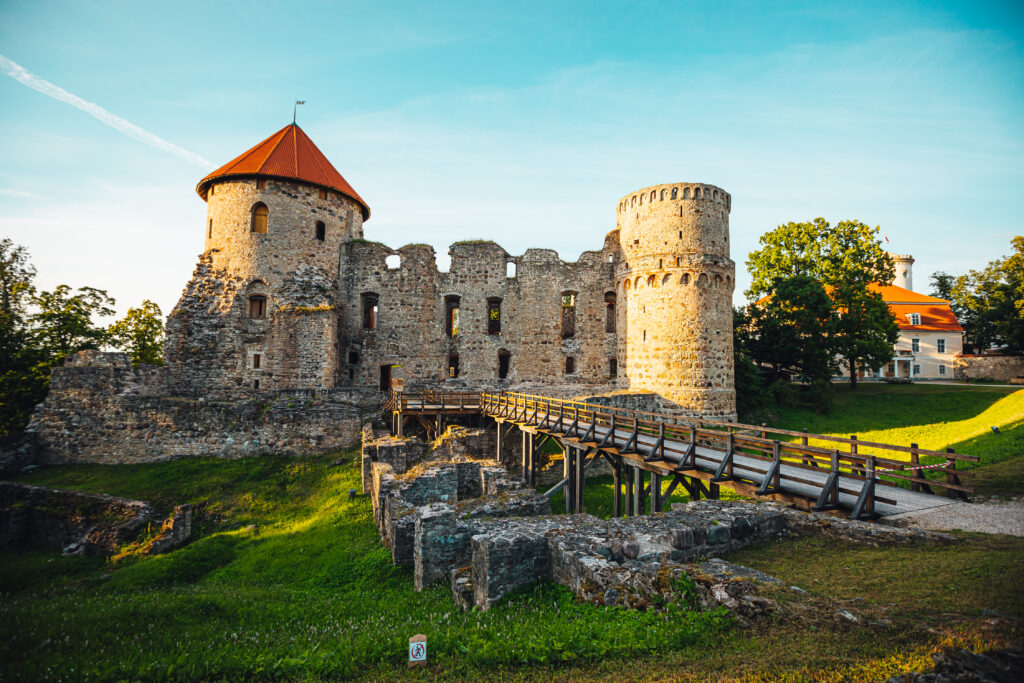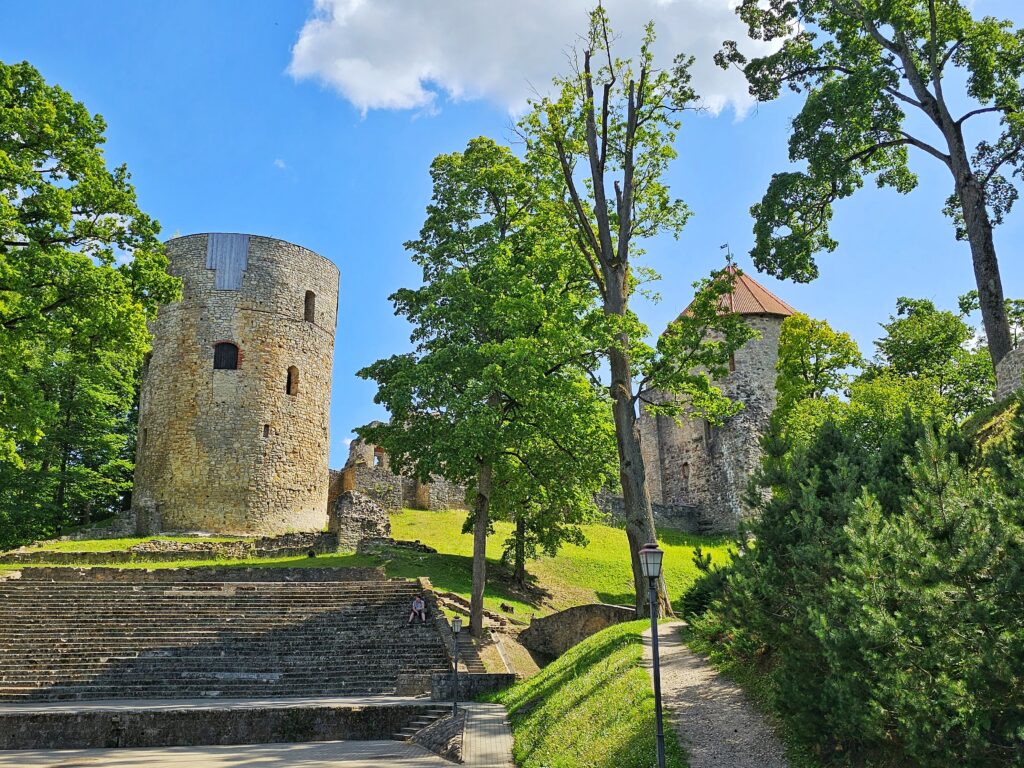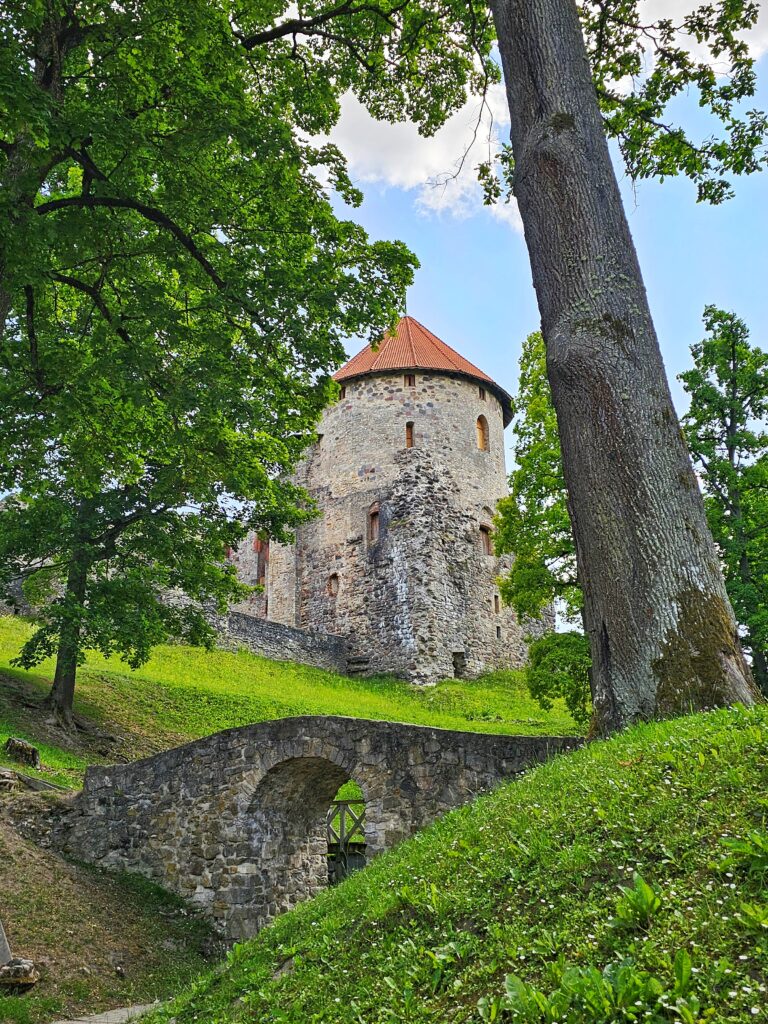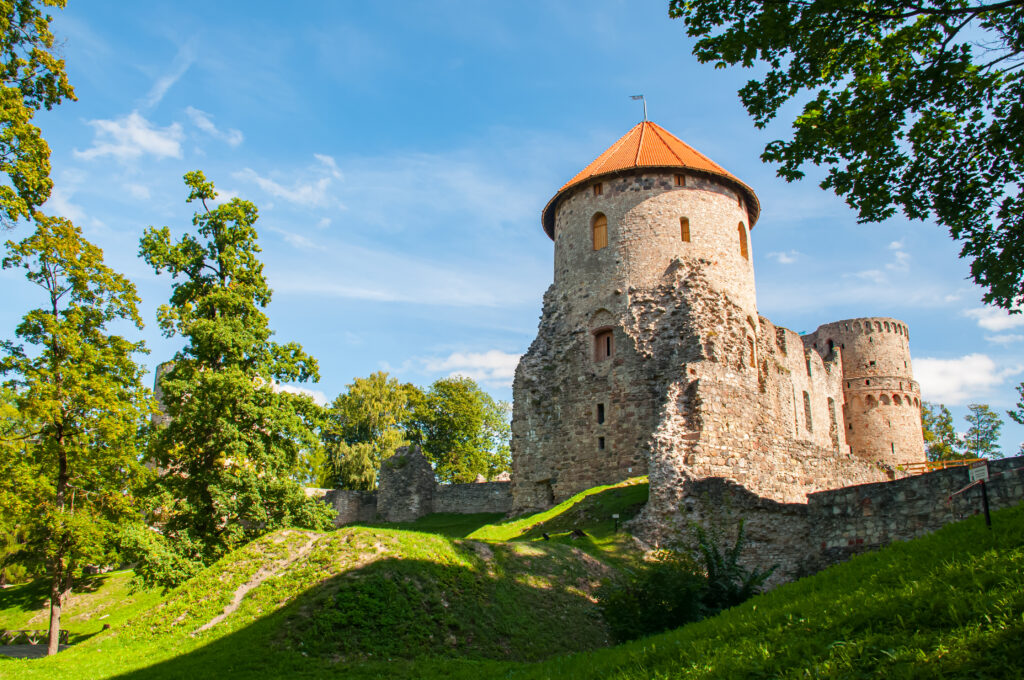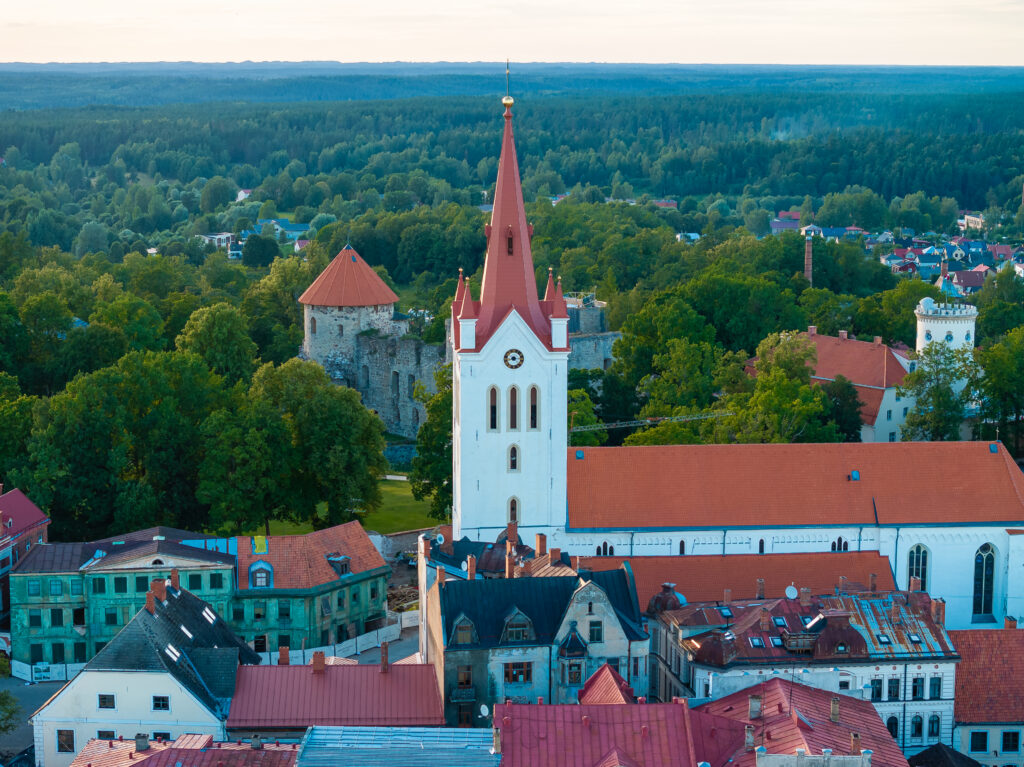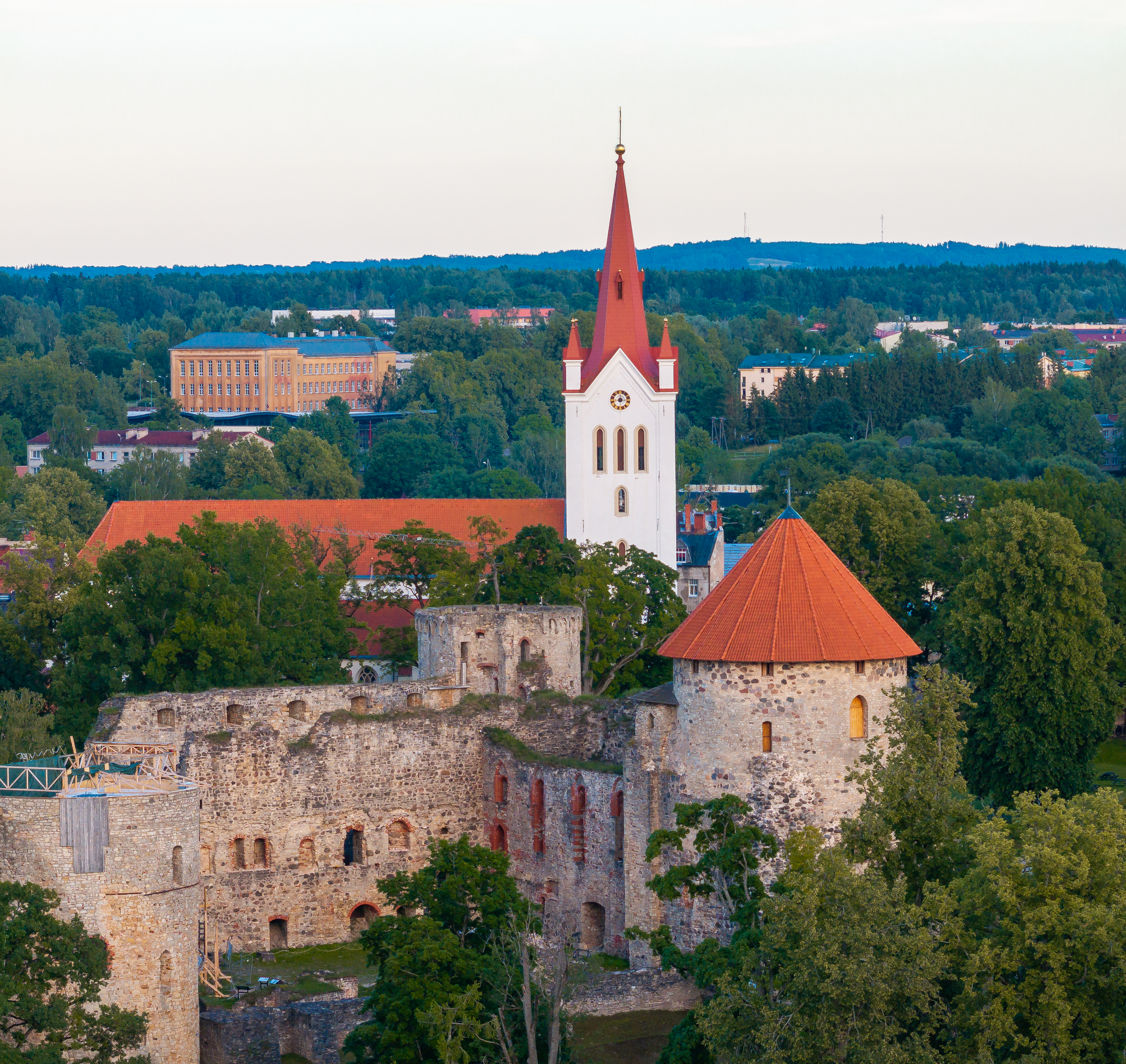

Nestled in the quiet Latvian town of Cēsis, the ruins of Cēsis Castle stand as a testament to centuries of history, conflict, and architectural splendor. This former stronghold of the Livonian Order, known in German as Burg Wenden, has witnessed the rise and fall of empires and left behind a fascinating legacy of myths and legends that continues to captivate visitors to this day.
Origins and early construction – The history of Cēsis Castle begins in the early 13th century, when the Livonian Brothers of the Sword built a wooden fortress on the strategically located Nussberg hill. This fortification was later replaced by a stone structure commissioned around 1212 by Volkwin von Naumburg, Wennos’ successor. The construction was an important milestone in defending the region against invaders and establishing an impressive base of operations.
As described in the Livonian Rhyming Chronicle, the Livonian Brothers of the Sword effectively controlled the area, thus strengthening the castle’s strategic importance.
By 1224, the stone castle was completed and served not only as a military bastion but also as the administrative center of the Livonian territories. Hermann von Balk, the first Livonian Landmaster of the Teutonic Order, chose Cēsis Castle as his main residence, further strengthening its status.
Expansion and architectural development – Balk’s successors began extensive expansion projects and, by the beginning of the 15th century, had transformed Cēsis Castle into a closed quadrangular complex with three fortified outer baileys. Reinforced by outer wards (defensive walls) and moats, the castle became an impregnable stronghold.
Construction work was temporarily halted after the decisive Battle of Tannenberg in 1410, which changed the balance of power in the region.
Nevertheless, remarkable progress continued to be made under land masters such as Wolter von Plettenberg, who introduced Gothic vaulted ceilings and four new towers, including the famous “Long Hermann,” at the turn of the 16th century.
The turbulent period of the Livonian War – The Livonian War brought waves of destruction to Cēsis Castle. In 1560, Russian troops ravaged the castle, heralding its decline. The following year, the castle was transferred to Poland and converted into a secular duchy under Gotthard Kettler. Nevertheless, the castle was subjected to further sieges and destruction, particularly in 1577, when soldiers of Ivan the Terrible besieged it once again.
One of the most harrowing events occurred in September 1577, as chronicler Balthasar Rüssow reports. Fearing reprisals, 300 people sought refuge in one of the castle’s wings and eventually set fire to four barrels of gunpowder, causing a massive explosion.
Archaeological excavations in 1974 confirmed this tragic event and uncovered skeletal remains buried under the rubble.
Change of ownership and final abandonment – In the 17th century, Cēsis Castle changed hands between Swedish and Polish rule before remaining under Swedish rule in 1626.
Despite plans for restoration, the castle fell into disrepair and was only partially maintained for agricultural purposes. During the Great Northern War in 1703, Russian troops captured the town of Cēsis and burned it down, sealing the castle’s fate as a decaying ruin.
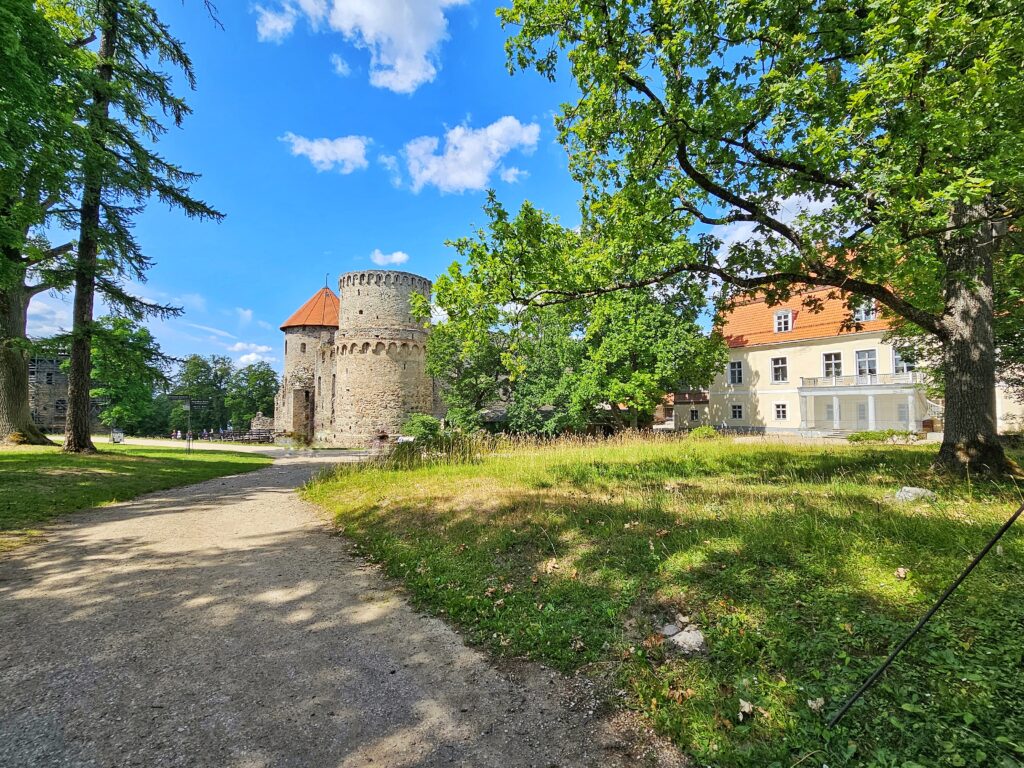
Romantic revival and preservation efforts – In the mid-18th century, ownership of the castle passed to the Wolff family, who built a manor house in one of the outer baileys. Subsequently, between 1812 and 1815, the Sievers family laid out a picturesque landscape garden in the Romantic style. Although restoration plans were drawn up in the 19th century, they were never realized.
Regular conservation measures began in the early 20th century. Initial maintenance work was carried out in 1912, followed by more extensive conservation projects over the decades. Recent restoration initiatives have helped Cēsis Castle remain a valued cultural monument.
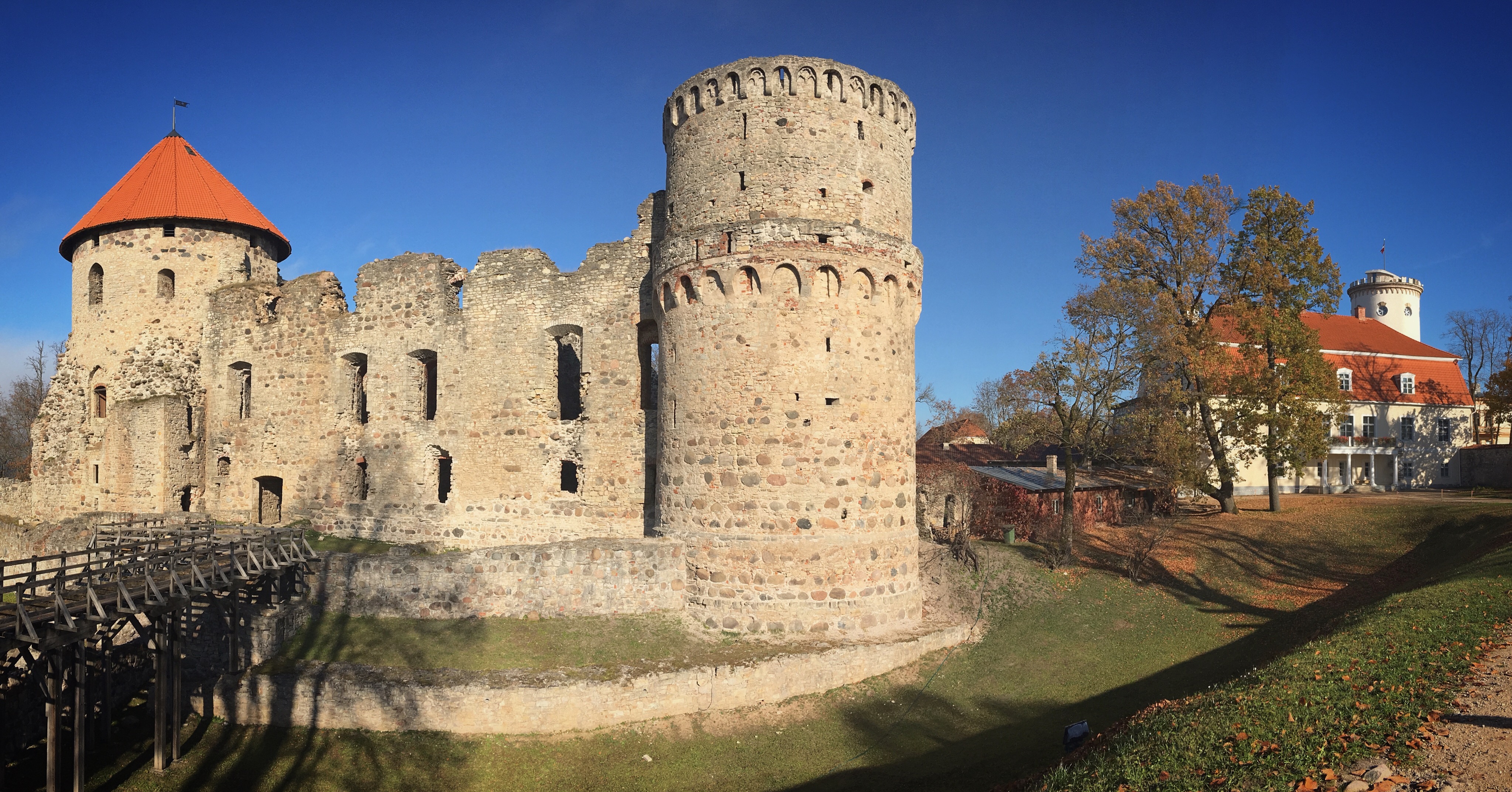
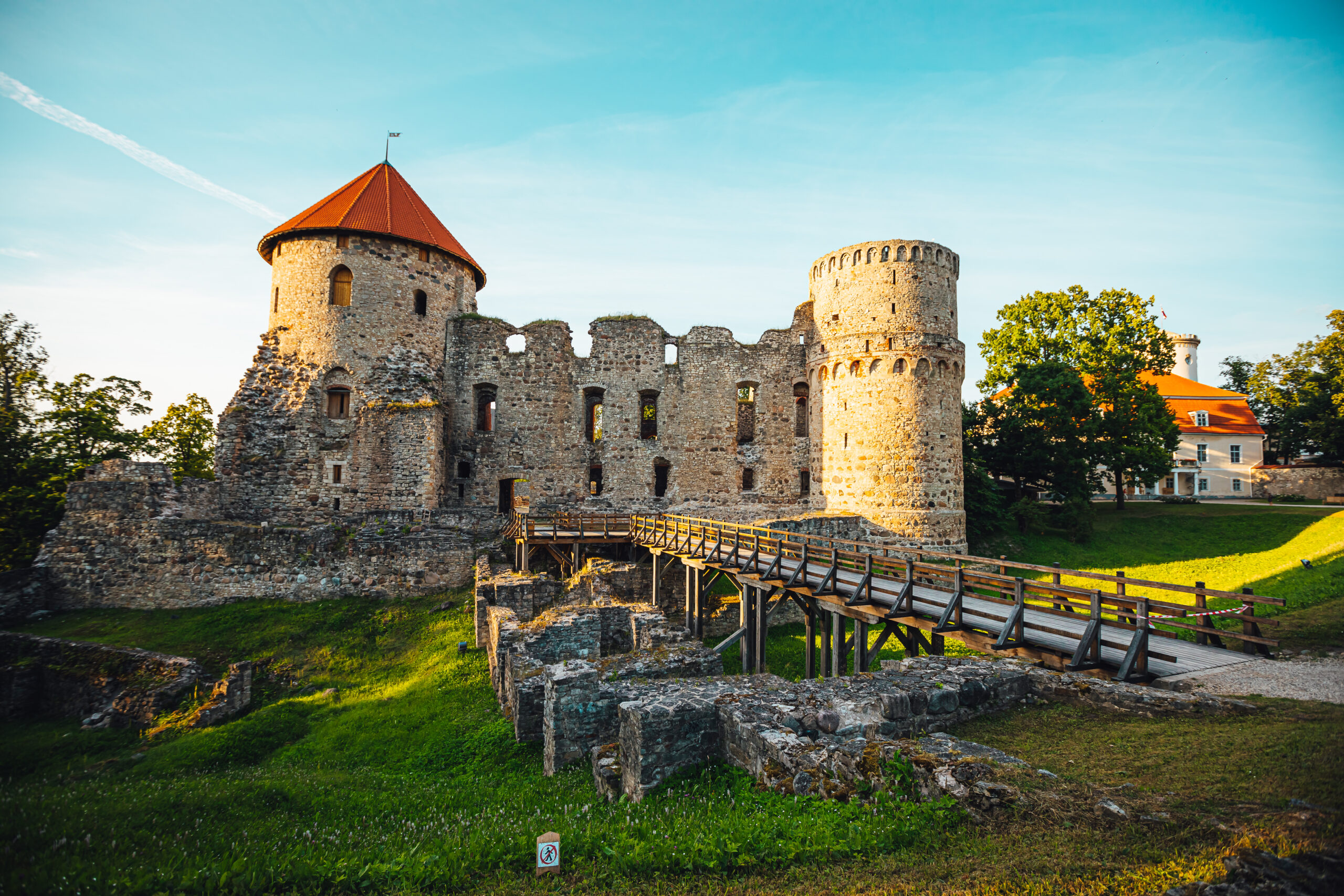
Modern attractions and cultural significance – Today, Cēsis Castle stands proudly as one of Latvia’s best-preserved ruins and has been a protected monument since December 1998. Nussberg, which played an important role in the castle’s history, is also recognized as a protected area. Visitors can explore the remains of the castle and the 18th-century manor house, which has housed the Cēsis History and Art Museum since 1949.
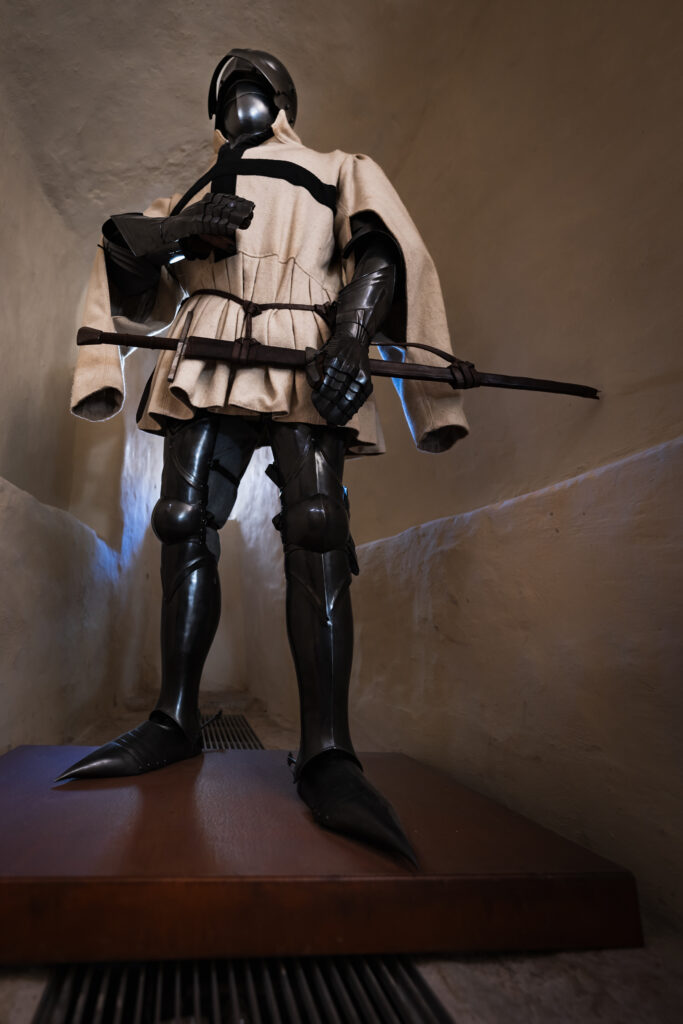
The castle serves as a vibrant venue for historical reenactments, medieval festivals, film screenings, and educational programs. Its fascinating backdrop is perfect for weddings, conferences, and cultural performances.
The extensive grounds, with their winding paths, exotic plants, and tranquil pond, create an atmosphere that effortlessly blends historical reverence with natural beauty.
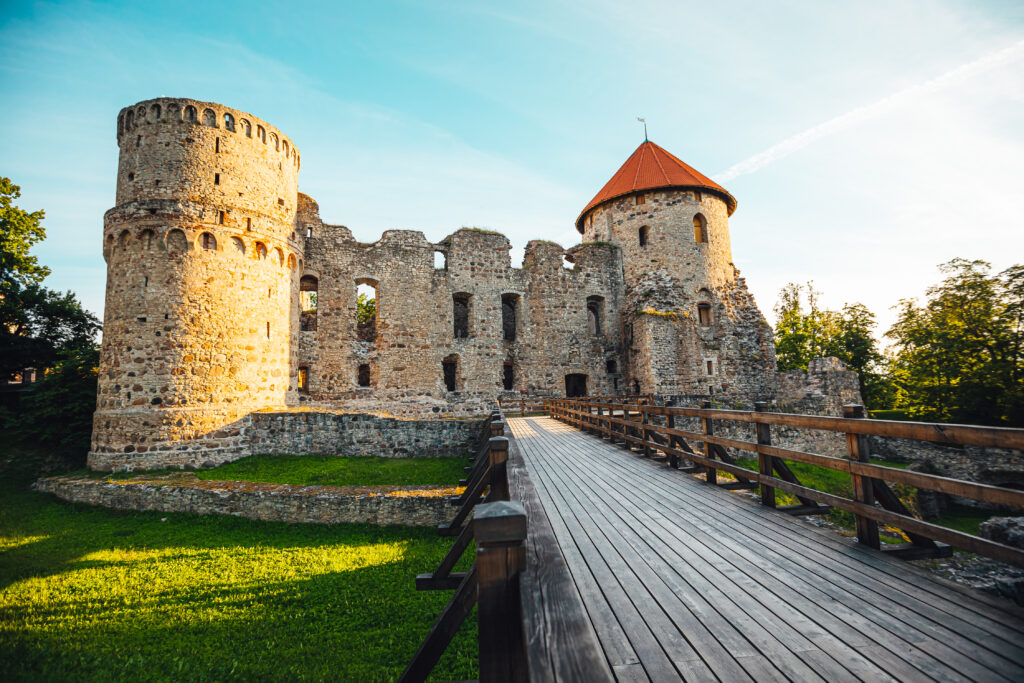
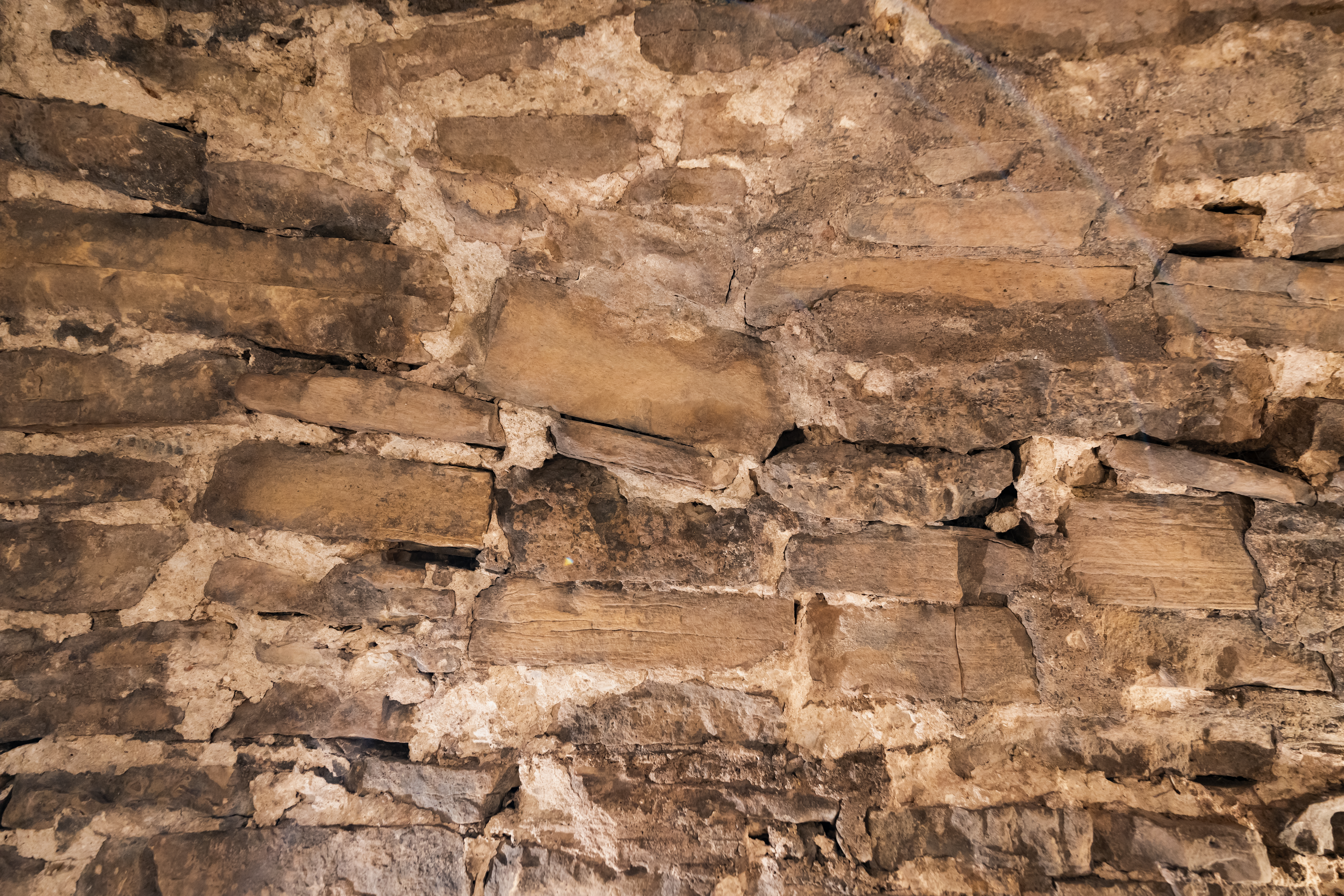
Architectural insights and mystical elements – The architecture of Cēsis Castle reflects its strategic design principles and aesthetic evolution over the centuries. The main area of the castle covers approximately four hectares, is fortified with limestone and fieldstones, and decorated with Gothic bricks. The inner courtyard is surrounded by high walls and features the remains of large halls marked by stone corbels.
The mysterious “Long Hermann” tower, with its prison cell and battlements, adds to the castle’s fascination. In addition, the massive structure of the west tower, with its unique round upper floor and conical roof, is a testament to medieval engineering.
The “Master’s Chamber,” decorated with a star vault, recalls stories of royal settlement and ceremonial splendor.
Unveiling the legends –
Beyond its historical significance, Cēsis Castle is shrouded in legends that permeate its ruins. Stories of ghostly inhabitants, secret passages, and buried treasures spark the imagination and add to the castle’s mystique. Whether exploring the shadowy corridors or enjoying the tranquility of the garden, visitors are enveloped in an atmosphere where reality and legend blend seamlessly.
The ruins of Cēsis Castle are more than just historical remains; they are a gateway to the past, rich in stories of bravery, tragedy, and resilience. As one of Latvia’s most valuable landmarks, the castle continues to inspire curiosity and awe, making it a timeless destination for history buffs and myth hunters alike.
A journey through Cēsis Castle is like a journey through the corridors of time, where every stone tells a story, every chamber holds a secret, and every tower stands as a guardian of unspoken legends.