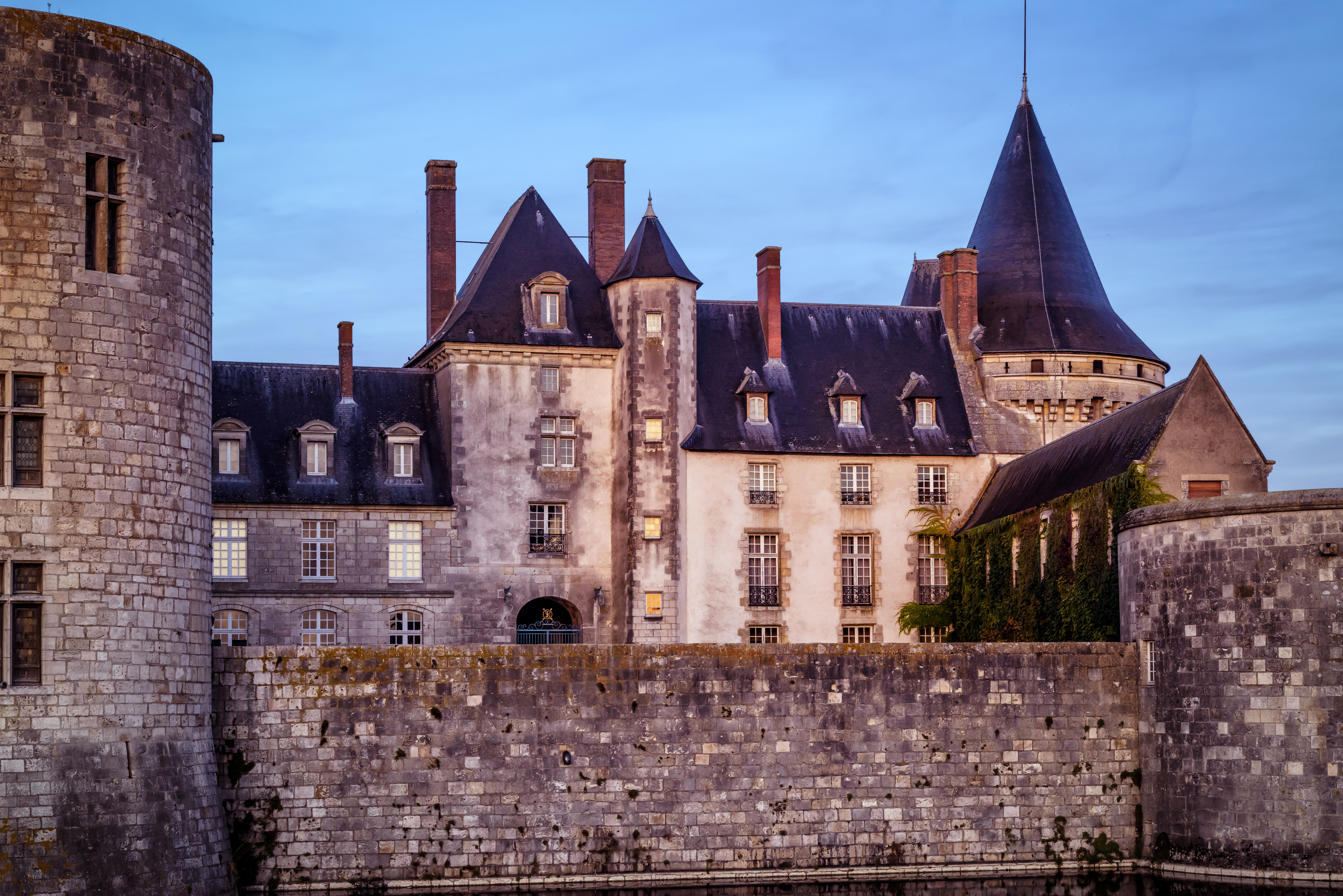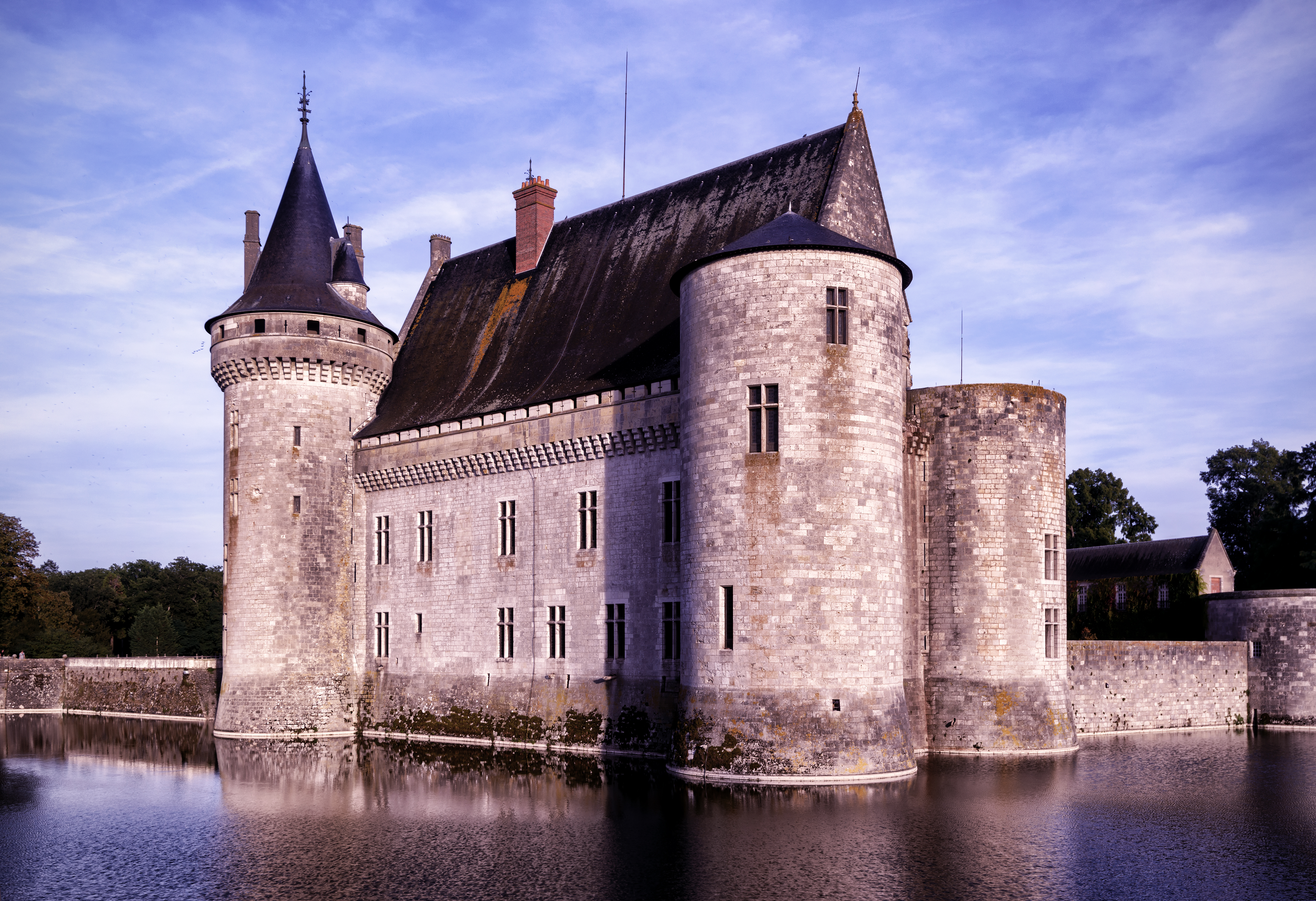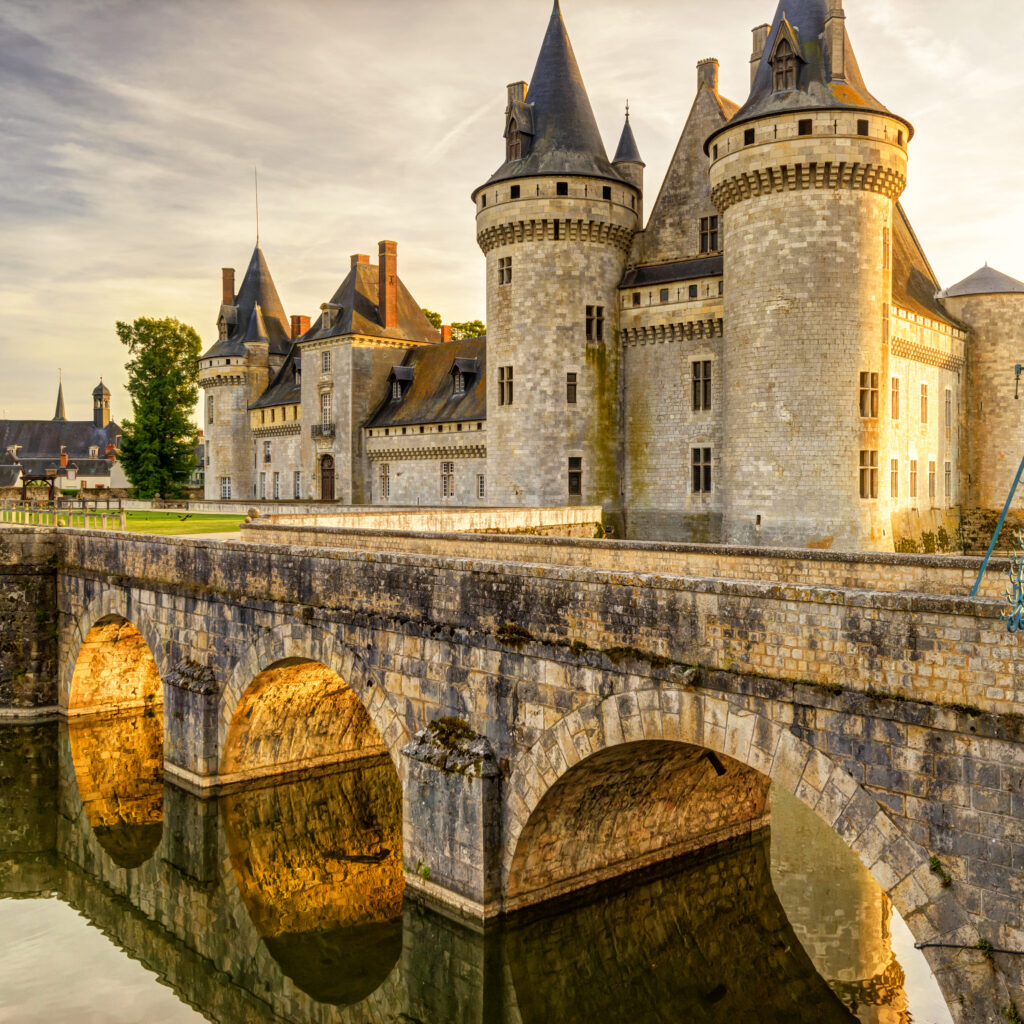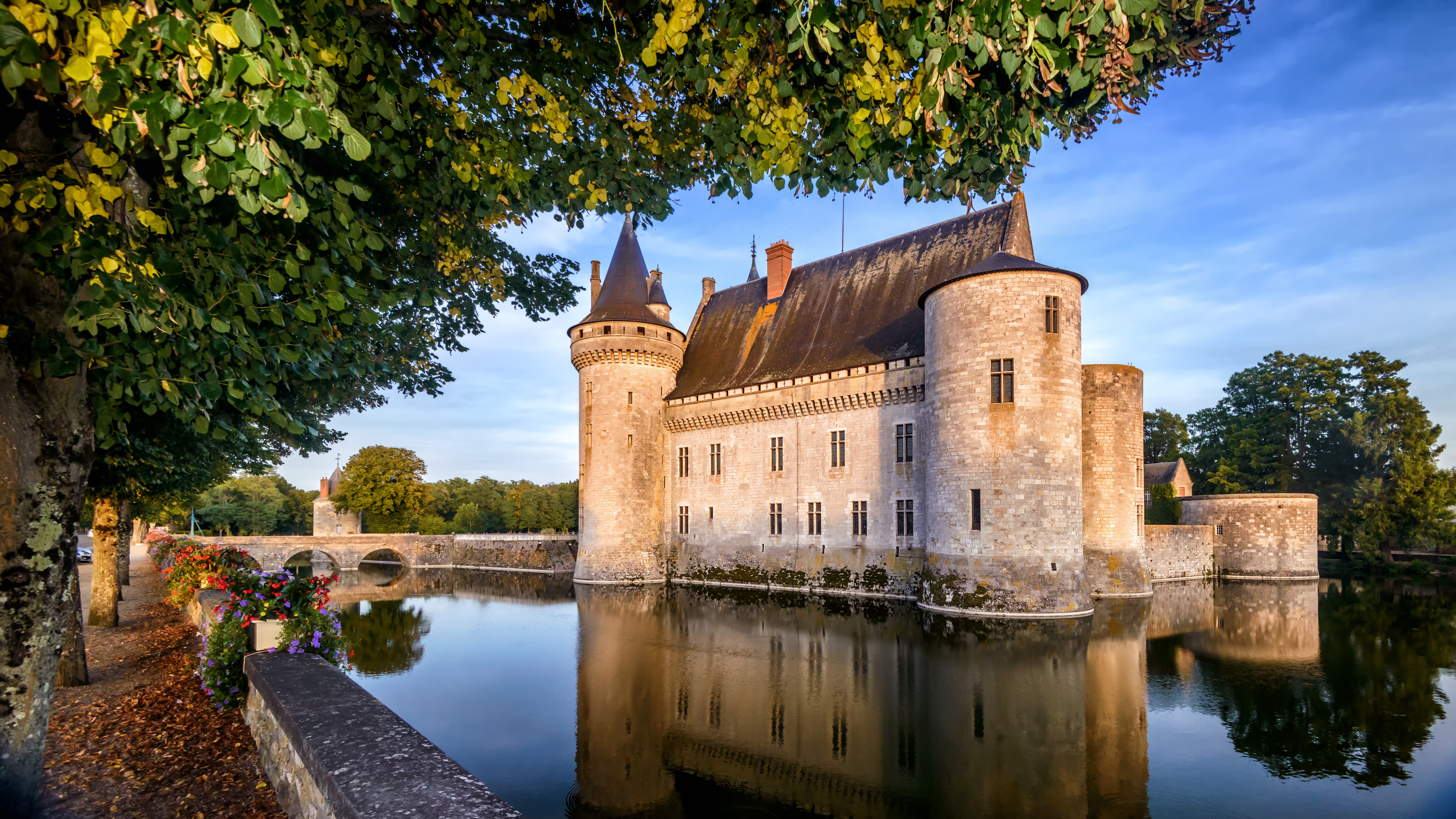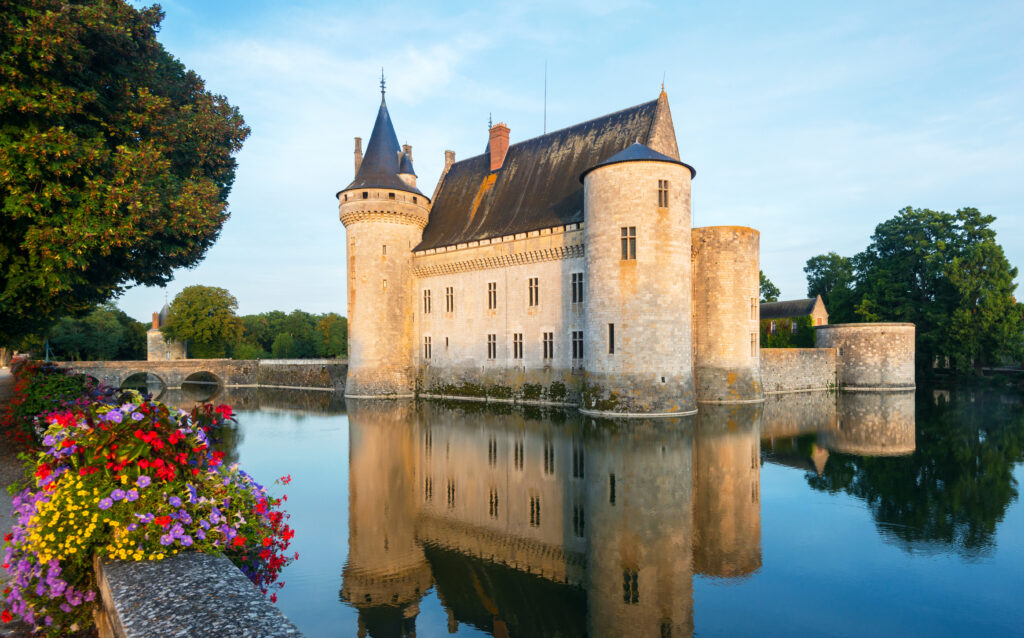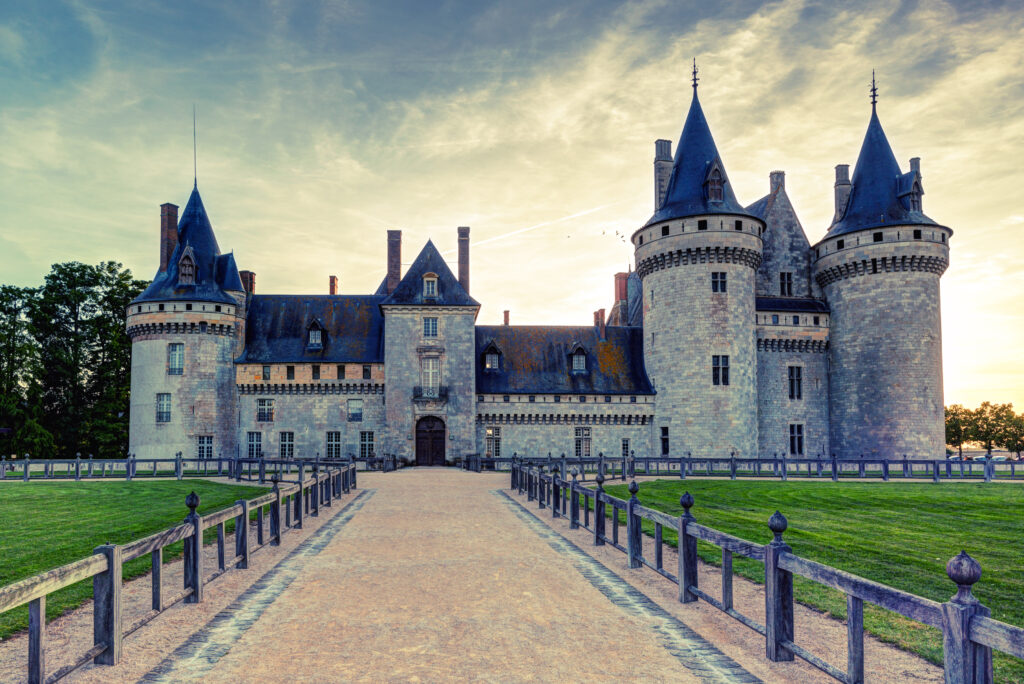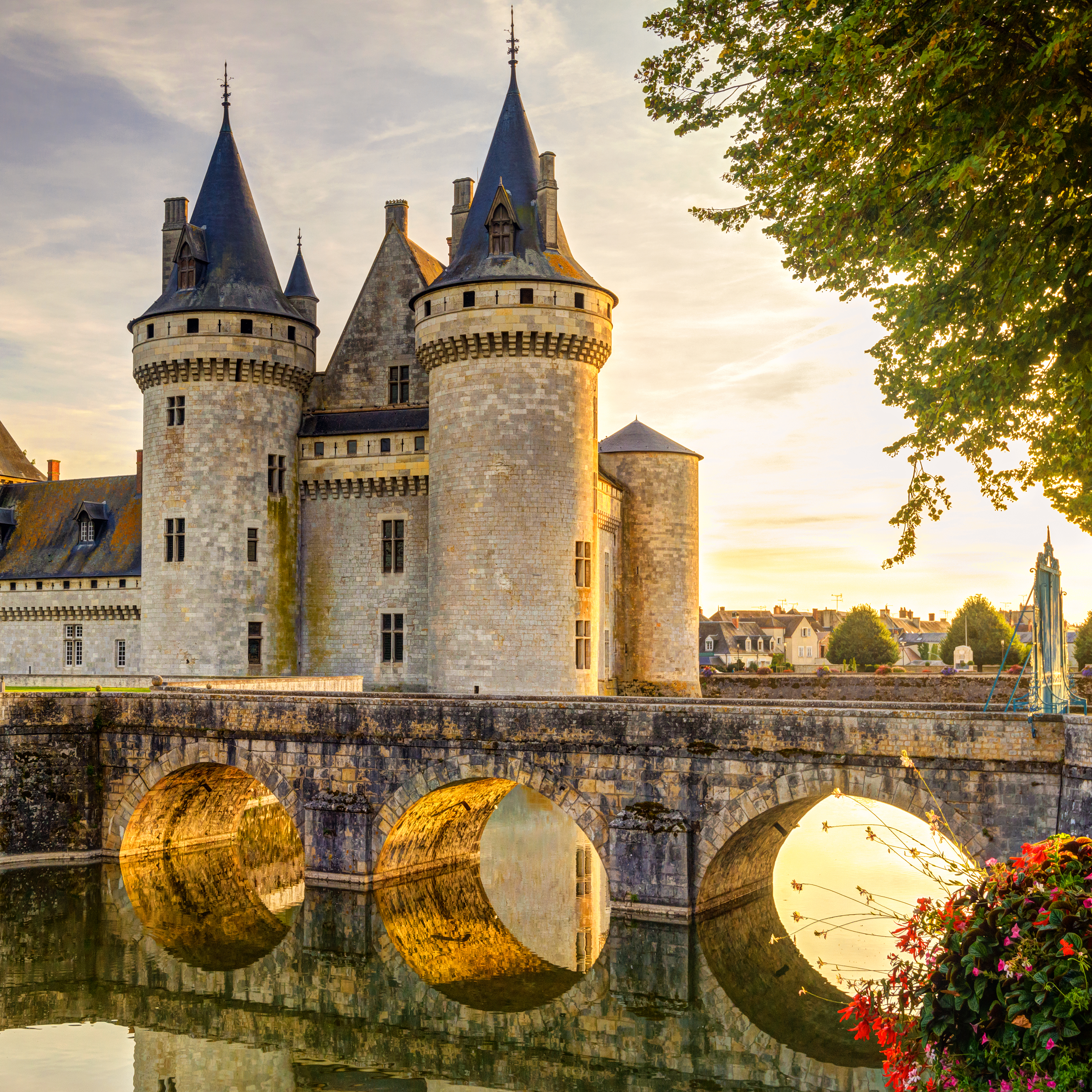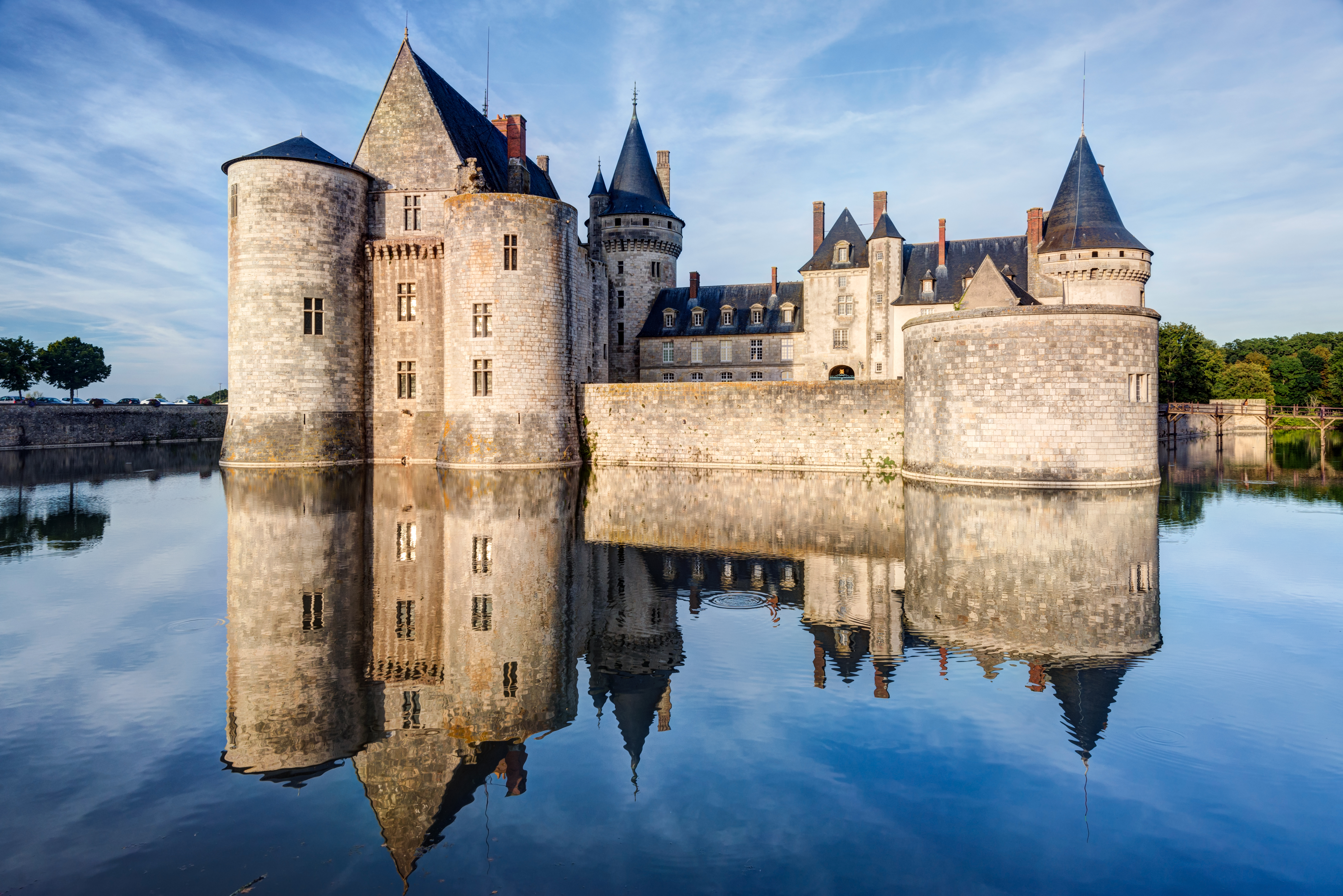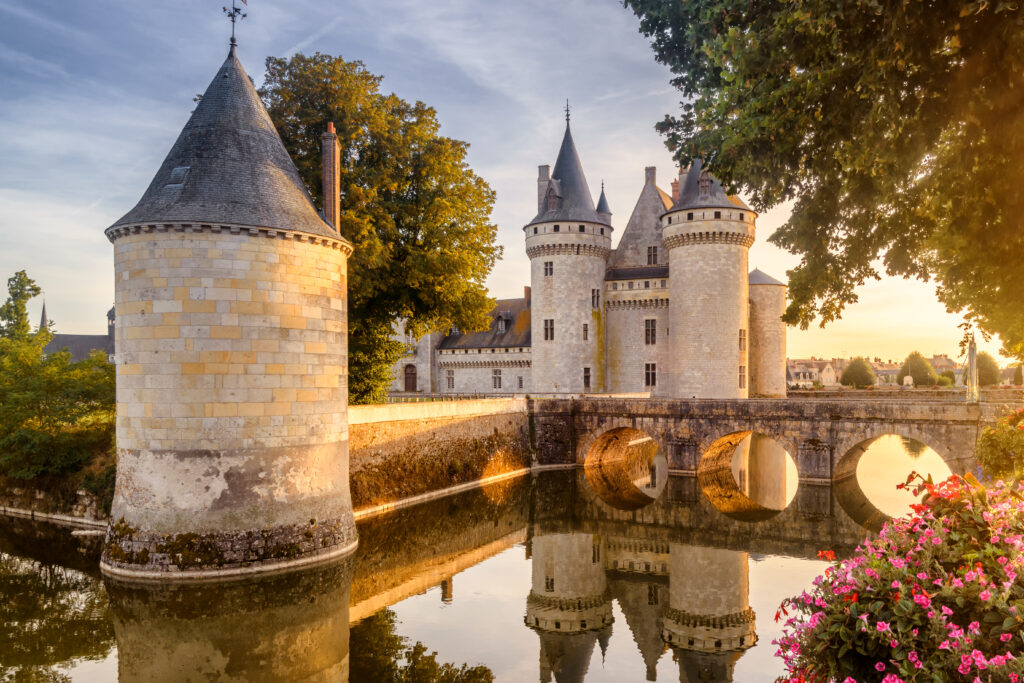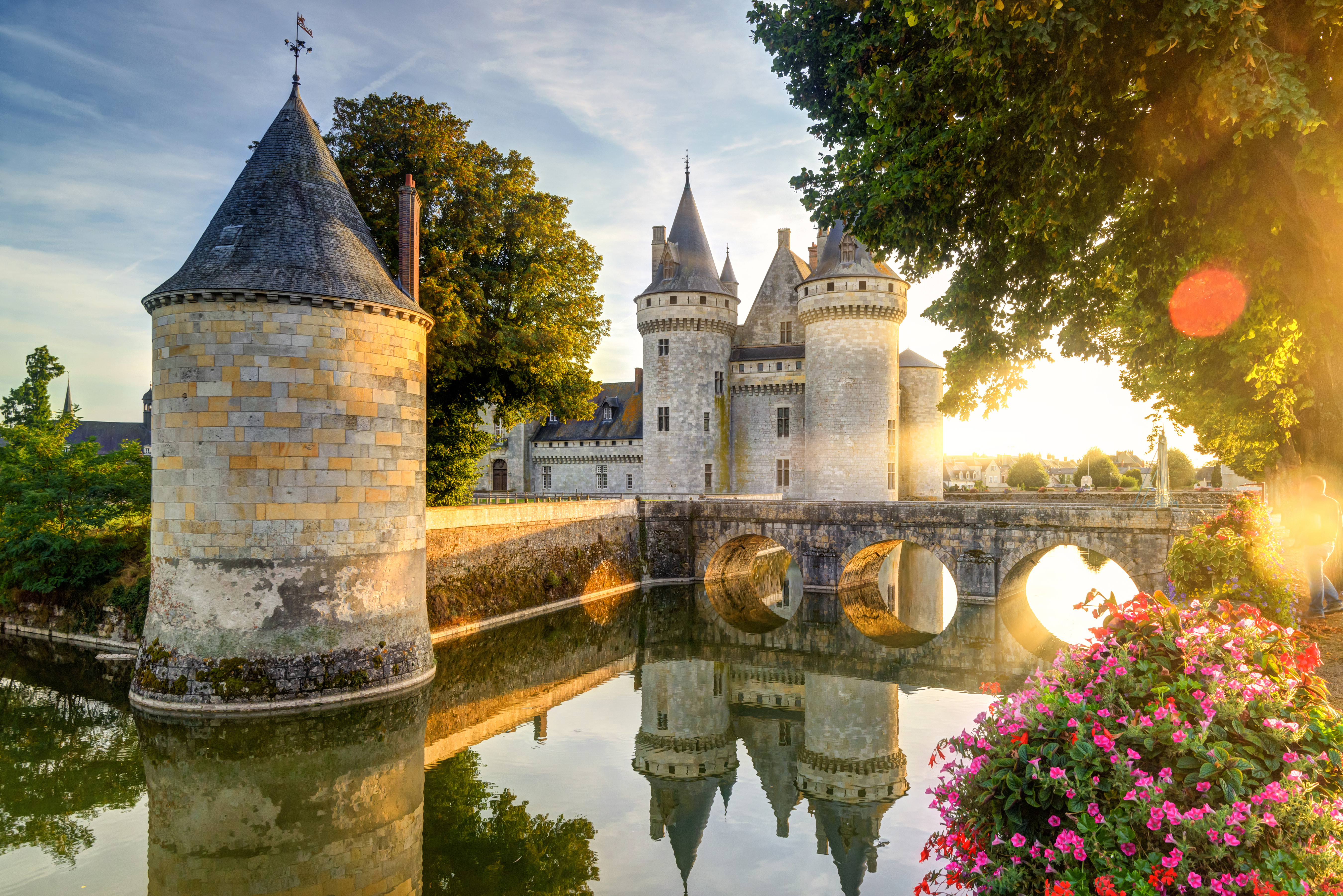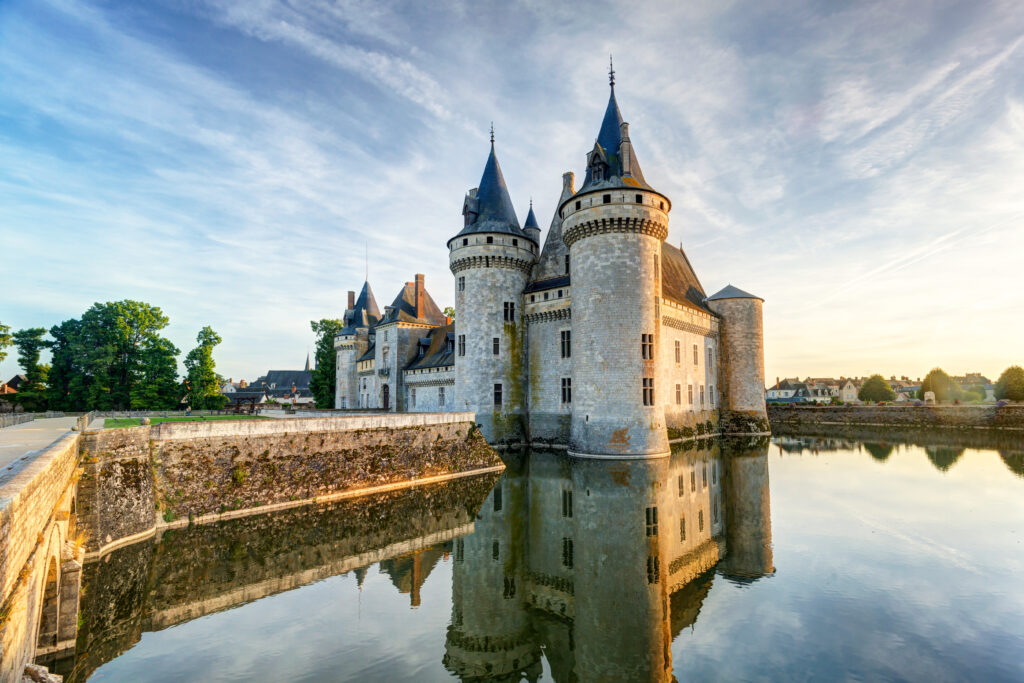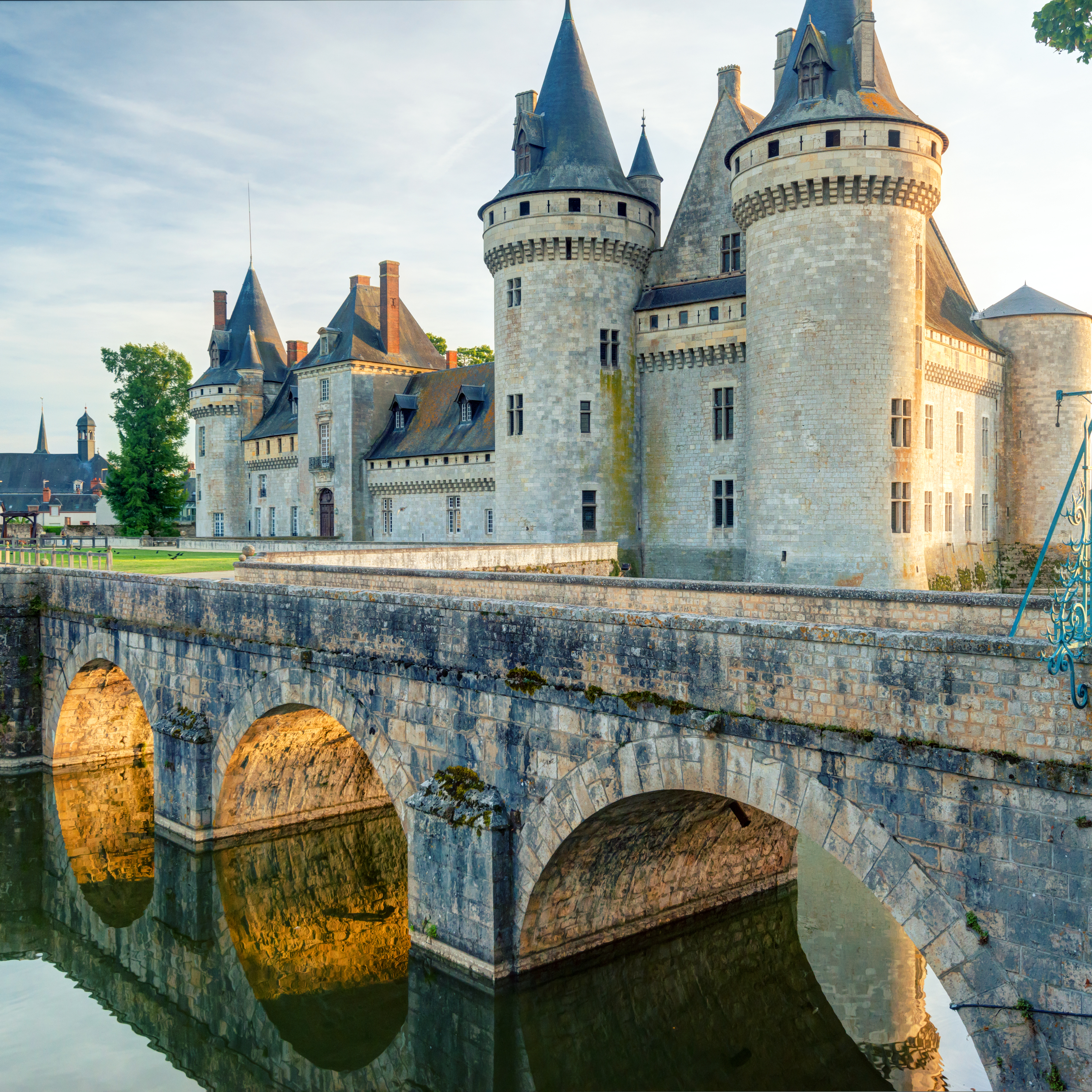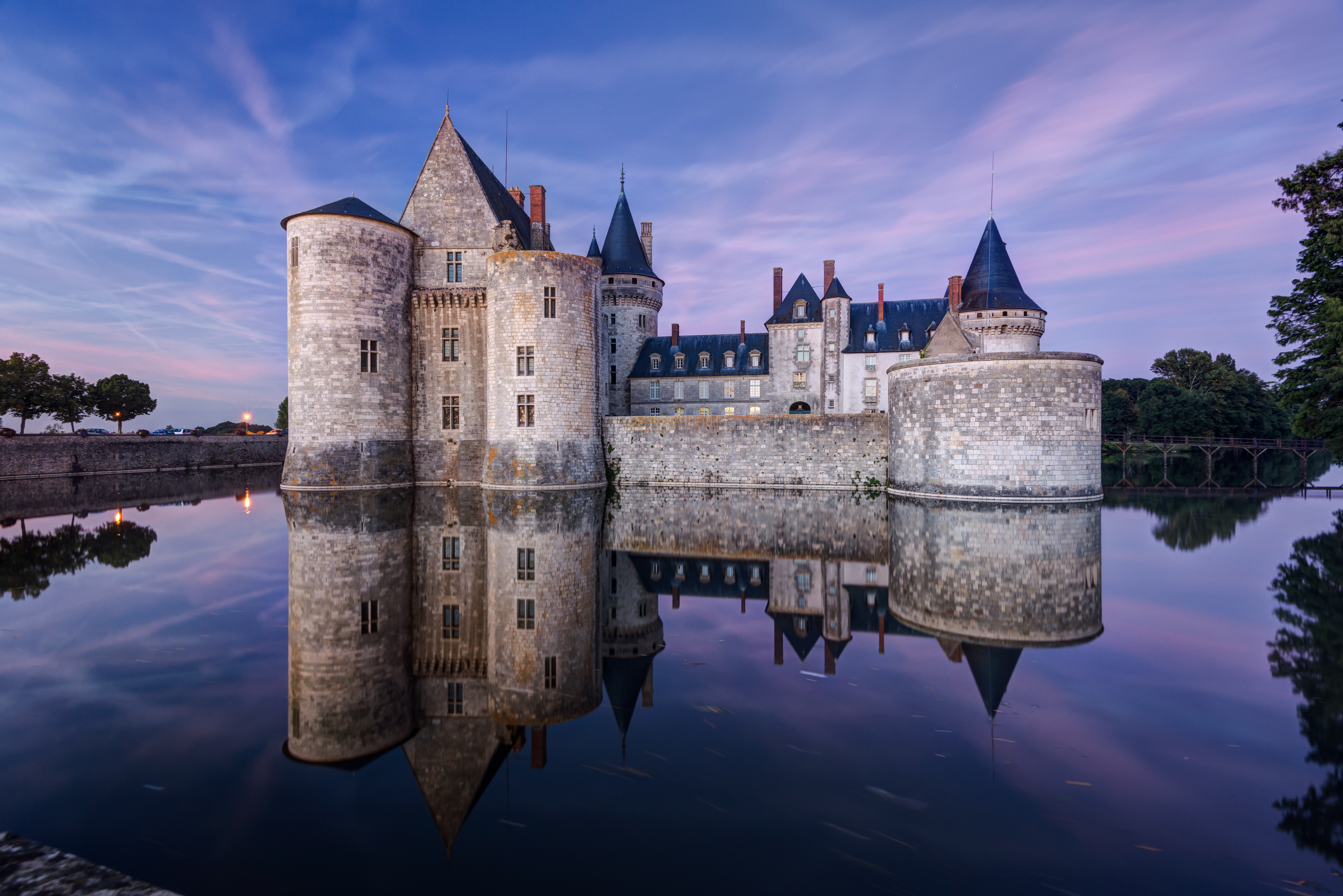

As you travel through the French countryside, a majestic sight awaits you on the edge of the Sologne region: the imposing and opulent Château de Sully-sur-Loire. This historic fortress is located on the southern bank of the Loire River and has been a silent witness to history, intrigue, and change for centuries. Since 2000, it has been a UNESCO World Heritage Site, along with the Loire Valley, and attracts around 30,000 visitors annually, drawn not only by its architectural splendor but also by the numerous legends surrounding its stone walls.
Beginnings lost in time – The roots of the Château de Sully-sur-Loire date back to ancient times and are shrouded in myths and legends. An inconspicuous watchtower once guarded a strategically important bridge over the Loire during Roman times, indicating the enduring importance of the site. In 1102, records mention a “castrum soliacense,” an impressive fortress owned by the lordship of Sully. This early structure, nestled amid medieval turmoil, laid the foundation for the sprawling castle we see today.
Transitions and changes – In the 14th century, the estate passed through marriage to Guy VI de La Trémoïlle, who ambitiously redesigned the existing fortifications. The famous royal architect Raymond du Temple was commissioned to design an impregnable keep – a testament to medieval defensive capabilities and power. Although Guy’s death in 1398 interrupted these grand plans, his widow Marie de Sully continued the construction, albeit sporadically, amid the chaos of the Hundred Years’ War.
The castle’s military importance waned during the Renaissance and it was rebuilt under the direction of Maximilien de Béthune, Duke of Sully and minister to King Henry IV.
Béthune purchased it in 1602 and transformed the fortress into a residence befitting the nobility. He replaced the austere battlements with Renaissance elegance, creating a palatial enclave where beauty and comfort took precedence over defense.
A page from history: The Huguenot Wars – Amidst the religious upheavals of the 16th century, the castle became embroiled in the infamous Huguenot Wars. Torn between Catholic and Protestant factions, it suffered sieges and skirmishes that marred its stately appearance. In 1586, the Church of Saint-Ythier in the outer courtyard, the Basse-Cour, fell victim to the relentless conflict and was destroyed. Yet amid this chaos, the château proved resilient, becoming a symbol of survival and reconstruction.
A literary refuge – The vision of Maximilien de Béthune permeates the essence of the Château de Sully-sur-Loire, particularly the legendary Tour de Béthune. Here, in the midst of peaceful surroundings, Béthune wrote his highly acclaimed memoirs in collaboration with four secretaries. These works, which appear to have been printed in Amsterdam, were secretly printed within the walls of the tower in 1638. The marble statue of Béthune, adorned with a laurel wreath and a marshal’s baton, still stands guard in the Basse-Cour and was created in 1642 by Pierre II Biard.
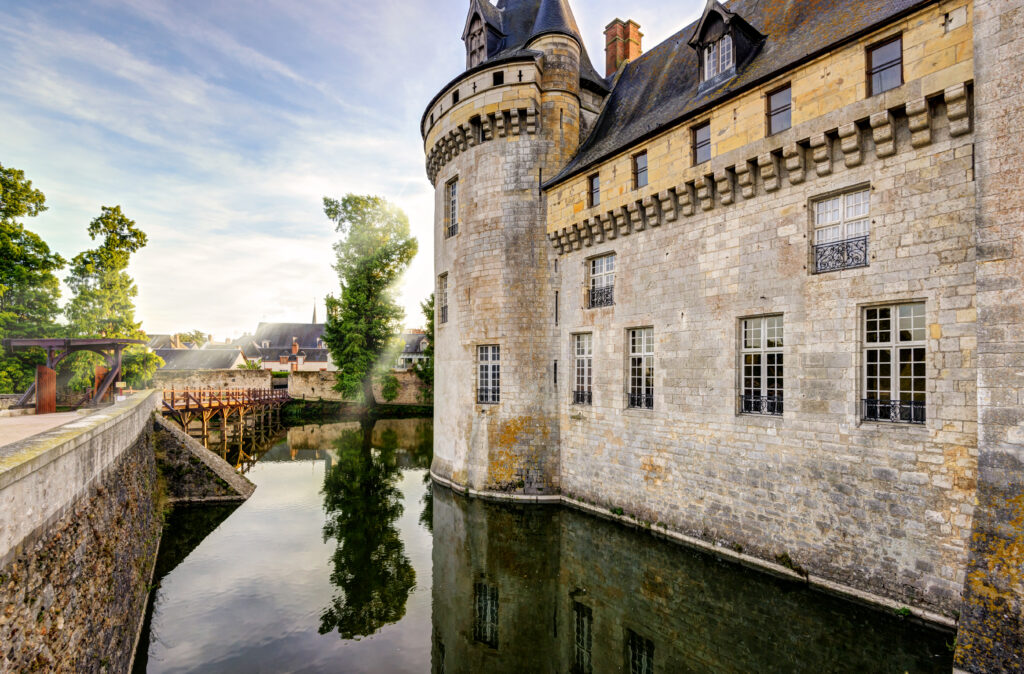
Architectural marvels and secrets – The layout of the castle is a labyrinthine marvel – a trapezoidal area surrounded by water-filled moats fed by the Sange River. The buildings form an intimate courtyard, where each structure tells stories from different eras, from medieval power to Renaissance sophistication. Adjacent to the entrance tower, the Petit Château, with its three-story splendor and preserved workrooms, illustrates Béthune’s aspirations for living and offers insights into his daily life.
Behind the picturesque facades, the impressive Tour d’Artillerie recalls the castle’s former military purpose. Built with imposing stone walls, it bears artillery platforms and preserves the aura of past wars. The François wing, a charmingly reconstructed extension, harmoniously combines historical authenticity with modern homage.
From ruin to revival – The vicissitudes of history have not spared the Château de Sully-sur-Loire. During the French Revolution, the castle suffered considerable damage when the government attempted to strip it of its defensive capabilities. The resulting scars on the towers of the keep are haunting reminders of revolutionary fervor. Later, in a tragic fire on January 10-11, 1918, the François wing was engulfed in flames, and its ornate interiors were lost forever.
World War II compounded the castle’s woes when bombing raids in June 1940 and August 1944 caused further damage.
But like a phoenix rising from the ashes, the estate was carefully restored after the war. The Loiret department acquired it in 1962, ensuring its preservation for posterity.
A lasting legend – The history of the Château de Sully-sur-Loire is closely intertwined with famous personalities and epoch-making events. It offered refuge to the young King Louis XIV in 1652 when he fled the Fronde rebellion. Lafayette found solace within its walls after his return from America, while Voltaire, who had been banished from Paris, performed his acclaimed plays in its magnificent halls.
The estate remained in the possession of the Béthune family until the mid-20th century, when it had to be sold due to financial difficulties. Today, the château has been renovated and revitalized, a museum celebrating its historic past and, since 1973, a venue for classical music festivals.
In every stone and every shadow, the Château de Sully-sur-Loire whispers stories of ambition, conflict, change, and legacy—each chapter a testament to the enduring spirit of this majestic structure.