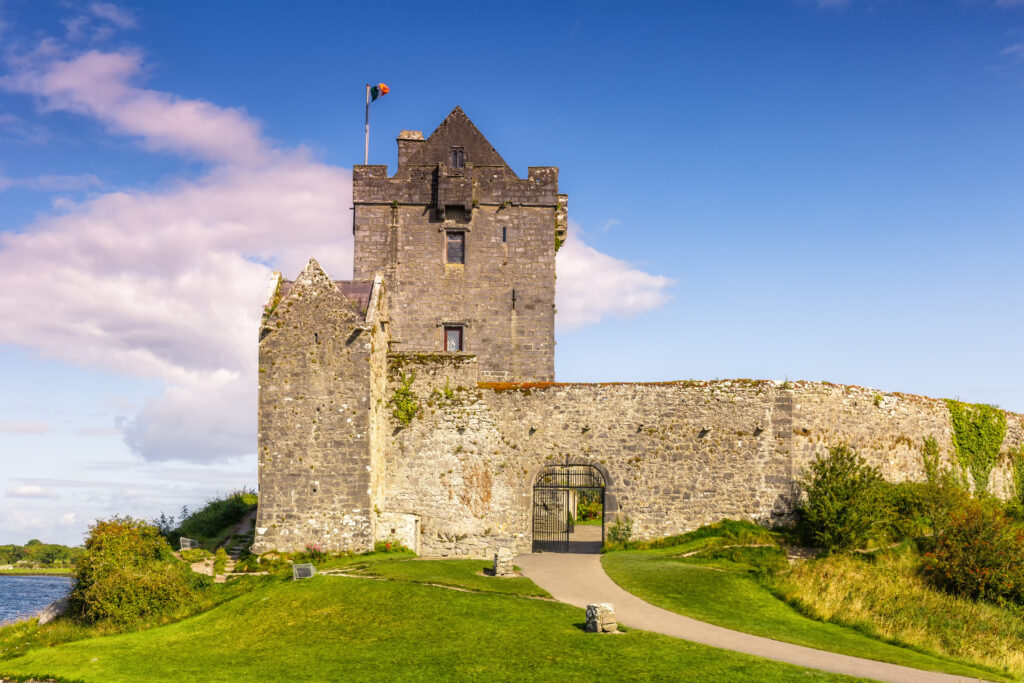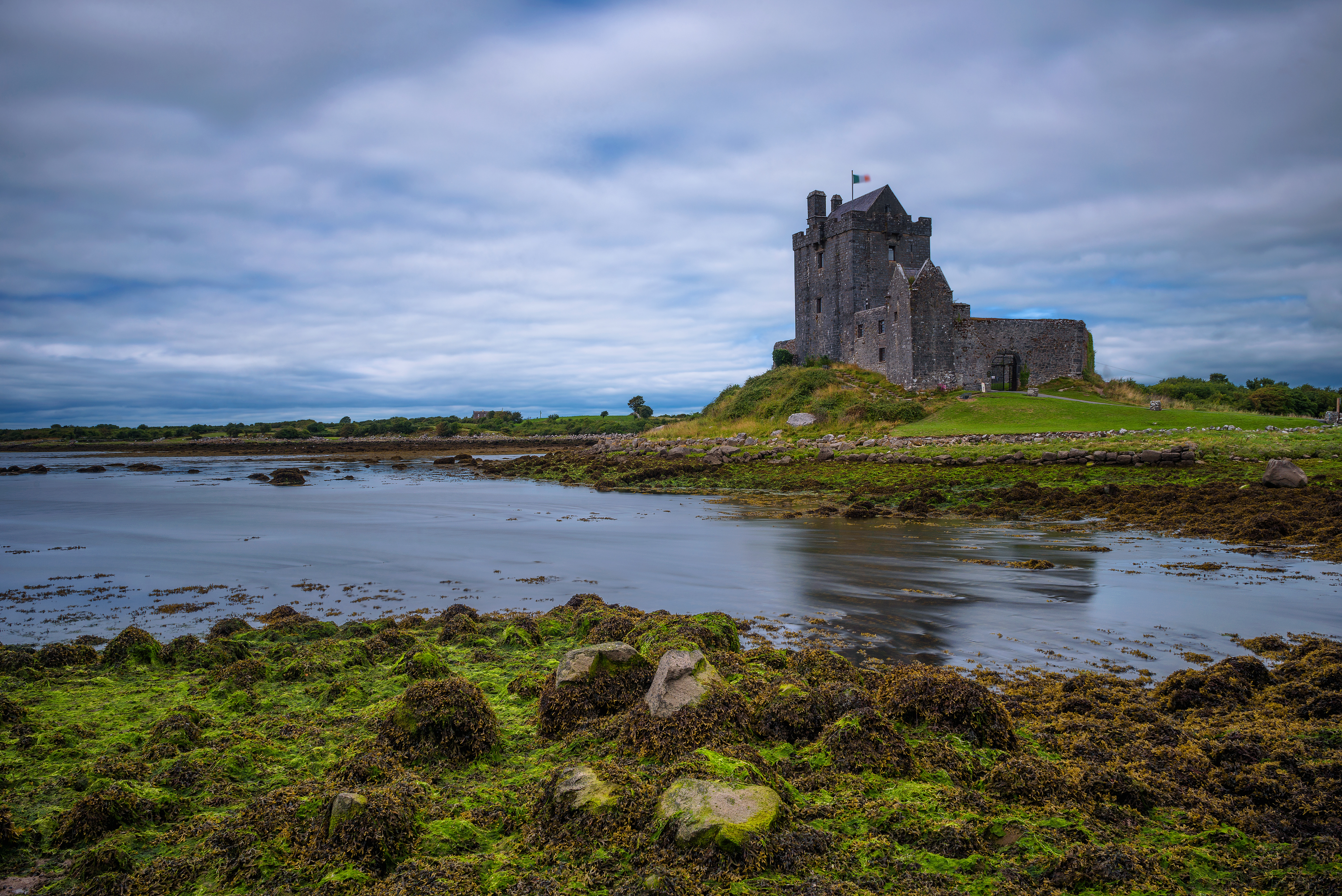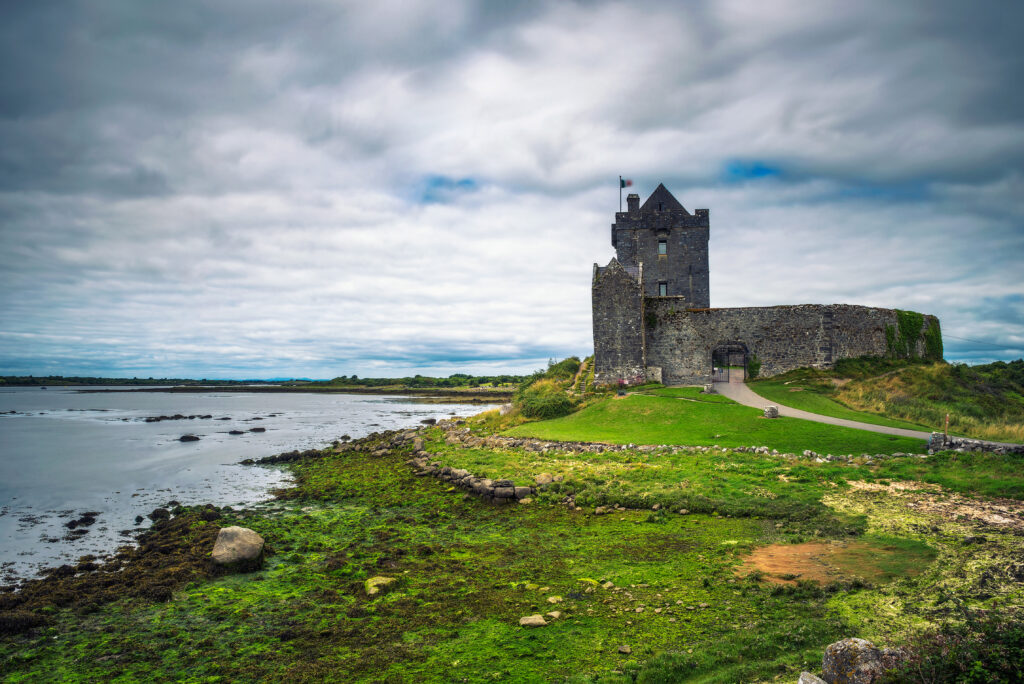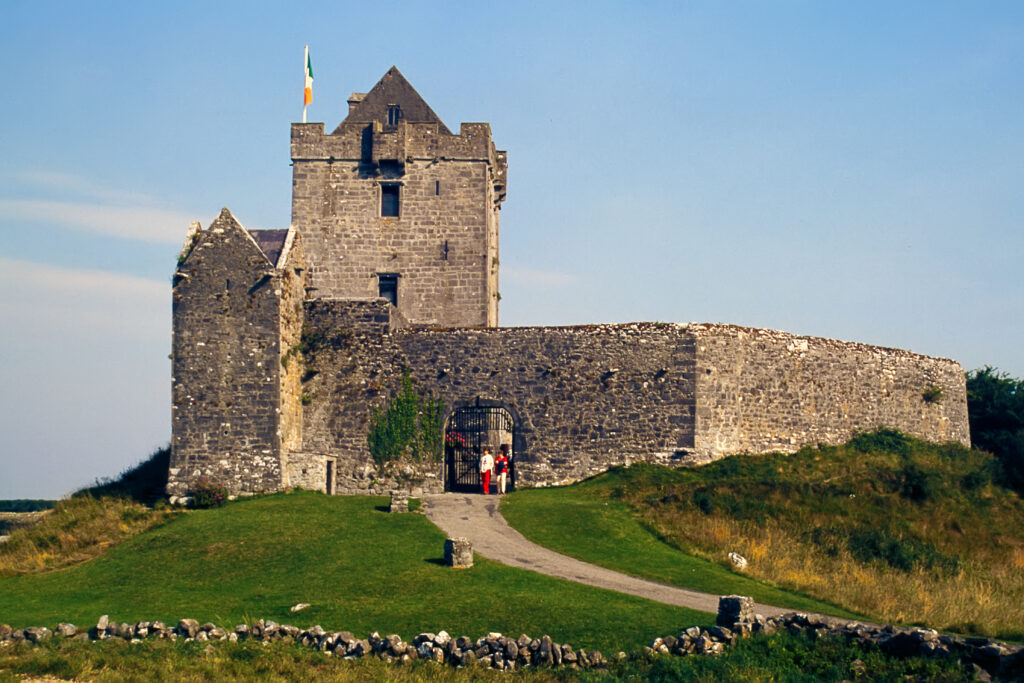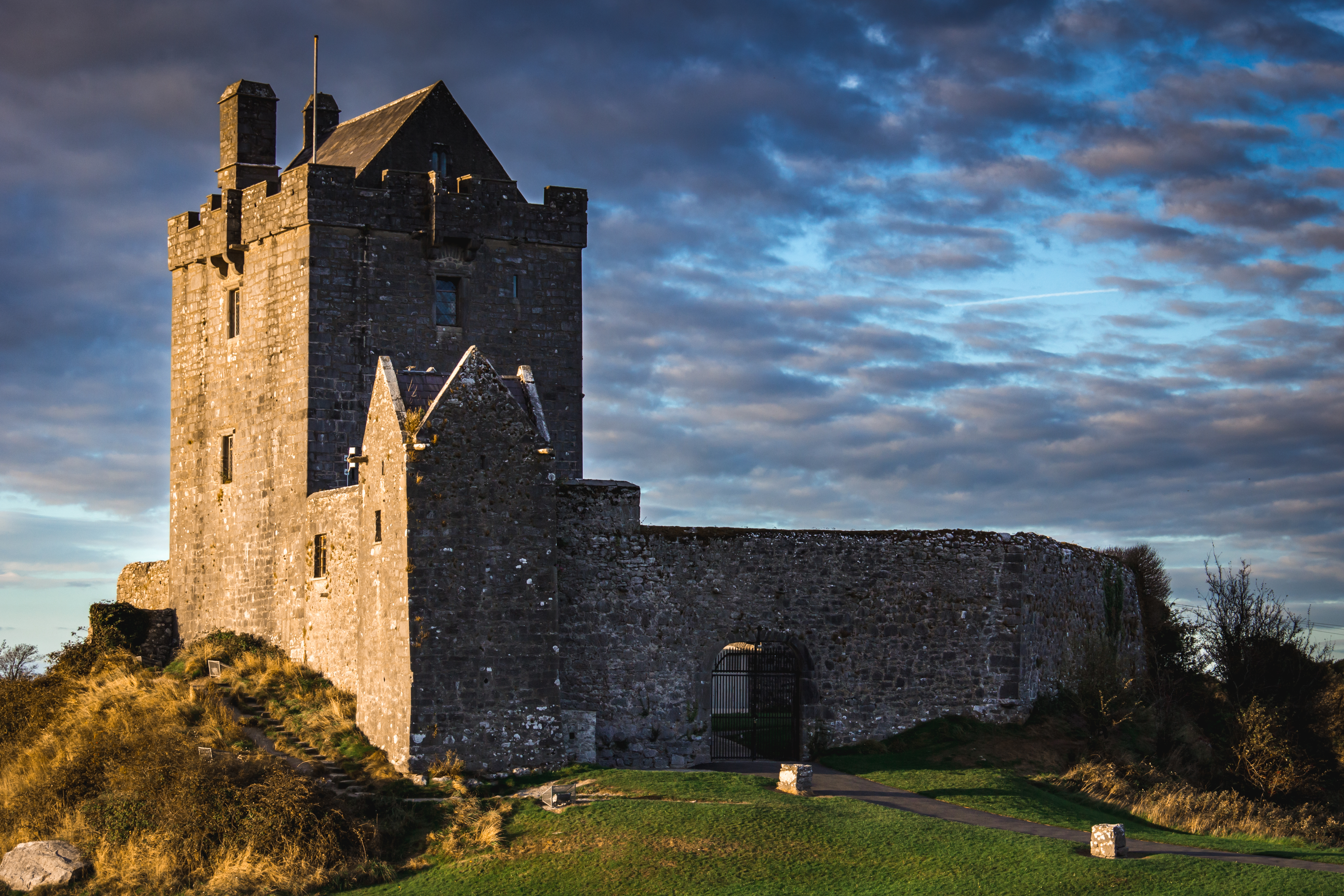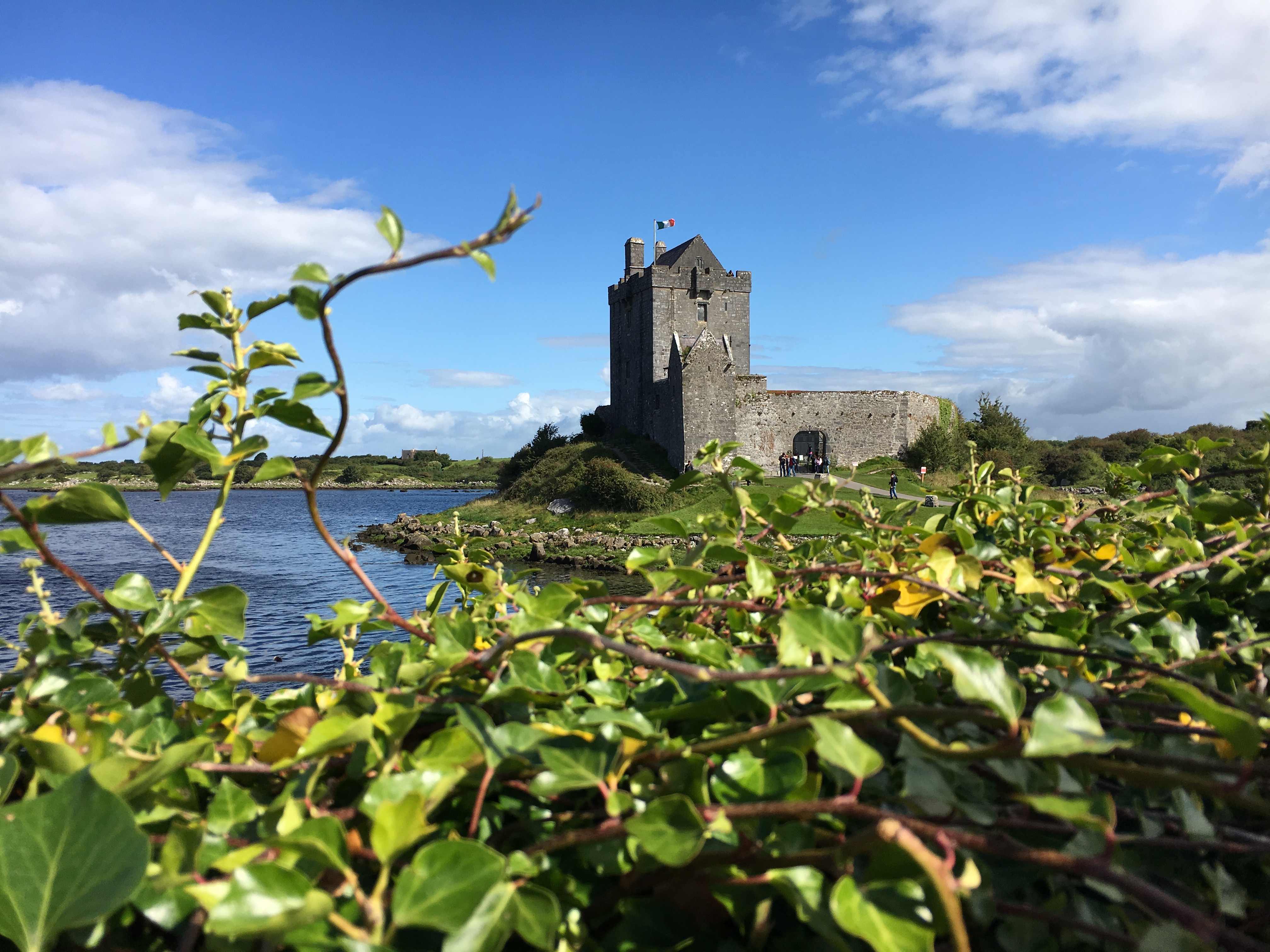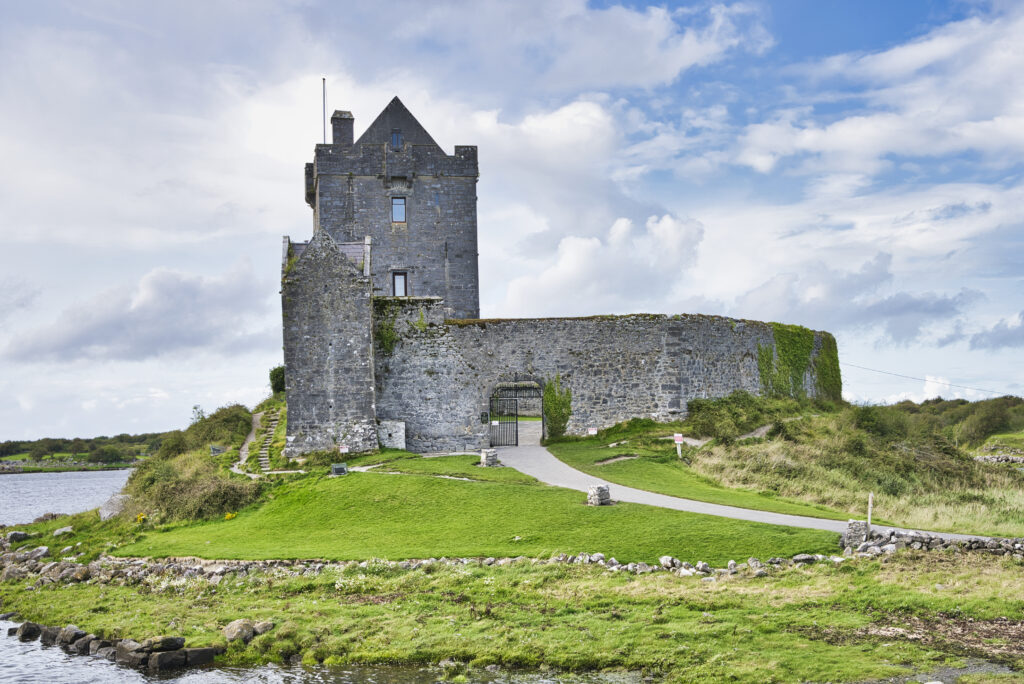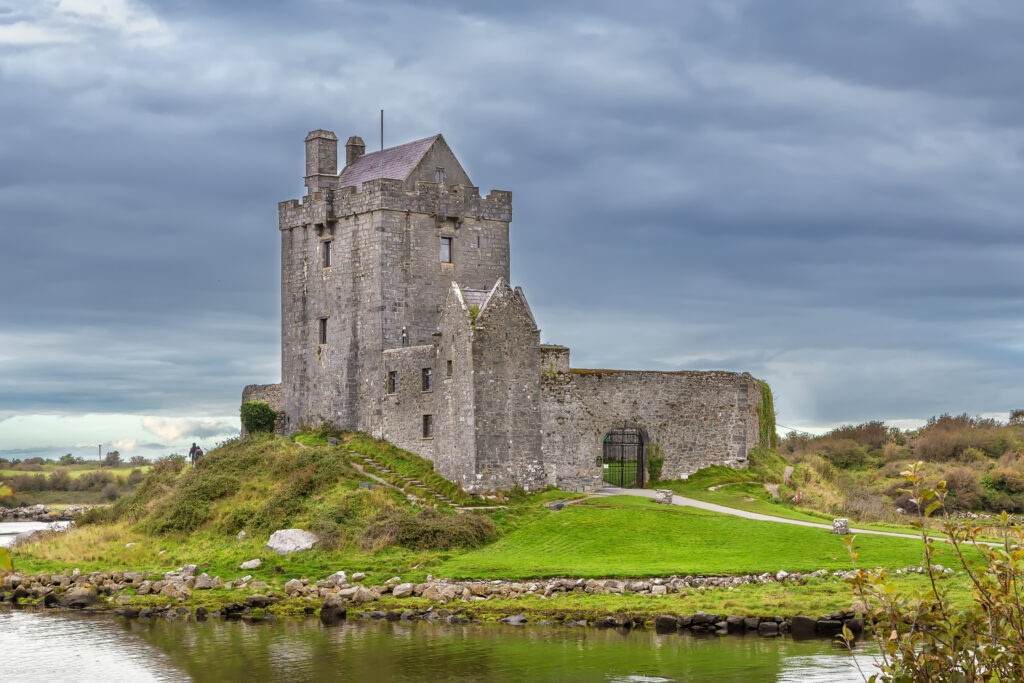

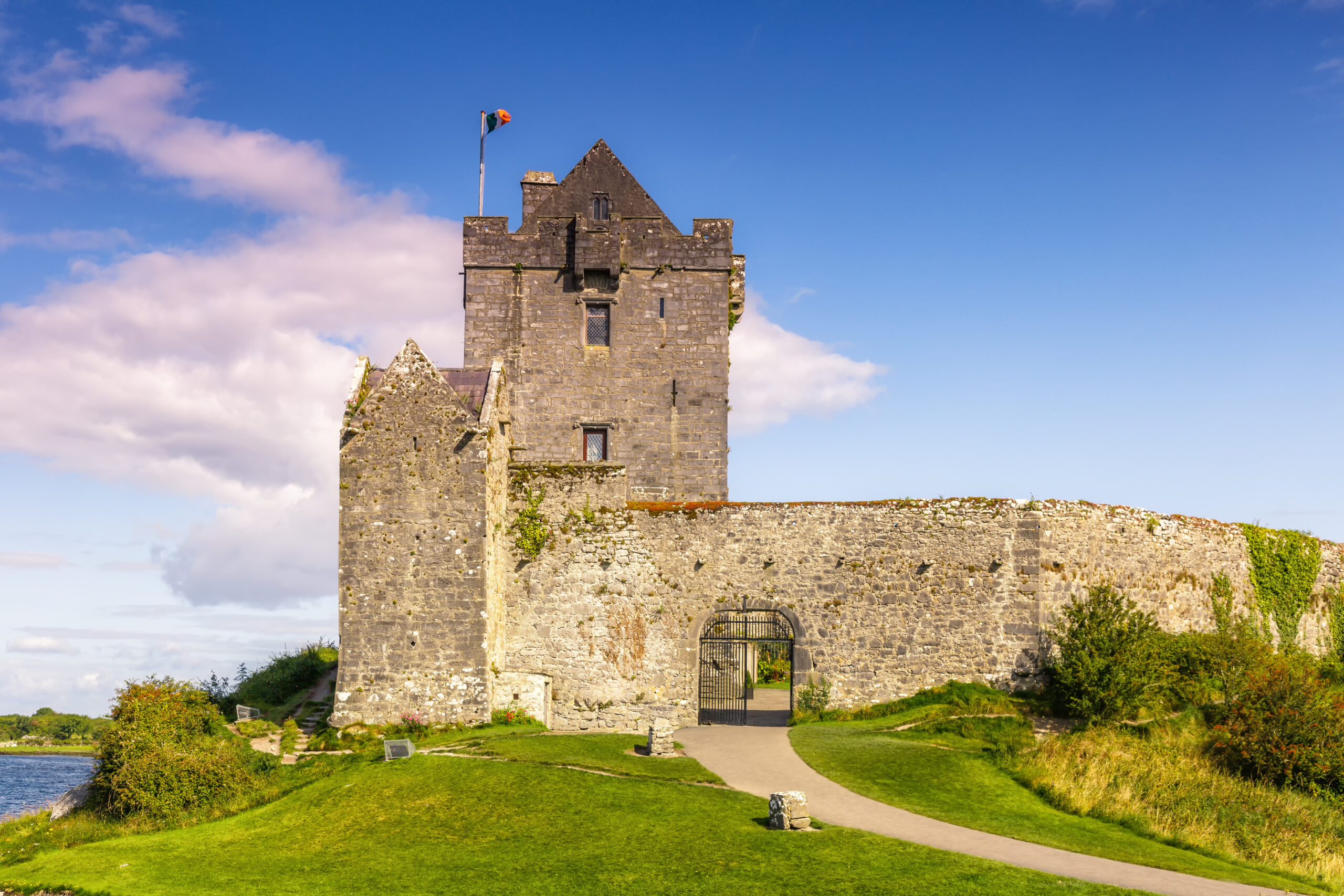
Nestled in the picturesque village of Kinvara in the south of County Galway, Ireland, stands Dunguaire Castle (Irish: Caisleán Dhún Guaire), a structure steeped in history, mythology, and legend. This majestic 16th-century tower house is not only a relic of architectural mastery, but also a tapestry of stories about ancient kings, legendary hospitality, and literary greatness.
The legendary origins and hospitality of King Guaire – Dunguaire Castle takes its name from the ancient fort (Dun) of King Guaire of Connacht, a ruler known for his extraordinary generosity and hospitality who met his death in 662 AD. King Guaire’s legacy of generosity is immortalized in the local legend of Bothar na Mias – translated as “The Way of Food.” This enchanting story tells how King Guaire was so rich and benevolent that plates of food miraculously made their way along this mythical road to all those in need. Although the original dun is probably the earthwork with wall remains at the western tip of the castle grounds, this story is symbolic of the spirit of kindness that permeated the land.
A stronghold of the O’Hynes clan and the Martyns of Galway – This historic tower house was built in 1520 by the descendants of King Guaire, the O’Hynes clan. The structure embodies the typical tower house style that flourished in Ireland between 1450 and 1650 and was built primarily by Irish nobles and landowners. These fortresses were not designed for significant military operations, but served as fortified residences that offered protection and status. The counties of Clare, Limerick, and the southern part of County Galway have the highest concentration of such structures, each of which tells its own unique story.
In the 17th century, Dunguaire Castle became the property of the Martyn family of Galway. Richard Martyn, who was mayor of Galway from 1607 to 1608, resided in the castle until 1642. His descendants retained the estate until the end of the 17th century, when it fell into disrepair. However, the Martyn era in Dunguaire is rich in historical significance and reflects the general socio-political landscape of Ireland during these turbulent times.
Literary revival by Oliver St. John Gogarty – The fortunes of Dunguaire Castle were revived in 1924 when it was purchased and restored by Oliver St. John Gogarty, a well-known surgeon, poet, and close confidant of literary greats such as W.B. Yeats and James Joyce. Gogarty himself became a character in Joyce’s groundbreaking work “Ulysses,” immortalized as Buck Mulligan. Although he never lived in the castle, he transformed it into a hub for literary colloquiums, drawing poets, writers, and intellectuals to its hallowed halls. During this period, Dunguaire evolved from a historical monument into a refuge for modern Irish literature and thought.
The literary significance of Dunguaire Castle is further enhanced by its proximity to the residences of Lady Gregory and William Butler Yeats. Lady Gregory, known for co-founding the Abbey Theatre and her efforts to preserve Irish folklore, lived nearby in Coole Park. Yeats, the Nobel Prize winner for literature, resided in the recently restored Thoor Ballylee (Tower Béal Lee) in nearby Gort. The convergence of these literary figures in Dunguaire led to a renaissance of Irish art and culture that continues to inspire generations today.
Restoration and modern renaissance – The castle underwent a further phase of restoration when Lady Ampthill acquired it in 1954 and completed the restoration begun by Gogarty. In 1966, Dunguaire Castle opened its doors to visitors and became a venue for medieval banquets and cultural events. Today, stepping inside the castle feels like traveling back in time—you can almost hear the echoes of ancient legends, the whispers of literary discussions, and the exuberant festivities of medieval celebrations.
A cinematic setting – The fascination of Dunguaire Castle also extended to the silver screen. In 1979, the impressive backdrop provided the setting for the action-packed film “When Eight Bells Toll,” starring Anthony Hopkins. The castle’s cinematic presence cemented its status as a versatile icon in both history and popular culture.
Fascinating myths and legends – Beyond its historical and literary significance, Dunguaire Castle is surrounded by various myths and legends that capture the imagination. Among the most intriguing is the belief that the water surrounding the castle has magical properties. According to local folklore, anyone who dips their fingers in the water is granted the gift of poetic eloquence—a legend that could explain the literary brilliance of the personalities drawn to this place.
In addition, there are rumors of ghostly apparitions haunting the castle grounds. Visitors report mysterious sightings of a ghostly figure, believed to be King Guaire himself, wandering the corridors and ramparts in search of souls in need of his legendary hospitality.
A living legend – Dunguaire Castle is more than just a historic tower house; it is a living legend that continues to enchant and inspire. Its storied past, from the days of King Guaire to the literary musings of Oliver St. John Gogarty and beyond, creates a rich mosaic of history, myth, and culture. The castle is a testament to Ireland’s living heritage—a beacon of hospitality, literary excellence, and mystical fascination.
For those who follow in the footsteps of Ireland’s historic past or seek the ethereal beauty of its legends, Dunguaire Castle offers an unparalleled insight into the soul of this enchanting country. Whether through the pages of history books, the verses of poetry, or the lens of cinema, Dunguaire Castle remains an enduring symbol of Ireland’s grandeur and timeless appeal.