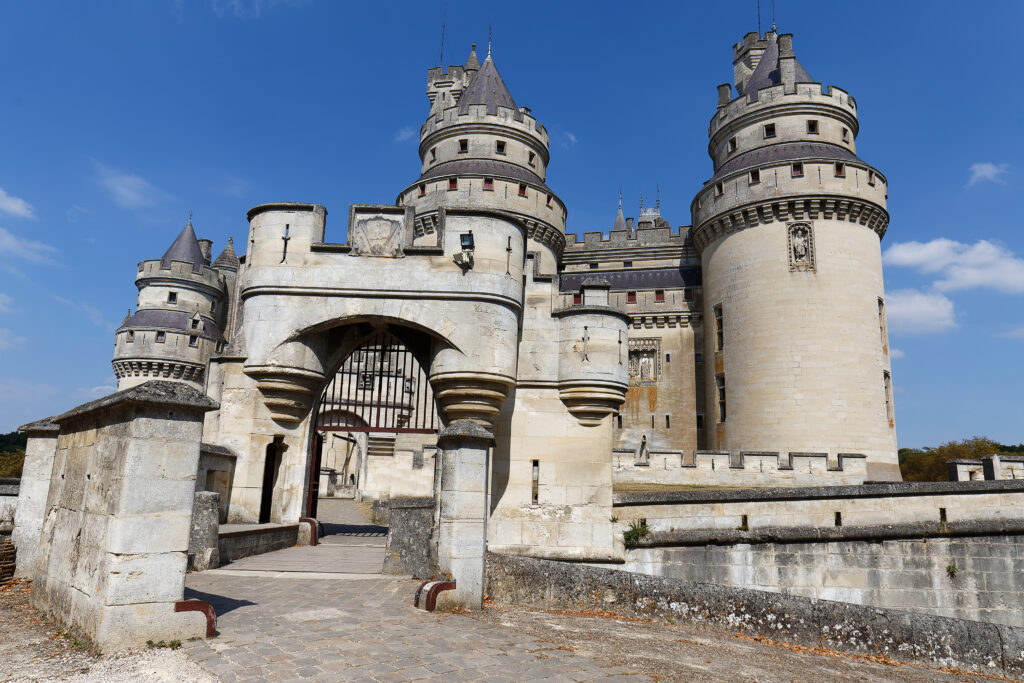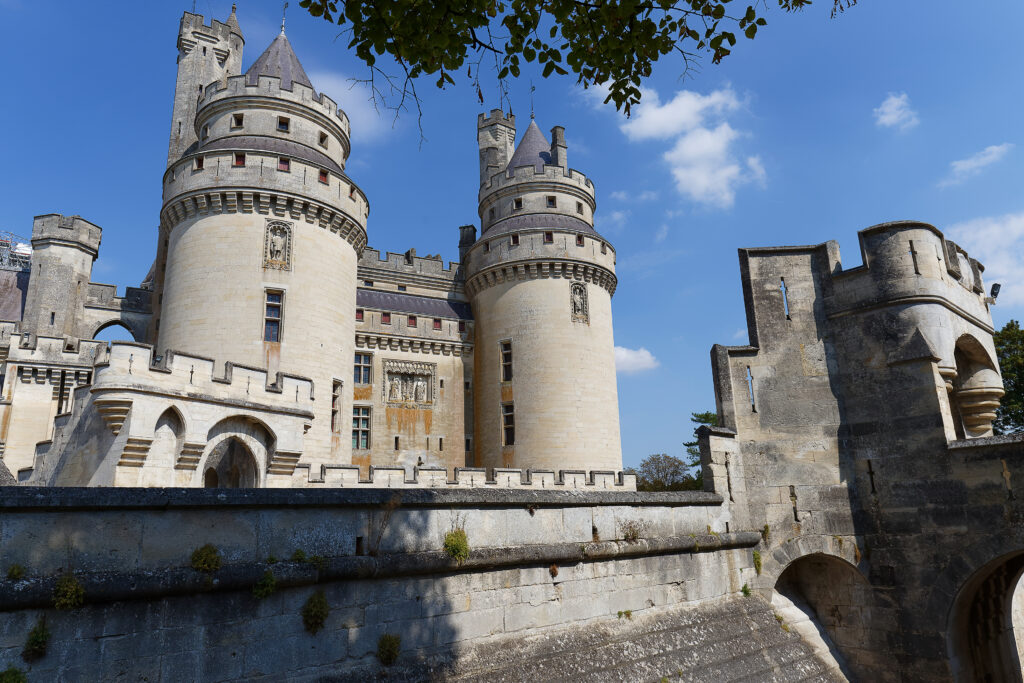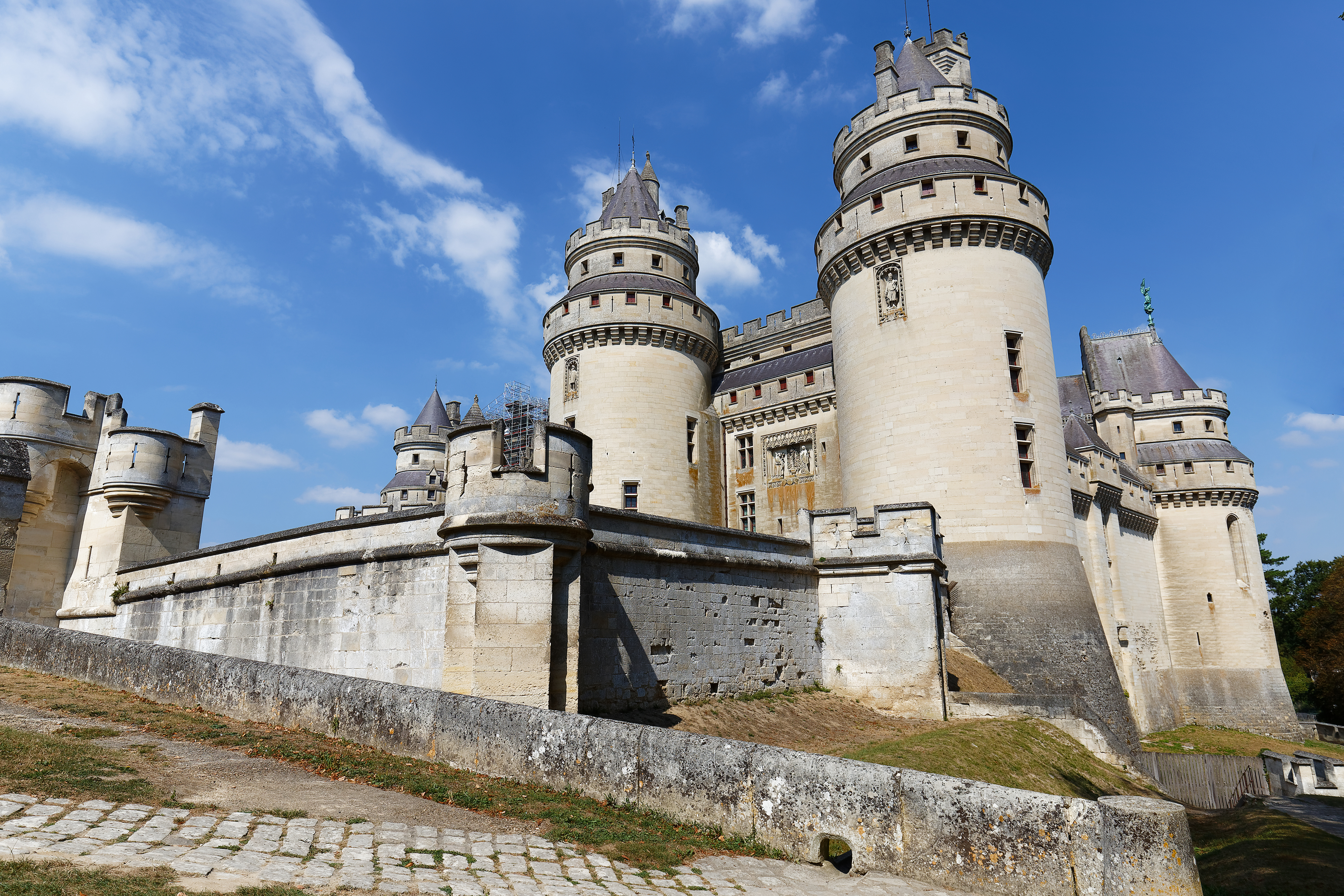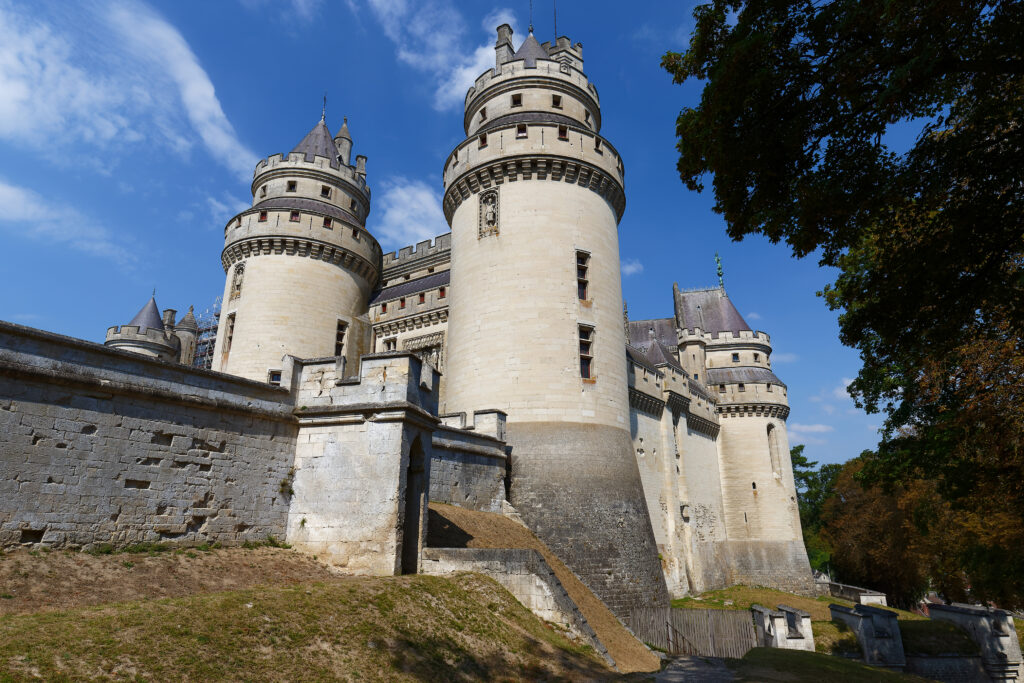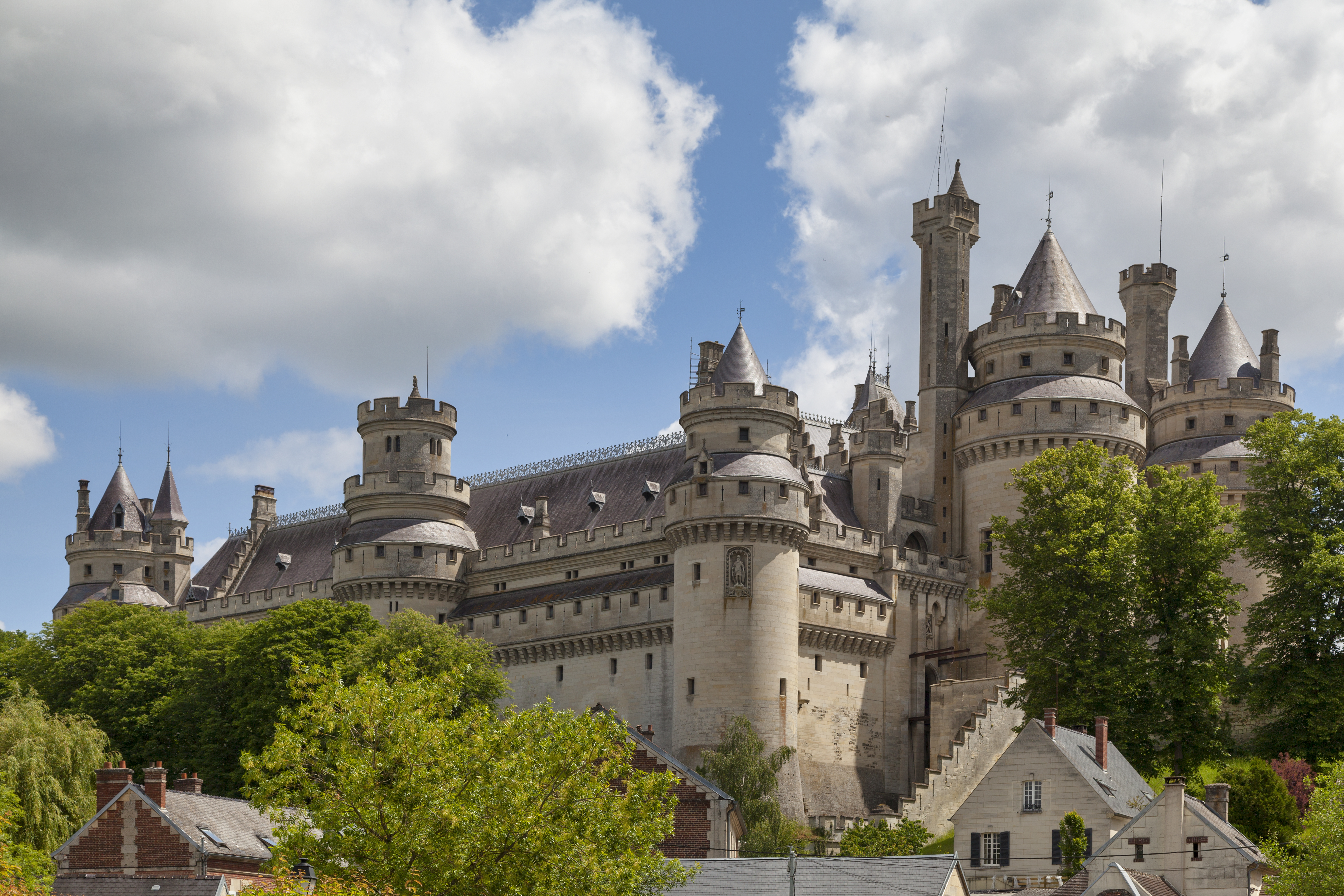

In the heart of the Oise department, north of Paris on the southeastern edge of the majestic Compiègne Forest, lies the magnificent Château de Pierrefonds. Surrounded by centuries of history, myths, and legends, this magnificent fortress has not only been protected as a Monument historique since 1848, but also bears witness to the remarkable architectural vision of Eugène Viollet-le-Duc and the ambition of Napoleon III.
Medieval origins: from humble beginnings to ducal splendor – The roots of the Château de Pierrefonds date back to the 12th century, when the first fortifications are believed to have been built. The transformation from a modest castle to a major fortress began in earnest when King Charles VI ascended the throne. In 1392, he elevated the county of Valois, which included Pierrefonds, to a duchy and transferred it to his brother Louis d’Orléans. Under Louis’s direction, chief architect Jean le Noir planned the expansion and fortification of the castle from 1393 to 1407, creating an impressive fortress that reflected the power and prestige of the Middle Ages.
Unrest and destruction: The siege of 1617 – The peace in Pierrefonds was shattered in March 1617 when the castle became a battlefield. François-Annibal d’Estrées, the then lord of the castle and brother of the famous Gabrielle d’Estrées, found himself embroiled in the turbulent political unrest against the young King Louis XIII.
Led by Henri II de Bourbon, this faction of discontented French nobles faced off against the powerful troops of Cardinal Richelieu. The siege culminated in the partial destruction of the once impregnable fortress, which then remained a ghostly ruin for over two centuries.
An unlikely revival: Napoleon Bonaparte and the ruins – By a twist of fate, the dilapidated ruins caught the eye of Napoleon Bonaparte, who purchased the property in 1810 for only 3,000 francs. Although his immediate plans for the site were unclear, the picturesque decay attracted the attention of artists and royal families, culminating in a remarkable event in August 1832.
Here, the “Citizen King” Louis Philippe hosted a grand banquet to celebrate the marriage of his daughter Louise to Leopold I of Belgium, forever linking Pierrefonds with moments of royal splendor.
An artistic muse: capturing the ruins on canvas – In the mid-19th century, the ruins of Pierrefonds inspired the brushstrokes of Jean-Baptiste Camille Corot.
Between 1834 and 1866, Corot immortalized the crumbling structure in a series of impressive paintings, each capturing the sublime beauty and melancholic splendor of the decaying castle. These works cemented the ruins’ reputation as a romantic attraction and drew visitors who wanted to see the remnants of a bygone era with their own eyes.
The visionary restoration: Viollet-le-Duc and Napoleon III. – The decisive chapter in the history of the Château de Pierrefonds began in 1850, when the future Emperor Napoleon III visited the ruins. He recognized the potential for a magnificent imperial residence and in 1857 commissioned the renowned architect Eugène Viollet-le-Duc to restore it. Viollet-le-Duc, known for his expertise in the field of neo-Gothic architecture, was tasked not only with restoring the ruins, but also with transforming them into a palatial landmark of Napoleonic France.
This ambitious project was expanded in 1861 with plans to create an imperial residence that would reflect the splendor of the Second Empire. The project aimed to reconcile historical authenticity with contemporary grandeur, embodying the aspirations of a resurgent French monarchy.
In the summer of 1867, Napoleon III presented King Ludwig II of Bavaria with the emerging masterpiece in the hope of inspiring him for his own castle building projects, including the famous Neuschwanstein Castle.
An unfinished masterpiece: The construction freeze – Despite grand visions, the restoration of Pierrefonds faced considerable challenges. The fall of Napoleon III during the Franco-Prussian War in 1871 brought progress to a halt, and six years after Viollet-le-Duc’s death in 1885, the ambitious construction project was abruptly and permanently halted. Although unfinished, the castle stood as a monumental blend of medieval charm and 19th-century innovation.
Pierrefonds in the modern era: from landmark to movie star – Even today, the fortified walls of the Château de Pierrefonds continue to fascinate and inspire. Its status as a protected historical monument ensures its preservation for future generations, while its dramatic architecture has made it a sought-after filming location for filmmakers. In particular, it served as the backdrop for the action-packed film “The Man in the Iron Mask” starring Leonardo DiCaprio and played an important role in the BBC series “Merlin: The New Adventures” from 2008 to 2012.
A living legend – Château de Pierrefonds is more than just a static relic of the past; it is a dynamic symbol of historical resilience and architectural genius. Combining the mystique of medieval lore with the visionary brilliance of the 19th century, the castle is a testament to human creativity and the timeless fascination of historical grandeur. Whether shrouded in the mist of early morning or bathed in the golden hues of sunset, Pierrefonds continues to captivate all who behold it, securing its place in the annals of French cultural heritage for centuries to come.