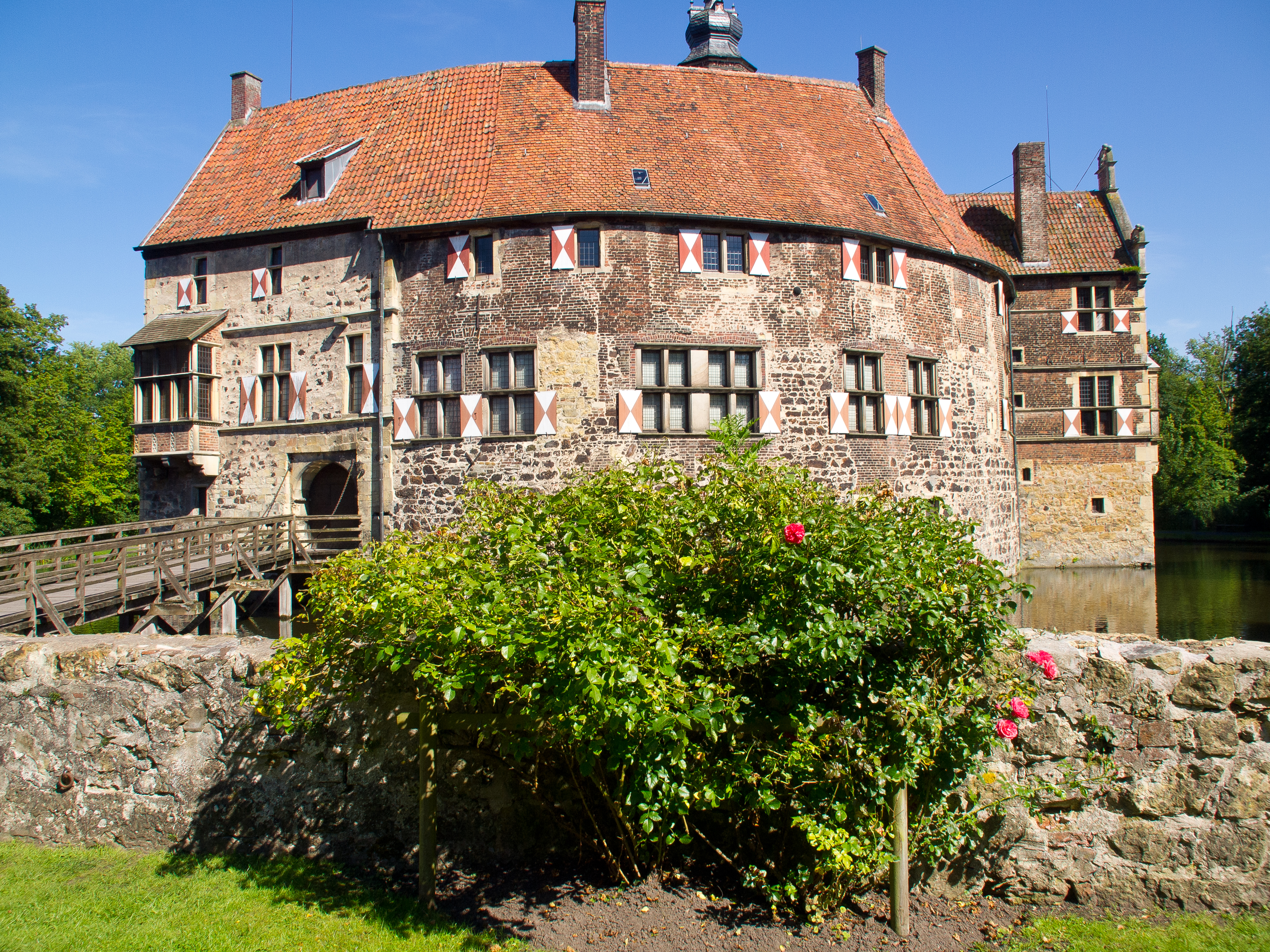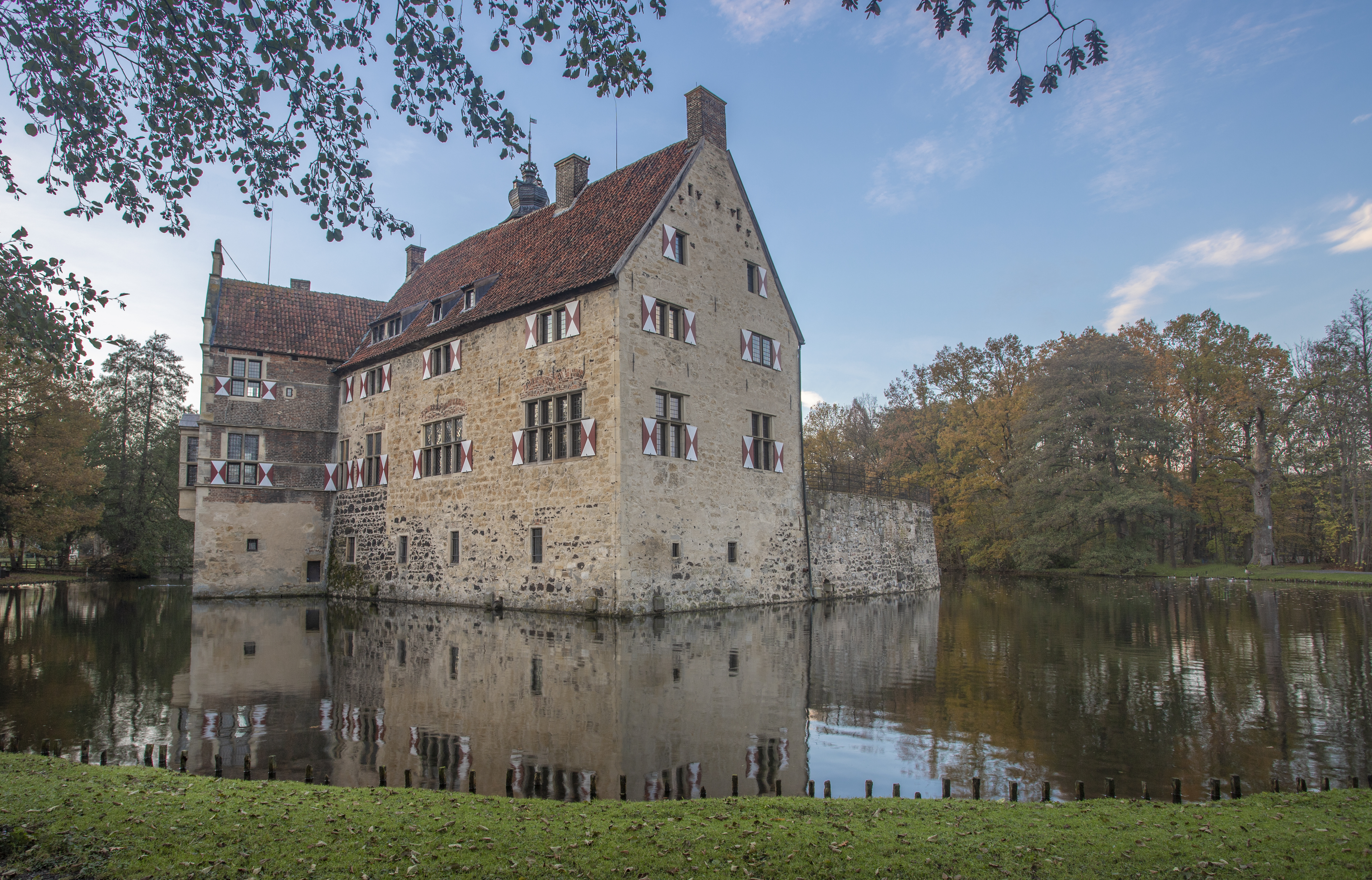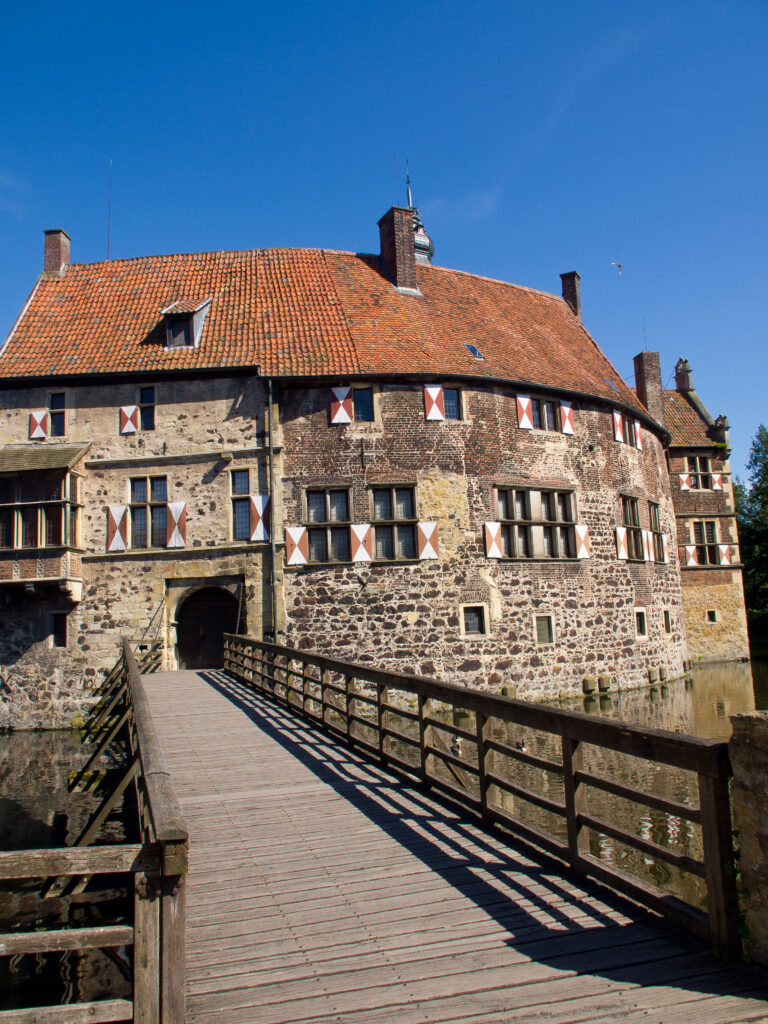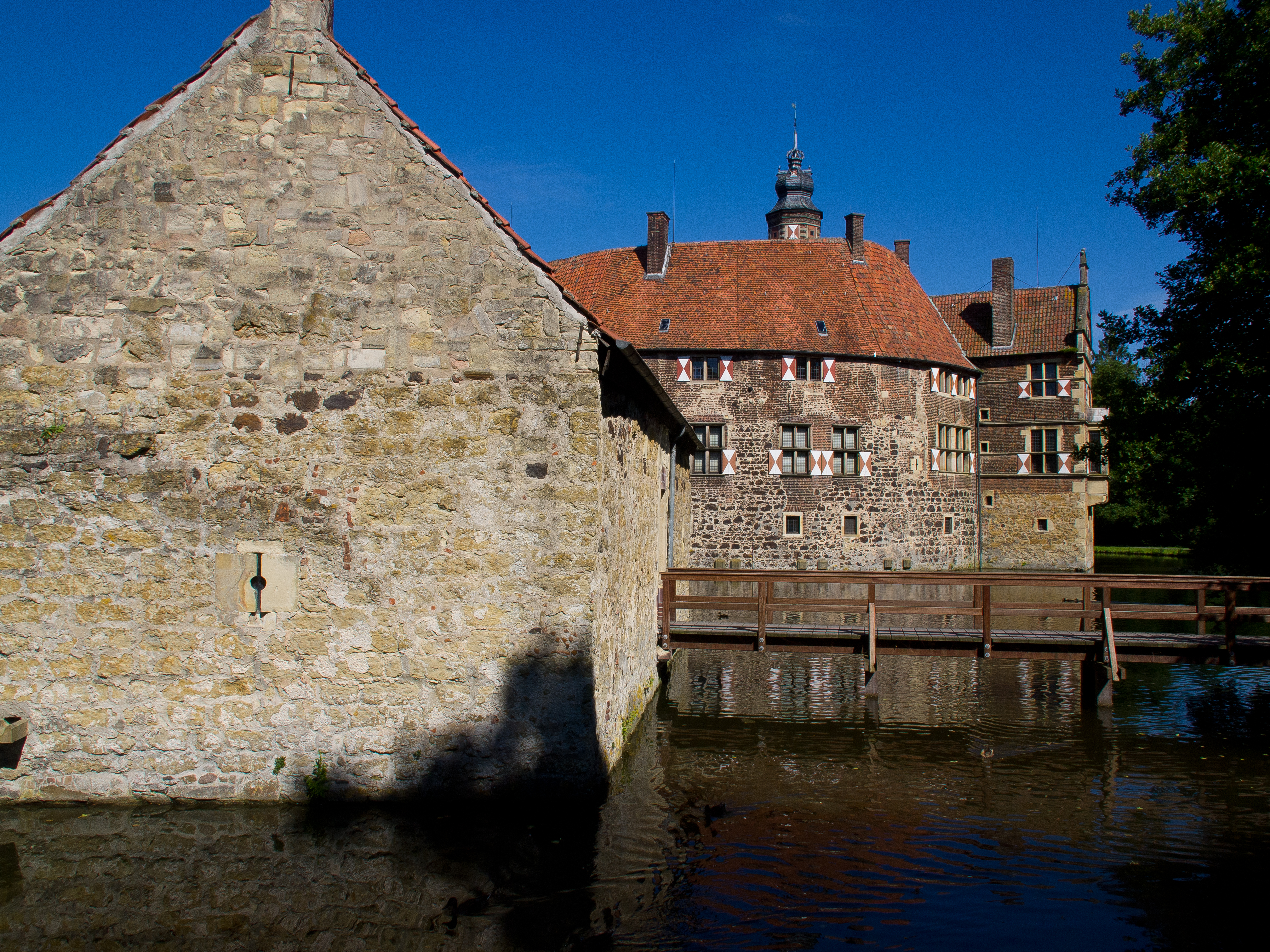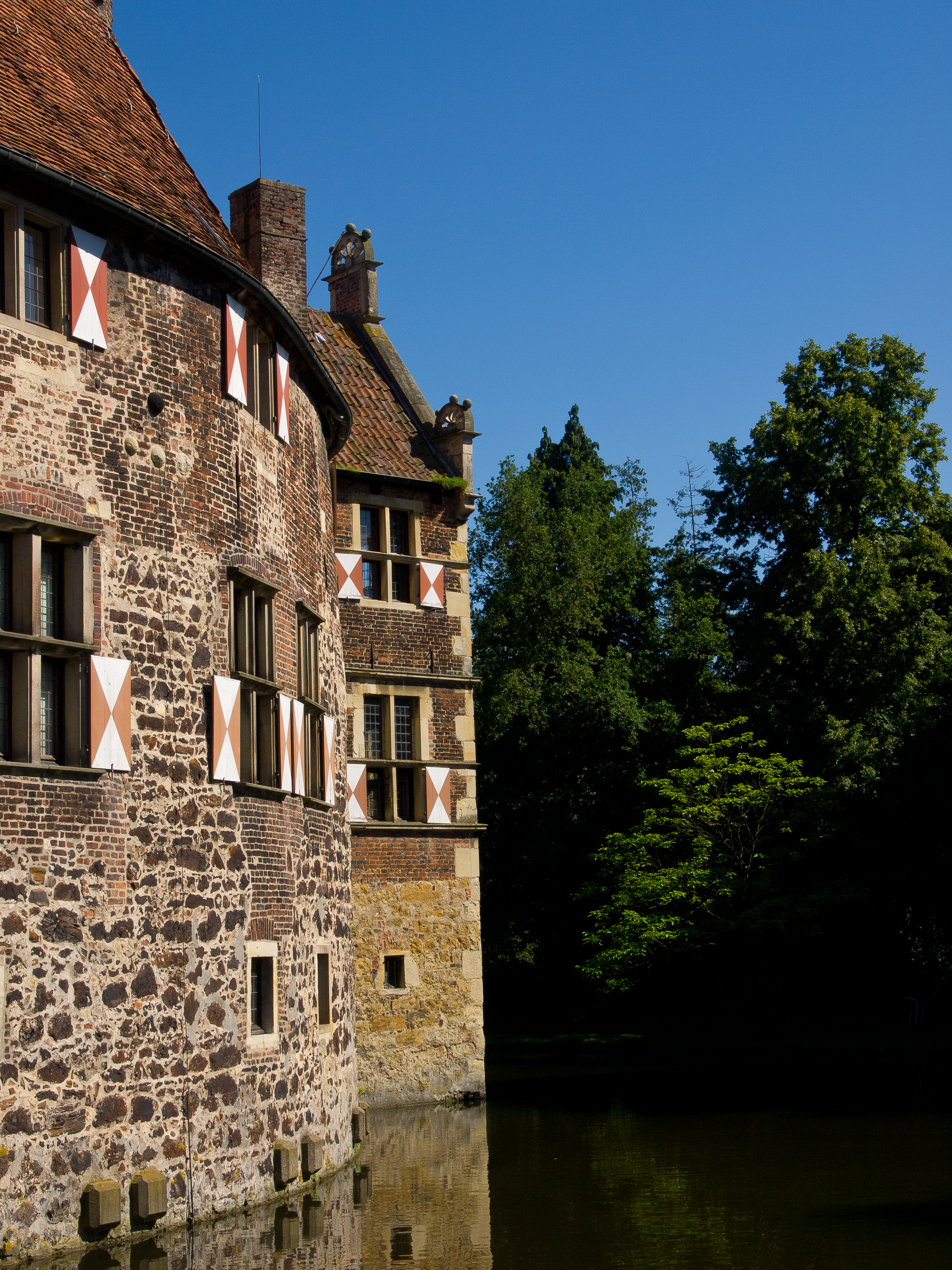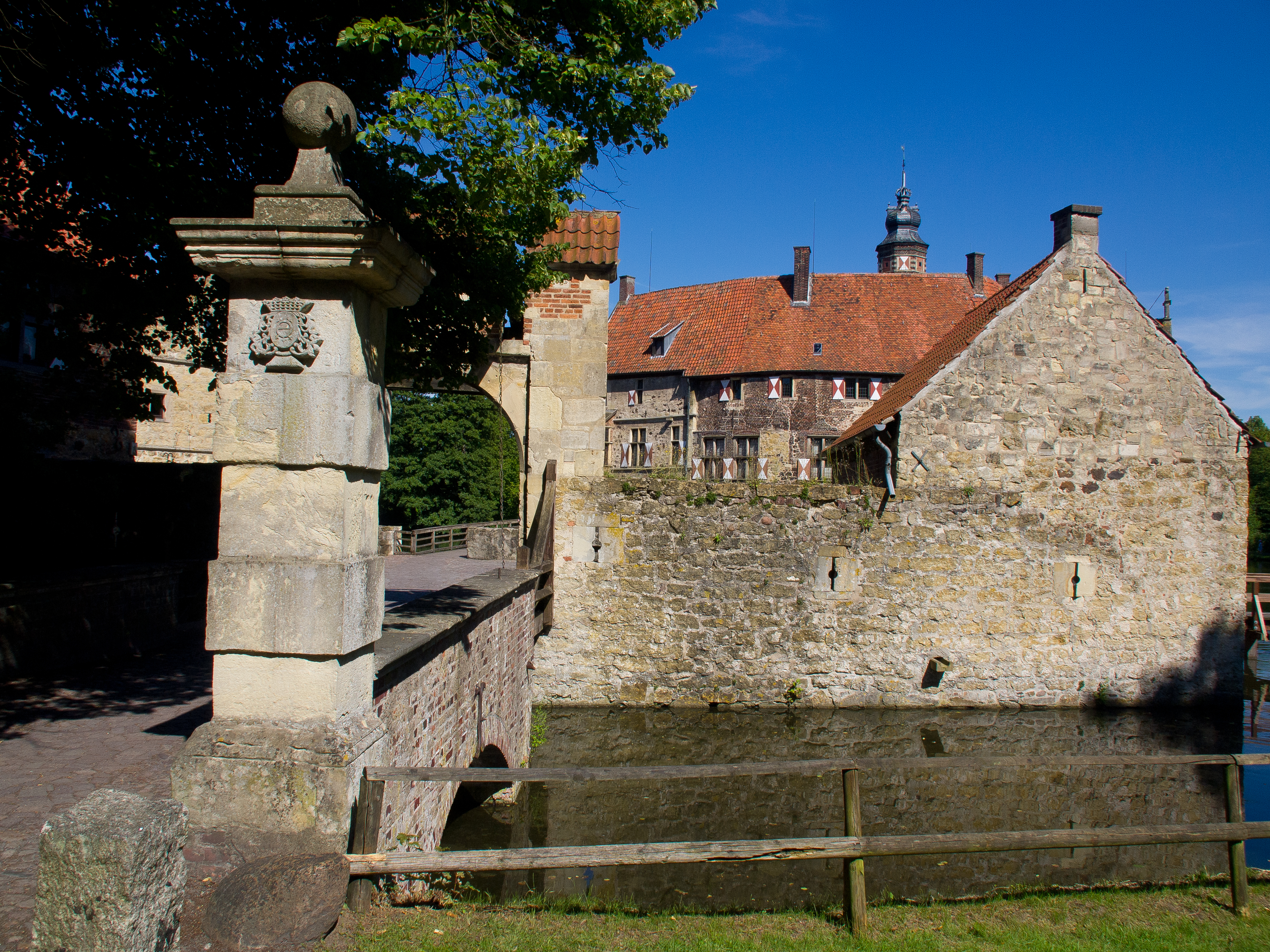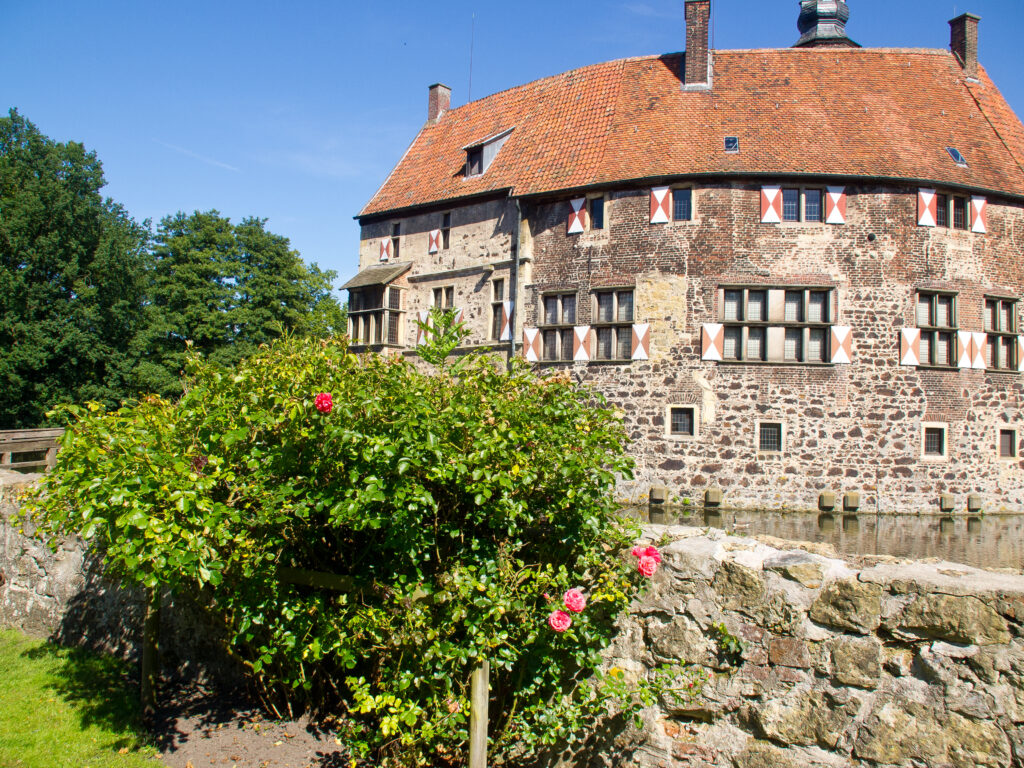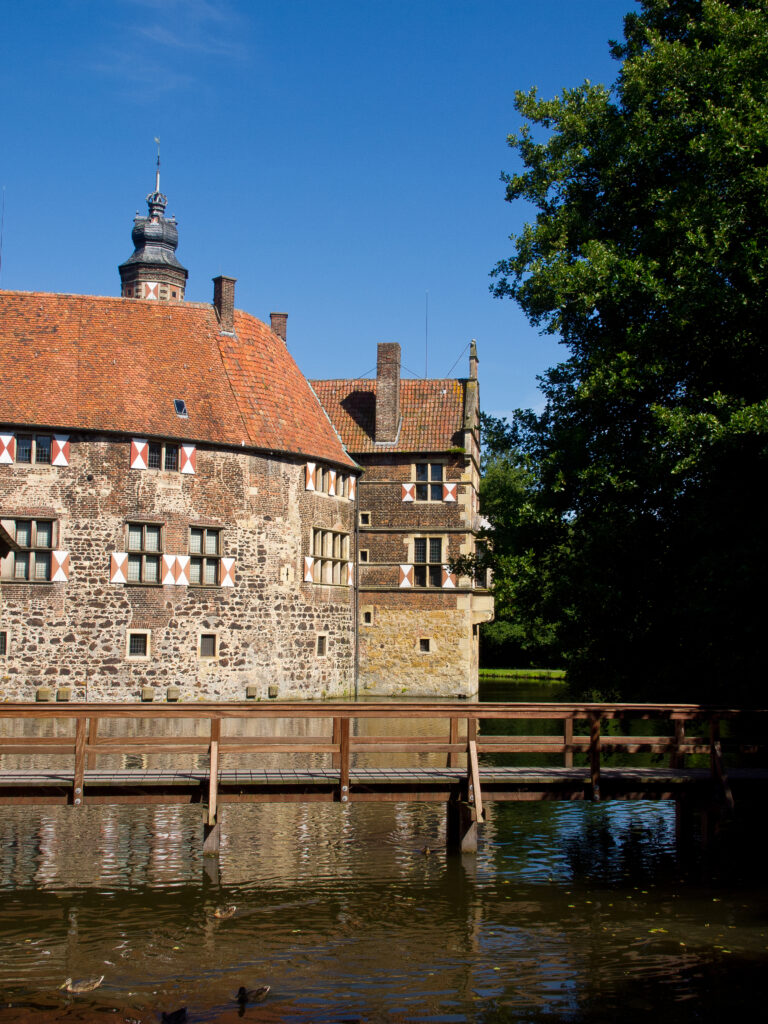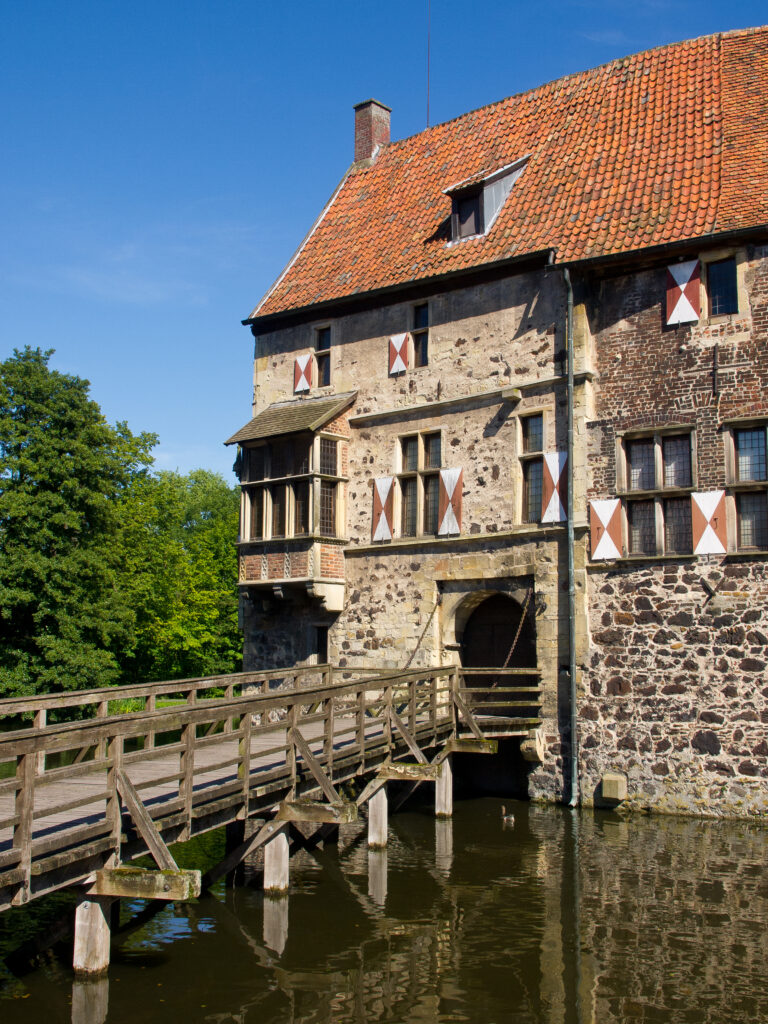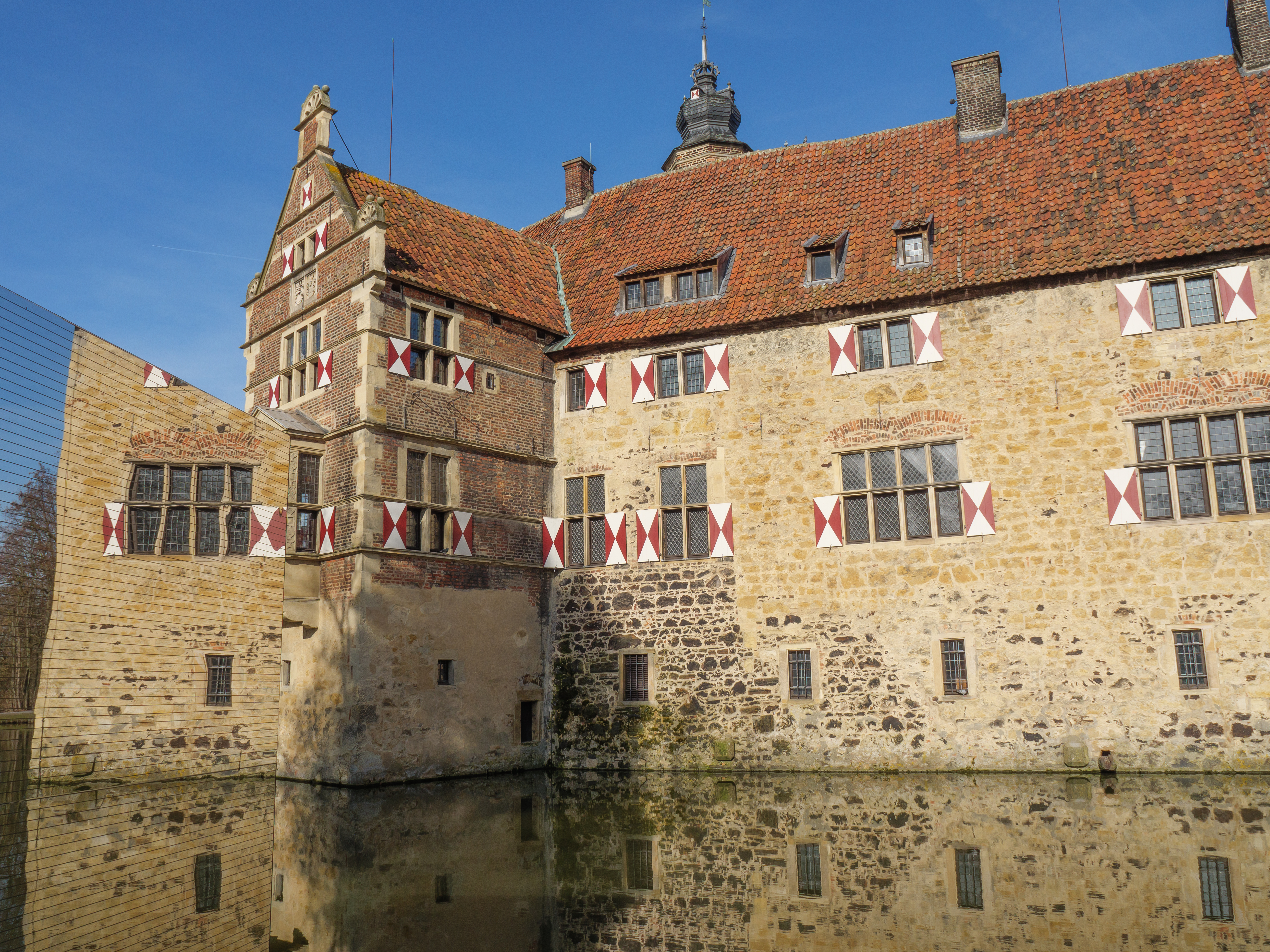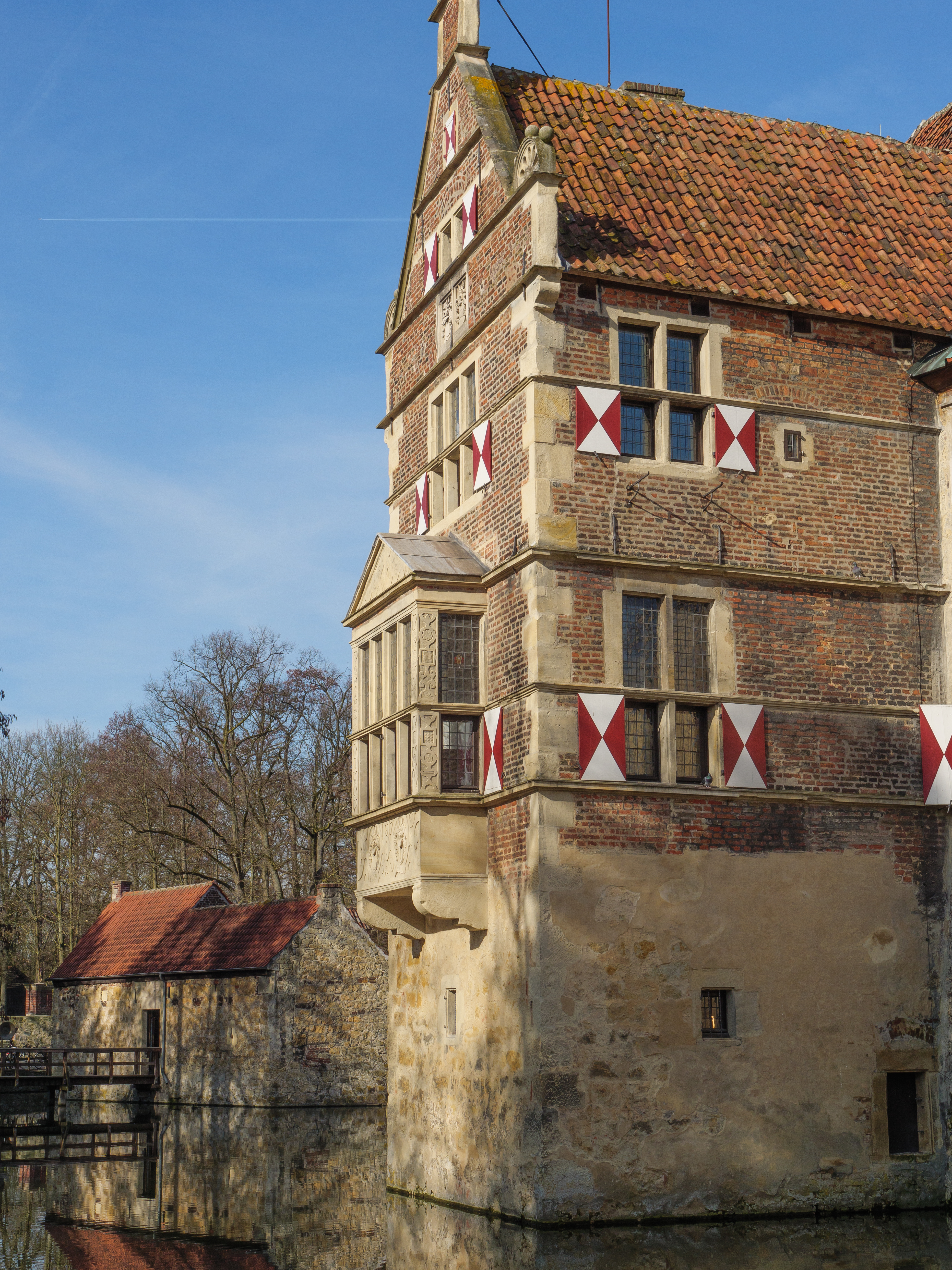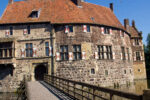

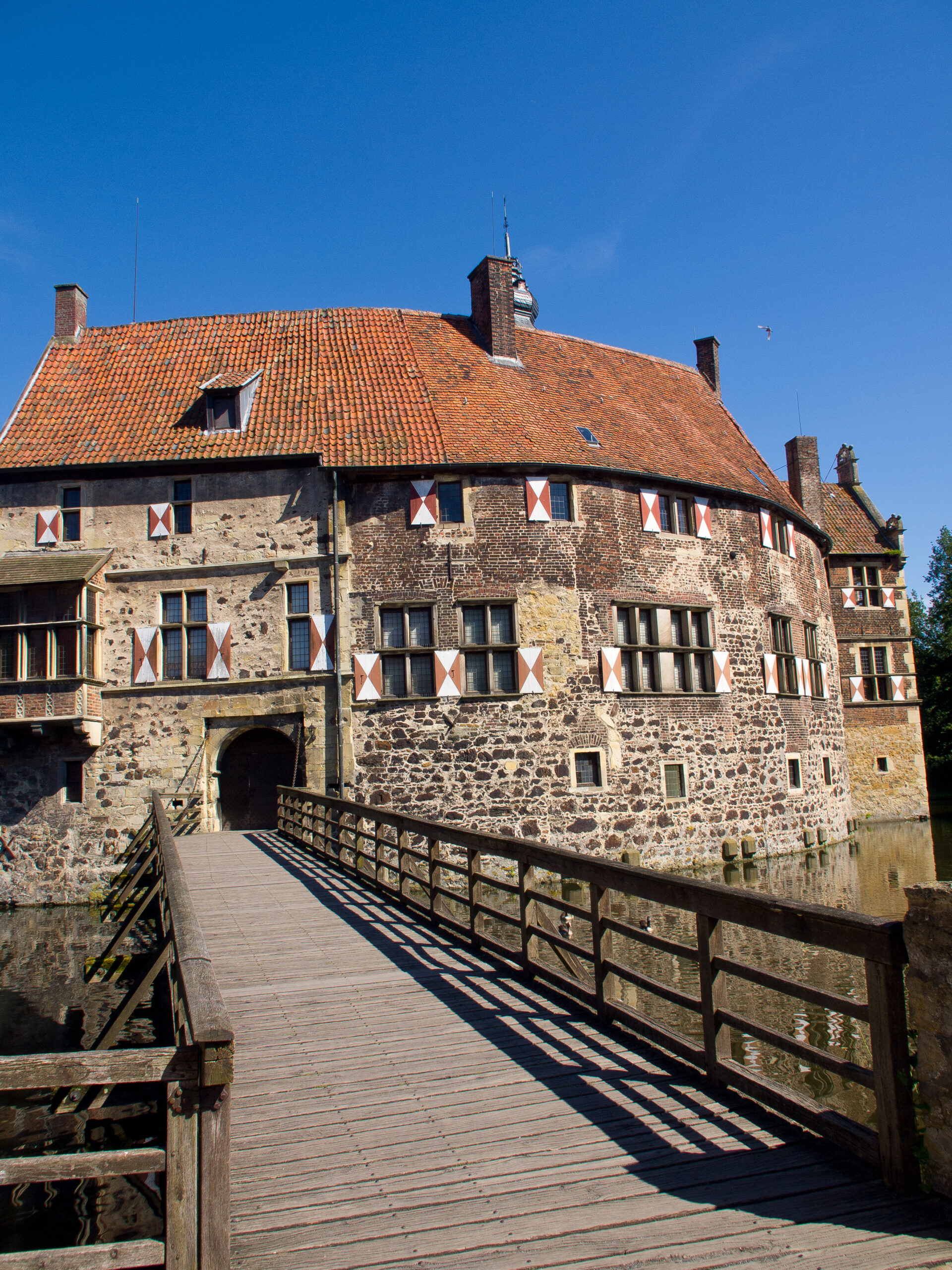
One of Germany’s oldest and best-preserved moated castles rises up in the picturesque countryside of the Münsterland region: Vischering Castle. This historic fortress looks back on an eventful past full of wars, fires, and reconstructions, and today stands as a fascinating testament to medieval architecture and history.
The beginnings of the fortified stronghold – The history of Vischering Castle begins in the second half of the 13th century, when the Bishop of Münster, Gerhard von der Mark, had it built as a fortress against the rebellious lords of Lüdinghausen. The castle served to secure the sovereign rights of the Diocese of Münster and was built on a sandy island in the Stever arm of the river. Soon after its foundation, the bishop granted the complex as a hereditary fief to the ministerial Albert III von Wulfheim. This enfeoffment laid the foundation for the centuries-long connection between the von Wulfheim family – later known as Droste zu Vischering – and the castle.
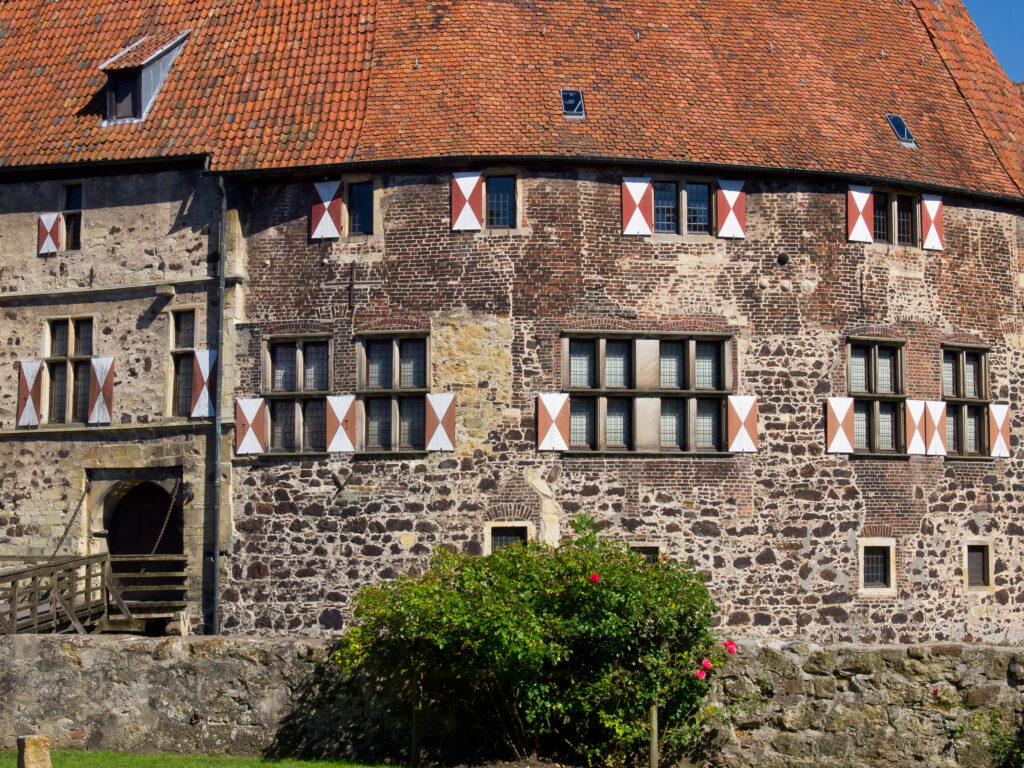
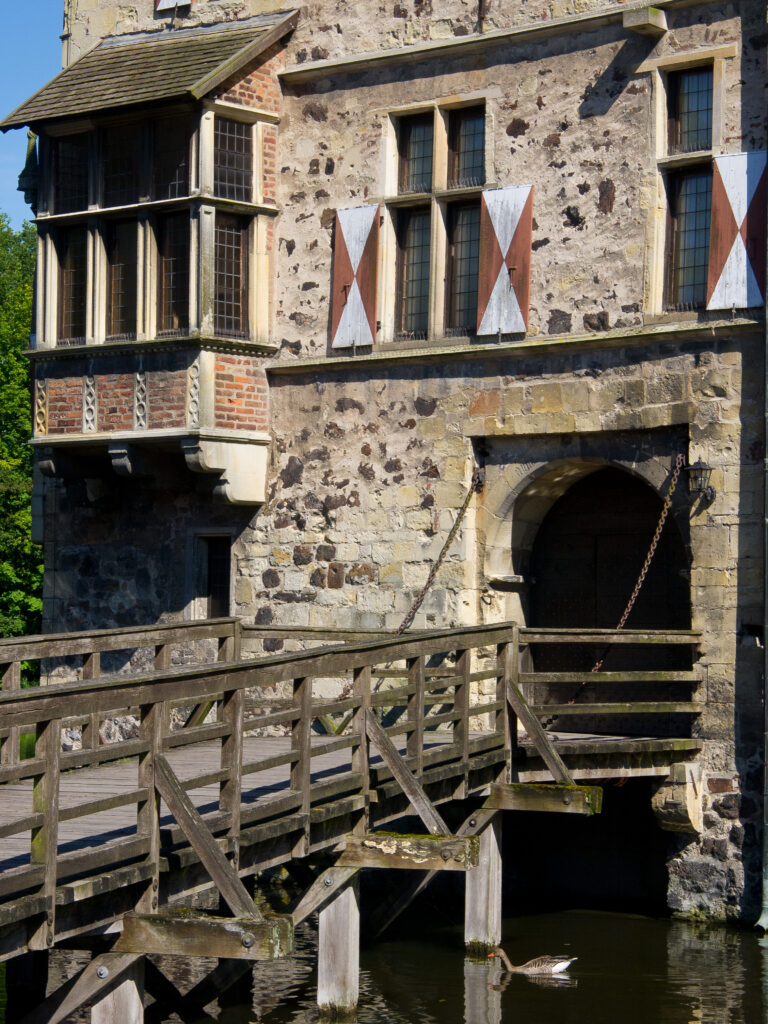
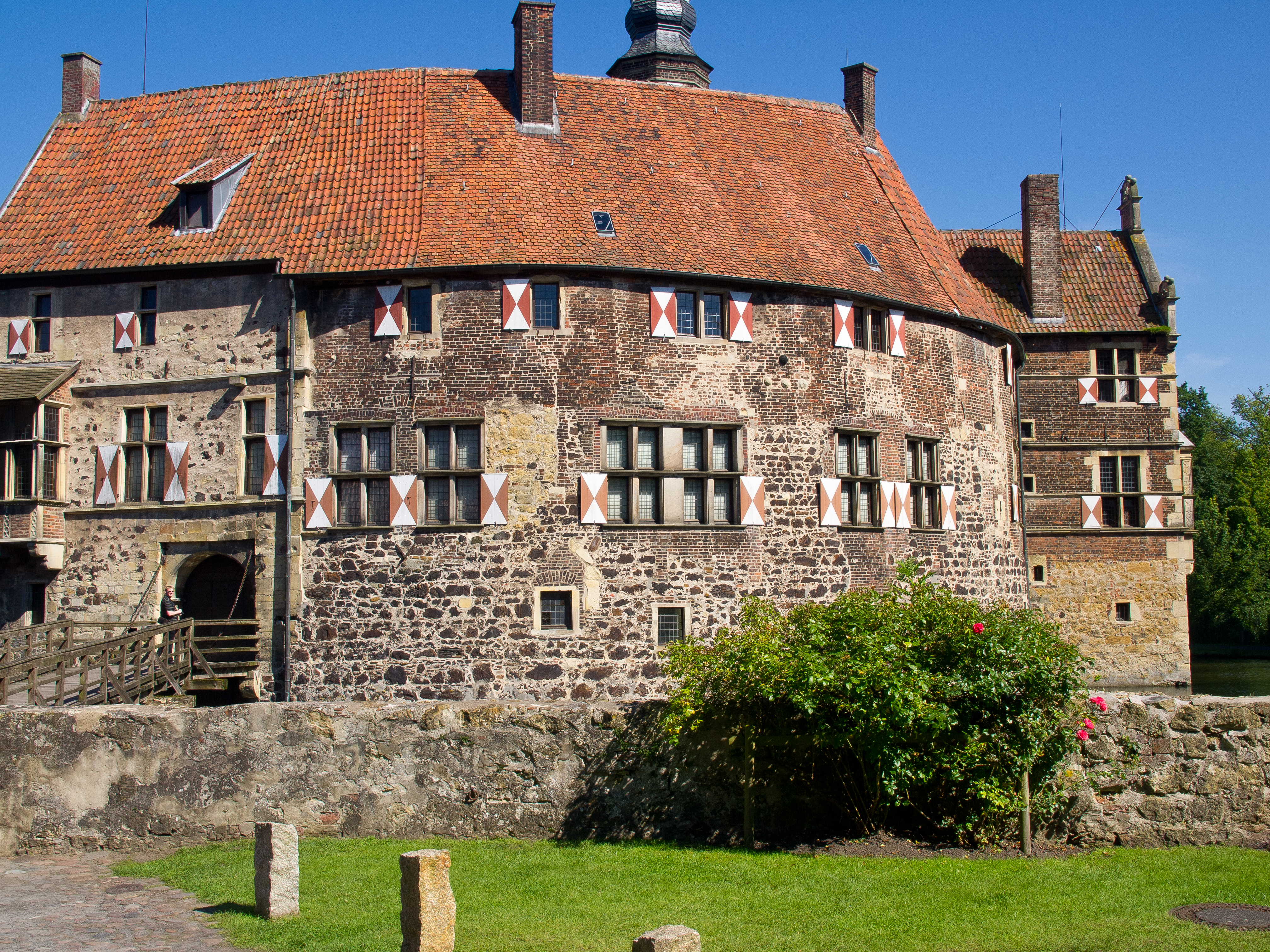
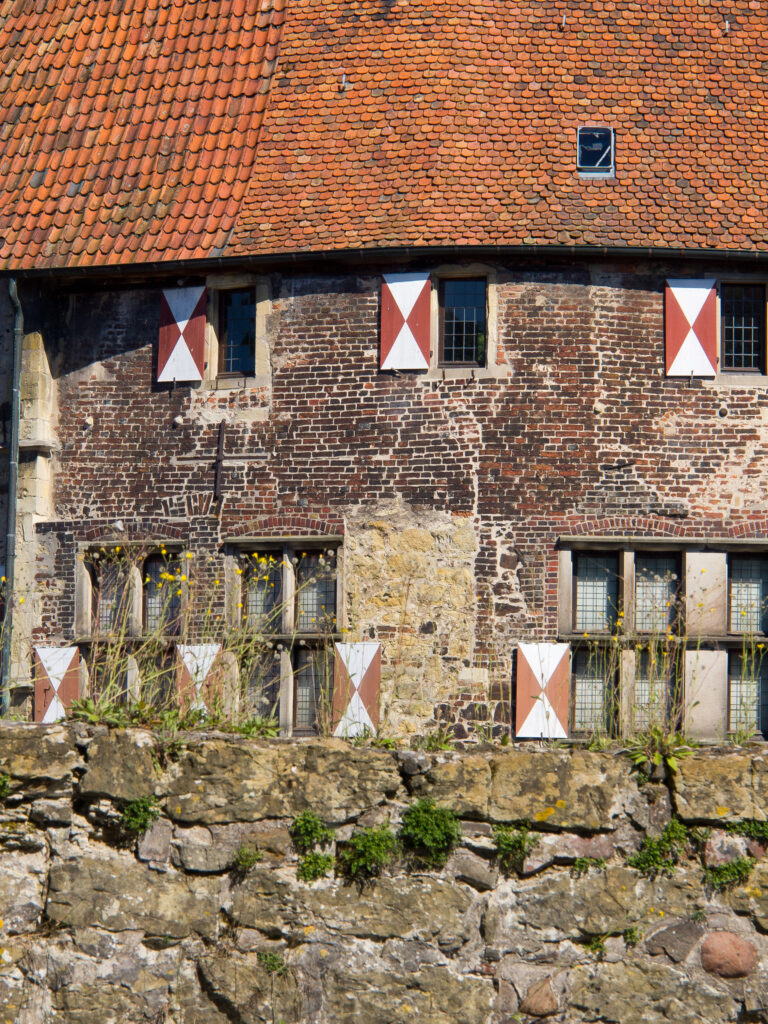
From medieval stronghold to Renaissance residence – The castle was largely destroyed by a devastating fire in 1521. Johann von Droste zu Vischering then began to rebuild the castle in the Renaissance style. The reconstruction took several decades, with the new buildings offering greater living comfort but also somewhat diminishing the castle’s defensive character. Particularly noteworthy are the window openings in the previously windowless curtain wall, which improved the flow of light into the interior rooms.
A special addition during this period was the so-called “Auslucht,” an extension protruding into the water, which gave the stately residential building a representative touch. This architectural refinement testifies to how the castle developed from a military base into a comfortable residence.
Turmoil of war and economic significance – Over the centuries, Vischering Castle was repeatedly the scene of armed conflicts.
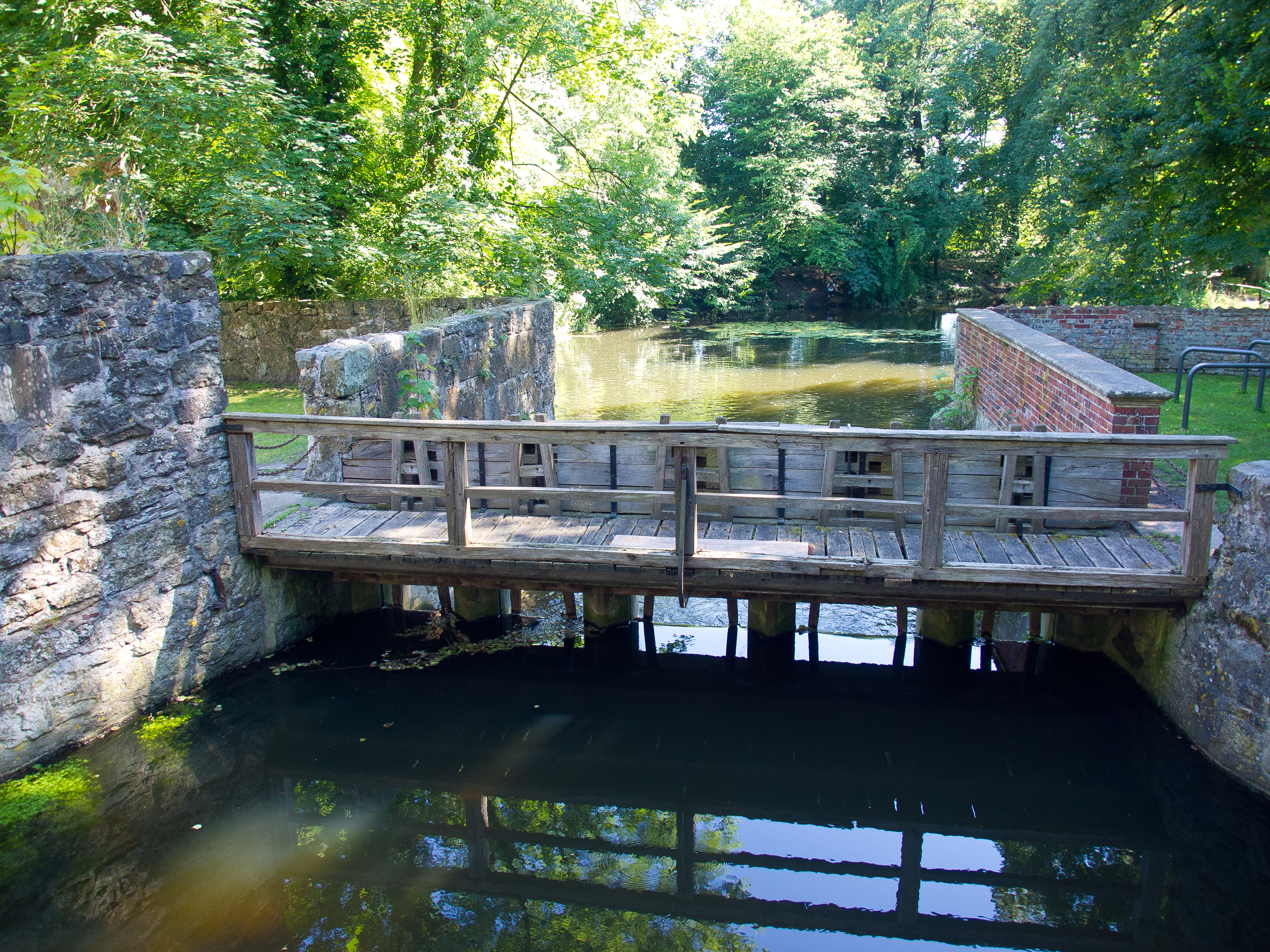
For example, Hessian troops occupied the castle during the Thirty Years’ War. It is unclear whether there was any major fighting, but the occupiers remained until at least October 1634. In addition to its military significance, the castle also played an important economic role. As early as the 13th century, mills are mentioned in documents on the site, which supplied the inhabitants with food and other essential goods.
Although these mills were rebuilt many times over the centuries and ultimately fell victim to the bombing raids of World War II, the remains and the millstone in front of St. George’s Chapel are reminders of this economic activity.
Restoration and modernity – After the destruction of World War II and many years of neglect, a comprehensive restoration of the castle began in the 1970s.
Under the direction of the Coesfeld district, the complex was converted into a cultural and civic center. A particular highlight of this restoration phase was the discovery and uncovering of 16th-century Secco paintings and a walled-up fireplace in the knights’ hall. The restoration work and the establishment of the museum made Vischering Castle an important cultural destination.
Today, the castle serves as a venue for concerts, lectures, and temporary art exhibitions. The most recent renovation work and the redesign of the permanent exhibition as part of the WasserBurgenWelt project led to the reopening of the Münsterland Museum in 2018.
Myths and legends surrounding the castle – Like any venerable castle, Vischering is also steeped in numerous stories and legends. One particularly impressive tale tells of a secret escape tunnel leading from the castle to the nearby forest. This tunnel is said to have served as an escape route for the inhabitants during times of siege. Even though archaeologists have not yet been able to find any evidence of the existence of such a tunnel, this legend still fires the imagination of visitors.
Another fascinating chapter in the castle’s history tells of the ghosts of former inhabitants who are said to haunt the corridors on full moon nights.
The most famous among them is the ghost of Heidenreich Droste zu Vischering, who is said to appear in the knights’ hall at night. Historians and archaeologists agree that many of these stories could be based on true events, but have been greatly embellished over the centuries and through oral tradition.
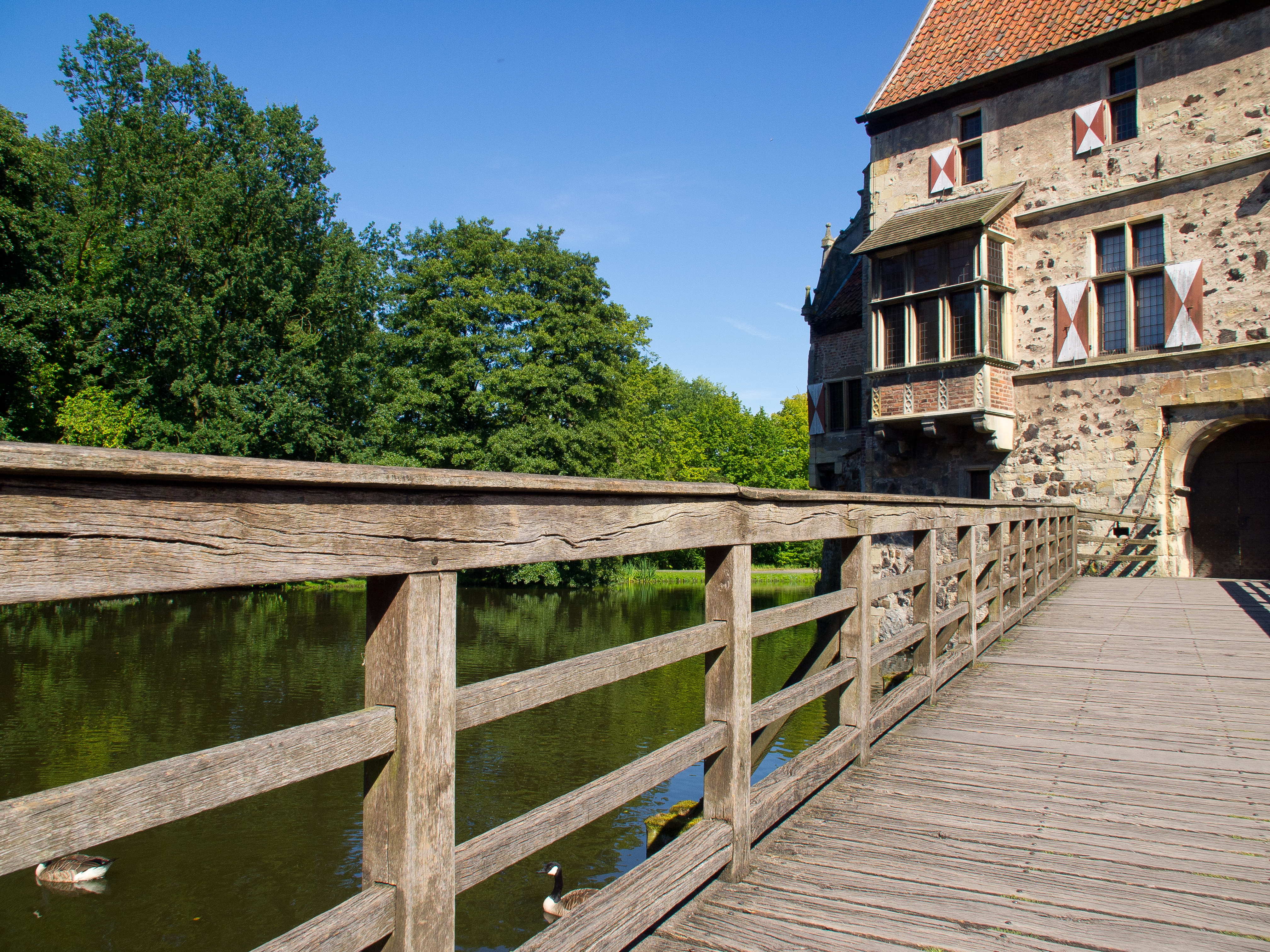
Natural beauty and monument protection – In addition to its historical significance, Vischering Castle is also notable for its natural beauty. The castle is surrounded by an extensive system of moats and ponds fed by the Stever River.
Old oak and lime trees line the paths around the castle and contribute to the idyllic atmosphere. Some of these trees, including an imposing large-leaved lime tree, are now protected as natural monuments.
Vischering Castle is more than just a historical building; it is a living testimony to past eras, uniquely combining history, architecture, and nature. From its foundation in the 13th century to its heyday in the Renaissance and its modern use as a cultural center, Vischering Castle has undergone an impressive development. For visitors, every trip to Vischering remains an exciting journey of discovery into the rich history of this extraordinary moated castle.