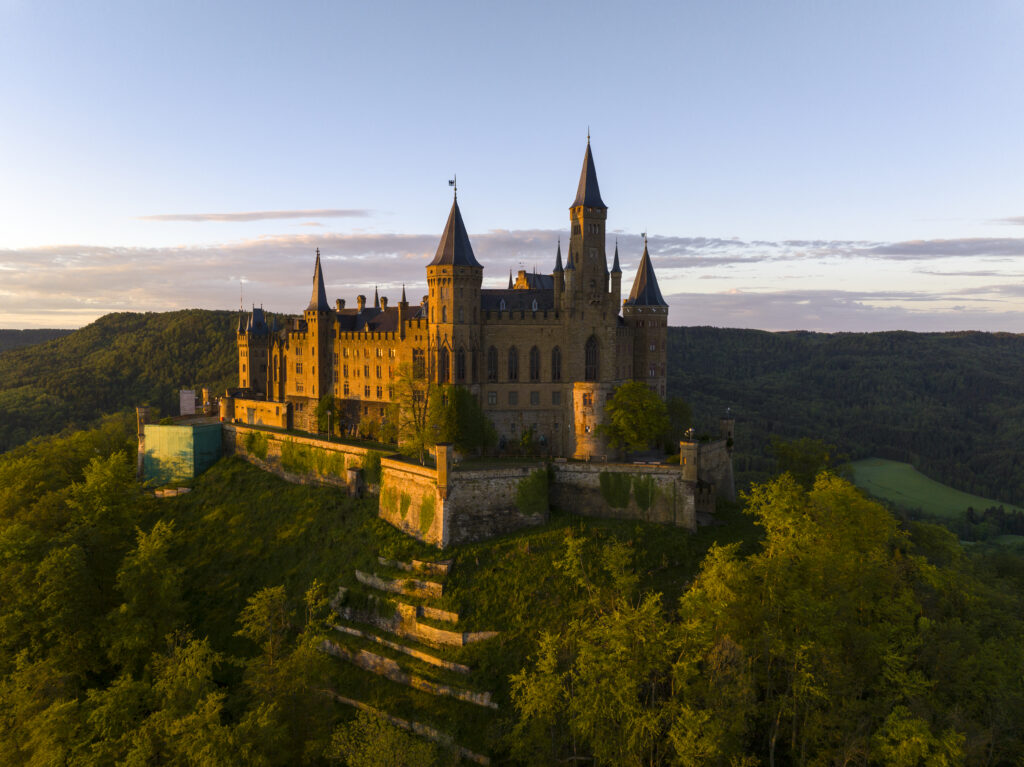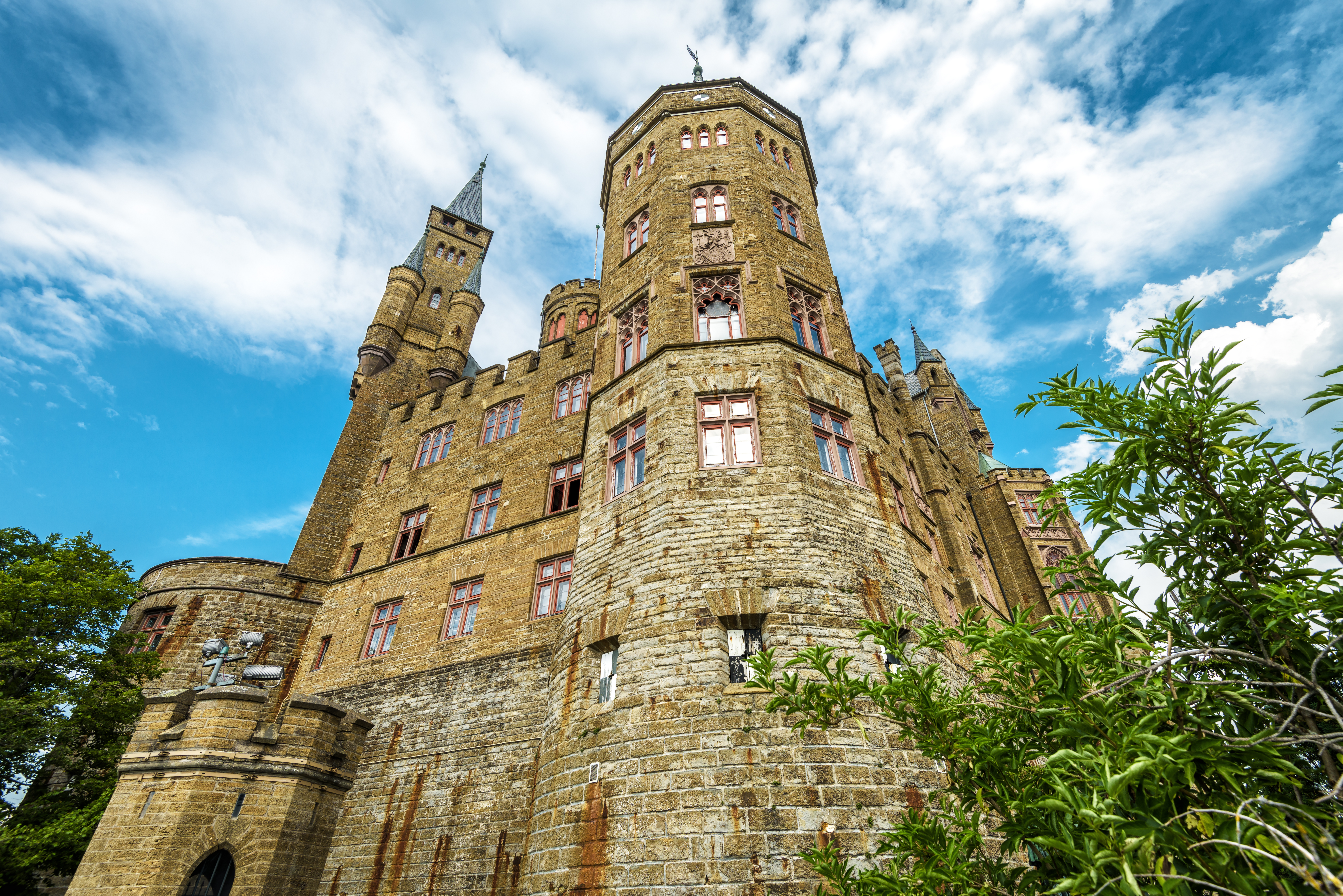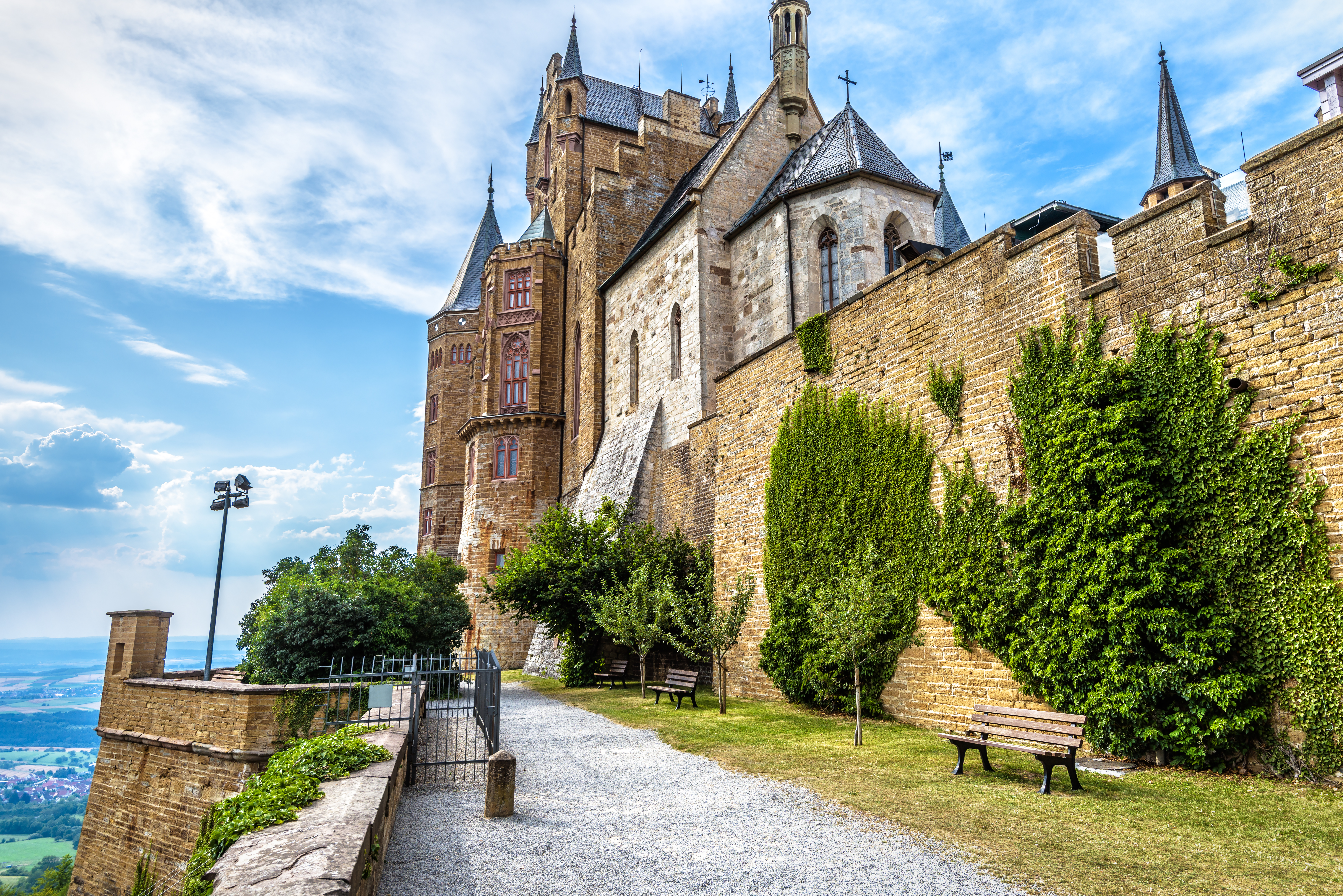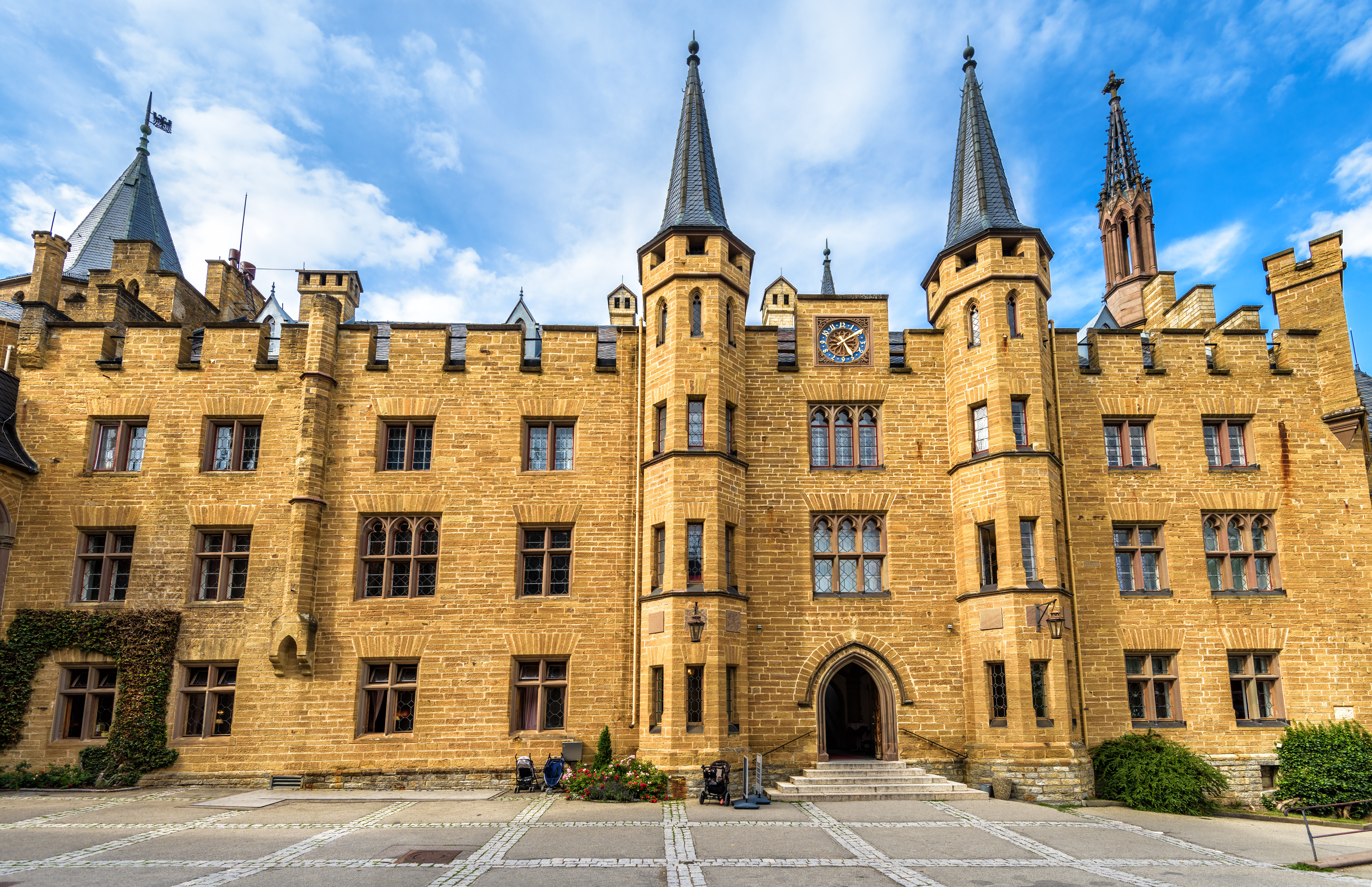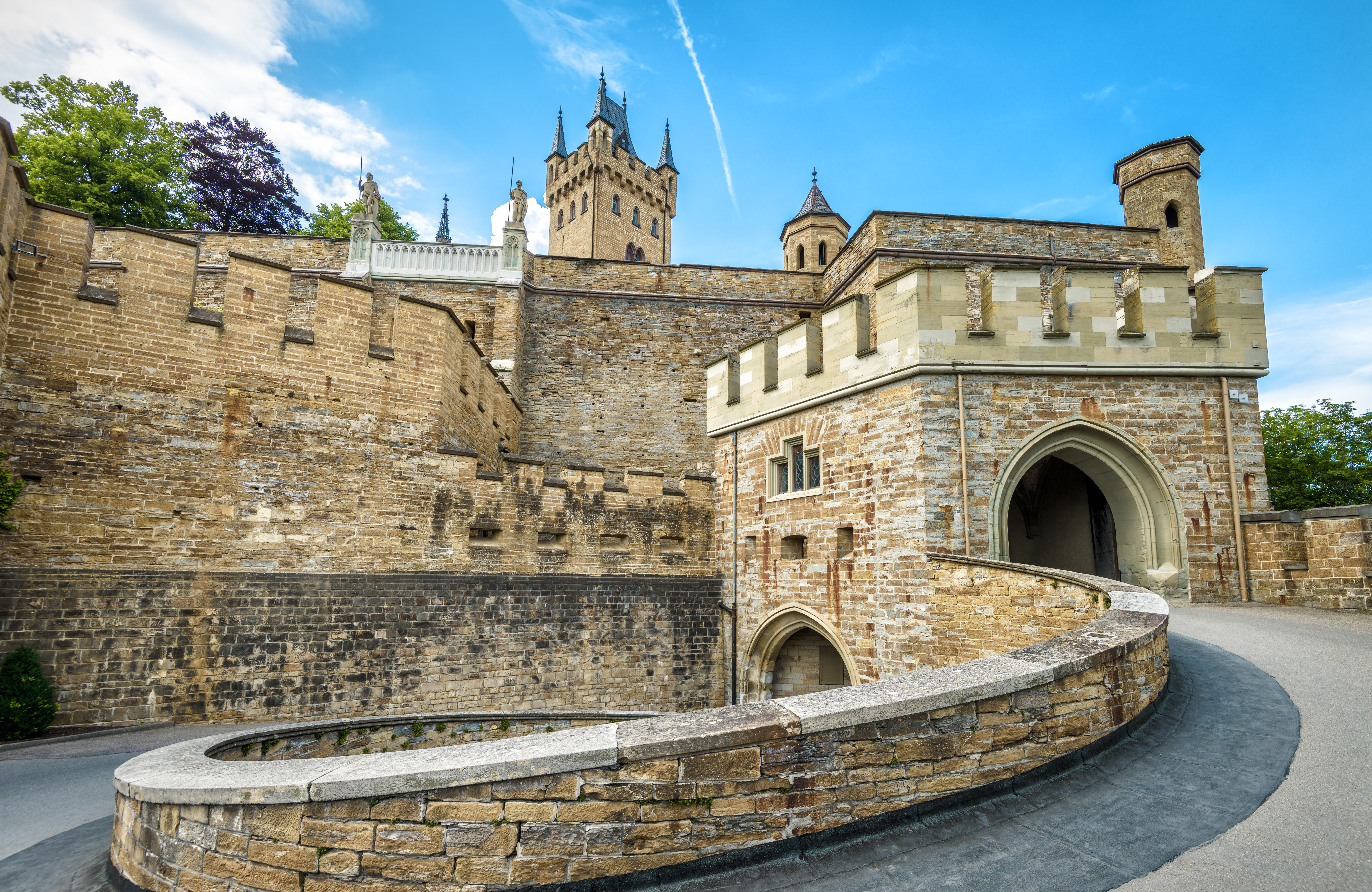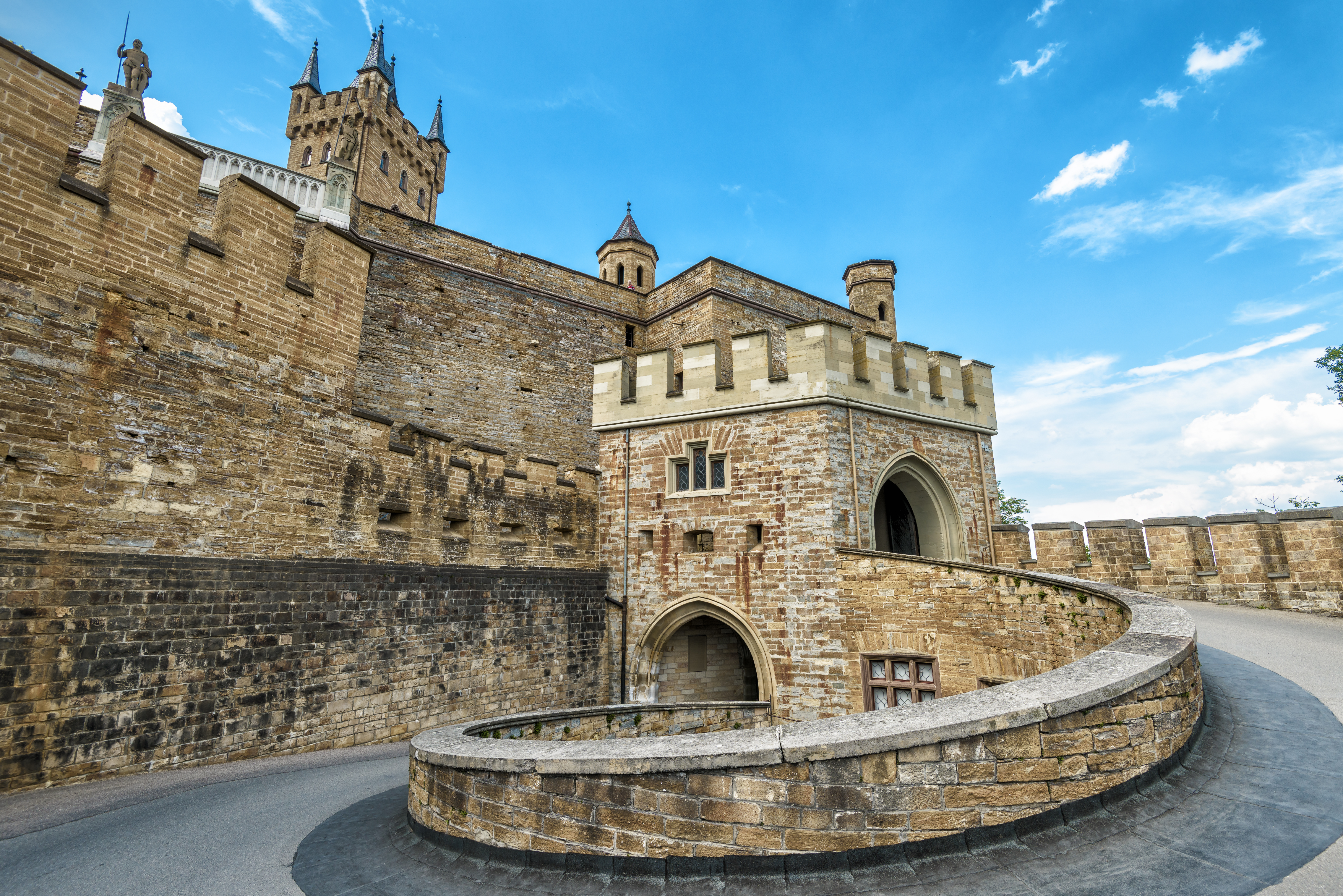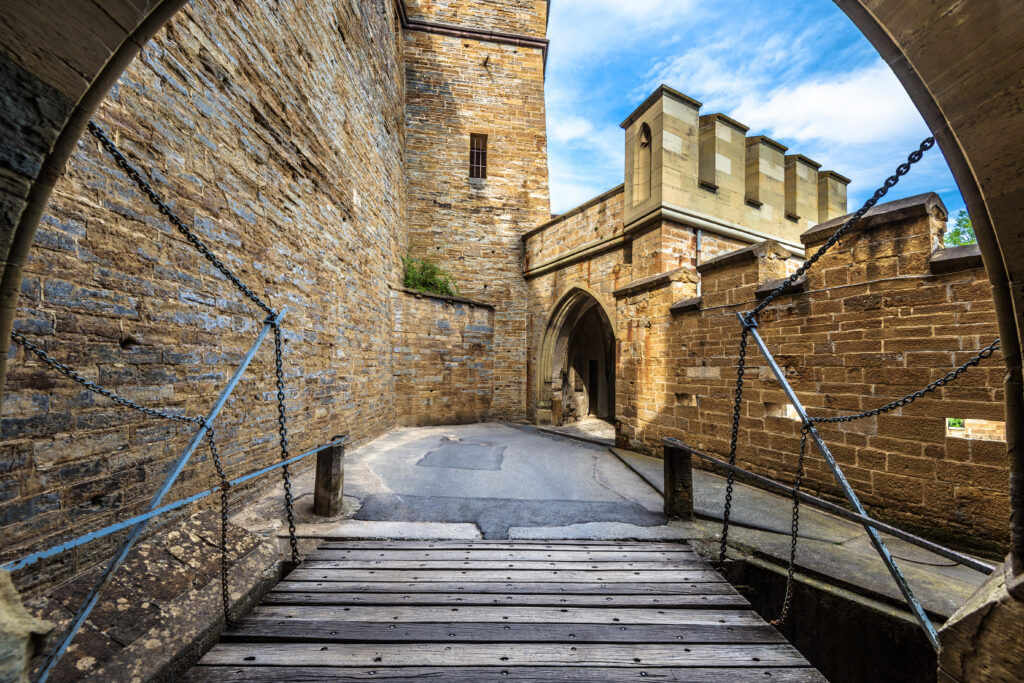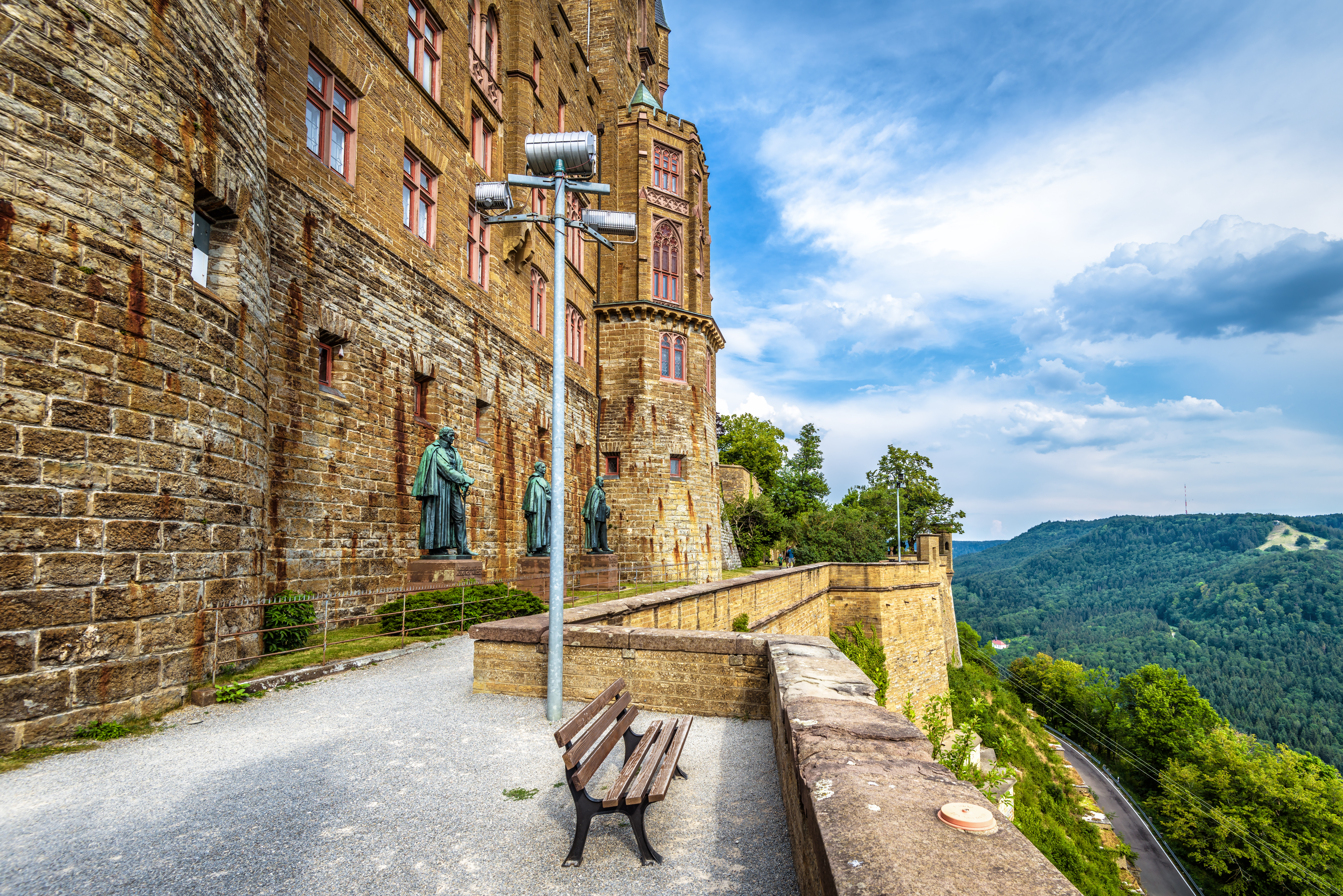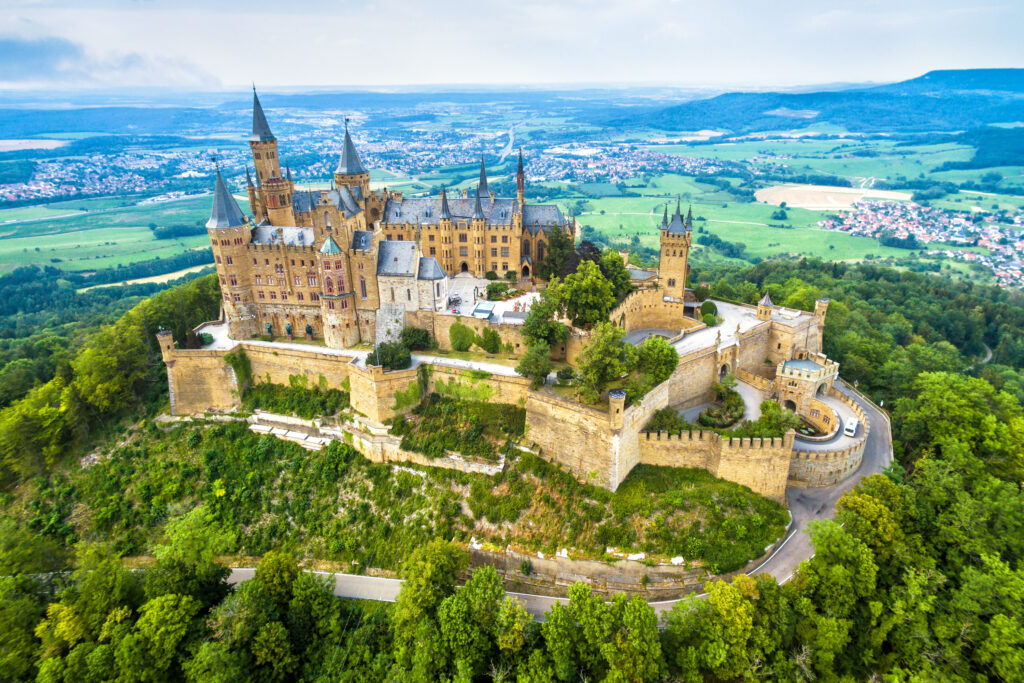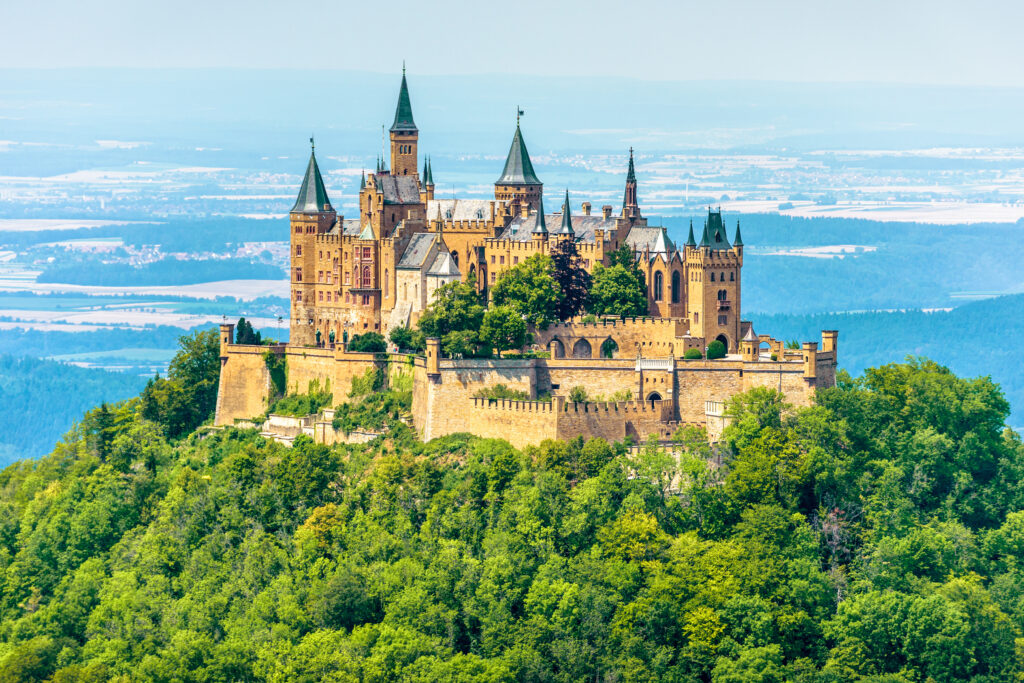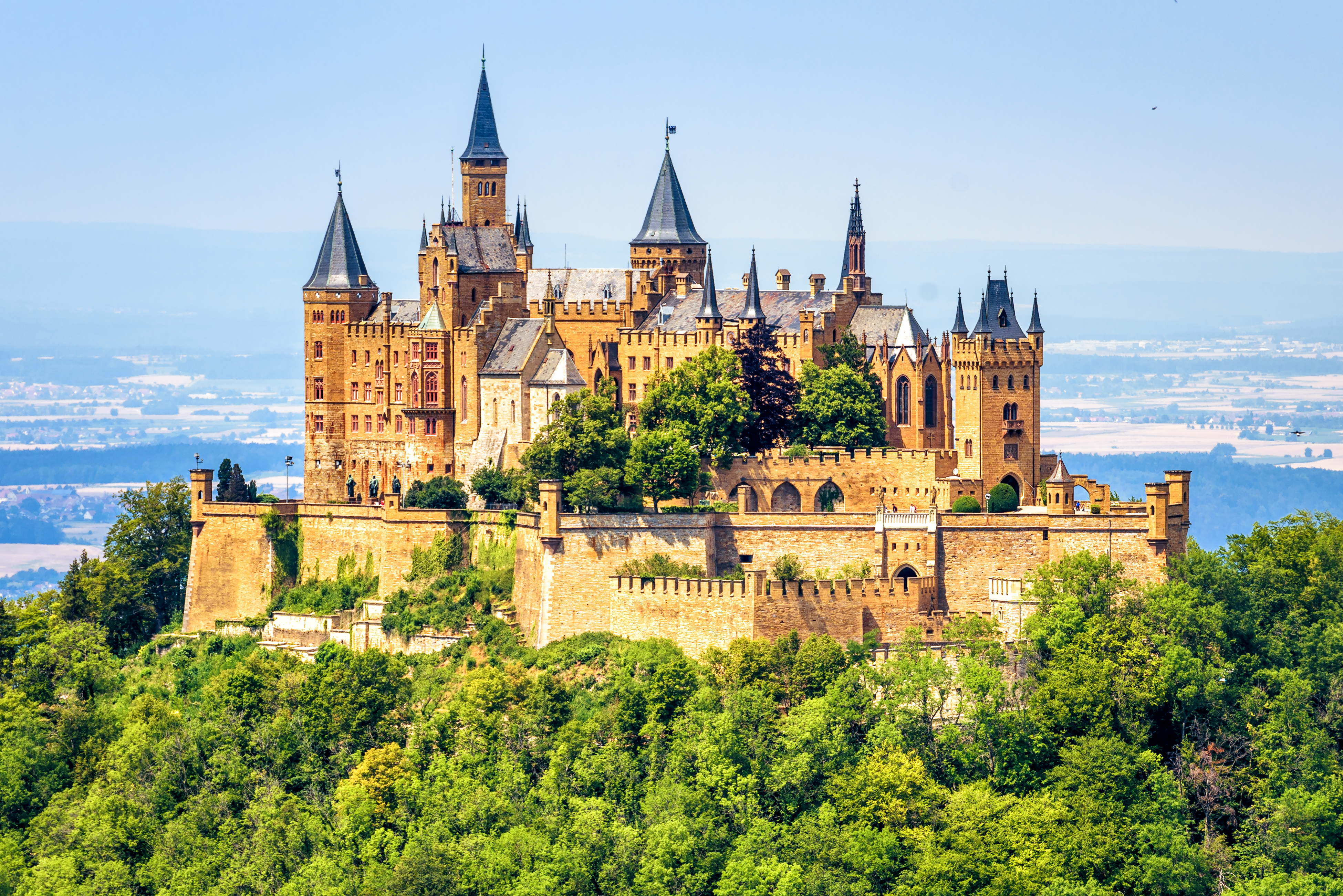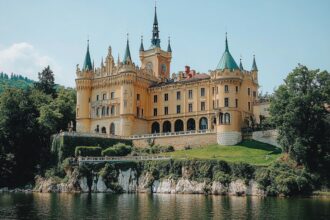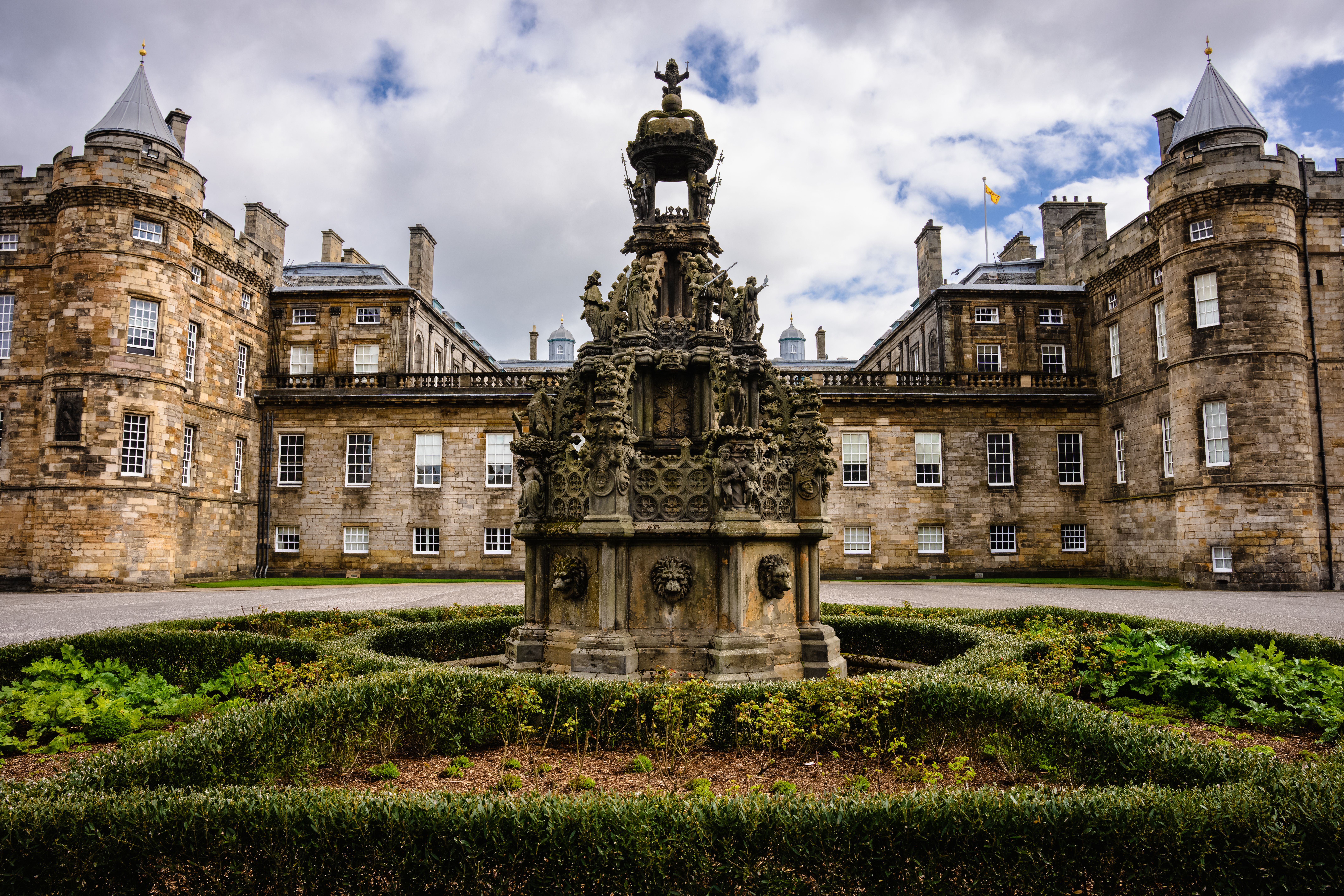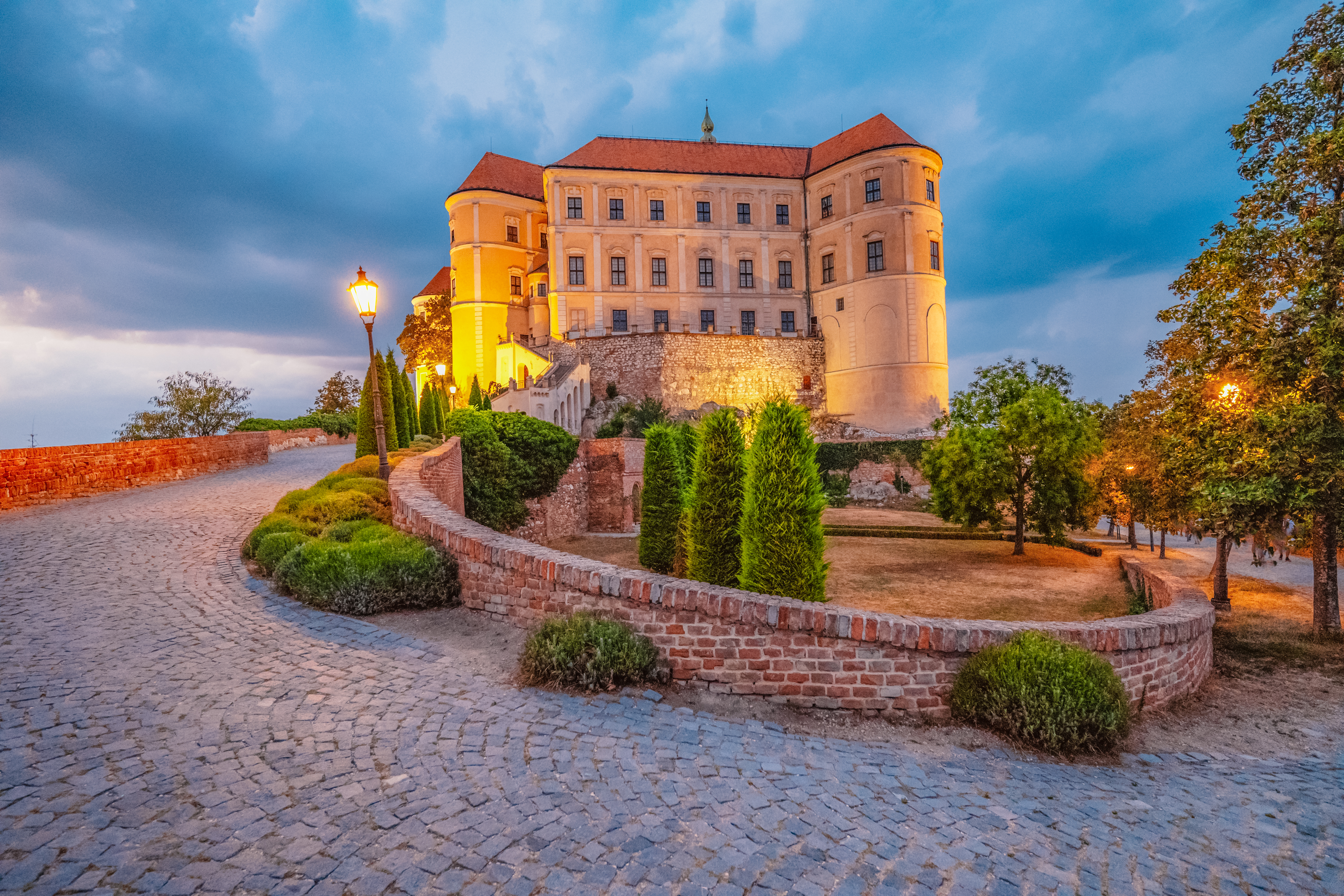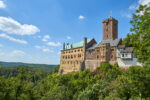

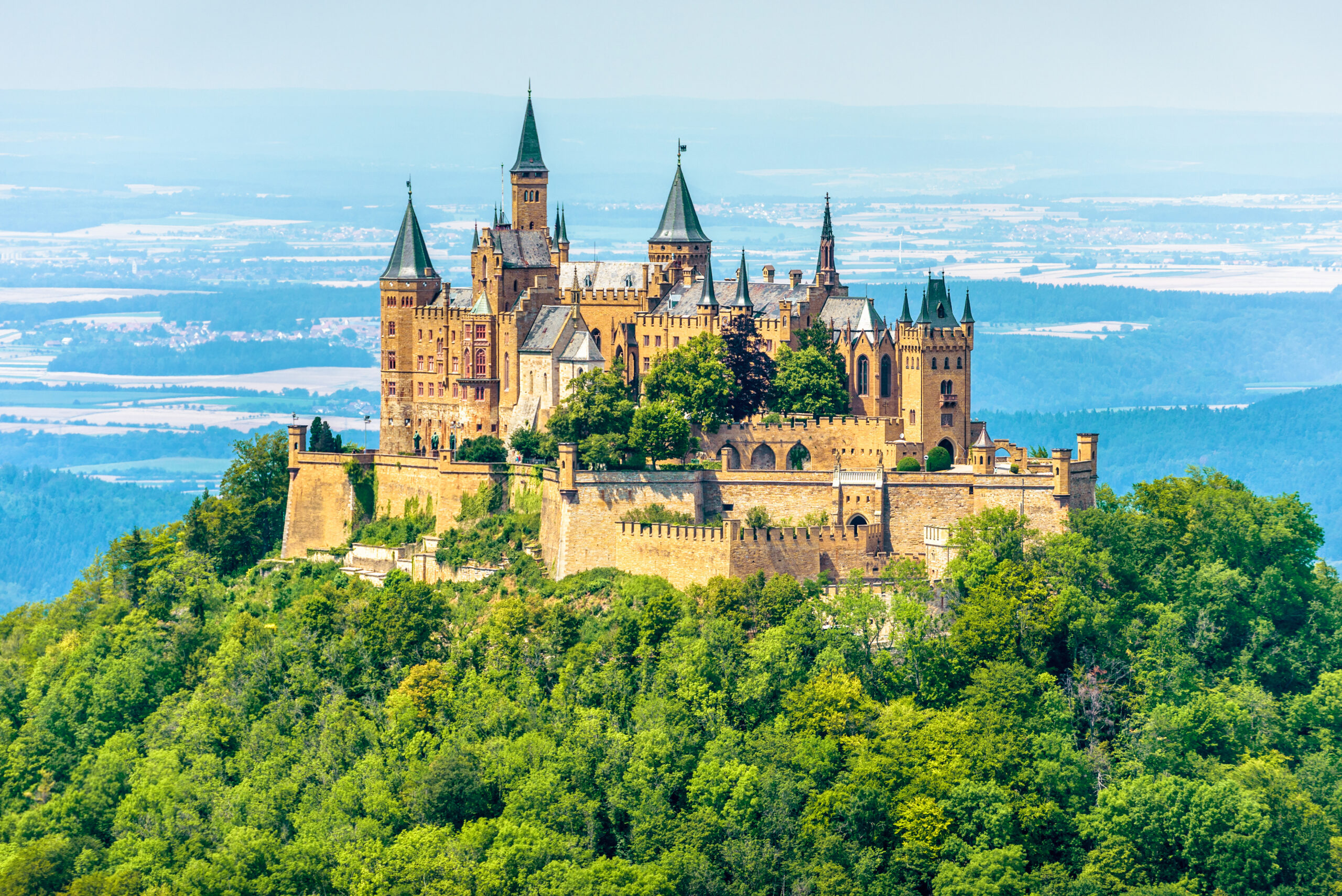
Majestically perched on the lonely summit of the Hohenzollern is a castle steeped in legend and rich in history—Hohenzollern Castle. This impressive structure, a symbol of medieval splendor and architectural mastery, tells the captivating saga of the distinguished House of Hohenzollern. Every stone whispers stories of power struggles, royal ambitions, and mythical battles, and so Hohenzollern Castle remains a symbol of the intertwined fates of nobility and destiny.
Origins rooted in antiquity – The origins of Hohenzollern Castle date back to the 11th century, a time when chivalry and feudalism cast their shadow over Europe. The first medieval fortress was built by the Counts of Zollern and was mentioned in the annals in 1267. Its early years were marked by conflict, most notably the fierce siege by the Swabian League of Cities in 1423, which led to its complete destruction. This catastrophe was the result of the turbulent conflicts triggered by the rebellious Count Frederick XII, who came into conflict with his neighbors, culminating in the infamous imperial ban – an excommunication imposed by the Holy Roman Emperor.
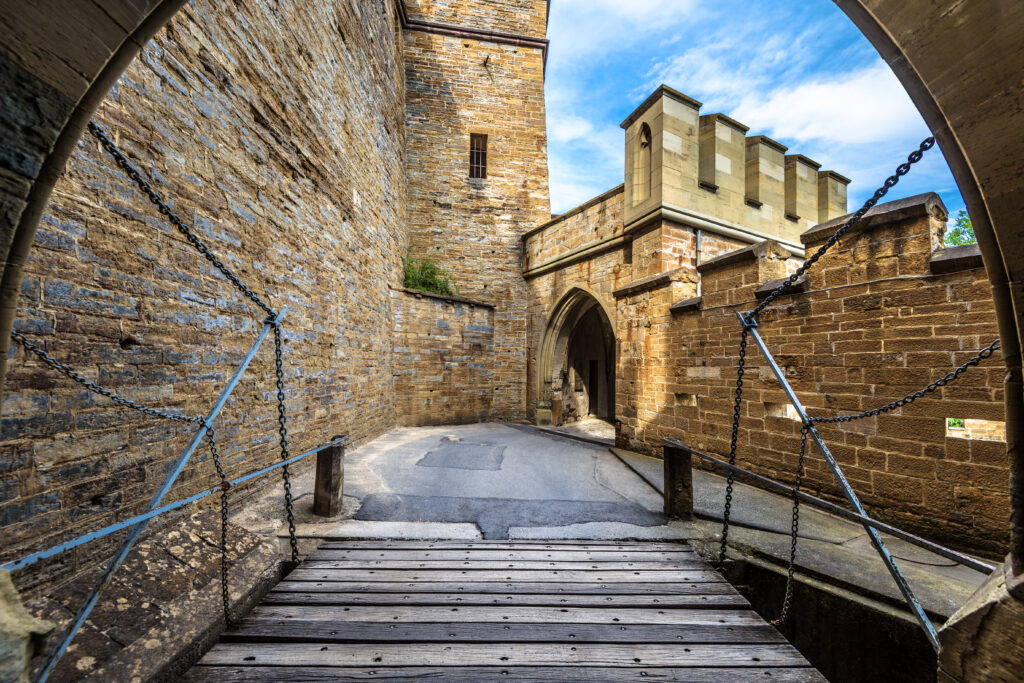
Rebirth amid war and destruction – Undeterred by the adversities of the past, the noble family rebuilt the castle in 1454 amid easing tensions in the Holy Roman Empire. However, the ravages of the Thirty Years’ War once again tested their fortitude. As Swedish troops swept through the region on their conquest, Hohenzollern Castle was besieged once again. Despite sustained attacks by Württemberg, the impressive strategic defenses held out, but finally succumbed in 1635 due to starvation and cunning tricks.
Against the backdrop of the War of the Austrian Succession, the fortress became a pawn on the Western European chessboard and was occupied by French troops during the harsh winter of 1744/1745. The walls of the castle, silent witnesses to centuries of conflict, gradually fell into disrepair until only the fortified St. Michael’s Chapel remained as a testament to its unbroken spirit.
Romantic revival under royal patronage – Then King Frederick William IV of Prussia entered the scene, whose romantic vision breathed new life into the dormant ruins in the mid-19th century. Inspired by a moving visit in his youth, he dreamed of restoring the old fortress to its former glory – an ambitious undertaking that reflected both nostalgic idealism and political symbolism. The commissioned architect Friedrich August Stüler took on this monumental task and, between 1850 and 1867, created a masterpiece of neo-Gothic architecture.
This majestic rebirth, reminiscent of the idealism of the Middle Ages, reflected the penchant of the time for historical romanticism, similar to the Bavarian castle of Neuschwanstein.
However, Stüler’s creation eschewed theatrical fantasy in favor of a dignified homage to the knightly heritage. Financial contributions from both the Brandenburg-Prussian and Swabian branches of the Hohenzollern family underscored their shared appreciation of their common heritage.
Navigating the world of myths and legends – The architectural splendor of Hohenzollern Castle goes beyond bricks and mortar; it is a tapestry of myths and legends. Within its walls, the famous treasure chamber preserves a collection of historical artifacts, including the legendary snuffbox that is said to have saved the life of Frederick the Great. Stories of phantom knights roaming the halls, reflecting the valiant spirit of long-forgotten warriors, fascinate visitors and ensure that an aura of mystery surrounds the fortress forever.
A testament to resilience and restoration—even nature joined in the challenge of Hohenzollern endurance when the devastating earthquake of 1978 caused significant damage, bringing down towers and toppling sculptures. However, thanks to tireless restoration efforts throughout the late 20th century, the castle’s silhouette continues to grace the horizon and has since come to symbolize resilience and reconstruction.
The castle is not only an architectural marvel, but also houses fascinating chapels representing various Christian denominations.
These sacred spaces reflect the rich cultural diversity of the region and house historical remains such as the Apostle Gate from the Kaiser Wilhelm Memorial Church in Berlin and the Russian Orthodox Resurrection Chapel, which Ludwig Ferdinand of Prussia dedicated to his wife Kira.
From historic fortress to thriving cultural center, Hohenzollern Castle now attracts between 300,000 and 400,000 visitors annually. Its appeal transcends borders, making it one of Germany’s most popular landmarks. With guided tours through magnificent chambers, the castle is a living museum, adorned with relics of the Hohenzollern dynasty, including uniforms with famous bullet holes and jewel-encrusted coronation regalia.
Beyond preservation, the modernization of the estate includes vibrant cultural events, from exhibitions illuminating historical eras to enchanting spectacles such as the “Royal Winter Magic.” The castle flourishes as a dynamic venue for concerts, theater performances, and film events, maintaining its relevance amid the contemporary cultural landscape.
Legacy and preservation for future generations – While the castle remains privately owned for the time being, there are plans to place it entirely under the patronage of the Brandenburg-Prussian line after 2025. Such transitions promise continuous stewardship that will ensure the continuation of its rich historical narrative. The Prince Kira of Prussia Foundation, established in 1952, further enriches the legacy by providing philanthropic support through holiday activities for children.
With its storied past and enduring presence, Hohenzollern Castle stands as a guardian of time—a testament to human ambition and resilience.
It embodies the fusion of myth and matter, serving both as a reminder of turbulent histories and as a beacon of cultural heritage, inviting generations to witness the unfolding of legends that are far from faded.