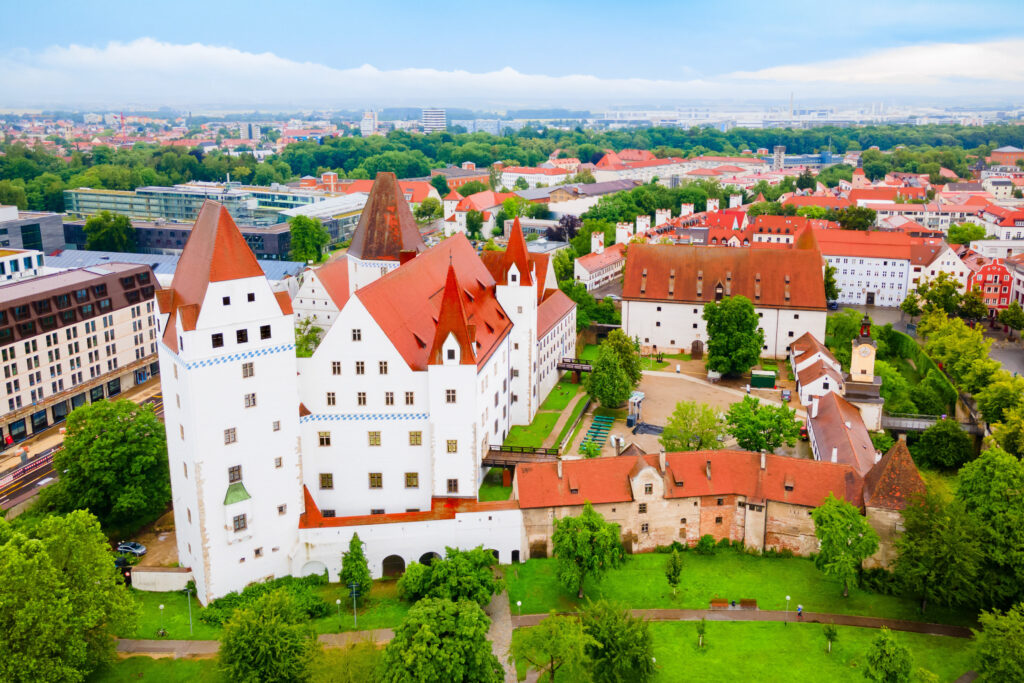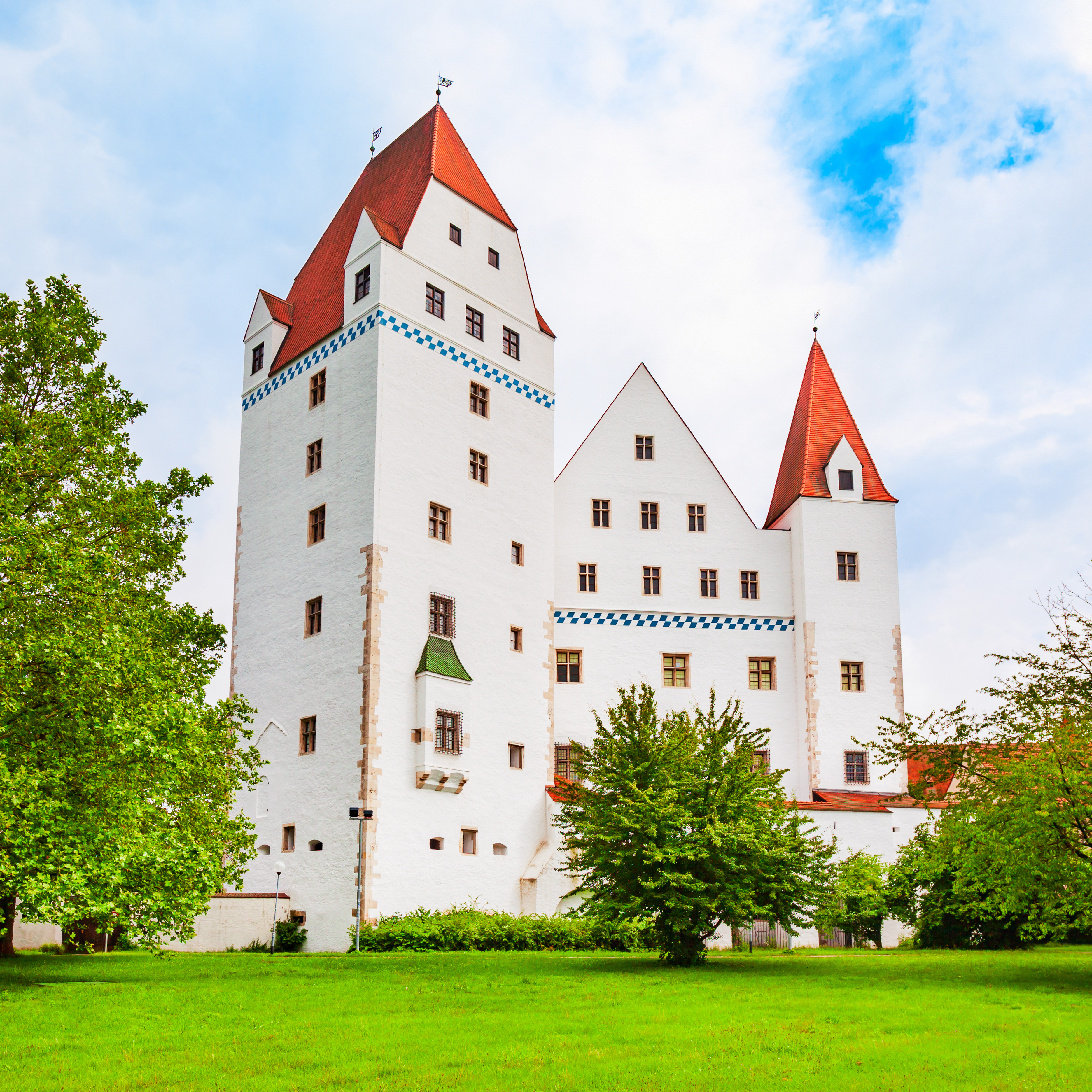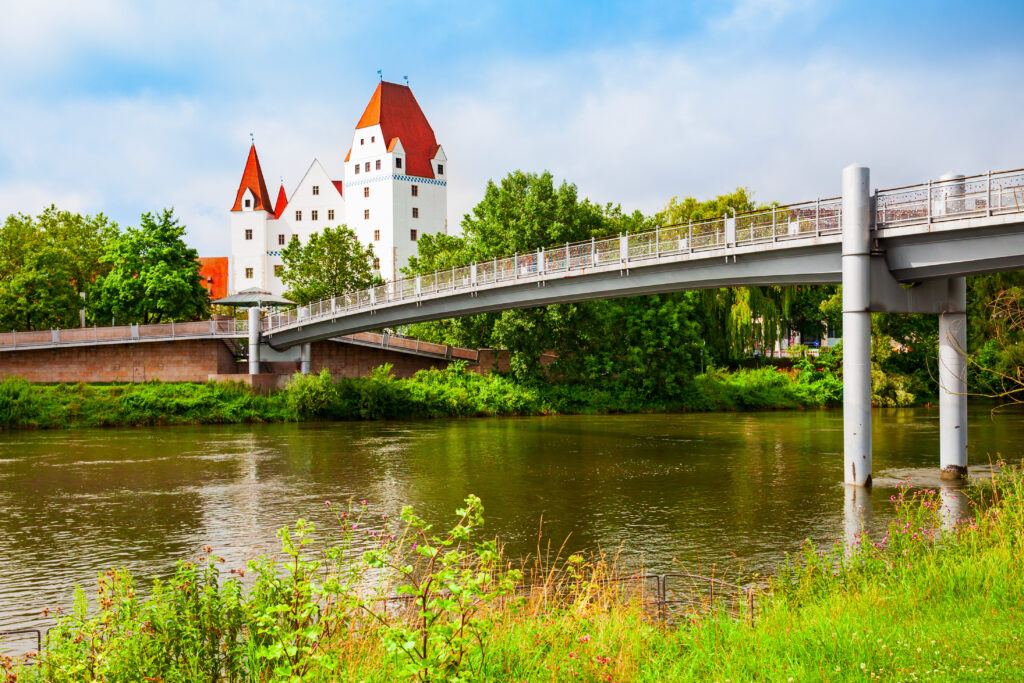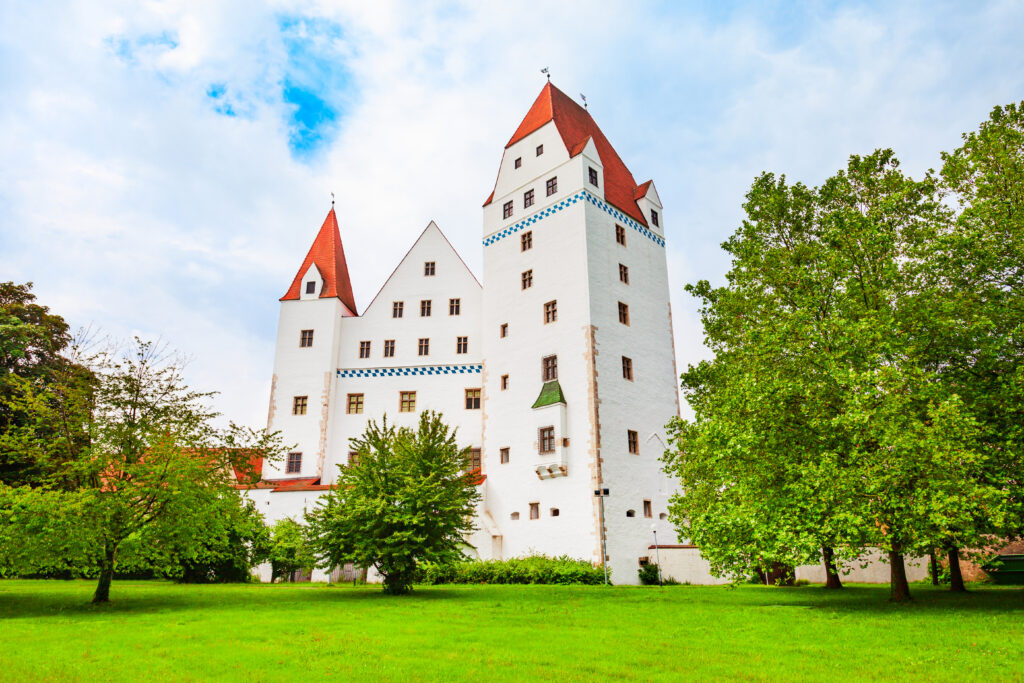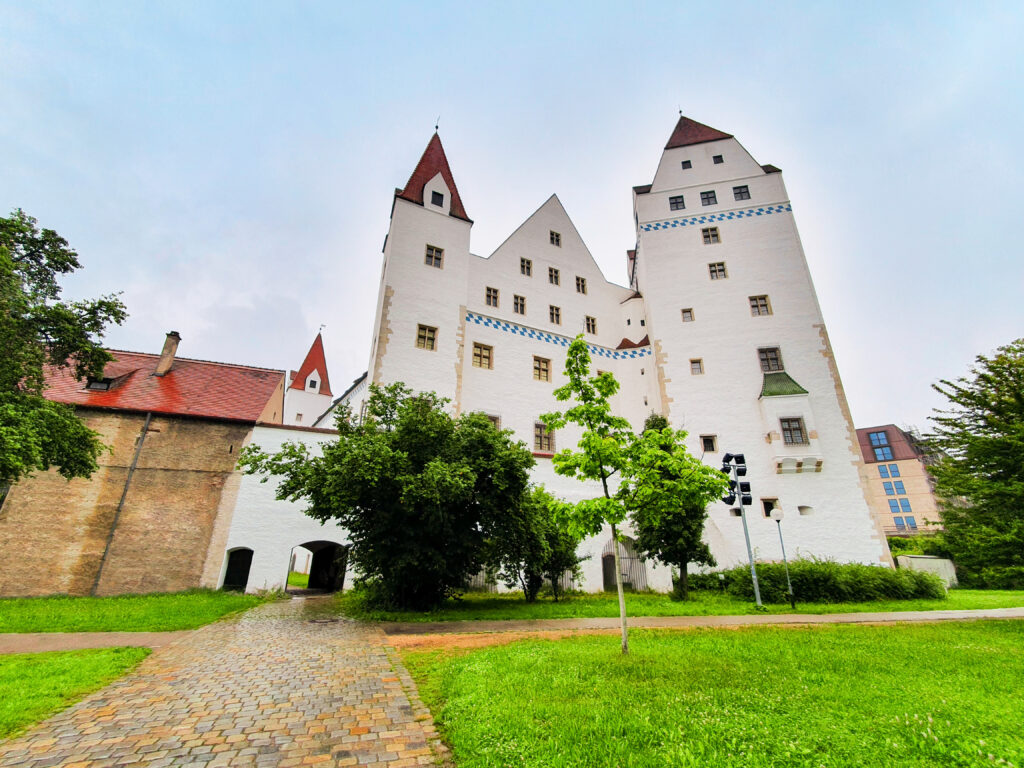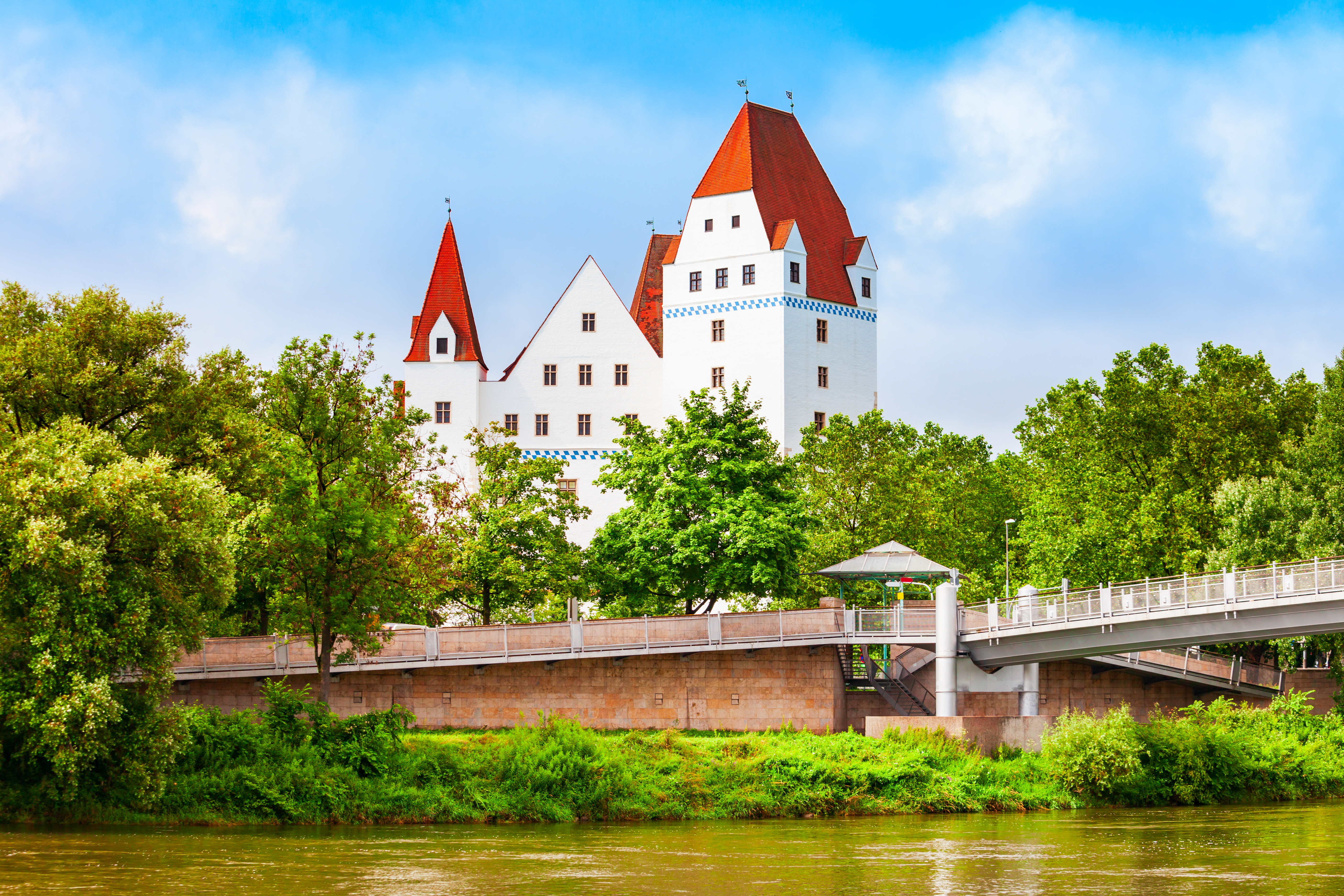

Anyone strolling through the streets of Ingolstadt cannot fail to notice the majestic sight of the New Castle. This magnificent building, a masterpiece of the 15th century, is one of Bavaria’s most important secular buildings and tells a fascinating story spanning several centuries. Behind its imposing walls lie not only the traces of important dukes, but also myths and legends that amaze visitors.
The origins of the New Palace date back to 1430, when Duke Ludwig VII of Bavaria-Ingolstadt decided to build a new palace after his return from France. This decision led to the demolition of several town houses on what is now Paradeplatz to make way for the new complex. Parts of the original structure have been preserved to this day, giving the palace a unique historical depth.
Over the decades, the New Palace was expanded and rebuilt several times. Between 1470 and 1490, it was significantly expanded by Duke Louis IX of Bavaria-Landshut and his son Duke George the Rich. These extensive construction measures resulted in a modern residential palace that differed greatly from the original city palace. Particularly noteworthy is the Great Hall, whose construction began shortly after the death of Louis the Rich in 1479 and was completed in the late 1480s. With two small corner towers and a striking large square tower in the southeast, the Great Hall fits seamlessly into the floor plan of the former Schutter.
However, the New Palace is more than just an architectural marvel. It also holds a wealth of stories and legends. One of the most famous stories is about Duke Ludwig VII, who spent ten years in exile in France due to family intrigues and power struggles between the various branches of the Wittelsbach dynasty. This period is said to have had a profound effect on him and awakened his ambition to build an impressive symbol of his rule. According to legend, Ludwig VII had a secret tunnel built under the castle so that he could escape in case of an attack. Whether this tunnel ever existed remains uncertain, but the idea of such an escape route still captures the imagination of visitors today.
In the 16th century, the New Palace served not only as a residence but also as a fortress. When Ingolstadt was expanded into Bavaria’s strongest fortress, the castle’s defenses were also reinforced. Nothing remains of these bastions, such as the famous Eselsbastei, but they illustrate the strategic importance of the castle at that time.
With the construction of the bell tower, the splendor and glory of the castle reached another peak in the mid-18th century. Almost all of the rooms in the castle were given a new lease of life during this period, including the ducal living quarters, which impress with their impressive ribbed vaults and finely decorated door and window frames. Particularly noteworthy is the Beautiful Hall, whose star-shaped ribs radiate from a central column and leave an almost magical impression.
Despite its historical significance, the New Palace was not spared from the destruction of World War II. Parts of the complex, including the famous Donautor, were severely damaged. But the people of Ingolstadt were not discouraged. Extensive restoration work began in the 1960s, and in 1972 the Bavarian Army Museum moved into the newly renovated premises. Today, the exhibition offers visitors a fascinating insight into Bavaria’s military history and invites them to immerse themselves in times gone by.
However, the New Palace is not only a place of history, but also of innovation. In 2015, it was the venue for the Bavarian State Exhibition, which took up the entire space of the Army Museum’s permanent exhibition. After the end of the State Exhibition, the Army Museum returned to the same premises with a newly designed exhibition, continuing its tradition of combining history and modernity.
In addition to its historical and cultural significance, the New Palace also attracts lovers of myths and legends. An old legend tells of a hidden treasure that is said to be hidden in the depths of the castle walls.
This treasure, it is said, was left behind by a missing duke who mysteriously disappeared from Ingolstadt’s history.
The search for this lost treasure has attracted adventurers and treasure hunters over the centuries, but its whereabouts remain a mystery to this day.
Another myth revolves around the ghosts that are said to haunt the castle. Strange noises and apparitions are said to roam the castle’s corridors, especially on long winter nights. There are stories of a white woman who wanders the halls on full moon nights, searching for her lost love. This ghost story attracts particularly brave visitors who want to seek out the supernatural.
The New Castle in Ingolstadt is much more than just an impressive historical building. It is a living testimony to Bavarian history and culture, a place of myths and legends, and a magnet for history buffs and adventurers alike. Those who visit this impressive complex will inevitably be captivated and experience a journey through the centuries, enriched by fascinating stories and incredible discoveries. The New Castle remains an essential destination for anyone who wants to experience Bavaria at its most exciting.