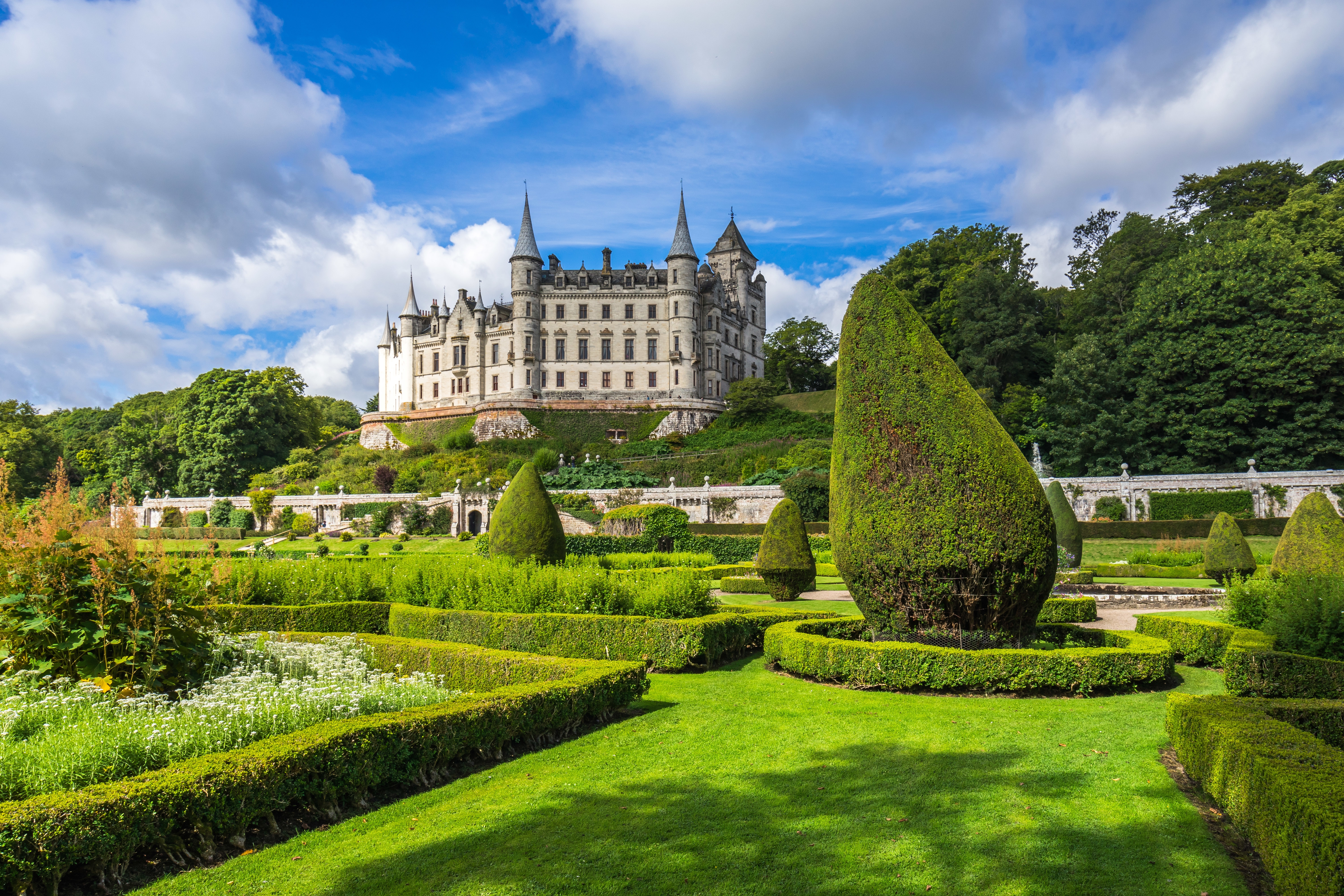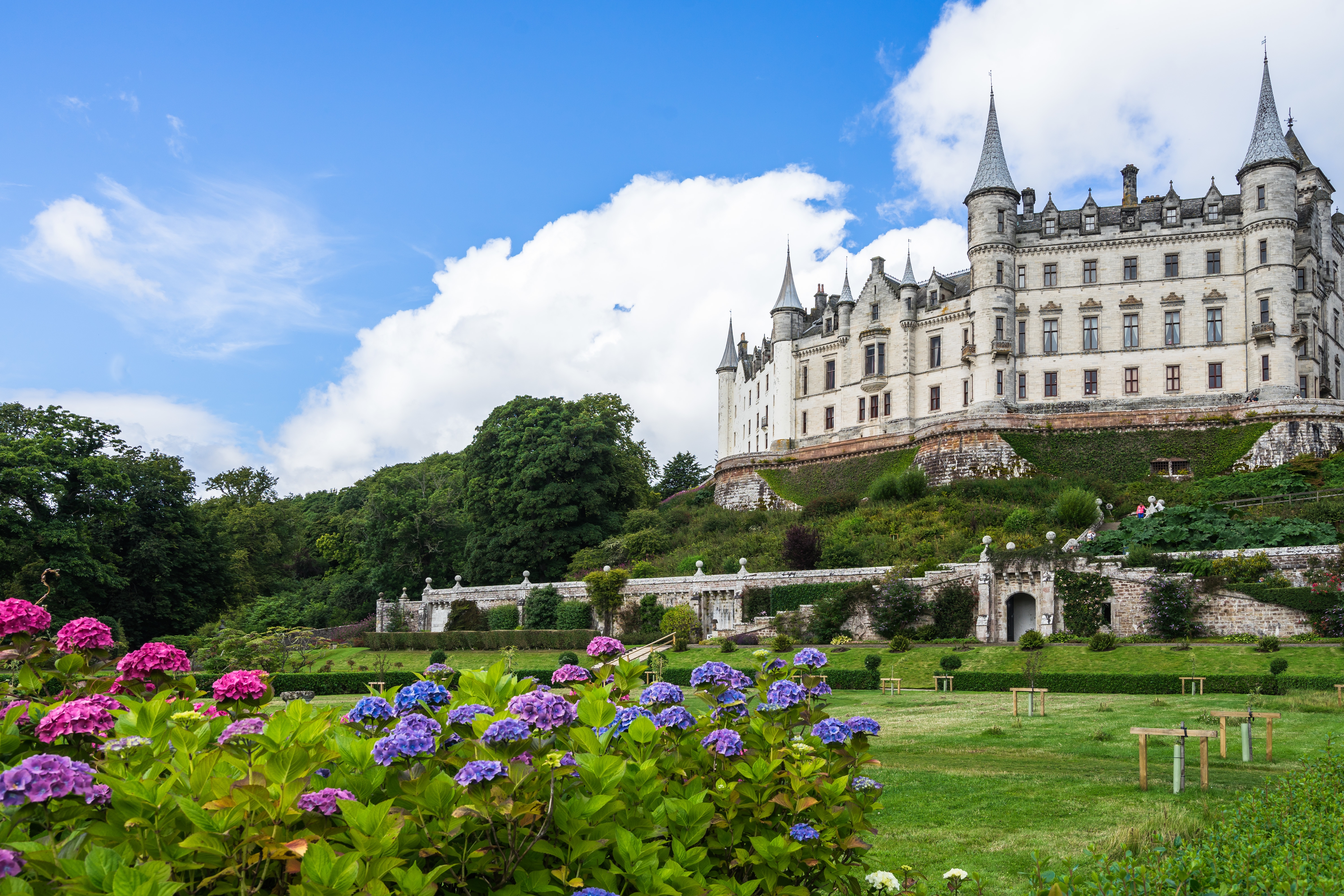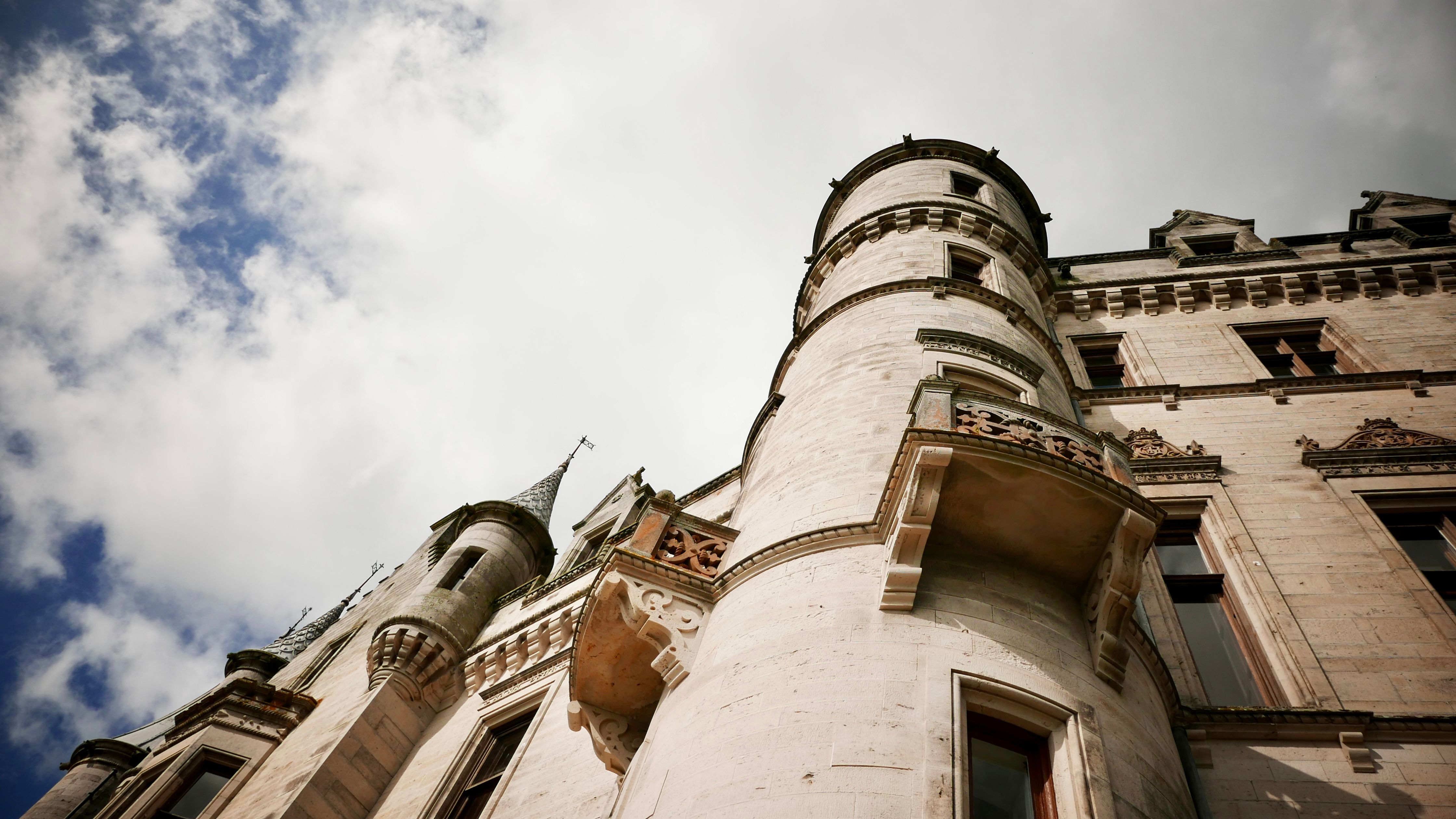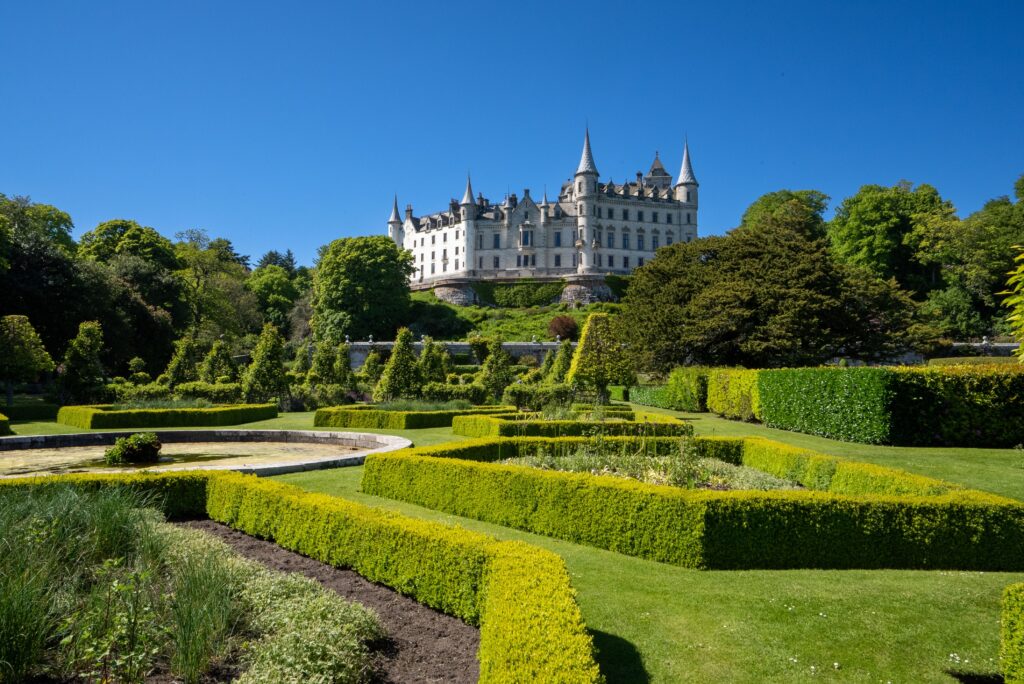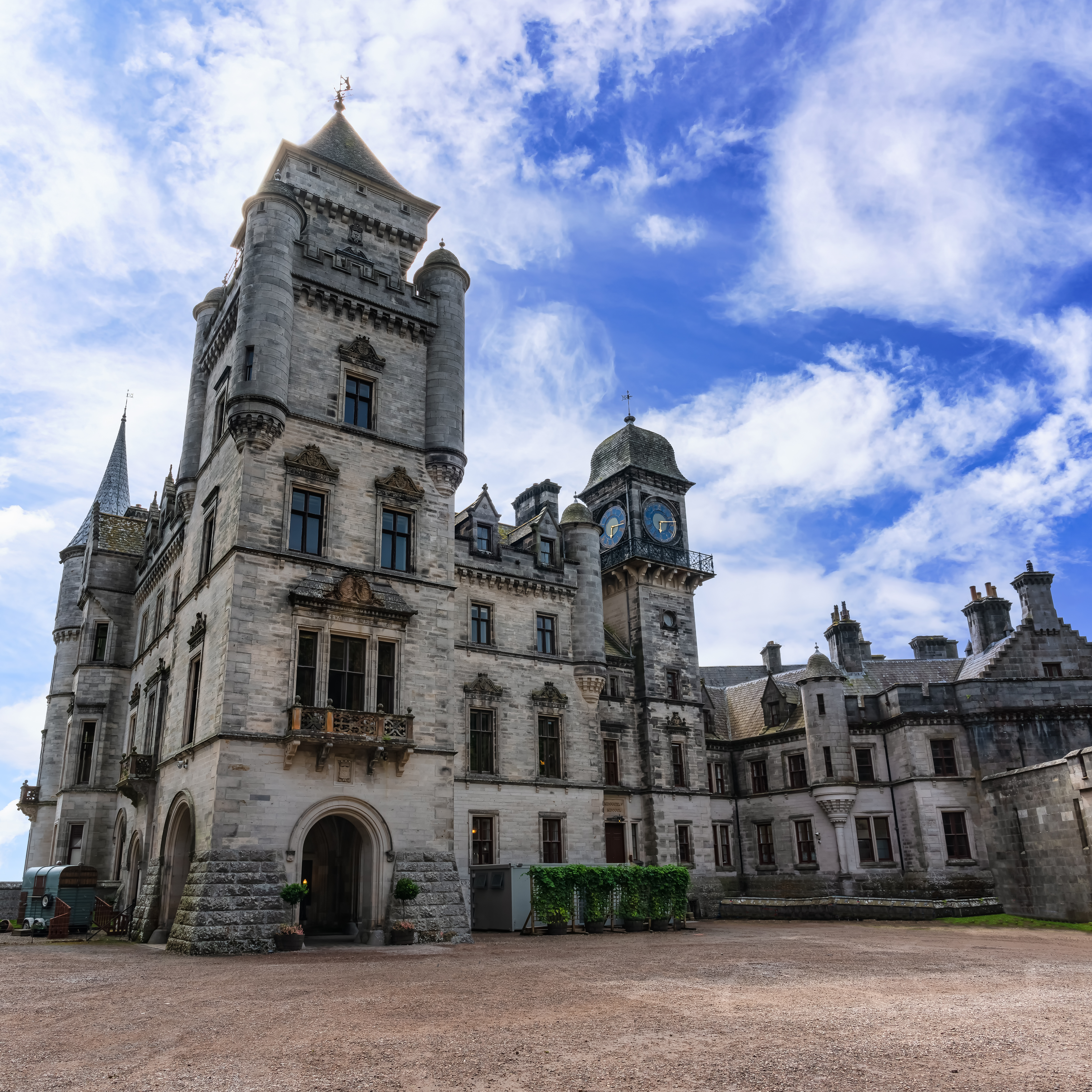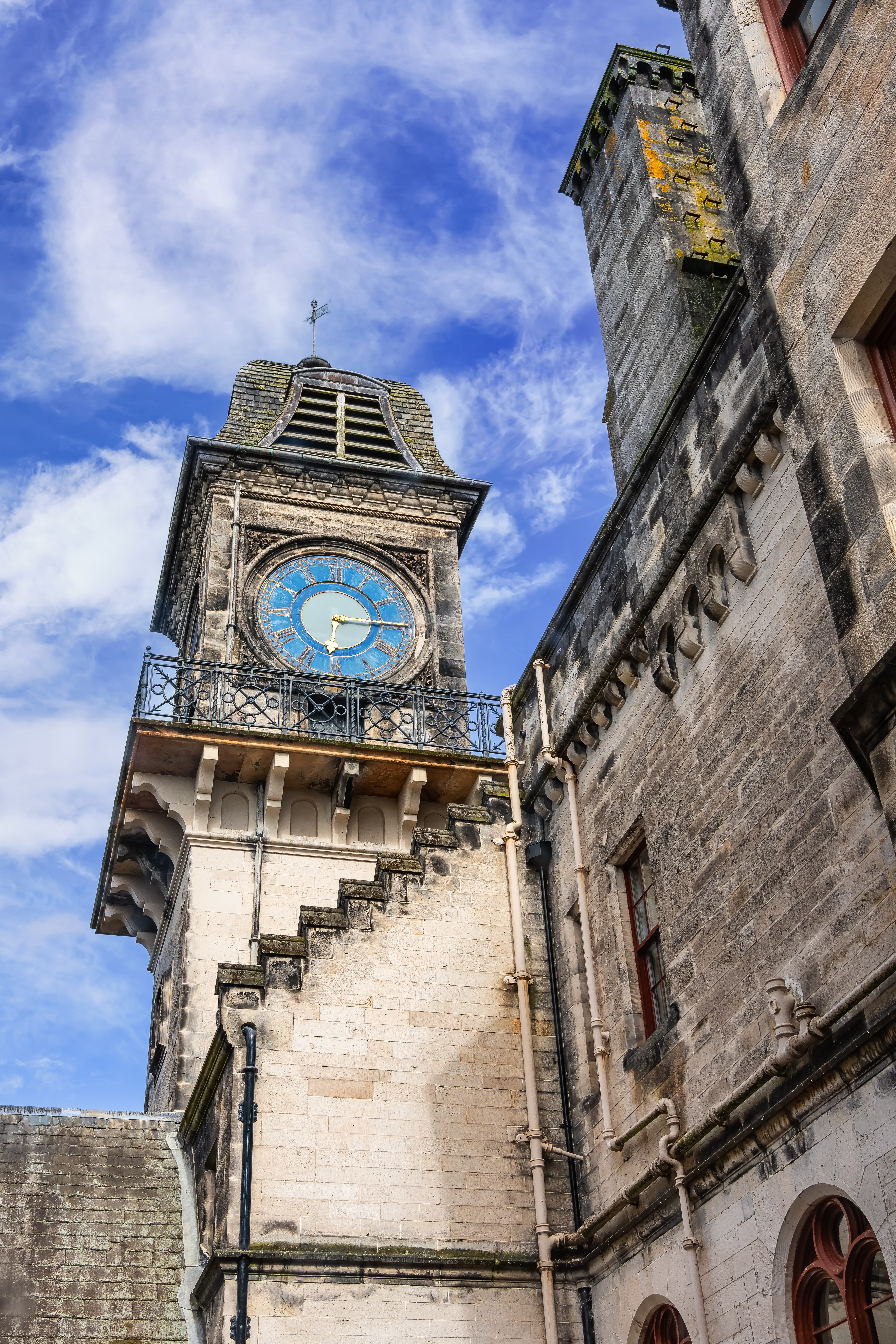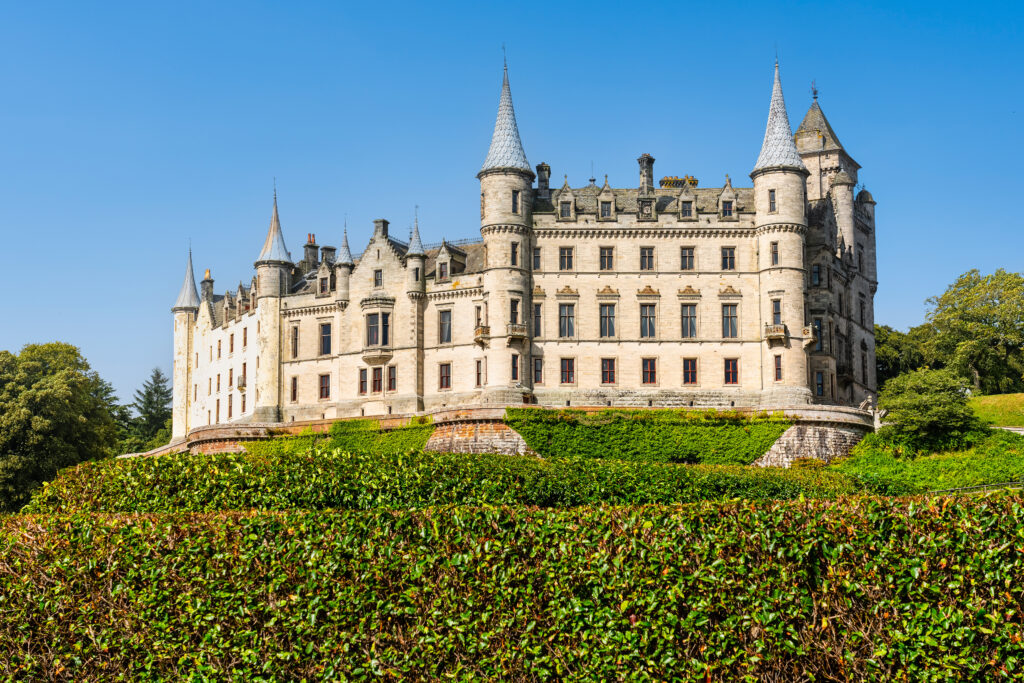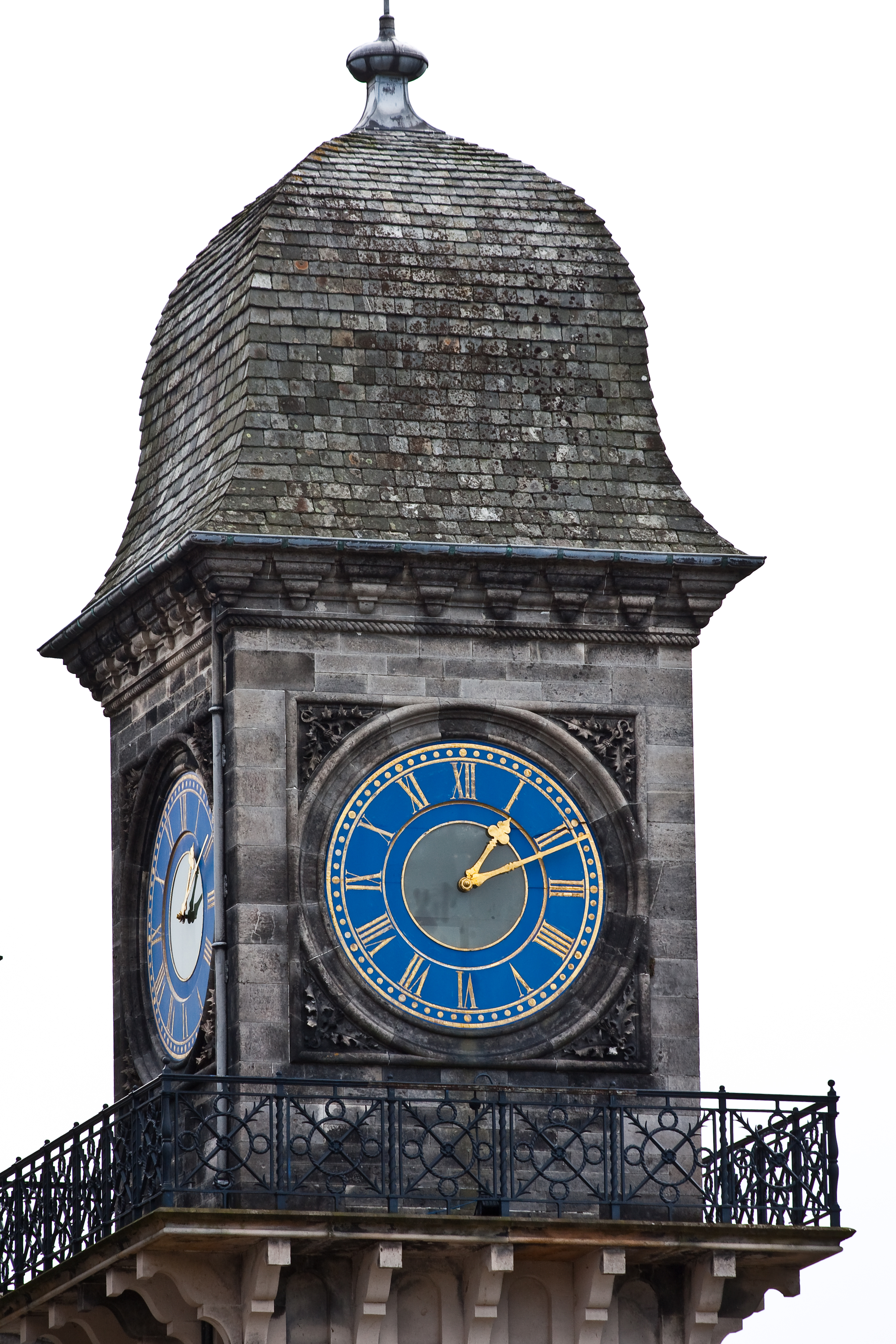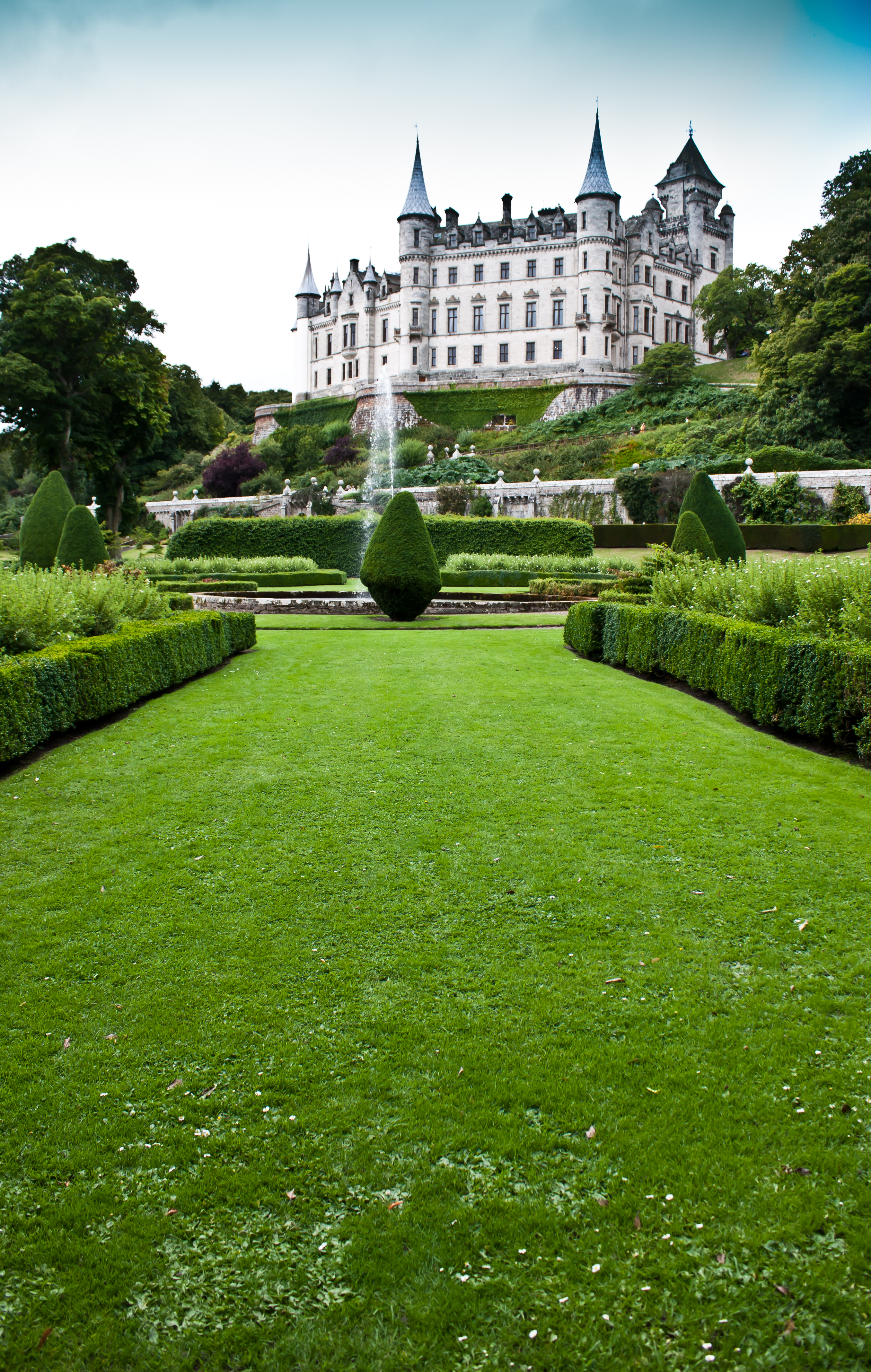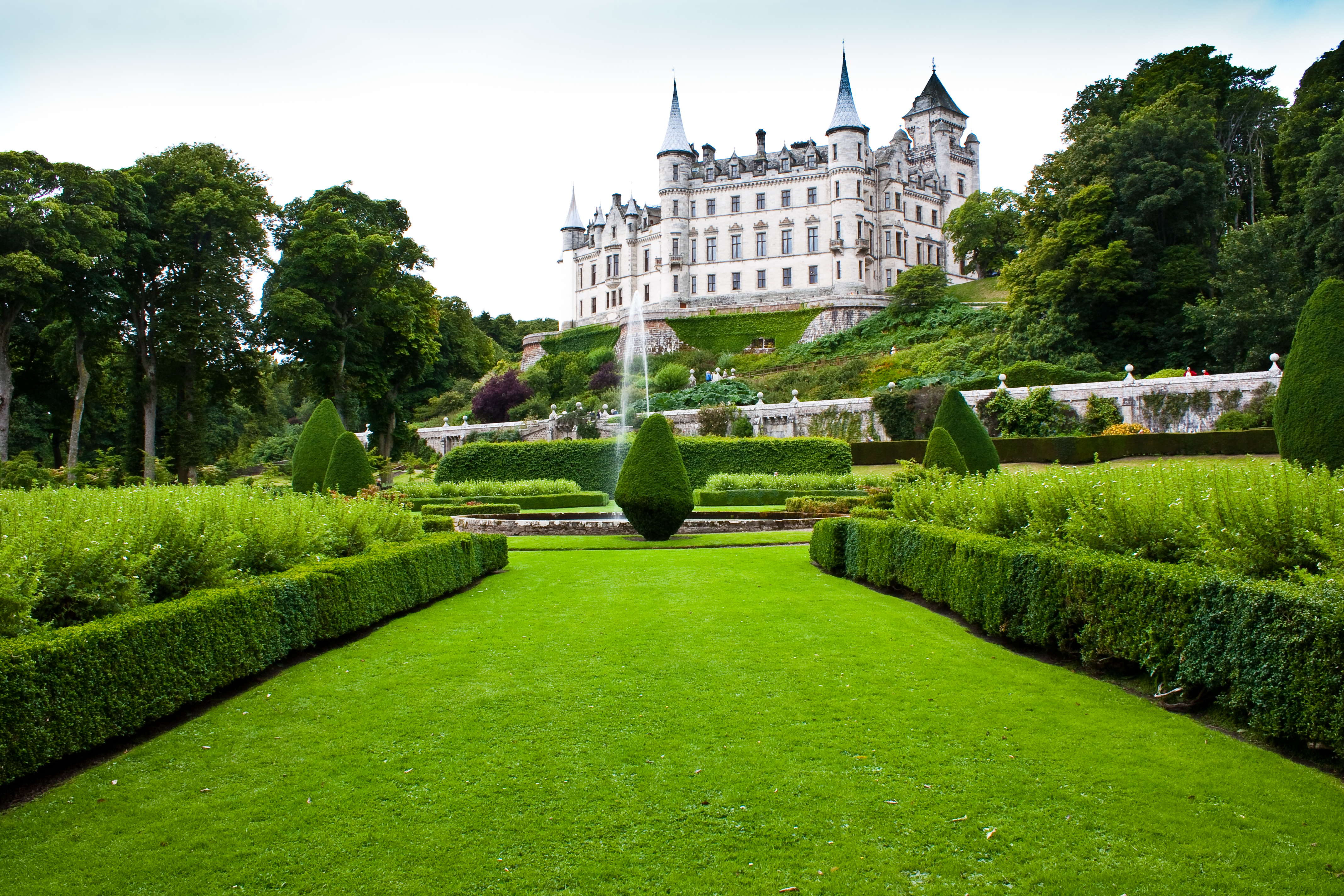

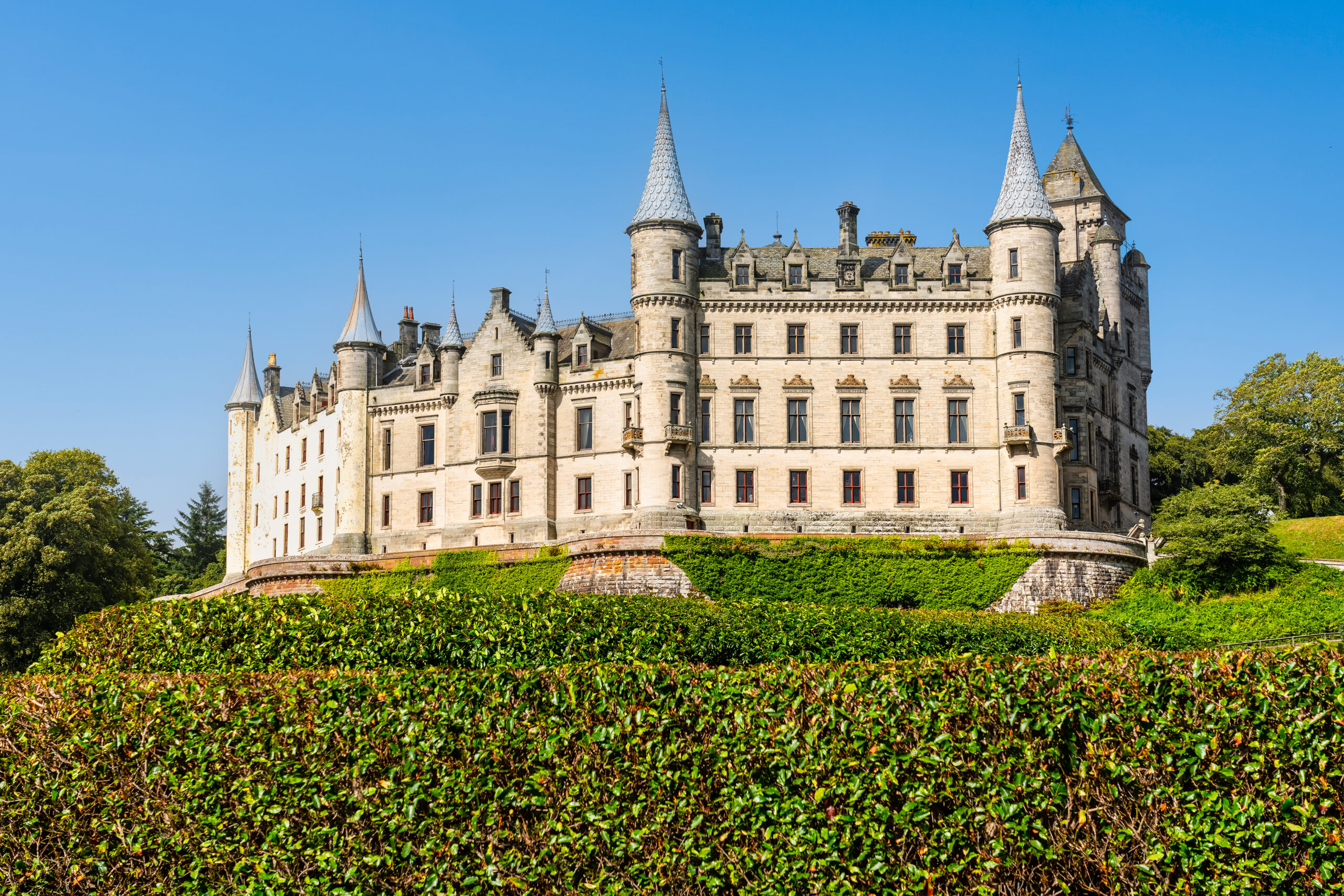
Tucked away on Scotland’s windswept east coast, north of Golspie, lies Dunrobin Castle, the majestic ancestral home of the Clan Sutherland. With its towering turrets and elaborate masonry reminiscent of French châteaux, Dunrobin is a testament to centuries of history, architecture, and enigmatic tales. As the largest residence in the northern Highlands with 189 rooms, it harbors stories that include medieval skirmishes, royal visits, devastating fires, and even ghostly apparitions.
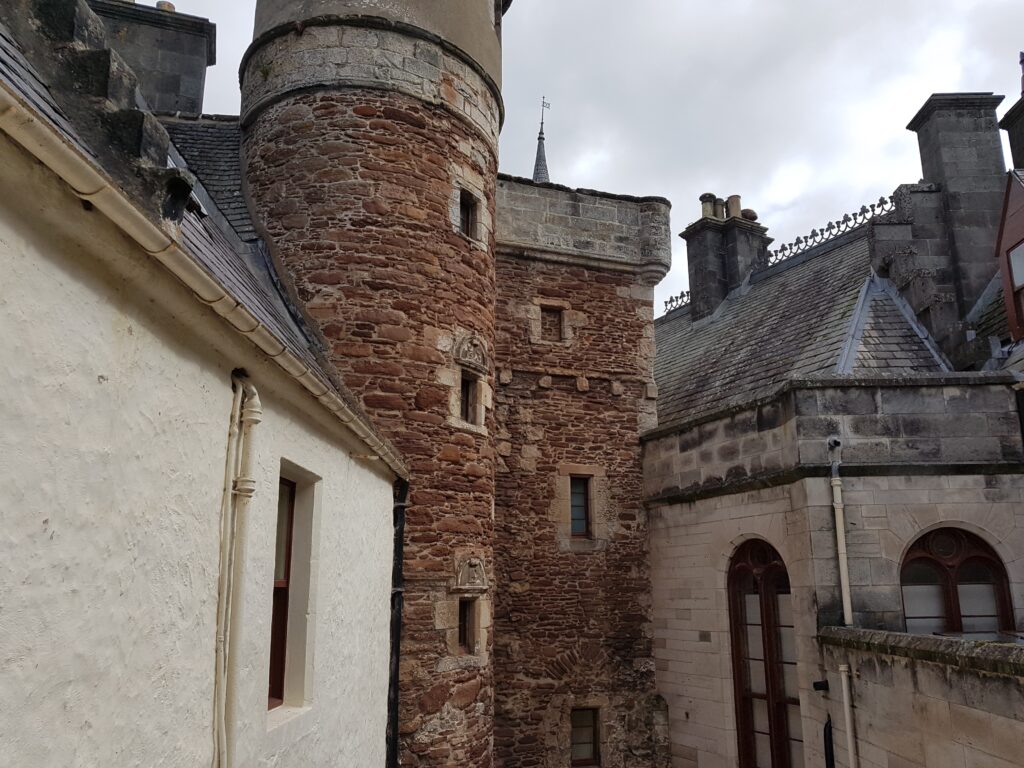
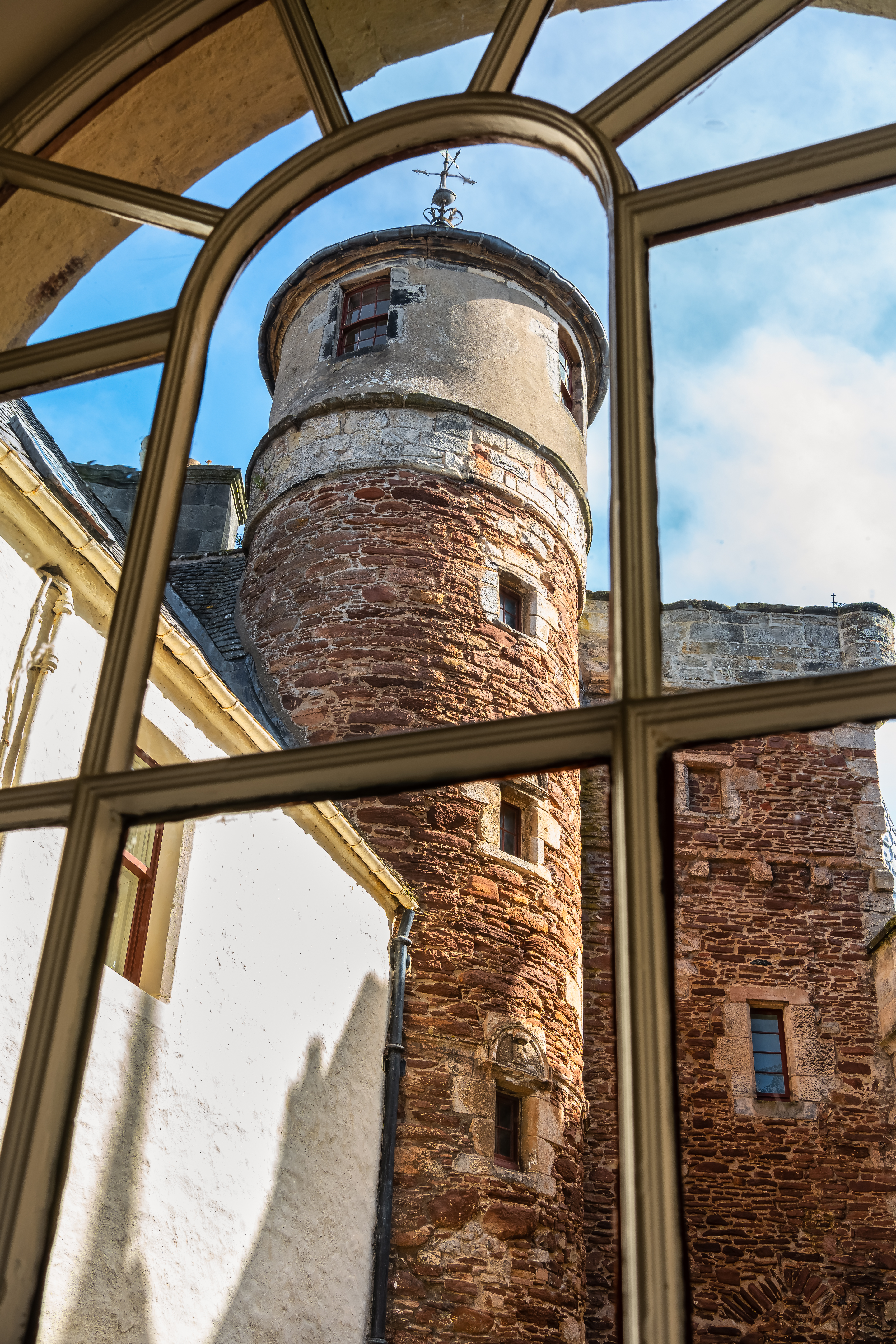
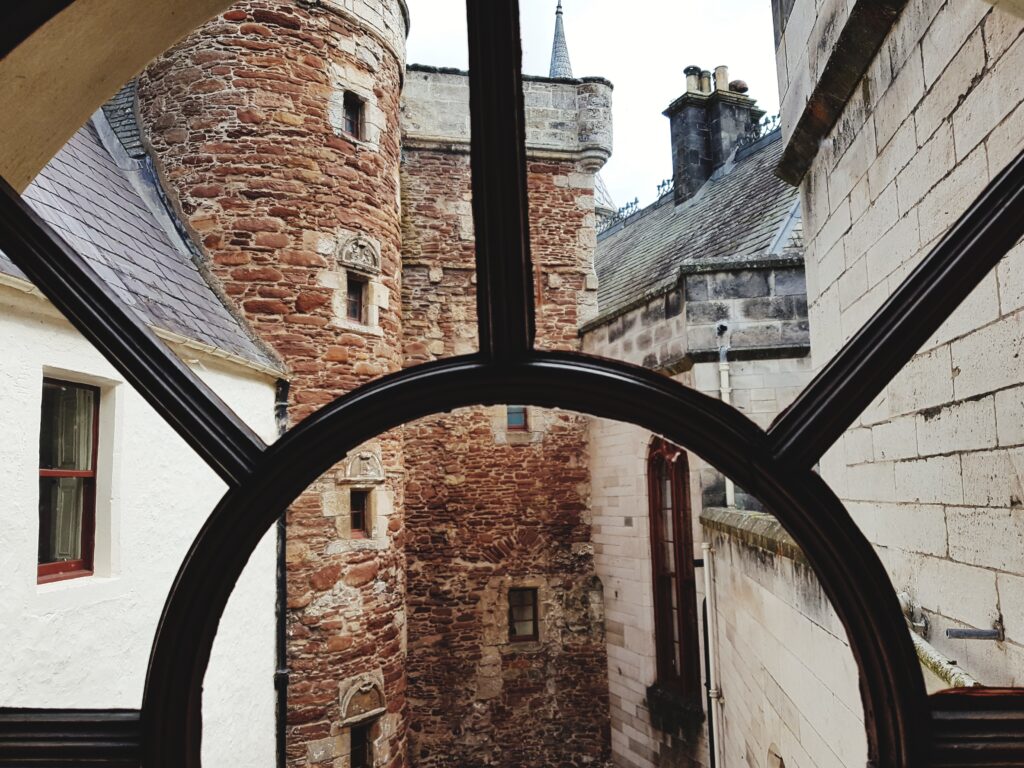
The ancient origins – Although Dunrobin Castle’s current splendor dates back to the mid-19th century, its origins go back much further. The core of the castle dates back to a 13th-century keep, the remains of which can still be seen in the castle’s courtyards today. It was first mentioned in records in 1401 as a fortress under the control of Robert de Moravia, the sixth Earl of Sutherland.
The early structure, which served as both a defensive fortification and a residence, witnessed numerous clan battles and sieges that are so characteristic of Scotland’s turbulent history. Legend has it that there was an underground tunnel that allegedly served as a hidden escape route during sieges, leading from the castle to the nearby sea—but no one has confirmed its existence.
Architectural development – In the 17th century, the castle was extended with two new wings connected by a spiral staircase tower, a hallmark of the architectural style of the time. This first extension laid the foundation for Dunrobin’s transformation into a symbol of prestige and power.
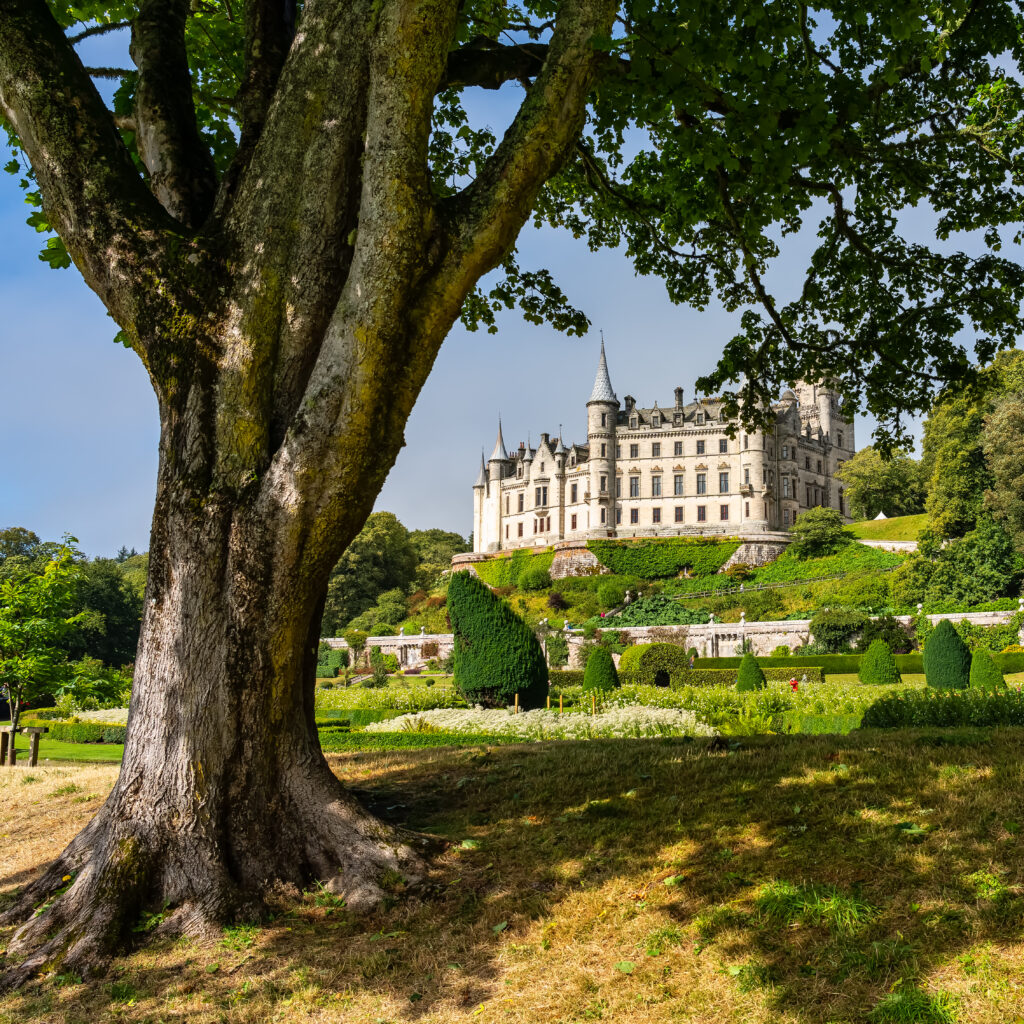
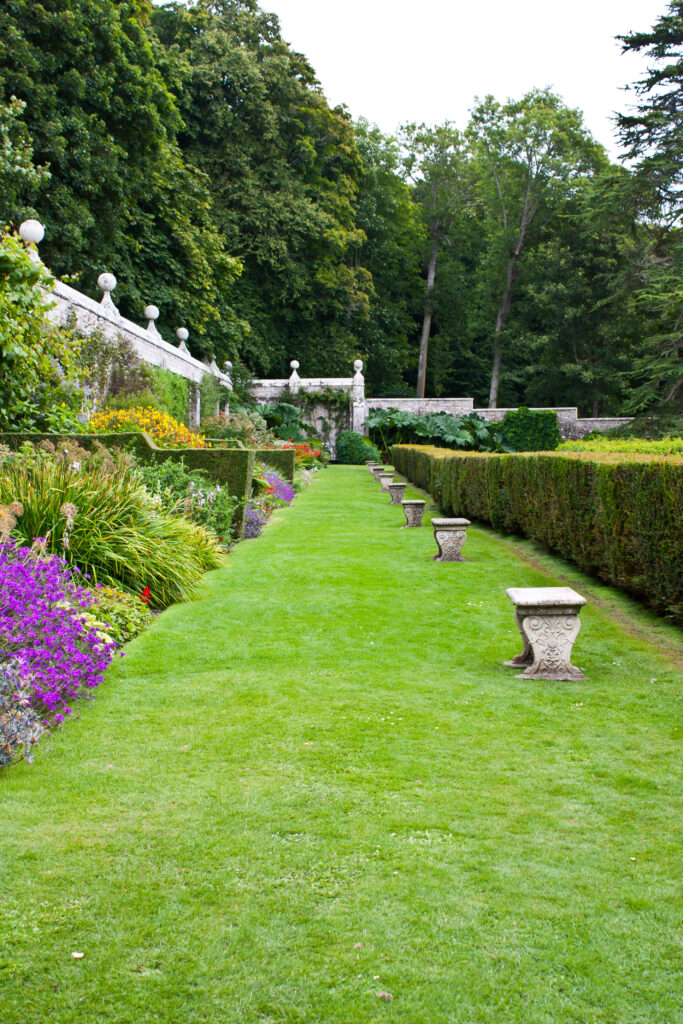
The decisive change took place between 1845 and 1851, when George Sutherland-Leveson-Gower, 2nd Duke of Sutherland, commissioned Sir Charles Barry, the famous architect of Westminster Palace in London. Barry’s vision transformed Dunrobin into a marvel reminiscent of the magnificent French châteaux, complete with majestic cone-shaped towers and ornate gardens inspired by those at Versailles.
Royal connections – Perhaps one of the most famous moments in the castle’s history was in 1872, when Queen Victoria was a guest at Dunrobin. Her visit brought royal favor to the estate and further enhanced its reputation.
The room in which she slept is still preserved today and can be viewed by visitors, adding to the charm and mystique of the castle. The Great Fire and Reinvention – One of the darkest chapters in Dunrobin’s history occurred in 1915, when a fire destroyed much of the 19th-century interior.
The ensuing devastation could have meant the end of this historic treasure. However, renowned architect Robert Lorimer led a careful restoration that brought the interior back to life with a blend of original charm and modern functionality.
A school for the elite – In a surprising turn of events, Dunrobin Castle served as a boys’ school from the late 1960s to the early 1970s. The transition from an aristocratic residence to an educational institution added another layer to its historic past. Stories from former students tell of long corridors where the echoes of the academic world merged with the whispers of bygone eras.
Current management and public access – The current steward, Alistair Sutherland, the 25th Earl of Sutherland, inherited the castle in 2019. His mother, Elizabeth Sutherland, the 24th Countess of Sutherland, managed the estate before him, having inherited it in 1963. This generational change has ensured that Dunrobin’s heritage lives on while preserving its historical essence.
Today, the castle is open to the public from April to October, offering a rare glimpse into its opulent halls and picturesque gardens. The garden, which is open year-round, houses a museum of big game hunting trophies and an area for falconry demonstrations—a tribute to the traditional pastimes of the Scottish aristocracy.
Architectural and historical treasures – Dunrobin Castle is not only a residence, but also a treasure trove of Scottish heritage and architectural innovation. It is listed as a Grade A building, the highest level of historical significance. Several other buildings on the estate, including the dairy, dovecote, pavilions, and monuments, are also recognized for their historical and architectural value.
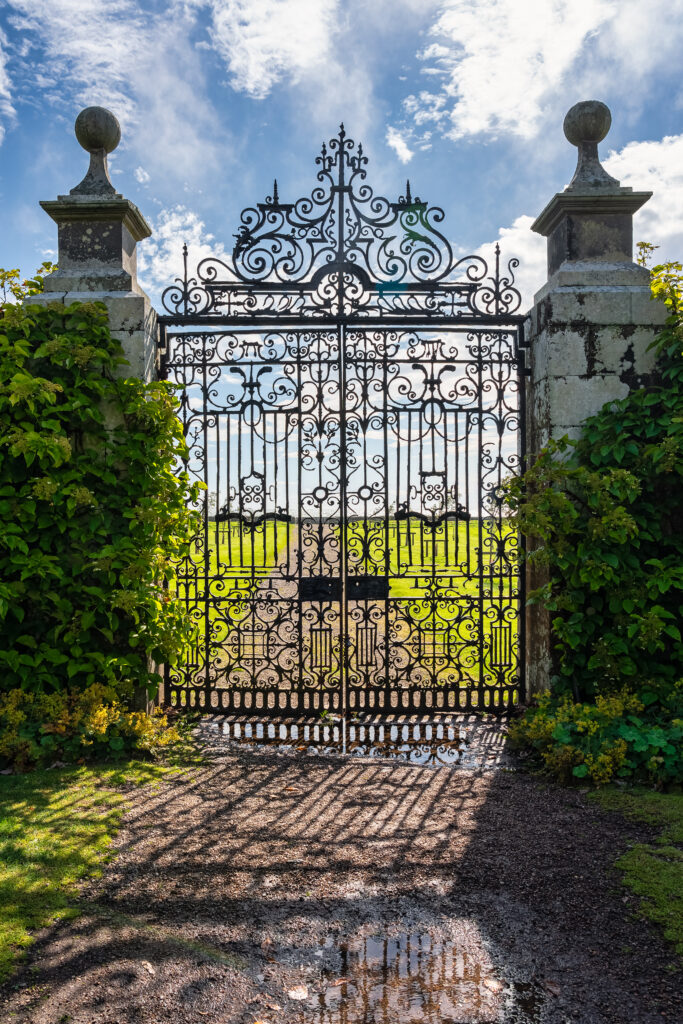
Among these, the garden pavilion and private cemetery reflect the life intertwined with the estate in a somber but beautiful way. Monuments on the grounds commemorate the 2nd Duke of Sutherland and Harriet, Duchess of Sutherland, whose legacy continues to shape the castle’s history to this day.
The mystery of the ghosts – No article about Dunrobin would be complete without mentioning its ghost legends. The most famous of these is the story of the Green Lady, who is said to be the ghost of Margaret, daughter of the 14th Earl of Sutherland. According to legend, she was locked in a high tower to prevent her from eloping with a forbidden lover. During a tragic escape attempt, she fell to her death. Her ghost is said to still haunt the tower, and sometimes her sad figure can be seen wandering around the battlements.
From a medieval keep to a French-inspired castle, from a noble residence to a boys’ school, Dunrobin Castle combines a rich history, culture, and secrets. Whether you are drawn by its architectural splendor, its carefully tended gardens, or the haunting legends that whisper through its halls, Dunrobin is a beacon of Scottish heritage, inviting all to explore its enigmatic past and vibrant present.