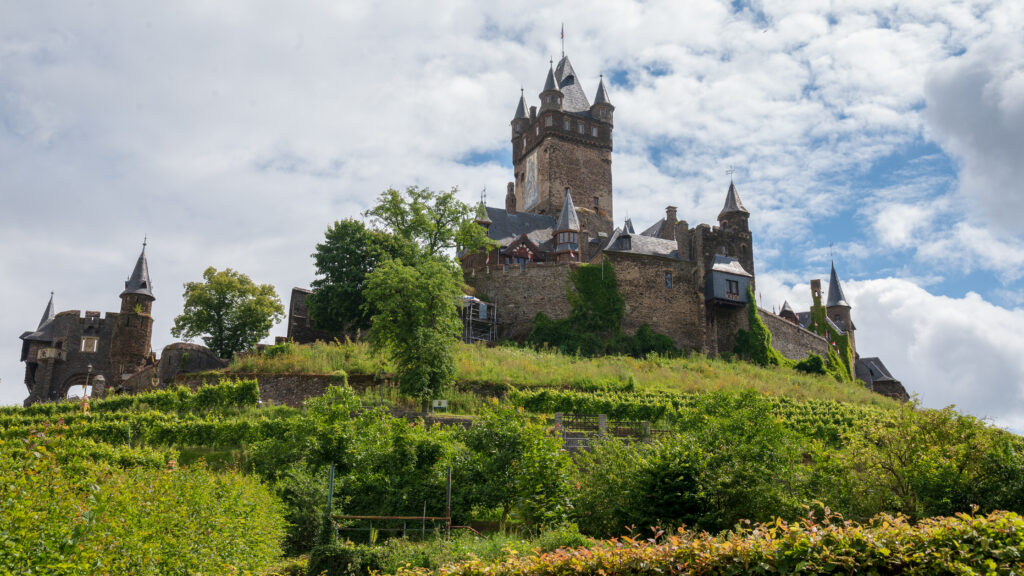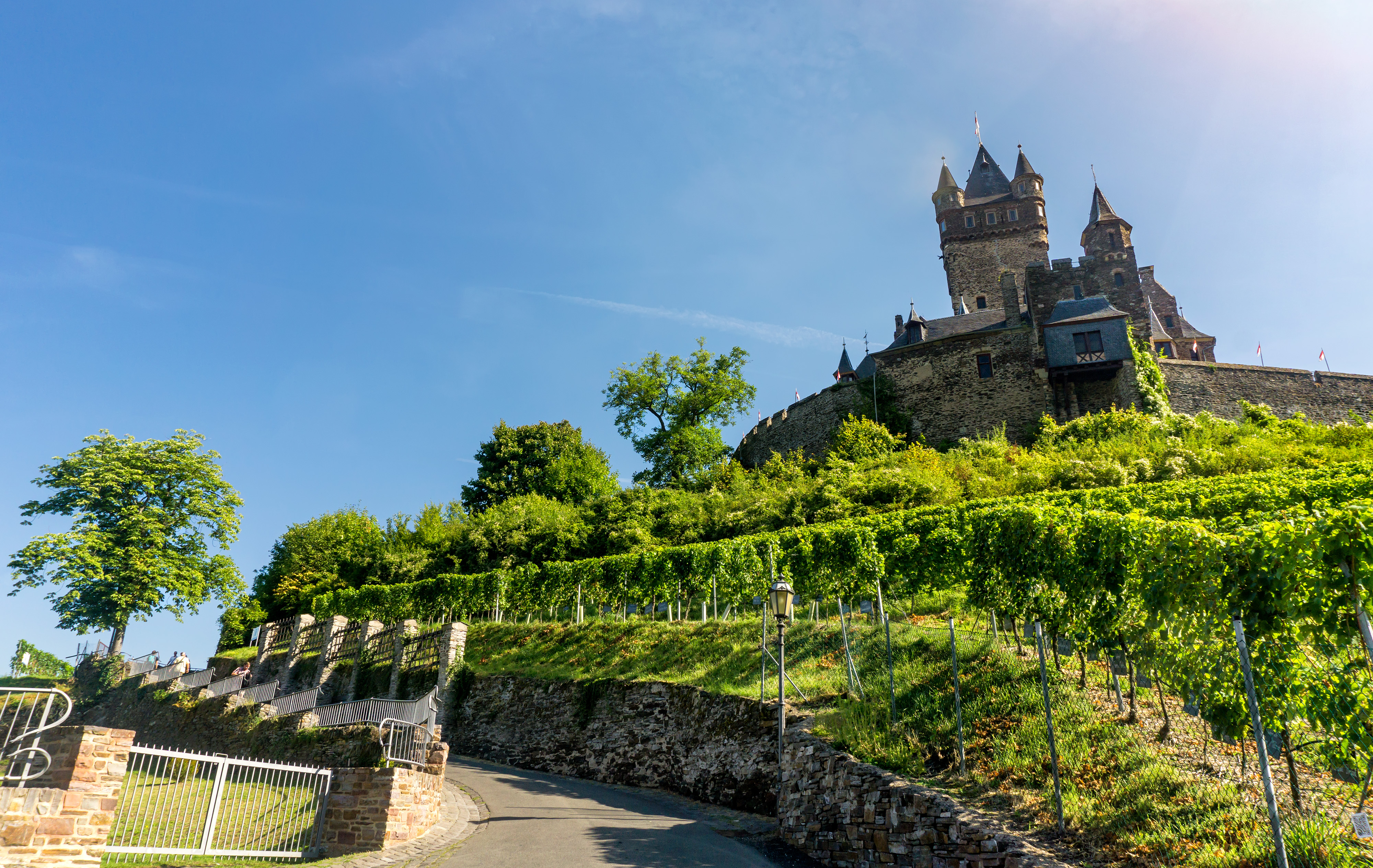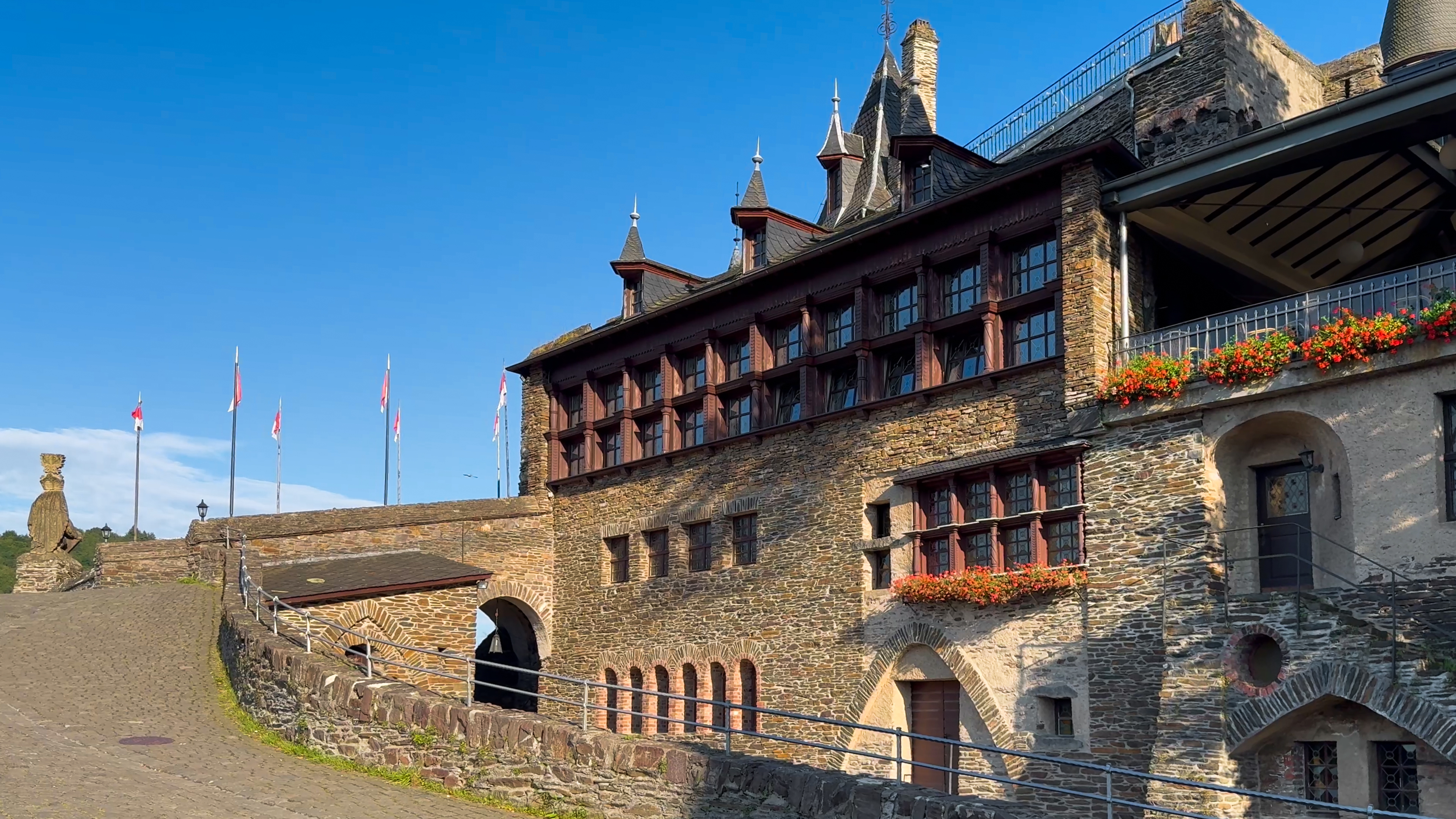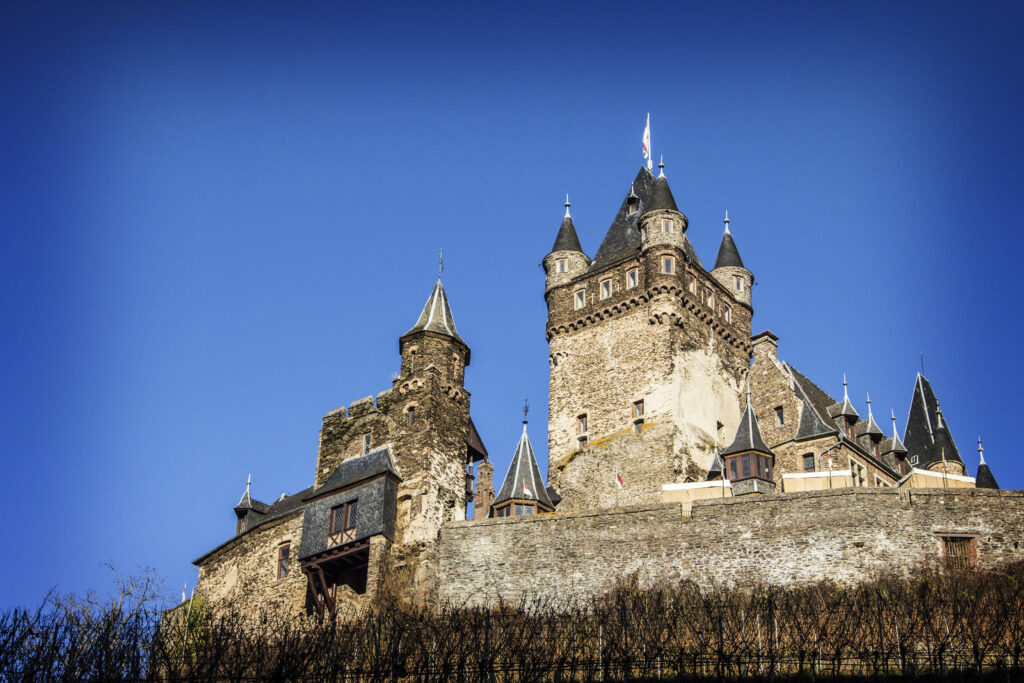

The Reichsburg Cochem towers majestically over the town of Cochem on the Moselle and is a symbol that embodies both historical significance and architectural splendor. Its towers and battlements tell stories that lie deep in the shadows of the centuries. Once a proud customs castle and strategic point of the Holy Roman Empire, it was destroyed in the 17th century and then rebuilt in an impressive act of historical romanticism. But the history of this castle begins much earlier and contains not only facts, but also myths and legends.
Origins and medieval heyday – The first mention of Cochem as “Cuchuma” can be found in a deed of donation from Prüm Abbey dated December 20, 866. The castle itself was probably built around 1100 or in the first half of the 12th century, possibly on the initiative of Siegfried von Ballenstedt from the House of Ascania. Its existence is first reliably documented in a deed from 1130, which mentions a ship customs office in front of the “castle of our inheritance, called Cochem.”
Over the centuries, the castle experienced numerous conflicts and sieges. In 1151, King Conrad III conquered it to consolidate his royal authority. Later, in the 13th century, the complex fell under the rule of the archbishops of Trier and developed into a central administrative seat for the surrounding imperial estates.
The conquest by Hermann von Stahleck and Otto von Rheineck – A dramatic episode in the history of the castle occurred after the death of Count Palatine Wilhelm von Ballenstedt. A dispute broke out between Hermann von Stahleck and Otto the Younger von Rheineck over the succession. The conflict culminated in 1150 with Hermann’s conquest of the castle. However, this victory was short-lived, as King Conrad III besieged and conquered the castle in 1151, ending the disputes and securing his royal power.
From heyday to destruction: the decline of the castle – The glorious days of Cochem Castle came to an abrupt end during the War of the Palatinate Succession. On November 8, 1688, it was captured by French troops under the command of Maréchal de Boufflers. Shortly thereafter, on May 19, 1689, their commander had the castle burned down and blown up. What was once a symbol of royal power now lay in ruins and was to be forgotten for almost two centuries.
The Berlin merchant and visionary Louis Ravené – It was not until the 19th century that the history of the castle took a new turn. Driven by the ideas of castle romanticism and inspired by historical reconstructions, Berlin merchant Louis Fréderic Jacques Ravené acquired the ruins in 1868. With incredible energy and considerable financial resources, he had the castle rebuilt in neo-Gothic style between 1868 and 1877. The plans were drawn up by architect Hermann Ende, and Julius Carl Raschdorff later took over the project.
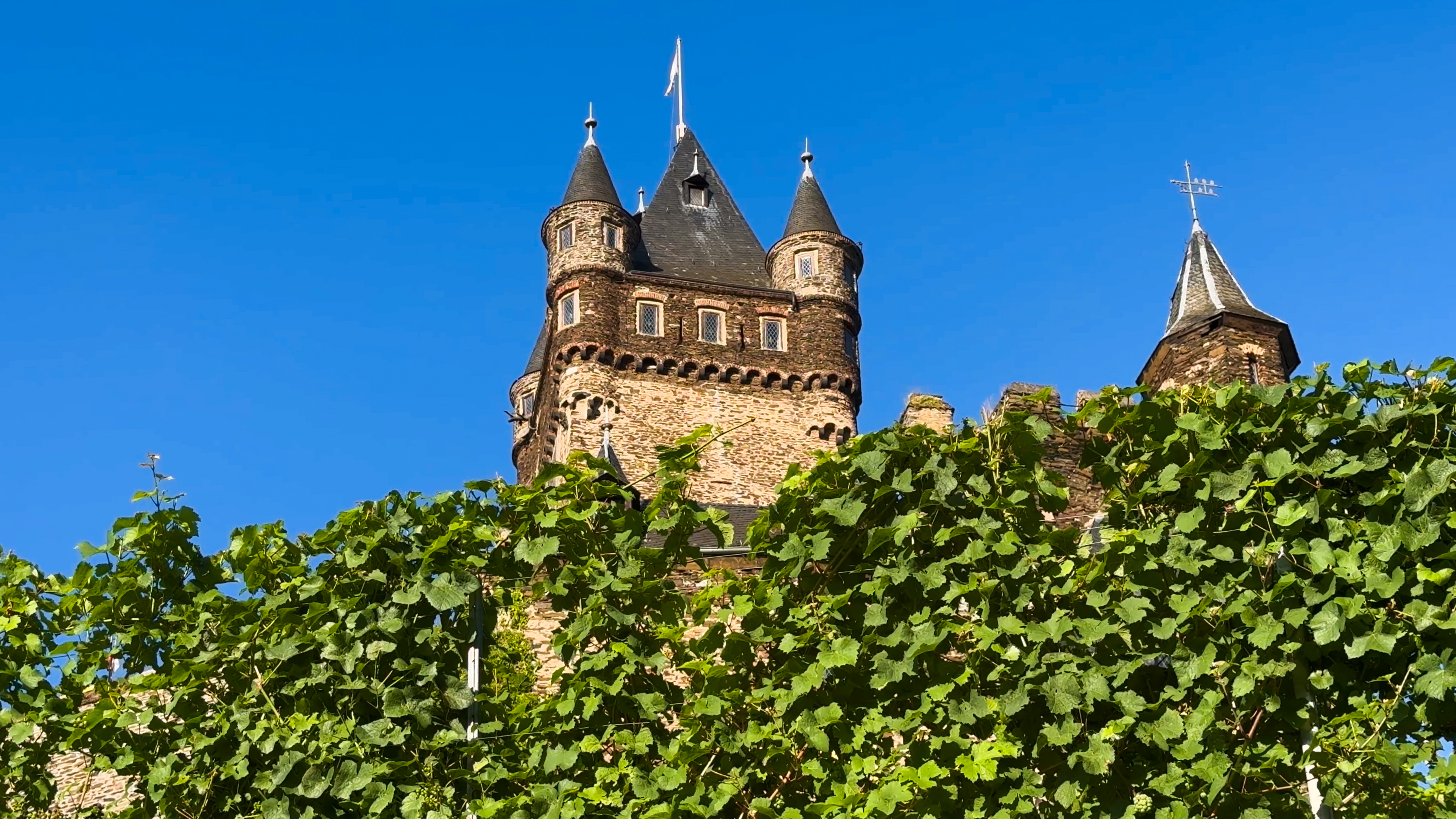
Neo-Gothic splendor and historical fantasy – The reconstruction of Reichsburg Cochem was based less on the original plans and more on romanticized ideas of the Middle Ages. The castle’s exterior appearance was partly invented. The striking octagonal tower was raised by an additional floor with four turrets, and the witch’s tower was given a conical roof and converted into a bathroom on the upper floor.
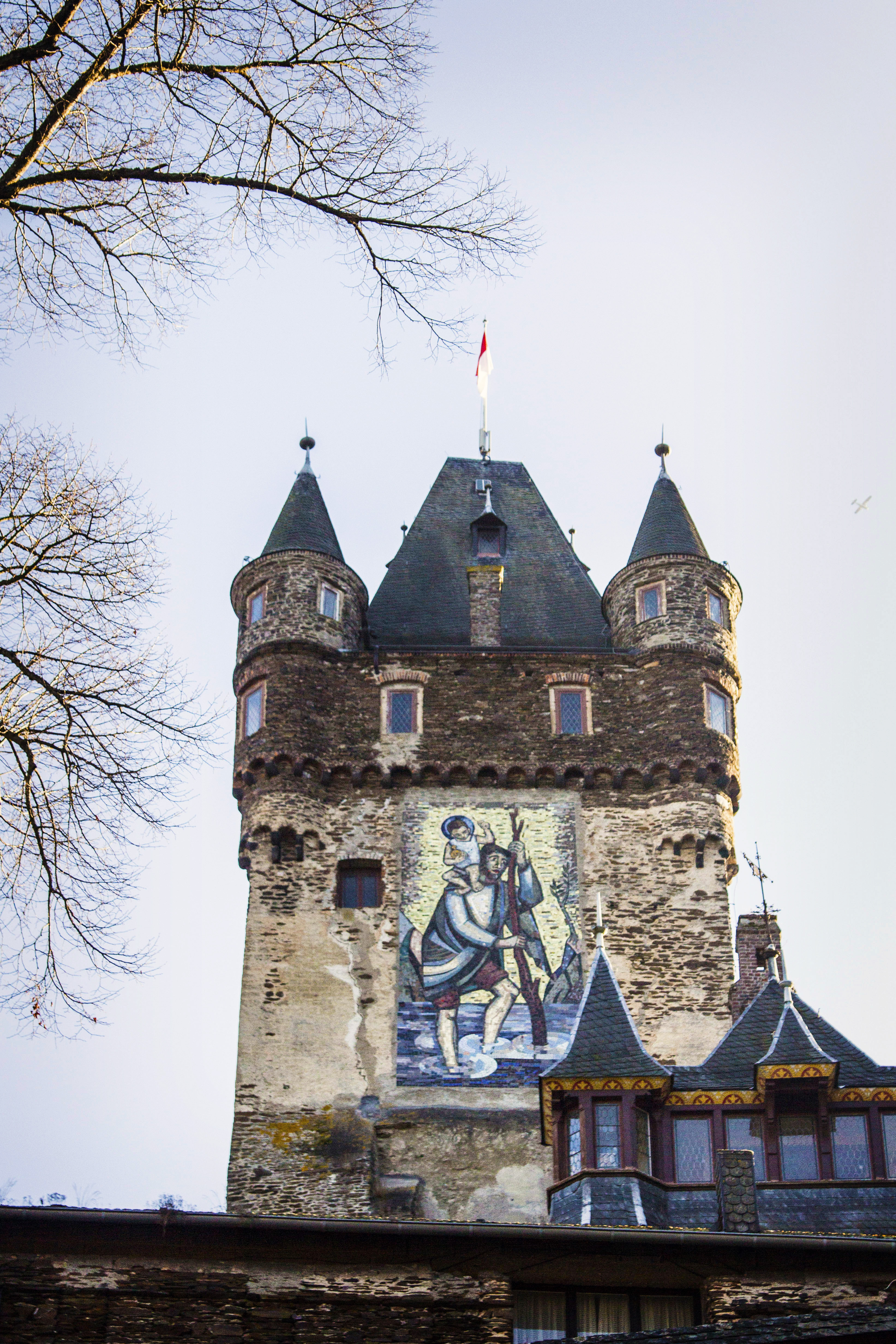
The baroque style of the interior reflects a somewhat playful interpretation of history, influenced by the values of historicism and a longing for an idealized past. The castle as it exists today represents a symbiosis: it combines the medieval structure with the neo-Gothic additions of the 19th century. Particularly impressive are the reconstruction of the main tower in neo-Gothic style and the 19th-century mosaic of St. Christopher.
Modern use and preservation – During the Second World War, Reichsburg Cochem suffered heavy losses, in particular the extensive art collection of Louis Auguste Ravené, which was largely destroyed. Today, however, the castle is a living museum and testimony to its eventful history, which visitors can explore on guided tours. The castle’s rooms, furnished in neo-Renaissance and neo-Baroque style, reflect a historical journey through time, ranging from impressive wood carvings and valuable carpets to magnificent tiled stoves.
Mystical legends and possible discoveries – In addition to the verifiable historical facts, there are numerous legends surrounding the castle. One of these legends tells of the White Lady, the ghost of an unhappy castle mistress who wanders through the chambers in search of her lost lover. There are also said to be hidden passages and secret chambers where valuable treasures were once hidden.
In summary, Reichsburg Cochem is not only an architectural masterpiece, but also a fascinating chapter in German history. Its impressive silhouette, its romantic rebirth, and the numerous stories that surround its walls make it an indispensable part of the region’s cultural heritage. From its mythical beginnings to the turmoil of the Middle Ages to its magnificent neo-Gothic style, Reichsburg Cochem is a timeless symbol of history and living imagination.