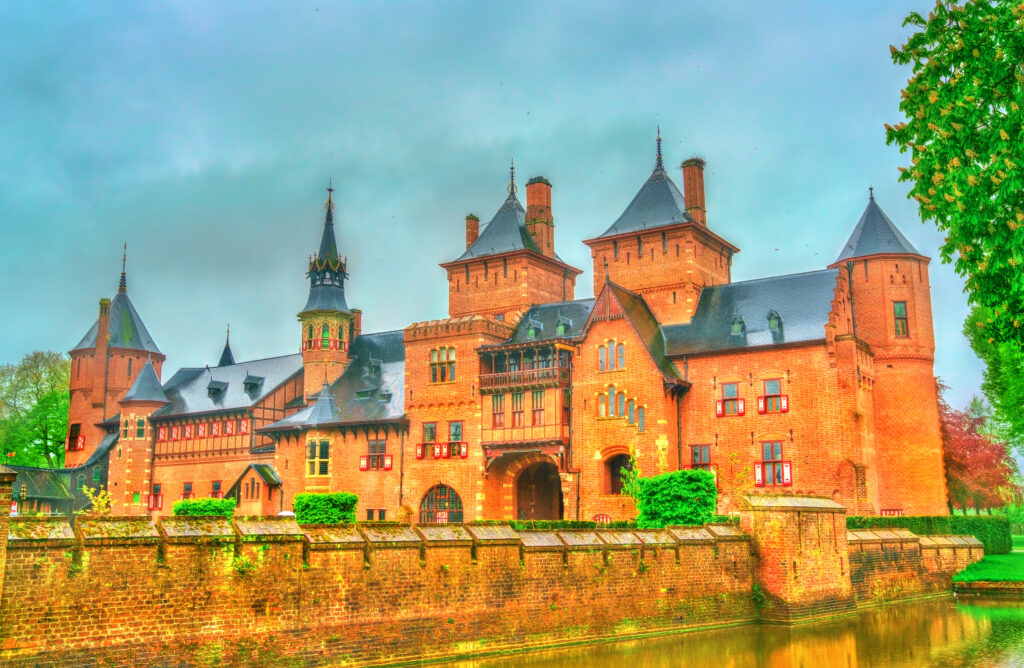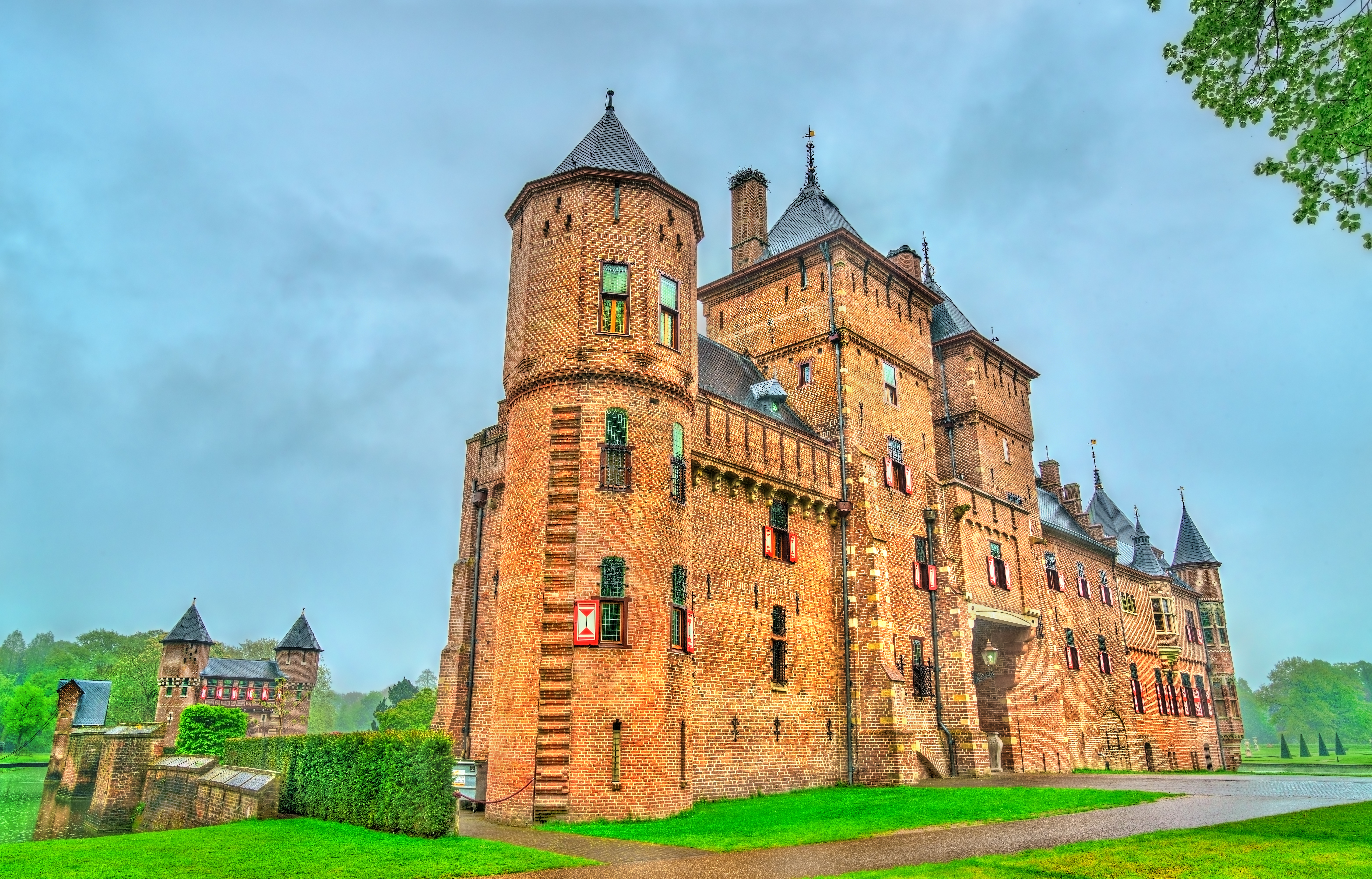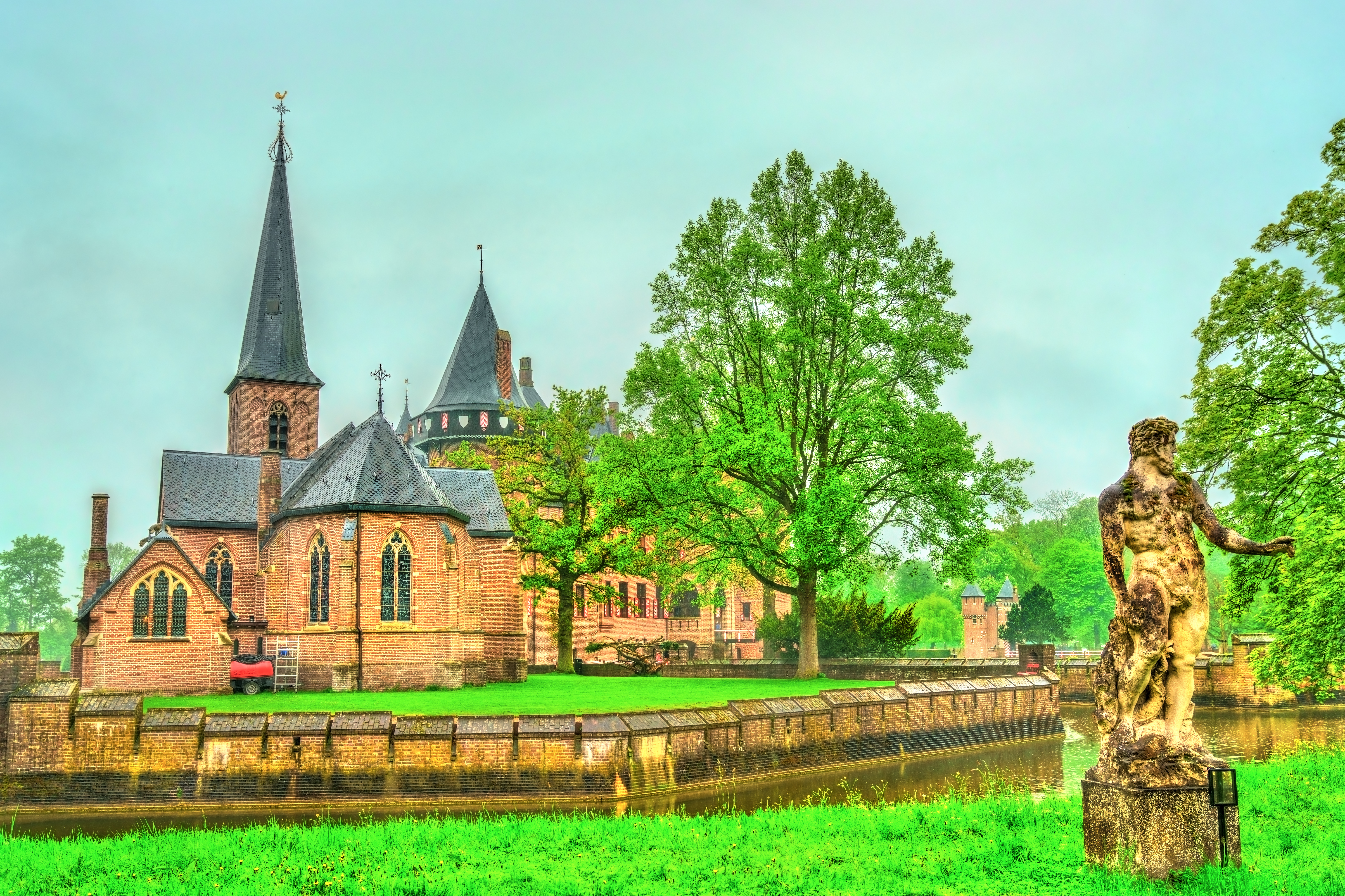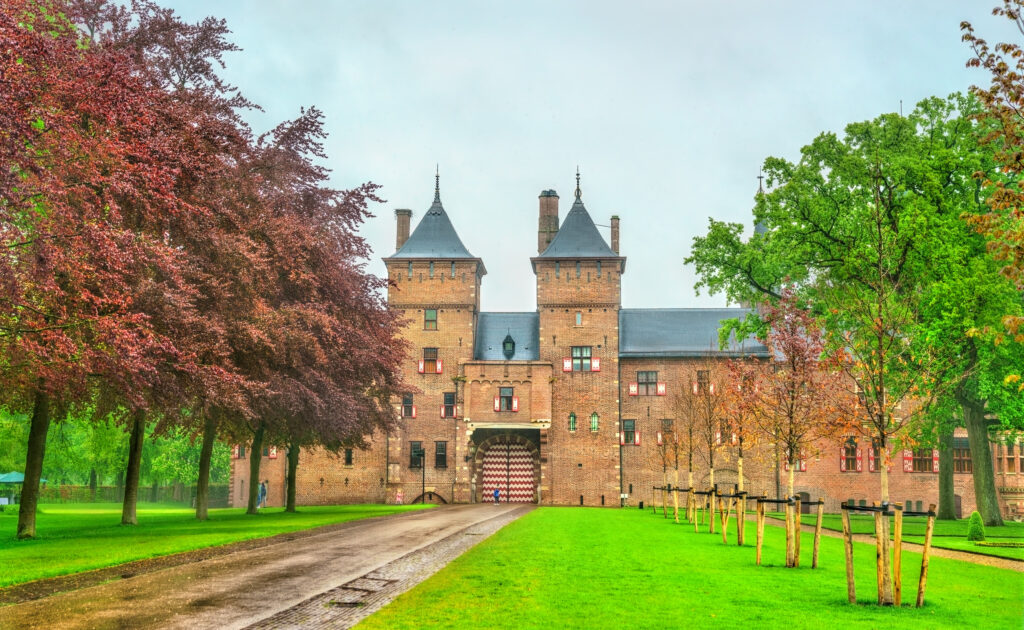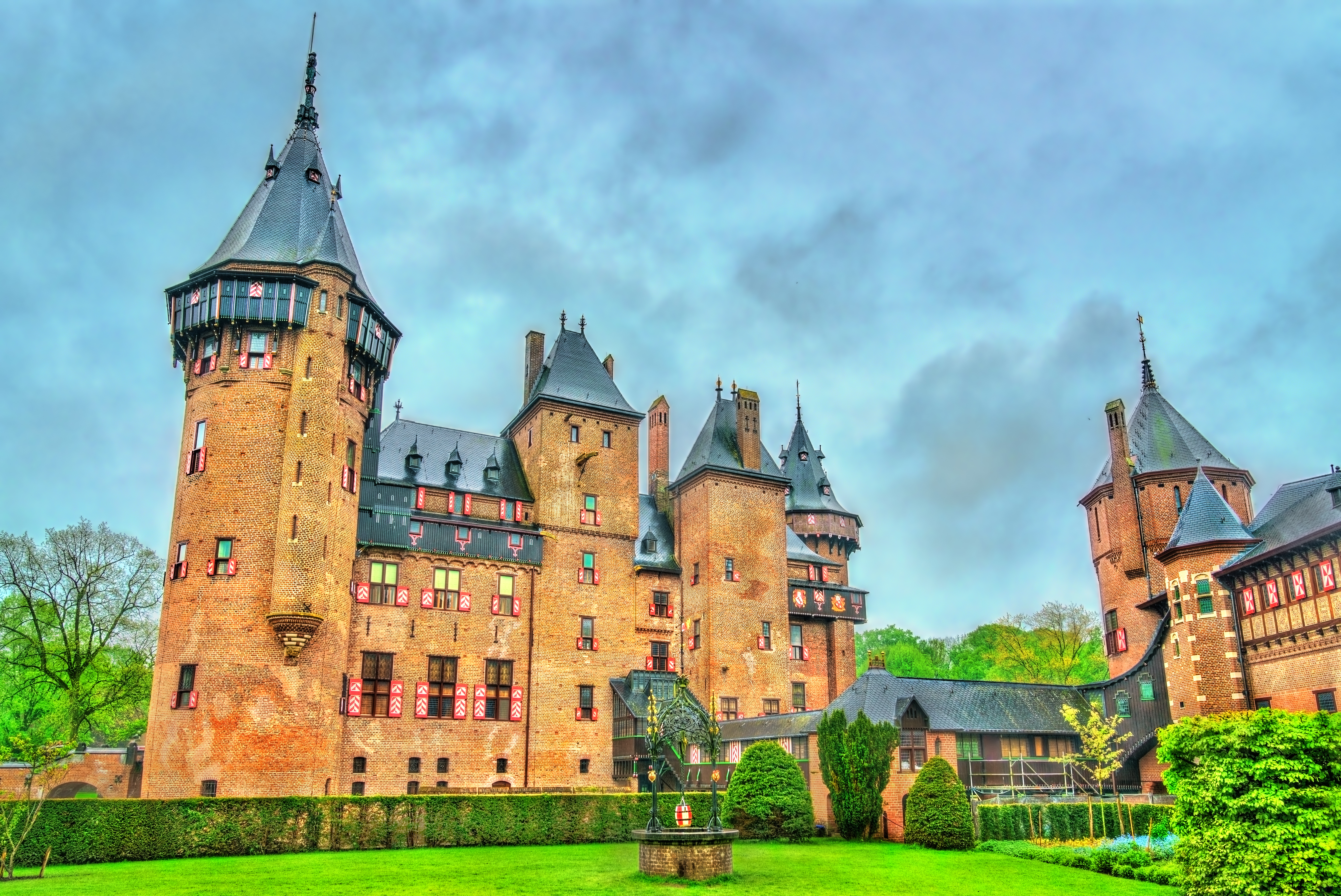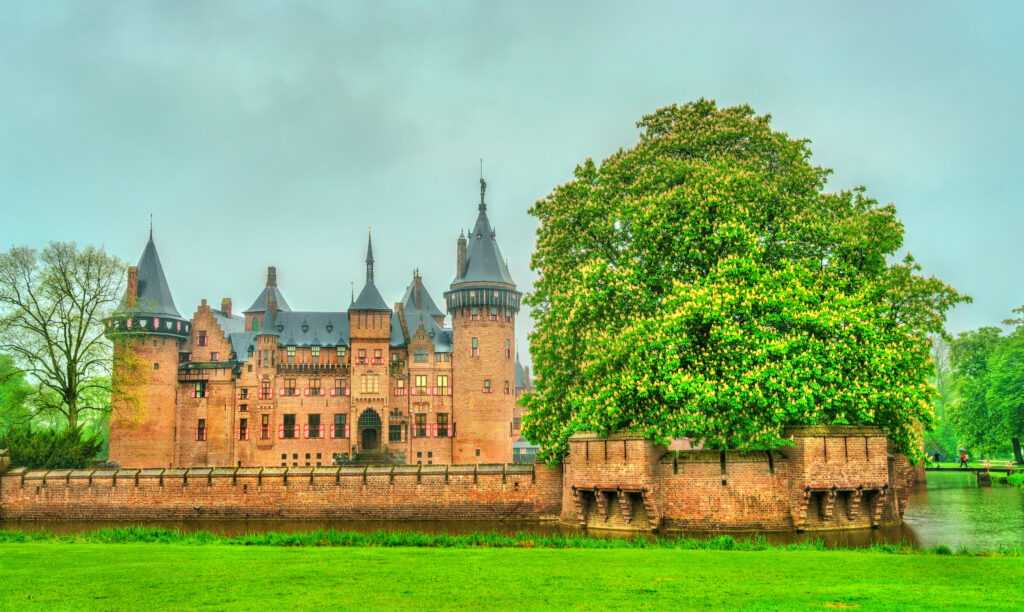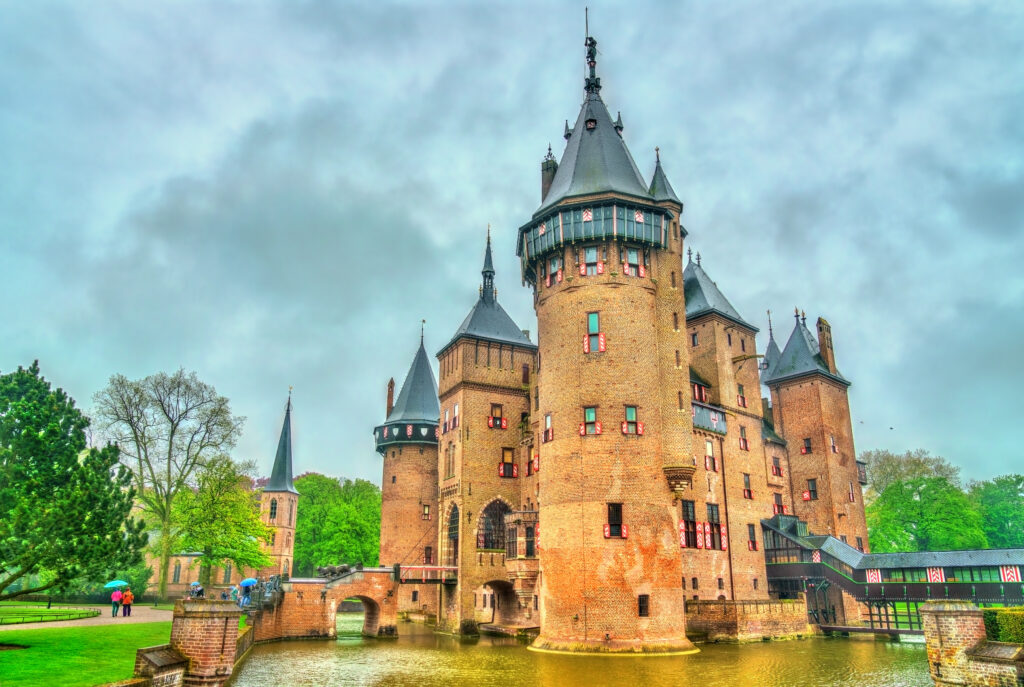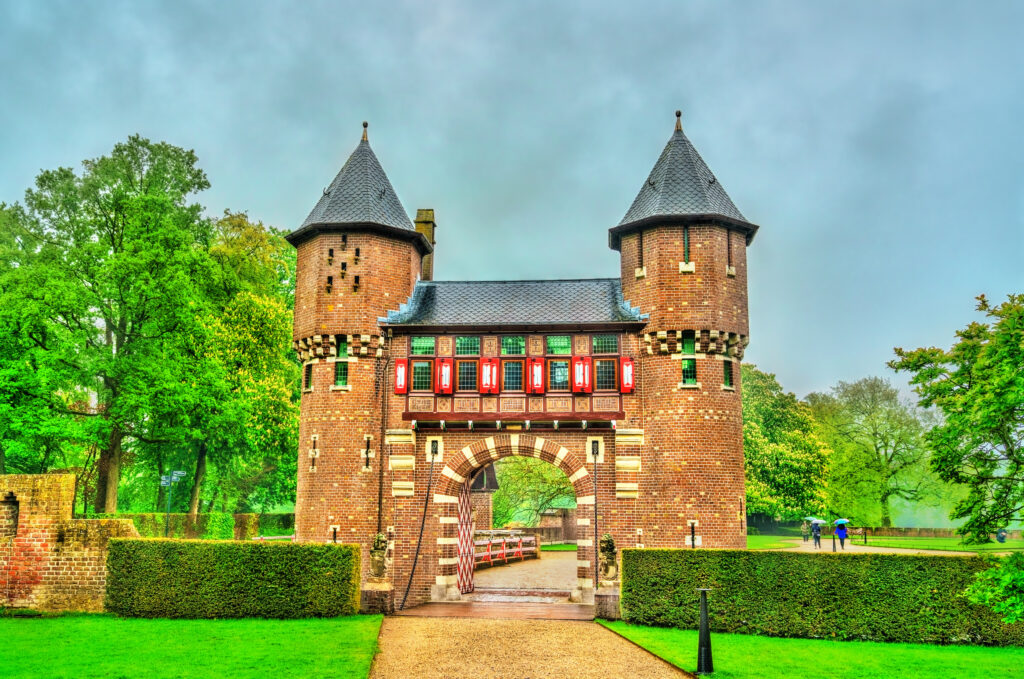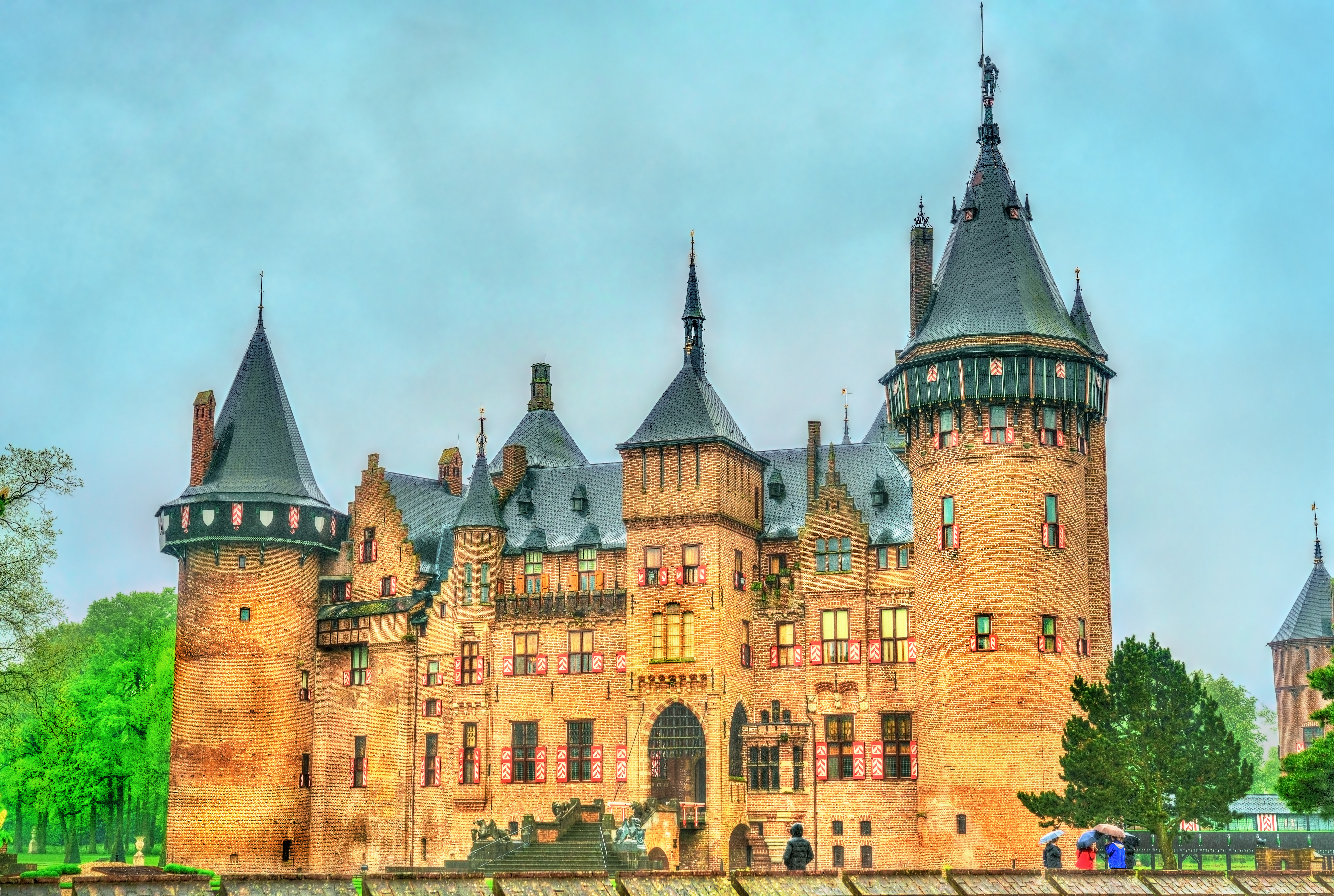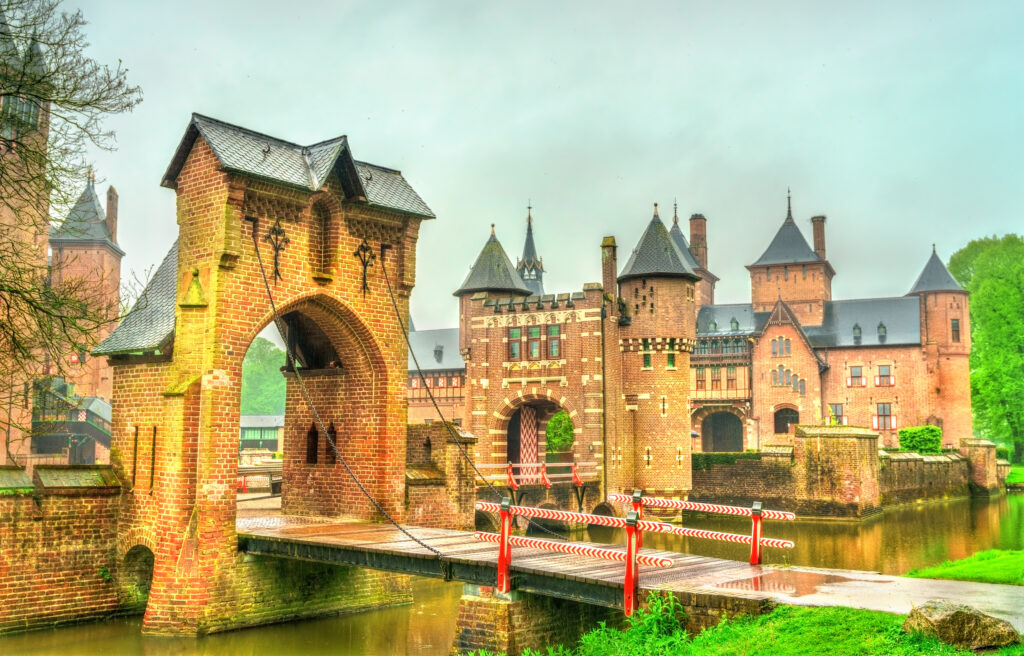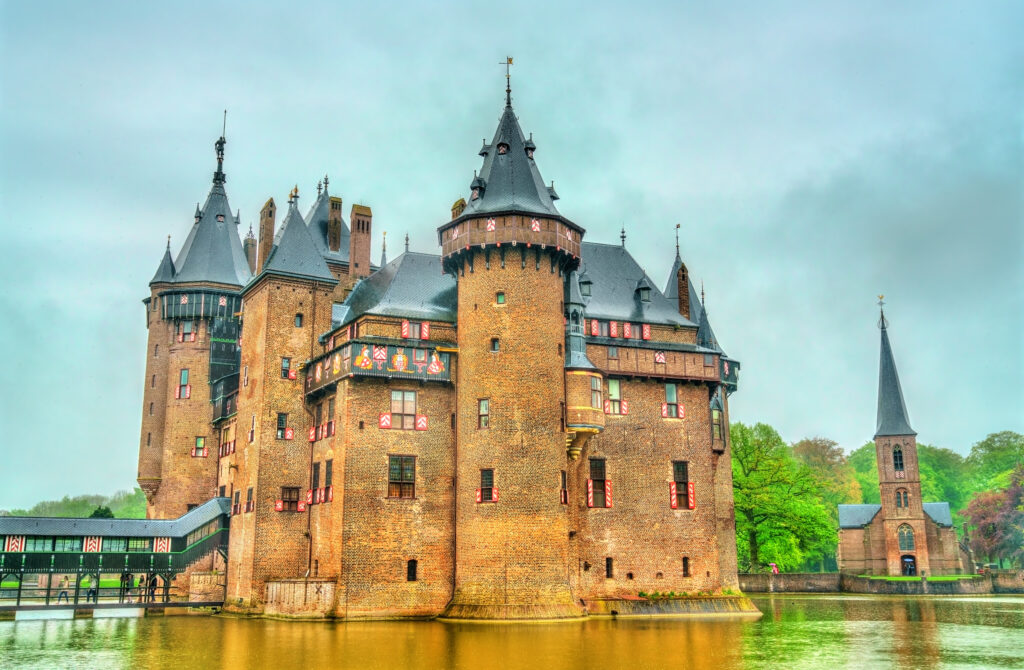

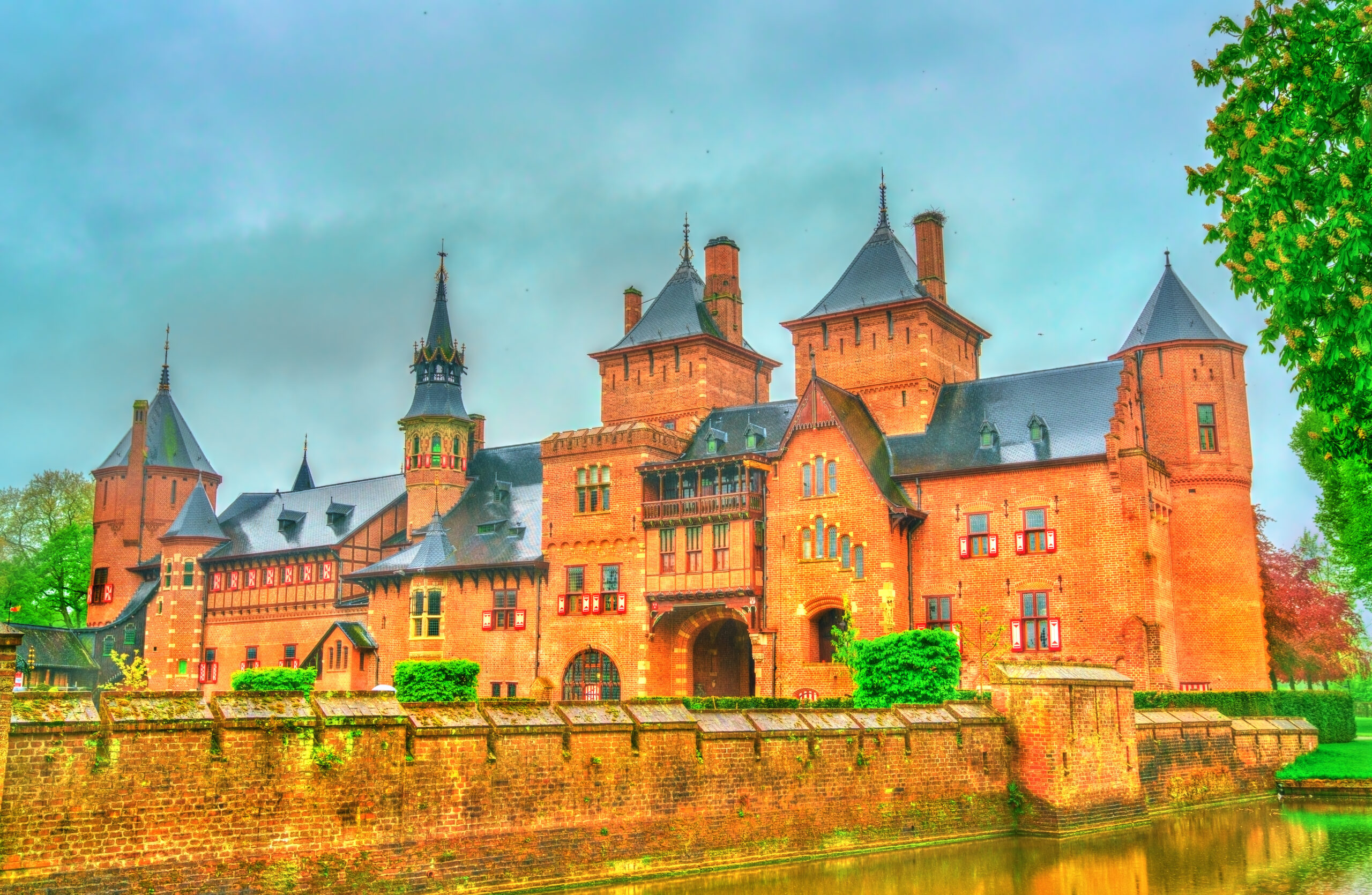
In the heart of the Dutch village of Haarzuilens, just outside Utrecht, stands Kasteel de Haar, a castle that is as much a monument to medieval legends as it is to 19th-century architectural prowess. Rising from the ruins of its war-torn past, this extraordinary complex combines history and innovation, making it a unique landmark that captivates visitors with stories from times long past and the wonders of modern technology.
The history of Kasteel de Haar begins in the mid-12th century, a period shrouded in mystery and myth. Although the first documented mention of the castle dates back to 1391 and refers to a donation to the De Haar family, oral traditions point to an earlier origin, marked by myths of knights and noble adventures. This portrayal of a fortress that defies time and the tides is deeply rooted in local folklore, as is the story of its partial destruction and reconstruction over the centuries.
In 1482, amid regional conflicts, the castle was set on fire and almost completely destroyed. However, the resilient stones witnessed its reconstruction: in the early 16th century, a new castle was built, which was documented as the property of Steven van Zuylen in 1506. By 1554, the fortress had been completely restored, as can be seen in one of the earliest sketches. Despite a period of prosperity, the building fell into disrepair after the childless death of Johan van Zuylen van de Haar in 1641. Nevertheless, it survived the trials of the Rampjaar (Disaster Year) of 1672, when French troops spared it from complete destruction.
The actual redesign began in the late 19th century under the direction of Baron Étienne van Zuylen van Nyevelt van de Haar and his wife Hélène de Rothschild. Between 1892 and 1912, they launched a large-scale project to revive the castle under the direction of renowned architects Pierre and Joseph Cuypers. Their approach combined historical reverence with contemporary innovation, resulting in a masterpiece of neo-Gothic design.
The restoration was not merely a reconstruction, but an ambitious redesign. The Cuypers enriched the existing structure with modern technologies of the time, including steel beams and prefabricated concrete elements, which were used to create the impressive barrel vaulted ceilings of the great hall. This juxtaposition of old and new not only restored the castle’s status as an impressive fortress, but also made it an industrial monument that pioneered electricity generation, central heating, and even the installation of an elevator—a rare achievement for its time.
Significantly, the interior was designed with great attention to detail. Almost everything inside, from the furniture to the cutlery, was designed by Cuypers & Co., a company specializing in ecclesiastical art and architecture. Notably, skilled craftsmen, including sculptors, were sent to Haarzuilens to ensure that the execution matched the architects’ ambitious visions.
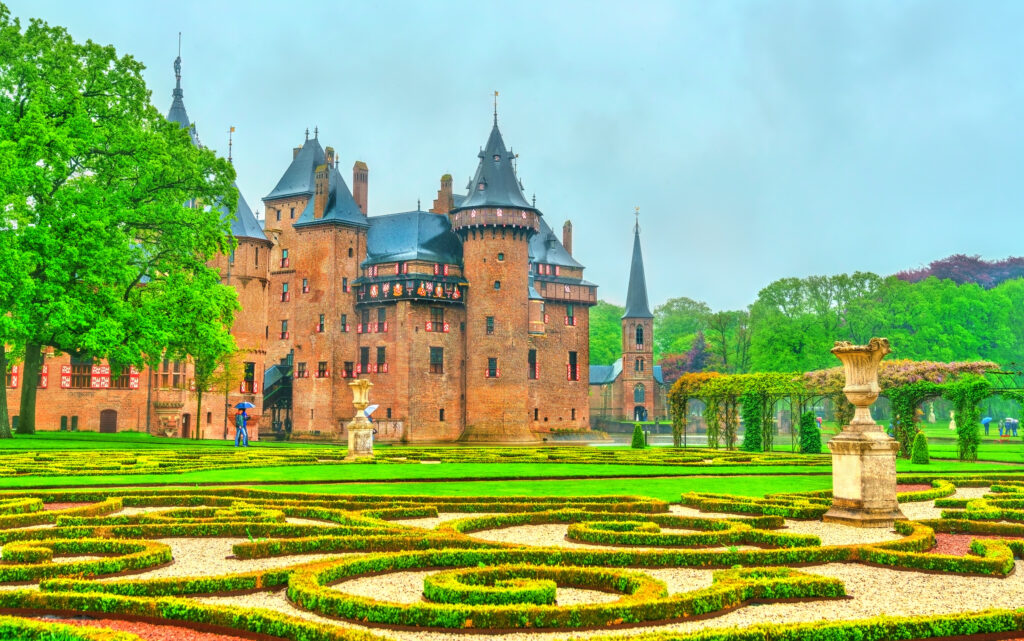
While the interior is overflowing with opulence, including pieces from the Rothschild collection such as exquisite Chinese porcelain and sacred artworks, the exterior complements this splendor with its extensive park. Designed by Hendrik Copijn, a master of landscape architecture, the park covers 100 hectares and incorporates themed gardens reminiscent of Versailles.
Copijn’s plan surpassed the proposals of Cuypers and Leonard Anthony Springer, particularly due to his foresight in planting over 6,000 mature trees to fulfill the baron’s desire for immediate shade. These trees underwent an extraordinary journey, being transported through Utrecht by horse and cart, with the baron even purchasing and demolishing buildings to clear the way for them.
This landscaping project led to the relocation of the entire village of Haarzuilens. In 1898, 150 villagers were relocated to a newly built settlement about a kilometer away, designed by Jos Cuypers and other architects in a picturesque, historicist country house style. Here, the story of modernization continues, with the relocation of the community coinciding with the rise of cultural heritage preservation, as the relocated village now belongs in part to the Dutch nature conservation organization Vereniging Natuurmonumenten.
The labyrinth of history surrounding Kasteel de Haar is not limited to medieval skirmishes or 19th-century innovations. During World War II, the castle grounds once again experienced difficult times, as many trees were felled for firewood and the fields were repurposed for vegetable cultivation. This period of utilitarian use reflects the estate’s adaptability and its ability to reflect the socio-economic needs of its time.
Today, Kasteel de Haar is not just a remnant of history, but a living chronicle that tells of centuries of human endeavor, combining architectural finesse with the lingering echoes of ancient legends. Visitors can still feel the pulse of its historic past as they stroll through corridors adorned with royal stories, surrounded by green gardens that whisper the secrets of bygone eras. It is more than just a castle; it is a testament to resilience, bearing witness to the inexorable passage of time while clinging to the myths and dreams that form its foundation.
Thus, Kasteel de Haar continues to fascinate today: an impressive fusion of fairytale charm and modern marvel, inviting all visitors on a journey into the past while remaining firmly anchored in the present—a truly majestic relic of a historic past that always looks to the future.