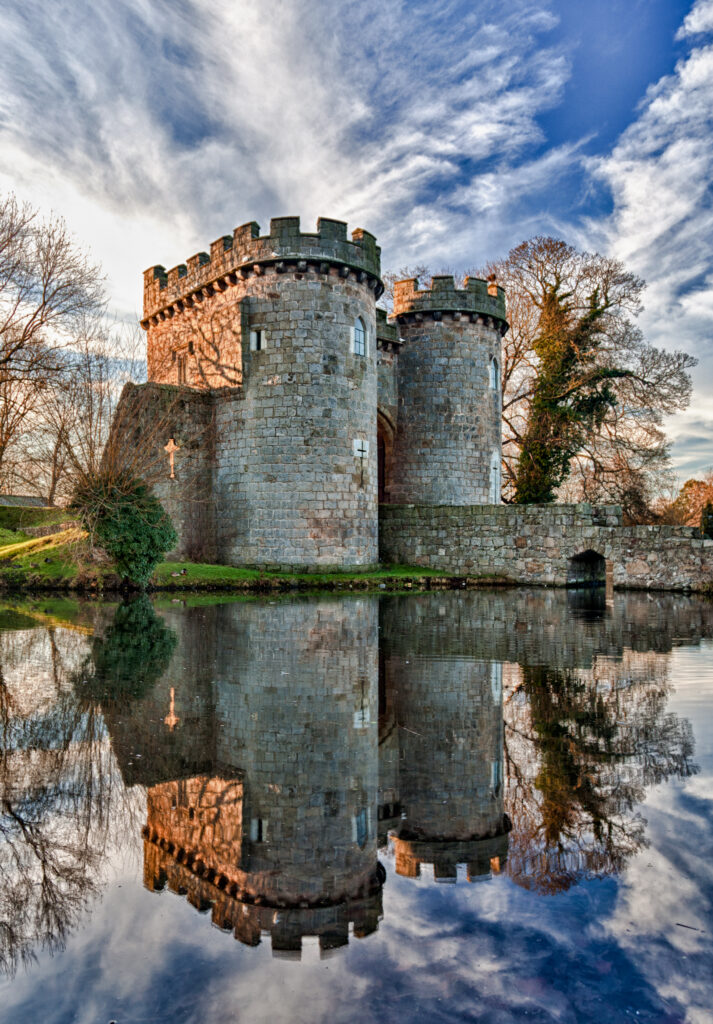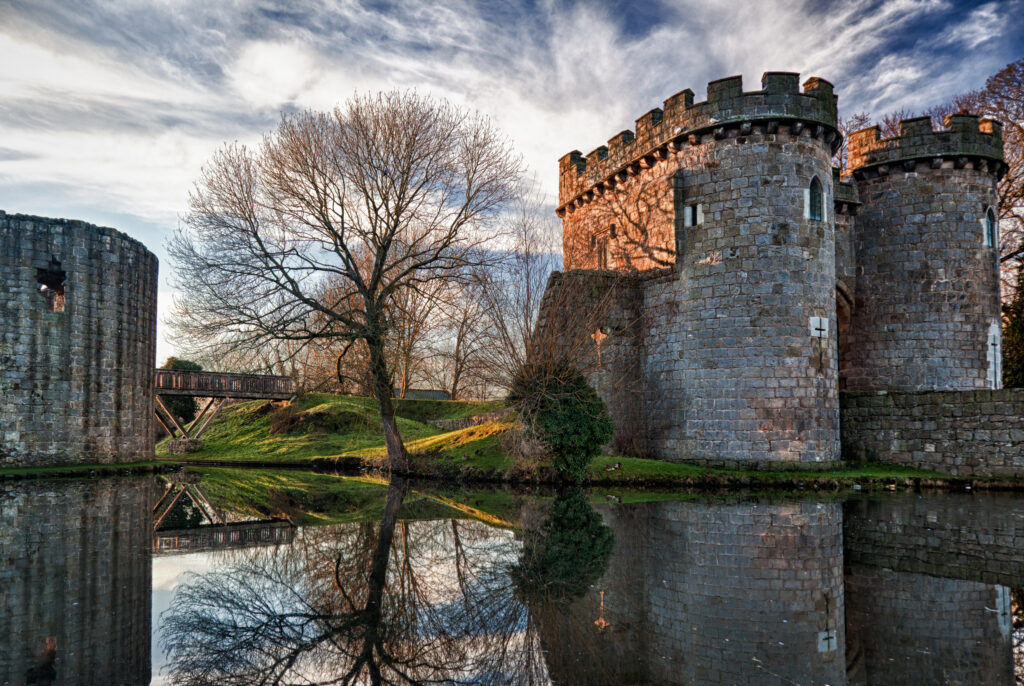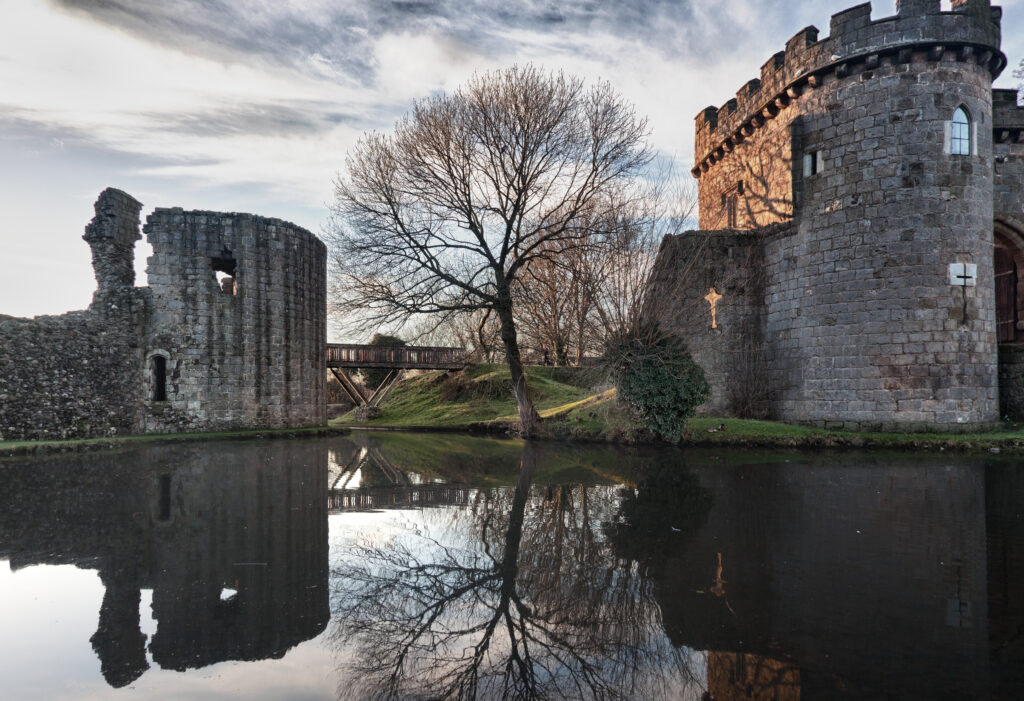

Whittington Castle, a majestic structure in the village of Whittington in Shropshire, England, holds countless stories full of intrigue, legends, and historical turning points. This article takes an in-depth look at the multifaceted history of the castle, which has captured the imagination of all kinds of visitors for centuries.
Origins and transformation – Whittington Castle was originally designed as a motte – a typical earthwork fortification from the Norman period, crowned by a wooden tower. In the 13th century, however, this simple structure was replaced by an impressive stone castle. At its center was the keep, surrounded by a mighty curtain wall and several towers, built on a hill and protected by a deep moat. This advanced and imposing construction made it a strategically important fortress on the border between England and Wales.
Gardens steeped in history – An amazing discovery in 2003 revealed that Whittington Castle was also known for its ornate gardens. Historical and archaeological research by Peter Brown and Peter King showed that in the 14th century, the outer bailey included two magnificent gardens surrounded by water and laid out by a member of the FitzWarin family. These gardens, particularly the viewing hill, are considered some of the earliest and most advanced of their kind in England and highlight the pride of English garden design.
Changing rule – The history of the castle is as varied as it is fascinating. Originally fortified by William Peverel, Whittington Castle changed hands many times. King Henry II transferred the castle to Roger de Powys in 1165, whose descendants retained it for generations. A claim by Fulk III FitzWarin sparked a rebellion that ultimately ended in favor of the FitzWarins. As a result, a long line of FitzWarin lords continued until the death of Fulk XI FitzWarin in 1420.
Destruction and reconstruction – In 1223, the castle fell victim to a devastating attack by Llywelyn ap Iorwerth of Gwynedd. Despite the destruction, Whittington Castle was recaptured through a peace treaty and rebuilt in fine stone. New fortifications and a keep were added, making the fortress an impregnable bastion. This constant threat from Welsh invaders continued until King Edward I successfully conquered Wales in 1283.
Decline and decay – After the defeat of Llywelyn ap Gruffydd, the castle experienced turbulent times of splendor and decay. In the 15th century, it slowly fell into disrepair as minors inherited the estate and did not reside in the castle. In 1404, the surrounding lands were ravaged during Owain Glyndŵr’s rebellion, but the castle itself remained intact. However, this changed when internal family disputes and economic difficulties led to further neglect.
Legends and myths – The walls of Whittington Castle are shrouded in legends that give the place a mystical aura. One of the most notable stories revolves around the Holy Grail, known as the Marian Chalice, which was supposedly kept in a private chapel in the castle. According to legend, Sir Fulk FitzWarin, a descendant of Payne Peveril, was one of the guardians of the Grail at King Arthur’s table. Although there is no historical evidence for these stories, they hang like an invisible thread over the ancient walls.
Modern revival – Today, Whittington Castle belongs to the Whittington Castle Preservation Trust, which is dedicated to the preservation and restoration of this historic site. Thanks to extensive renovations worth £1.5 million, the estate has been restored to its former glory. The castle is now a living testament to the past and is regularly used by the Historia Normannis group to reenact historical events and battles.
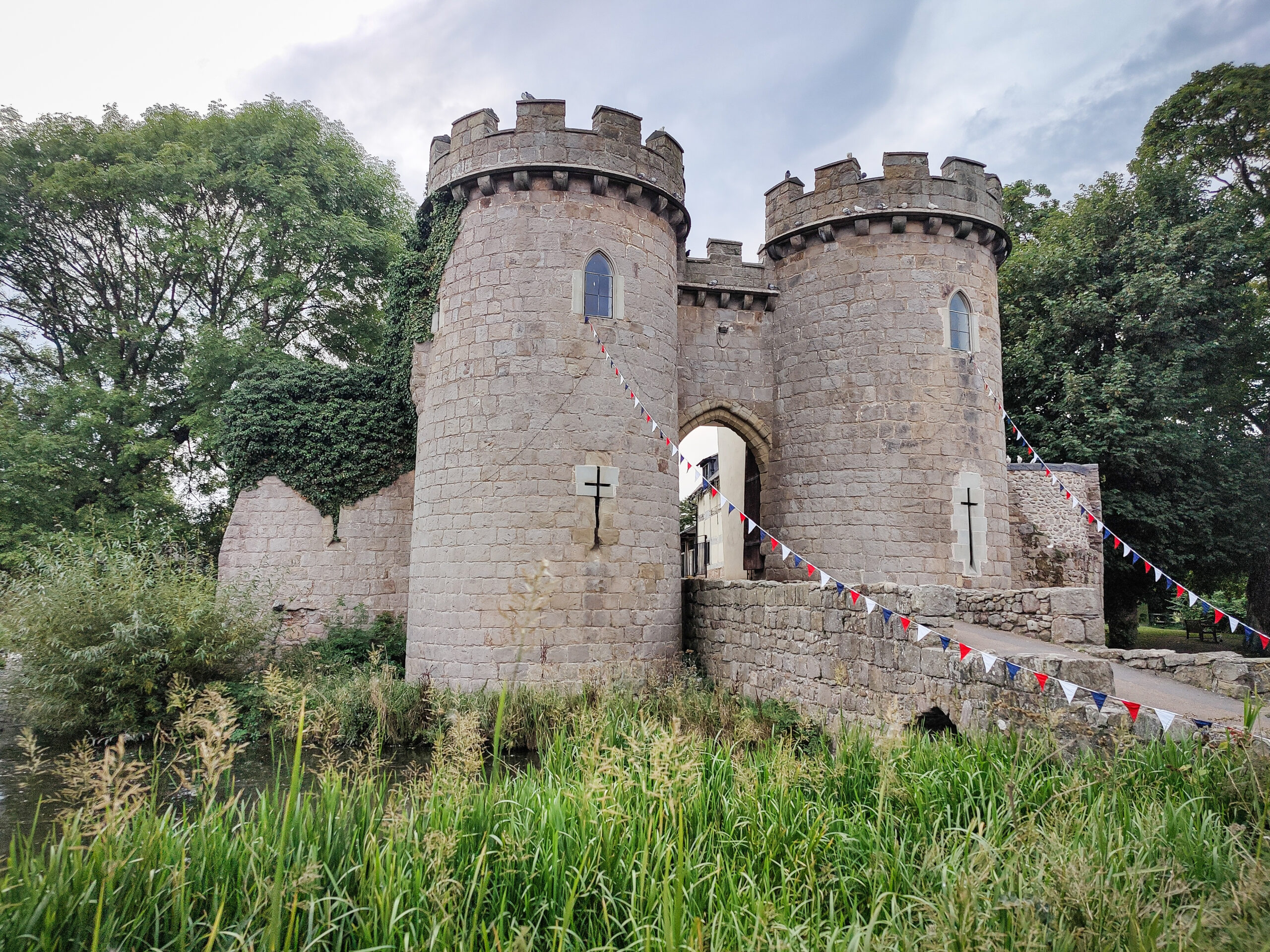
Whittington Castle today – The modern Whittington Castle welcomes visitors from all over the world who want to admire its eventful history and preserved structures. The gatehouse, once a romantic dwelling, is the main attraction and offers insights into medieval life and the architectural masterpieces of past centuries.
Every corner and every stone of Whittington Castle tells stories of power struggles, noble dynasties, and epic battles. Whether you visit the castle as a history buff, amateur archaeologist, or simply a curious traveler, you will find a kaleidoscope of myths and facts that will make every visit unforgettable. Whittington Castle is much more than just a historic building; it is a living mosaic of stone, history, and legends that reflects the development of Shropshire and England. From its Norman origins to its medieval gardens to the myths surrounding the Holy Grail, this castle is a true gem of English history.
Head to Whittington and let yourself be enchanted by the ancient walls and exciting stories. Every chapter, every myth, and every legend of this place contributes to telling the rich and diverse history of England.