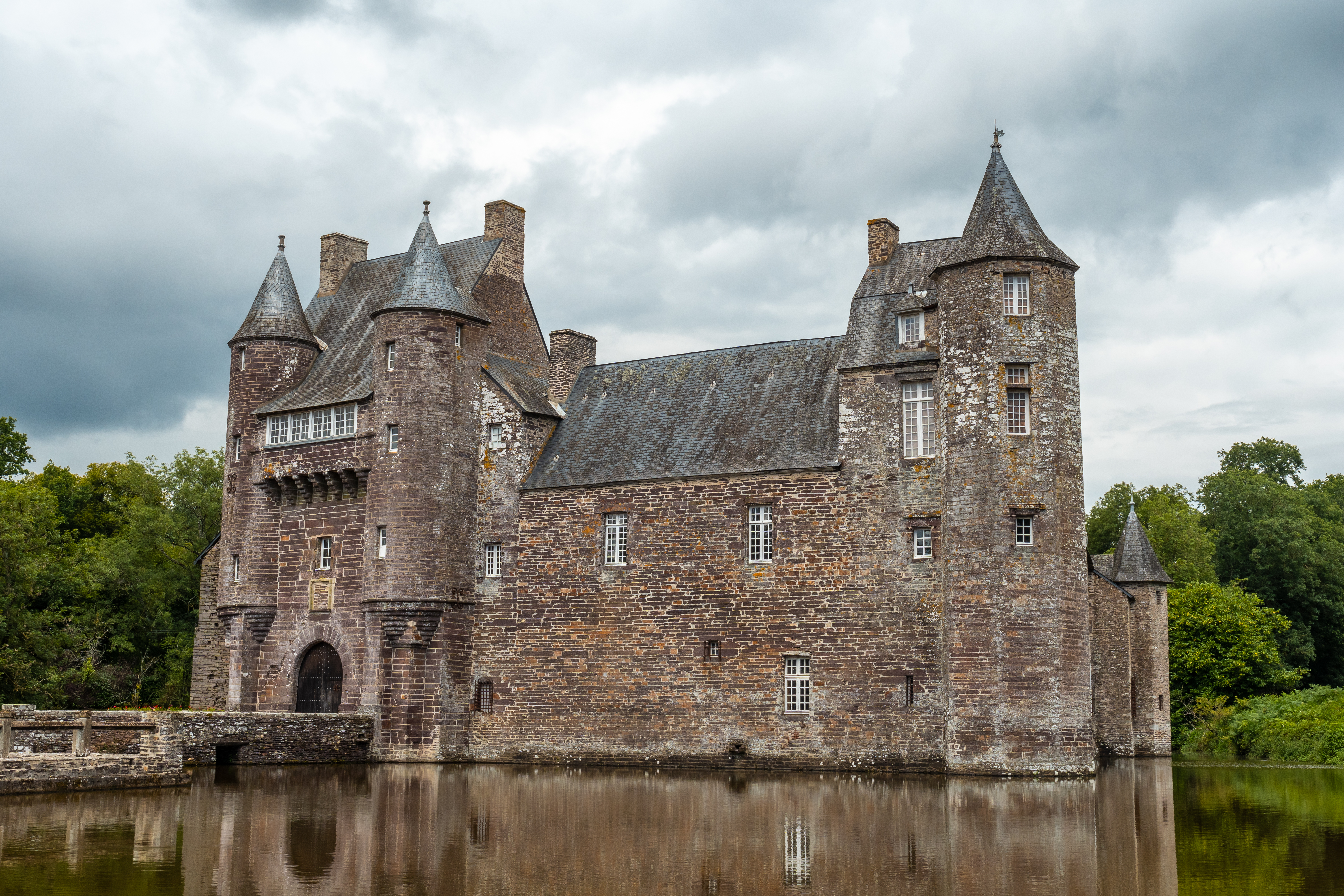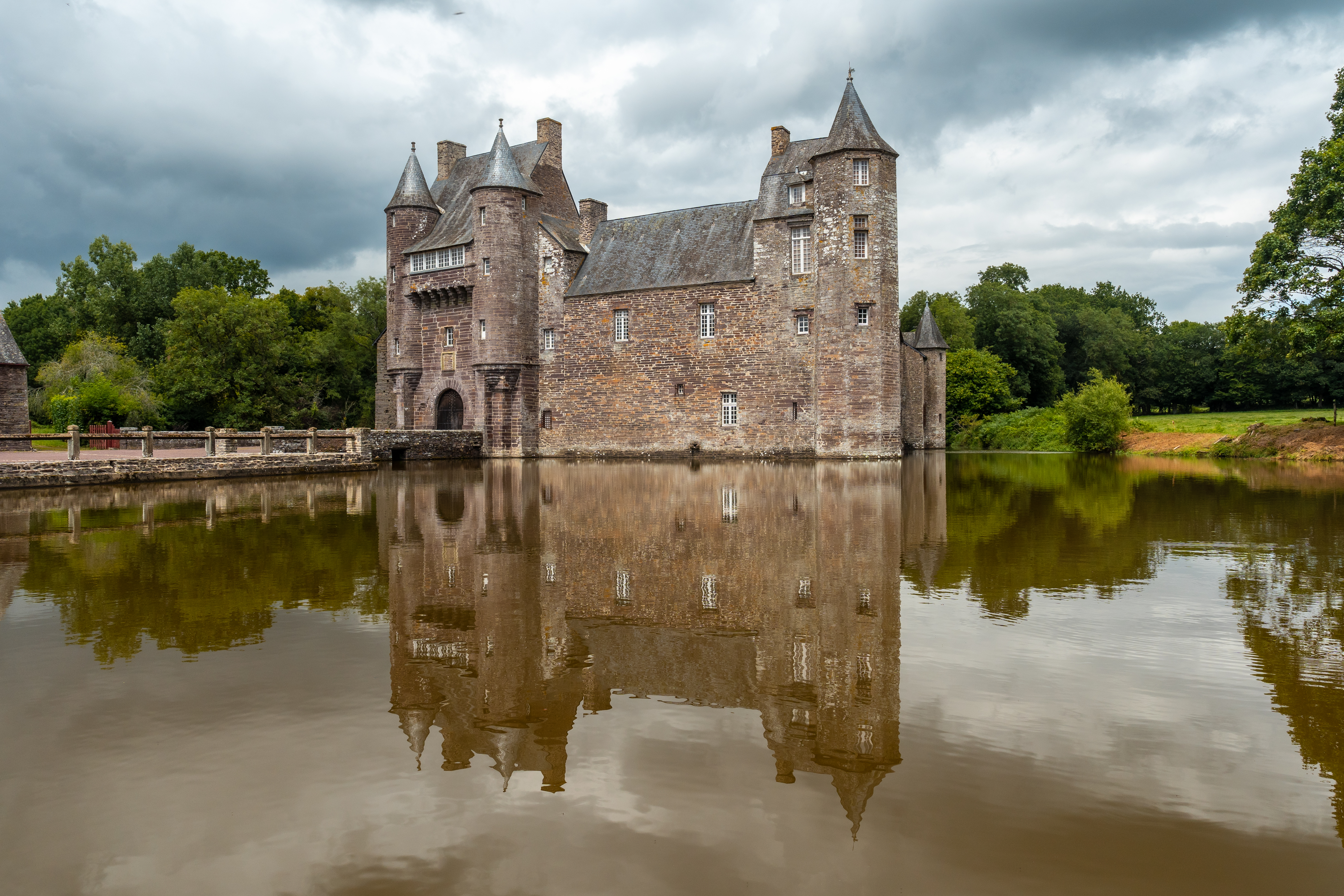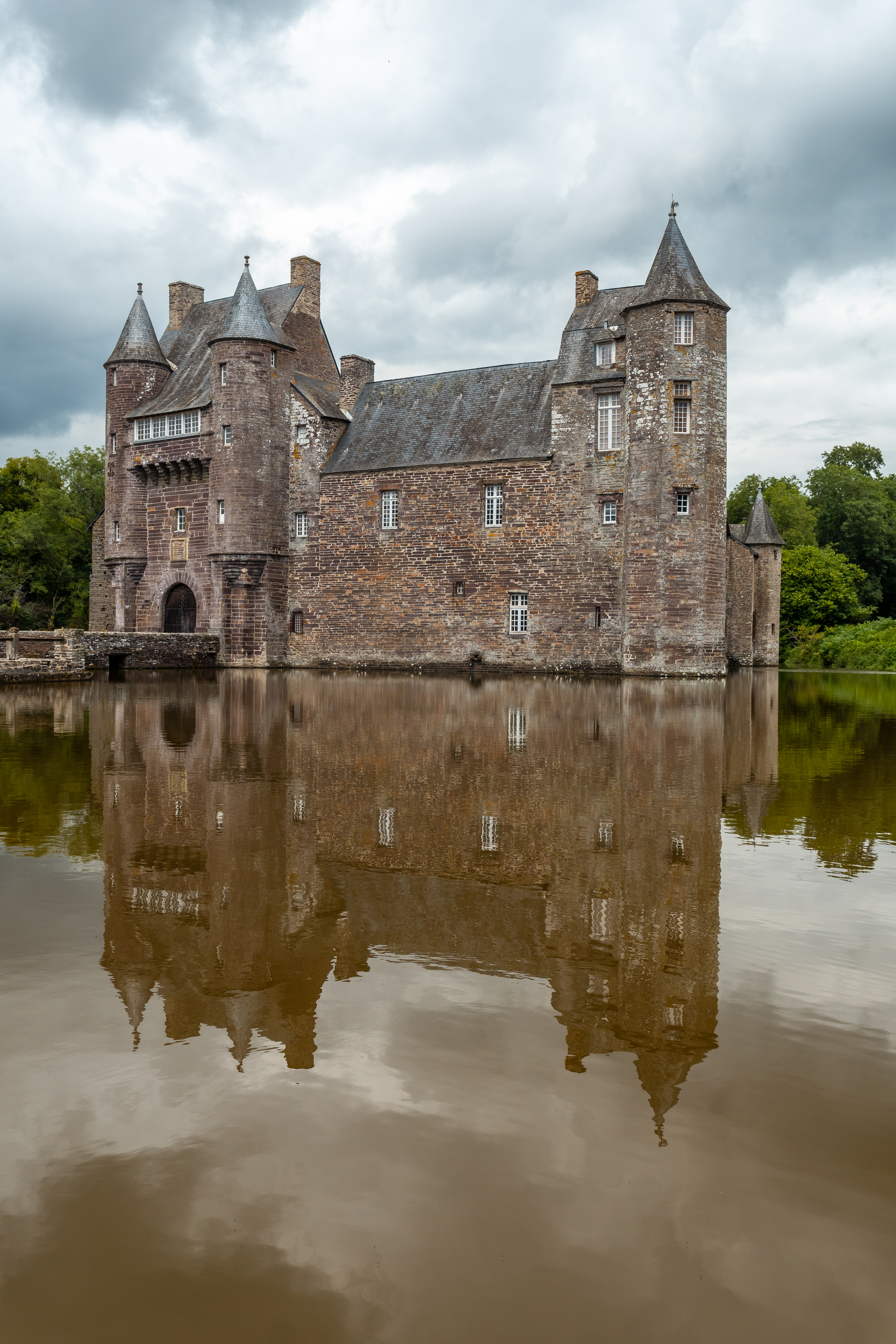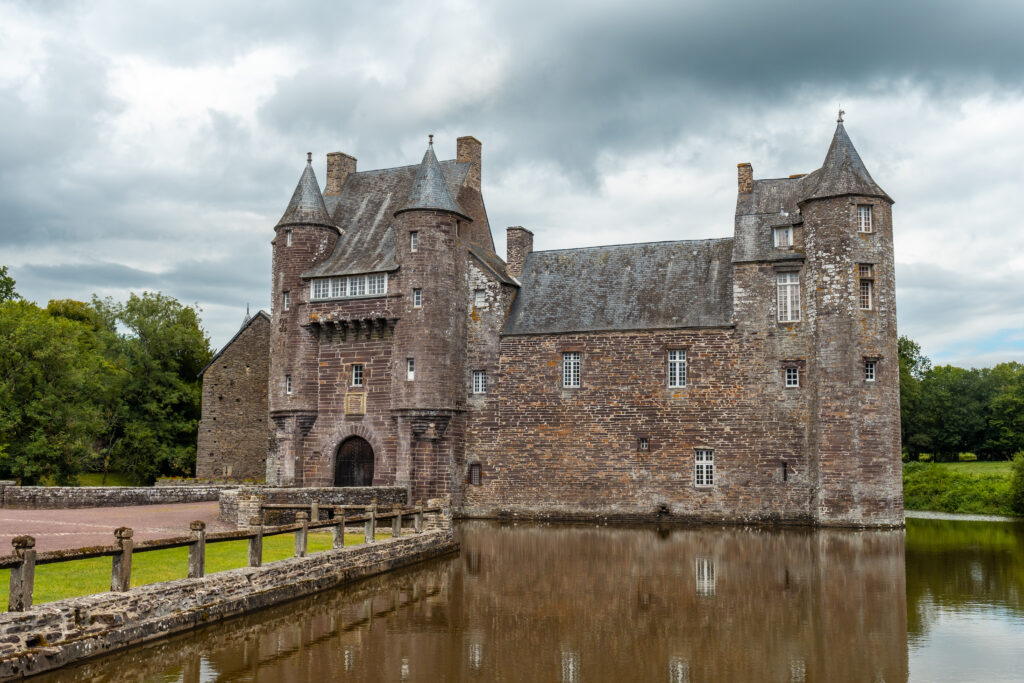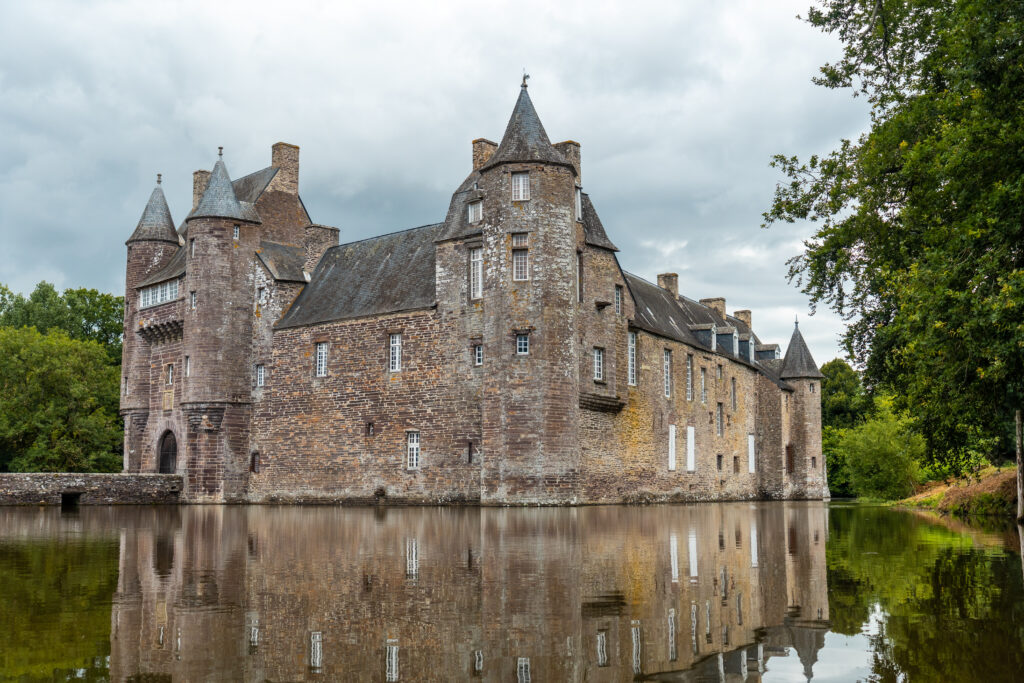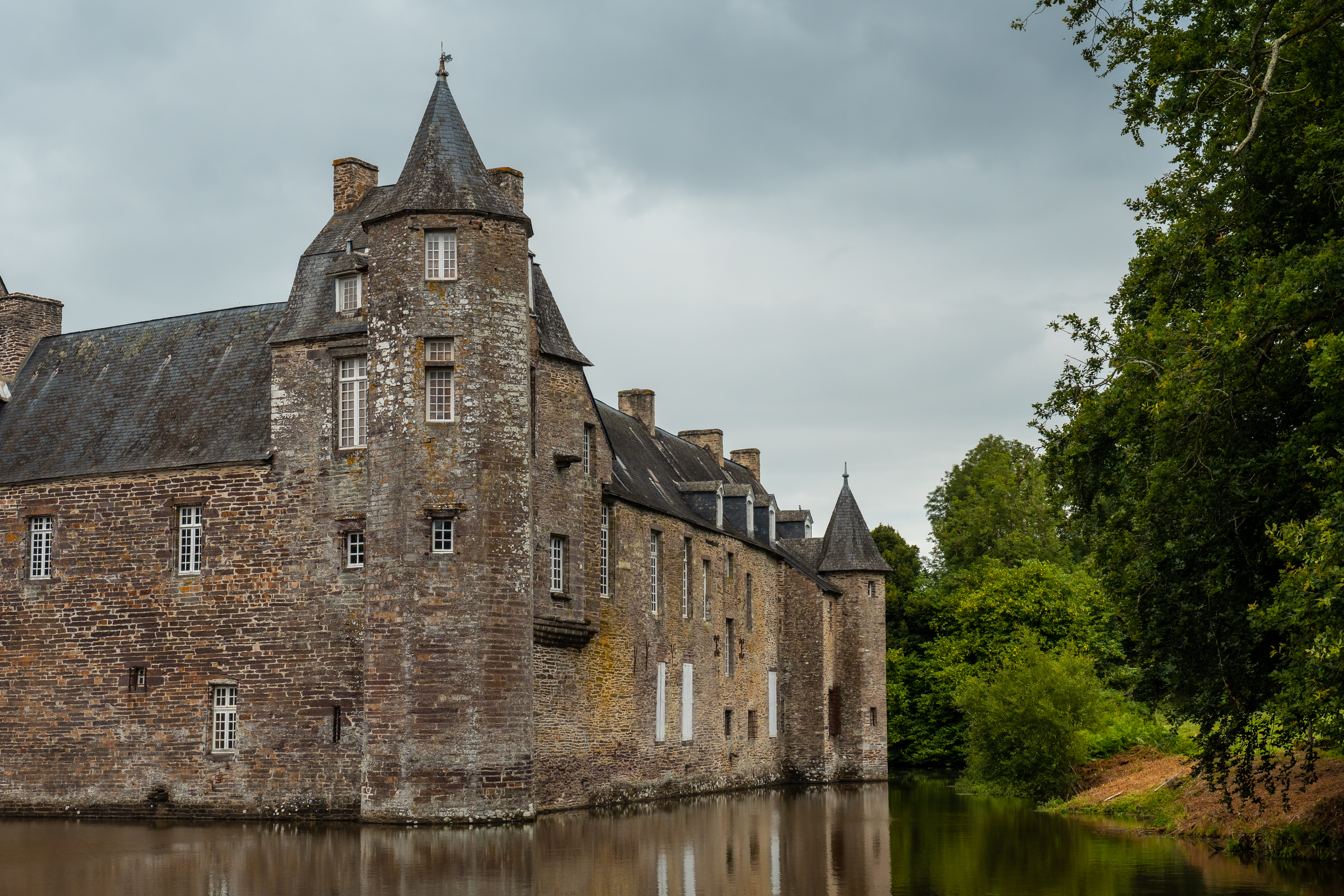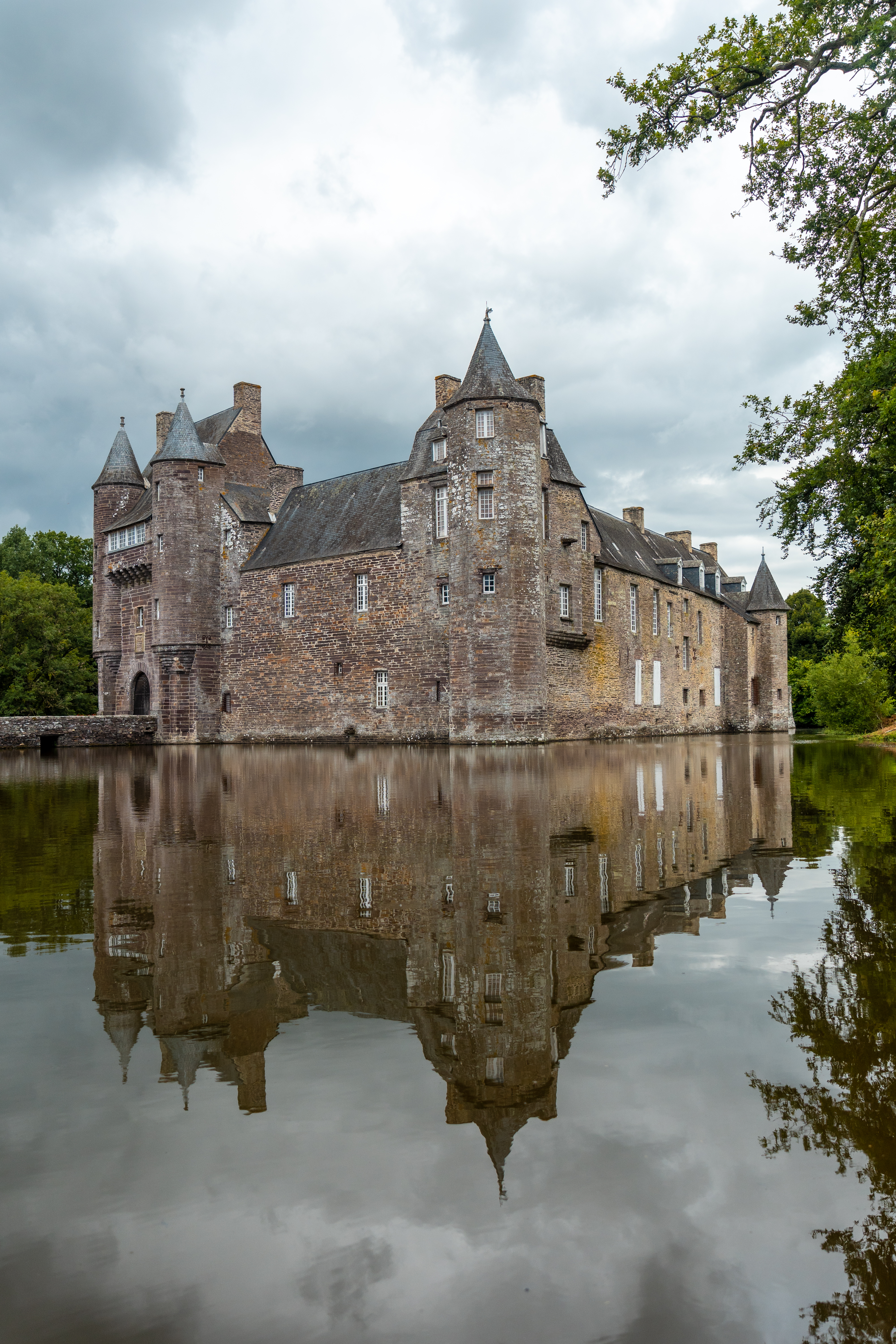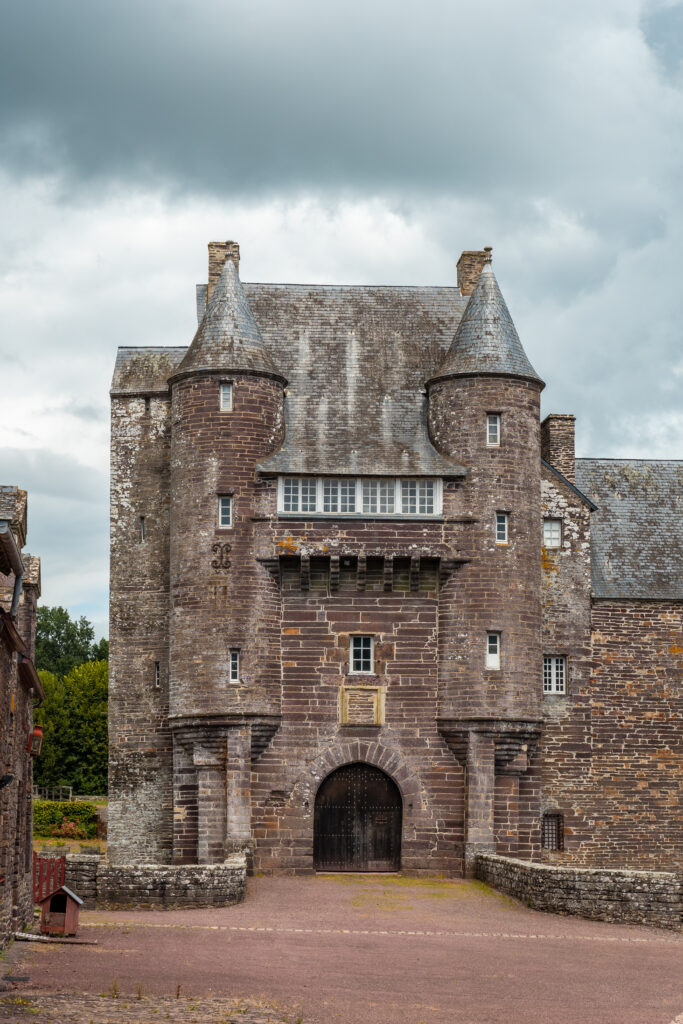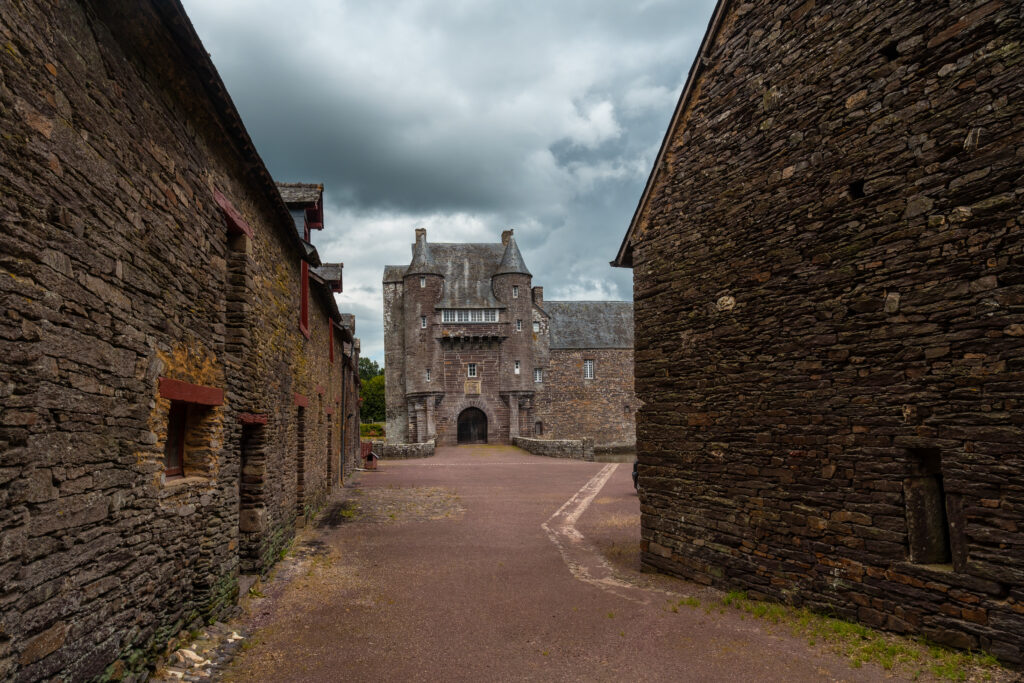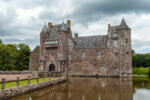

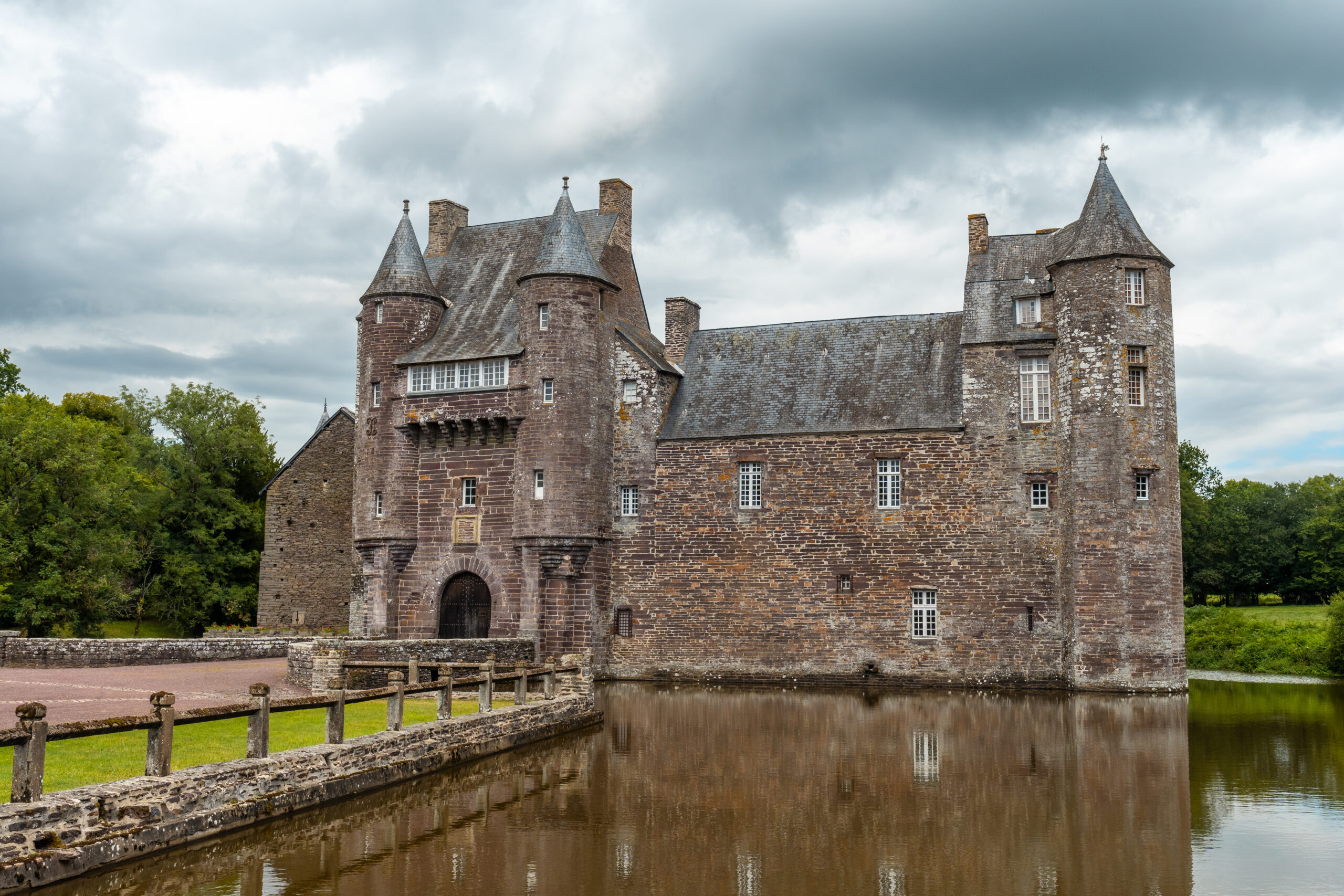
In the heart of Brittany, France, near the vast forest of Paimpont, stands the imposing Château de Trécesson. With its reddish slate walls reflected in the calm waters of the surrounding lake, this medieval fortress has been a silent witness to history, intrigue, and secrets for centuries. Guarded by an imposing gatehouse and flanked by narrow towers, the castle exudes a timeless grandeur and a touch of the supernatural. From its beginnings as the seat of the lords of Ploërmel and Campénéac to its current status as a private residence, the Château de Trécesson is rich in history—and legends that continue to fascinate and frighten.
A historical tapestry woven through the centuries – The origins of the Château de Trécesson are shrouded in the mists of time. Historical records mention the site as early as the 8th century, and by the 13th century, the Trécesson family was firmly established there. The first documented representative was Jean de Trécesson, whose grandson, a knight of considerable standing, was appointed Constable of Brittany in the 14th century. The castle as it stands today probably dates from the 15th century and reflects the architectural styles and defensive requirements of that turbulent period. In 1440, the castle’s fortunes took a significant turn when the last heiress of the Trécesson family married Éon de Carné. This union gave rise to the name Carné-Trécesson, under which the couple and their descendants carried out extensive renovation and extension work on the castle. The castle remained in the possession of the Carné-Trécesson family for centuries until 1773, when the marriage of Agathe de Trécesson to René-Joseph Le Preste de Châteaugiron marked the end of their direct line. During the turmoil of the French Revolution, the castle changed hands several times, passing to the Bourelle de Sivry, Perrien, Montesquieu, and Prunelé families, among others. Today, it is the residence of the Countess de Prunelé, who continues to preserve its historical heritage.
The ghost stories that live on – Although its architectural splendor is undeniable, it is above all the legends of the Château de Trécesson that capture the imagination. The castle is famous for its numerous ghost stories, the most spine-chilling of which is the legend of the Dames Blanches – the White Ladies.
The bride in the white dress – Probably the most terrifying story associated with the Château de Trécesson is that of a mysterious bride in white. According to legend, in the 18th century, a group of men on horseback arrived at the castle late at night. They began digging a large hole right outside the castle gates. Shortly thereafter, they dragged a beautiful young woman in a striking white wedding dress out of her carriage. Despite her desperate pleas for mercy, the men buried her alive and quickly disappeared into the night. The next morning, the castle’s inhabitants noticed the disturbed earth and discovered the tragic victim, but it was too late—the bride had perished. It is said that the bride’s ghost still roams the grounds, her mournful wails echoing through the castle halls on stormy nights.
The Ghostly Gambler – Another eerie story revolves around a gambler who met his end within the castle walls. The story goes that a relentless gambler who had lost his fortune and sought solace in alcohol wandered into the Château de Trécesson during a thunderstorm. At the invitation of the lord of the castle, he took part in a card game that took a sinister turn. The desperate gambler was accused of cheating and beaten to death. His ghost is said to haunt the castle to this day, endlessly searching for an opportunity to play one last time.
The Phantom Fishermen – The waters around the Château de Trécesson have their own macabre stories. Local folklore tells of fishermen who disappeared without a trace while boating on the castle’s lake. According to legend, their spirits linger near the shore, where they can only be seen at dusk as fleeting shadows, forever casting their nets into the cold, dark depths.
The reign of terror and hidden refugees – Aside from these ghostly apparitions, the Château de Trécesson also served as a refuge during one of the darkest periods in French history. In June 1793, amid the bloody turmoil of the Reign of Terror during the French Revolution, Girondist deputy Jacques Defermon des Chapelières sought refuge within its fortified walls. Defermon had signed a protest note against the exclusion of the Gironde faction and was wanted by the authorities. He remained hidden in the castle for over a year, thus escaping the revolutionary troops who were combing the country for dissidents.
Bridge between history and myth – The true appeal of the Château de Trécesson lies in its ability to bridge the gap between historical fact and mythical fiction. Its architectural features—a towering gatehouse, ancient machicolations, and a 15th-century chapel—bear witness to an eventful past rich in feudal battles, noble alliances, and architectural innovations. But it is the ghost legends, the stories told by flickering candlelight, that give the castle an atmosphere of eternal mystery.
Historians and lovers of the paranormal alike flock to the Château de Trécesson, drawn by its enigmatic charm. Whether you seek the thrill of encountering a ghostly bride or the intellectual satisfaction of tracing the castle’s history through the centuries, the Château de Trécesson promises an experience like no other. It is a testament to the enduring power of storytelling—a place where history and myth are interwoven, creating an image as rich and complex as the human imagination itself.
So, the next time you find yourself in the picturesque region of Brittany, be sure to pay a visit to Château de Trécesson. As you cross the ancient bridge and enter the imposing walls, listen carefully. You may hear the distant echo of ghostly whispers or feel the chill of a long-forgotten tragedy that still lingers in the air.